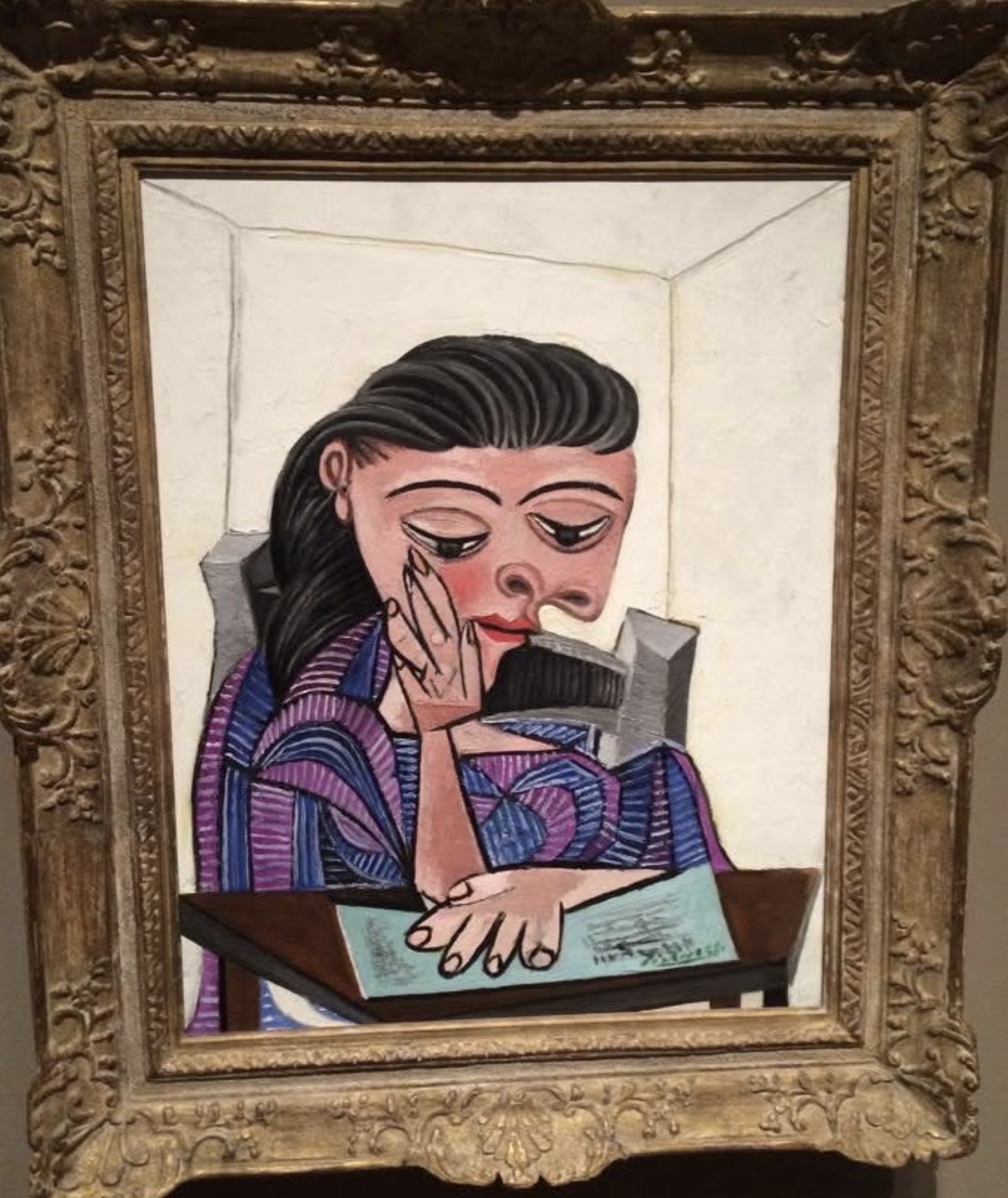
Femme lisant (Woman Reading)
1953
This compelling Cubist portrait depicts a dark-haired woman seated at a table, her chin resting pensively on one hand while the other rests on what appears to be a document or letter. Rendered in Picasso's signature late Cubist style, the figure features bold black outlines, a flattened yet expressive face, and a richly patterned purple-and-blue striped garment. The work is characteristic of Picasso's ongoing series of intimate portraits of women, likely referencing one of his muses from this period. A signature is visible in the lower right area of the canvas near the subject's hand.
- Medium
- Oil on canvas
- Signed
- Yes
- Spotted At
- Museum
Notes
The painting is housed in an ornate gilded carved frame. A signature appears to be visible in the lower right quadrant of the canvas. The work bears stylistic hallmarks consistent with Picasso's Cubist figurative works of the early 1950s, particularly his portraits of Françoise Gilot or contemporaneous female subjects. Title identification is based on visual stylistic analysis; exact title requires verification against the Zervos catalogue raisonné.




Artists in conversation
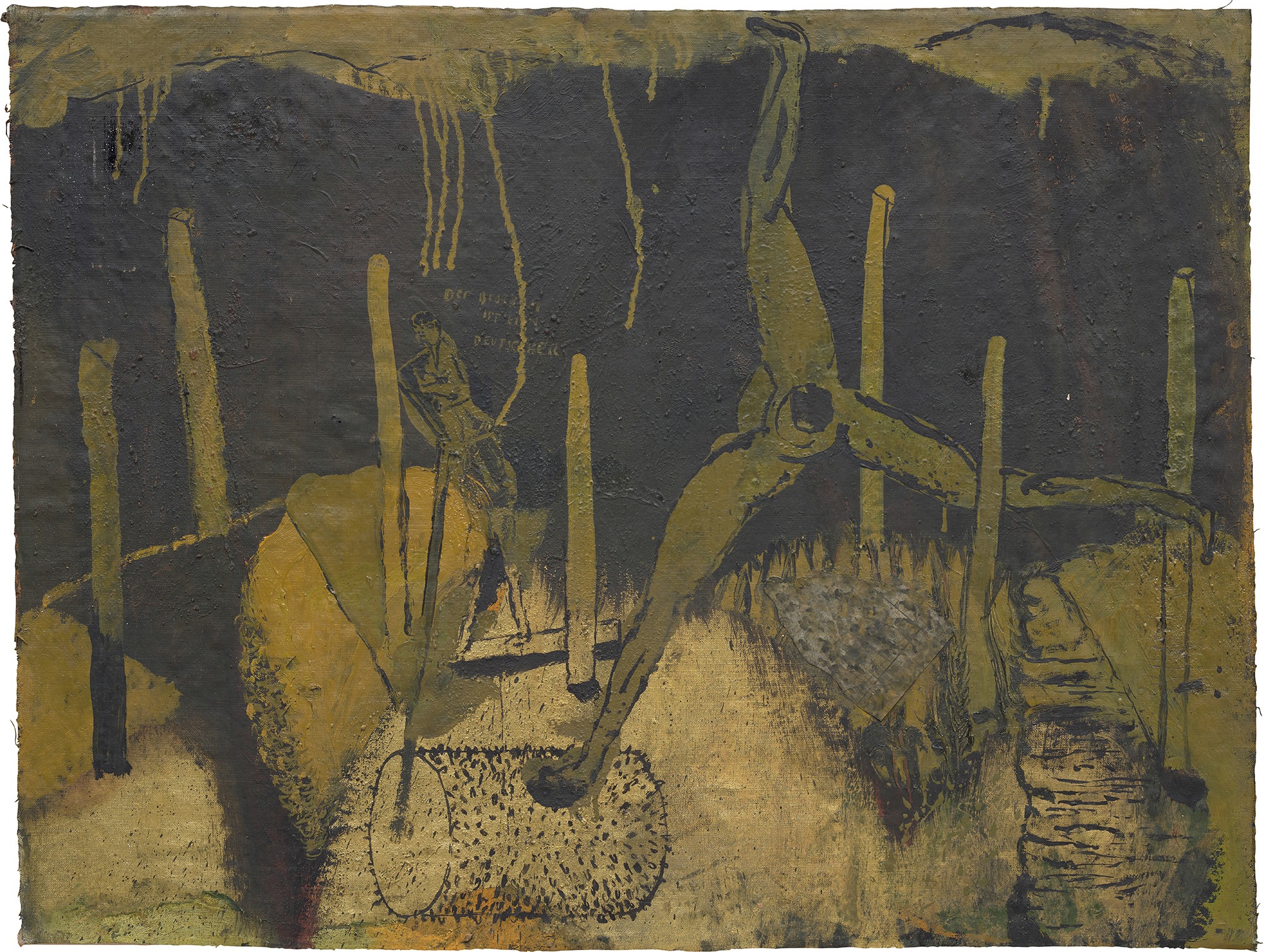
Neo Rauch
German · b. 1960
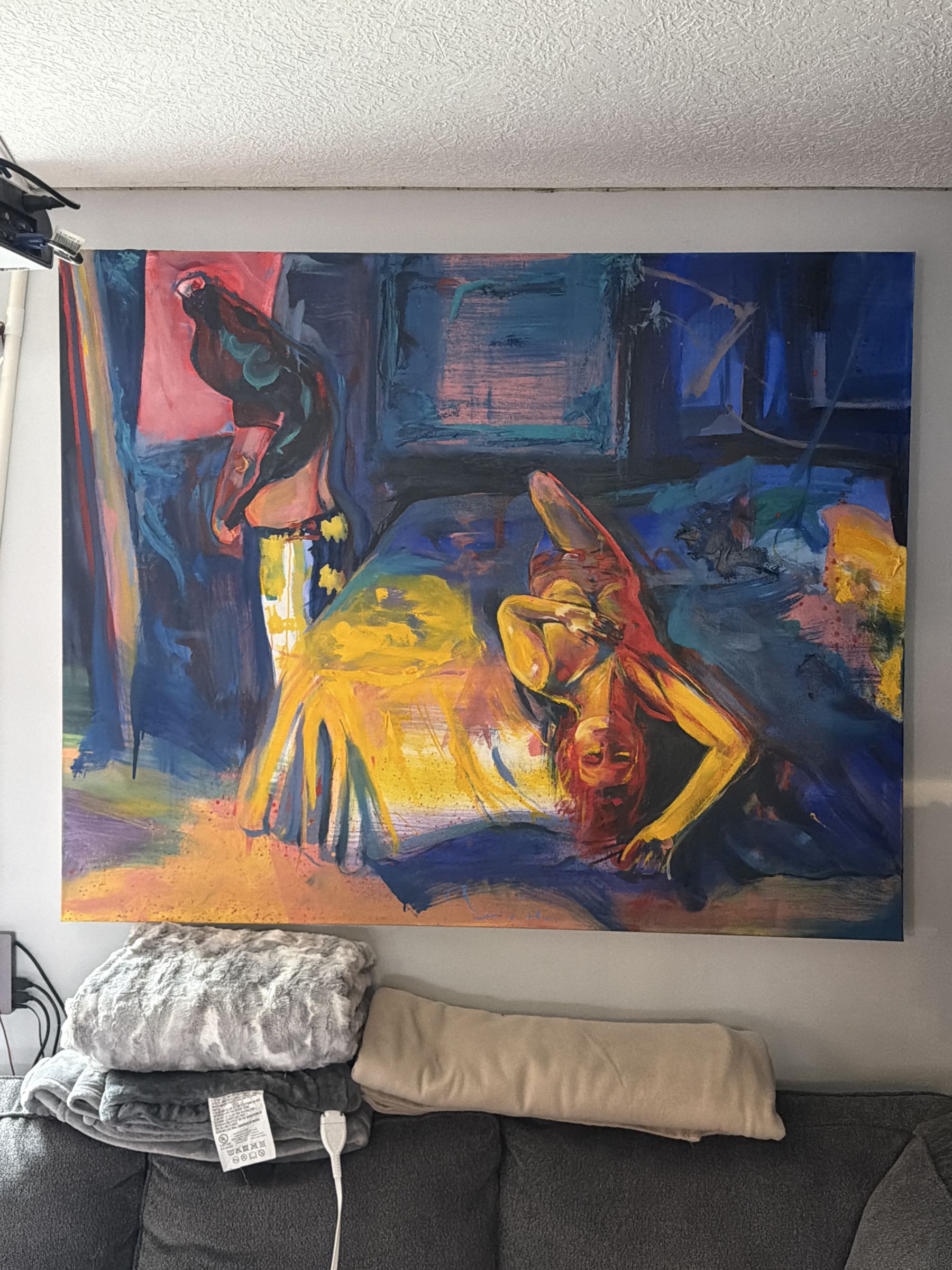
Neo Rauch creates large scale figurative paintings with dreamlike nocturnal atmospheres, theatrical figures in states of suspended motion, and bold expressive color palettes that share the same psychological tension and narrative ambiguity found in Nightlife.
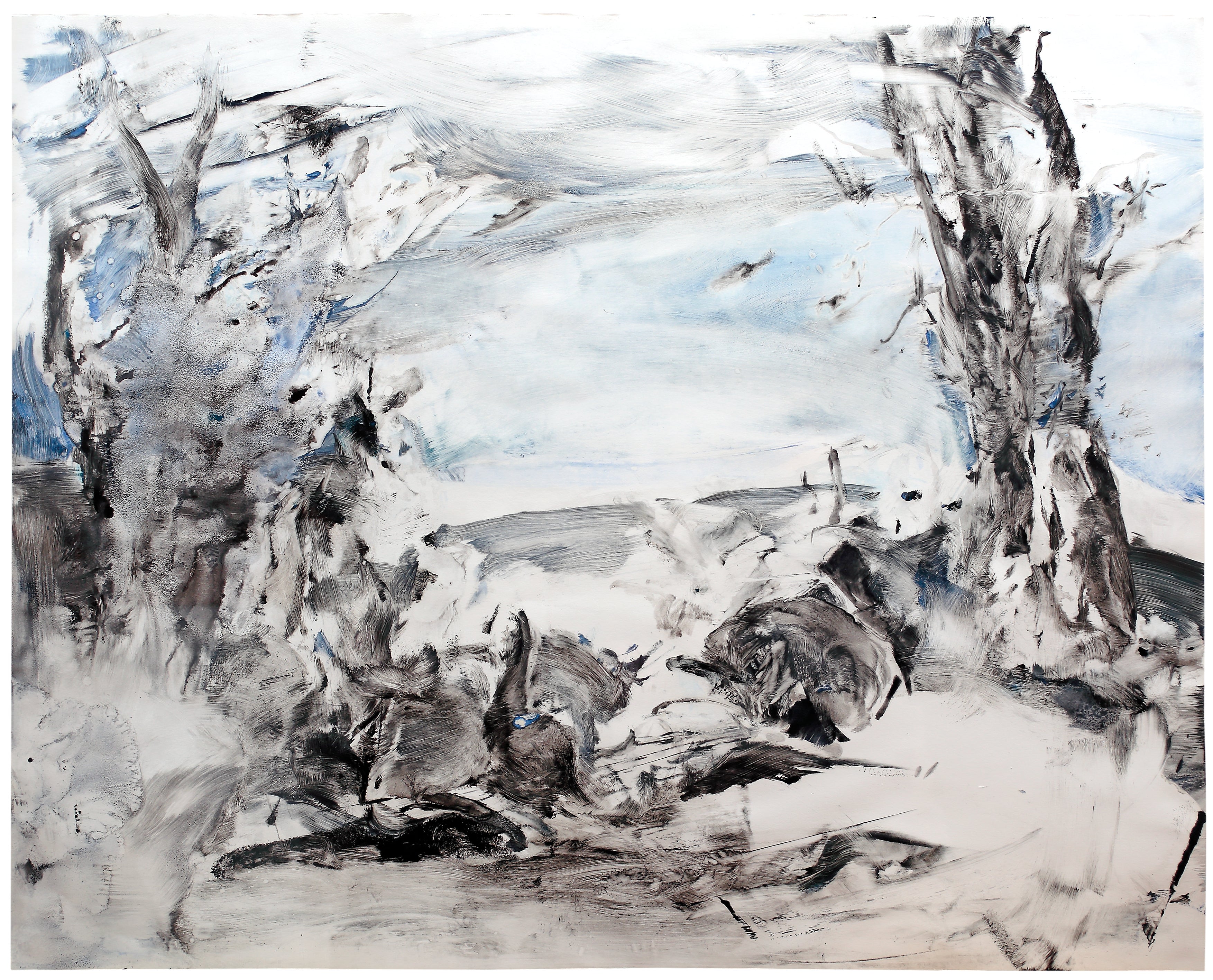
Cecily Brown
British · b. 1969
Cecily Brown deploys raw gestural brushwork and a charged cobalt and crimson palette to paint dynamic multi figure compositions evoking hedonistic nocturnal energy and perpetual physical motion, closely mirroring the expressive qualities of this specific piece.
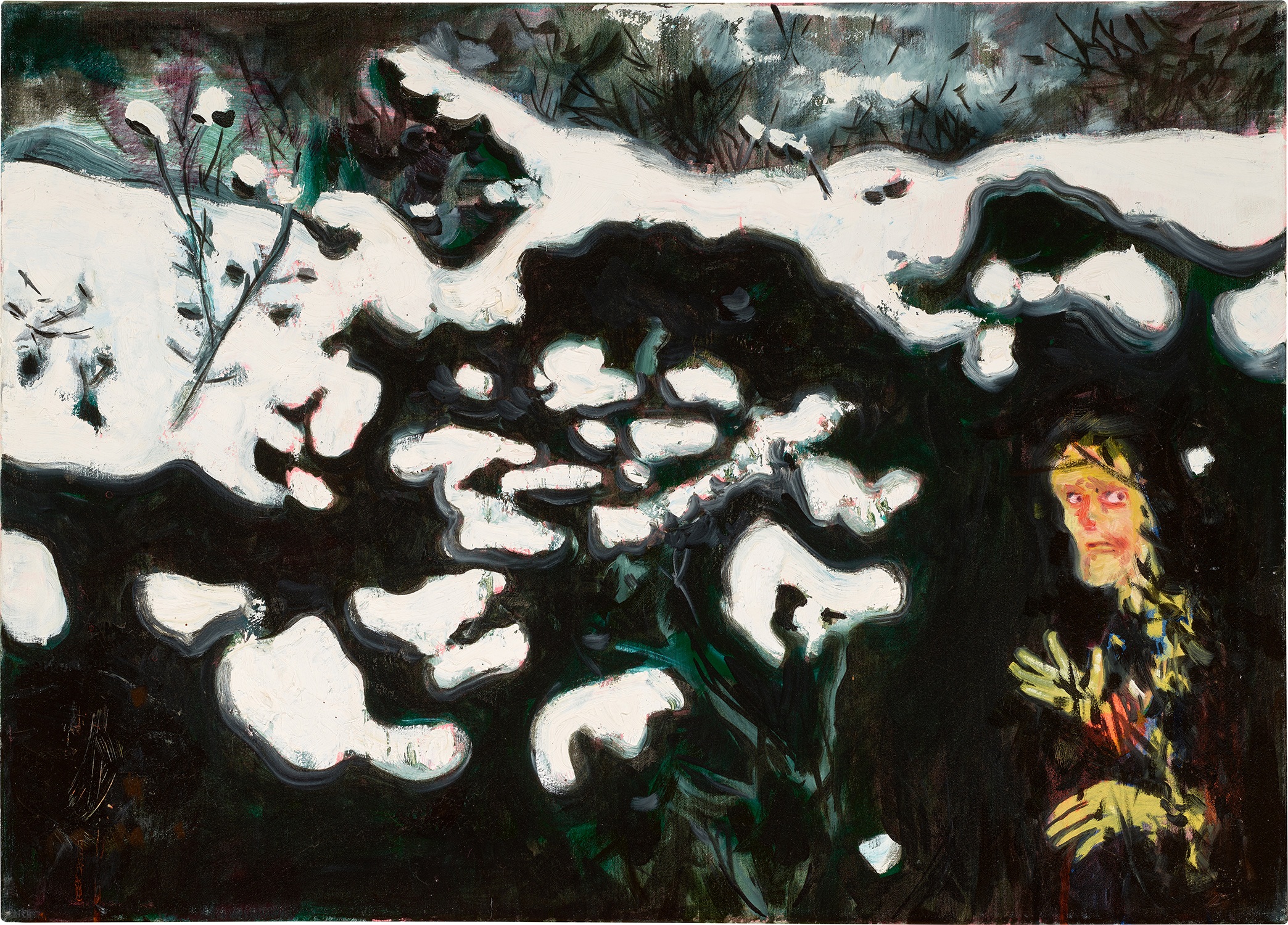
Daniel Richter
German · b. 1962
Daniel Richter paints large scale neo expressionist canvases featuring multiple figures in dramatically lit nocturnal scenes, using bold cobalt blues and cadmium yellows with gestural mark making to generate the same sense of theatrical physicality and social tension visible in Nightlife.
Start the Discussion
Request access to join the discussion