Whimsical
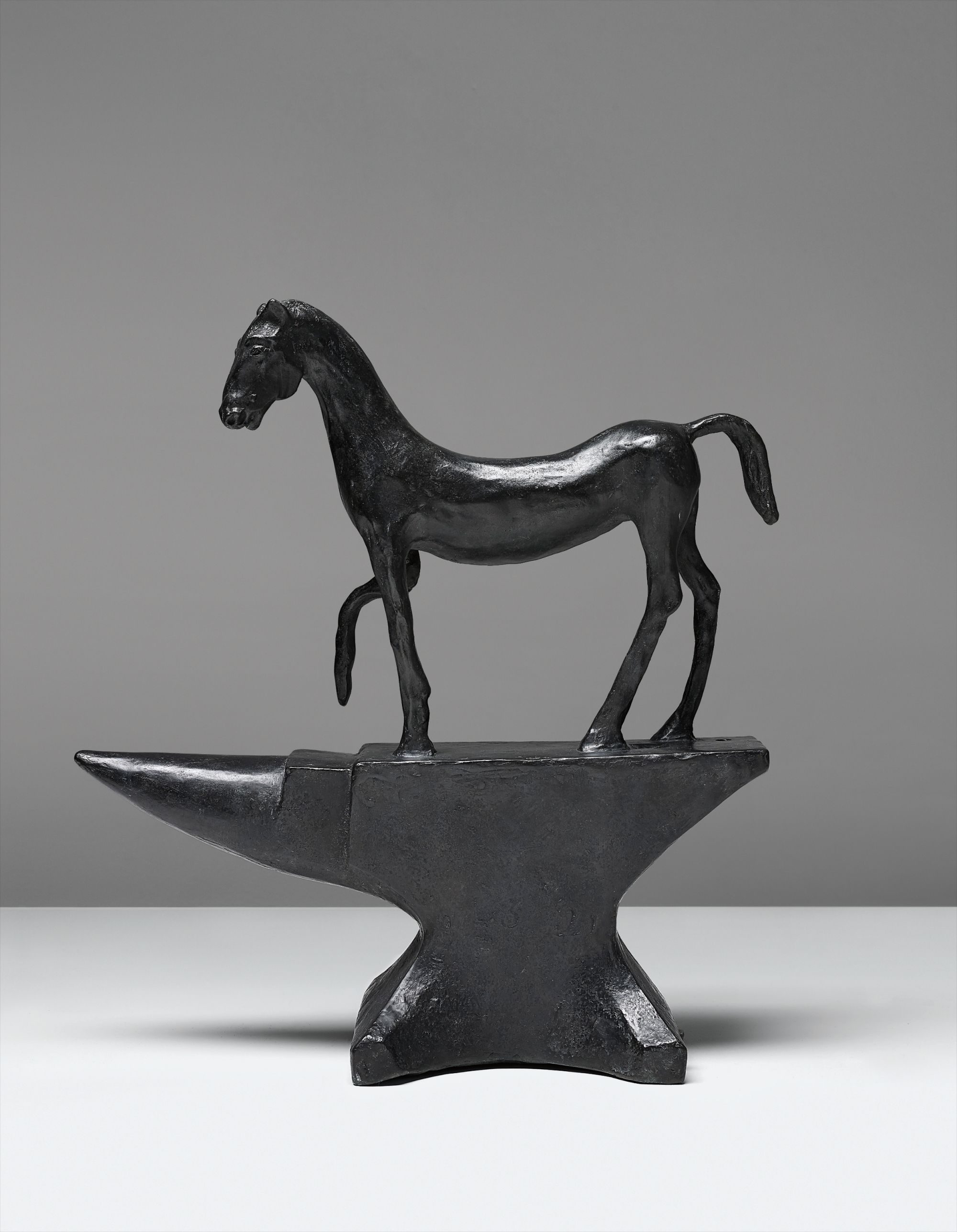
Barry Flanagan RA
Horse on Anvil, 2001



Serious Art Has Always Loved to Play
There is a particular kind of freedom that lives inside the whimsical. It is not frivolity, not decoration, not the lesser sibling of seriousness. It is, if anything, one of the most demanding modes an artist can inhabit, because to be genuinely whimsical is to hold contradiction in both hands at once: the absurd and the sincere, the childlike and the profound, the light touch that leaves a mark. The history of whimsy in art is really the history of artists refusing to be solemn about the things that matter most.
The roots reach back further than most people assume. Medieval manuscript illuminators filled the margins of sacred texts with drolleries, tiny creatures doing impossible things in ink and gold leaf, a visual tradition of play running alongside the official world of meaning. By the Baroque period, the grotesque and the fantastical had found their way into garden sculpture and cabinet curiosities. But it was Surrealism that gave whimsy its full intellectual and emotional permission slip.
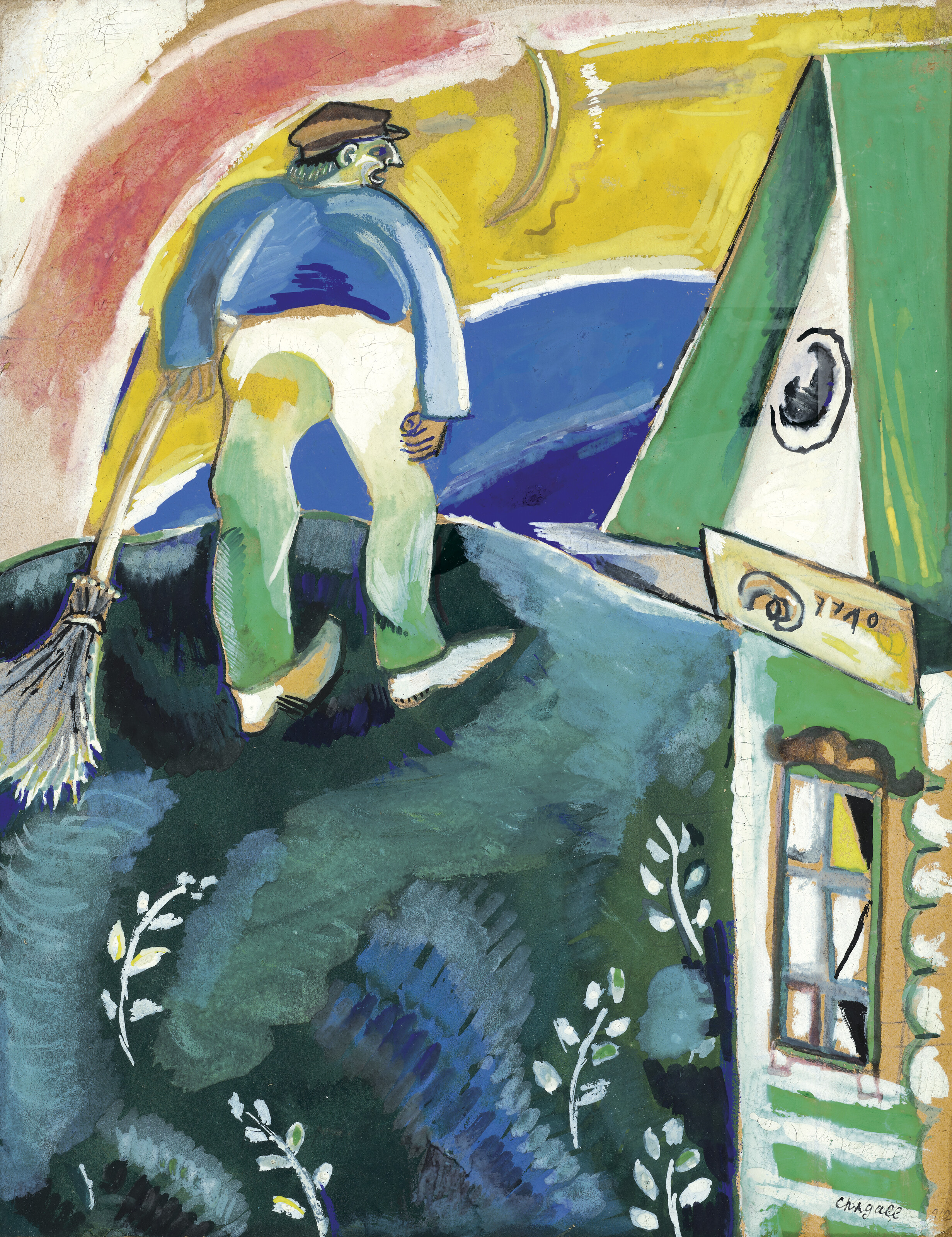
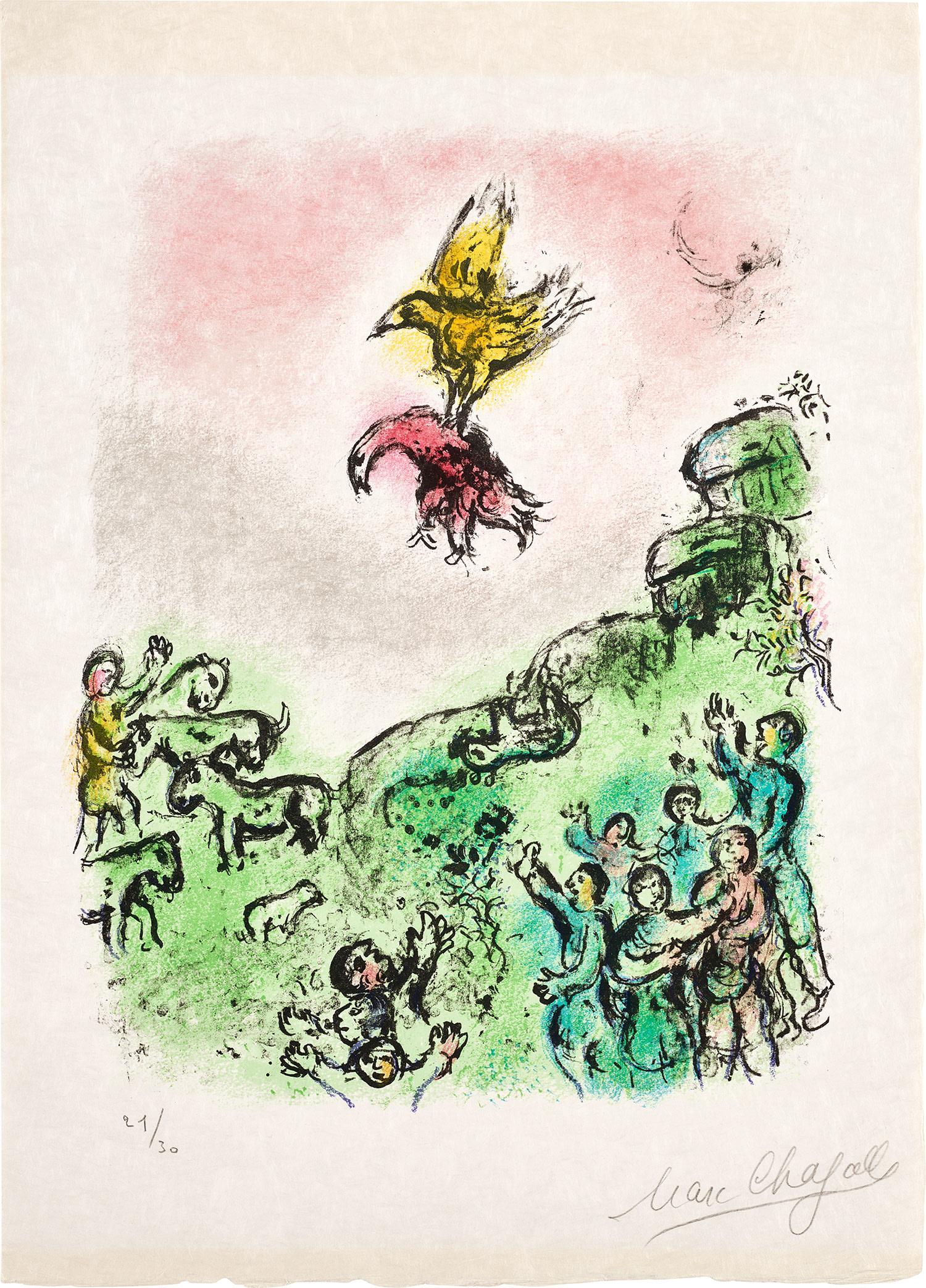
Marc Chagall
Balayeur
When André Breton published his first Surrealist Manifesto in 1924, he was not asking artists to be silly. He was asking them to go somewhere truer than rational thought allowed. Marc Chagall, whose work is richly represented on The Collection, understood this intuitively. His floating lovers, upside down villages, and blue goats were not illustrations of dreams so much as they were maps of feeling, specifically the feeling of being caught between worlds, between Vitebsk and Paris, between the past and the present, between gravity and longing.
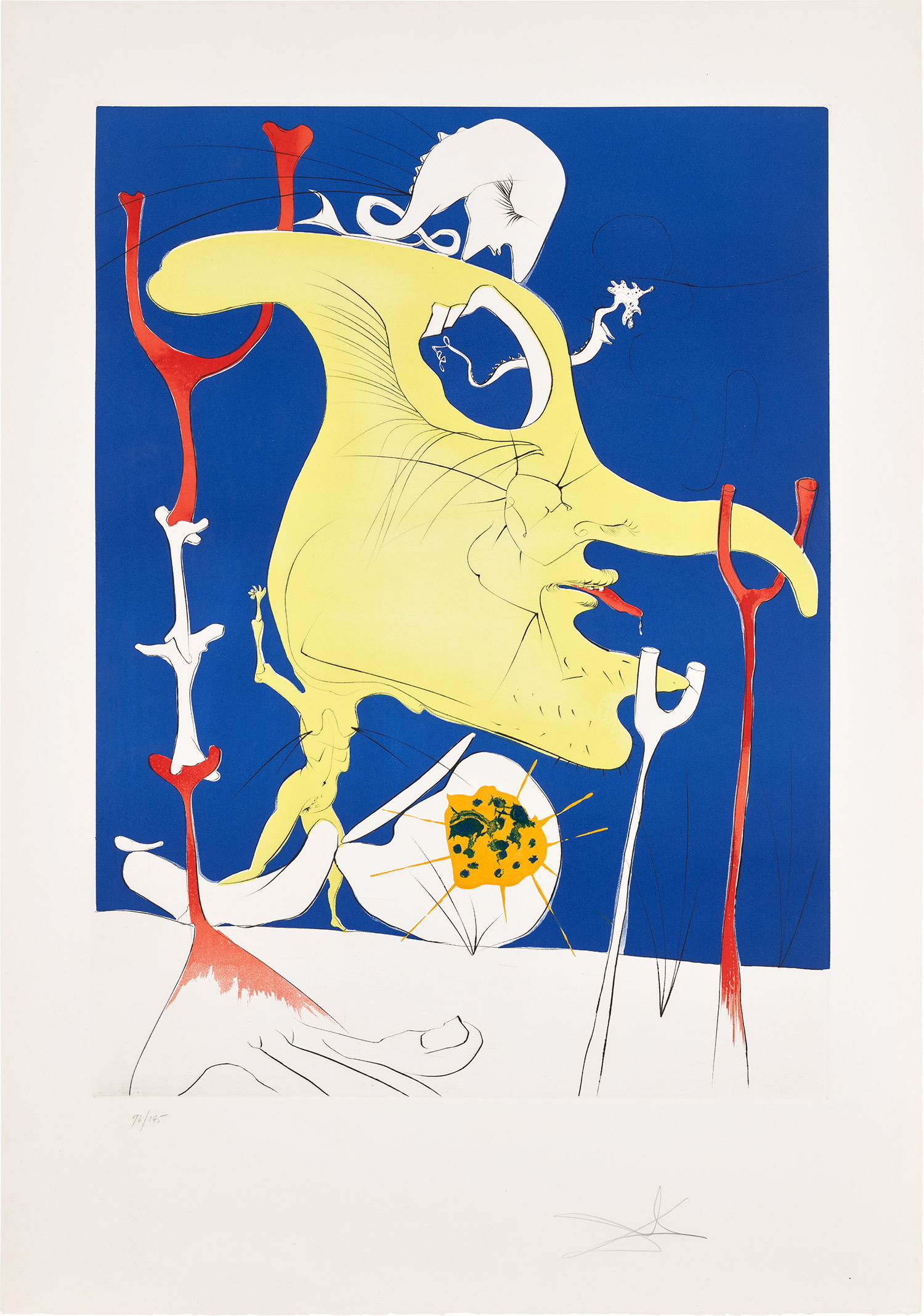
His 1911 painting I and the Village, made in the thick of his first Paris years, established the visual vocabulary he would spend the rest of his century refining: a logic of the heart rather than the eye. Salvador Dalí arrived at a similar place through a very different door, deploying technical virtuosity in service of the deeply strange. His melting watches and impossible anatomies are whimsical only at first glance. Look longer and they become genuinely unsettling meditations on time and the body.
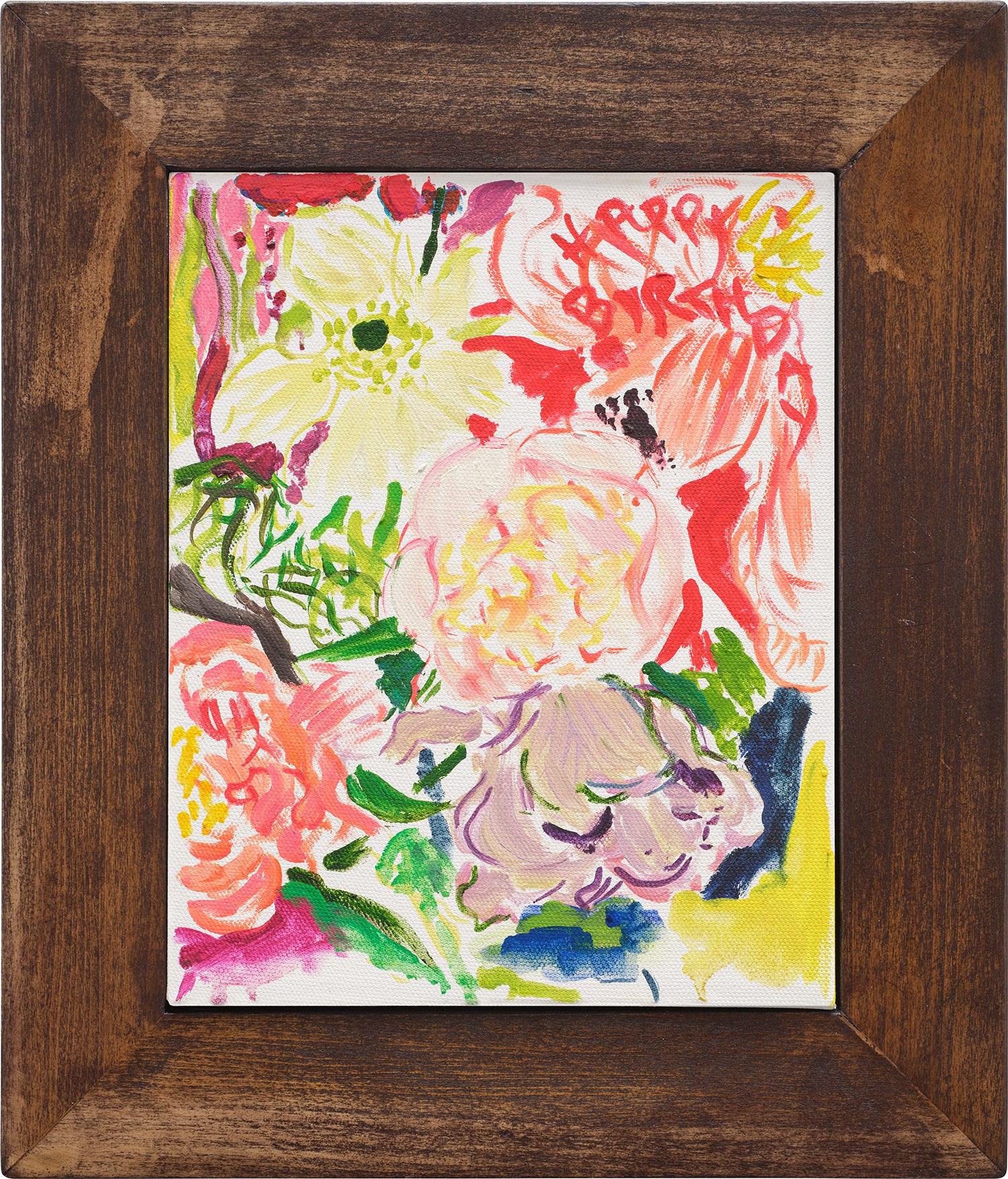
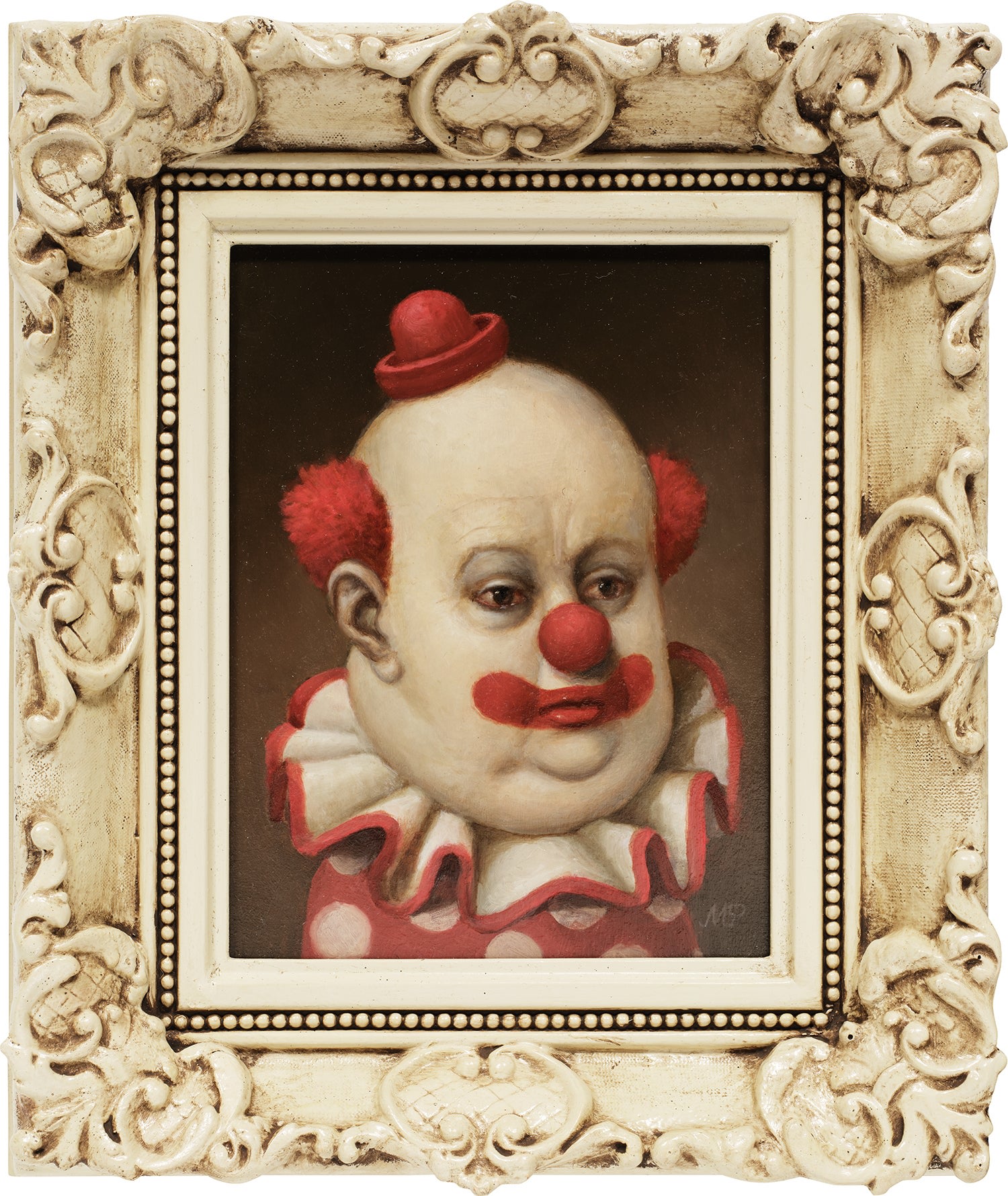
Emily Sundblad
Happy Birthday, 2022
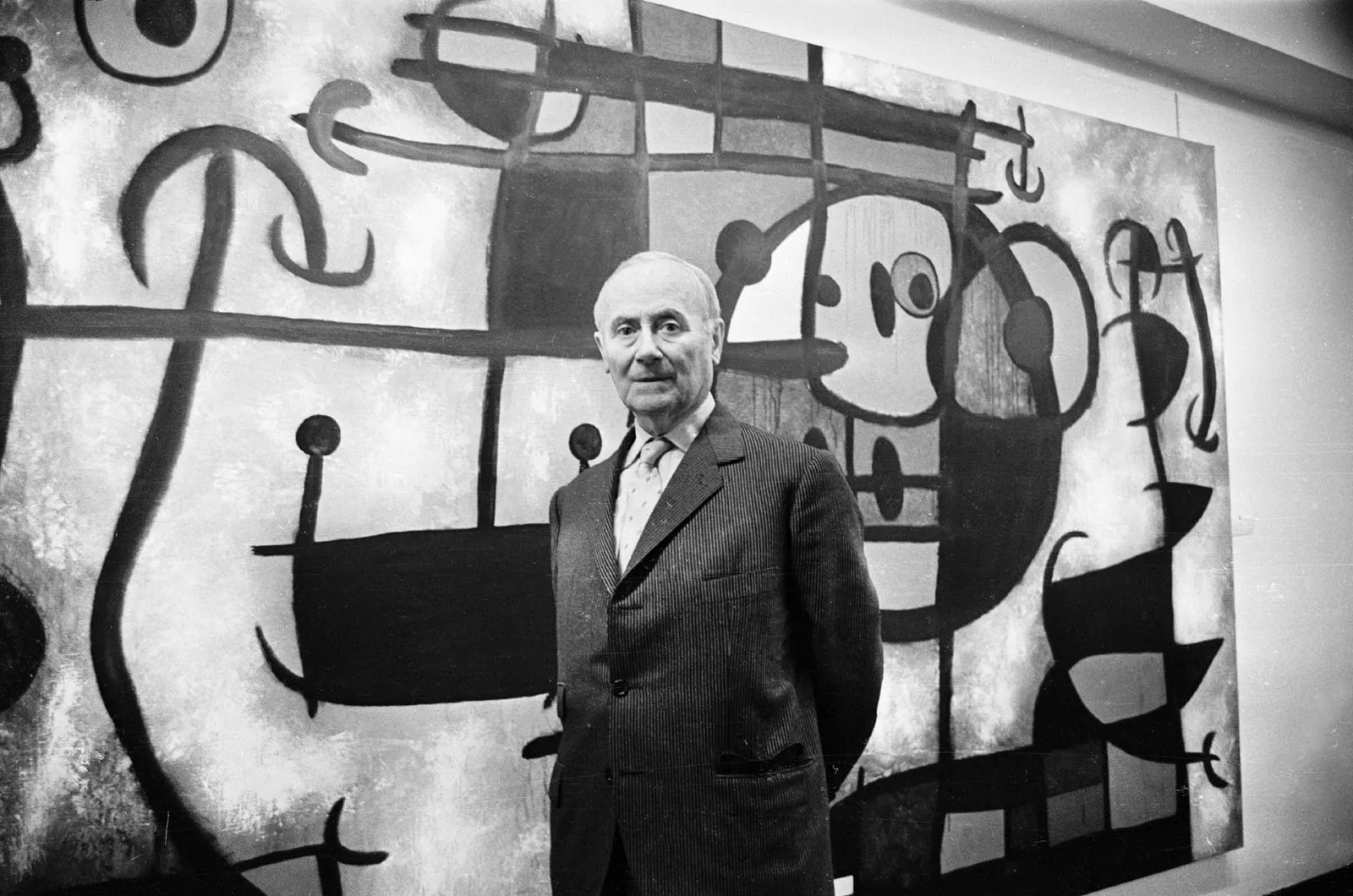
Joan Miró represents perhaps the purest expression of the whimsical impulse in twentieth century art. His biomorphic forms, those dancing, floating, half animal and half glyph creatures that populate canvases from the 1920s onward, feel simultaneously ancient and invented. Miró once said he wanted to assassinate painting, and yet what he created in its place was full of joy. His work, generously present on The Collection, rewards close looking because the playfulness is not a surface quality.
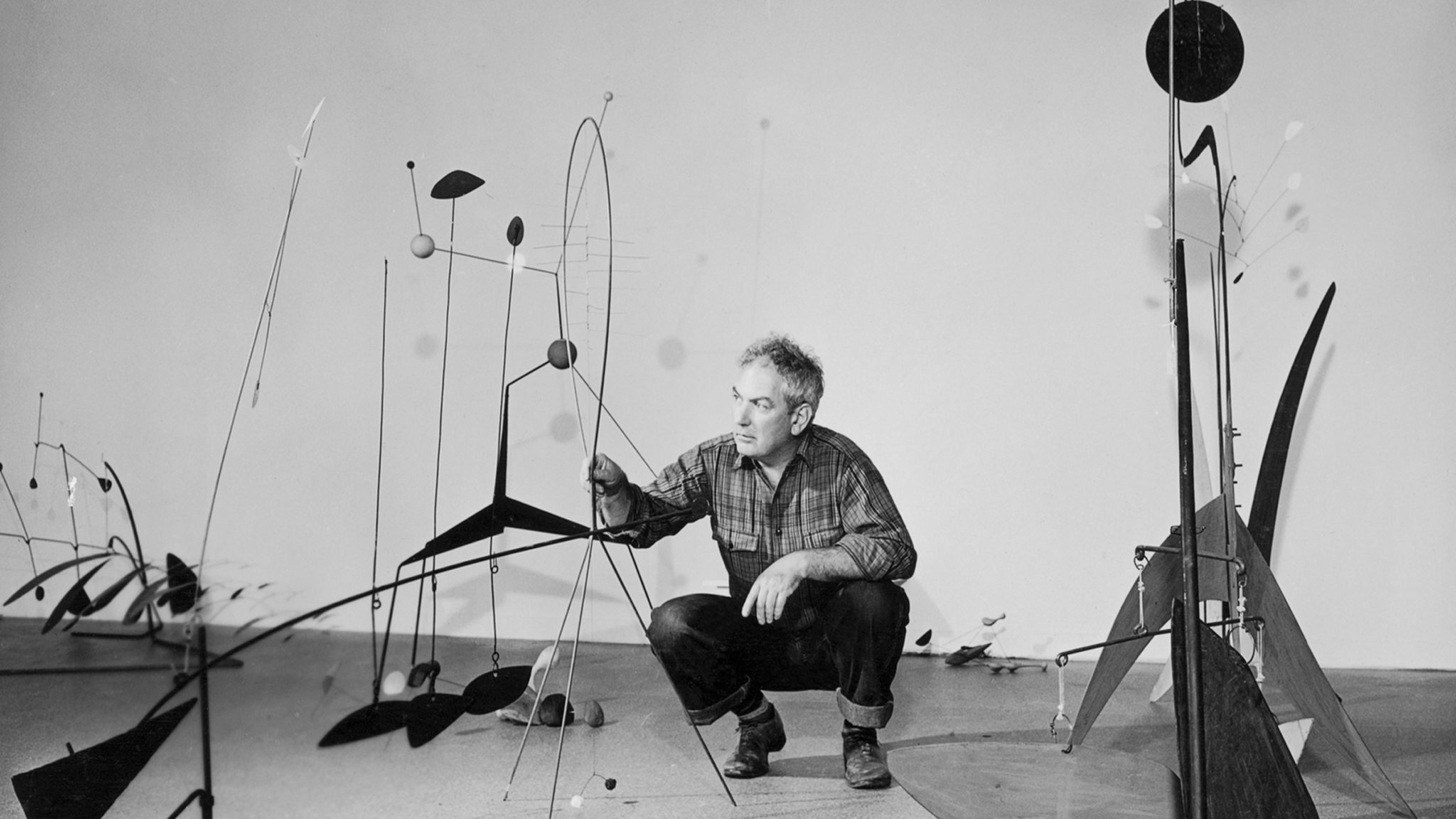
It is structural. The awkwardness is deliberate, the childlike line achieved through decades of rigorous unlearning. Alexander Calder, who knew Miró in Paris, brought a similarly liberating spirit to sculpture. The mobile, which Calder essentially invented, introduced chance and movement into three dimensional form, making work that was responsive to the world around it, trembling in a breeze, casting shifting shadows.
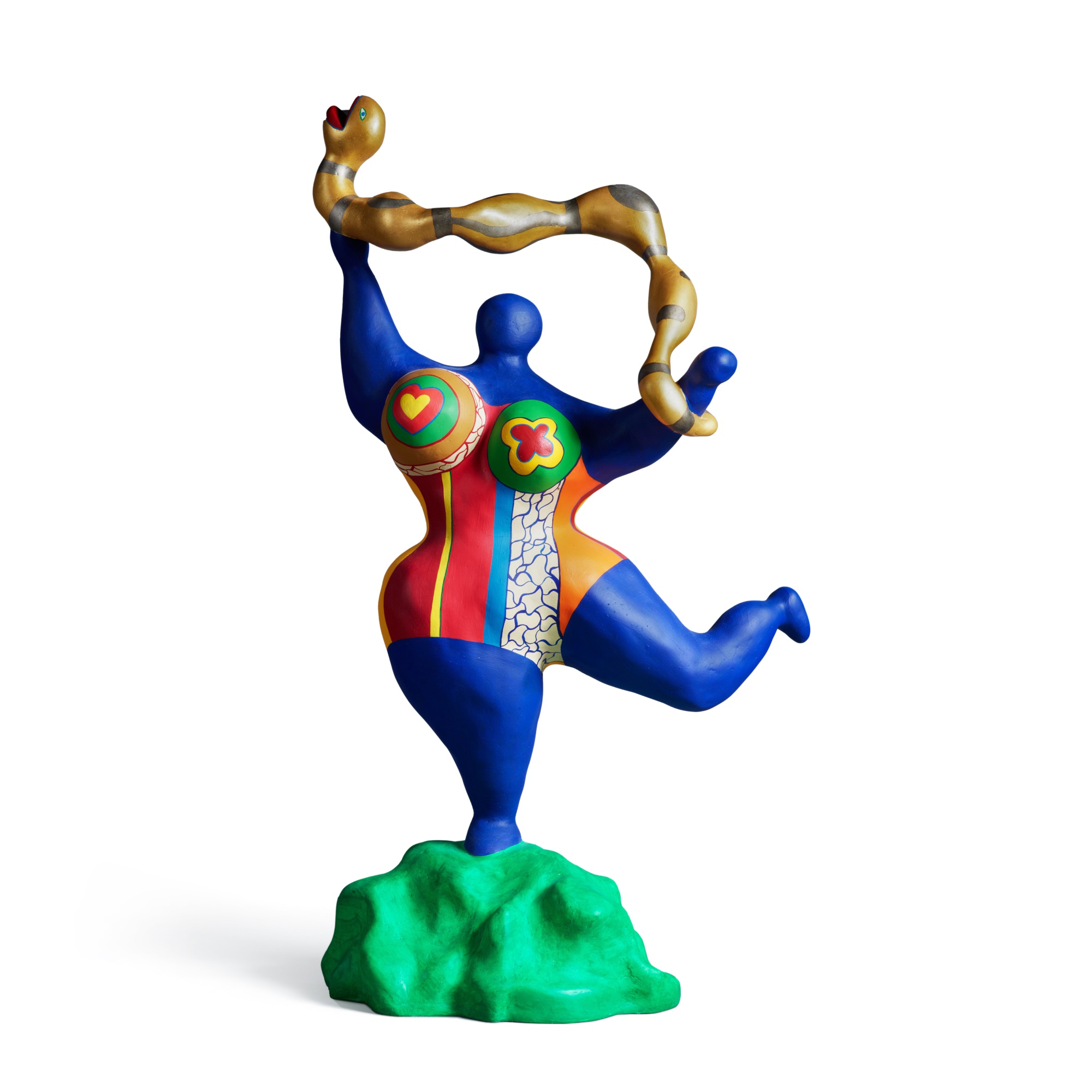
Niki de Saint Phalle
Nana Boa (Petite), 1984
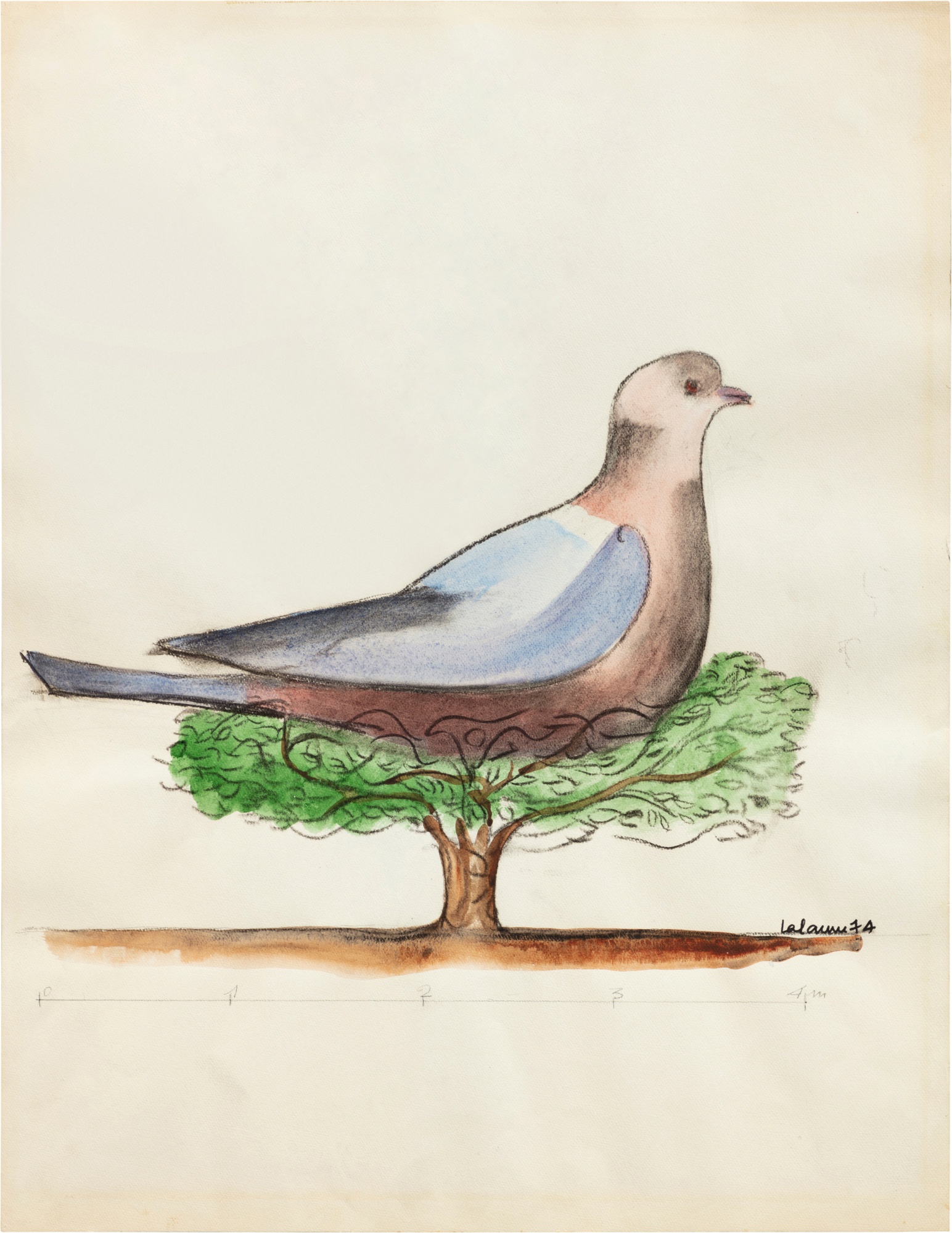
The Lalanne partnership, François Xavier and Claude, translated whimsy into the domestic and the functional in ways that remain startling. Their sheep ottomans, rhinoceros desks, and gorilla bar stools occupied a space somewhere between sculpture, furniture, and allegory. Both artists are well represented on The Collection, and their work demonstrates something essential about the whimsical object: it asks you to use it, to live with it, to let it into your daily life rather than keeping it at the reverential distance we tend to give fine art. Niki de Saint Phalle was doing something adjacent with her Nanas, those enormous, brightly painted female figures that seemed to laugh at the idea that public sculpture had to be monumental in the traditional sense.
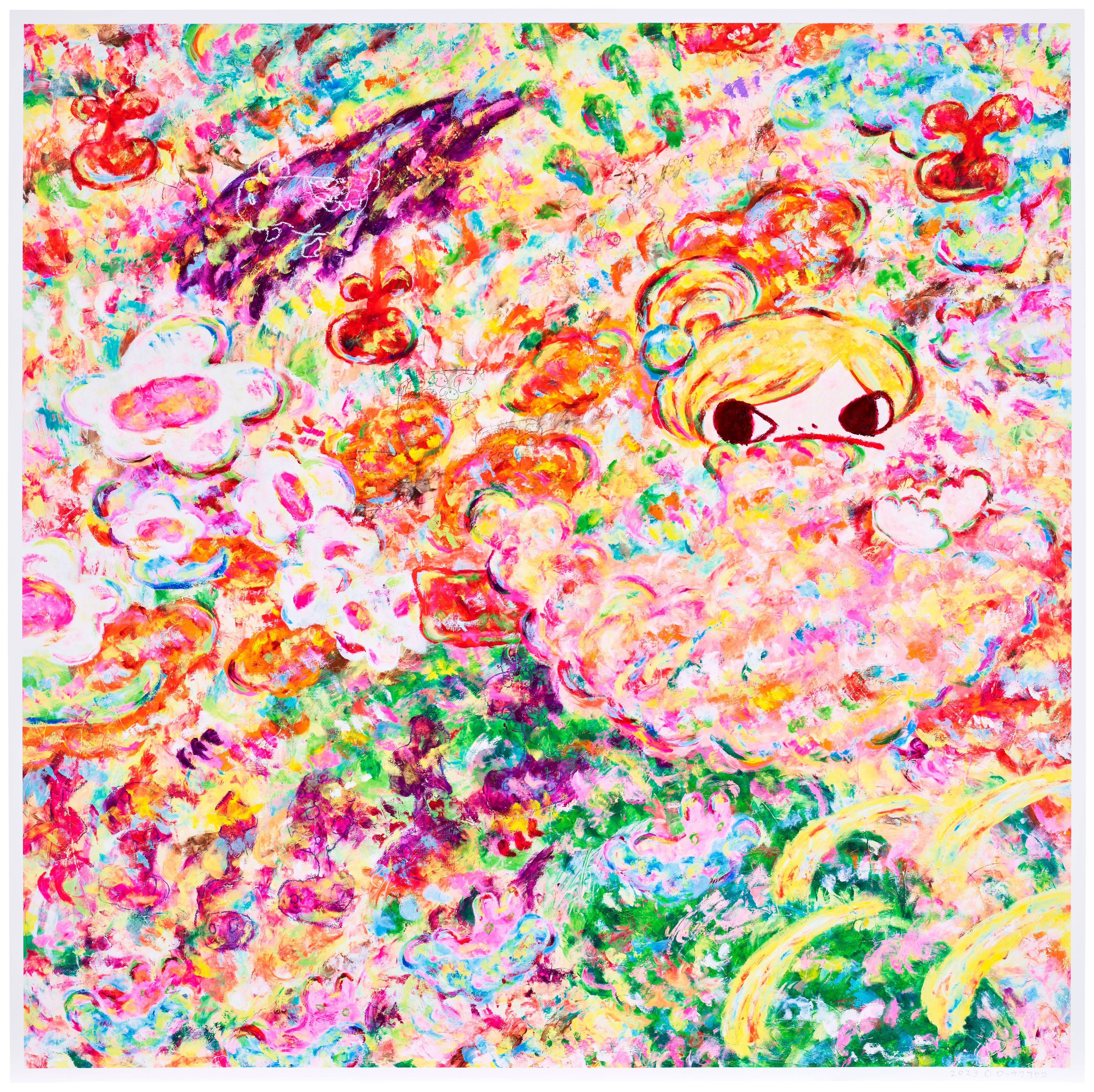
They were monumental in a different register entirely. The conversation did not stop with the twentieth century. In the 1990s and into the 2000s, a new generation of artists arrived who had grown up with manga, animation, and popular consumer culture and who found in those visual languages a set of tools for exploring the same tensions their predecessors had. Takashi Murakami formalized this into a philosophy he called Superflat, arguing that the flattened, decorative aesthetic of Japanese popular culture was not shallow but was in fact a more honest response to postwar reality than Western fine art traditions could offer.
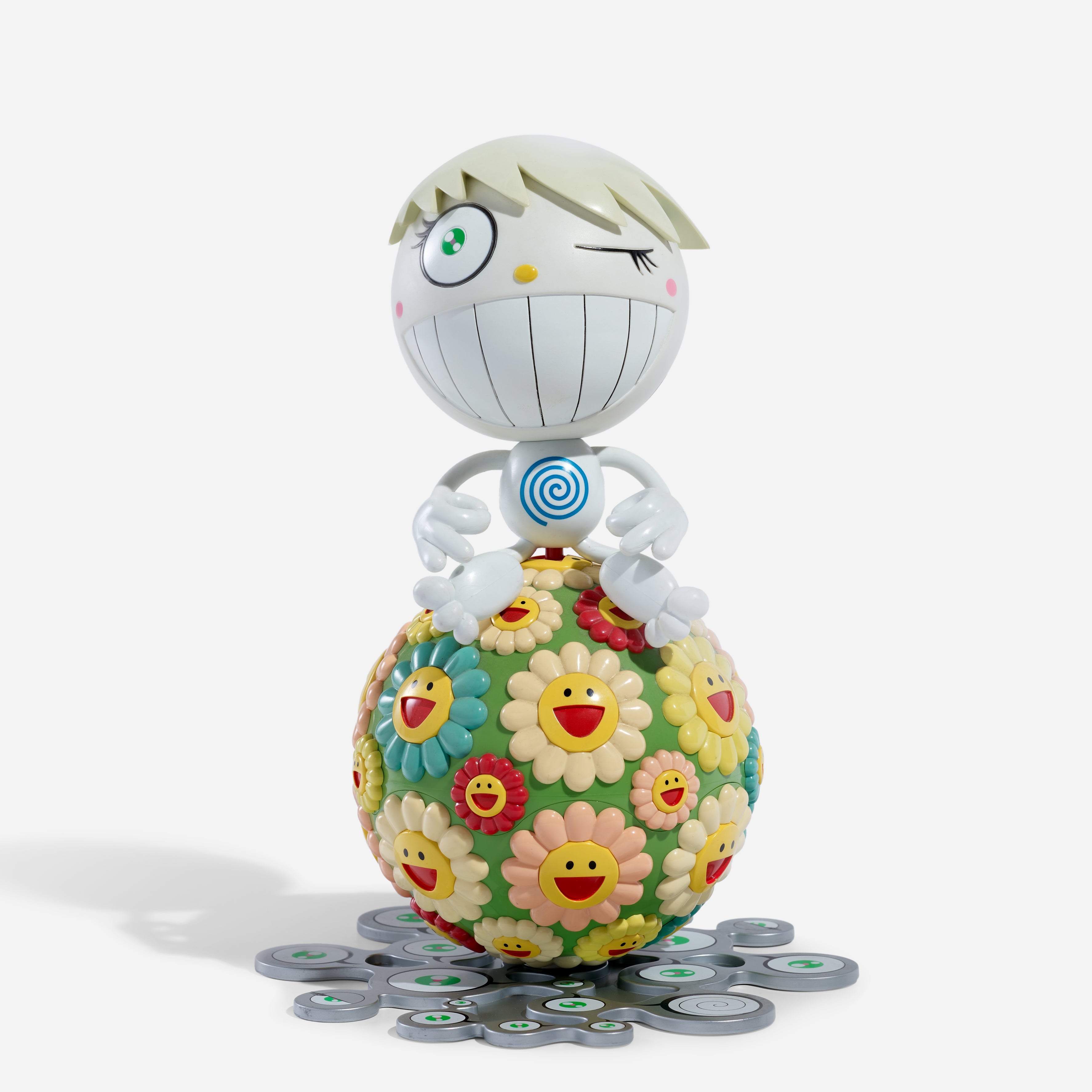
Takashi Murakami
Oval (Peter Norton Christmas Project 2000)
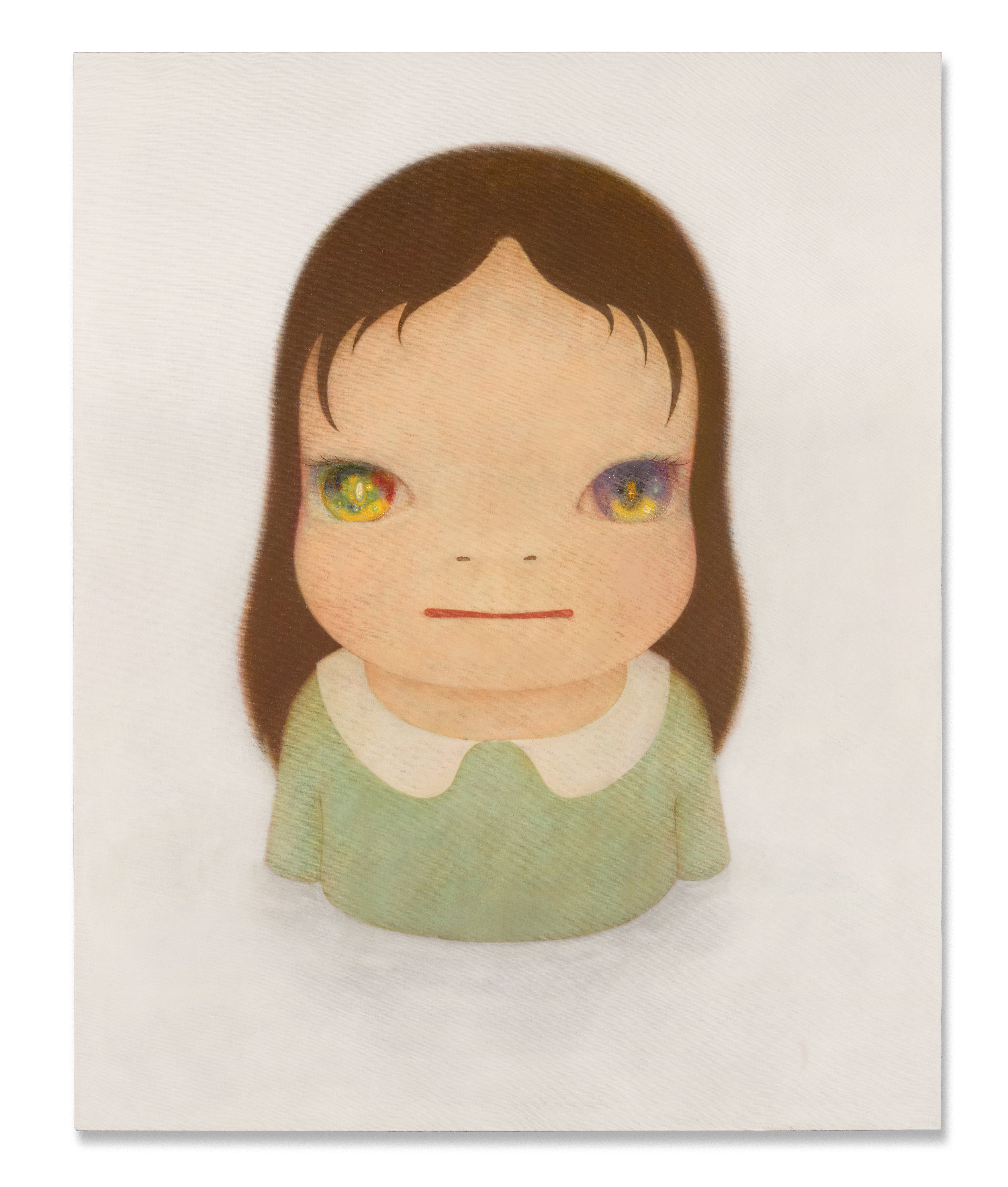
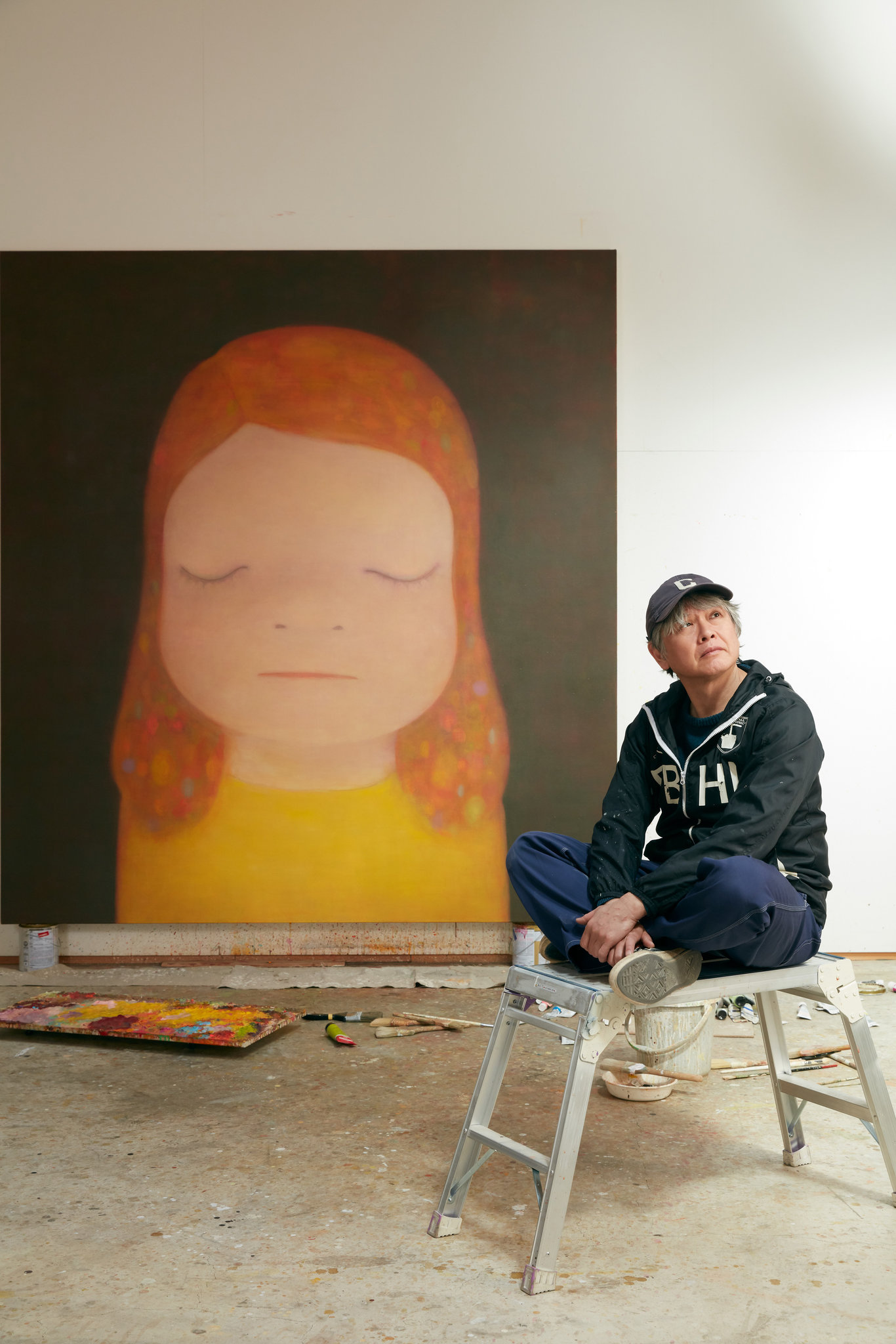
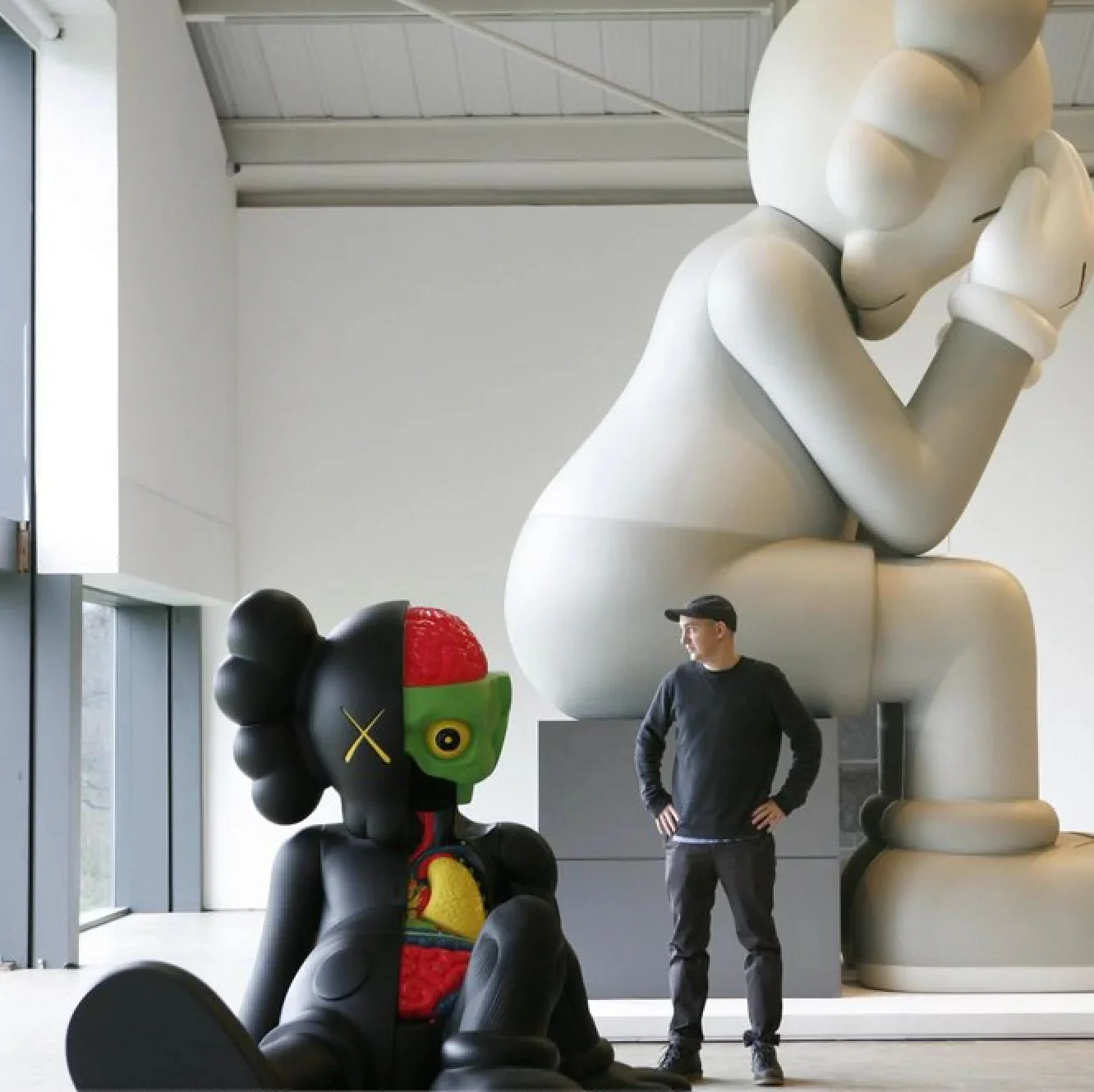
His flowers and his more troubling creatures coexist in the same visual field, cute and sinister in equal measure. Yoshitomo Nara's children, those wide eyed figures holding knives or staring from under dark brows, occupy similar territory. The work looks like it was made by a child and it absolutely was not. KAWS has carried these ideas into a generation that came of age in the era of streetwear and limited edition releases, finding in cartoon adjacency a genuine emotional register.
His works on The Collection sit alongside pieces by Javier Calleja and Mr Doodle, artists who each navigate the edge between the immediately appealing and the genuinely felt. Wayne Thiebaud deserves mention here too: his cakes and pies and lipstick rows are whimsical in the most American of ways, finding in the vernacular of the diner and the candy counter a kind of pop poetry. Claes Oldenburg had done something structurally similar a decade earlier, enlarging the mundane until it became strange again. What unites all of this work, across a century of radical change in art and culture, is a shared conviction that play is not the opposite of meaning.
It is one of its most direct routes. The artists who have inhabited the whimsical mode most successfully have never been making easier art. They have been making art that is honest about desire, about childhood, about the persistence of imagination in the face of everything that tries to extinguish it. To collect in this spirit is to make a particular kind of bet on the world, one that insists on the importance of joy as an intellectual position and delight as a form of resistance.
That is not a small thing to hang on a wall.