Large Format
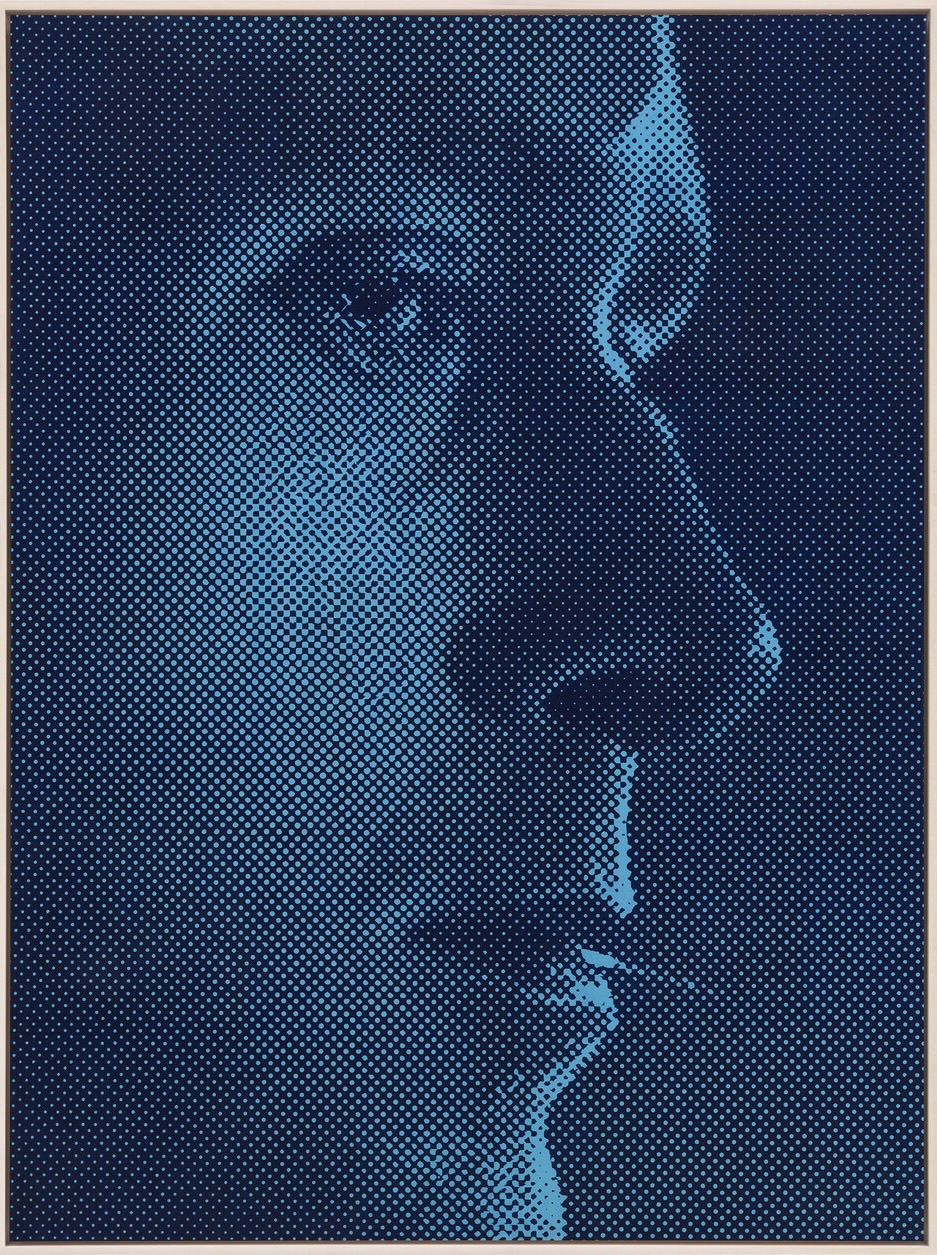
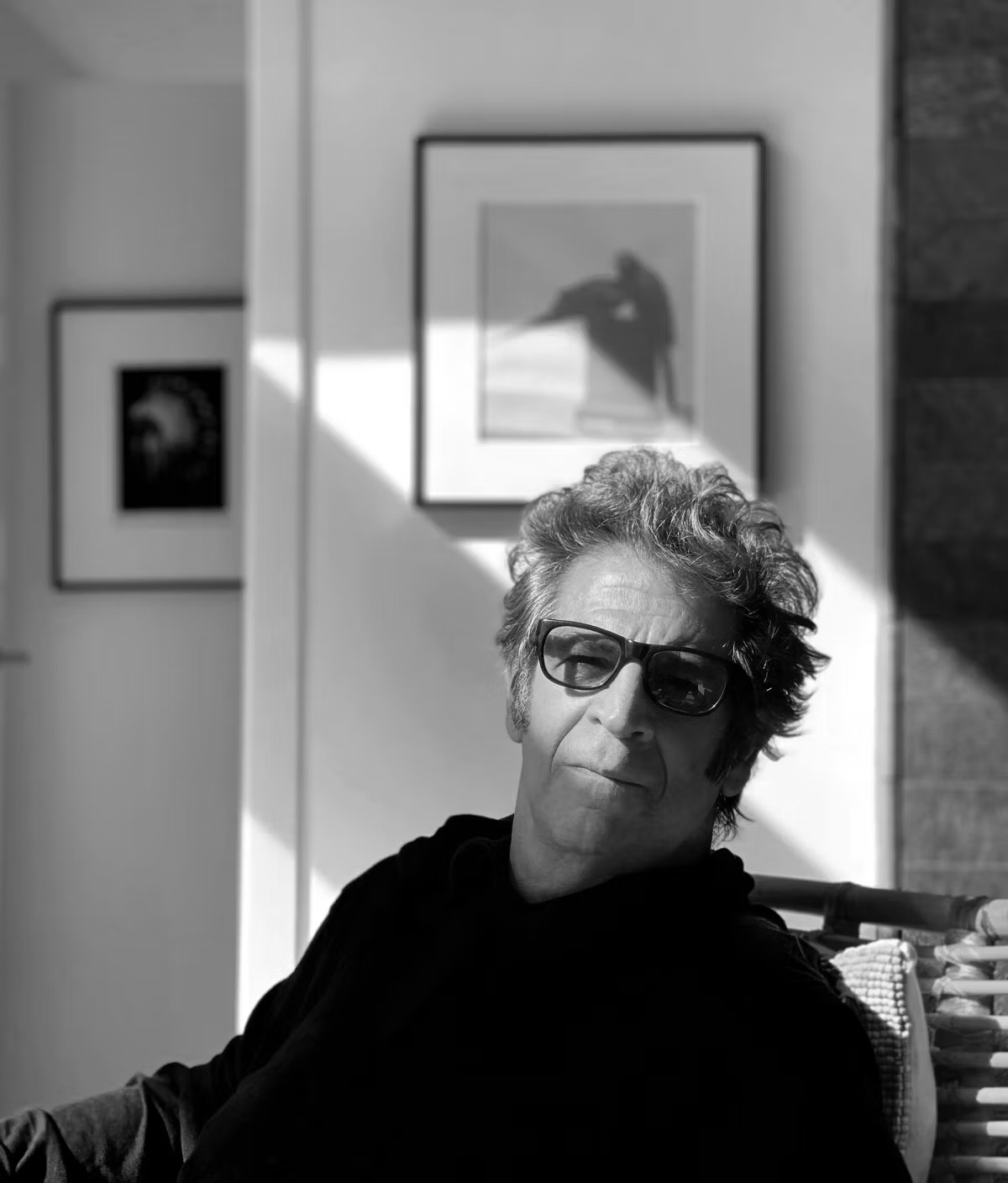
Andrew Brischler
Self Portrait (as The Driver), 2024

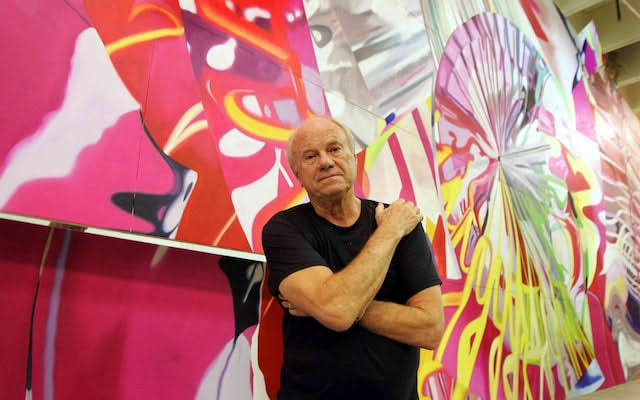
Scale Is Not a Style. It Is a Statement.
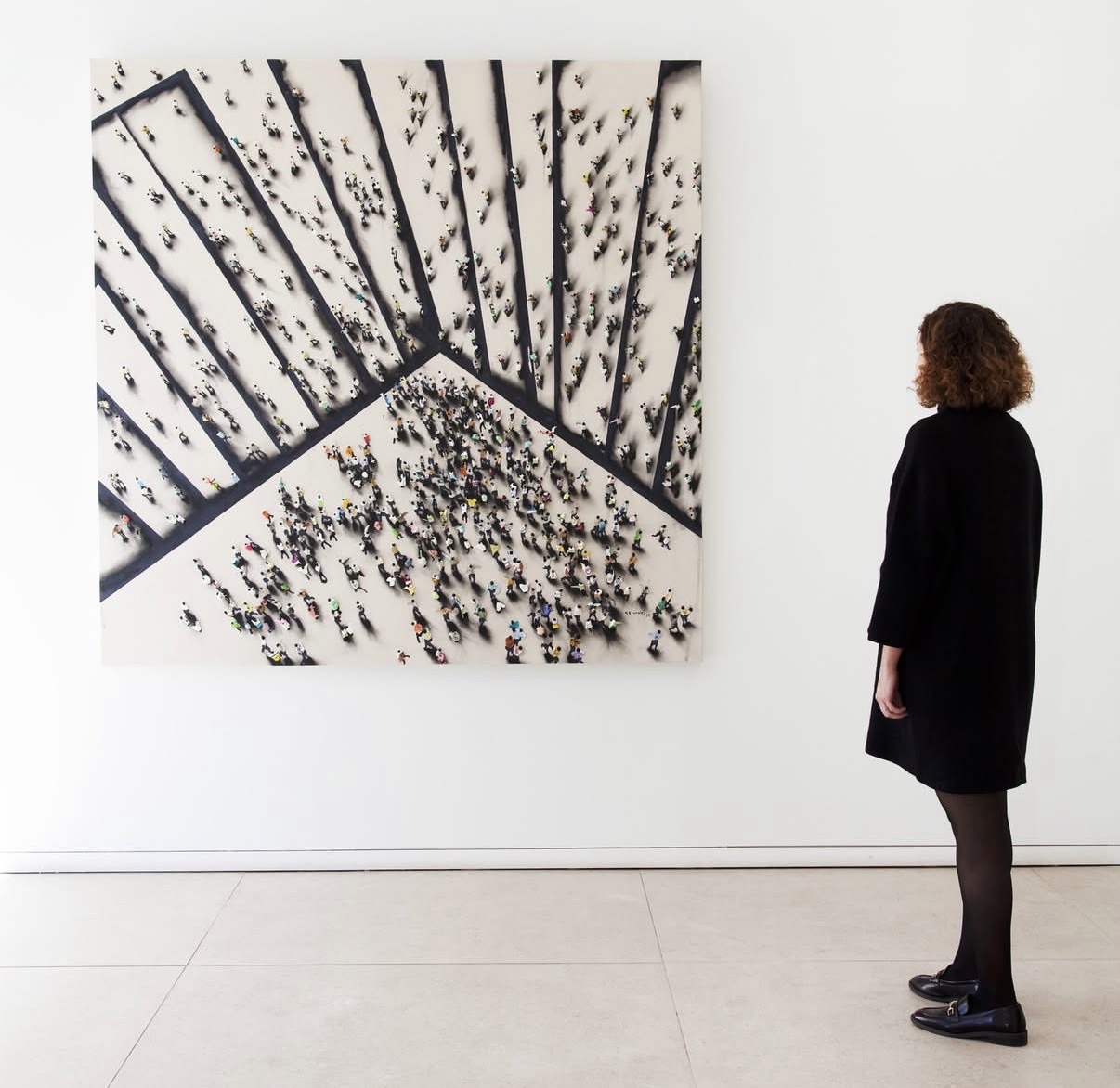
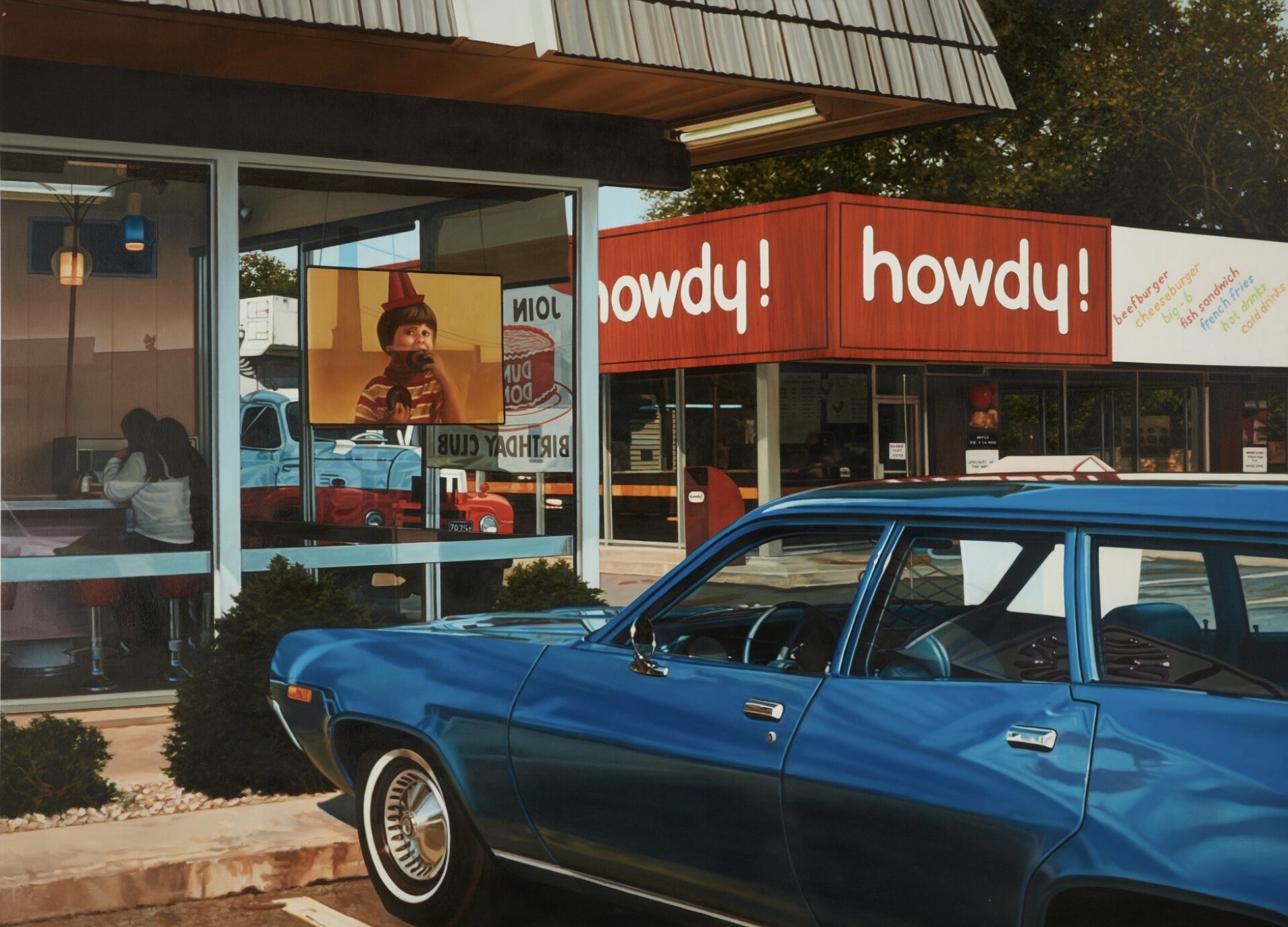
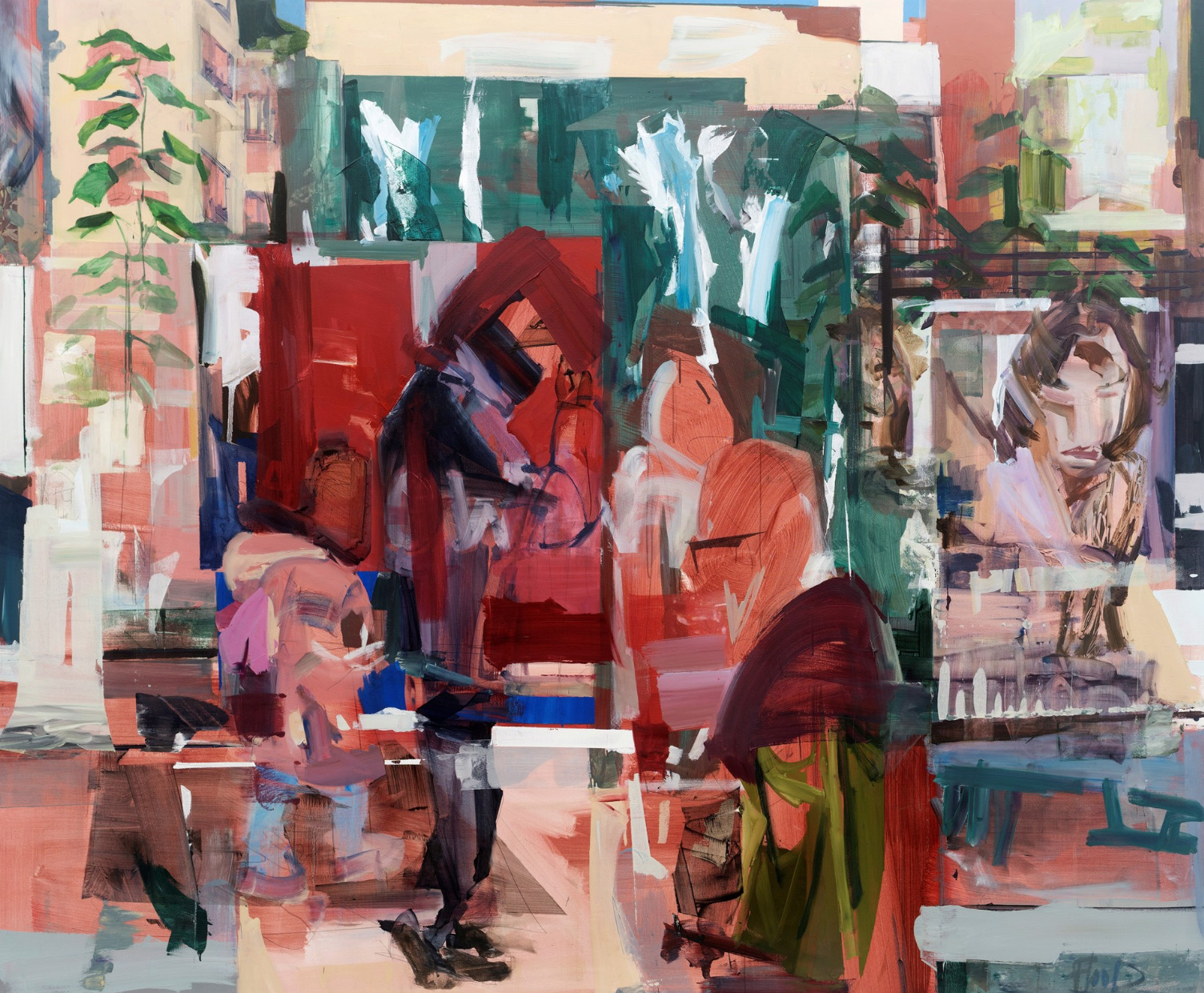
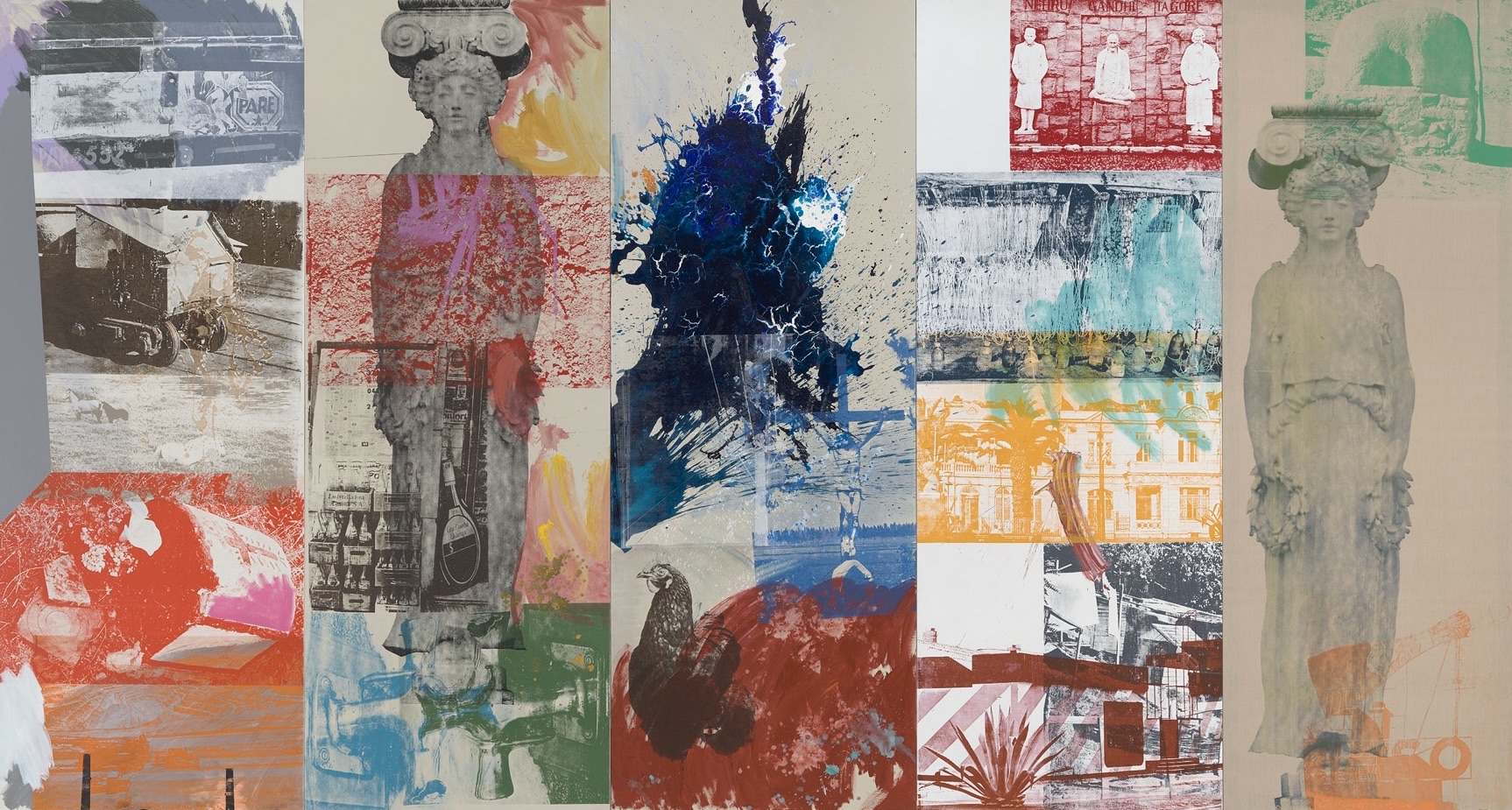
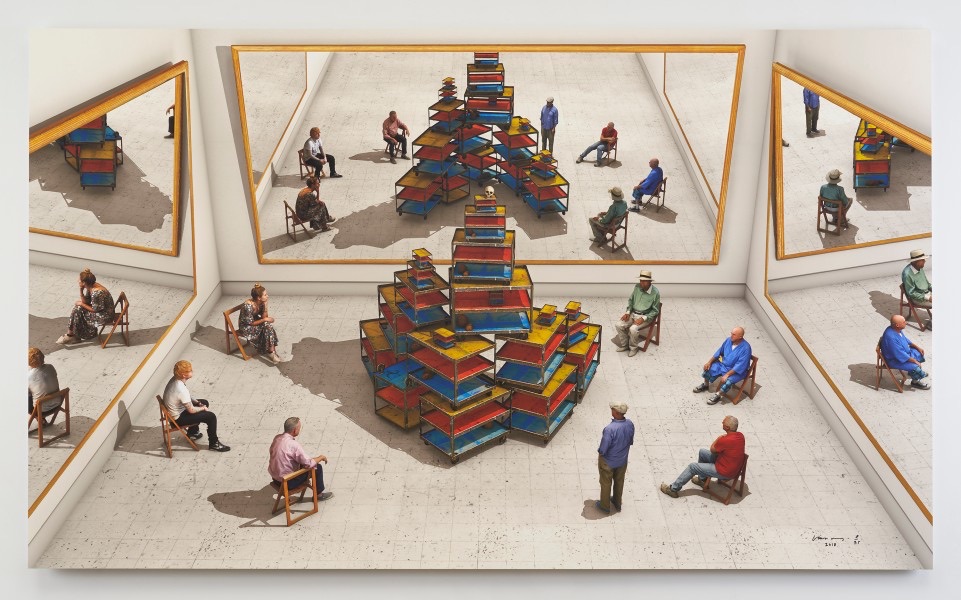
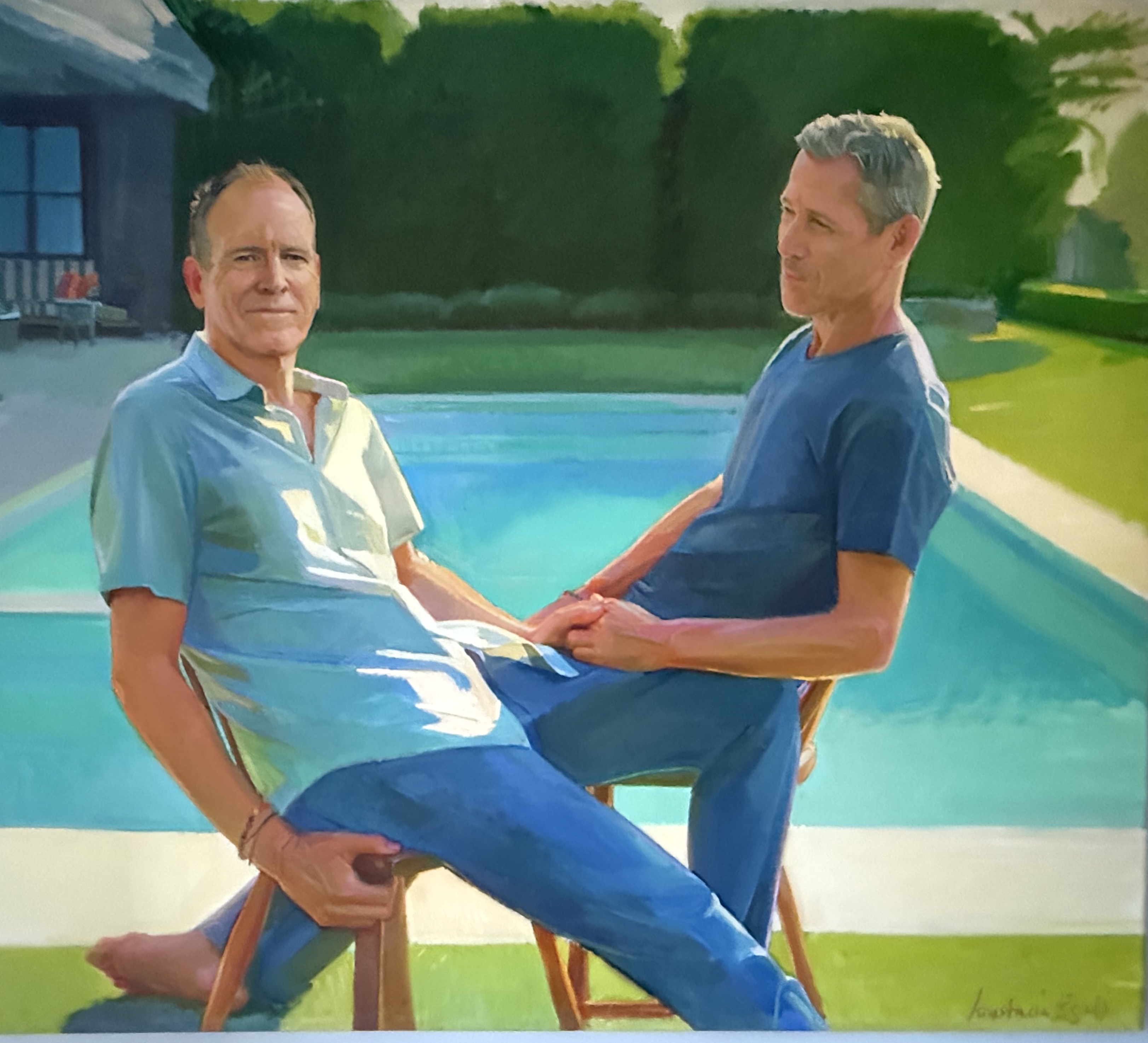
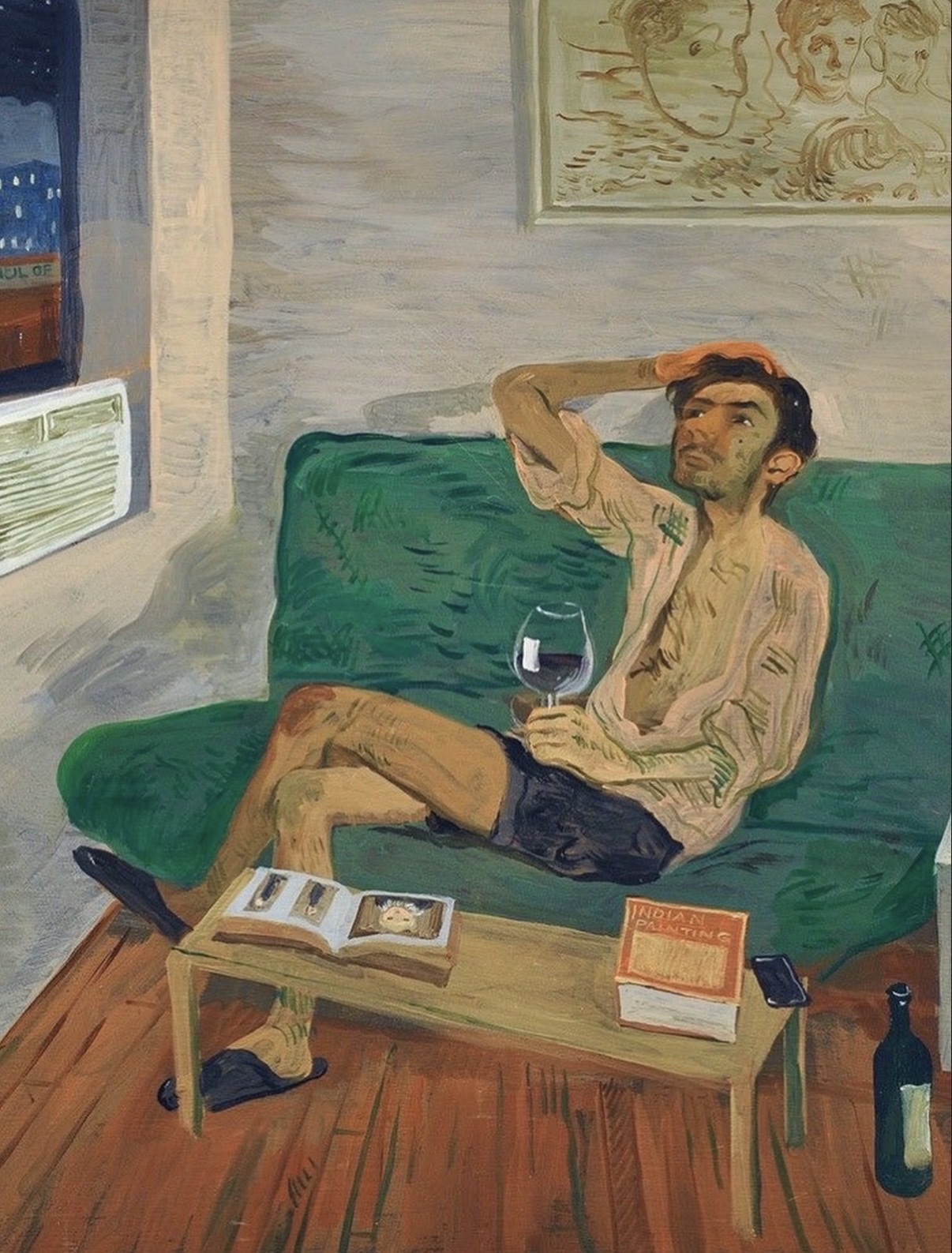
There is a moment, standing before a truly large work of art, when your peripheral vision gives up trying to contain it. The painting or photograph refuses to become an object you observe from a safe distance. Instead it becomes something closer to an environment, and you find yourself inside it before you have made any conscious decision to enter. This is not accidental.
It is the whole point. Large format art is not simply art made bigger. It is a fundamentally different proposition about what looking means and what a body is allowed to feel in the presence of a made thing. The ambition toward scale has deep roots in Western art, but the self conscious deployment of size as a conceptual tool is largely a postwar development.
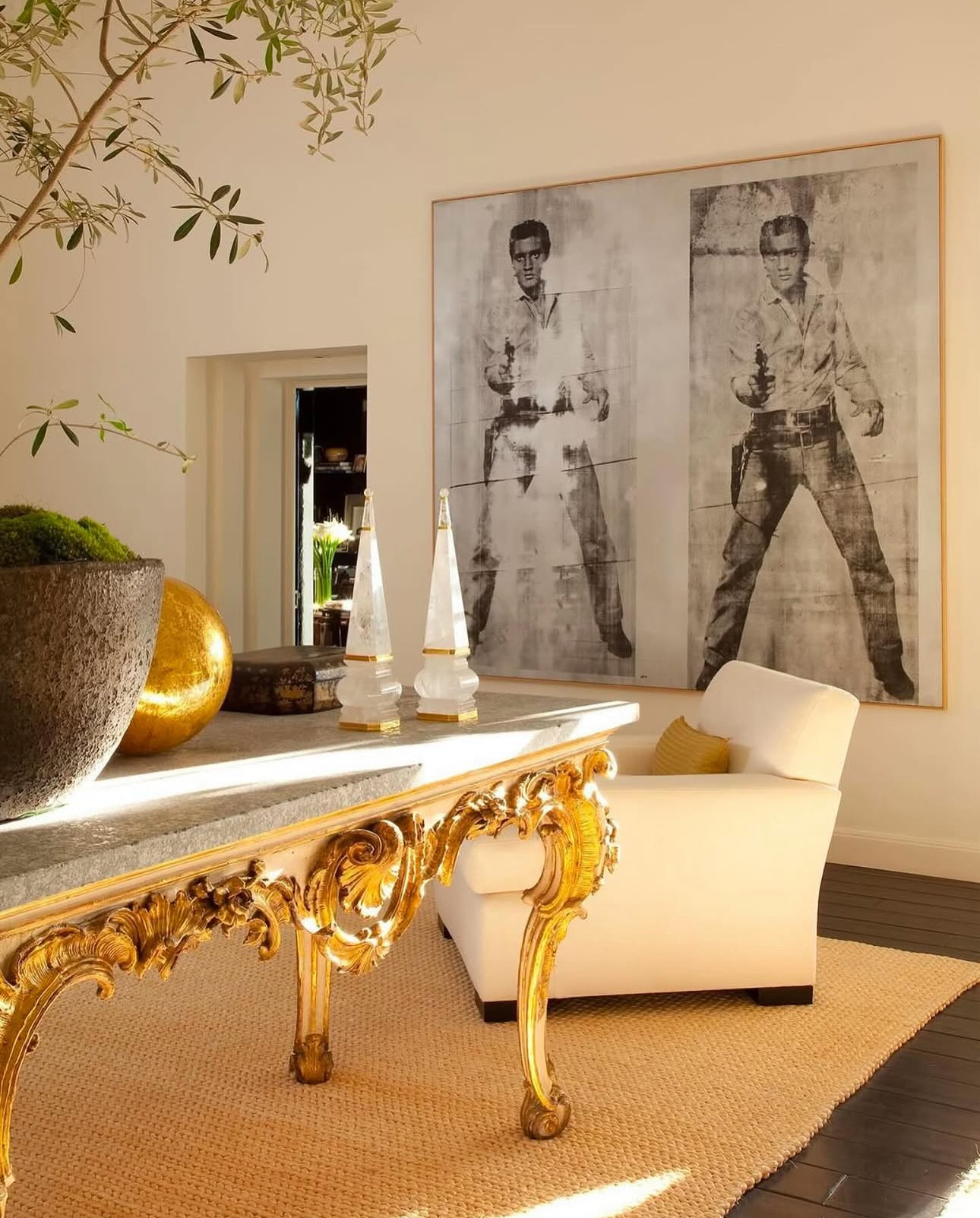
Andy Warhol
Double Elvis, 1963
The Abstract Expressionists understood this with unusual clarity. When Barnett Newman stretched his first zip painting to over eight feet in 1950, or when Mark Rothko insisted his canvases be installed at close range in deliberately dimmed rooms, they were not responding to a fashion. They were making an argument about transcendence and the limits of representation. Helen Frankenthaler, working through the 1950s and beyond with her soak stain technique on unprimed canvas, extended this logic into something more lyrical and atmospheric.
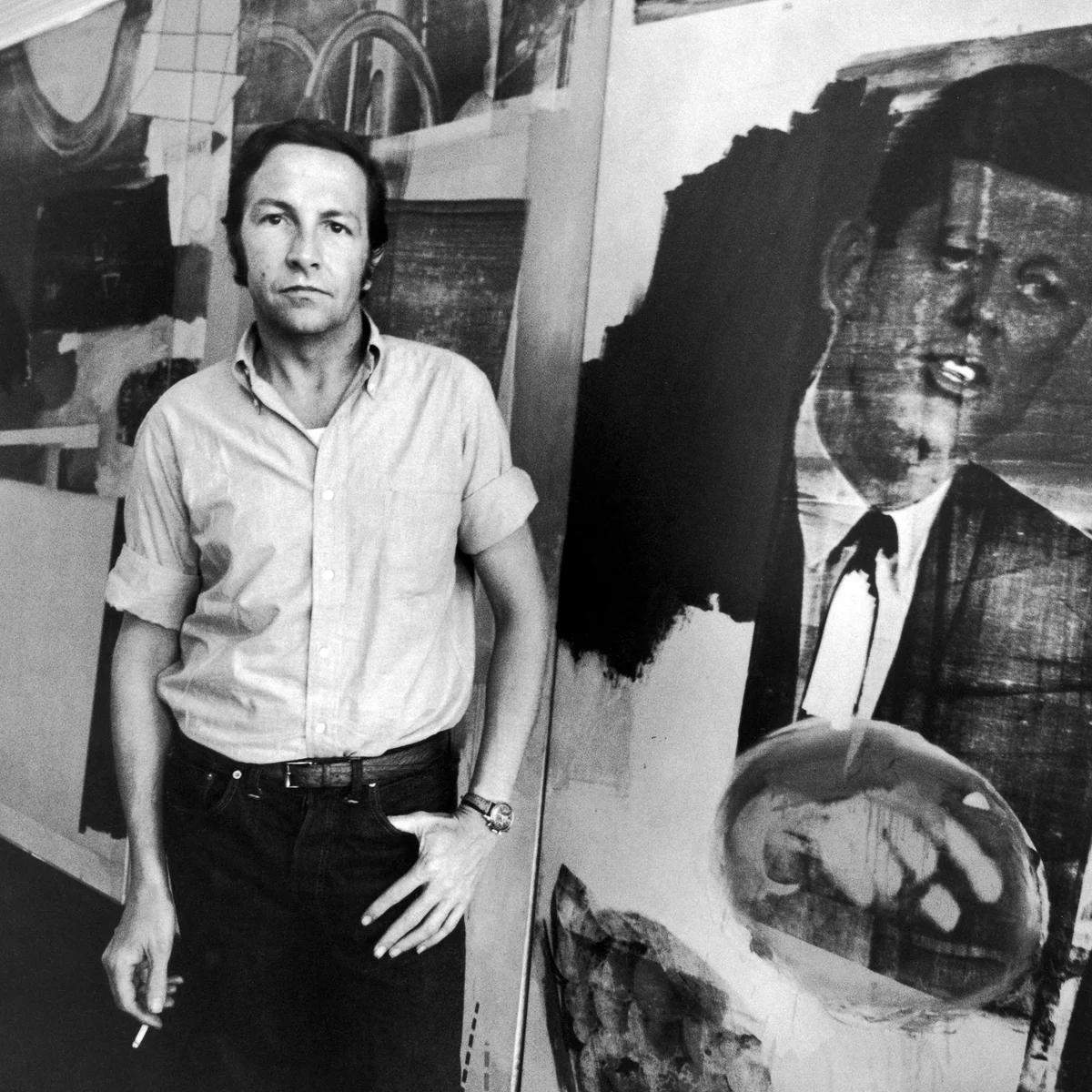
Her large works do not demand or overwhelm so much as they absorb you gradually, which is its own kind of power. The New York school passed this ambition forward in ways both obvious and surprising. Pop artists took scale and filled it with cultural noise rather than existential silence. James Rosenquist, who had worked as a billboard painter before his career in fine art, brought that vernacular training directly into his canvases.
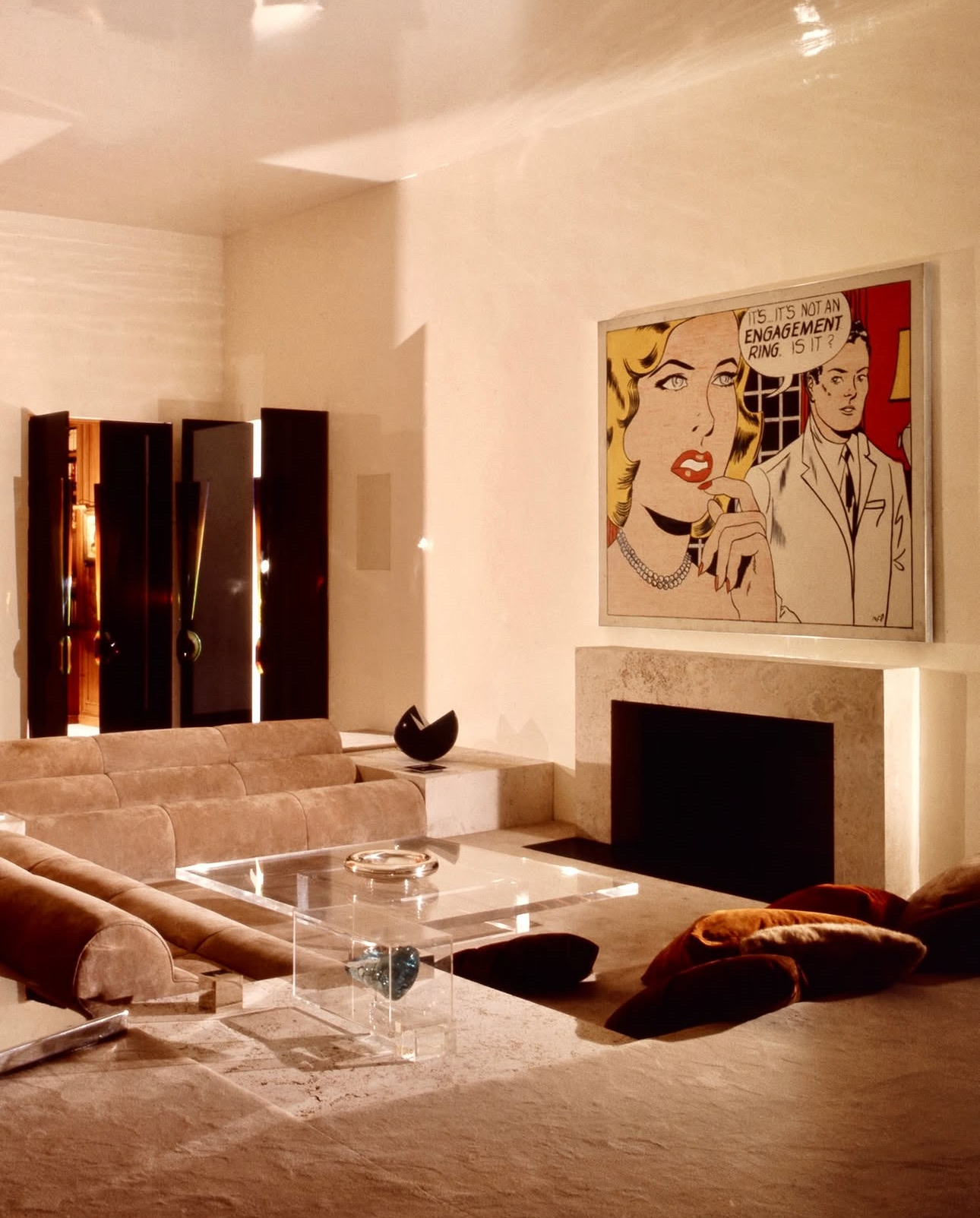
Roy Lichtenstein
The Engagement Ring, 1961
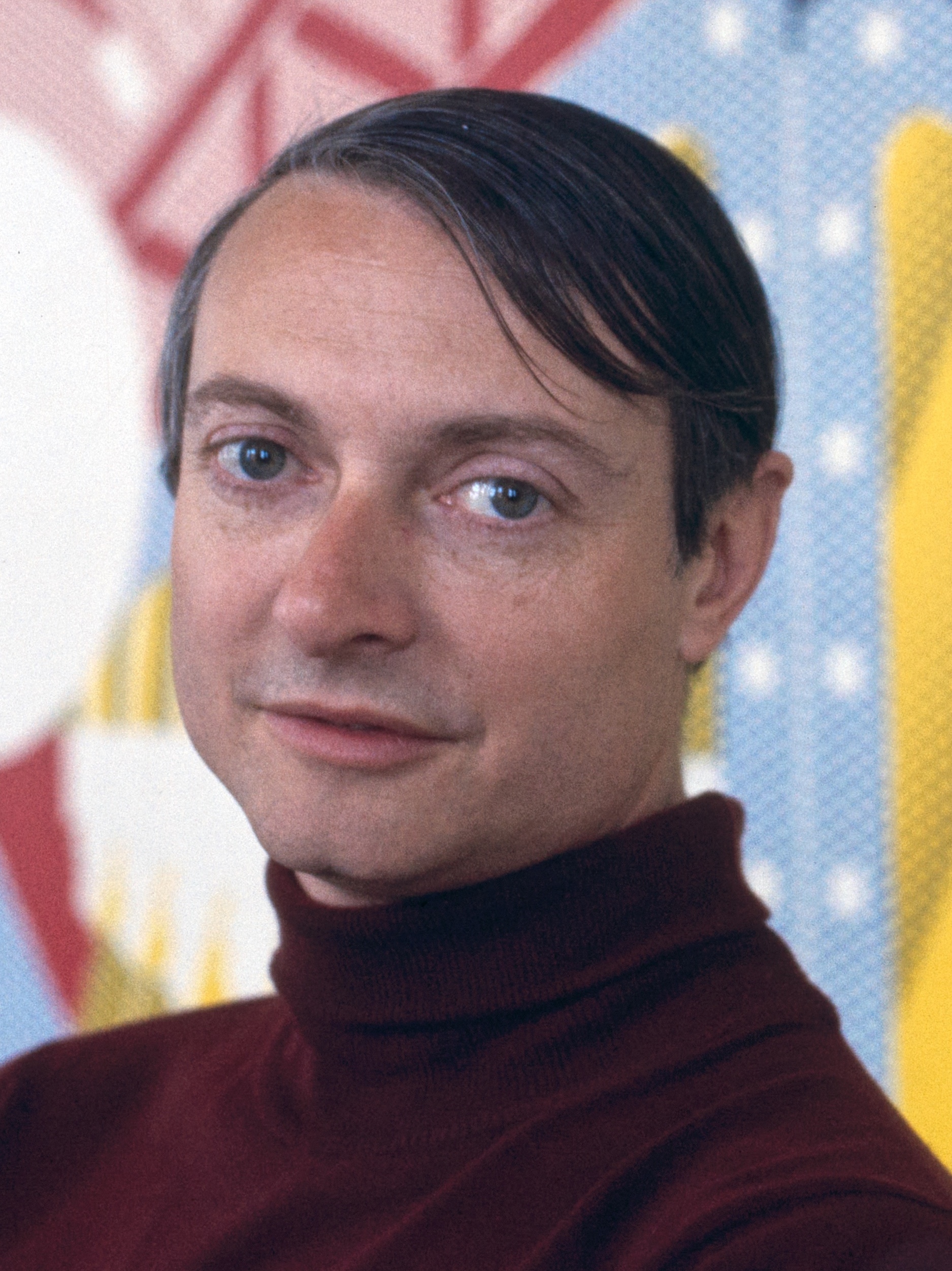
His monumental F 111, completed in 1965 and spanning over eighty feet in its original installation, wrapped around the walls of the Leo Castelli Gallery and made the viewer feel genuinely engulfed by consumer imagery and Cold War anxiety simultaneously. Roy Lichtenstein was working in a similar register, borrowing from comic strip conventions and inflating them to a scale that made the mechanical dots of Ben Day printing suddenly visible and strange. What had been cheap and disposable became monumental and deliberate. For photography, the shift toward large format came later and arrived with particular force in the late 1980s and through the 1990s, emerging substantially from the Kunstakademie Düsseldorf and the influence of Bernd and Hilla Becher on a generation of students who became transformative figures.
Andreas Gursky, Thomas Ruff, Candida Höfer, Thomas Struth and Thomas Demand all emerged from or were shaped by this lineage, and together they redefined what photographic scale could mean and do. Gursky's images of stock exchanges, factories and festival crowds, printed at sizes that rival any canvas in a museum, challenged the hierarchy that had long placed photography beneath painting in discussions of ambition and presence. His 1999 image Rhein II, one of the most debated photographs of its era, demonstrates how radical simplification at large scale can produce something closer to a philosophical proposition than a document. Ruff and Höfer pursued different paths through similar territory: Ruff into portraiture and appropriation, Höfer into the quiet authority of institutional interiors, both insisting through sheer physical scale that photography deserved to occupy the same walls and command the same attention as any other medium.
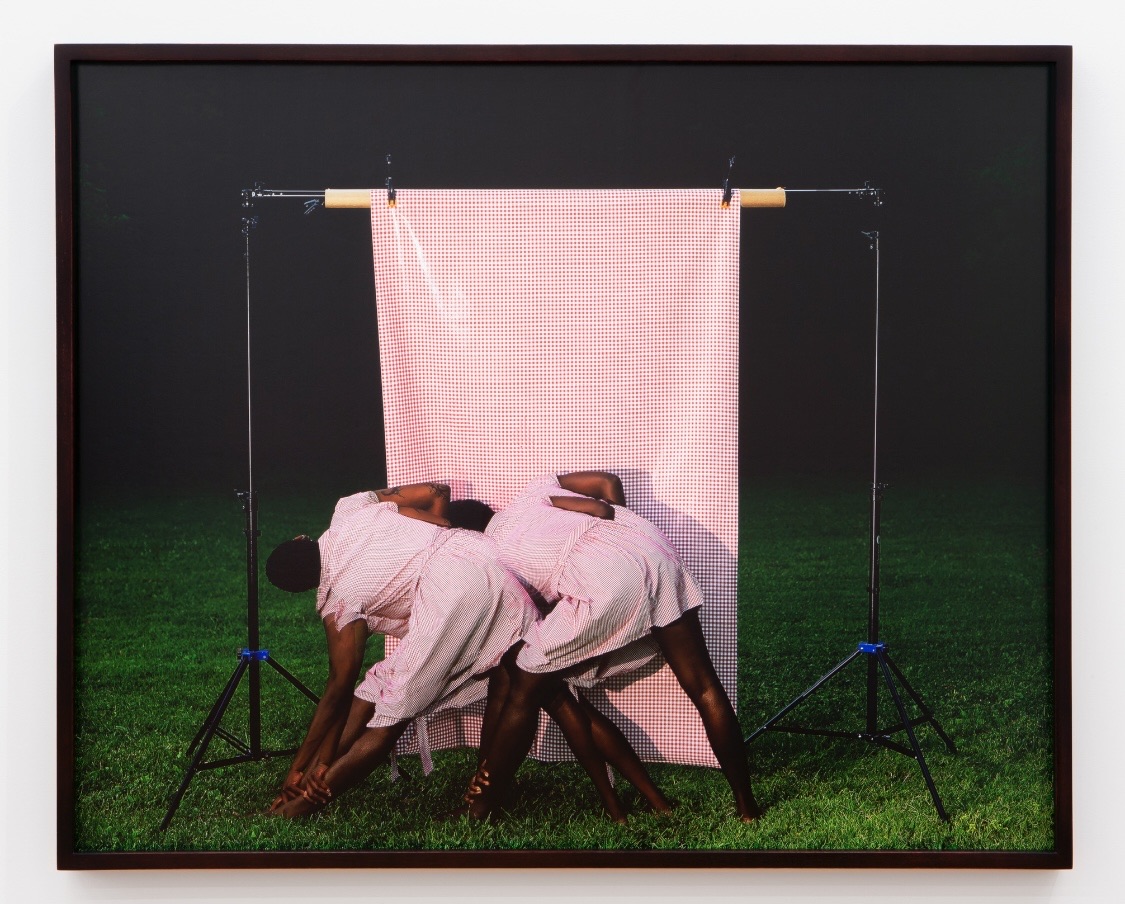
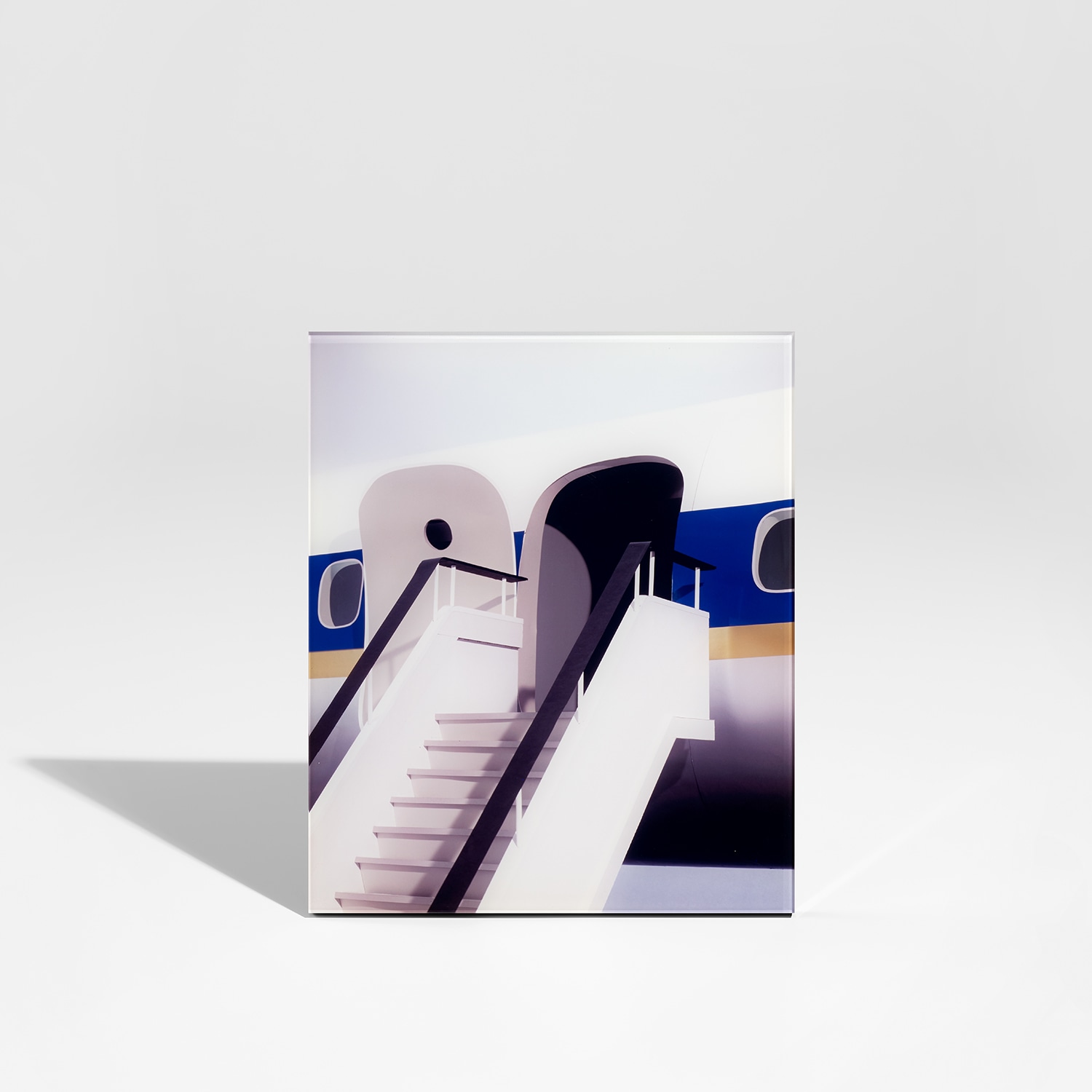
Widline Cadet
Untitled
Large format work in photography has never been only a German story, of course. Richard Misrach spent decades photographing the American desert and the damaged landscapes of the American West in prints whose size is inseparable from their moral weight. Edward Burtynsky approaches industrial transformation on a similar scale, his images of shipbreaking yards and tailings ponds asking you to hold an uncomfortable amount of information at once. Robert Polidori has applied comparable scale to the intimate catastrophe of interior spaces, from post Katrina New Orleans to the abandoned rooms of Versailles.
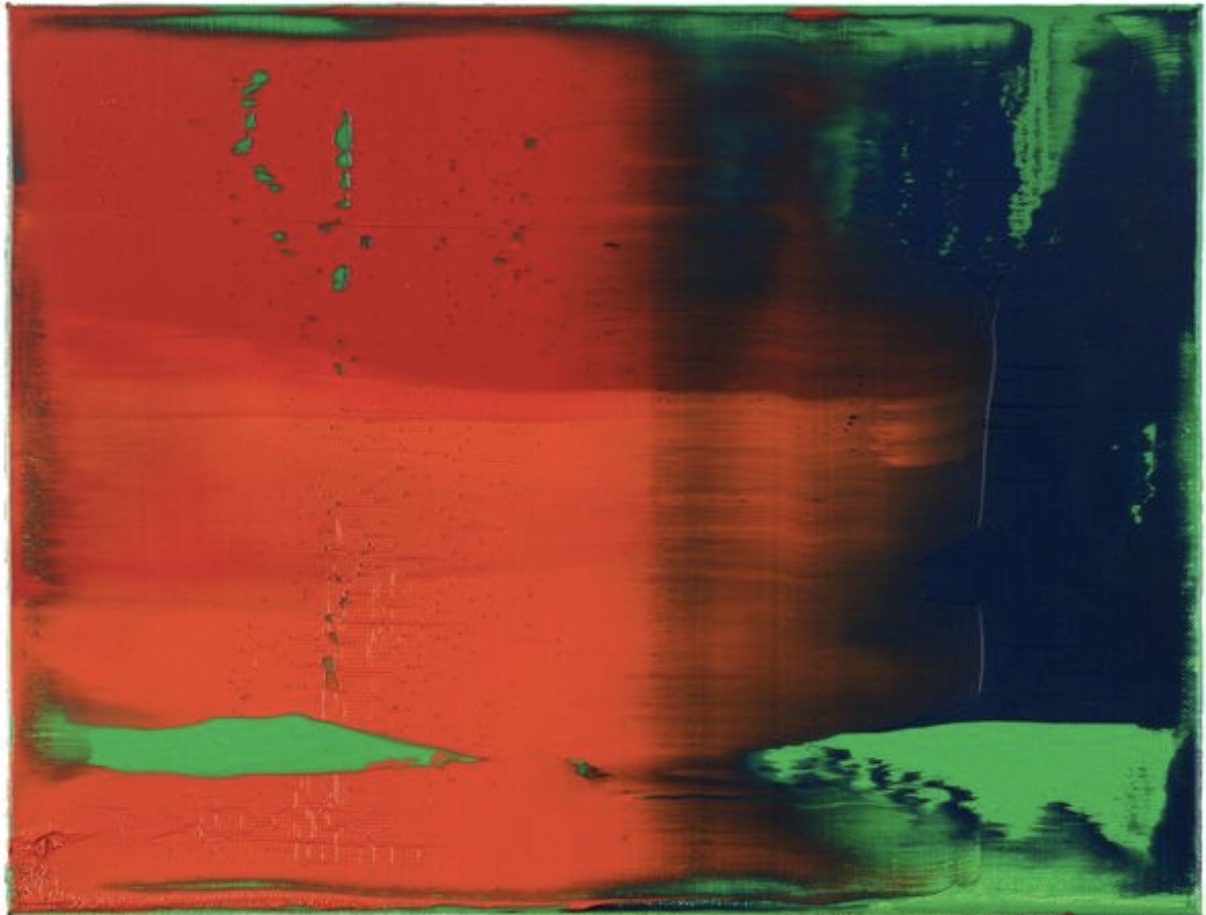
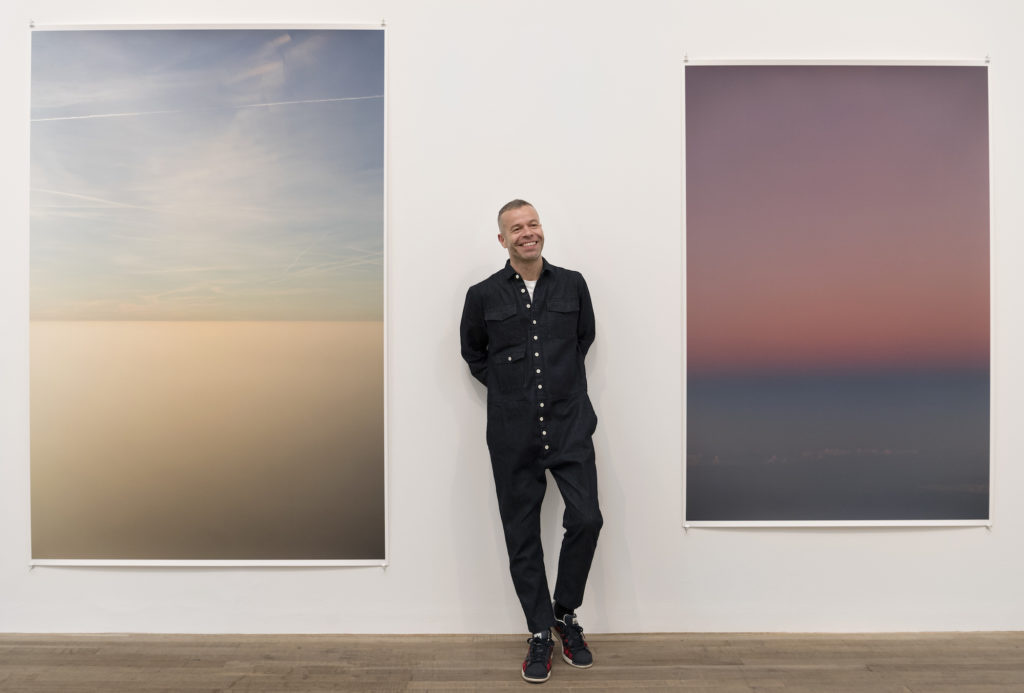
Wolfgang Tillmans sits slightly apart from this tradition in that he is suspicious of grandeur and works with scale in a more provisional and questioning way, often juxtaposing large prints with small ones to deflate the authority that size can accrue too easily. Painting never stopped working through these questions in parallel. Gerhard Richter has moved fluidly between intimate and enormous, and his large abstract works carry a particular tension because the scale seems to force a confrontation between pure sensation and the controlled intelligence behind every mark. Christopher Wool brought text and gestural painting together in works that are most fully themselves at large scale, where the stenciled letters and obsessive overpainting require actual physical movement from the viewer to be read properly.
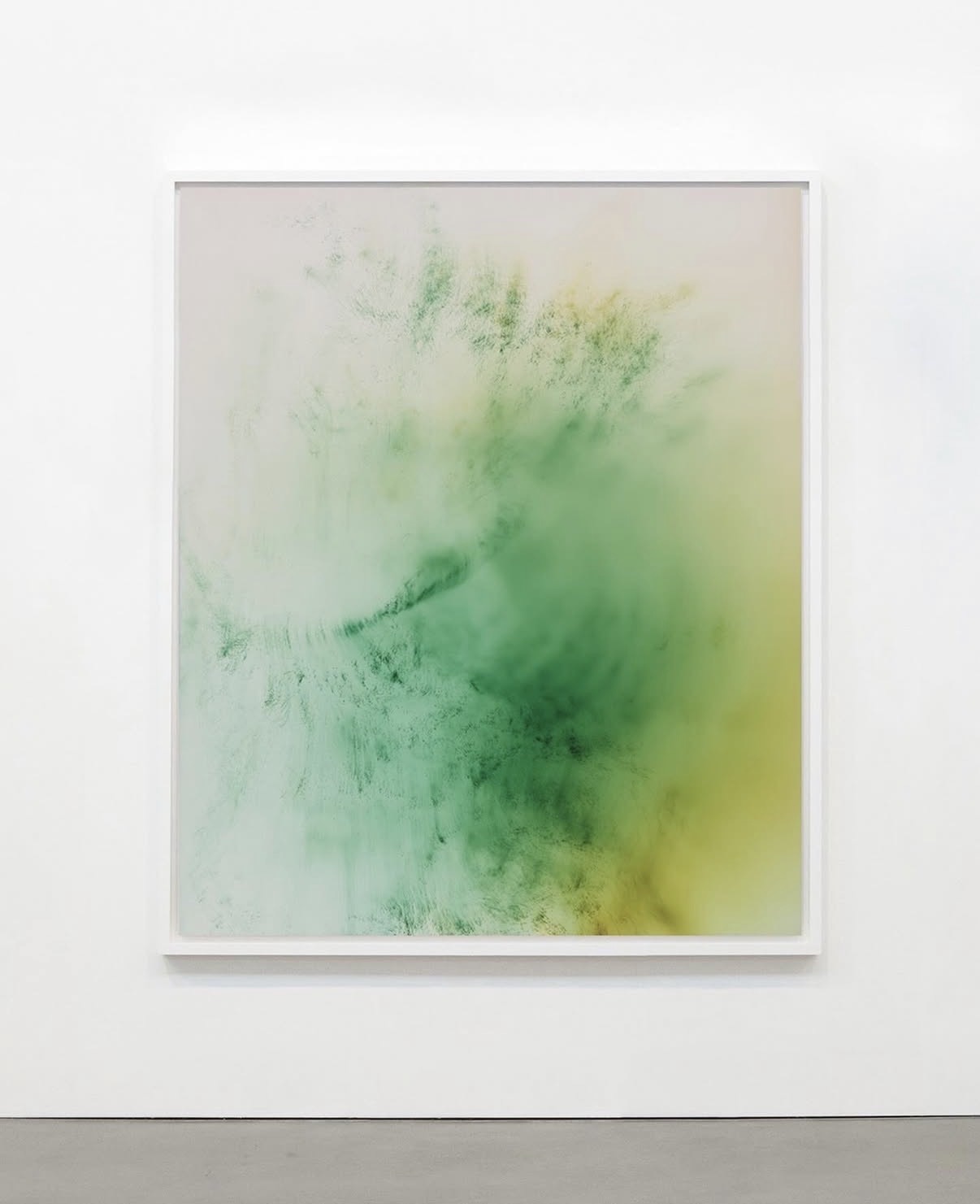
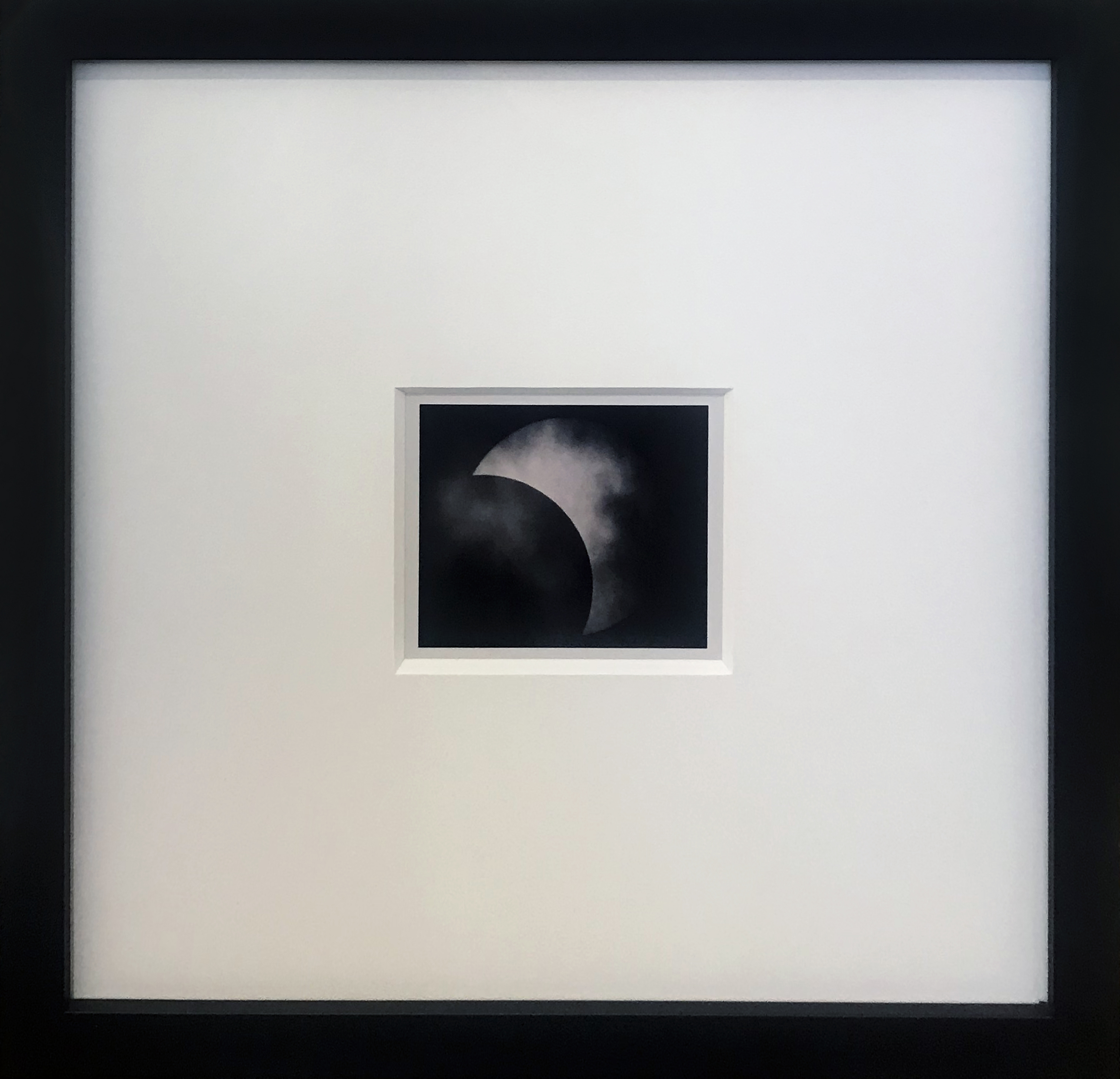
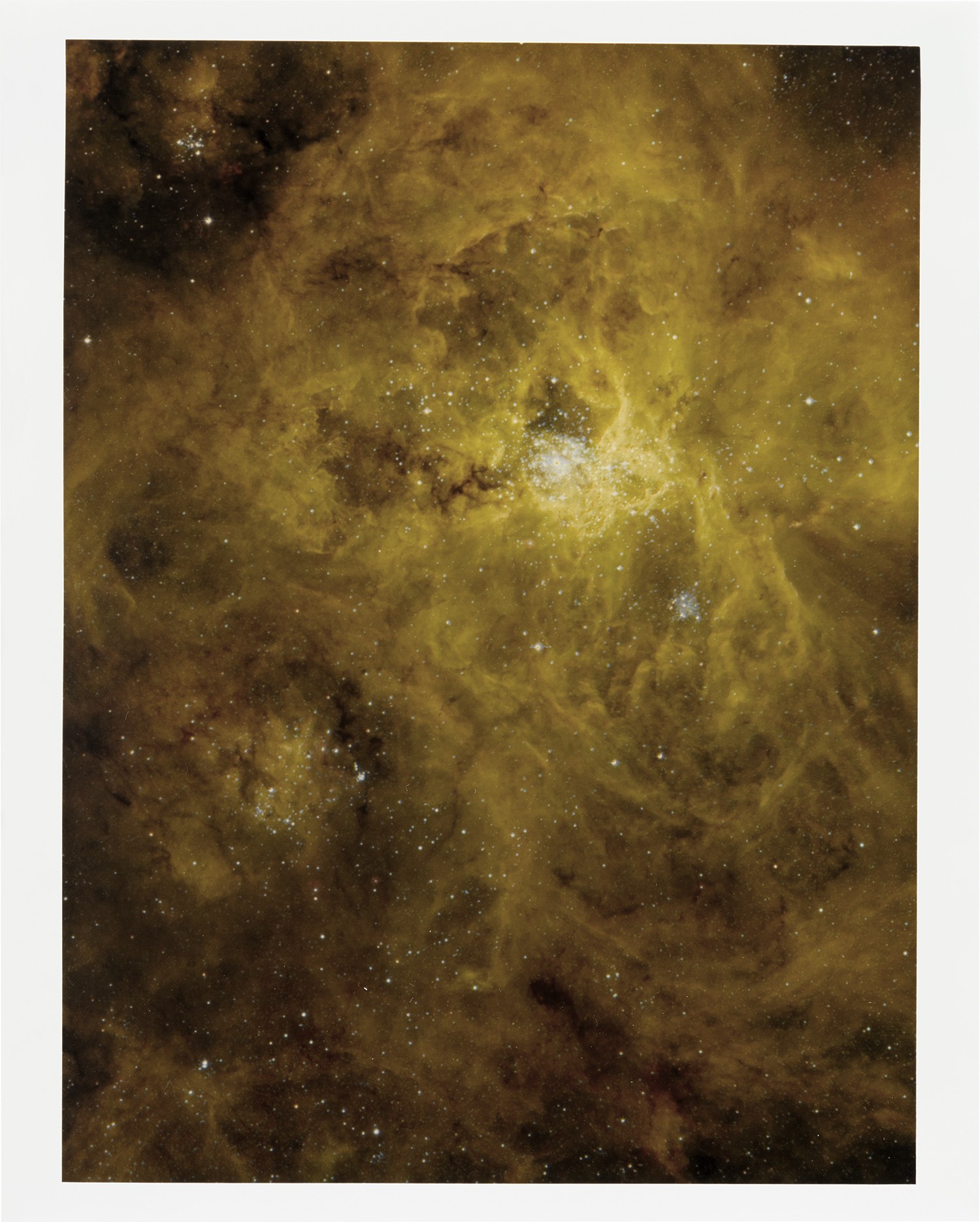
Wolfgang Tillmans
Time Flows All Over 8, 2025
Richard Serra removed the painted surface entirely and replaced it with raw steel, but his sculptures belong completely to the logic of large format thinking. His work at the Dia:Beacon or in the series of torqued ellipses he made through the late 1990s and 2000s understands that scale is also duration: you do not see a Serra piece so much as travel through it over time. What connects all of this work across media and decades is an insistence that art can claim the space and attention that the surrounding culture makes increasingly difficult to sustain. In an era of compressed attention and screens scaled to the palm of the hand, the large format work performs a kind of resistance.
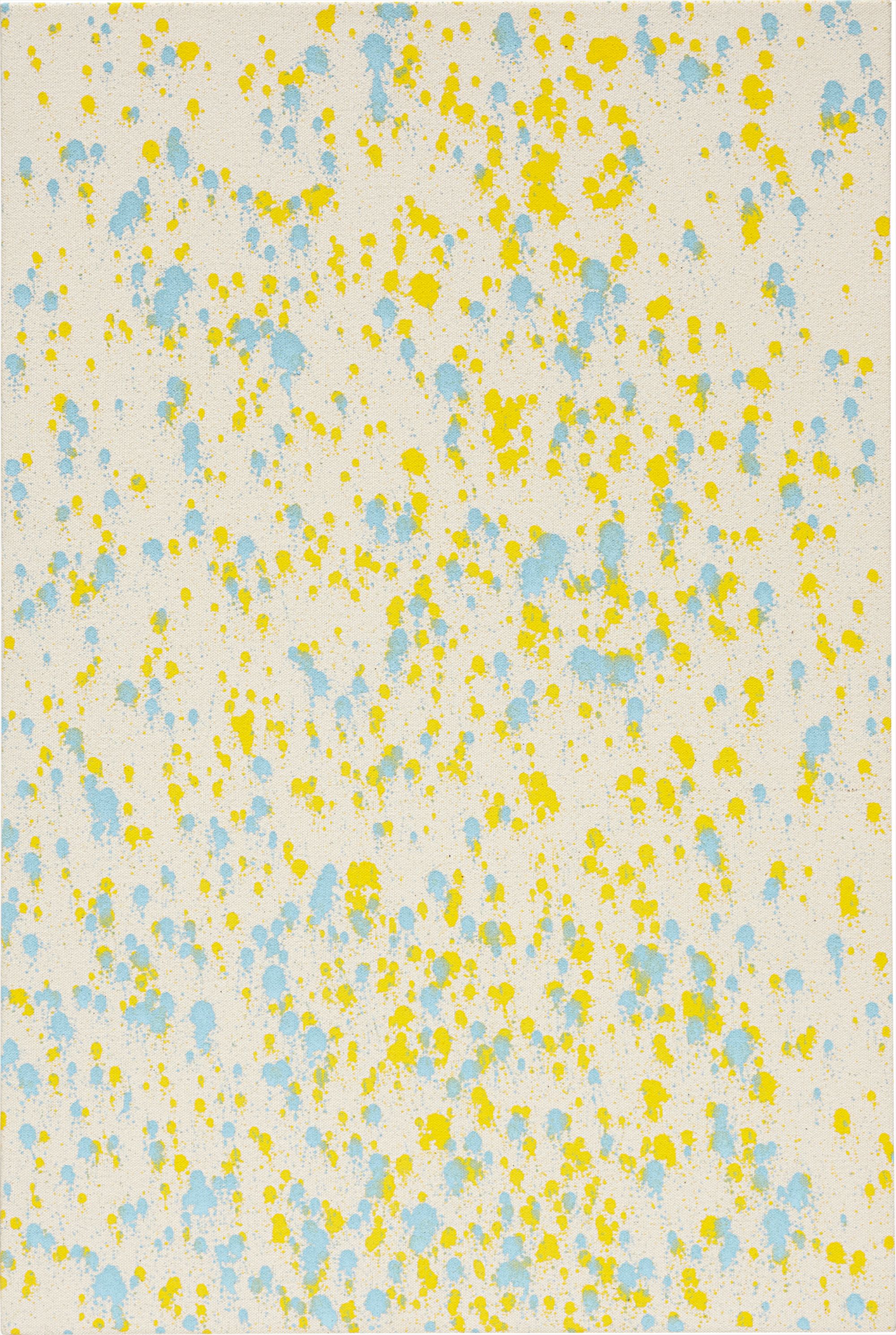
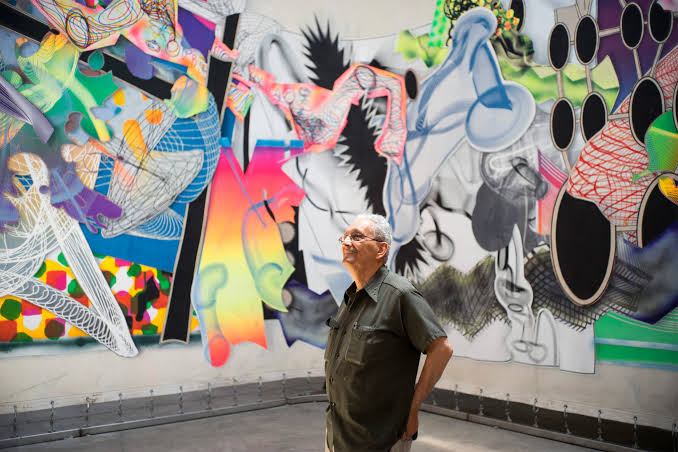
Lucien Smith, Robert Longo, Frank Stella and others well represented on The Collection each engage with scale as both a physical and a rhetorical decision, a way of declaring that certain experiences require room to unfold. The large work asks something of the collector too. It cannot be stored casually or hung as decoration without losing something essential. It demands a relationship, a space genuinely designed for it, a commitment that goes beyond acquisition into something more like stewardship.
That is not a burden. For the right collector, it is precisely the point.