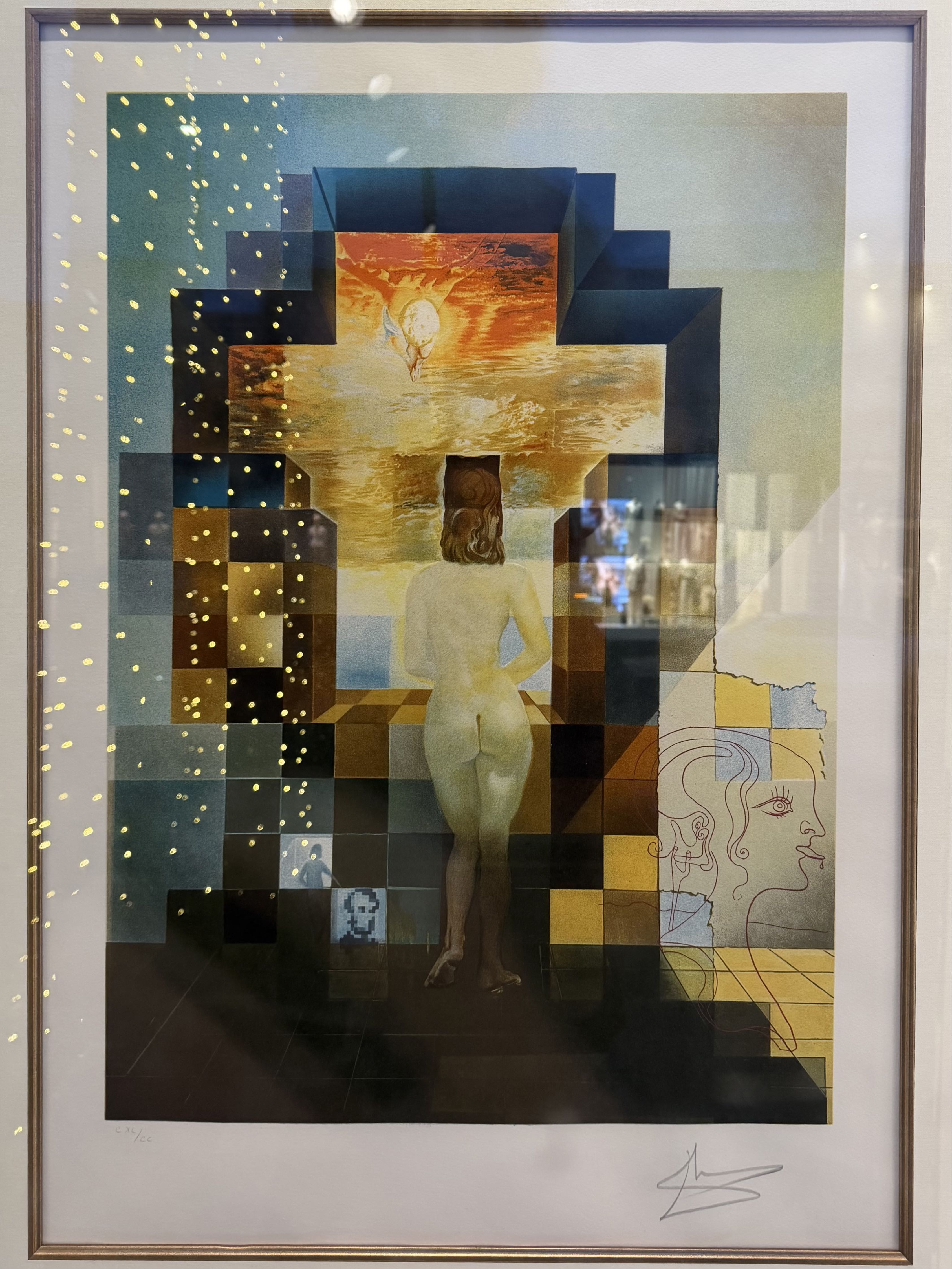
Lincoln in Dalivision
Lincoln in Dalivision is one of Salvador Dalí's most celebrated and technically ambitious print works, blending a pixelated portrait of Abraham Lincoln with a luminous nude figure of Gala, his wife and lifelong muse, seen from behind. The composition masterfully exploits the optical phenomenon of resolution distance, revealing Lincoln's iconic visage when viewed from afar while presenting an intricate mosaic of color squares and surrealist imagery up close. This limited edition signed print represents a landmark intersection of Dalí's fascination with optics, nuclear mysticism, and his devotion to Gala, making it a highly sought after treasure for serious collectors of Surrealist and twentieth century master prints.
More by Salvador Dalí


Artists in conversation
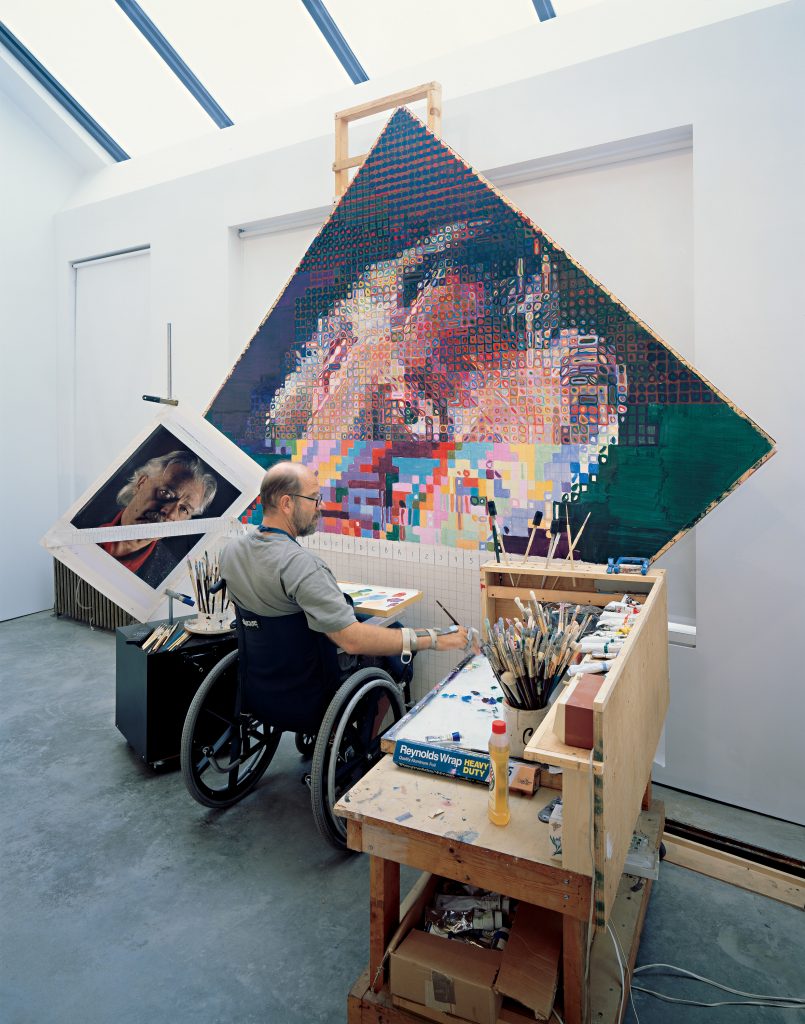
Chuck Close
American · b. 1940
Close pioneered large scale pixelated and gridded portrait compositions where recognizable faces emerge from abstract color modules at a distance, directly mirroring the optical resolution phenomenon at the heart of Lincoln in Dalivision. His systematic breakdown of the human face into geometric color cells shares the same conceptual and visual language as this specific Dalí print.
Octavio Ocampo
Mexican · b. 1943
Ocampo specializes in metamorphic optical illusion paintings where figurative scenes and hidden portrait faces coexist within the same composition, requiring the viewer to shift perception to see different images simultaneously. This dual image strategy and the blending of nude figures into a larger recognizable portrait directly parallels the structural concept of Lincoln in Dalivision.
Rob Silvers
American · b. 1968
Silvers invented photomosaic art in which large recognizable portraits are constructed entirely from grids of smaller distinct images, creating the same distance dependent dual reading that defines Lincoln in Dalivision. His technique of embedding layered figurative content within a pixelated portrait structure is the closest contemporary parallel to this specific Dalí work.
Start the Discussion
Request access to join the discussion