Optical Illusion
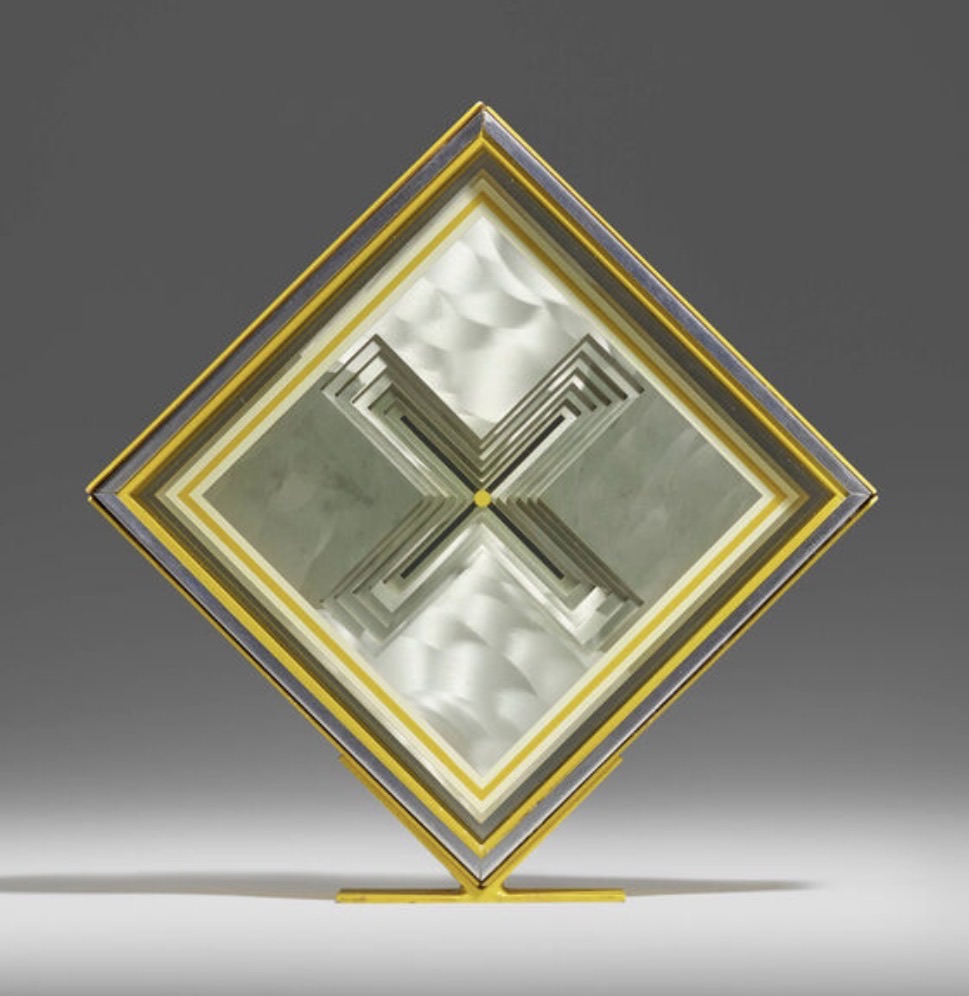
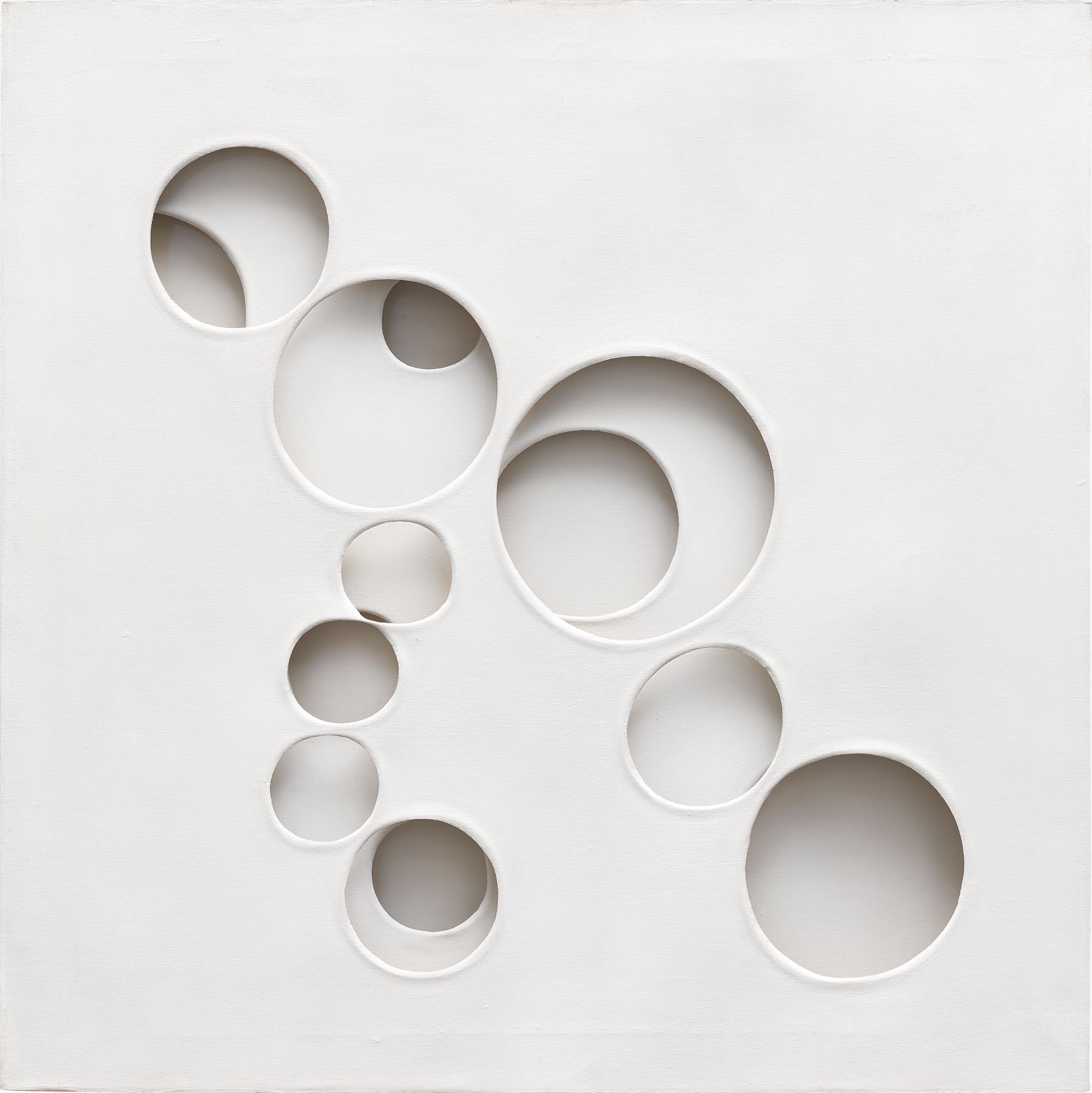
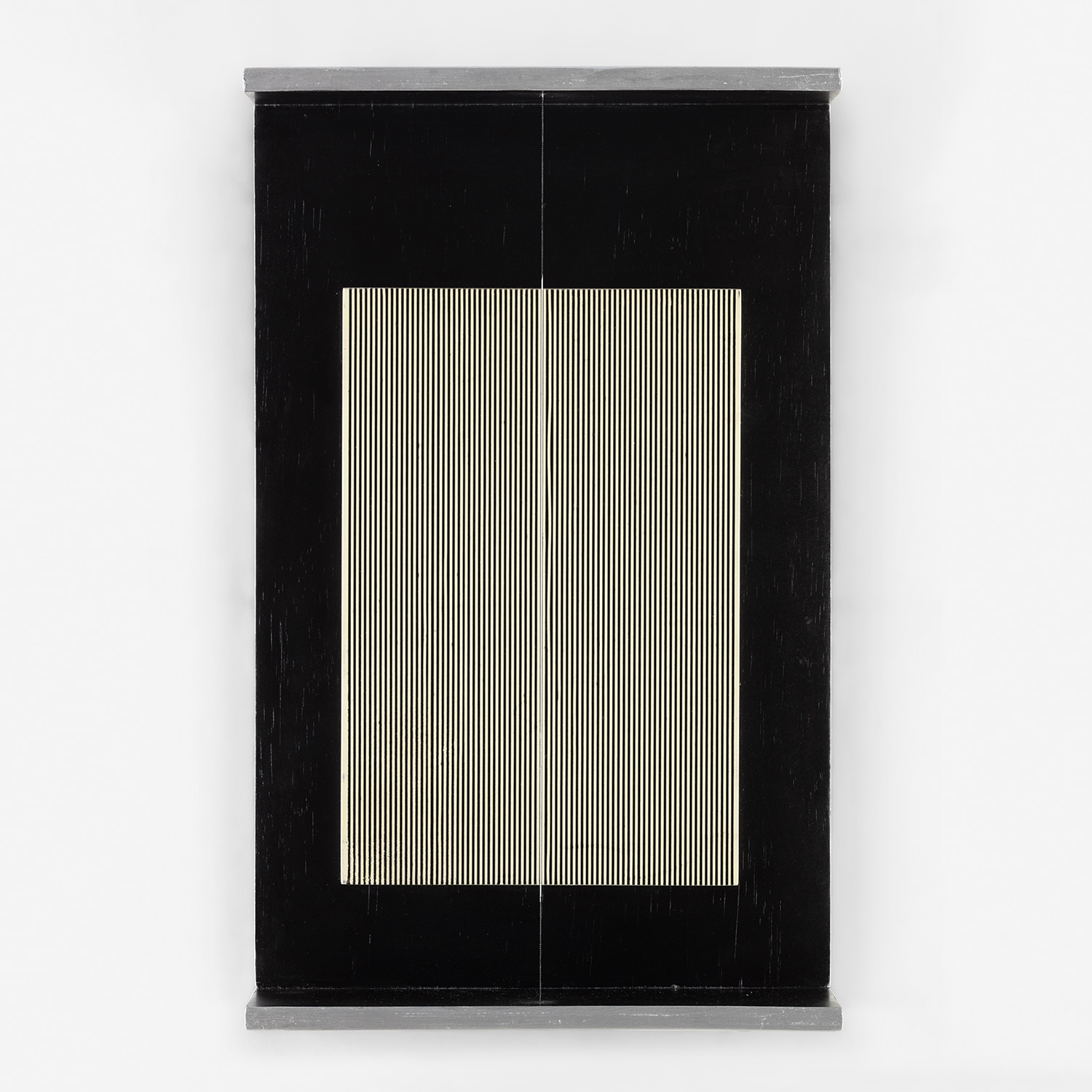
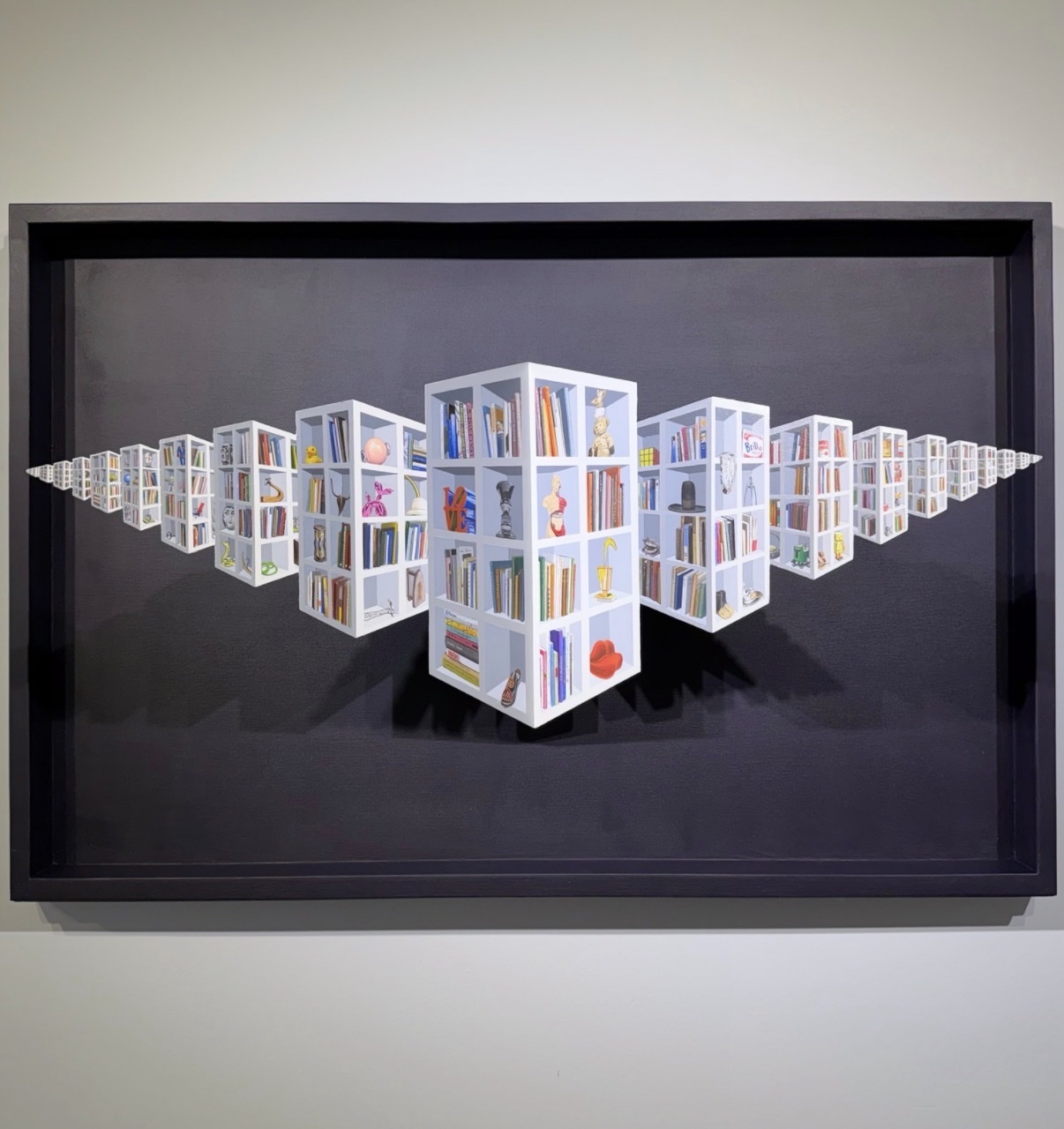
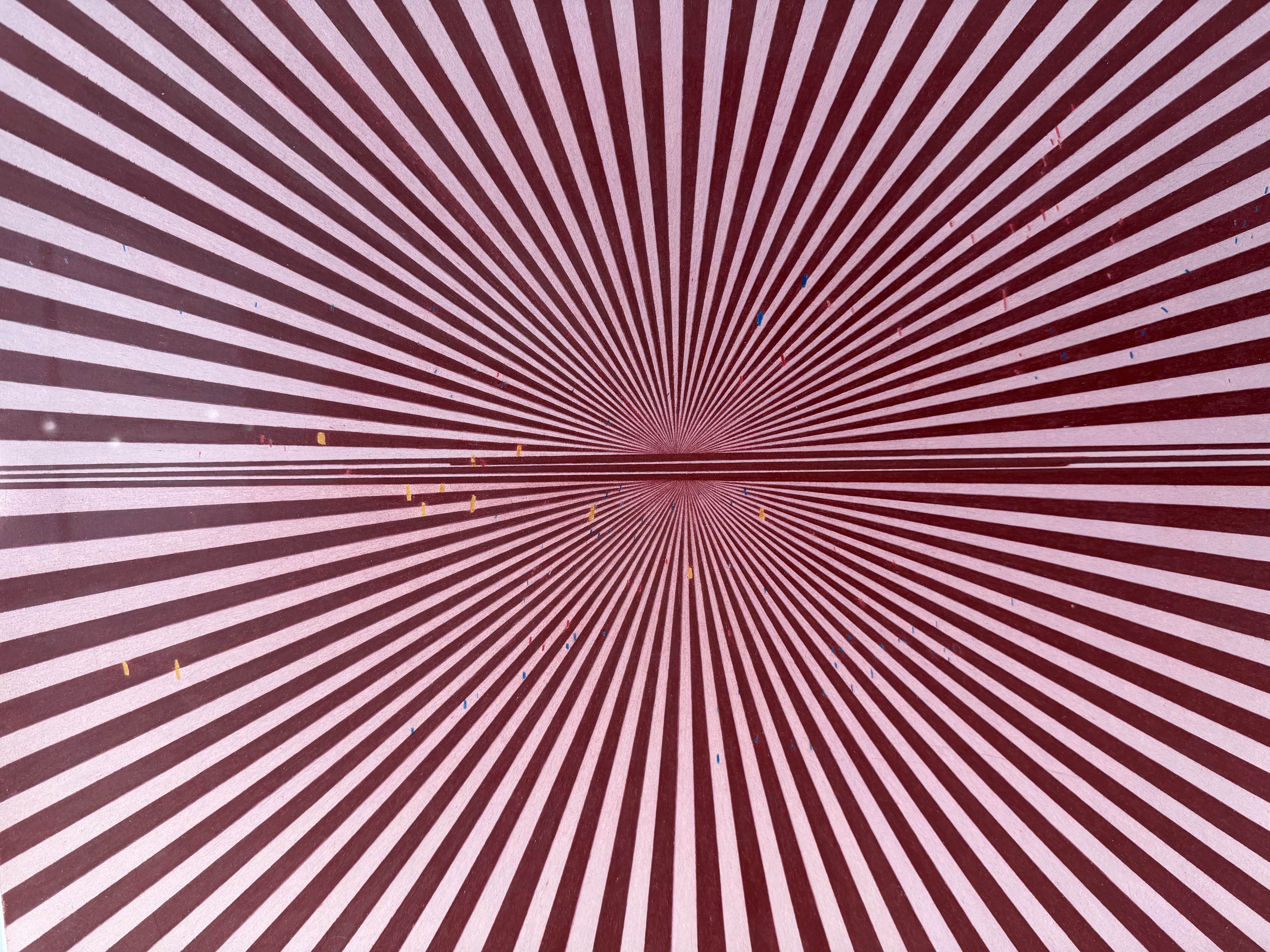
Tony Delap
Box, 1968
The Art That Tricks Your Brain Into Seeing
There is a particular vertigo that comes from standing before a Bridget Riley canvas. The surface is flat, the paint entirely still, and yet the eye insists on movement, on pulse, on a kind of visual breathing that no amount of rational knowledge can suppress. This is the power that optical illusion holds over us, and it is not a trick in the cheap sense of the word. It is a serious inquiry into the nature of perception itself, into the gap between what the eye receives and what the mind constructs.
The roots of this inquiry stretch back further than the movement we now call Op Art. Renaissance painters understood foreshortening and perspective as tools for deceiving the eye into reading flatness as depth. Trompe l'oeil as a formal tradition dates at least to antiquity, with Pliny the Elder recounting contests between Greek painters whose grapes and curtains fooled birds and rival artists alike. But the twentieth century brought something different: a desire not merely to create convincing illusions but to expose the machinery of illusion itself, to make the viewer uncomfortably aware of their own perceptual apparatus.
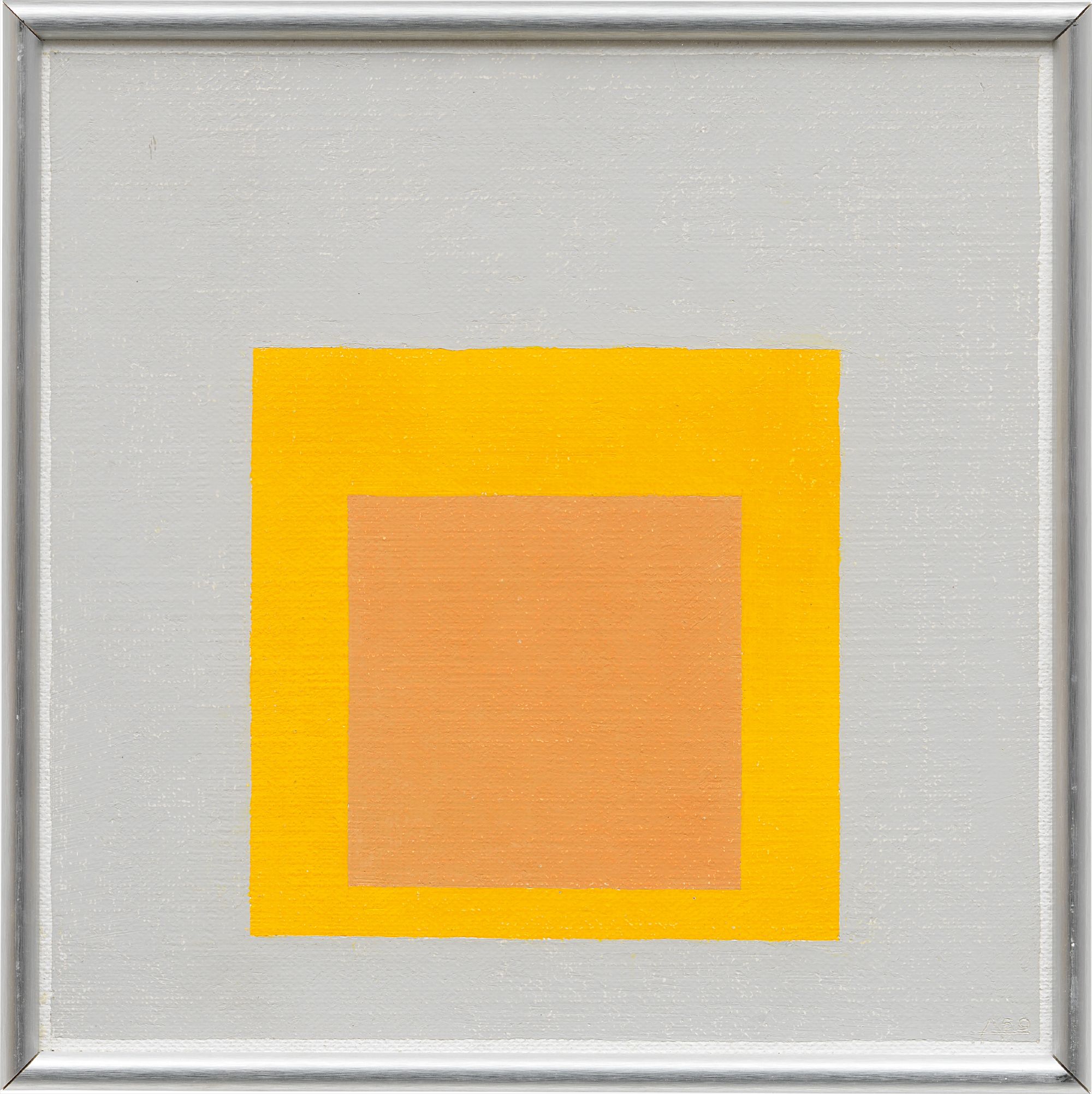
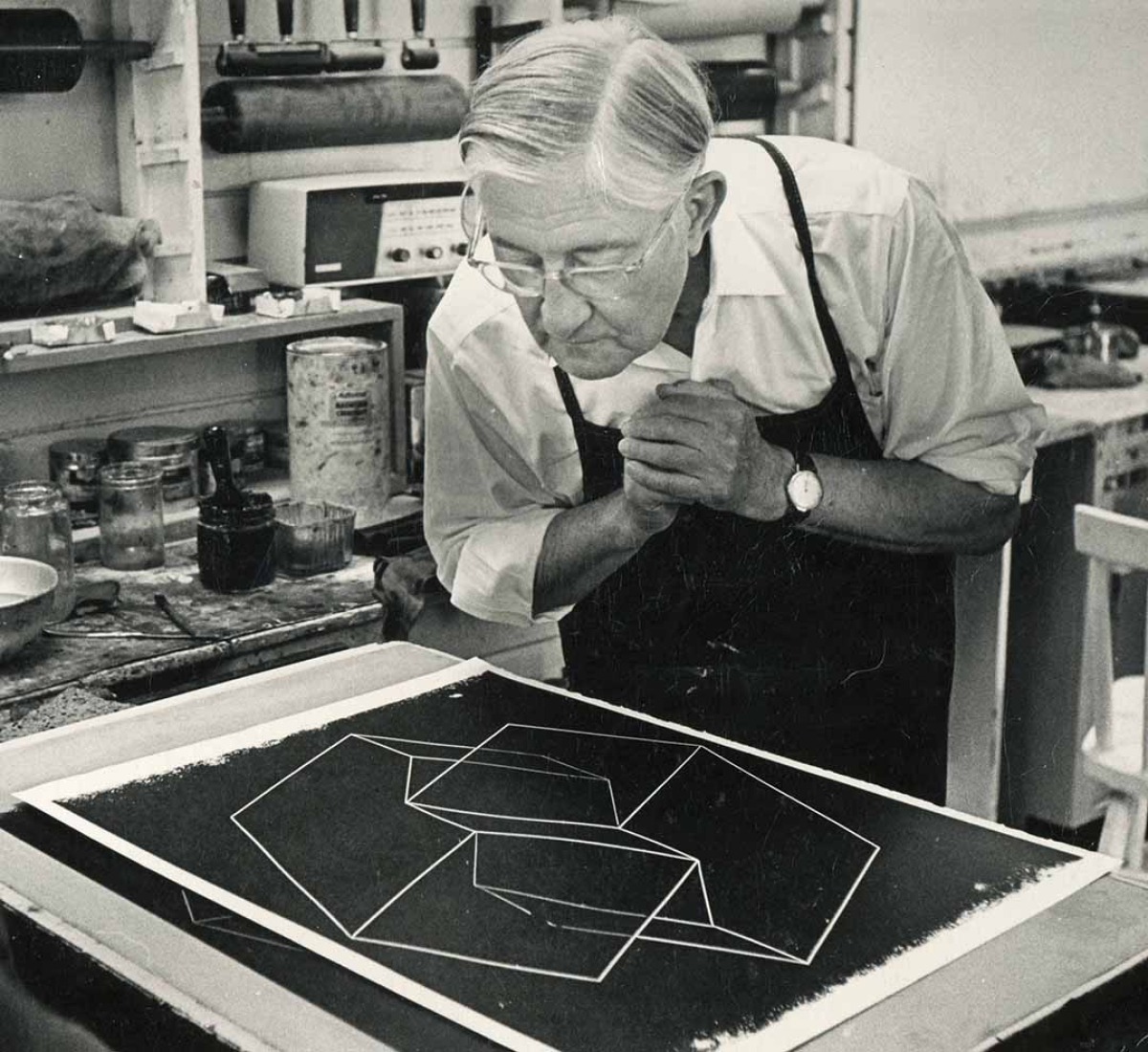
Josef Albers
Study for Homage for the Square; Sel: E. B. 4, 1959
Josef Albers was perhaps the first to pursue this with the rigour of a scientist. His series Homage to the Square, begun in 1950 and continued for over two decades, demonstrated through hundreds of canvases that colour has no fixed identity. A grey square surrounded by warm tones reads as cool; the same grey surrounded by blues reads as warm. Albers taught at Black Mountain College and later at Yale, and his influence on subsequent generations was enormous, functioning less as a stylistic template and more as a permission structure for treating the canvas as a laboratory.
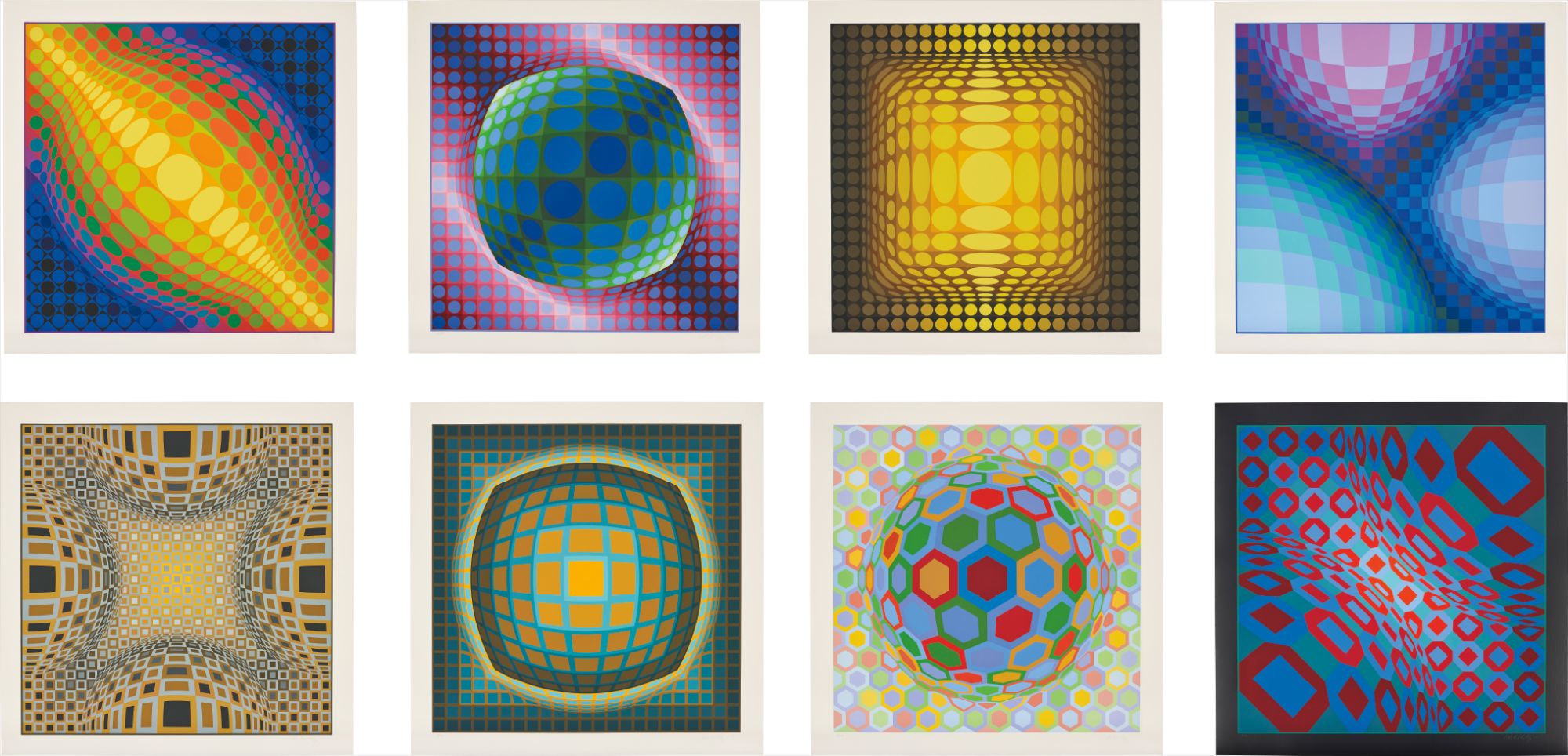
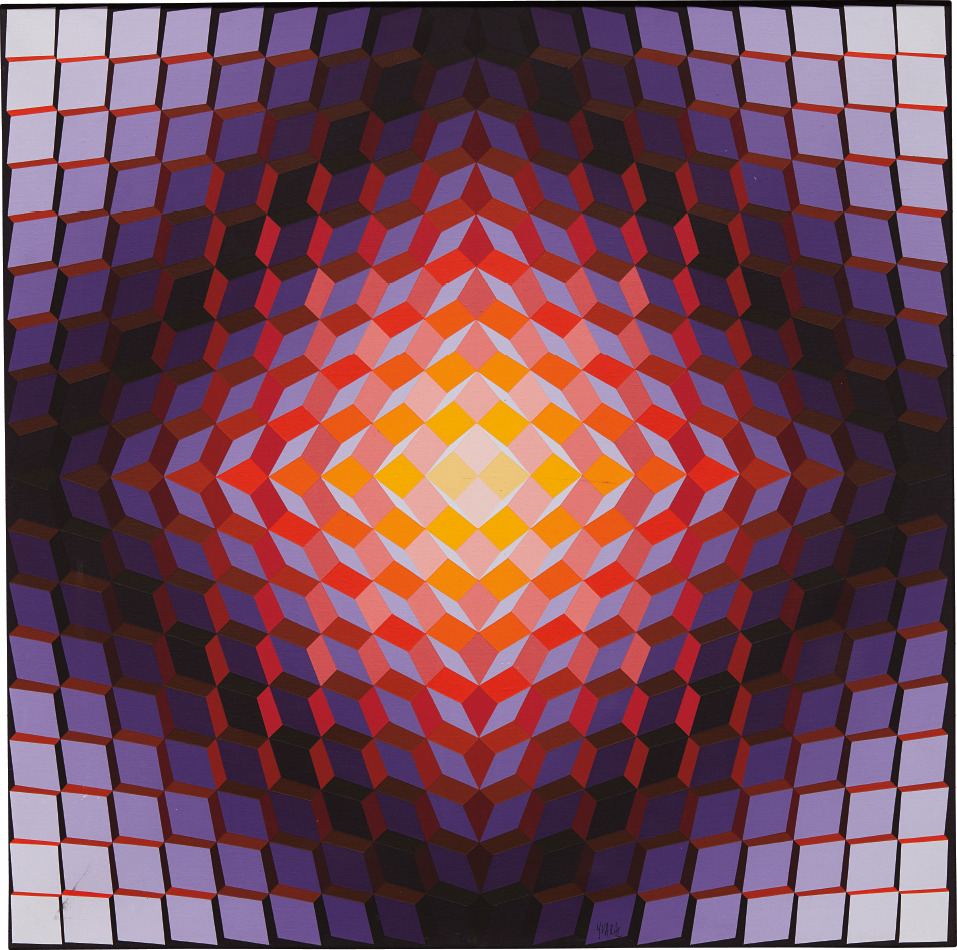
His work appears on The Collection alongside that of his intellectual heirs, and the dialogue between them feels entirely natural. The movement that would crystallise into Op Art announced itself most loudly in 1965, when the Museum of Modern Art mounted The Responsive Eye, curated by William Seitz. The show was a sensation, drawing enormous crowds and generating a kind of popular frenzy that the art world has rarely seen before or since. Victor Vasarely, the Hungarian French artist who had been developing his visual vocabulary since the 1940s, emerged as the movement's most prolific theorist and practitioner.
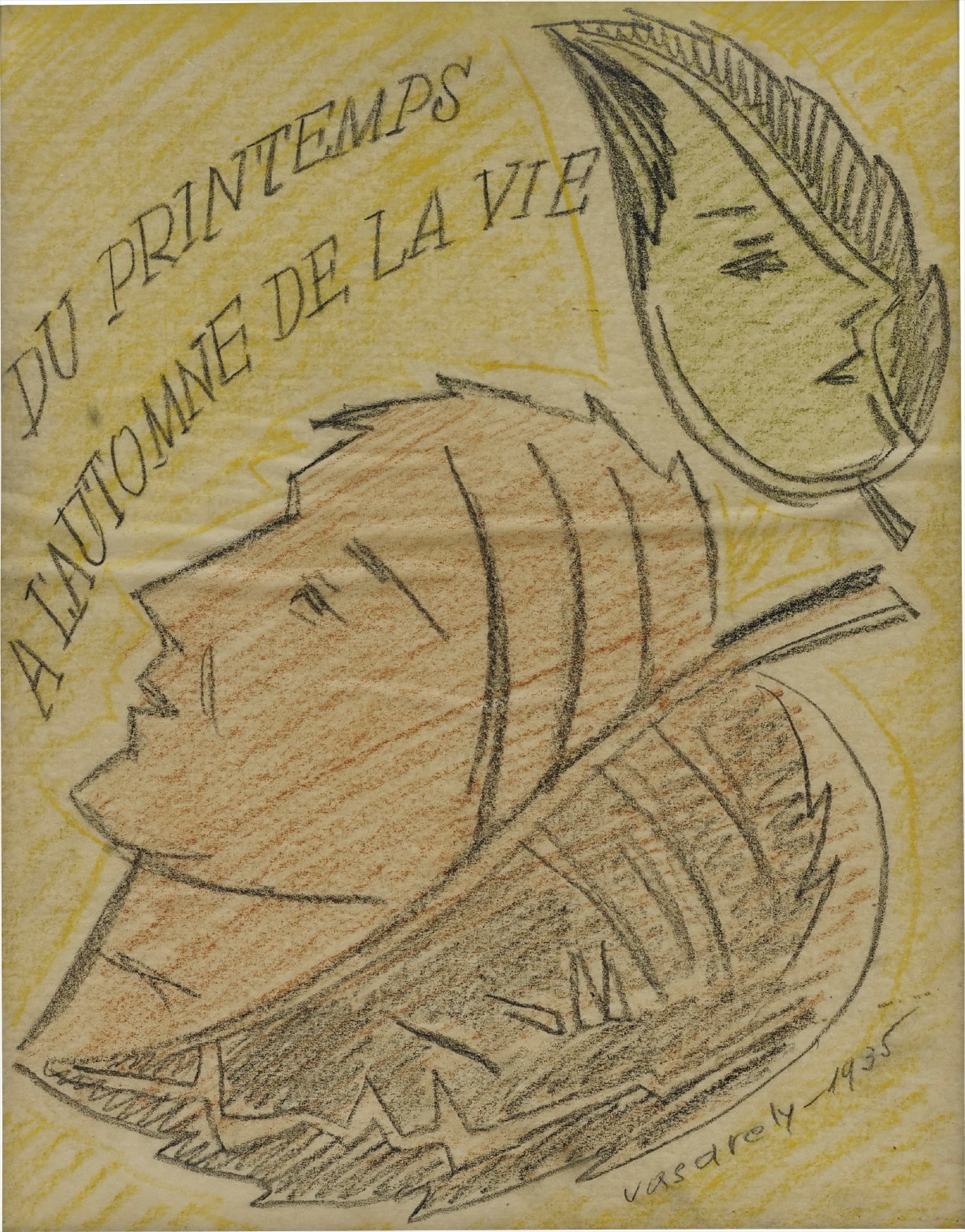
Victor Vasarely
Du printemps à l'automne de la vie, 1935
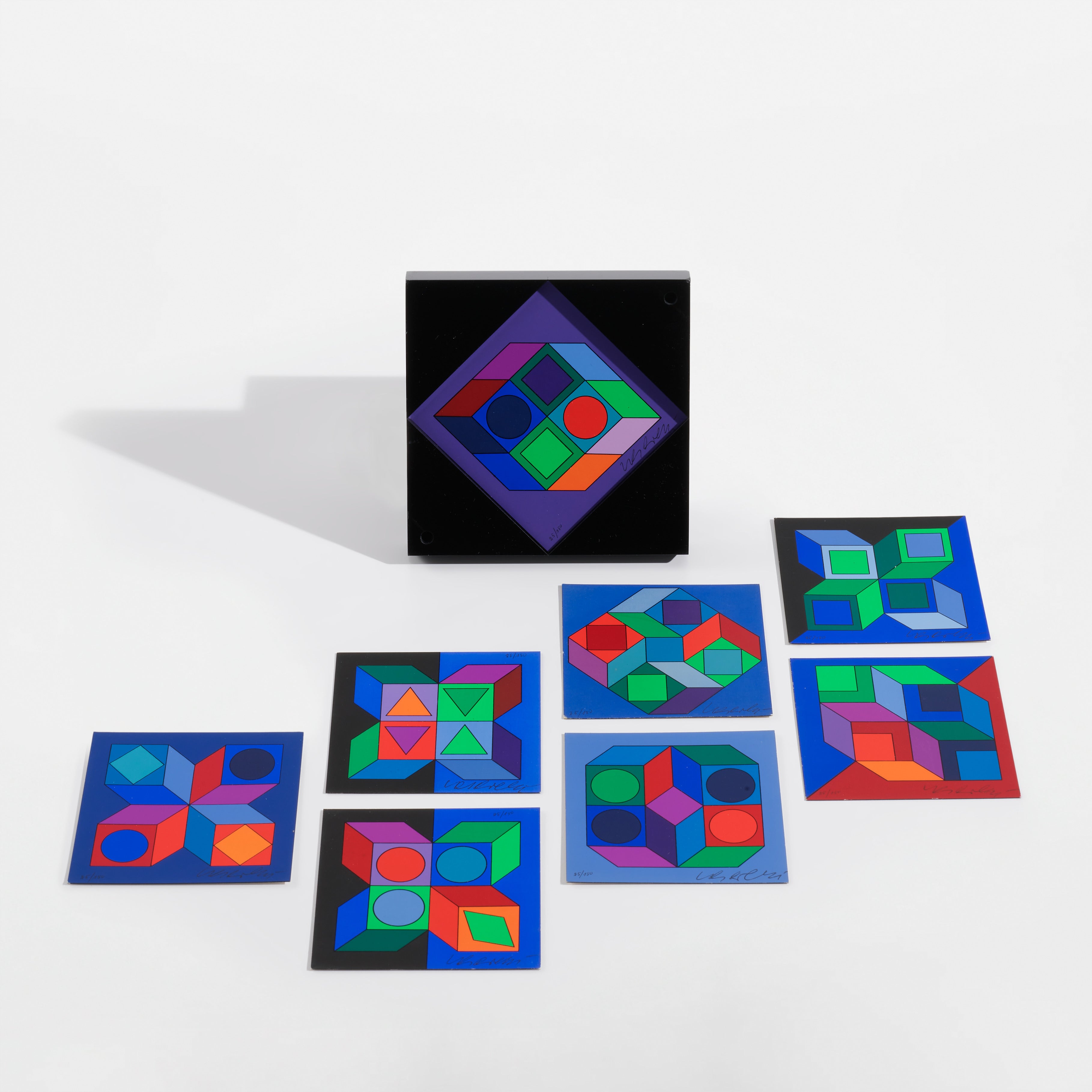
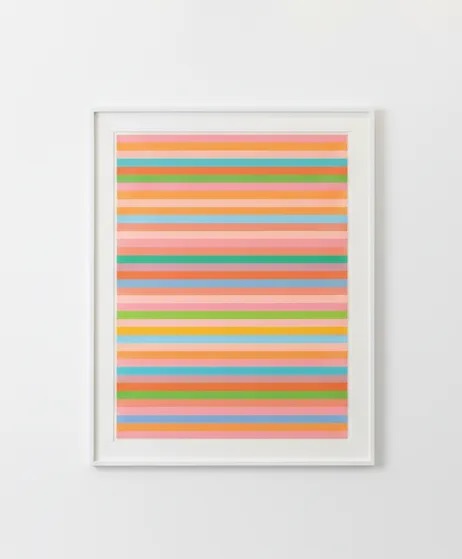
His geometric abstractions, built on shifting grids and chromatic contrasts, proposed nothing less than a democratic art, one that bypassed elite interpretation and spoke directly to the nervous system. Vasarely is represented on The Collection more extensively than any other artist in this category, and the breadth of that representation gives a genuine sense of a career spent in restless formal investigation. Bridget Riley arrived at her signature style through a different path, one that ran through pointillism and the study of Seurat before settling on the black and white undulating patterns that made her famous almost overnight. Her painting Current, shown at The Responsive Eye in 1965, seemed to shimmer and shift in ways that disturbed as much as they delighted.
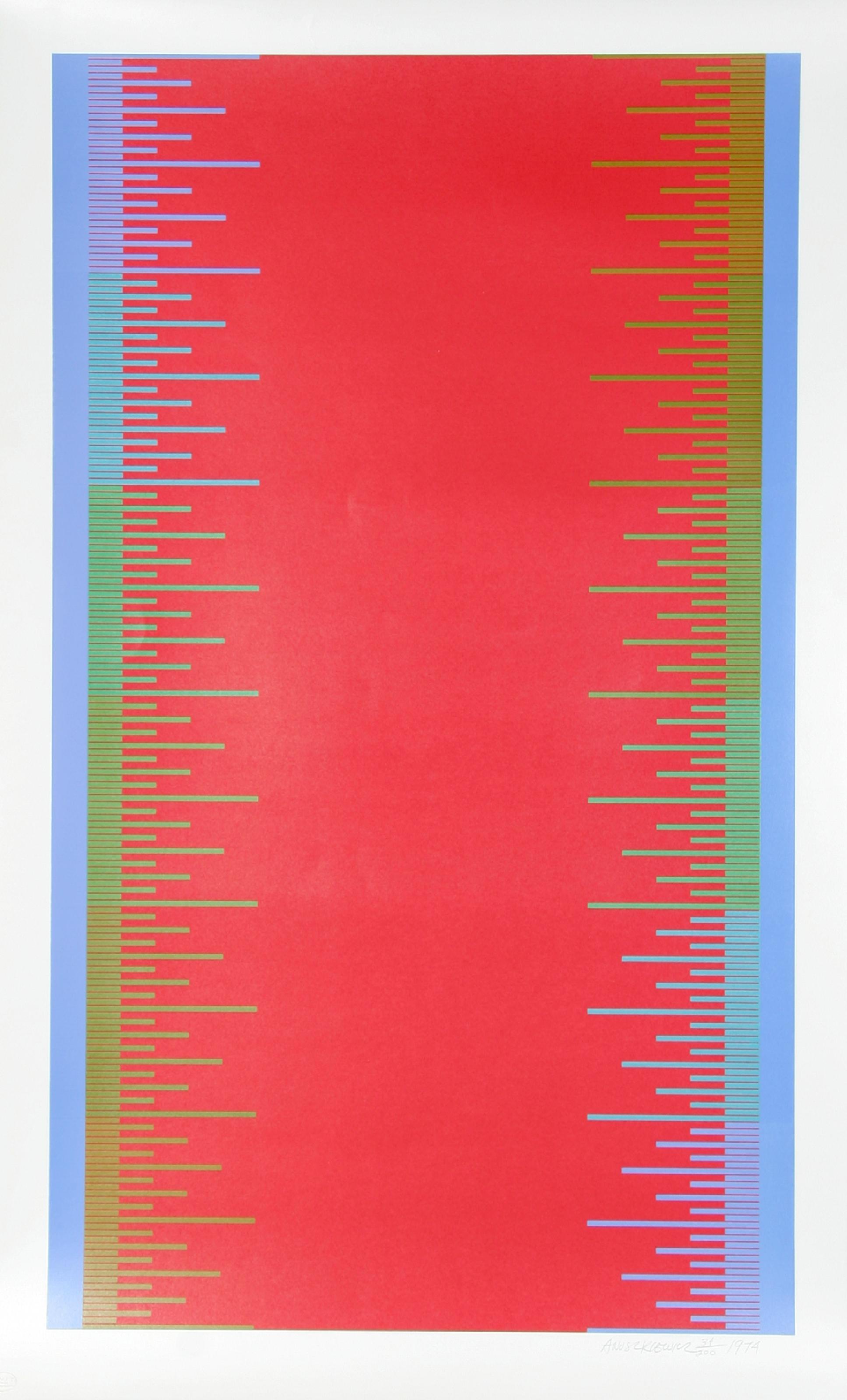
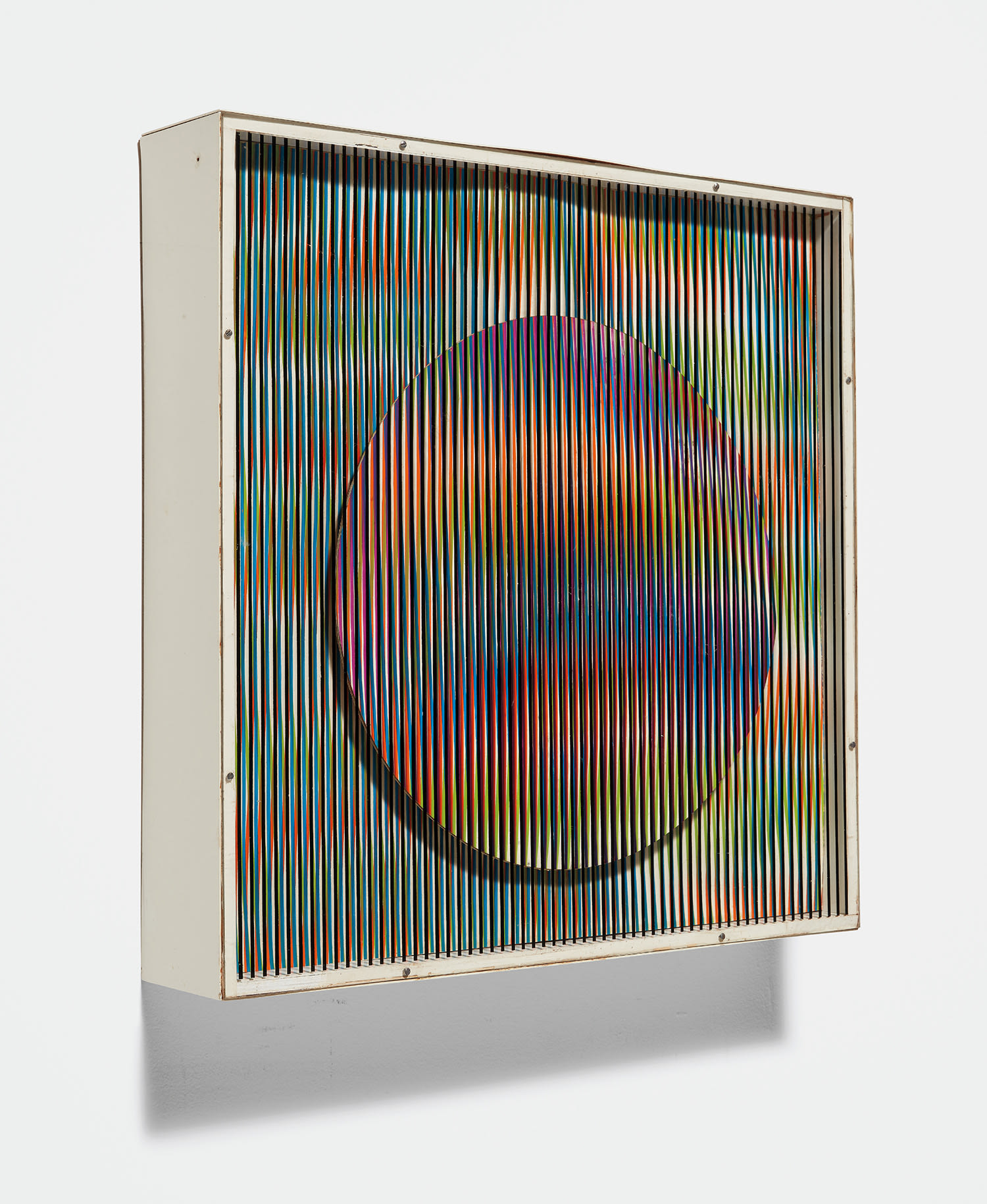
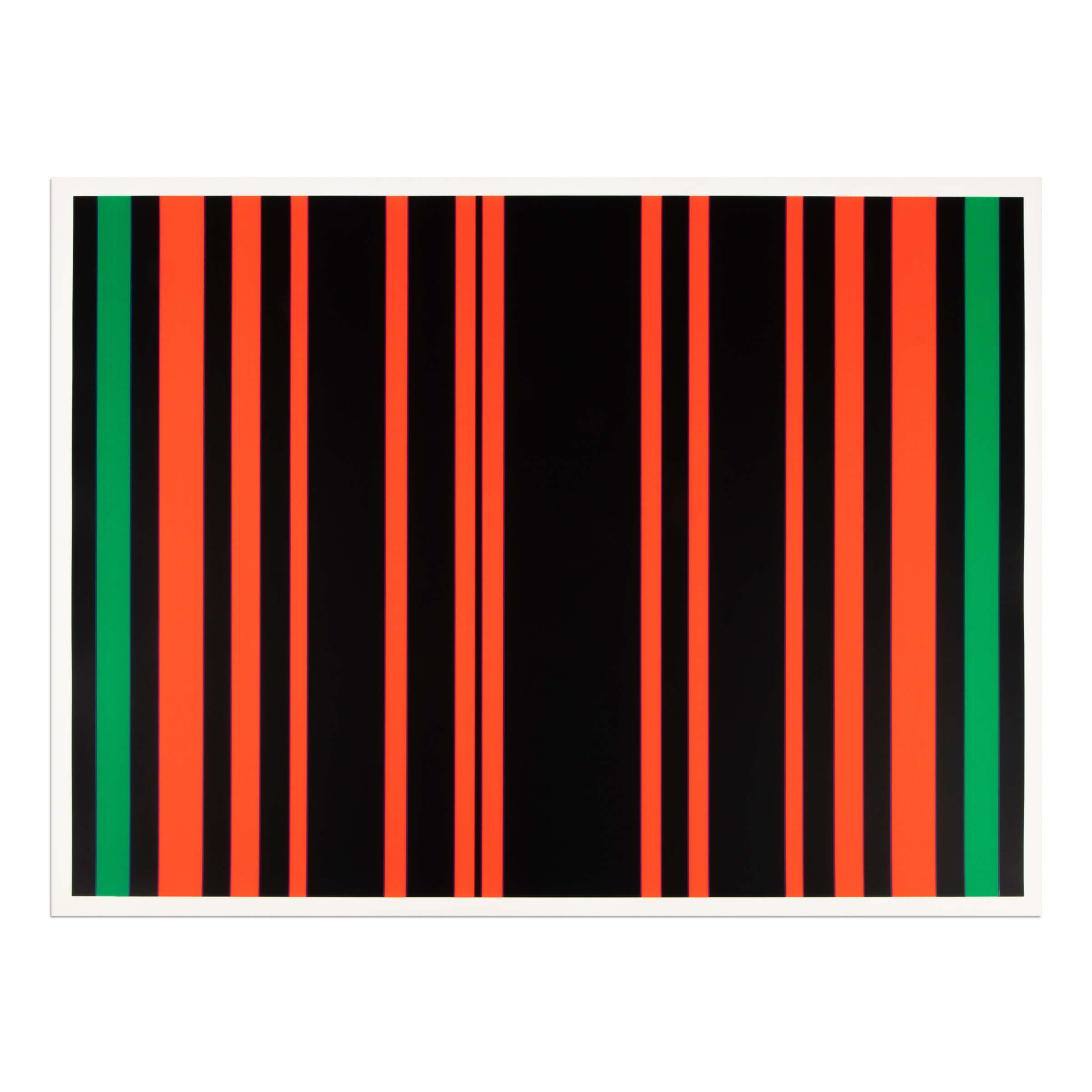
Riley has spoken about the emotional and even psychological content of her work with great seriousness, resisting the reductive reading of Op as merely perceptual novelty. Her American contemporary Richard Anuszkiewicz brought a similarly sustained intelligence to the field, working with complementary colour relationships to produce paintings that seem to advance and recede simultaneously, each viewing a slightly different experience from the last. The Latin American contribution to this territory is often underappreciated in Anglophone accounts. Carlos Cruz Diez, Jesús Rafael Soto, and the Kinetic Art movement that flourished in Caracas and Paris during the 1960s extended the optical conversation into actual space and time.
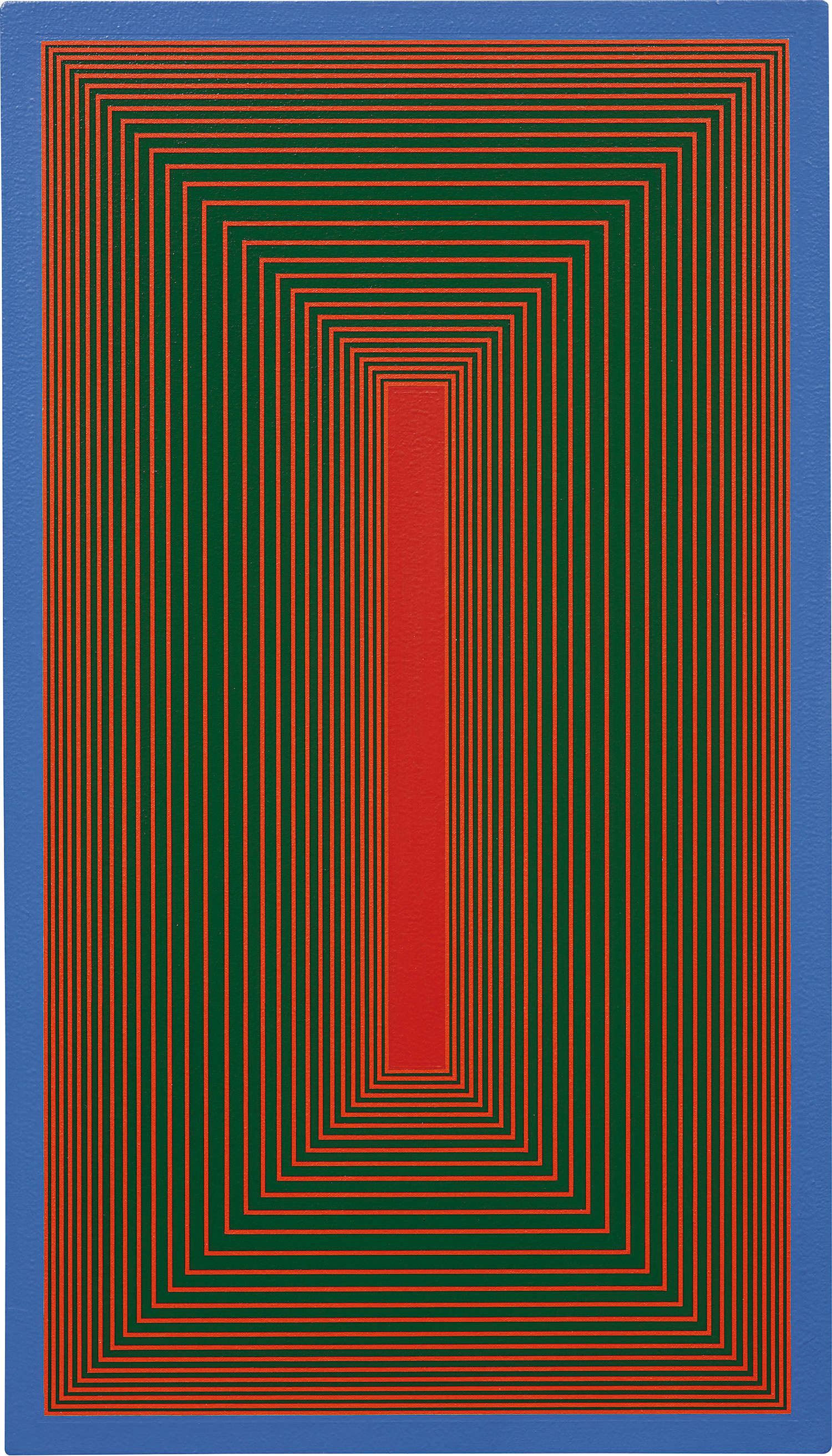
Richard Anuszkiewicz
Temple of Fire Red, 1985
Soto's Penetrables, environments of hanging metallic rods that visitors could walk through, made the viewer's body part of the perceptual equation. Cruz Diez pursued what he called chromatic induction with obsessive precision, creating works in which colour appears to generate itself in the eye of the beholder rather than existing as pigment on a surface. Both artists are present on The Collection, and their work stands as a reminder that Op Art was never a single national or stylistic conversation. M.
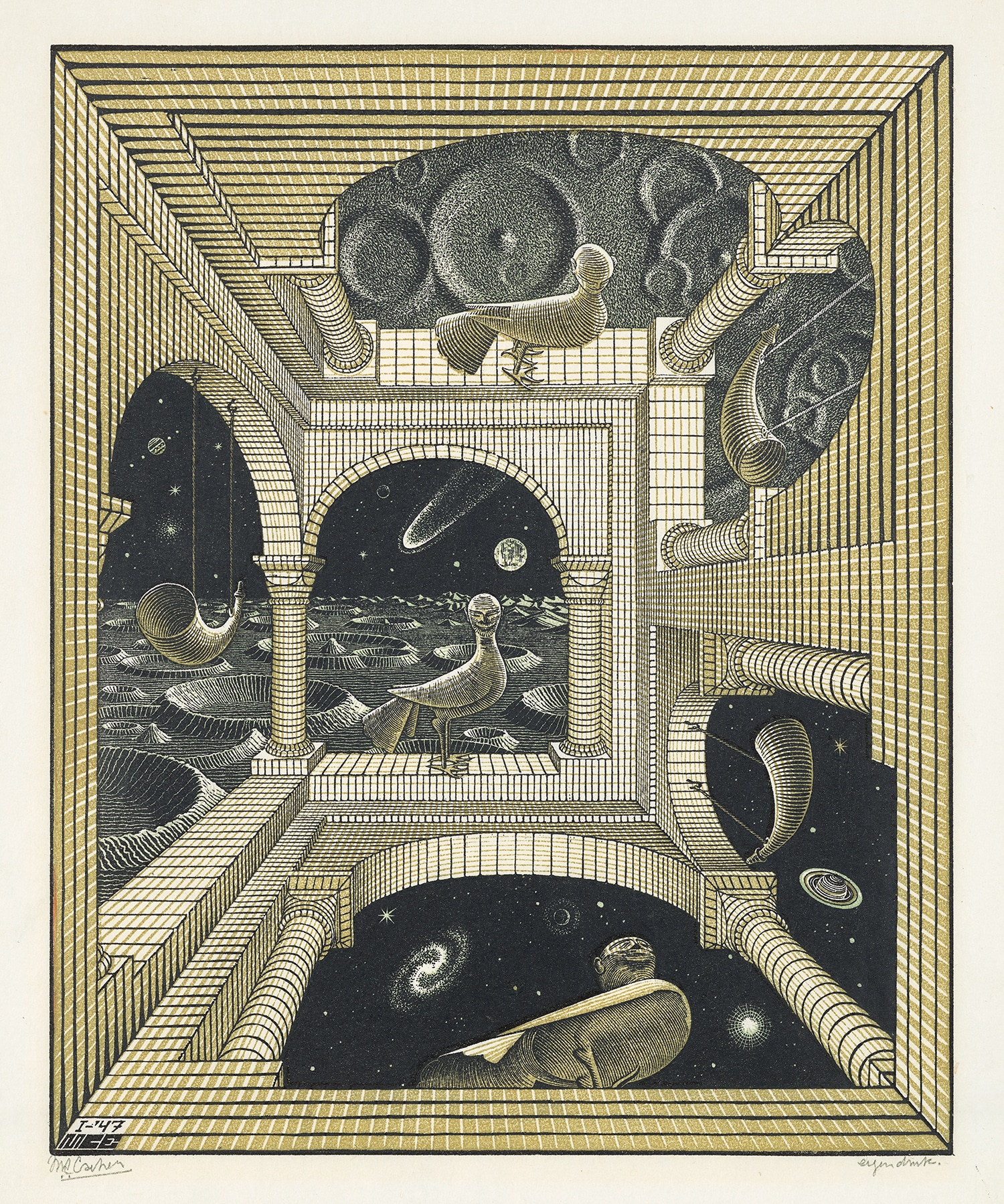
C. Escher occupies a fascinating position in this landscape, one foot in mathematical illustration and another in something closer to philosophy. His impossible architectures, his tessellations of birds dissolving into fish, his staircases that ascend forever without arriving, these were not optical illusions in the strict physiological sense but logical illusions, structures that are coherent in every local detail and impossible in their totality. Escher was largely dismissed by the fine art establishment during his lifetime, embraced instead by mathematicians and scientists, but his rehabilitation as a serious artist has been essentially complete, and his presence on The Collection feels entirely justified.
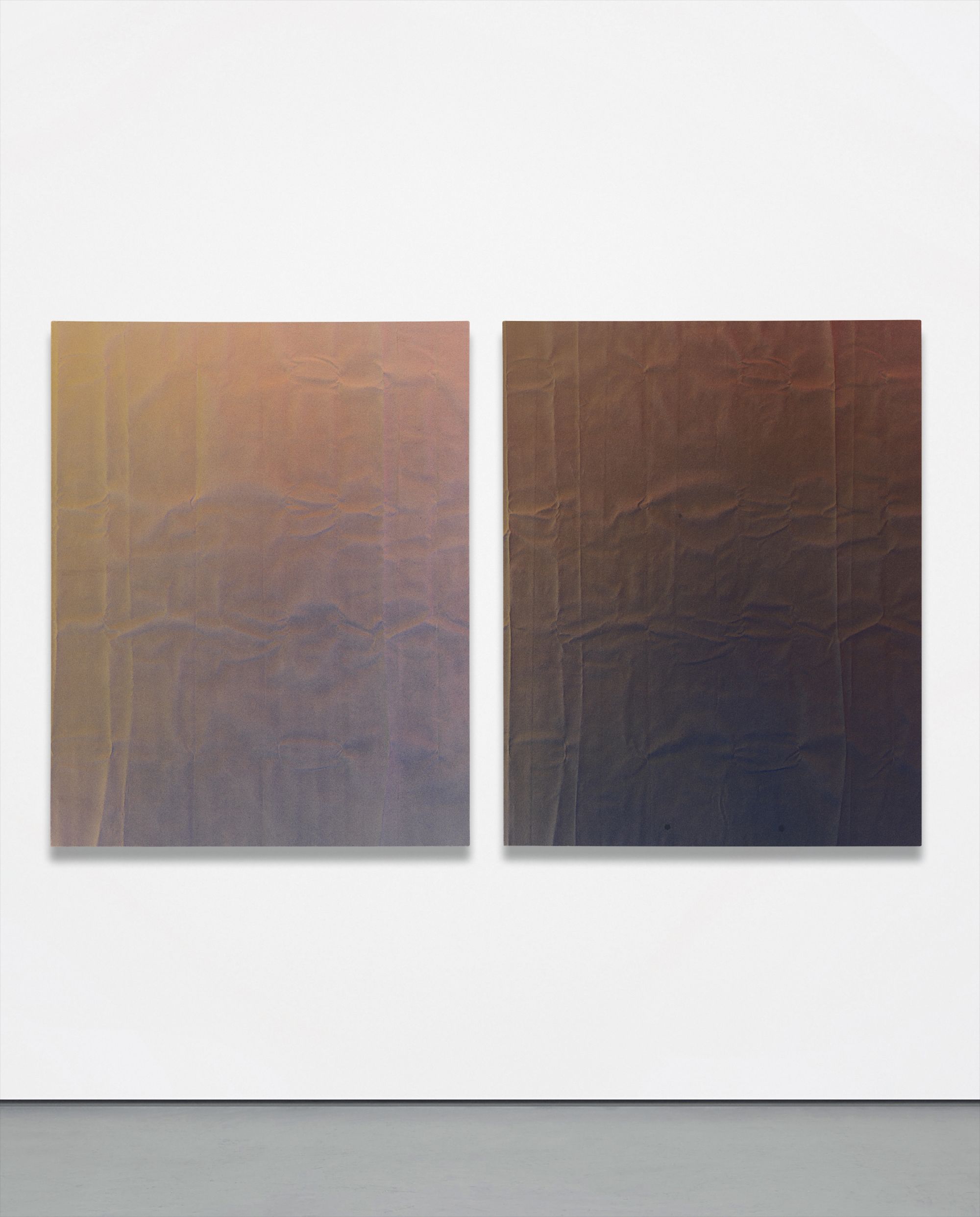
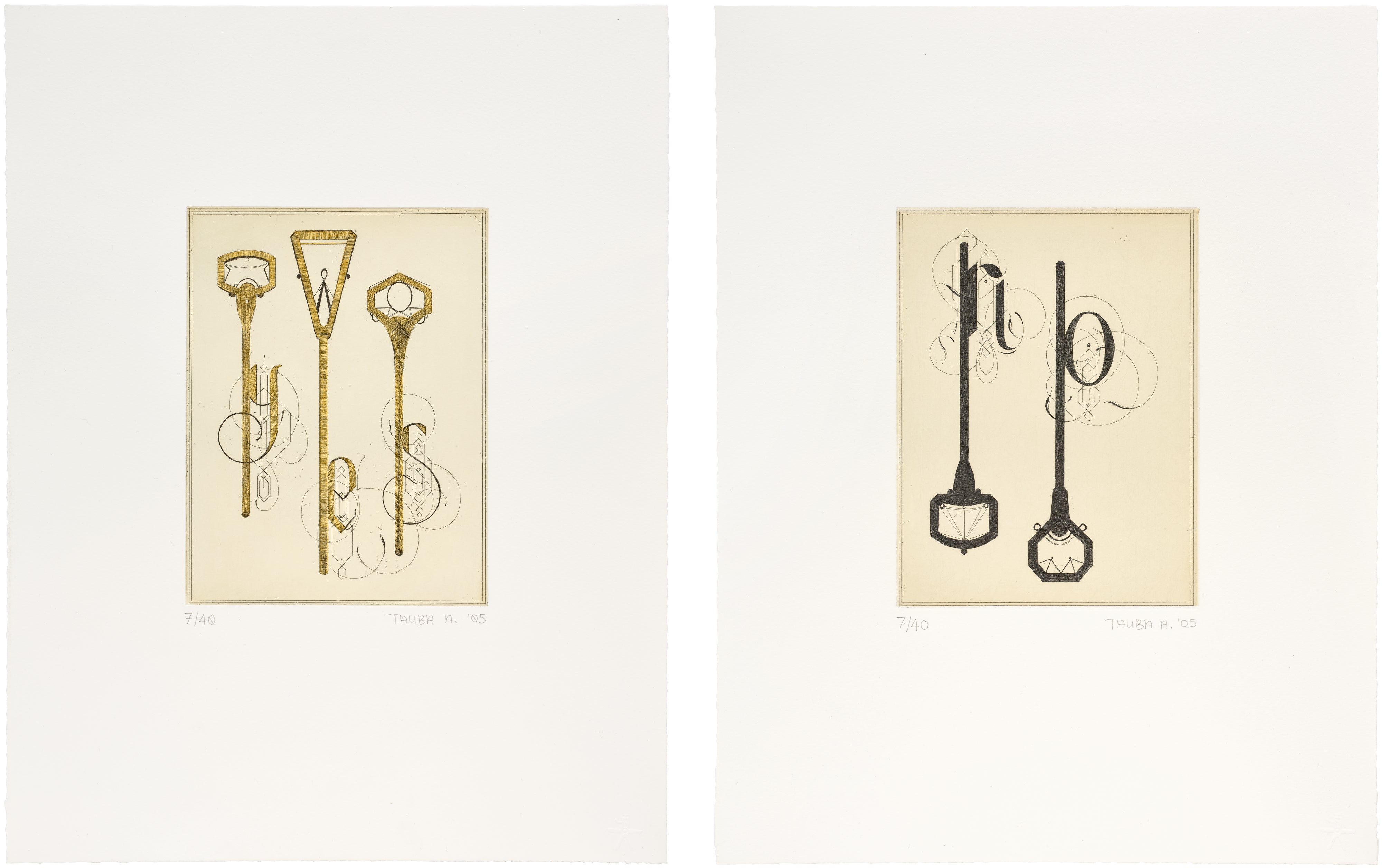
Tauba Auerbach
Enfold/Fold (inner)/Enfold/Fold (outer)
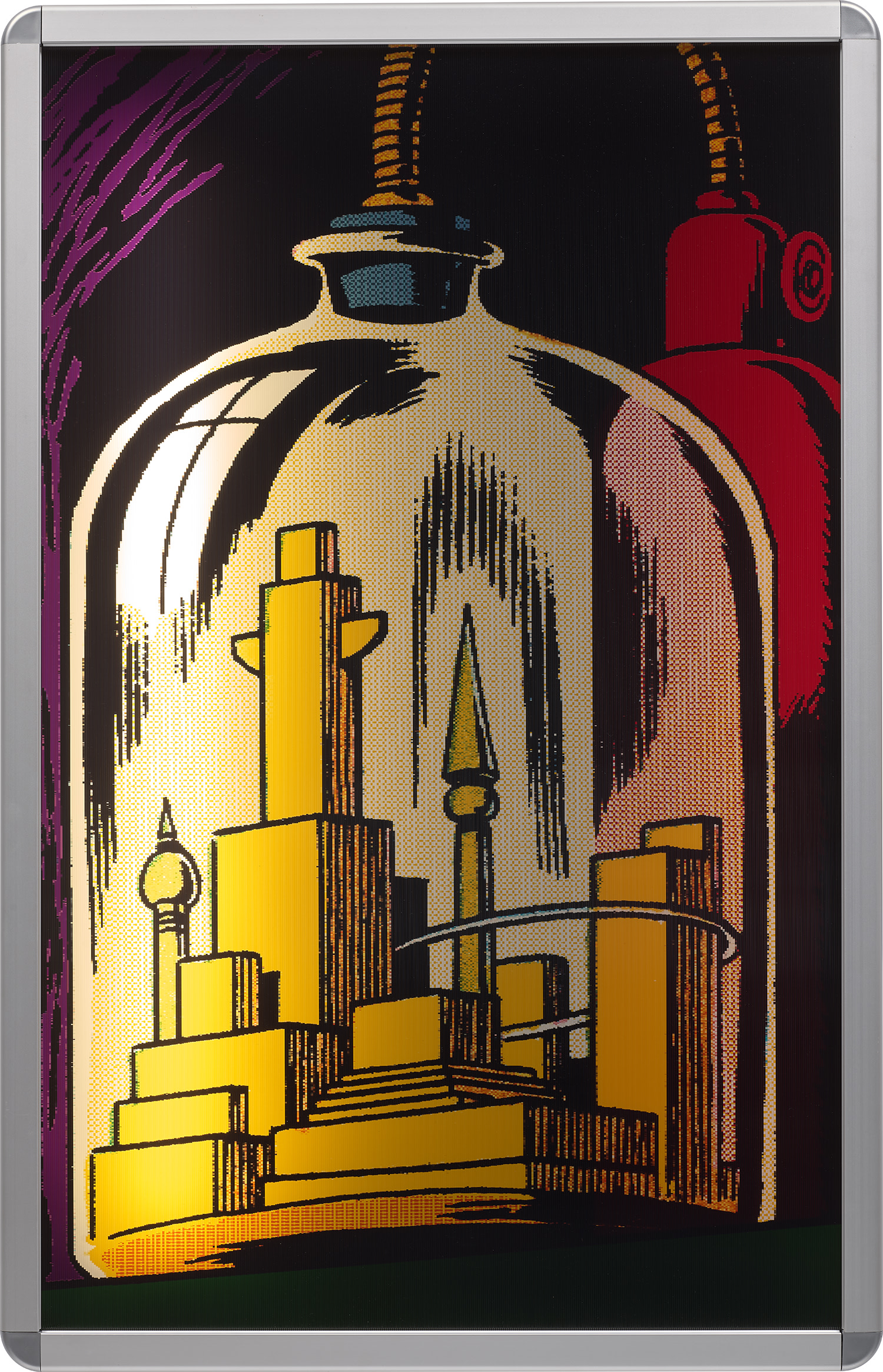
More recent artists have continued to push at the boundaries of what perceptual disruption can mean. Tauba Auerbach works across painting, photography, and printmaking with an eye toward the fold, the weave, and the surface that insists on being read as three dimensional. Patrick Hughes perfects a form of painted relief in which perspective appears to reverse itself as you move through space, the parts of the image that appear furthest away advancing toward you as you shift your position. Yvaral, the son of Vasarely, carried his father's explorations into pixelation and digital aesthetics, anticipating concerns that would only become culturally central decades later.
What unites all of this work, across its considerable stylistic range, is a commitment to taking perception seriously as a subject. In an era saturated with images designed to manipulate, to persuade, and to flatten attention into compliance, art that makes the act of looking strange and difficult feels almost radical. The best optical work does not let you settle. It keeps you in a productive state of uncertainty, aware that what you see is always partly what you bring.
That is not a trick. That is the truth.