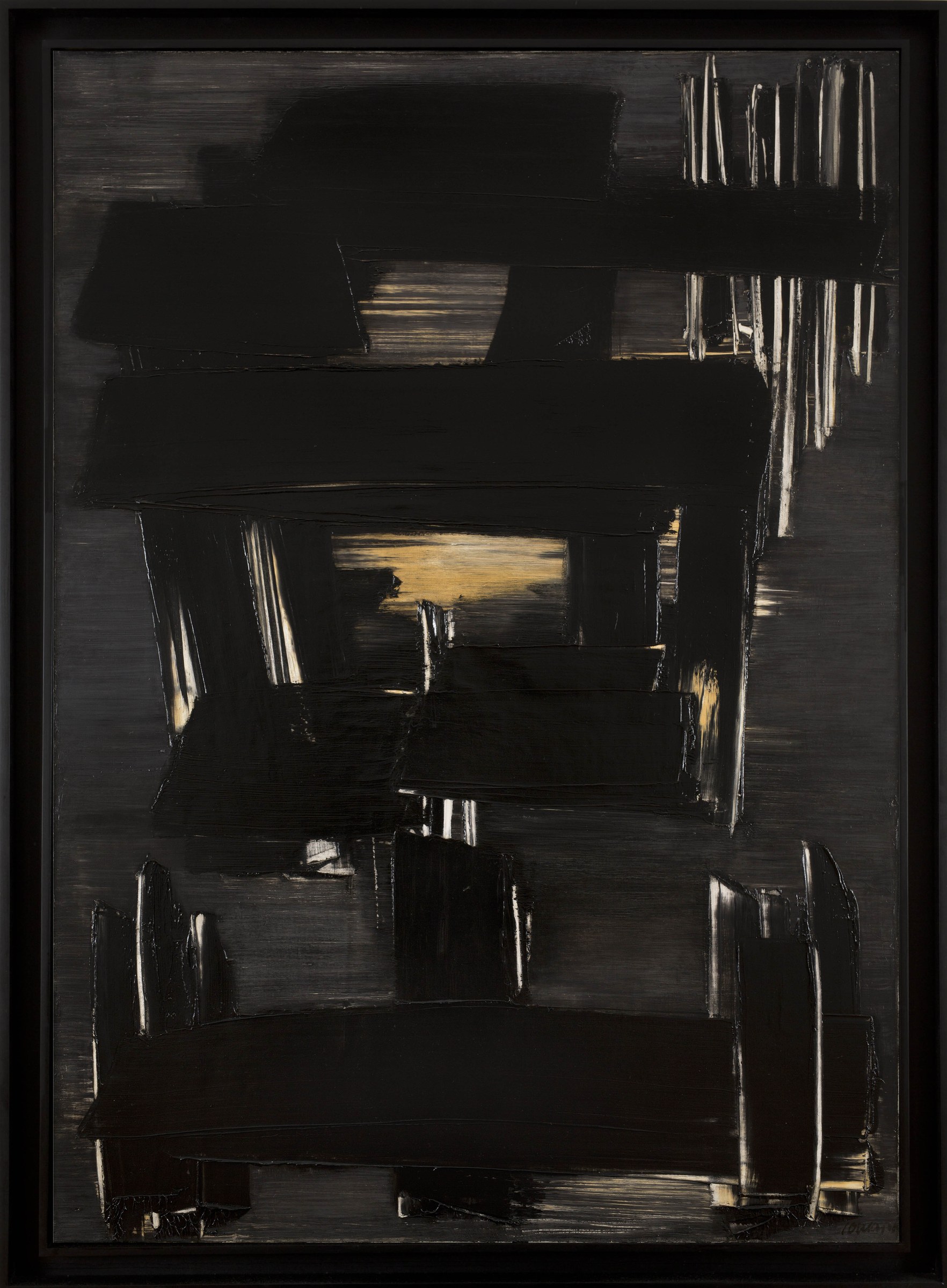
Pierre Peinture 162 x 114 cm, 29 août 1958
1958
‘Peinture 162 x 114 cm, 29 août 1958’ is a dramatic large-scale oil painting by Pierre Soulages. It has been held in the same private collection for the sixty years since its creation, and dates from a defining decade in the artist’s career. Between 1953 and 1959, Soulages produced just 39 paintings of this scale: of these, only 14 remain in private collections, and 19 are in museums, including the Tate Gallery, London; the Solomon R. Guggenheim Museum, New York; the Albright Knox Art Gallery, Buffalo; the Museum Folkwang, Essen; the National Gallery of Art, Washington; the Milwaukee Art Museum, Milwaukee; the Australian National Gallery, Canberra; and Kunsthaus Zürich. Soulages had first made unified linear compositions in the late 1940s, realising in them the guiding principle of his art. He experimented with sonorous chiaroscuro effects throughout the 1950s and was, by 1958, creating complex, translucent colour in his works through scraping away layers of impasto, modulating his paint’s lustre and texture to create a dazzling array of effects. The present work is a magnificent example of this approach. Broad, interlocking bars of gleaming black are dragged vertically and horizontally against a shimmering field of dark grey, which itself has been pulled like a curtain over a ground of pale gold. The weighty lattice of glossy black beams creates an imposing yet delicately balanced form, reminiscent of a character of Japanese script. Its swathes of dark, lacquer-like pigment are offset by areas dragged into lyrical translucency. This exalting of his material’s innate qualities is typical of Soulages, who makes every decision based on the painting in front of him. He paints not as a philosopher, narrator or ideologue, but as a painter. Nor, despite winning early acclaim in America during the art world’s focal shift from Paris to New York in the 1950s, is he an Abstract Expressionist. Uninterested in communicating his emotions or states of being, he does not aim to record gesture or movement in his brushstrokes. He instead arranges contrasts into a single, forceful surface that is to be apprehended in its totality. As the artist himself says, “I do not depict, I paint. I do not represent, I present”. James Johnson Sweeney, an early champion of Soulages as director of the Guggenheim in the 1950s, wrote memorably that “a painting by Pierre Soulages is like a chord on a vast piano struck with both hands simultaneously , struck and held”. This apt simile captures the sustained, singular intensity of Soulages’ work. It is important to distinguish chord from melody: unlike the gestural sequences of Abstract Expressionism, a work like this offers no itinerary to be followed, no temporal anecdote of the artist’s feelings poured onto the canvas. Neither lyrical, personal or sentimental, it is instead a single, resonant surface of overall structural energy.
- Medium
- Oil on canvas
- Dimensions
- Location
- Park Avenue Armory, New York, NY
Notes
Exhibited by Waddington Custot at TEFAF New York 2026 (Park Avenue Armory, New York, May 15–19, 2026). Price upon inquiry TEFAF Vetted.
Collectors of Pierre Soulages


Artists in conversation
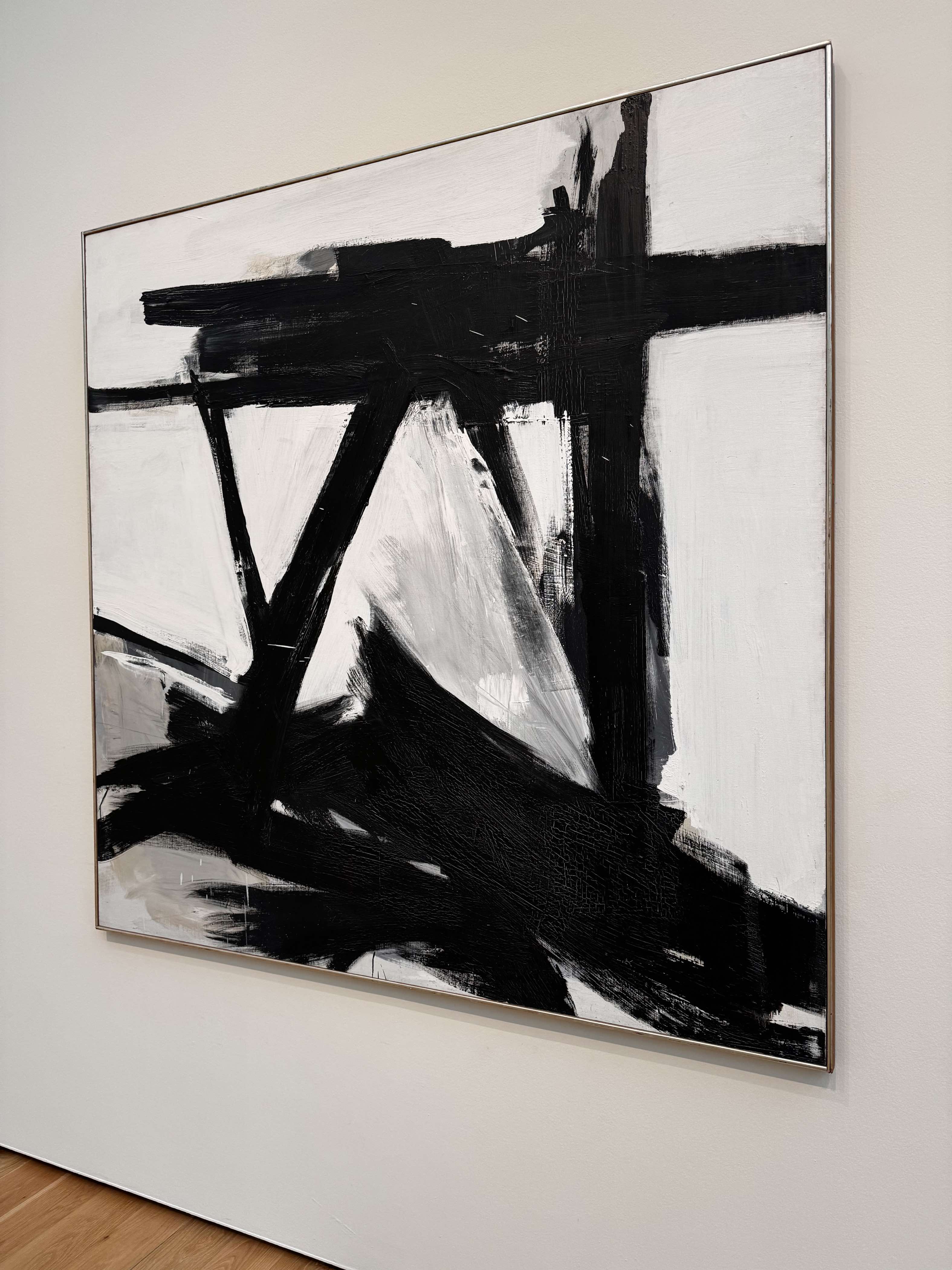
Franz Kline
American · b. 1910
Kline shares Soulages's monumental commitment to bold black gestural strokes on a light ground, creating powerful abstract compositions where black paint is not absence of color but an active, luminous force. Both artists work within Abstract Expressionism using thick, sweeping marks that dominate the picture plane with similar graphic intensity.
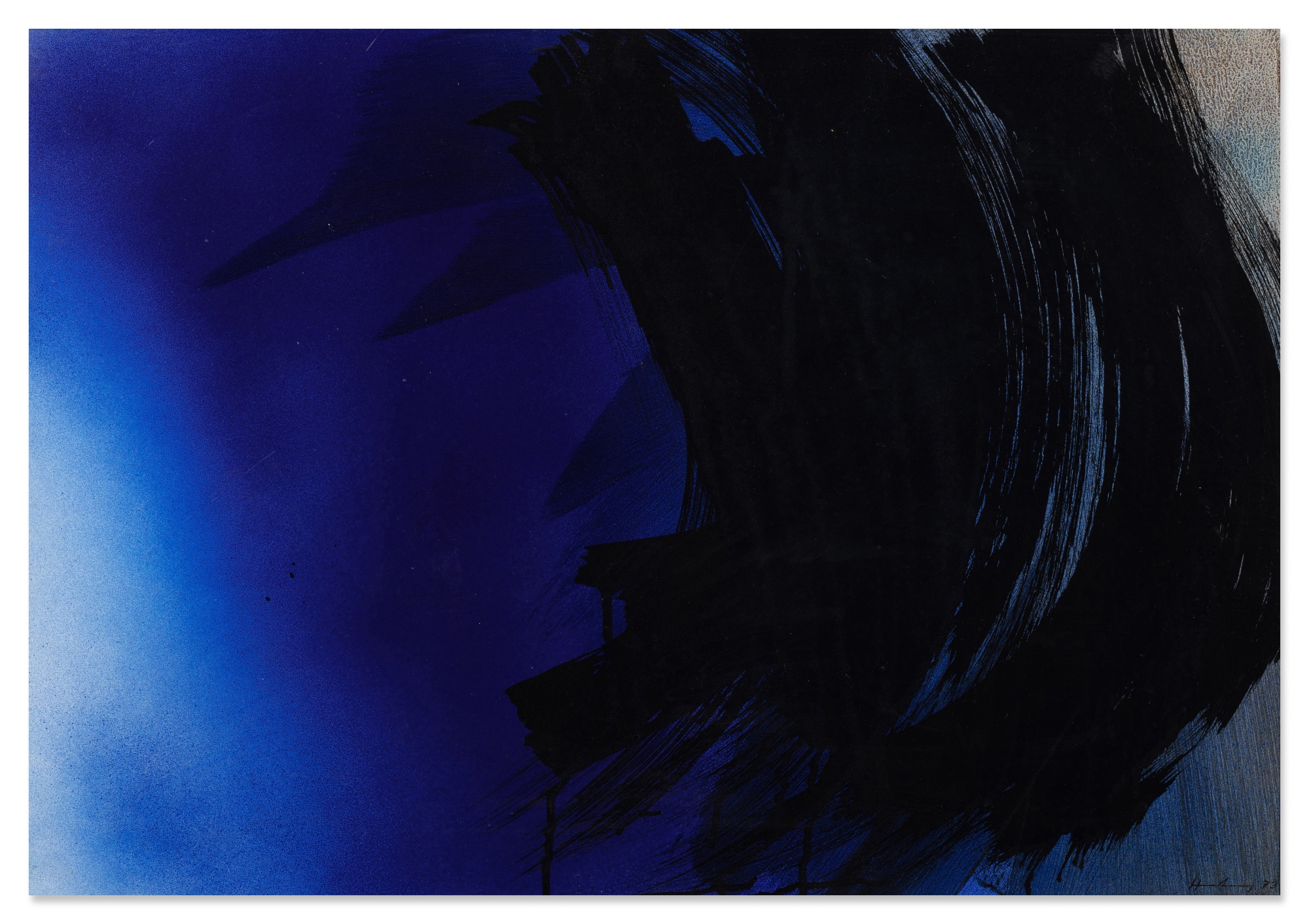
Hans Hartung
French-German · b. 1904
Hartung was a close contemporary of Soulages working in Paris who similarly explored gestural black mark making on contrasting grounds, producing monochromatic abstract works of great rhythmic energy. His post-war lyrical abstraction shares the same emphasis on the expressive weight and directional force of bold dark strokes.
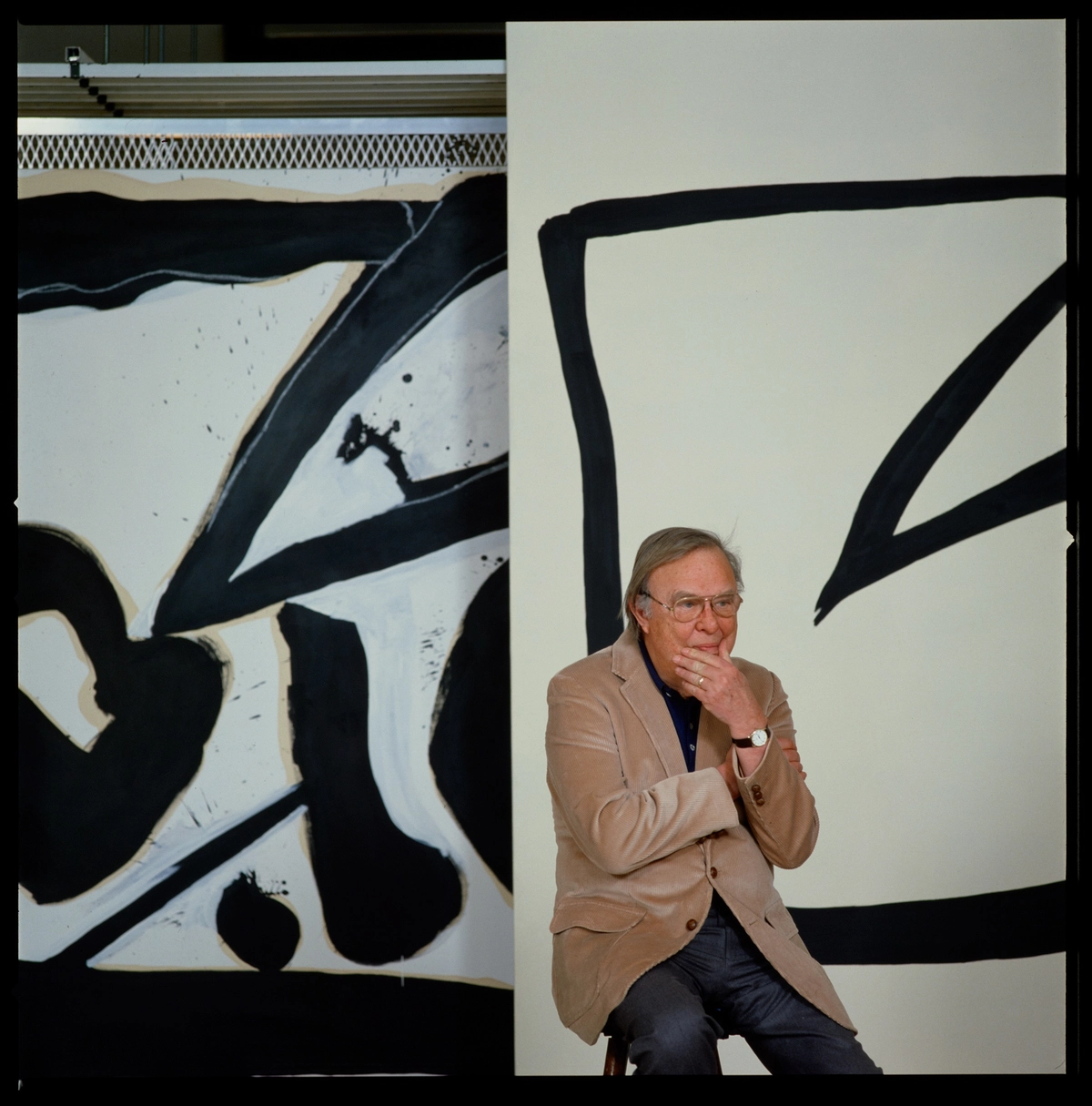
Robert Motherwell
American · b. 1915
Motherwell's iconic Elegy to the Spanish Republic series features monumental black ovoid forms on white grounds that parallel Soulages's exploration of black as a primary expressive and luminous element in abstract composition. Both painters treat black with a philosophical seriousness, using its weight and opacity to create meditative, minimalist large scale works.
Start the Discussion
Request access to join the discussion