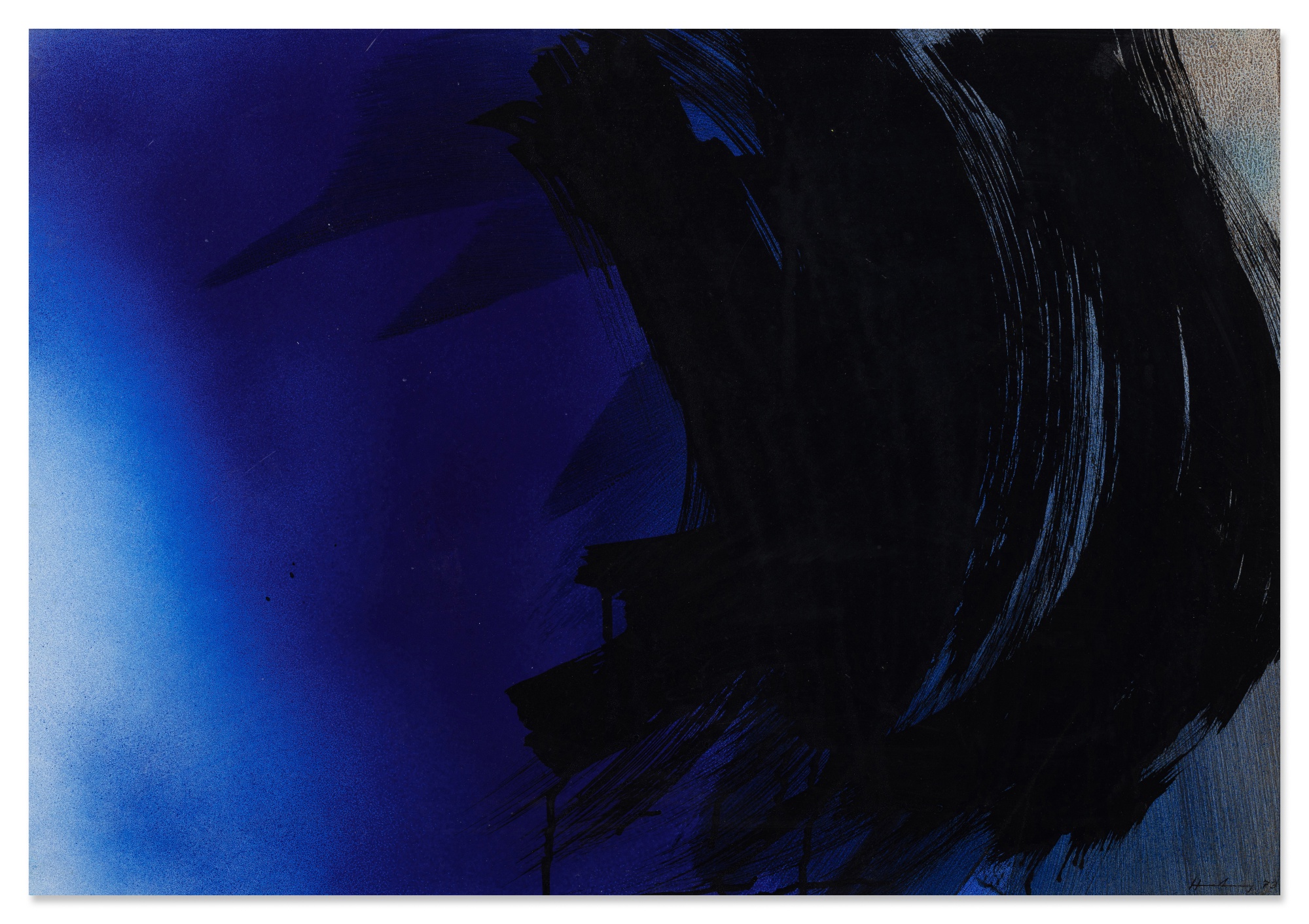
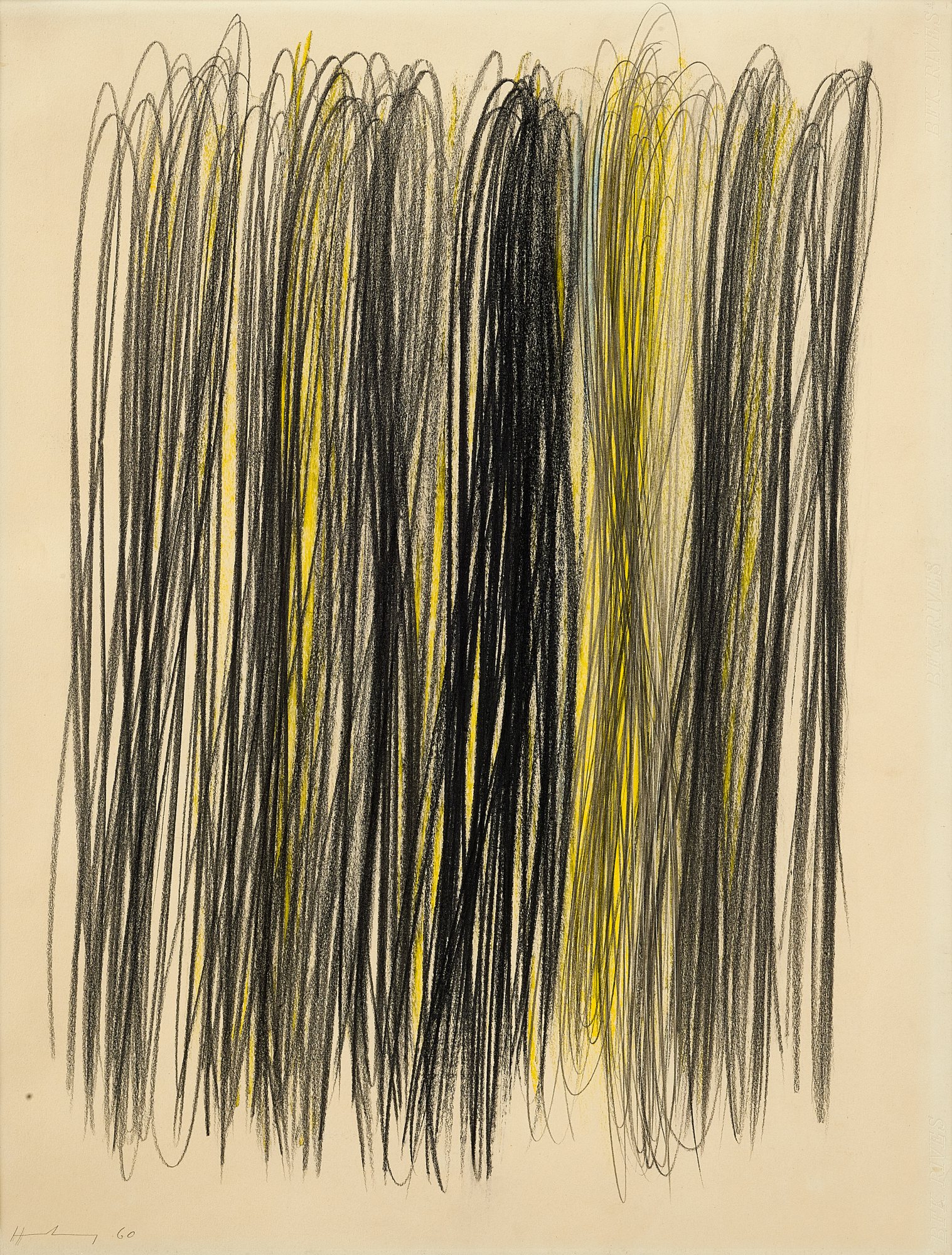
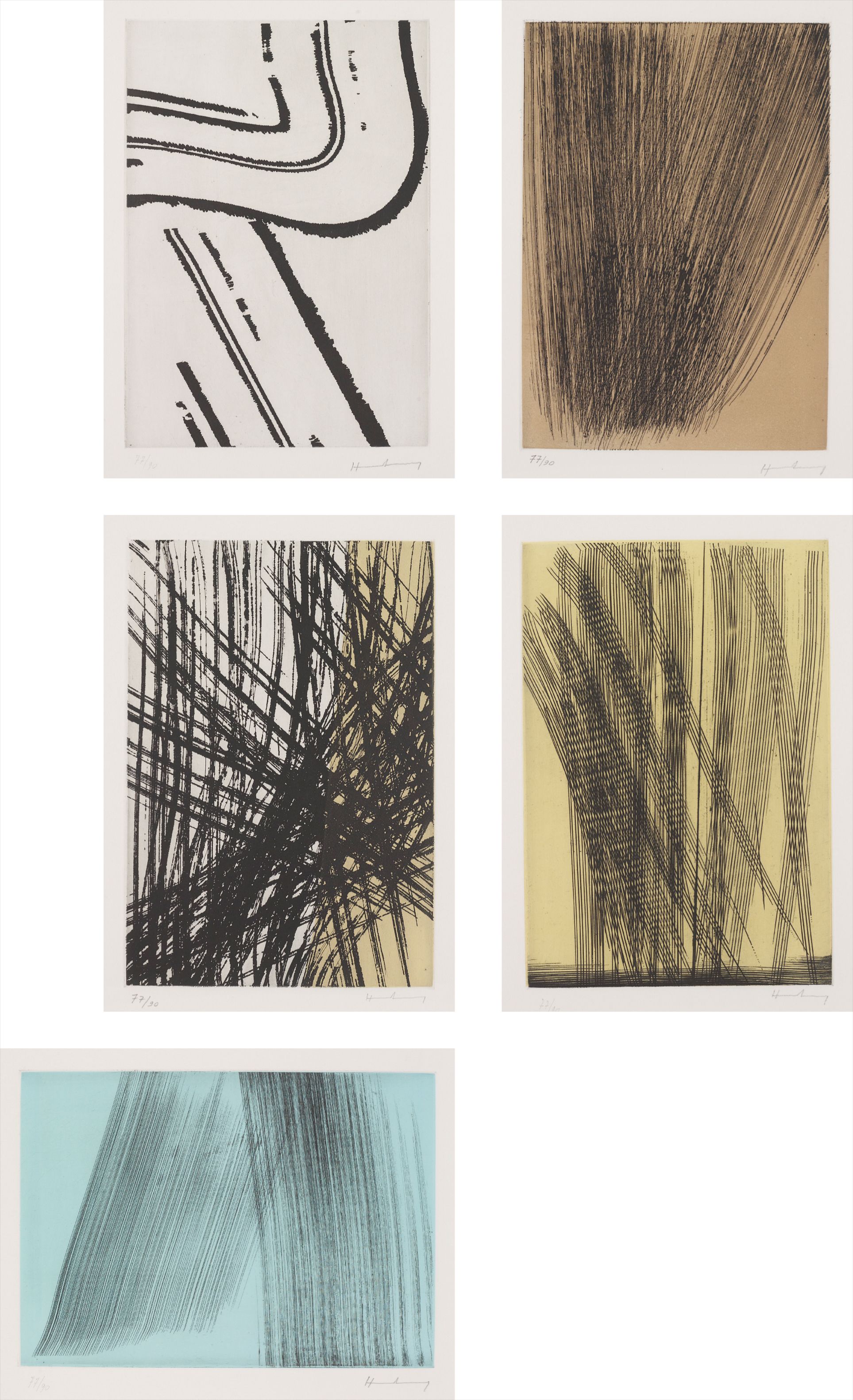
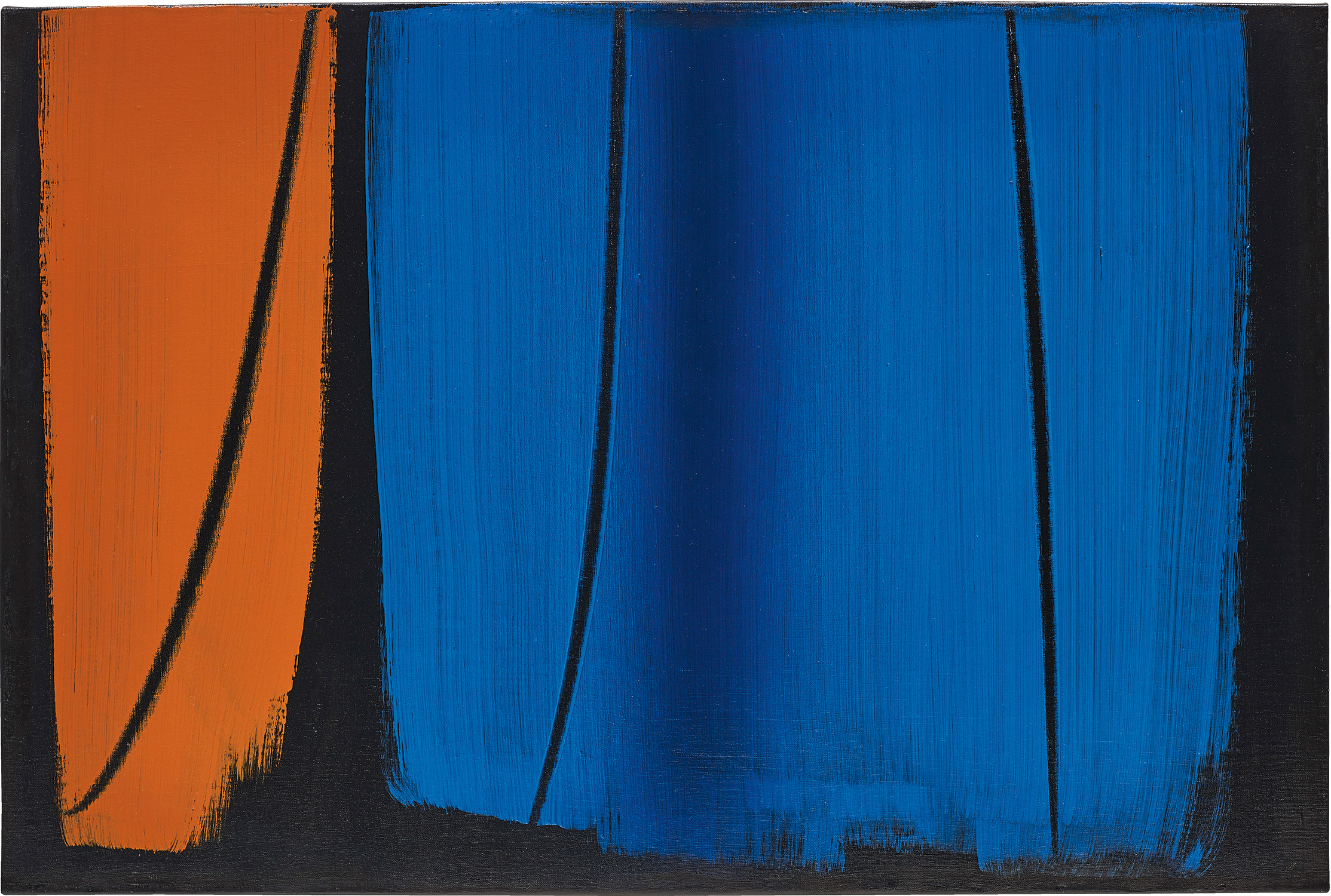
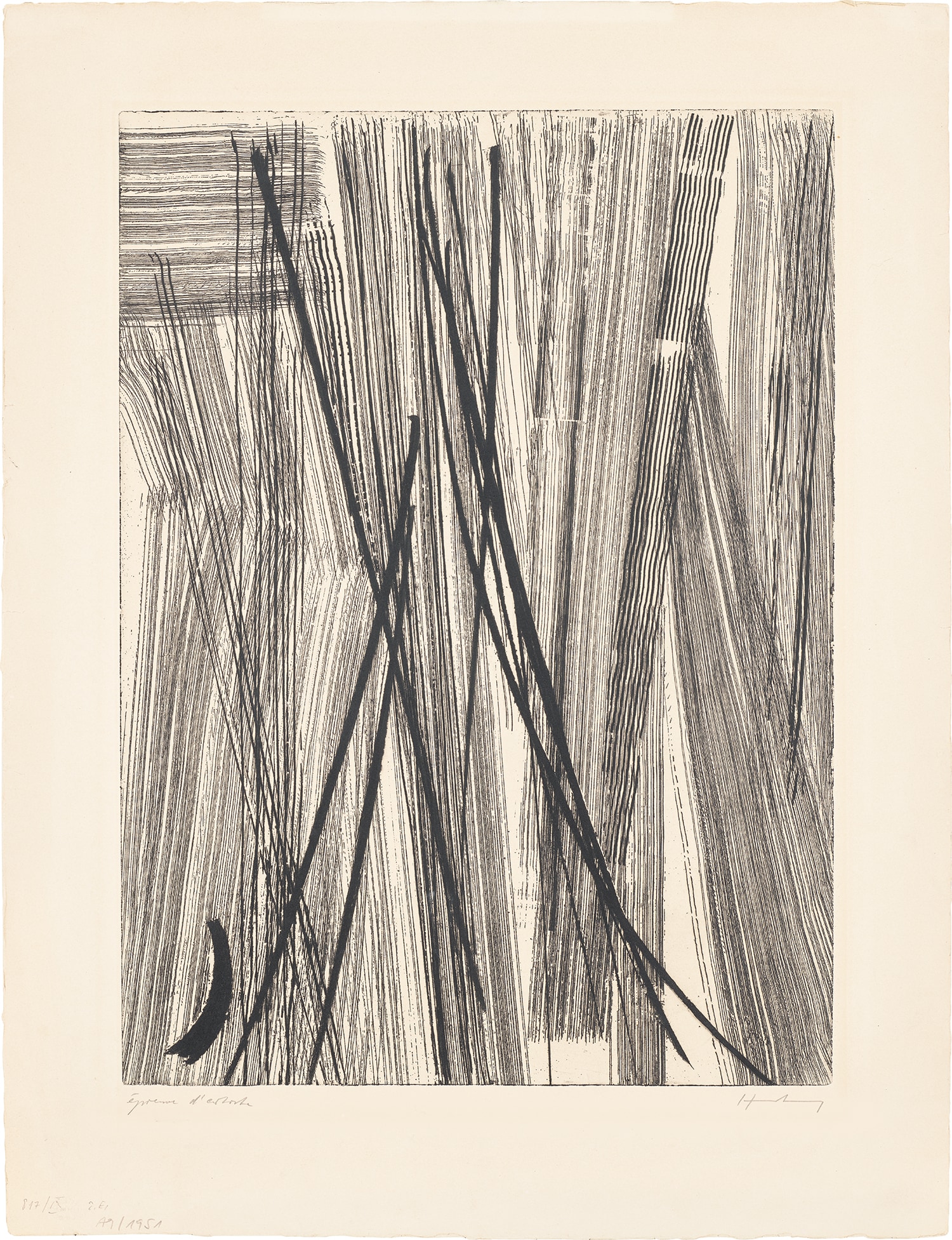
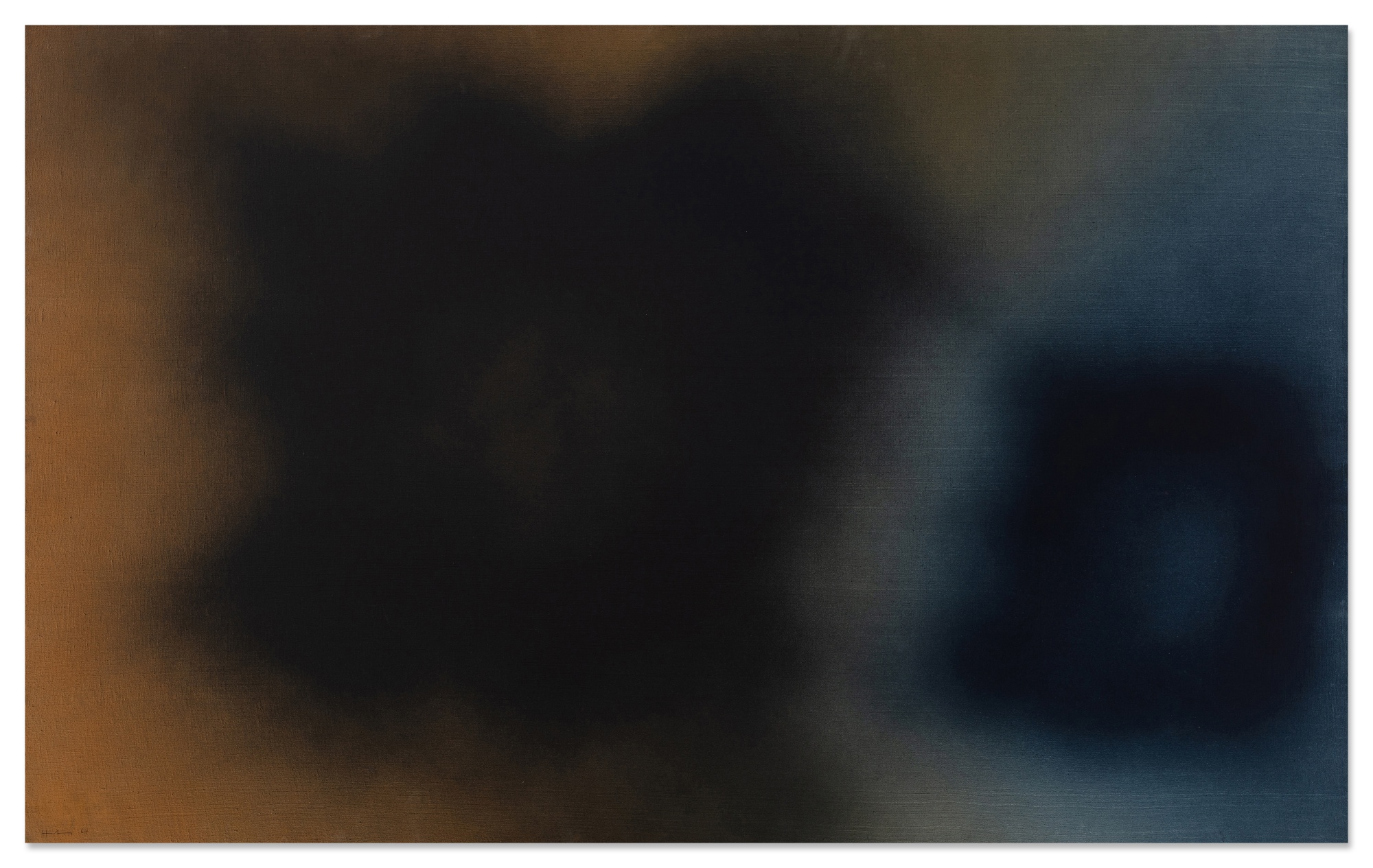
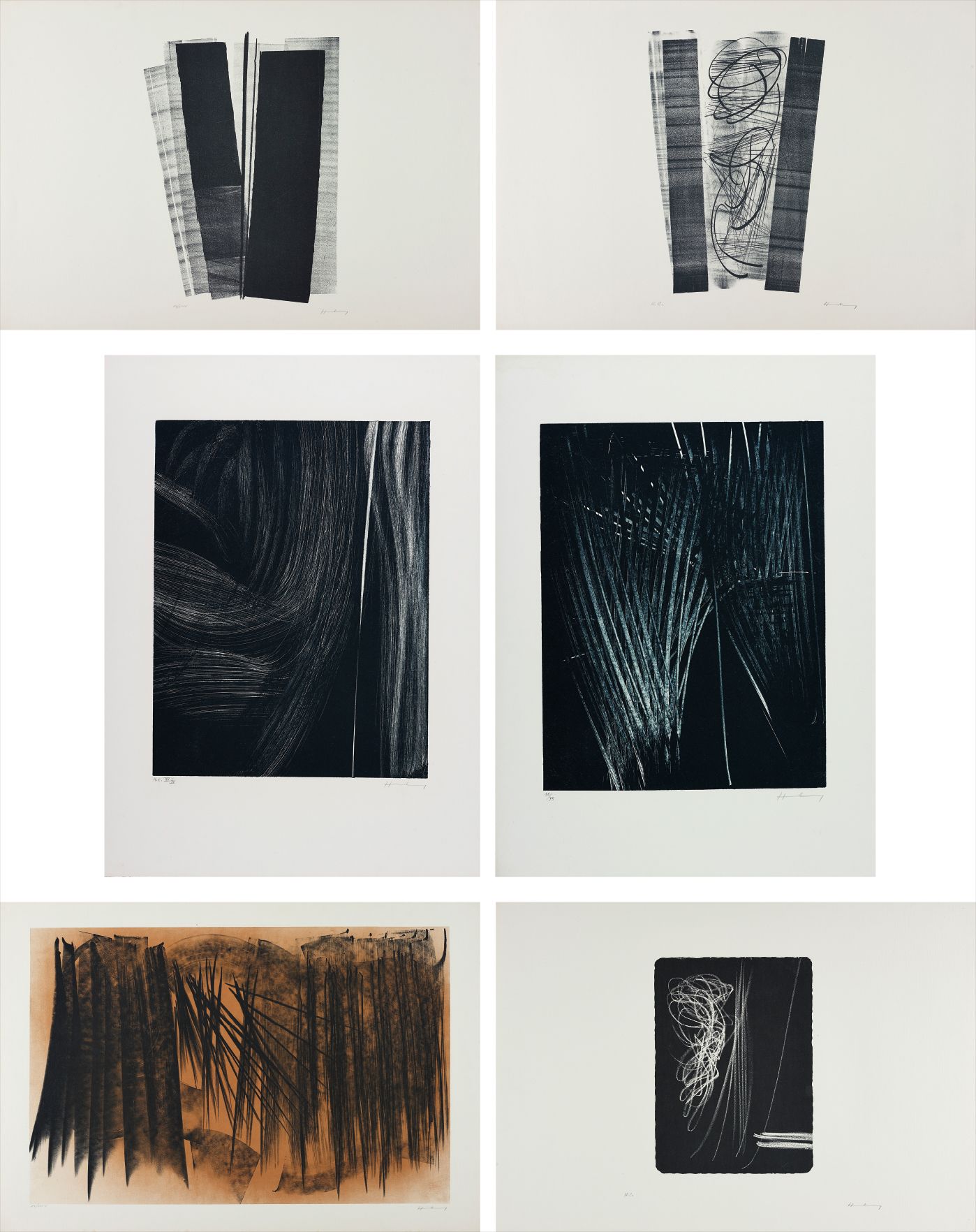
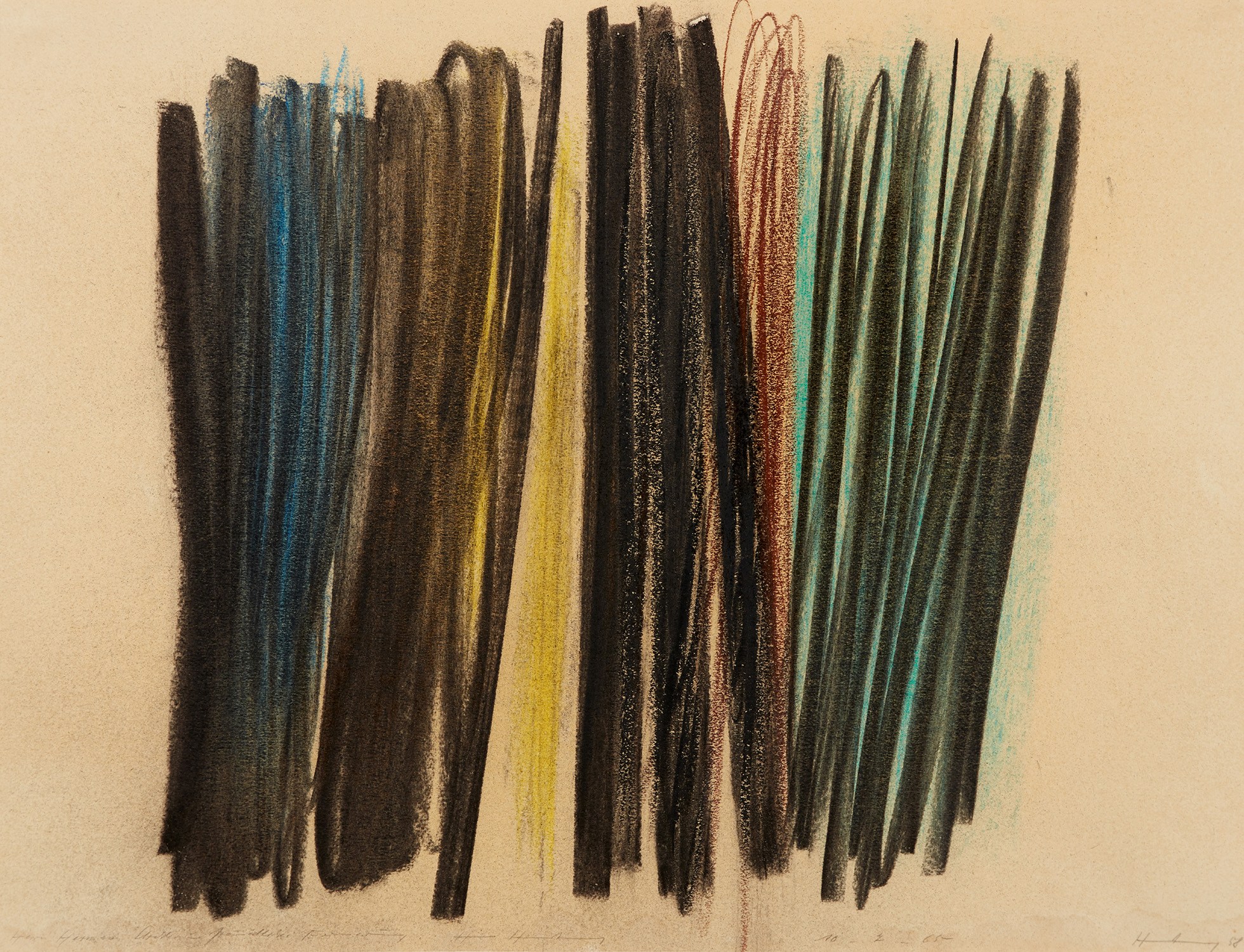
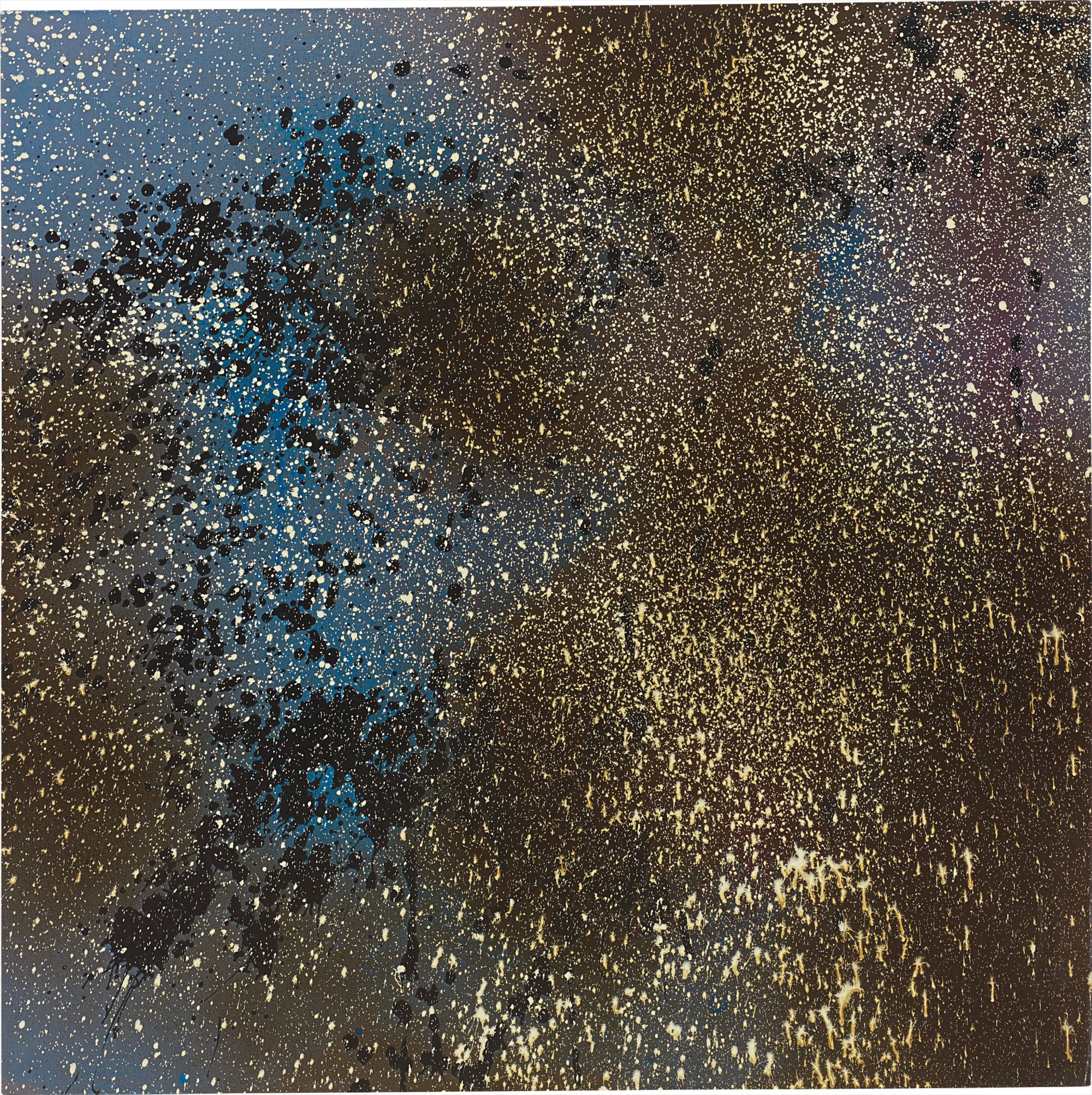
In the grand survey halls of the Fondation Hartung Bergman in Antibes, where the Mediterranean light falls across canvases of extraordinary energy, it is impossible not to feel the full weight of Hans Hartung's achievement. The foundation, established on the Côte d'Azur estate where Hartung spent his final decades, has in recent years become a vital pilgrimage site for those who love postwar European abstraction. Its holdings and ongoing scholarly programme have renewed international attention on an artist whose influence on the development of lyrical abstraction and Art Informel was nothing short of foundational. Hartung was not merely a participant in one of the twentieth century's great artistic revolutions. He was, in many important respects, its prophet. Hans Hartung was born in Leipzig in 1904 into a cultured bourgeois family that encouraged his early fascination with drawing and the natural world. As a boy he was captivated by the visual phenomenon of lightning, and one can trace a direct line from that childhood obsession to the electric, slashing marks that would eventually define his mature canvases. He studied philosophy and art history at the universities of Leipzig, Dresden, and later Munich, absorbing the legacy of German Expressionism while simultaneously gravitating toward something more instinctive and immediate. His earliest abstract works date to the late 1920s, making him one of the very first European artists to work in a truly non representational mode, a fact that art historians have increasingly come to appreciate. The turbulent decades of the 1930s and 1940s shaped Hartung as profoundly as any formal education could. He fled Nazi Germany and made his way through Spain and France, eventually enlisting in the French Foreign Legion during the Second World War. He was gravely wounded in Alsace in late 1944 and lost his right leg as a result of his injuries, a fact that makes the later physical ferocity of his painting practice all the more remarkable. He became a French citizen in 1945, and it is in France that his legacy ultimately took root. Paris in the postwar years was the crucible of a new kind of painting, one that privileged the urgency of the mark over the logic of composition, and Hartung found himself at the very centre of that movement. By the early 1950s Hartung had developed the visual language for which he is celebrated: dense, gestural clusters of lines, often dark against luminous grounds, conveying a sensation of raw psychological and physical energy. His T series, begun in the late 1940s and continuing for decades, remains his most iconic body of work. Works such as T1952 1, an oil on canvas of controlled yet explosive force, demonstrate how Hartung could channel spontaneity through a rigorous and deeply considered process. He was not painting automatically in the Surrealist sense. He was, rather, performing a kind of disciplined release, in which the speed and pressure of his implement, whether brush, squeegee, or a bundle of lavender branches dragged across the surface, became the subject of the work itself. The sheer range of materials he employed across the T and P series, from oil and vinyl paint to pastel, charcoal, India ink, and acrylic on baryte cardboard and wove paper, speaks to an artist perpetually in dialogue with the physical possibilities of his craft. The later decades of Hartung's practice are, if anything, undervalued. In the 1970s and 1980s he embraced increasingly large scale and developed a spray based technique that allowed him extraordinary atmospheric effects, the luminous grounds of works like T1976 E3 and T1989 u40 pulsing with a colour field sensibility that brought him into fascinating proximity with American painters he had long admired from across the Atlantic. That T1989 u40 was completed in the very year of his death, when he was in his mid eighties and working with extraordinary physical determination, makes it one of the most moving documents in postwar European art. Hartung never stopped pushing. He never allowed infirmity or age to diminish the ambition or the urgency of his vision. For collectors, Hartung presents a compelling proposition on multiple fronts. His works on paper, including the pastels and charcoal drawings on baryte cardboard that constitute a significant and beautiful strand of his output, offer an accessible point of entry into a practice of genuine historical importance. Works such as P1958 56 and P1967 35 reward close attention, their surfaces alive with layered marks and a sensitivity to tone that reveals itself slowly. On the primary auction market, major canvases from the 1950s and early 1960s have achieved significant prices at houses including Christie's and Sotheby's, reflecting sustained institutional and private interest. The baryte cardboard works, which combine the directness of drawing with the chromatic richness of painting, occupy a particularly interesting position in the market: they are intimate without being minor, and they carry the full force of Hartung's intelligence in a format that lives beautifully in a domestic space. To understand Hartung fully, it helps to situate him within the broader constellation of postwar abstraction. He was a close contemporary of Pierre Soulages, Franz Kline, and Georges Mathieu, and his work shares with each of them a commitment to the expressive power of the mark. But where Soulages pursued an almost monastic severity and Kline a structural boldness derived from urban architecture, Hartung's sensibility was always more mercurial, more charged with biographical electricity. He was also deeply connected to the CoBrA movement's spirit of liberated gesture, and critics of the period drew comparisons with the American Abstract Expressionists, though Hartung's roots in European philosophical and aesthetic tradition gave his abstraction a distinct intellectual texture. He exhibited widely across his career, with significant shows in Paris, New York, and across Europe, and was awarded the Grand Prize for Painting at the Venice Biennale in 1960, a recognition that placed him among the very highest rank of living painters. The ongoing reappraisal of postwar European abstraction, driven by major institutional exhibitions and a new generation of collectors drawn to works of genuine feeling and historical substance, has placed Hartung in an enviable light. His practice was ahead of its time in the 1920s, central to its time in the 1950s, and remains bracingly alive to our own. There is something in the directness of his marks, the sense that a human body in motion made these works and left its trace irrevocably on the surface, that speaks with particular force to a moment when so much visual culture feels mediated and distanced. Hartung reminds us what it feels like when art is also an act.