La Grande vitesse
1969
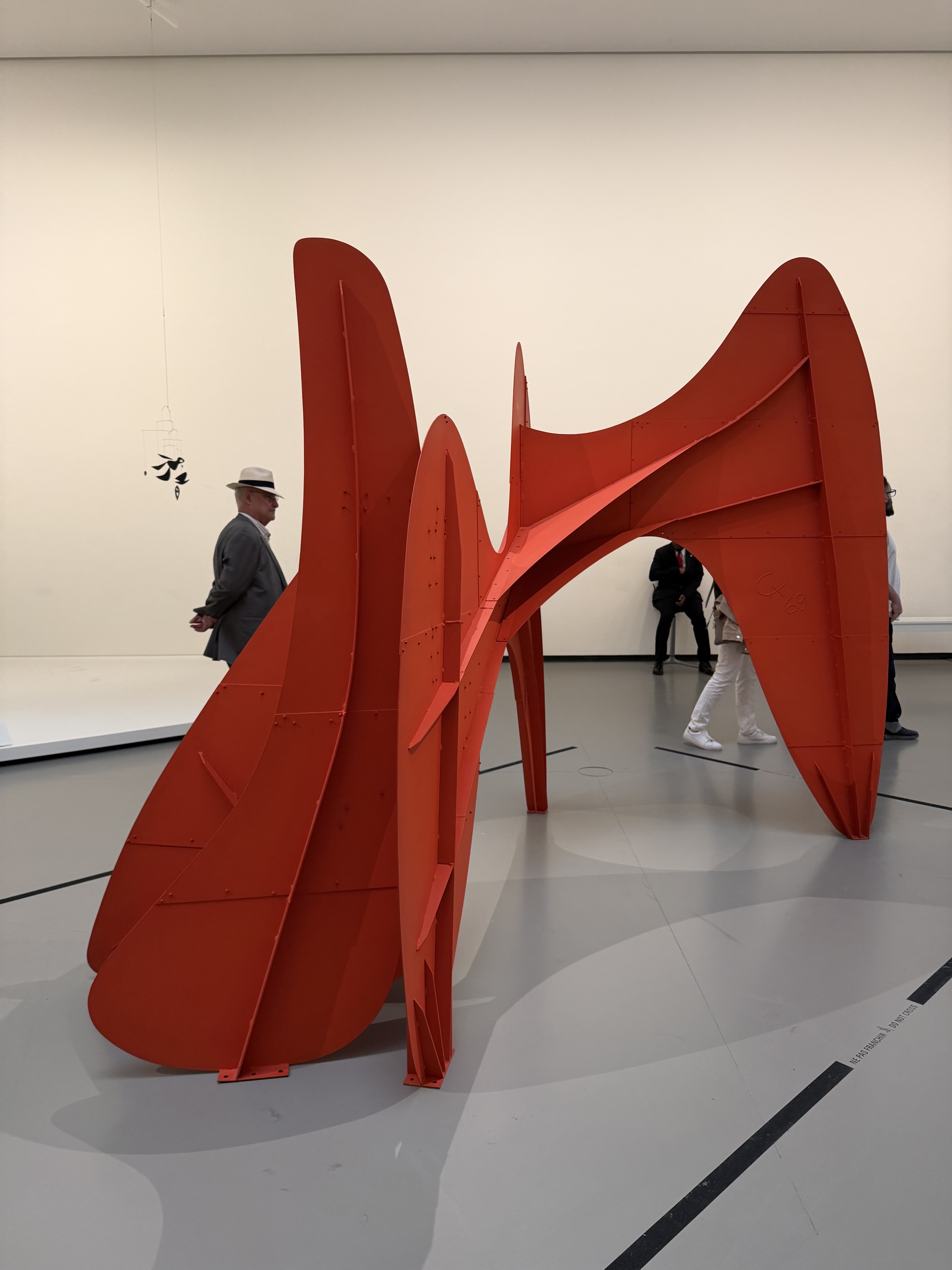
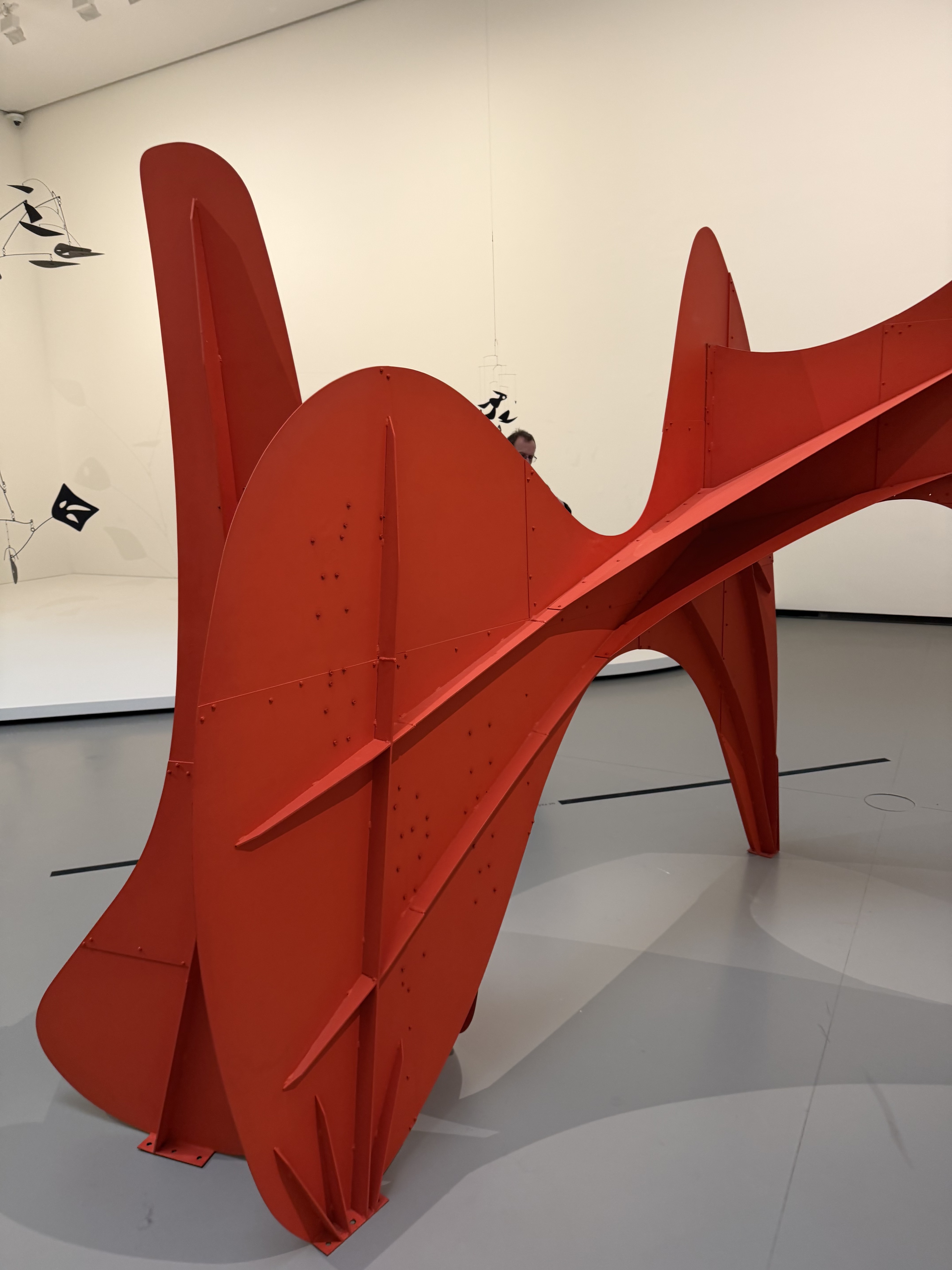
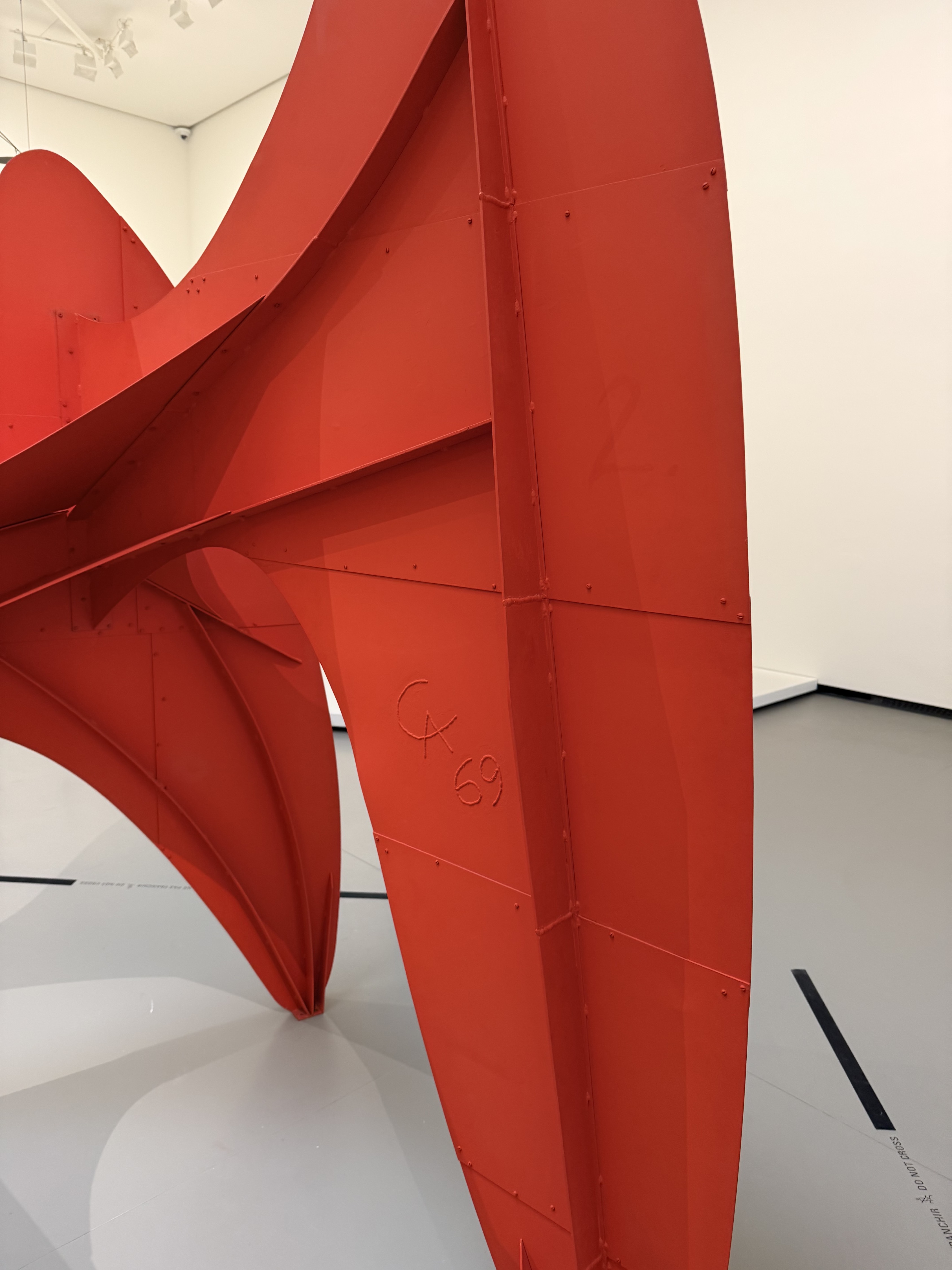
This commanding red stabile is a 1:5 intermediate maquette for Alexander Calder's monumental La Grande vitesse, commissioned by the city of Grand Rapids, Michigan in 1967 and completed two years later. One of three maquettes produced during the design process, it demonstrates how Calder employed structural rib elements to refine the sculpture's sweeping sinuous form and volume. La Grande vitesse was the first sculpture in the United States to receive funding through the National Endowment for the Arts Art in Public Places program, making this maquette a historically significant artifact of American public art. Held in the collection of the Calder Foundation, New York, this piece offers a rare close encounter with the design genesis of one of Calder's most celebrated public works.
- Medium
- Sheet metal, bolts, and paint
- Signed
- Yes
- Spotted At
- Foundation · Fondation Louis Vuitton
Notes
This is a 1:5 intermediate maquette (maquette intermédiaire 1/5), one of three executed during the enlargement process for the full-scale La Grande vitesse. The full sculpture exceeds 15 meters in length. The work was commissioned for the plaza of the Grand Rapids City Hall and County Administration Building, designed by Skidmore, Owings and Merrill. Audio guide available (code FLV). QR code present on label.
More by Alexander Calder
Collectors of Alexander Calder

Also spotted by

Artists in conversation
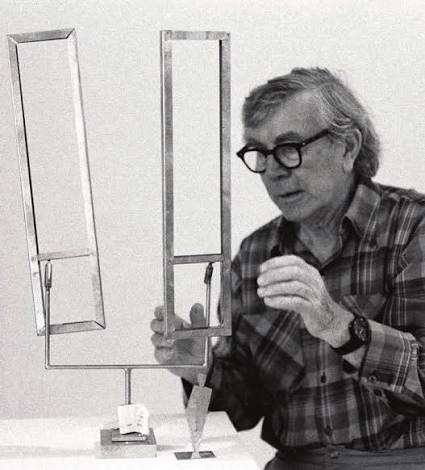
George Rickey
American · b. 1907
Rickey created kinetic sculptures with precisely balanced moving metal elements that respond to air currents, directly paralleling Calder's mobiles in their use of engineered movement and geometric abstraction in three dimensional space.
Len Lye
New Zealander · b. 1901
Lye pioneered kinetic sculpture using thin steel rods and sheets that vibrate and sway with motion, sharing Calder's fascination with movement, industrial materials, and the animation of abstract sculptural forms through physical forces.
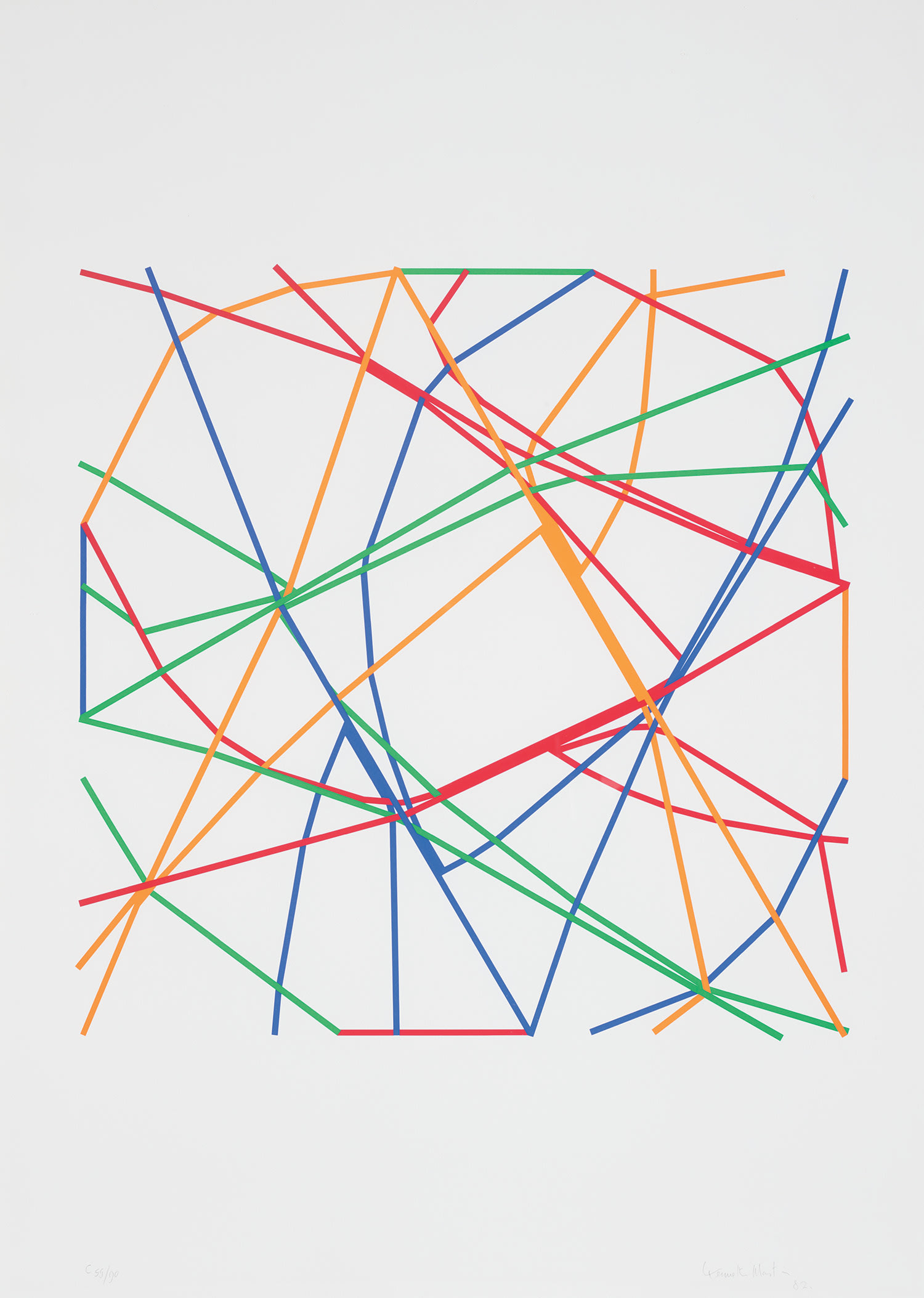
Kenneth Martin
British · b. 1905
Martin constructed delicately balanced mobile sculptures using suspended geometric metal elements arranged in rhythmic sequences, closely echoing Calder's approach to kinetic balance, spatial composition, and abstract formal relationships.
Start the Discussion
Request access to join the discussion