Kinetic Art
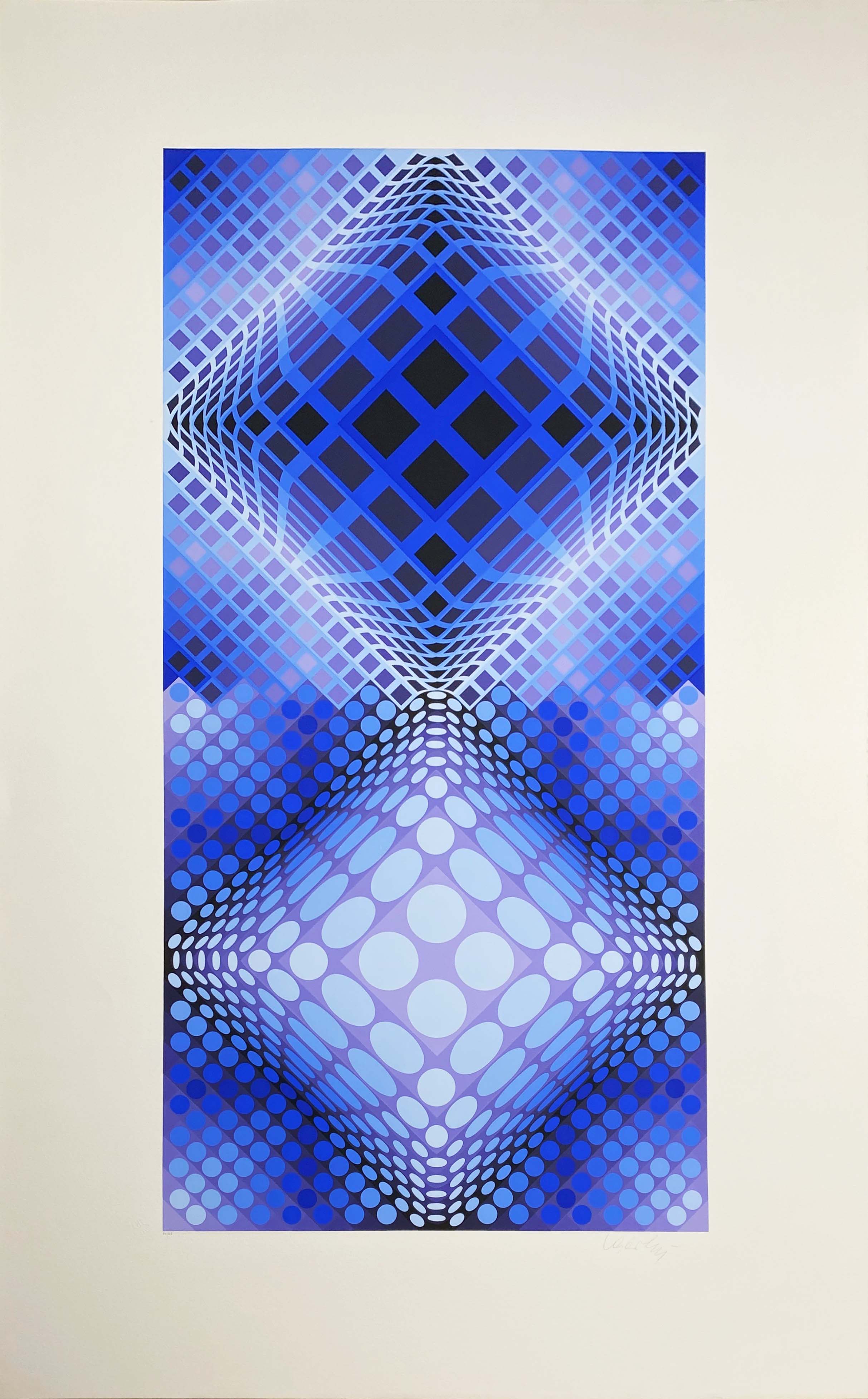
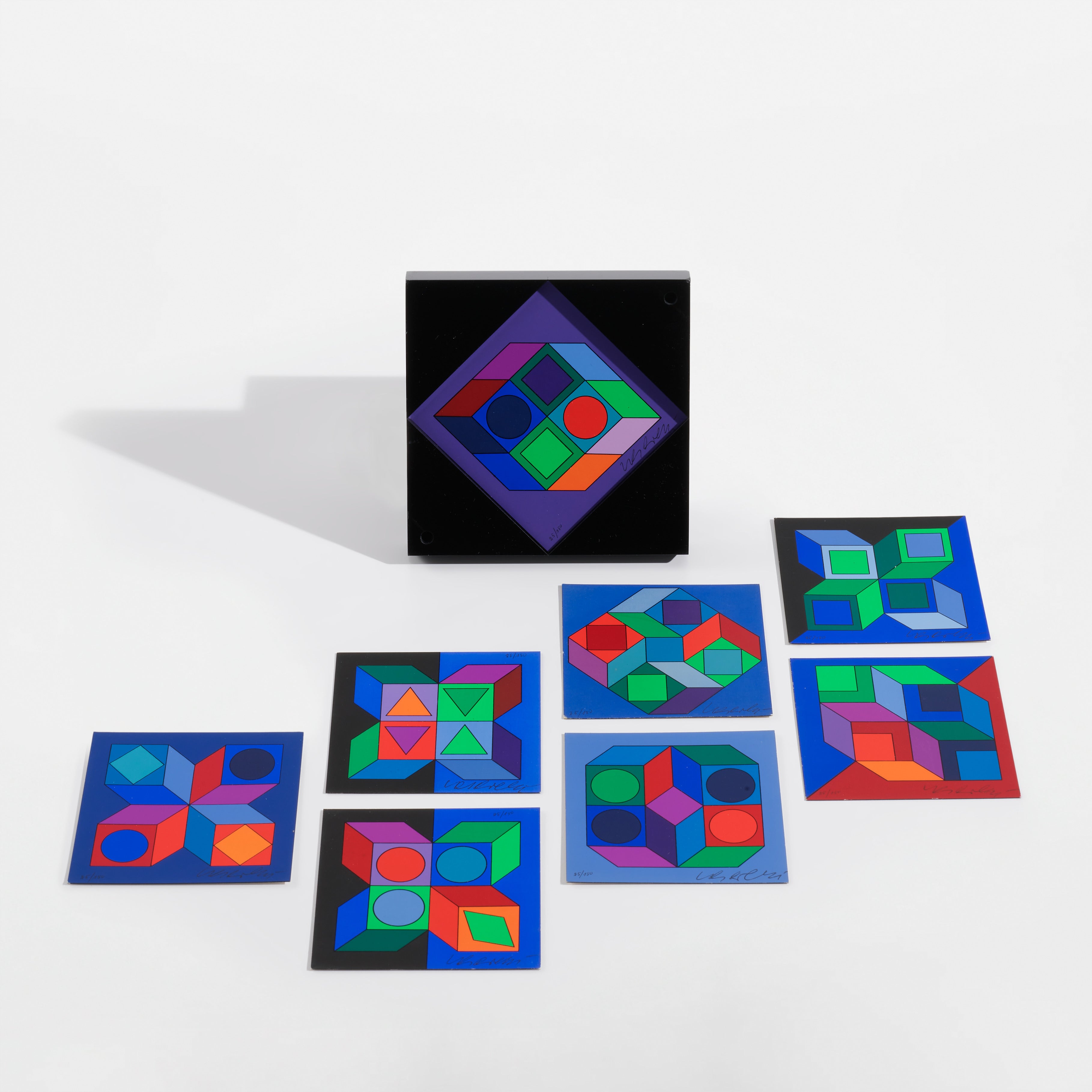
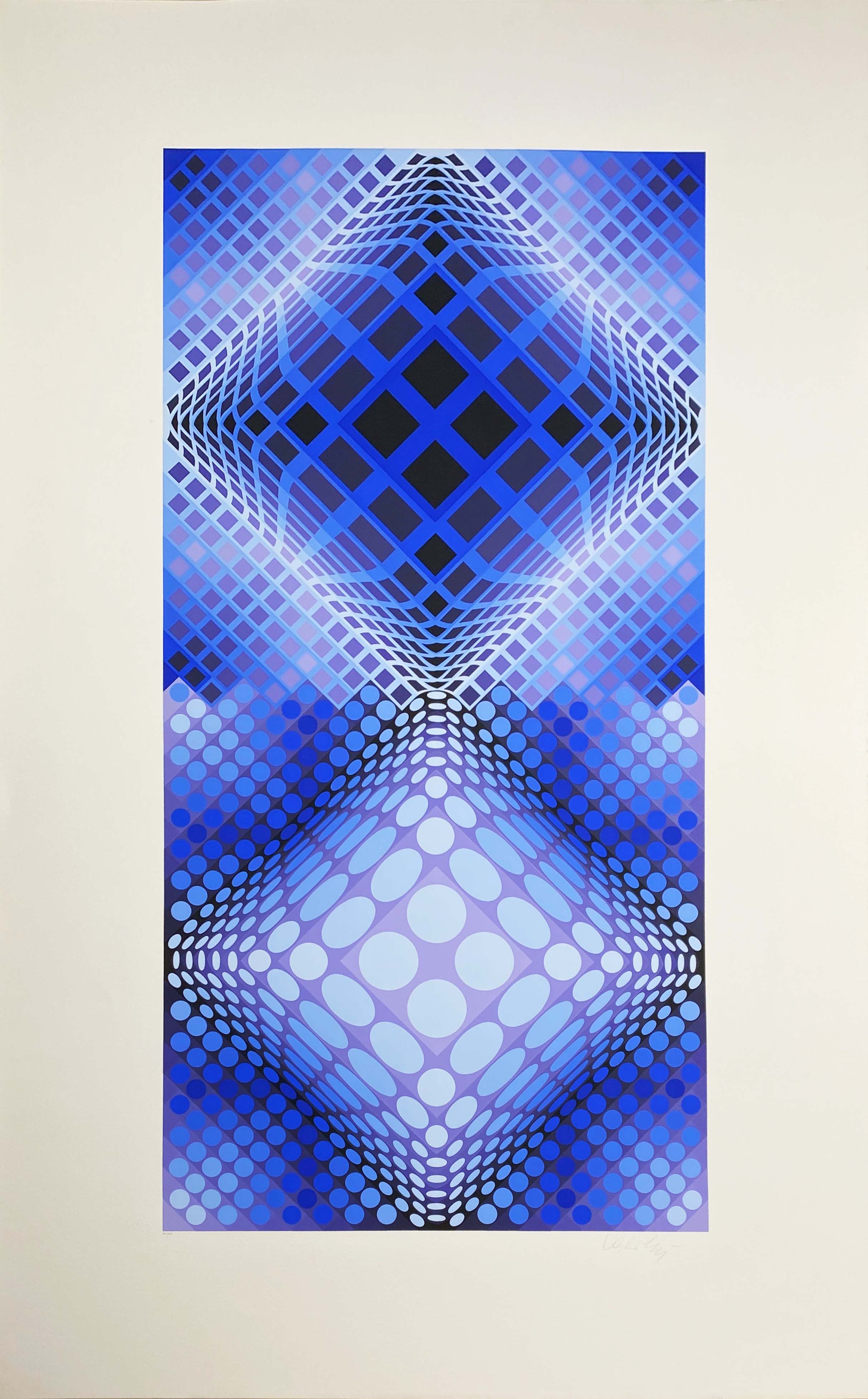
Víctor Vasarely
Album Meta: Seven Plates 2, 1976
Art That Never Holds Still
There is a particular kind of collector who is drawn not just to looking at a work but to living with it. Kinetic art rewards exactly that sensibility. Unlike a painting that delivers its meaning in a single sustained encounter, a kinetic work changes with the hour, the season, the angle of your approach. The morning light hitting a Jesús Rafael Soto penetration is a different conversation entirely from the same work at dusk.
That perpetual freshness is not a trick. It is the whole point. What pulls collectors into this space is often something close to wonder, but the best ones quickly move past novelty toward something more rigorous. Kinetic and Op art emerged from a very specific intellectual moment.
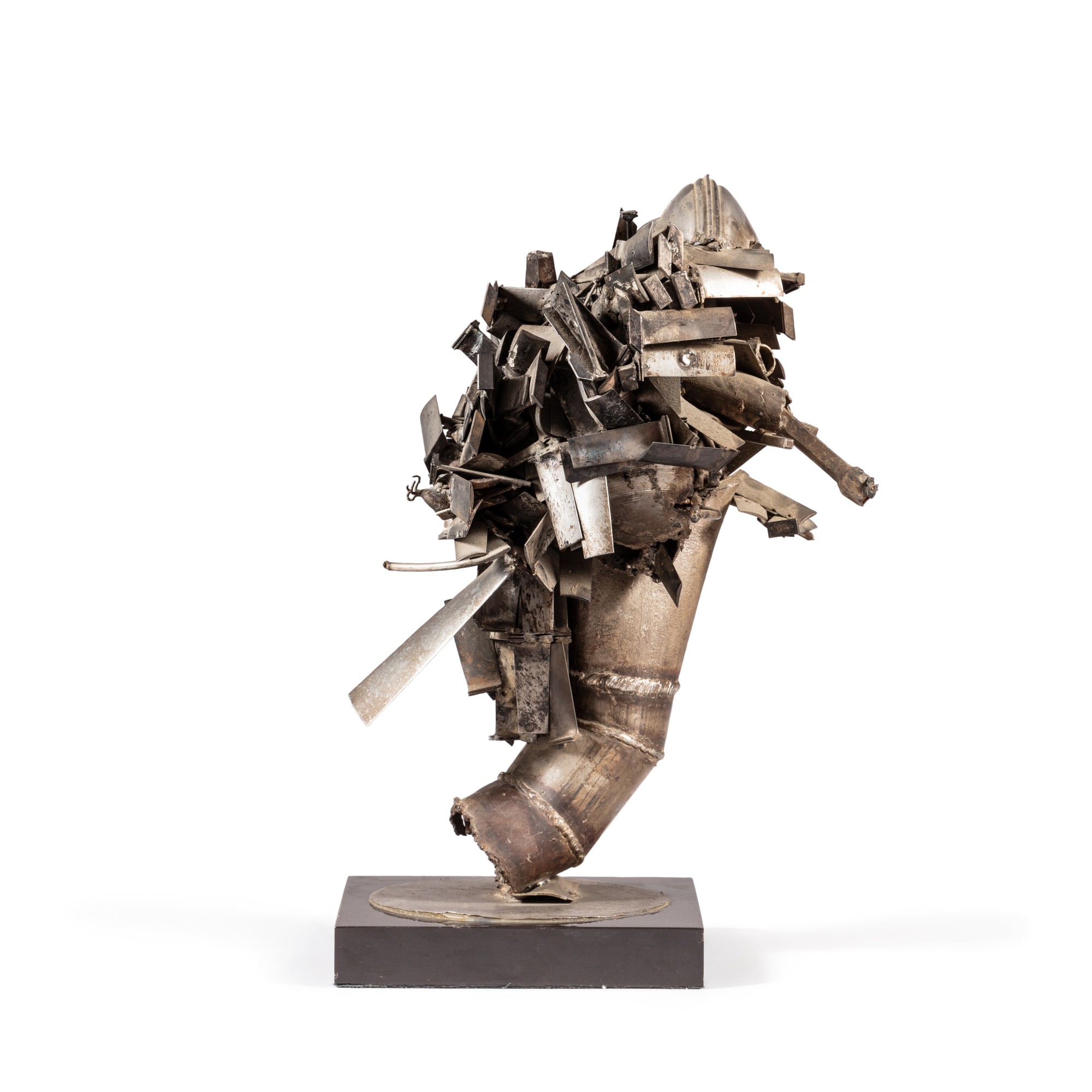
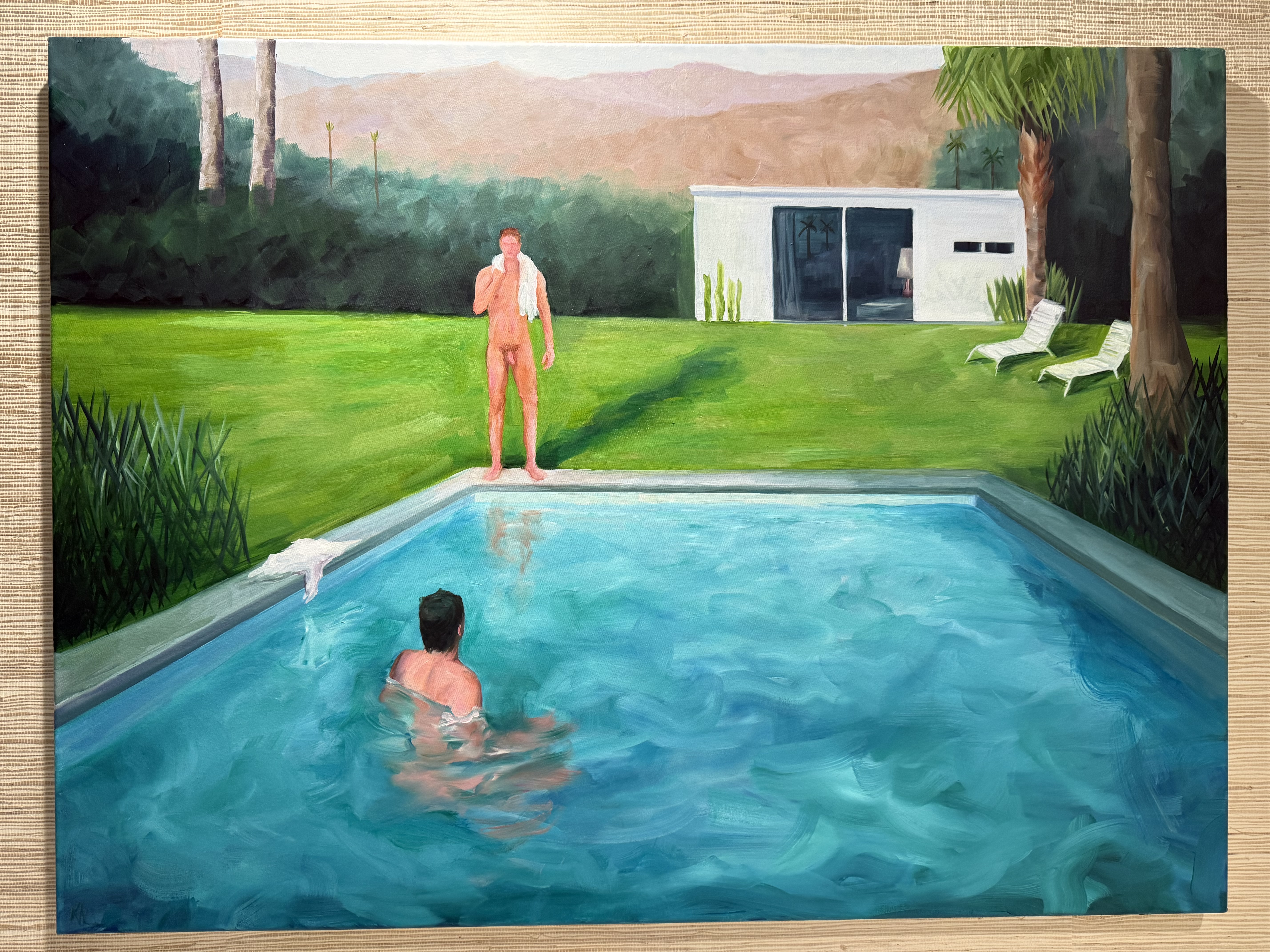
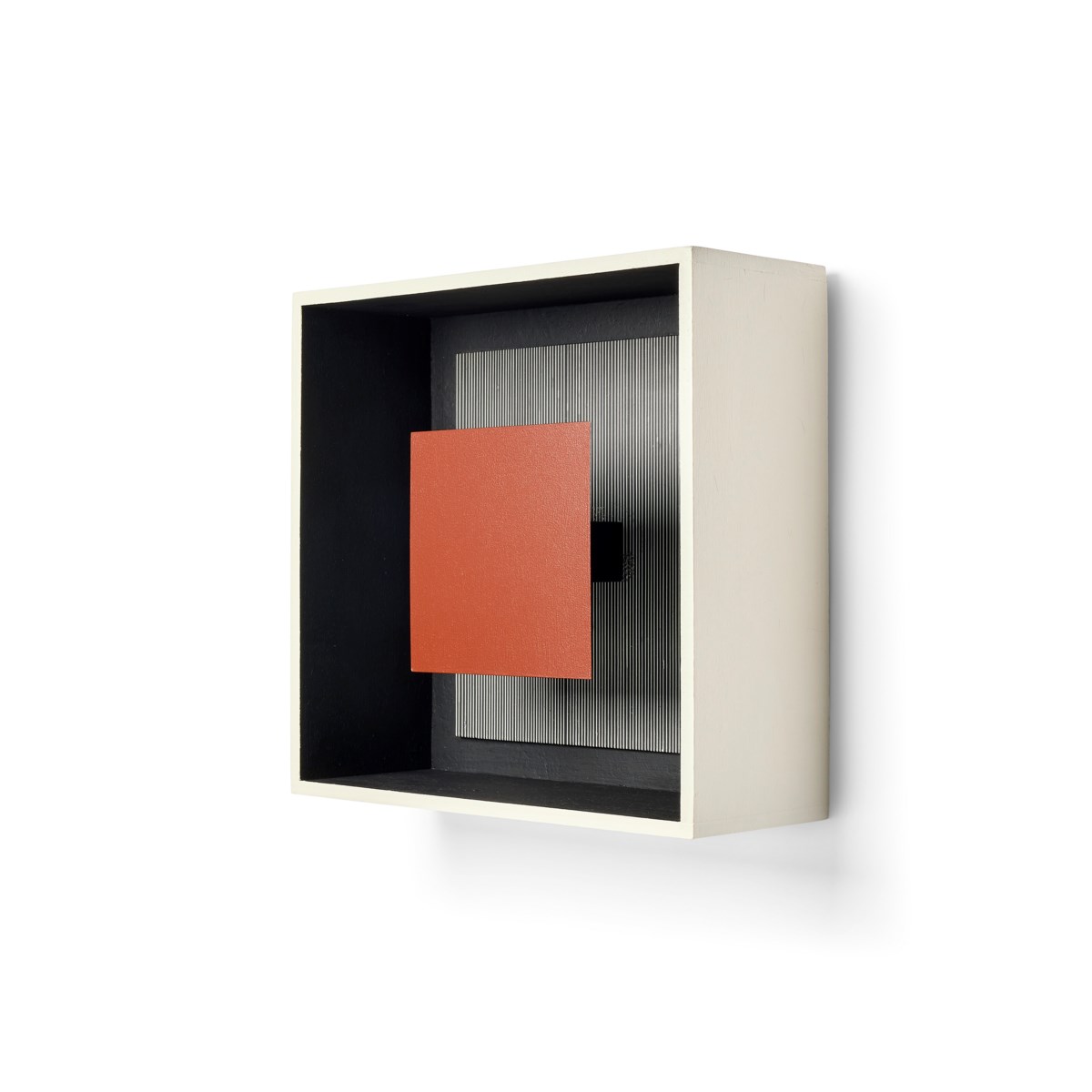
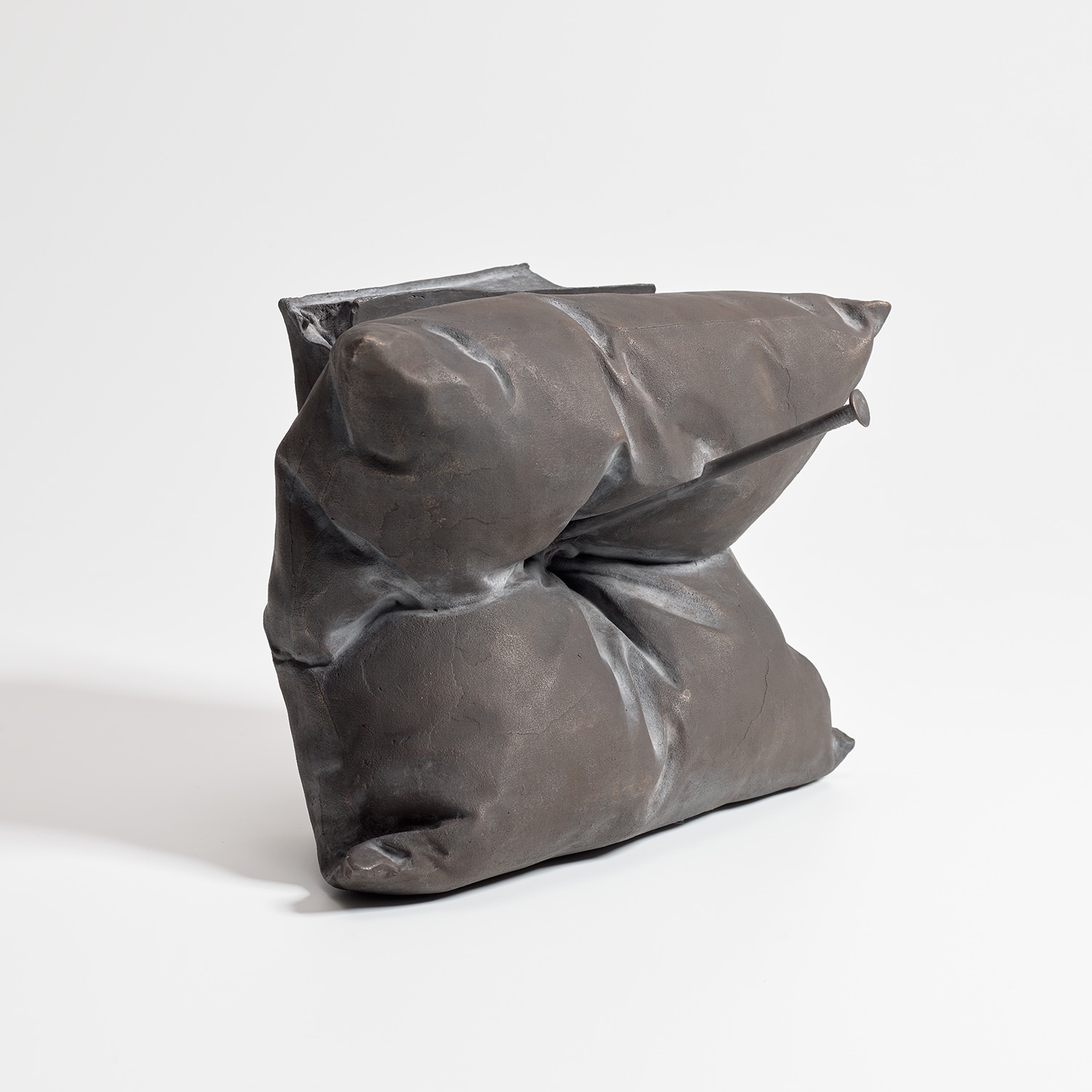
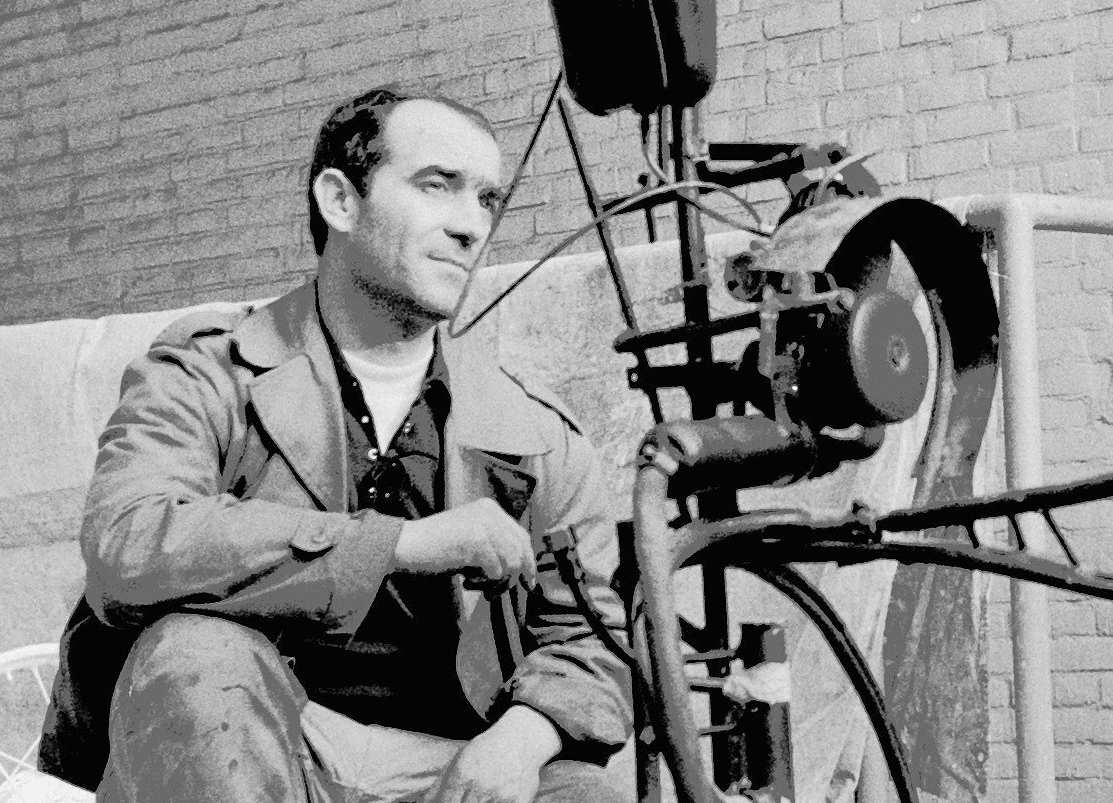
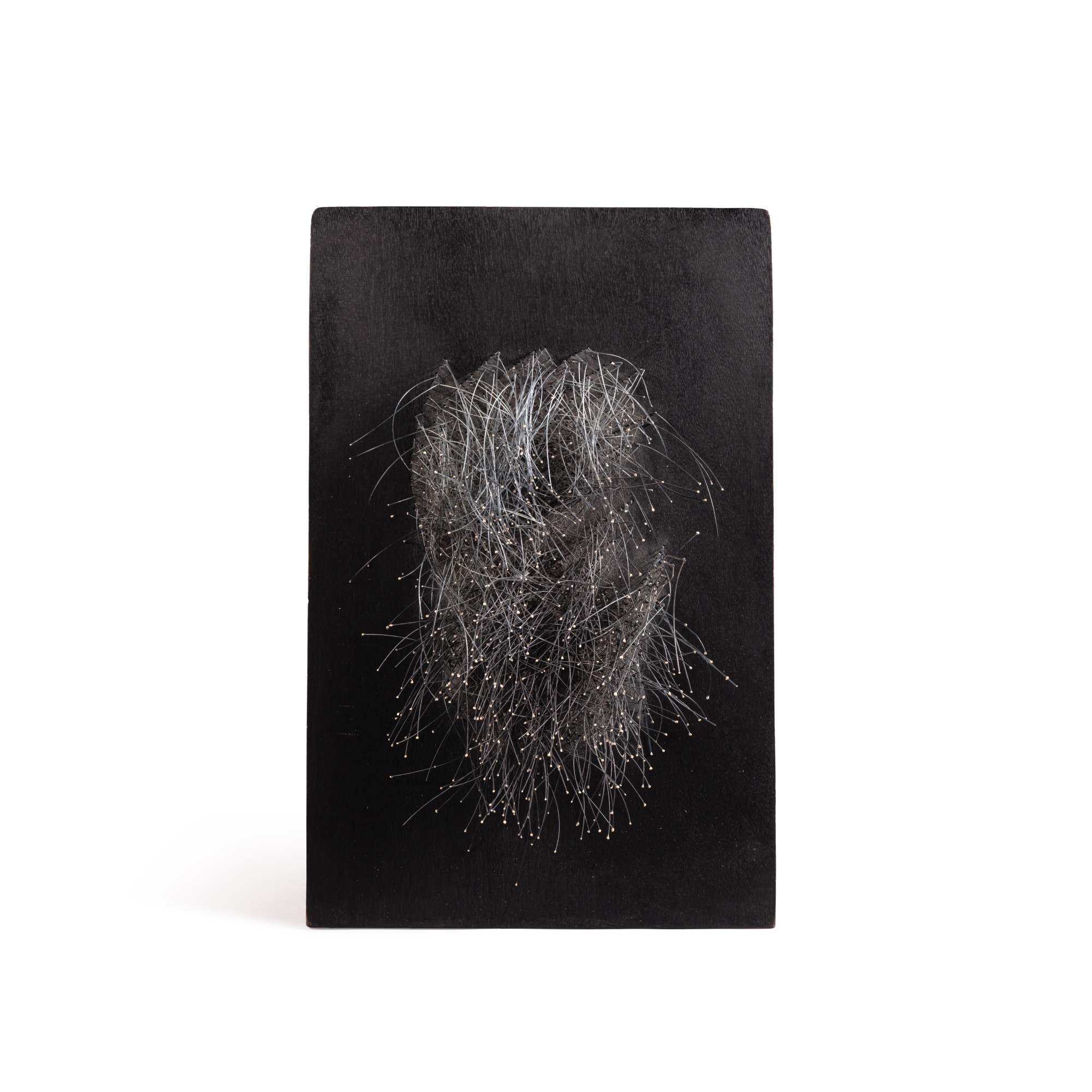
César
Sans titre, 1965
Groups like GRAV in Paris, the Zero movement in Düsseldorf, and the Groupe de Recherche d'Art Visuel brought scientific thinking into the studio during the 1950s and 1960s. These artists were not making decoration. They were conducting research into perception, light, and the relationship between object and observer. Understanding that context matters enormously when you are building a collection, because it distinguishes a work made with genuine intention from one that simply wiggles.
So what separates a good work from a great one in this category? Execution matters, but concept is the thing. The strongest works in this space do not merely demonstrate a visual effect. They make you question something about how seeing actually works.
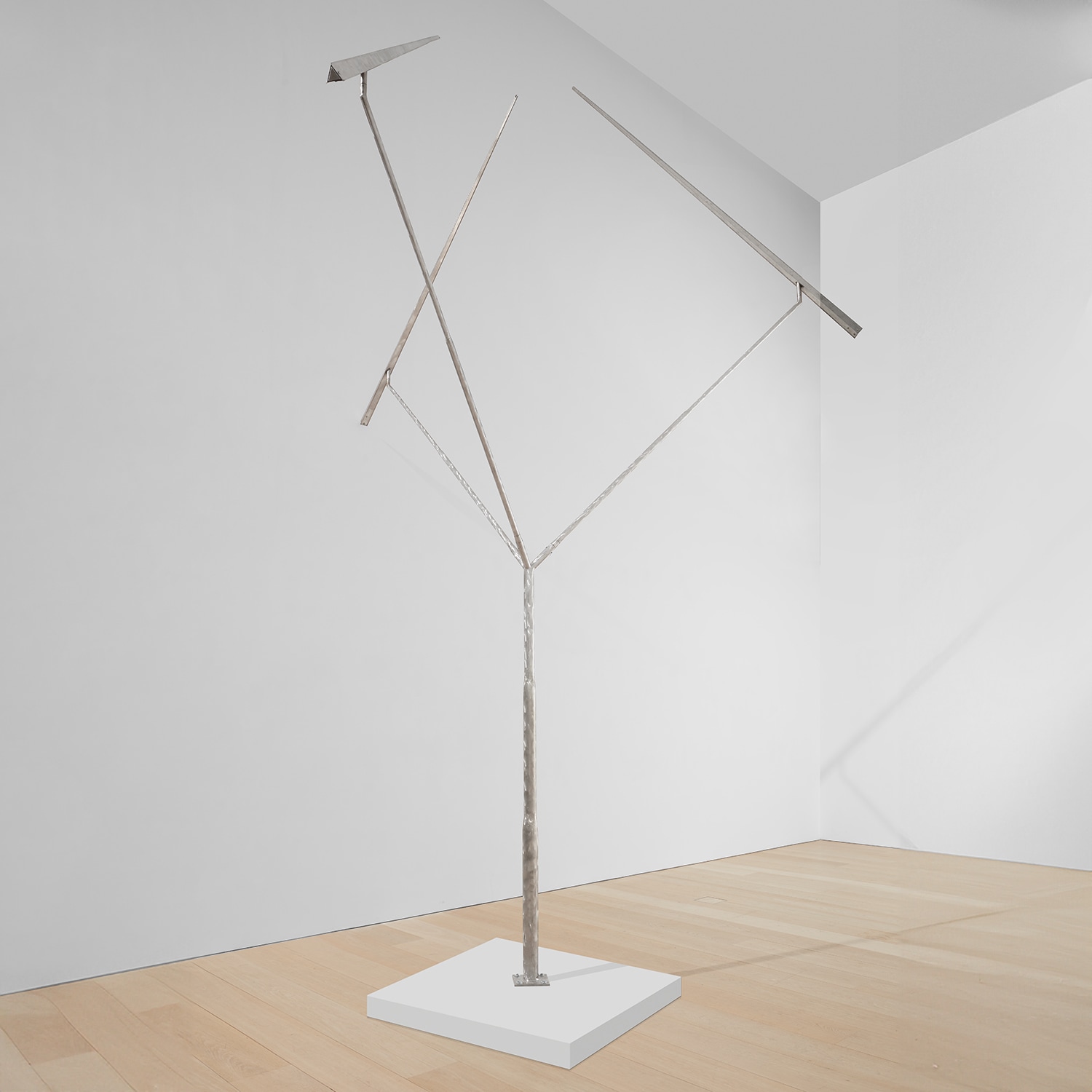
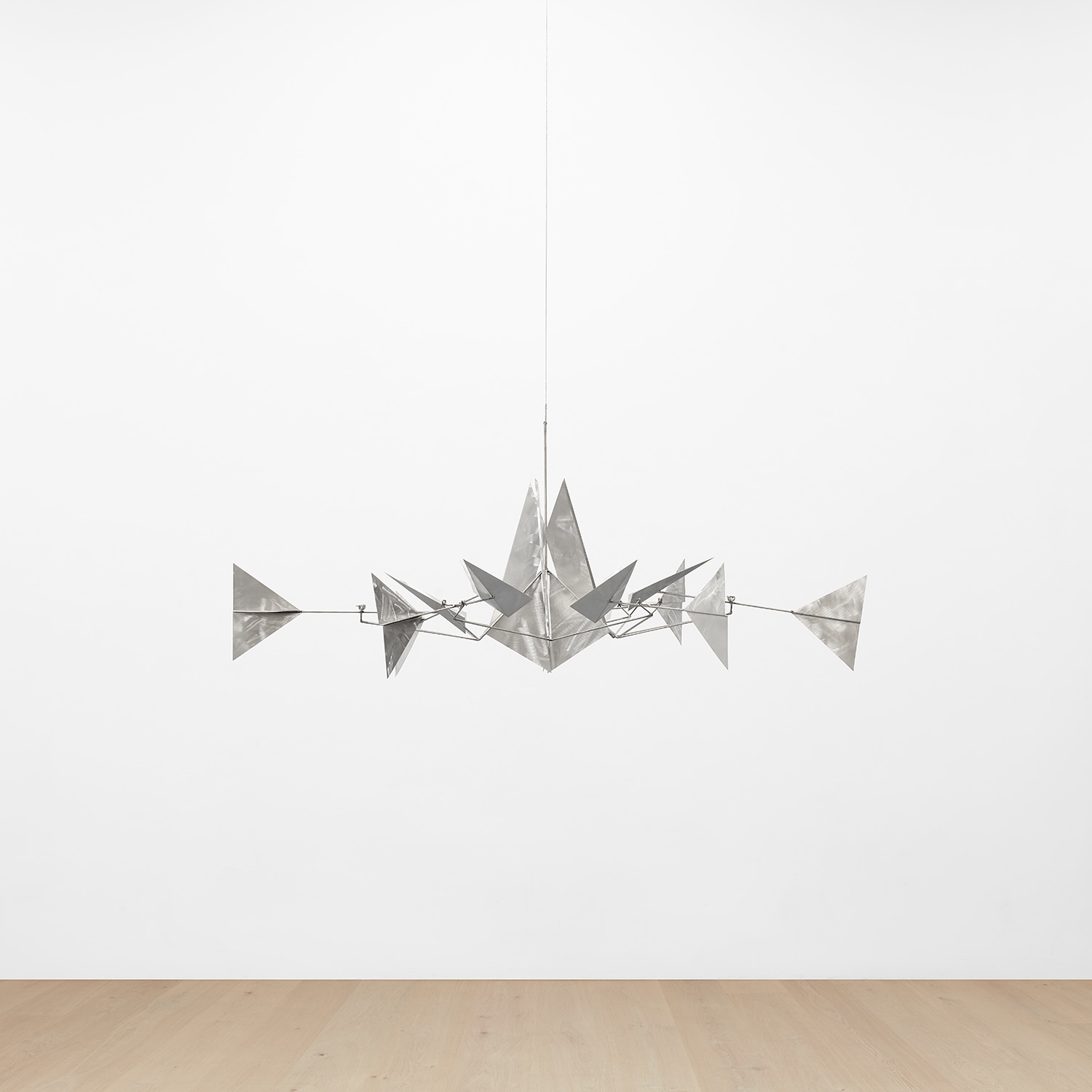
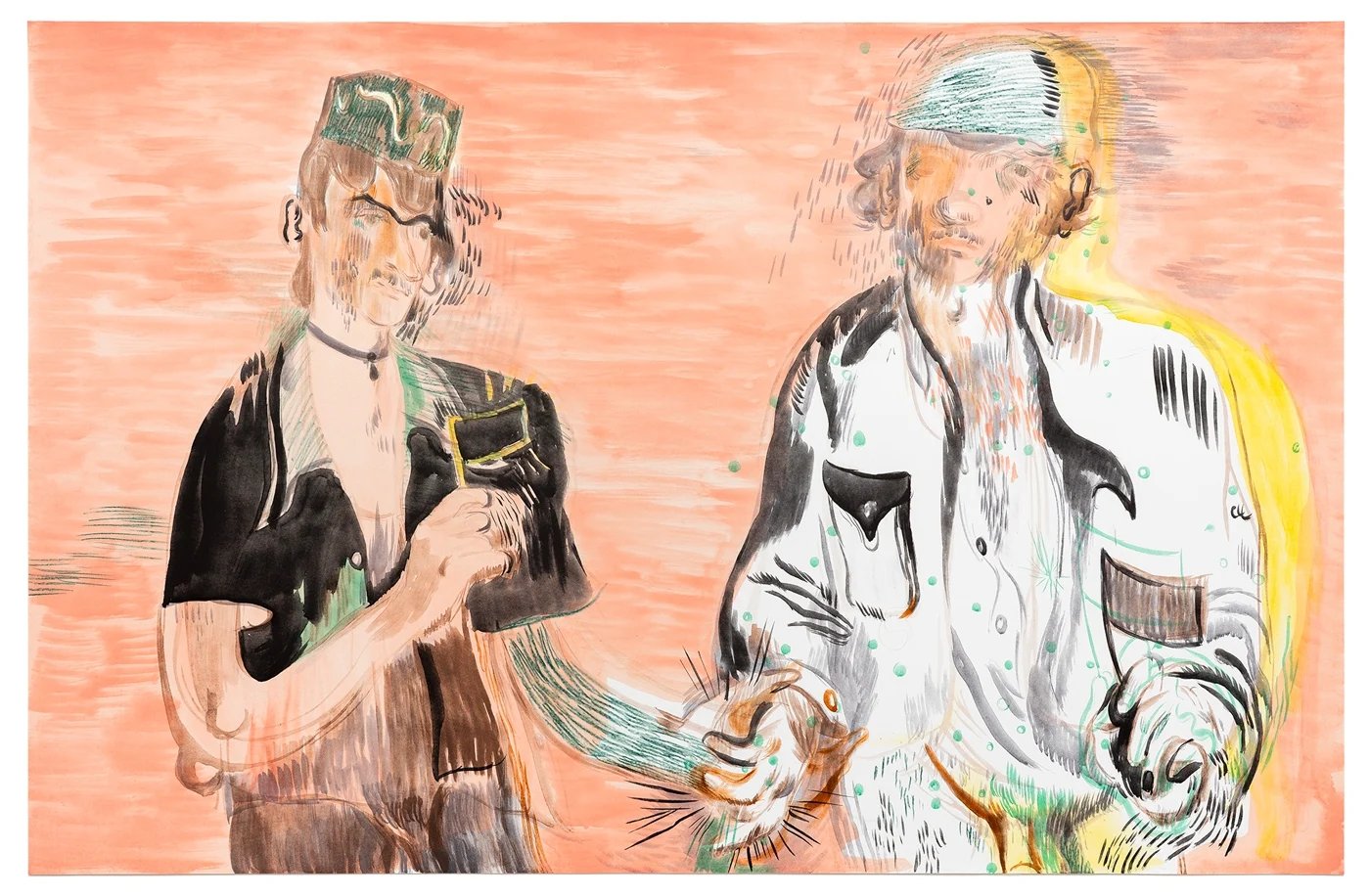
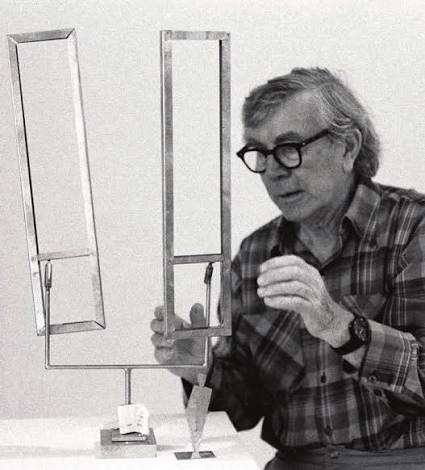
George Rickey
Three Oblique Lines Conical Path III, 1991
A great Carlos Cruz Diez chromatic induction piece creates color experiences that exist only in your nervous system, not on the surface of the work itself. A powerful George Rickey sculpture achieves a balance so precise that it seems to breathe. The mechanical or perceptual premise should feel inevitable rather than arbitrary. If you can imagine the work being slightly different and losing nothing essential, it is probably not the work you want.
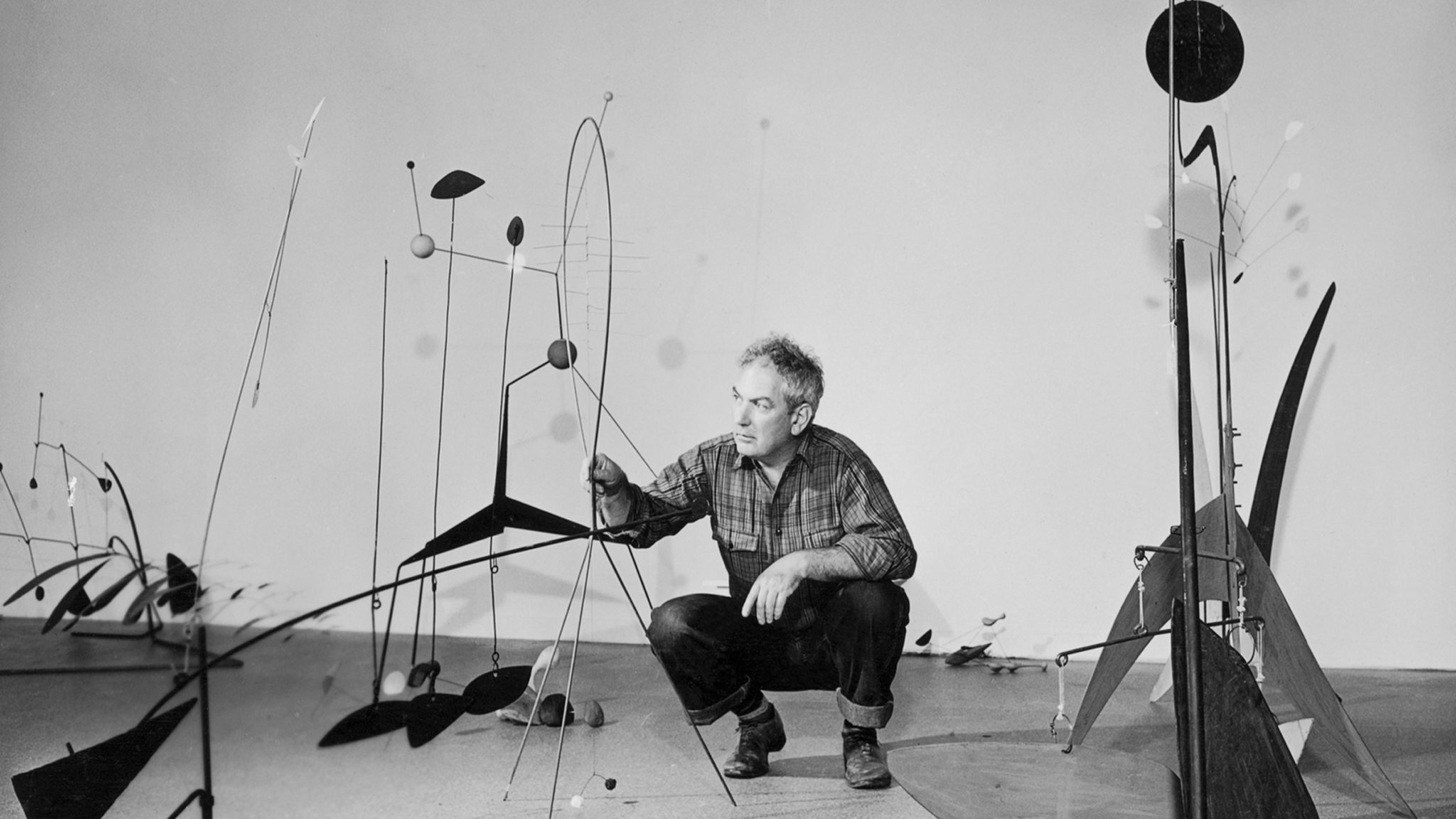
In terms of artists representing genuine long term value, Alexander Calder remains the undisputed anchor of any serious collection in this area. His mobiles established the entire grammar of suspended kinetic sculpture, and strong examples at auction consistently draw institutional and private buyers in serious competition. Calder works on The Collection represent the kind of depth that rewards extended looking. Soto and Cruz Diez are arguably the most important figures from Latin America in this movement, and both have seen significant critical reappraisal in recent years as the art historical conversation has moved to correct the Eurocentrism of earlier accounts.
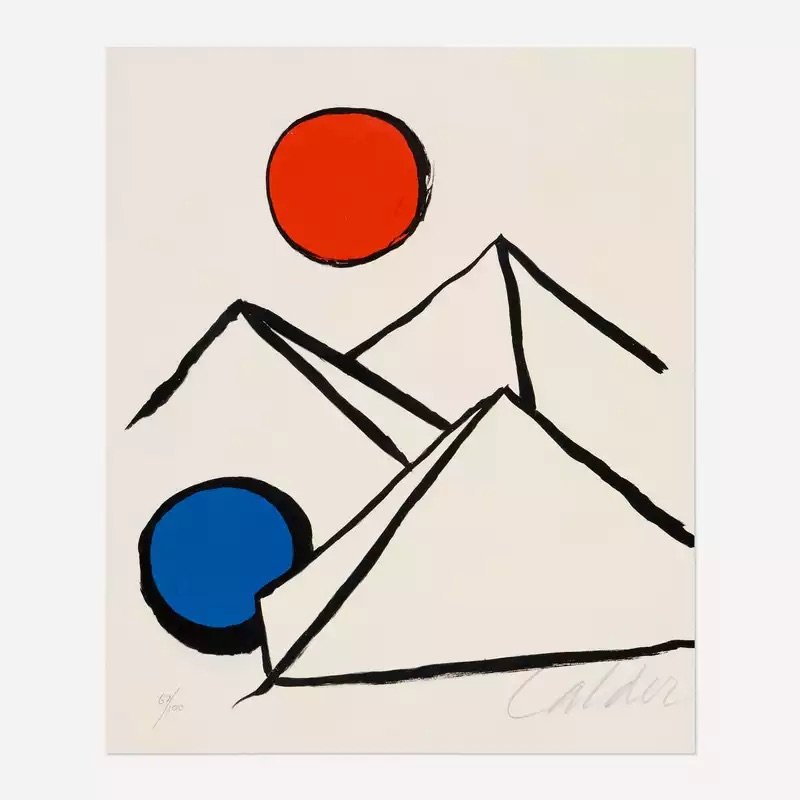
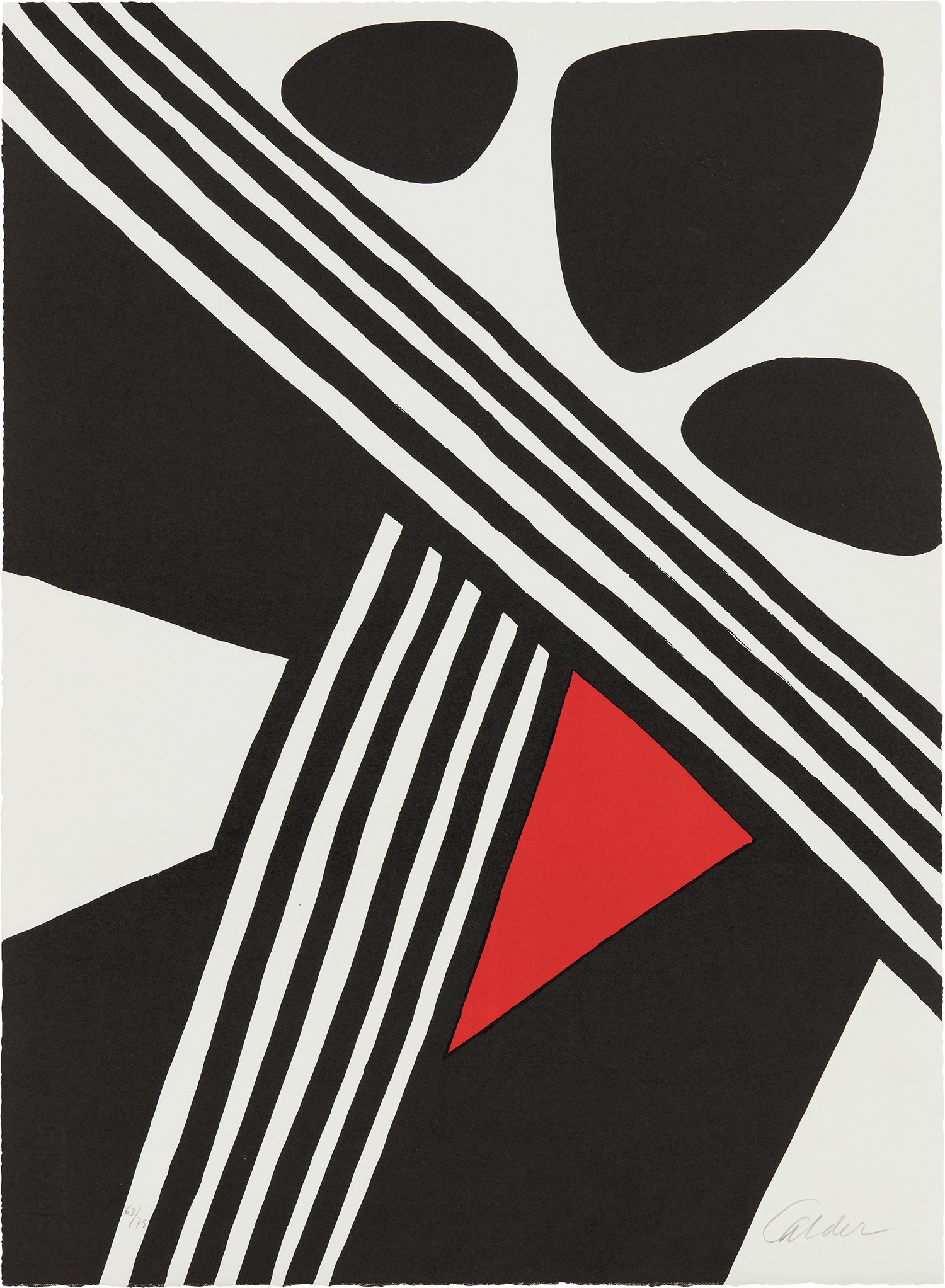
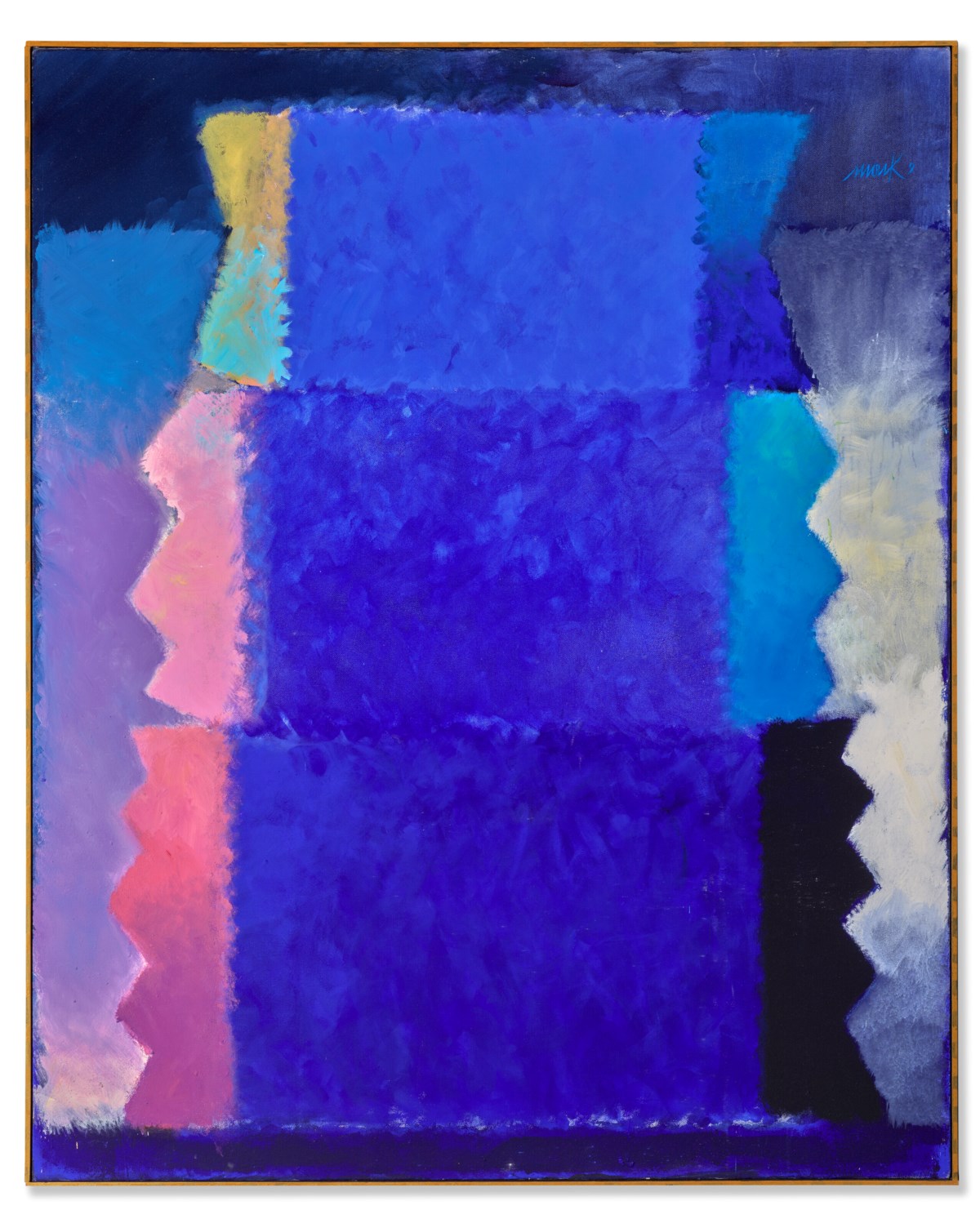
Alexander Calder
Fits and Starts, 1973
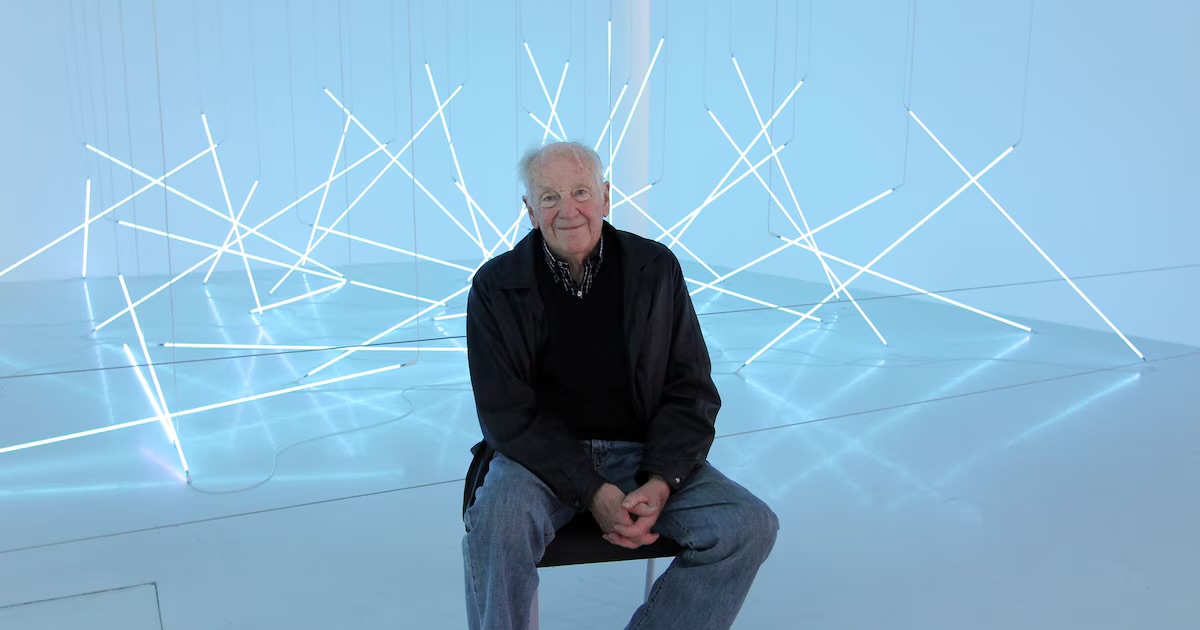
Victor Vasarely's market has been volatile over the decades but has stabilized meaningfully, with museum surveys reestablishing his foundational importance. His son Yvaral, who carried his father's research in original directions, remains somewhat undervalued relative to that lineage and represents a genuine opportunity. François Morellet, long respected by insiders but less broadly recognized than his peers, is another name where the market has not fully caught up with the art history. Among artists worth closer attention right now, Julio Le Parc continues to gain traction well into his late career, with a retrospective energy around his work that feels sustained rather than opportunistic.
Pol Bury's quietly hypnotic motorized works have a devoted following and a secondary market that rewards patience. Günther Uecker's nail reliefs occupy a fascinating position between kinetic and post minimal traditions, and his institutional footprint in Europe is substantial. Jeppe Hein represents the most compelling bridge between the movement's founding generation and genuinely contemporary practice. His work is in serious institutional collections, his market is active, and his conceptual grounding means the work ages well.
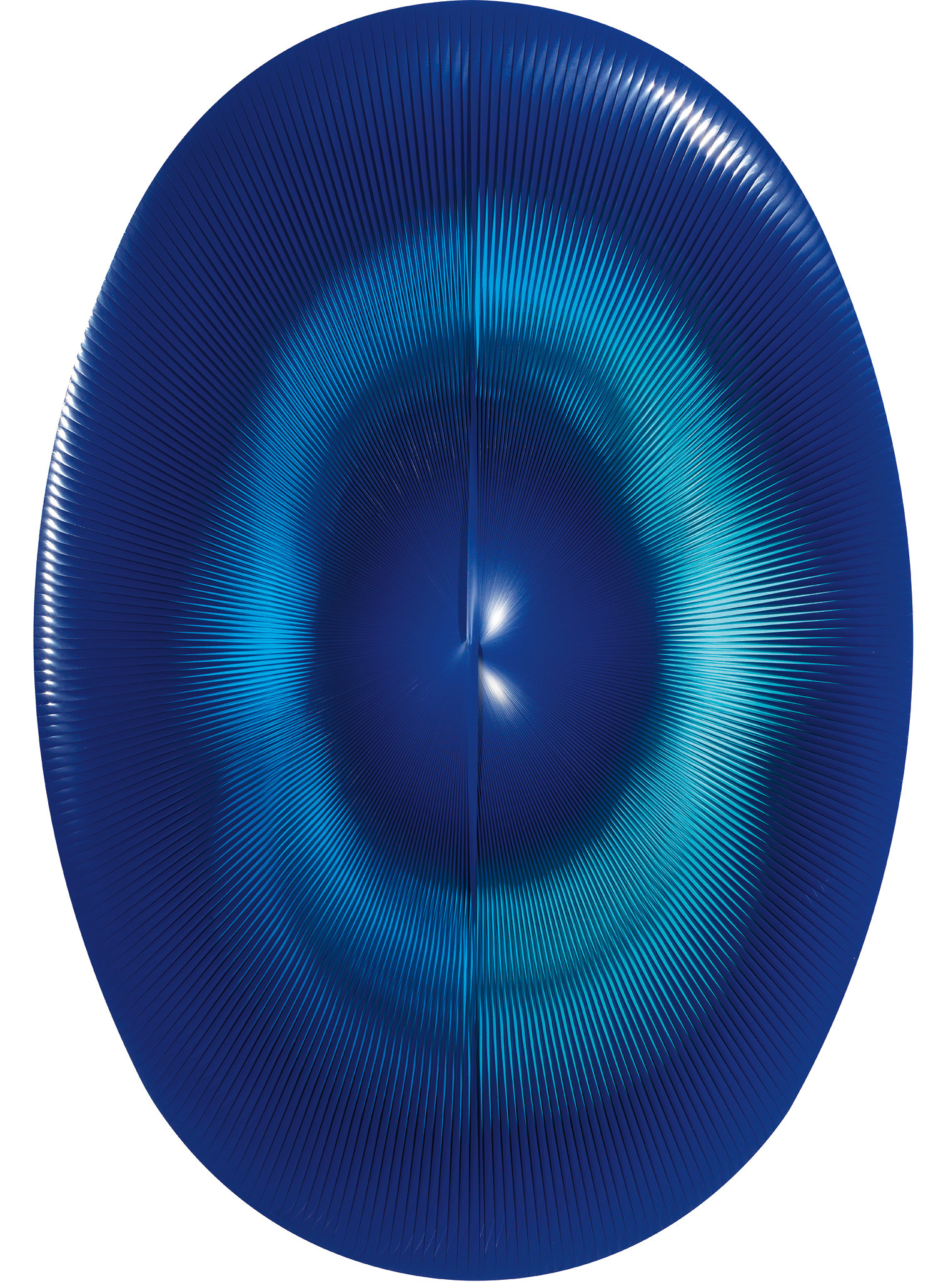
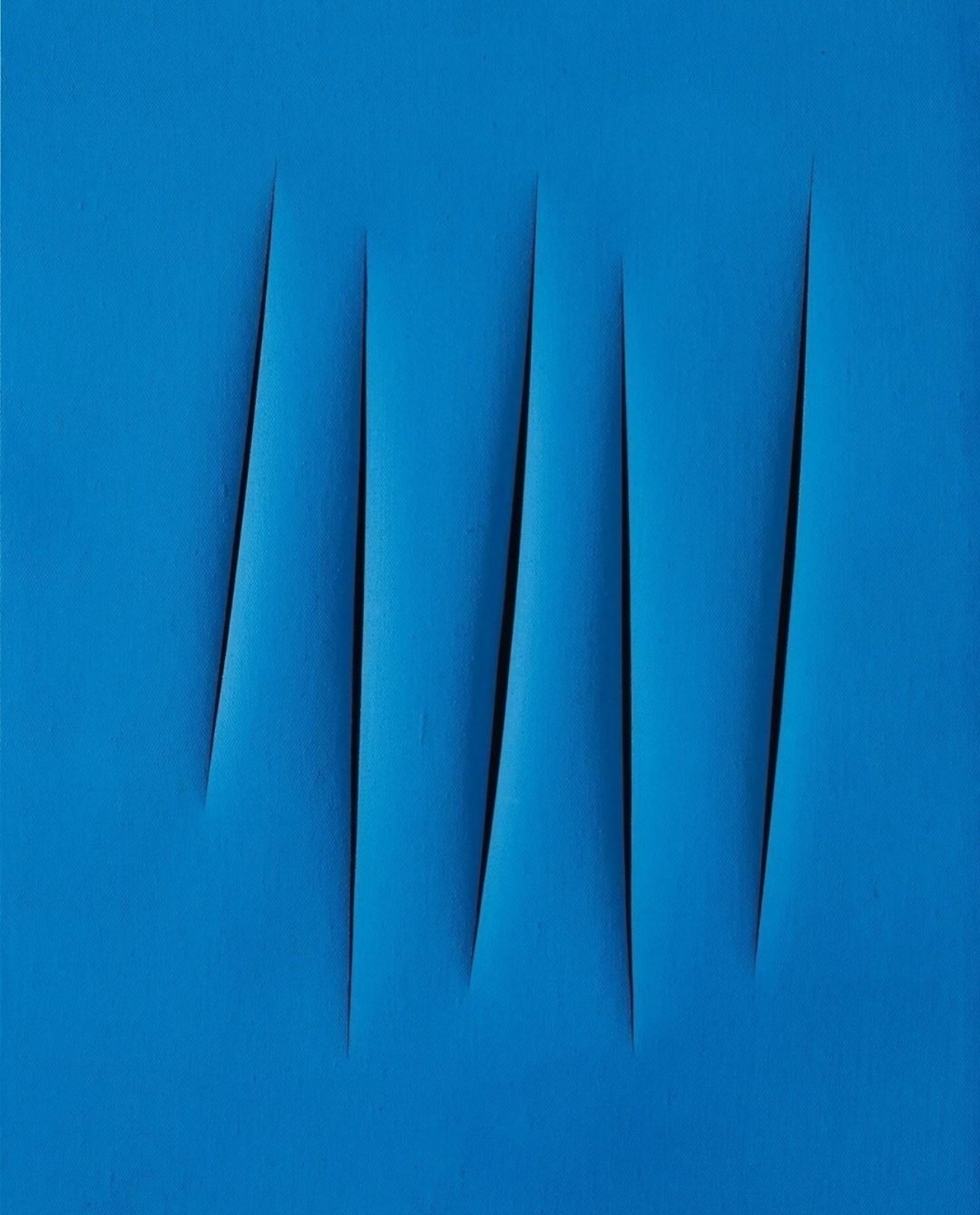
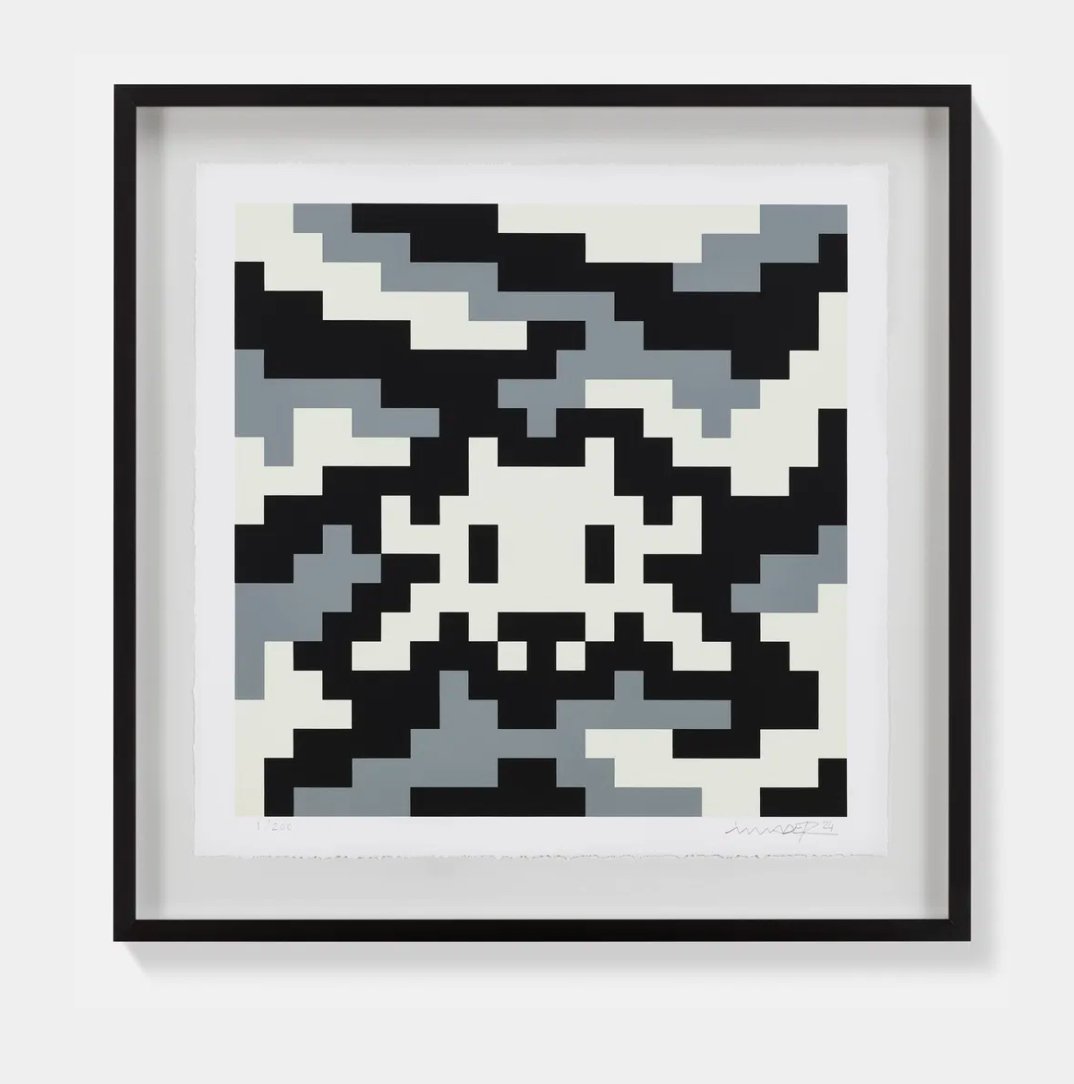
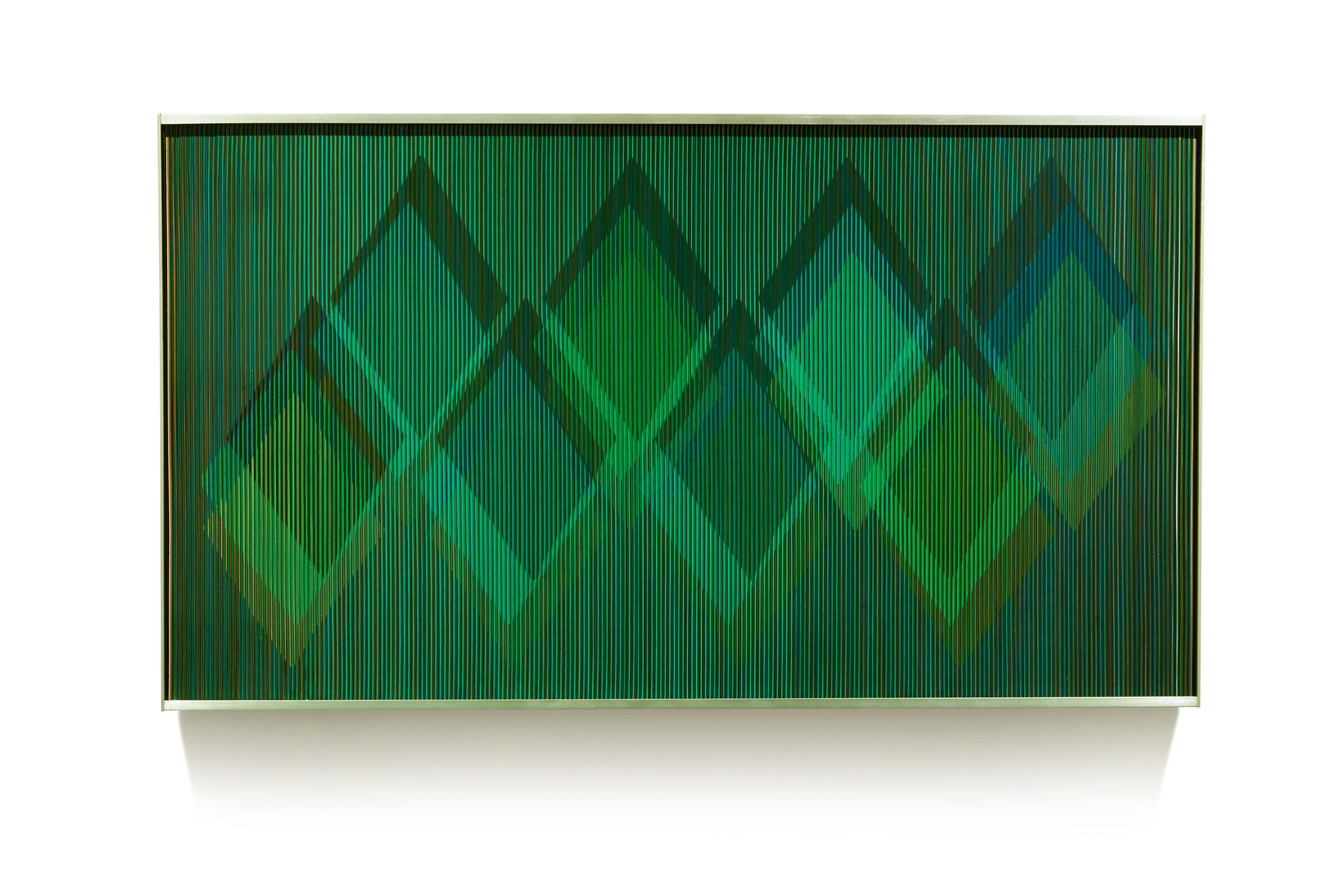
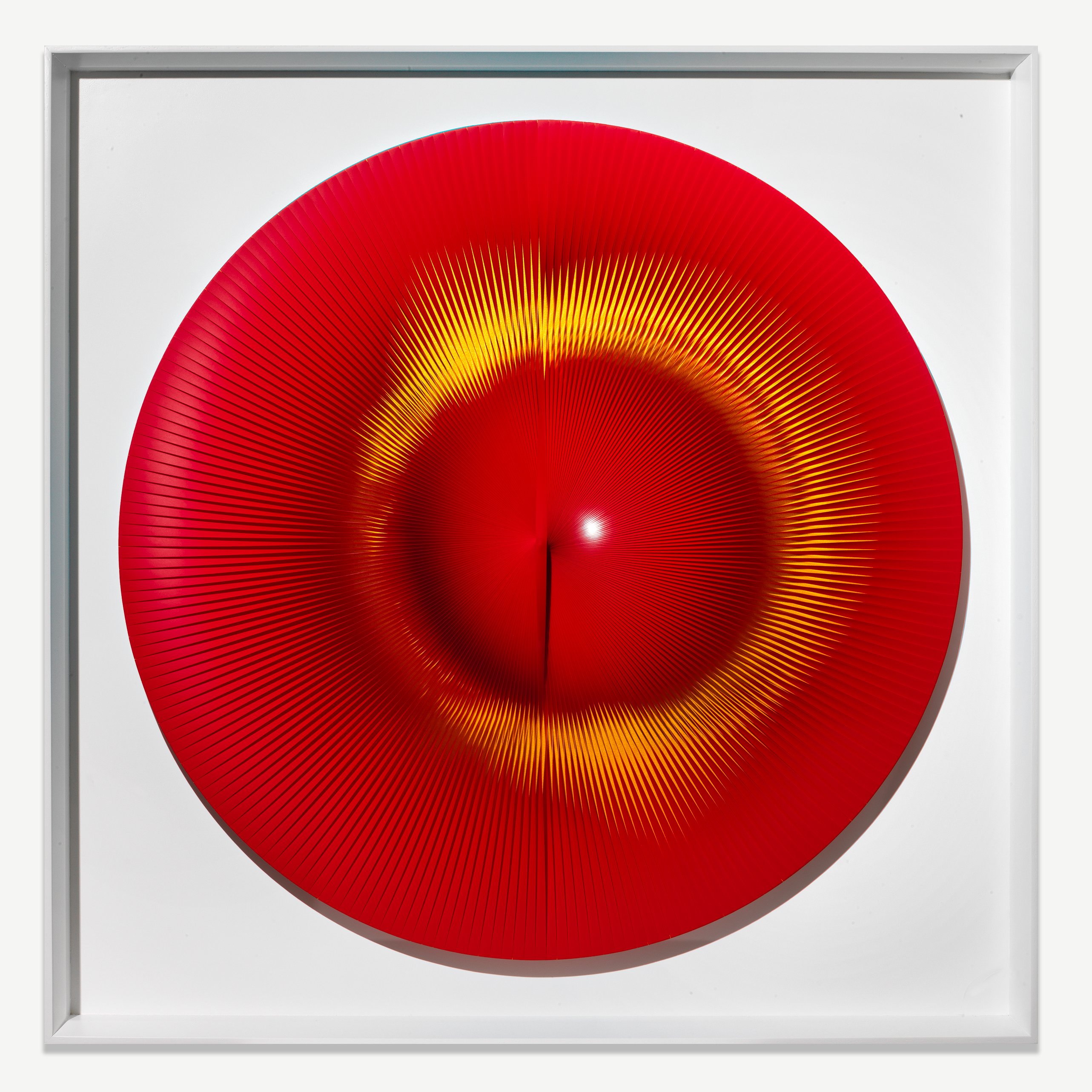
Alberto Biasi
Dinamica ellittica blu, 2004
At auction, kinetic and Op works perform best when provenance is clean and condition is exceptional. This is a category where condition concerns are unusually specific and unusually consequential. A mobile must move correctly. A motorized work must function.
A Vasarely screenprint on acrylic must be free of surface scratches that interrupt the optical field. Before bidding, understand whether the work has been restored and by whom. Ask whether motors are original or replacement, and whether documentation accompanies the work. For editions, which are very common in this category, pressing a gallery or auction house on edition size, position within the edition, and whether the artist's proof exists will tell you a great deal about what you are actually acquiring.
Many of these artists worked extensively in multiples, which was philosophically consistent with their democratic ideas about art access, but edition quality and size vary considerably across careers and periods. Display deserves serious thought before you acquire. Kinetic works often require more space than their physical dimensions suggest, because the movement itself claims territory. A Rickey needs room to swing through its arc.
A Soto penetration needs a position where viewers can actually enter or approach it rather than observe it from a fixed distance. Lighting is critical for Op and chromatic work. Cruz Diez spent decades thinking about light conditions for his chromo interferences, and placing one under the wrong spectrum simply defeats the work. When speaking with a gallery, ask specifically about ideal installation conditions.
Any gallery representing this material seriously will have detailed documentation and should be willing to discuss it at length. The collecting conversation around kinetic and Op art feels genuinely alive right now in a way it has not always been. Younger collectors who grew up in a visually saturated digital environment often find this work resonant in ways that more traditional forms are not. There is something in the perceptual research of the 1960s that speaks directly to questions about attention and image making that feel urgently contemporary.
The artists who built this movement were asking what vision actually is and who controls it. Those are not historical questions. They are the questions of right now.