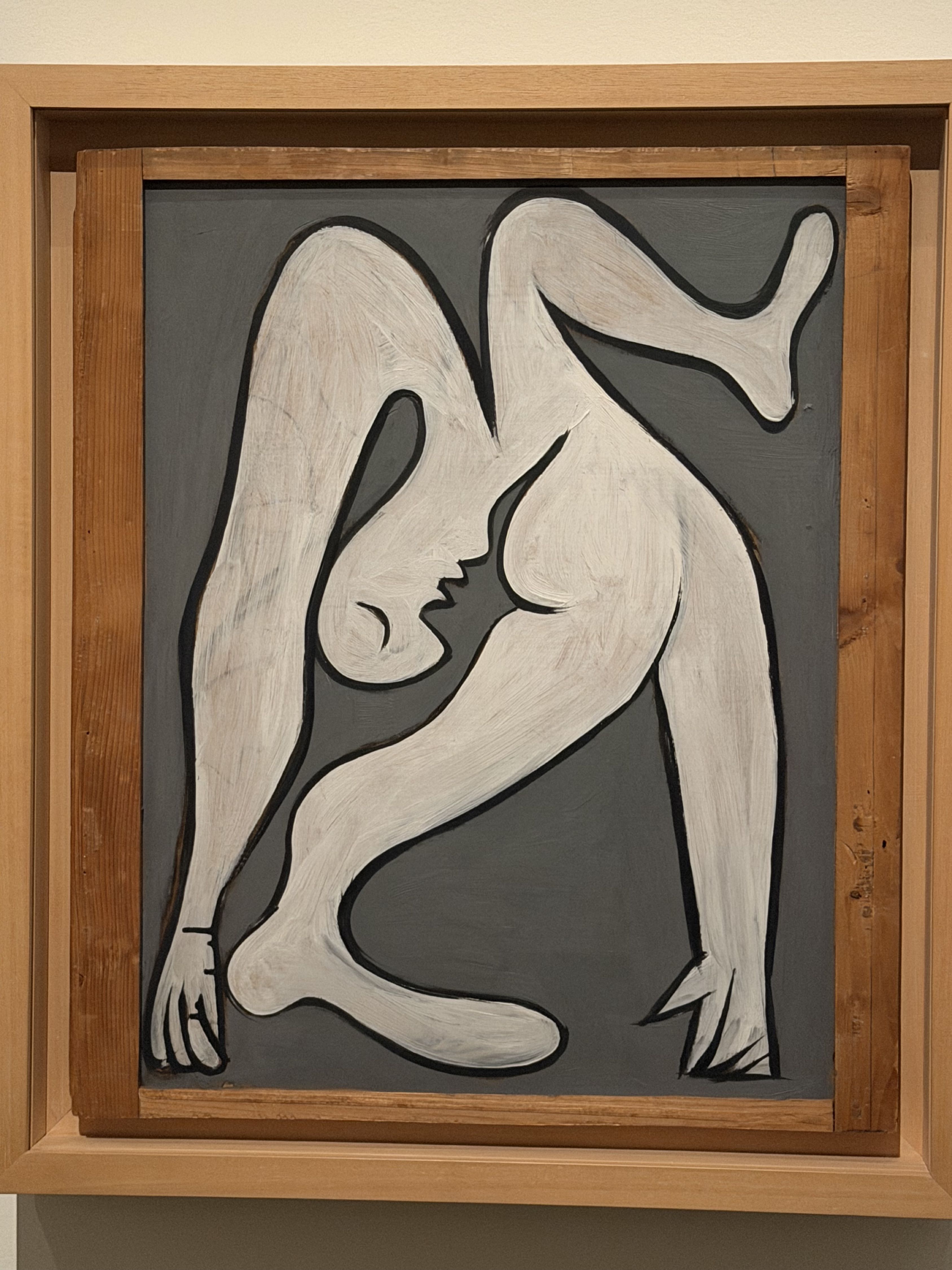
Acrobate, Paris, 19 janvier 1930
1930
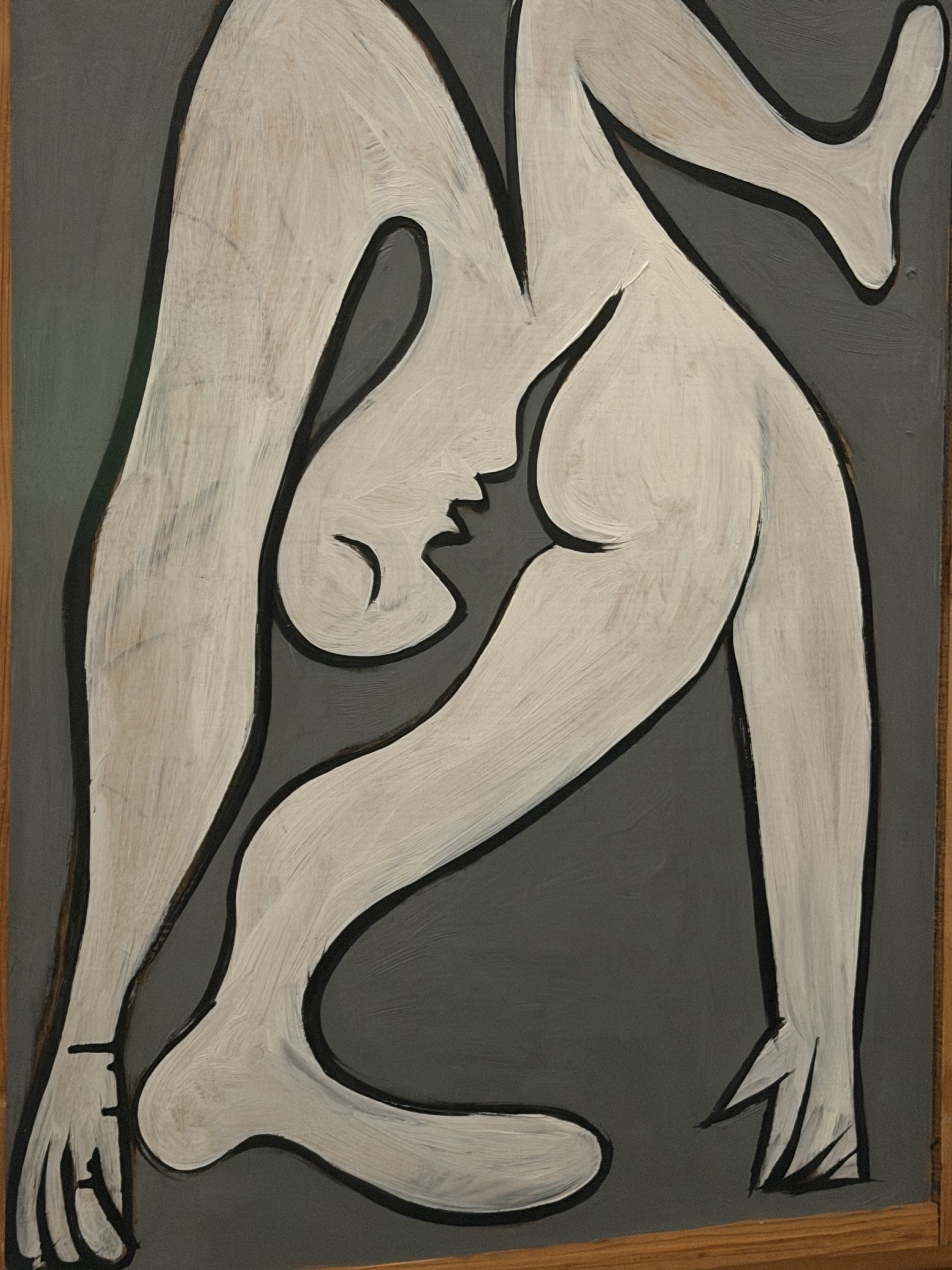
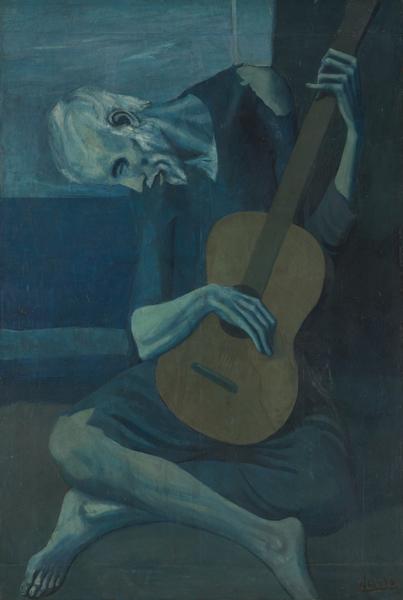
This commanding oil on plywood painting by Pablo Picasso, dated January 19, 1930, depicts an acrobatic female figure rendered in bold white sinuous lines against a deep gray background. The figure's anatomy is deliberately disjointed and contorted, her body arched and folded so that she nearly fills the entire panel, a formal strategy Picasso used to emphasize the strange plasticity and flexibility of the acrobatic form. Executed during a period when Picasso was captivated by swimmers and acrobats, the work reflects his long relationship with circus imagery dating back to his Blue and Rose periods. The raw plywood support and expressive brushwork give the painting an immediate, almost sculptural presence.
- Medium
- Oil on plywood
- Spotted At
- Foundation · Fondation Louis Vuitton
Notes
Exhibited at a venue located at GPS coordinates 48.876717, 2.263291 (16th Arrondissement, Paris). Label text notes Picasso met Alexander Calder in Paris on April 27, 1931, and that Picasso's Guernica and Calder's Mercury Fountain were installed near each other in the Spanish Pavilion at the International Exposition in Paris. Label is bilingual (French and English). The work is part of the Fundación Almine y Bernard Ruiz-Picasso collection.




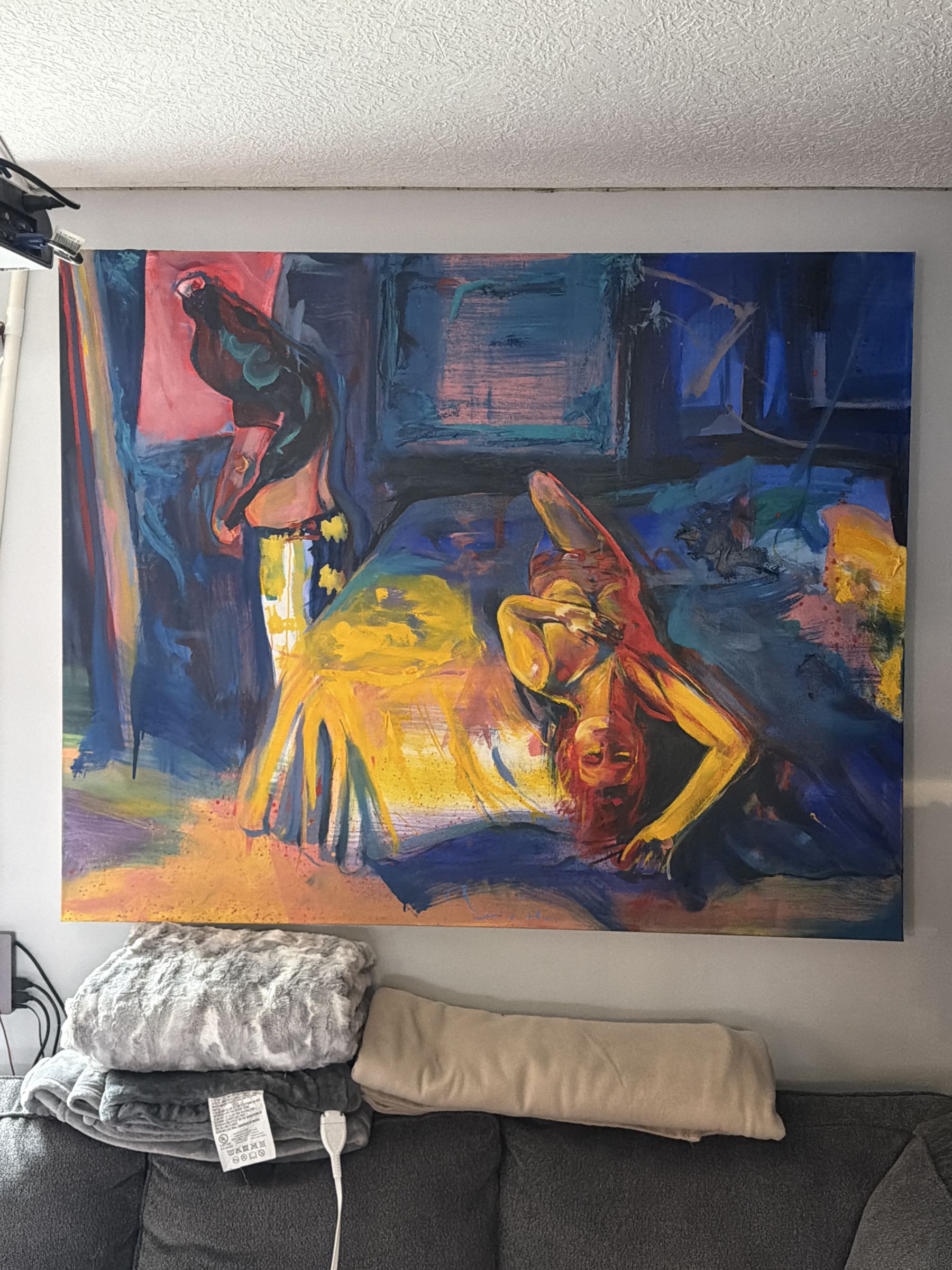
Artists in conversation
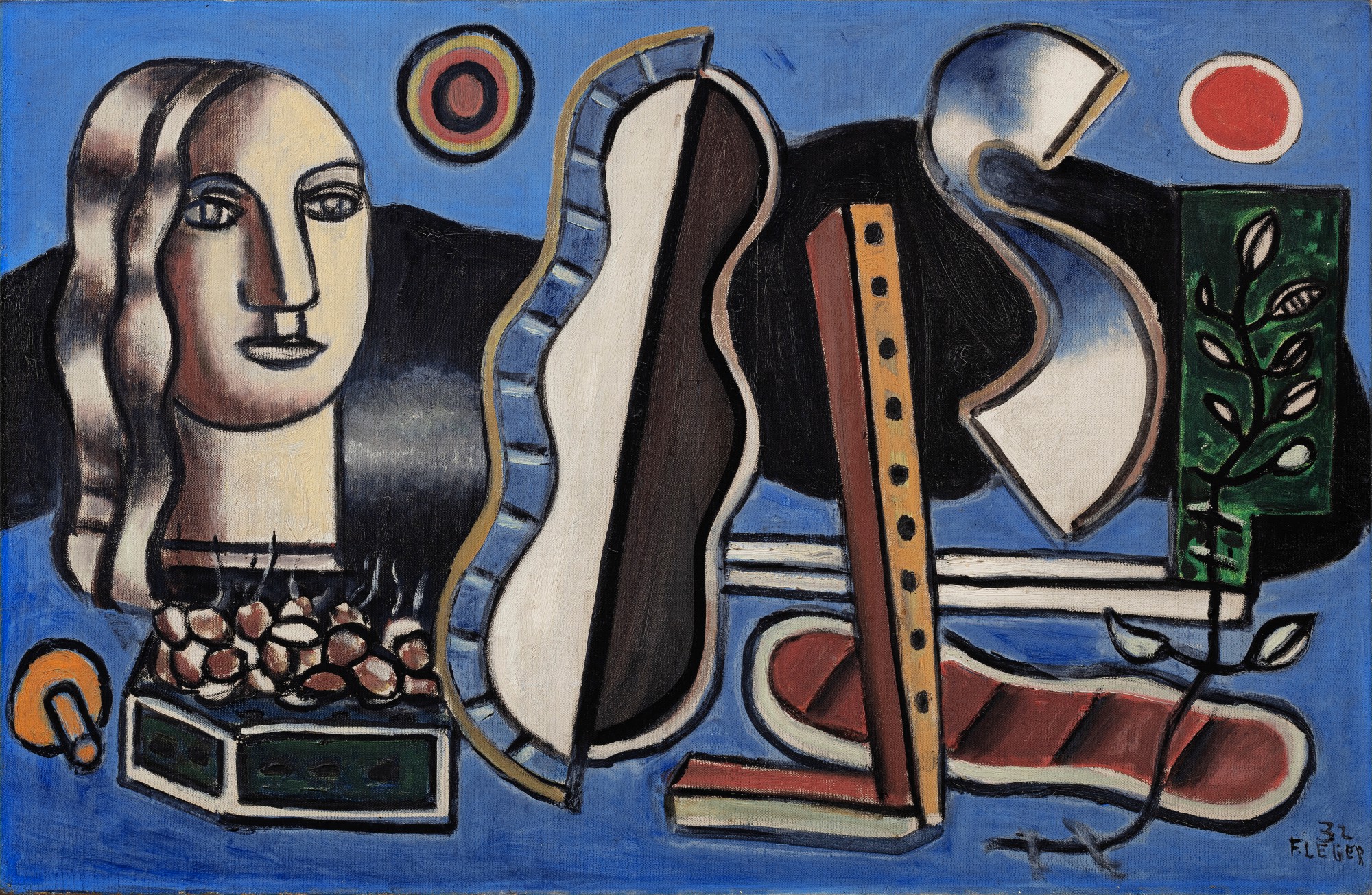
Fernand Léger
French · b. 1881
Léger painted acrobats and circus performers with similarly bold contoured figures, flattened anatomy, and strong graphic contrasts between figure and ground, sharing Picasso's interest in the plasticity and rhythmic distortion of the performing body.
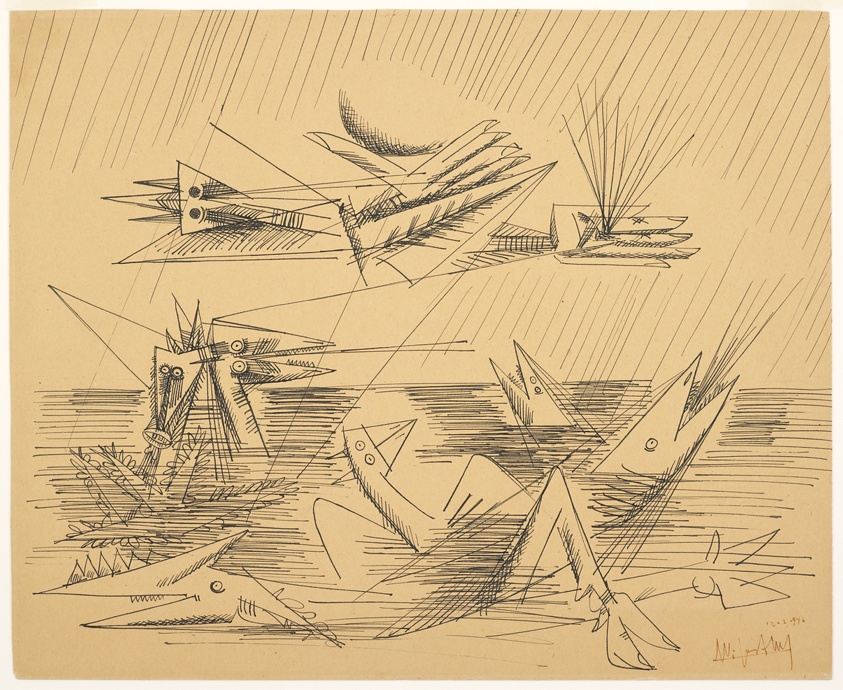
Wifredo Lam
Cuban · b. 1902
Lam worked directly under Picasso's influence and produced contorted figurative forms rendered in bold sinuous lines against dark grounds, with similarly disjointed limbs and a sculptural yet gestural quality tied to the body in extreme physical states.
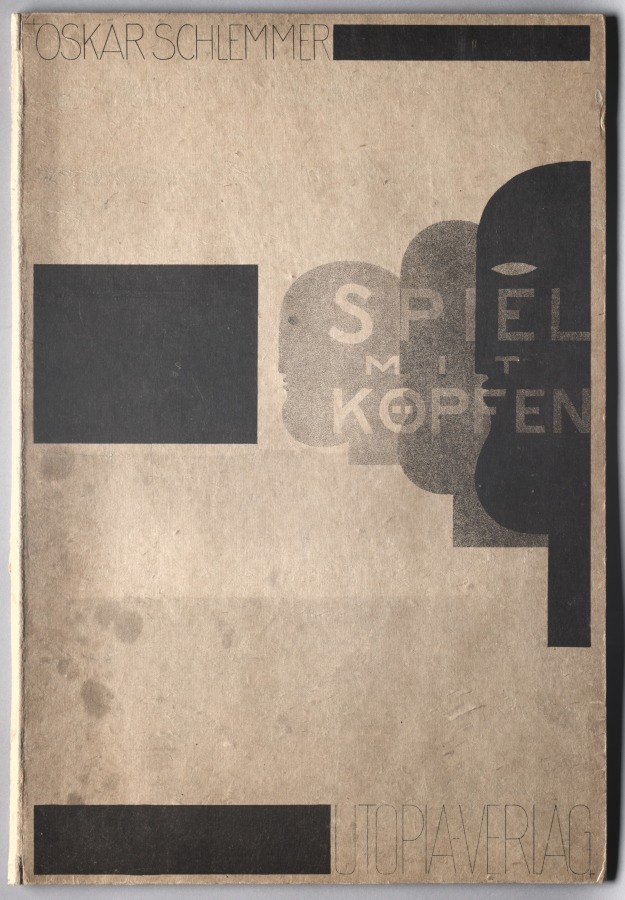
Oskar Schlemmer
German · b. 1888
Schlemmer obsessively depicted the acrobatic and contorted human figure in stylized, abstracted form, exploring body distortion and spatial compression in ways that closely parallel Picasso's treatment of the folded acrobatic nude in this 1930 panel.
Start the Discussion
Request access to join the discussion