Indian Art
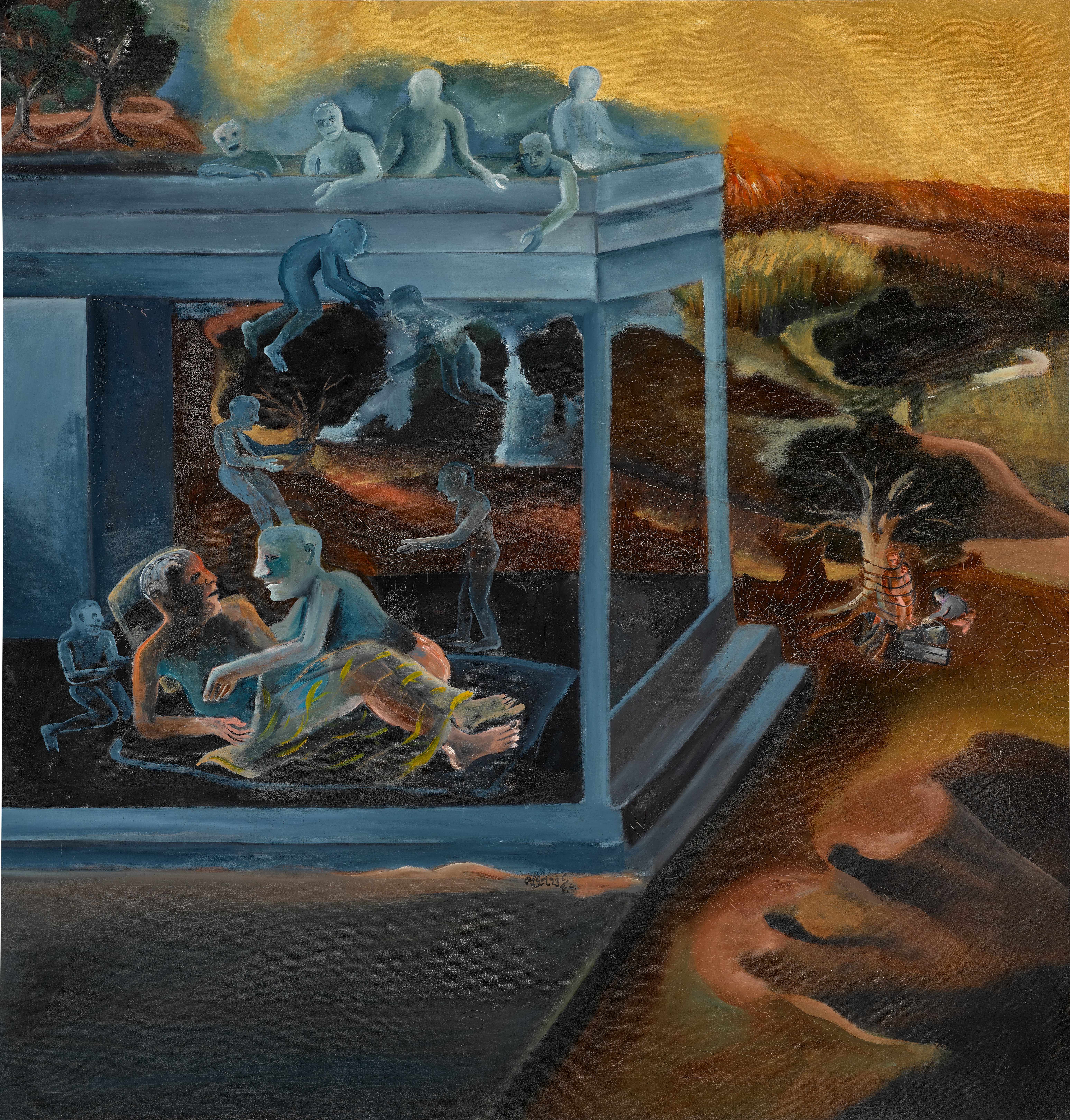
Bhupen Khakhar
Visitors, 1998
Five Thousand Years, One Restless Civilization
There is no single thing called Indian art. There is, instead, a vast, argumentative, spiritually charged, politically alive conversation that has been unfolding across the subcontinent for more than five millennia, and that conversation shows no sign of quieting. To collect Indian art seriously is to position yourself at one of the most intellectually rewarding intersections in the entire history of human image making, a place where the sacred and the sensual, the ancient and the urgently contemporary, refuse to stay in their separate rooms. The earliest objects we might call art from the Indian subcontinent emerge from the Indus Valley Civilization, roughly 3000 BCE, in the form of seal carvings, terracotta figurines, and small bronze castings of extraordinary refinement.
But it is the Gupta period, roughly the fourth to sixth centuries CE, that many scholars regard as the classical high point of Indian visual culture. The Gupta aesthetic prized a kind of transcendent serenity, a quality you can sense immediately in works like the fragmentary earthenware head of a divinity that appears on The Collection, its features worn by time yet somehow still radiating that characteristic stillness that Gupta sculptors pursued with such dedication. These works were not decorative objects. They were theological propositions rendered in clay and bronze.
Unknown
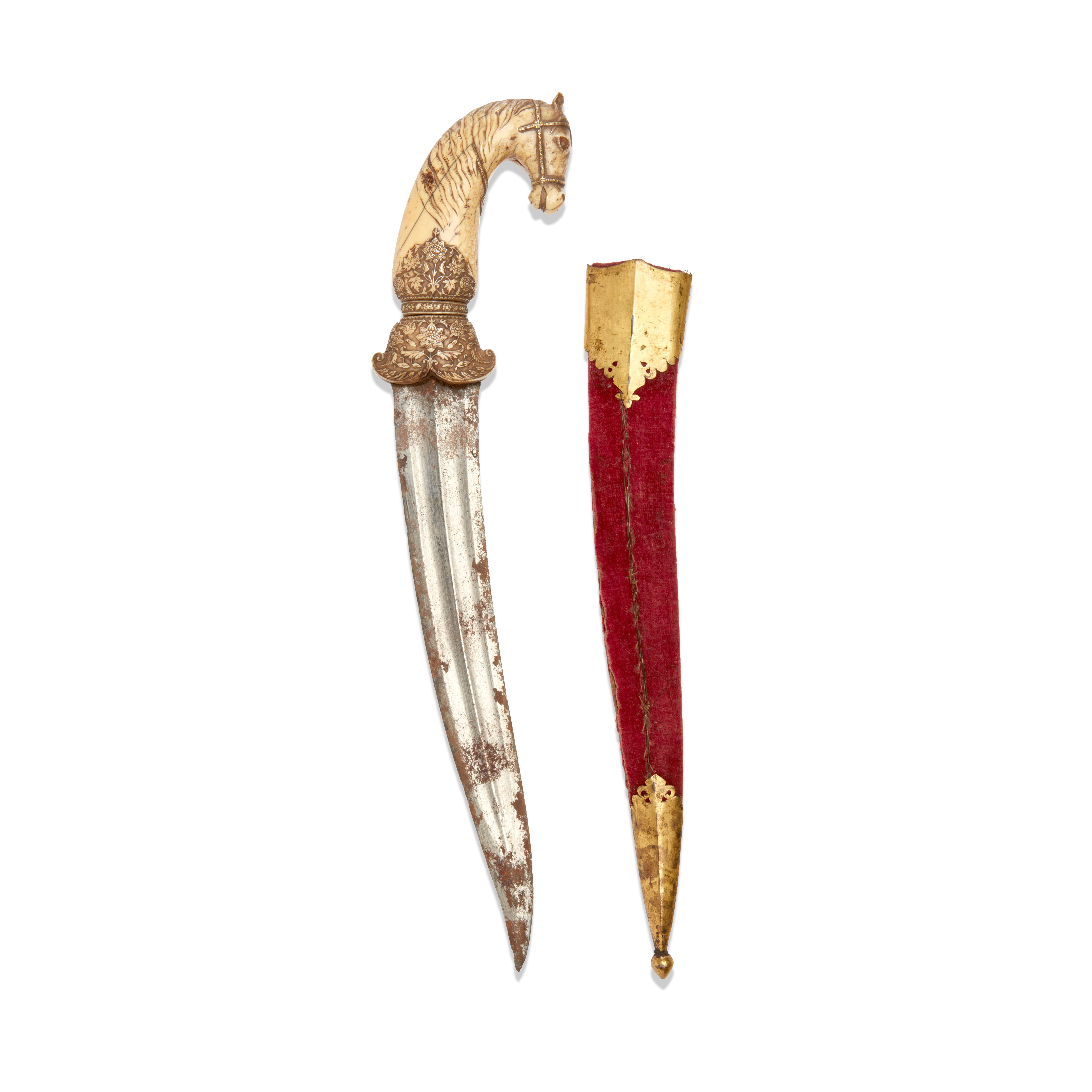
An Exceptional Mughal Walrus Ivory-Hilted Dagger in the form of a Horse, India, 17th Century
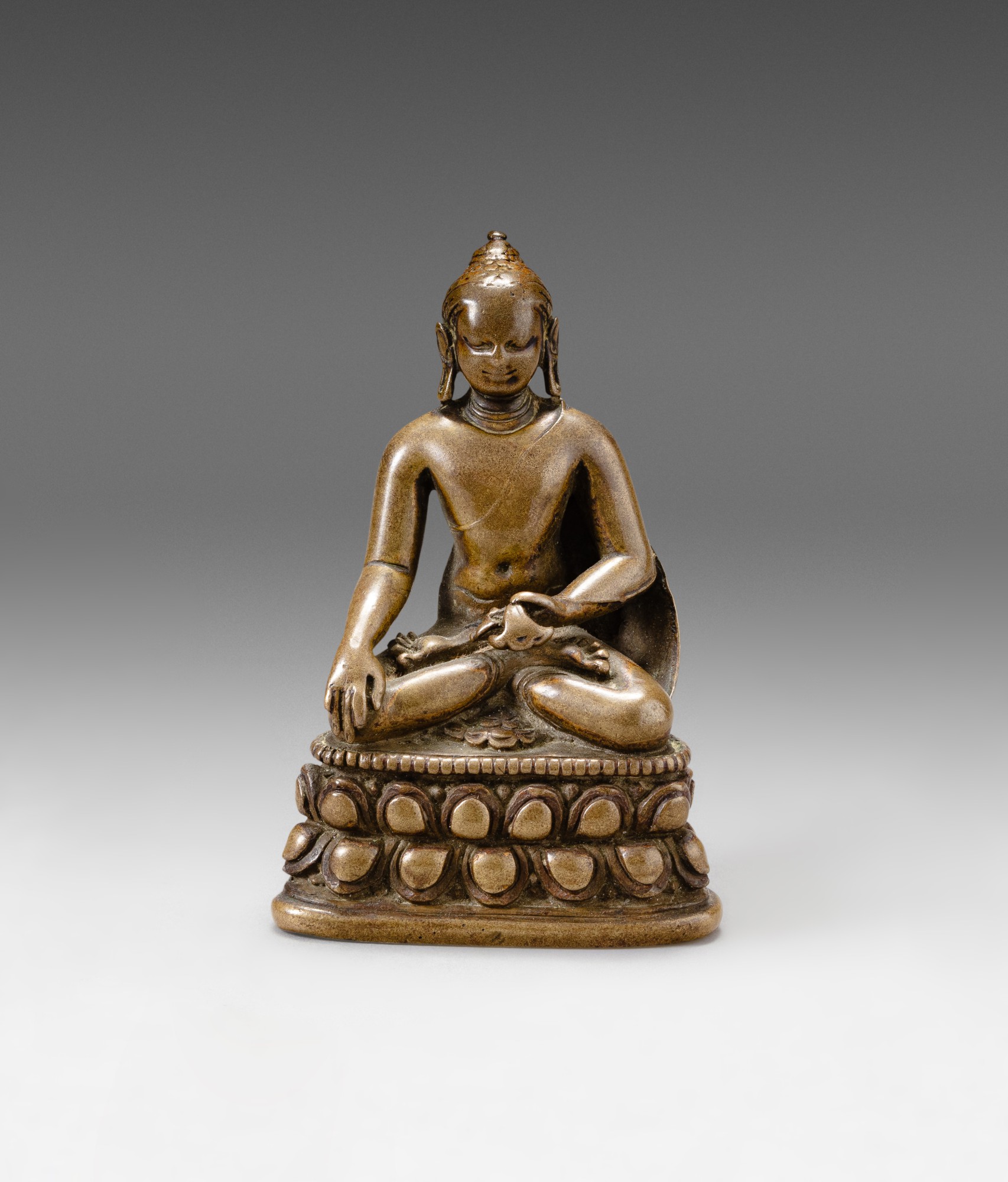
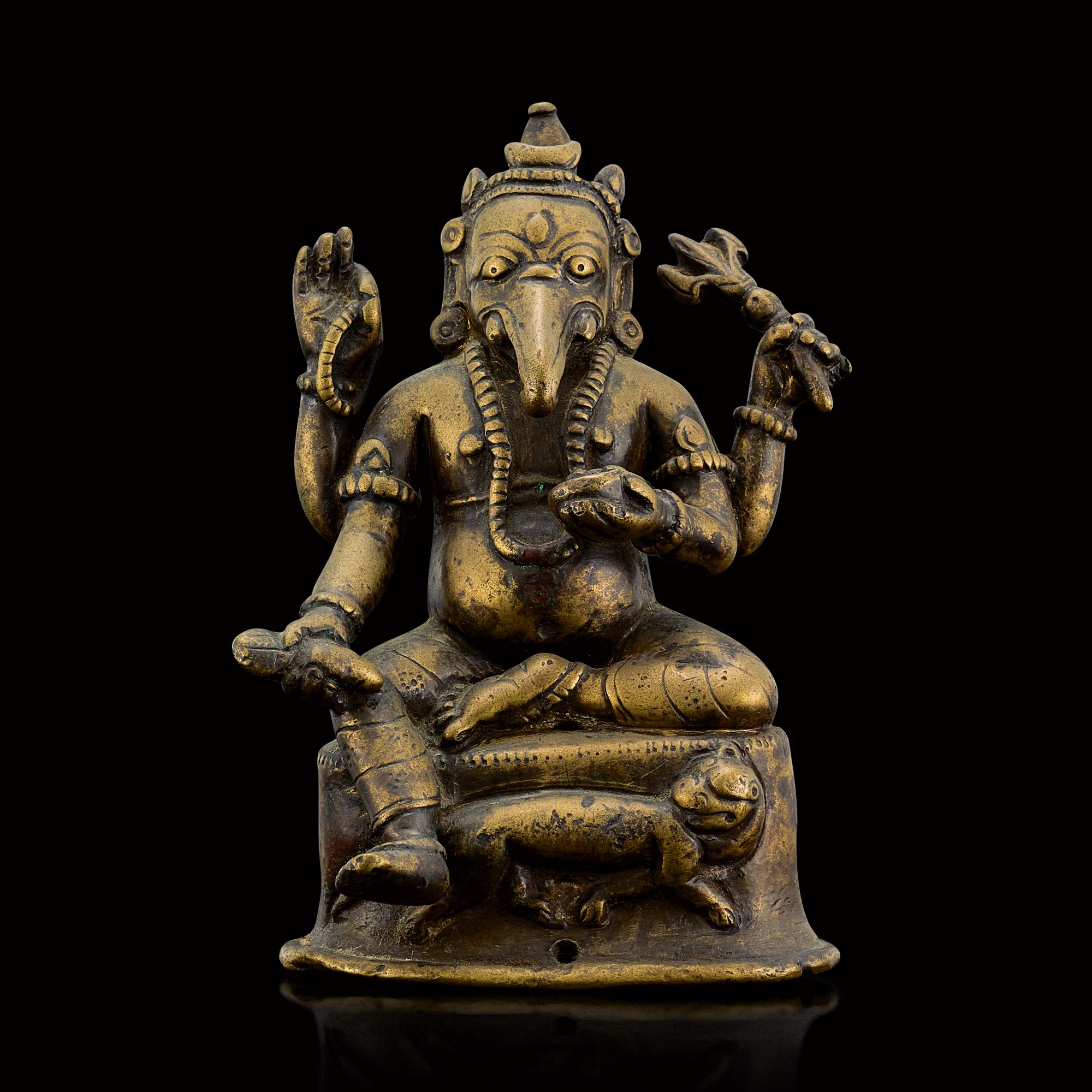
The tradition of sacred metalwork runs continuously from that Gupta moment forward, and bronze figures of the Buddha, as well as copper alloy representations of Ganesh and other divinities from the Hindu and Buddhist pantheons, represent some of the most refined achievements in the history of sculpture anywhere in the world. A seated Buddha in bronze, properly cast and finished, carries within its formal stillness an entire cosmology. The slight inclination of the head, the position of the hands, the treatment of the robe, all of these are coded communications to initiates that have been understood across centuries and across vastly different cultures. Objects of this kind, including the bronze seated Buddha and copper alloy Ganesh represented on The Collection, are not relics.
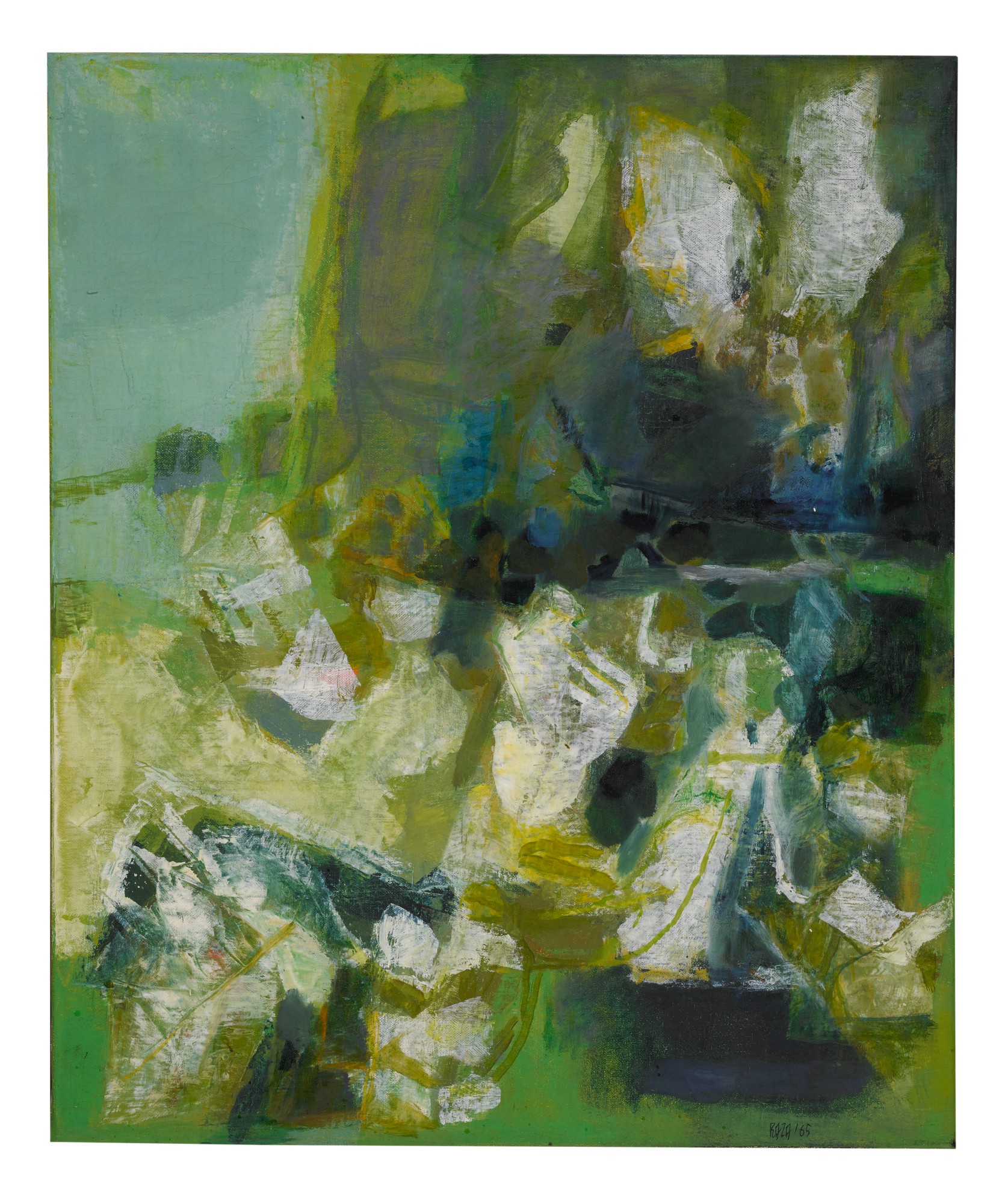
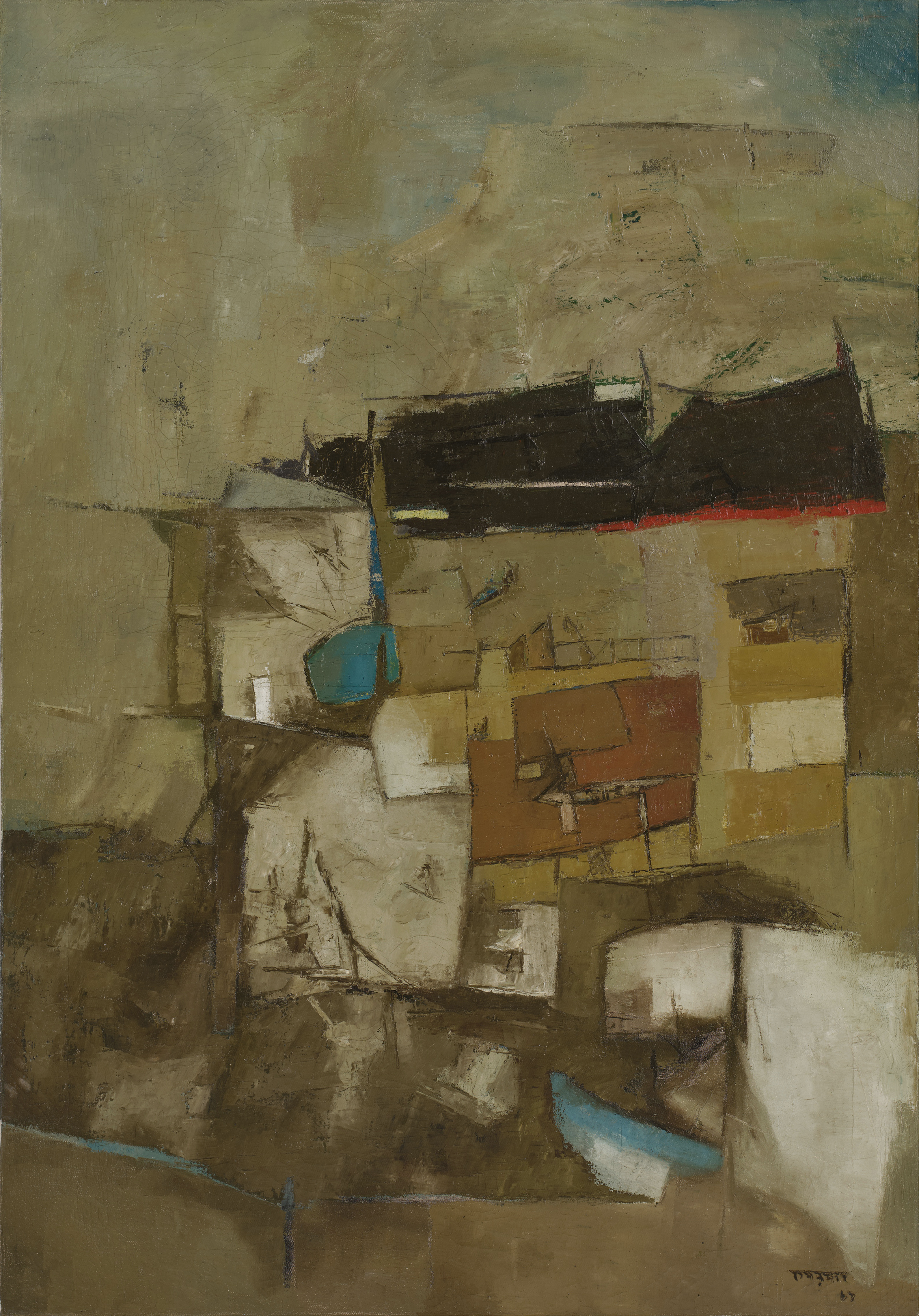
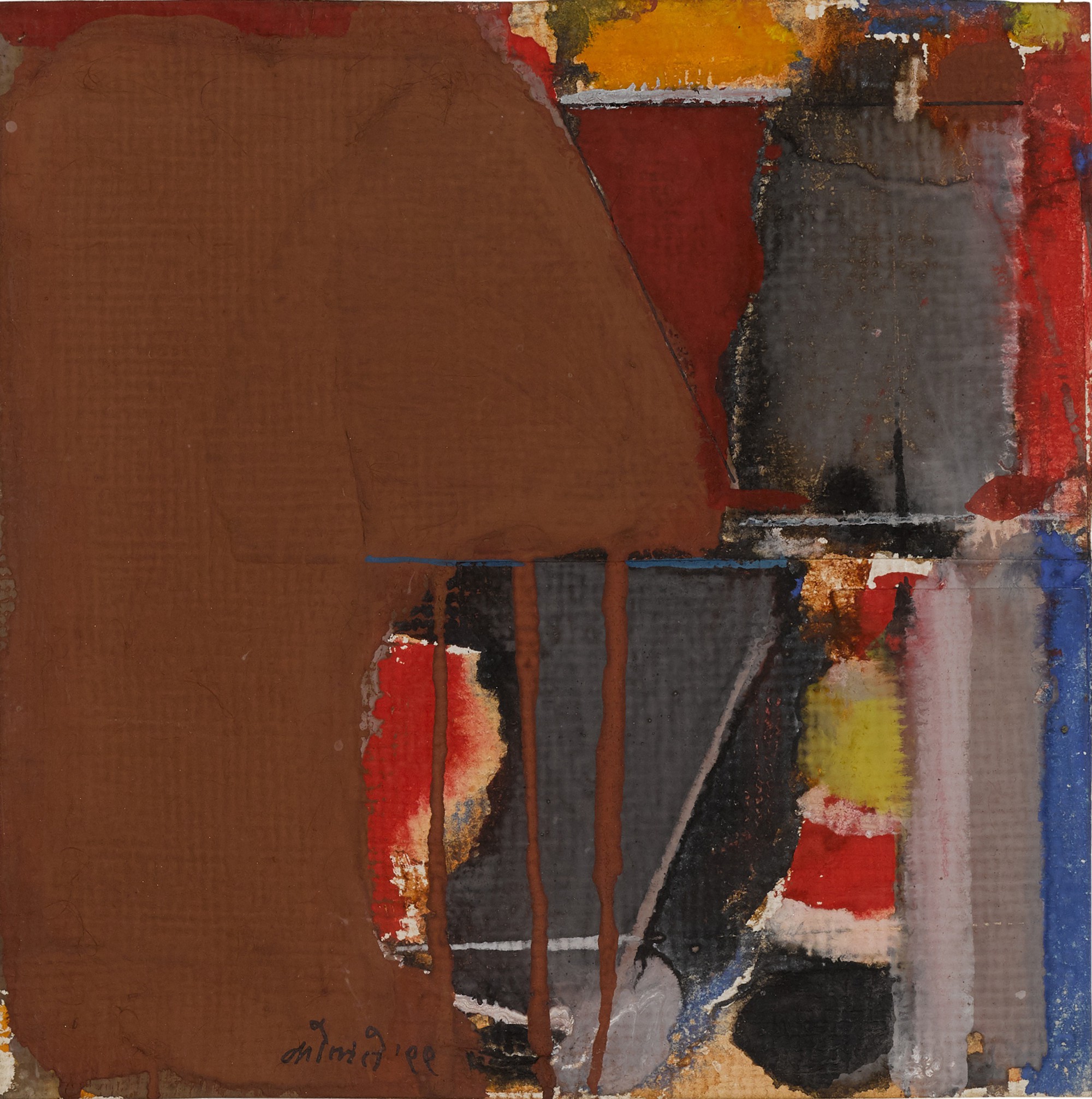
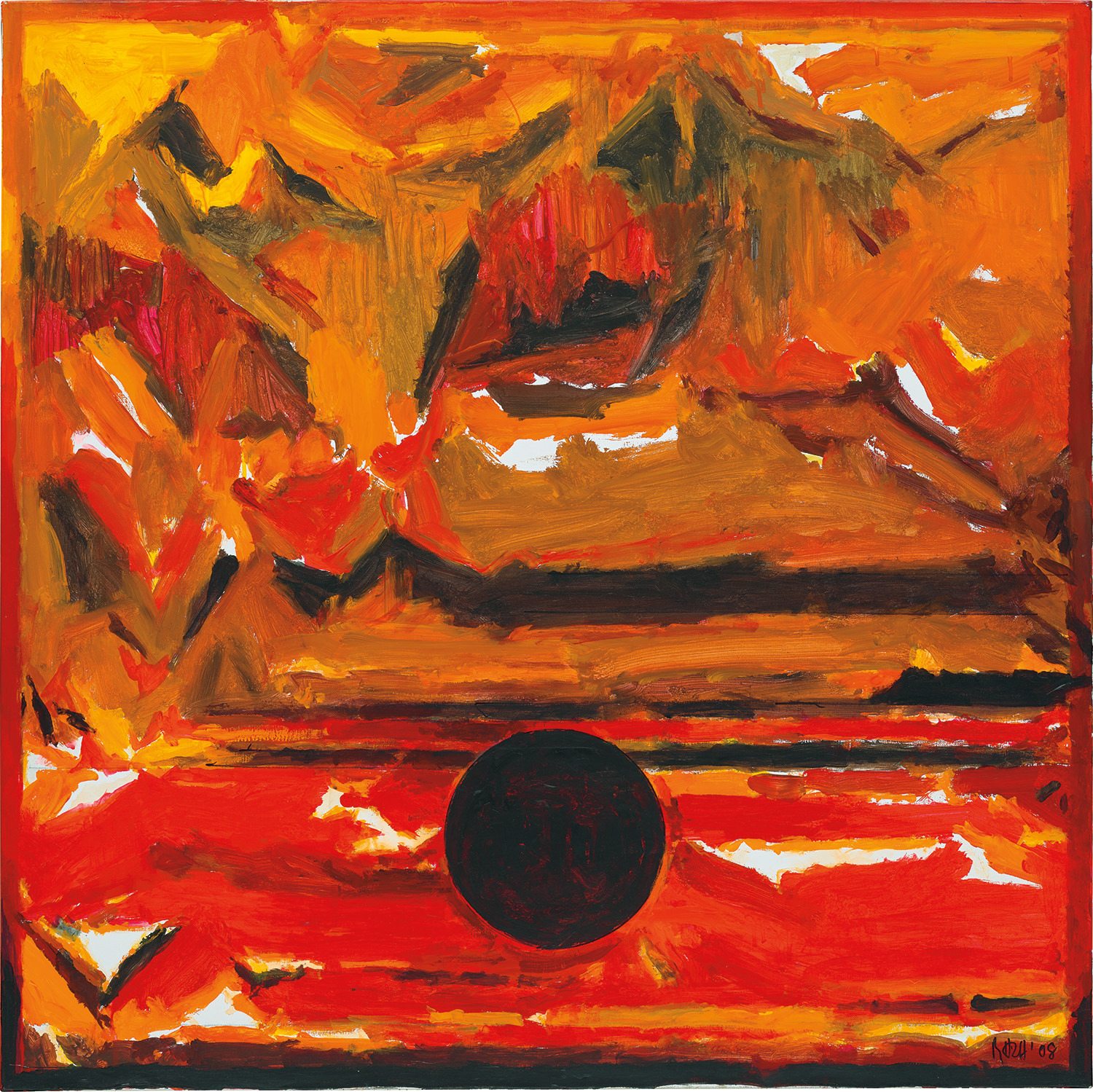
They are living arguments about the nature of consciousness. The modern chapter of Indian art begins in earnest with the founding of the Progressive Artists' Group in Bombay in 1947, the year of independence, a coincidence that felt to its participants like destiny. Francis Newton Souza, Maqbool Fida Husain, Sayed Haider Raza, Ram Kumar, and their associates were determined to forge an Indian modernism that could hold its own in international conversation without surrendering its roots. Raza, who spent decades in Paris absorbing French modernism while meditating on the metaphysics of the bindu, that central point from which all creation radiates, eventually arrived at a body of work that is entirely his own, neither European nor provincial Indian, but something genuinely third.
Sayed Haider Raza
Landscape and Bindu, 2008
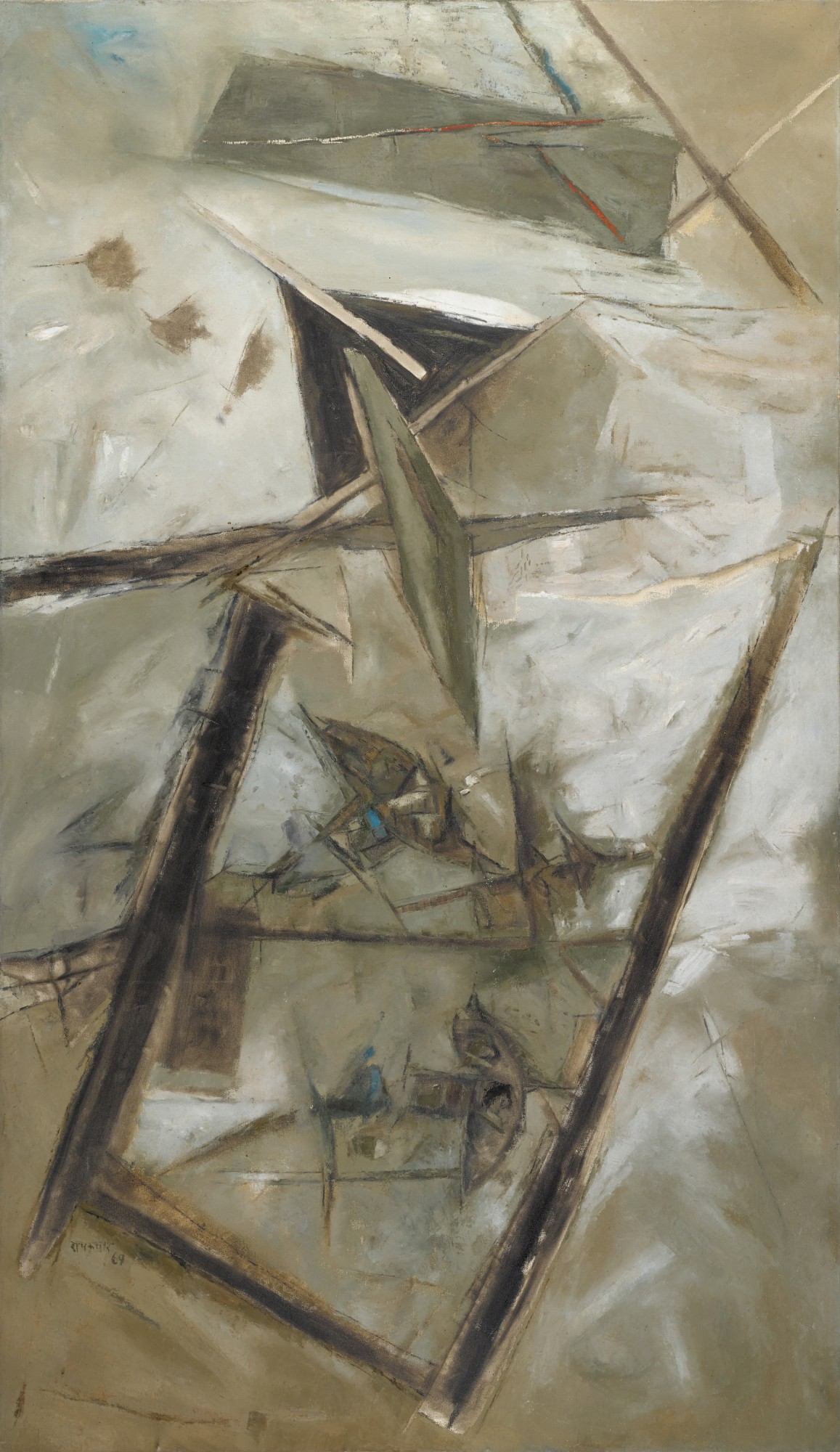
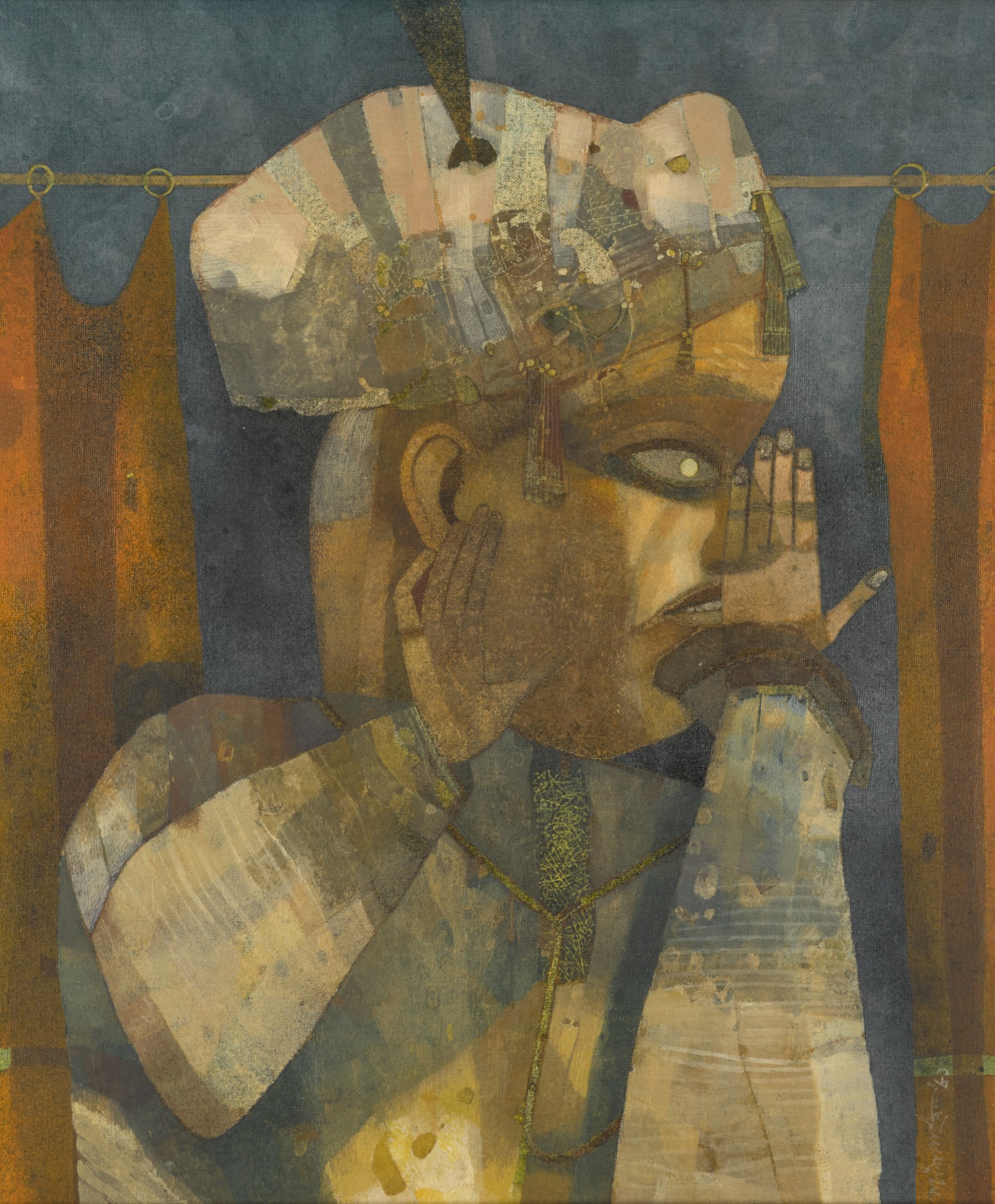
His paintings on The Collection demonstrate that hard won synthesis with quiet authority. Ram Kumar's journey is equally instructive. He arrived in Paris in the 1950s, studied under Fernand Léger and André Lhote, and returned to India transformed, eventually finding his great subject in the ghats of Varanasi, which he reduced to elemental geometric forms that hum with an almost geological melancholy. Krishen Khanna, who came to painting relatively late after a career in banking, brought to his canvases a storyteller's compassion, particularly in his long engagement with bandwallas, the itinerant musicians of North India, rendered in a figurative style charged with emotional directness.
Both artists understood that being modern did not require abandoning the particular textures of Indian life. The generation that followed pushed in directions the Progressives could not have entirely predicted. Bhupen Khakhar, working in Baroda from the 1960s onward, developed a narrative figuration that drew on the conventions of popular Indian visual culture, calendar art, bazaar painting, while simultaneously engaging with the European tradition of Hockney and Kitaj. His paintings addressed desire, domesticity, and mortality with a frankness that was genuinely radical in the Indian context.
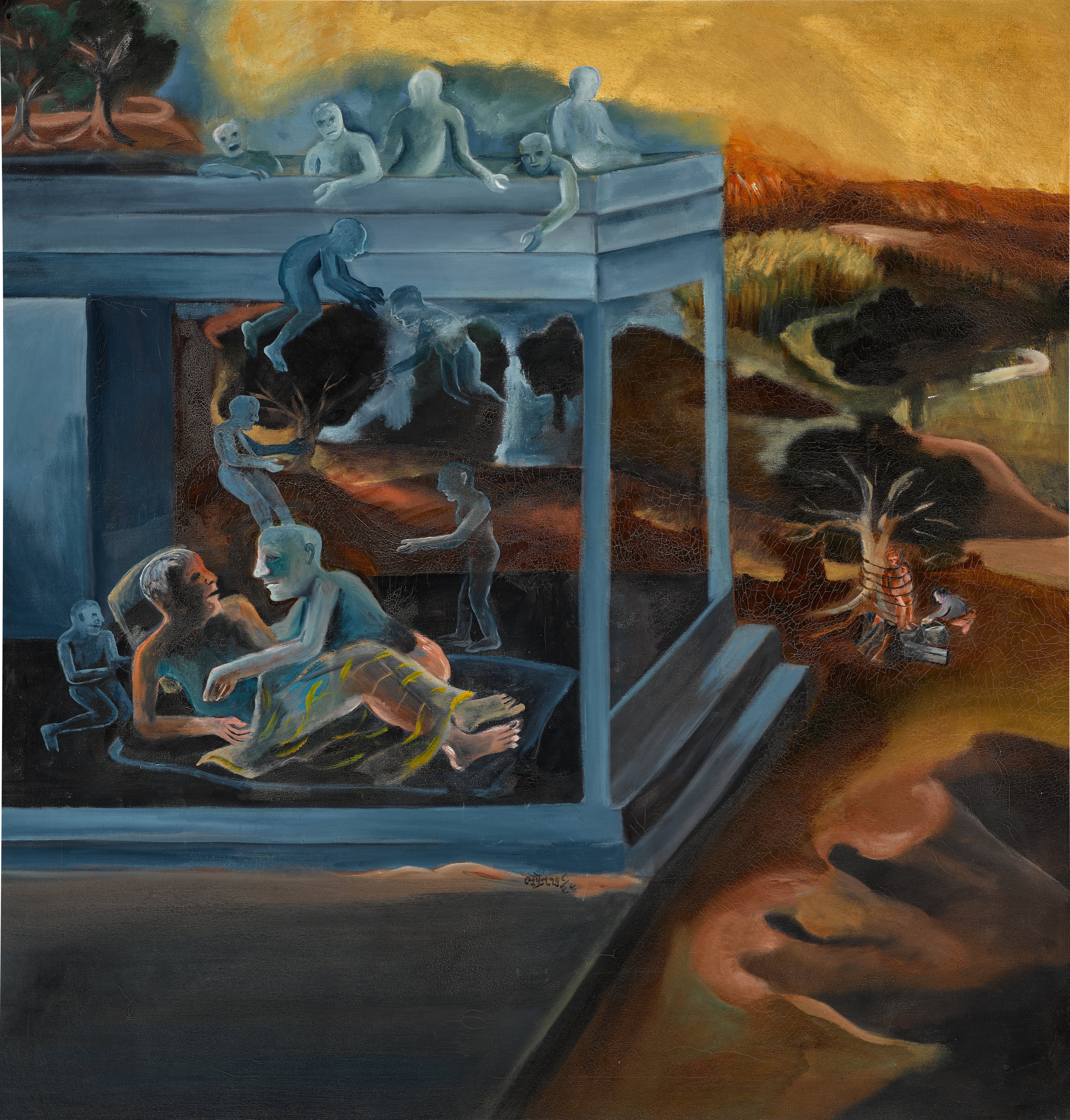
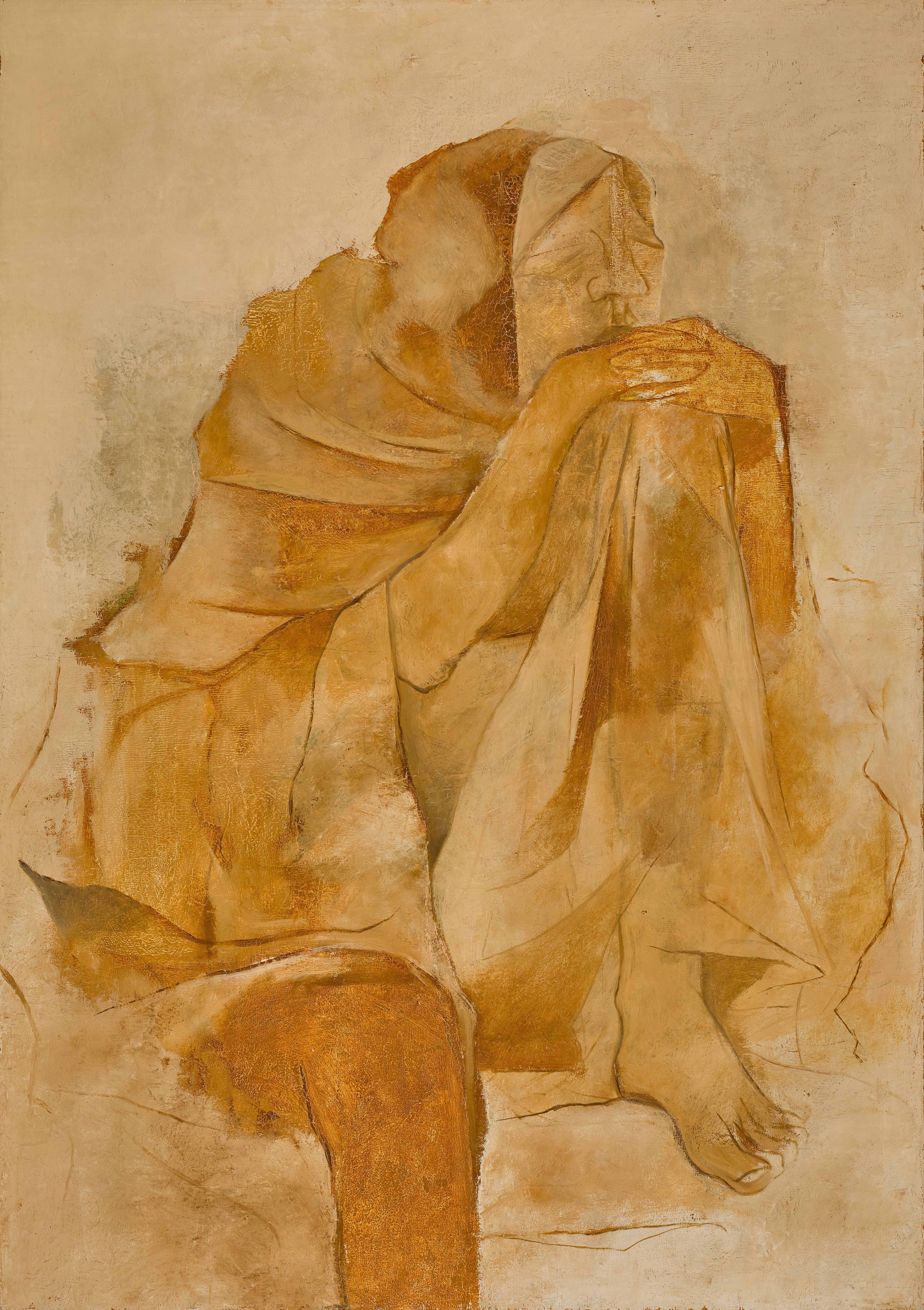
Ganesh Pyne
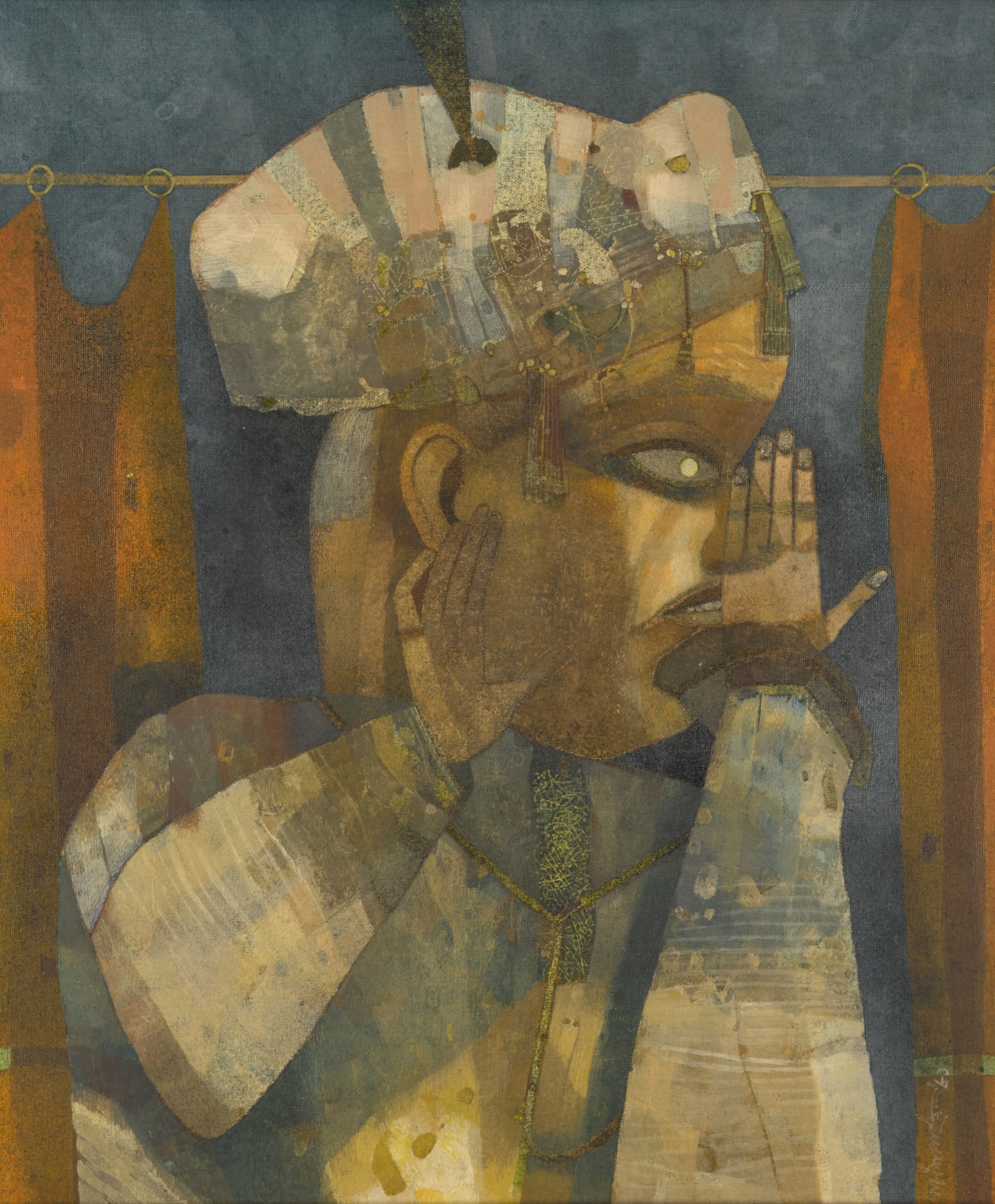
Untitled, 1981
Ganesh Pyne, working in Calcutta in a tradition more indebted to the Bengal School, produced intimate, dreamlike works on paper and canvas that seem to exist in a permanent twilight, populated by figures from folk memory and personal anxiety in equal measure. Both artists are represented on The Collection and reward sustained looking. The diversity of practice among Indian artists working across the second half of the twentieth century is remarkable. B.
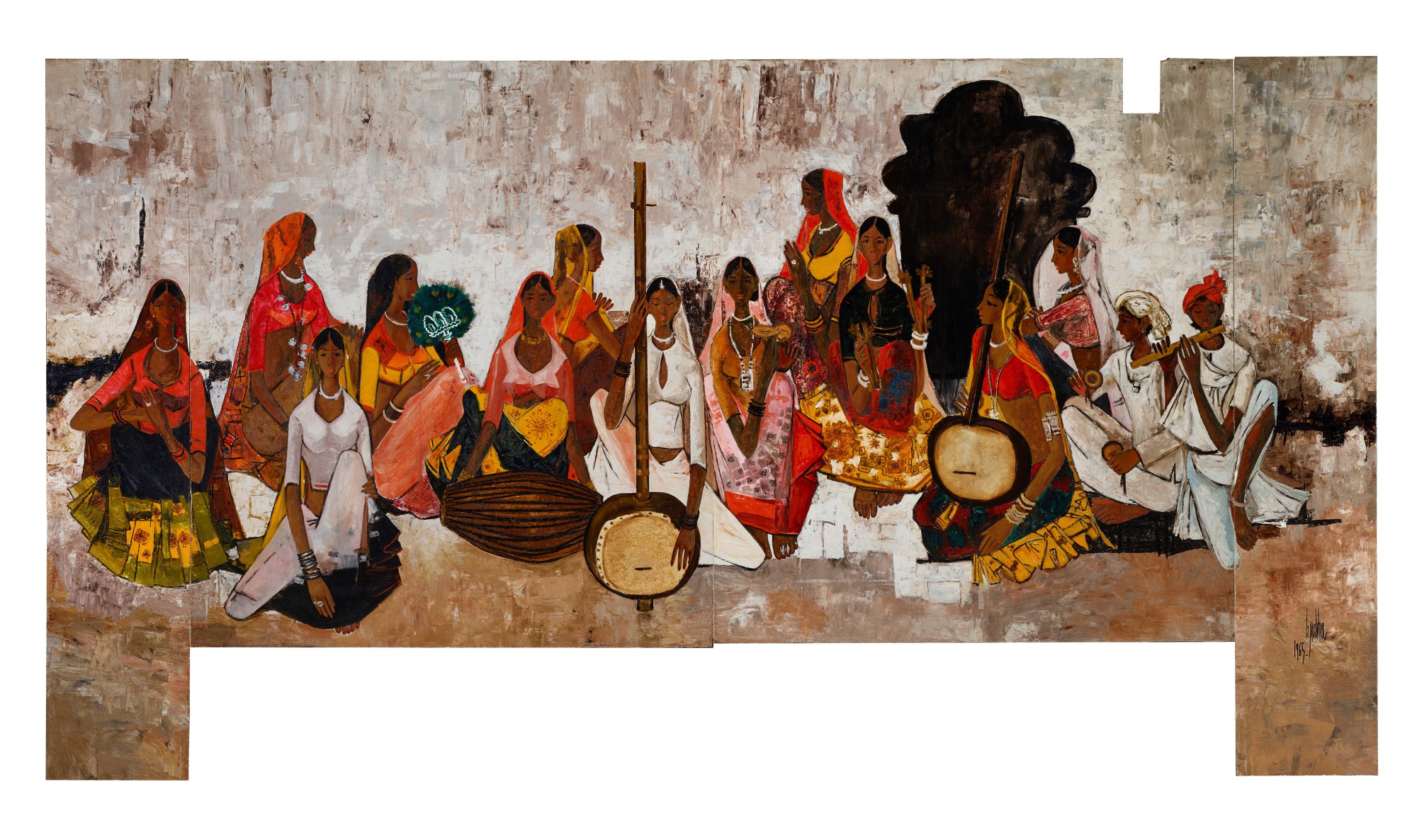
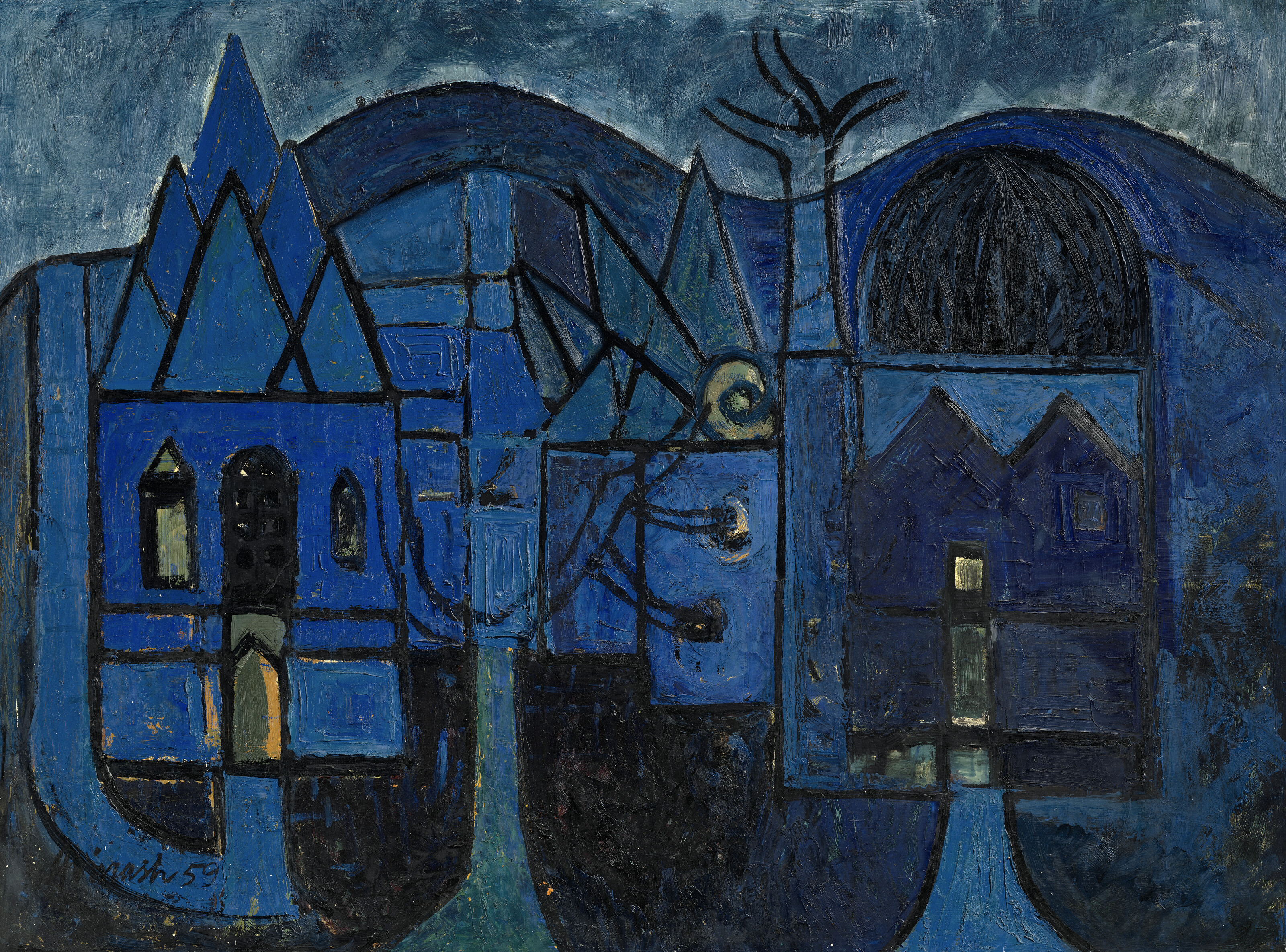
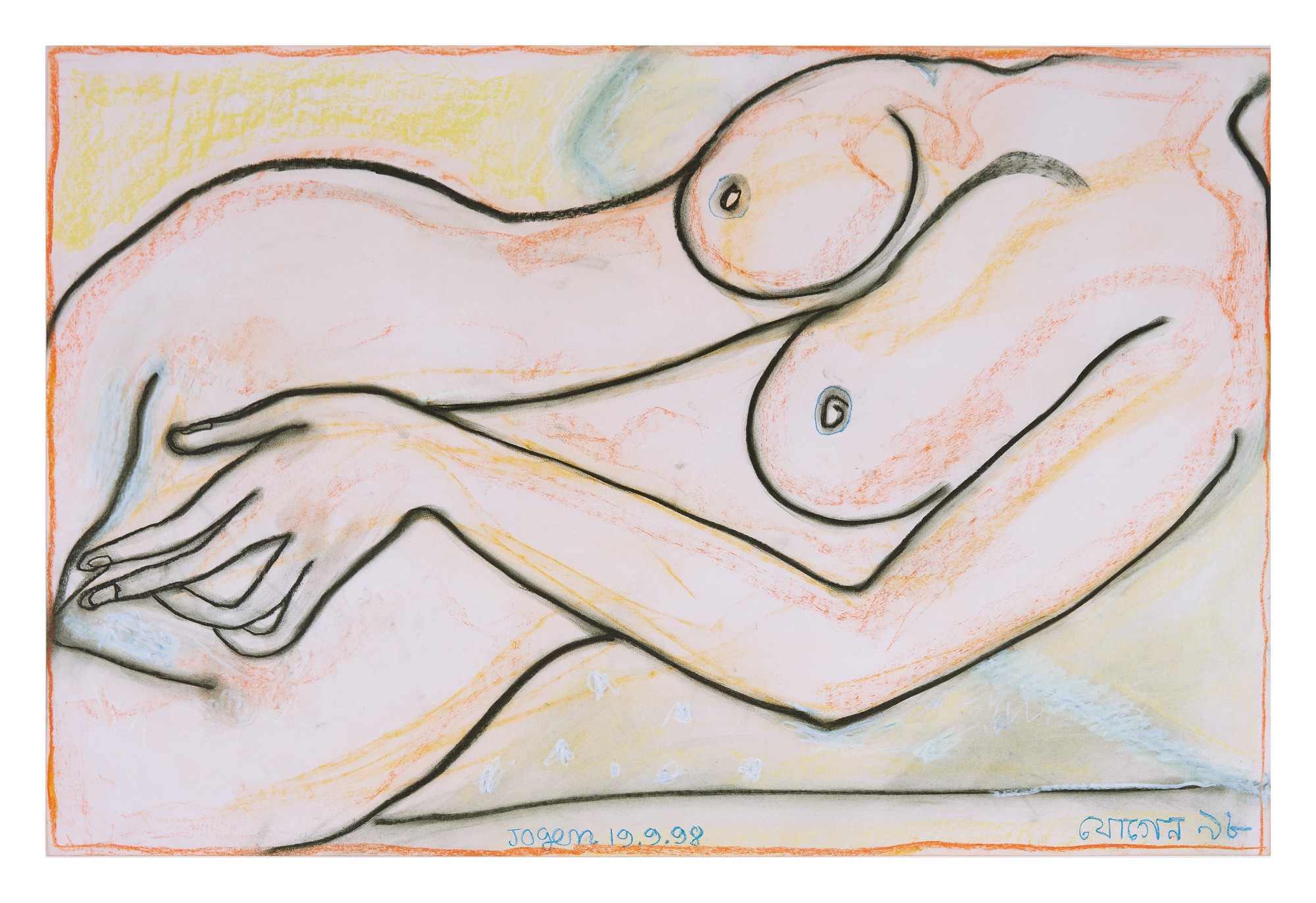
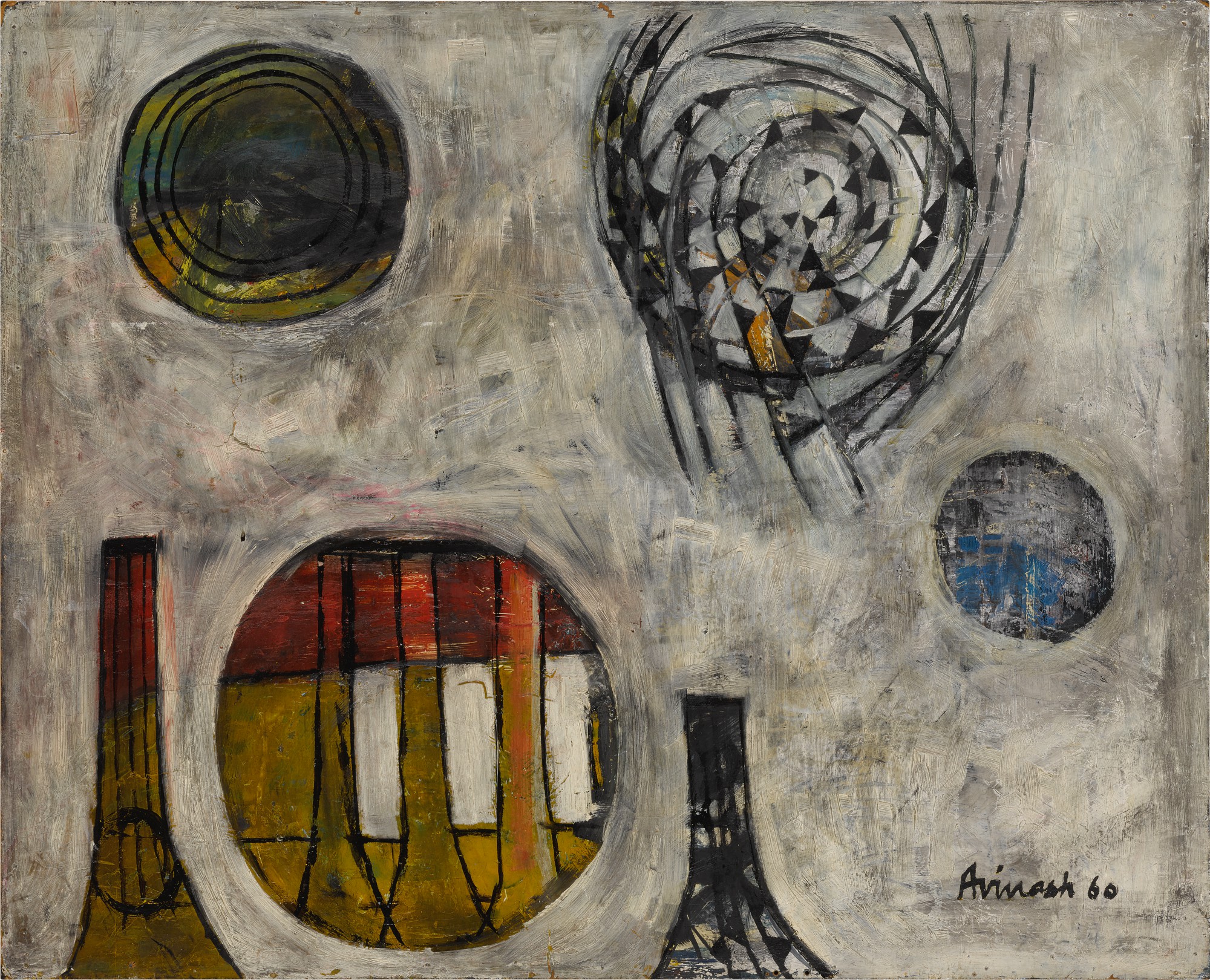
Prabha painted women of central India with a monumental tenderness. Satish Gujral moved across media including painting, sculpture, and architecture, his work marked always by an intense personal mythology shaped partly by a childhood illness that left him deaf. Jogen Chowdhury's sinuous, anxious line drawings occupy a space between eroticism and social critique that is entirely his own. Avinash Chandra, who settled in Britain in the 1950s, developed a highly sensuous abstract figuration that found considerable international recognition during his lifetime and deserves renewed attention today.
Avinash Chandra
Untitled (Om), 1960
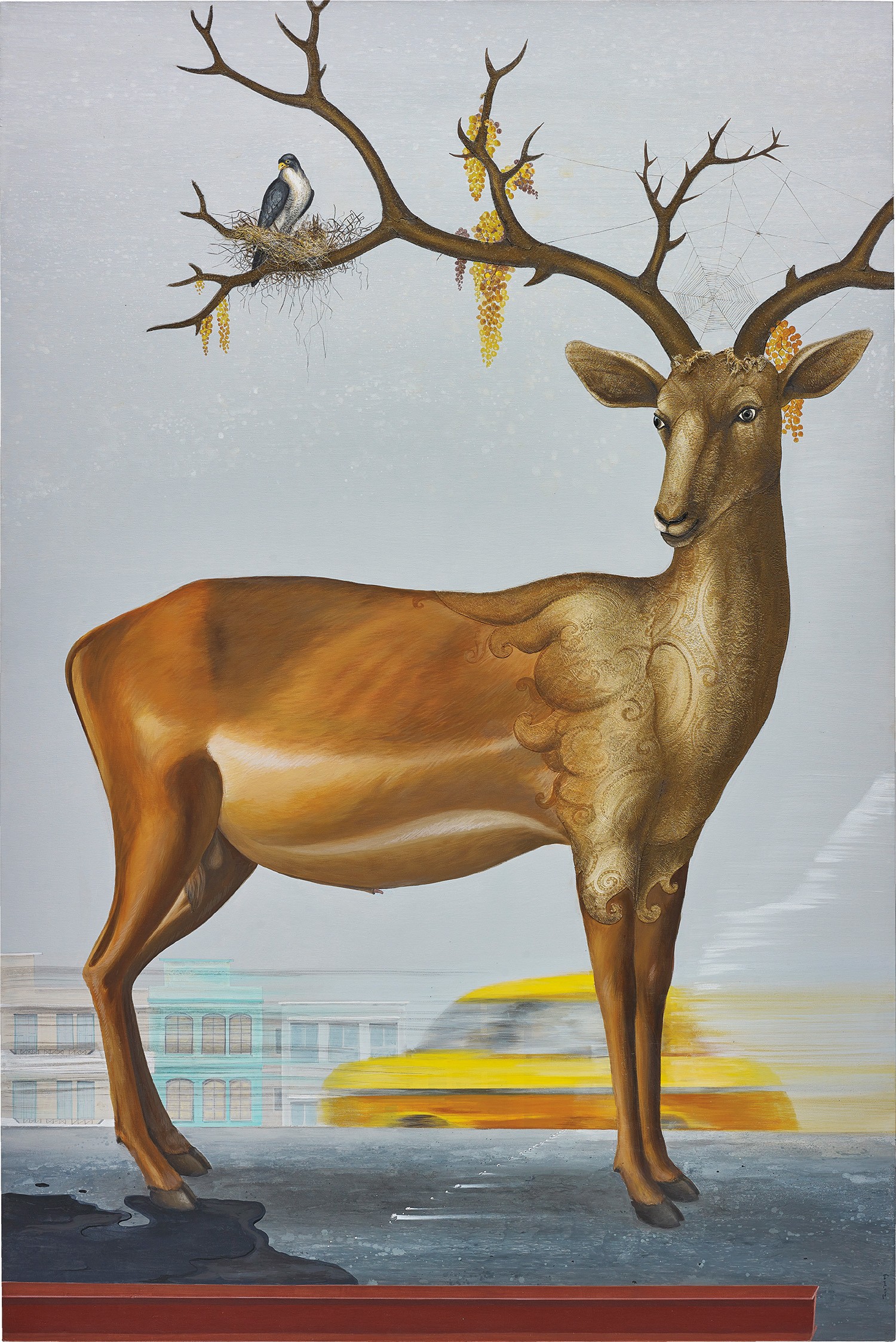
Contemporary Indian art operates in a genuinely global frame without having relinquished the specificity that makes it interesting. Jitish Kallat works with an almost encyclopedic ambition, connecting the everyday textures of Mumbai life to large questions about history, mortality, and political violence. Bharti Kher's use of the bindi, that small decorative mark that carries so much cultural freight, transforms a familiar symbol into an instrument of unsettling formal and conceptual investigation. Jagannath Panda brings together organic and industrial forms in ways that feel distinctly of this moment of ecological anxiety.
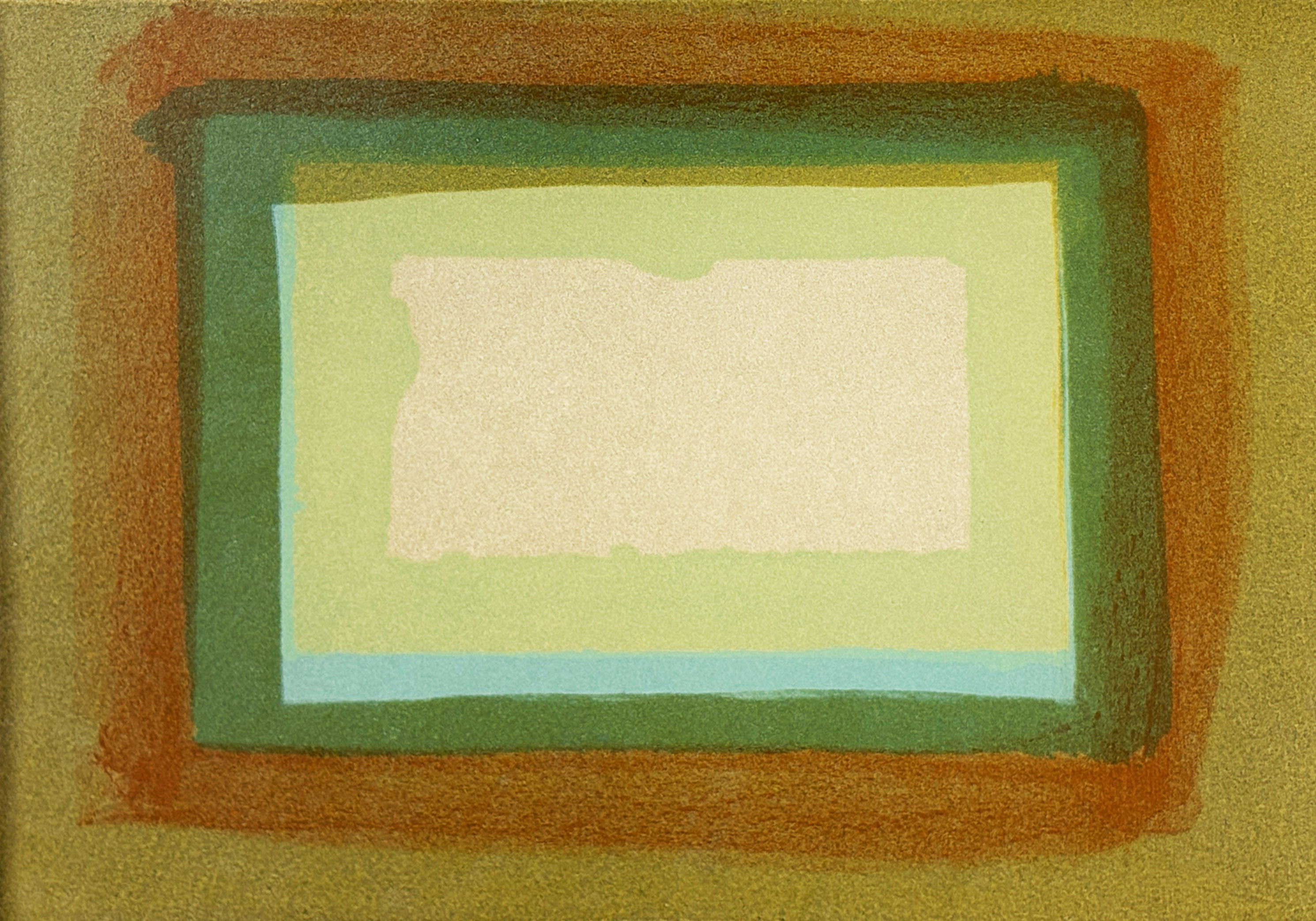
And it is worth noting that Howard Hodgkin, the great British painter who spent decades returning to India and who is represented on The Collection, understood perhaps better than any outsider that India does not merely inspire artists. It changes them. To collect Indian art across its full historical span is to hold in your hands the evidence of one of the most sustained acts of visual imagination in human history. From the Gupta divinity to the contemporary Mumbai studio, the through line is not stylistic.
It is something more like a refusal to accept that the material world and the metaphysical world are entirely separate territories. That refusal continues to generate extraordinary art, and it shows no signs of exhausting itself.