Join The Collection to save, track, and explore works like this.

Piero Manzoni — Achrome
Piero Manzoni

Achrome

1961

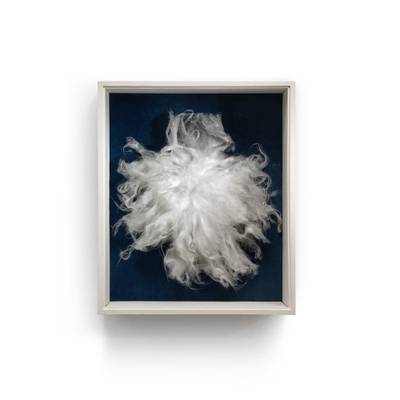
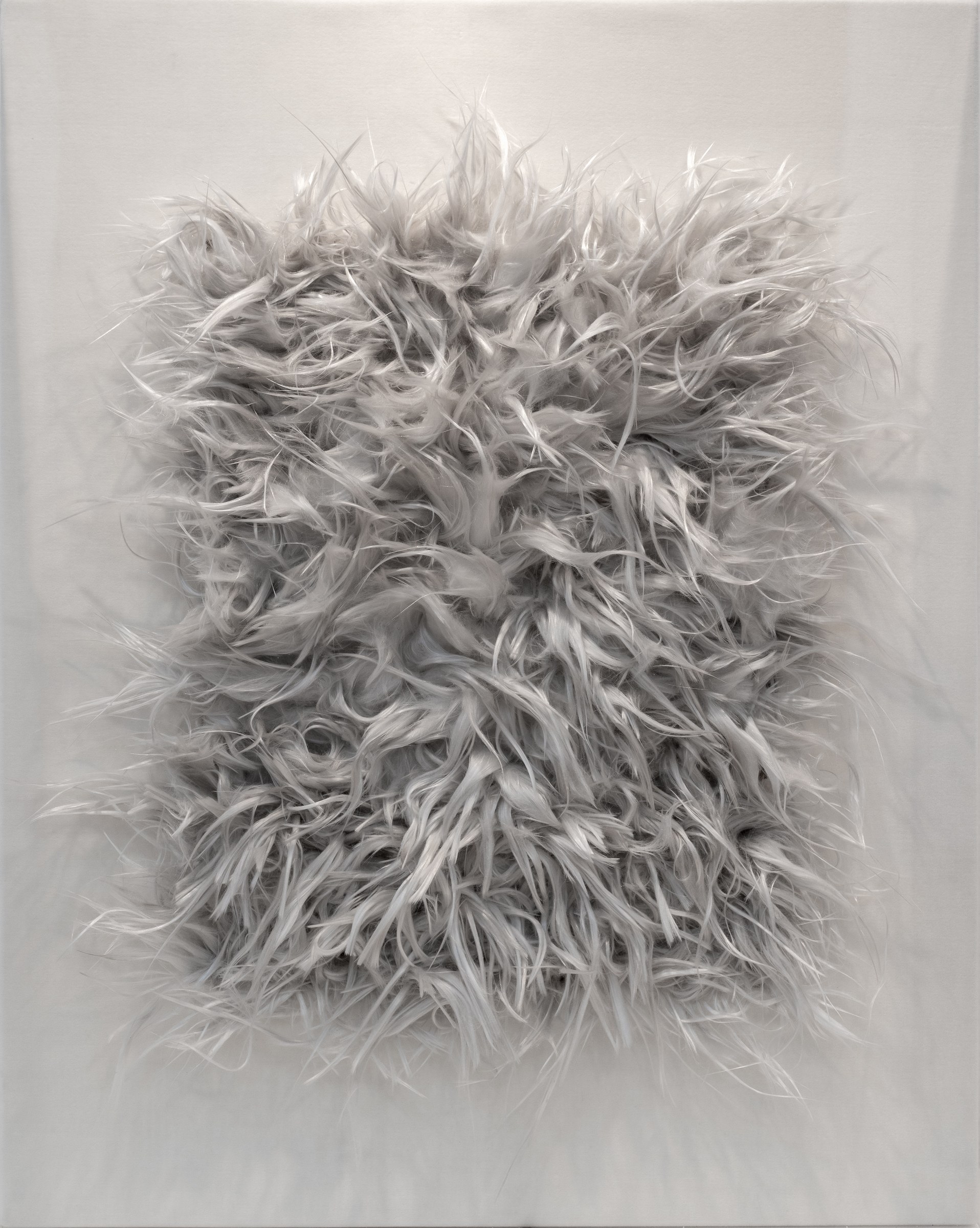
Piero Manzoni (1933, 1963) began the "Achrome" series in 1957. It emerged from a remarkably rapid, almost feverish evolution over less than three years, during which he moved from a gestural, Informel-based practice, marked by the material intensity of Alberto Burri and Jean Fautrier, to one of the most radical redefinitions of painting in postwar Europe. Key impulses came through his encounter with Lucio Fontana’s "Concetti spaziali" and an exhibition of Yves Klein’s monochromes. Against this backdrop, the solemnity of Abstract Expressionism and the inwardness of Art Informel, along with their pursuit of authenticity and expressive truth, appeared to Manzoni increasingly as convention. The gesture, once heralded as a means of liberation, became for him an empty formula. His response was uncompromising: a radical emptying, a “neutralization” of the medium. Painting, in his view, had to be freed from representation altogether. The image was no longer to depict, it was to exist. The title "Achrome", literally “without colour”, is programmatic. The white that defines the series is not applied; it is inherent. It arises from the material itself, as do the structures, which are not shaped by gesture but by the material’s own properties. Manzoni’s choice of materials is strikingly experimental: kaolin, cotton, wadding, plaster, and later even bread, polystyrene, or fur. The present work belongs to a group of around sixty works made from fine fibreglass fibres. Within the "Achrome" series, these mark a particularly precise, almost austere culmination. Unlike the earlier kaolin canvases, with their earthy, fragile presence, the fibreglass introduces a material of industrial modernity: smooth, light-sensitive, nearly immaterial. It is pliable, yet devoid of expression. It carries no “trace of life,” no softness, no organic memory. For Manzoni, it becomes the ideal vehicle for a radically image-less image. Nothing remains here to be “read” in the traditional sense, no gesture, no authorship, not even a conventional sense of materiality. And yet the work is far from inert: its fibreglass surface responds acutely to light, scattering and refracting it. The appearance shifts subtly with the viewer’s position, at times opaque, at others almost luminous. The decisive shift lies here: the image comes into being only in perception. Manzoni relocates the work from object to experience. The "Achrome" is no longer a fixed entity, but an event, one that unfolds in time and in relation to the viewer.

Medium
snythetic fibers on wood, covered with velvet
Dimensions
Location
Park Avenue Armory, New York, NY

Notes

Exhibited by Beck & Eggeling International Fine Art at TEFAF New York 2026 (Park Avenue Armory, New York, May 15–19, 2026). Price upon inquiry TEFAF Vetted.

Start the Discussion

Request access to join the discussion

About this work

Piero Manzoni, Achrome, 1961

Piero Manzoni (1933, 1963) began the "Achrome" series in 1957. It emerged from a remarkably rapid, almost feverish evolution over less than three years, during which he moved from a gestural, Informel-based practice, marked by the material intensity of Alberto Burri and Jean Fautrier, to one of the most radical redefinitions of painting in postwar Europe. Key impulses came through his encounter with Lucio Fontana’s "Concetti spaziali" and an exhibition of Yves Klein’s monochromes. Against this backdrop, the solemnity of Abstract Expressionism and the inwardness of Art Informel, along with their pursuit of authenticity and expressive truth, appeared to Manzoni increasingly as convention. The gesture, once heralded as a means of liberation, became for him an empty formula. His response was uncompromising: a radical emptying, a “neutralization” of the medium. Painting, in his view, had to be freed from representation altogether. The image was no longer to depict, it was to exist. The title "Achrome", literally “without colour”, is programmatic. The white that defines the series is not applied; it is inherent. It arises from the material itself, as do the structures, which are not shaped by gesture but by the material’s own properties. Manzoni’s choice of materials is strikingly experimental: kaolin, cotton, wadding, plaster, and later even bread, polystyrene, or fur. The present work belongs to a group of around sixty works made from fine fibreglass fibres. Within the "Achrome" series, these mark a particularly precise, almost austere culmination. Unlike the earlier kaolin canvases, with their earthy, fragile presence, the fibreglass introduces a material of industrial modernity: smooth, light-sensitive, nearly immaterial. It is pliable, yet devoid of expression. It carries no “trace of life,” no softness, no organic memory. For Manzoni, it becomes the ideal vehicle for a radically image-less image. Nothing remains here to be “read” in the traditional sense, no gesture, no authorship, not even a conventional sense of materiality. And yet the work is far from inert: its fibreglass surface responds acutely to light, scattering and refracting it. The appearance shifts subtly with the viewer’s position, at times opaque, at others almost luminous. The decisive shift lies here: the image comes into being only in perception. Manzoni relocates the work from object to experience. The "Achrome" is no longer a fixed entity, but an event, one that unfolds in time and in relation to the viewer.

Medium
snythetic fibers on wood, covered with velvet
Dimensions
81 x 64.5 cm
Year
1961
Seen at
TEFAF New York, New York, USA

Related themes

Geometric, Materiality, Series, 20th Century, Blue Chip, Contemplative, Conceptual, Installation, Mixed Media, Experimental, Spirituality, Post-War, Textile, Italian, Monochromatic, White, Abstract, Painting, Minimalism, Abstract Composition

More works by Piero Manzoni