Materiality
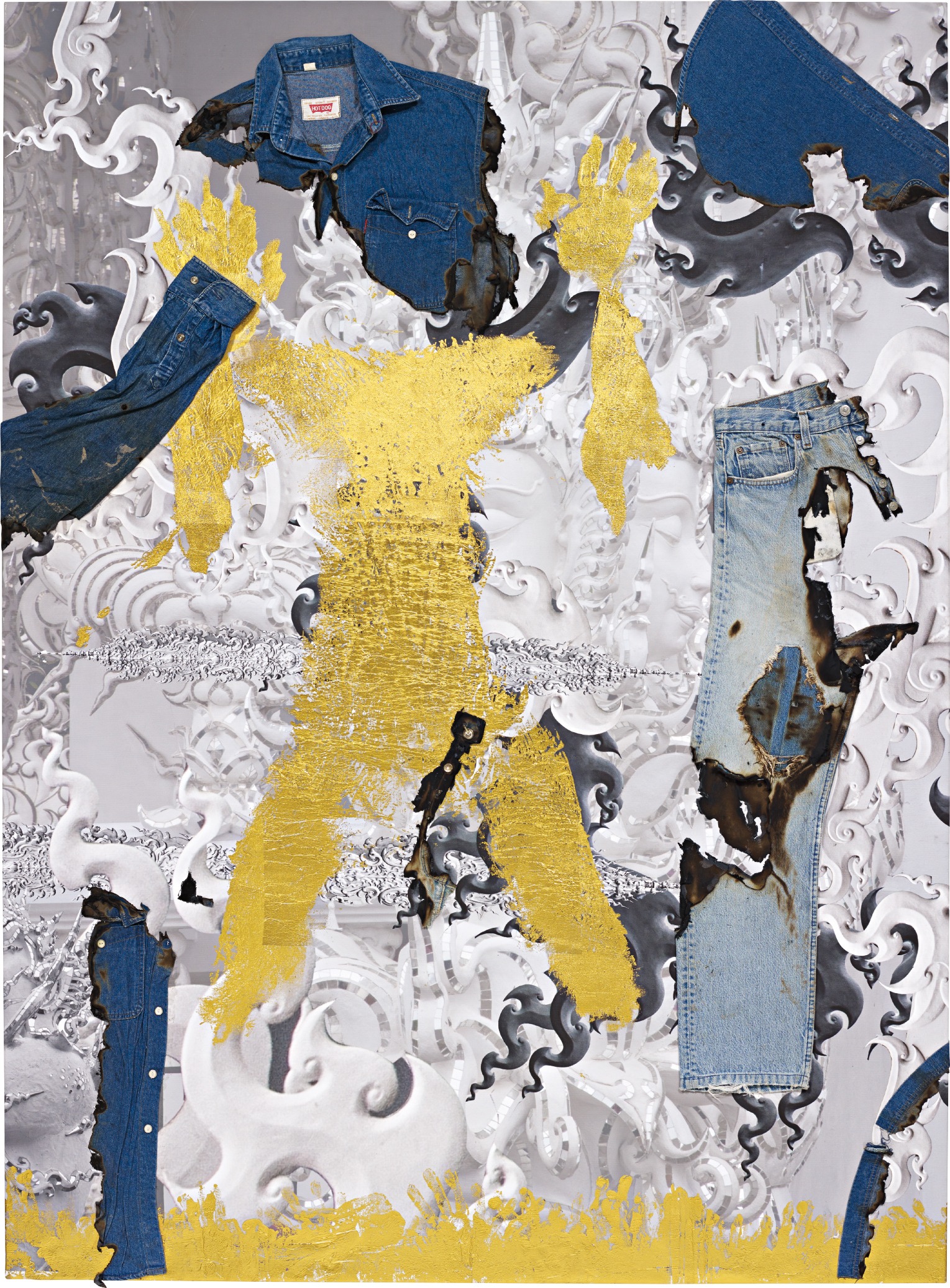
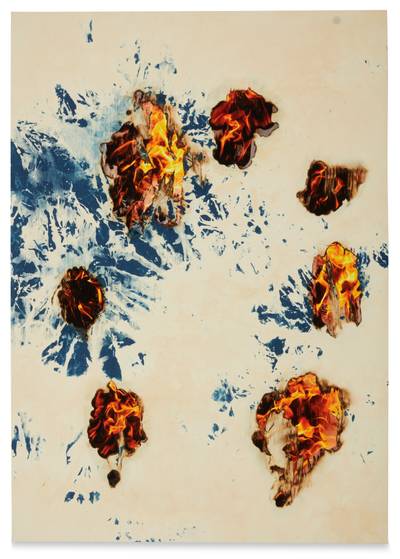
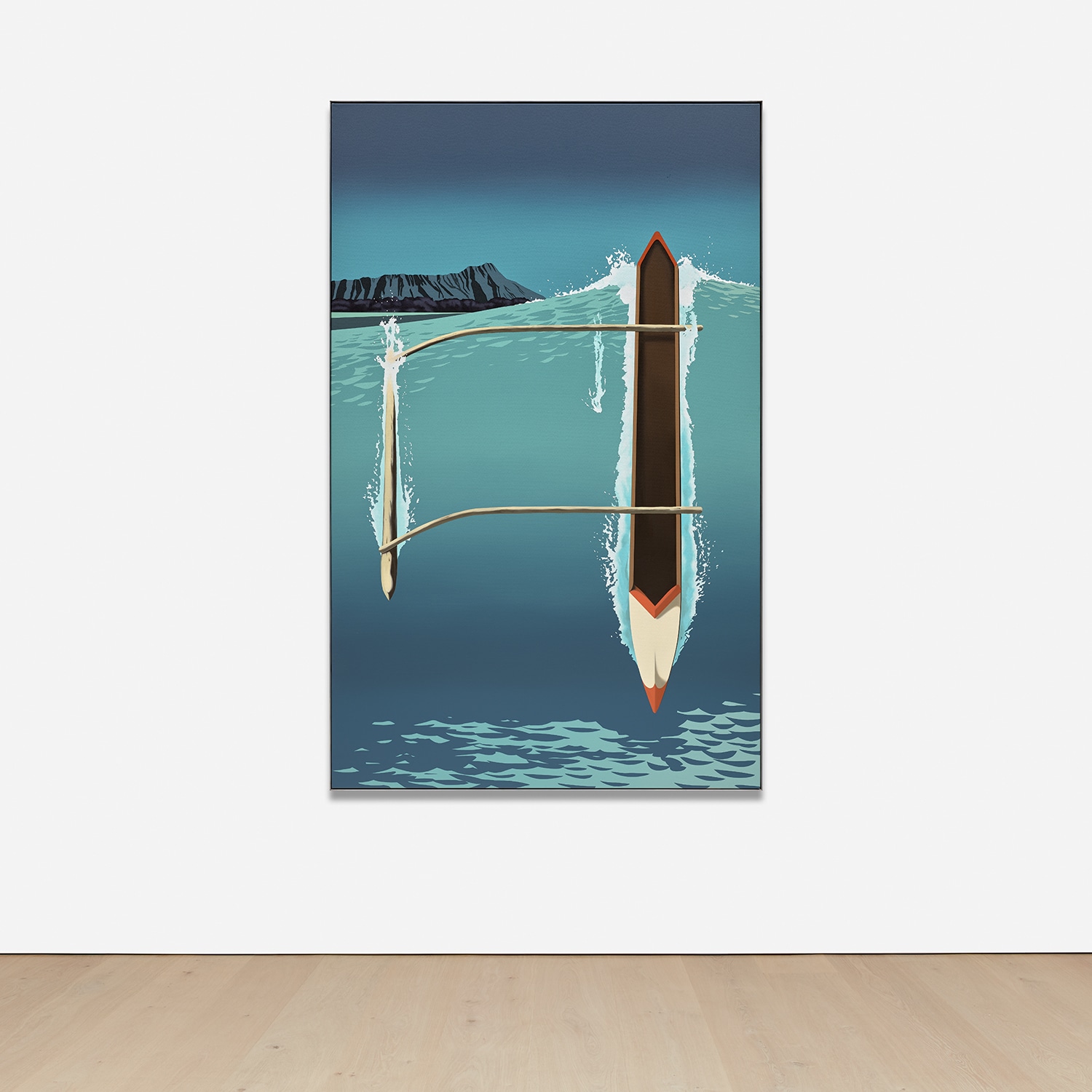
Korakrit Arunanondchai
inkjet print, burnt denim and synthetic gold leaf on canvas
Paint, Rust, and Ruin: Matter Talks Back
There is a moment, standing close to an Alberto Burri combustione, when the charred surface stops being a representation of anything and becomes, simply, itself. The blackened, cracked skin of the canvas is not a picture of fire. It is what fire does. This collapse of representation into raw physical fact sits at the heart of what we mean when we talk about materiality in art, a concern so fundamental and so recurring that it might be the oldest question in the history of making things: what does the stuff itself say, before the artist imposes meaning on top of it.
The formal engagement with material as subject rather than servant has roots in the early twentieth century, when artists began to lose faith in the idea that painting or sculpture was primarily a window onto the world. The Dadaists pasted ticket stubs and newspaper clippings. Kurt Schwitters built entire rooms from found detritus. But it was in the postwar period that materiality became something close to a philosophical program.
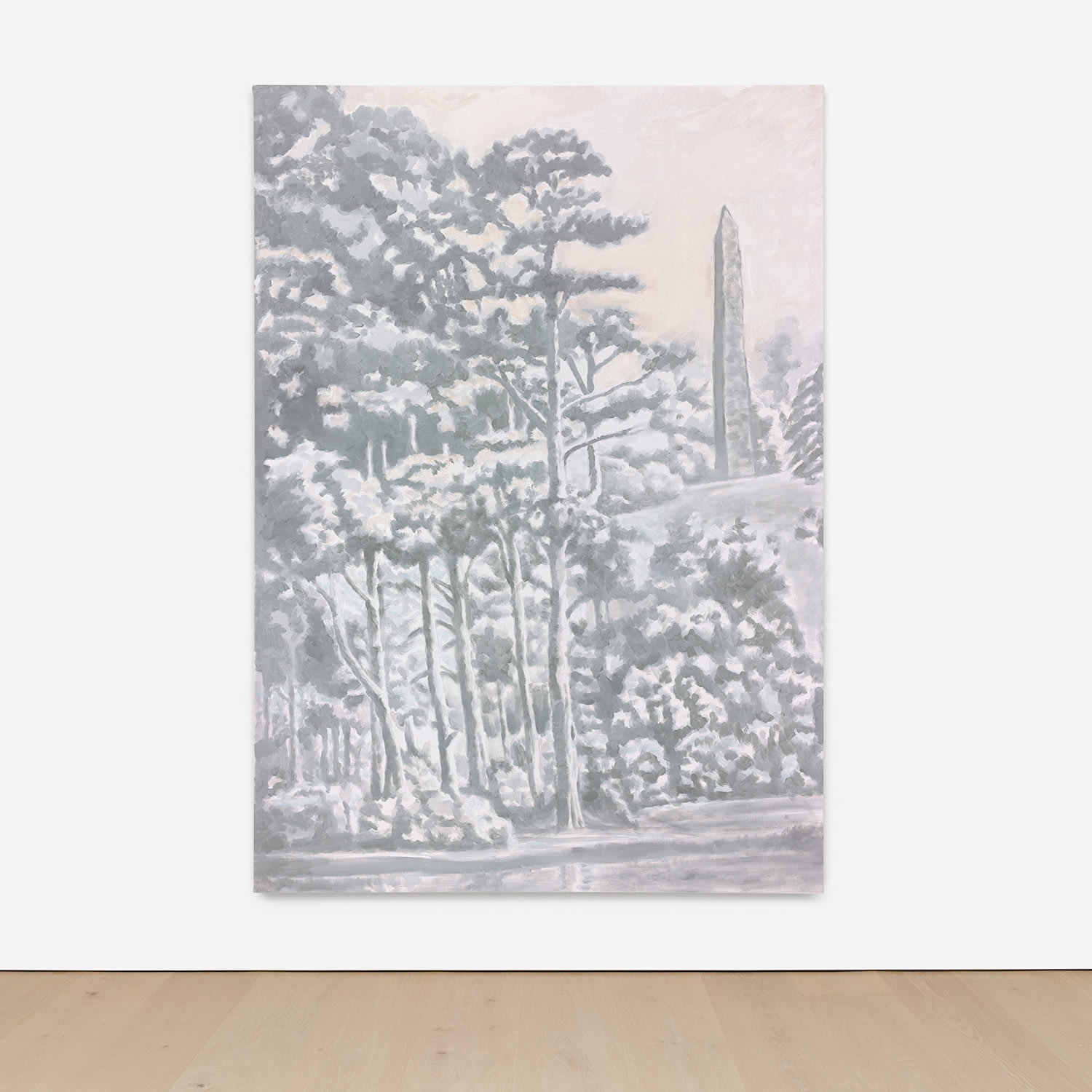
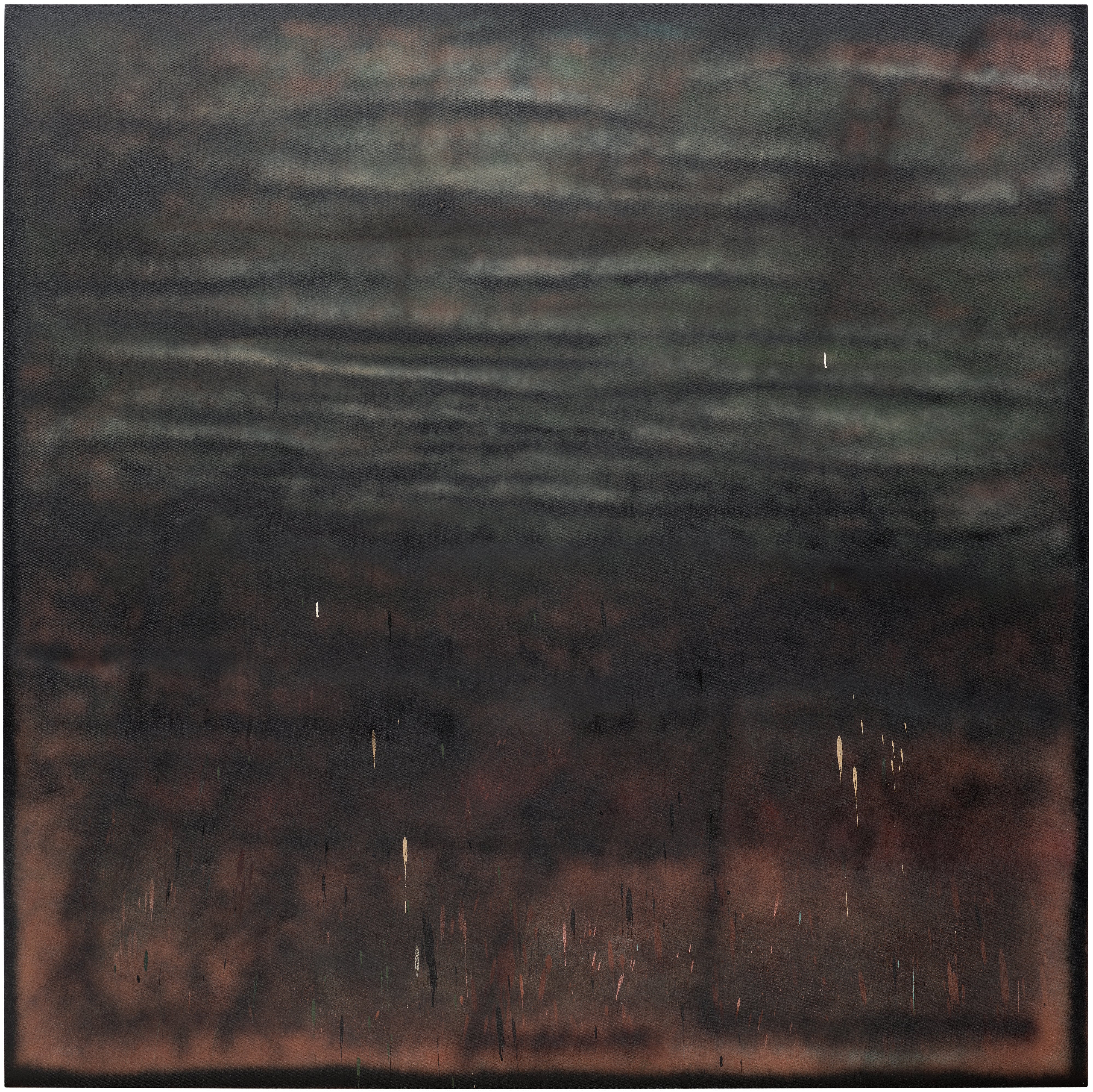
Luc Tuymans
Wallpaper, 2014
Burri, working in Italy through the 1950s, used burlap sacking, tar, and burned plastic to make paintings that bore the unmistakable weight of historical trauma. In his hands, humble and damaged materials became a kind of testimony. His work appeared at the Venice Biennale throughout that decade and established, with stunning economy, the idea that what a thing is made of cannot be separated from what it means. In New York, a parallel investigation was unfolding.
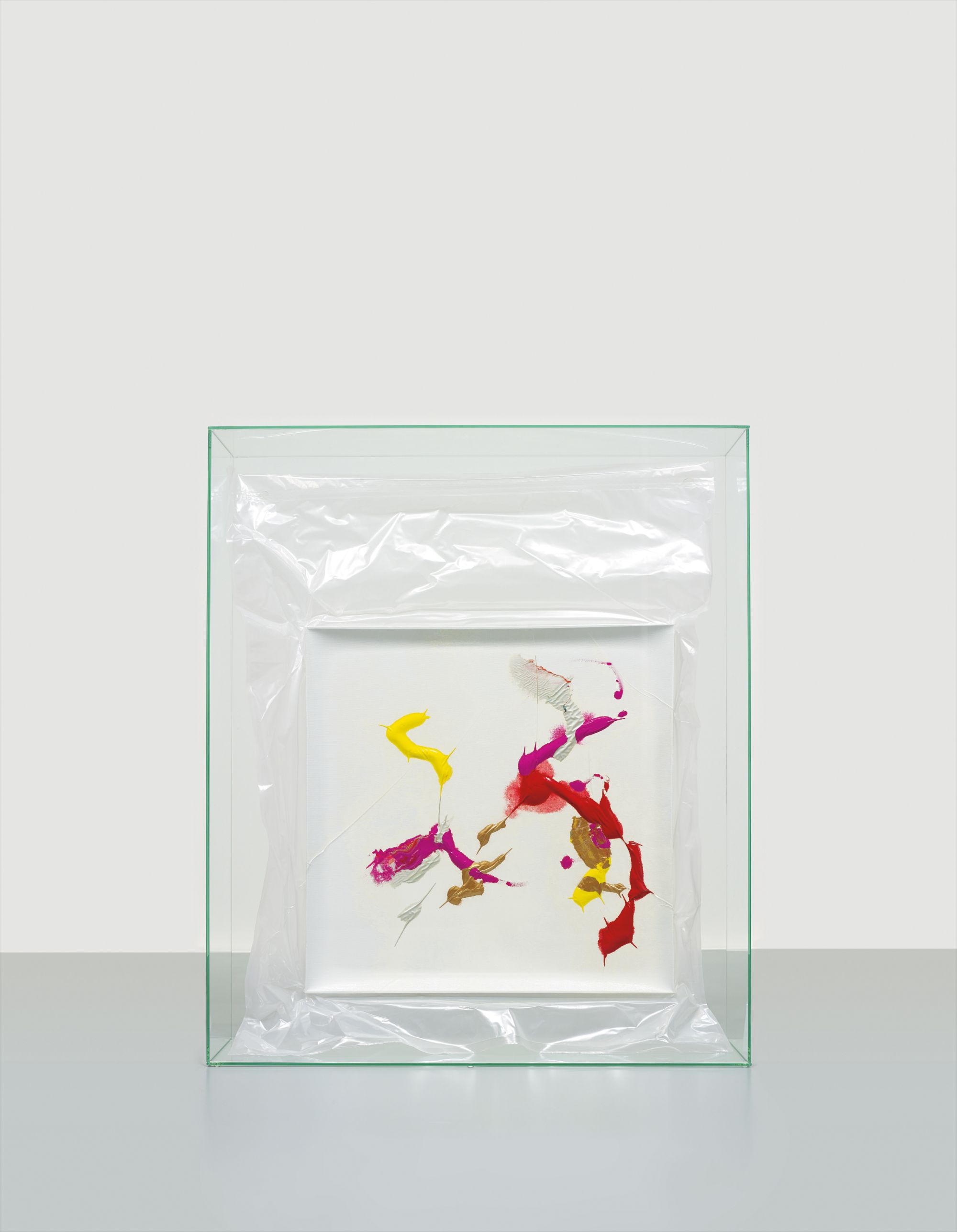
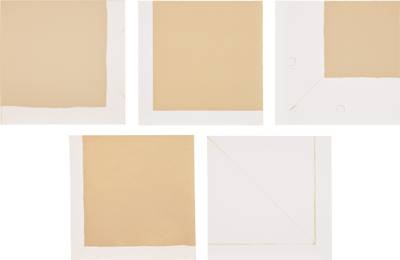
The Abstract Expressionists had already elevated the physical act of painting to near mythological status, but Robert Ryman took that interest somewhere quieter and stranger. Beginning in the late 1950s and continuing for decades, Ryman stripped painting back to a set of almost forensic questions: what surface, what paint, what application, what edge. His canvases, almost always white, are records of process and material decision rather than images in any conventional sense. The works held on The Collection give a sense of just how much variation Ryman found in what appeared to be no variation at all.
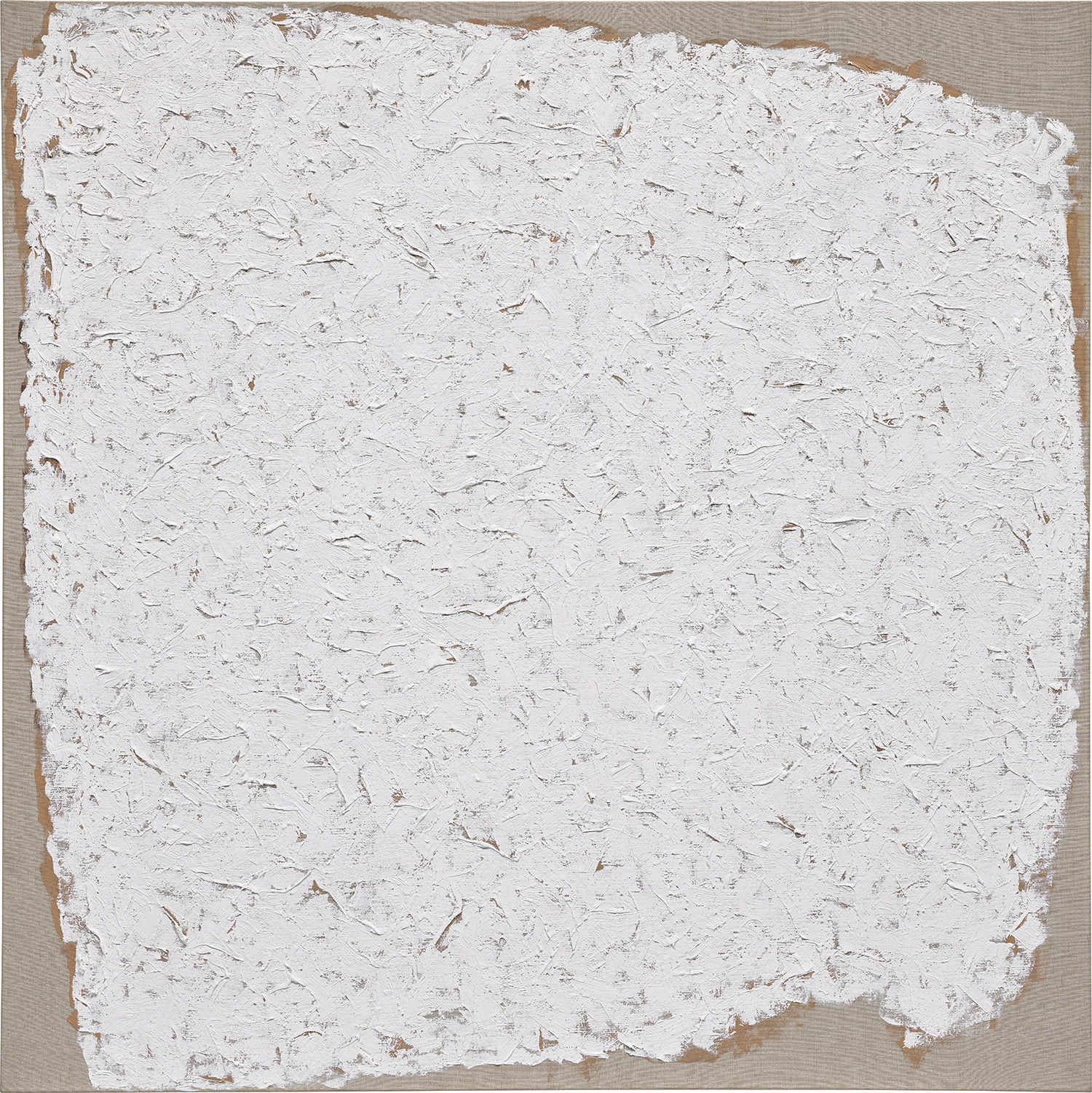
Robert Ryman
Mark, 2002
Each surface is a different argument about what paint can be when it stops pretending to be something other than paint. The movement that crystallized many of these ideas was Arte Povera, which emerged in Italy in the late 1960s under the curatorial eye of Germano Celant. Artists like Jannis Kounellis, Mario Merz, and Giovanni Anselmo brought coal, salt, wax, and live animals into gallery spaces, insisting that art could be made from the lowest and most unrefined materials precisely because those materials carried a charge that refined, academic materials did not. The term itself, coined by Celant in 1967, was as much a political statement as an aesthetic one.
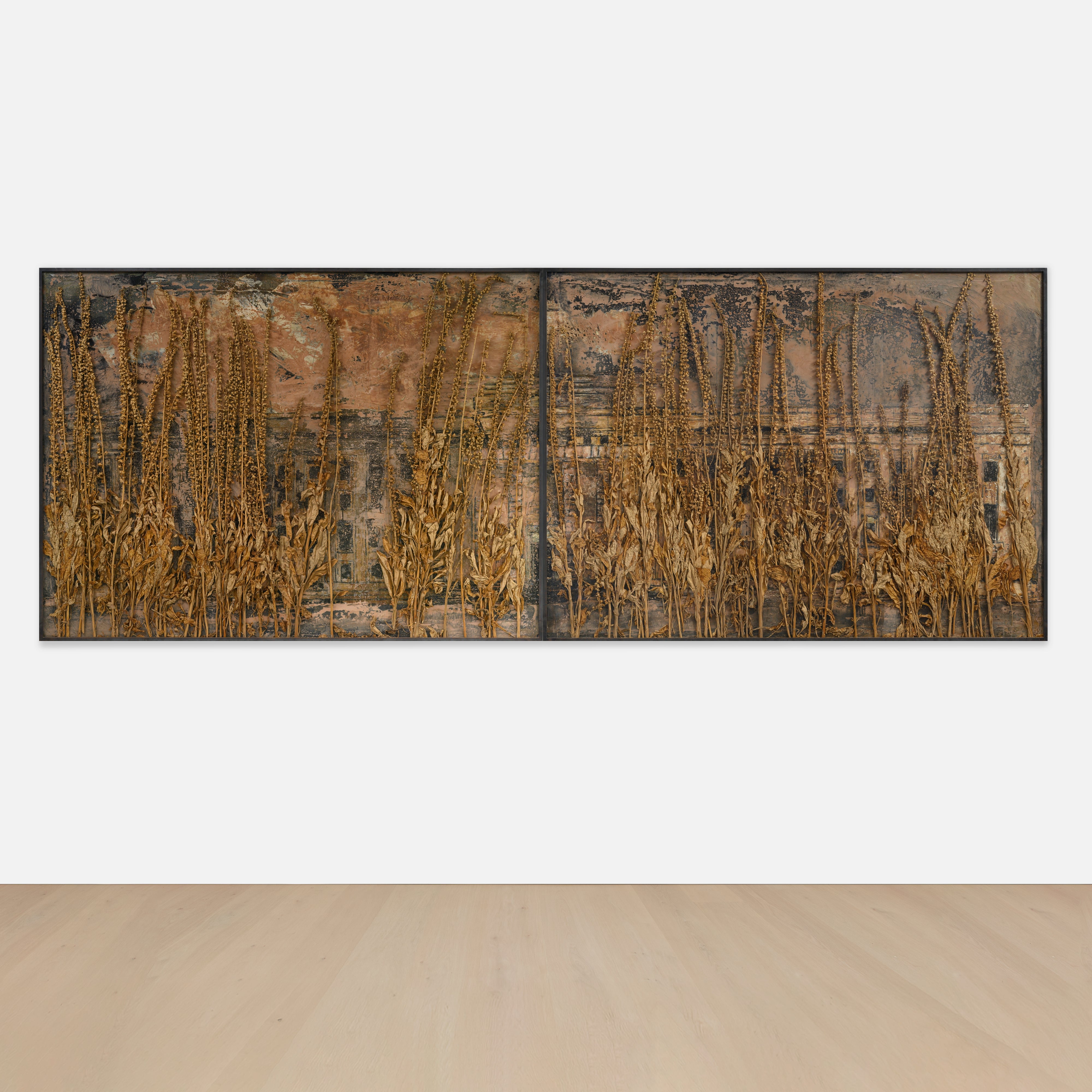
Against the slick surfaces of American Pop and the commercial gleam of the culture industry, Arte Povera proposed dirt, rust, and organic process as the ground of an honest art. What happened next was not a clean evolution but a dispersal, as materiality became a concern that crossed mediums and continents. Anselm Kiefer brought mythology, lead, straw, and ash together in monumental paintings that treated material as the carrier of German cultural memory. His canvases felt less like pictures than like archaeological sites, layered with the residue of history.
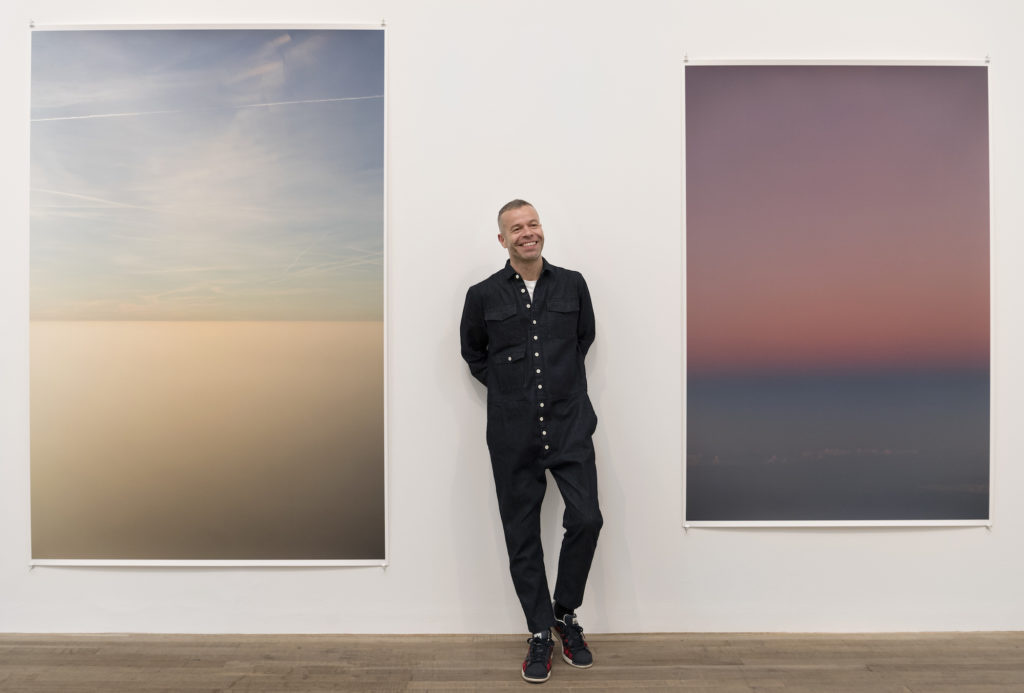
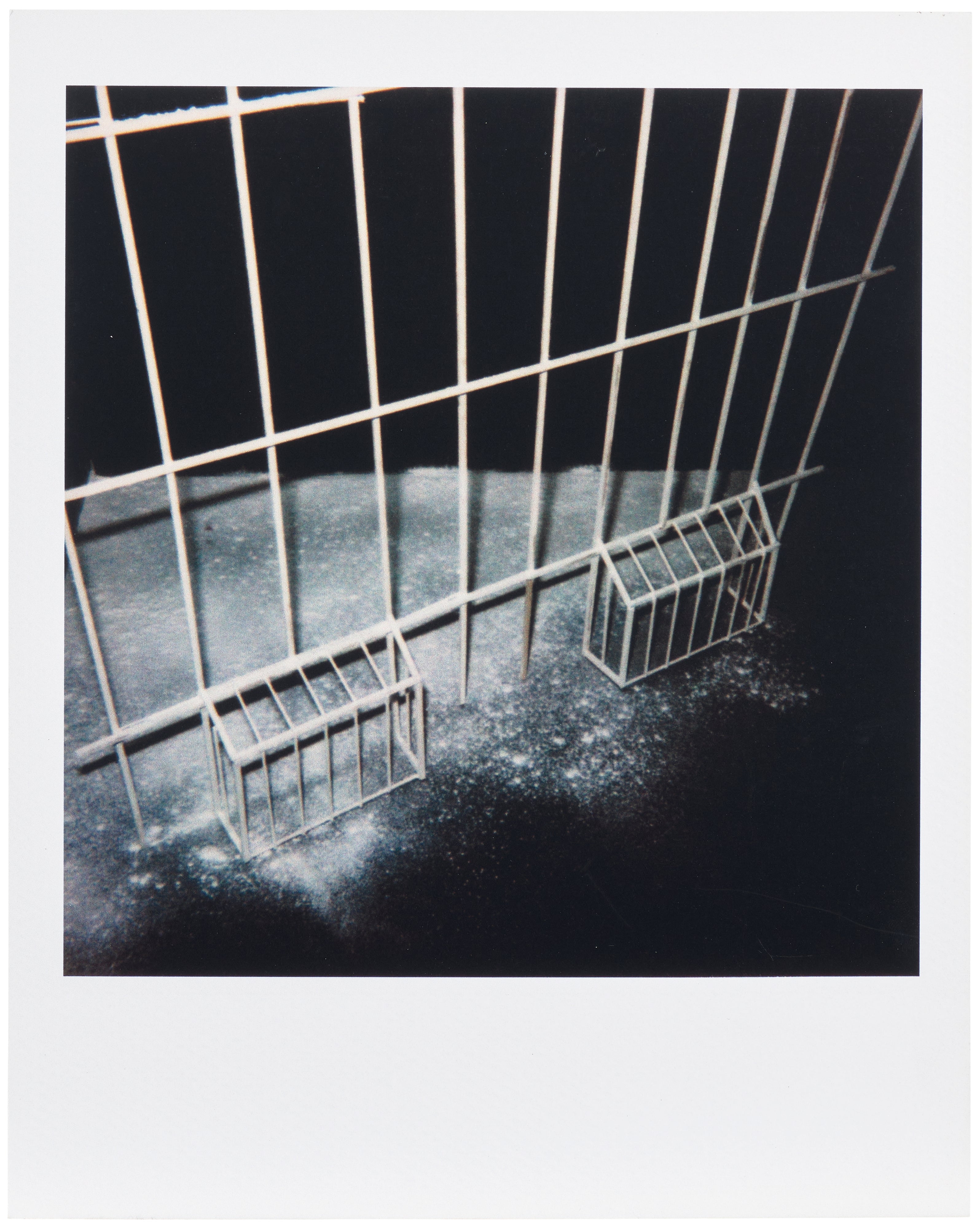
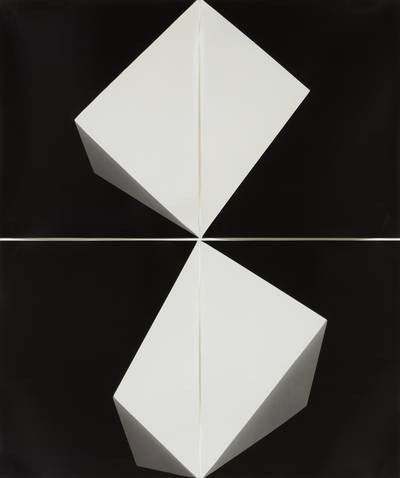
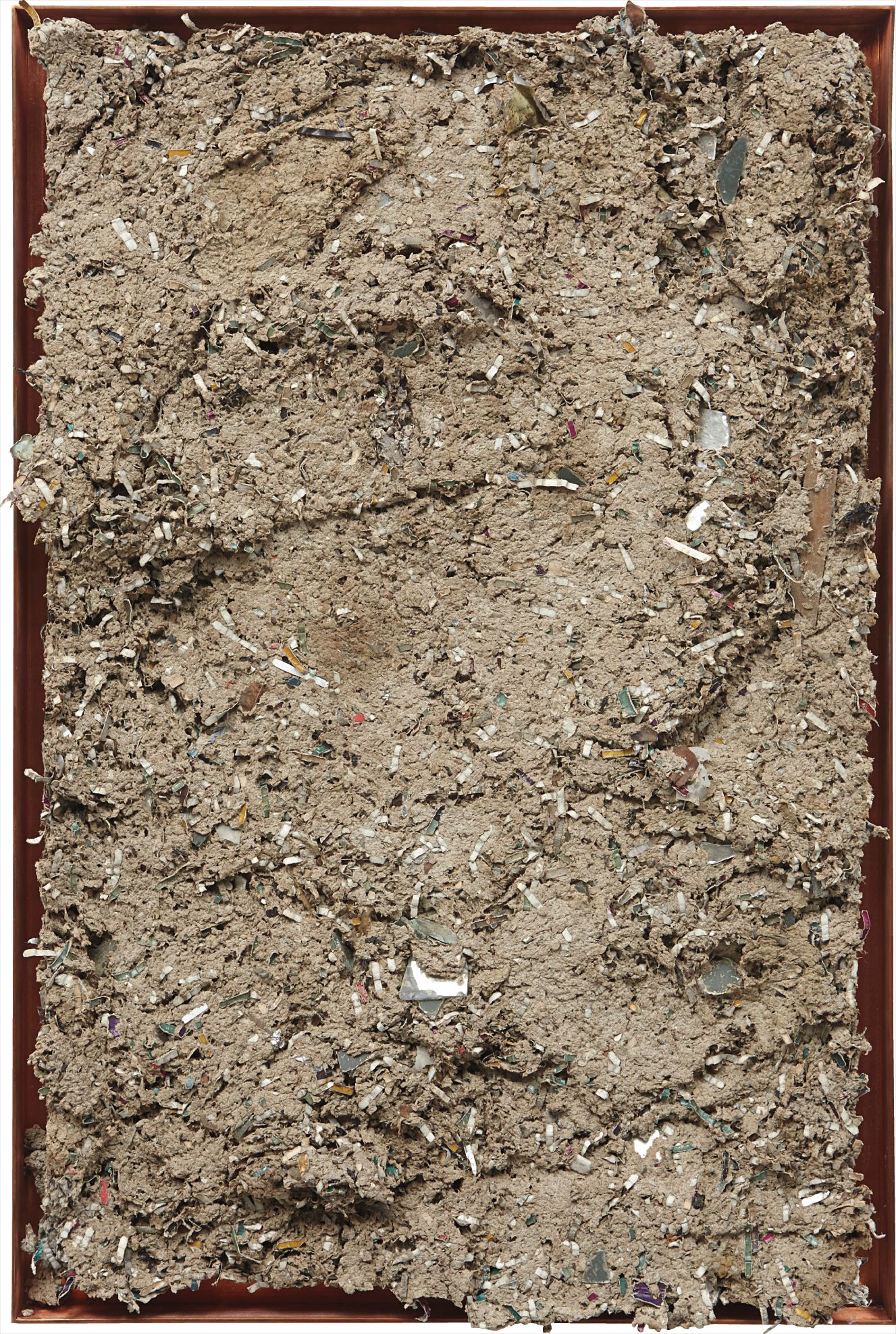
Wolfgang Tillmans
paper drop (black)
The single Kiefer work in The Collection communicates this immediately: scale and surface conspire to make you aware of the painting as a physical object in space before you begin to read its imagery. El Anatsui, working in Ghana and later with international recognition that grew significantly through the 2000s, transformed aluminum bottle caps and copper wire into cascading wall installations that move like liquid metal and speak simultaneously about consumption, trade, and the long aftermath of colonialism. The photographers on The Collection bring a different angle to the same conversation. Wolfgang Tillmans has been insistent, across his entire career, about the photograph as a physical thing rather than a transparent vehicle for imagery.
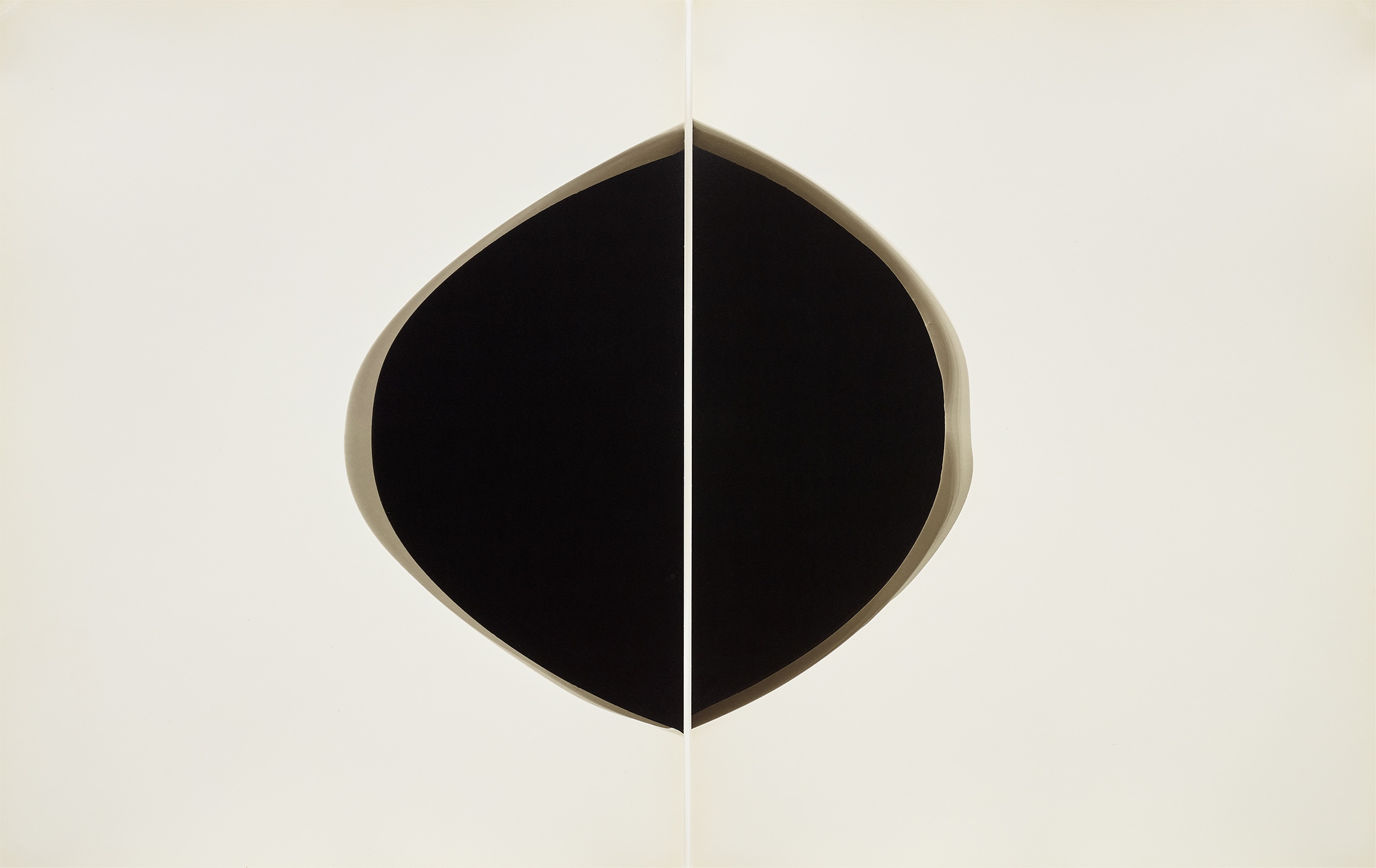
His decision to show prints unpinned, or mounted directly to the wall, or laid flat on surfaces, draws attention to the paper itself, to the chemistry of the image, to the conditions of its making and display. Alison Rossiter takes this even further, working with expired photographic paper that she exposes without a camera, letting the chemistry and the age of the paper produce images that are wholly the result of material process. Her work on The Collection is a reminder that sometimes the most powerful image is the one that makes itself. Sterling Ruby's practice spans sculpture, painting, and textile in ways that consistently foreground material intensity.
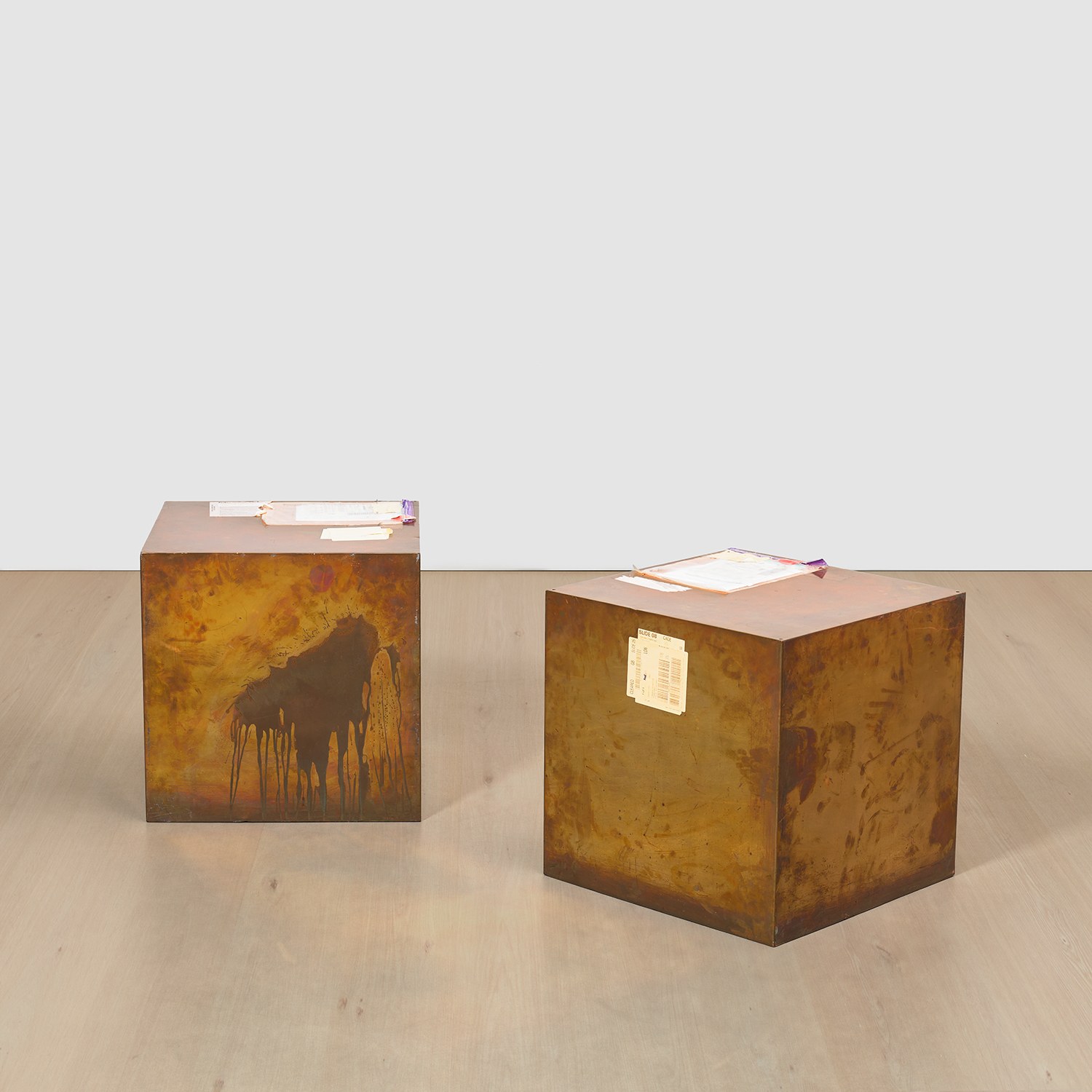
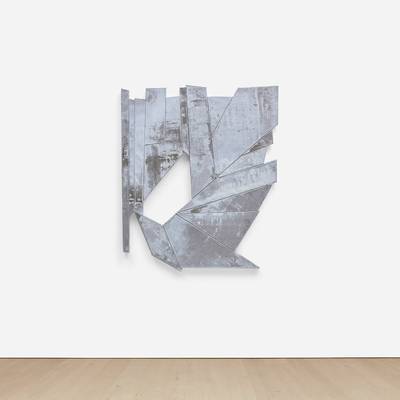
Walead Beshty
Selected works (2012/July 11th 2012 - September 5th 2012)
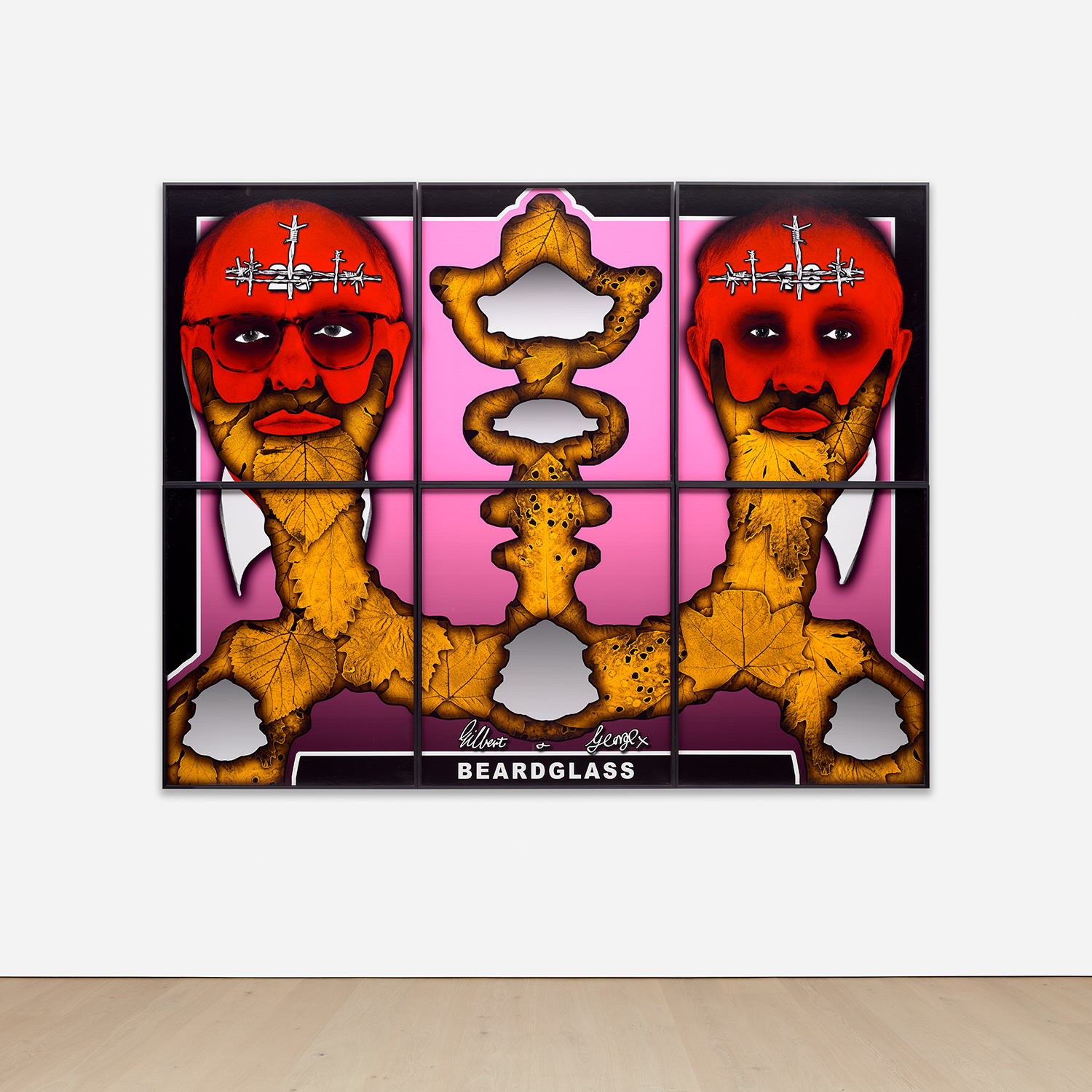
His work is physically insistent in a way that resists easy categorization, and the works on The Collection reflect the range of his investigations into surface, pigment, and industrial material. Walead Beshty has built a body of work explicitly concerned with the conditions of art's physical life, including works where copper photograms oxidize on gallery walls over the course of an exhibition. Rachel Whiteread's cast spaces turn the negative volumes of domestic life into solid matter, making visible what was always there but invisible. These are all very different practices, but they share a conviction that the physical world has something to say that language and image alone cannot carry.
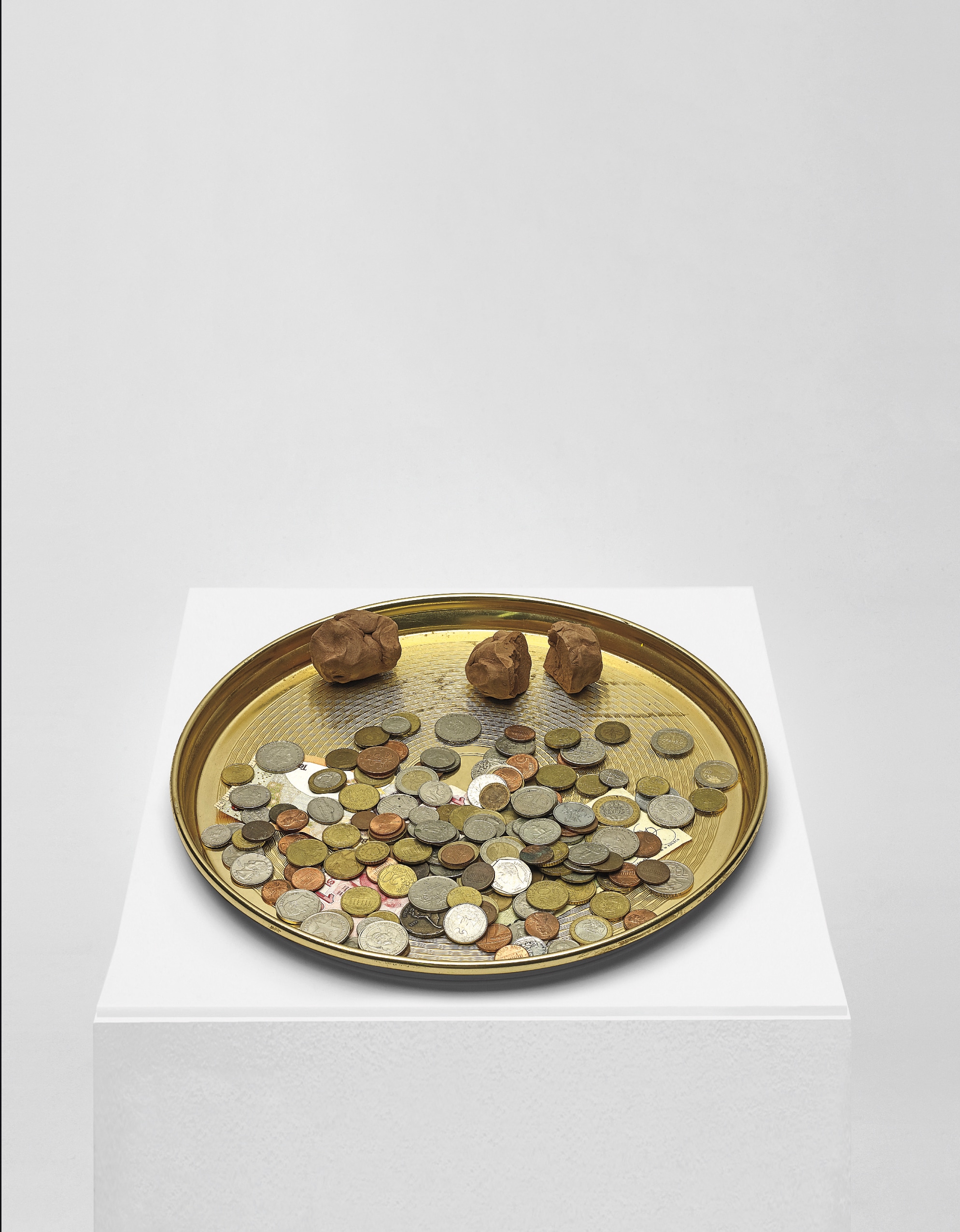
The reason materiality keeps returning as a central concern, across generations and across media, is probably that it answers a need that purely conceptual art cannot. When meaning has become slippery and context feels unstable, the weight of a thing, its smell, its texture, its resistance or fragility, offers a kind of anchor. Korakrit Arunanondchai weaves together painting, installation, performance, and video in a way that is saturated with material reference, from denim to ash to the residue of ritual. Rashid Johnson's surfaces of black soap, wax, and shea butter carry cultural and personal meaning that is inseparable from the physicality of those substances.
In each case, the material is not a metaphor. It is the point. To collect work like this is to take on a relationship with matter itself, and to acknowledge that what something is made of is always part of what it is saying.