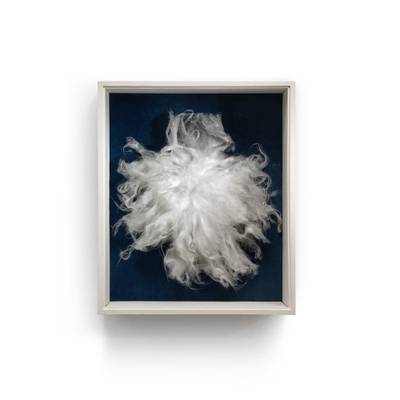
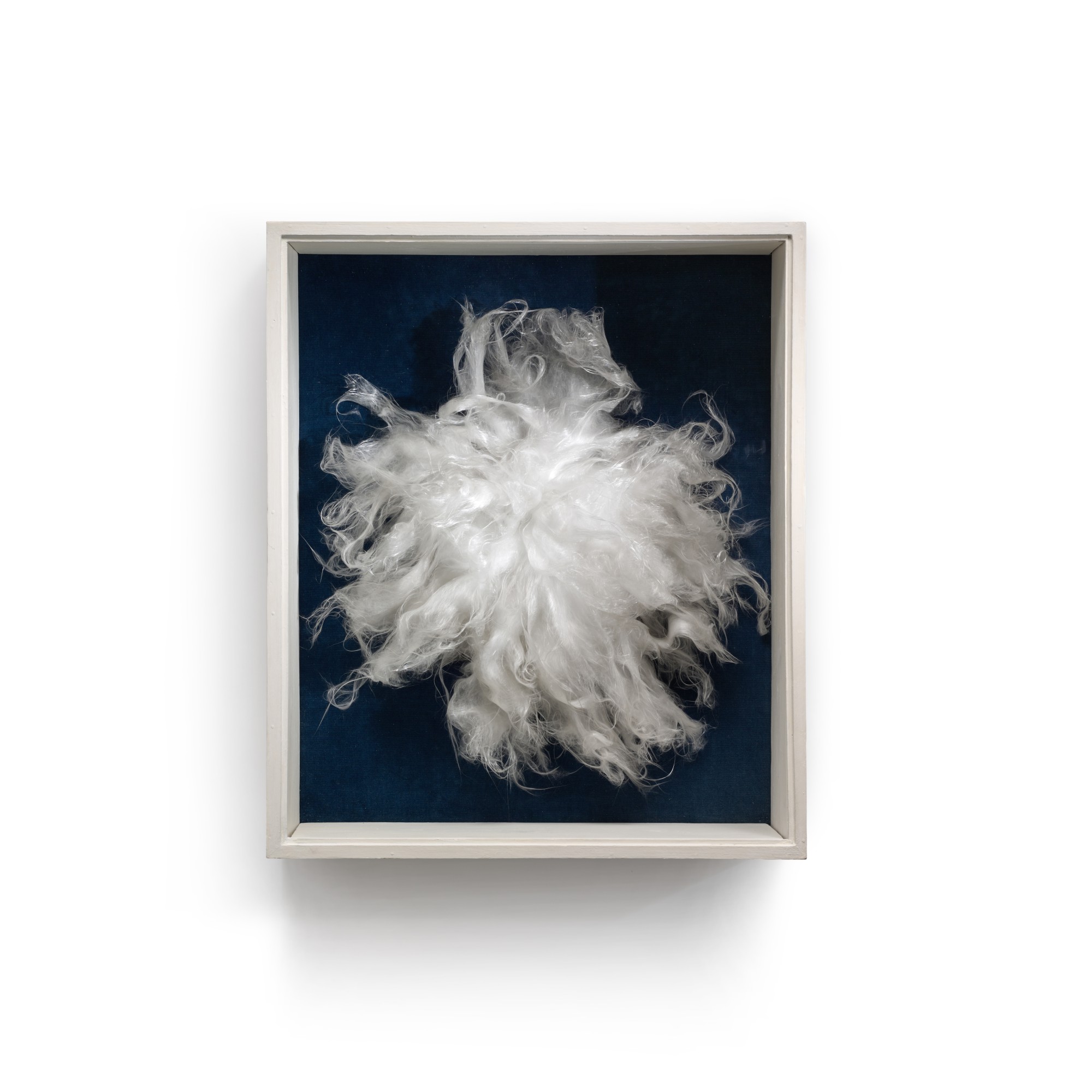
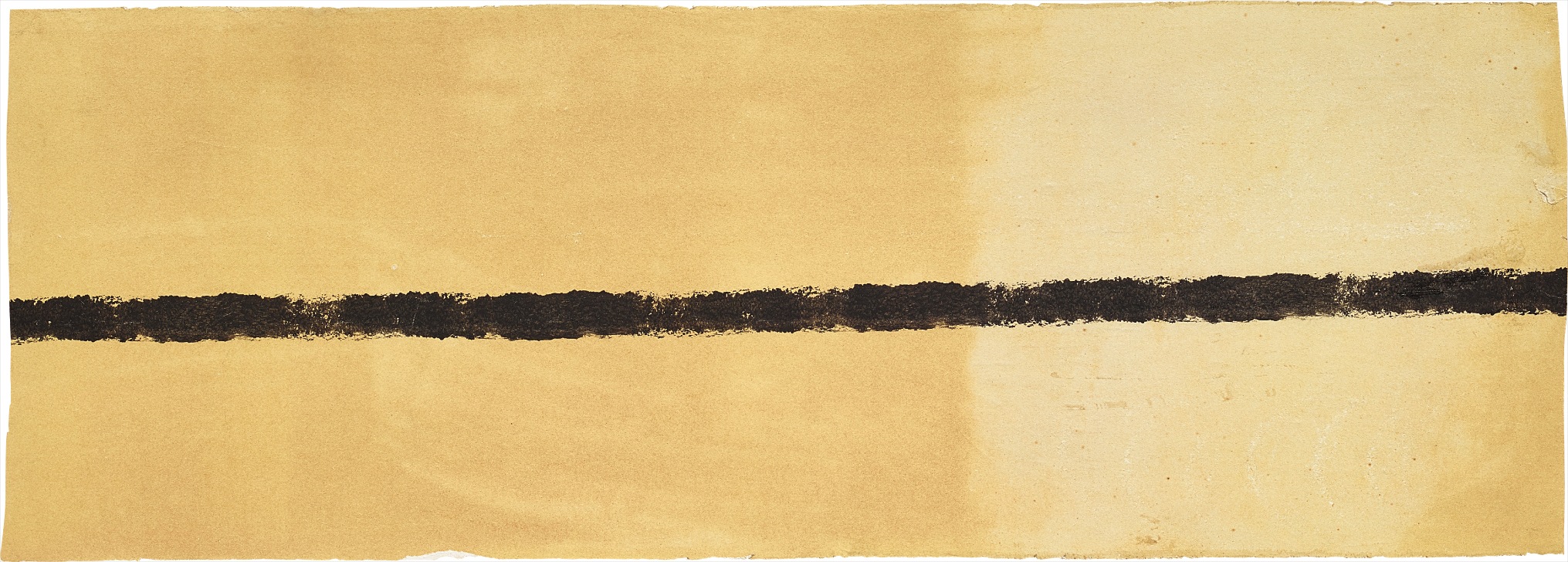
In 2021, a can of Manzoni's legendary Artist's Shit sold at Sotheby's for over 270,000 euros, a figure that made headlines around the world and confirmed what the art market had long understood: that the provocations of this remarkable Italian artist are among the most consequential gestures in postwar culture. The sale was not merely a record for a singular object. It was a testament to the enduring intellectual force of a man who, in fewer than thirty years of life, permanently altered the course of contemporary art. To collect Manzoni is to own a piece of the argument that changed everything about what art could be, what it could mean, and where it could come from. Piero Manzoni was born in Soncino, in the Lombardy region of northern Italy, in 1933. He came from an aristocratic family, and his father was a canning industry entrepreneur, a biographical detail that has never been lost on scholars examining the later work. He studied in Milan, where the postwar energy of Italian modernism was electric, shaped by figures such as Lucio Fontana, whose Spatialist movement pushed painting toward radical new territory. Fontana's slashed canvases and pierced surfaces gave the young Manzoni a permission structure, a sense that the physical substance of art was itself a subject worthy of interrogation. Milan in the late 1950s was a city of manufacturing ambition and cultural restlessness, and Manzoni absorbed both. His early paintings drew on the nuclear art movement and the influence of Art Informel, the loose European equivalent of Abstract Expressionism. But Manzoni grew impatient with gesture and with the romantic mythology of the painter's mark. By 1957, he had arrived at a decisive turn. Inspired partly by a conversation with Yves Klein, whose International Klein Blue monochromes were redefining painting in Paris, Manzoni began developing his own response. Rather than color, he pursued the complete evacuation of it. The result was the Achrome series, works of radical restraint that would become the cornerstone of his legacy and among the most quietly powerful objects in twentieth century art. The Achromes began as canvases soaked in kaolin, a white clay solution that dried into irregular folds and creases, creating surfaces that seemed to breathe with their own internal logic. Over the following years Manzoni made Achromes from cotton wool, straw, bread rolls, cobalt chloride treated cloth, and polystyrene. The works resisted interpretation in the most productive possible way. They refused to be about the artist's feeling. They refused narrative. They presented themselves as pure presence, as objects existing in the world on their own terms. Tate Modern and the Museum of Modern Art in New York both hold important examples, and to stand before one is to understand immediately why Manzoni's influence runs so deep through the art that followed him. Alongside the Achromes, Manzoni developed a parallel practice of conceptual provocation that reads today as startlingly prescient. His Linee, or Lines, were works in which he drew a single continuous line on a roll of paper, sealed it in a cardboard tube, and sold the tube with a certificate of authenticity. The length varied. Some were a few meters. One, created in 1960, extended for over seven kilometers. The Line existed as pure concept, invisible to the buyer, verifiable only through documentation. These works anticipated by decades the concerns of Lawrence Weiner, Sol LeWitt, and the entire tradition of instruction based and dematerialized art. The Linea frammento of 1959 held within The Collection is a rare opportunity to encounter one of these objects in an intimate context. Artist's Shit, produced in 1961, remains the work for which Manzoni is most widely known outside the art world, and it is worth taking seriously rather than treating as a provocation designed only to shock. Manzoni produced ninety cans, each supposedly containing thirty grams of his own excrement, numbered and signed, and priced at the current market rate for gold by weight. The work was a direct and savage commentary on the art market, on connoisseurship, on the cult of the artist's body and biography, and on the willingness of collectors to assign value to anything touched by a celebrated hand. It was also deeply funny. That combination of rigor and wit is central to understanding Manzoni's appeal, and it distinguishes him from contemporaries who pursued similar conceptual territory with less warmth. For collectors, Manzoni presents a market defined by scarcity and by the exceptional quality of institutional recognition. His career lasted only a handful of years before his death from heart failure in Milan in 1963 at the age of twenty nine, which means the body of work is finite and closely held. Major auction houses including Christie's and Sotheby's have seen consistent demand for both Achromes and documentary works related to the Linee and the body performance pieces. Works on paper, including the enamel Linee fragments, offer a point of entry that combines art historical significance with a more accessible physical scale. Condition and provenance are paramount, as with all works of this period, and buyers should seek pieces with clear exhibition histories and proper archival documentation. Manzoni belongs to a constellation of artists who, across Europe in the late 1950s and early 1960s, dismantled the inherited assumptions of painting and sculpture. His closest contemporaries include Yves Klein, with whom he shared a mutual admiration and a fascination with the body as artistic medium, and Lucio Fontana, his great Italian predecessor. His work also connects to the Fluxus movement and to figures such as Joseph Beuys, who similarly understood art as existing in social and biological space as much as in the gallery. Arte Povera, the movement that would define Italian art in the following decade through artists such as Jannis Kounellis and Mario Merz, is unimaginable without the groundwork Manzoni laid. The reason Manzoni matters today, more than sixty years after his death, is not simply historical. His questions are still live. What is the relationship between an artist's body and the art they make? What role does documentation and certification play in constituting an artwork? How much of what we call aesthetic value is actually social and economic performance? These are questions that contemporary artists from Damien Hirst to Maurizio Cattelan have revisited with explicit acknowledgment of their debt to Manzoni. To engage with his work now is to find oneself at the origin point of some of the most vital conversations in contemporary culture. Collecting Manzoni is not an act of nostalgia. It is an investment in the ideas that continue to shape the present.