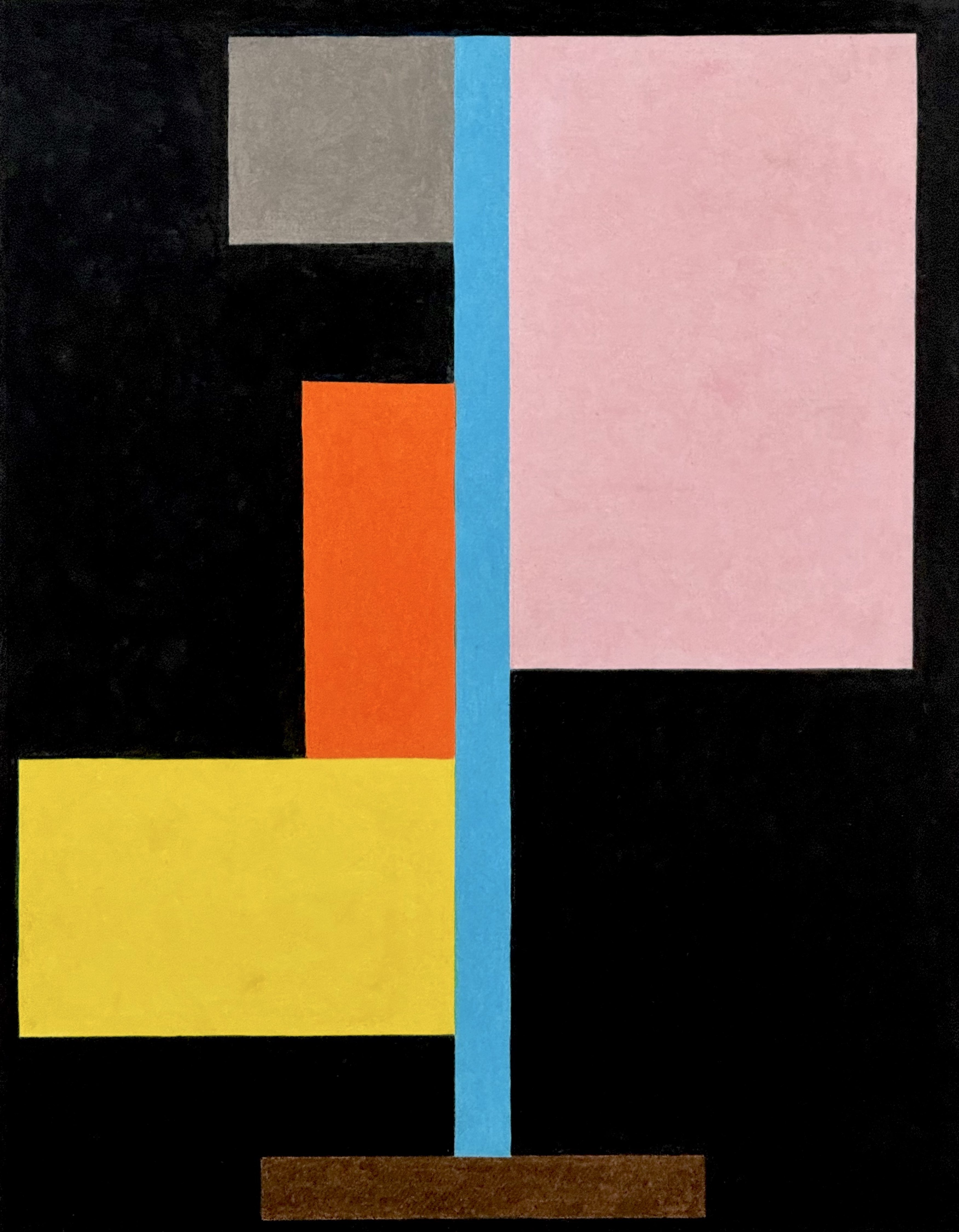
David X. Levine is an American visual artist born in Boston, Massachusetts in 1962. He has been based in New York City since 1998, where he has worked as a full-time artist. For years he considered himself primarily a poet, before expanding his practice into the visual realm in the 1990s, a background that continues to inform his work. Levine is best known for his vivid, labor-intensive colored pencil drawings, which range in scale from small, intimate works to large monumental pieces. His process involves obsessive mark-making through hundreds of layers of colored pencil, producing opaque fields of saturated color that he buffs to a near-reflective finish. He sometimes incorporates collage and graphite into these works. His practice draws on a wide range of cultural references, mixing popular and high culture, and has been associated with influences ranging from Matisse and Vija Celmins to Giotto and Francis Picabia. Levine's work has been presented at venues including the NADA New York art fair and has been reviewed in publications such as The Washington Post. He has been represented by galleries including Gallery Neptune and Brown, Honor Fraser Gallery, and Harkawik. A solo exhibition of his work was presented at Boston University in 2015. He also completed a residency at the Tamarind Institute, where his dense colored-pencil approach yielded vibrant lithographs.
Collectors

Artists in conversation
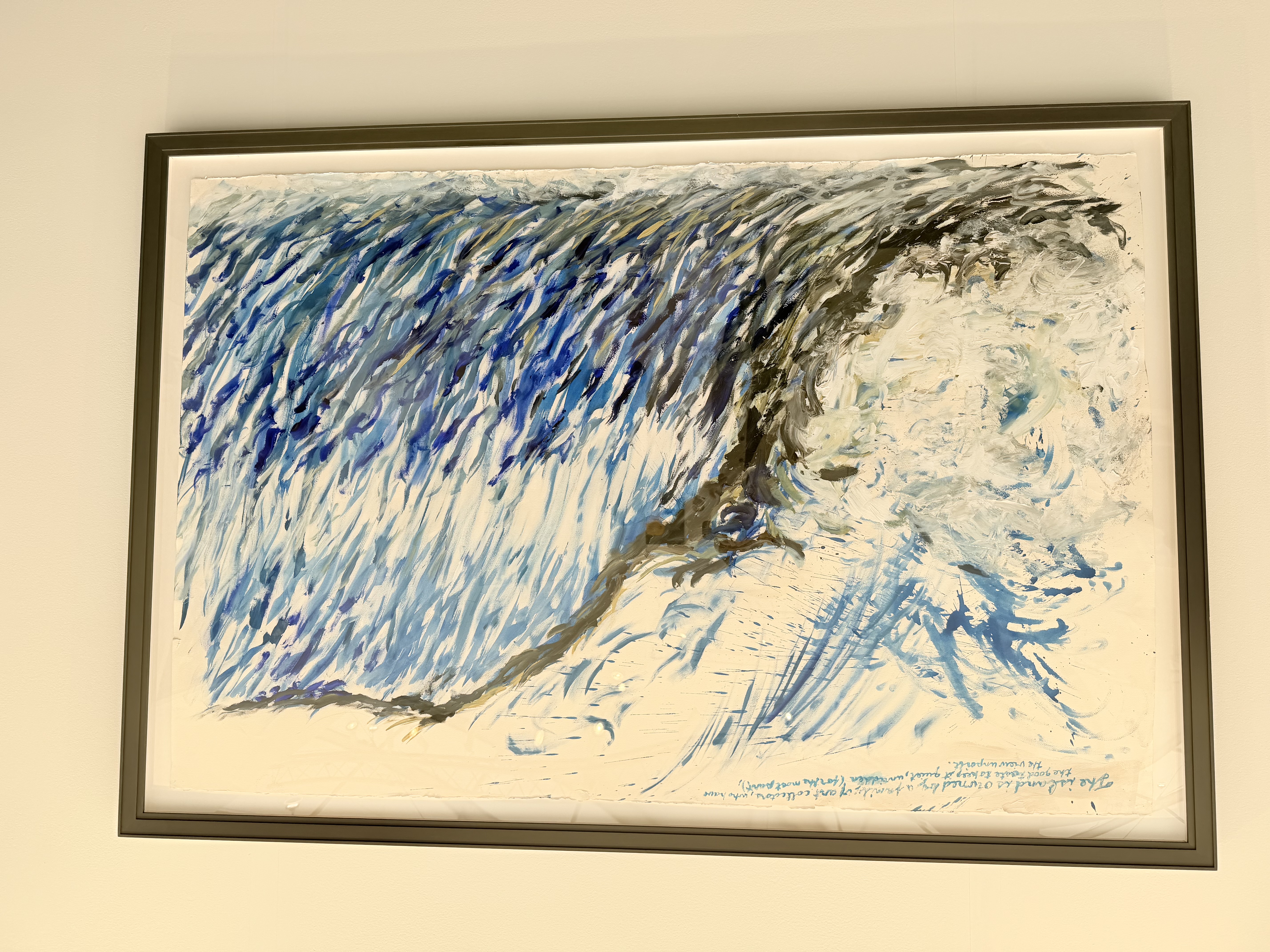
Raymond Pettibon
Pettibon similarly merges dense text with figurative imagery to create works that function simultaneously as visual art and literary objects. Both artists use drawing as a primary medium to explore psychological and cultural anxieties with an intensity that rewards close, sustained looking.
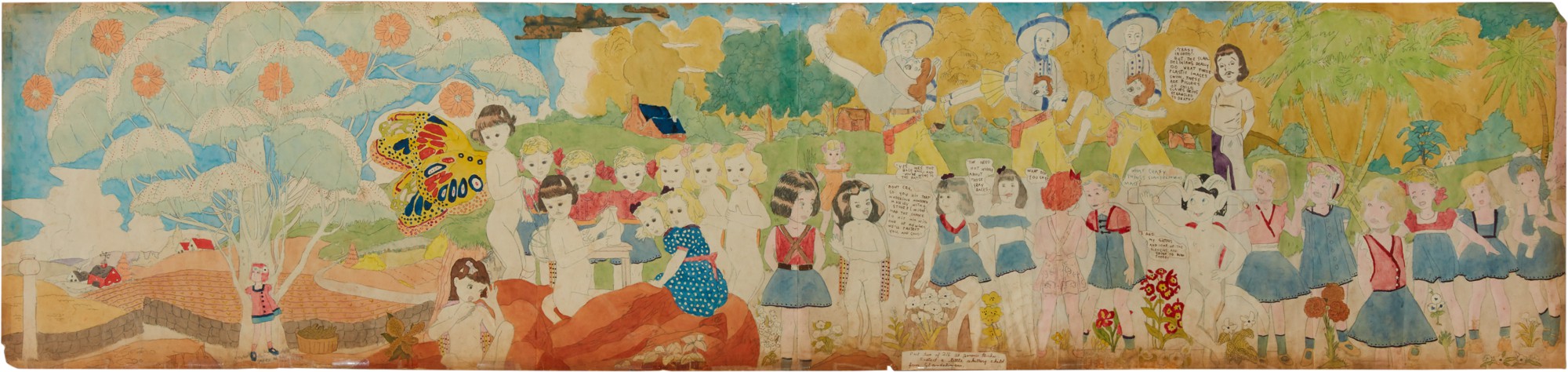
Henry Darger
Darger produced labor intensive, highly detailed works on paper that existed at the intersection of narrative, obsession, and visual poetry. Like Levine, his practice was rooted in a literary sensibility that gave his imagery an accumulative and almost hallucinatory density.
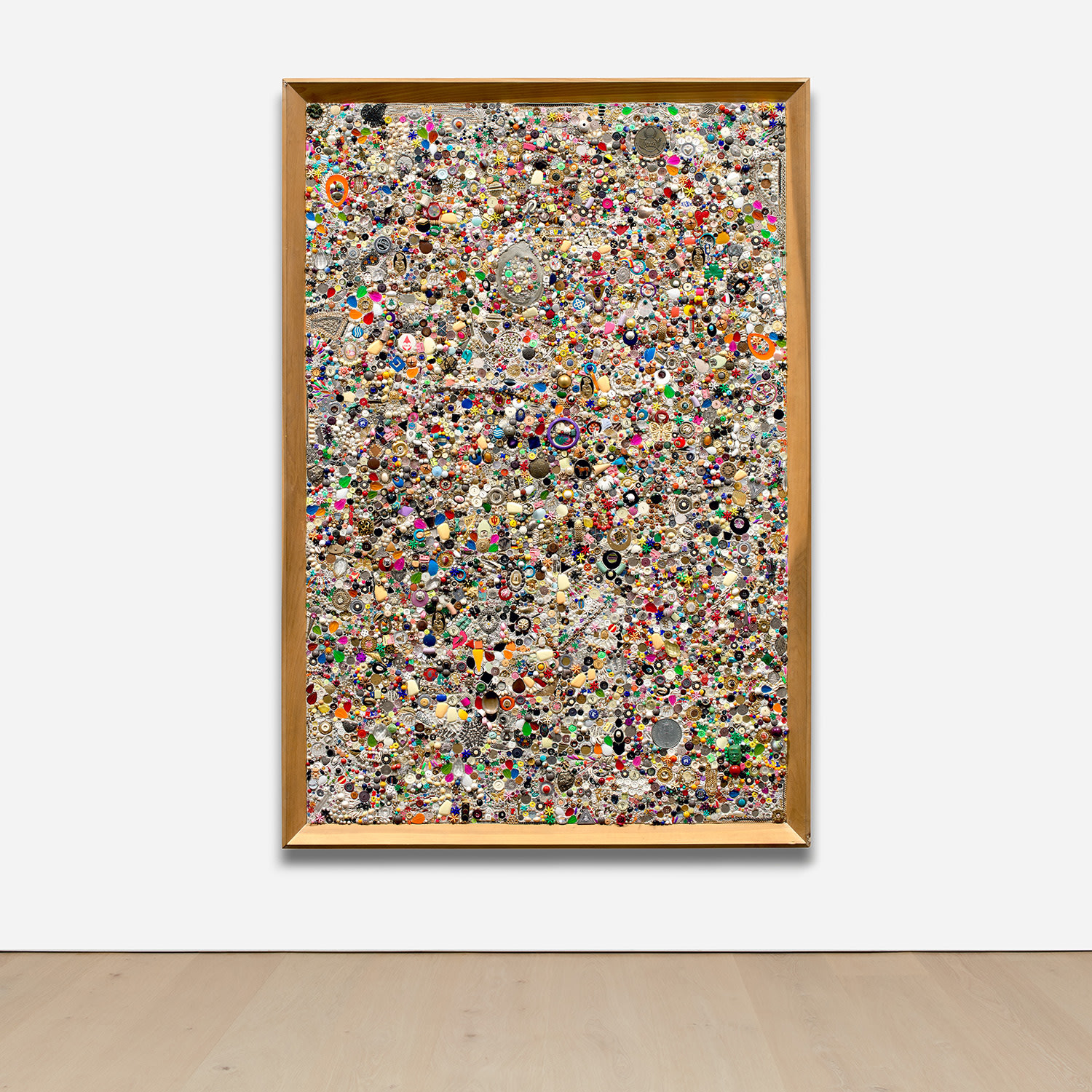
Mike Kelley
Kelley shared with Levine a deep engagement with American vernacular culture, repressed psychology, and the collapse of high and low registers within a single artwork. Both artists used humor and discomfort simultaneously as critical tools.
Artists who inspired them
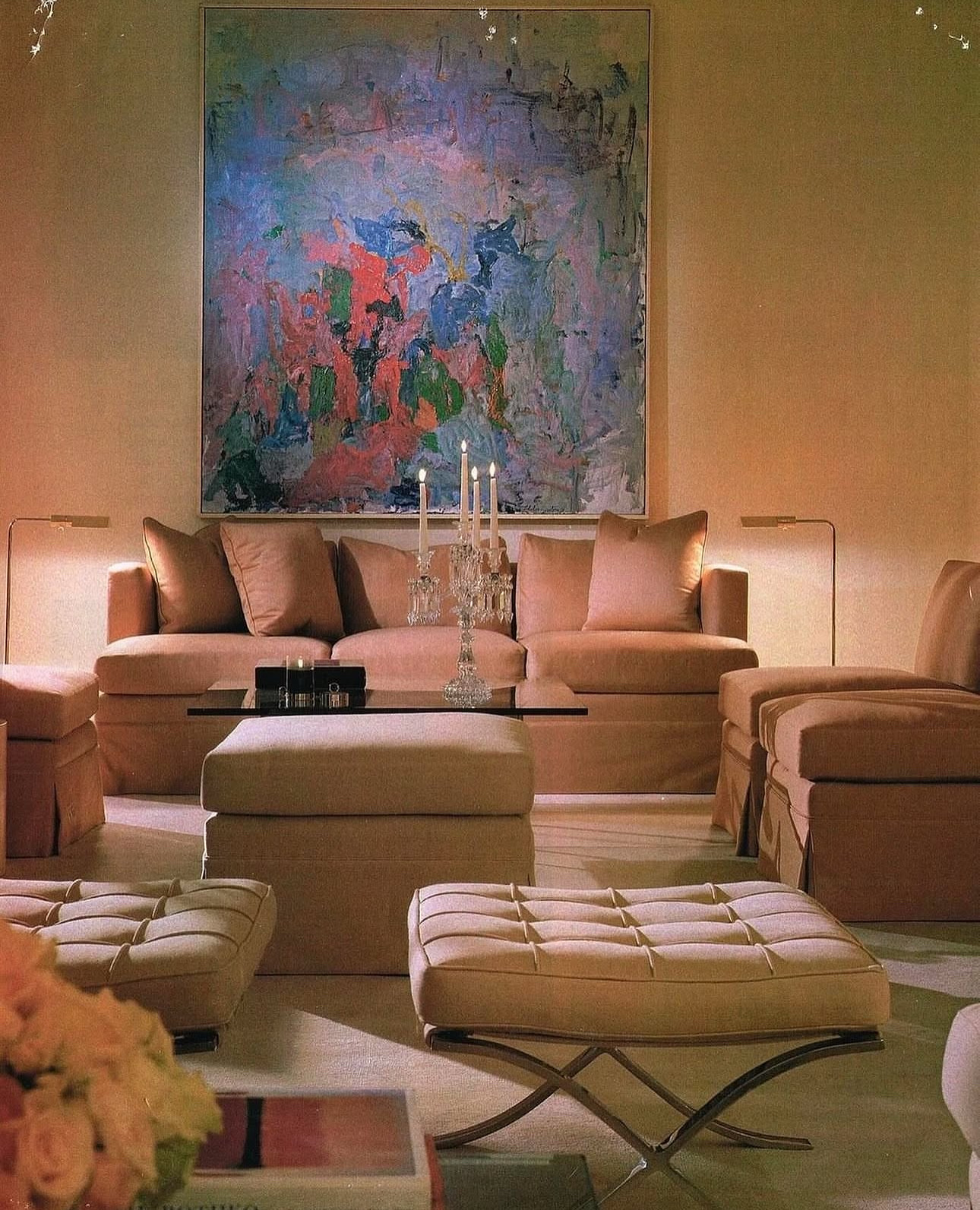
Philip Guston
Guston's late turn toward crude, cartoonish figuration loaded with personal and political shame was a foundational precedent for Levine's willingness to use awkward drawing as a vehicle for moral and psychological complexity. Guston demonstrated that painterly vulnerability could be a form of ethical seriousness.
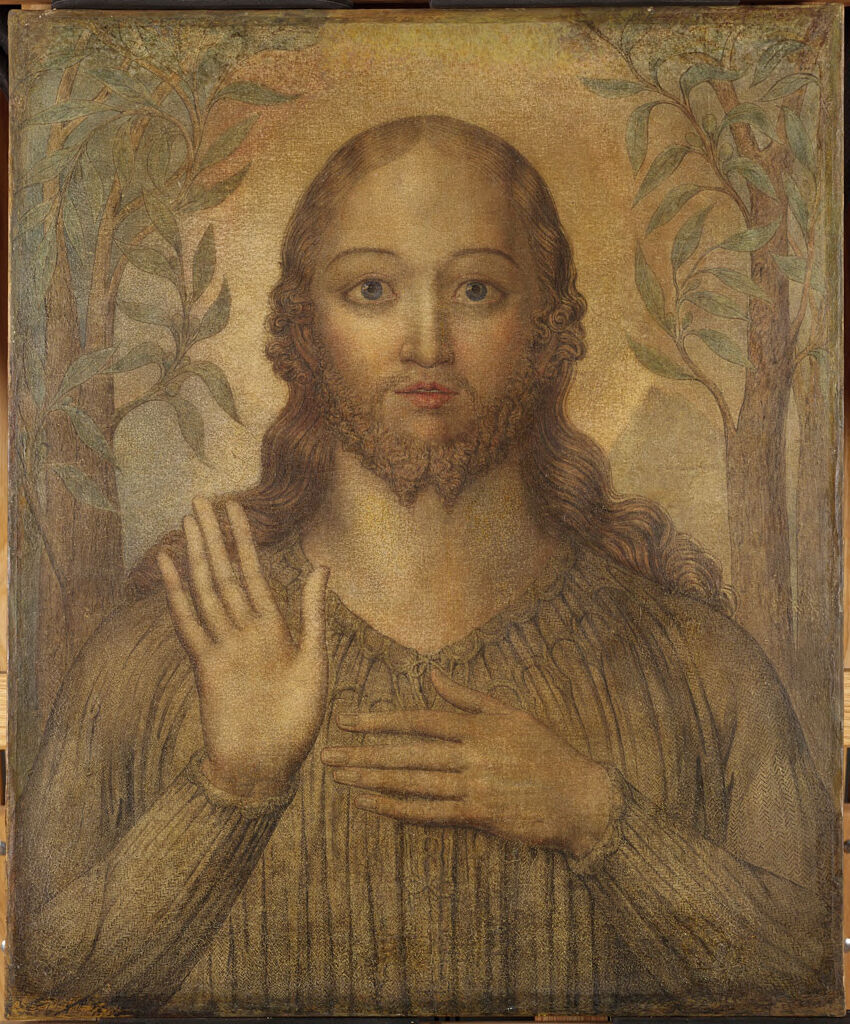
William Blake
Blake's integration of handwritten poetry with visionary illustration established a model for the artist as poet whose verbal and visual languages are inseparable. Levine's background as a poet and his text bearing drawings descend directly from this tradition of the word and image fused into a single illuminated object.
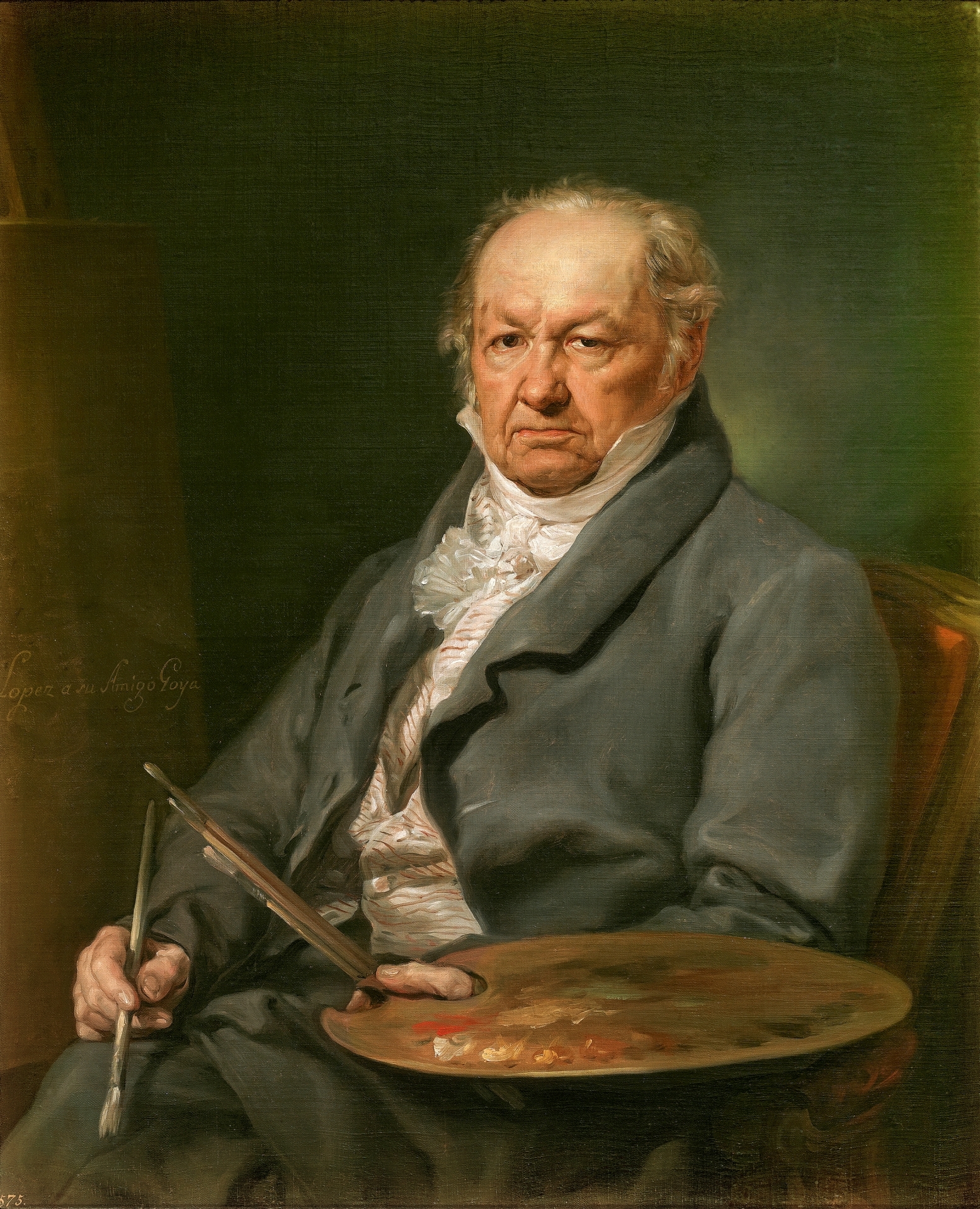
Francisco Goya
Goya's works on paper, particularly the Disasters of War series, provided a model for using drawing as a witness to political horror without sacrificing formal intensity. Levine's politically charged imagery and his use of darkness and satire echo Goya's unflinching confrontation with institutional violence.