Postmodernism
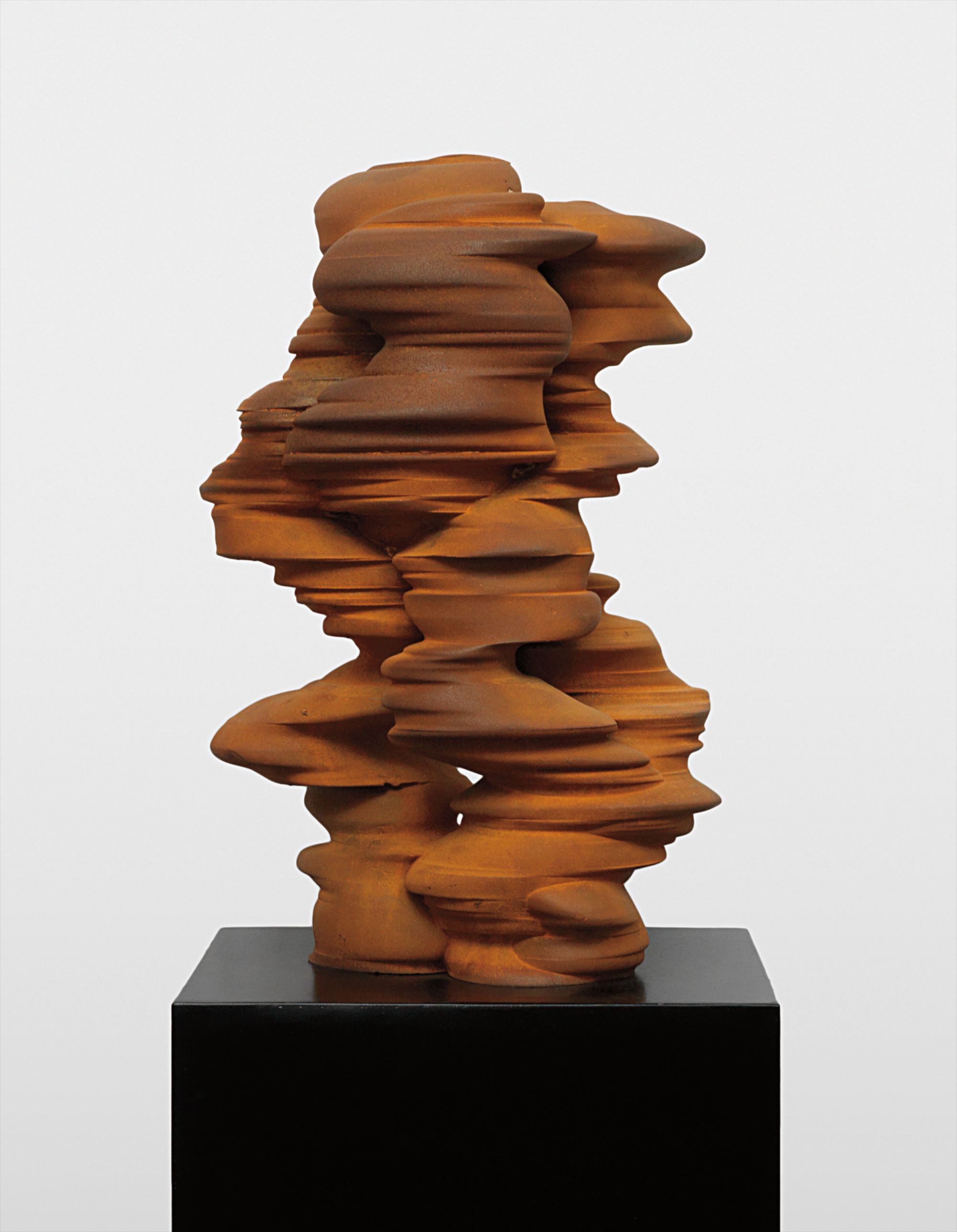
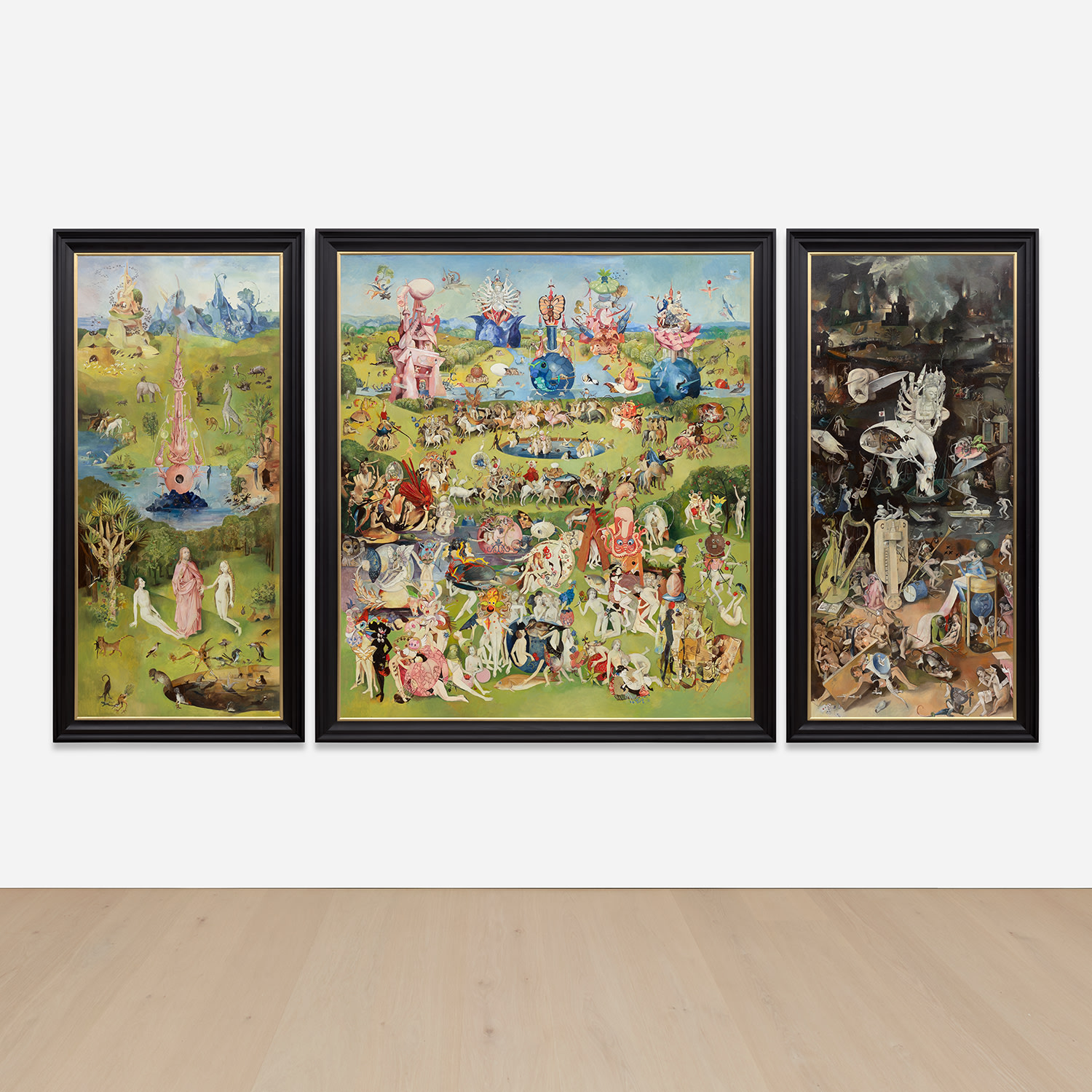
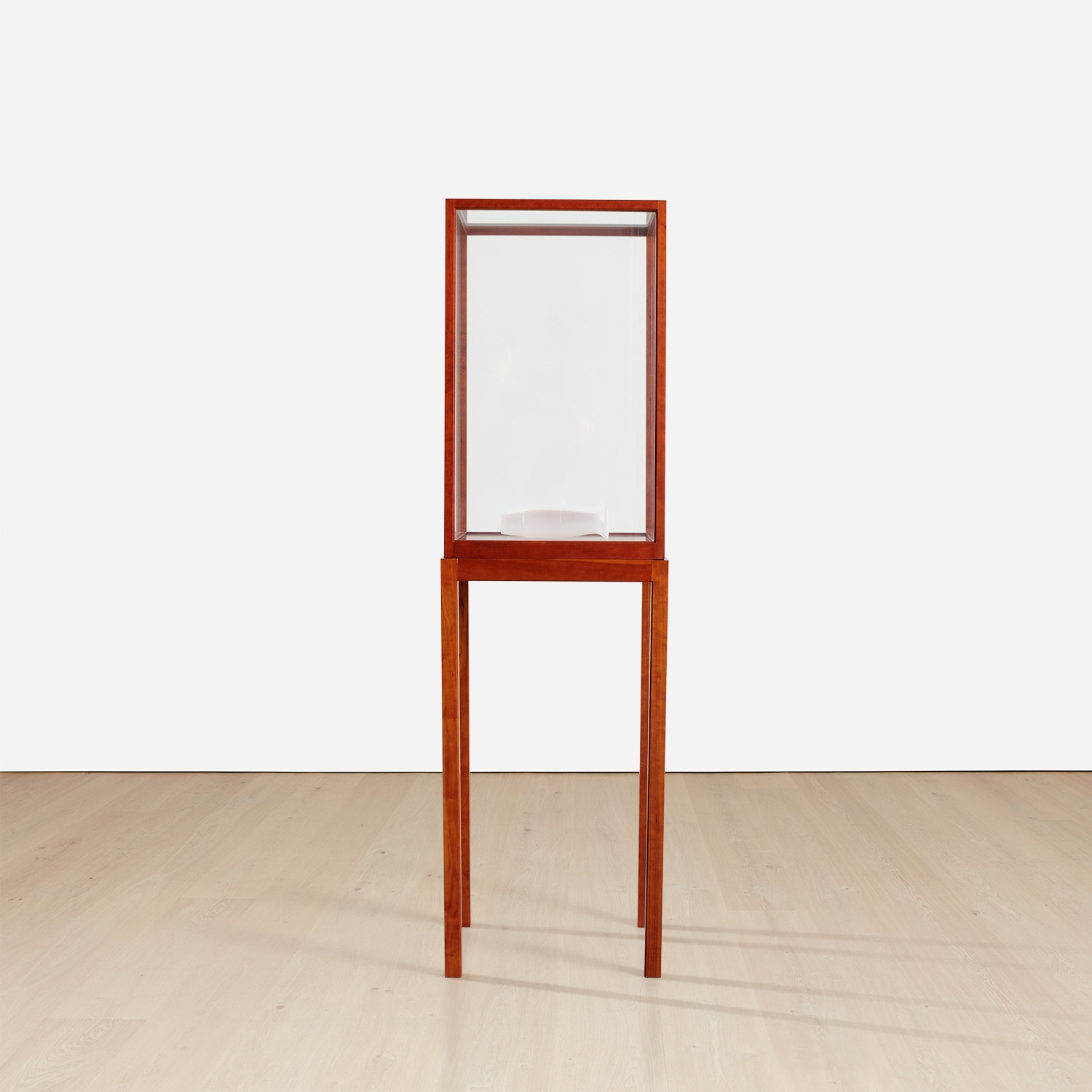
Richard Pettibone
Constantin Brancusi Endless Column, 1992

Nothing Is Original. Everything Is for Sale.
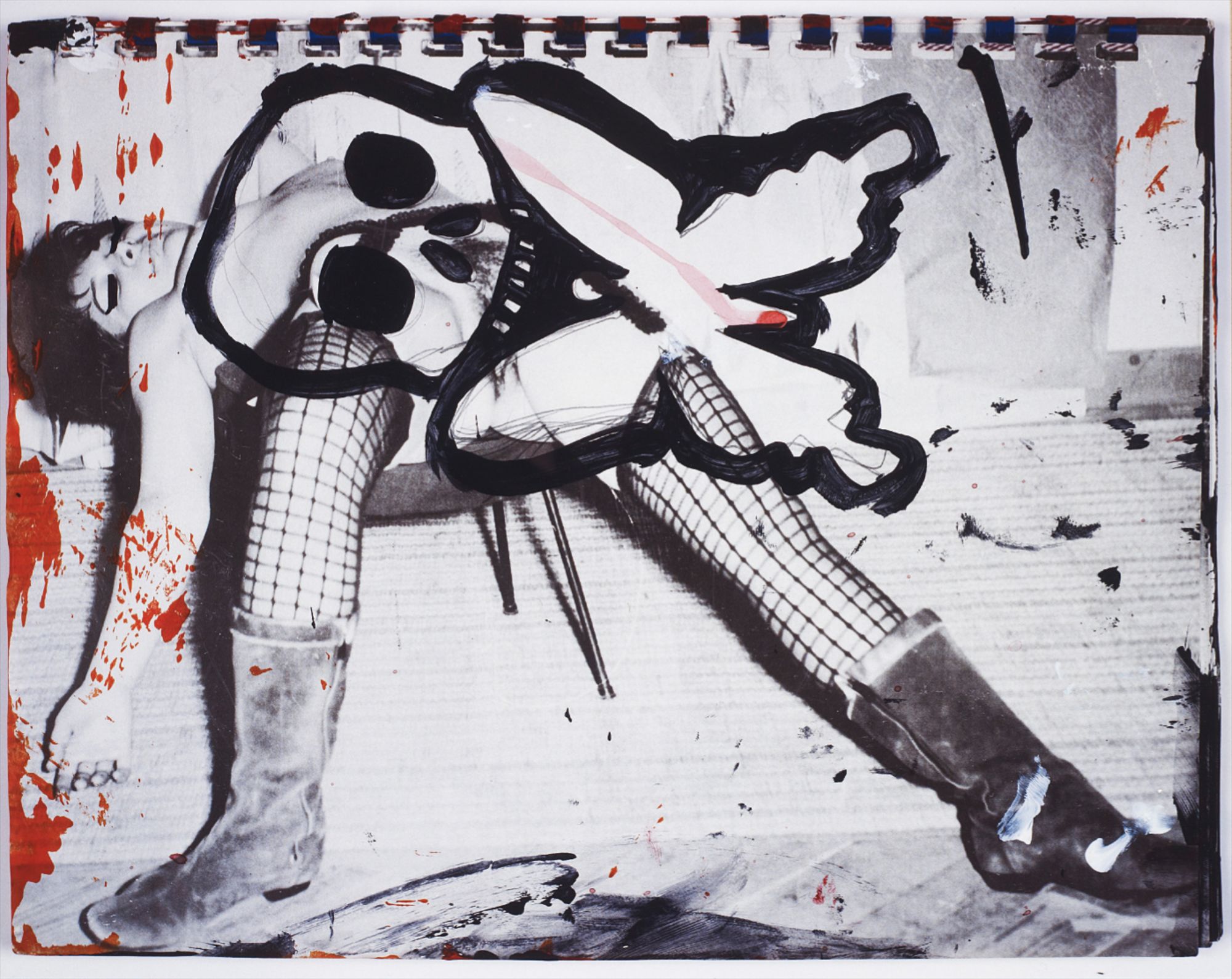
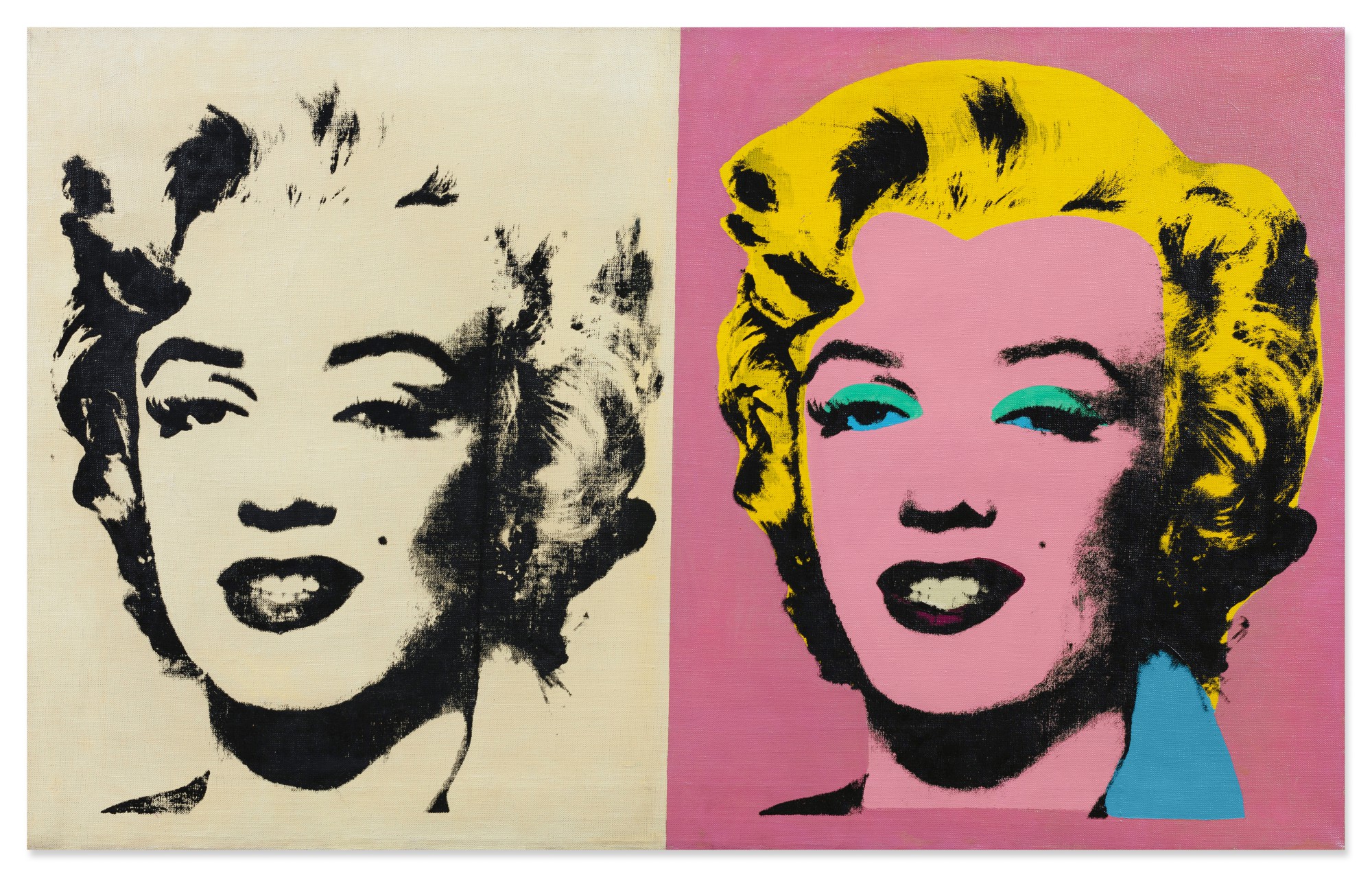
At Christie's New York in November 2023, a Richard Prince "Nurse" painting sold for well above its estimate, confirming what the market has been quietly signaling for years: postmodernism is not a period style waiting to be archived. It is the operating system of contemporary collecting. The appetite for work that interrogates images, borrows from mass culture, and refuses sincerity has never been more acute, even as the critical establishment occasionally ties itself in knots trying to explain why. The postmodern moment in art is usually dated to the late 1970s and early 1980s, when a loose coalition of New York artists began working directly with appropriation, simulation, and the mechanics of representation.
The Pictures Generation, as they came to be known after Douglas Crimp's landmark 1977 exhibition at Artists Space, included figures whose work now sits at the center of serious collections worldwide. Richard Prince rephotographing cigarette advertisements, Sherrie Levine rephotographing Walker Evans, Sturtevant remaking Warhol and Duchamp with uncanny fidelity: these were not acts of laziness but of rigorous philosophical provocation. The question was never what the image depicted. The question was who owns an image, and what does owning it even mean.
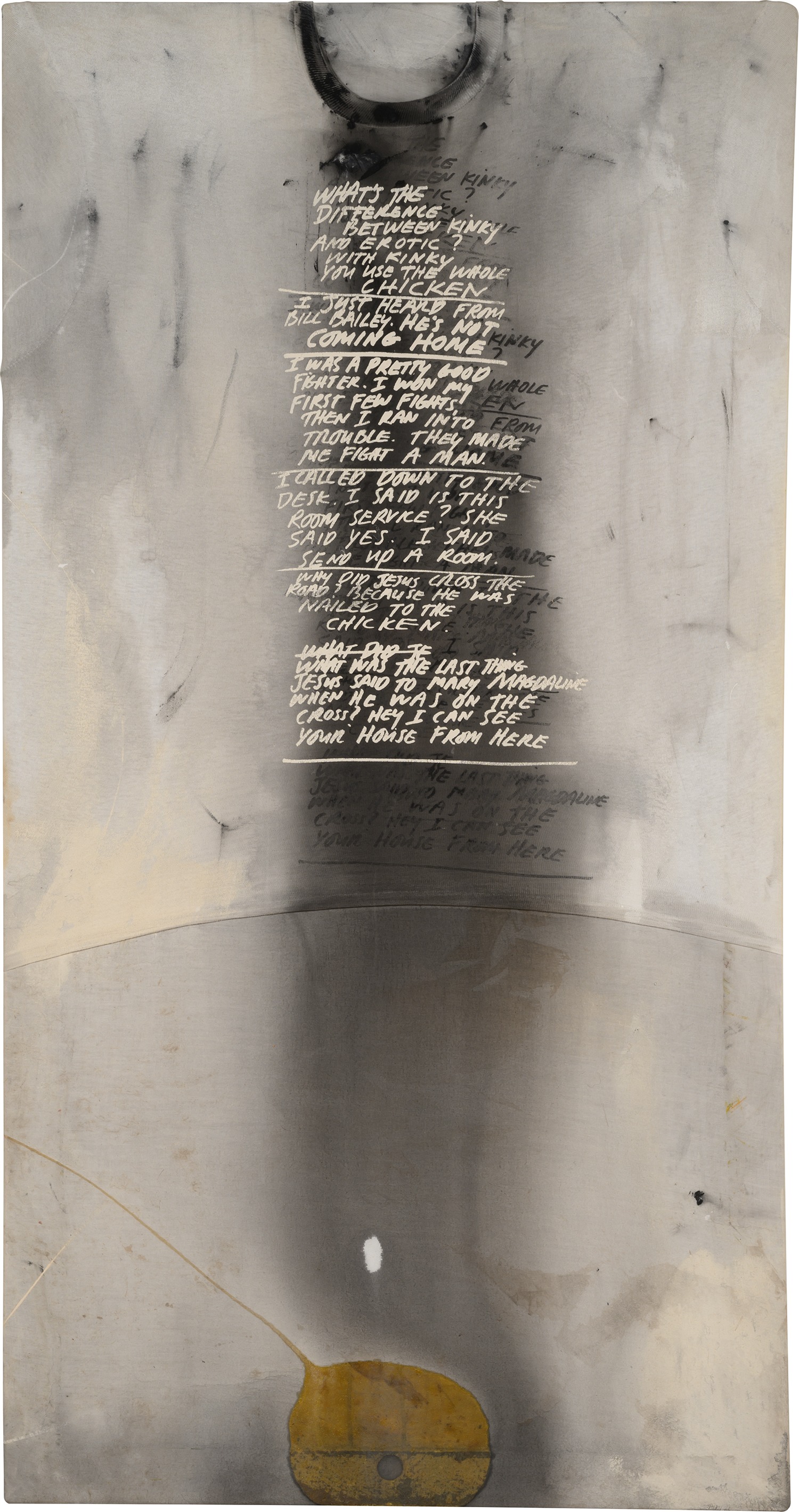
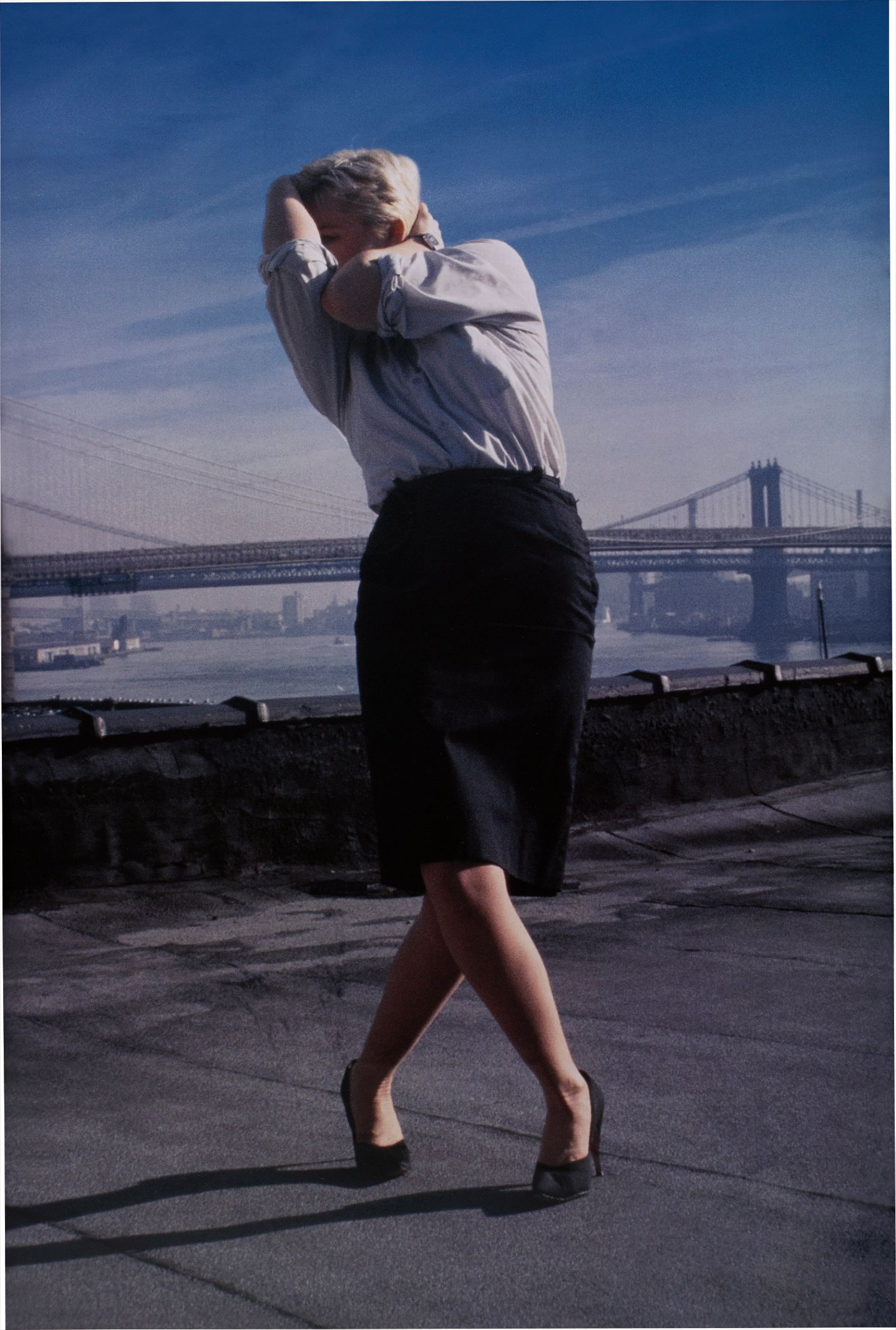
Richard Prince
The Velvet Beach, 1984
Museum programming has returned to this territory with renewed seriousness. The Whitney Museum's 2009 retrospective on the Pictures Generation remains a touchstone, but more recent exhibitions have pushed the conversation forward rather than simply celebrating what came before. The Museum of Modern Art's ongoing acquisitions in this area, alongside exhibitions at the Stedelijk in Amsterdam and the Tate Modern, have framed postmodern practice not as a closed chapter but as an unresolved argument with profound stakes for how we understand authorship in the age of social media and AI generated imagery. When institutions with those kinds of acquisition budgets keep returning to Prince, Levine, and Barbara Kruger, they are telling you something.
Auction results bear this out in numbers that are hard to ignore. Jeff Koons remains the most commercially visible figure associated with the postmodern sensibility, his "Rabbit" sculpture having set a record for a living artist at Christie's in 2019 at 91.1 million dollars. But the more telling story is the sustained demand for artists who operate at a slightly lower altitude of celebrity.
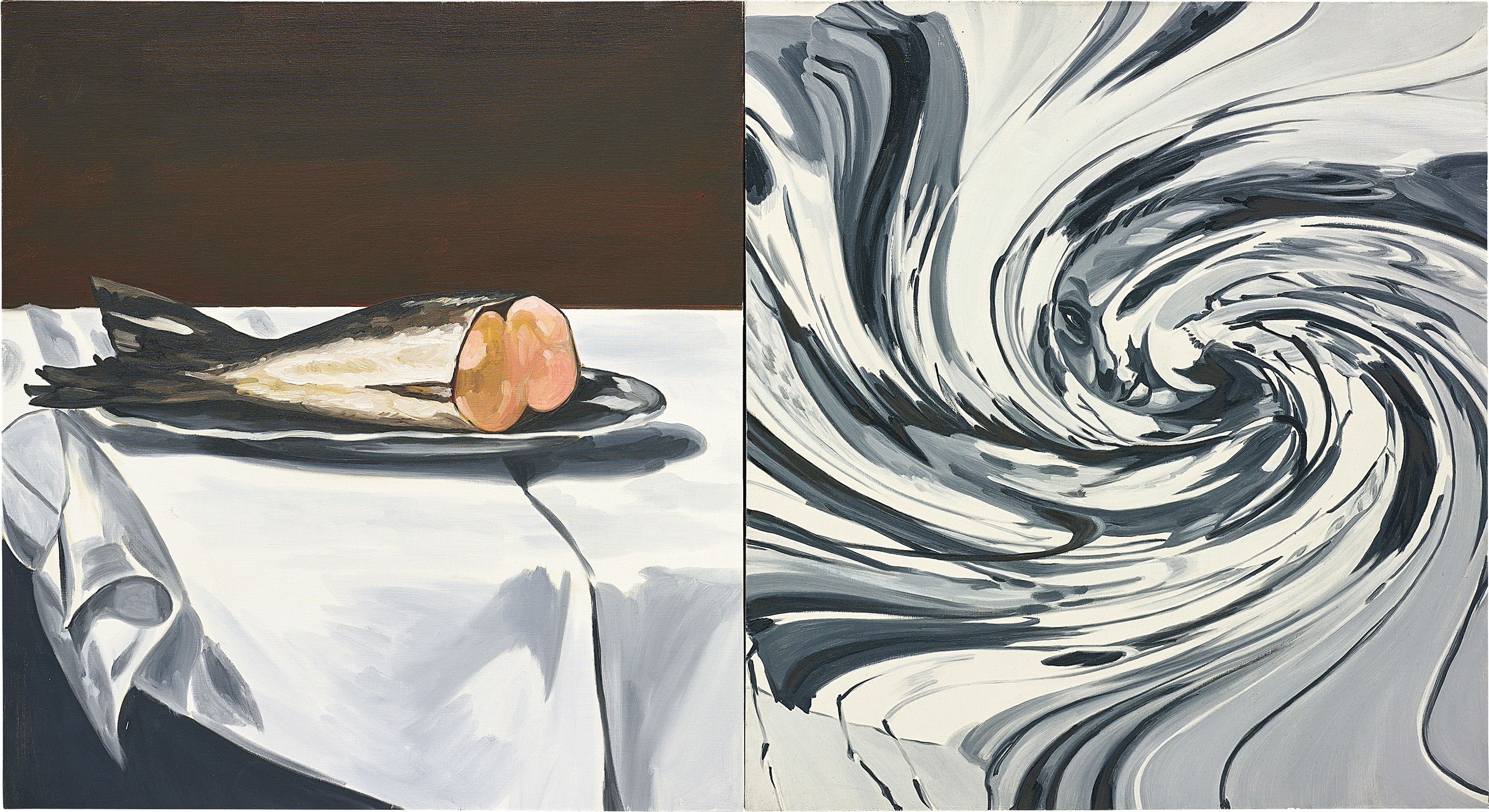
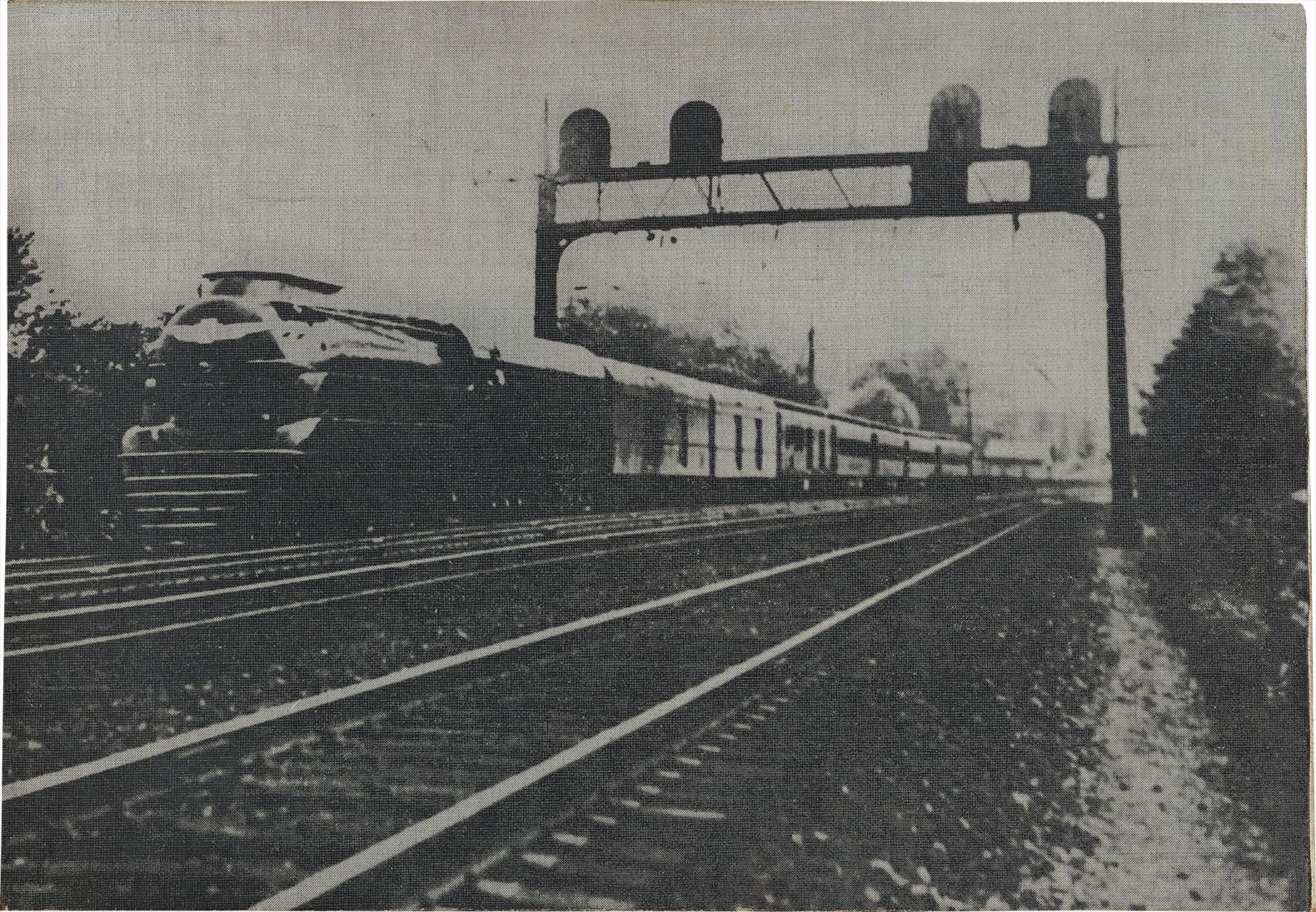
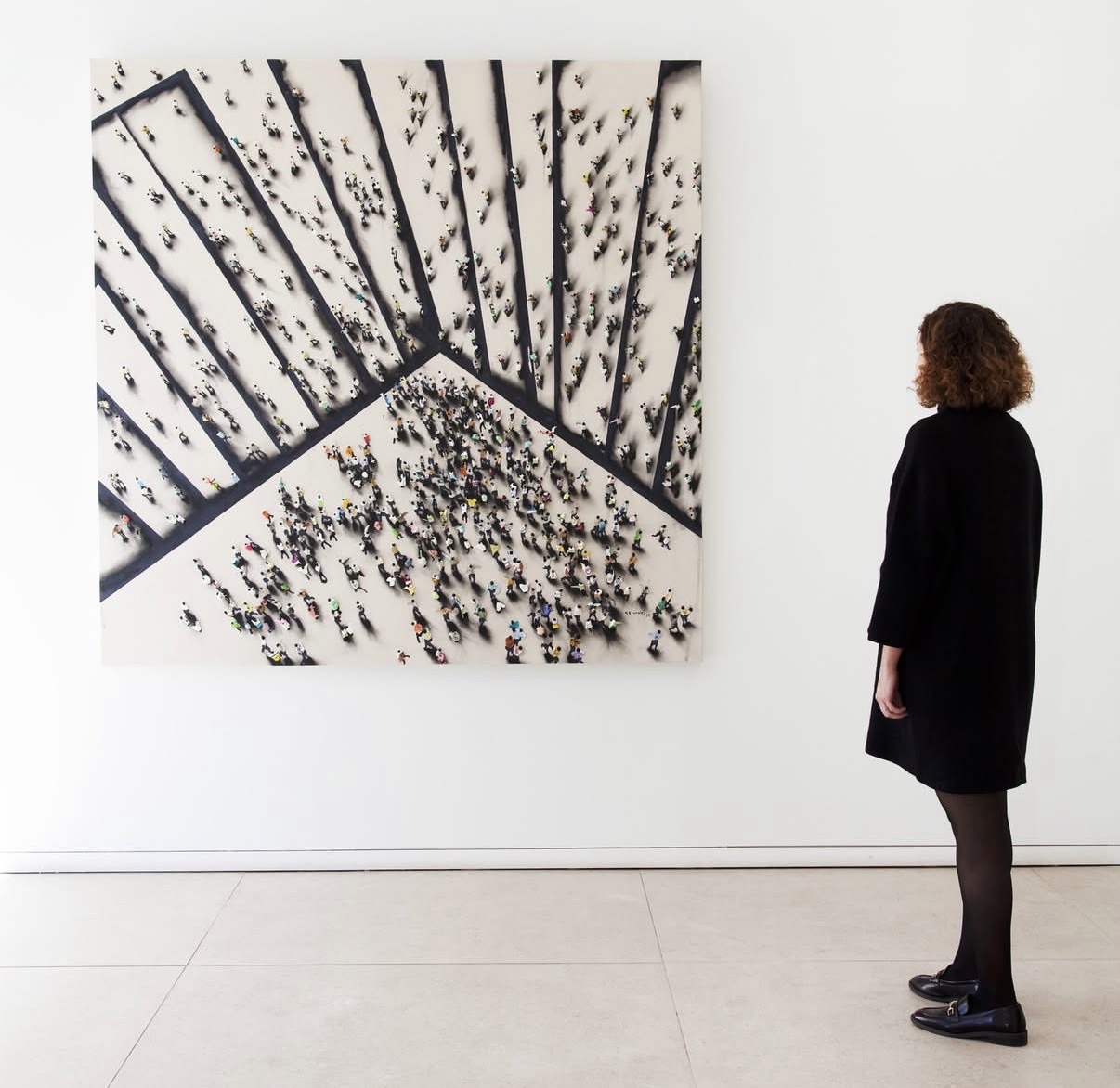
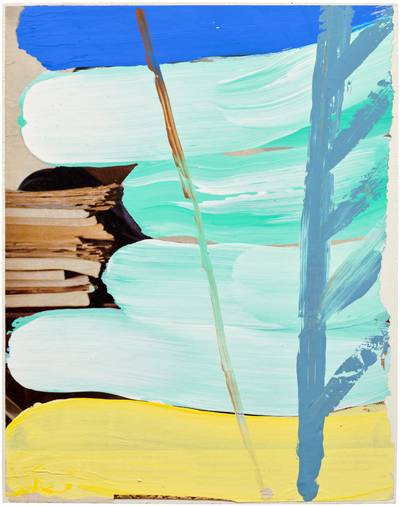
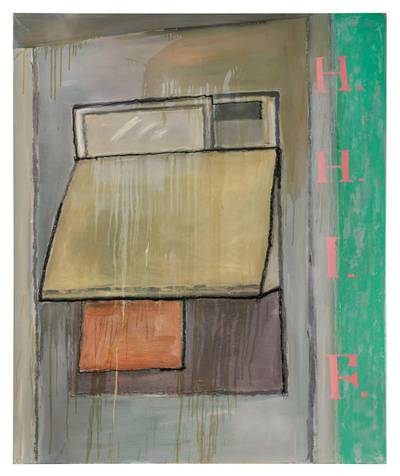
David Salle
Still Life with Vortex, 2006
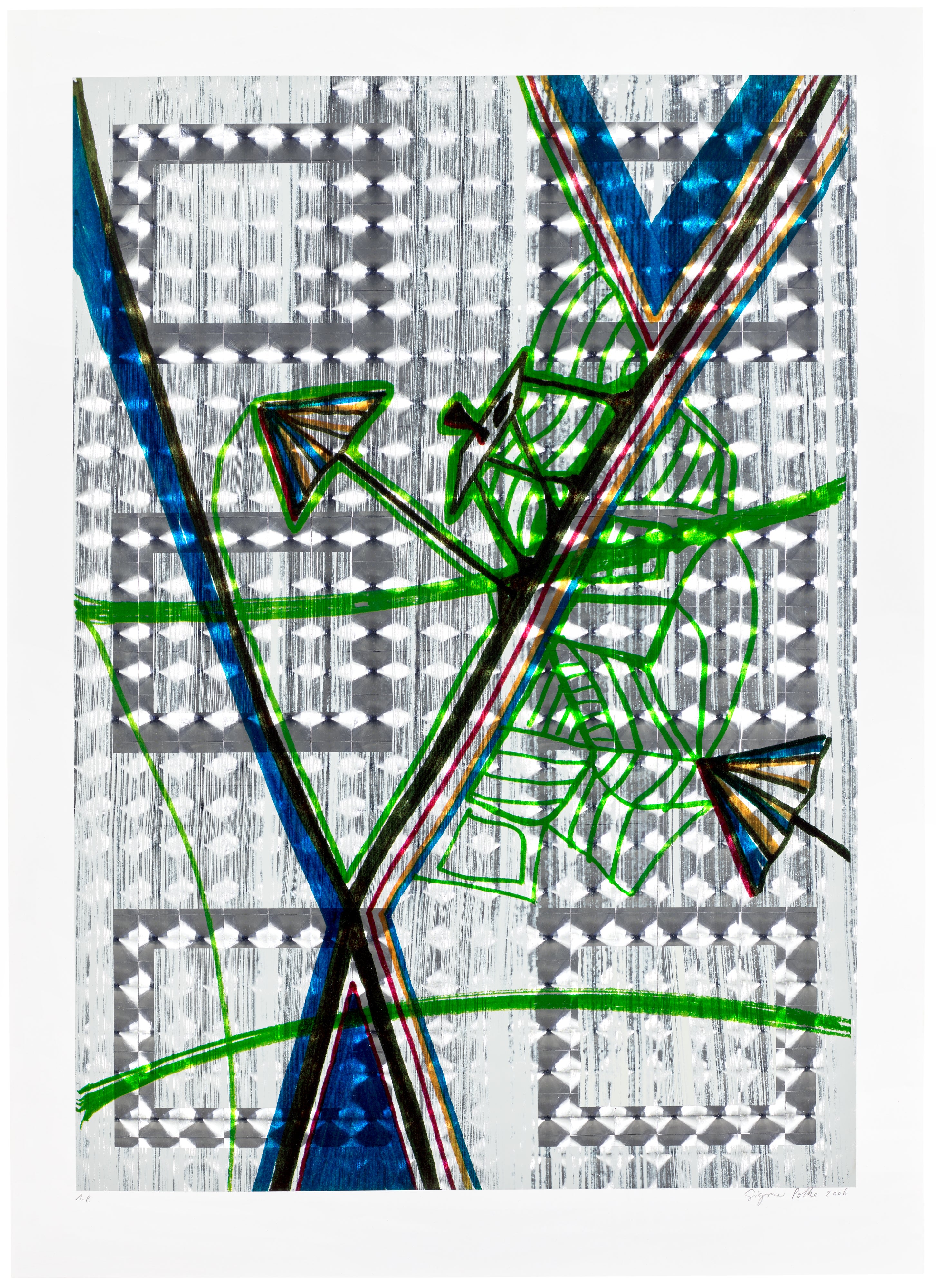
David Salle, whose layered and deliberately dissonant canvases were once dismissed as clever but cold, has seen significant renewed interest both at auction and among younger curators looking for precedents for current painterly practices. Robert Longo, whose monumental "Men in the Cities" drawings defined a certain downtown New York energy in the early 1980s, commands serious prices and institutional attention. Sigmar Polke and Martin Kippenberger, both working in Germany with a related spirit of irreverence and formal promiscuity, have become increasingly essential to any serious account of the period. Works by Kippenberger in particular have moved dramatically at major European sales.
What is striking about the collecting landscape right now is how seriously younger institutions and foundation collections are engaging with the more conceptually rigorous end of this history. The Broad in Los Angeles has been consistent in collecting Koons and Kruger. The Jumex Collection in Mexico City has built a sophisticated postmodern holdings. Private foundations in Europe and Asia have been aggressive at auction for Polke and for Franz West, whose sculptural work occupies its own strange and irreplaceable territory between furniture, prop, and monument.
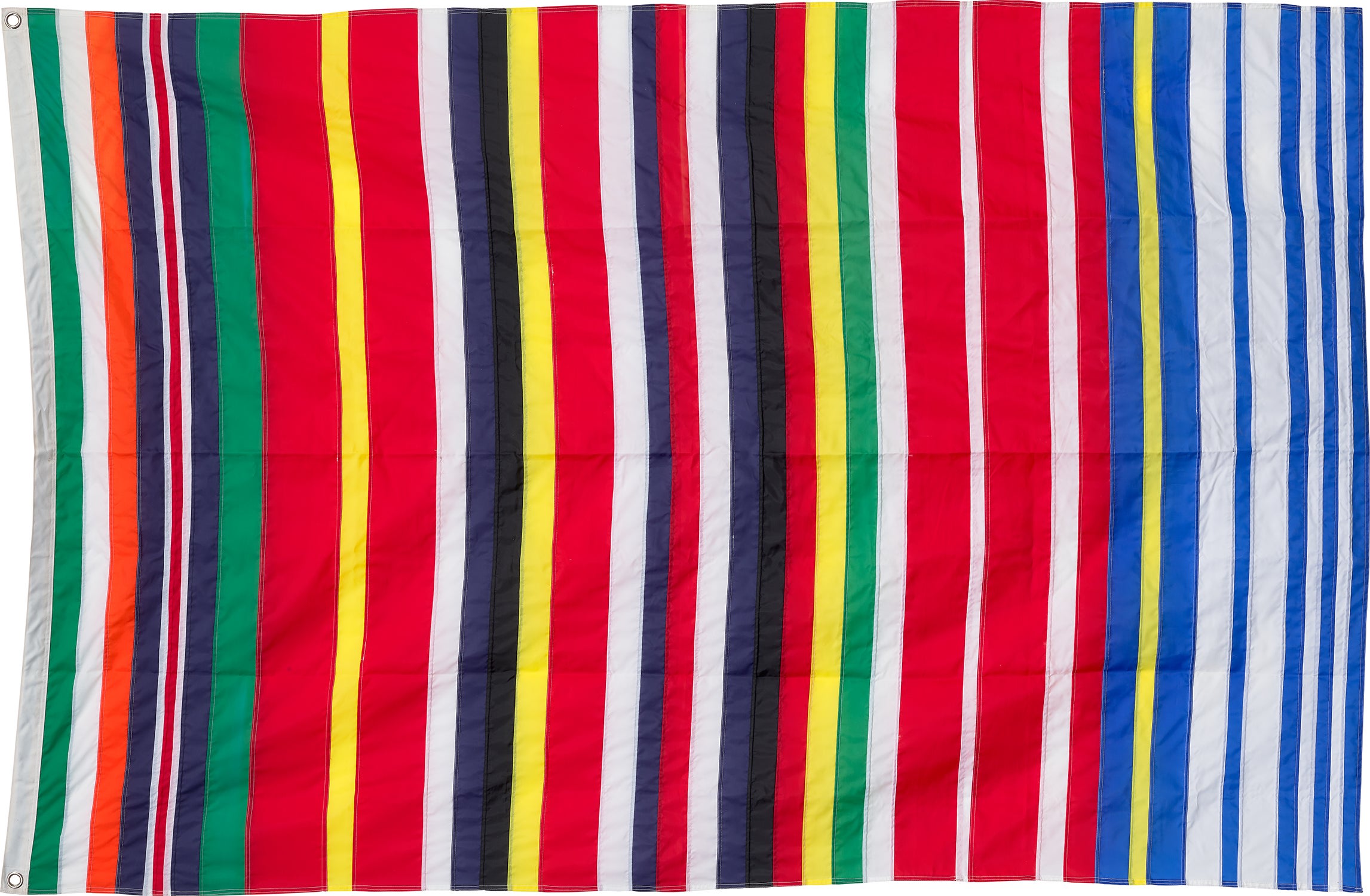
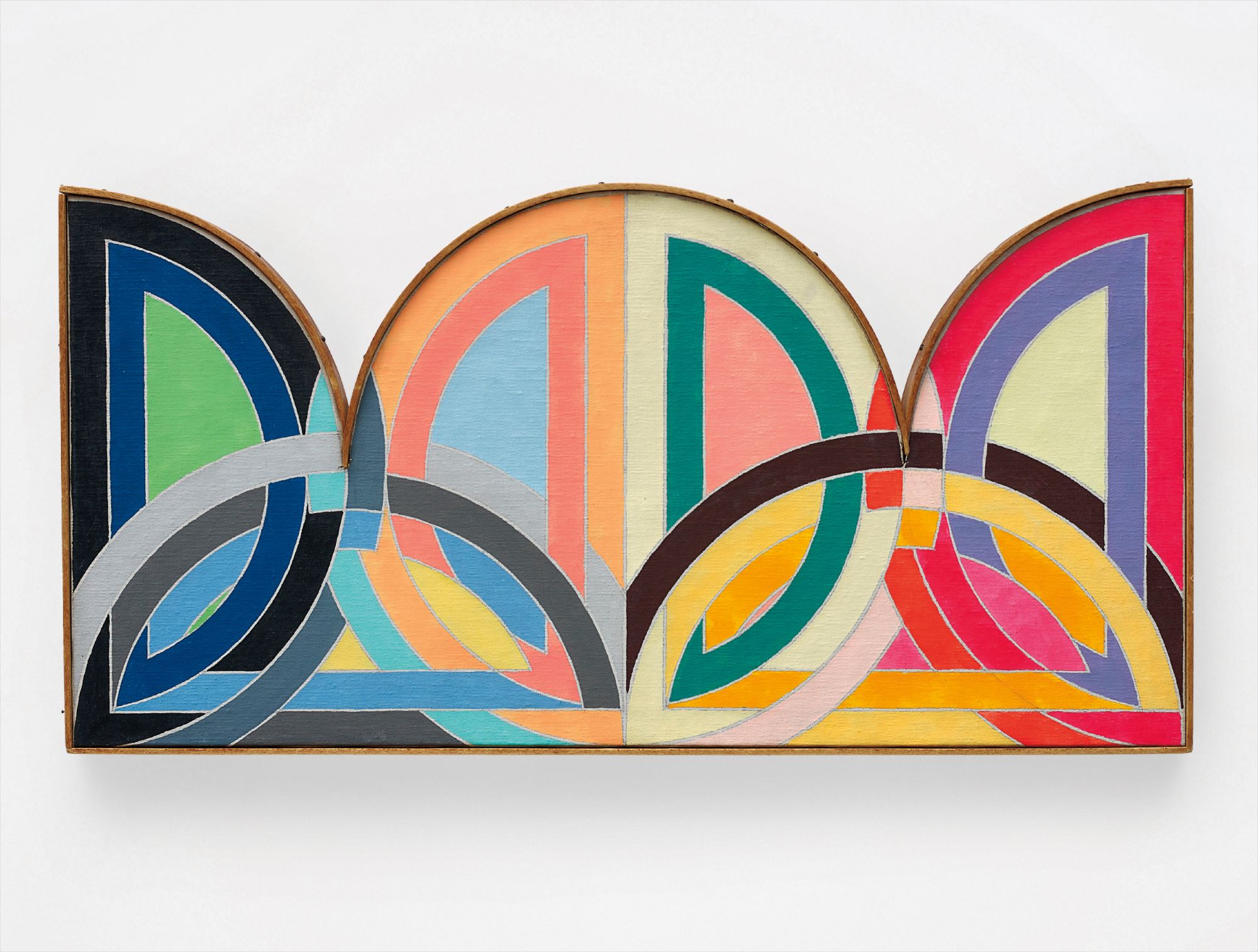
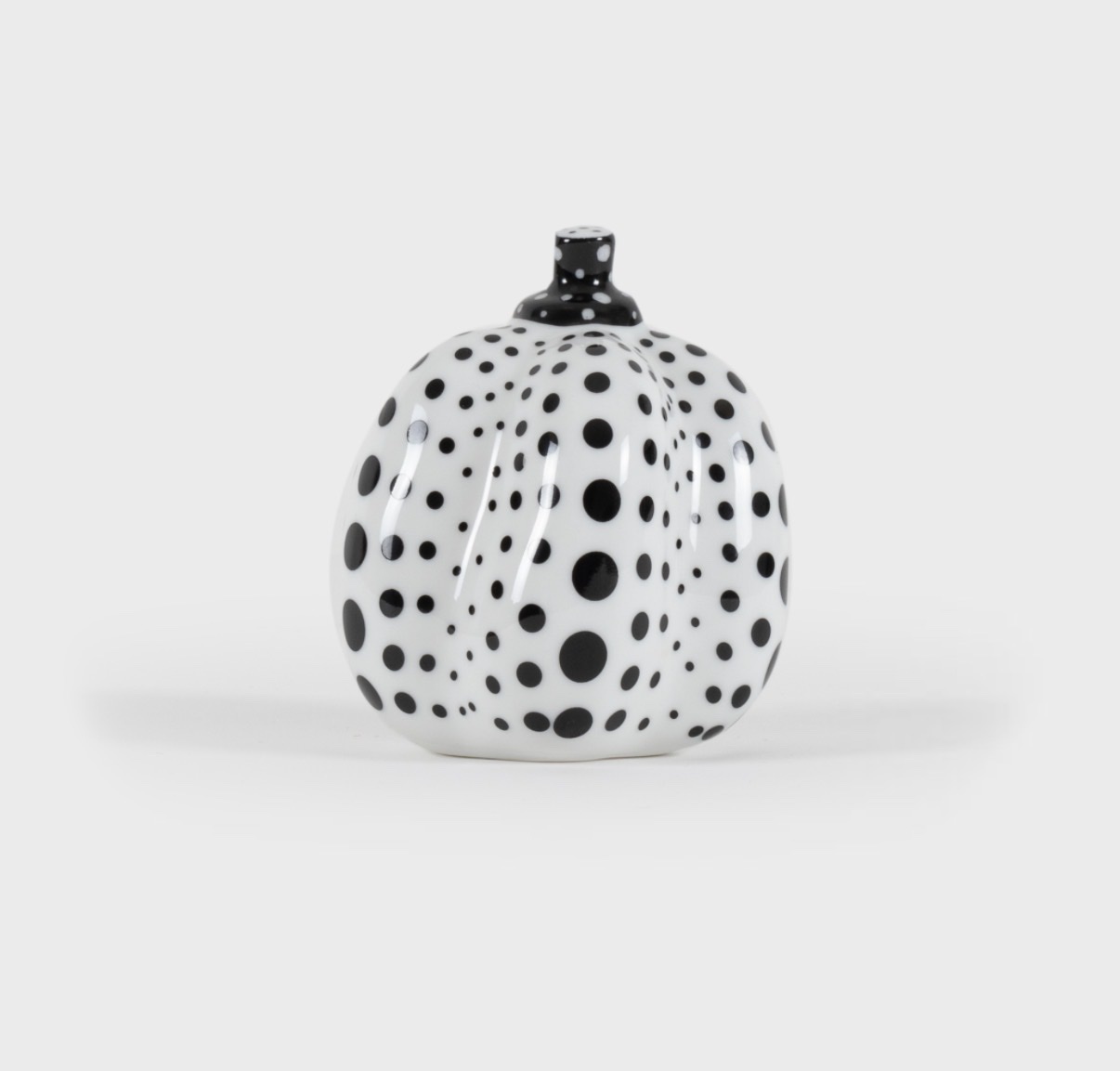
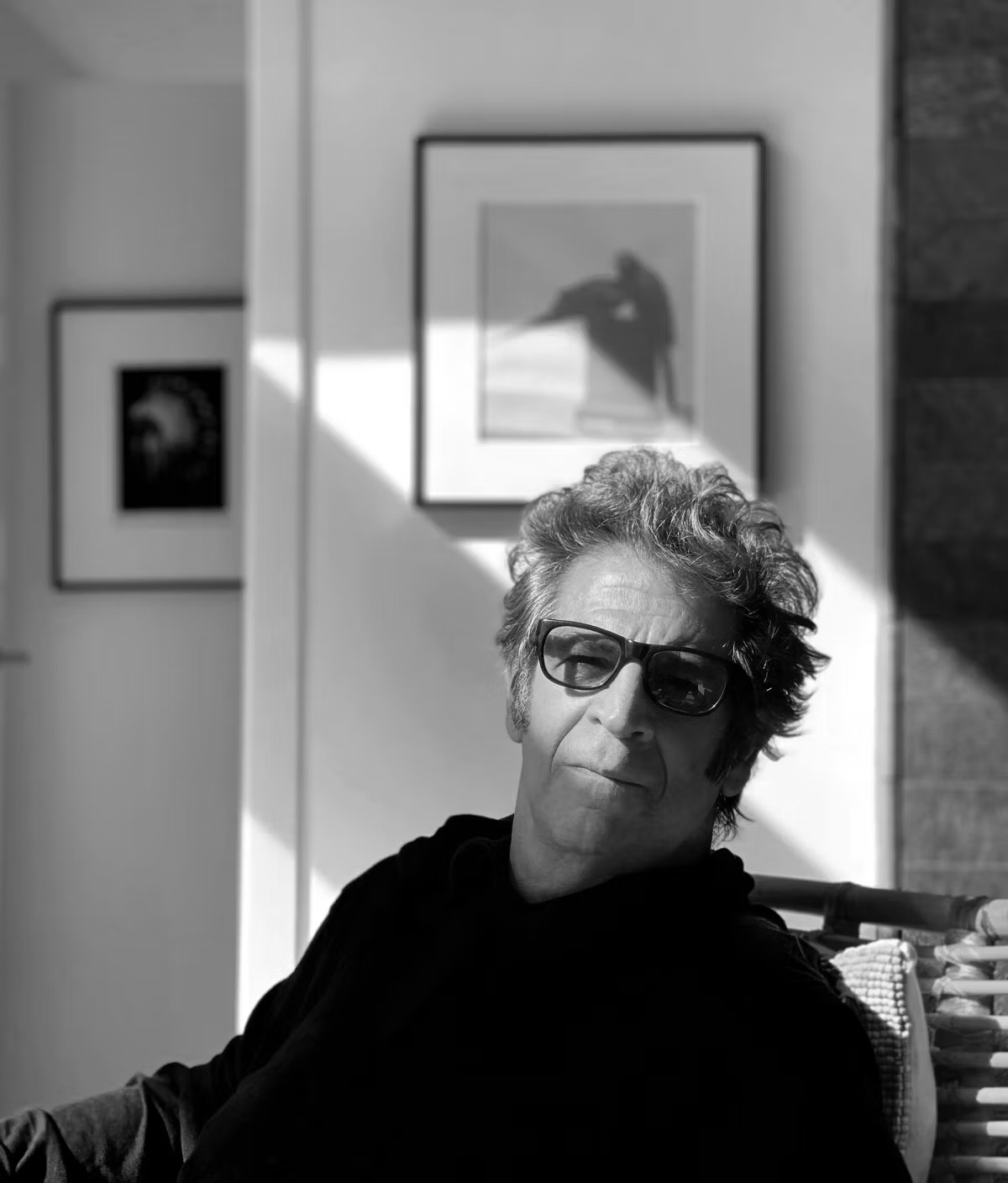
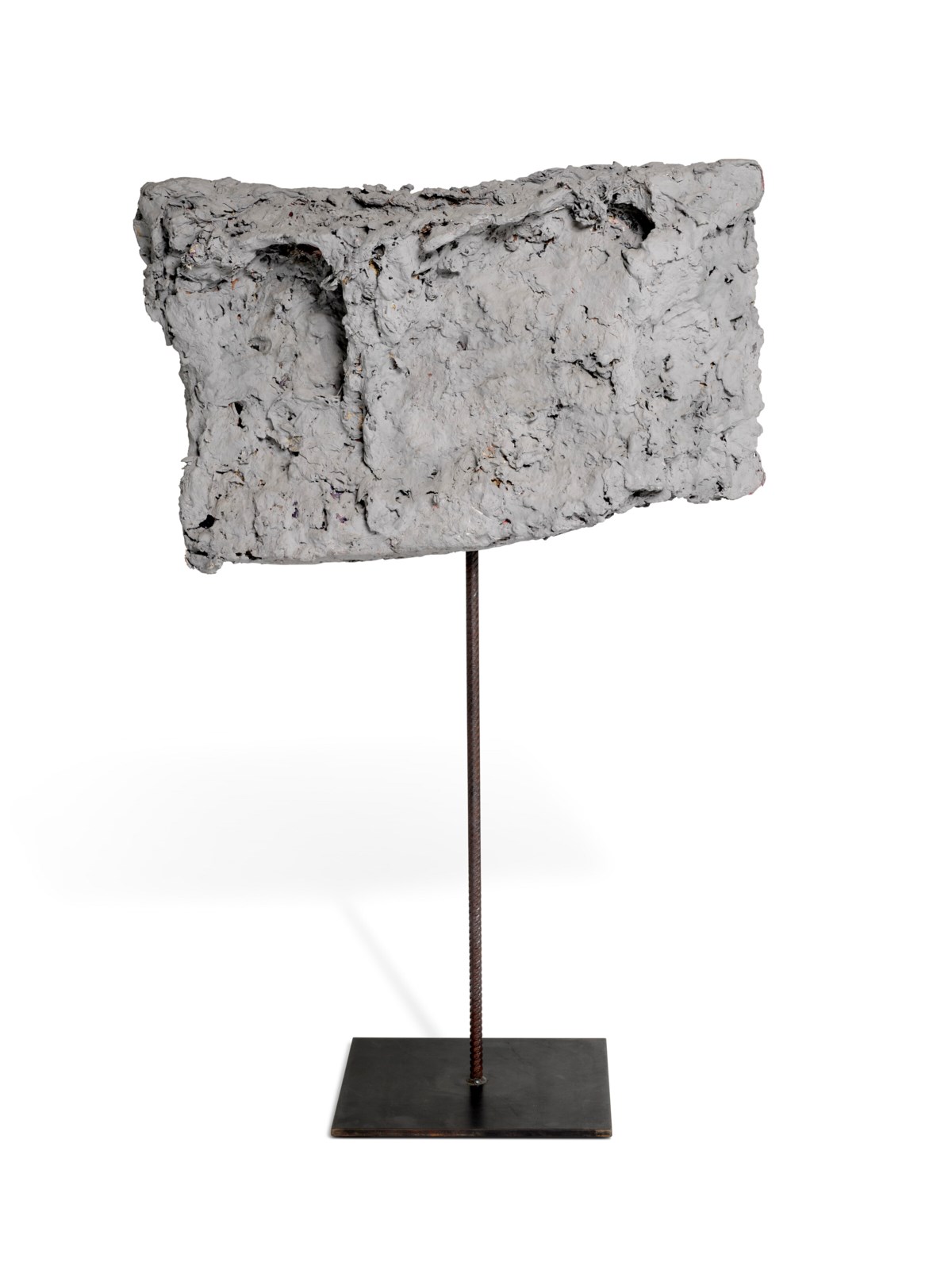
Rem Koolhaas
Flag, 2002
West's Passstücke, the body sculptures meant to be worn and used, feel more alive as objects in 2024 than almost anything made in that decade, because they are fundamentally about the relationship between a body and a form, which turns out to be an inexhaustible subject. The critical conversation has evolved considerably from the theory heavy debates of the October magazine circle in the 1980s, when Rosalind Krauss, Hal Foster, and Craig Owens were constructing elaborate critical frameworks around simulation and the male gaze and the death of the author. Those arguments were necessary and generative, but they also had a tendency to make the work feel like an illustration of a thesis. What is happening now in the writing around these artists, in publications from Artforum to e flux, is a more relaxed and perhaps more honest engagement with what the objects actually do in a room, and what it means that we keep wanting to live with them.
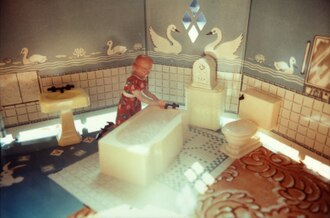
Haim Steinbach's shelves, for instance, work as criticism and as desire simultaneously, which is exactly their point. The energy in postmodern collecting right now feels concentrated in a few directions. One is the recovery of figures who were present but undervalued in the original critical narrative. Laurie Simmons, whose photographs of ventriloquist dummies and toy figures carry an unmistakable psychological charge, has received serious museum attention in recent years.
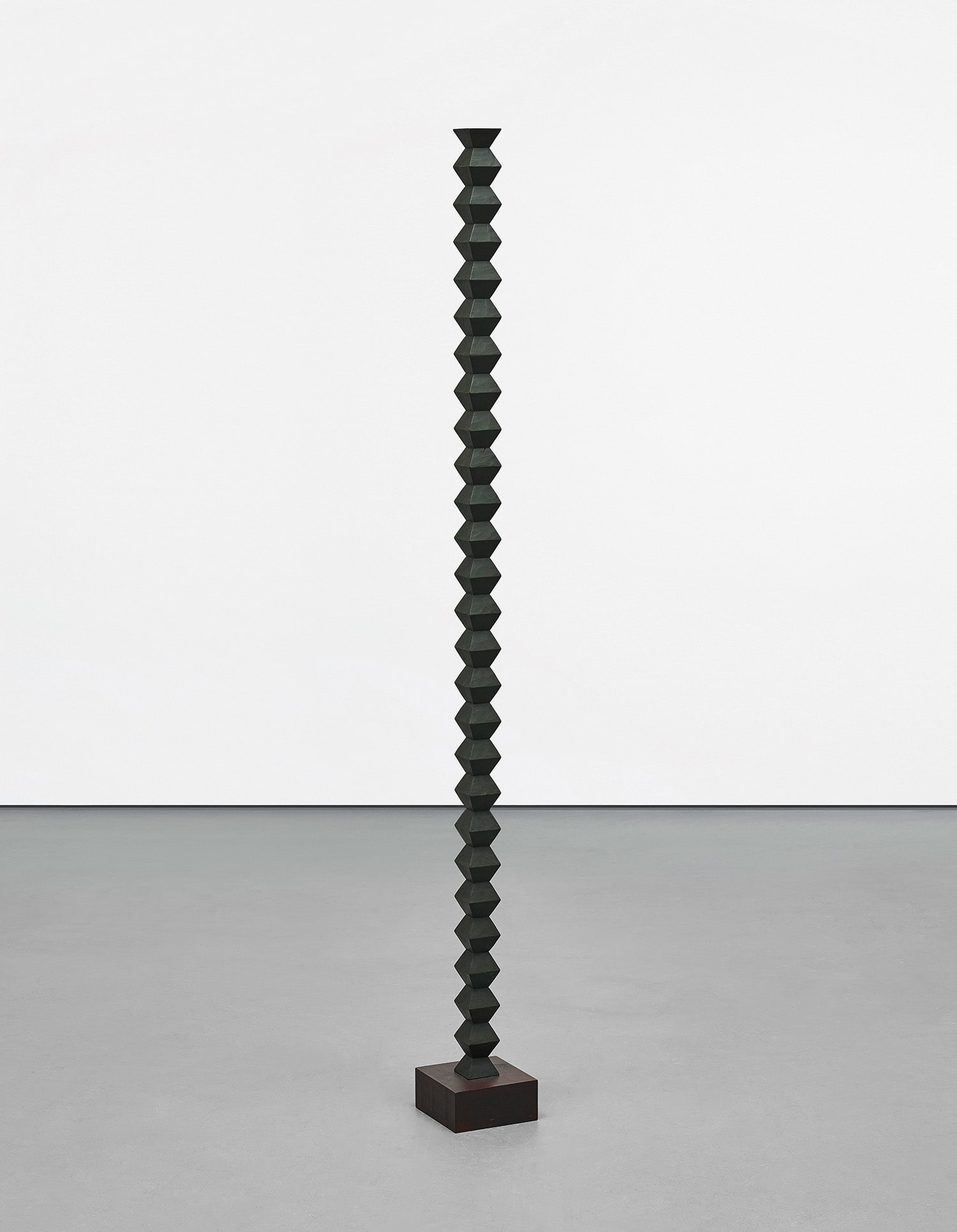
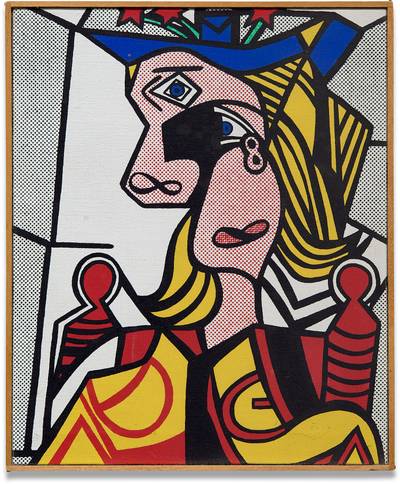
Richard Pettibone
Constantin Brancusi Endless Column, 1992
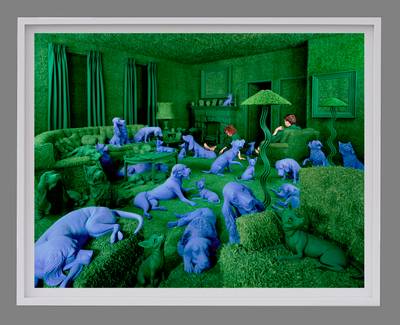
Sandy Skoglund, whose elaborately constructed tableaux sit somewhere between photography and installation, remains underappreciated relative to her historical importance. Richard Pettibone, who spent decades making exquisite miniature appropriations of canonical works, is another figure whose time for full reassessment seems close. Elaine Sturtevant, who spent her career being systematically underestimated, received her retrospective vindication before her death in 2014, and prices for her work have reflected that correction. The surprise, if there is one, is how contemporary this history feels.
When a young artist today makes work that samples, remixes, quotes, and recombines, they are not doing something unprecedented. They are working in a tradition that Prince, Levine, Kruger, and their contemporaries established with considerable intellectual rigor four decades ago. The fact that those artists are well represented on The Collection is not incidental. It reflects a considered understanding that postmodernism was not a style but a set of questions, and the questions have not been answered.
They have simply become more urgent.