Musicians
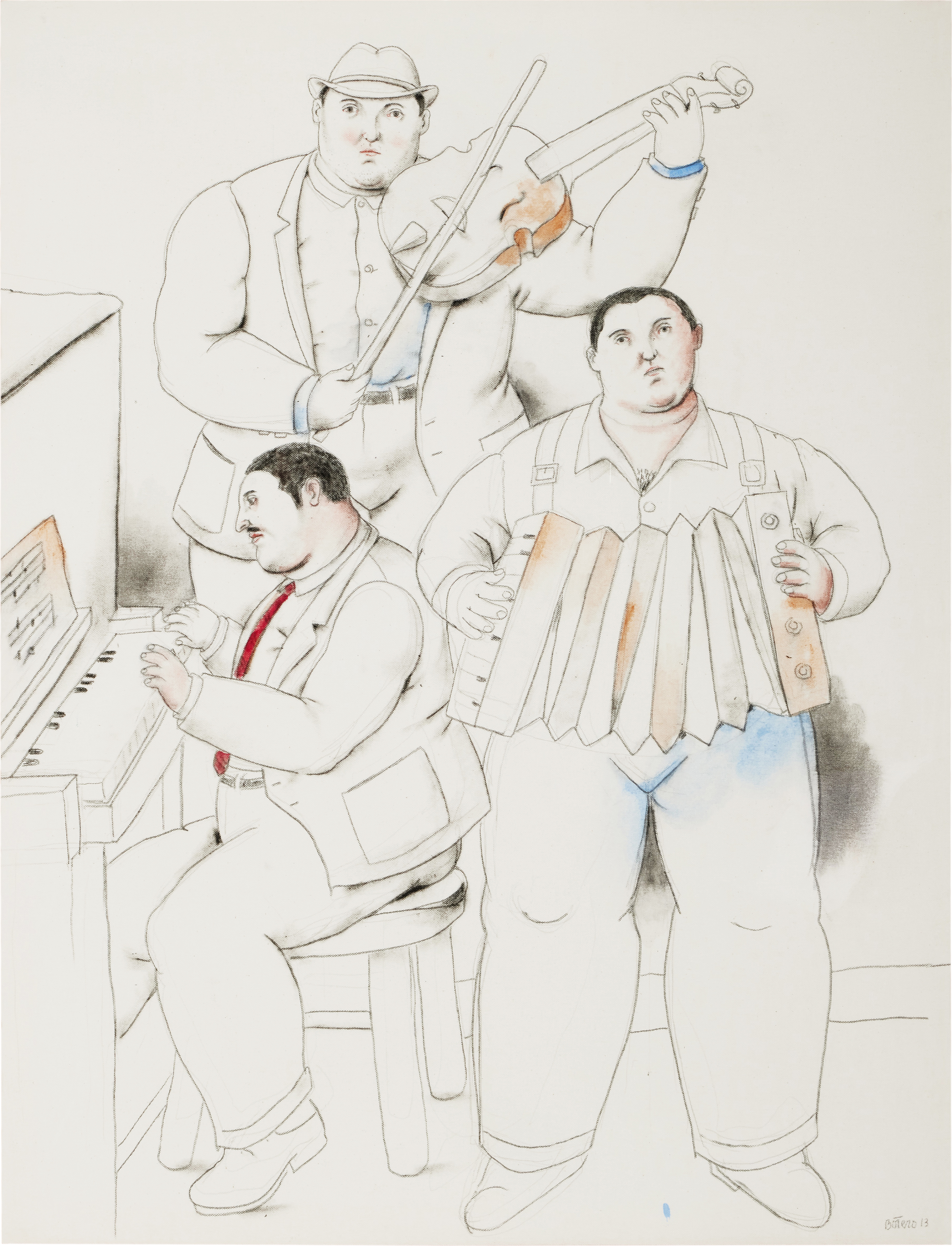
Fernando Botero
The Musicians 音樂家
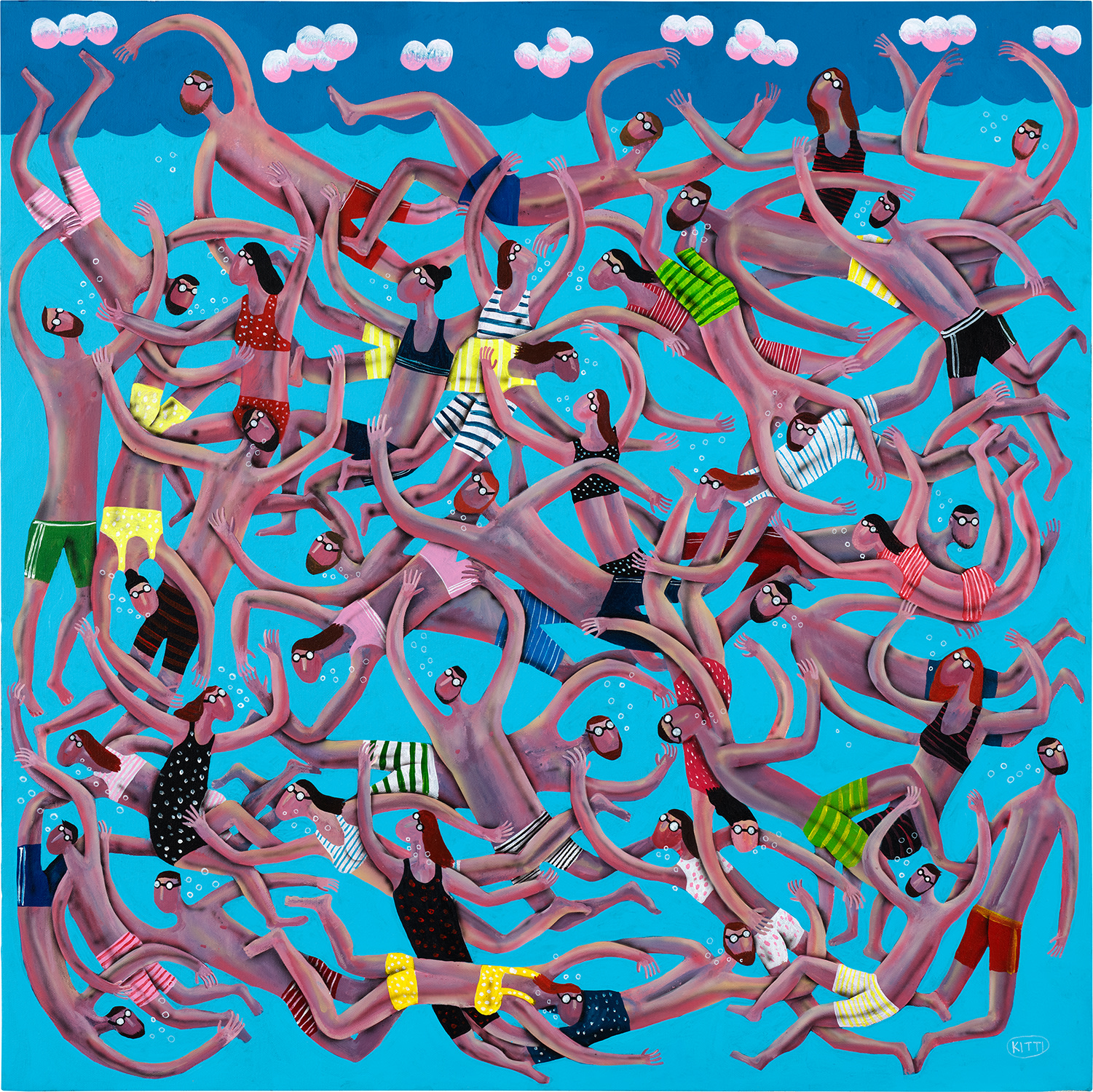
The Eternal Song: Art's Obsession With Musicians
There is something almost irresistible about the figure of the musician in art. Perhaps it is because music and visual art share an impulse toward the ineffable, toward expressing what ordinary language cannot hold. Or perhaps it is simply that the musician, caught in the act of playing or singing, becomes a conduit for something larger than themselves, and artists across centuries have recognized in that moment a subject worth returning to again and again. Whatever the reason, the musician as subject has generated some of the most emotionally charged and formally inventive works in the entire history of art.
The tradition reaches back further than most collectors realize. In the early sixteenth century, the anonymous painter known as the Master of the Female Half Lengths, working in the southern Netherlands, produced intimate panels of elegantly dressed young women playing lutes and reading musical scores. These small works, refined and technically precise, reveal how music functioned in Renaissance culture as both social accomplishment and spiritual metaphor. Music was understood as the art closest to divine harmony, and depicting musicians was therefore a way of gesturing toward a higher order.
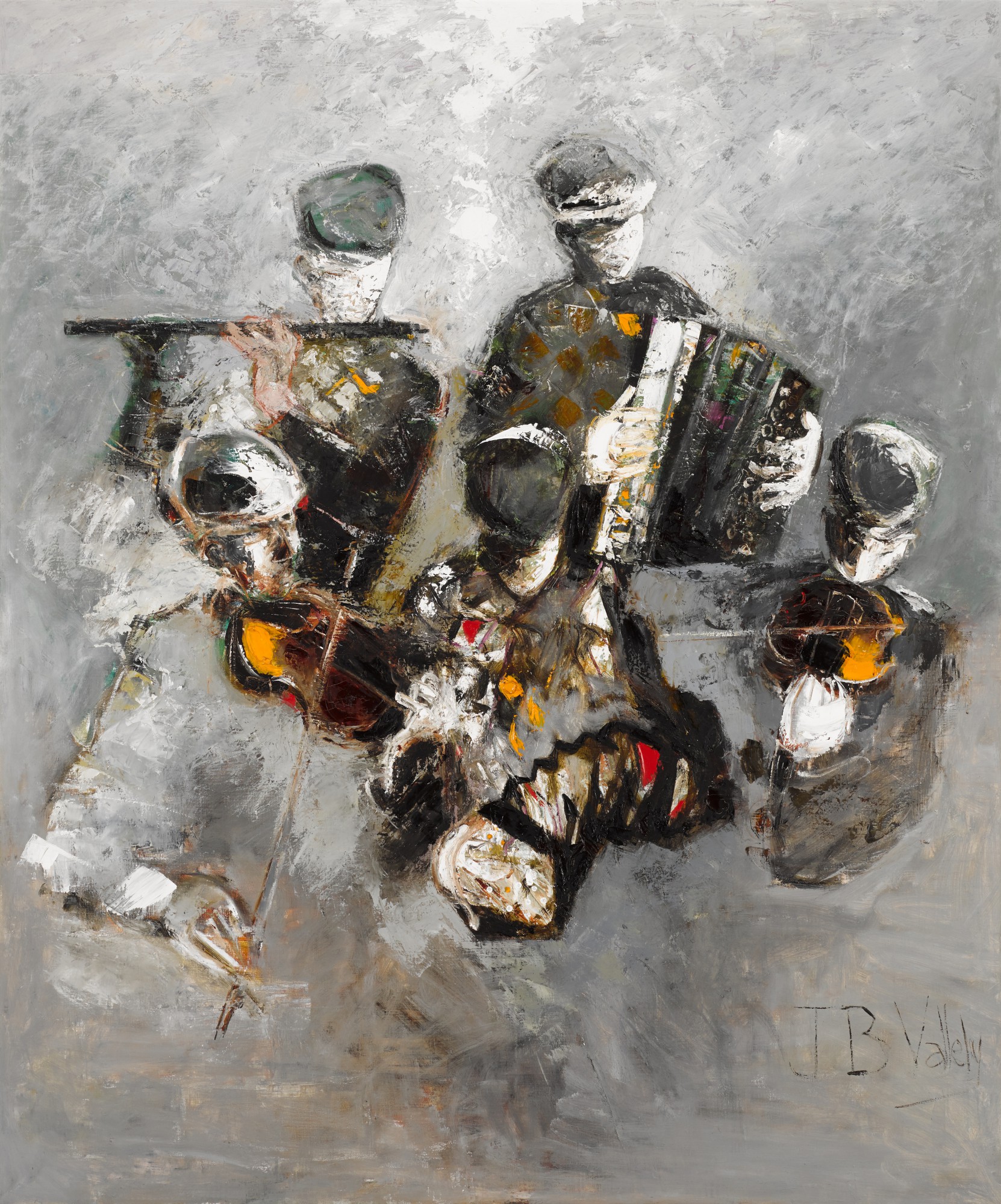
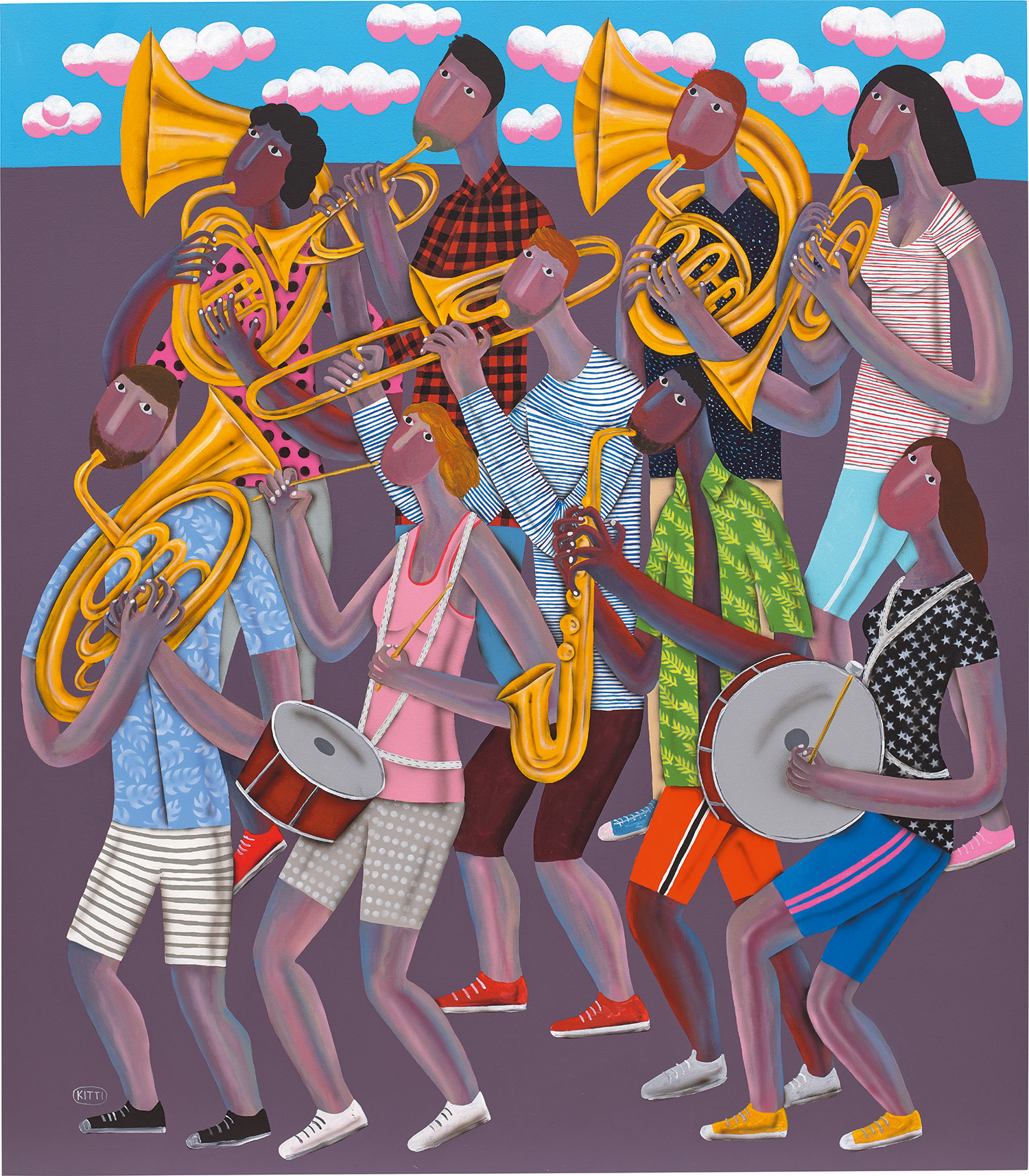
John Vallely
Five Musicians
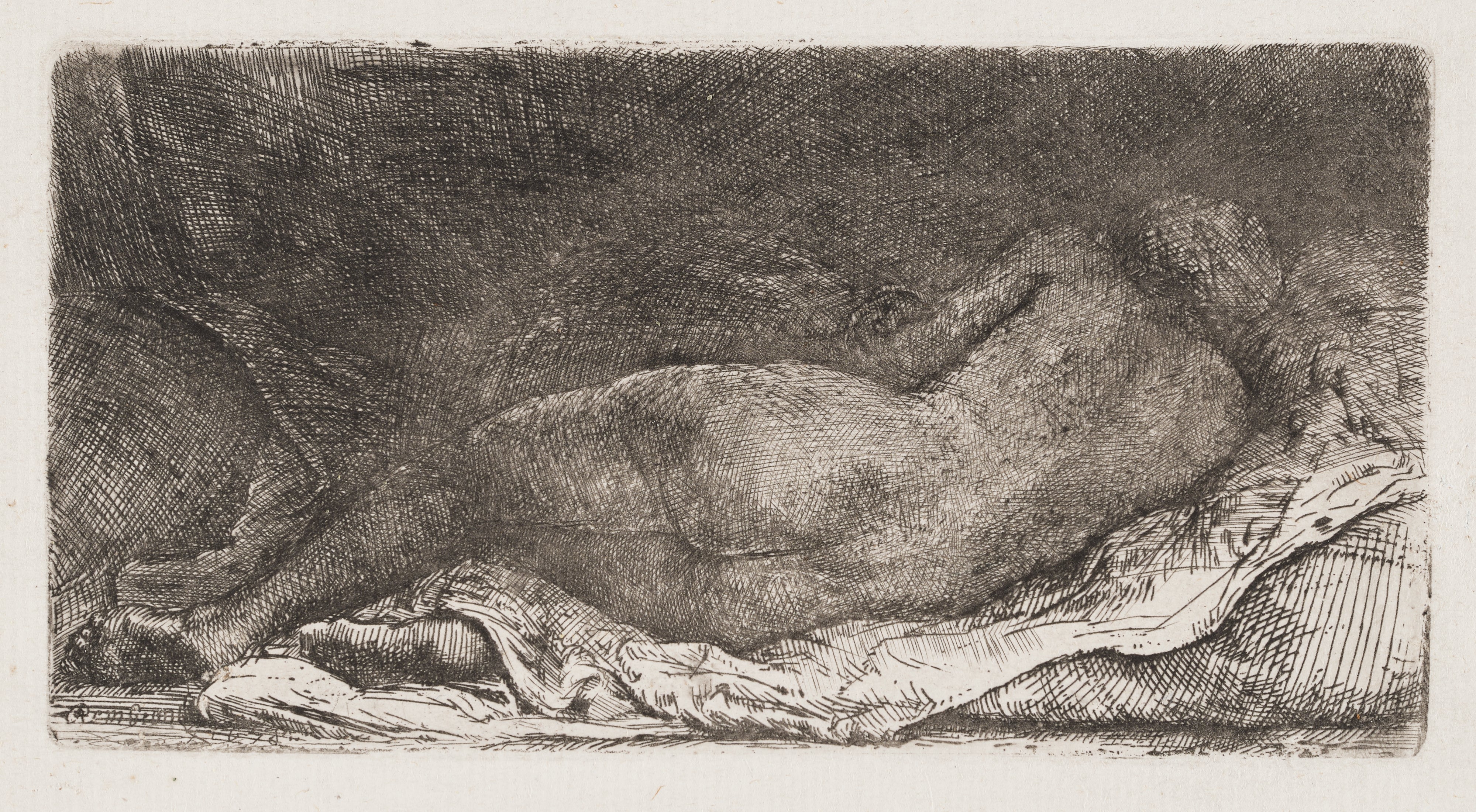
The Antwerp school of the same period shared this sensibility, producing domestic scenes where the presence of instruments carried theological weight as much as decorative charm. By the seventeenth century, the musician had become a vehicle for probing questions about perception, class, and the nature of performance. Frans Hals painted musicians with a looseness of touch that felt almost revolutionary, capturing the spontaneity of a performer in mid phrase. Rembrandt, working in Amsterdam at the height of the Dutch Golden Age, brought his characteristic psychological depth to musical subjects, understanding that the act of listening could be as revealing as the act of playing.
The painter Anthonie Palamedesz and his circle contributed merry company scenes where musicians animated gatherings of elegantly dressed figures, mapping the social rituals of a prosperous merchant society through its entertainments. The nineteenth century introduced new anxieties and new sympathies into the theme. Honoré Daumier, that great satirist of Parisian life, brought the street musician into the frame, honoring the dignity of those who performed not in salons but in public squares and on thoroughfares. His lithographic touch gave these figures a monumental humanity.
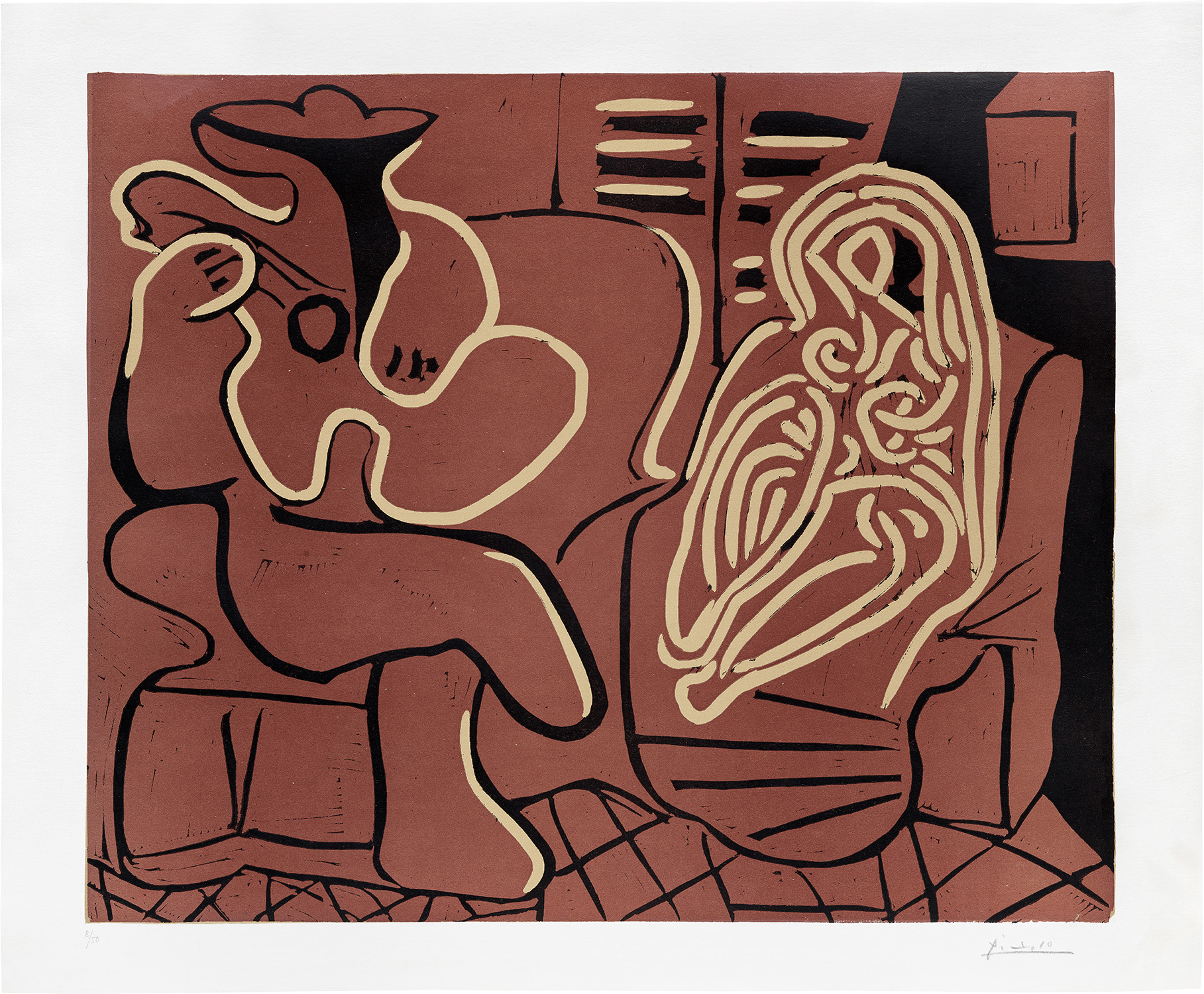
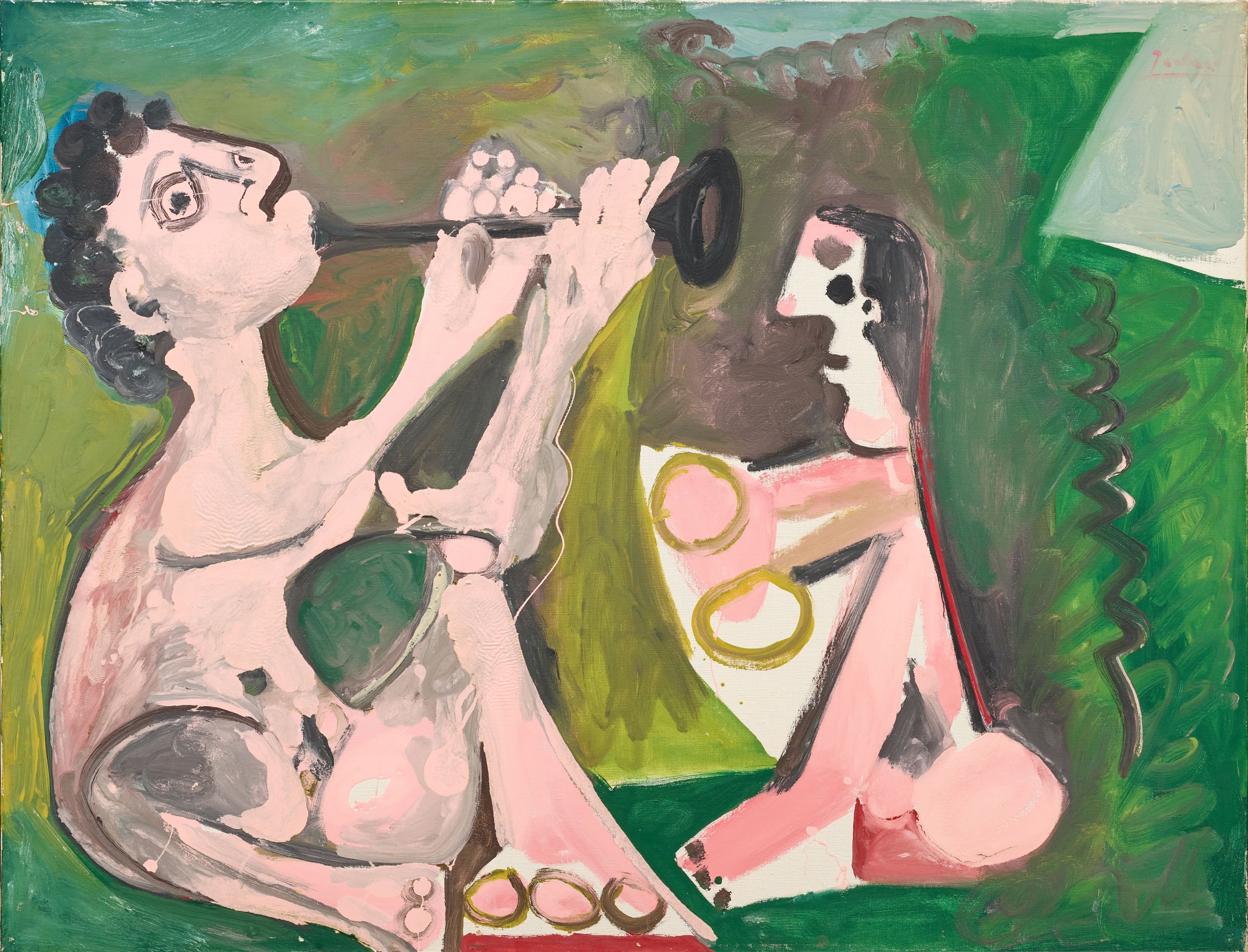
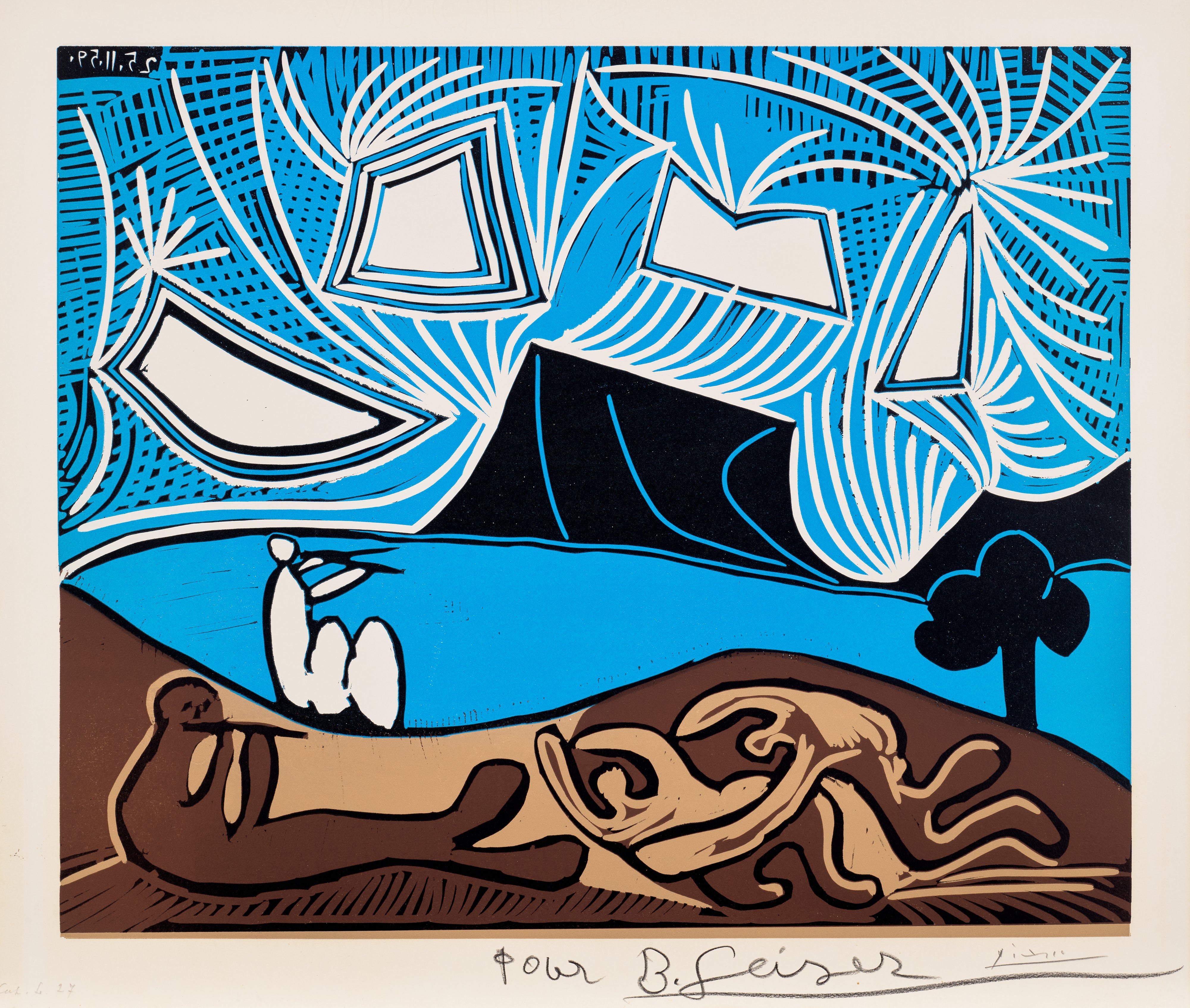
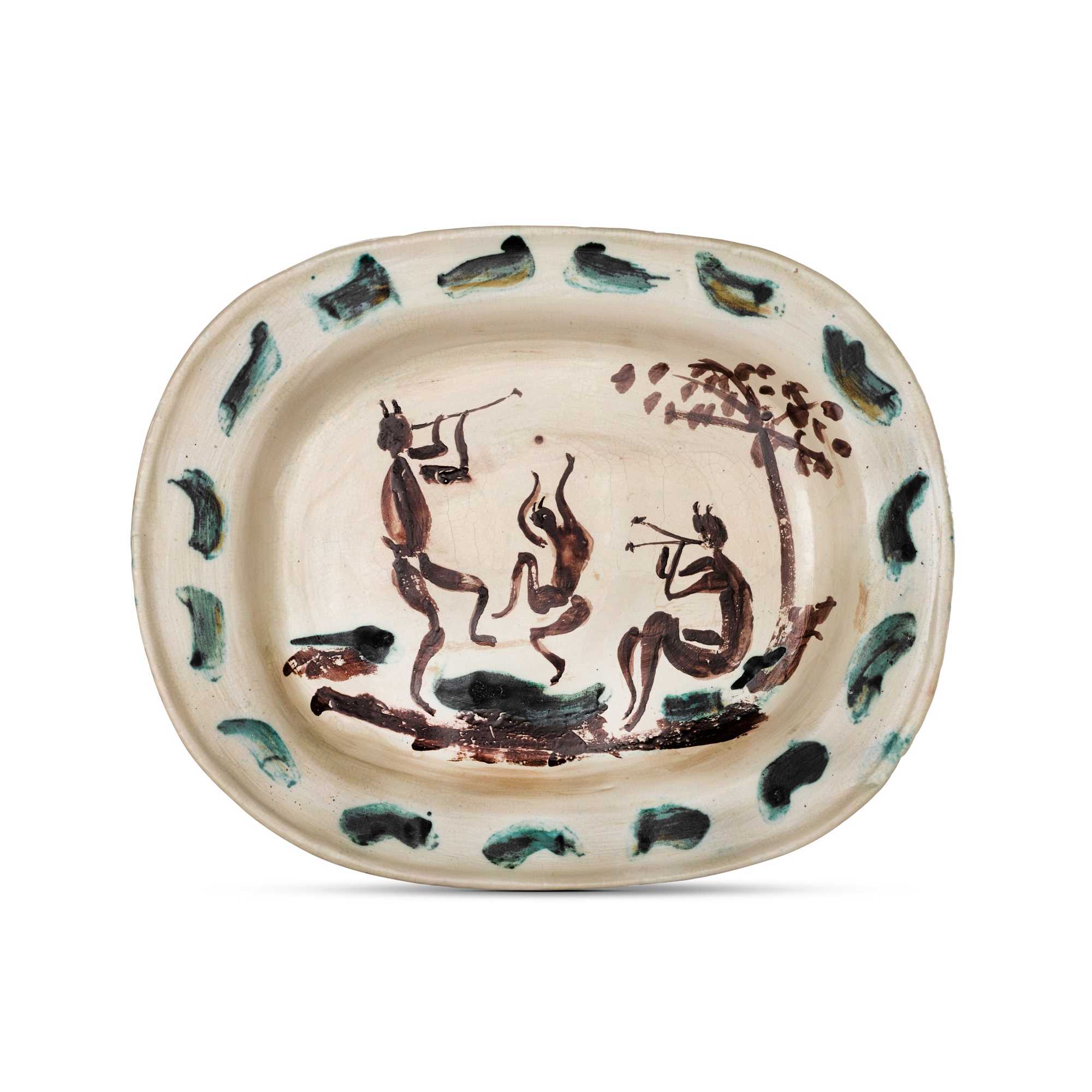
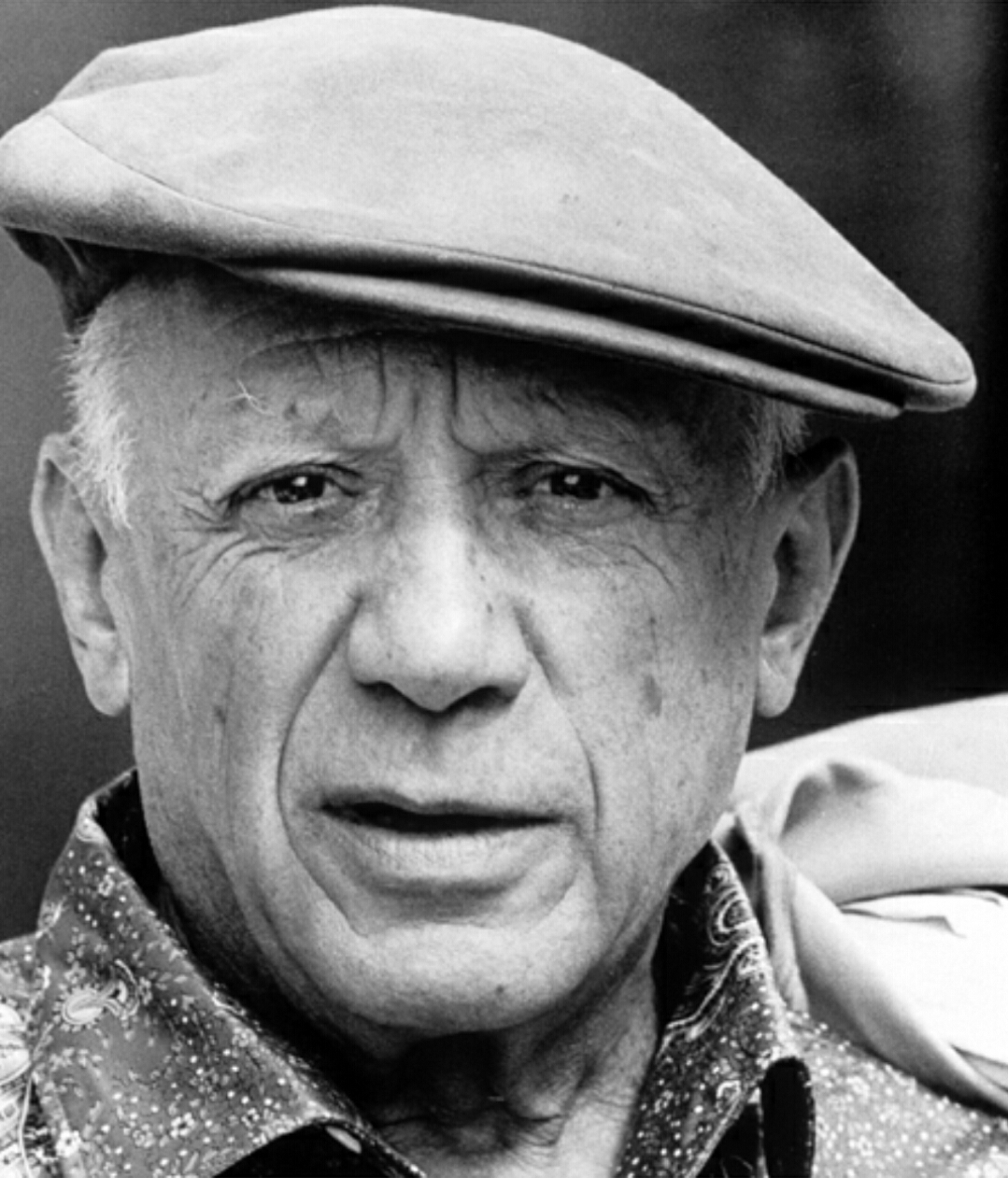
Pablo Picasso
Femme dans un fauteuil et guitariste (Woman in an Armchair with Guitarist) (Bl. 917, Ba. 1232)
Meanwhile Antoine Bourdelle, the sculptor who had studied under Rodin, turned to music as a source of formal dynamism, finding in the gestures of performers a sculptural language of tension and release that would influence generations of artists after him. The early twentieth century transformed the subject entirely. Pablo Picasso, whose engagement with musicians was sustained, restless, and profound, made them central to some of the most important moments in his career. His Rose Period harlequins and circus performers of around 1905 are inseparable from musical identity, and his Cubist treatment of guitars and figures in the 1910s redefined what it could mean to represent sound visually.
Music was not incidental to Cubism but integral to it, a parallel experiment in breaking down and reassembling experience. Fernand Léger brought a different energy to musical subjects, his bold tubular forms and flat primary colors celebrating the collective vitality of popular performance. Marc Chagall, by contrast, suffused his musicians with the folk memory of Eastern European Jewish culture, violinists floating above shtetl rooftops in a visual idiom that merged nostalgia and dreamwork. Raoul Dufy painted concert halls and orchestras with a joy so unguarded it borders on radical optimism.
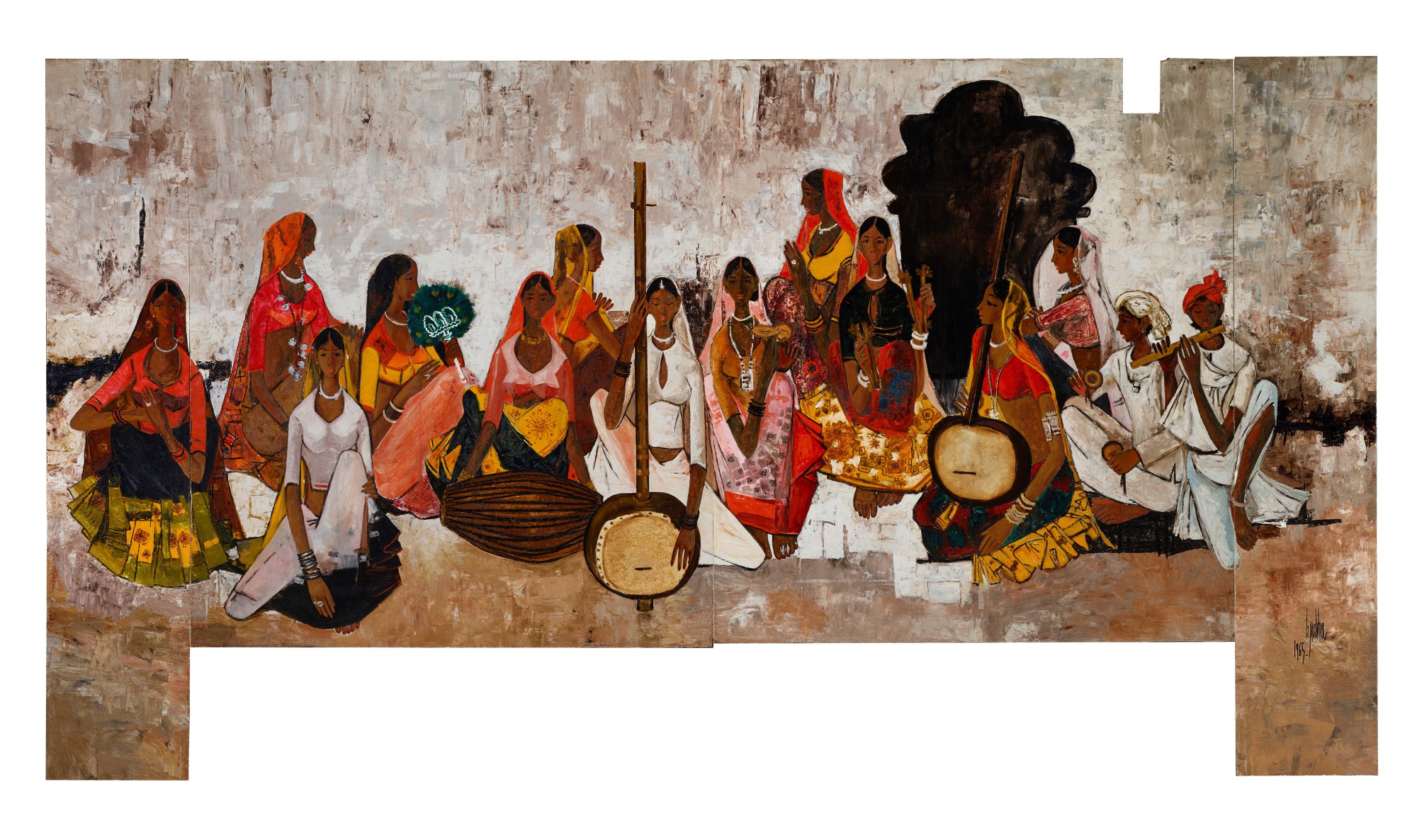
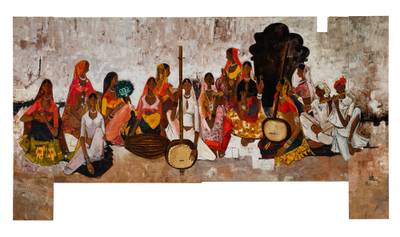
B. Prabha
Untitled (Wedding Musicians), 1965
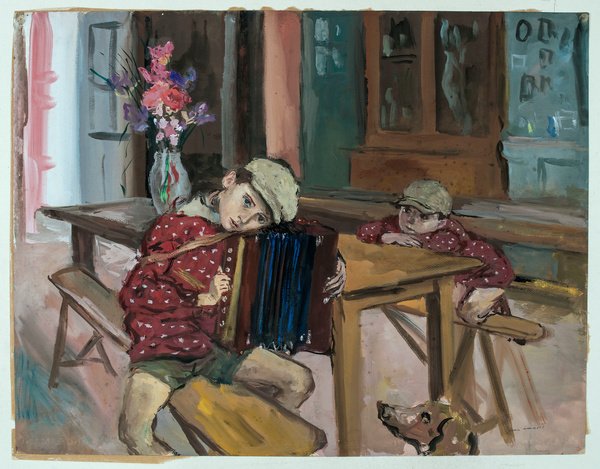
The Brazilian modernist Emiliano di Cavalcanti found in the musician a way to express his country's complex cultural mestizaje, placing figures with instruments into a chromatic world drawn equally from European modernism and the lived rhythms of Rio. The Indian painter B. Prabha, working in a tradition that took classical musical forms as sacred, brought a stillness and interior focus to her depictions of women musicians that spoke directly to the meditative dimension of performance. Ossip Zadkine, the Russian born sculptor working in Paris, carved musicians from wood and cast them in bronze with an expressive distortion that owed much to Cubism but remained entirely his own.
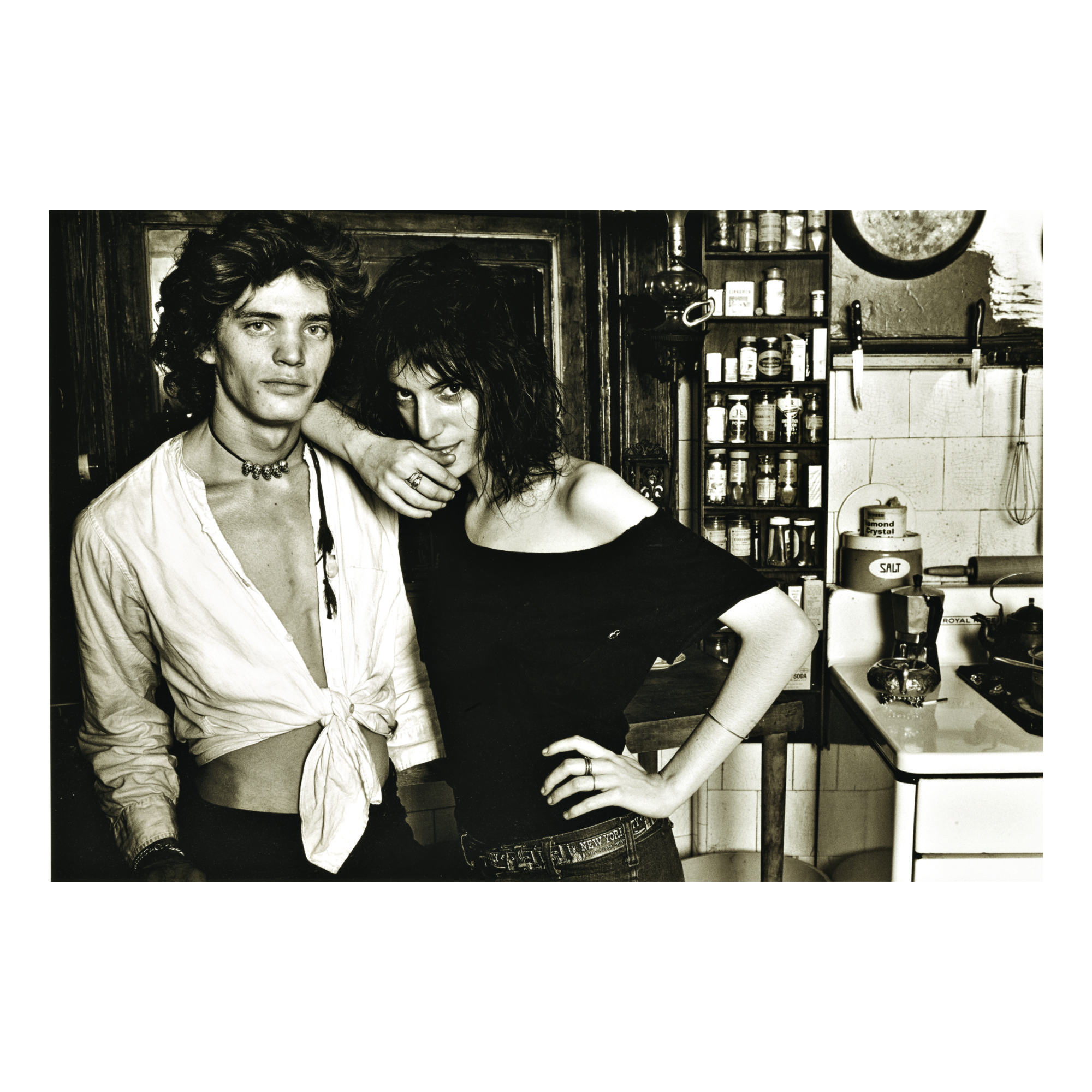
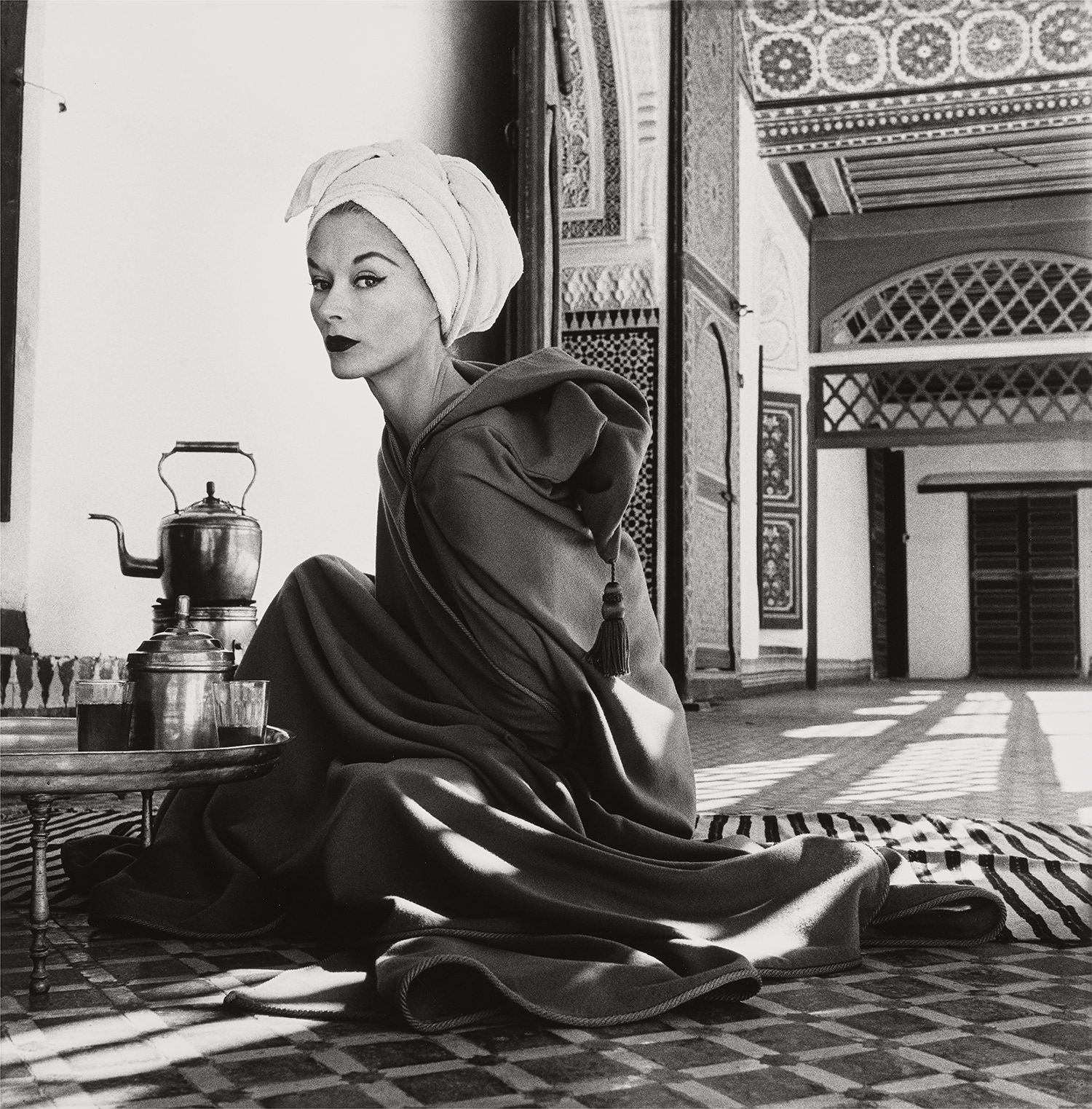
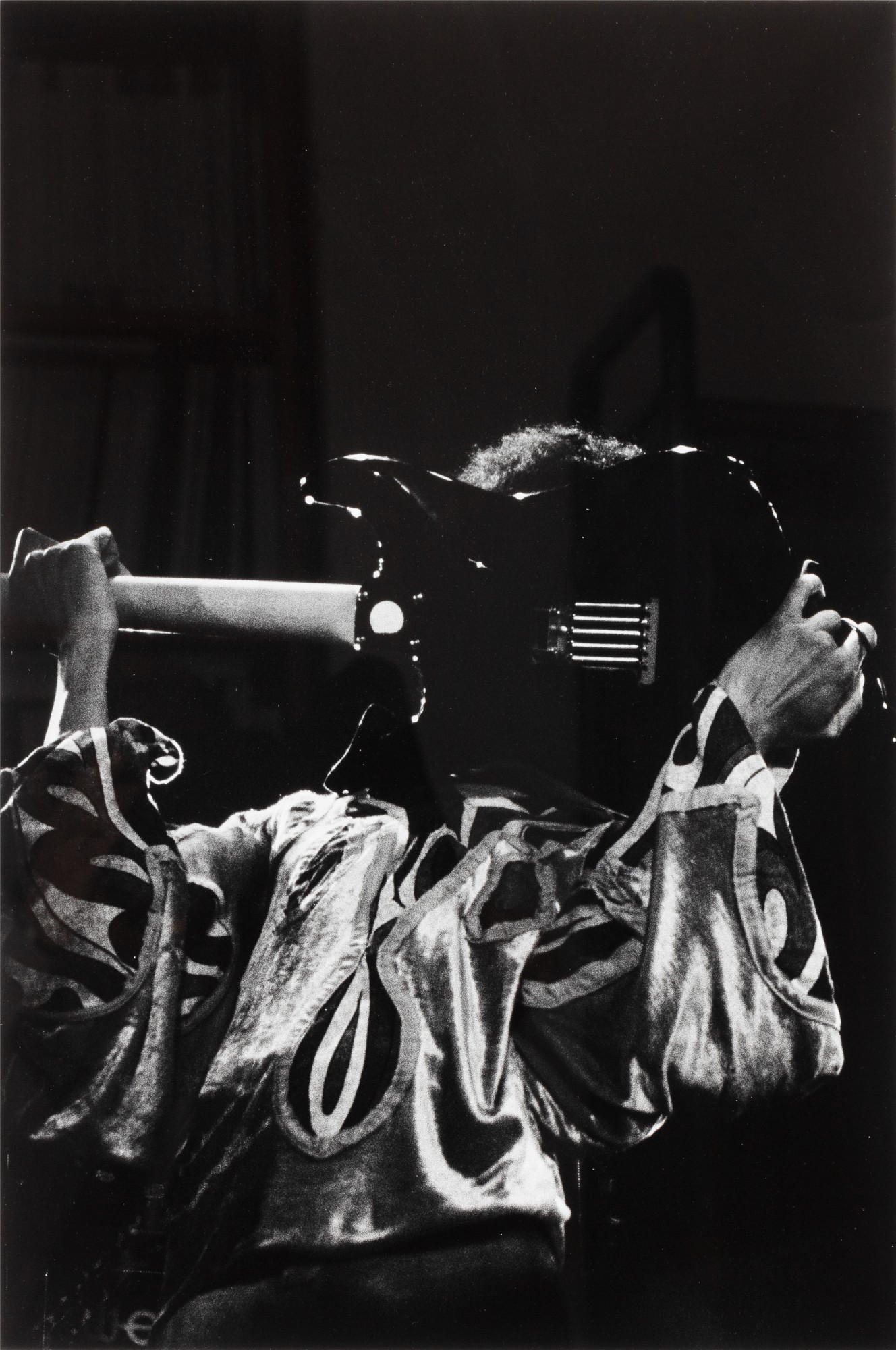
When photography entered the conversation, it brought proximity. Norman Seeff, shooting musicians in Los Angeles in the 1970s and 1980s, understood that the camera could access something candid that painting could not, a performer between performances, the self that exists on the edges of the stage. Claude Gassian brought that same intimate attentiveness to his decades of work documenting musicians in France, while Irving Penn applied his formal rigor and almost sculptural approach to light to create portraits of cultural figures that transcend simple documentation. Jerry Schatzberg and Herb Greene both photographed rock musicians in the 1960s and 1970s at a moment when popular music was generating its own mythology in real time, and their images became part of that mythology.
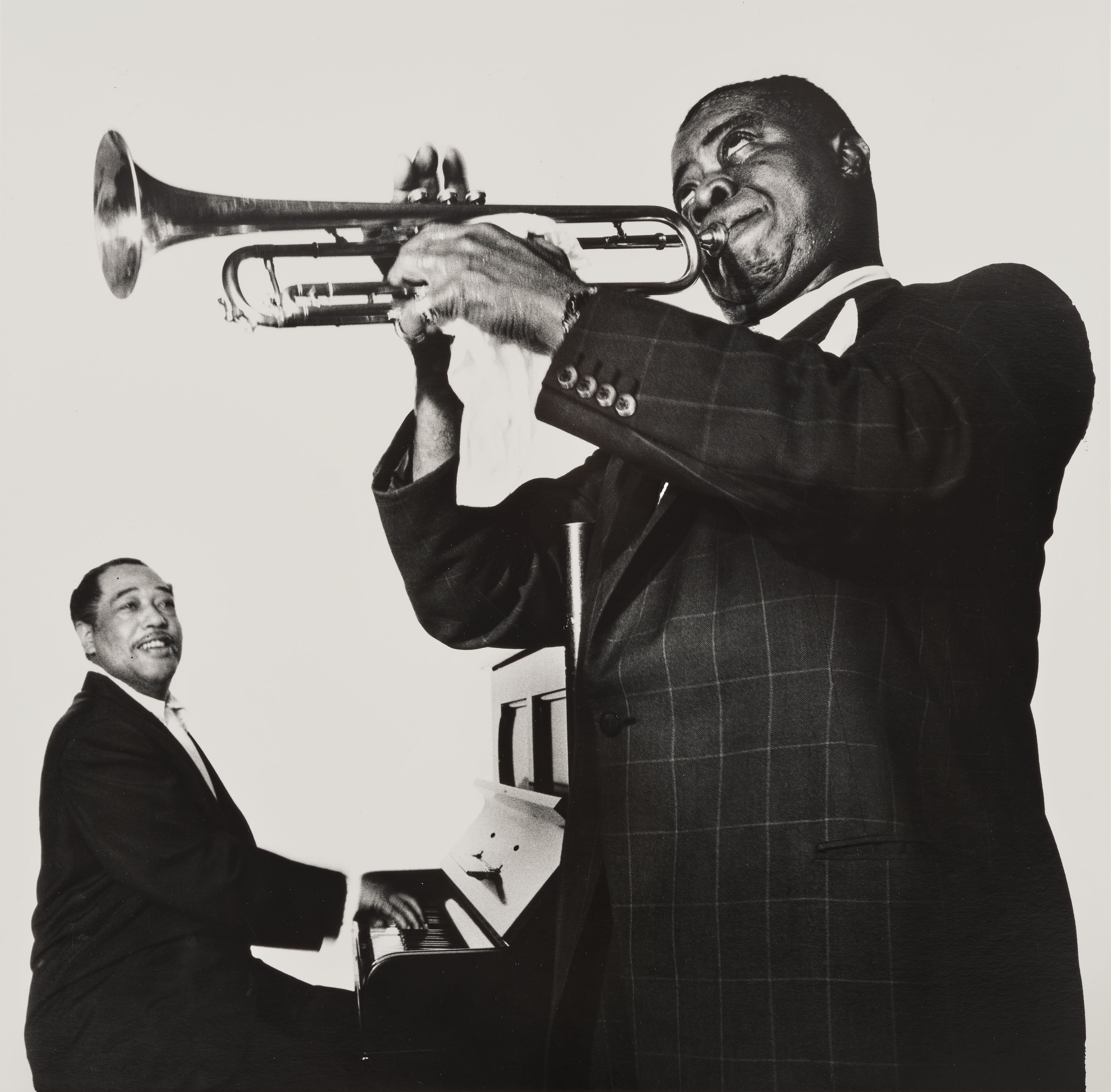
Irving Penn
Duke Ellington and Louis Armstrong (1 of 3), New York
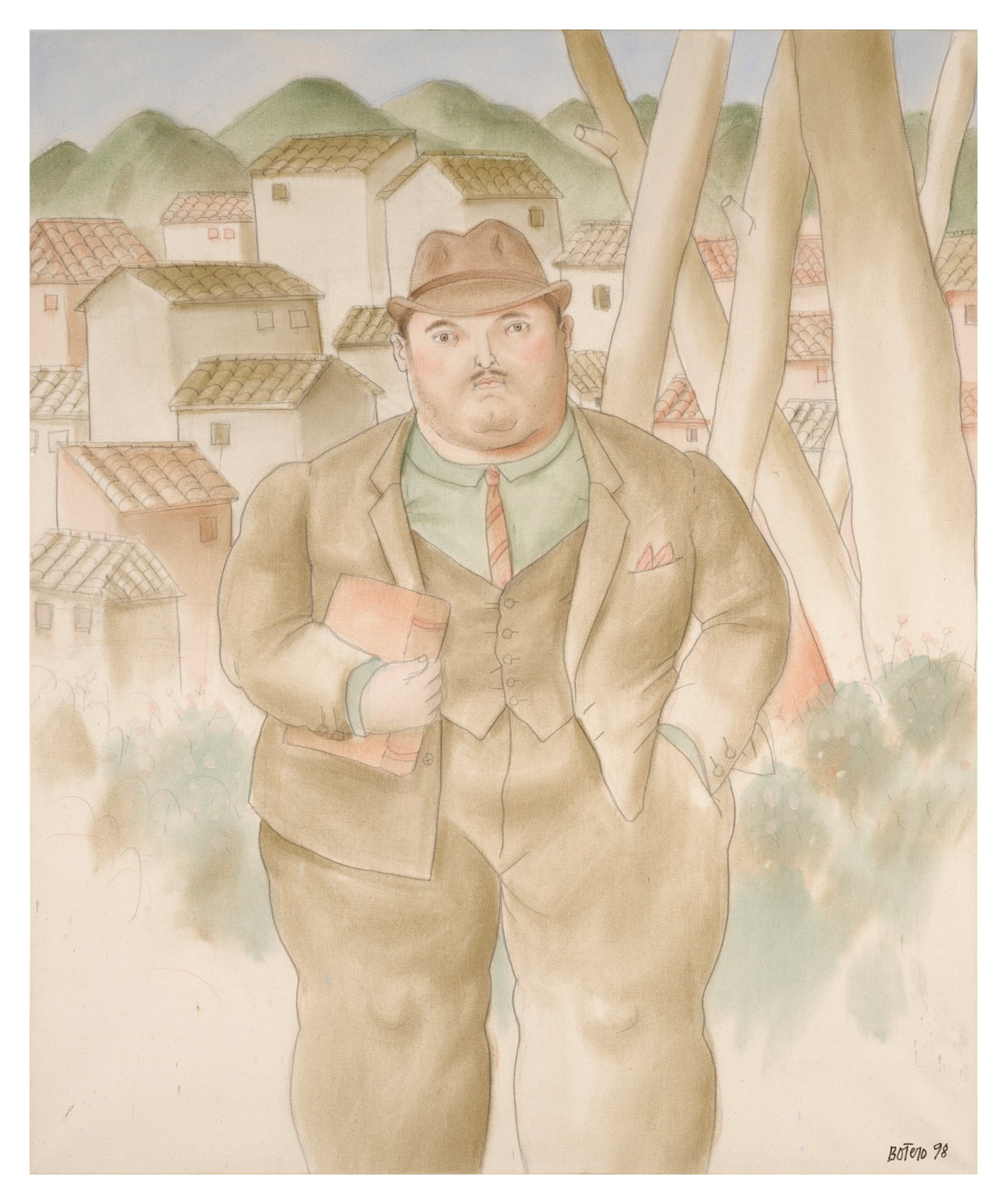
Lee Friedlander took a different approach altogether, turning his camera on televisions broadcasting jazz performers and on musicians on street corners, finding the subject embedded in the ordinary fabric of American life. Fernando Botero's musicians, swollen to his characteristic pneumatic proportions, carry an affection bordering on comedy, though there is always something melancholic underneath, the heaviness of bodies that hold more feeling than they can easily express. Shepard Fairey has brought musicians into his graphic and activist visual language, understanding them as figures of cultural resistance as much as entertainment. John Vallely has painted traditional Irish musicians with an ethnographic attention to gesture and instrument, honoring a living folk tradition.
What makes this theme so durable, so capable of sustaining centuries of attention from artists working across every medium and tradition? The musician offers the artist something genuinely difficult: the challenge of making visible what is fundamentally invisible. Sound cannot be painted. It can only be evoked, through posture, through the arrangement of hands on strings, through the expression on a face absorbed in listening.
Every work in this tradition is an act of translation between senses, and the best of them make you feel, however briefly, that you can almost hear what you are looking at.