Indian
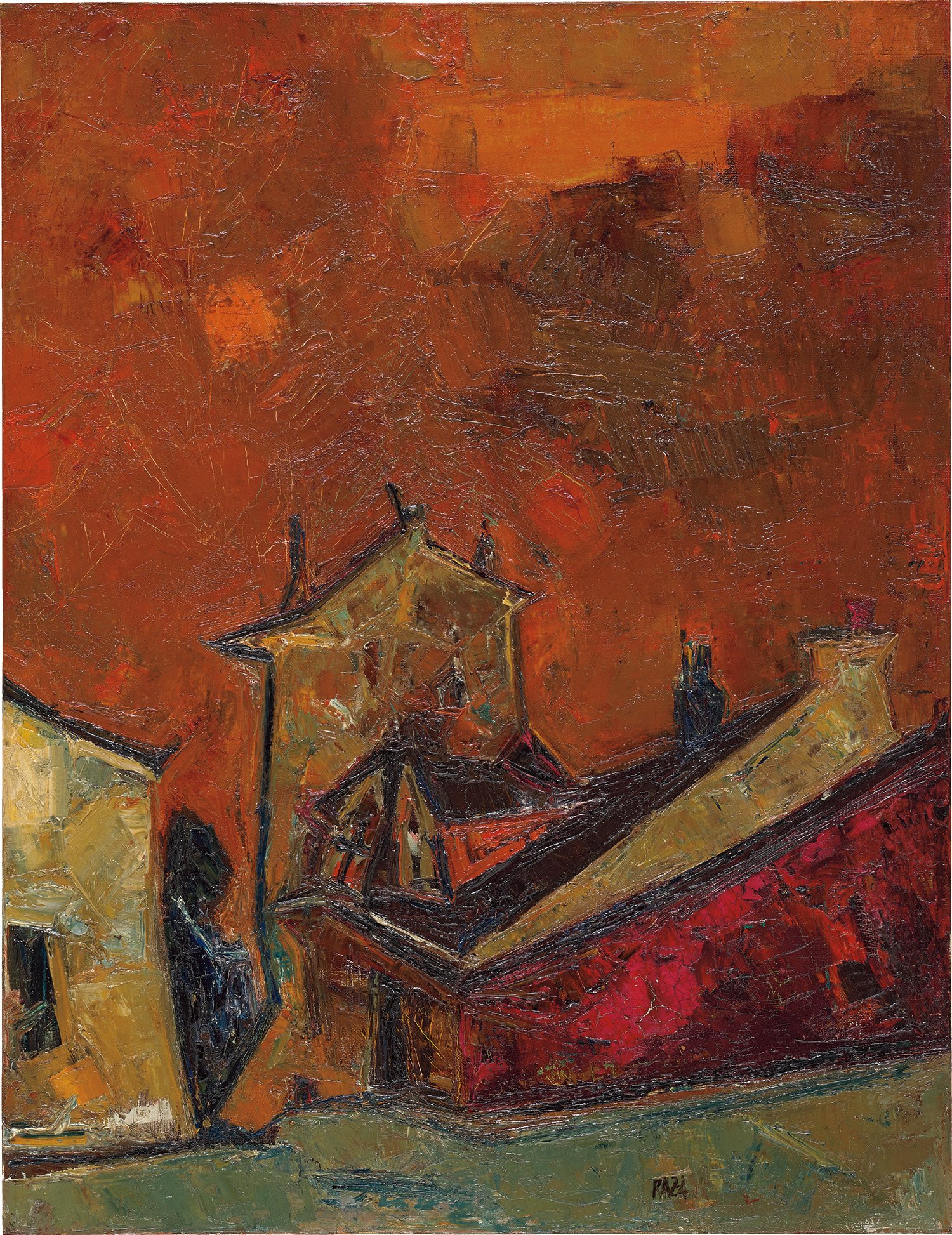
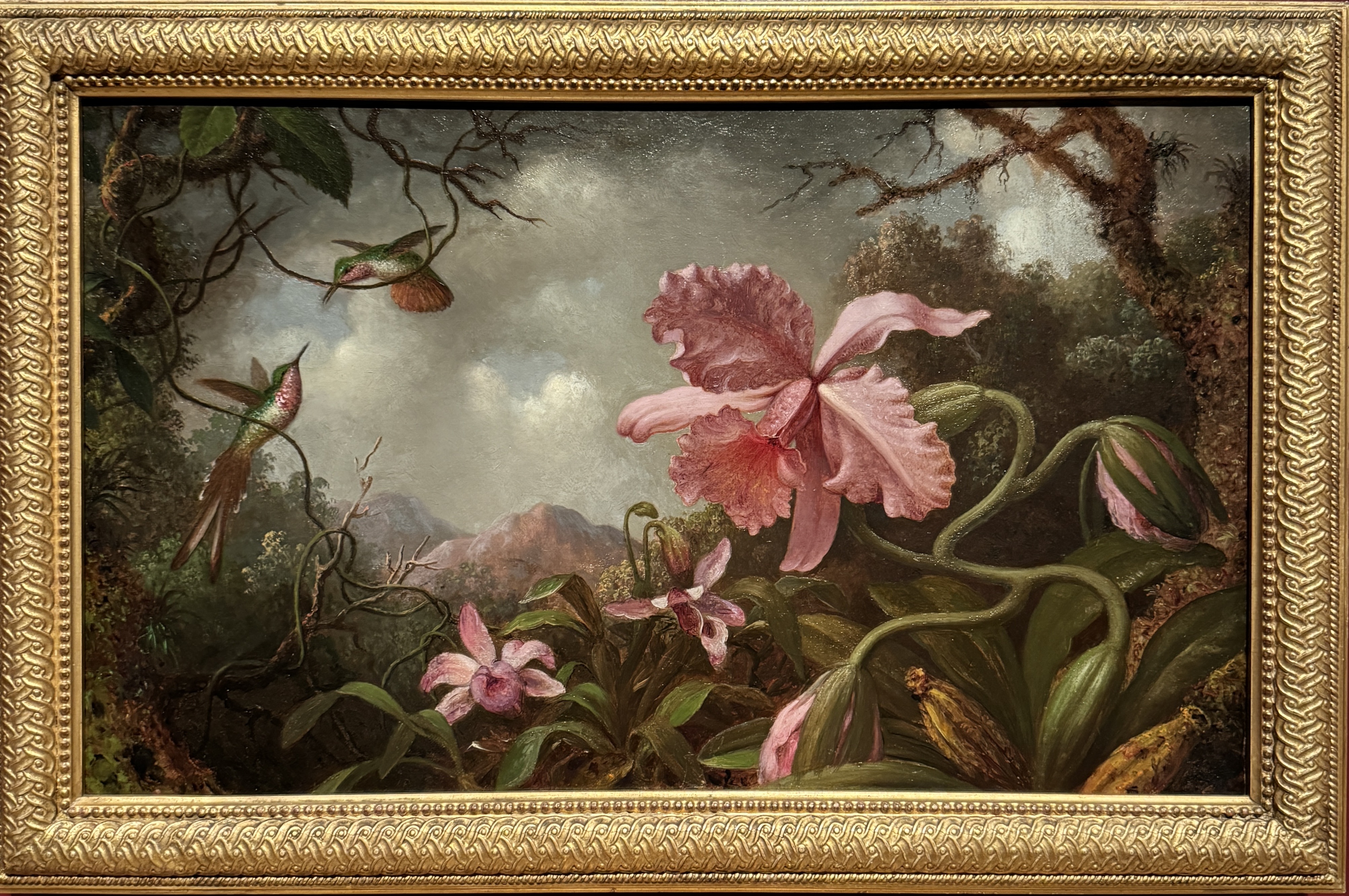
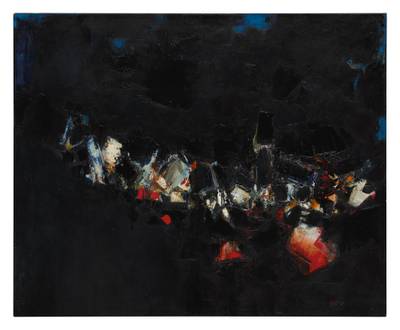
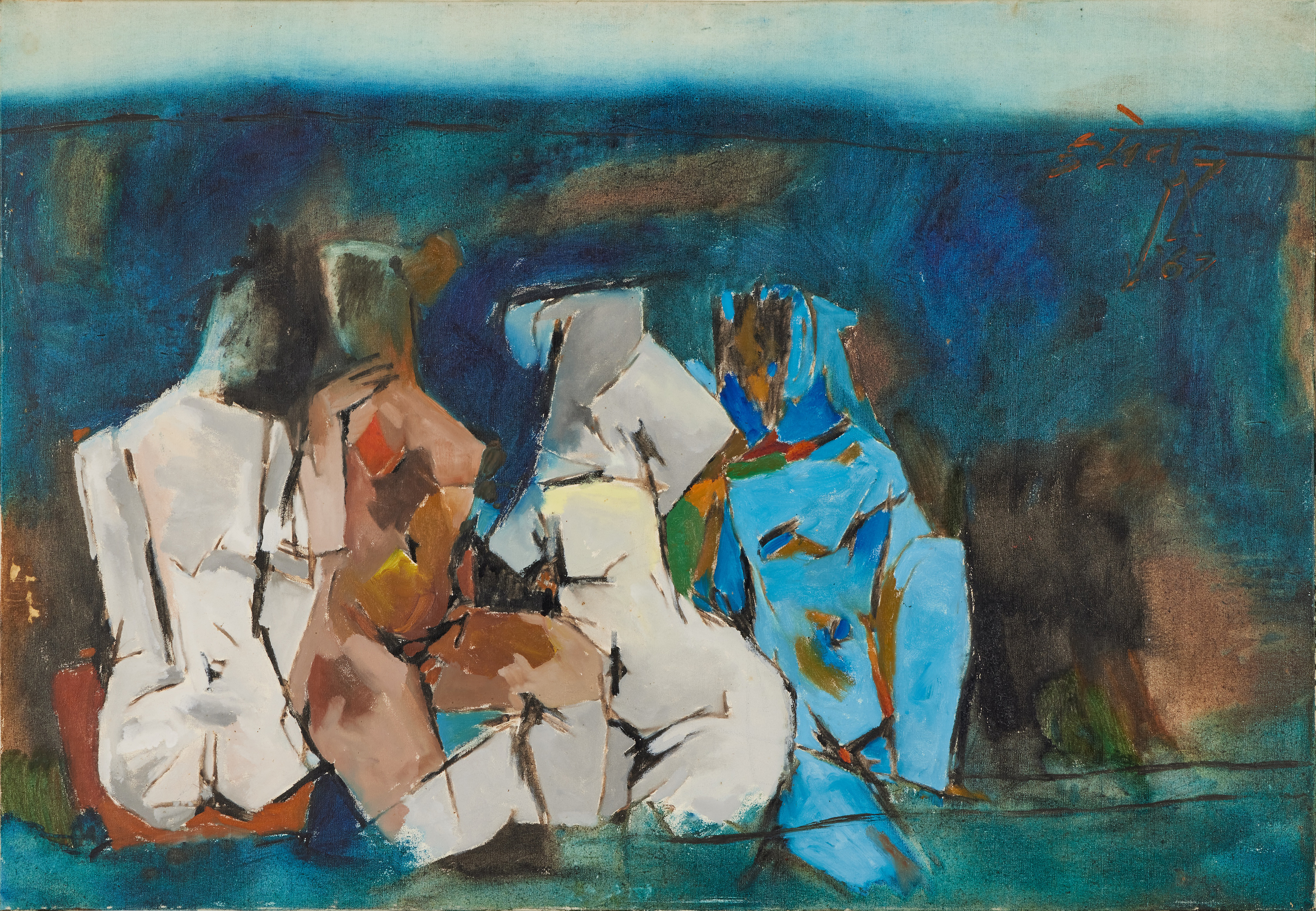
Sayed Haider Raza
Village au ciel orange, 1956
The Subcontinent's Art Moment Is Right Now
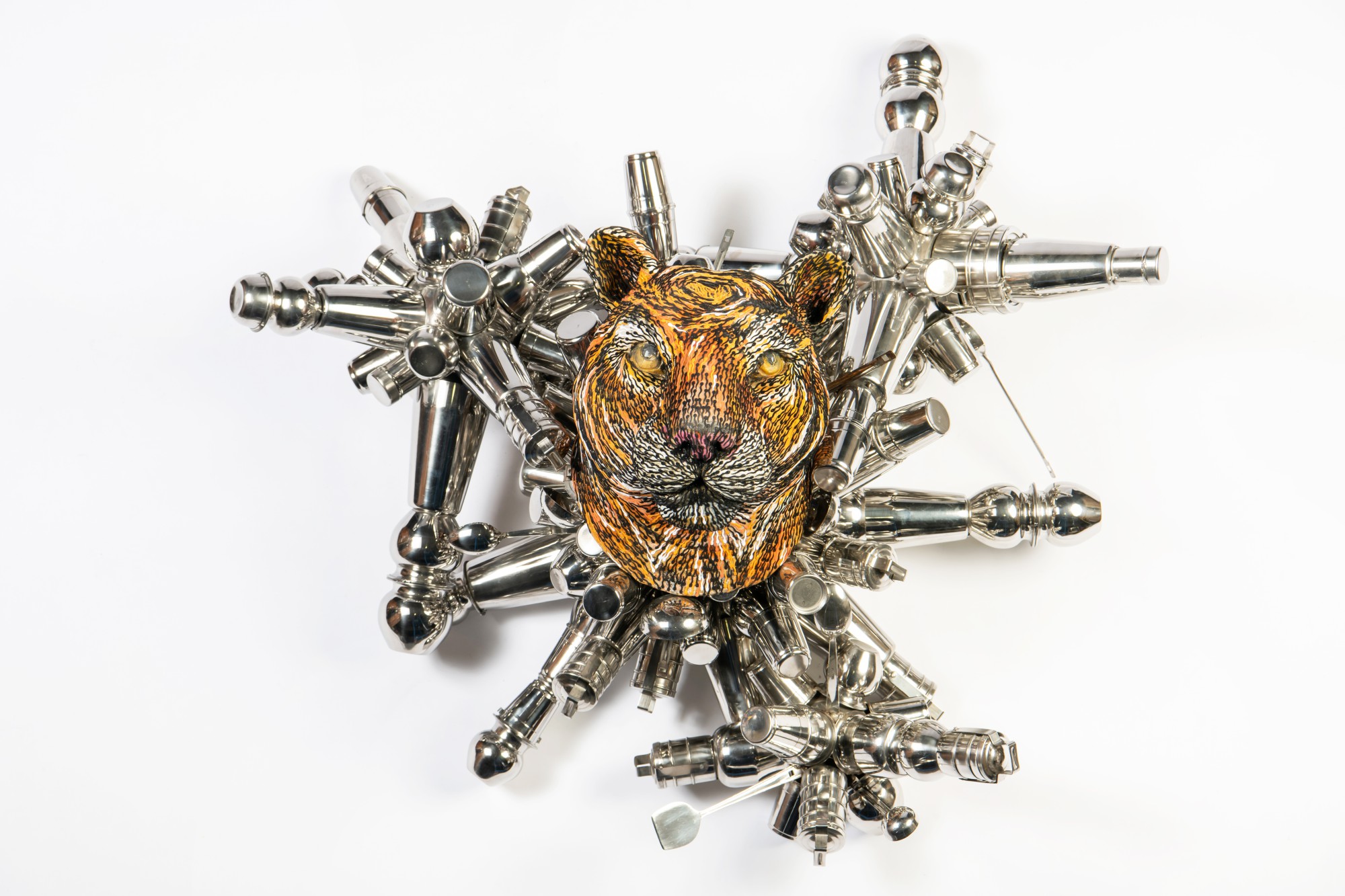
There is a particular quality of light in works made on the Indian subcontinent, or made by artists shaped by it, that collectors find almost impossible to describe but immediately recognise. It moves between the devotional and the vernacular, between something ancient and something urgently contemporary. Living with Indian art, whether a luminous Raza canvas vibrating with geometric intensity or a Subodh Gupta sculpture assembled from gleaming stainless steel kitchen utensils, means living with a kind of productive tension. The work asks questions about where beauty comes from, what objects carry memory, and how a culture that holds so many simultaneous traditions in its hands can keep producing art of such restless originality.
For collectors new to this space, the entry point is often aesthetic and emotional before it becomes intellectual. Something stops you. That arrest is worth following. Indian modernism in particular has a quality of self invention that Western art history has been slow to acknowledge and the market has only recently begun to price correctly.
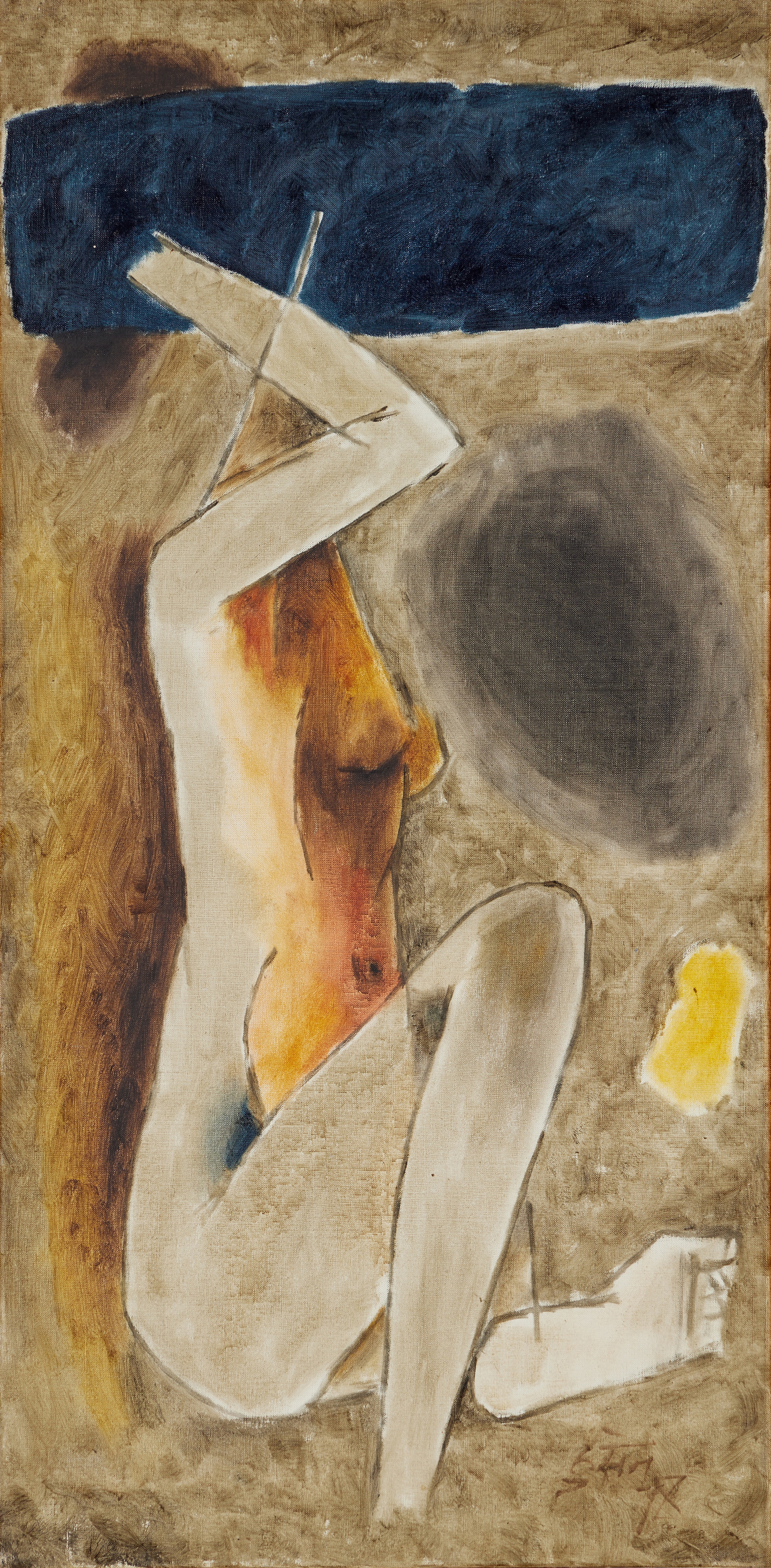
Maqbool Fida Husain
Untitled (Woman)
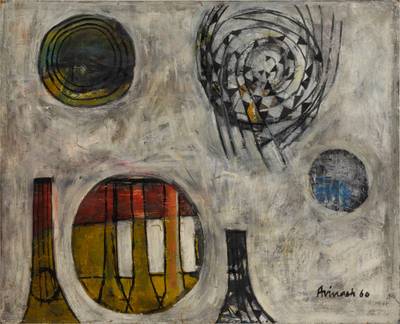
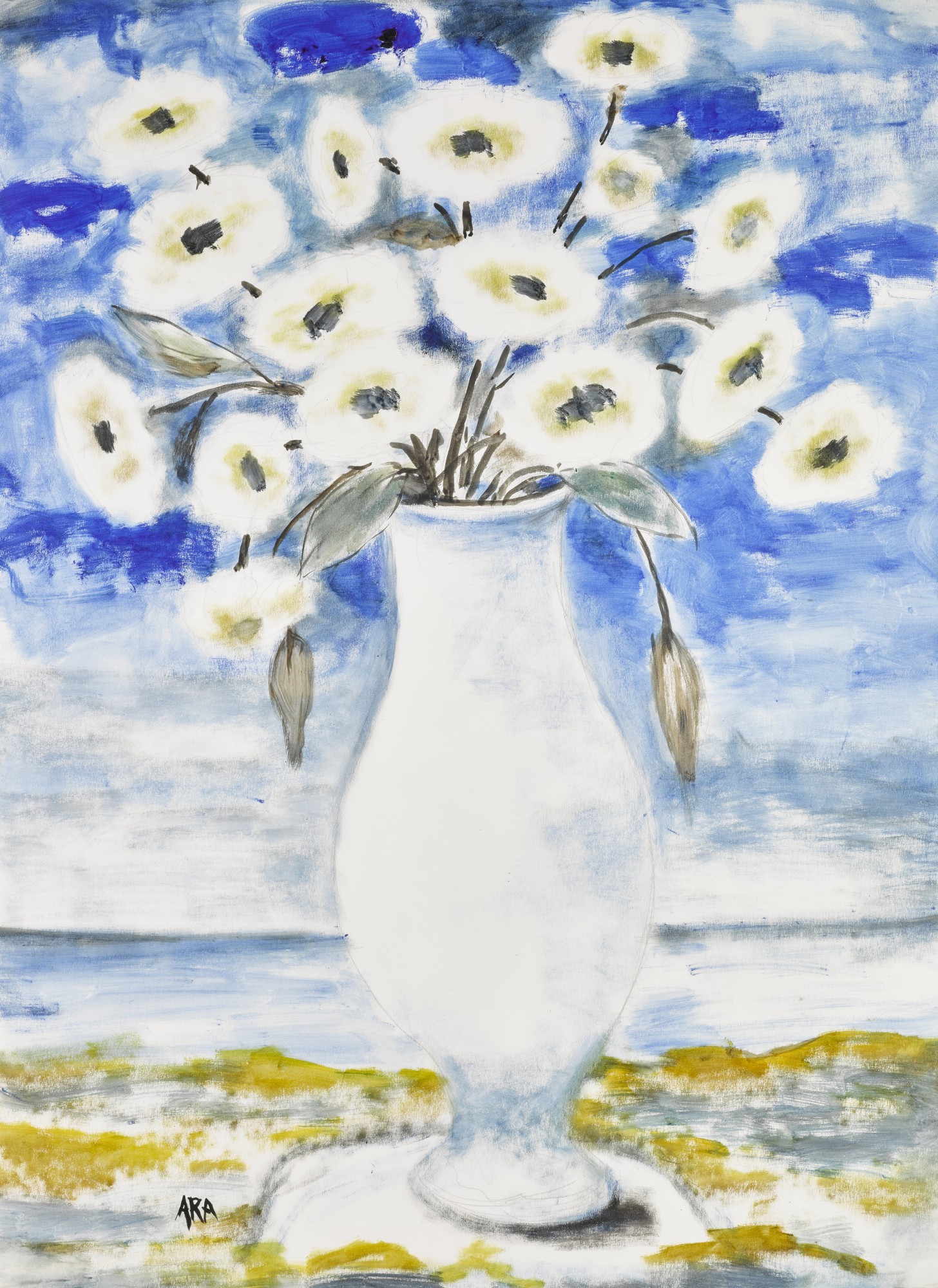
The artists who emerged from the Progressive Artists Group in Bombay in the late 1940s, figures like Maqbool Fida Husain and Francis Newton Souza and Krishnaji Howlaji Ara, were doing something genuinely radical. They were synthesising European modernism with deep subcontinental visual traditions and insisting on their own terms. Works from this formation carry enormous art historical weight and that weight is still, in global terms, undervalued. What separates a good work from a great one in this category comes down to a few specific things.
With the Progressives, you want works that feel resolved and committed rather than exploratory. Husain at his best has an absolute freedom of line that weaker works lack, a sense that the image arrived whole. With Souza, the greatest works have that raw, almost uncomfortable confrontation with the figure, a violence and a tenderness together. Sayed Haider Raza is perhaps the most immediately collectible of the group for reasons of formal clarity.
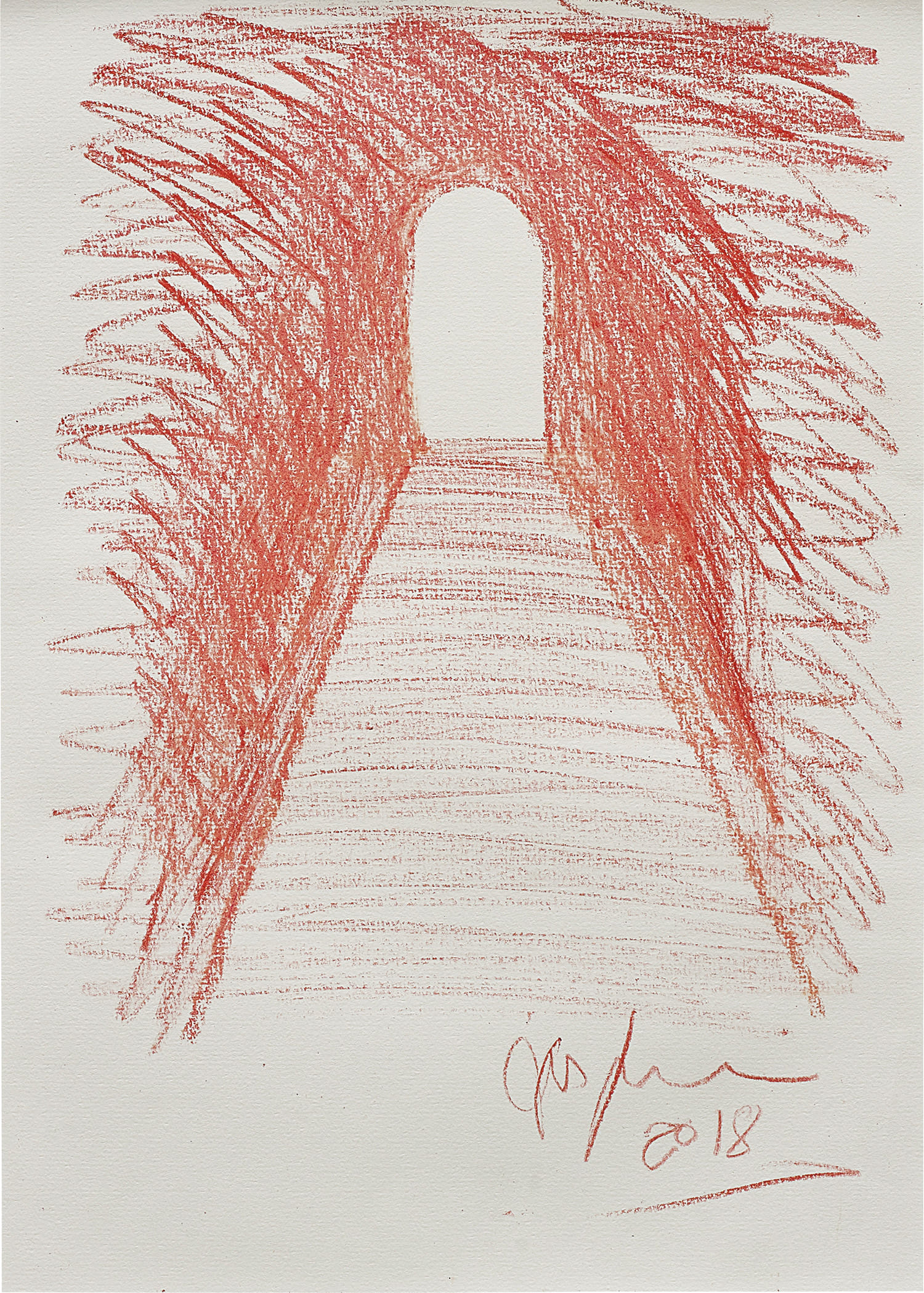
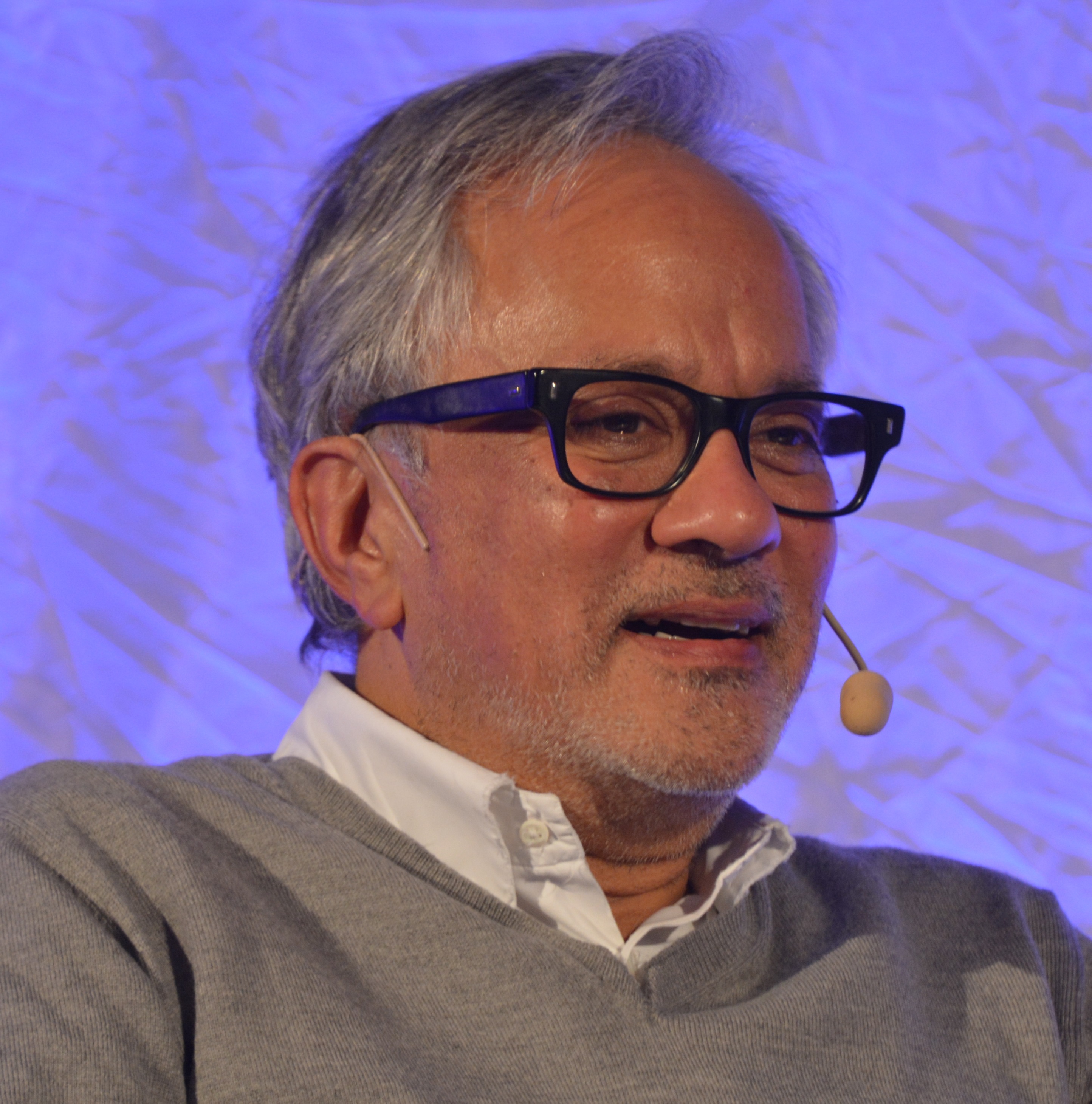
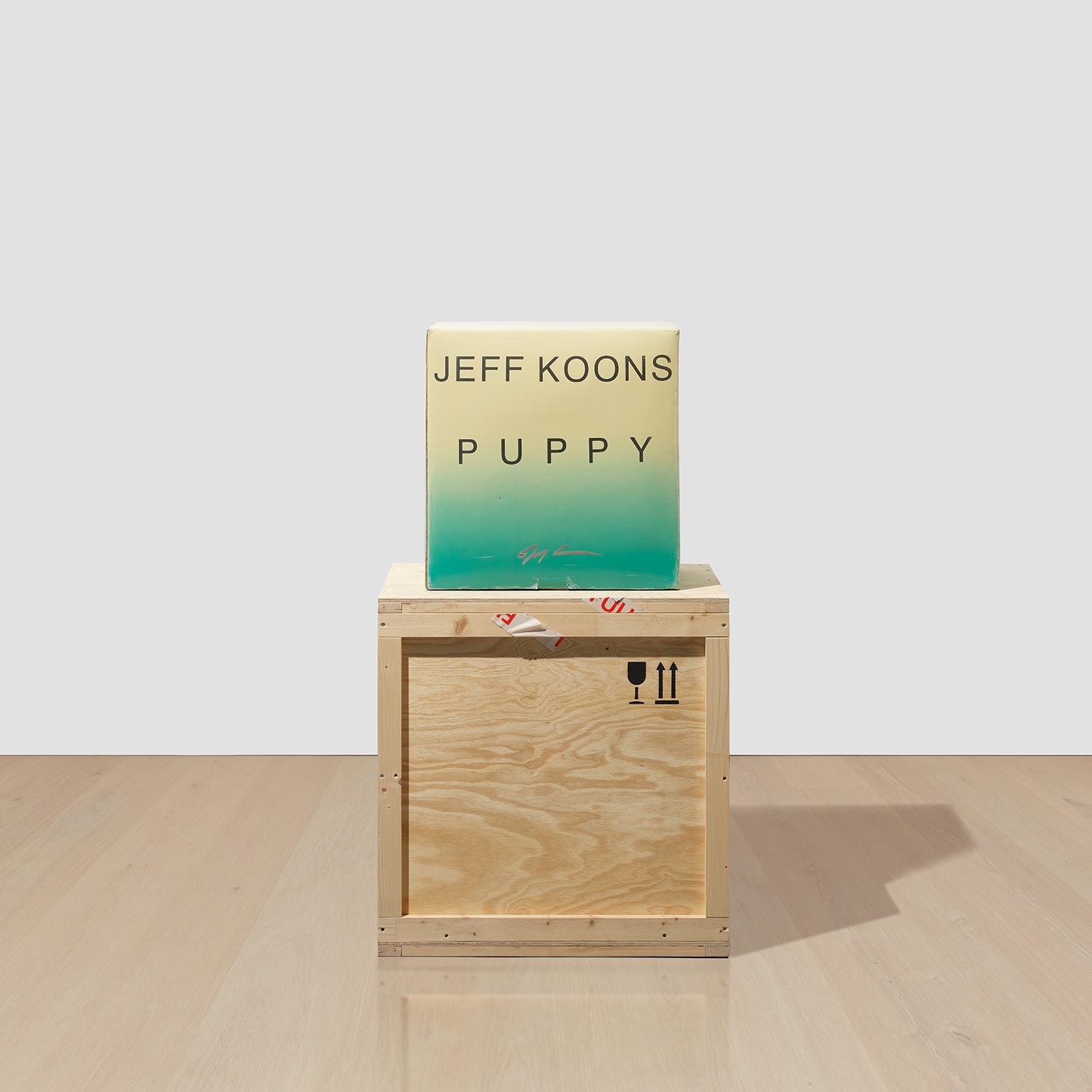
Anish Kapoor
wax crayon on paper, 2018
His bindu paintings, developed rigorously from the 1980s onward, have a meditative architecture that holds a room without dominating it. A strong Raza rewards sustained looking in a way that distinguishes it clearly from works made in his idiom by others. Among artists well represented on The Collection, Anish Kapoor occupies a unique position. He is simultaneously one of the most important sculptors working globally and one whose relationship to Indian thought and material culture is often underappreciated in discussion of his work.
Collecting Kapoor means understanding that you are acquiring something that exists at the intersection of philosophy and sensation. Jitish Kallat is another figure whose market position has been building steadily, and rightly so. His work engages with urban life, mortality, and the information overload of contemporary India in ways that feel increasingly prescient. He belongs to a generation of artists who came of age after liberalisation and whose work carries the texture of that particular historical moment.
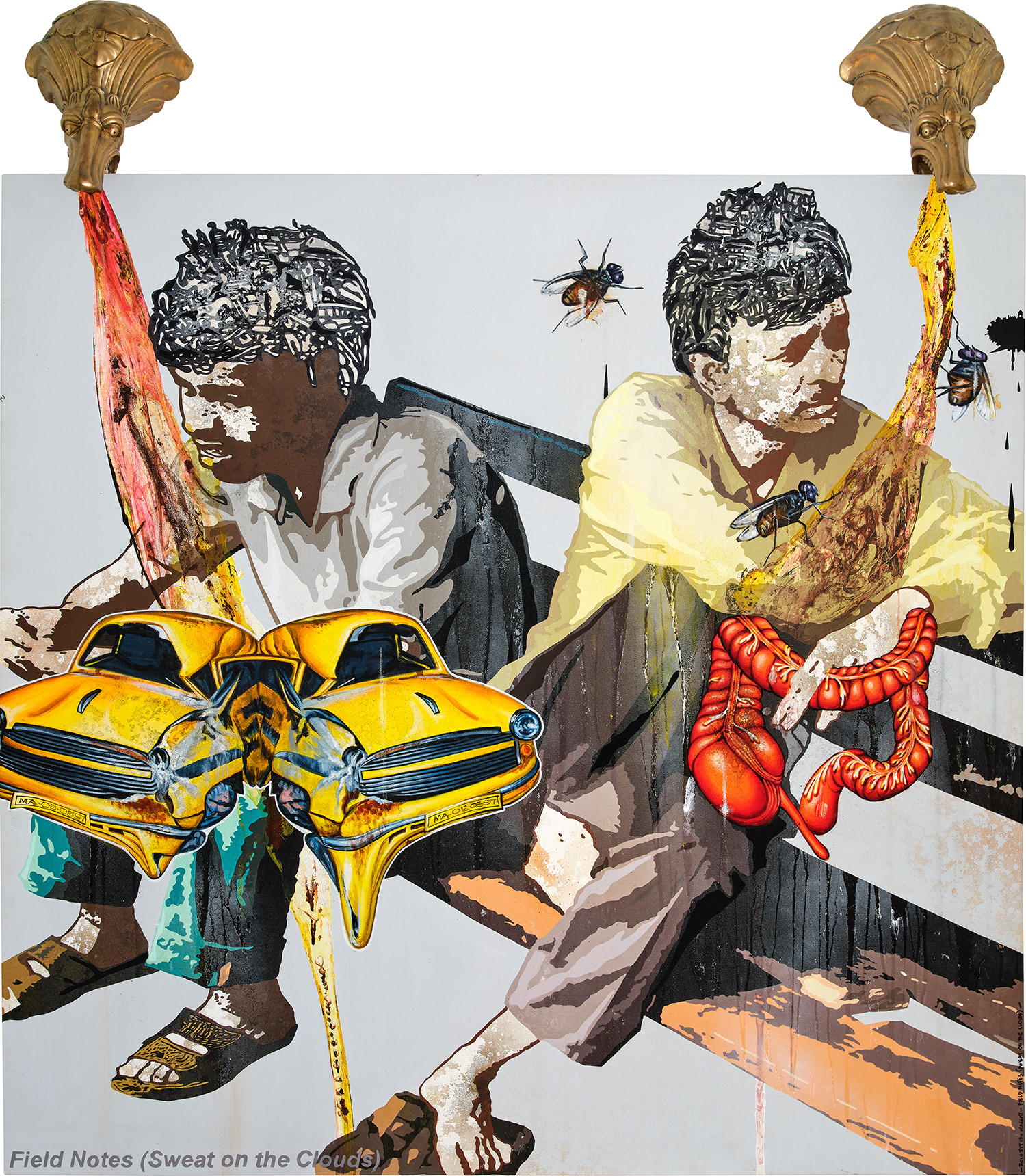
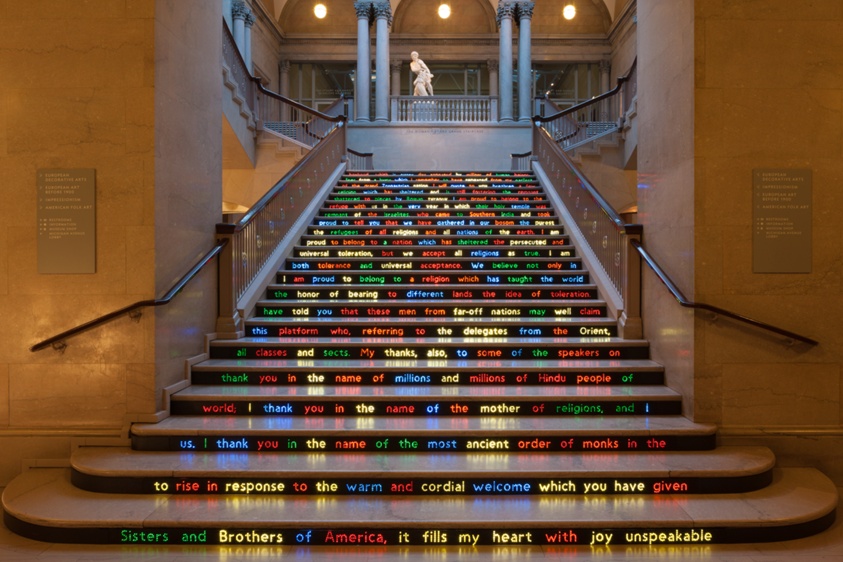
Jitish Kallat
Field Notes (Sweat on the Clouds), 2010
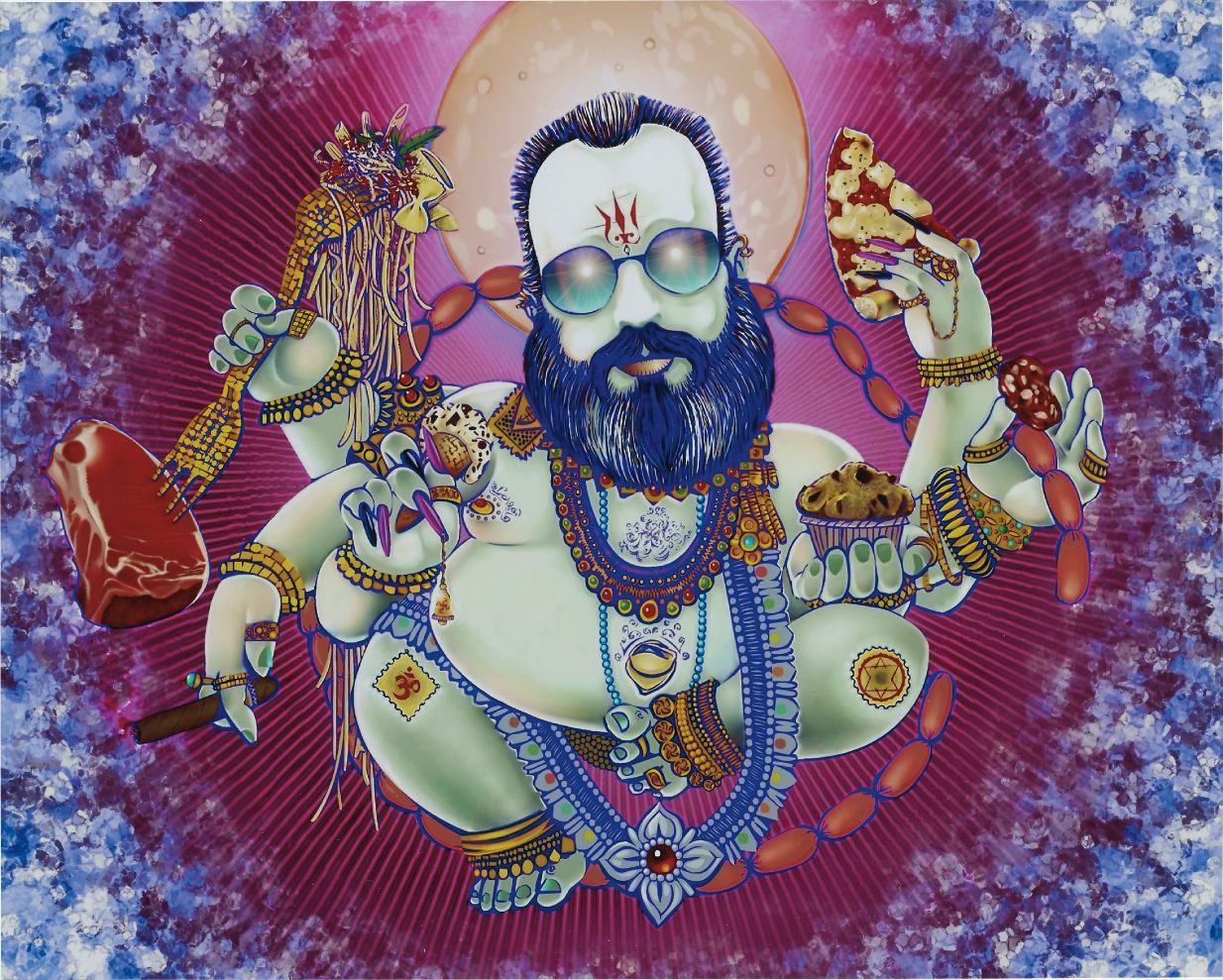
For collectors with an eye on where value might emerge, there are several artists worth serious attention. Bharti Kher's work with the bindi as both material and cultural symbol has placed her firmly in international conversations around feminist art and postcolonial identity. Her sculptural practice is rigorous and her institutional exhibition record is strong. Sudarshan Shetty and Sudhir Patwardhan represent different but equally compelling approaches to Indian contemporary practice.
Patwardhan in particular has built a quietly authoritative body of work focused on working class life in Thane and Mumbai that deserves far wider recognition outside India. His paintings have a social realist foundation but they are never didactic. They are simply very good paintings that happen to document a world most art market circuits have not troubled to look at carefully. The secondary market for Indian art has matured considerably since the auction house enthusiasm of the mid 2000s, when prices for the Progressives rose rapidly and some speculative buying inflated expectations across the board.
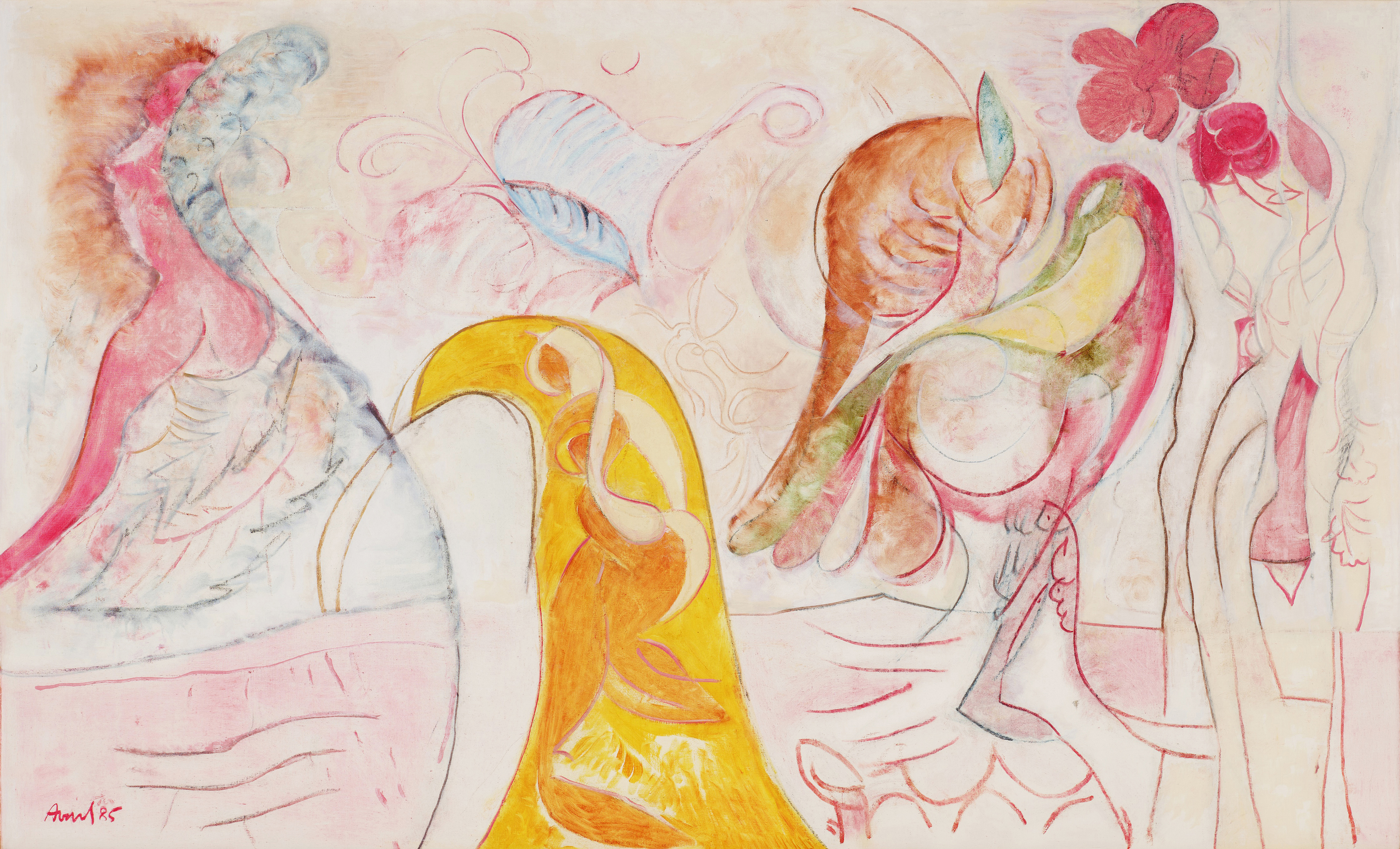
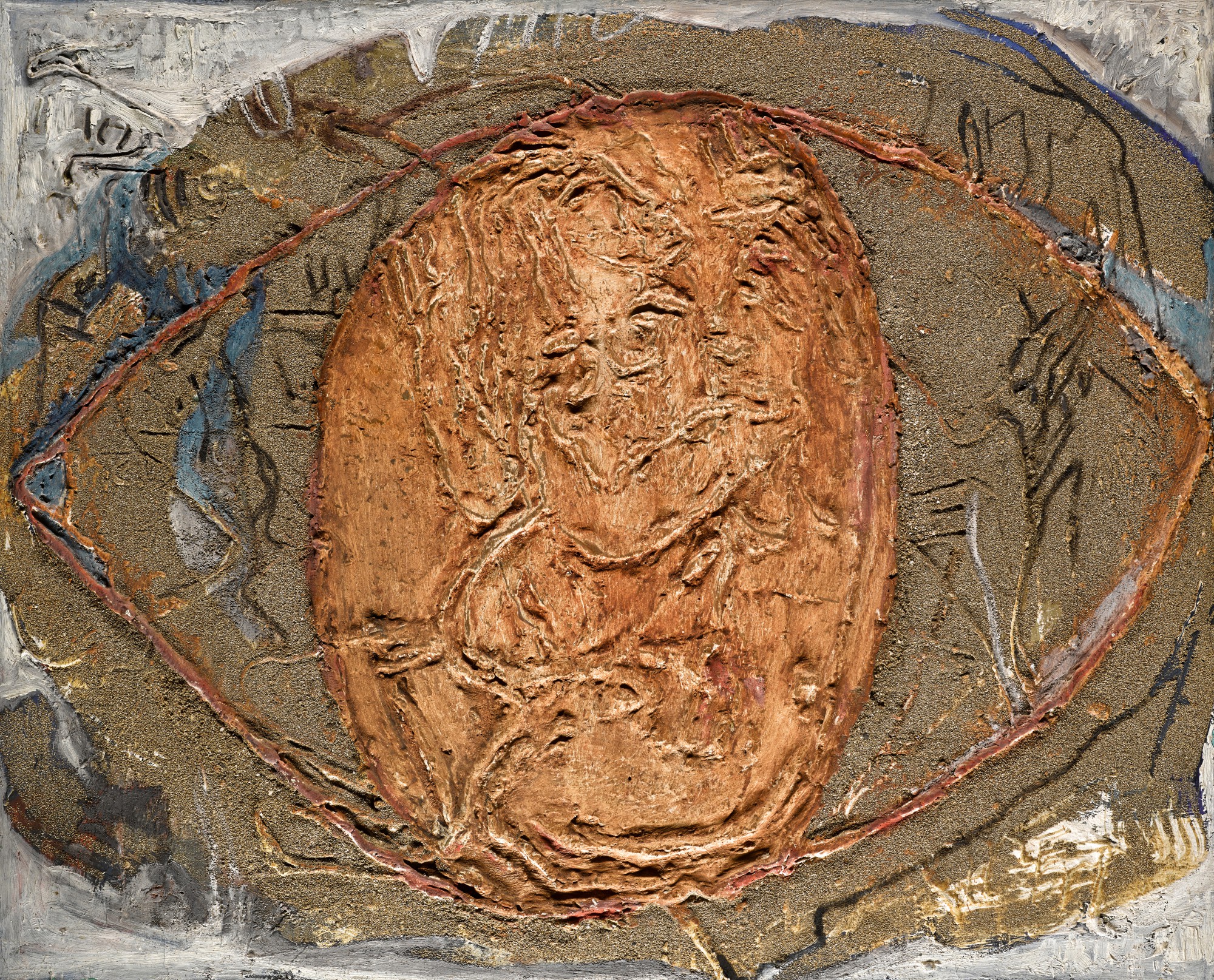
Avinash Chandra
A Time of Innocence, 1985
The correction that followed was sobering but also clarifying. What has settled out is a cleaner sense of which artists hold value over time and which were carried by momentum rather than genuine market depth. Christie's, Sotheby's, and Bonhams all maintain dedicated South Asian sale categories and the results over the past decade show consistent strength for Husain, Raza, Souza, Kapoor, and Kallat. Ara and Avinash Chandra are names worth watching at auction for collectors prepared to do their research, as their works can still appear at prices that reflect incomplete market attention rather than artistic merit.
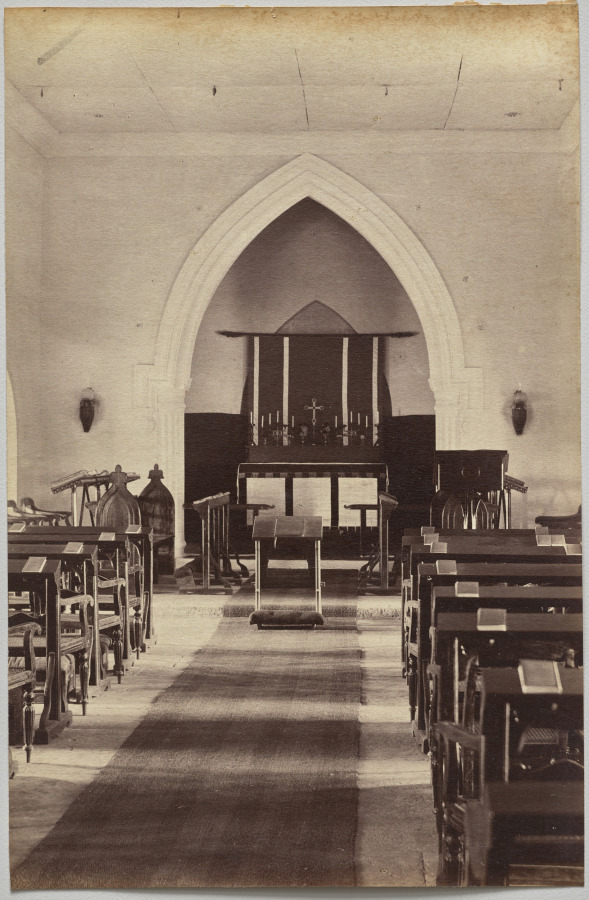
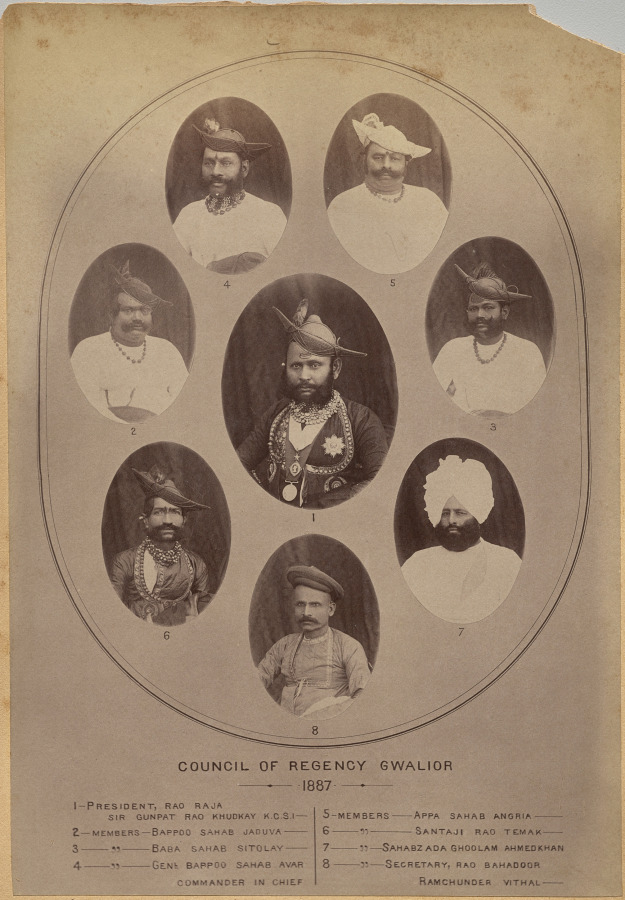
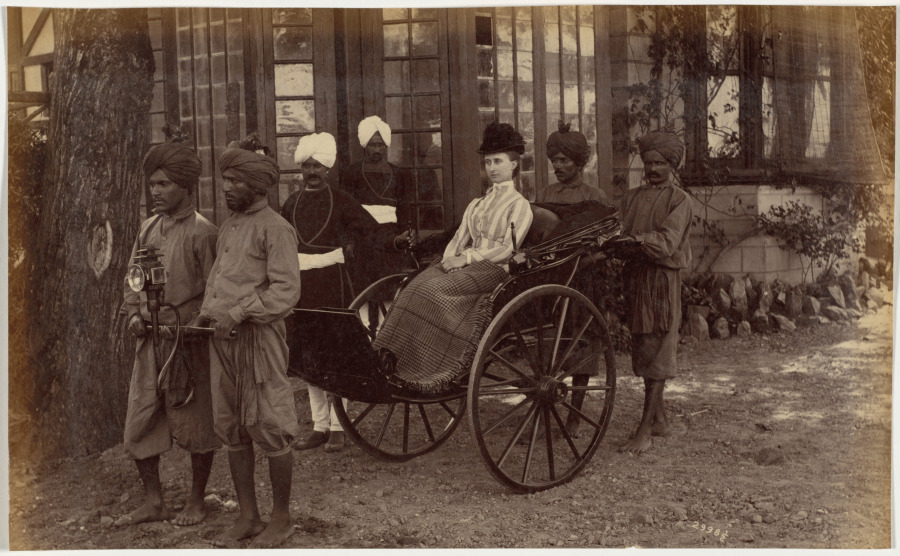
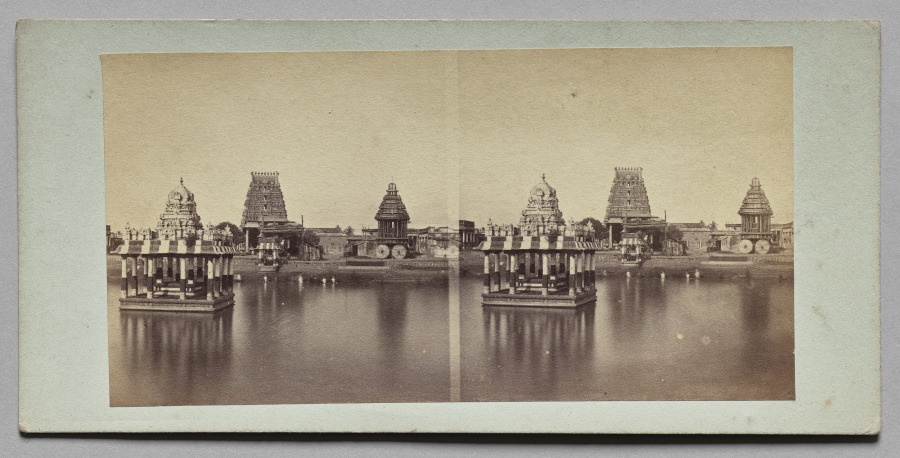
On the historical photography front, Raja Deen Dayal represents one of the most significant and genuinely exciting collecting opportunities in the entire category. He was the court photographer to the Nizam of Hyderabad in the late nineteenth century and his photographs of Indian life, royalty, and landscape are primary historical documents of extraordinary visual intelligence. Works by Dayal and by figures like Captain Linnaeus Tripe, whose own documentation of India and Burma in the 1850s constitutes one of the great bodies of architectural and ethnographic photography, occupy a space where art history and cultural history overlap completely. The market for nineteenth century Indian photography is still finding its footing and that represents a genuine opportunity.
Practically speaking, collectors should ask galleries direct questions about provenance, especially for works made before 1970, and about exhibition history, which is often the best evidence of sustained critical engagement with a work. With prints and editions, which several of the artists on The Collection have produced, always ask for the edition number, the total edition size, and whether there are artist proofs in circulation. Condition in Indian works on paper requires particular attention given the subcontinent's climatic range. Consistent humidity control matters enormously and is worth discussing with a conservator before acquisition.
Display choices should account for light sensitivity, particularly in older photographic works. When you are starting out or deepening an existing collection in this area, it is worth speaking to advisors who have spent time in Mumbai, Delhi, and Kolkata, and who know the institutional landscape there as well as the international market. The best collections in this space share a quality of genuine curiosity rather than category completion, and that is exactly the spirit the work rewards.