Bedlam Vacation
2005
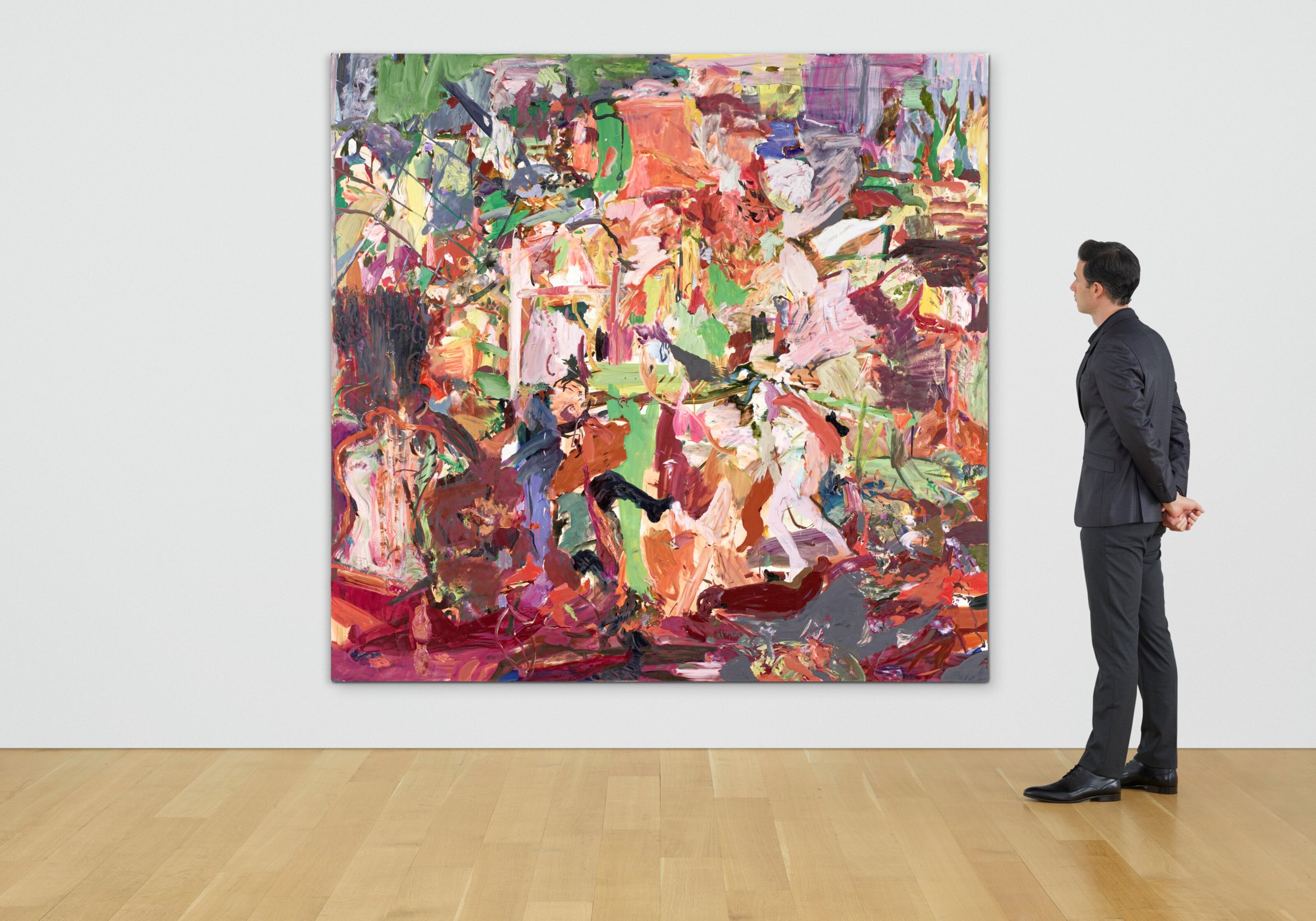
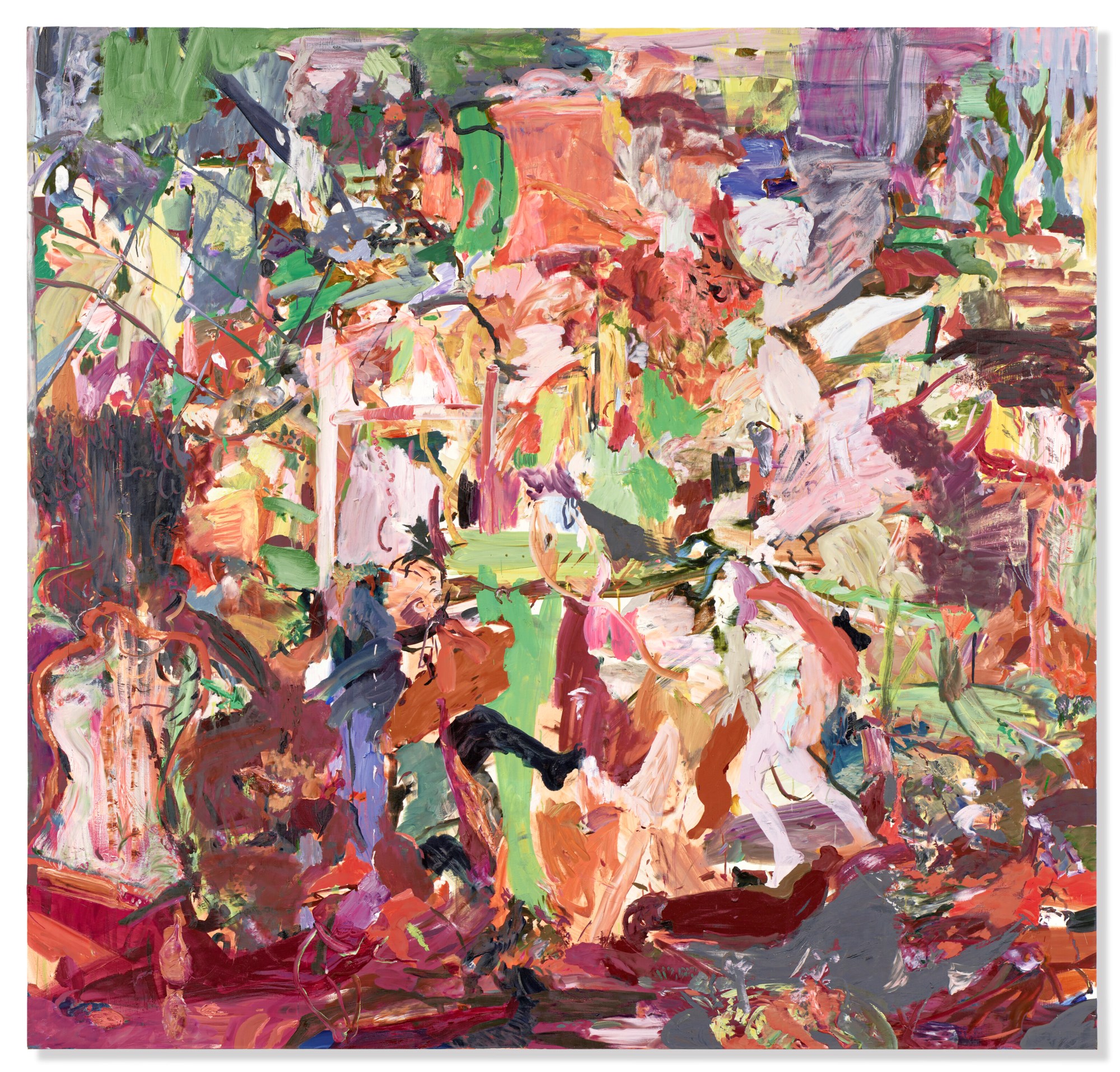
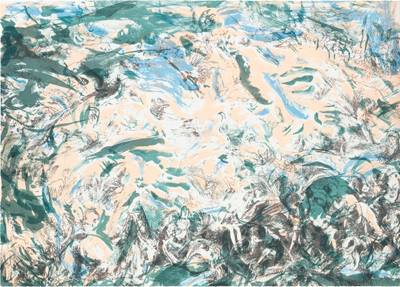
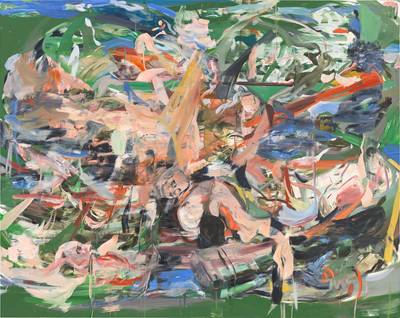
Executed in 2005, Bedlam Vacation pairs a sensuous command of oil paint with a language of excess, fragmentation, and dissolution that resists instant legibility. Forms gather only to splinter apart; bodies and landscape surfaces emerge through thick, turbulent brushwork before slipping back into it, asking viewers to linger in the act of looking itself rather than seeking quick recognition. The title orchestrates a productive tension between tumult and leisure, between the disorder of "bedlam" and the promised escape of "vacation," a friction the painting inhabits through its refusal to settle into coherence. Though the canvas carries faint echoes of Old Master pastoral tradition, Baroque pleasure, and Romantic atmosphere, these art-historical references never solidify into stable quotation but instead submit to Brown's disruptive handling of paint. Across the surface, fleshy pinks, reds, and earthy browns collide in passages where dense impasto gives way to translucent smears, where contour is asserted only to be broken apart, making every mark operate simultaneously as both description and its own undoing.
- Medium
- oil on linen
- Dimensions
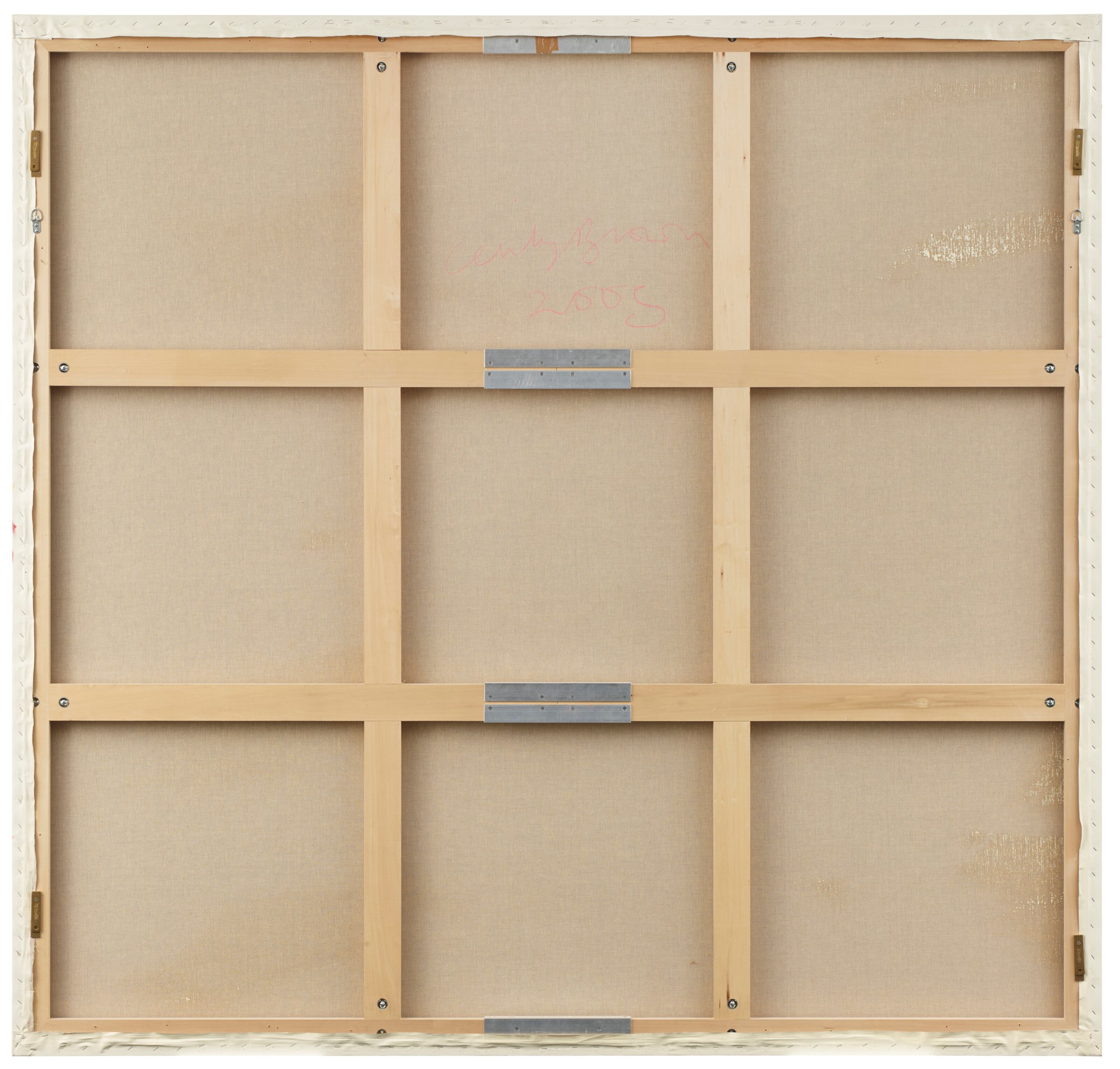
- Signed
- Yes
- Location
- Christie's, Beverly Hills, CA
- Spotted At
- Auction House · Christie'sView on map
Notes
LITERATURE D. Avram, "Legends of the Fall," Patron Magazine, August-September 2018, p. 78 (illustrated). Isabella Lauria Senior Vice President, Senior Specialist, Head of 21st Century Evening Sale ILAURIA@CHRISTIES.COM +1 347 803 0224 LOT ESSAY Present lot illustrated (detail). Executed in 2005, Bedlam Vacation is a painting of remarkable density and ambition, pairing Cecily Brown’s sensuous command of oil paint with an art-historically charged language of excess, fragmentation, and dissolution. Tumultuous yet highly controlled, the canvas brings into focus the central tension that animates Brown’s work: the mercurial coexistence of figuration and abstraction, image and ambiguity, sensual immediacy and painterly intelligence. Here, forms gather only to splinter apart. Bodies and landscape seem to surface through the paint, then slip back into it. The result is a painting that resists instant legibility, but rewards sustained looking, asking the viewer not simply to identify what is pictured, but to remain inside the act of suspense itself. Brown has described that experience with striking precision: “You grope to understand what might be an image … it remains out of reach, you concentrate harder and other readings flood in, something obliterating the first but also enhancing, exaggerating, echoing …” (quoted in S. Cotter, ed., Cecily Brown: Paintings, exh. cat. Oxford, 2005, p. 57) Bedlam Vacation unfolds through exactly this sequence of approach and withdrawal, turning pause itself into a pictorial principle. Artist Cecily Brown is photographed for art Magazine Germany on July 30, 2008, in her New York City studio. Photo: Juergen Frank/Corbis via Getty Images. Artwork: © Cecily Brown. The title offers an especially telling entry into the work. “Bedlam” invokes tumult, disorder, and excess—a state of psychic and social upheaval—while “vacation” introduces a counterpoint of release, leisure, even pastoral escape. Brown’s painting inhabits precisely that friction. The canvas suggests revelry and disarray at once, as though a scene of pleasure had tipped into something wilder, stranger, and less containable. There is, perhaps, a faint echo of the fête galante or Bacchic idyll in the work’s structure: hints of vegetation and open areas of luminous color that suggest atmosphere and setting. Yet these allusions never cohere into a stable pastoral scene. Instead, they are subjected to Brown’s disruptive handling of paint, which breaks down the very conventions it seems momentarily to summon. The “vacation” does not promise repose so much as a temporary suspension of order. In that sense, the title does more than lend the painting literary flair: it sharpens Brown’s investment in painting as a site where narrative and optical certainty can be loosened from within. Henri Matisse, The Joy of Life (Bonheur de Vivre), 1905. Barnes Foundation, Philadelphia. Photo: The Barnes Foundation / Bridgeman Images. That Brown’s work is steeped in art history is not incidental, but fundamental to its achievement. “I feel inseparable from the history of European painting; I definitely feel steeped in it,” she has said. “When I first started painting, it seemed very natural to me to want to be in a conversation with Old Masters” (quoted in D. Ashton, Cecily Brown, New York, 2008, p. 25). Bedlam Vacation makes that conversation visible without ever collapsing into quotation or pastiche. The painting tips toward Nicolas Poussin, Jean-Antoine Watteau, and the heightened emotional and atmospheric registers of nineteenth-century Romanticism. One senses, however fleetingly, the residue of arcadian scenery and mythic or theatrical encounters. Jean-Honore Fragonard, The Swing (Les Hasards heureux de L'Escarpolette), 1767. Wallace Collection, London. Dore Ashton’s observation that Brown is “a painter who makes journeys and tells herself stories—but in her own language: the language of painting” is especially resonant here (ibid., p. 20). Bedlam Vacation does not narrate in any conventional sense, but it retains something of narrative’s structure: a sense of incident, encounter, and unfolding. Limbs seem to emerge from a thicket of brushwork; flesh tones imply bodies without ever fully securing them; foliage-like passages evoke an environment that cannot quite be fixed. The eye keeps searching for anchors, only to find them dissolving into a more general turbulence. Rather than resolve into tableau, the painting sustains the sensation of a scene in formation, one that hovers at the threshold of appearance without ever fully settling into view. This is where Brown’s medium becomes inseparable from her meaning. Across the surface, paint is pushed, dragged, loaded, and thinned with extraordinary fluency. Fleshy pinks, reds, creams, greens, smoky violets, and earthen browns collide in a surface that feels at once lush and abrasive. Passages of dense impasto give way to translucent smears; recognizable fragments are overtaken by gesture; contour is asserted only to be broken apart. In this respect, Brown draws on the gestural freedoms of Abstract Expressionism, particularly the work of Willem de Kooning. As Sarah Cotter observed of Brown’s work in 2005, her handling of paint is “a mix of fast and slow, thick and thin, a virtuosity of handling and a deliberate clumsiness, of images held in suspense, between recognition and pure gesture” (S. Cotter, op cit.,, p. 44) The painting’s internal drama lies in the pressure Brown places on every mark, forcing it to operate at once as description and disruption, as form and as its own undoing. Willem de Kooning, Untitled I, 1977. © 2026 The Willem de Kooning Foundation / Artists Rights Society (ARS), New York. By 2005, Brown had already distinguished herself as one of the most compelling painters of her generation for the way she put painting’s histories under pressure. Her work neither disavows the past nor submits passively to it. Instead, it reopens inherited genres through a painterly language that is at once lush, fractured, and fluid. In Bedlam Vacation, echoes of Old Master composition, Rococo pleasure, and romantic atmosphere remain palpable, but they never settle into citation. Brown’s deeper subject is what painting can still do with those inheritances: how it can fracture them, sensualize them, and set them in motion again. That is what gives Bedlam Vacation its particular force. The painting is not simply exuberant, nor simply ambiguous. It makes exacting demands on vision, insisting that looking remain unsettled, searching, and responsive to change. Bedlam is therefore not just thematic. It names the work’s deeper method: a productive disorder in which image, gesture, and sensation are continually broken open and remade in paint. What emerges is a work of remarkable sensual and intellectual energy, one that confirms Brown’s ability to make painting feel restless, contemporary, and insistently alive. Present lot illustrated.
🔨 Auction Lot
Marian's Richters & 21st Century Evening Sale
Lot 29
Artists in conversation
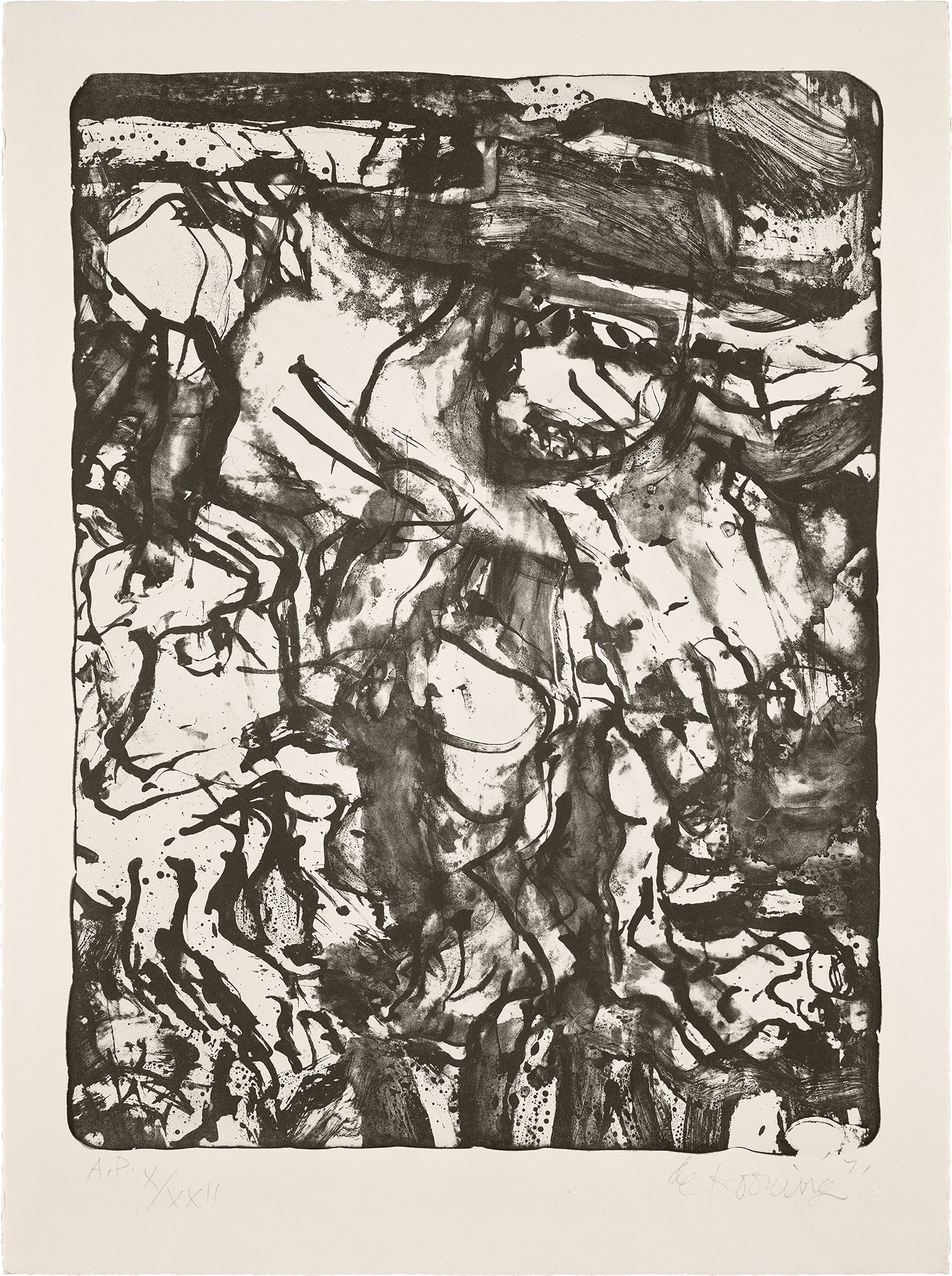
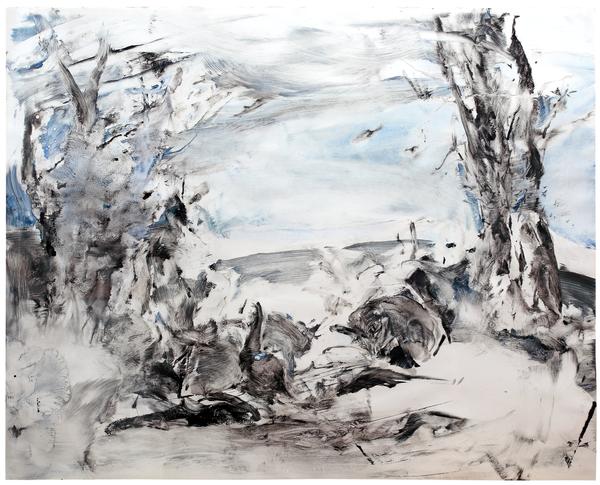
Willem de Kooning
Dutch-American · b. 1904
De Kooning pioneered the same fusion of gestural abstraction with fragmentary figuration, particularly bodies and flesh, using violent energetic brushwork across large canvases that Brown directly references and builds upon.

Jenny Saville
British · b. 1970
Saville shares Brown's preoccupation with large scale figurative painting where bodies dissolve into painterly abstraction, with similarly chaotic gestural surfaces that blur the boundary between flesh and pure mark making.
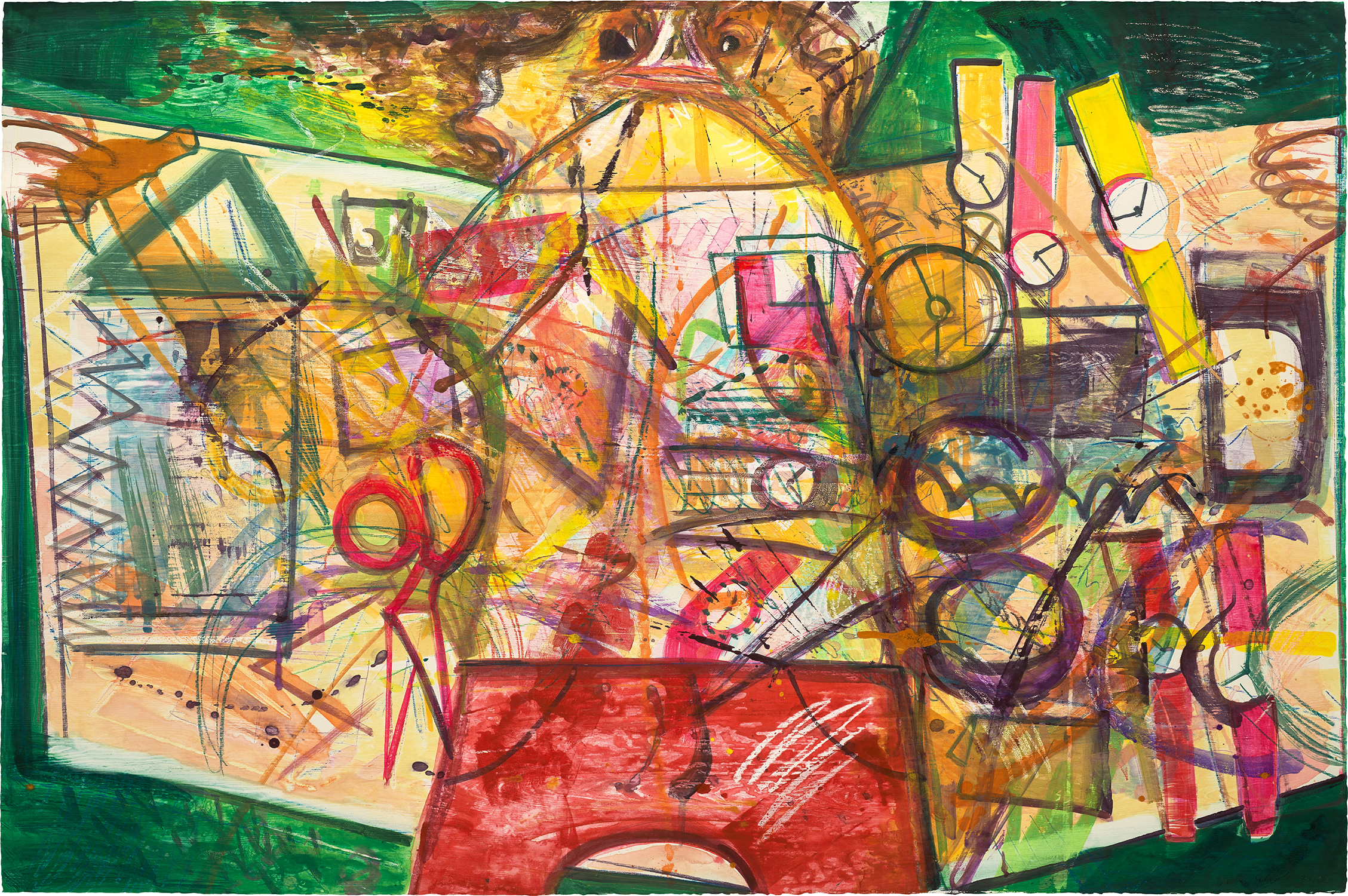
Dana Schutz
American · b. 1976
Schutz creates densely layered figurative paintings with the same frenetic multicolored gestural energy and narrative ambiguity, where bodies and carnival like scenes collapse into abstract expressionist chaos with clear art historical consciousness.
Start the Discussion
Request access to join the discussion