Hard-Edge Abstraction
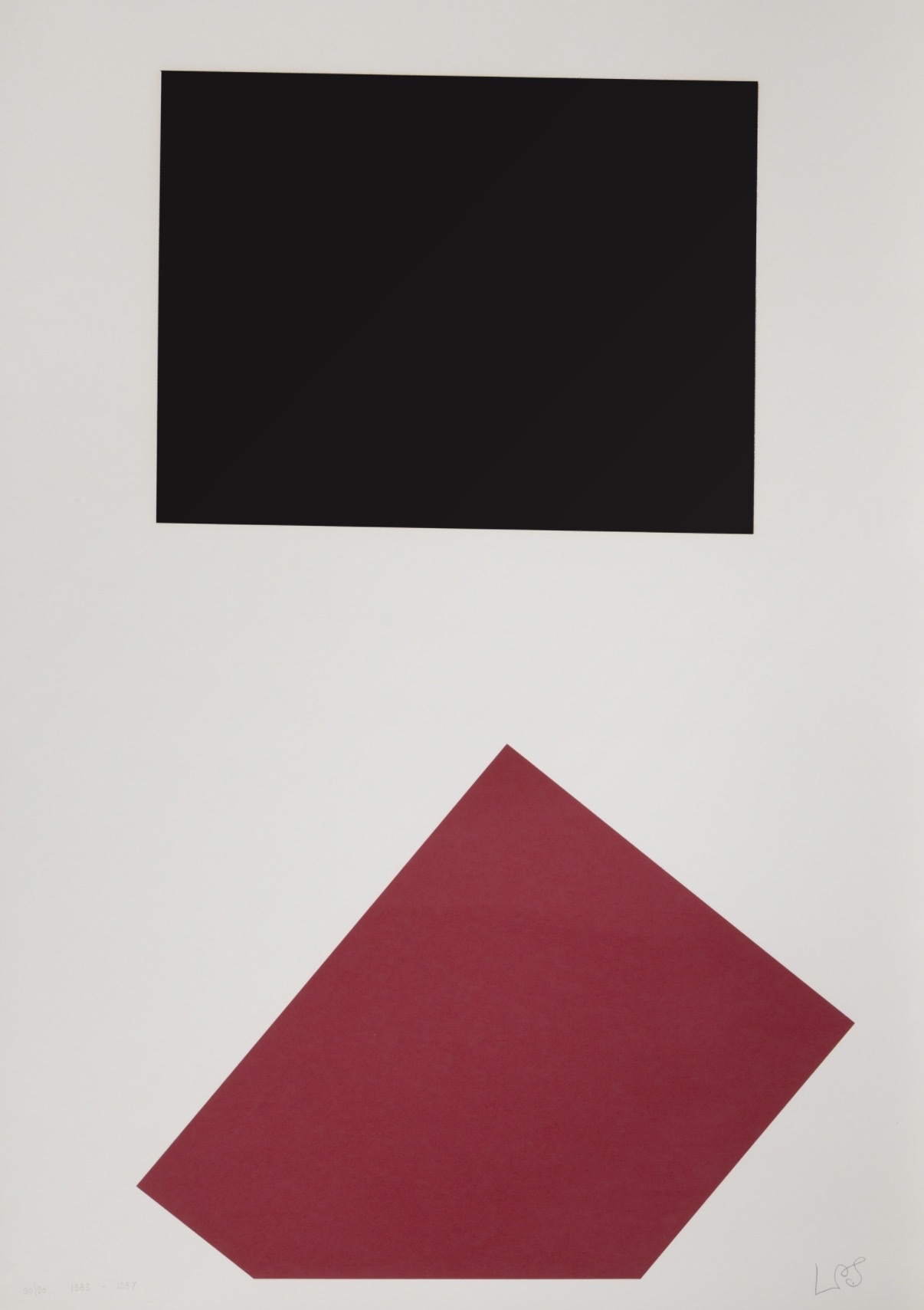
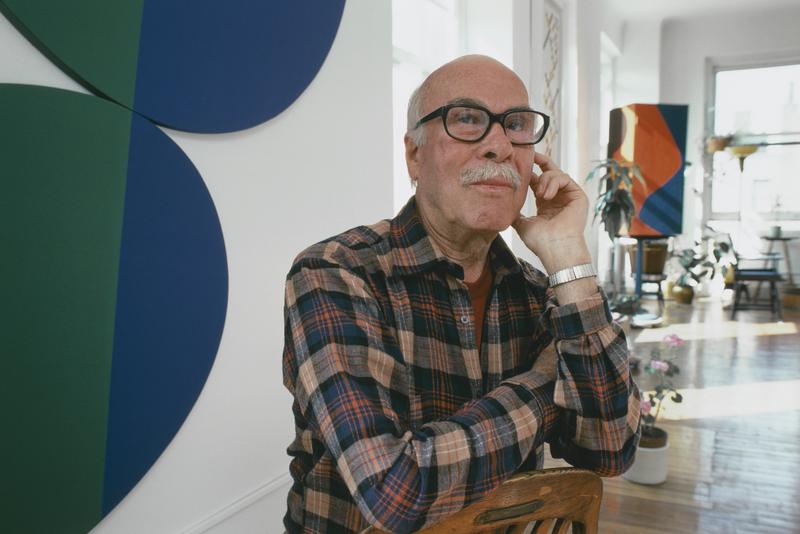
Leon Polk Smith
Werkubersicht/Work-Overview J, 1987
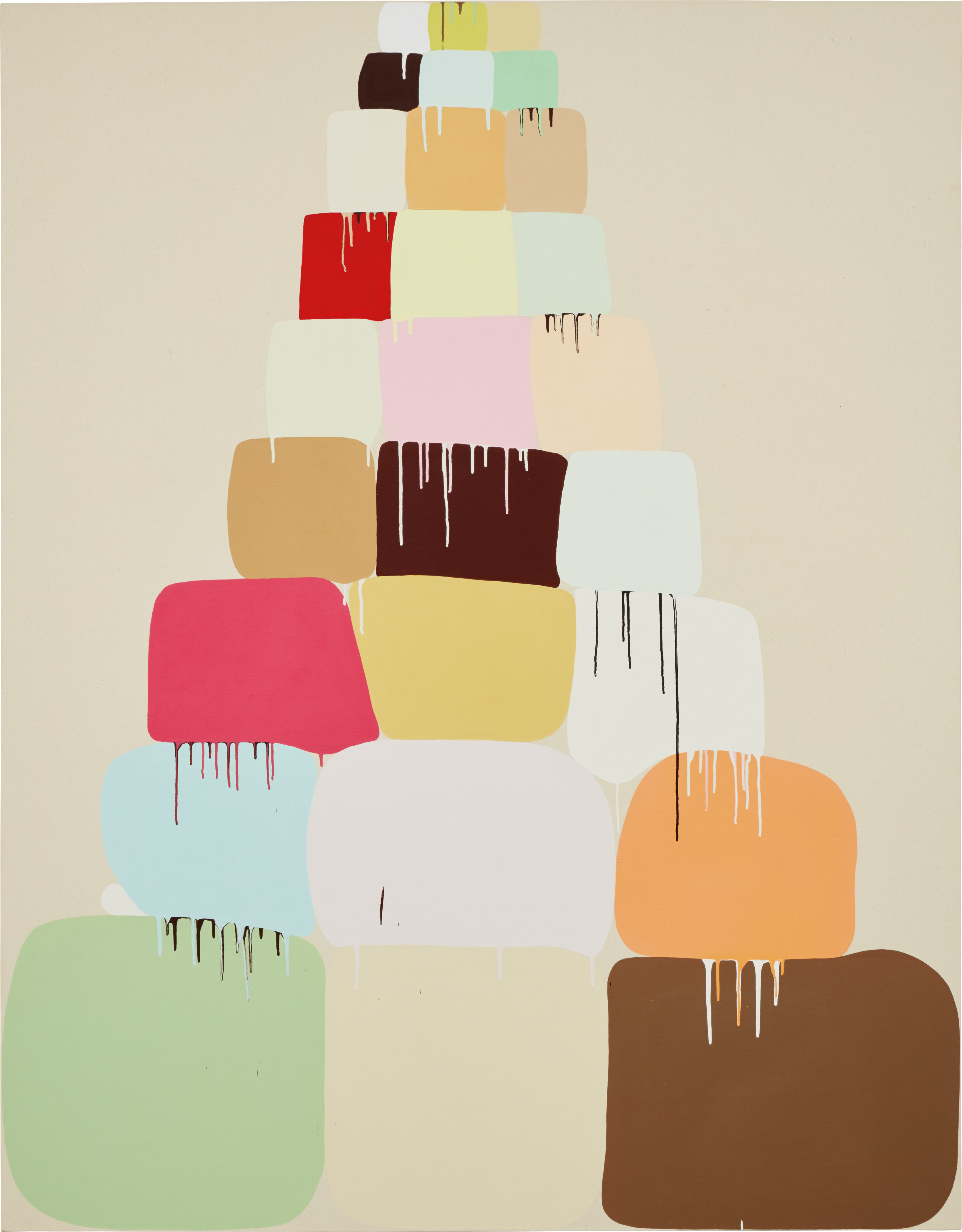
Where the Edge Becomes Everything
There is a particular kind of courage in reduction. To strip painting down to its most elemental grammar, to let a clean boundary between two colors carry the full weight of emotional and philosophical meaning, is to make an enormous bet on the viewer's intelligence. Hard edge abstraction was precisely that bet, placed collectively by a generation of painters in the late 1950s and 1960s who believed that geometry was not a retreat from feeling but its purest possible expression. Decades on, that wager looks more prescient than ever.
The term itself was coined by the Los Angeles critic Jules Langsner in 1959, introduced in the catalog essay for an exhibition called Four Abstract Classicists at the Los Angeles County Museum of Art. The show brought together Karl Benjamin, Lorser Feitelson, Frederick Hammersley, and John McLaughlin, four California painters who shared a commitment to clean contour, flat unmodulated color, and the total elimination of gestural incident. Langsner wanted a phrase that distinguished their work from the loose, intuitive abstraction then dominating critical conversation in New York. Hard edge was that phrase, and it stuck.
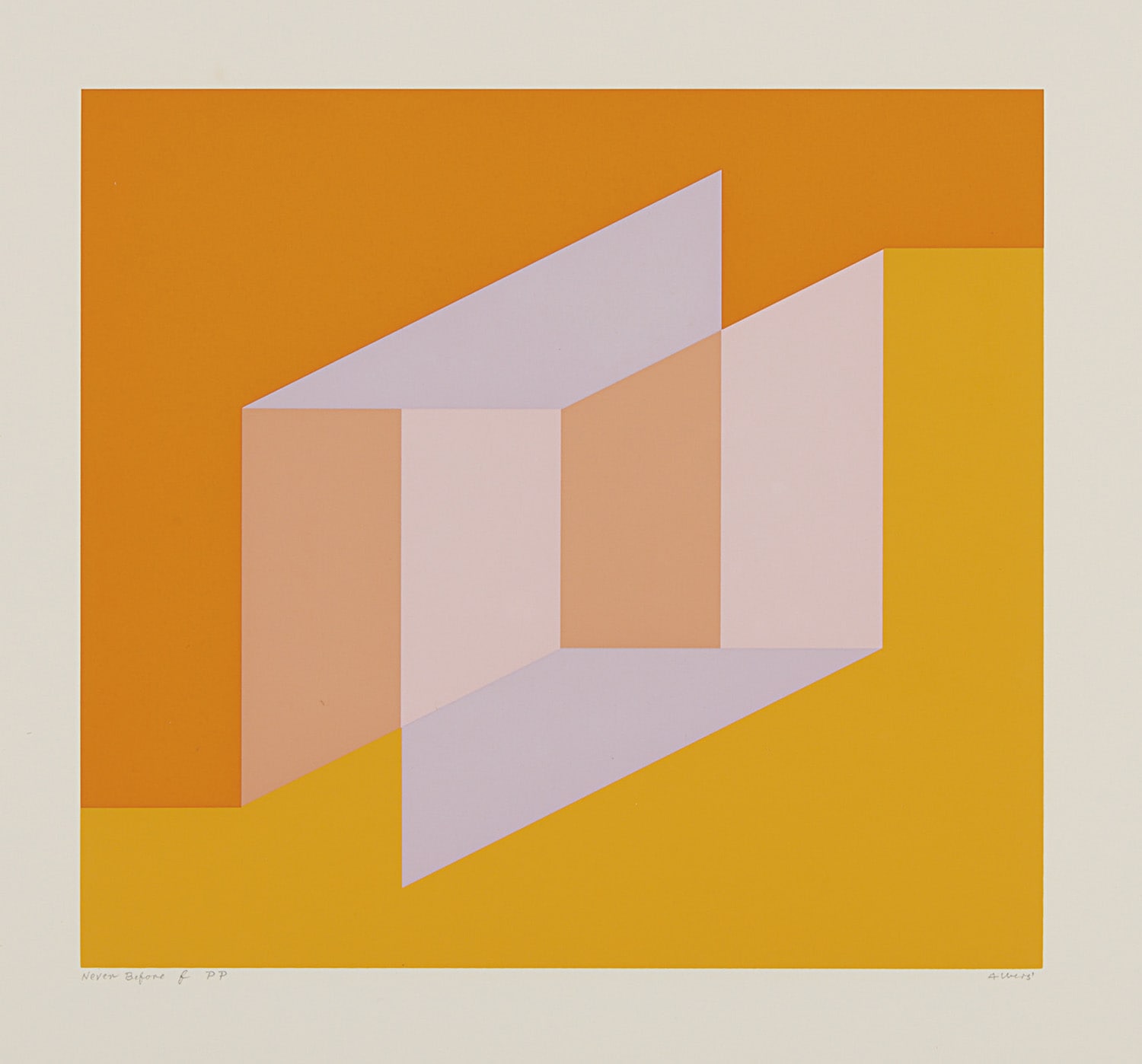
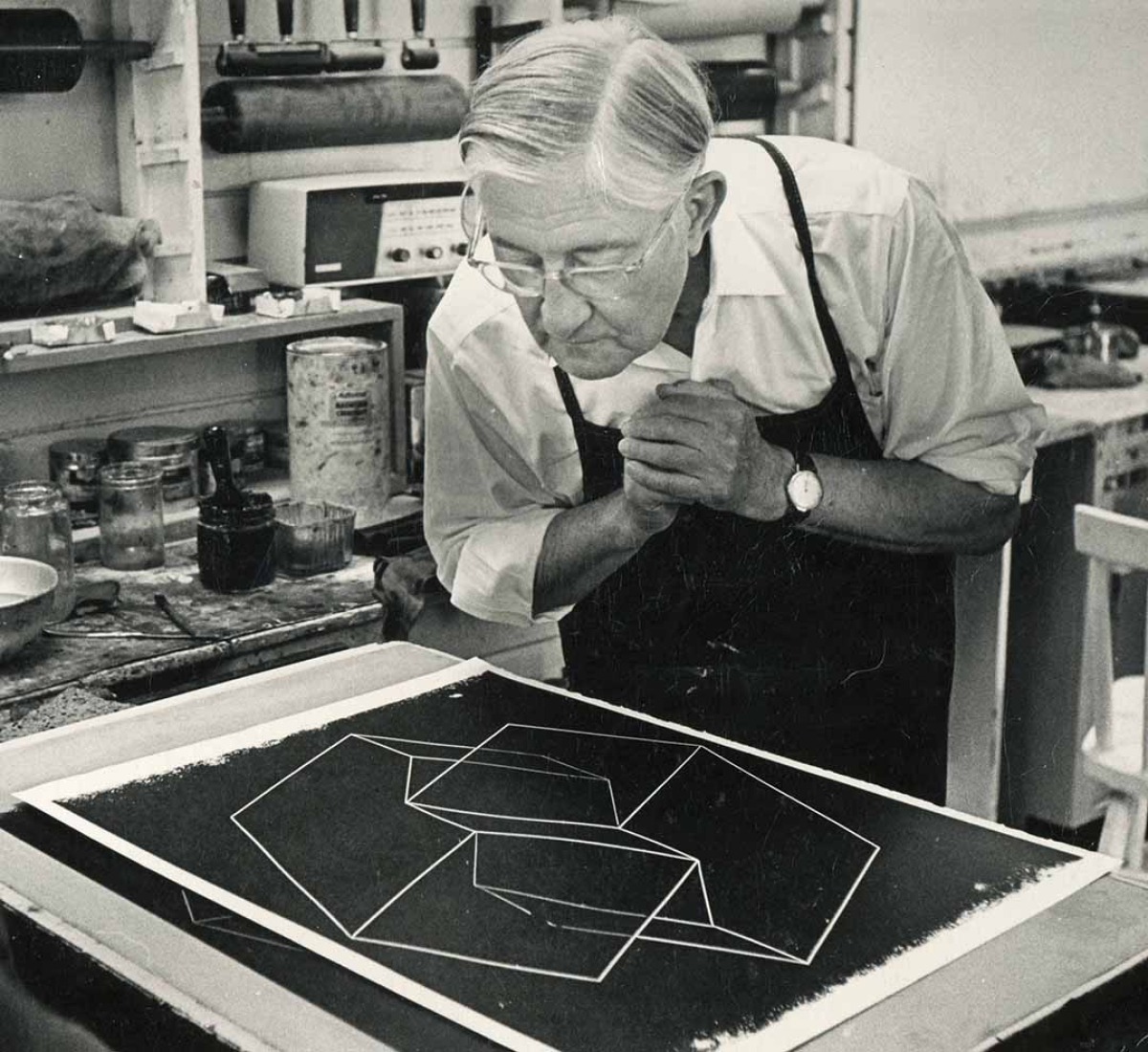
Josef Albers
Never Before f; from Never Before portfolio
Both Benjamin and Hammersley are represented on The Collection, and looking at their work in that lineage makes the California roots of this movement feel essential rather than peripheral. What Langsner named, however, had been building for some time. The philosophical groundwork had been laid by Josef Albers, whose Homage to the Square series, begun in 1950, turned color interaction into a rigorous, almost scientific investigation. Albers was interested in how perception deceives, how a warm color nested inside a cool one can appear to advance or recede based purely on context.
His teaching at Black Mountain College and later Yale spread these ideas with missionary intensity, and his influence on a younger generation of painters was immeasurable. The Albers works on The Collection reward slow looking precisely because that slowness is what he demanded of himself, painting the same format hundreds of times to extract every possible variation. In New York, the conversation was happening in parallel. Ellsworth Kelly had returned from Paris in 1954 carrying ideas about color as autonomous shape, informed by his studies of shadows, architectural fragments, and the way the eye isolates form against background.
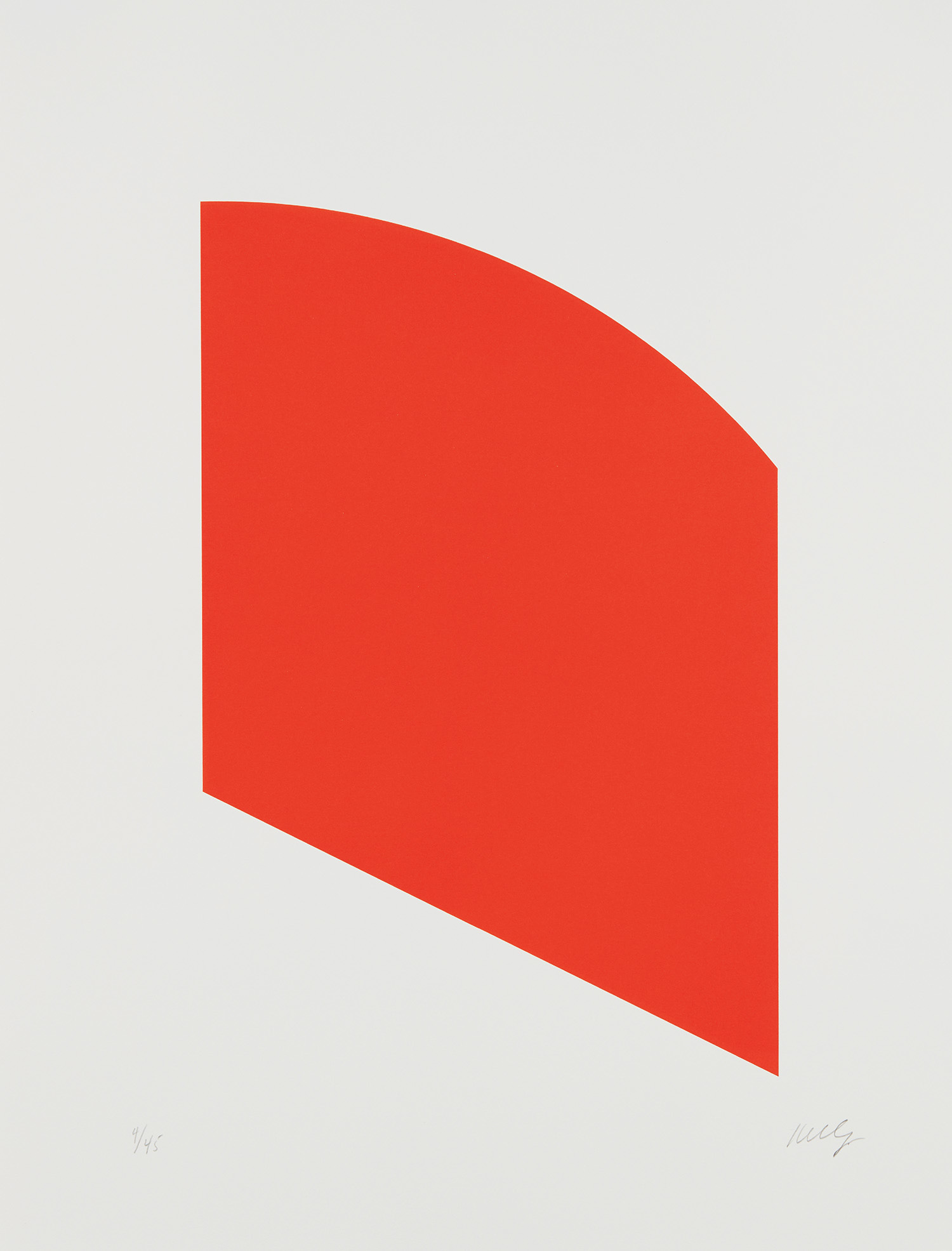
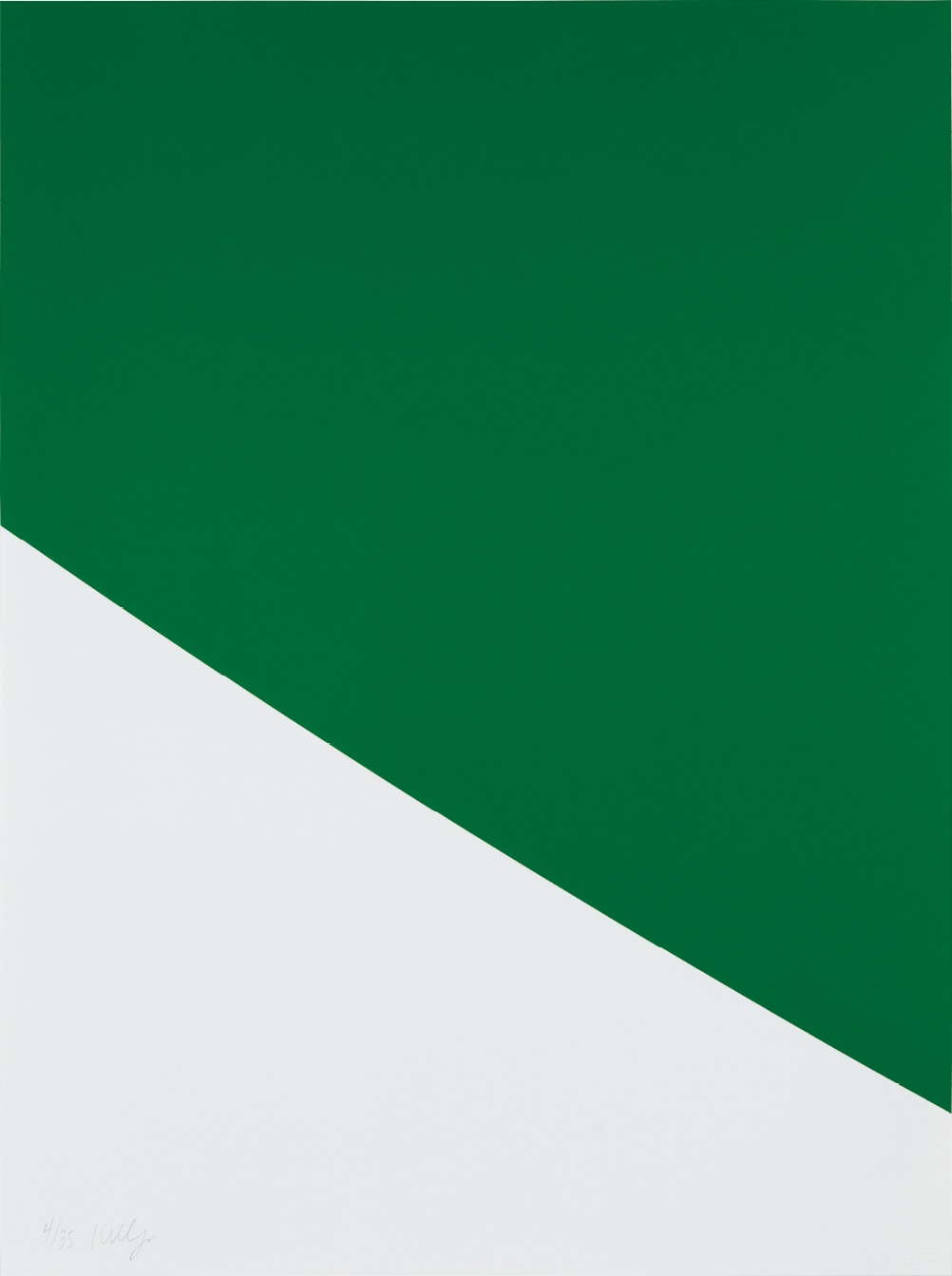
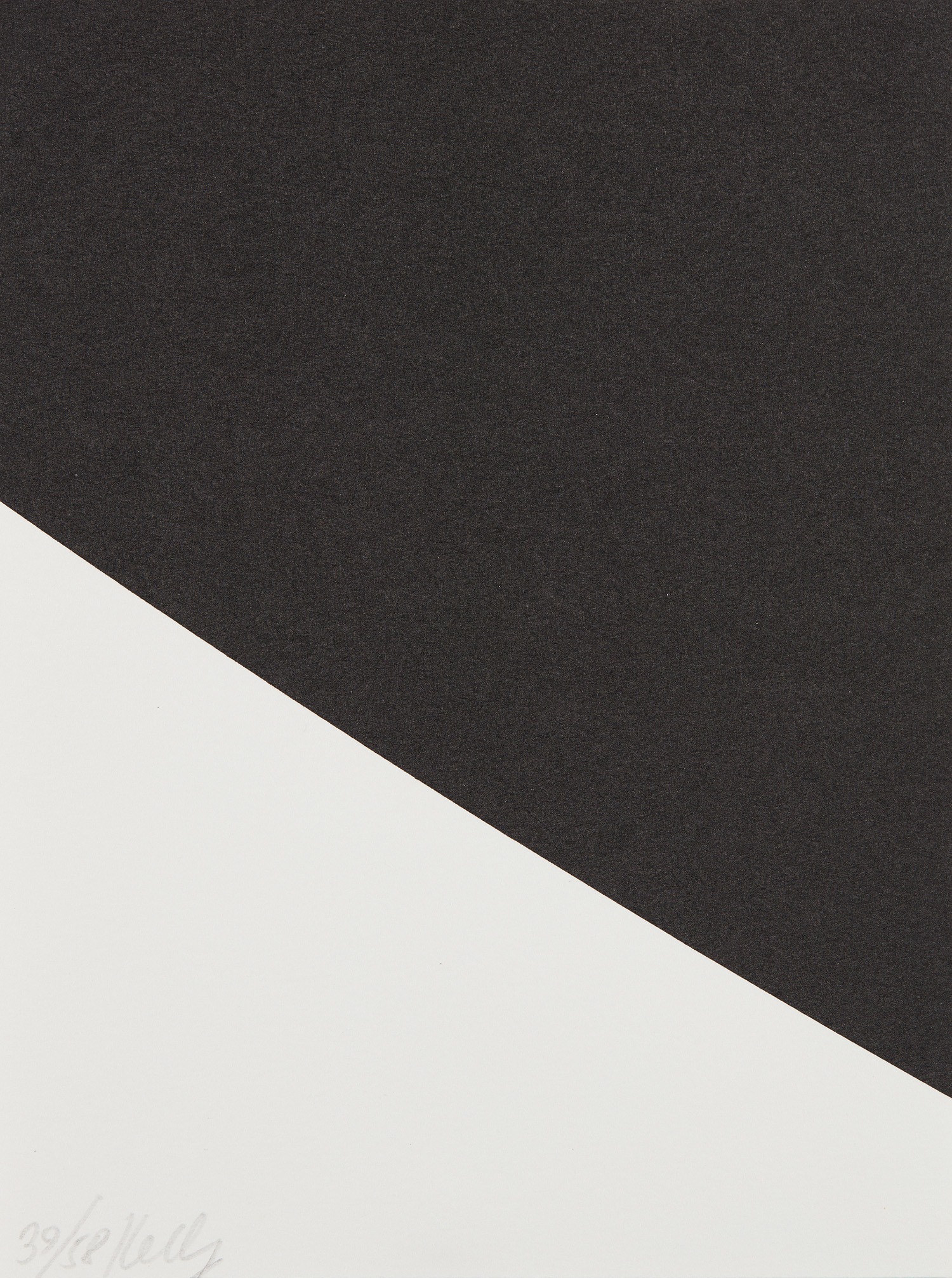
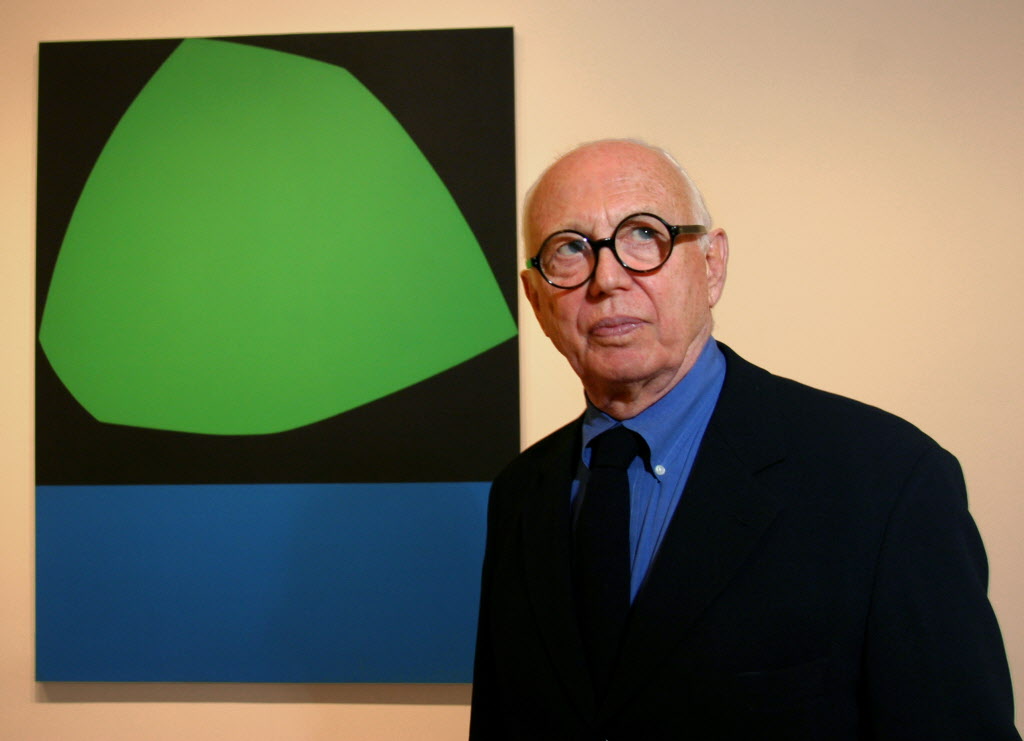
Ellsworth Kelly
Red, from Fourth Curve Series
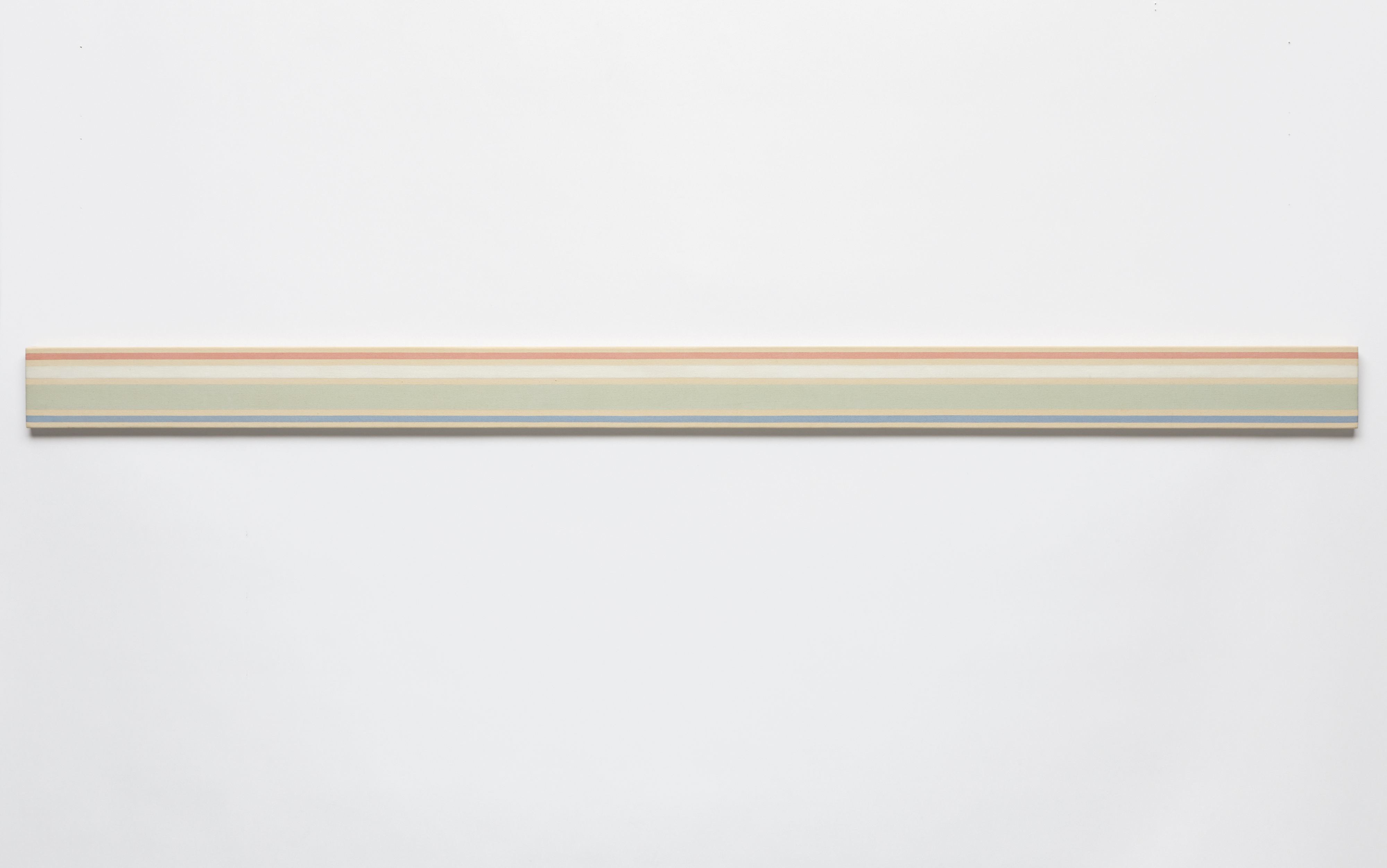
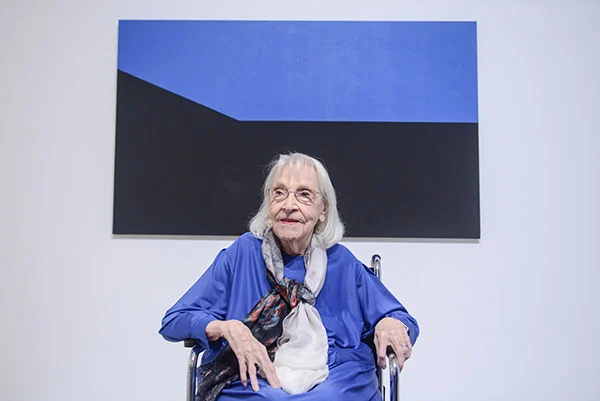
His early shaped canvases and multi panel works proposed something radical: that color did not need to describe anything to be fully itself. Kelly became perhaps the central figure of hard edge painting in America, and the depth of his work on The Collection reflects that centrality. Alongside Kelly, Kenneth Noland was pushing color into chevrons and targets and horizontal bands, works that feel at once perfectly resolved and somehow suspended, as if the decision about what they mean has been deferred to the viewer. Carmen Herrera arrived at her own version of this language through a long, patient arc that only recently received the sustained critical attention it deserved.
Working in New York from the late 1940s onward, Herrera was developing compositions of extraordinary tautness, where black and white or intensely saturated hues met at angles that felt both inevitable and quietly electric. She did not sell a painting until she was 89 years old. That delay had nothing to do with the quality of her vision and everything to do with the structural exclusions of the mid century art world. Her presence on The Collection sits alongside Kelly and Noland not as a footnote but as a parallel argument about what this movement could be and do.
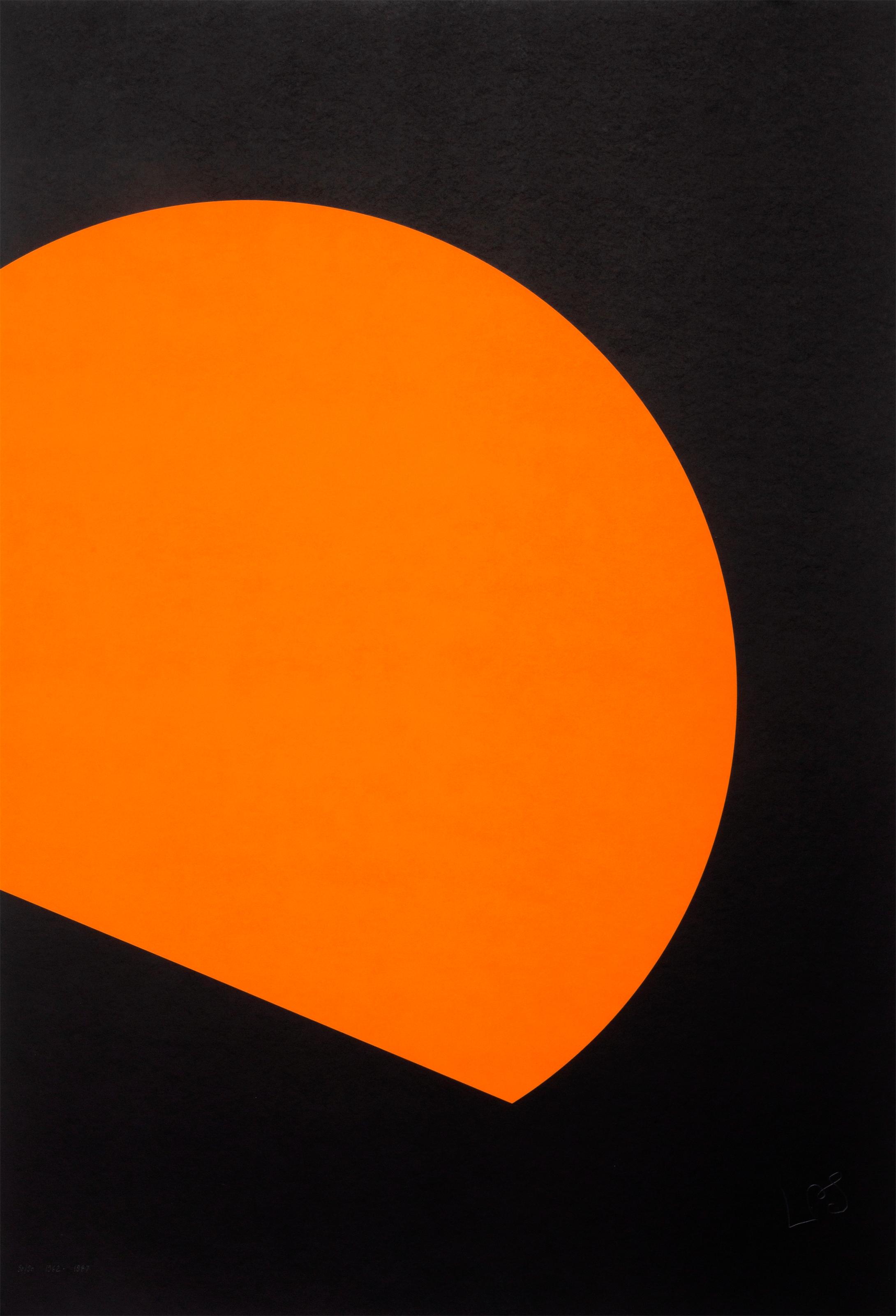
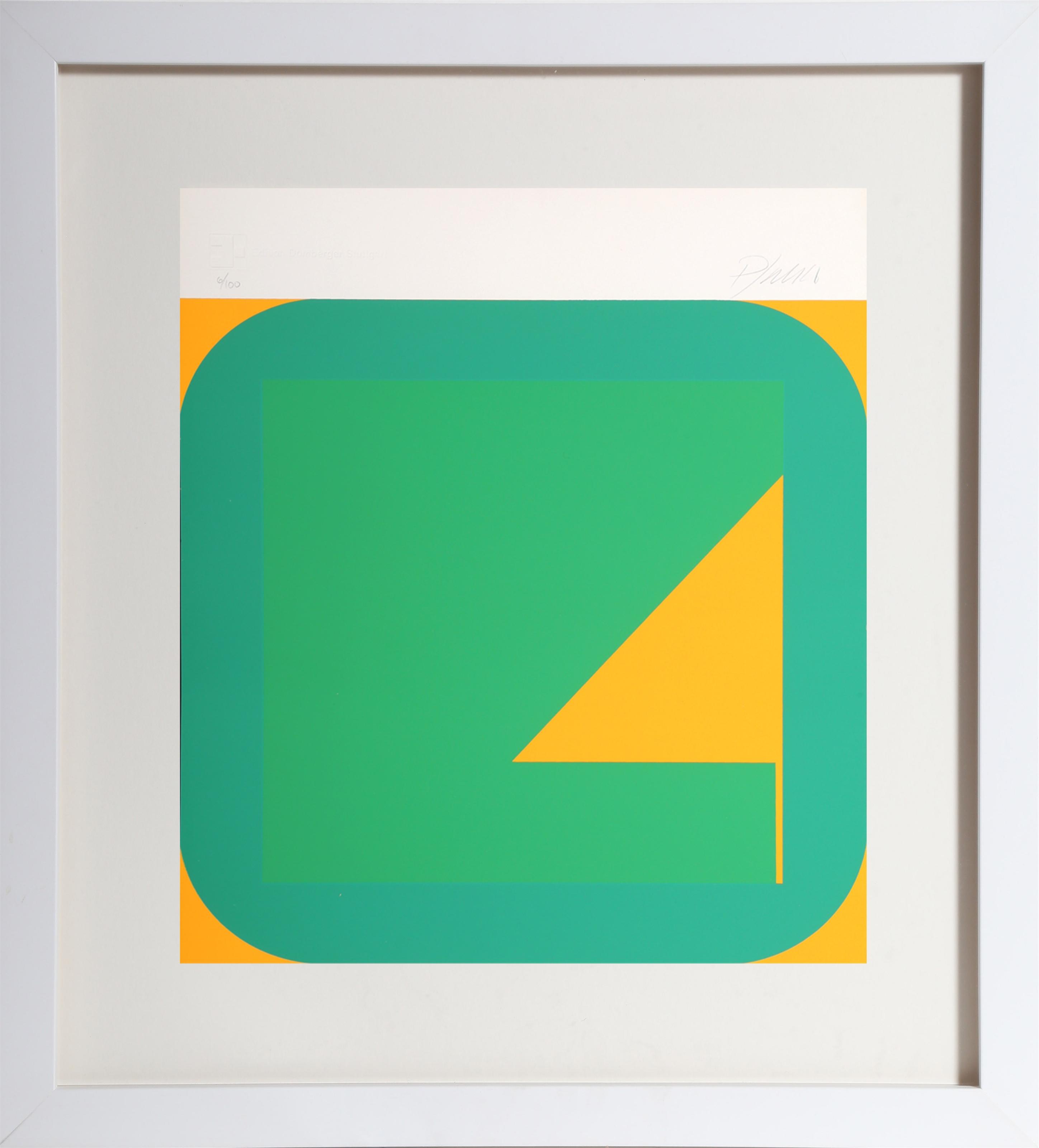
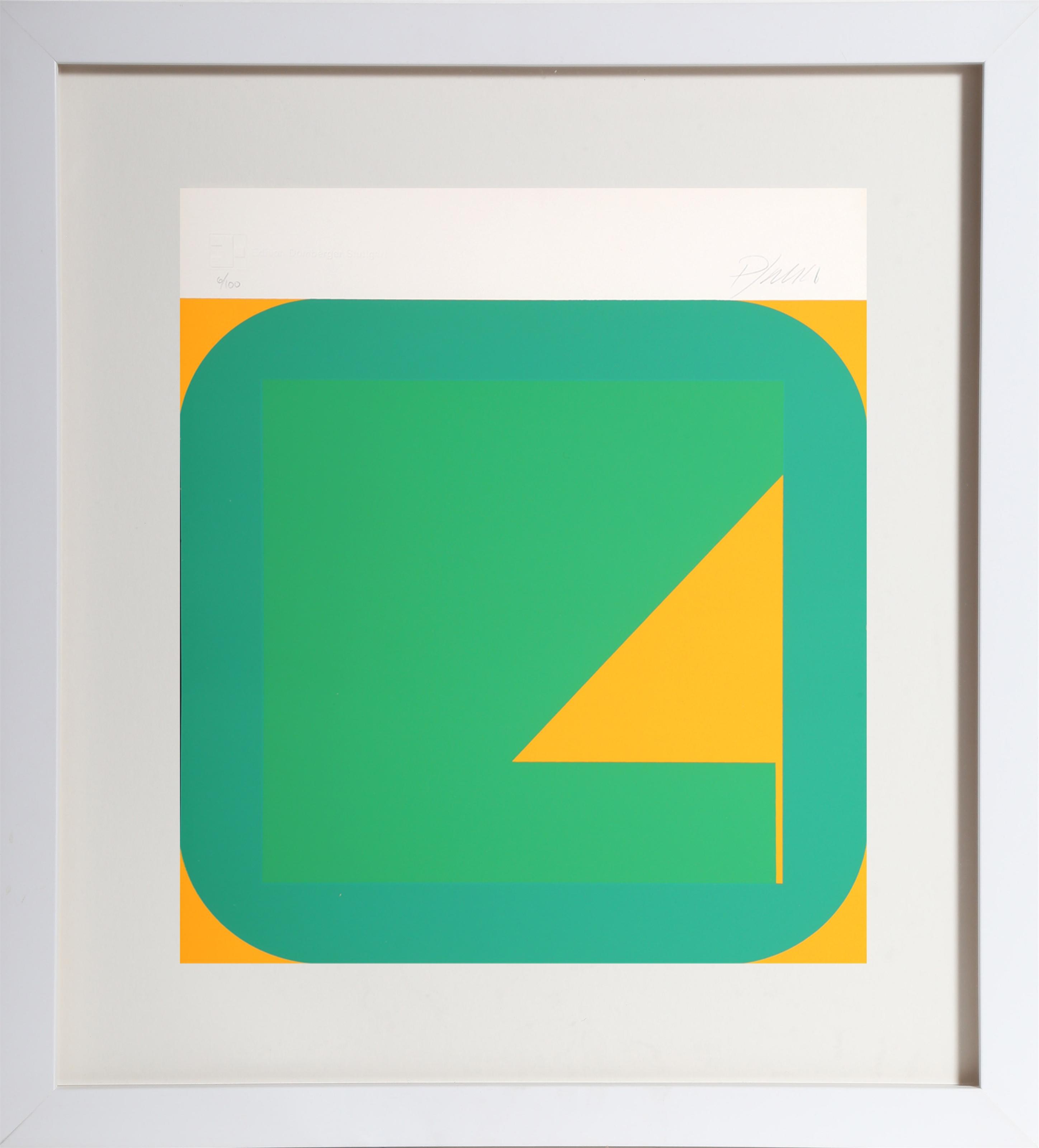
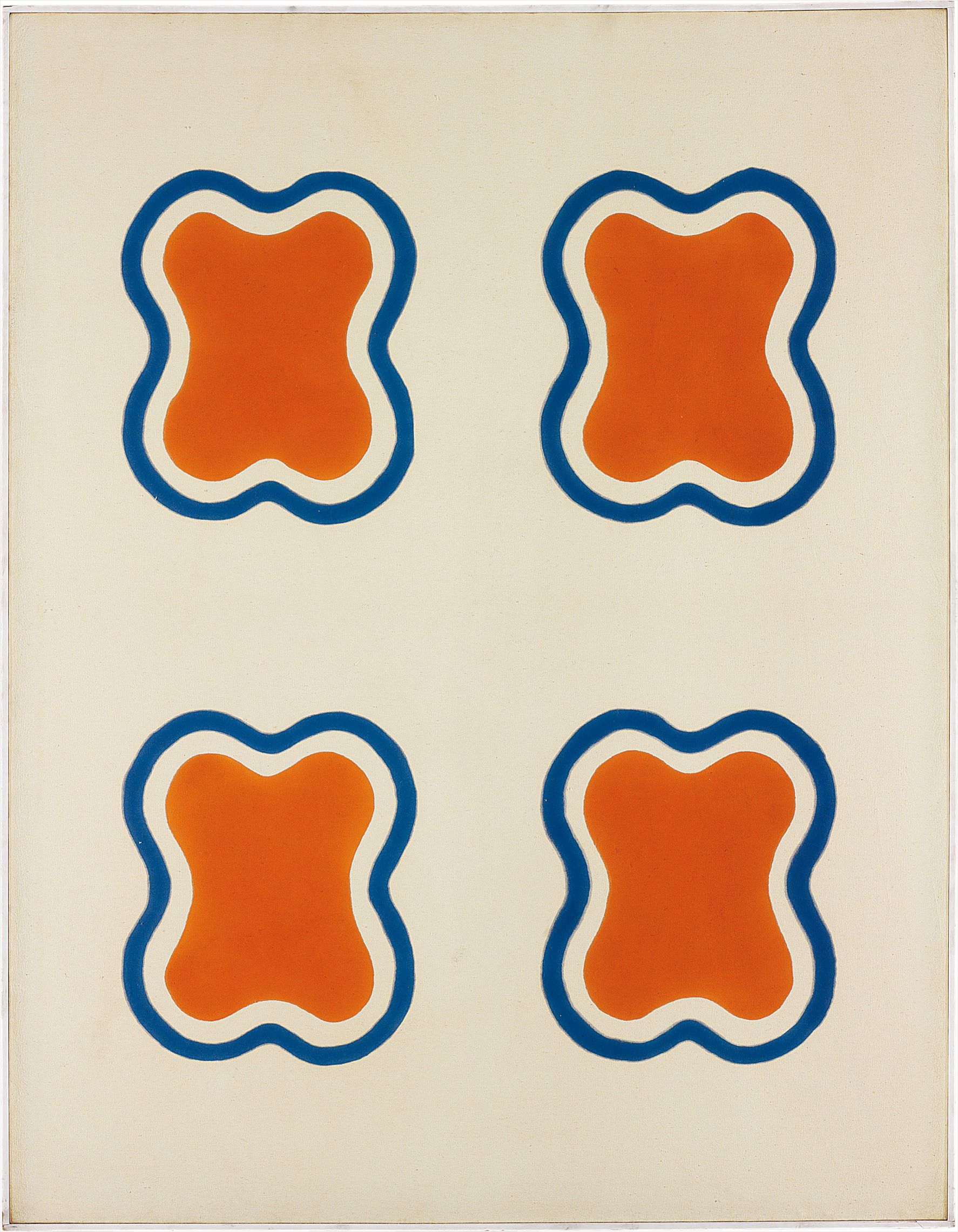
Leon Polk Smith
Werkubersicht/Work-Overview F
Leon Polk Smith deserves mention in any serious account of the movement. His shaped canvases from the late 1950s and 1960s, often working with interlocking biomorphic fields of color, pushed the logic of hard edge into territory that felt simultaneously classical and alive with tension. Smith understood that the edge was not just a formal device but a philosophical one, the place where two propositions about color and space meet and refuse to resolve. Georg Karl Pfahler in Germany and Robyn Denny in Britain were arriving at related conclusions at roughly the same moment, which suggests that hard edge was less a school than a set of urgent questions that painters in different places were asking independently.
The techniques involved were deliberate and demanding. Painters used masking tape to achieve those clean transitions, sometimes working through elaborate layering processes to ensure that the painted surface remained truly flat, free of the texture and incident that remained visible in Abstract Expressionist work even at its most austere. Color was often mixed with great precision and applied by brush or roller in multiple coats. The goal was a surface that appeared not made but simply present, as if the color had always been there waiting to be seen.
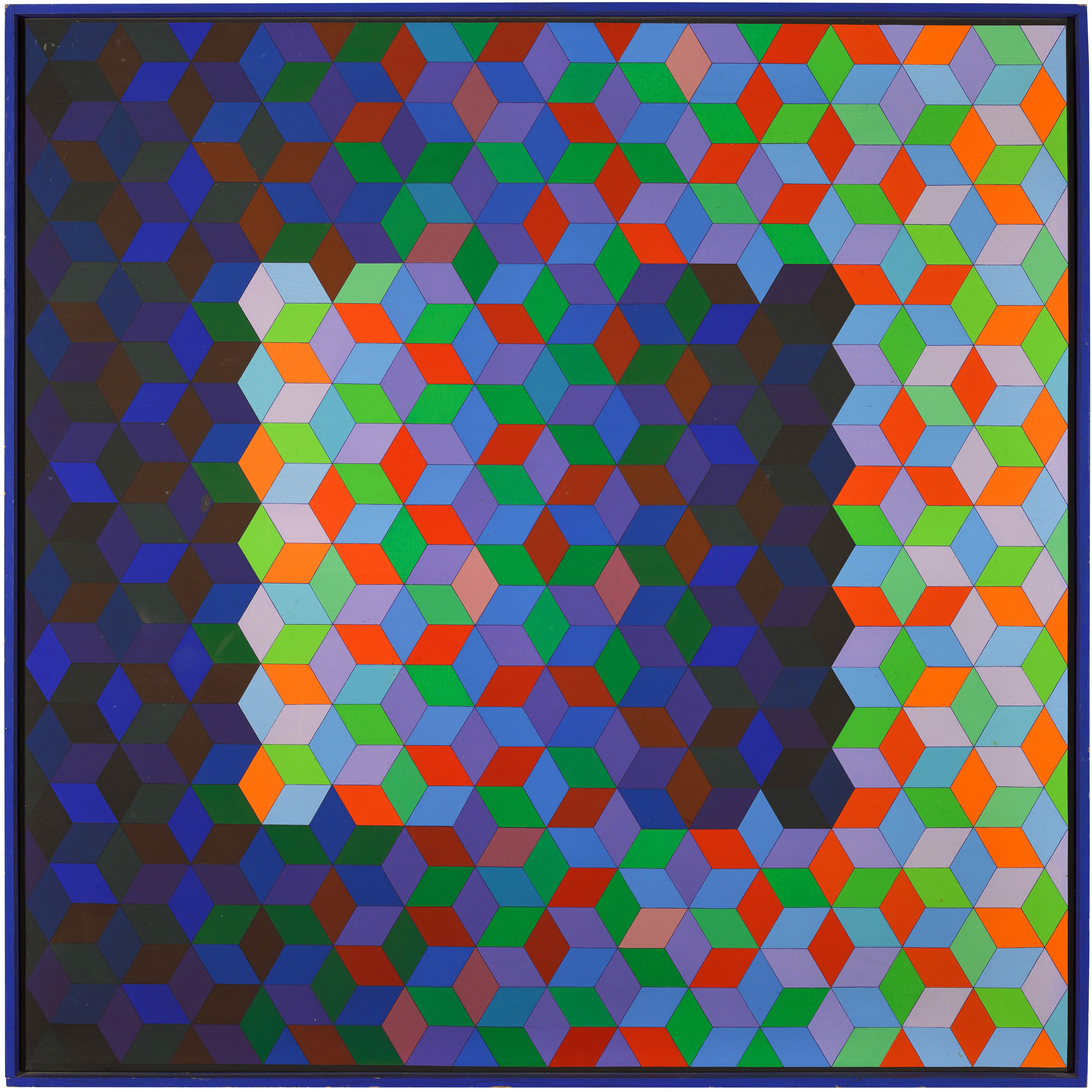
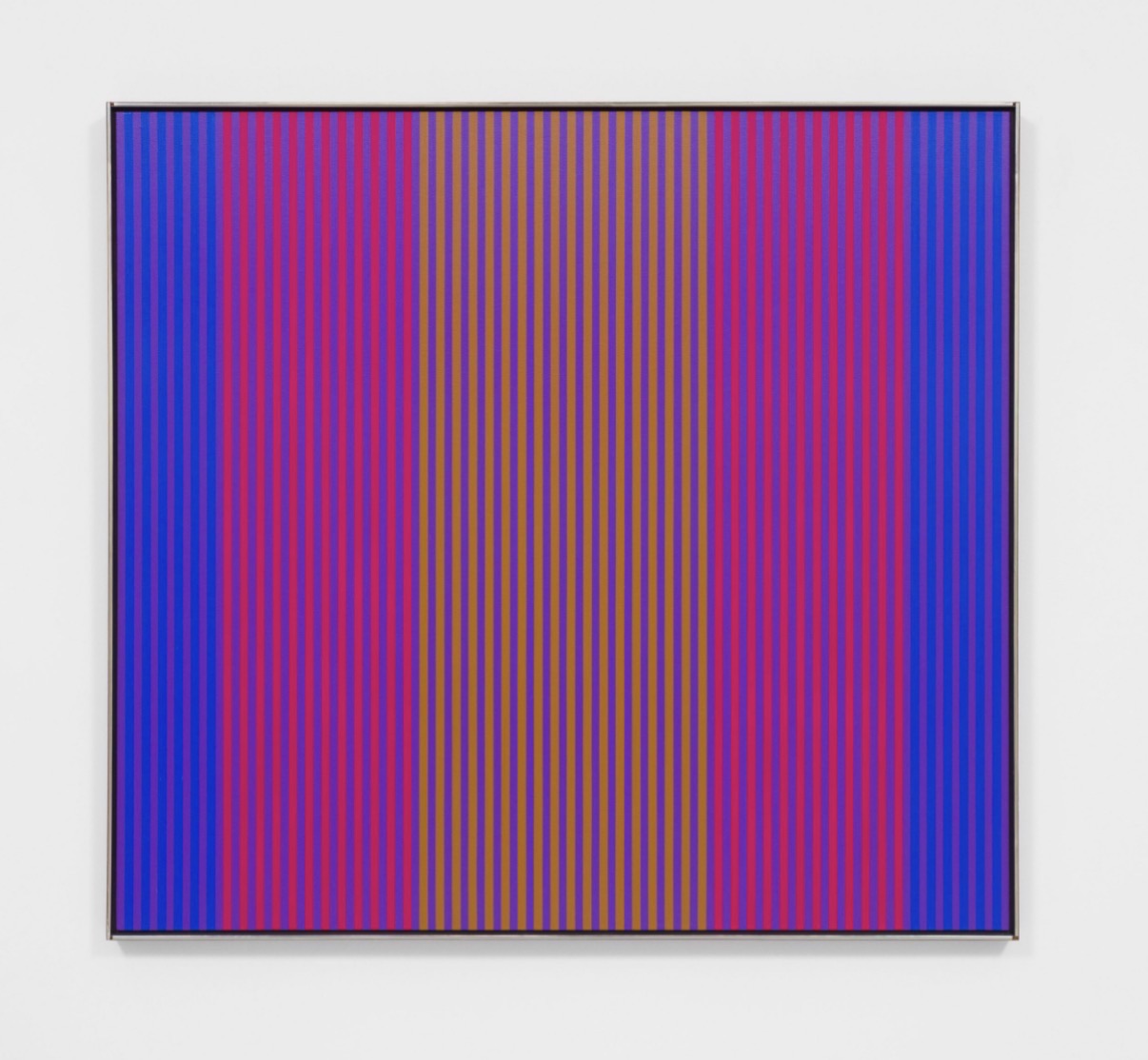
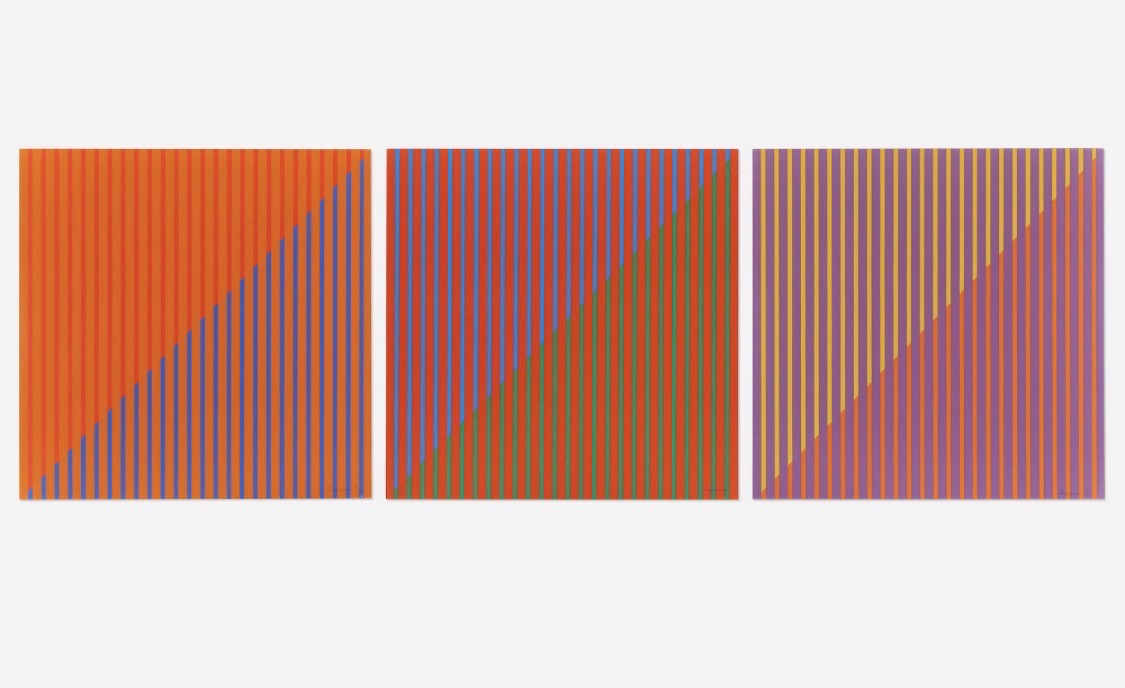
Victor Vasarely
Meh - Mc, 1970
Victor Vasarely pushed these methods into optical territory, using the same formal logic to produce works where the edge becomes a site of visual instability rather than certainty. The lasting influence of hard edge abstraction runs through contemporary practice in ways that are easy to underestimate because they have become so thoroughly absorbed. Painters like Monique Prieto and Sarah Crowner work with flat color and geometric form in ways that are genuinely indebted to this tradition while remaining entirely their own. Prieto brings an almost cartoonish energy to biomorphic flatness, while Crowner's sewn canvas works reintroduce the handmade into a grammar that had once celebrated its own immaculate removal of the hand.
Both are on The Collection, and both demonstrate that the questions hard edge painting asked in 1959 remain productively open. What makes this body of work so enduring, finally, is the seriousness of its central claim: that the eye is intelligent, that color and edge are sufficient, that reduction is not poverty but concentration. In an art world that sometimes rewards complexity for its own sake, hard edge painting stands as a reminder that the most rigorous formal decisions can also be the most emotionally resonant ones. The edge is not where painting stops.
It is where it begins.