Nūr Jahān
2022
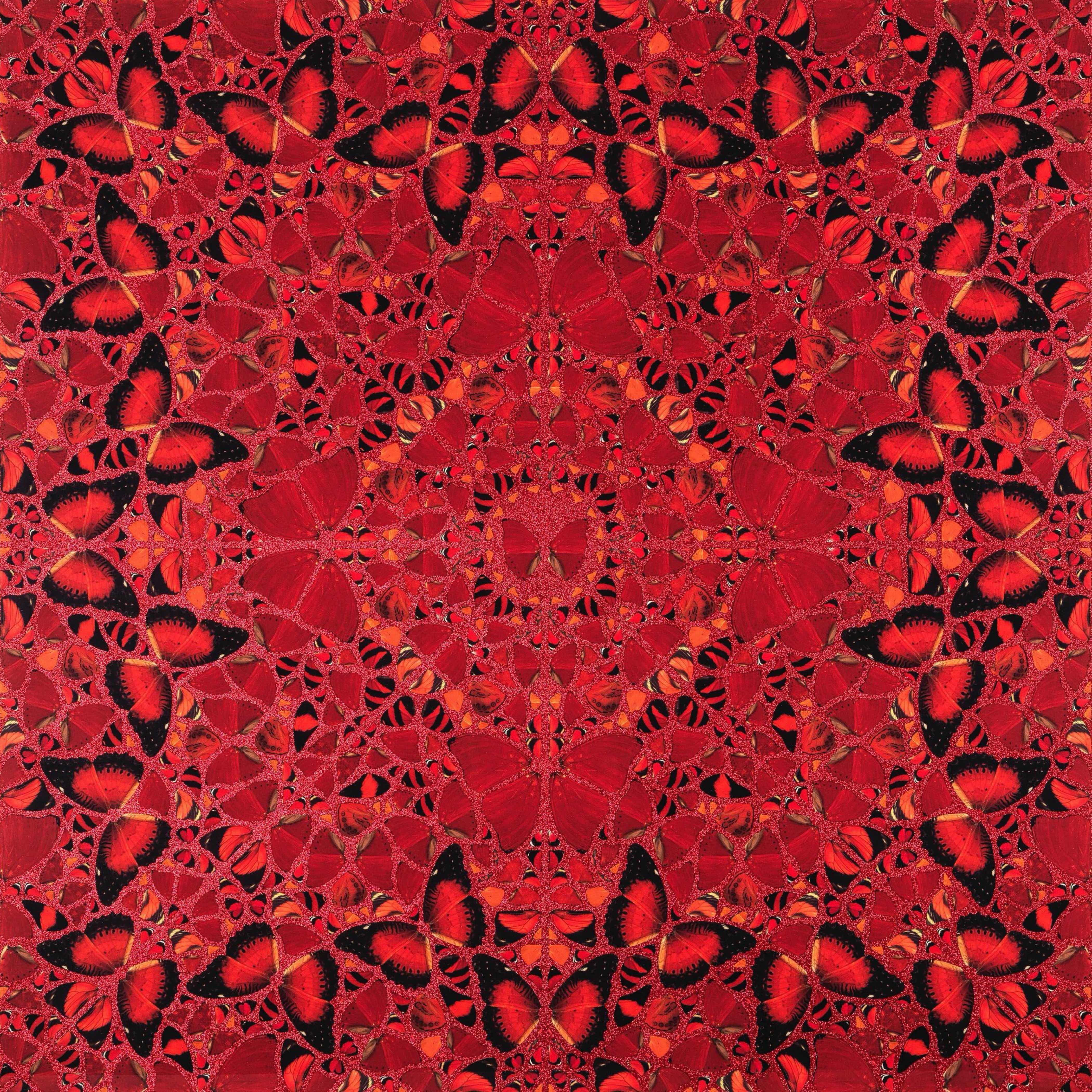
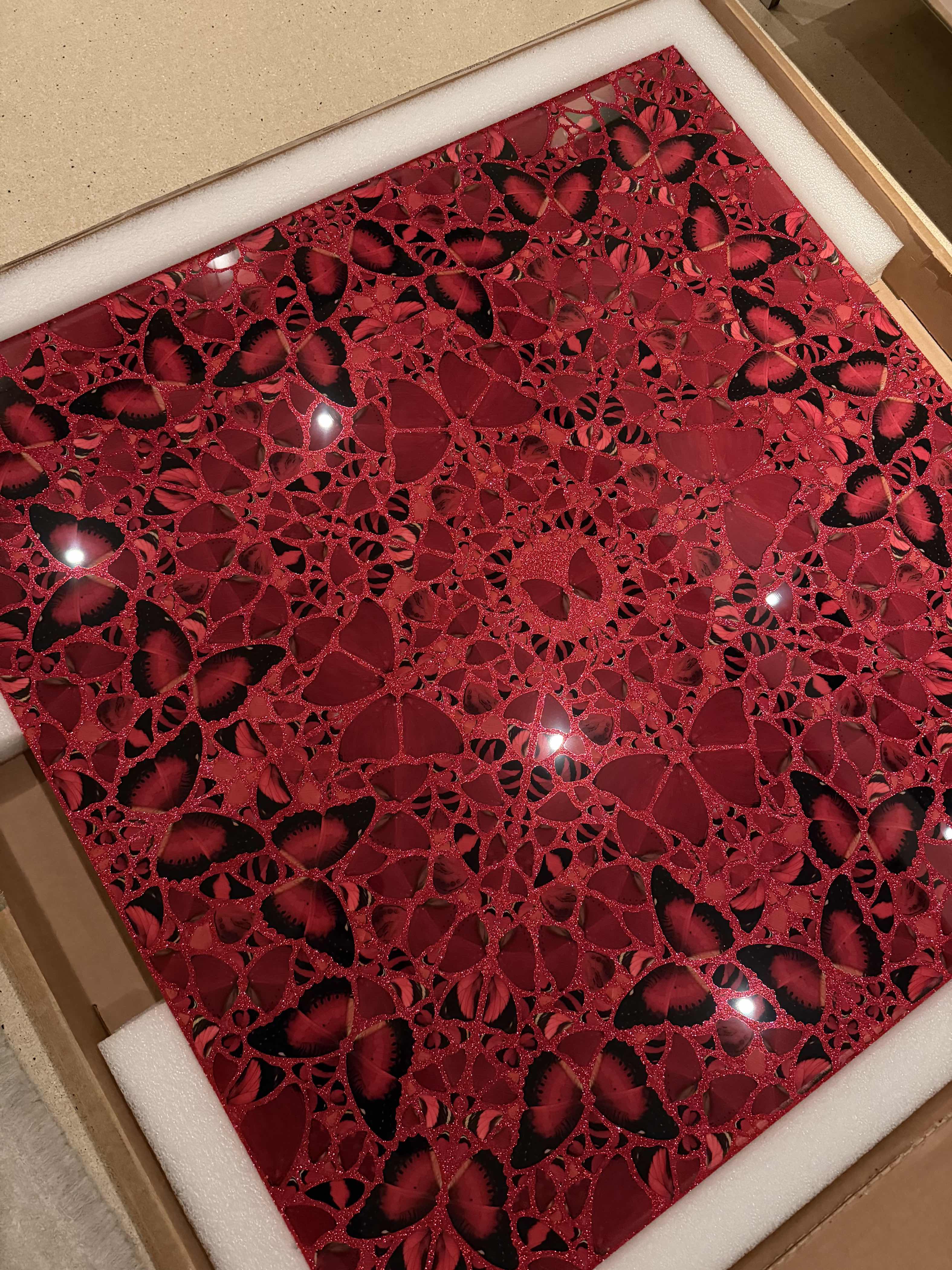
Damien Hirst's Nūr Jahān is a mesmerising laminated Giclée print on aluminium composite, screen printed with glitter, featuring a densely layered kaleidoscopic arrangement of red and black butterfly wings in perfectly symmetrical patterns. Part of The Empresses series (H10, 2022), the work explores the butterfly as a symbol of freedom, religion, life and death, with wing formations radiating vertically, horizontally, and diagonally from a central focal point to create an entrancing mosaic effect. The title honours Nūr Jahān (1577 to 1645), the de facto Mughal Empress whose architectural legacy is believed to have inspired the Taj Mahal, and whose intricate tile work is recalled in the tectonic organisation of the composition. The glitter screen printing adds a shifting luminosity to the surface, ensuring the work transforms as the viewer moves before it.
- Medium
- Laminated Giclée print on aluminium composite, screen printed with glitter
- Dimensions
- Signed
- Yes
Notes
Edition code H10-2. Part of The Empresses series (H-10, 2022), a series of five laminated Giclée prints on aluminium composite, screen printed with glitter. Signed and numbered on label. Edition size 3041.
Collectors of Damien Hirst

Also spotted by

Artists in conversation
Jeff Koons
American · b. 1955
Both artists provocatively blend high concept with commercial spectacle, using manufactured objects and bold visual excess to interrogate consumer culture, desire, and mortality. Their work shares an unapologetic embrace of controversy and market value as artistic statements.
Maurizio Cattelan
Italian · b. 1960
Like Hirst, Cattelan uses taxidermied animals, dark humor, and confrontational conceptual gestures to explore death, religion, and institutional power. Both artists work on a grand theatrical scale that courts public shock and critical debate.
Koons Chapman
British · b. 1966
Jake Chapman alongside his brother Dinos Chapman emerged from the same YBA milieu as Hirst and similarly deploys visceral imagery, mortality, and pharmaceutical or biological references to provoke audiences and question moral boundaries in contemporary art.
Start the Discussion
Request access to join the discussion