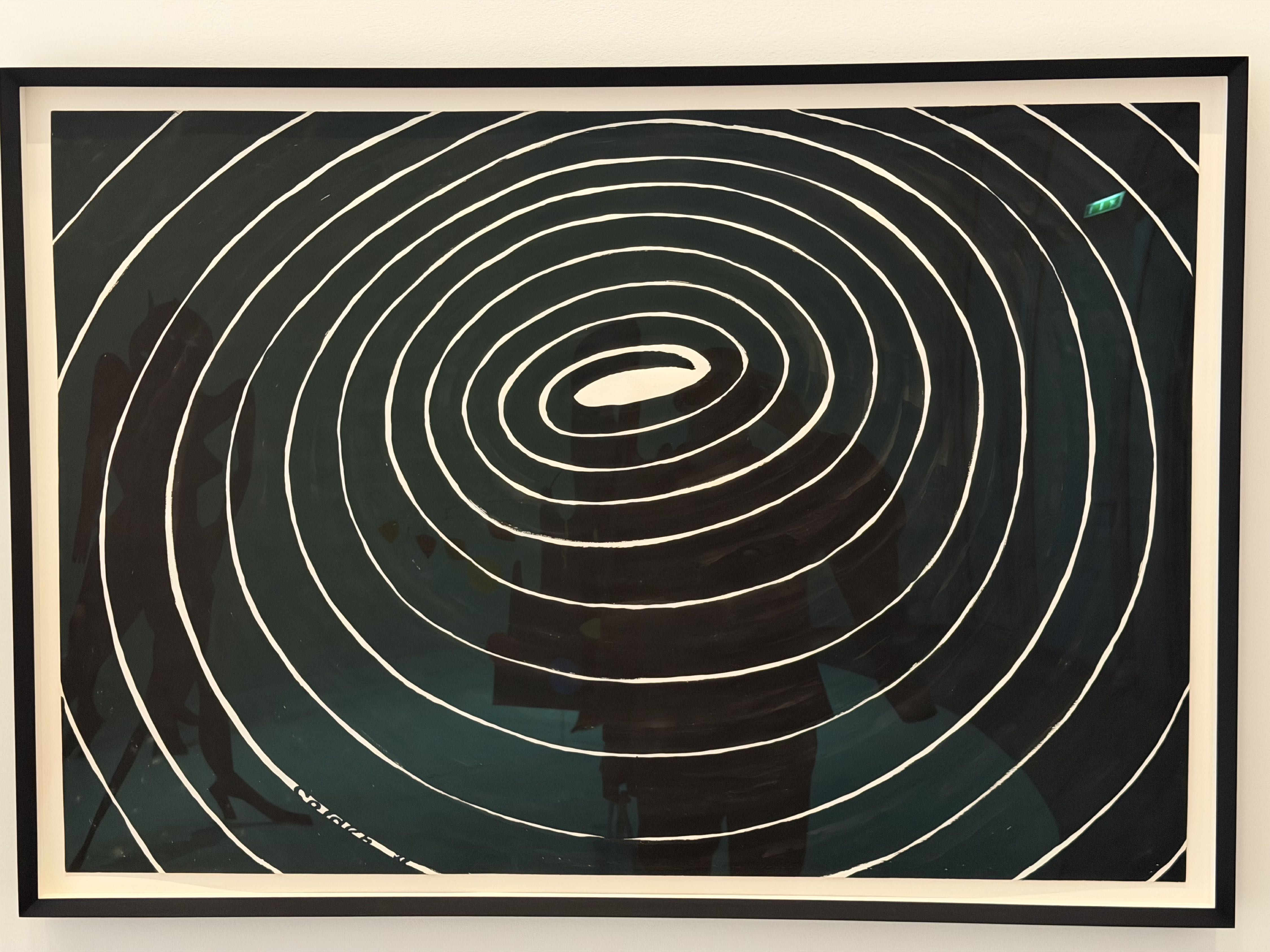
Black Spiral
1971
Black Spiral is a commanding work on paper in which Calder deploys a single continuous coiling line that expands outward from a luminous white center across a deep black ground, creating a hypnotic sense of rotation and spatial depth. The composition exemplifies Calder's lifelong engagement with movement and kinetic energy, here translated from three dimensions into a graphic two-dimensional form. The confident, unwavering arc of the spiral line demonstrates the same mastery of line and rhythm that defined his sculptural mobiles and stabiles. The work is held by the Calder Foundation in New York and was photographed at an exhibition in Paris.
- Medium
- Ink on paper
- Signed
- Yes
- Spotted At
- Foundation · Fondation Louis Vuitton
Notes
Wall label bilingual (French/English). Listed as part of a left-to-right sequence alongside: Untitled 1964, Untitled 1969, Untitled 1970, Untitled 1973, and Untitled 1972, all Calder Foundation, New York. Partial text visible on left edge of label panel reads 'wire, and paint', suggesting a nearby larger work description. A green emergency exit sign is visible in the upper right corner of the artwork photo.
More by Alexander Calder
Collectors of Alexander Calder
Also spotted by

Artists in conversation
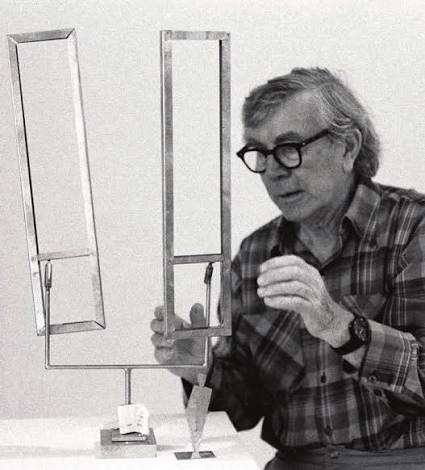
George Rickey
American · b. 1907
Rickey created kinetic sculptures with precisely balanced moving metal elements that respond to air currents, directly paralleling Calder's mobiles in their use of engineered movement and geometric abstraction in three dimensional space.
Len Lye
New Zealander · b. 1901
Lye pioneered kinetic sculpture using thin steel rods and sheets that vibrate and sway with motion, sharing Calder's fascination with movement, industrial materials, and the animation of abstract sculptural forms through physical forces.
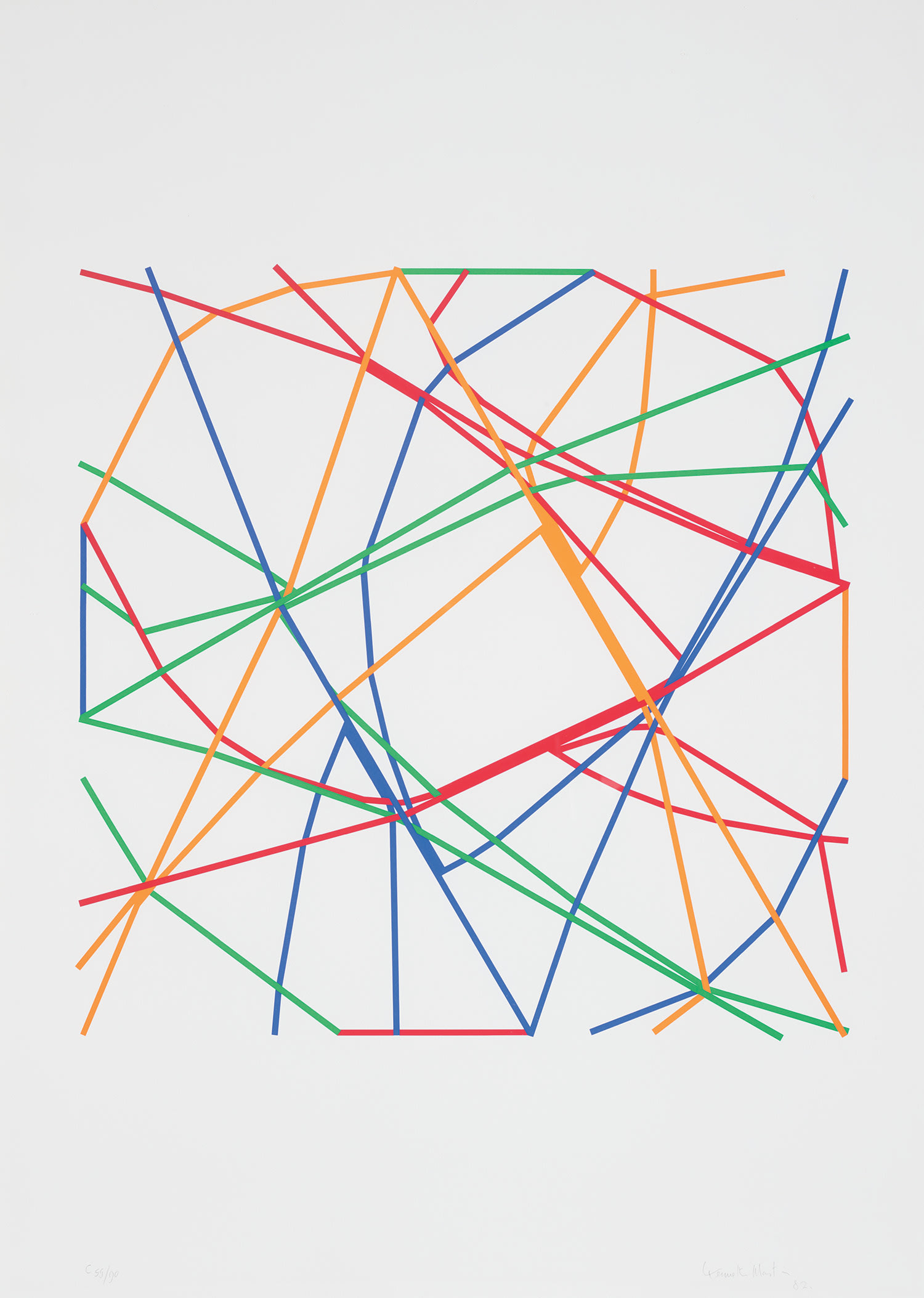
Kenneth Martin
British · b. 1905
Martin constructed delicately balanced mobile sculptures using suspended geometric metal elements arranged in rhythmic sequences, closely echoing Calder's approach to kinetic balance, spatial composition, and abstract formal relationships.
Start the Discussion
Request access to join the discussion