Relief Print
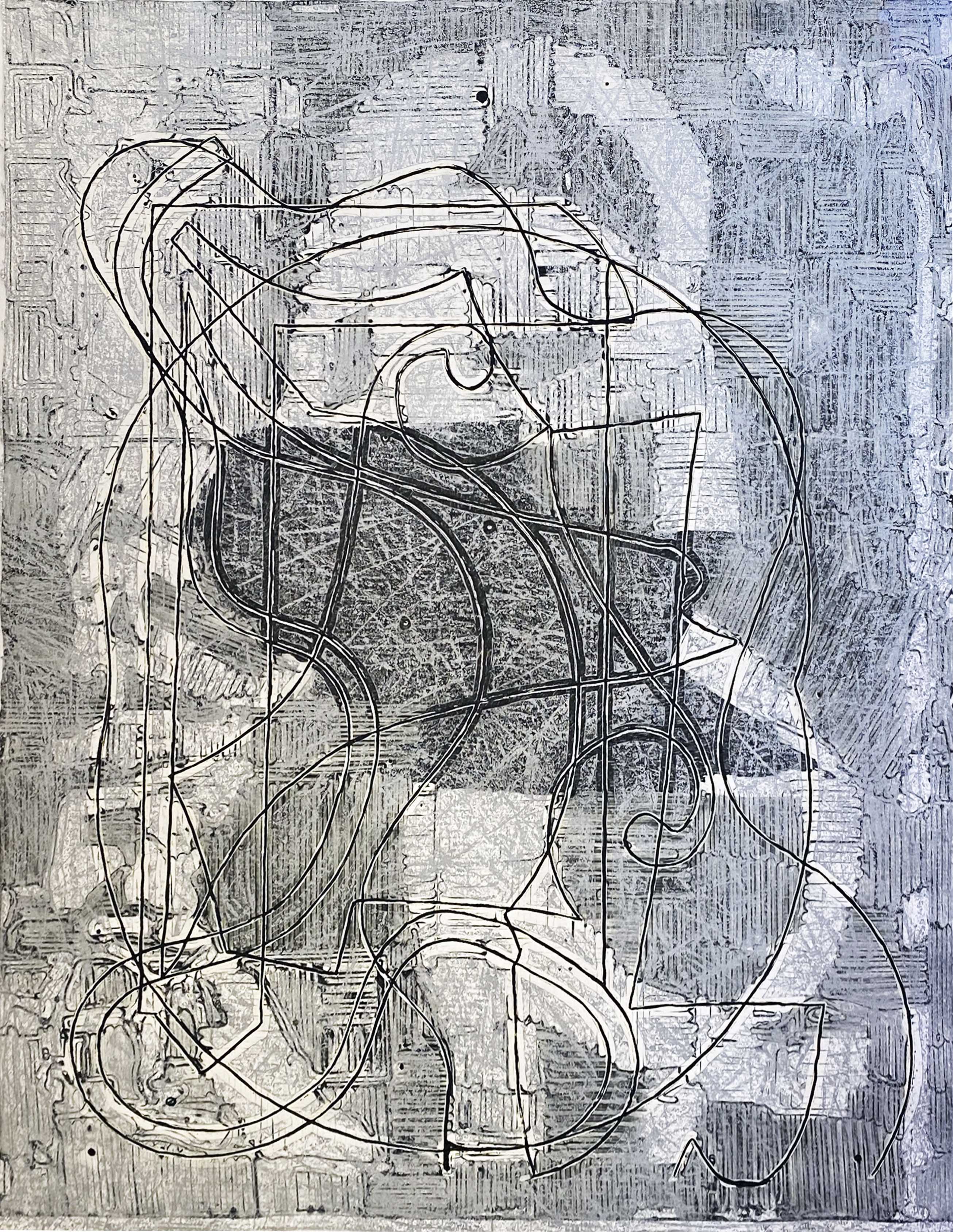
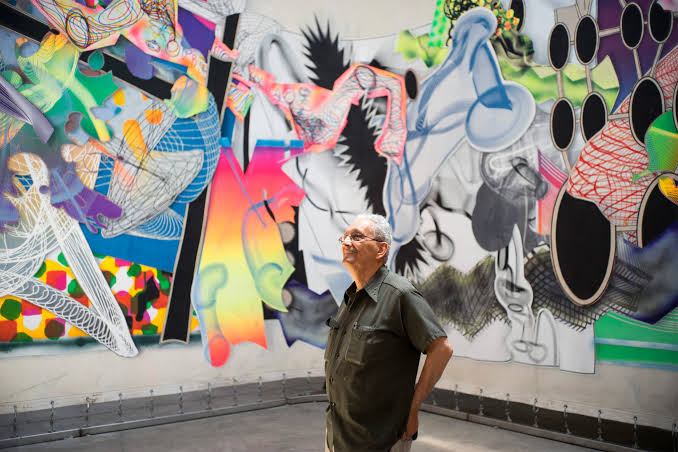
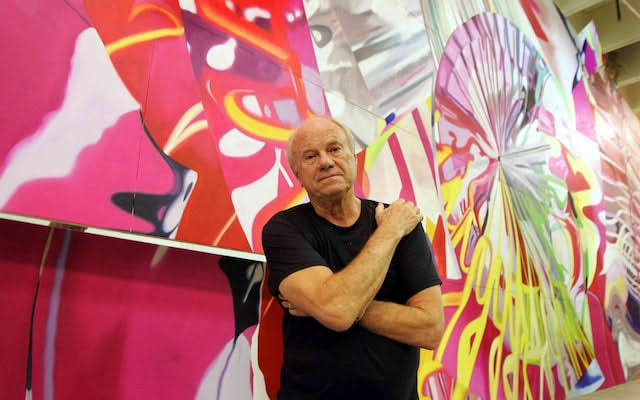
Frank Stella
Imola Three, I (from the Circuits Series), 1982
The Art of Pressure: Relief Print Endures
There is something almost alchemical about the relief print. You carve away what you do not want, ink what remains, and press it against paper or fabric or skin, transferring an image through the most direct physical contact one surface can have with another. The resulting work carries the evidence of that encounter, the grain of wood, the resistance of stone, the blunt authority of a cut. It is among the oldest of all printmaking traditions, and yet it continues to generate some of the most formally inventive work being made today.

The history of relief printing stretches back well over a thousand years. Woodblock printing was practiced in China as early as the seventh century, used initially to reproduce Buddhist texts and devotional images at a scale that was simply impossible by hand. By the fifteenth century, the technique had moved through trade routes and cultural exchange into Europe, where it became central to the production of illustrated books and broadsheets. When Johannes Gutenberg developed movable type in the 1440s, he was working within a tradition of relief printing that already had deep roots.
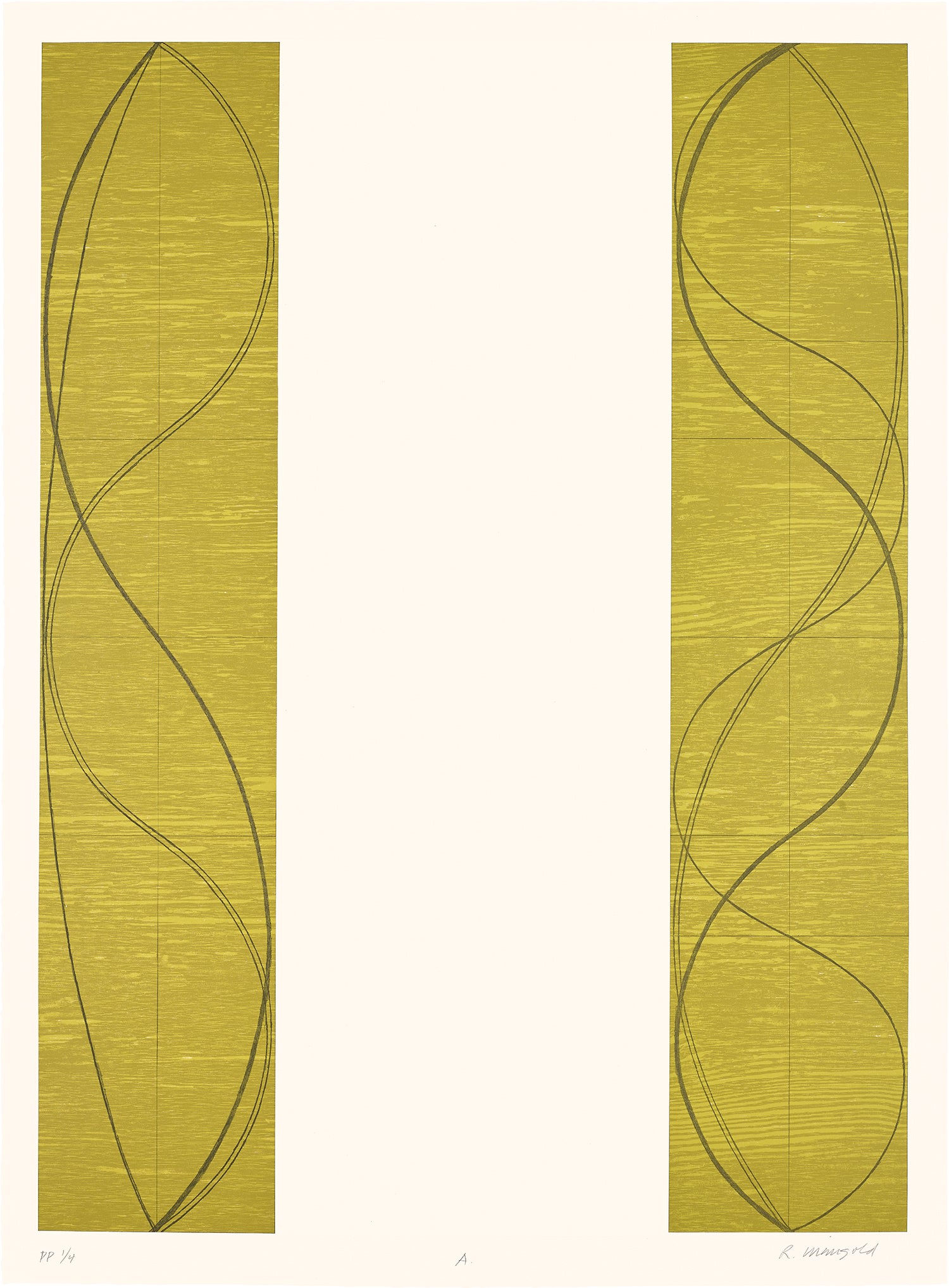
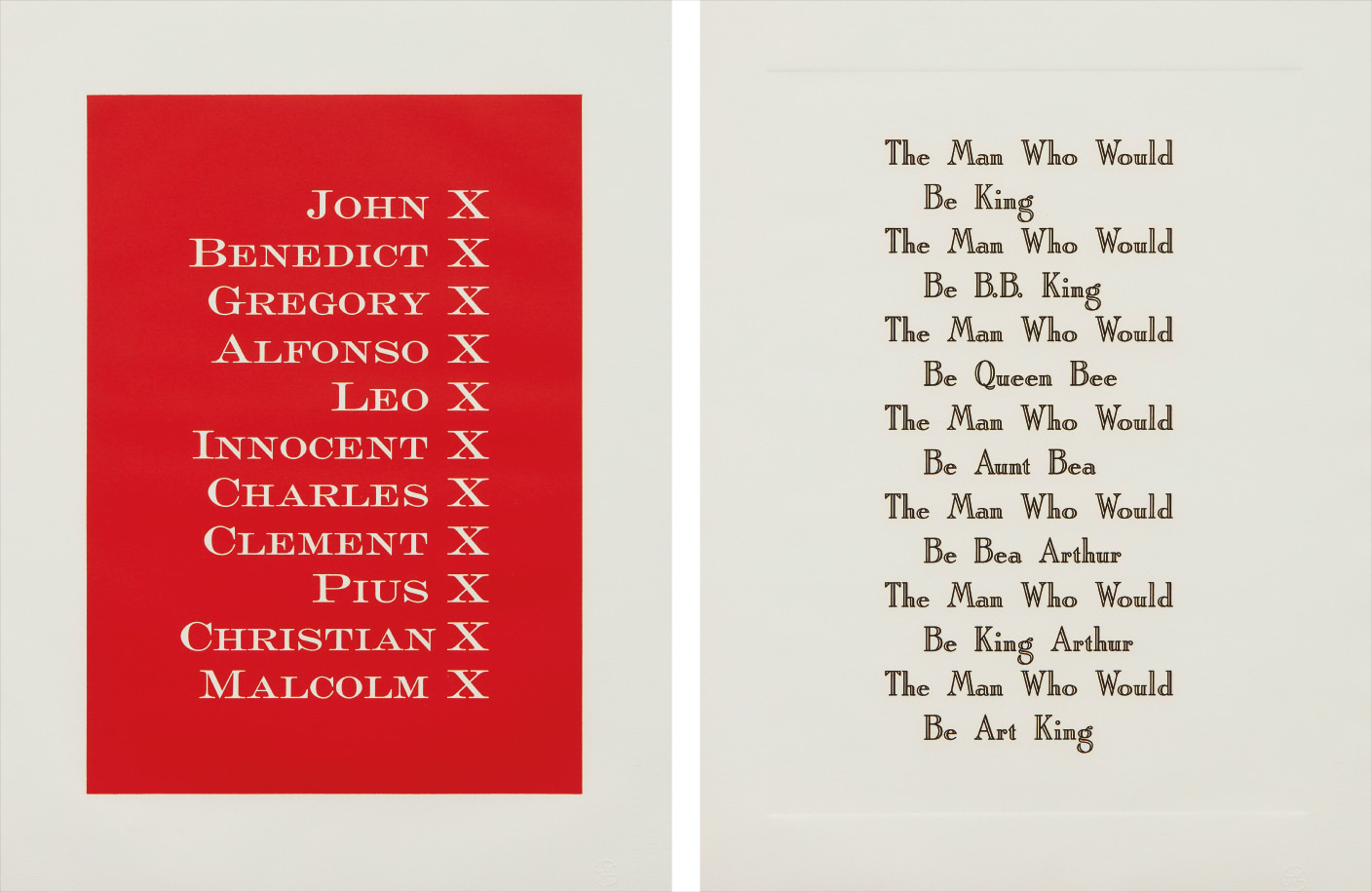
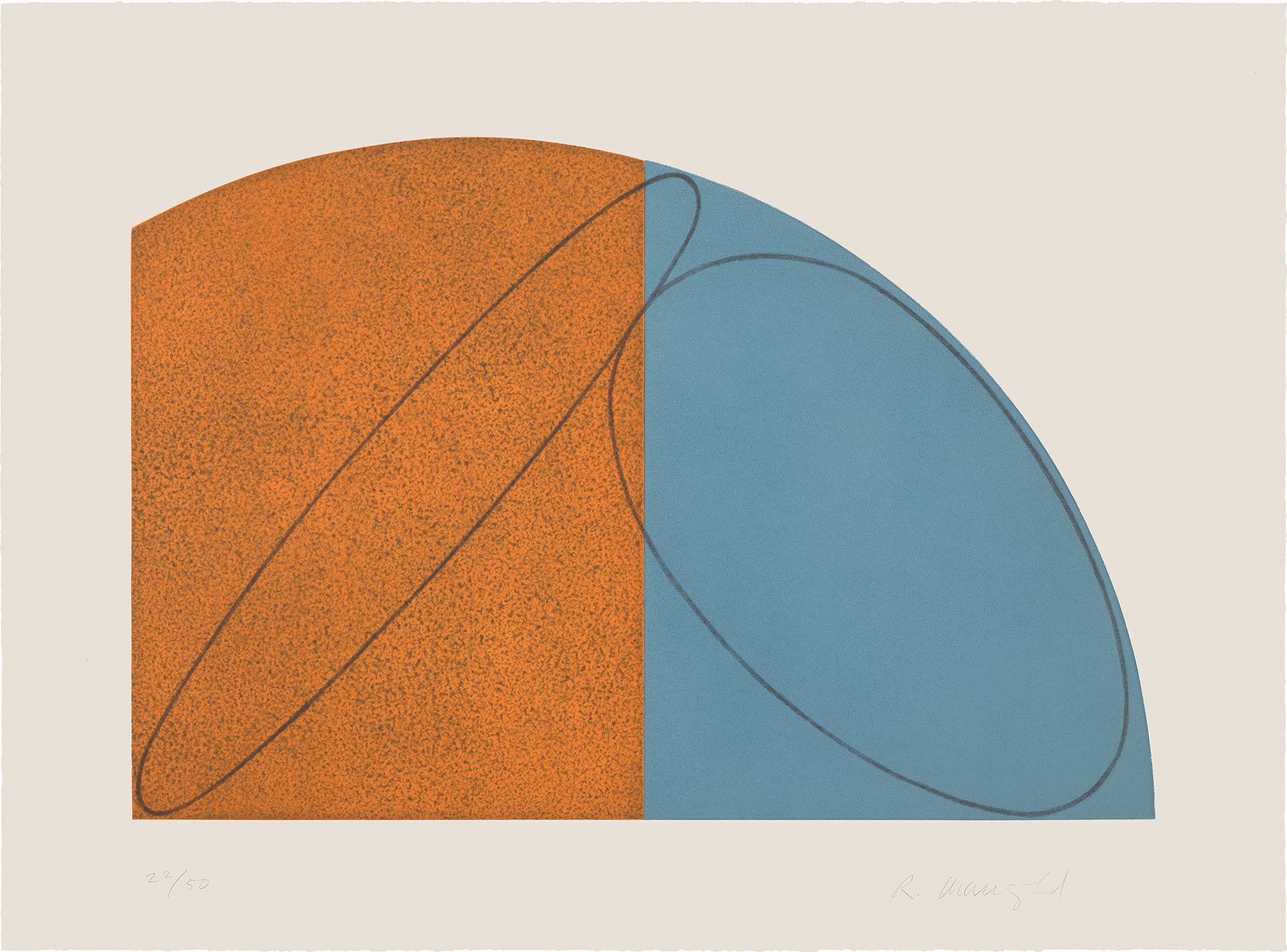
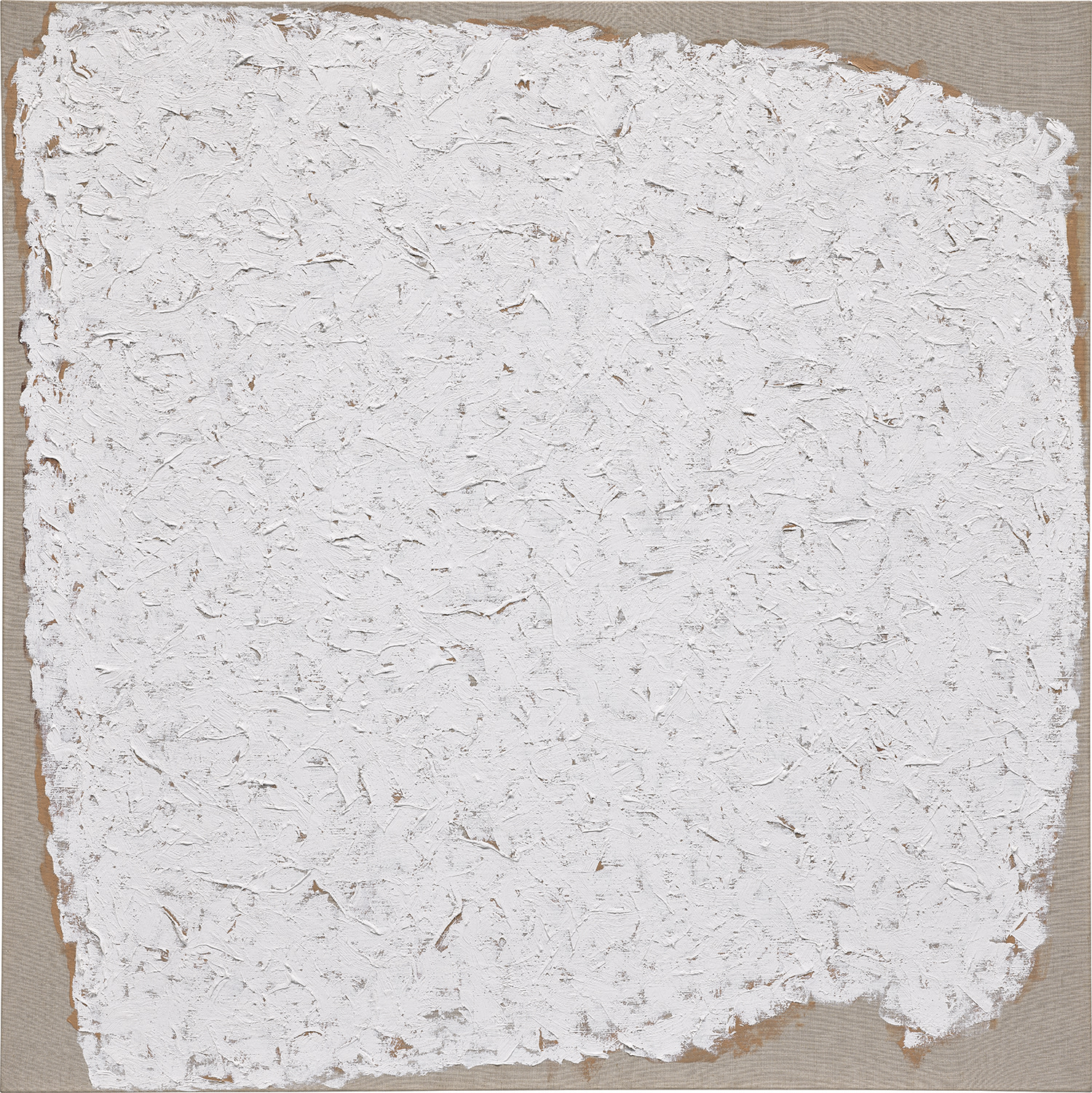
Robert Mangold
Two Columns A (S. & S. 2004.01.01)
The woodcut found its first great artistic champions in that same period, notably Albrecht Dürer, whose prints of the late 1490s and early 1500s demonstrated that the medium was capable of extraordinary psychological and compositional complexity. The relief print entered a new phase of seriousness in the late nineteenth and early twentieth centuries, when artists began to treat the woodcut not as a reproductive tool but as an expressive end in itself. The German Expressionists, particularly the artists associated with Die Brücke from around 1905 onward, seized on the medium for its rawness and immediacy. Ernst Ludwig Kirchner, Erich Heckel, and Emil Nolde exploited the resistance of the woodblock, letting the grain of the material push back against the image and become part of it.
The rough, urgent quality of their prints was not a limitation but a statement, a rejection of the smooth finish of academic painting in favor of something visceral and unmediated. Through the mid twentieth century, the relief print continued to evolve in dialogue with the broader movements reshaping art. Antonio Berni, the Argentine artist whose work sits at a fascinating intersection of social realism and Pop sensibility, used relief printing in deeply inventive ways, incorporating found objects and collage elements into his matrices to produce works of layered texture and political charge. His Juanito Laguna series, begun in the early 1960s, used assemblage woodblock techniques that made the poverty of his subject inseparable from the materiality of the print itself.
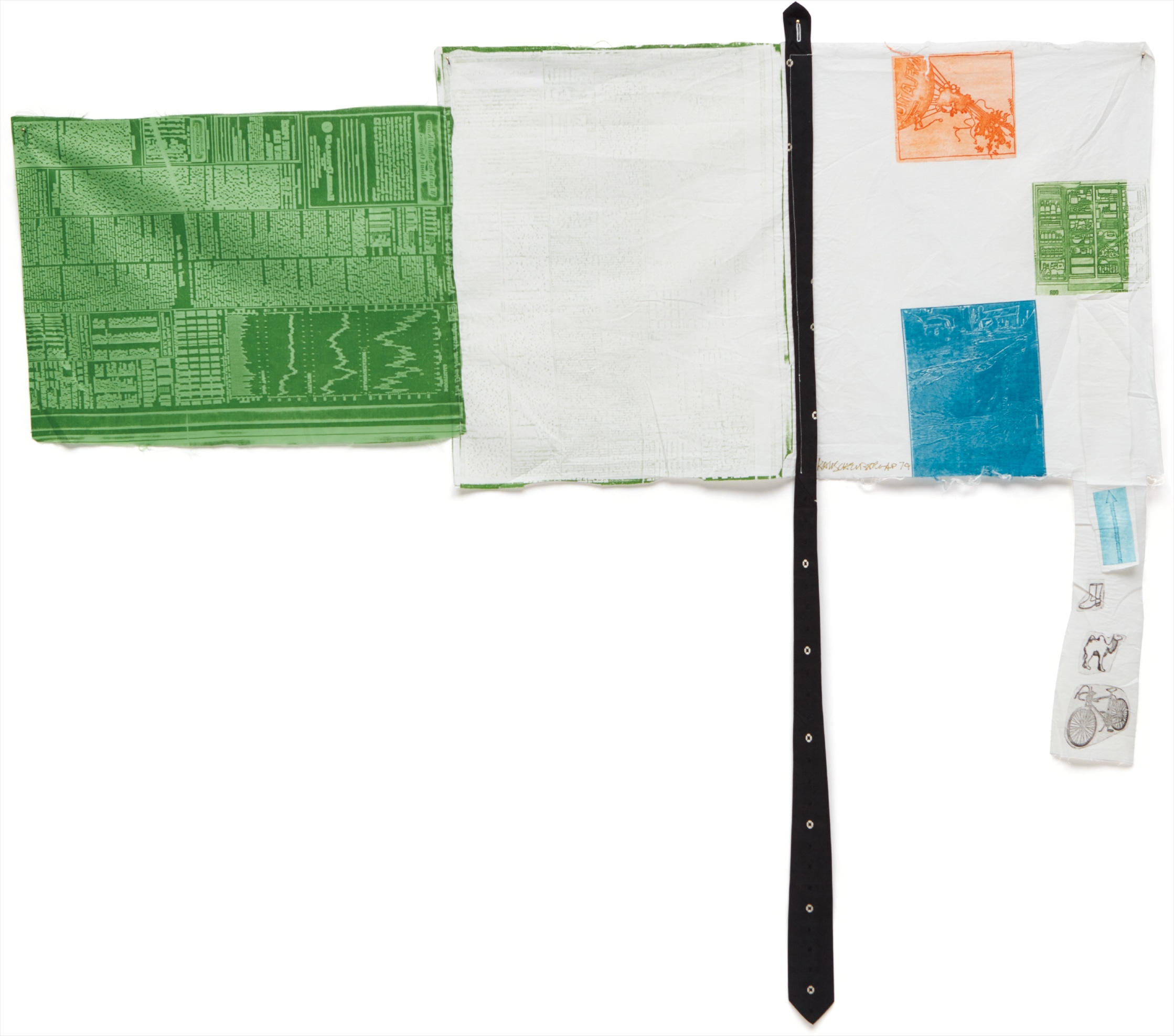
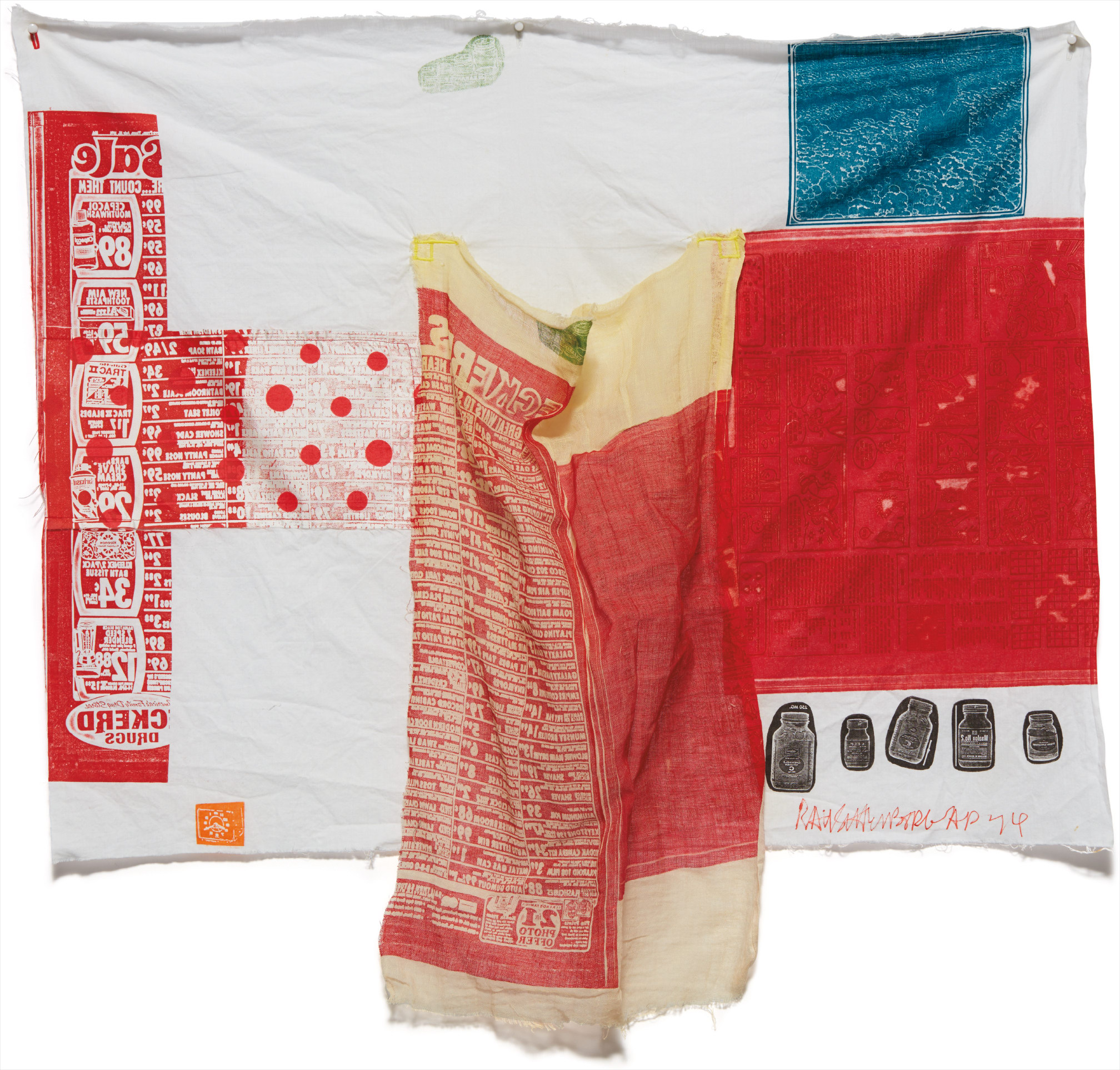
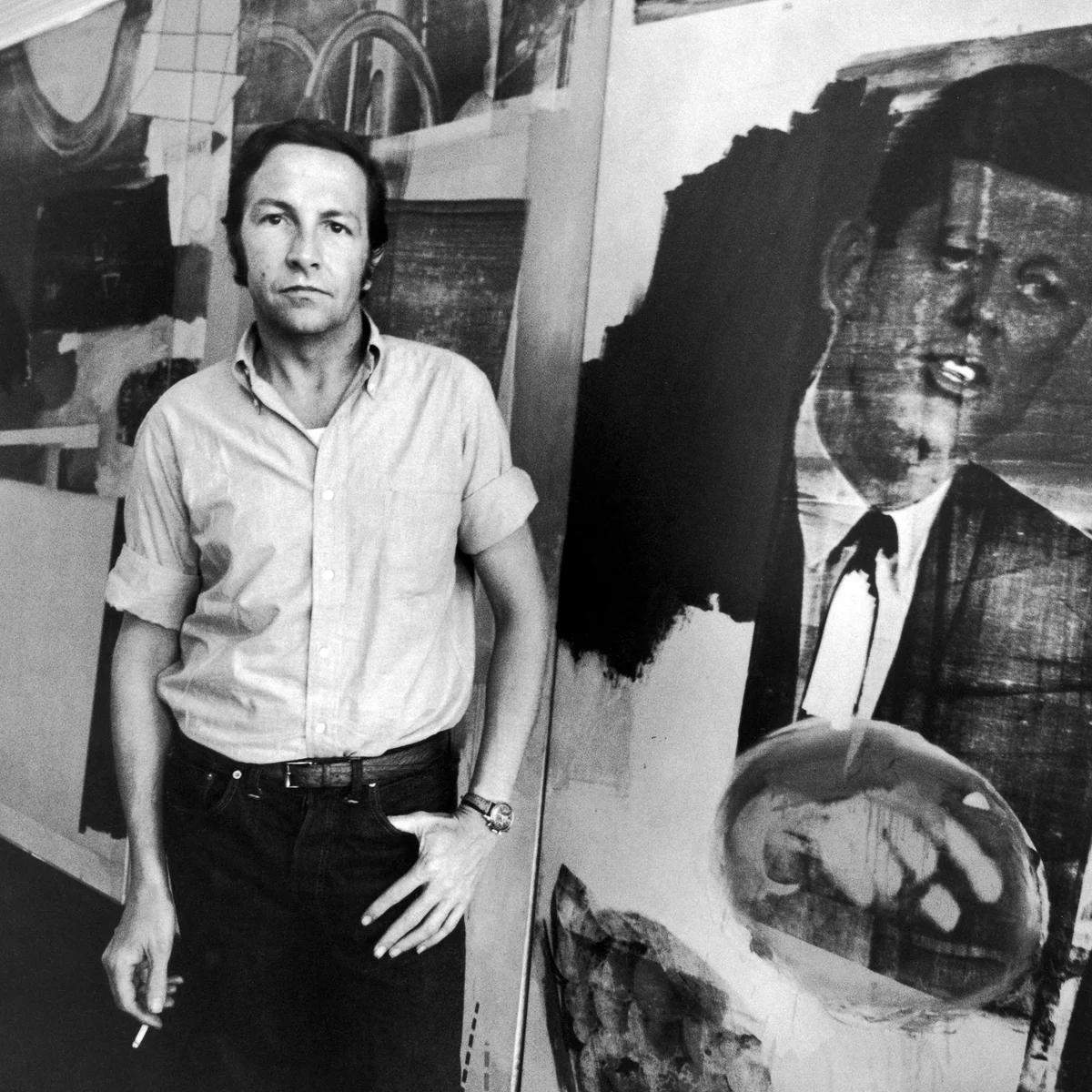
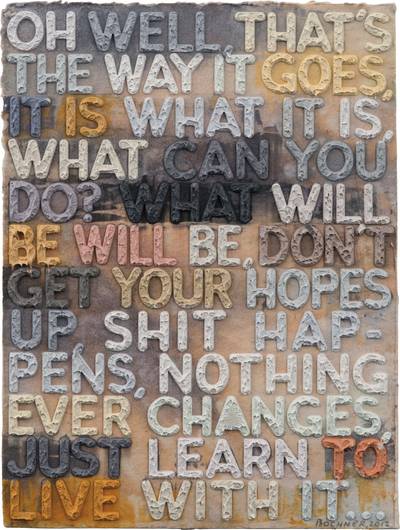
Robert Rauschenberg
Room Service, from Airport Suite
It is the kind of work that reminds you that technique and meaning are never really separate. The postwar American context brought its own transformations. Robert Rauschenberg, whose works are well represented on The Collection, was consistently interested in the porousness between printmaking and other media. His approach to relief surfaces connected to his broader interest in the transfer of information, in images that carry the residue of their own making.
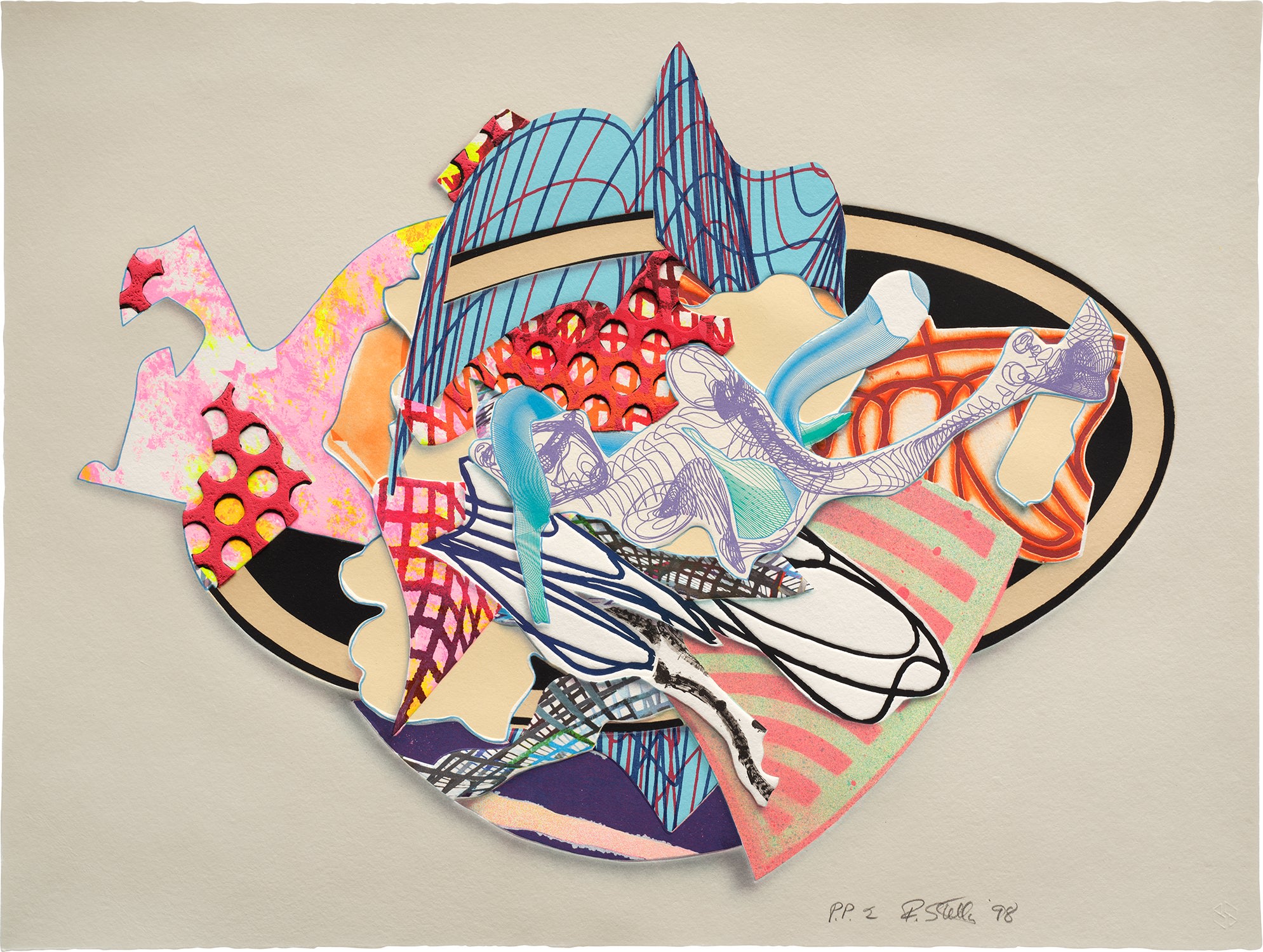
Frank Stella, perhaps the artist most extensively present on The Collection, offers another angle entirely. His later print work engaged with relief in architecturally complex ways, building up surfaces through multiple layers and processes that pushed the boundaries of what a print could structurally be. Looking at a Stella print is sometimes closer to looking at a bas relief sculpture than to looking at a sheet of paper. The conceptual possibilities of relief printing attracted artists who were thinking hard about surface and structure in the 1960s and 1970s.
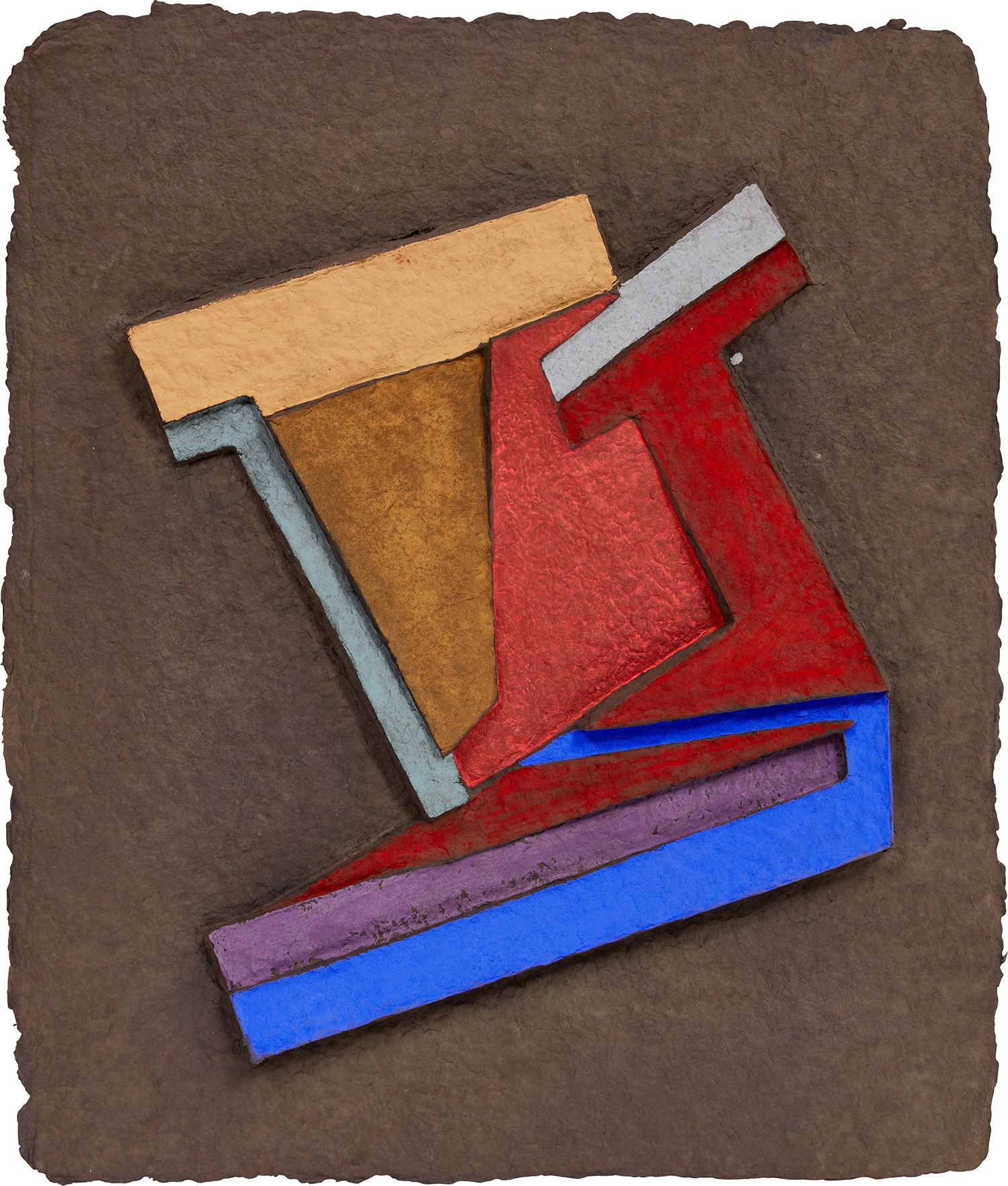
Frank Stella
Olyka (III), from the Paper Relief Project (T. 544, A. & K. 106.3)
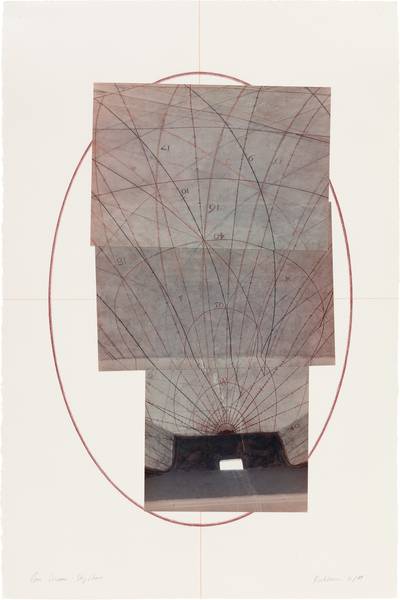
Enrico Castellani brought a rigorous spatial intelligence to the idea of the impressed surface, his work exploring how a canvas or paper could be transformed by the pressure applied from behind or in front. Dorothea Rockburne, whose practice has always been driven by an interest in mathematical systems and physical process, understood printmaking as a way of making visible the logic of mark and material. Both artists suggest how the relief principle, the idea of a surface altered by force and contact, has implications that extend far beyond traditional print categories. Joe Tilson brought a different kind of energy to the relief print, one shaped by the Pop moment and a craftsman's love of wood and making.
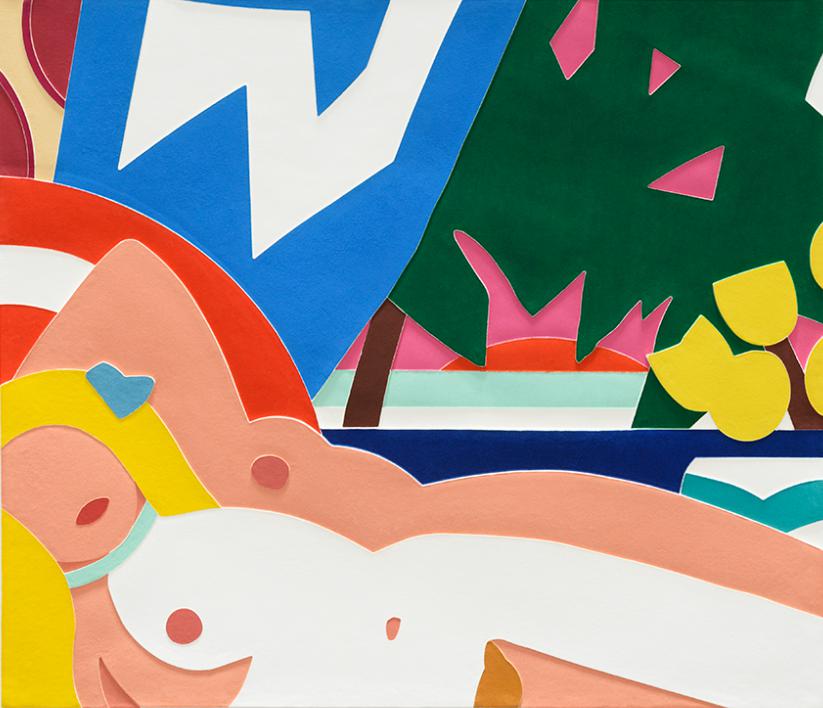
His work from the 1960s used wooden relief elements in combination with screenprint and photography, producing objects that were simultaneously prints and constructions. Richard Woods, working several decades later, similarly plays with the vernacular quality of the woodgrain pattern, scaling it up and applying it to architectural surfaces and objects in ways that are by turns comic, disorienting, and surprisingly tender. The woodblock is no longer just a matrix but a kind of cultural shorthand, a reference to craft, reproduction, and the handmade that carries meaning precisely because it looks familiar. What draws collectors and artists back to the relief print, generation after generation, is probably the irreducible physicality of the encounter.
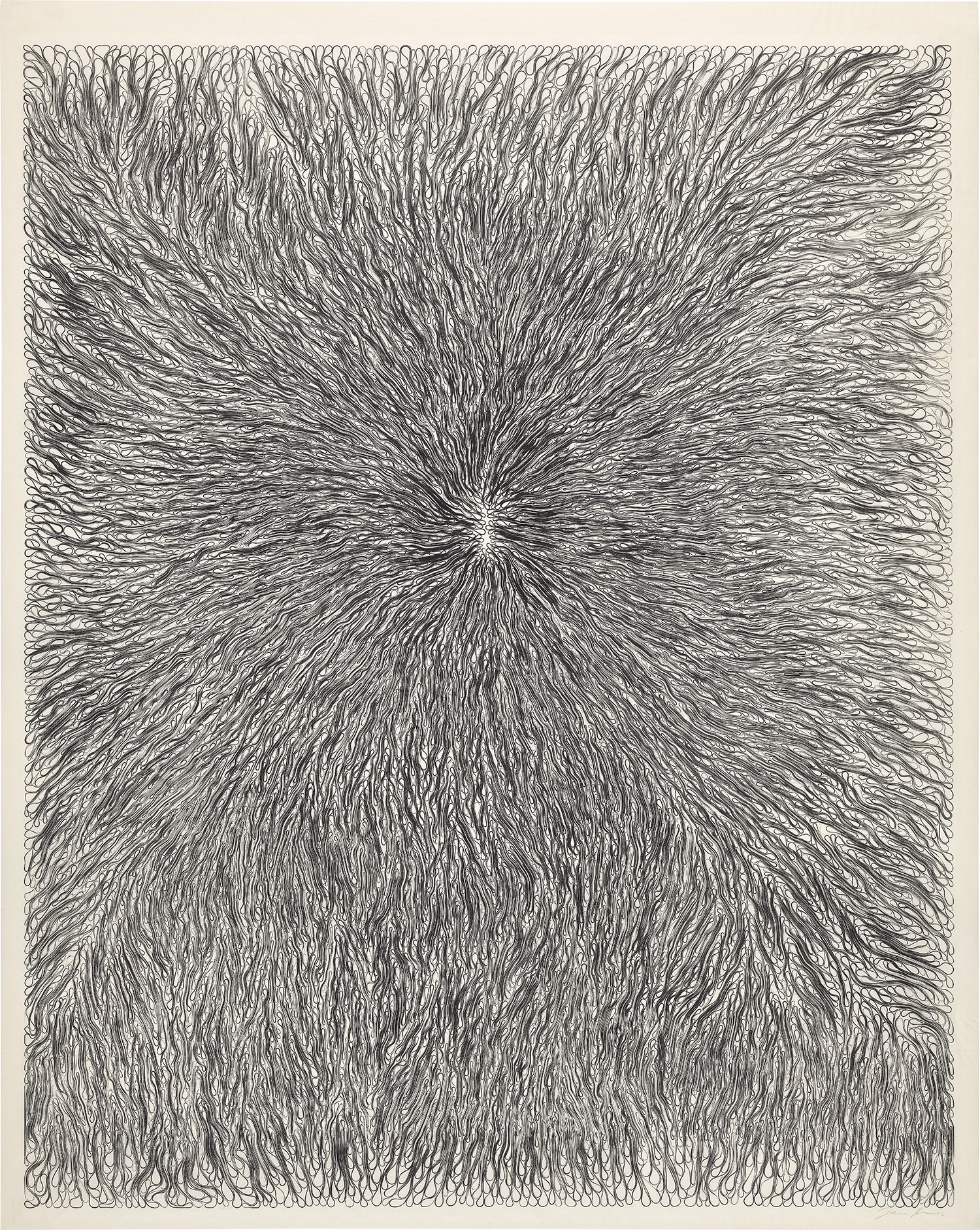
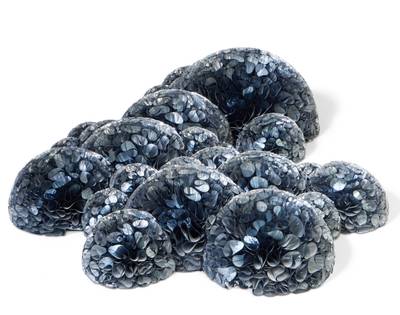
Tara Donovan
relief print from rubber band matrix on paper, 2006
You cannot fake the mark left by a gouge in a woodblock. You cannot manufacture the way ink sits differently on the highest planes of a carved surface than on the areas left slightly lower. Tara Donovan has spoken about her interest in the way repetitive physical processes generate emergent visual effects, and there is something of that logic at work in the best relief printing as well. The image is a consequence of accumulated pressure and material response rather than a design simply imposed on a blank surface.
Today, relief printing occupies a confident position in contemporary practice. Artists like Julie Mehretu, whose work on The Collection demonstrates her extraordinary command of layered mark making, engage with print history even while working in ways that are thoroughly of the present. The relief tradition is part of the substrate beneath much of that work, a set of understandings about how surfaces accumulate meaning through the application of force. As with so many of the oldest techniques in art, it turns out that what made it powerful a thousand years ago is precisely what makes it compelling now.