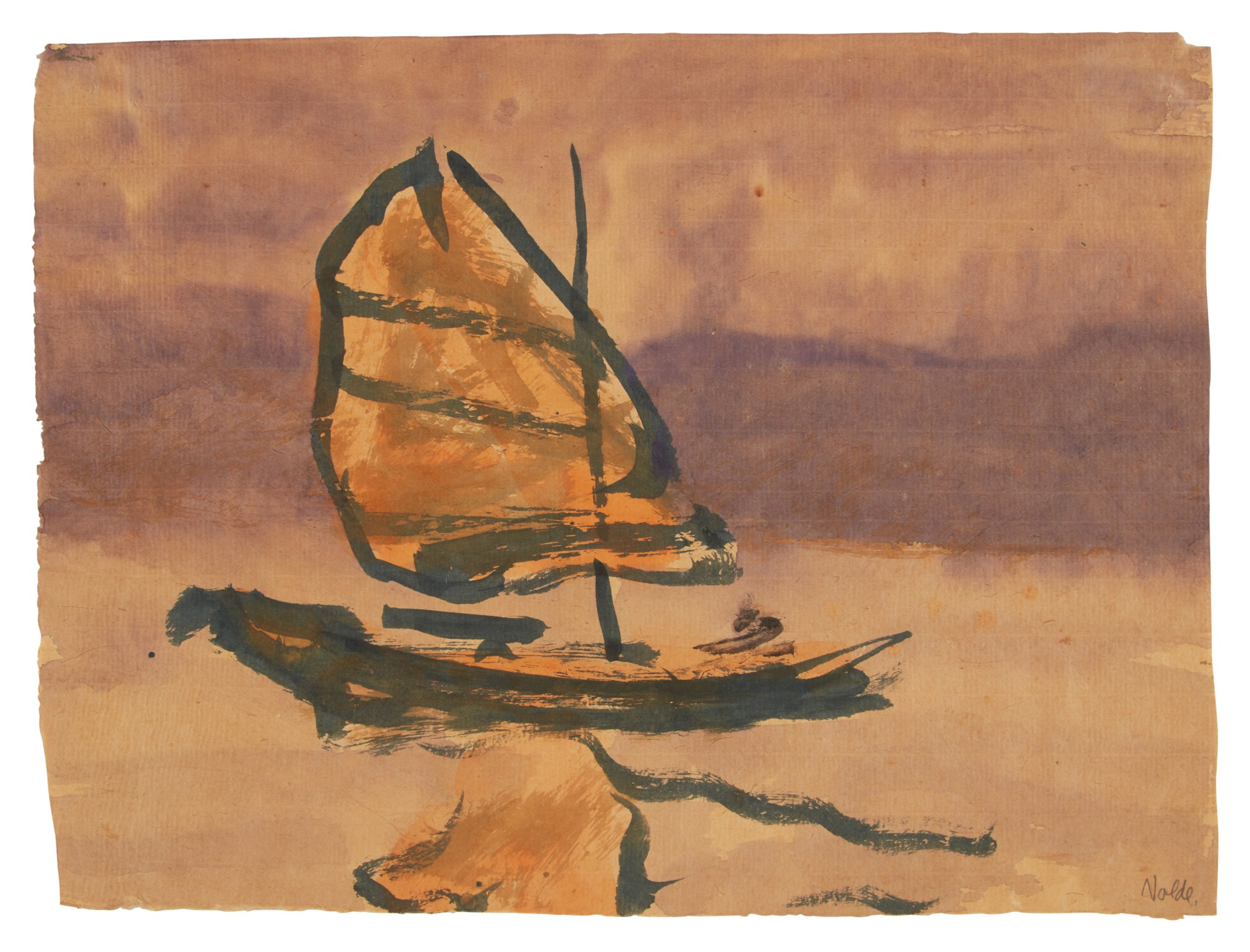
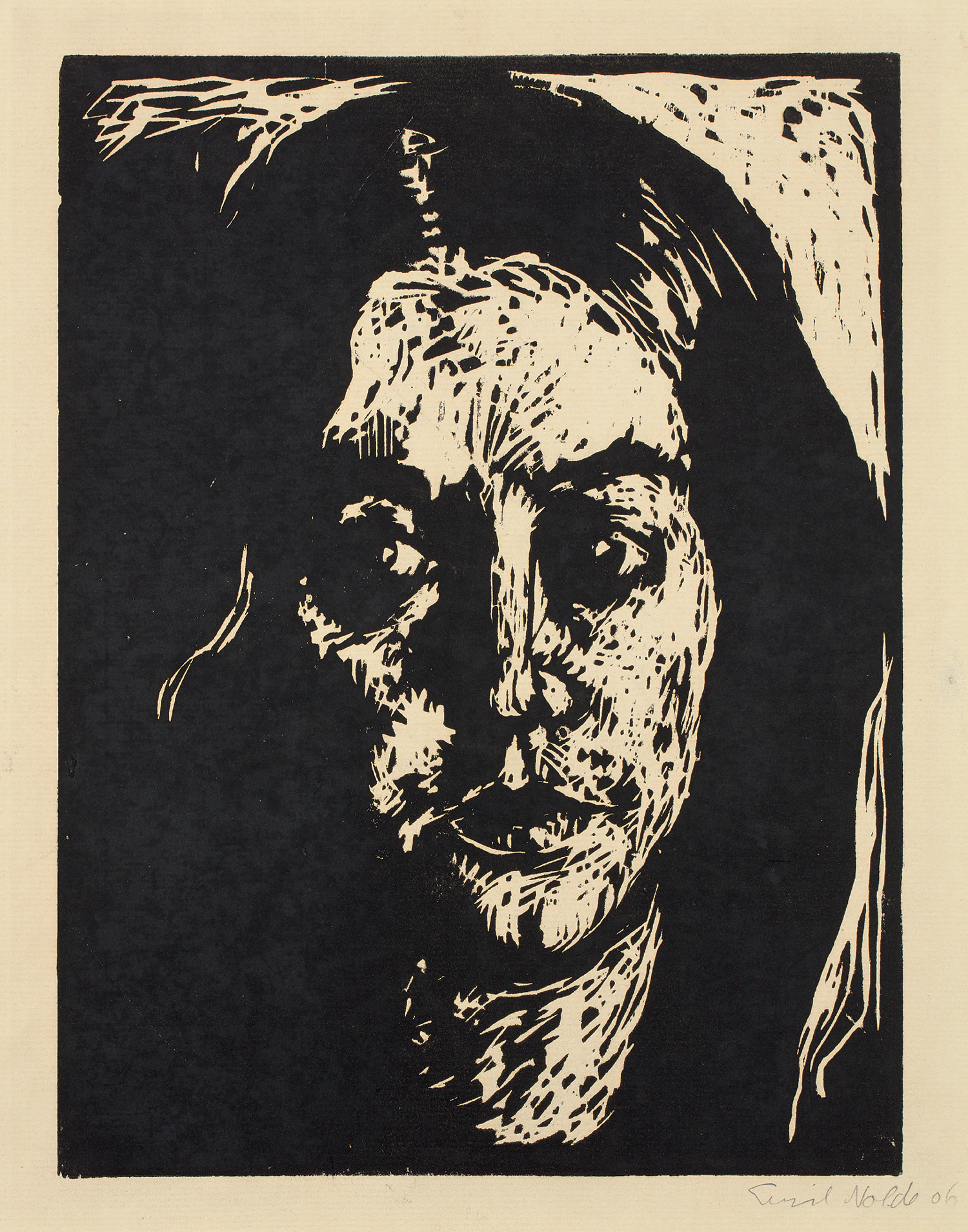
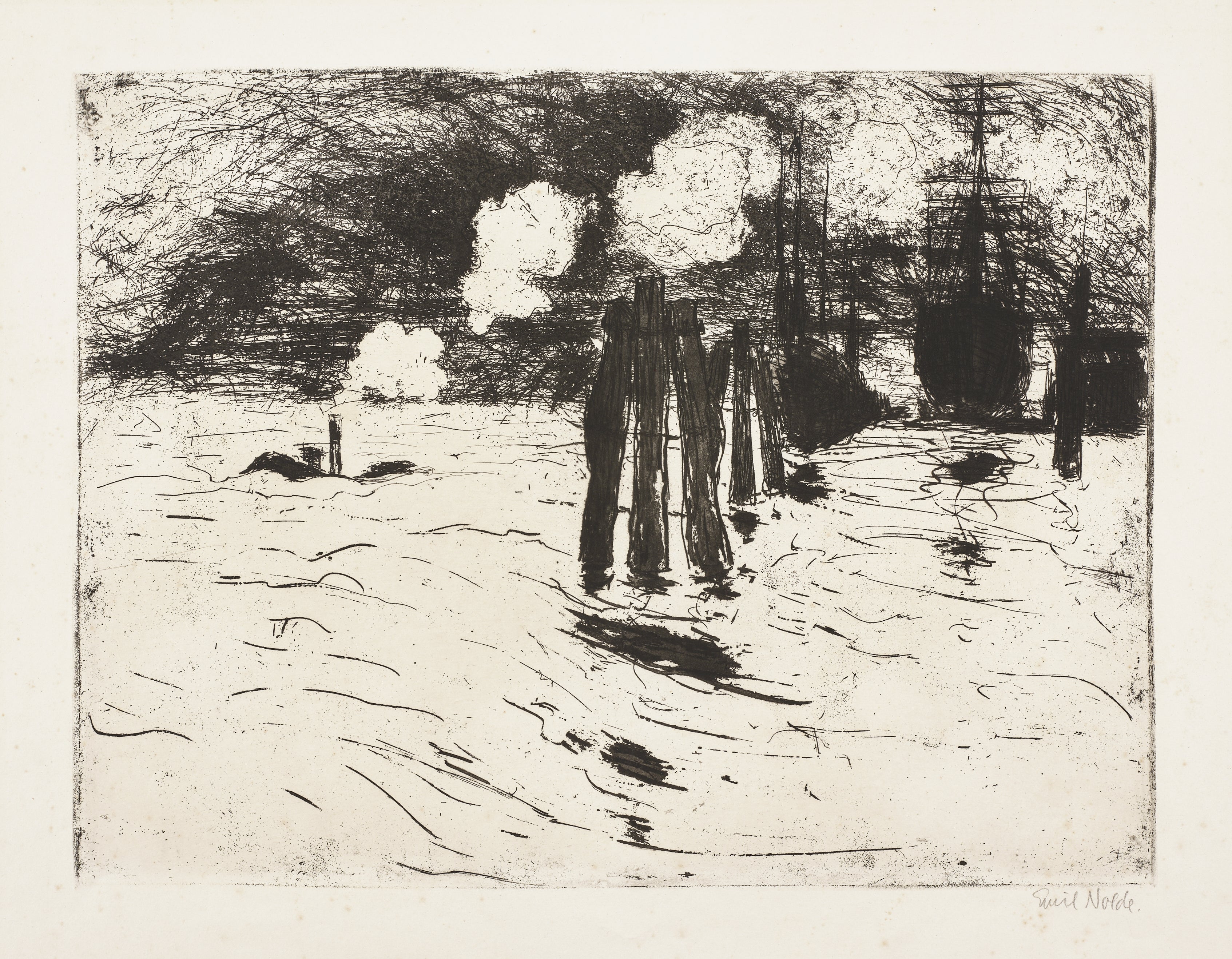
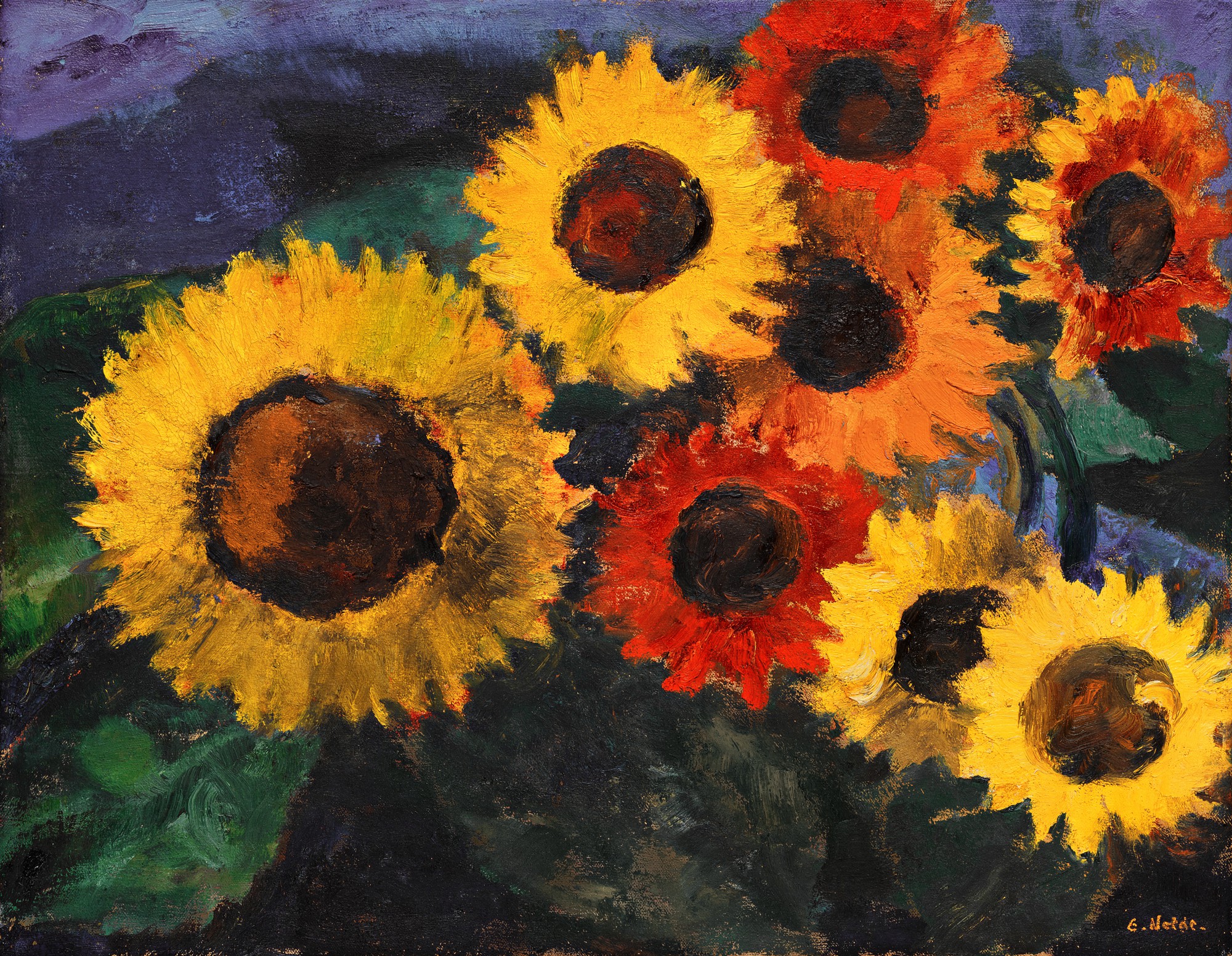
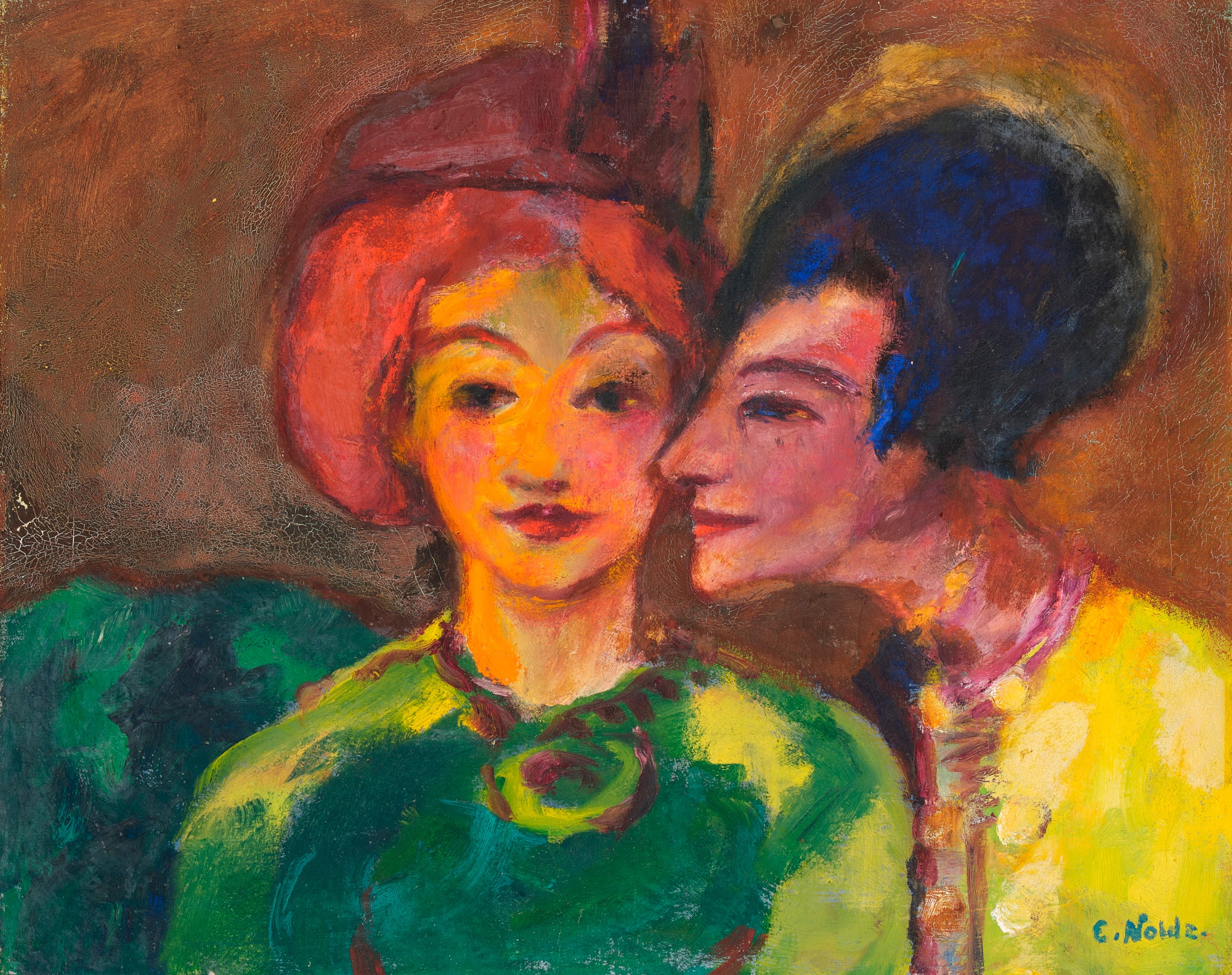
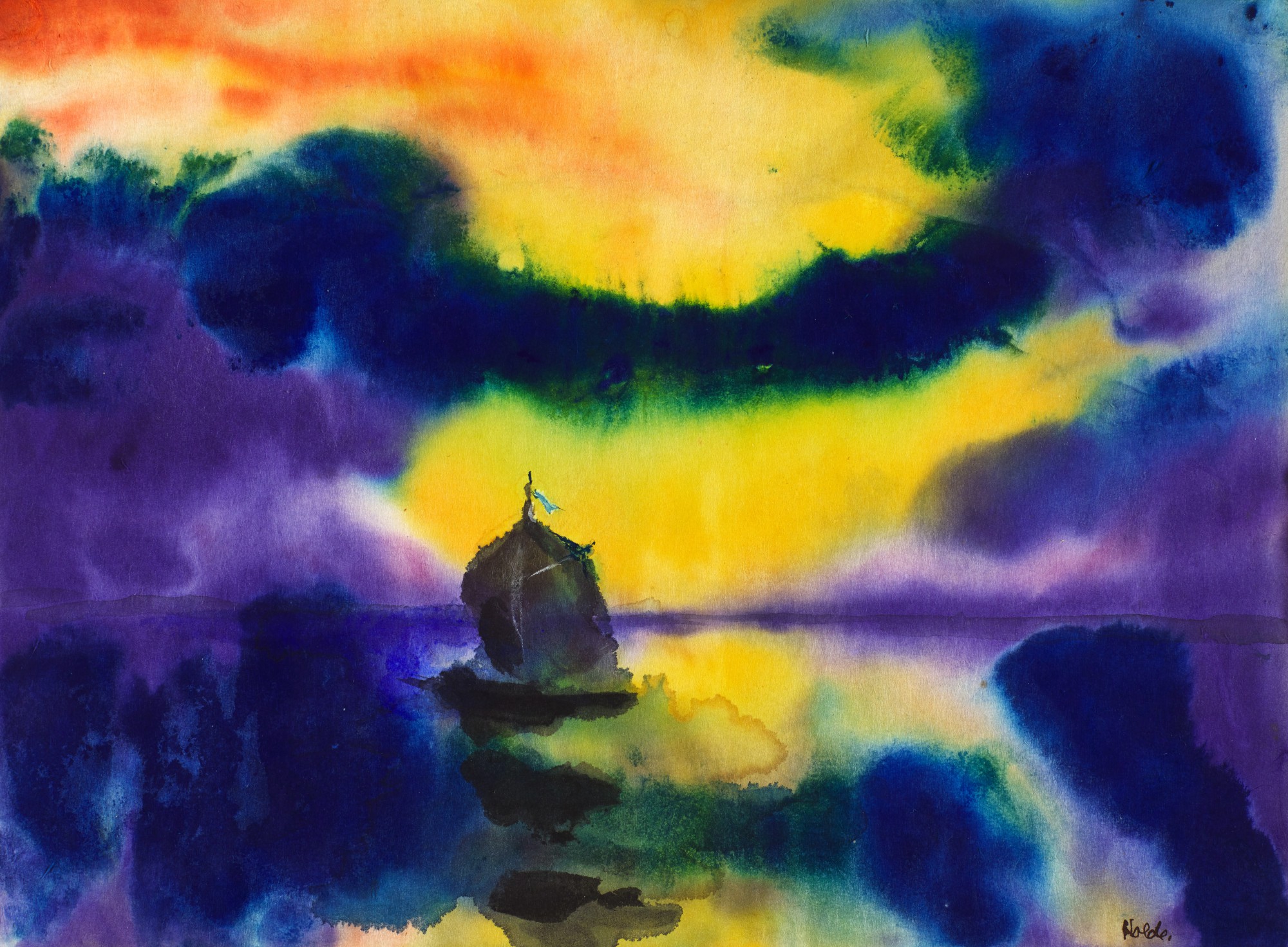
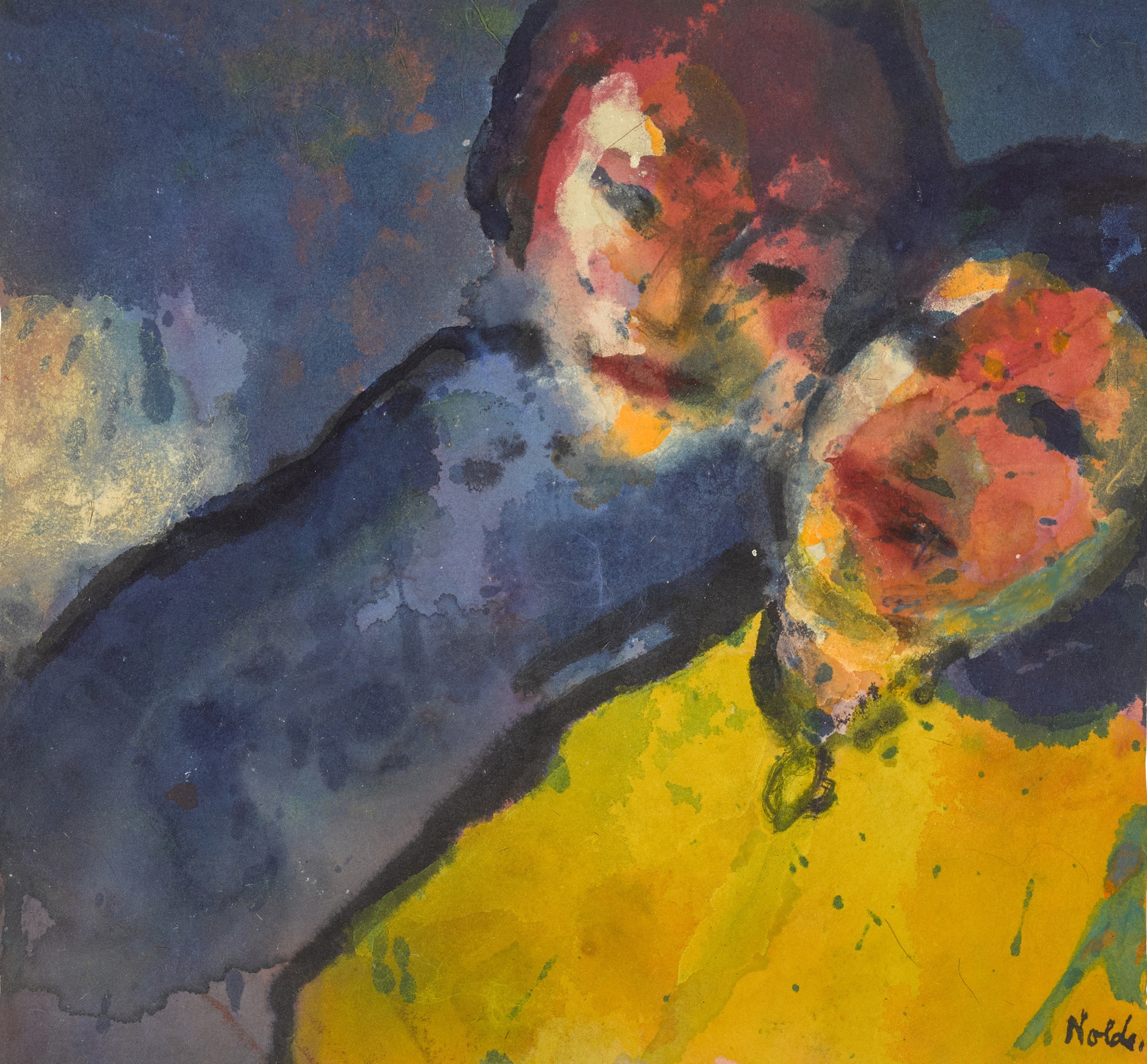
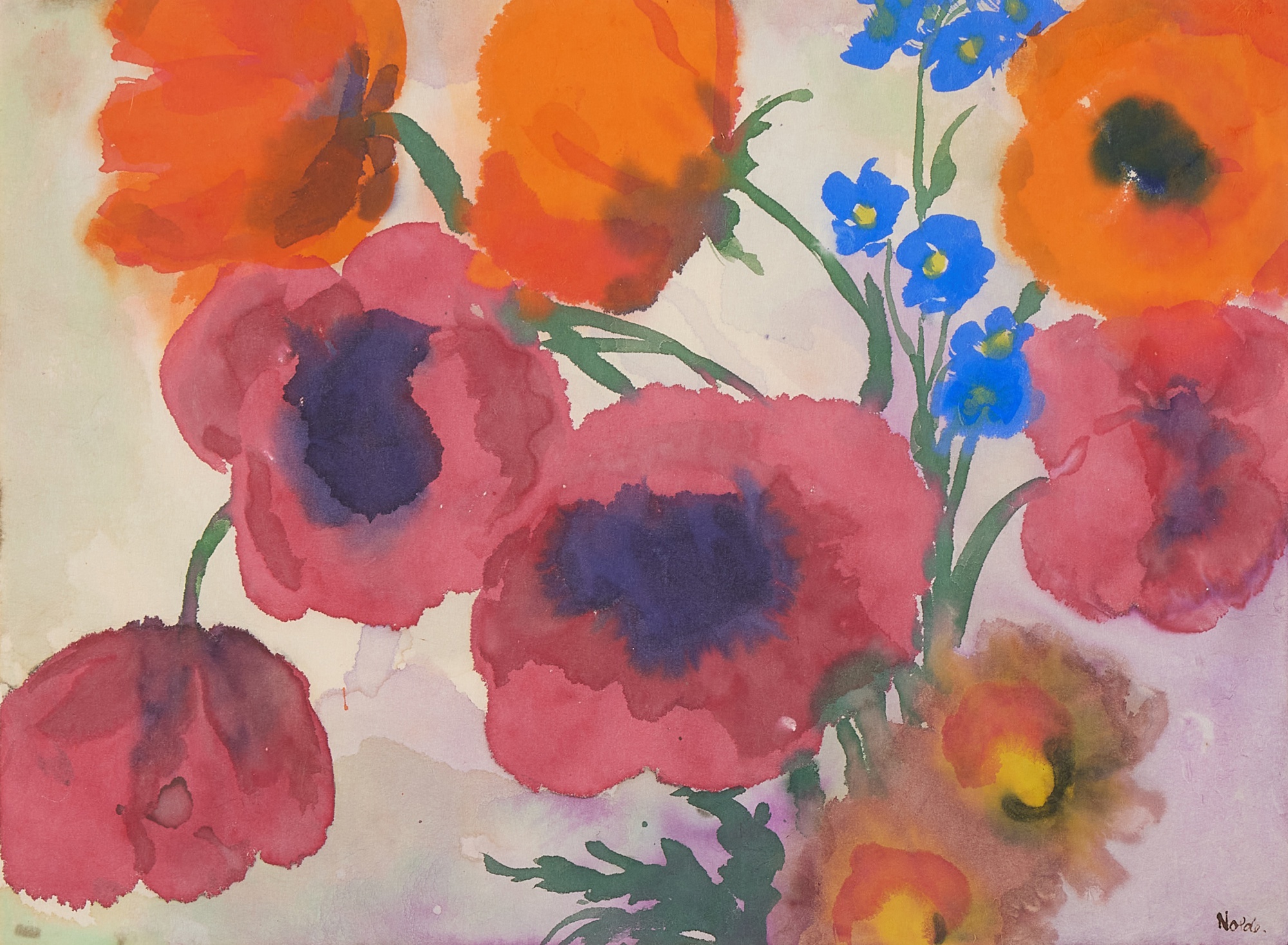
In 2014, the Nolde Stiftung Seebüll in northern Germany drew international attention when scholars began a serious reassessment of the artist's relationship with National Socialism, ultimately resulting in the landmark exhibition 'Emil Nolde: A German Legend. The Artist During the Nazi Era,' which opened at the Hamburger Bahnhof in Berlin in 2019. That exhibition, unflinching and deeply researched, paradoxically renewed global appreciation for Nolde's art by placing it honestly within its historical moment. Collectors, curators, and scholars emerged from those galleries reminded that the work itself, those volcanic floods of color and raw spiritual intensity, remains among the most powerful produced in twentieth century Europe. The paintings and watercolors did not diminish in light of the scrutiny. If anything, they asserted their own stubborn vitality. Emil Hansen, who would later take the name Emil Nolde from his birthplace in the Schleswig region near the Danish border, came into the world in 1867 on a small farm. That landscape, flat, windswept, saturated with the cold luminosity of the North Sea sky, would never truly leave him. He trained initially as a woodcarver and furniture designer in Flensburg and Munich, and later studied ornamental drawing in Karlsruhe and Berlin, a practical formation that gave him a craftsman's understanding of material and surface. His formal art training came relatively late, and that delay may have been a gift: by the time he enrolled briefly at the Académie Julian in Paris in 1899, he had already developed too strong a temperament to be easily absorbed into any school. Nolde's early career found its decisive turn in 1906 when he was invited to join Die Brücke, the Dresden based Expressionist collective that included Ernst Ludwig Kirchner, Erich Heckel, and Karl Schmidt Rottluff. Though his membership lasted only a year, the association confirmed something he already sensed: that raw emotion, not careful description, was the proper business of paint. He had already begun experimenting with the heightened color relationships that would define his mature work, pulling pigments into confrontations that felt less like observation than like confession. His religious paintings of this period, large and deliberately crude in their figure drawing, drew on medieval German altarpieces and the visionary intensity of James Ensor, the Belgian master whose grotesque carnival imagery Nolde deeply admired. The years between 1910 and 1930 represent Nolde at full power. He traveled widely, visiting Russia, Japan, China, and the South Seas as part of a German colonial medical expedition to New Guinea in 1913 and 1914, an experience that electrified his palette and deepened his fascination with what he called 'primitive' art, a concept we now understand in far more complicated and critical terms but which for Nolde represented an access to directness and spiritual force that academic European painting had lost. Works from this period such as 'Stiller Südseeabend' from 1914 and the watercolor 'Junk' from the same year carry the heat and strangeness of the tropics translated into pure Northern European expressiveness. The oil paintings glow like stained glass; the watercolors breathe and bleed. He had discovered that wet watercolor applied to wet paper could do things no other medium could: create edges that pulse, colors that bloom into one another with the logic of a dream. The watercolors deserve particular attention because they represent one of the most sustained and original bodies of work in the medium. Nolde worked on dampened Japanese paper, allowing pigment to spread and merge before being nudged into suggestions of form. A work like 'Landschaft unter einer grossen, blauen Wolke' from 1930 achieves something close to the sublime with almost no apparent effort: a vast blue cloud presses down on a luminous horizon, and the whole thing feels cosmically right. 'Glückliches Paar' from the same year shows his ability to render tenderness through bold, gestural marks, two figures dissolving into each other like warmth into warmth. 'Kopf mit Lilien' from 1925 is characteristic of his flower and figure watercolors, works in which botanical abundance becomes a kind of emotional atmosphere. These are not botanical illustrations; they are states of being rendered in cadmium and violet. From a collecting perspective, Nolde occupies a rare position: he is firmly canonical, his place in art history secured by major museum holdings at the Museum of Modern Art in New York, the Tate in London, and numerous German institutions, yet his works still appear with meaningful regularity at auction and through private galleries. His watercolors in particular have attracted strong interest from collectors across Asia, Europe, and North America, and the market for them reflects genuine connoisseurship rather than speculative fever. When assessing a Nolde watercolor, collectors are well advised to consider condition above all else, as the luminosity that makes these works extraordinary is also what makes them sensitive to light and humidity over time. Works on the platform such as 'Boot im Schilf' from 1920 and 'Dschunke mit gelbem Segel vor violettem Himmel' illustrate the range within the watercolor practice, from quiet marsh intimacy to theatrical chromatic drama. Within the context of early twentieth century modernism, Nolde belongs to a constellation of artists who chose feeling over form, instinct over system. He stands naturally alongside his Expressionist contemporaries Kirchner and Max Beckmann, but his closest spiritual kinship may be with Edvard Munch, whose Norwegian landscapes carry a similar metaphysical weight, or with Oskar Kokoschka, whose portraits share Nolde's capacity to make psychological states visible on the surface of things. Unlike many of his peers, Nolde never truly left his regional roots behind; the North Sea and the marsh remained his spiritual center even when the imagery on his canvases traveled to the tropics or reached toward the divine. Nolde died in 1956 at his home in Seebüll, Schleswig Holstein, at the age of eighty eight, leaving behind an estate of extraordinary richness. His legacy today is being honored with the full complexity it deserves, neither sanitized nor condemned but examined with the kind of seriousness that great art demands. What endures, undeniably, is the color: that volcanic, ecstatic, utterly personal color that seems to generate its own light from within the canvas or the paper. For collectors and for anyone who has stood before one of his large flower paintings or his North Sea landscapes, the experience is not easily forgotten. Nolde made visible what most artists only gesture toward: the feeling of being alive inside a world saturated with beauty and mystery.