Oil And Enamel
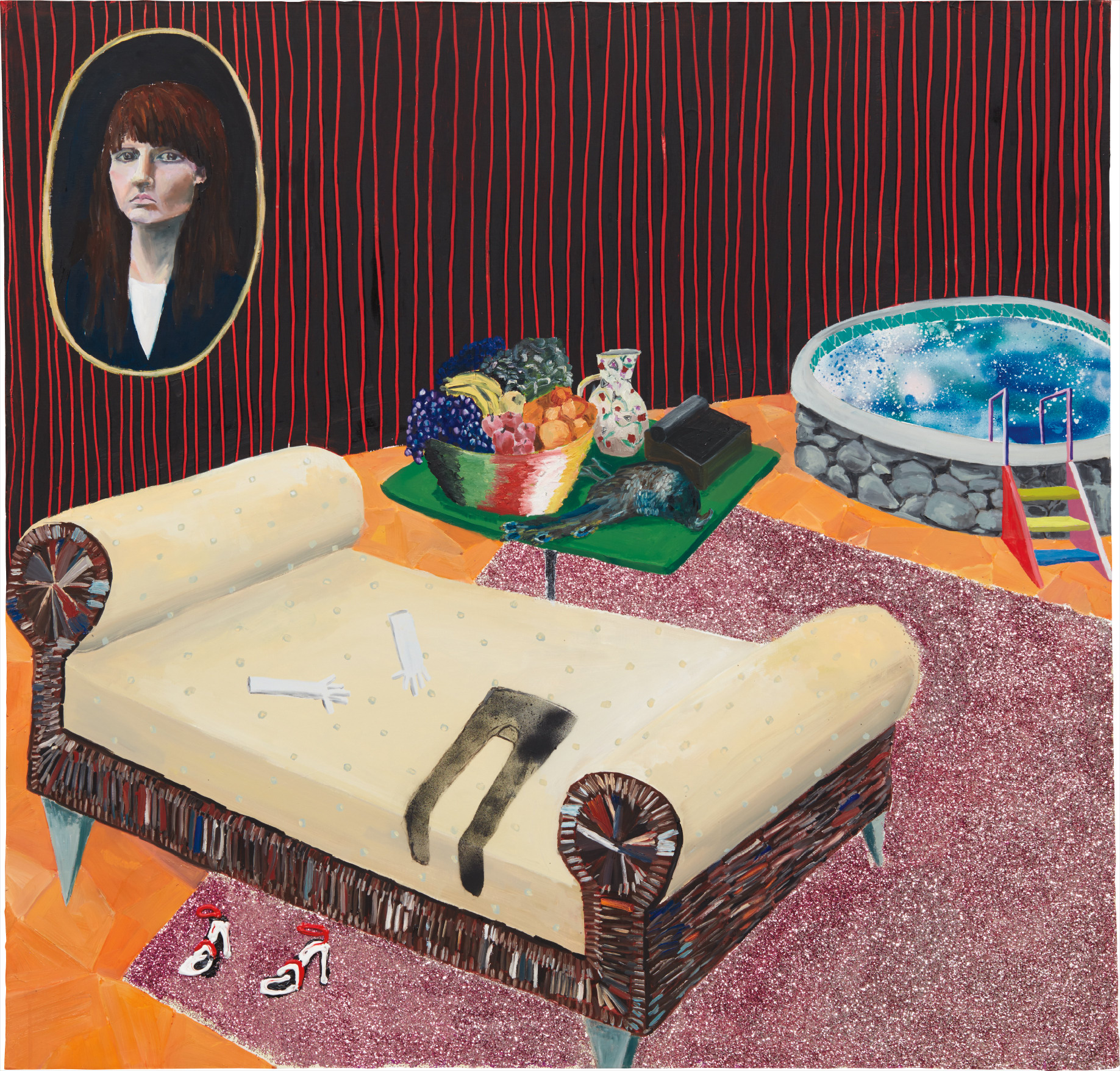
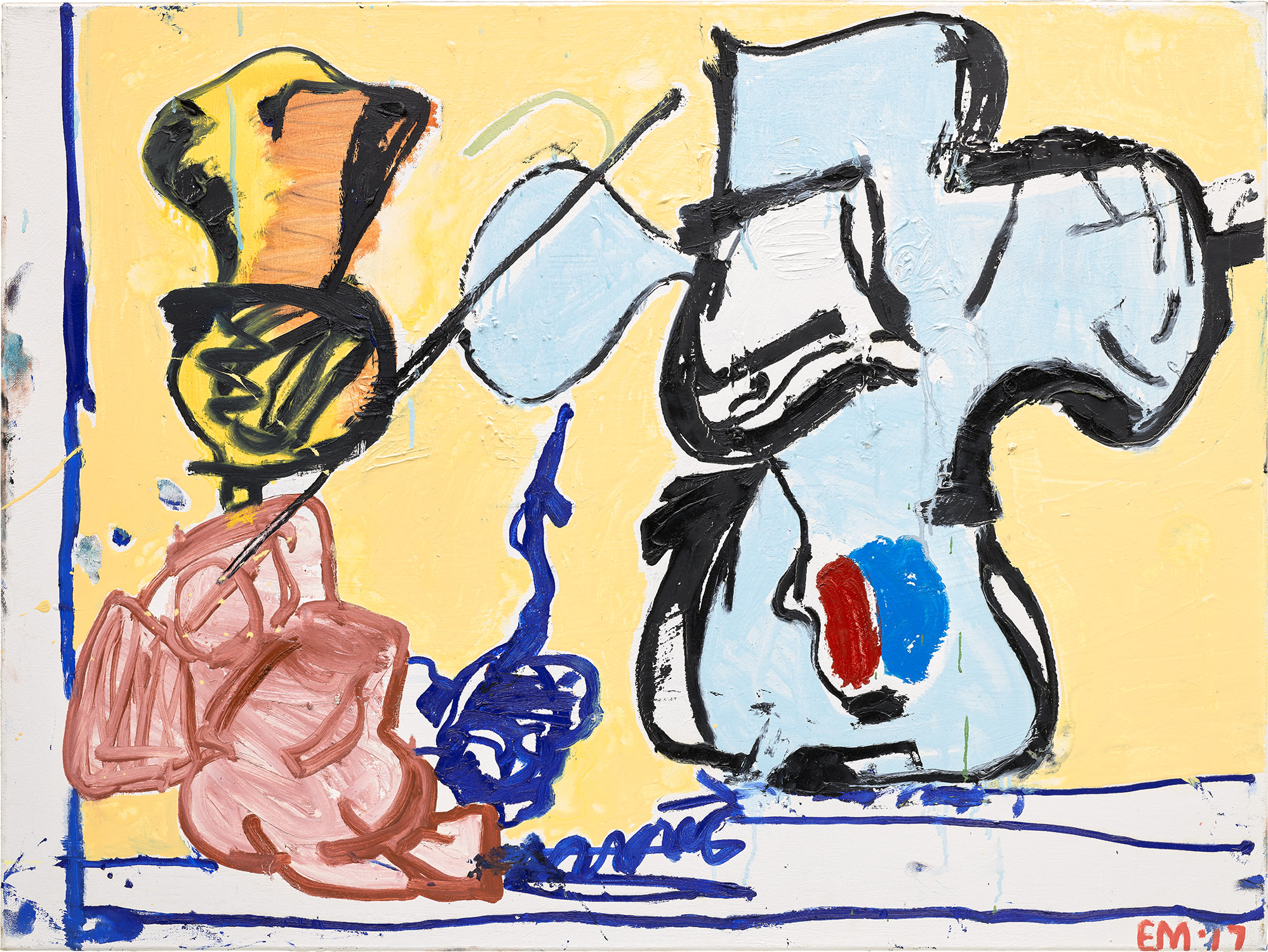
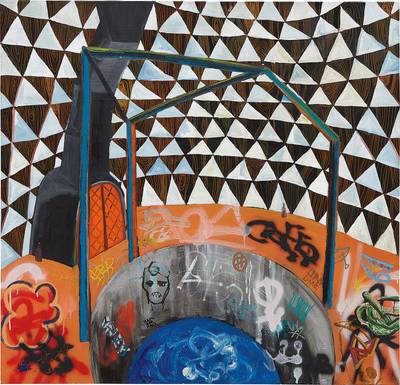
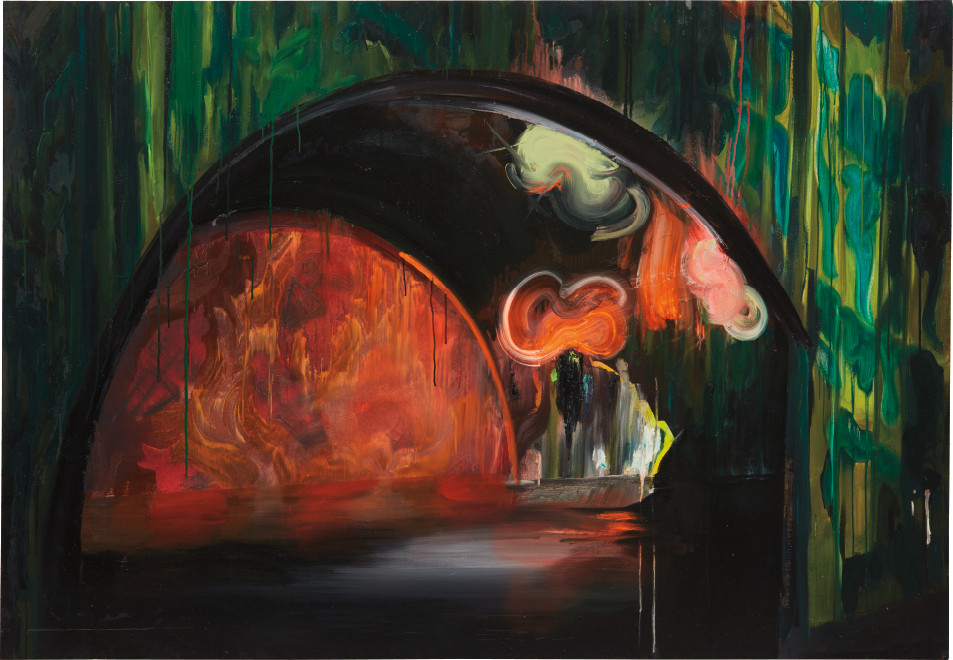
Shara Hughes
Vanity, 2007

Slick, Burned, Luminous: Oil Meets Enamel
There is something almost alchemical about the moment oil paint and enamel share the same surface. One medium is ancient, measured, built through centuries of accumulated craft. The other arrives from industry, from hardware stores and automotive suppliers, carrying the gleam of modernity and the faint smell of something not quite belonging in a studio. Together they create a tension that no single medium can produce alone, and that tension has become one of the defining visual languages of contemporary painting.
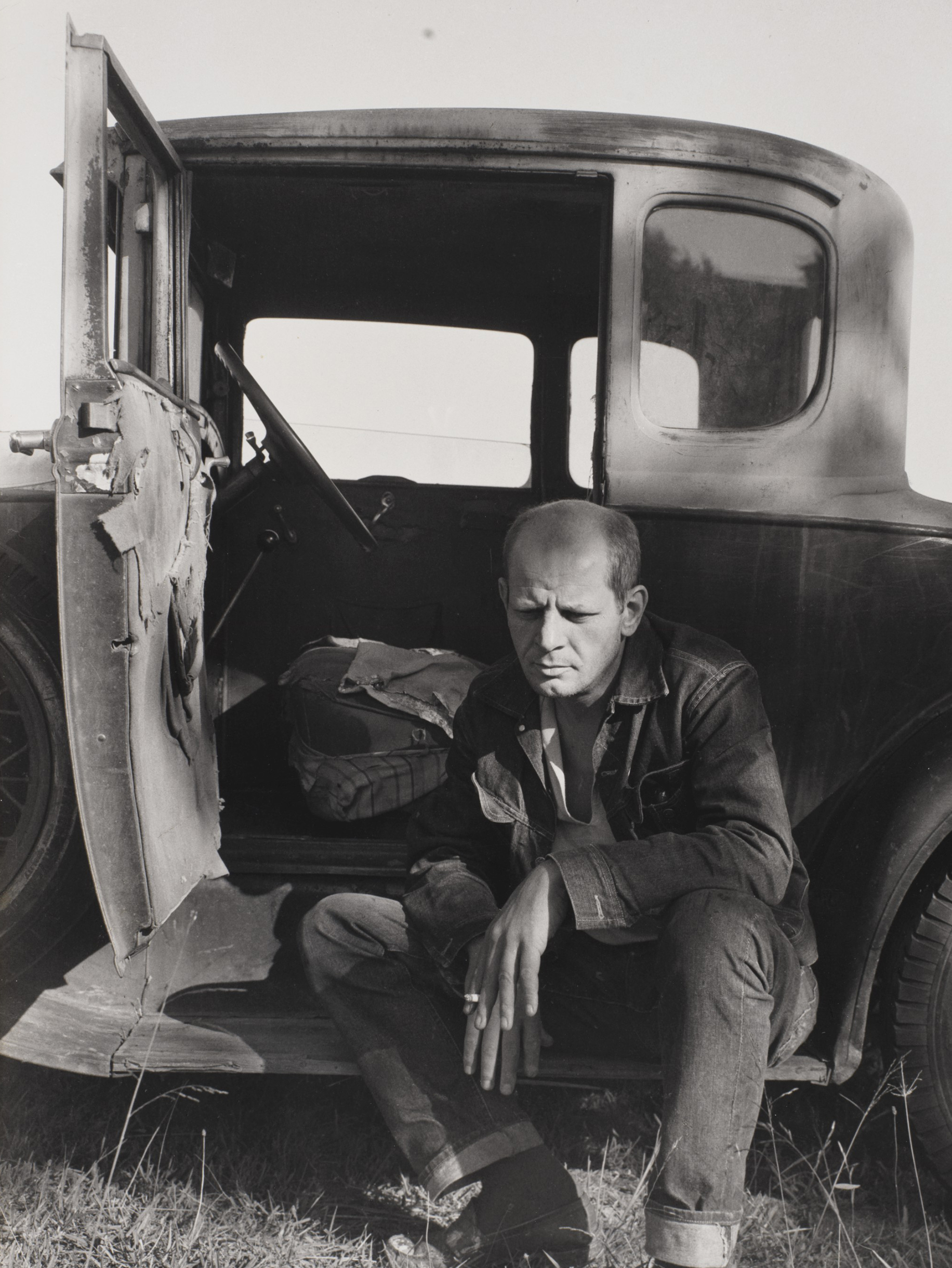
The story begins, as so much in twentieth century art does, with the impulse to break faith with tradition. Jackson Pollock's turn to commercial enamel paint in the late 1940s was not merely a technical experiment. It was a declaration. Enamel dried faster, poured differently, and carried none of the Old Master associations that oil paint dragged behind it like a long coat.
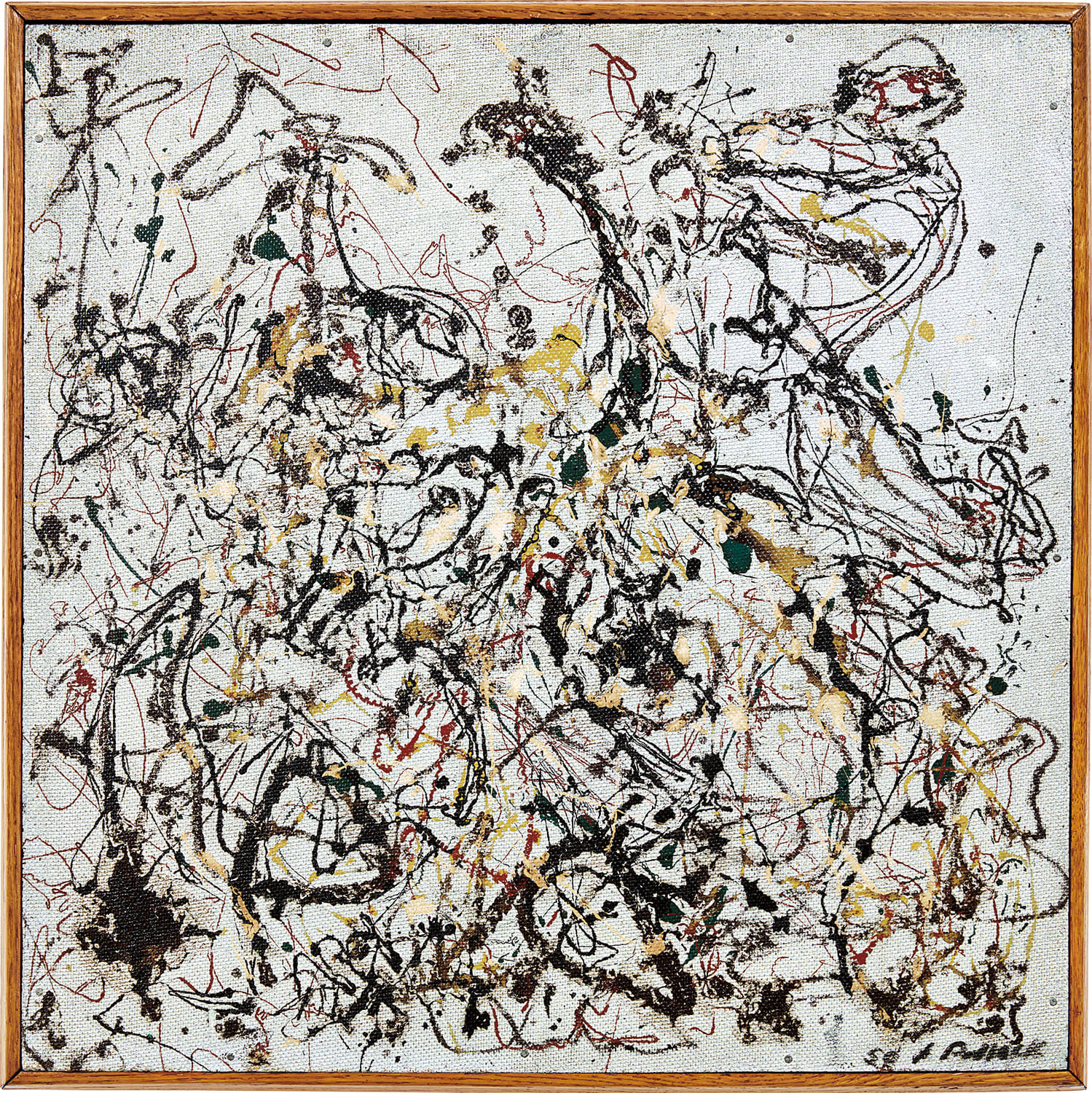
Jackson Pollock
Number 16, 1950
When Pollock laid his canvases on the floor at his Springs studio and moved around them, the enamel responded to gravity in ways that oil simply could not. The works produced during that extraordinary period between 1947 and 1950, among them Number 31 and Lavender Mist, changed the conversation about what a painting could be and how one could be made. Yet Pollock was not working in isolation. The postwar period was saturated with artists reaching toward industrial materials as a way of signaling rupture.
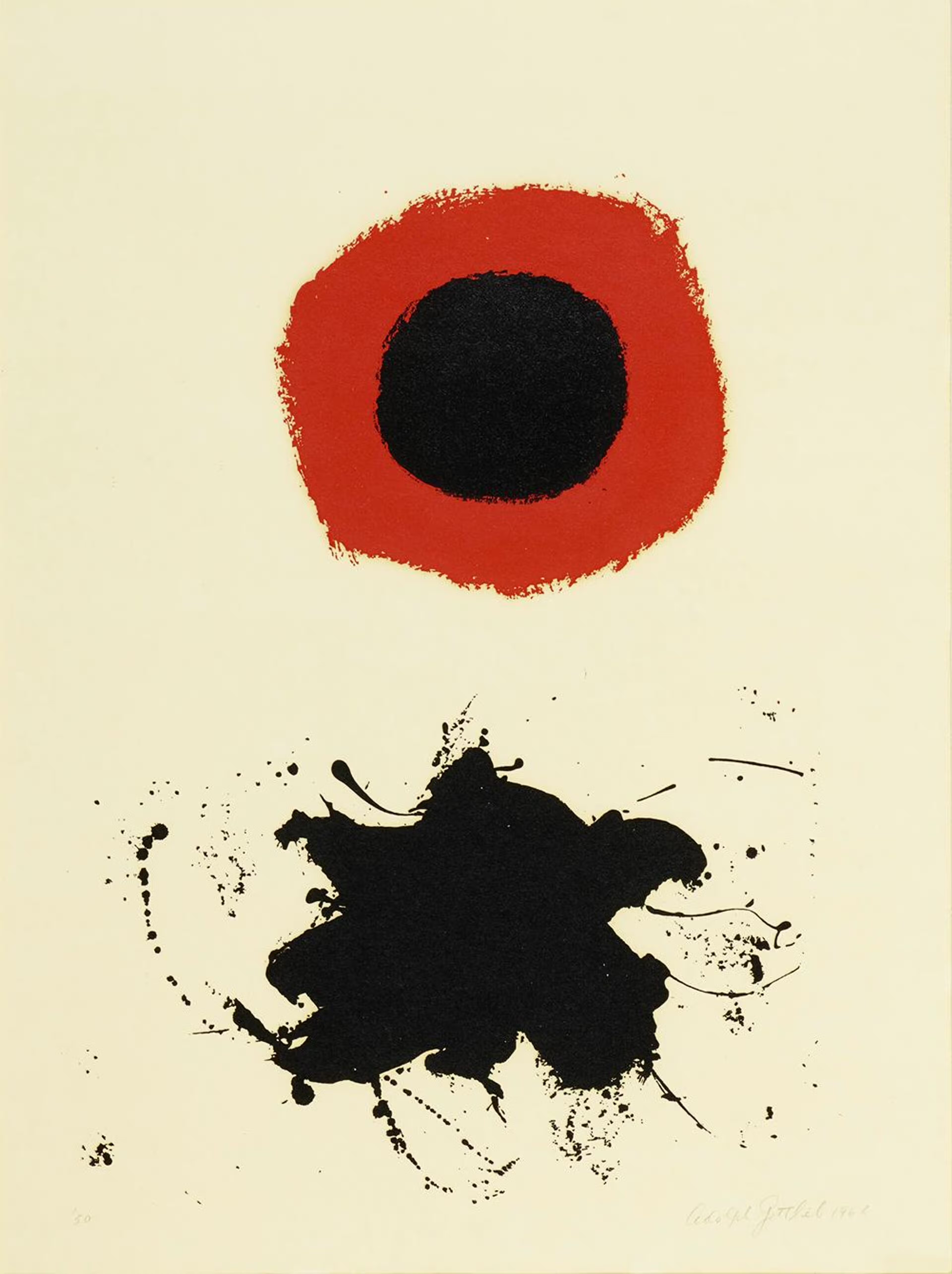
The Abstract Expressionist generation, Adolph Gottlieb among them, was wrestling with scale, surface, and psychological weight. Gottlieb's Burst paintings, which he began developing in the late 1950s, relied on a directness of application and a bluntness of form that owed something to the no nonsense clarity of enamel's finish. Where oil could suggest atmosphere and depth through layering, enamel gave you the thing itself, immediate and unapologetic. By the time Pop Art arrived in the early 1960s, enamel had found a new champion in the culture of the image.
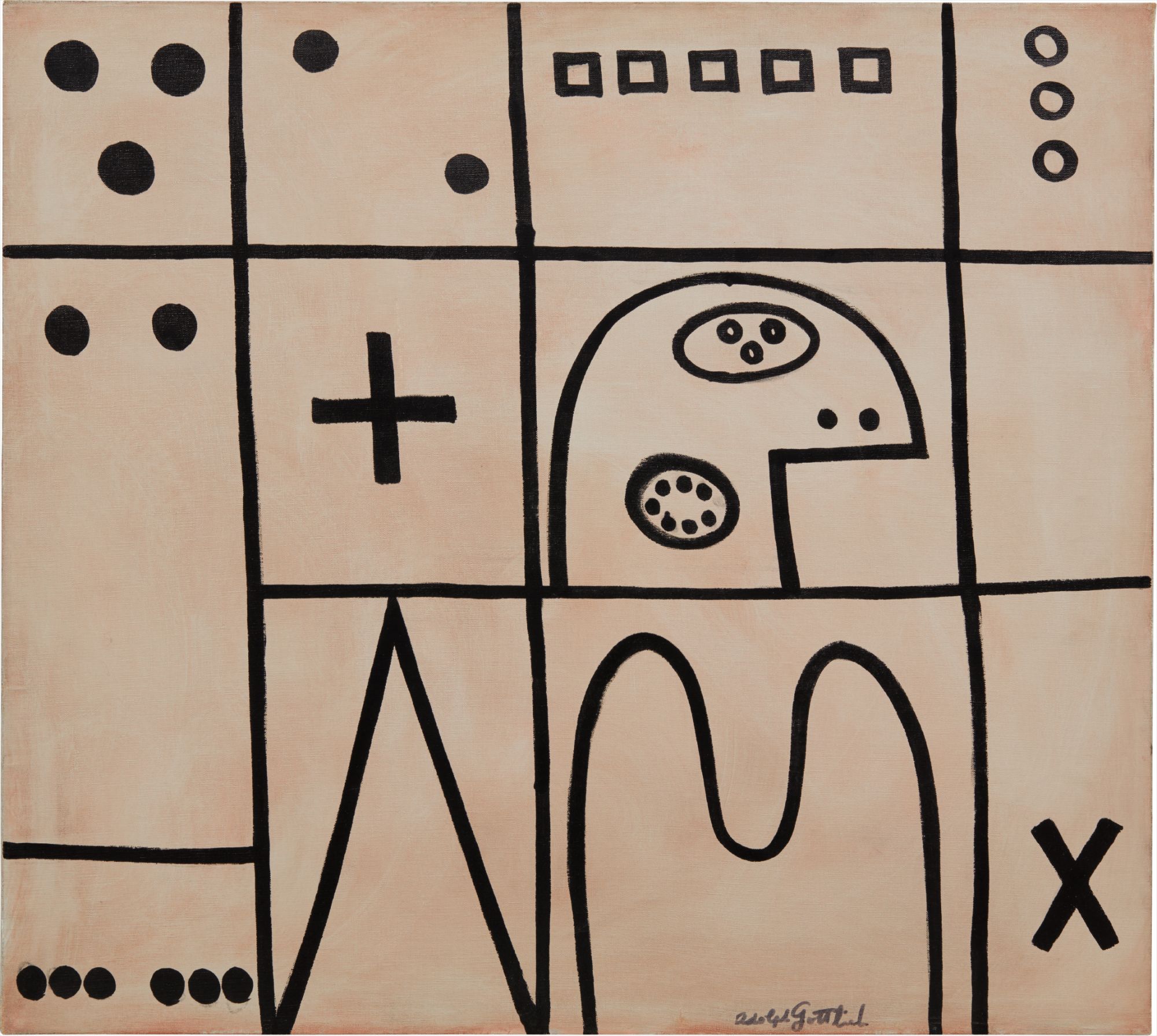
Adolph Gottlieb
Plus, 1950
Sir Peter Blake, one of the central figures of British Pop and well represented within The Collection, understood the medium's relationship to commercial signage, to the brash printed surfaces of record sleeves and fairground art. Enamel was the paint of the public world, and Pop artists were determined to drag that world into the gallery. The medium's glossy finish photographed well, read clearly from a distance, and refused the kind of meditative looking that oil painting seemed to demand. It was democratic in the most provocative sense of the word.
What has kept the oil and enamel combination so vital in the decades since is its resistance to resolution. The two materials do not fully agree with each other, and that disagreement is productive. Oil remains workable for days, allowing pentimento, revision, and the slow accumulation of meaning. Enamel skins over quickly, trapping air beneath it, sometimes cracking or crinkling in ways the artist cannot entirely predict.
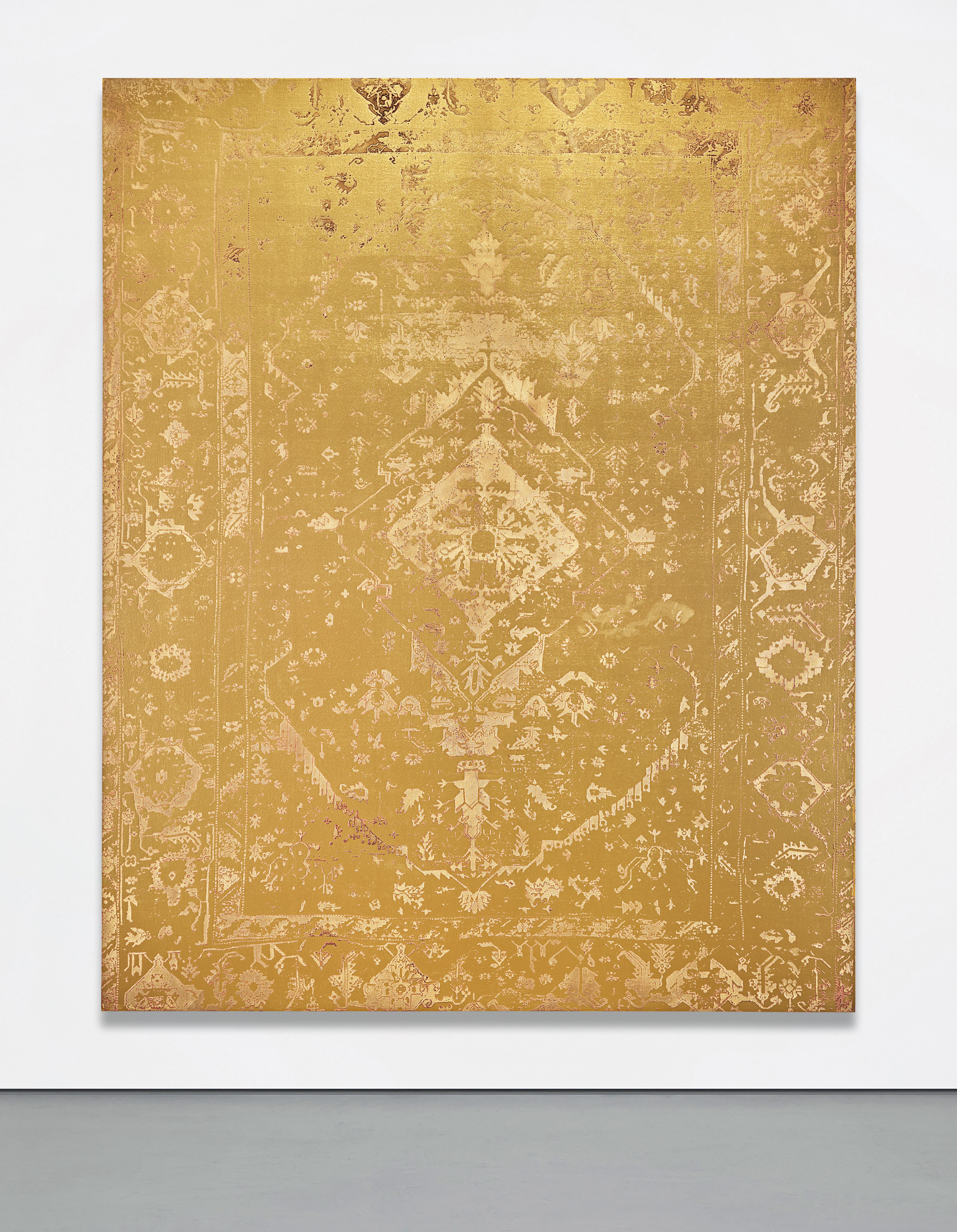
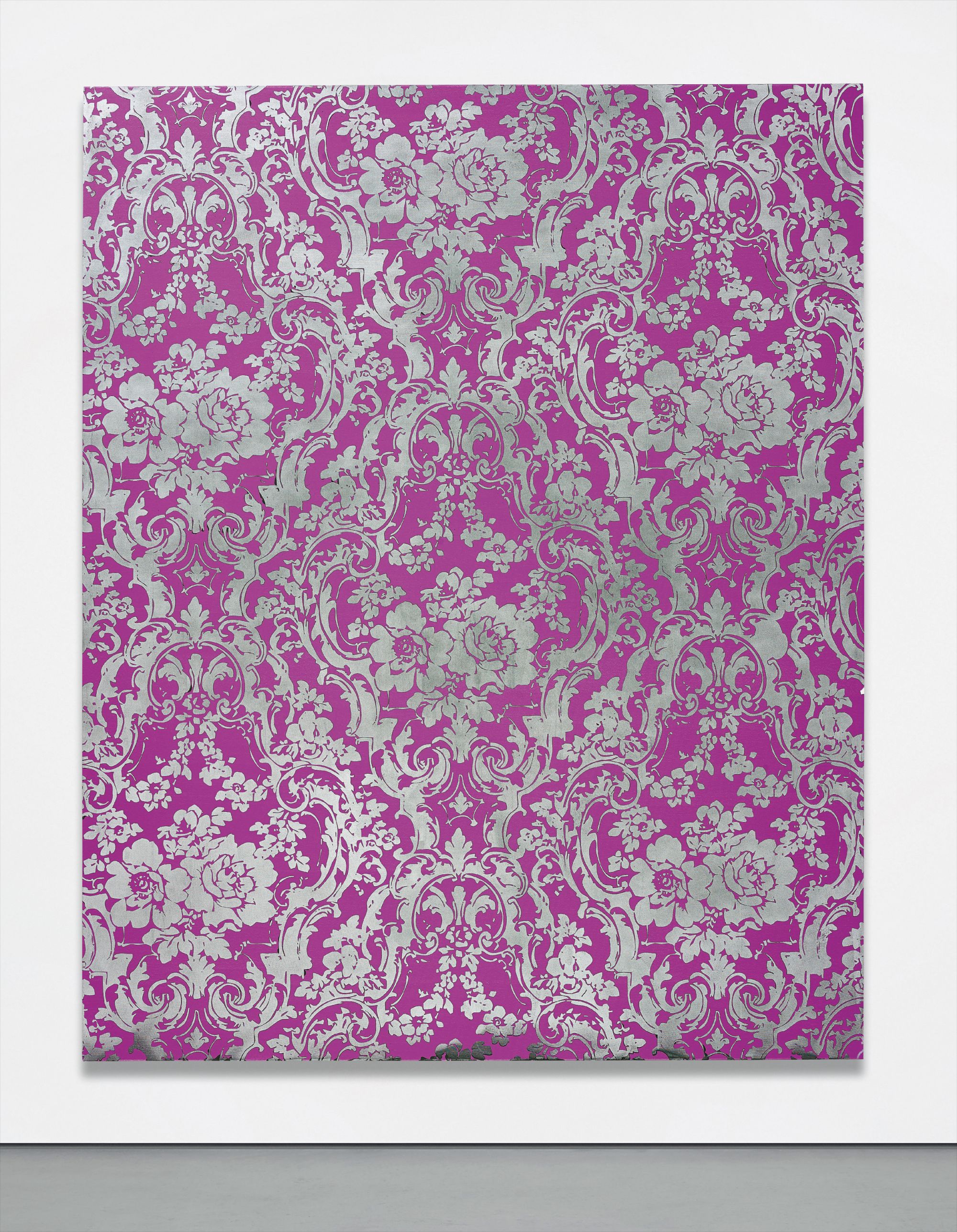
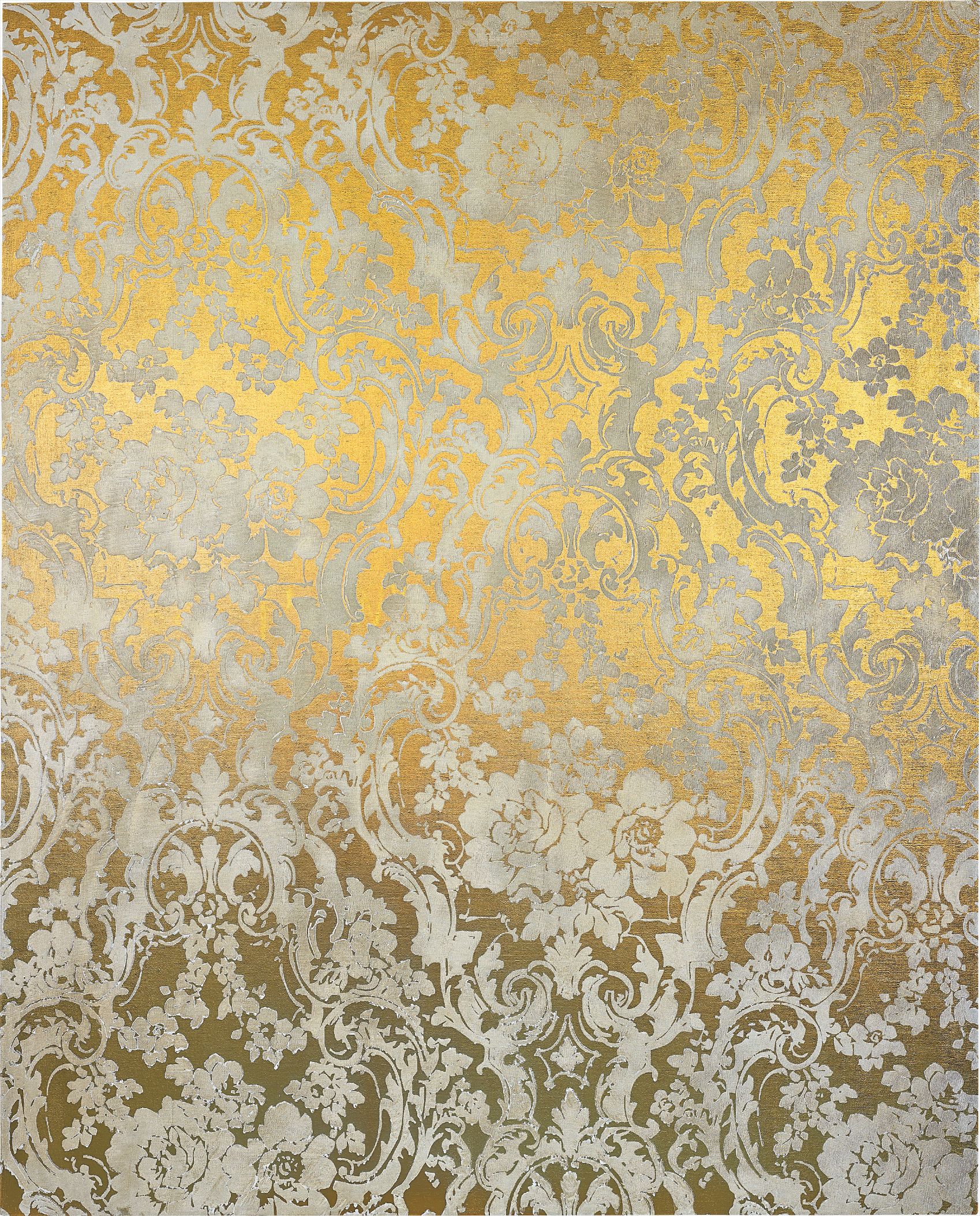
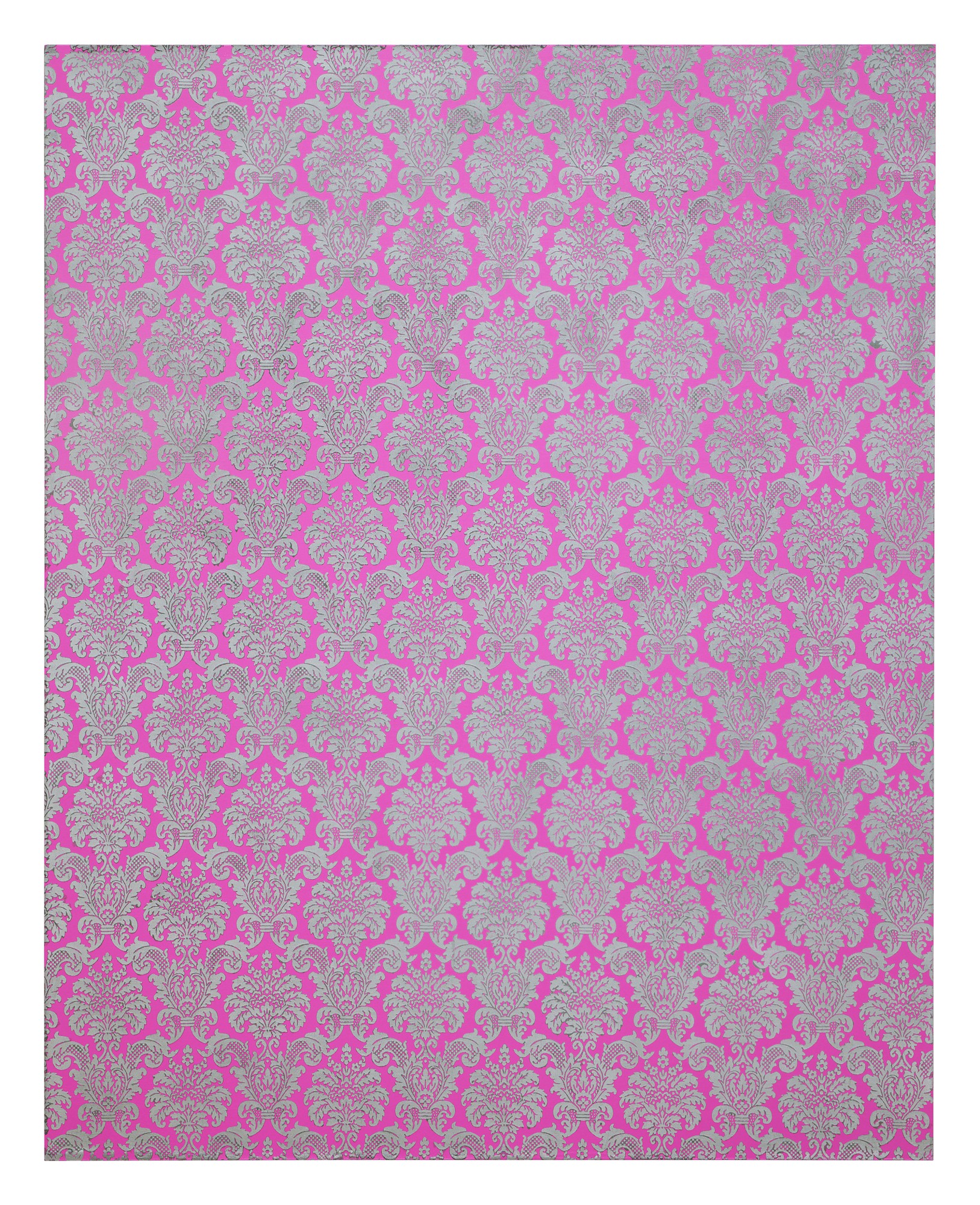
Rudolf Stingel
Rudolf Stingel has spent the past three decades exploring the boundaries of painting, pattern and design through his experimentation with surface and materiality. Rendered in opulent gold,, 2014
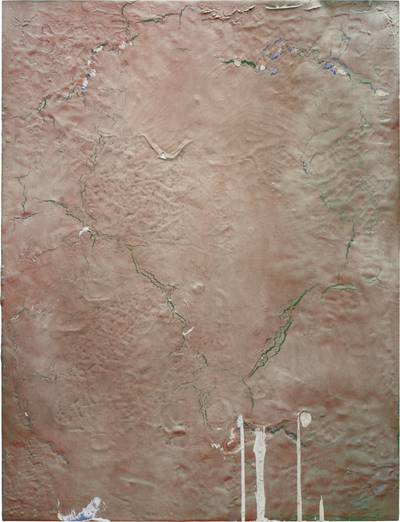
When Rudolf Stingel, whose practice is richly represented on The Collection, lays down fields of oil paint beneath reflective or disrupted surfaces, he is working precisely with this friction between control and release, between the handmade and the industrial. His surfaces seem to breathe, to hold light differently depending on where you stand in the room. Ryan Sullivan has taken a different approach to the same fundamental question. His poured works, developed through a process in which paint is mixed and allowed to move through structured armatures, produce surfaces that look both deliberate and accidental.
The enamel elements in his practice introduce a hardness, a finality, that sets against the more yielding behavior of oil. The results feel geological, like cross sections of something formed over time rather than applied in an afternoon. Sullivan's work, also present on The Collection, is a useful reminder that the oil and enamel combination is not merely a stylistic choice but a philosophical one, a way of thinking about time, chance, and the limits of authorship. Among younger and mid career painters, the interest in surface chemistry has only deepened.
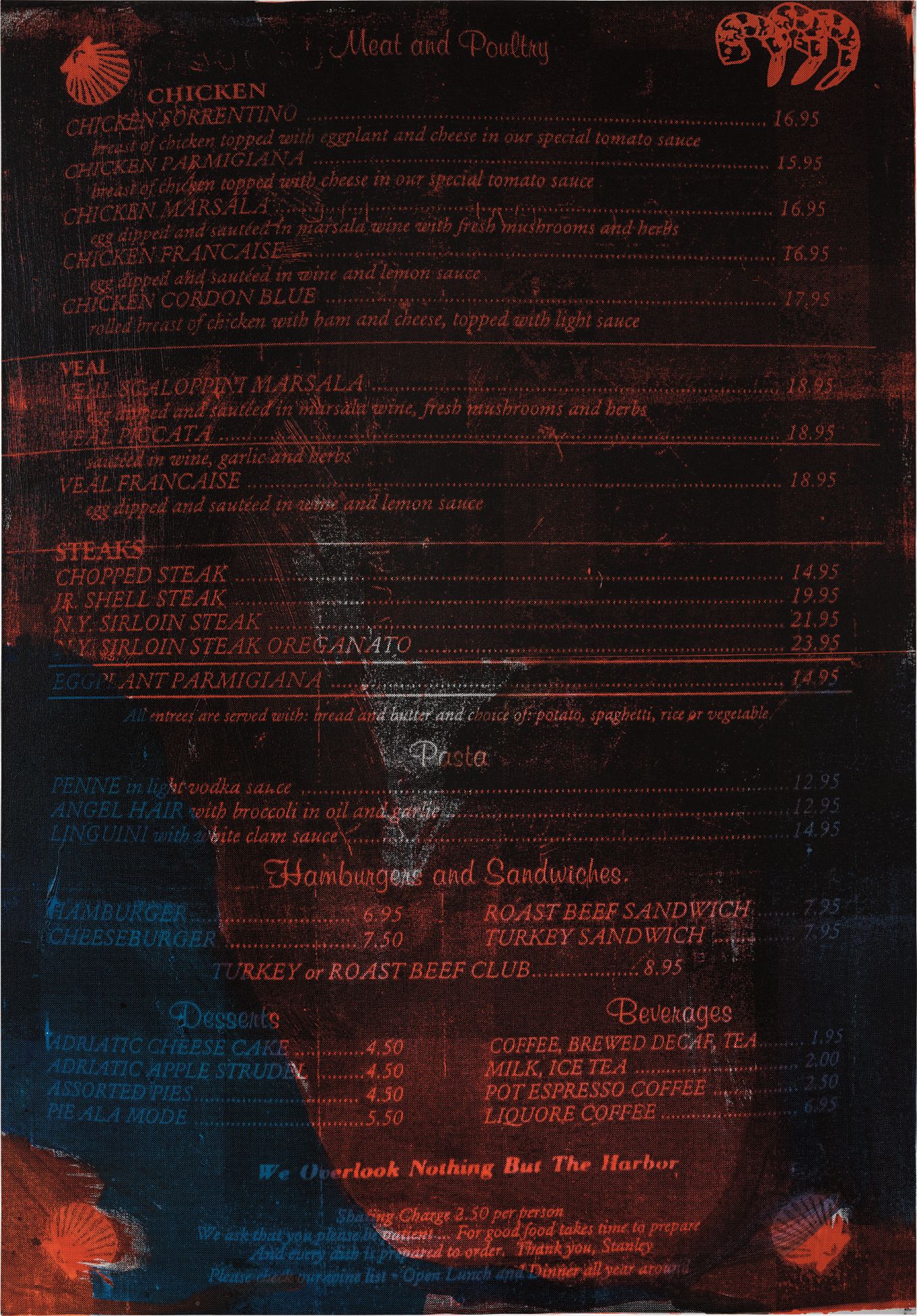
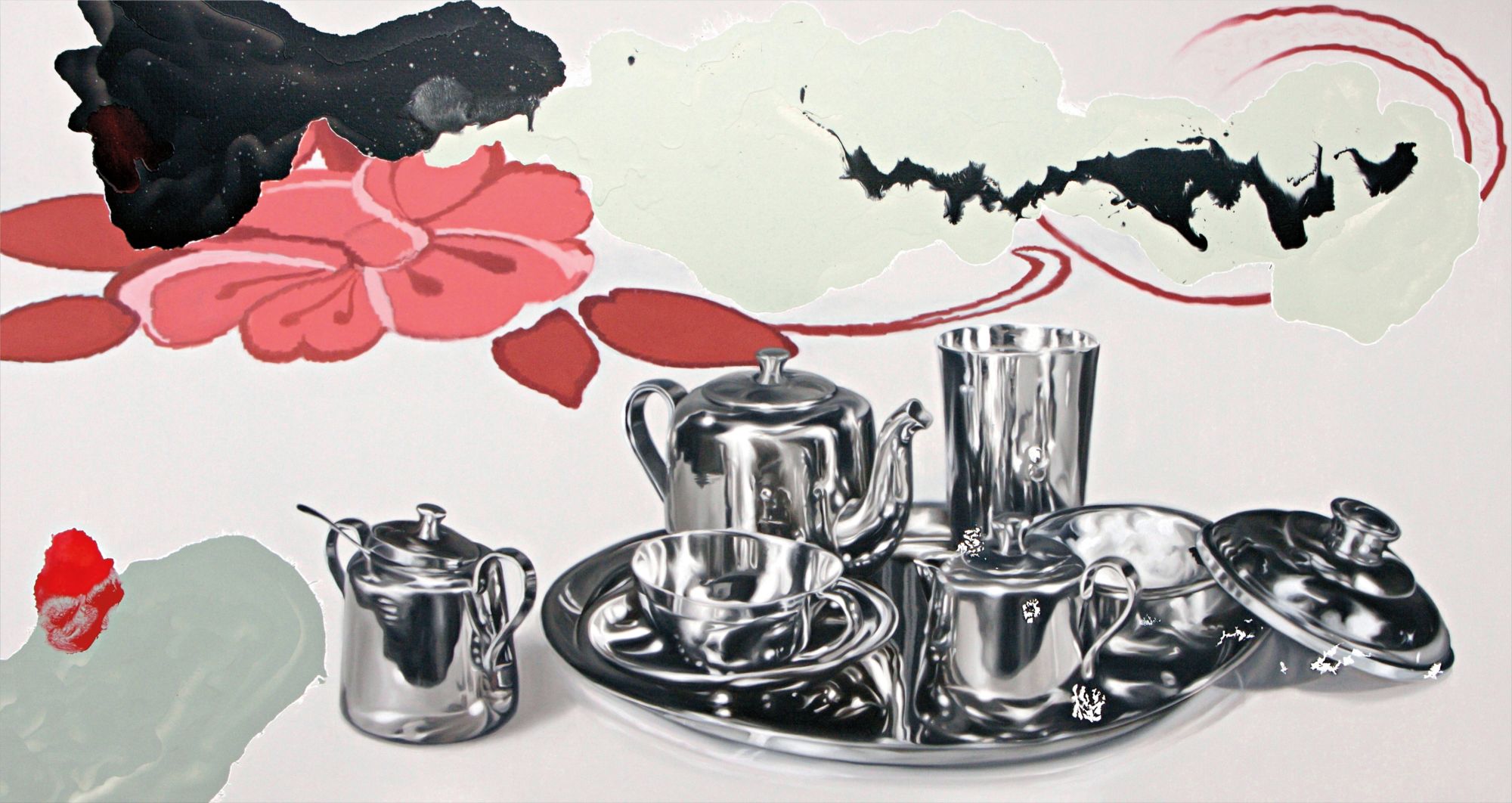
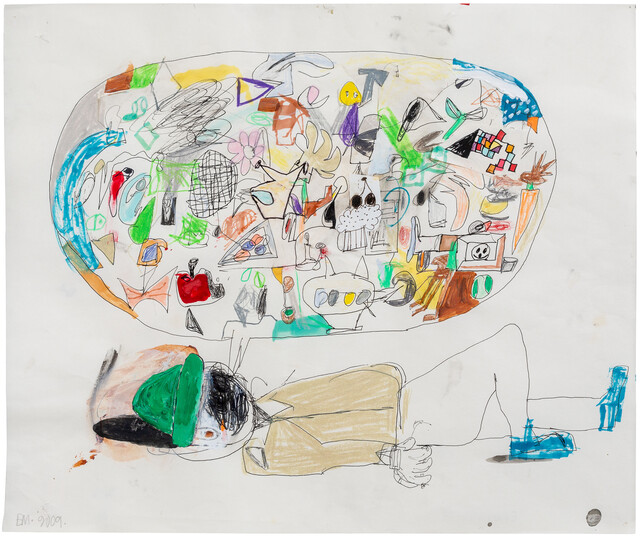
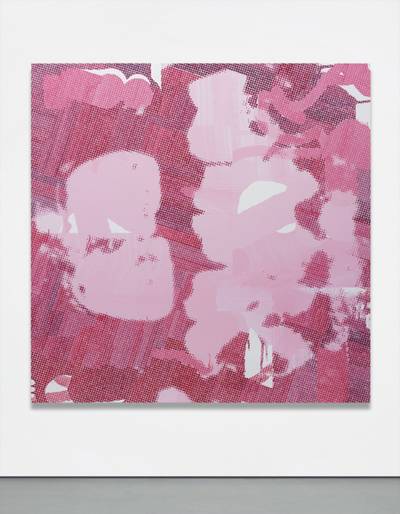
Alex Hubbard
Coastal Blues IV
John Pomara's work investigates how digital logic can be translated through paint into something tactile and physical, often using industrial materials to achieve effects that seem to hover between the analog and the computational. Alex Hubbard constructs paintings that feel like records of a process, surfaces that have been poured, burned, and reassembled, where enamel's hardness provides structural memory against the more fugitive behavior of other elements. Jean Baptiste Bernadet works in a quieter register, but his attention to the way light moves across layered surfaces speaks the same essential language. The cultural significance of this combination extends beyond studio practice into what it says about the world painting inhabits.
Oil carries the weight of portraiture, of landscape, of everything the Western tradition spent four hundred years building. Enamel carries the weight of industry, of consumer culture, of the twentieth century's obsession with speed and shine. To put them together is to insist that neither history can be ignored, that painting must somehow contain both the museum and the parking lot. This is not a comfortable position, but it is an honest one.
What you find when you spend time with the works on The Collection that live in this territory is that the oil and enamel pairing is not a trick or a provocation but a genuine formal language with real things to say. The surfaces reward close looking. They change under different lights. They hold evidence of decisions made and decisions reversed.
They are, in the deepest sense, paintings about painting, and about the world that painting must now account for. That is more than enough reason to keep paying attention.