Linocut
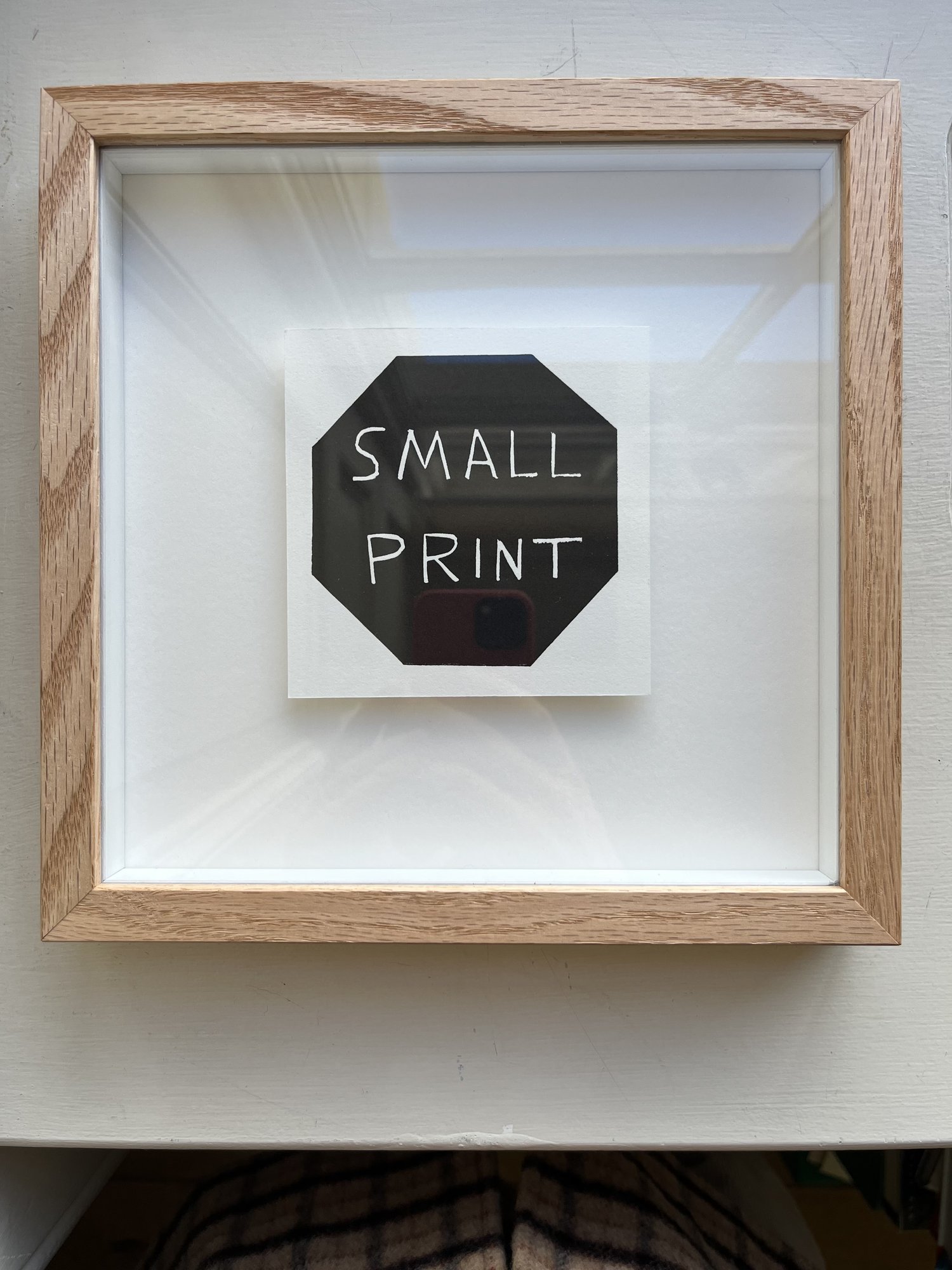
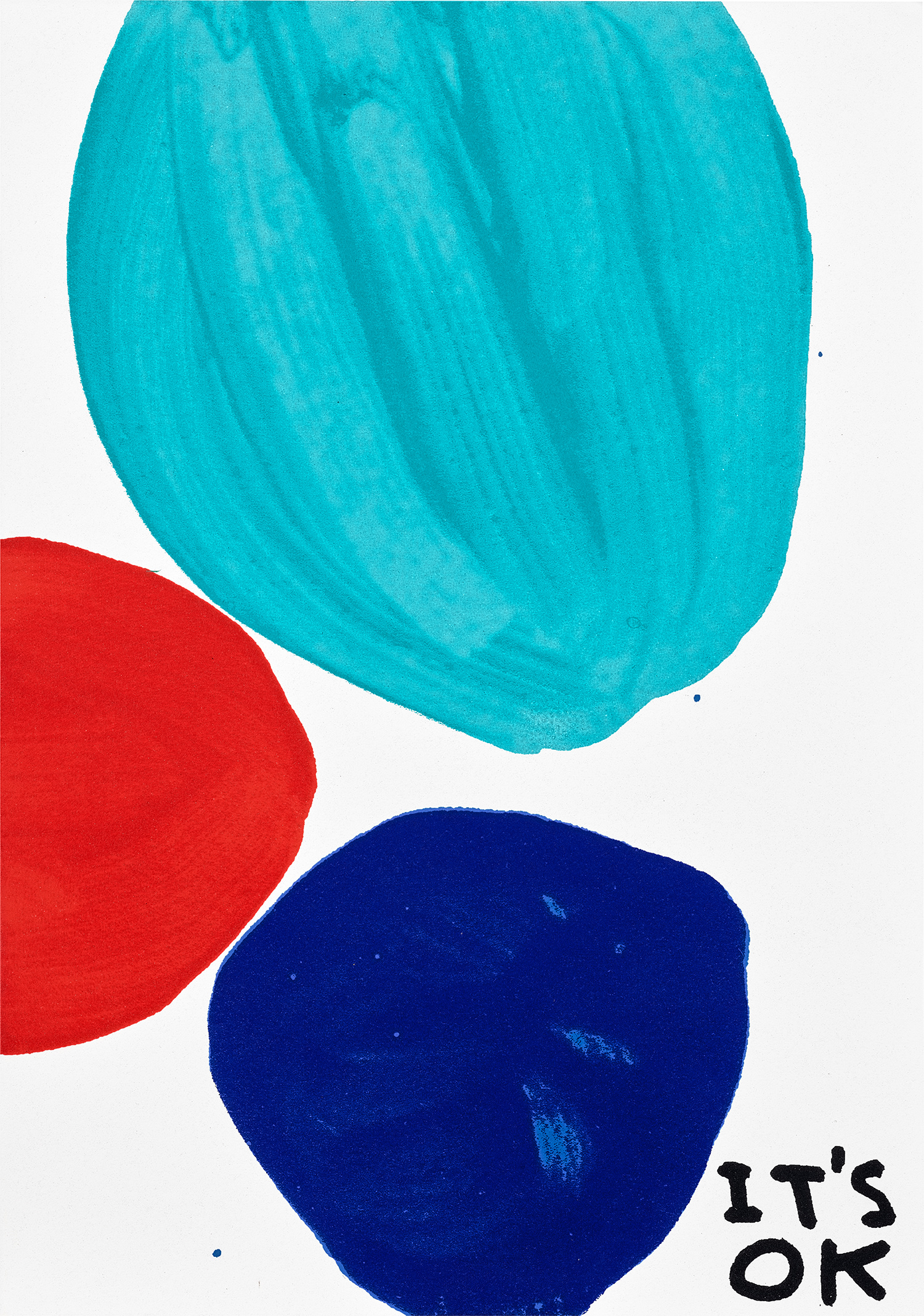
David Shrigley
Small Print, 2023



The Cut That Keeps Giving Back
There is something almost counterintuitive about why linocut appeals so strongly to serious collectors. It is a medium associated in popular imagination with school art rooms and craft fairs, yet in the right hands it produces work of startling authority, graphic intensity, and lasting presence. Collectors who live with great linocuts tend to describe the same experience: the image holds the wall. There is a flatness to the mark, a confidence born of the medium's essential commitment, that rewards long acquaintance in a way that more tentative or process driven works sometimes do not.
You cannot second guess a gouge in linoleum. What is cut is cut, and that irreversibility gives the best prints a quality of decision that feels almost sculptural. The medium also occupies a genuinely interesting position in the market. It sits at the intersection of fine art printmaking and the kind of radical accessibility that serious artists have periodically returned to when they wanted their work to travel further and speak more directly.
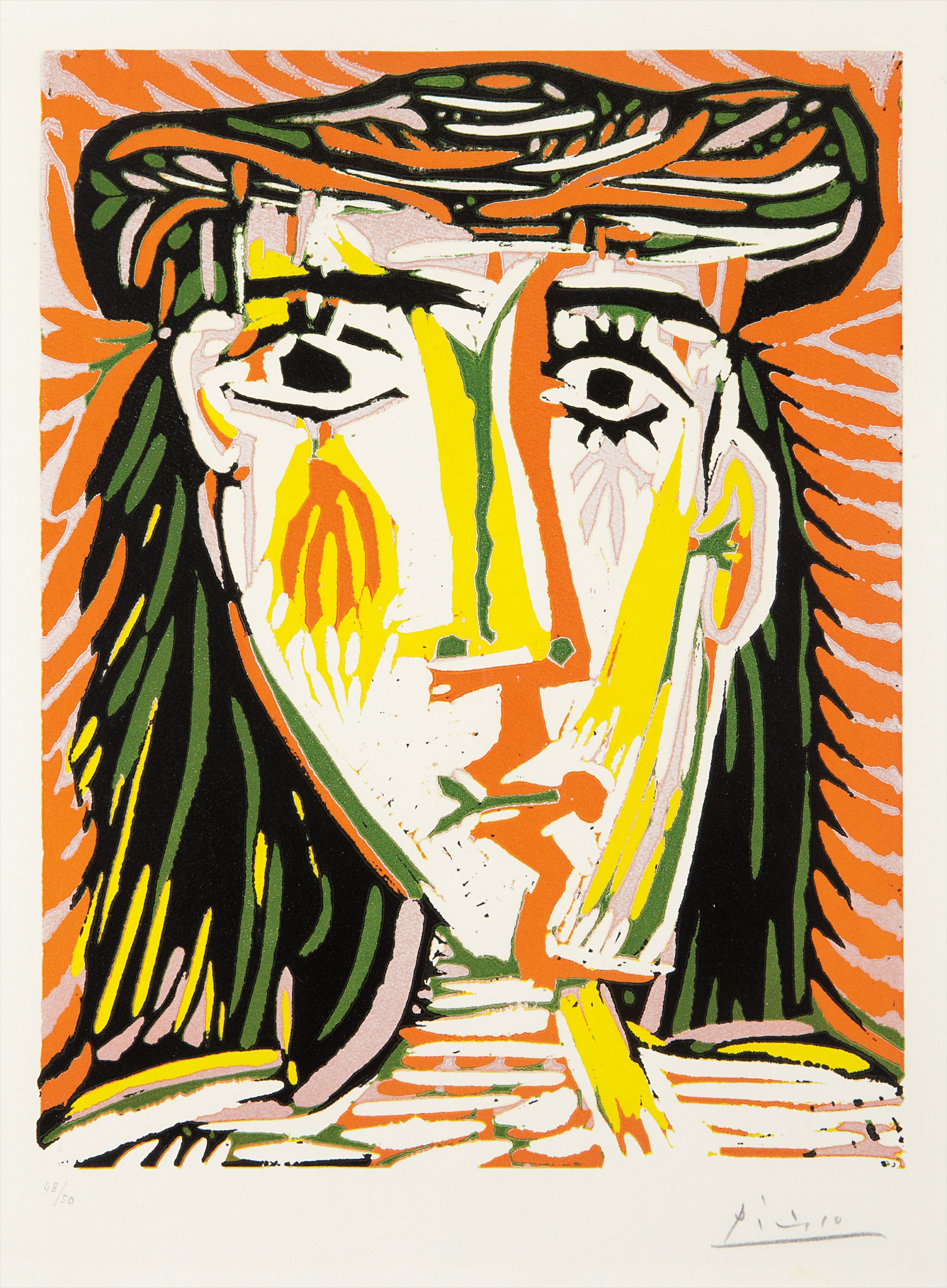
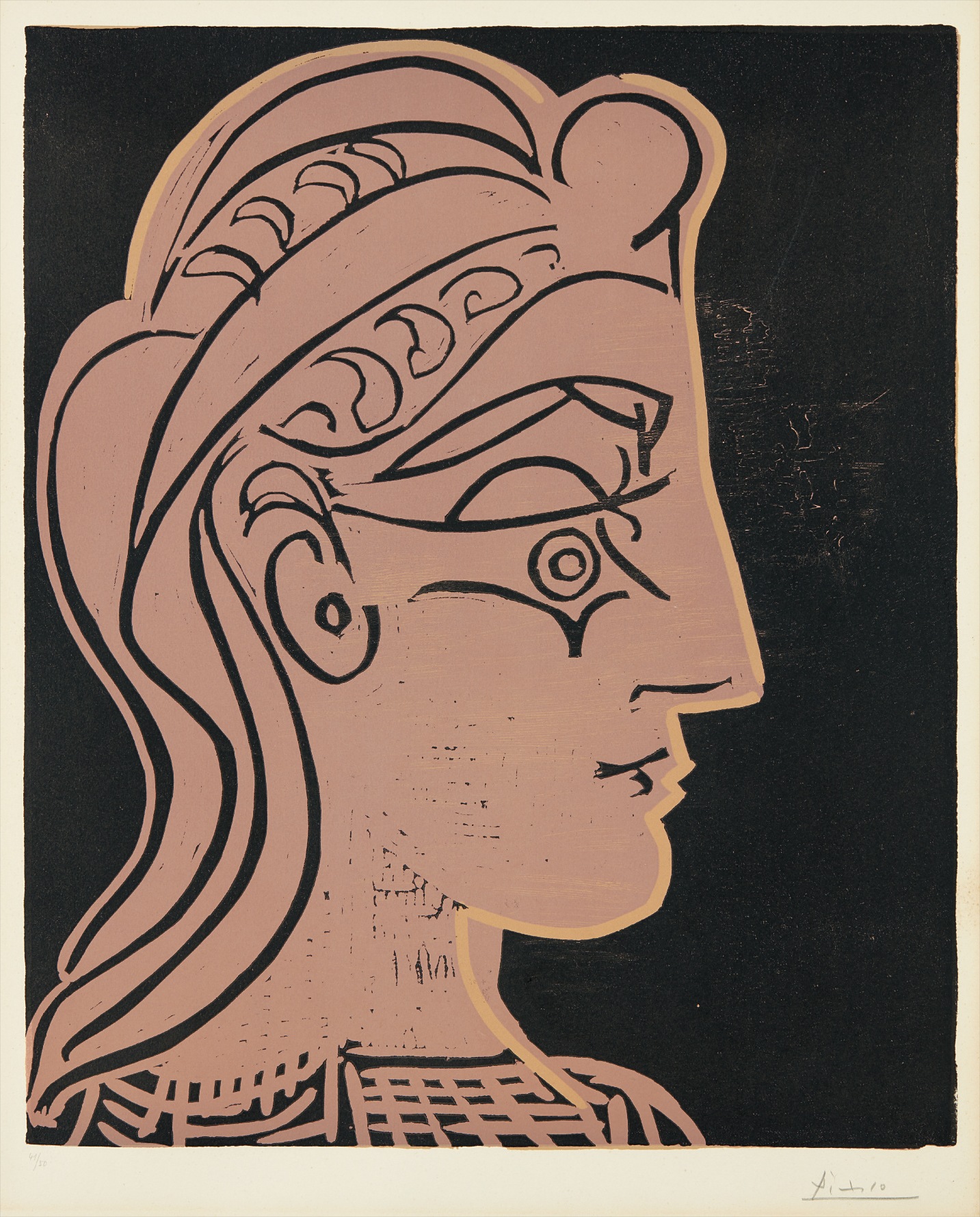
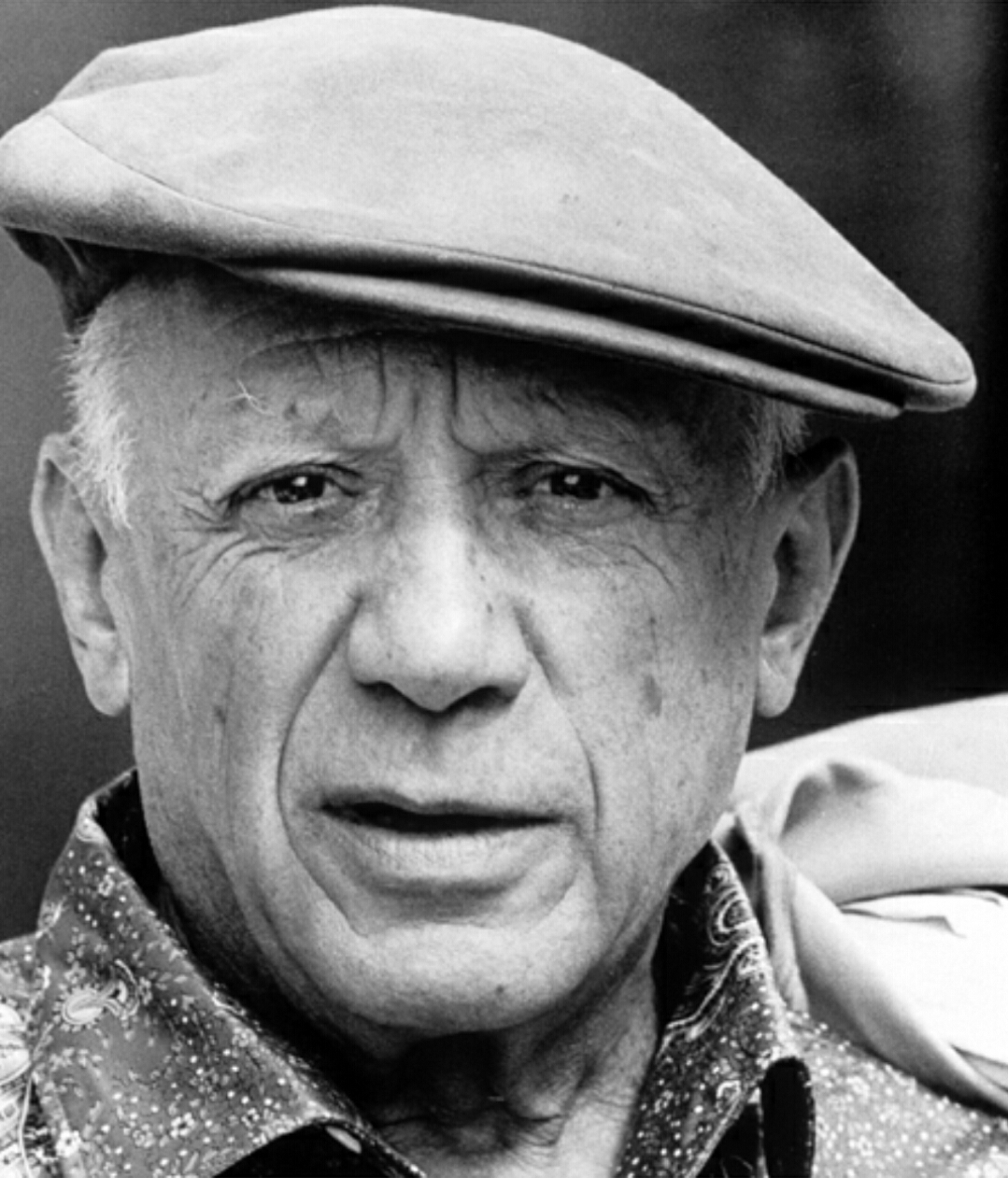
Pablo Picasso
Femme au chapeau (Woman in a Hat)
This dual identity, simultaneously democratic and formally rigorous, means that linocuts exist across an enormous price range and a remarkable spread of artistic ambition. For the collector, that spread is an opportunity. Knowing what separates a good linocut from a great one is one of the more useful skills you can develop, because the market has not always priced the difference correctly. The most important thing to look for is what printmakers call registration and reduction clarity.
In a reduction linocut, the artist works from a single block, cutting away and printing successive layers of color until the block is effectively destroyed, making each edition genuinely unrepeatable. The complexity of color relationships in a well executed reduction print, the way earlier layers ghost through later ones, is something you can only fully appreciate in person. Beyond technique, look at the quality of the drawn line itself. Linocut rewards artists with a naturally graphic sensibility, those who think in silhouette and contrast rather than in tone and gradation.
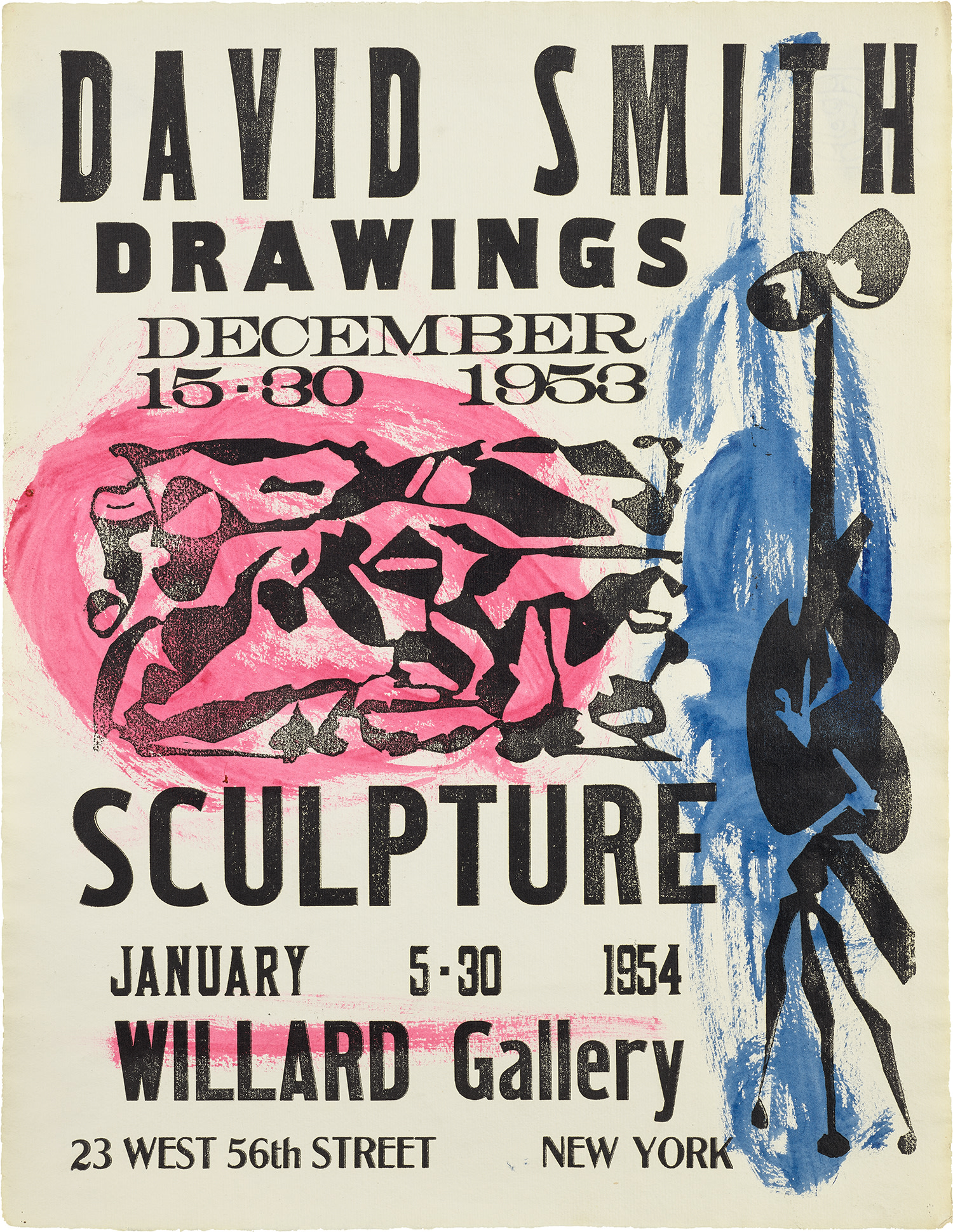
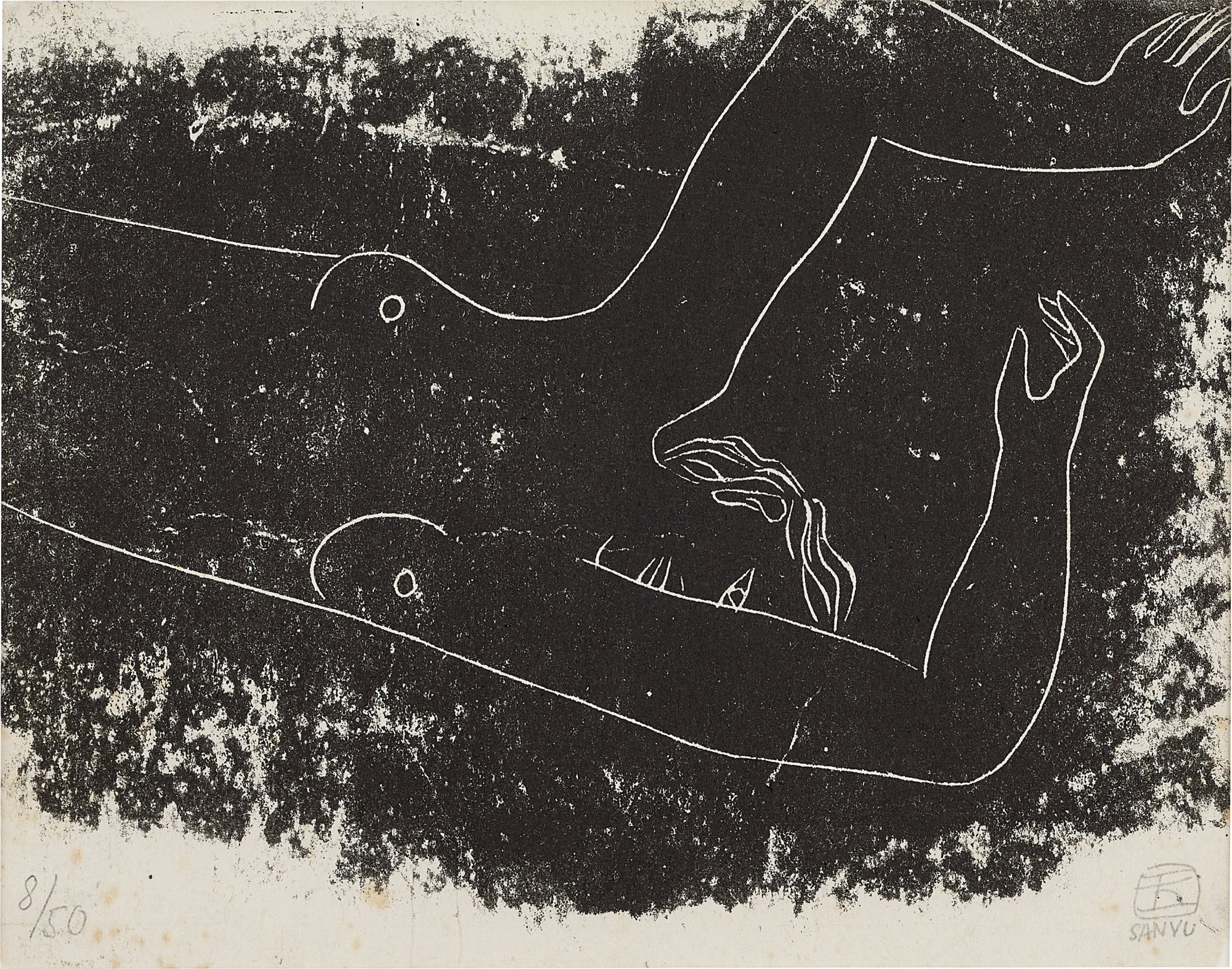
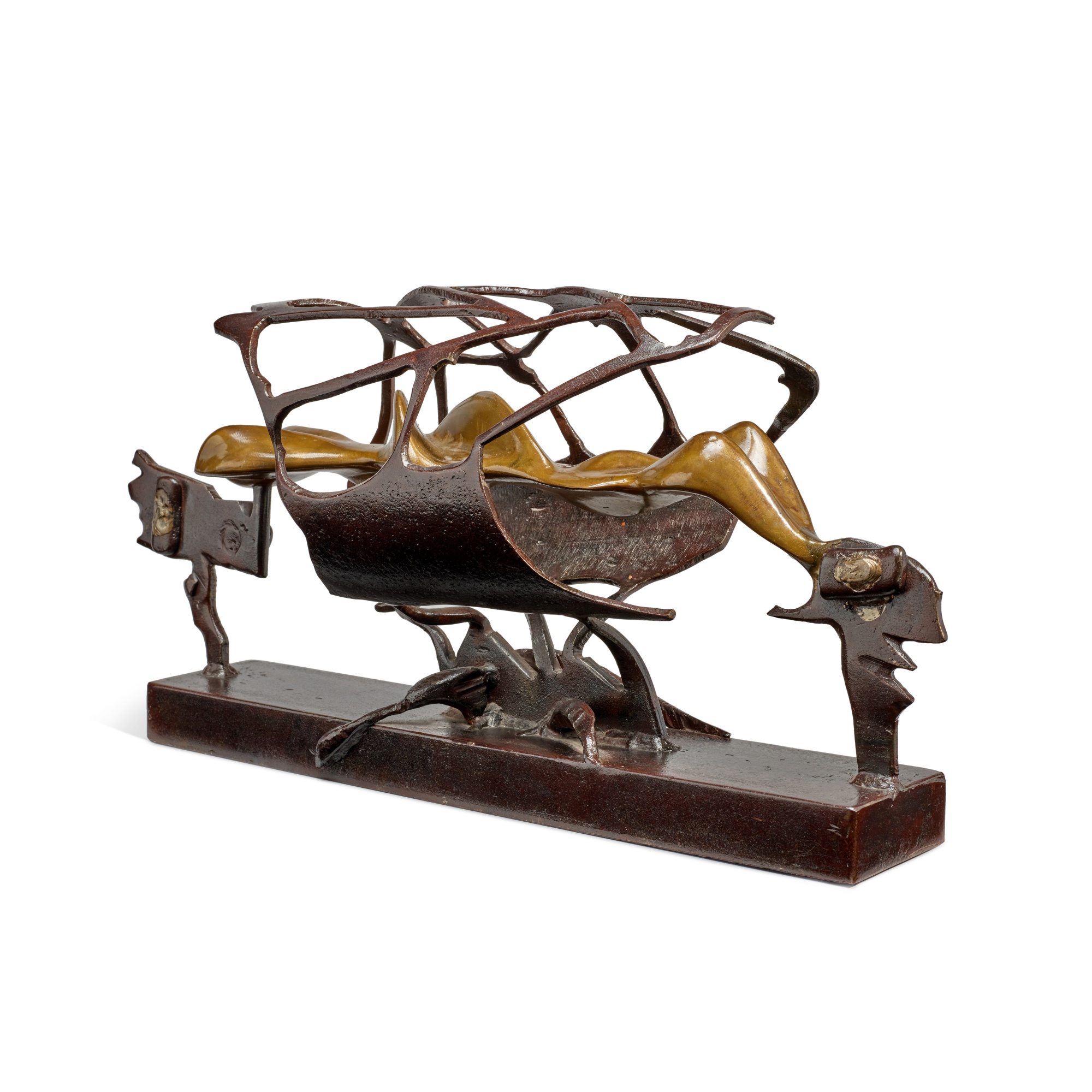
David Smith
Willard Gallery Poster (S. 38)
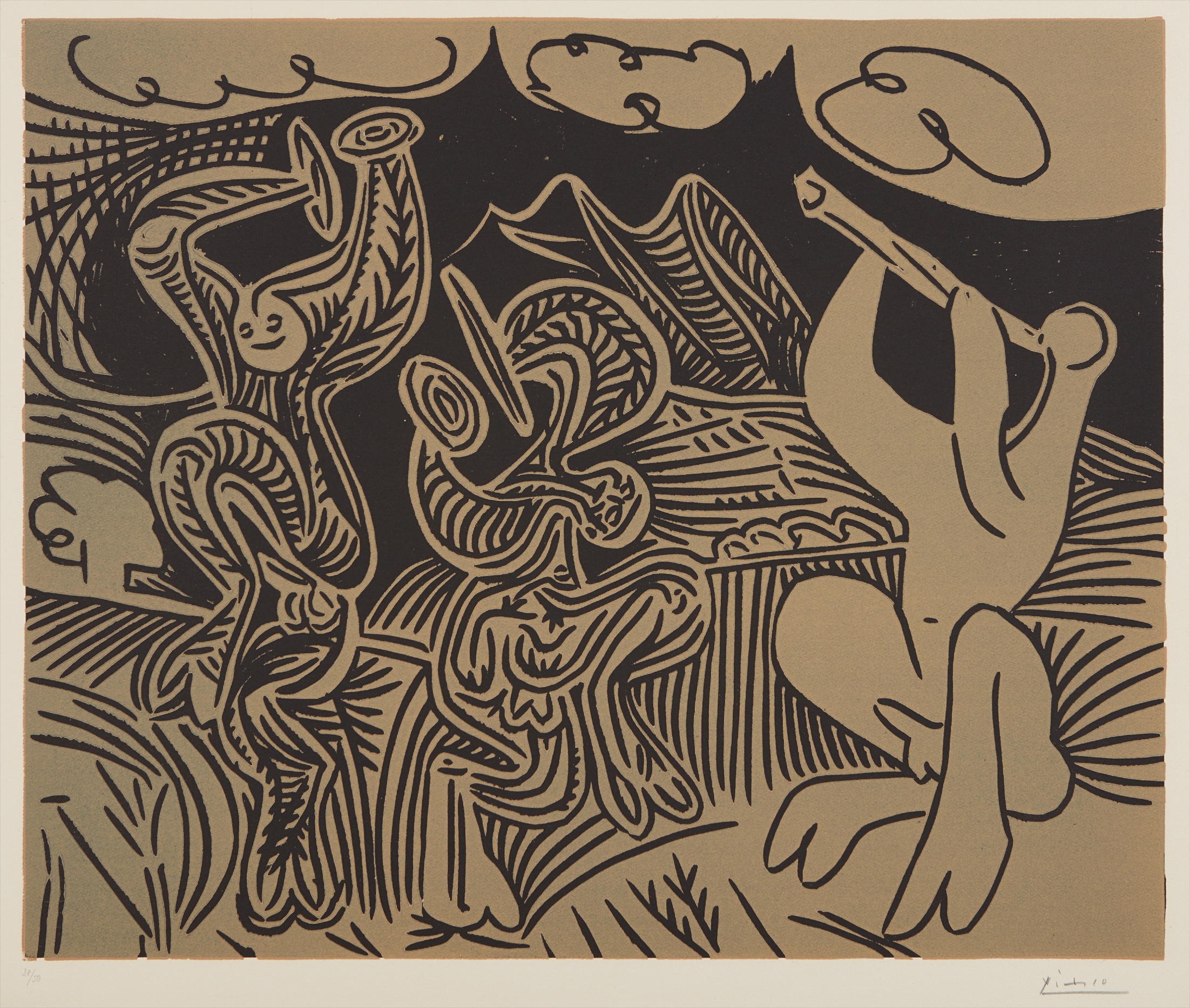
The cut should feel like thinking made visible, not like a laborious translation of a drawing into another medium. Pablo Picasso's linocuts, made in Vallauris during the late 1950s and into the 1960s, represent perhaps the most important body of work in the medium's fine art history, and they remain among the most compelling acquisitions available to collectors working at the upper end of the market. Picasso came to linocut relatively late, partly for practical reasons related to the printing facilities available to him in the south of France, but the work he produced shows no sign of compromise. The portraits and still lifes from this period have a warmth and immediacy that some of his more celebrated print series lack.
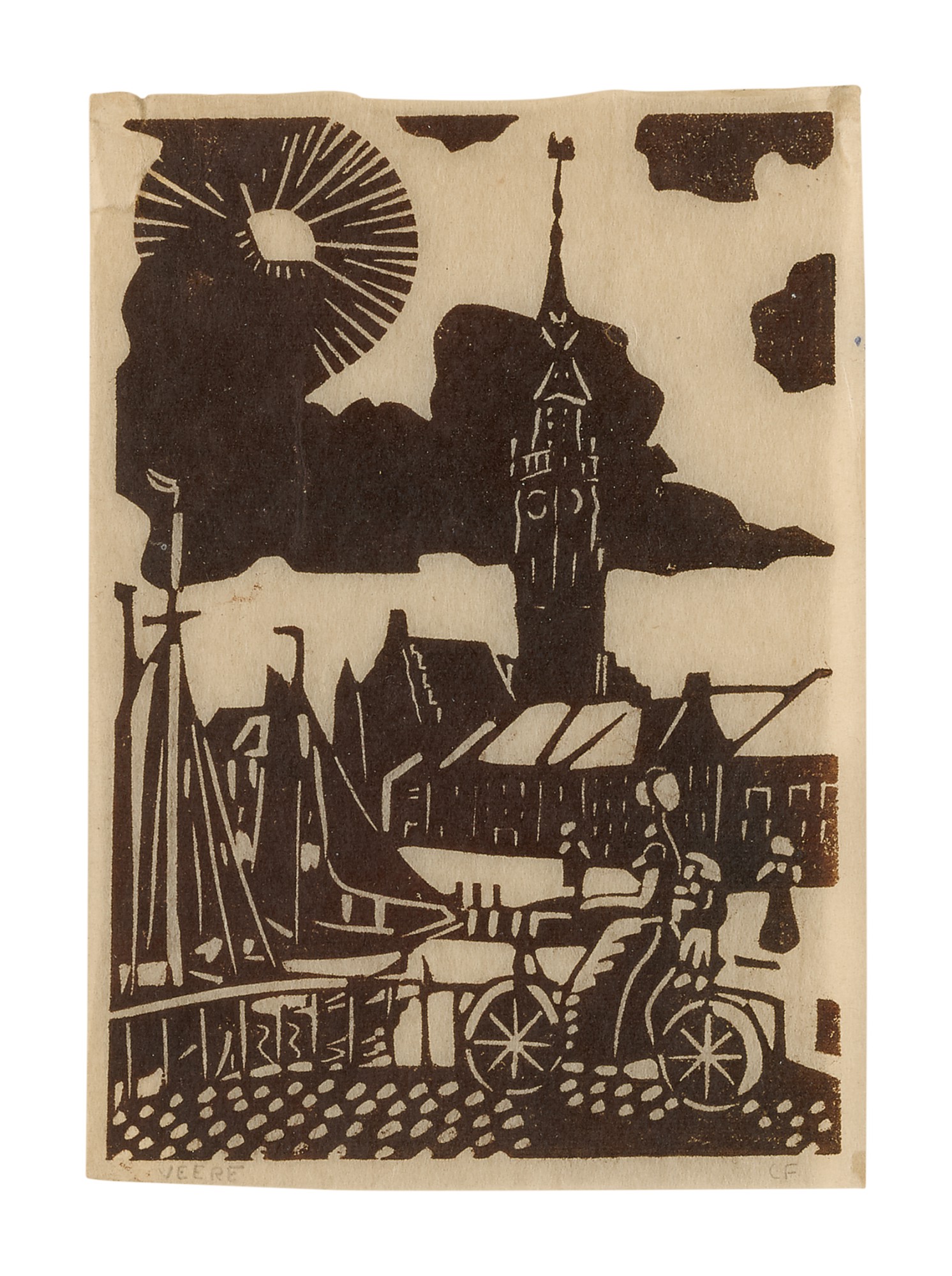
When these works appear at auction, they perform reliably, supported by one of the strongest secondary markets in twentieth century art. Condition matters enormously here, as it does throughout the medium. Paper should be examined closely for foxing, fading, and any sign of acidic mounting from previous display. For collectors working with a different set of ambitions and a different budget, Claude Flight is the figure worth understanding deeply.
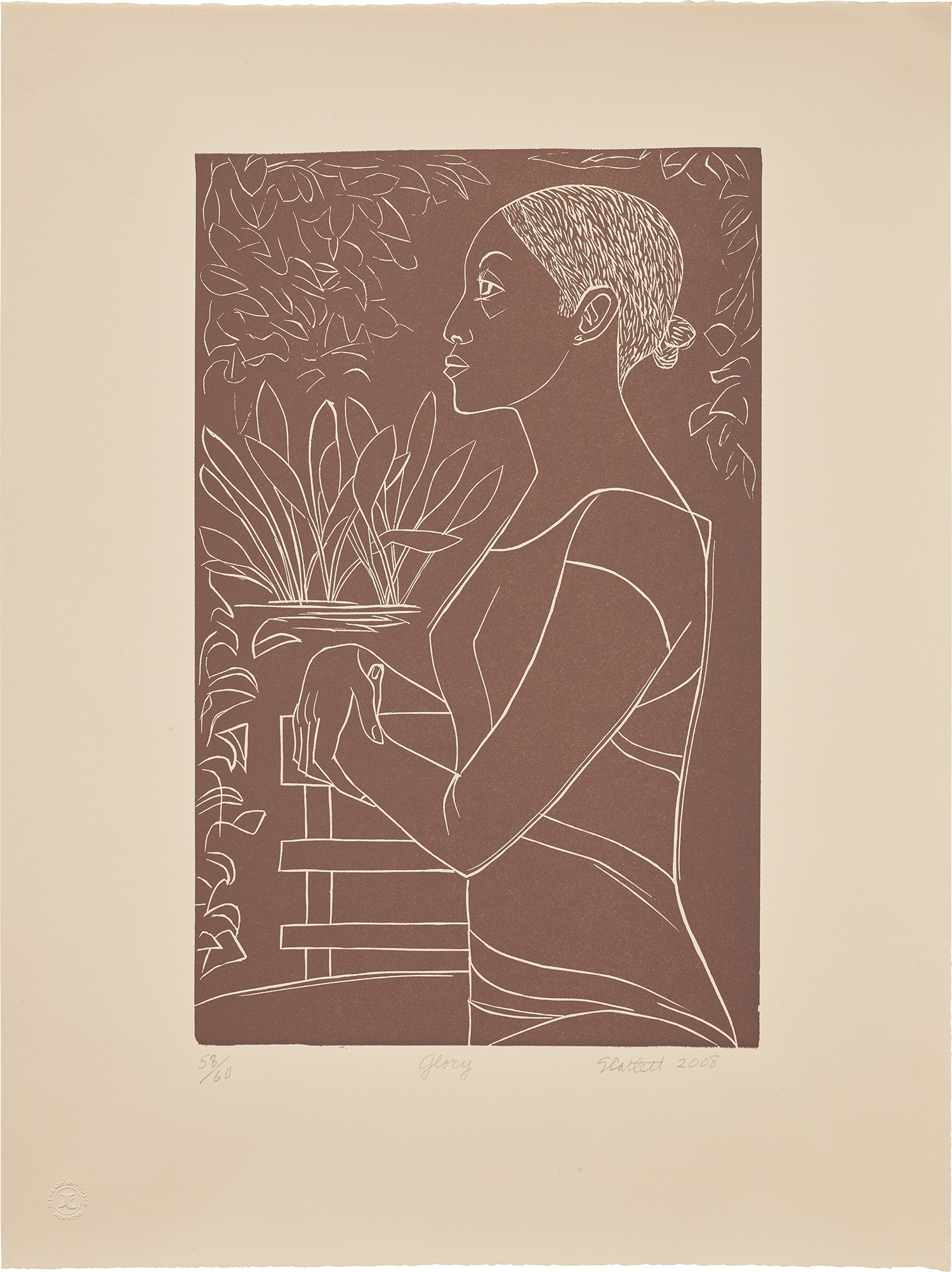
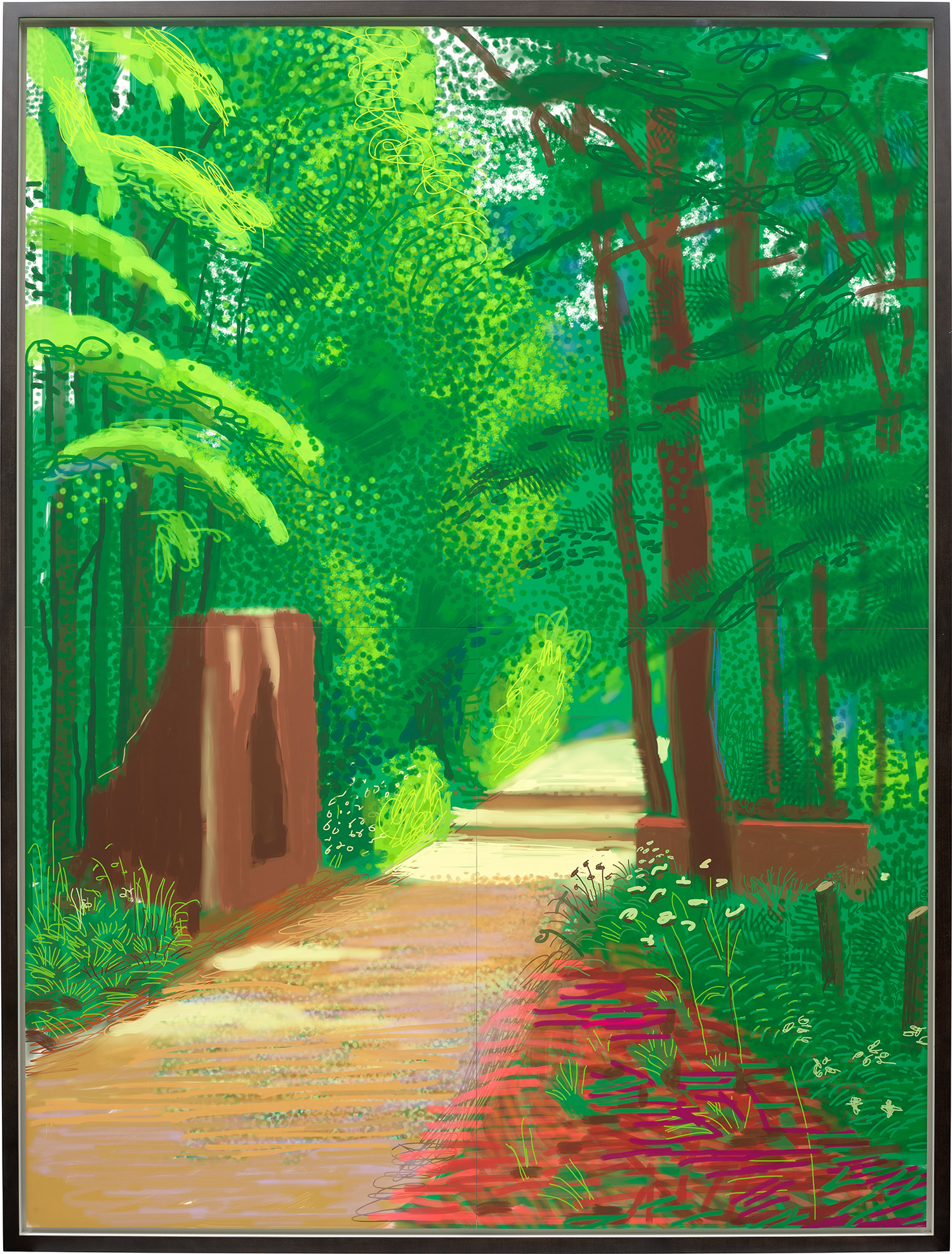
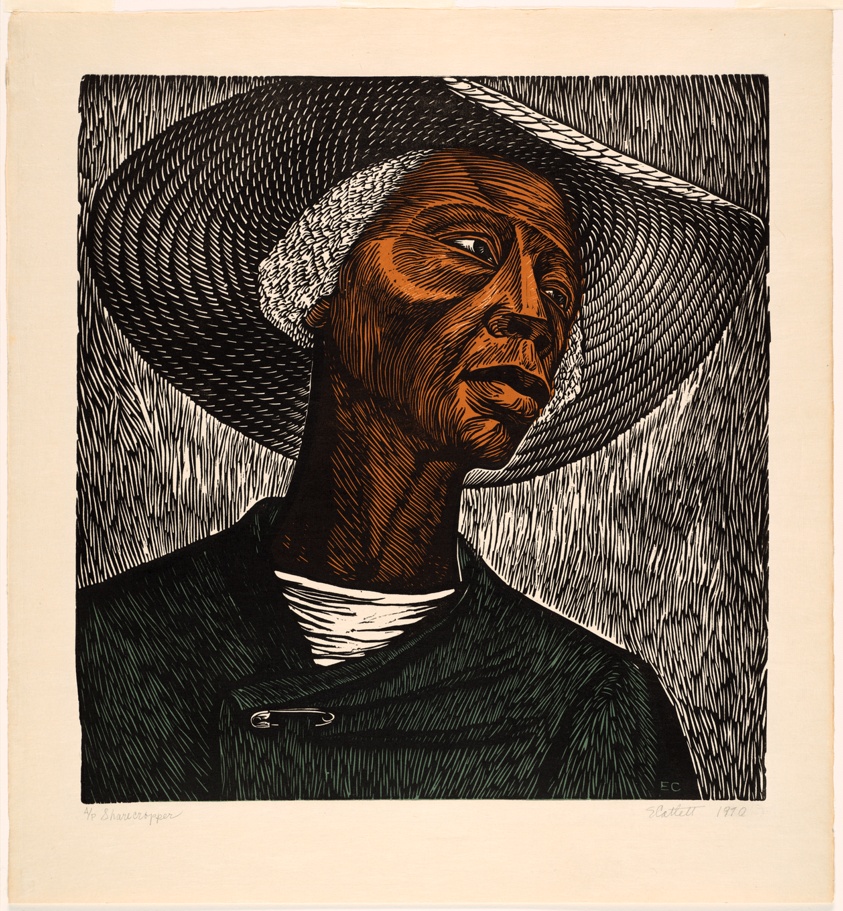
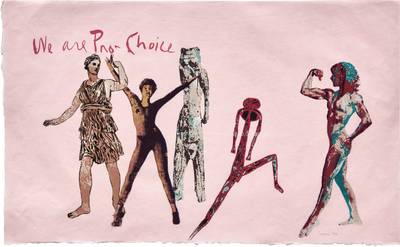
Elizabeth Catlett
Glory
Flight taught at the Grosvenor School in London during the 1920s and 1930s and essentially created the language of modernist linocut as a vehicle for capturing speed, movement, and the energy of urban modernity. His students included Sybil Andrews and Cyril Power, and the prints associated with this circle have seen sustained market appreciation over the past two decades as institutional recognition of their importance has grown. Works by Flight himself are well represented on The Collection and offer an entry point into a genuinely undervalued chapter of British modernism. The graphic ambition of these prints, the way they translate the visual grammar of Vorticism and Futurism into a popular medium, makes them intellectually satisfying as well as beautiful to live with.
Elizabeth Catlett is another figure whose prints demand serious attention. Working across linocut and lithography from the 1940s onward, Catlett produced some of the most politically charged and formally accomplished graphic work of the twentieth century. Her reputation has been substantially reassessed over the past decade, with major retrospective attention and museum acquisitions reflecting a belated recognition of her significance. The secondary market for her work has responded accordingly, with prices moving upward consistently.
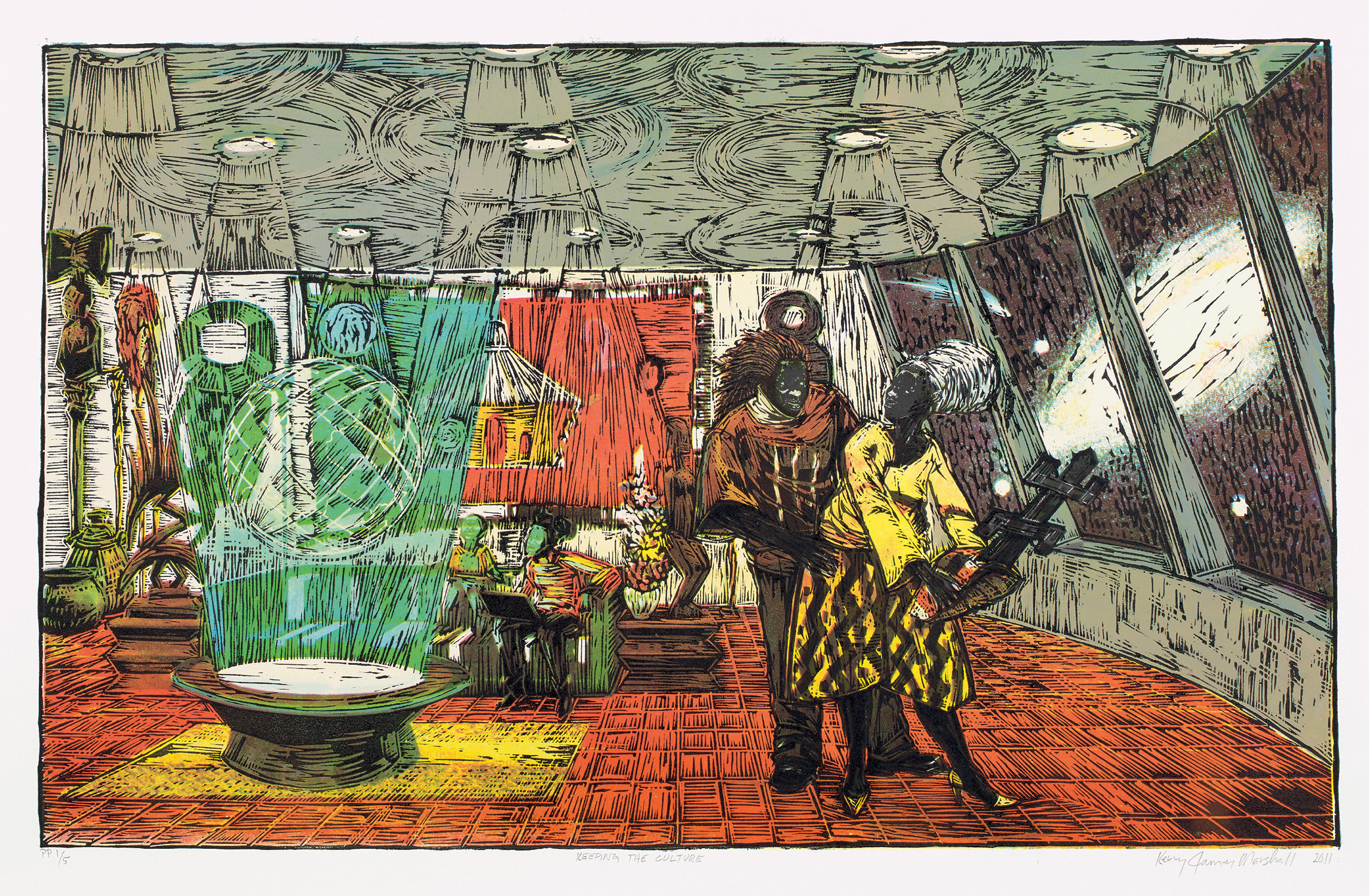
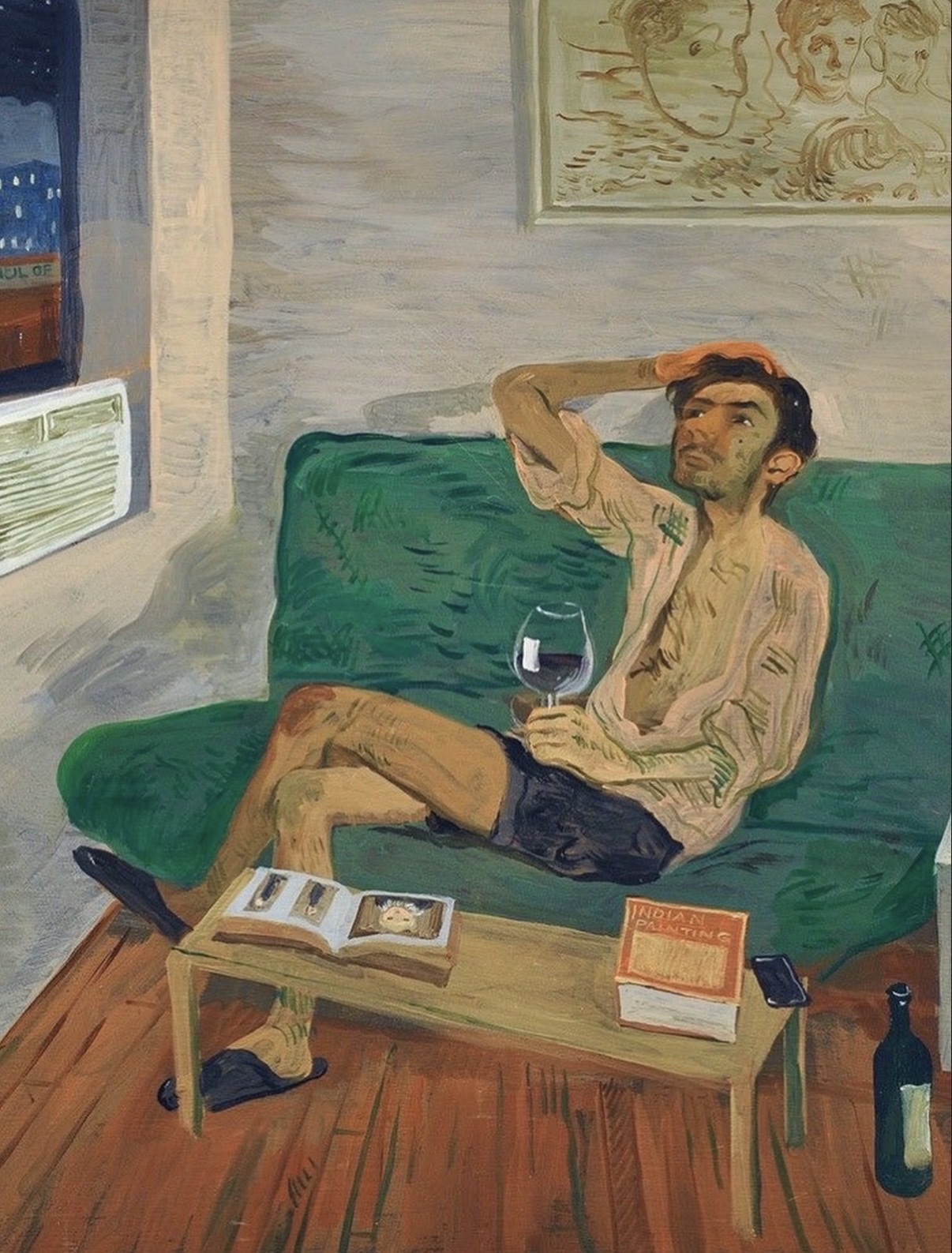
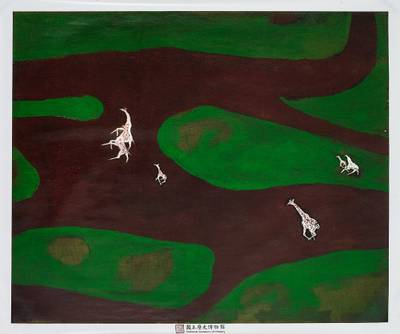
Kerry James Marshall
Keeping the Culture
For collectors, the window for acquiring her prints at anything approaching historical levels may be narrowing, which makes the current moment worth acting on. Among artists whose printmaking practice deserves more collector attention than it currently receives, William Kentridge stands apart. His prints incorporate drawing, erasure, and a deeply cinematic sensibility that makes individual works feel like frames from a larger moving thought. Kerry James Marshall's graphic work similarly carries the full weight of his painterly intelligence, and prints offer a point of access to his vision that the primary market for his paintings no longer realistically provides for most collectors.
David Shrigley's linocuts occupy a different register entirely, dry and disarming in the way all his best work is, and they have demonstrated genuine staying power in a secondary market that can be unforgiving to artists perceived as primarily humorous. Practically speaking, linocuts on paper require the same care as any work on paper: UV filtering glass or acrylic, stable humidity, and avoidance of direct light. When speaking to a gallery, always ask whether a work is from an edition and if so what the edition size is. Smaller editions with documented printing histories hold value more reliably.
Ask to see the colophon page if one exists, and ask whether the printer is documented. For reduction linocuts especially, ask whether a trial proof or artist's proof is included or available, as these carry significant research value. Finally, do not underestimate the importance of the paper itself. Period impressions on quality stock age very differently from later reprints, and that difference matters both aesthetically and at resale.