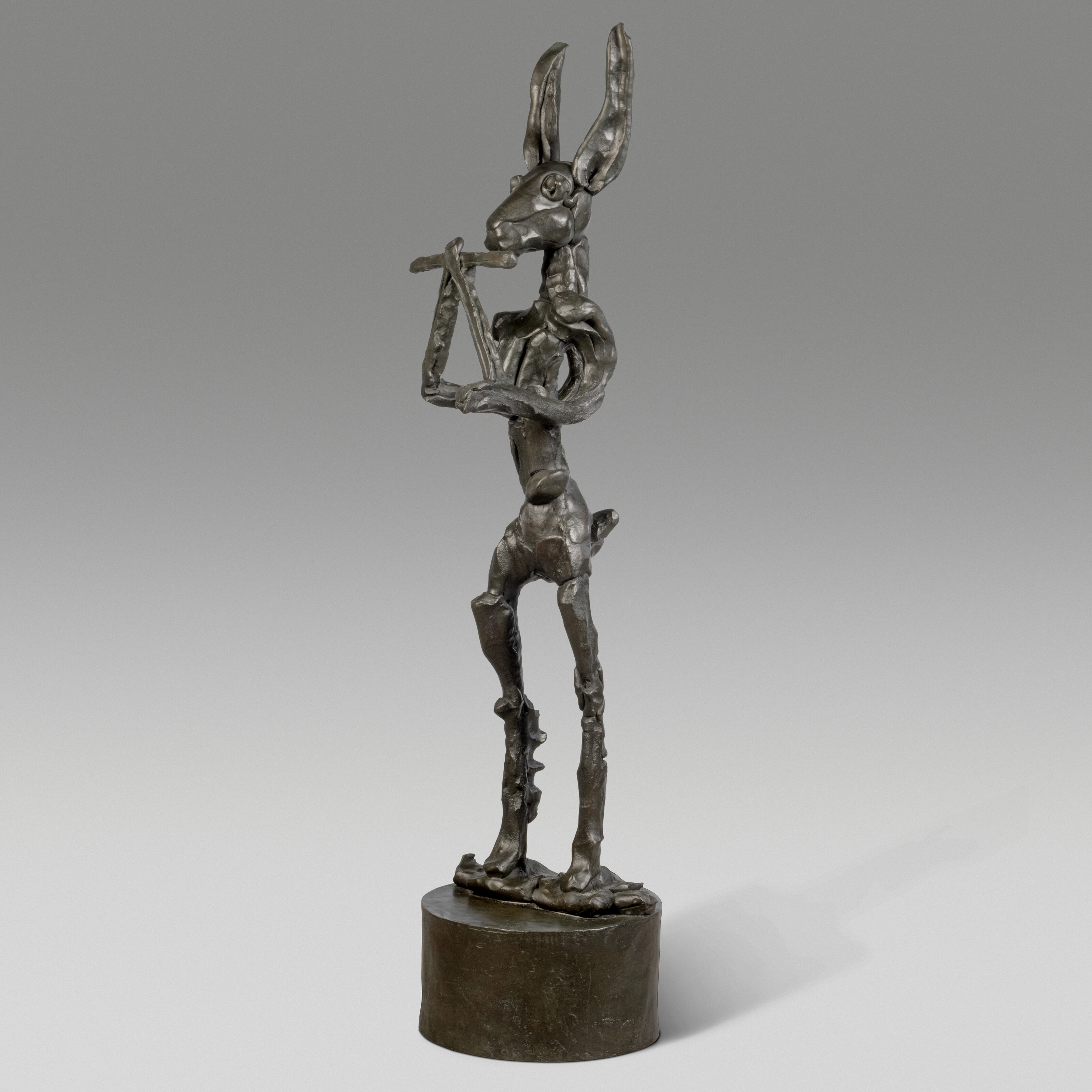
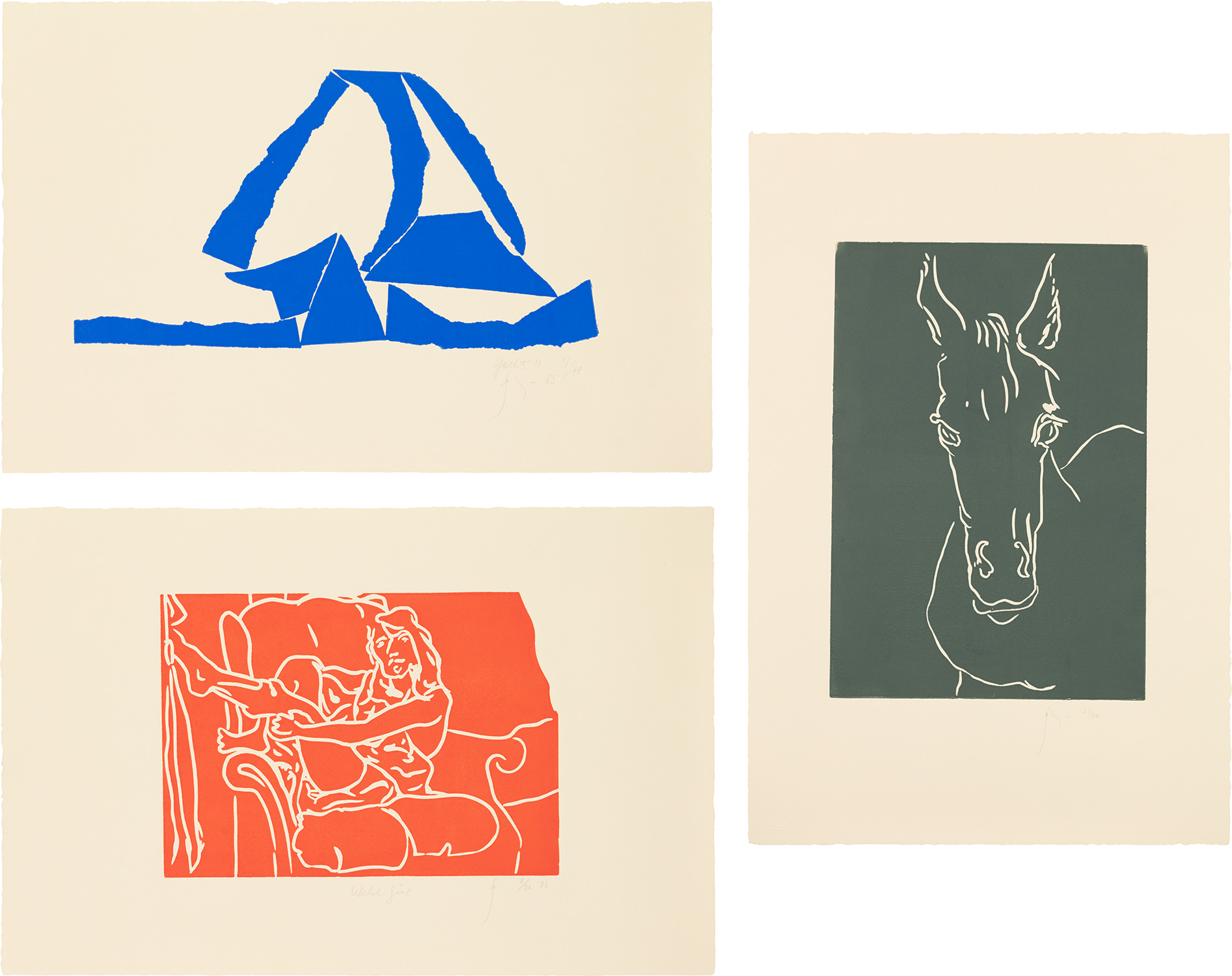
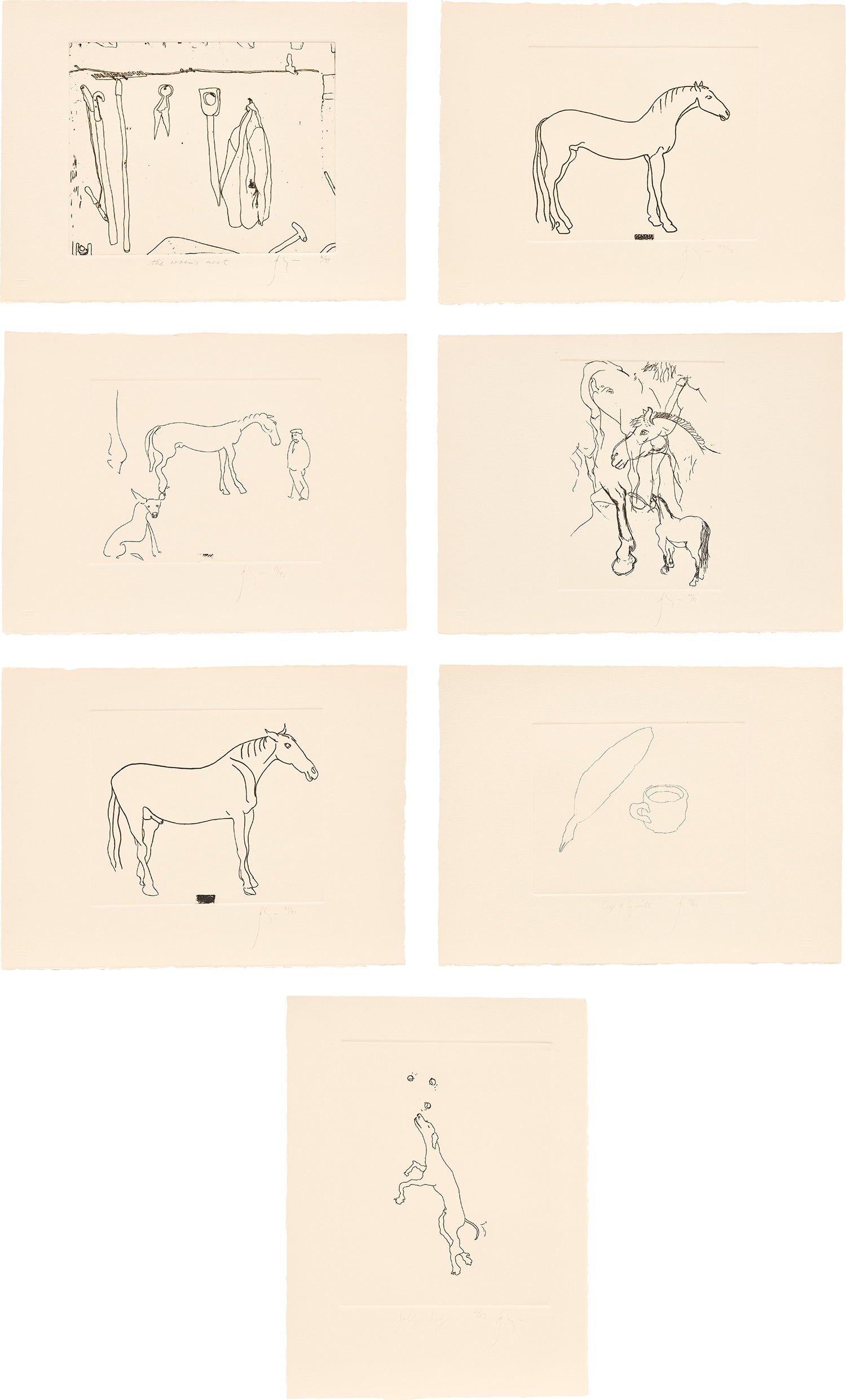
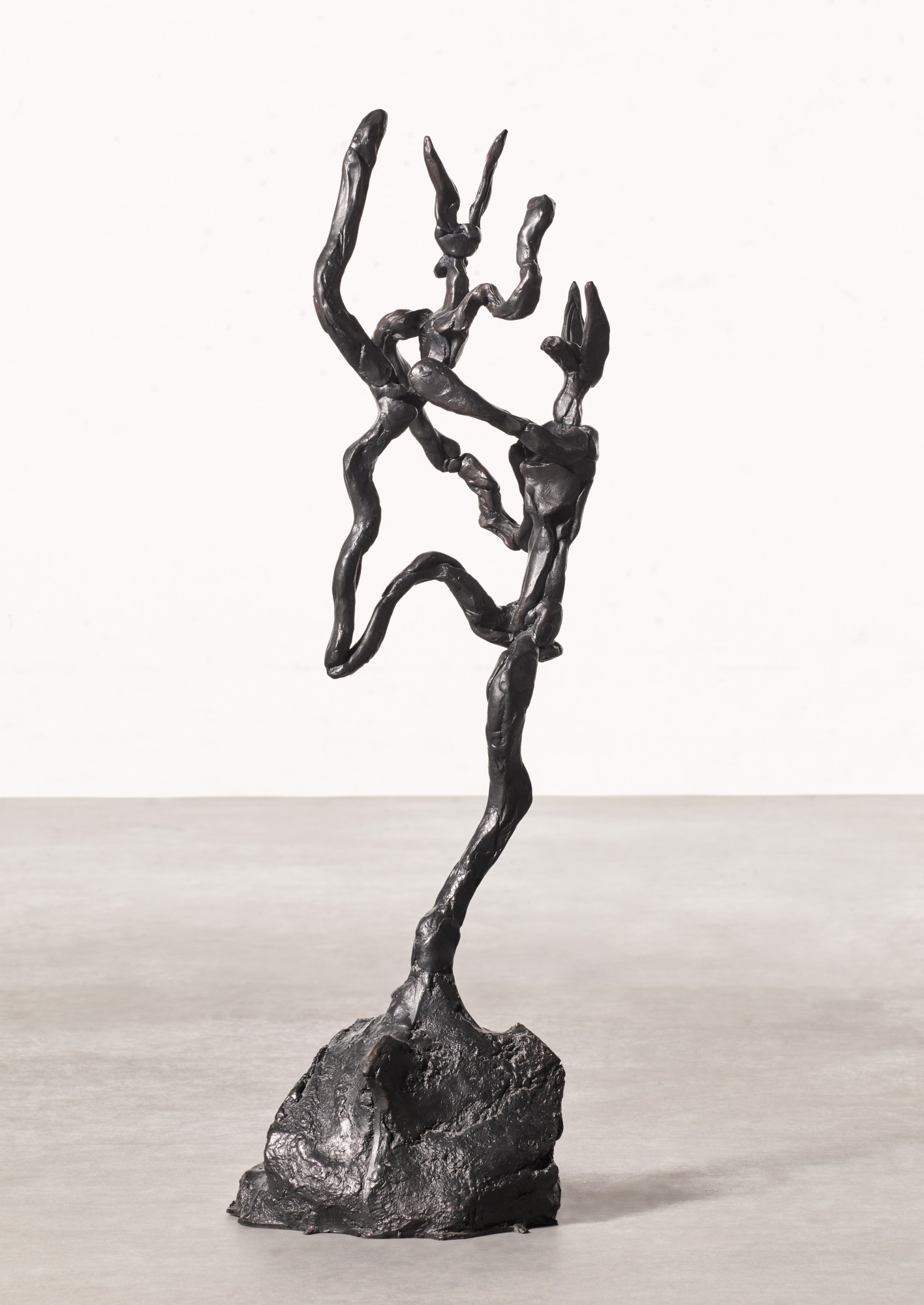
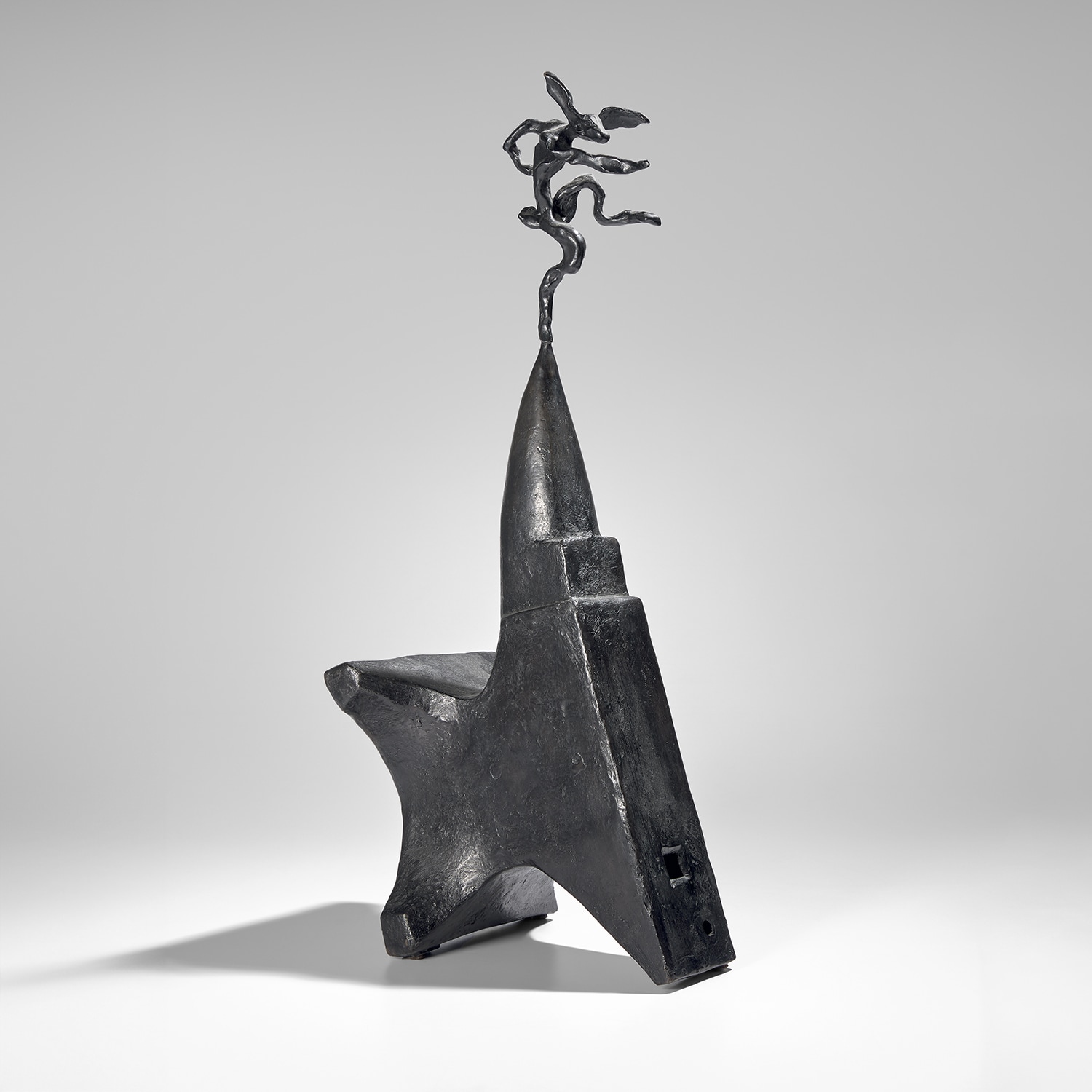
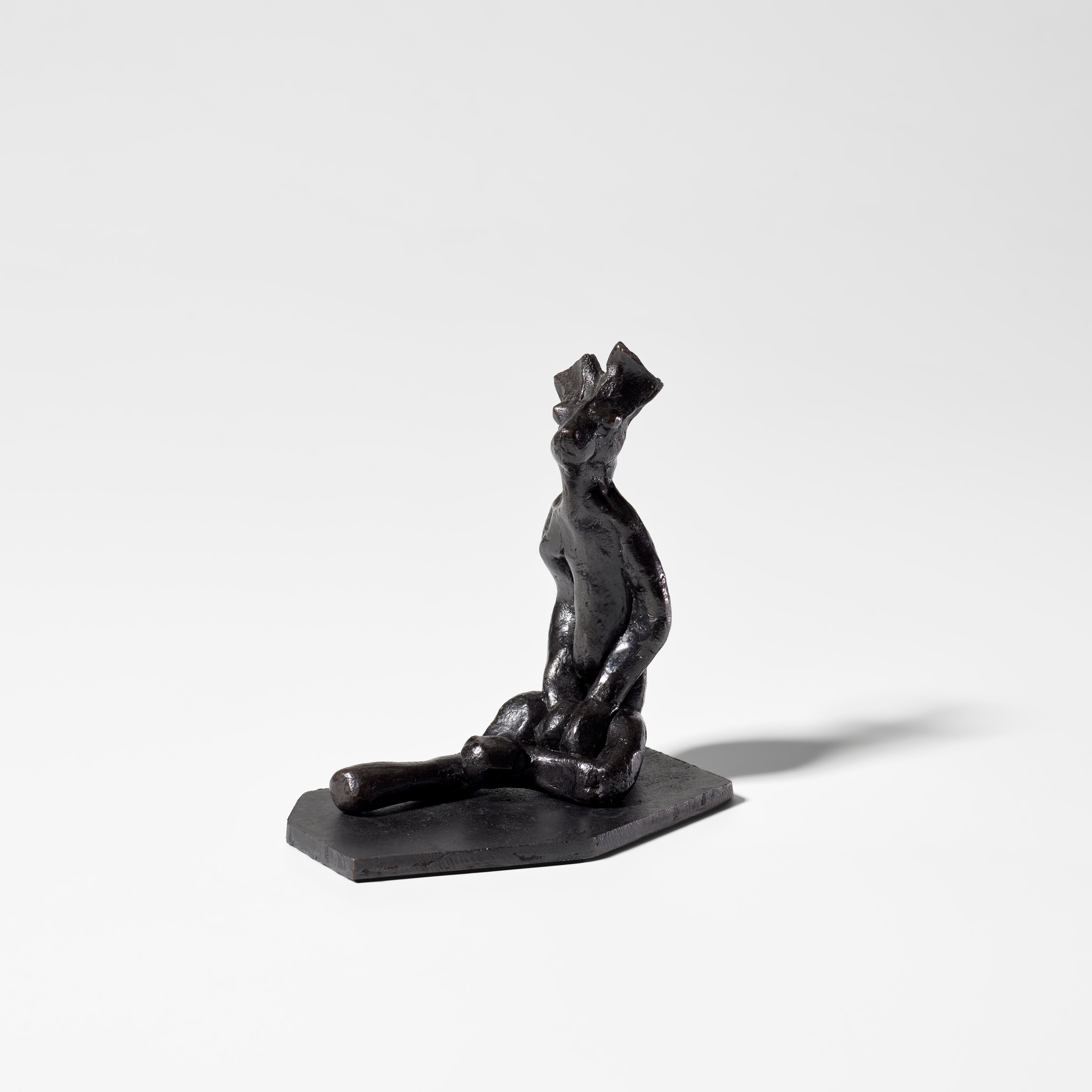
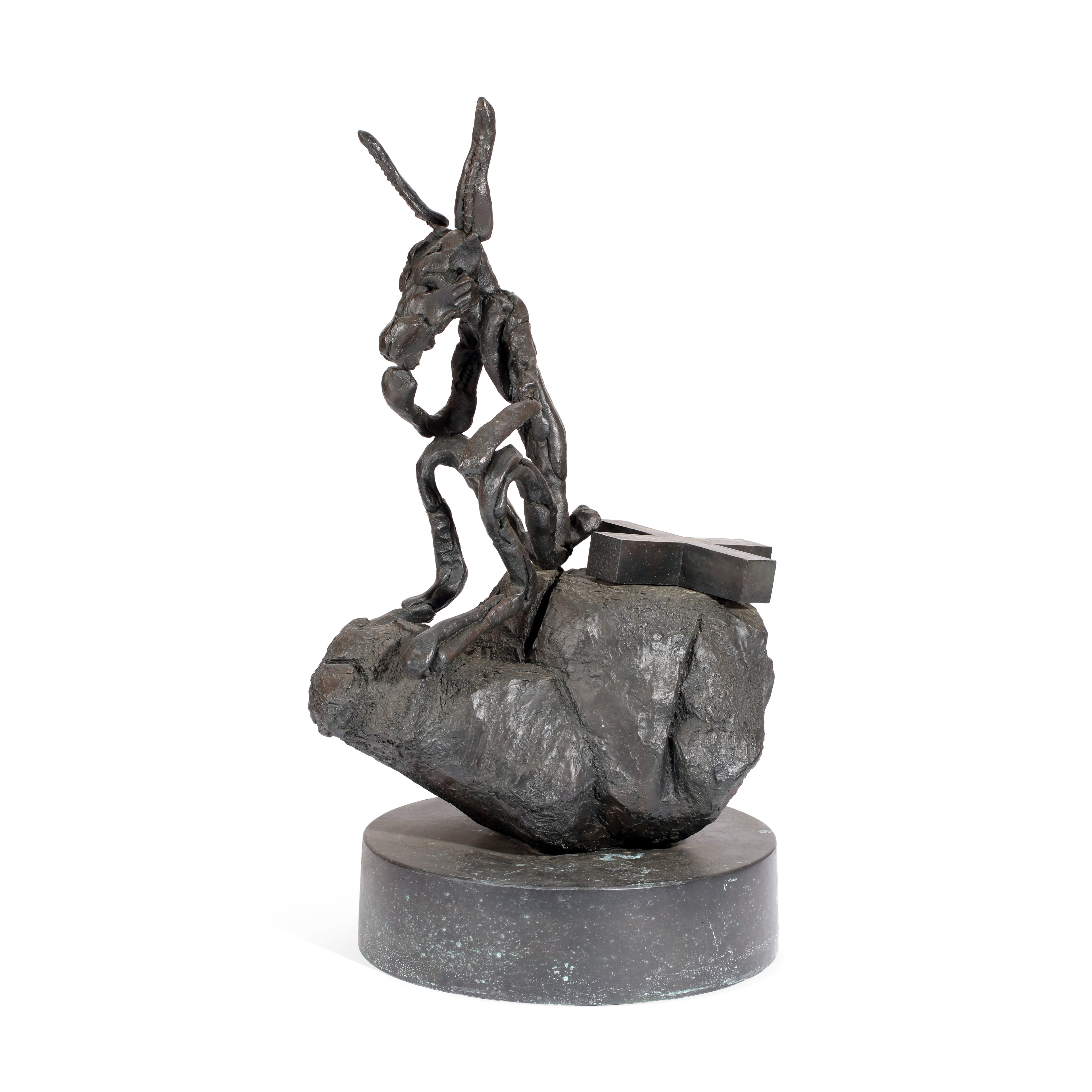
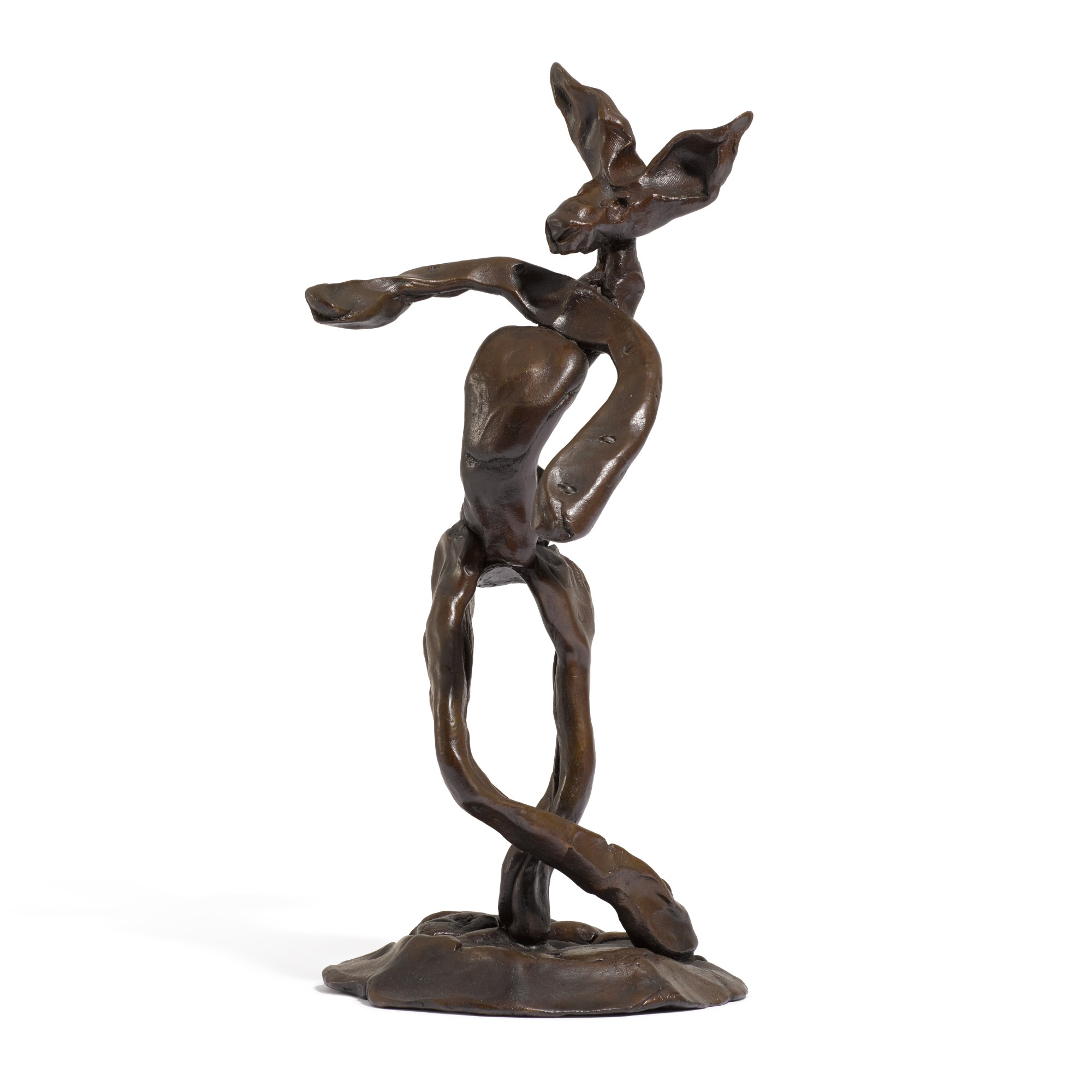
In the spring of 2011, the Museo Nacional Centro de Arte Reina Sofía in Madrid mounted a major retrospective survey of Barry Flanagan's work, drawing together sculptures, prints, and drawings that traced the full arc of a career unlike any other in postwar British art. Visitors who arrived expecting the cool geometry of late modernism found instead something far warmer and more surprising: leaping bronze hares, horses caught mid stride, elephants bearing acrobats on their backs, and a persistent, joyful quality of invention that refused to settle into any single style or movement. It was a reminder, if one were needed, that Flanagan occupied a genuinely singular position in the history of sculpture, one that grew more luminous with every passing year. Barry Flanagan was born in Prestatyn, Wales, in 1941, and the landscape and culture of Wales left a lasting imprint on his sensibility. He studied at Birmingham College of Arts and Crafts before moving to London, where he enrolled at Saint Martin's School of Art in the early 1960s. Saint Martin's at that moment was one of the most charged environments in British sculpture, presided over by Anthony Caro and animated by the formal debates of a generation wrestling with abstraction, materiality, and the legacy of Henry Moore. Flanagan absorbed all of it and, characteristically, chose his own direction entirely. His early work in the late 1960s was emphatically conceptual and process driven, involving sacks of sand and canvas bundles arranged directly on gallery floors. These soft sculptures were modest in physical presence but radical in their implications, suggesting that form need not be imposed but could simply emerge from the behaviour of materials. Works from this period brought him international recognition and a place in the 1968 Venice Biennale, where he represented Britain alongside artists interrogating the very nature of sculptural objects. Yet Flanagan was never content to be theorised into a corner. He pursued printmaking, poetry, and drawing with equal seriousness, and his artistic intelligence was always grounded in a delight in the sensory world rather than in ideology. The great turn in Flanagan's career came in the late 1970s and gathered full momentum through the 1980s, when he began working with the hare as his central motif. The decision was transformative in every sense. Cast in bronze and placed in attitudes of extraordinary vitality, his hares box, dance, meditate, and leap across great distances. They appear in the company of anvils, elephants, horses, and classical columns, creating a repertoire of images that feels at once ancient and entirely contemporary. The hare was not merely a charming choice of subject. It carried deep resonance in folklore, mythology, and art history, evoking the trickster figure, the lunar animal, and the embodiment of mercurial creative energy. In Flanagan's hands, the figure became a vehicle for ideas about freedom, humour, and the nature of imagination itself. Among the works that best illuminate his achievement, "Hare on Elephant" from 1983 stands out for its wit and formal confidence, placing two animals of radically different scale in a relationship that is absurd, tender, and somehow perfectly resolved. "Field Day 1 (Kouros Horse)" from 1986 brings his interests in classical antiquity and natural energy into elegant conjunction, the horse caught in a posture that recalls archaic Greek sculpture while remaining unmistakably alive. "Thinker on Rock" from 1997 plays knowingly with the Rodin tradition, placing a hare in Rodin's famous pose and achieving in the process a genuine philosophical joke that is also a genuinely moving object. "Small Nijinsky on Anvil" from 2001 brings his love of dance and performance into the bronze, the figure poised with a lightness that seems to defy the weight of the material. These works are never merely clever. They carry an emotional charge that deepens on repeated viewing. Flanagan's printmaking deserves equal attention and is too often discussed as secondary to his sculpture. His linocuts, including works depicting subjects such as Welsh Cob horses, ferry crossings, and coastal lights, display the same combination of economy and expressiveness that characterises the bronzes. Published through Waddington Graphics in London, his graphic works circulated widely and brought his imagery to collectors who might not otherwise have encountered the sculptures. The Wren's Nest series and the sets of signed, numbered linocuts available in the market today represent an accessible point of entry into a body of work of genuine art historical importance. For collectors building thoughtful holdings in postwar and contemporary British art, these works offer both beauty and scholarly substance. In market terms, Flanagan's bronzes have performed with consistent strength at auction through the major international houses. Works combining his best known subjects, particularly the dancing or leaping hare, regularly attract serious bidding from collectors across Europe, the United States, and Asia. The sculptures exist in numbered editions, which means that patient collectors who approach the market carefully can build holdings that speak to different aspects of his practice. Works from the 1980s, when his language was at its most assured and inventive, are particularly sought after, though the later bronzes from the 1990s and early 2000s show no diminution in quality. Collectors drawn to the broader context of British sculpture will naturally consider Flanagan alongside contemporaries such as Richard Long, Gilbert and George, and Tony Cragg, all of whom emerged from a similar moment but pursued very different paths. In the international context, his combination of figurative warmth and conceptual rigour places him in productive conversation with artists such as Markus Lüpertz and Juan Muñoz. Flanagan died in Dublin in 2009, having spent his later years dividing his time between London and Ibiza. His death marked the loss of one of the genuinely irreplaceable voices in British art, a sculptor who had moved with absolute confidence from the radical experiments of the 1960s to a mature figurative language that found wonder in the ordinary world. The Foundation established in his memory continues to promote scholarship and access to his work, and major institutions including Tate hold significant examples. What endures most powerfully, beyond the biographical facts and the market data, is the quality of aliveness that every Flanagan bronze communicates. His hares still run, still leap, still invite us to consider what it means to move through the world with grace and a certain magnificent disregard for gravity.