Enamel On Canvas

Unknown
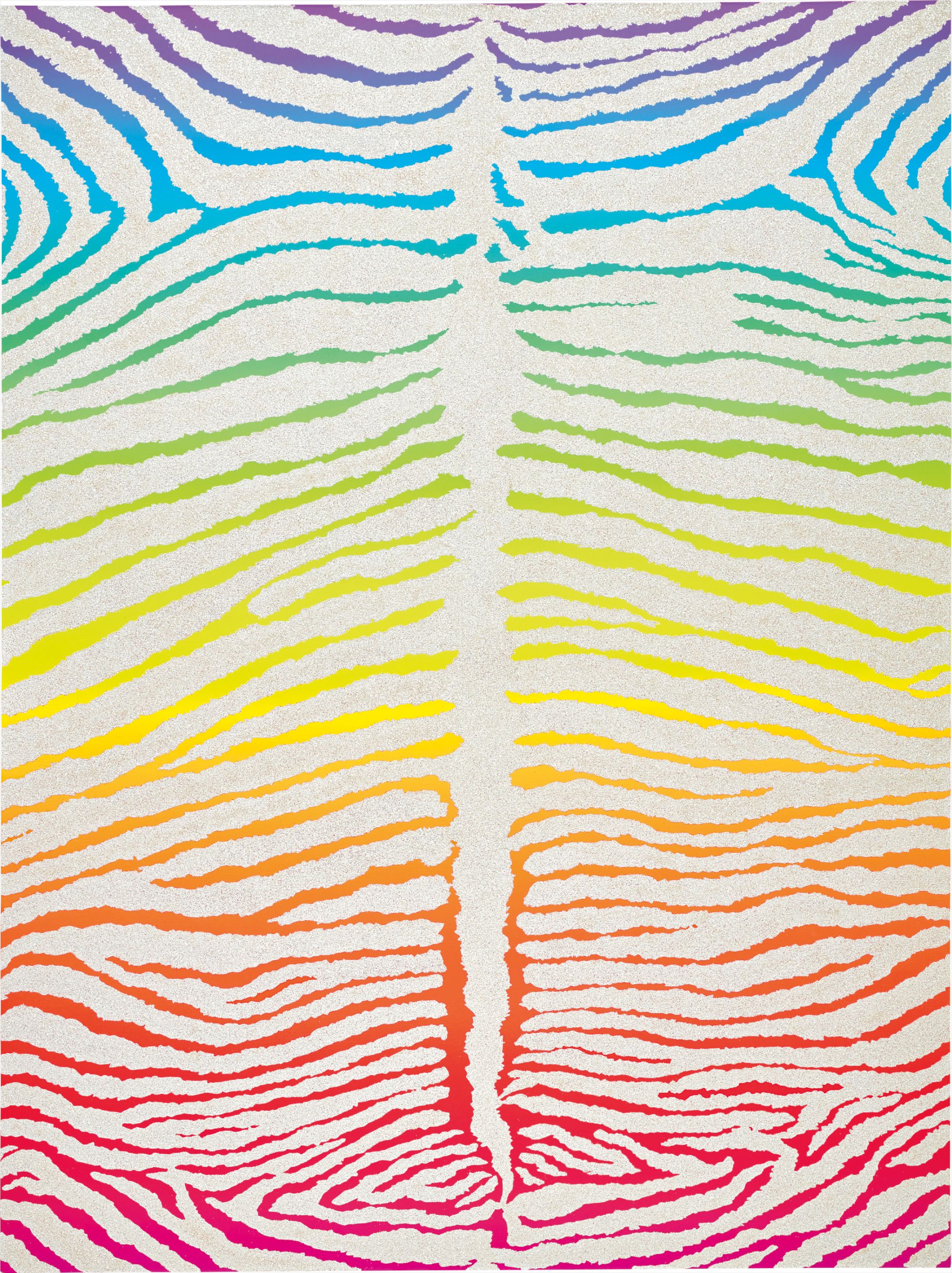
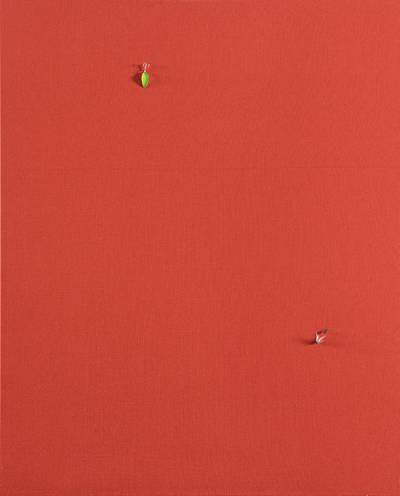
3 Ferraris and a Westfield Cosworth




Enamel's Edge: Why Collectors Keep Coming Back
There is something almost unreasonable about the way enamel on canvas behaves in a room. The surface catches light differently at every hour, shifting from flat and industrial to luminous and almost molten depending on the angle and the season. Collectors who live with enamel works often describe a quality that photographs simply cannot transmit: a physical presence, a sense that the paint is doing something ongoing, something alive. That quality is not incidental to the medium.
It is the point. Enamel paint, formulated originally for commercial and industrial use, carries with it a set of associations that serious artists have been exploiting since the mid twentieth century. It dries to a harder, glossier film than conventional oils or acrylics, and that hardness creates a surface that reads simultaneously as painting and as object. The tension between the handmade and the manufactured is built into the material itself, which is why enamel has attracted artists who are interested in questioning what painting even is.
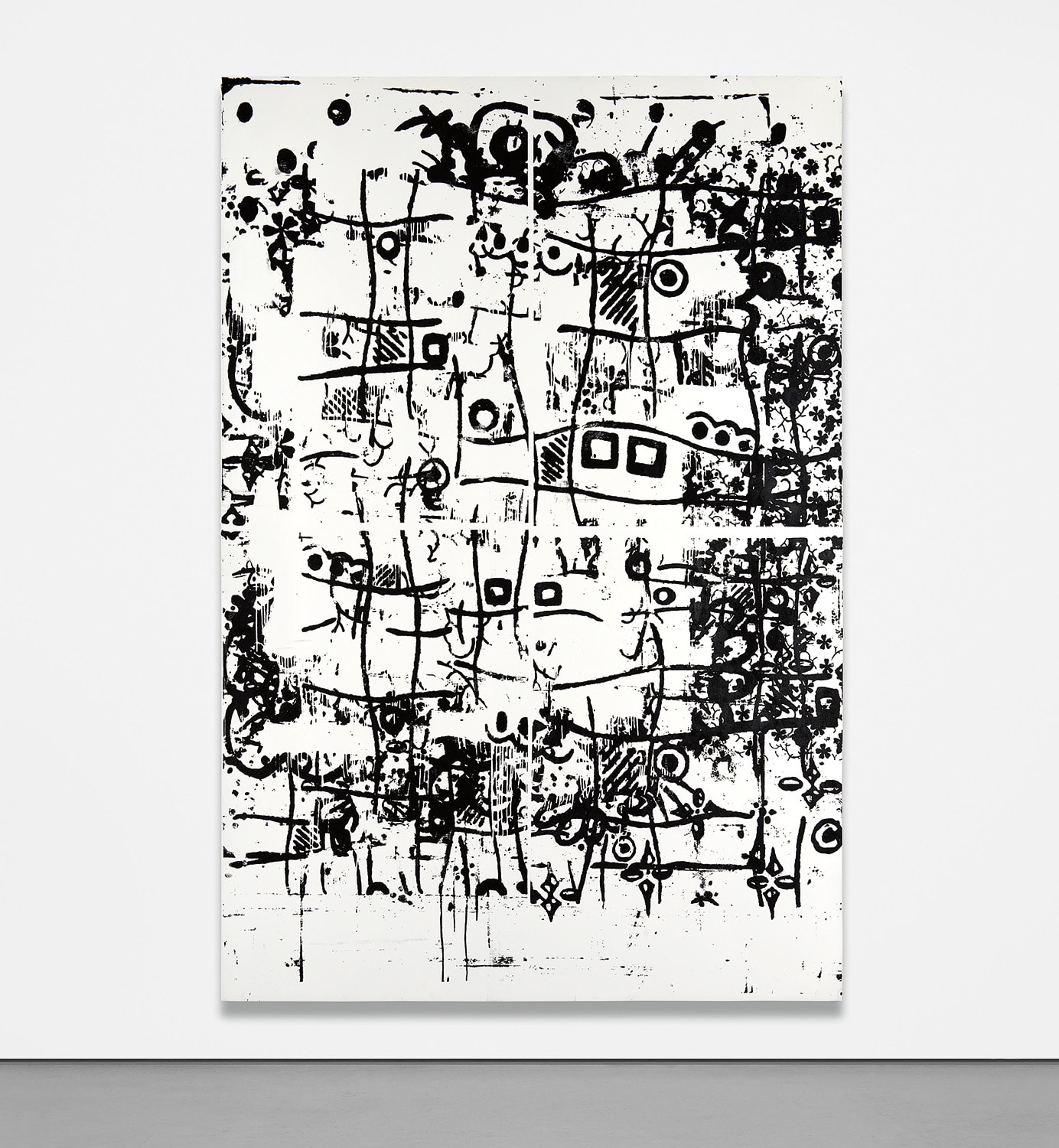
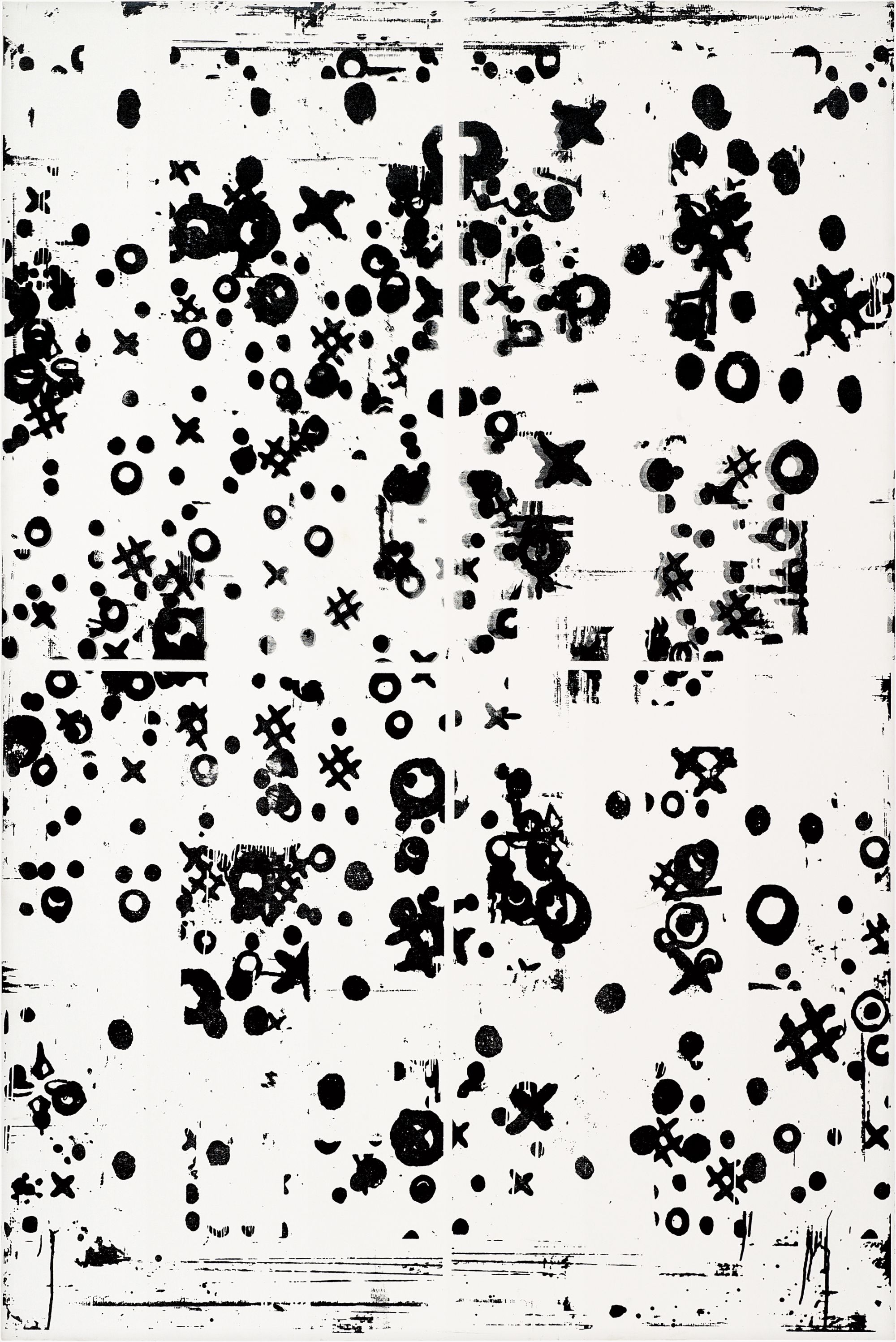
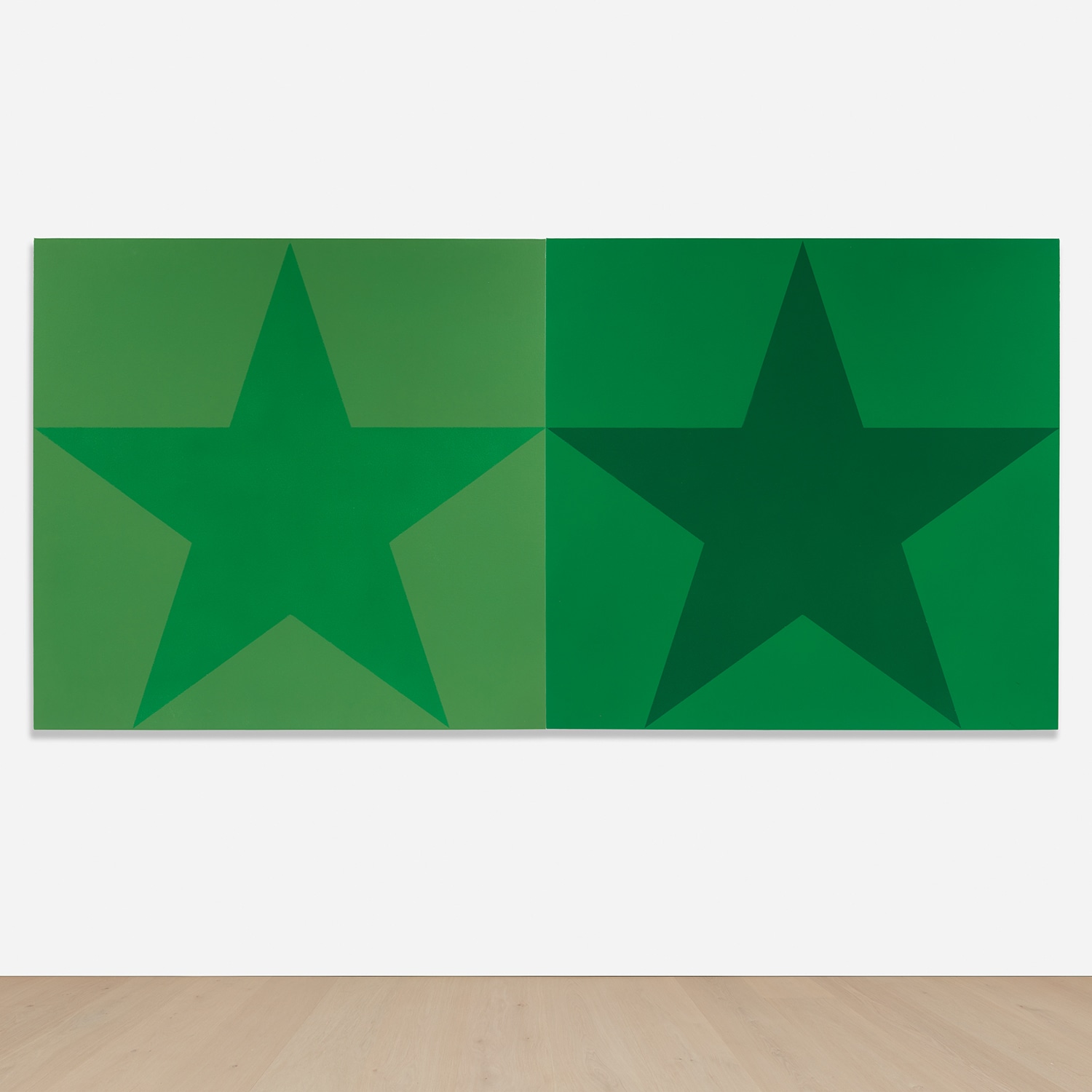
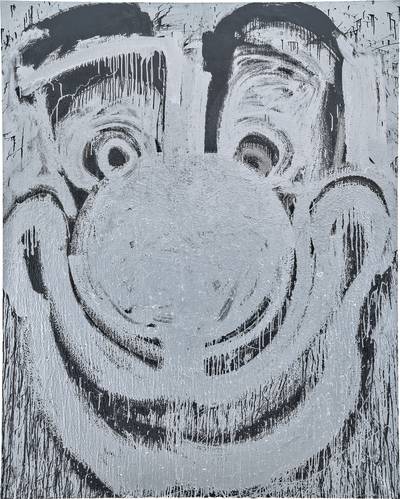
Christopher Wool
“Wool’s work accentuates the tensions and contradictions between the act of painting, the construction of a picture, its physical attributes, the visual experience of looking at it…They are defined by what they’re not – and by what they hold back.” –Ann Goldstein,, 1998
When you are choosing a work in this medium, you are entering a conversation about that question, and the depth of that conversation is one of the first things a collector should assess. What separates a good enamel work from a great one comes down to how completely the artist has understood and used the material rather than simply applied it. The best works demonstrate a genuine reckoning with enamel's specific properties: its flow, its resistance to blending, the way it can pool and skin over, the way drips carry meaning rather than accident. Gestural works should feel inevitable, not arbitrary.
When the medium is used with real intelligence, the result has an internal logic that you sense even before you can articulate it. Be wary of works where the enamel seems chosen for surface glamour alone. The shine should be earned. Among the artists well represented on The Collection, Christopher Wool stands as one of the most important figures to understand in this context.

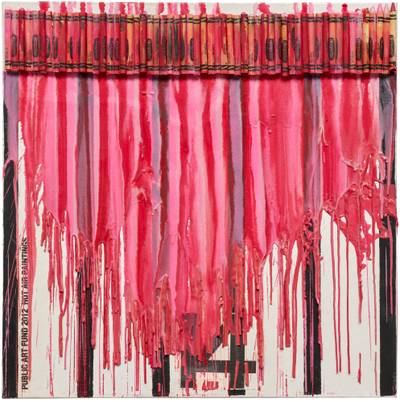
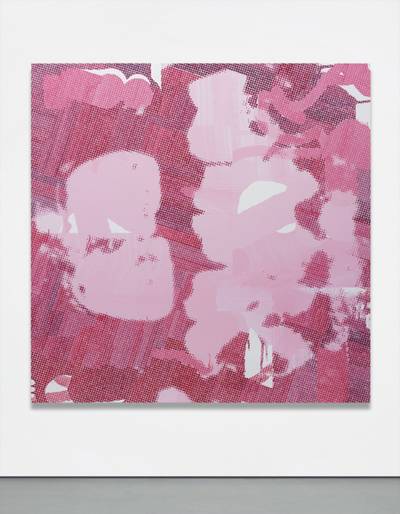
Lucien Smith
STP (3302c, Black 6 c, Bright Orange c), 2014
Wool's engagement with enamel as a vehicle for text and stencilled imagery brought a specific conceptual urgency to the medium during the 1980s and into the 1990s, and his works have performed consistently and strongly at auction for decades. A Wool enamel work is not merely a painting: it is an argument about language, about reproduction, about what it means to make a mark. That argumentative quality has kept his market resilient in ways that purely decorative surface painting has not matched. For a collector building a serious collection, a Wool enamel represents one of the more defensible positions in postwar and contemporary art.
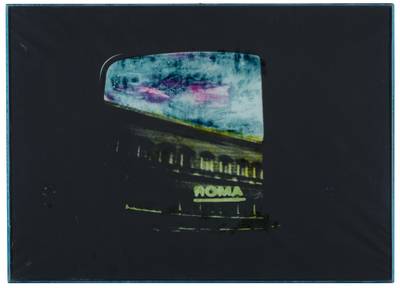
Mario Schifano brings a very different sensibility to the medium, rooted in the Italian context of the early 1960s and his relationship to both Arte Povera adjacency and a deeply Roman pop sensibility. Schifano's enamel works carry a kind of lyric romanticism that can feel surprising given the industrial material, and that tension is a large part of their appeal. His market has strengthened considerably over the past fifteen years as institutional interest in the broader Italian postwar scene has grown, and his works remain undervalued relative to American and British contemporaries of comparable historical significance. For collectors interested in European modernism and willing to look beyond the canonical names, Schifano represents genuine opportunity.
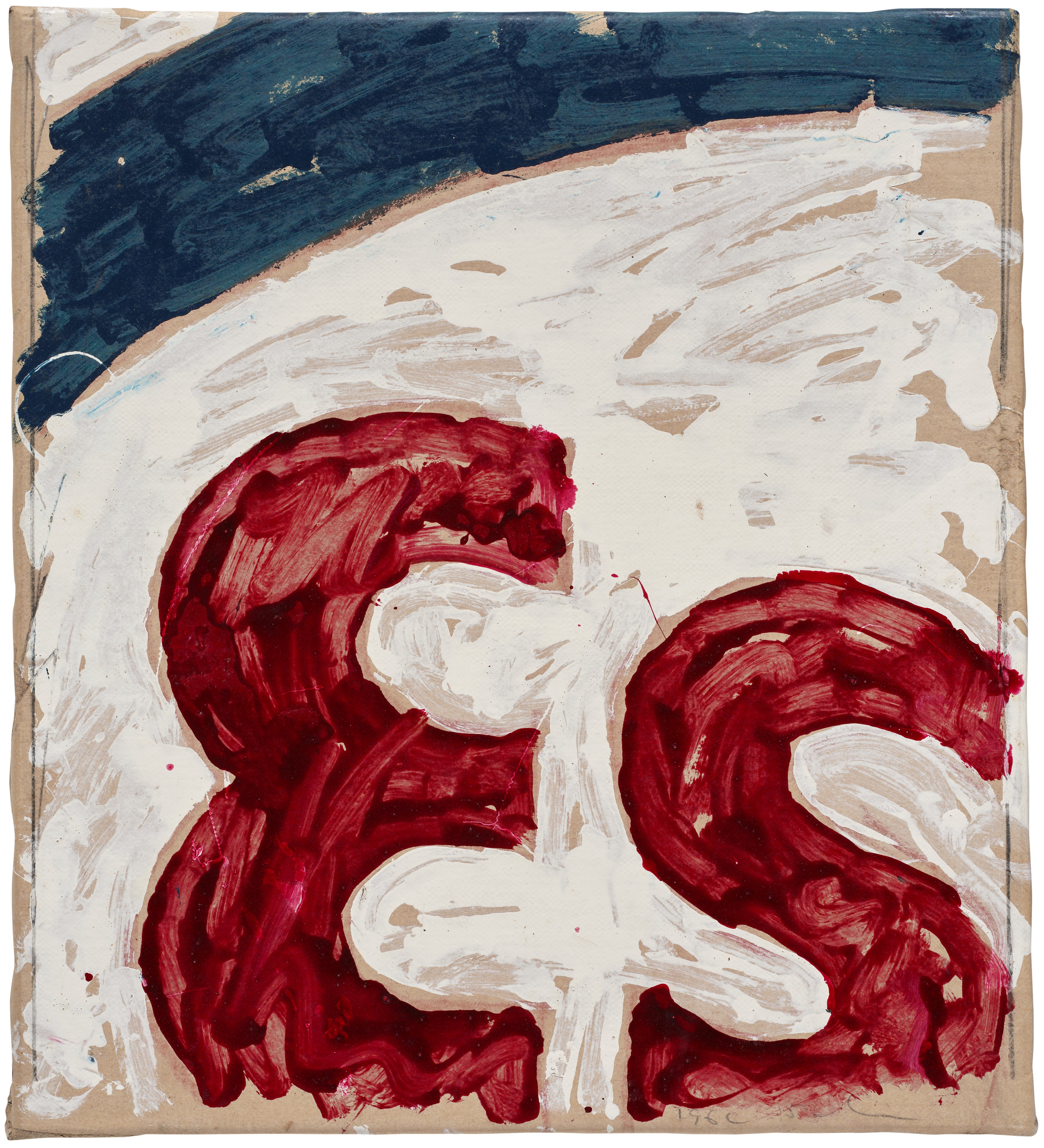
Mario Schifano
Esso, 1975
Steven Parrino, whose work engages enamel with a confrontational and almost nihilistic intensity, is another figure whose critical reputation has solidified significantly since his death in 2005 and whose market is likely to continue firming. Shozo Shimamoto and Atsuko Tanaka both connect enamel on canvas to the Gutai movement in postwar Japan, one of the most genuinely radical art movements of the twentieth century. Gutai artists were using industrial materials in direct, physical, often violent ways before the conversation about process and materiality had fully developed in the West, and their historical importance is now firmly established. Works by these artists carry real art historical weight and remain relatively accessible compared to their significance.
Any collector with an interest in process based abstraction or global modernism should be paying attention here. Among younger and less established figures, Dan Colen and Lucien Smith have both worked with enamel in ways that engage directly with the history of the medium while introducing their own generational concerns. Smith's rain works, created using a flare gun to fling paint at canvas, use enamel for its specific weight and behavior under those conditions. The works generated considerable market excitement in the early 2010s and have since settled into a more considered critical conversation.

Dan Colen
OH!
That recalibration is actually useful for a collector: the speculative heat has cooled enough to allow genuine assessment. Alex Hubbard similarly uses enamel as part of a broader investigation into painting's relationship with video and performance, and his practice rewards close attention. On the practical side, enamel on canvas requires some specific care. The surface is more resistant to minor abrasion than oil paint but can craze or crack if the canvas support flexes significantly, so proper stretcher bars and a stable environment matter considerably.
Avoid hanging enamel works in rooms with dramatic humidity fluctuations. When examining a work, look closely at the edges and corners for any lifting or separation from the canvas. Ask the gallery explicitly about any known condition issues and request a condition report before purchase. For major works, an independent conservation assessment is always worthwhile.
At auction, enamel works by established figures like Wool perform at the very top of the contemporary market, while mid career and historical artists offer more variable but often compelling entry points. The secondary market for this category rewards collectors who have done genuine research: understanding an artist's full body of work, knowing which periods are considered strongest, and recognizing what a particular work's provenance and exhibition history say about its standing within the artist's career. A work that has been in a serious museum show or appeared in a rigorous catalogue carries meaningful additional credibility. When buying through a gallery, ask directly about the work's exhibition history, whether it has been published, and what the gallery's position is on resale.
These are not impolite questions. They are how serious collectors build serious collections.