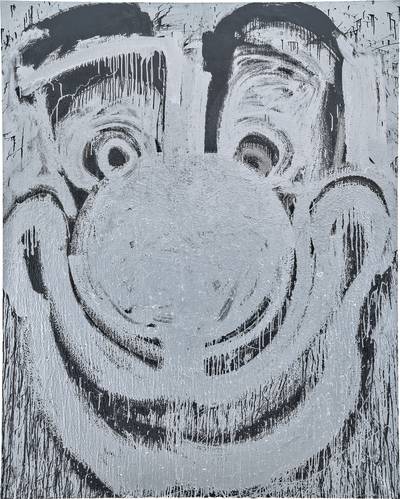
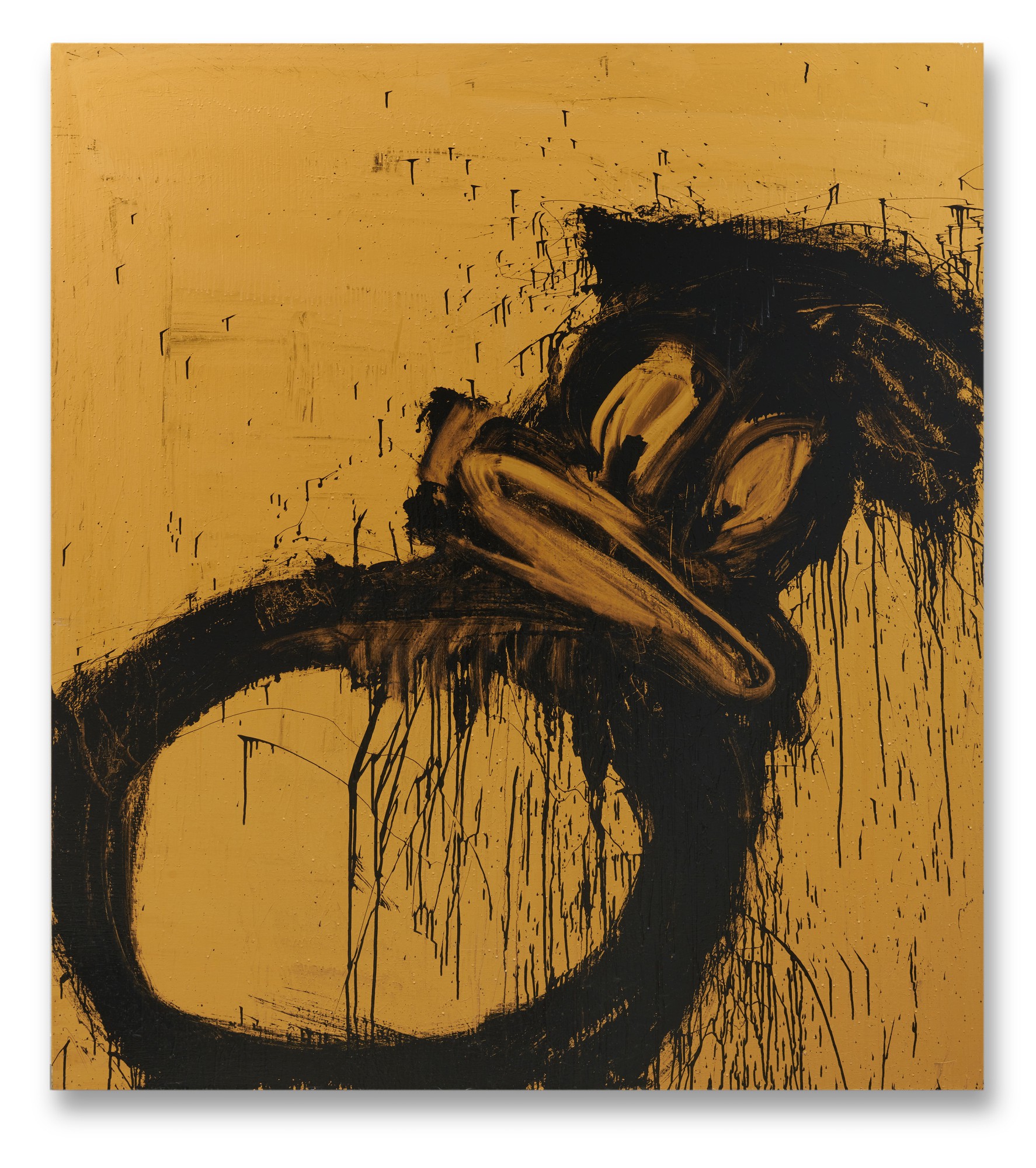
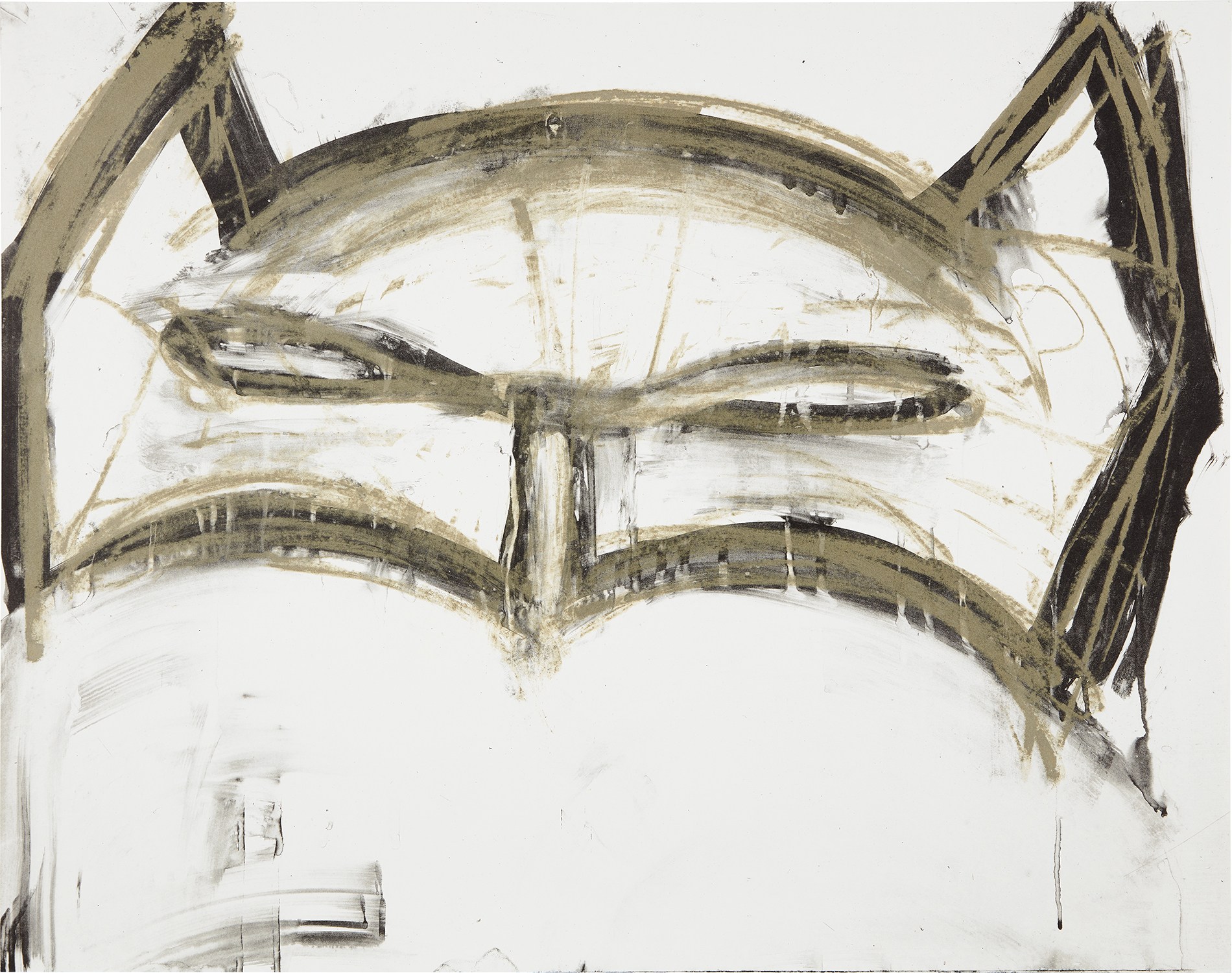
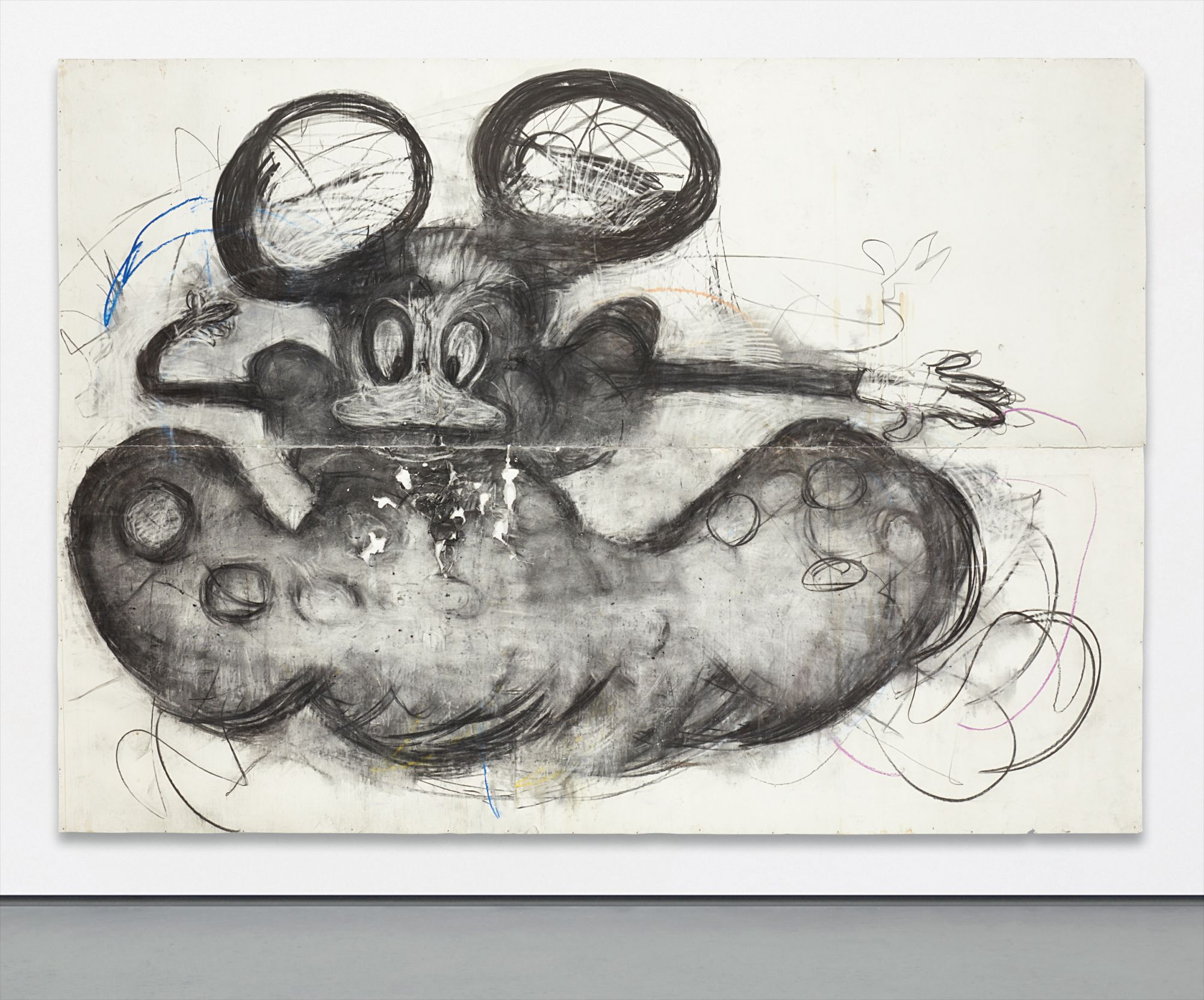
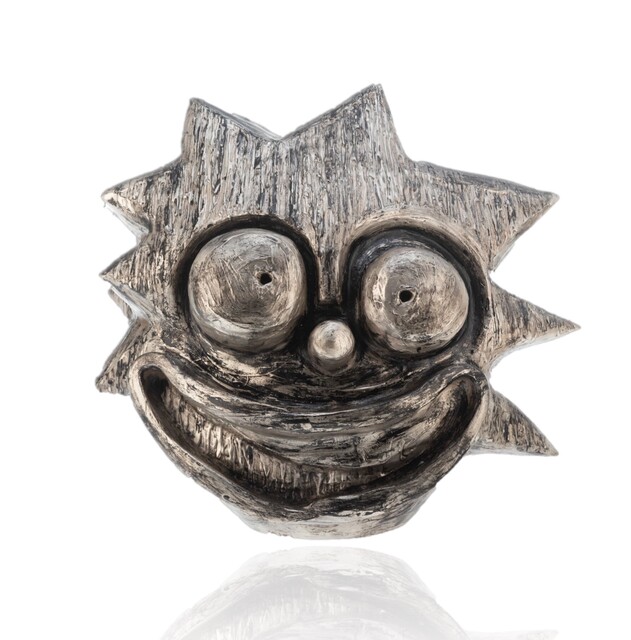
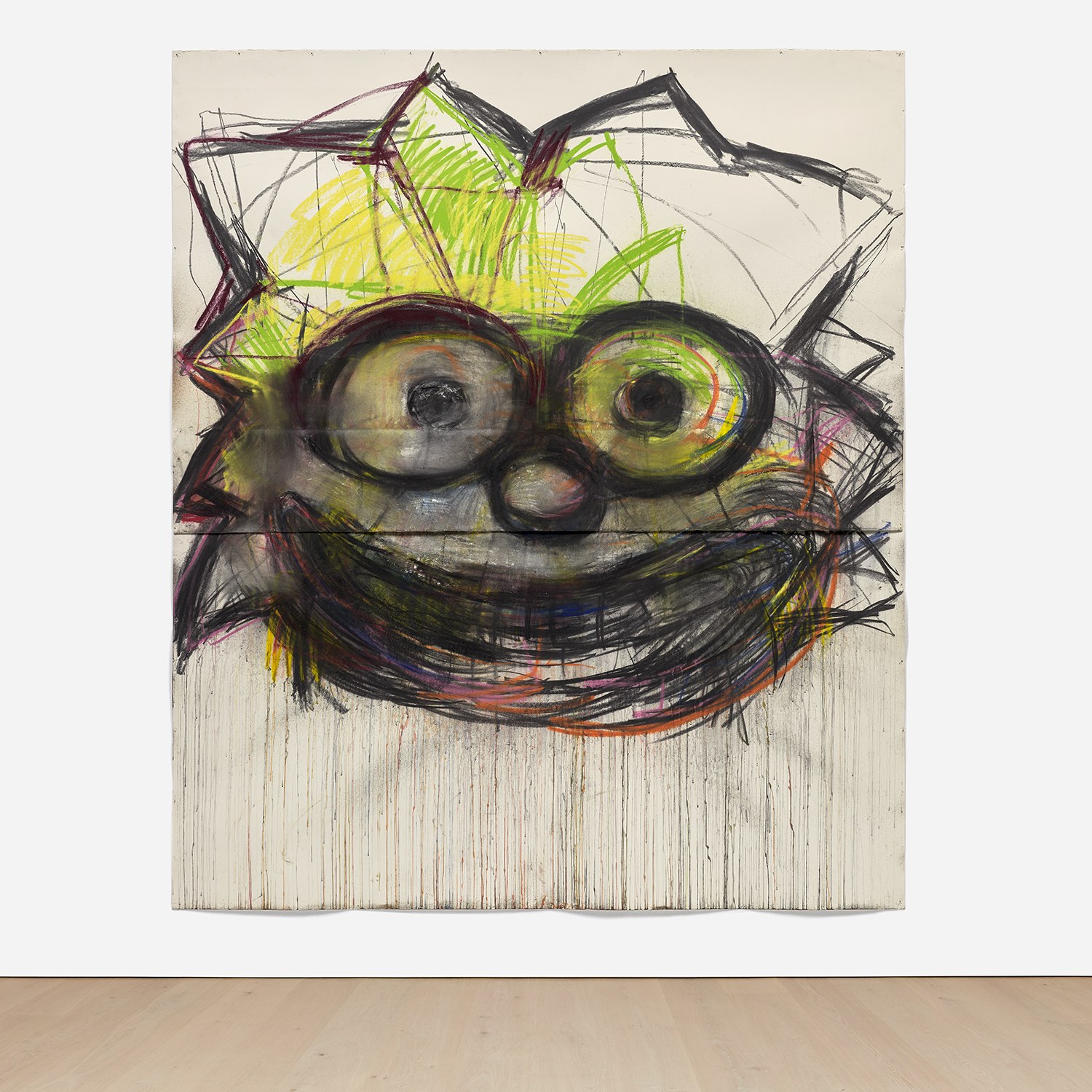
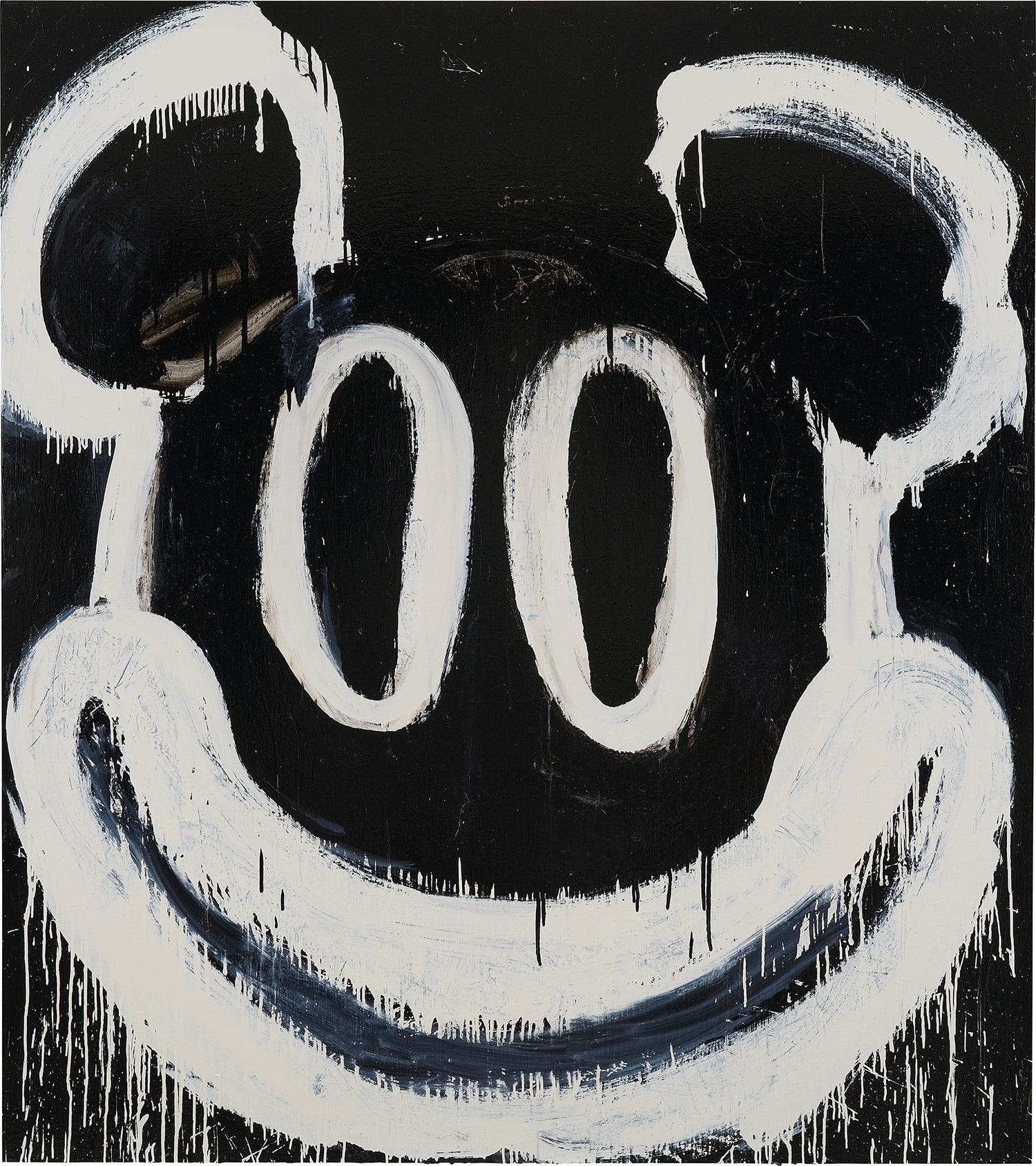
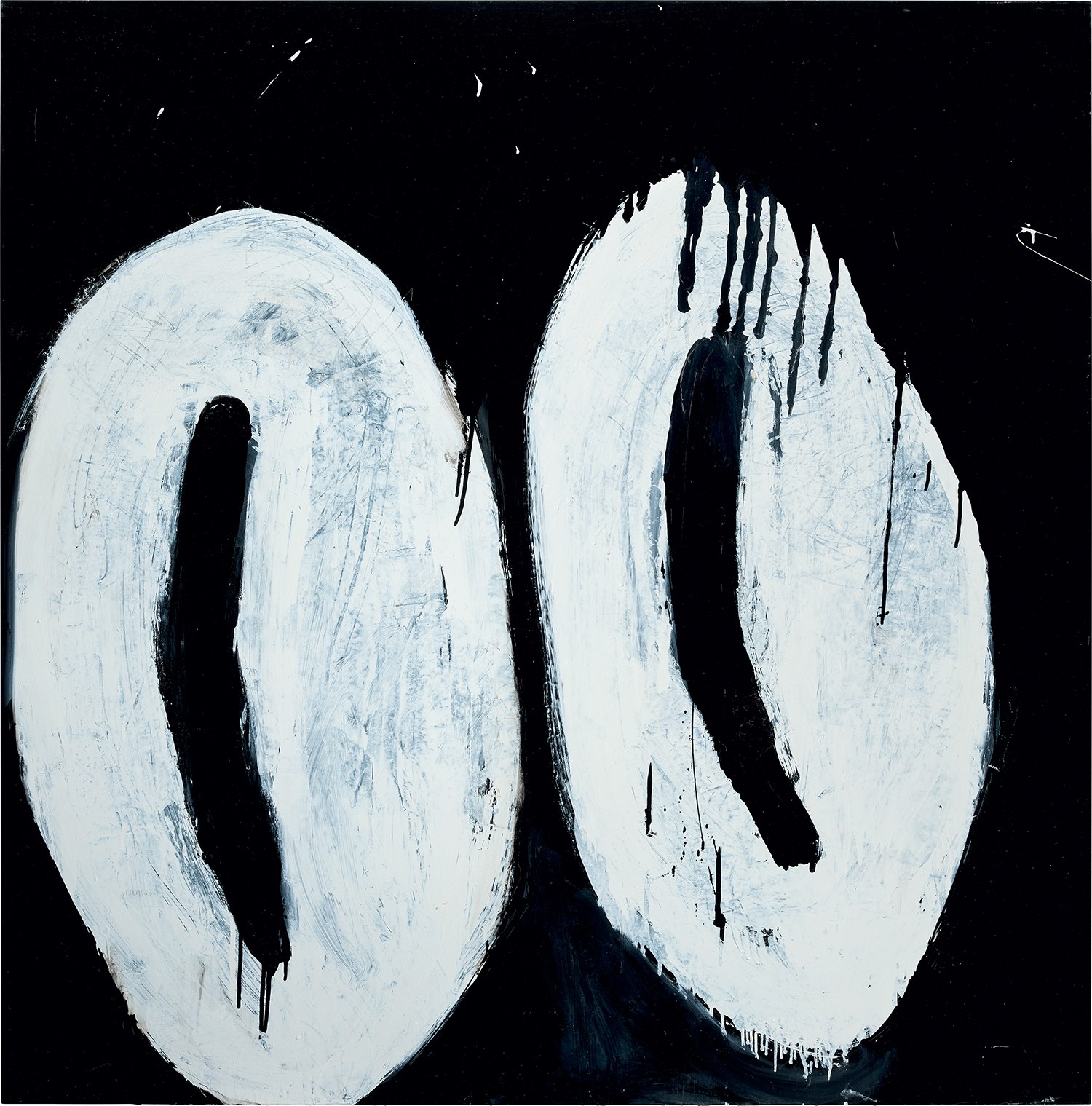
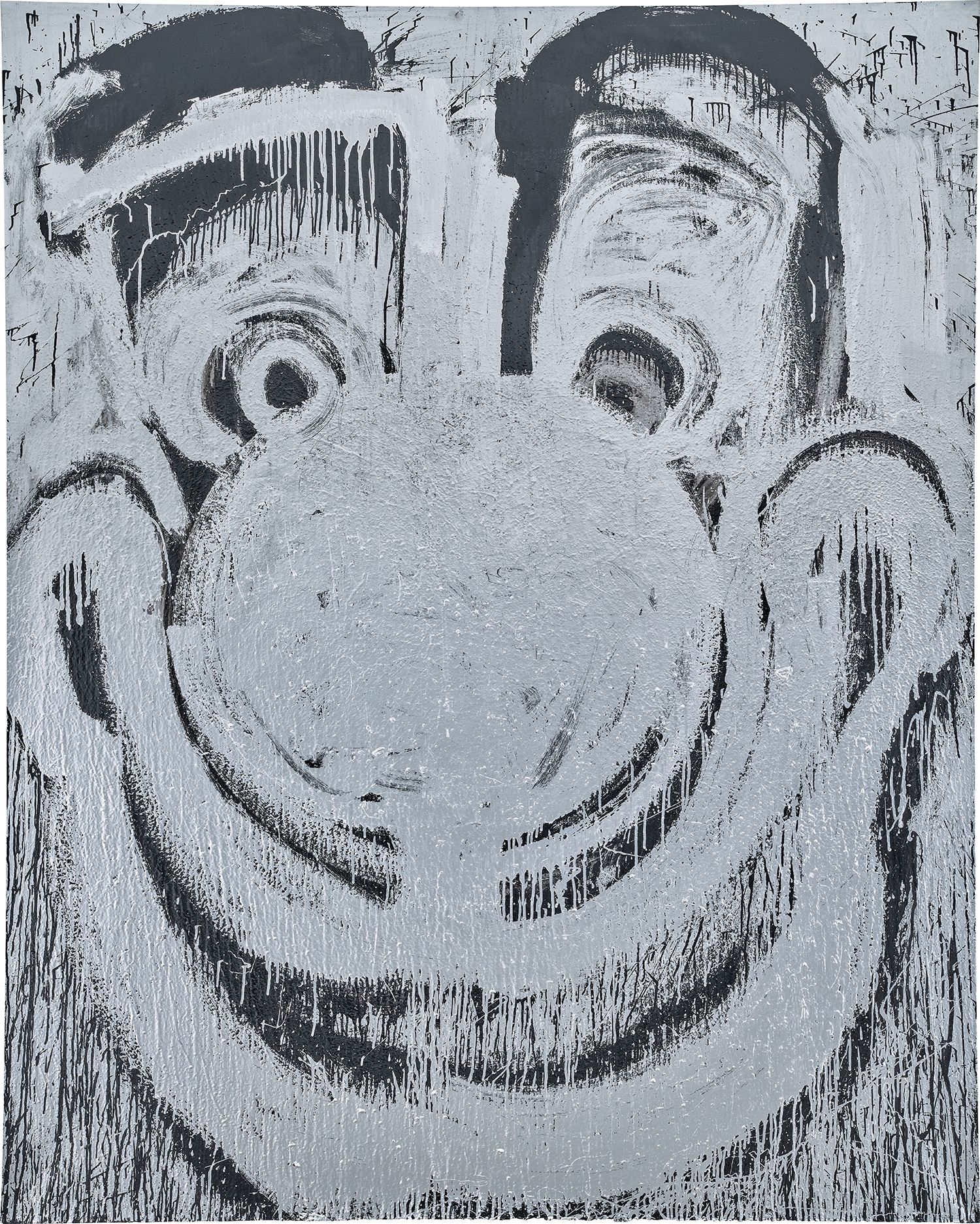
In the months following Joyce Pensato's passing in 2019, something remarkable happened in the rooms where her paintings hung. Collectors who had lived with her work for decades found themselves returning to it with fresh eyes, discovering new turbulence in the familiar faces of Mickey Mouse and Batman, new tenderness beneath the aggressive black enamel. The art world, which had celebrated her as a cult figure for years, began to reckon with the full scale of what she had accomplished across five decades of uncompromising practice. Museum curators and private collectors alike started speaking her name in the same breath as Willem de Kooning and Philip Guston, and the conversation has only deepened since. Pensato was born in Brooklyn in 1941 and never really left. That borough was not merely her address but her temperament, her frequency, her spiritual home. She came of age in a New York that was alive with Abstract Expressionist ambition, a city where paint on canvas felt like the most urgent language available to a thinking person. She studied at the Brooklyn Museum Art School, where she was shaped by the rigorous and passionate teaching of Lennart Anderson, and she absorbed the lessons of that generation with the hunger of someone who understood that art was not a career but a calling. Brooklyn in those decades was a place apart, grittier and less precious than Manhattan, and it gave her work a groundedness that never left it. Her development as a painter was slow, deliberate, and entirely self determined. Through the 1970s and into the 1980s she worked in relative obscurity, building a practice rooted in drawing and in the kind of sustained looking that produces genuine vision rather than mere style. The breakthrough, when it came, arrived through an unlikely portal. Pensato became transfixed by cartoon characters, by the flat pop iconography of Mickey Mouse and Donald Duck and Batman and Homer Simpson, and she began to ask what would happen if you ran those images through the furnace of gestural abstraction. The result was something no one had quite seen before. The figures retained their recognizability while becoming almost unbearably charged, their familiar contours overwhelmed by eruptions of black enamel, spray paint, and raw canvas. Her studio in Bushwick became a legendary space in the New York art world, a place where the work was made with physical intensity and where the evidence of that intensity, drips and splashes and the residue of spray cans, was allowed to accumulate and become part of the environment itself. This was not a tidy practice. Pensato worked on the floor, on the walls, with the kind of full body commitment that recalls the action painters she admired. But where her Abstract Expressionist predecessors often sought transcendence or pure formal resolution, she kept faith with representation, insisting that these cartoon faces, these icons of collective American childhood, could bear the full weight of existential inquiry. The tension between the recognizable image and the raw painterly act is the engine that drives everything she made. Among the works that best illuminate her achievement, the large scale enamel paintings on linen stand as her most commanding statements. A painting like Whipper Willie Mickey from 2016 demonstrates her mastery at full throttle, the famous mouse rendered in slashing black enamel that simultaneously constructs and destroys the image, leaving the viewer uncertain whether they are looking at a portrait or an abstraction, a celebration or an exorcism. Silver Clown from 2011, with its metallic paint on linen, shows her capacity for genuine pathos alongside her aggression. Her works on paper, including the charcoal drawings that trace back to the early 1990s, reveal the foundational discipline beneath the apparent wildness. These drawings are models of sustained attention and confirm that Pensato's apparent abandon was always earned through rigor. For collectors, Pensato's work occupies a particularly compelling position in the market. She was shown by Petzel Gallery in New York, which brought her work to international attention and helped establish her prices at a level that reflected both institutional respect and strong private demand. Her paintings entered significant collections in the United States and Europe, and her works on paper have proven especially attractive to collectors who want direct access to her thinking at a more accessible price point. The range of her output, from large signature enamel canvases to intimate charcoal drawings to editions and bronze sculptures, means that building a meaningful engagement with her practice across different formats and budgets is genuinely possible. Collectors drawn to Philip Guston's late cartoonish figures, to the gestural intensity of Franz Kline, or to the subcultural energy of artists like Raymond Pettibon and Carroll Dunham will find in Pensato a deeply sympathetic sensibility. Pensato's place in art history is still being fully written, and that is part of what makes collecting her work feel so alive right now. She operated at the intersection of Abstract Expressionism, Neo Expressionism, and pop culture in a way that was entirely her own. She shared with Guston a willingness to use cartoon imagery as a vehicle for serious psychological and formal investigation, but her Brooklyn rawness, her connection to spray paint and urban surfaces, gave her work a distinctly contemporary edge that Guston never sought. She belongs in conversation with the generation of painters who reinjected figuration into American painting after the dominance of minimalism and conceptualism, artists like Susan Rothenberg and Eric Fischl, while remaining irreducible to any single movement or moment. What endures most powerfully about Joyce Pensato is her absolute fidelity to her own vision. She did not chase the market or adjust her practice to meet prevailing tastes. She made the same essential gesture for decades, not because she lacked imagination, but because she understood that the image she had found, that charged encounter between cartoon innocence and expressionist fury, contained more truth than she could exhaust in a lifetime of painting. The collectors who understood this early were rewarded with work that deepens over time. For those coming to her now, the invitation remains wide open. These paintings ask to be lived with, returned to, argued with, and ultimately cherished as the product of one of the most singular and courageous sensibilities in postwar American art.