Join The Collection to save, track, and explore works like this.

Sebastián Naranjo

Spotted

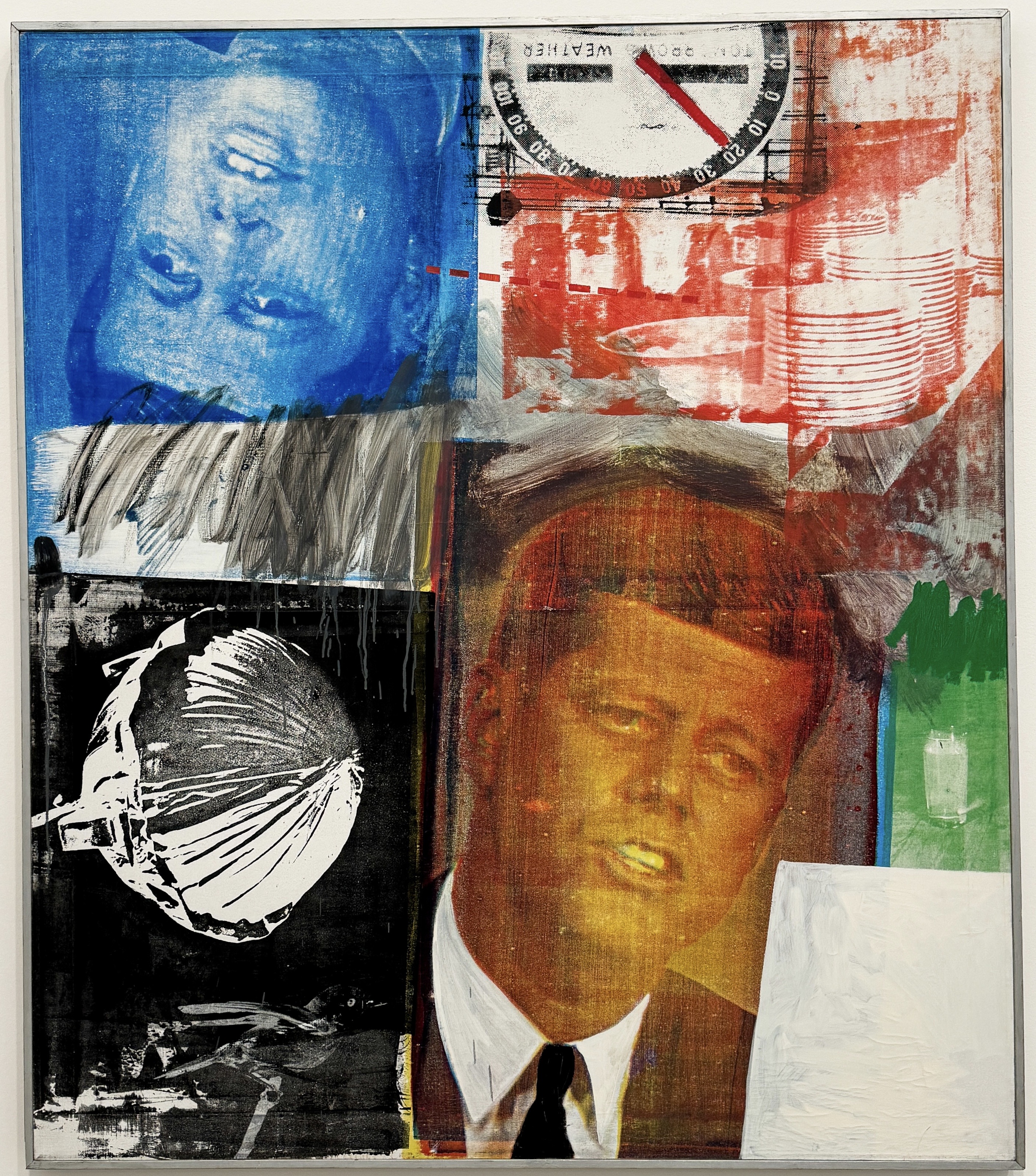
Robert Rauschenberg — Caryatid Cavalcade I / ROCI CHILE
Robert Rauschenberg

Caryatid Cavalcade I / ROCI CHILE

1985

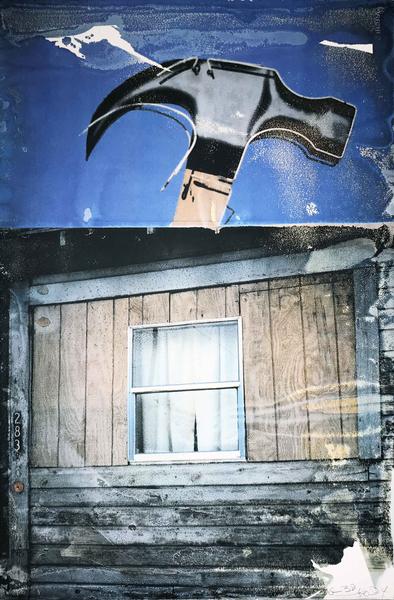
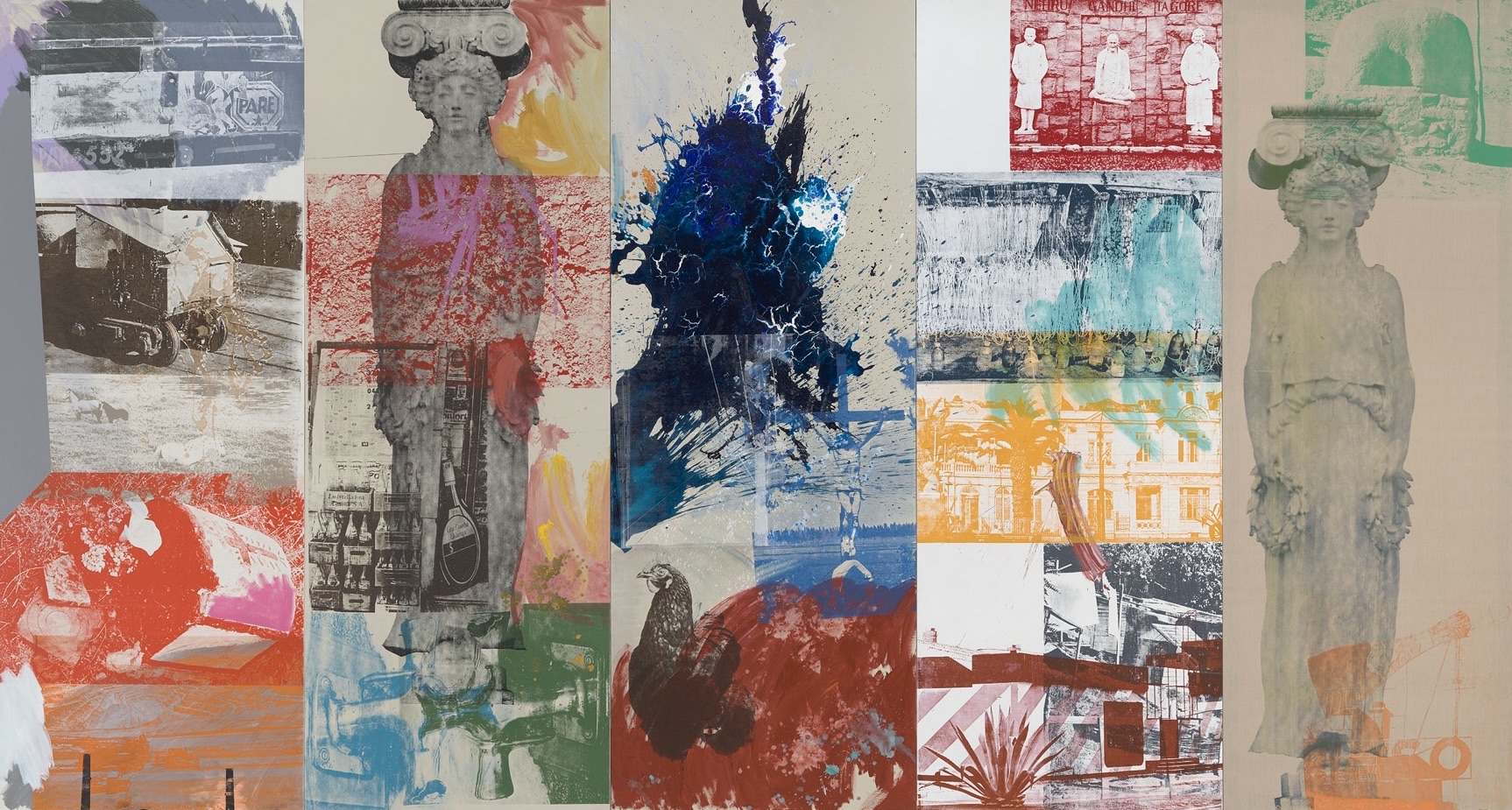
Can art help change the world? Can it foster peace across borders? Robert Rauschenberg (1925–2008) believed deeply that it could. In the 1980s, the towering figure of post-war American art launched ROCI (Rauschenberg Overseas Cultural Interchange, pronounced “Rocky,” like his pet turtle), an ambitious project rooted in the conviction that art could open dialogue where politics could not. Through ROCI, Rauschenberg travelled to countries shaped by political tension and social constraint — including Cuba, Chile and the USSR — bringing a retrospective of his work while also creating new pieces in direct response to what he saw around him. The works gathered here, in the first gallery exhibition devoted to ROCI since 1991, show Rauschenberg at full late-period energy. His layered screenprints combine architecture, road signs, animals, monuments, flags and fragments of daily life into dense, vibrant compositions. Symbols of state power intersect with ordinary human moments: a bust of Lenin alongside a bather, a boar, machinery, newsprint, even the Twin Towers. Rather than imposing a single narrative, Rauschenberg was attempting to absorb and reflect the visual language of each place he visited. ROCI was not just an exhibition tour but an effort to build cultural bridges — to suggest that artistic exchange could offer connection, recognition and, ultimately, a sense of shared humanity. Seen today, the project belongs to a different era of international cultural diplomacy, one driven by faith in the power of artistic presence. But what stands out most clearly is Rauschenberg’s sincerity. At the core of this body of work is his belief that art can “produce peace and understanding,” a phrase he wrote himself in bold block capitals — less a slogan than a guiding principle. Did ROCI transform global politics? Of course not. But that was never really the point. What it did produce is something lasting: a vivid artistic record of a world defined by ideological strain and rapid change, from the late Cold War to the shifting global order that followed. More importantly, it embodies an artist’s genuine, hopeful commitment to dialogue over division — and a powerful reminder of how strongly Rauschenberg believed that art could help bring people closer together. — Adapted from Eddy Frankel for TimeOut

Medium
Silkscreen ink, acrylic, and graphite on canvas

Est. Current Value

Start the Discussion

Request access to join the discussion

About this work

Robert Rauschenberg, Caryatid Cavalcade I / ROCI CHILE, 1985

Can art help change the world? Can it foster peace across borders? Robert Rauschenberg (1925–2008) believed deeply that it could. In the 1980s, the towering figure of post-war American art launched ROCI (Rauschenberg Overseas Cultural Interchange, pronounced “Rocky,” like his pet turtle), an ambitious project rooted in the conviction that art could open dialogue where politics could not. Through ROCI, Rauschenberg travelled to countries shaped by political tension and social constraint — including Cuba, Chile and the USSR — bringing a retrospective of his work while also creating new pieces in direct response to what he saw around him. The works gathered here, in the first gallery exhibition devoted to ROCI since 1991, show Rauschenberg at full late-period energy. His layered screenprints combine architecture, road signs, animals, monuments, flags and fragments of daily life into dense, vibrant compositions. Symbols of state power intersect with ordinary human moments: a bust of Lenin alongside a bather, a boar, machinery, newsprint, even the Twin Towers. Rather than imposing a single narrative, Rauschenberg was attempting to absorb and reflect the visual language of each place he visited. ROCI was not just an exhibition tour but an effort to build cultural bridges — to suggest that artistic exchange could offer connection, recognition and, ultimately, a sense of shared humanity. Seen today, the project belongs to a different era of international cultural diplomacy, one driven by faith in the power of artistic presence. But what stands out most clearly is Rauschenberg’s sincerity. At the core of this body of work is his belief that art can “produce peace and understanding,” a phrase he wrote himself in bold block capitals — less a slogan than a guiding principle. Did ROCI transform global politics? Of course not. But that was never really the point. What it did produce is something lasting: a vivid artistic record of a world defined by ideological strain and rapid change, from the late Cold War to the shifting global order that followed. More importantly, it embodies an artist’s genuine, hopeful commitment to dialogue over division — and a powerful reminder of how strongly Rauschenberg believed that art could help bring people closer together. — Adapted from Eddy Frankel for TimeOut

Medium
Silkscreen ink, acrylic, and graphite on canvas
Year
1985

Related themes

Print, Cultural Diplomacy, 20th Century, Blue Chip, Acrylic, Neo-Dada, Political, Vibrant, Architectural, American, Mixed Media, Collage, Screenprint, Abstract Expressionism, Urban, Large Format, Colorful, Drawing, Unique Work, Contemporary

More works by Robert Rauschenberg

Collected by

Sebastián In Situ, Sebastián Naranjo, Alex Capecelatro, Art Institute of Chicago, Gigi Rutkowski