Join The Collection to save, track, and explore works like this.

Nanni Valentini — Untitled
Nanni Valentini

Untitled

1969

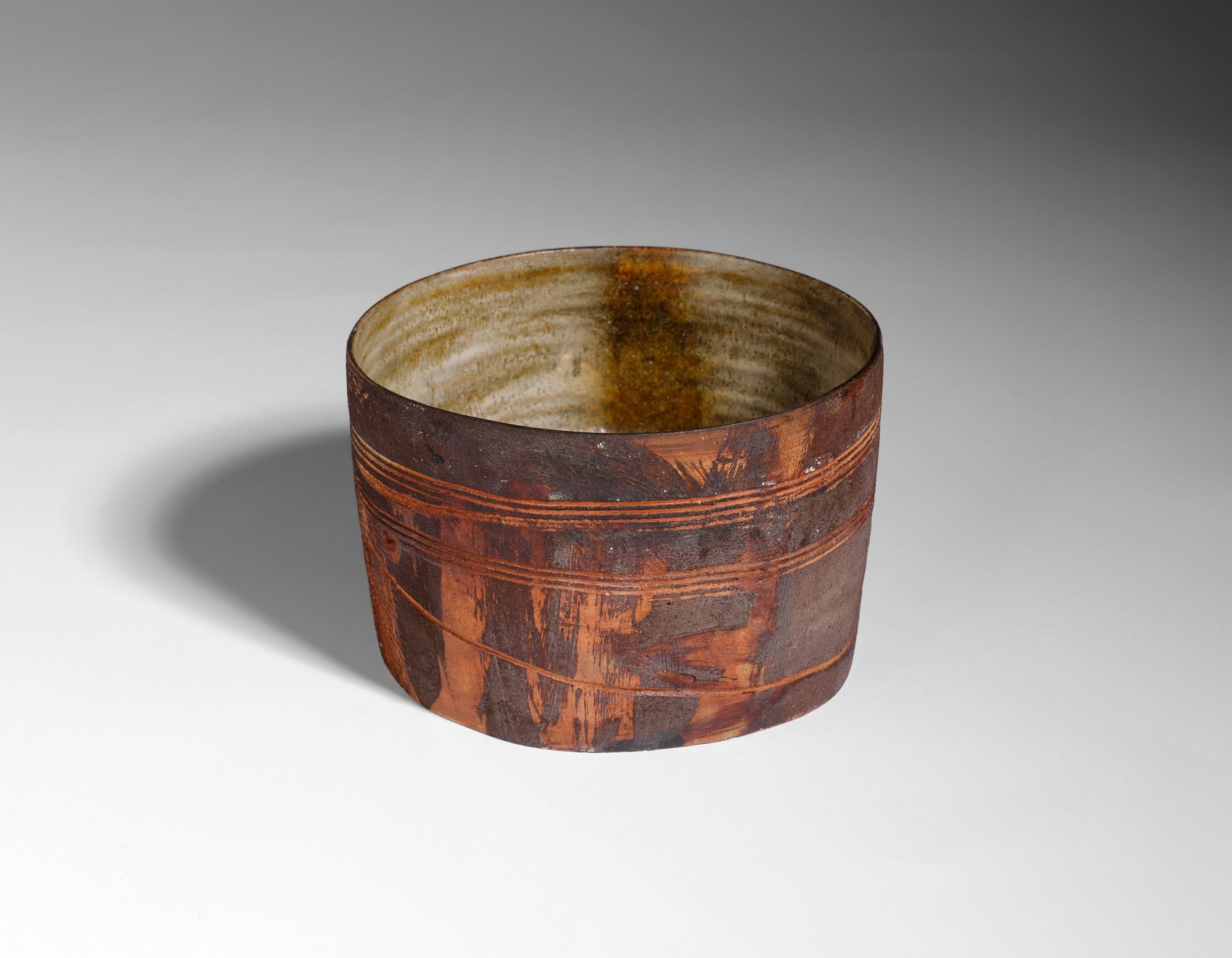
This cylindrical terracotta vessel by Nanni Valentini commands attention through its deliberate tension between restraint and raw expressiveness. The exterior surface is treated with a deeply atmospheric application of iron-rich slips and oxides, producing a landscape of burnt sienna, deep umber, and near-black tones that appear almost geological in character. Horizontal incised lines, scratched through the slip before firing, encircle the body with quiet authority, creating a structural rhythm that contrasts with the energetic, gestural brushwork beneath. The outer surface is intentionally unglazed, left porous and earthen, which heightens the tactile and visual contrast with the interior, where a pale celadon-toned glaze pools and settles with amber concentrations at the base, evidence of the kiln's unpredictable chemistry working in collaboration with the artist's hand. Valentini, a central figure in the Italian ceramics avant-garde of the postwar period and a key member of the Milanese cultural scene, consistently approached the vessel not as a functional object but as a site of philosophical and material inquiry. His work of the late 1960s, including this 1969 piece, reflects his deep engagement with Arte Povera and its broader rejection of decorative convention in favor of authentic material presence. The graffiti technique, in which marks are carved directly into the clay body, aligns with his belief that the object must carry the evidence of its own making. Nothing here is concealed or beautified in a conventional sense. The surface is instead treated as a kind of archive, holding the traces of gesture, fire, and time. At 15 by 23.5 by 23 centimeters, the work occupies space with a quiet confidence proportionate to its intellectual ambitions. Its cylindrical form, nearly architectural in its verticality and precision, situates it within a lineage of reduced, object-based sculpture that was reshaping European ceramic practice in this period. For collectors, this piece represents a particularly coherent moment in Valentini's development, one in which material honesty, compositional rigor, and expressive freedom are held in careful equilibrium. It is a work that rewards sustained attention, revealing new tonal and textural nuance depending on light conditions and viewing angle, and it remains a compelling example of how Italian ceramics of this era achieved genuine artistic seriousness.

Medium
Graffiti and enameled terracotta vase

🔨 Auction Lot

Martini Studio d'Arte: Modern And Contemporary Art

June 10, 2026

Estimate: €2,000 to €3,000

Lot 133
Start the Discussion

Request access to join the discussion

About this work

Nanni Valentini, Untitled, 1969

This cylindrical terracotta vessel by Nanni Valentini commands attention through its deliberate tension between restraint and raw expressiveness. The exterior surface is treated with a deeply atmospheric application of iron-rich slips and oxides, producing a landscape of burnt sienna, deep umber, and near-black tones that appear almost geological in character. Horizontal incised lines, scratched through the slip before firing, encircle the body with quiet authority, creating a structural rhythm that contrasts with the energetic, gestural brushwork beneath. The outer surface is intentionally unglazed, left porous and earthen, which heightens the tactile and visual contrast with the interior, where a pale celadon-toned glaze pools and settles with amber concentrations at the base, evidence of the kiln's unpredictable chemistry working in collaboration with the artist's hand. Valentini, a central figure in the Italian ceramics avant-garde of the postwar period and a key member of the Milanese cultural scene, consistently approached the vessel not as a functional object but as a site of philosophical and material inquiry. His work of the late 1960s, including this 1969 piece, reflects his deep engagement with Arte Povera and its broader rejection of decorative convention in favor of authentic material presence. The graffiti technique, in which marks are carved directly into the clay body, aligns with his belief that the object must carry the evidence of its own making. Nothing here is concealed or beautified in a conventional sense. The surface is instead treated as a kind of archive, holding the traces of gesture, fire, and time. At 15 by 23.5 by 23 centimeters, the work occupies space with a quiet confidence proportionate to its intellectual ambitions. Its cylindrical form, nearly architectural in its verticality and precision, situates it within a lineage of reduced, object-based sculpture that was reshaping European ceramic practice in this period. For collectors, this piece represents a particularly coherent moment in Valentini's development, one in which material honesty, compositional rigor, and expressive freedom are held in careful equilibrium. It is a work that rewards sustained attention, revealing new tonal and textural nuance depending on light conditions and viewing angle, and it remains a compelling example of how Italian ceramics of this era achieved genuine artistic seriousness.

Medium
Graffiti and enameled terracotta vase
Year
1969
Seen at
Martini Studio d'Arte

Related themes

Terracotta, Vessel Form, Tactile Surface, Male Artist, Studio Ceramics, Modernist, Sculpture, Avant-Garde, Expressive Mark, Gestural, Italian, Material Process, Earthenware, Incised Surface, Ceramic, Arte Povera, Earth Tones, Abstract, Postwar, Brown And Black, Cylinder Form

More works by Nanni Valentini