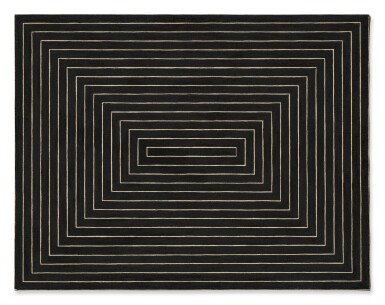
Frank Stella, 'Tomlinson Court Park,' 1959
1976
This work presents a series of concentric rectangular forms rendered in white lines against a dark ground, creating a hypnotic optical effect through precise geometric repetition. The nested rectangles diminish progressively toward the center, establishing a sense of recession and depth through systematic linear variation. Created in 1976, this acrylic painting on canvas is Richard Pettibone's appropriation and reinterpretation of Frank Stella's 1959 abstract composition, exemplifying the artist's practice of referencing and recontextualizing modernist works. The meticulous execution and stark monochromatic palette emphasize the formal relationships between the rectangular forms and their spatial intervals. This piece reflects conceptual art's engagement with originality, artistic authority, and the reproducibility of images.
- Medium
- acrylic on canvas
- Overall
- Spotted At
- Auction House · Sotheby's
Notes
Contemporary Day Auction, Sotheby's, sale on 2026-05-15.
🔨 Auction Lot
Contemporary Day Auction
May 15, 2026
Estimate: $80,000 – $120,000
For Sale
Artists in conversation
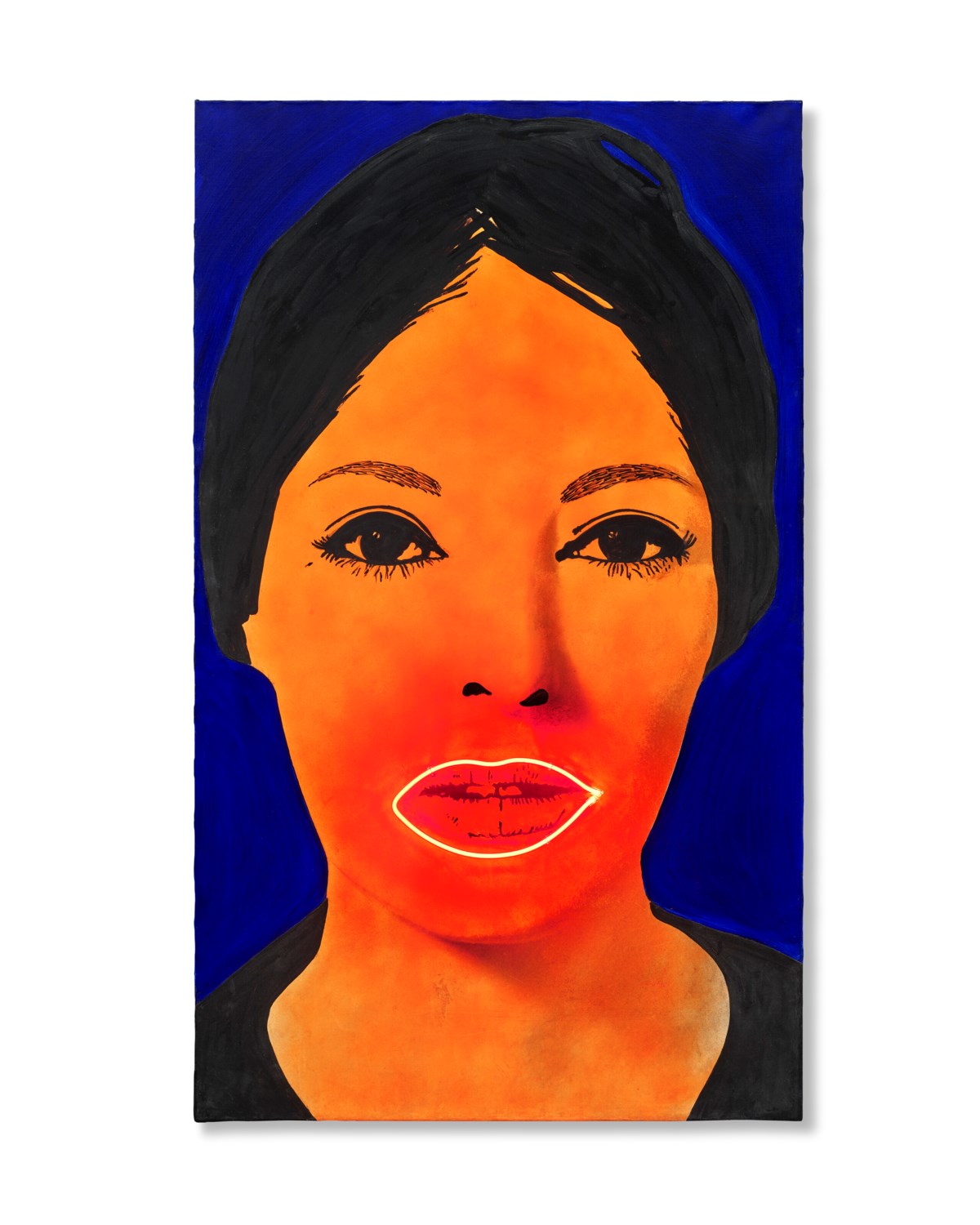
Elaine Sturtevant
American · b. 1924
Sturtevant built her entire practice around appropriating and replicating iconic works by canonical artists including Stella, making her the most direct parallel to Pettibone's conceptual strategy of reproducing minimalist geometric paintings as a critical artistic act.
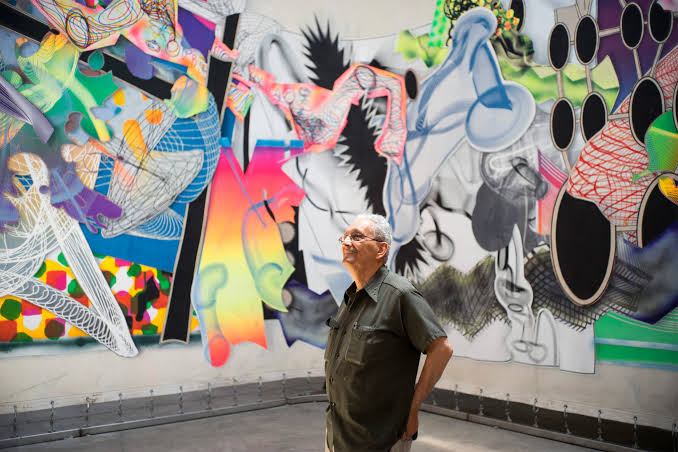
Frank Stella
American · b. 1936
The source work being appropriated here features Stella's signature concentric nested rectangle compositions rendered in precise white lines on dark grounds, making his Black Paintings the most visually identical works to this specific piece.
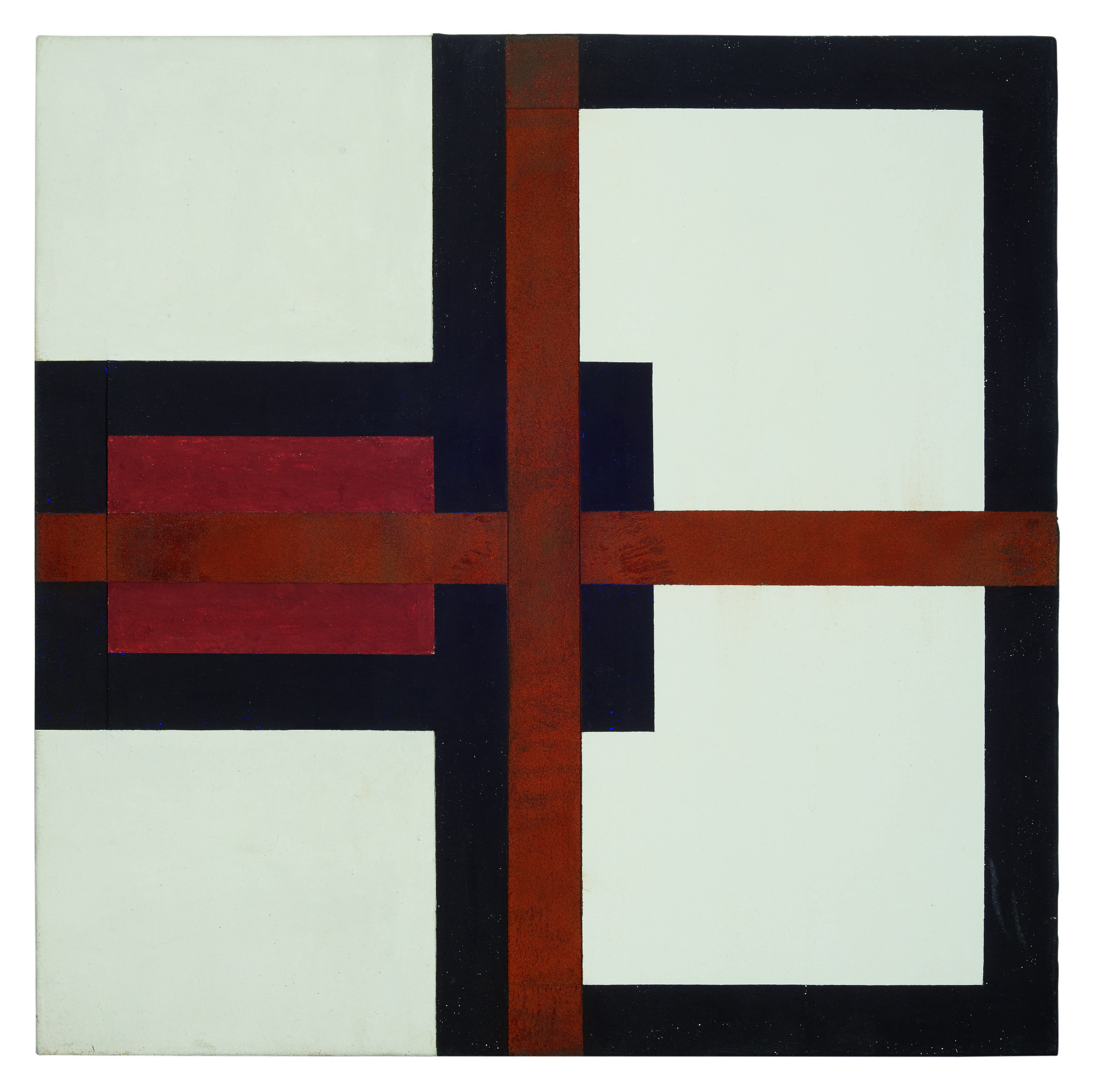
Harvey Quaytman
American · b. 1937
Quaytman produced geometric acrylic paintings centered on systematic concentric and nested linear forms rendered monochromatically, sharing the precise optical repetition and minimalist geometric abstraction that defines this specific Pettibone appropriation.
Start the Discussion
Request access to join the discussion