Frederick Hammersley
2
Works
1
Followers
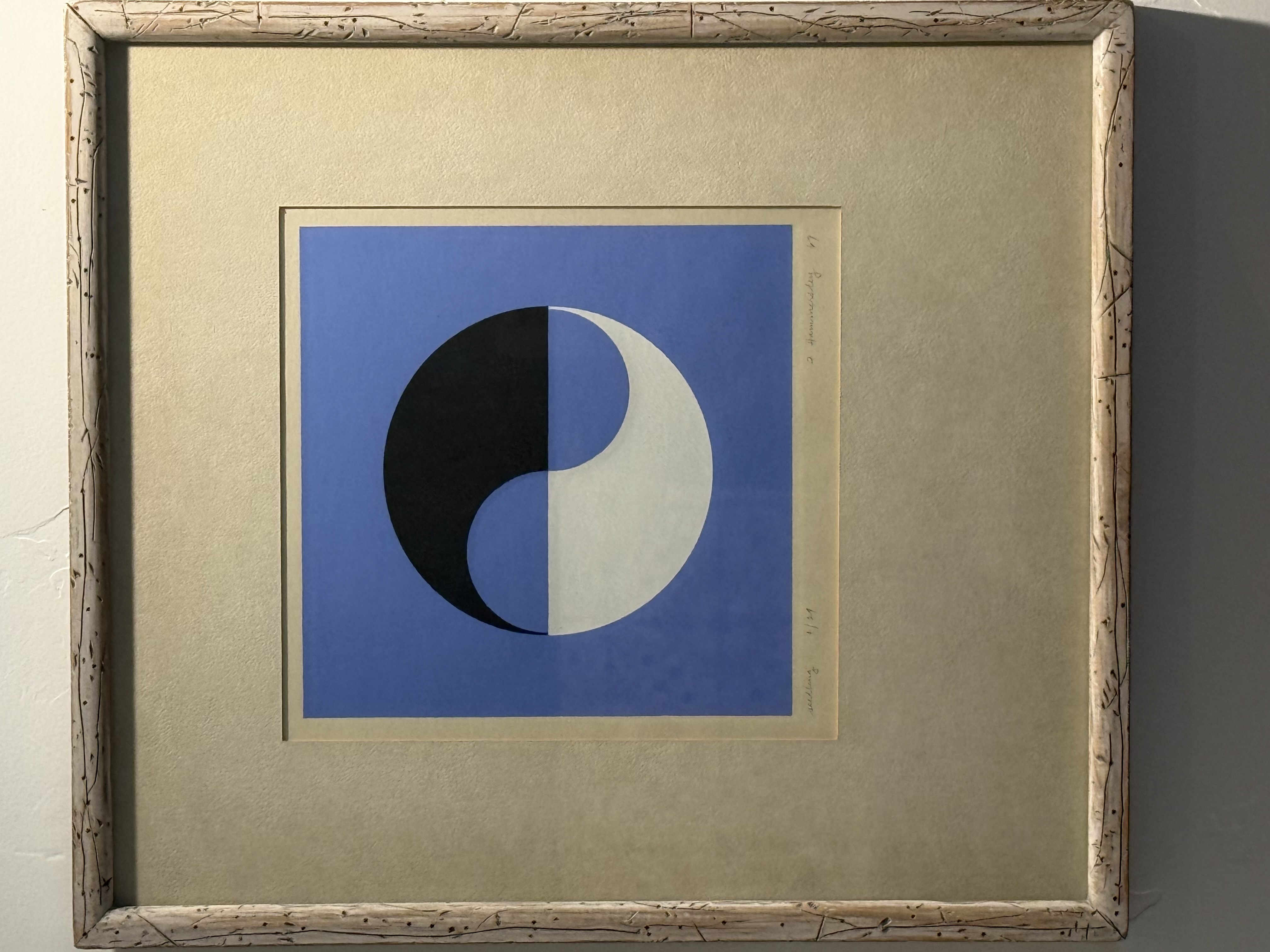
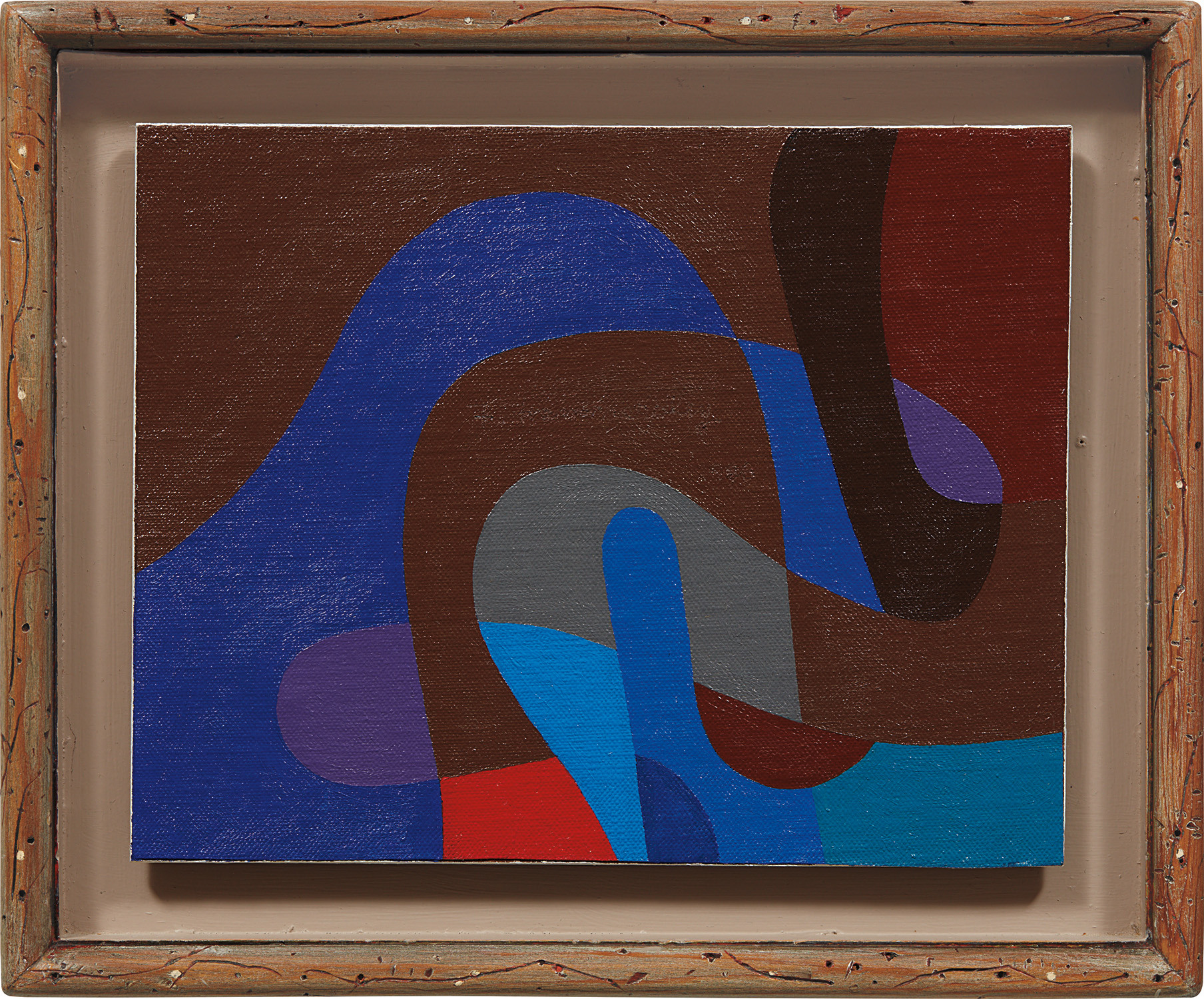
Frederick Hammersley was an American abstract painter best known for his hard-edge geometric compositions and precise, methodical approach to color and form. Born in Salt Lake City, Utah, he studied at the University of Idaho, the Chouinard Art Institute in Los Angeles, and later in Paris at the École des Beaux-Arts. His work is characterized by carefully structured geometric arrangements, often featuring interlocking shapes, stripes, and angular forms rendered in vibrant, carefully chosen color palettes. Hammersley's paintings demonstrate a rigorous attention to balance and optical relationships, creating dynamic visual tension within seemingly simple compositions. Hammersley's artistic output is often divided into two main bodies of work: his "hunches" and his "computers." The "hunches" were intuitive, organic compositions that emerged from spontaneous decisions, while the "computers" were systematically planned geometric abstractions based on predetermined organizational systems. This duality reflected his interest in balancing spontaneity with structure. His work was associated with the hard-edge painting movement that emerged in California in the late 1950s and 1960s, and he exhibited widely throughout his career, including at major institutions and galleries. He also had a distinguished teaching career, including a long tenure at Pomona College and at the University of New Mexico. Hammersley's contributions to American abstract art have been recognized through numerous exhibitions and his work is held in major museum collections including the Whitney Museum of American Art, the Los Angeles County Museum of Art, and the Smithsonian American Art Museum. His precise, optically engaging abstractions influenced subsequent generations of geometric painters, and his thoughtful approach to balancing intuition and system continues to resonate with contemporary artists working in abstraction.
Collectors

Artists in conversation