Hard-Edge
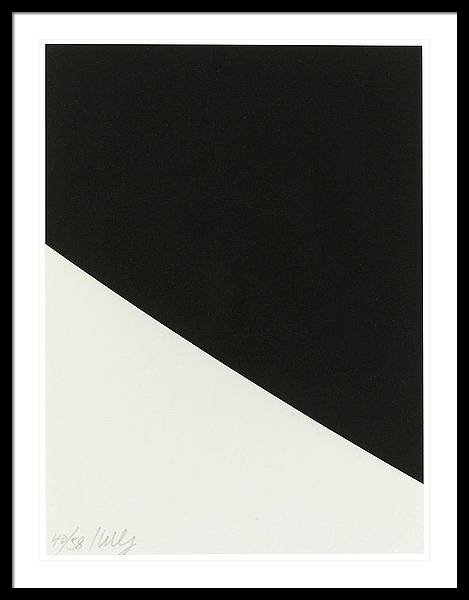
Ellsworth Kelly
Red Curve (Black State), 1999

The Line That Changed Everything About Painting
There is a particular kind of confidence required to strip painting down to its bones and insist that what remains is enough. No gesture, no accident, no evidence of the trembling human hand. Just color meeting color at a clean, uncompromising edge. Hard Edge painting made exactly this argument in the late 1950s and early 1960s, and the reverberations of that argument are still being felt today.
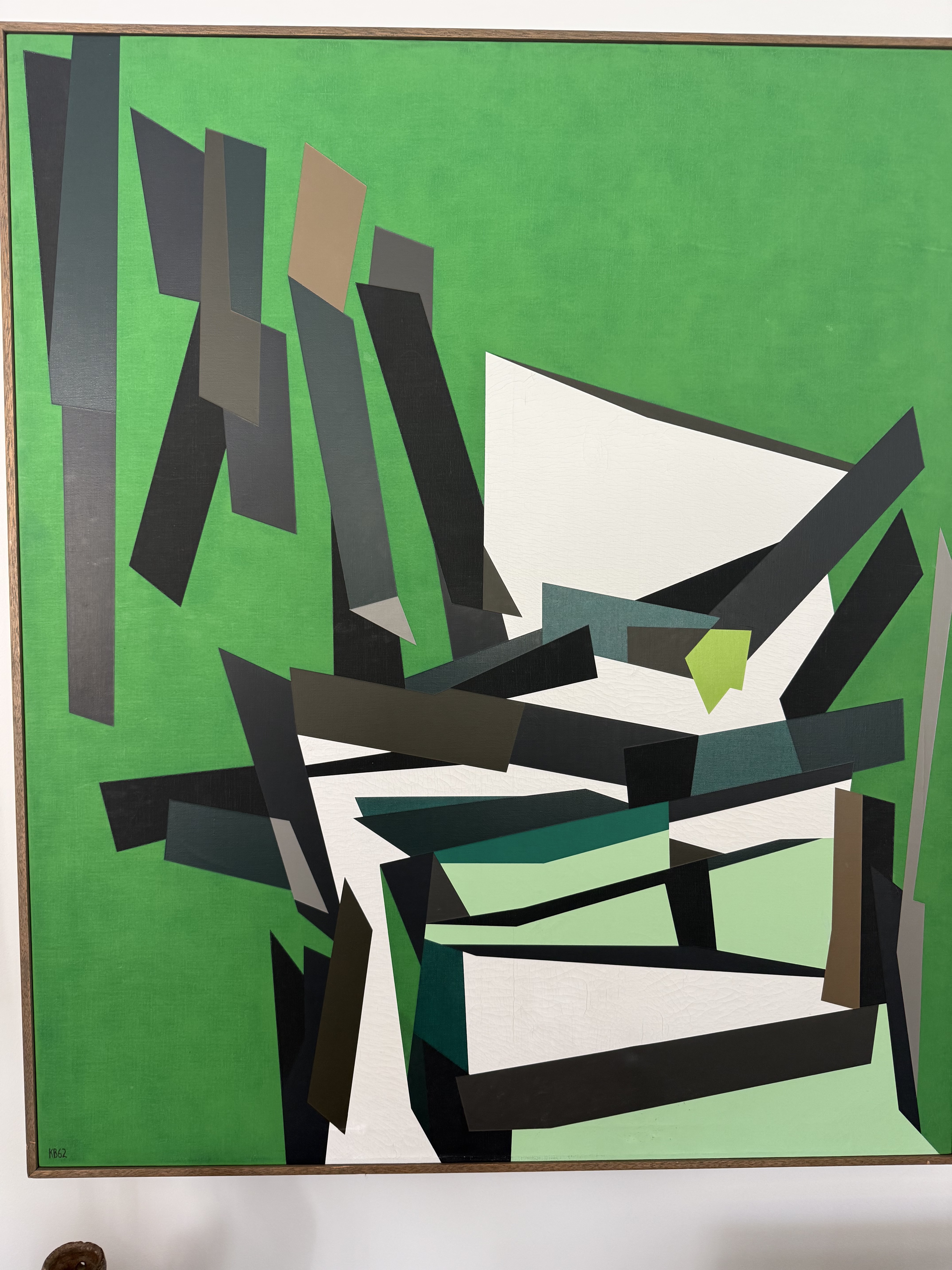
It arrived not as a rejection of feeling, but as a redefinition of where feeling might live, not in the brushstroke but in the relationship between forms. The term itself was coined by the critic Jules Langsner in 1959, in catalogue notes for an exhibition called Four Abstract Classicists, which traveled from the Los Angeles County Museum to the San Francisco Museum of Art and later to London. Langsner used it to describe the work of four California painters including Karl Benjamin and Frederick Hammersley, artists who were working with flat, precisely delineated fields of color at a moment when the gestural heroics of Abstract Expressionism still dominated critical conversation. The show was an act of quiet resistance, proposing that clarity and geometry could carry as much emotional weight as Pollock's drips or de Kooning's slashing strokes.
Ellsworth Kelly
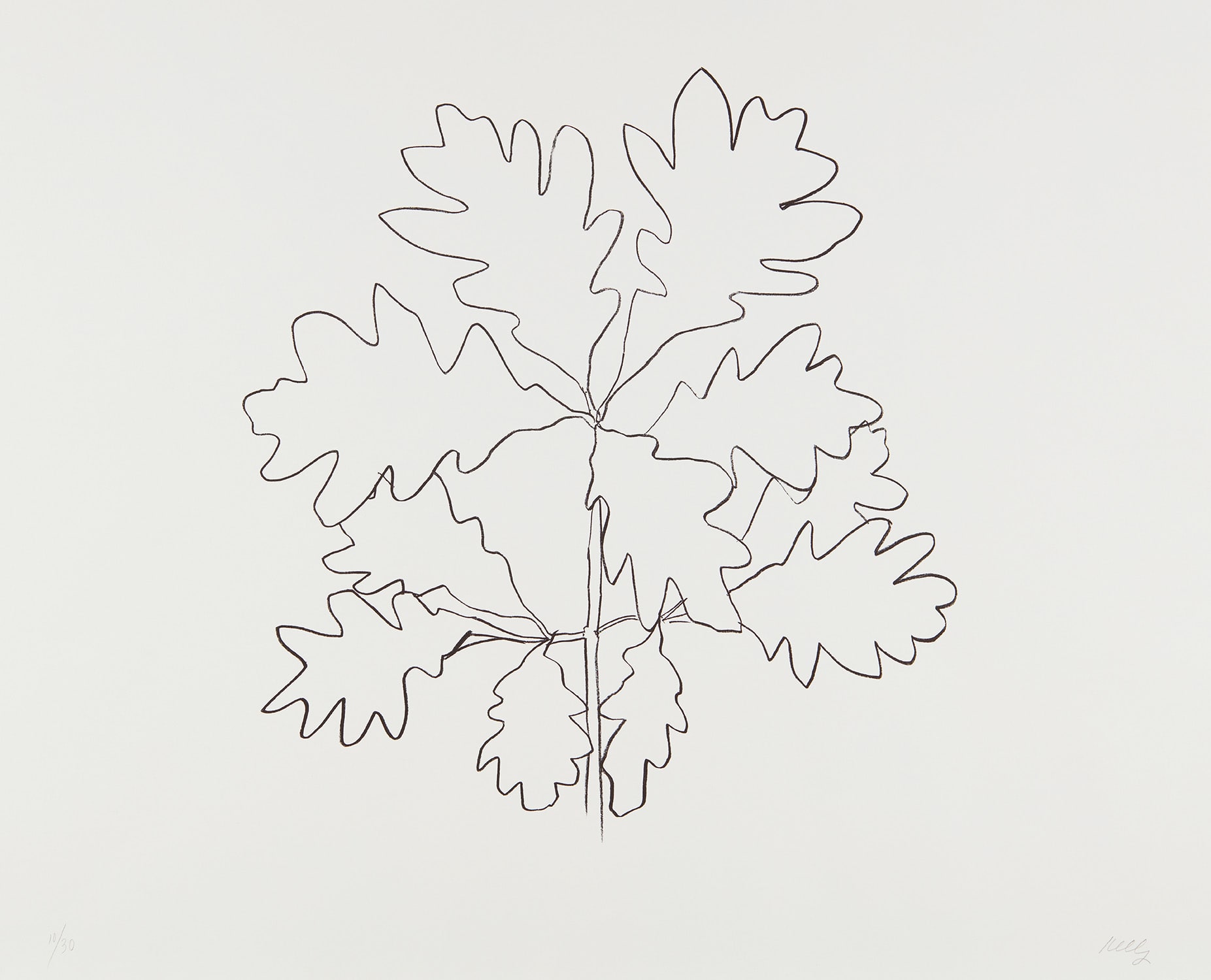
Oak VI, from Series of Oak Leaves
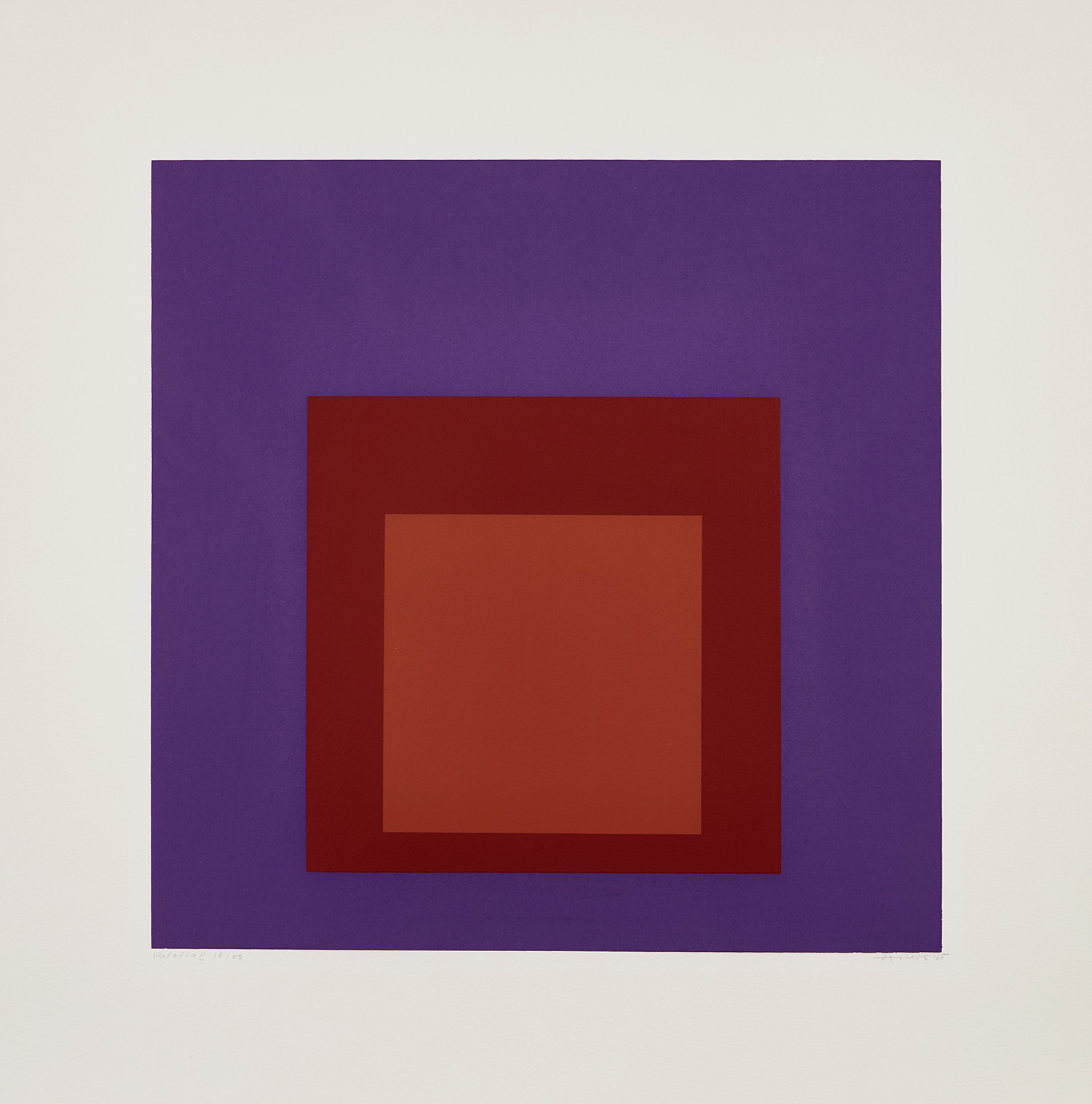
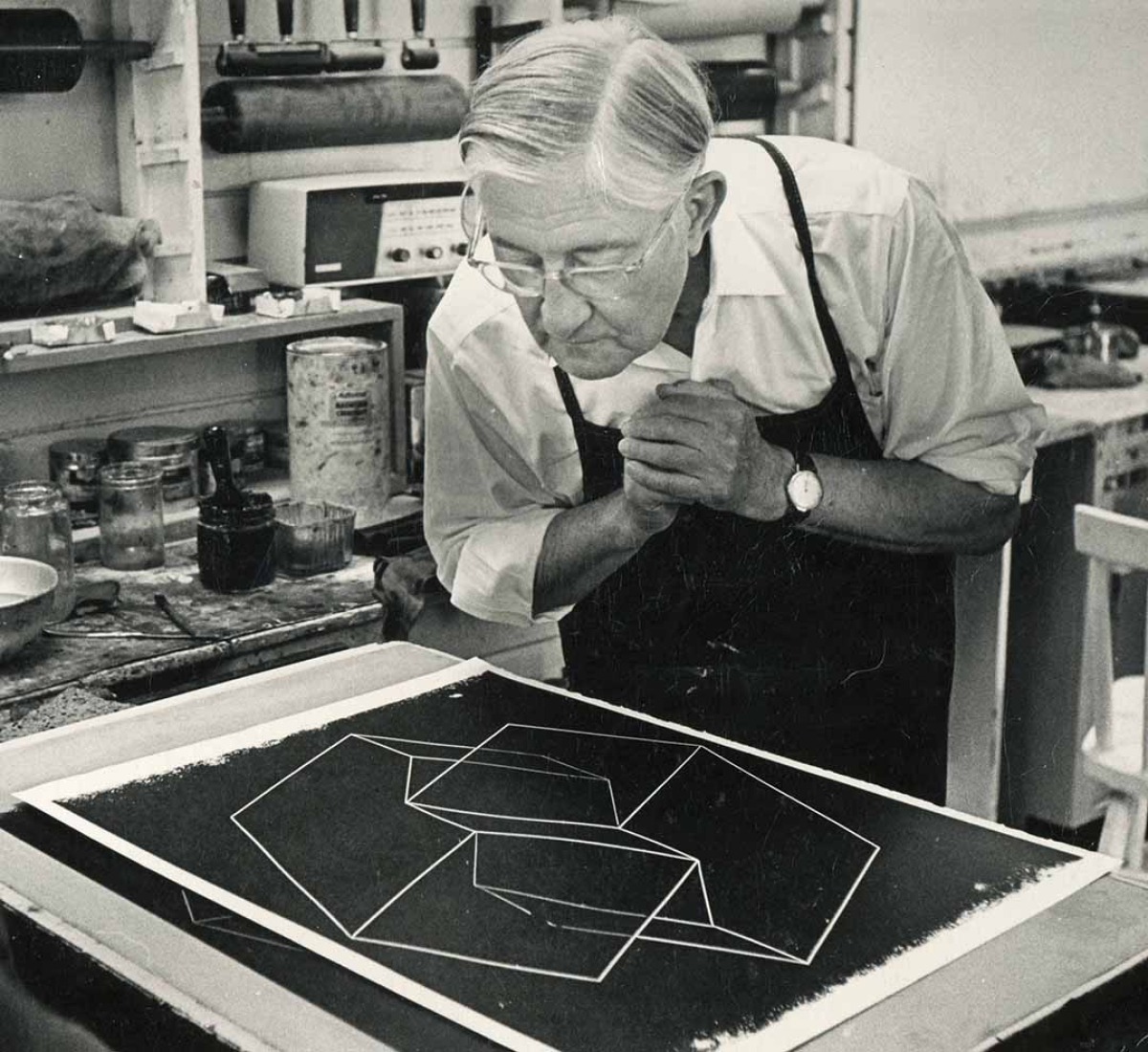
What gave the movement its velocity was the convergence of similar thinking on both coasts. In New York, Ellsworth Kelly had been developing his own vocabulary of flat color and taut, simple shapes since his return from Paris in 1954, drawing on lessons learned from Matisse's cutouts and the anonymous geometry of shadows on windows and architectural details. His approach to form was almost phenomenological, interested in the sensation of color experienced with the same directness as physical fact. Josef Albers, whose Homage to the Square series began in 1950, was simultaneously dismantling assumptions about perception from his teaching post at Yale, demonstrating through patient repetition that color is never static, that it shifts and breathes depending on what surrounds it.
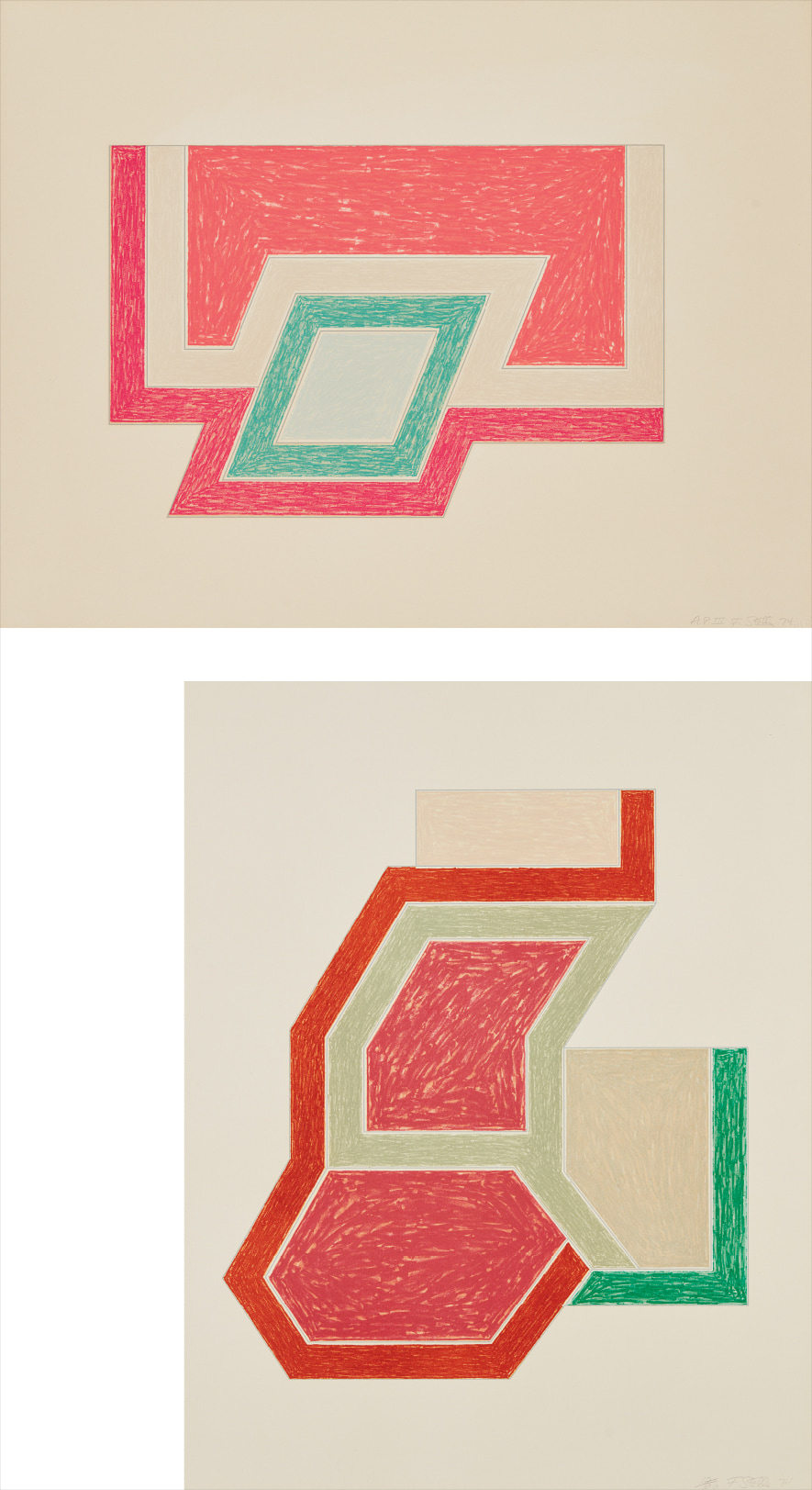
Frank Stella became the pivot point around which much of the critical conversation turned. His Black Paintings, shown at the Museum of Modern Art in 1959 in the landmark Sixteen Americans exhibition, presented stripes of black enamel separated by thin lines of unpainted canvas. Stella's famous phrase, what you see is what you see, became a kind of manifesto for an entire generation skeptical of symbolic or psychological readings. His subsequent work moved into shaped canvases and increasingly complex geometric configurations, and the works on The Collection represent the full reach of his formal ambitions across several decades.
Frank Stella
Conway; and Sunapee, from Eccentric Polygons
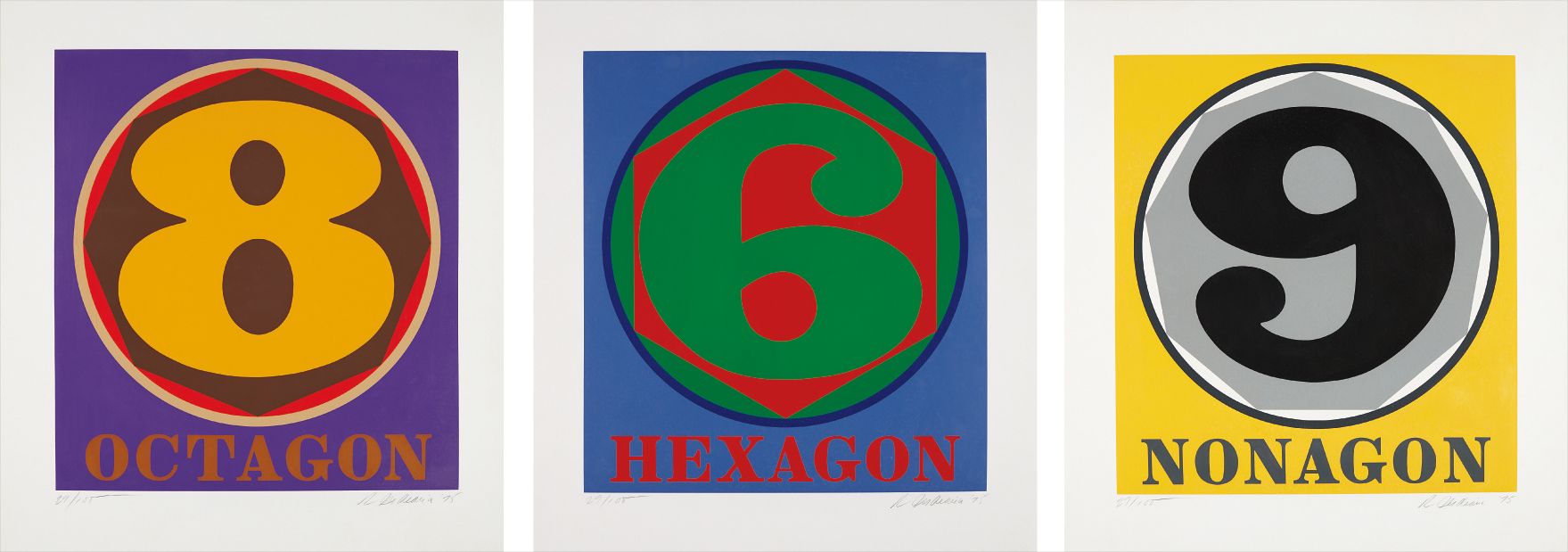
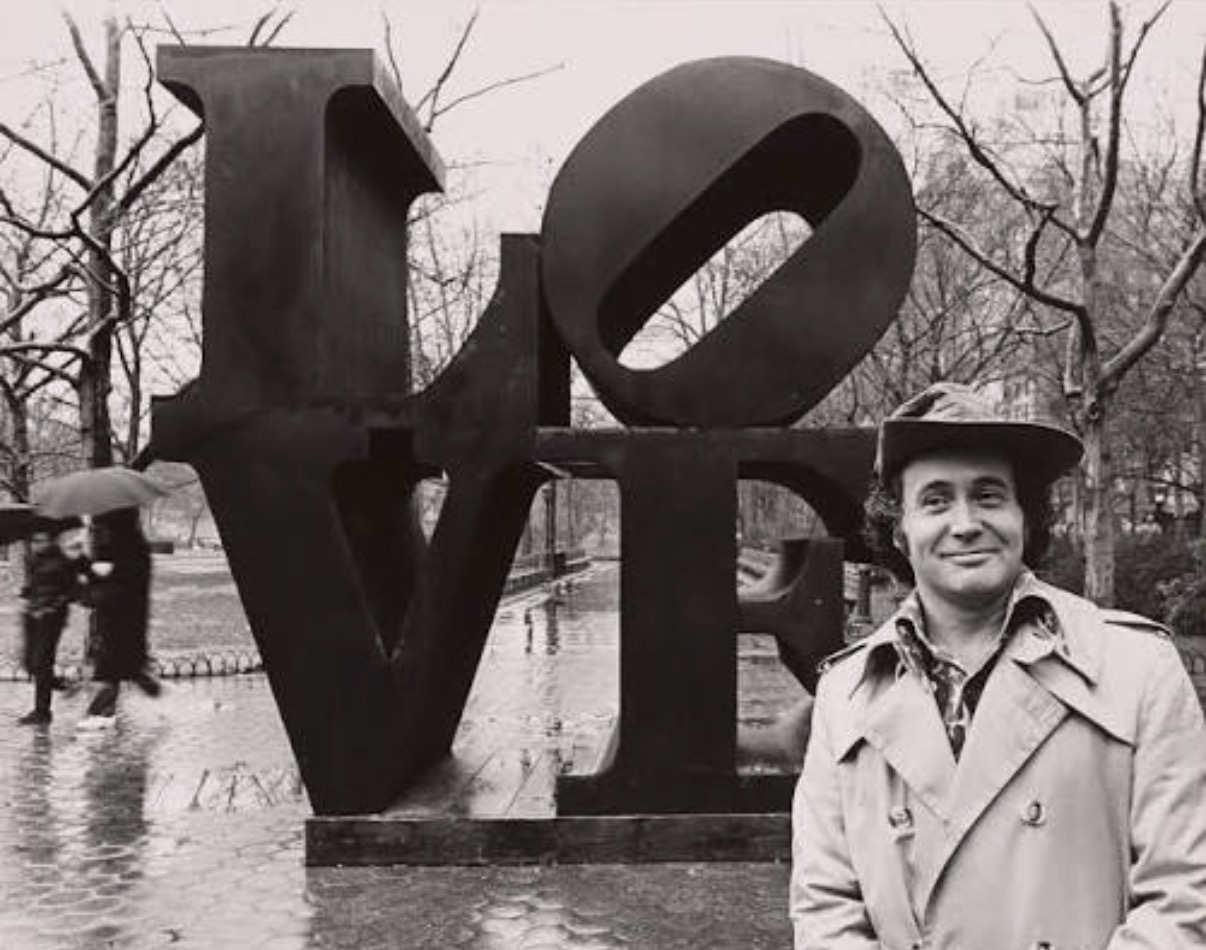
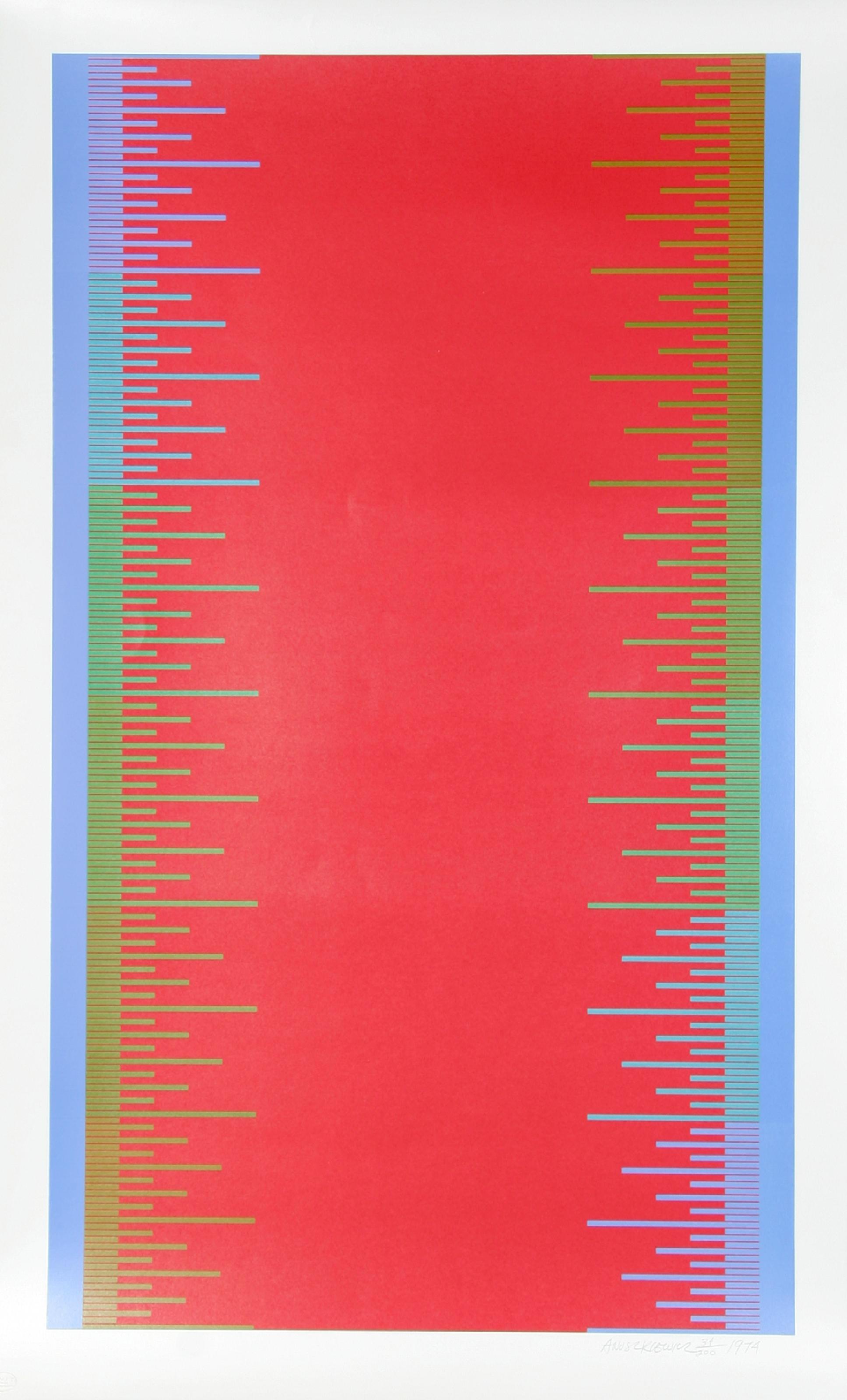
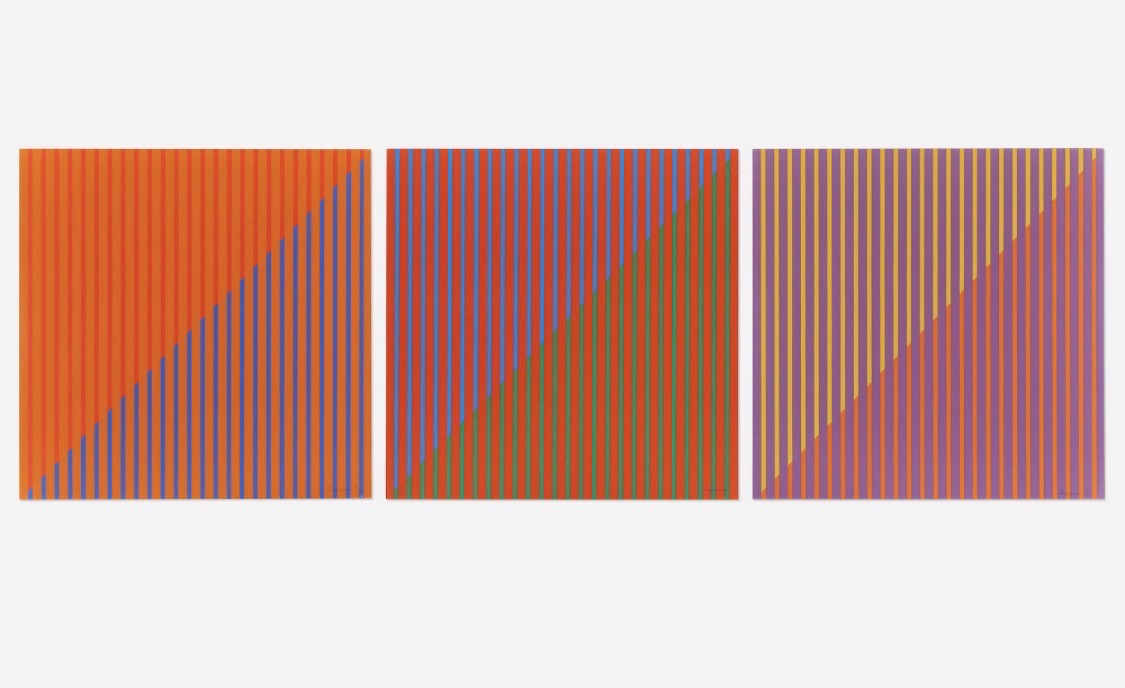
Kenneth Noland worked concentric circles and chevrons with similar rigor, insisting on the centrality of color relations over compositional drama. Richard Anuszkiewicz brought a different kind of energy to the movement, pushing into the territory of Op Art with compositions of intense complementary colors that seemed to vibrate at their edges, producing an almost physiological response in the viewer. His work sits at the productive edge between Hard Edge and perceptual illusion, reminding us that geometry is never neutral. Robert Indiana moved in a related direction, grounding geometric forms in language and cultural sign systems, turning the star, the circle, and the diamond into carriers of American mythology.
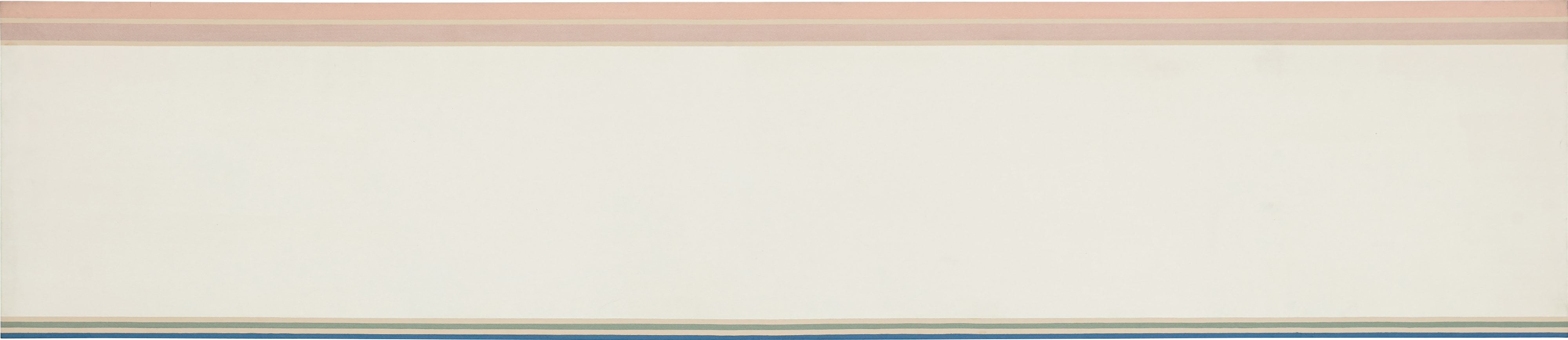
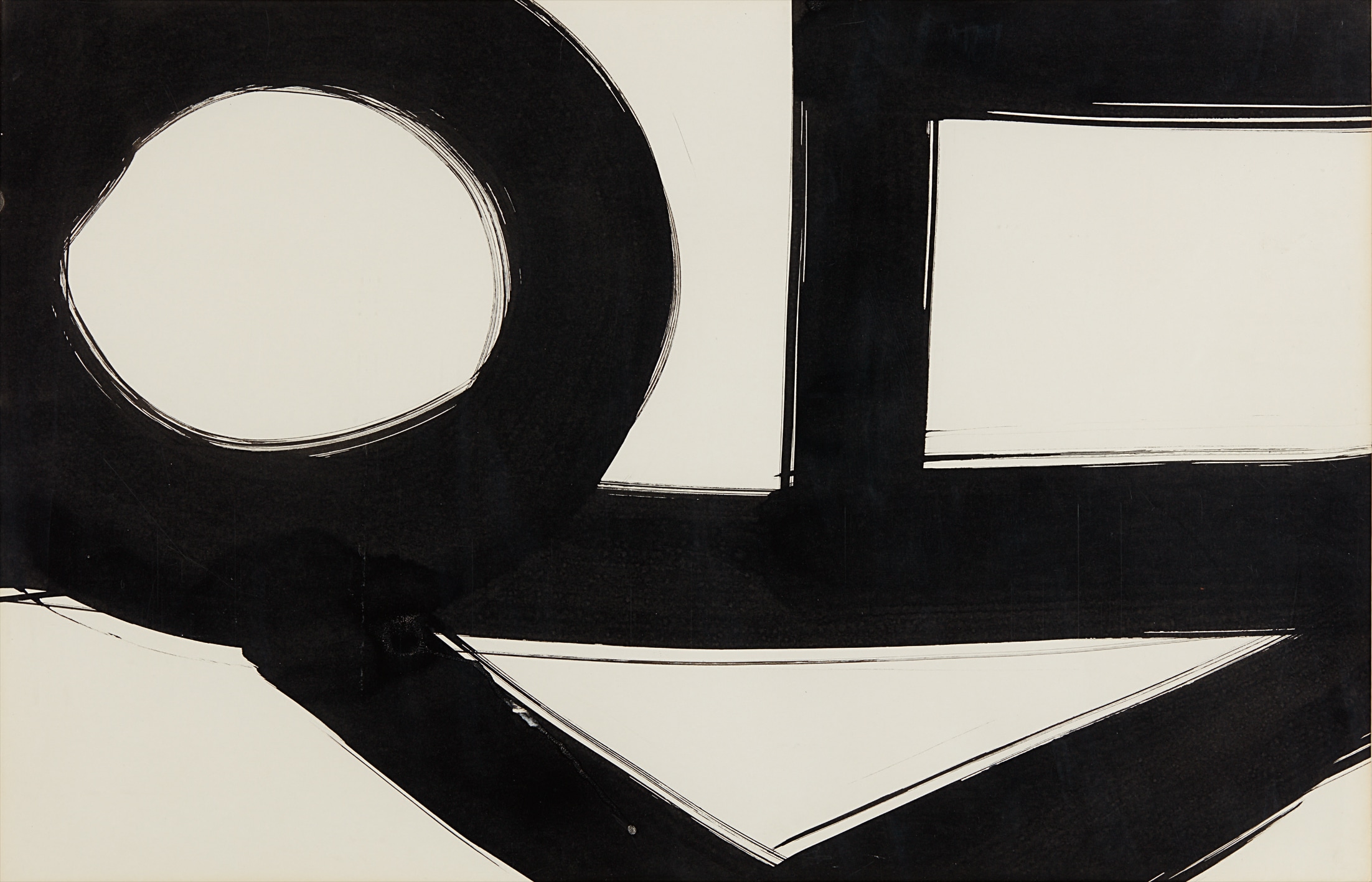
Jo Baer, represented here as well, offered a cooler, more minimal counterpoint, working with white canvases and narrow bands of color at their borders, asking how little a painting could contain and still function as a painting. What defines Hard Edge work technically is not just the absence of visible brushwork but the deliberate use of masking tape, precise measurements, and sometimes industrial paints to achieve edges that feel inevitable rather than constructed. Al Held, whose large scale geometric abstractions pulse with spatial ambiguity, used the hard edge not to flatten space but to create a kind of impossible depth, forms that seem simultaneously to advance and recede. Charles Hinman stretched canvas over shaped supports to allow the physical object itself to participate in the geometry.
Al Held
Al Held
Gene Davis worked with vertical stripes of color across wide canvases, understanding that rhythm and interval could carry the entire expressive burden of a picture. These artists shared a belief that the mechanics of making could be transparent without being cold. The cultural significance of the movement is inseparable from its historical moment. Hard Edge painting arrived during a period of profound skepticism about artistic sincerity, when the myth of the tortured, expressive genius was beginning to feel exhausted.
It proposed instead a kind of democratic precision, an art that did not require special access to the artist's psychology. This connected it to broader currents in American culture, to industrial design, to the clean geometries of postwar architecture, and to a growing interest in systematic thinking across the arts and sciences. Ilya Bolotowsky, who had been working with geometric abstraction since the 1930s under the influence of Mondrian, found in this climate a renewed sense of relevance. Jack Youngerman and Blair Thurman, each in their own way, extended the conversation into later decades, keeping the formal questions alive and open.
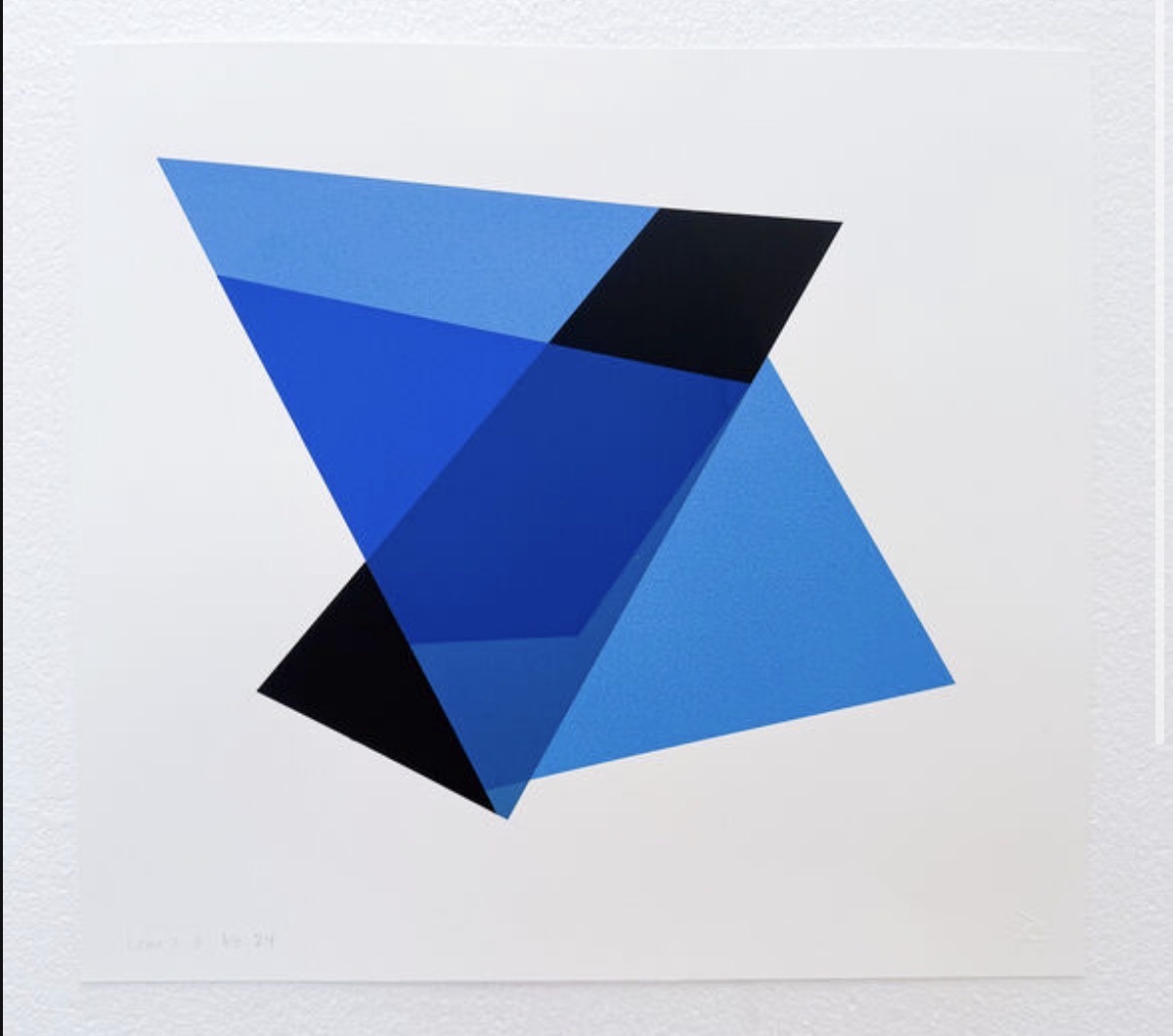
Willard Boepple
Lean To # 3, 2024
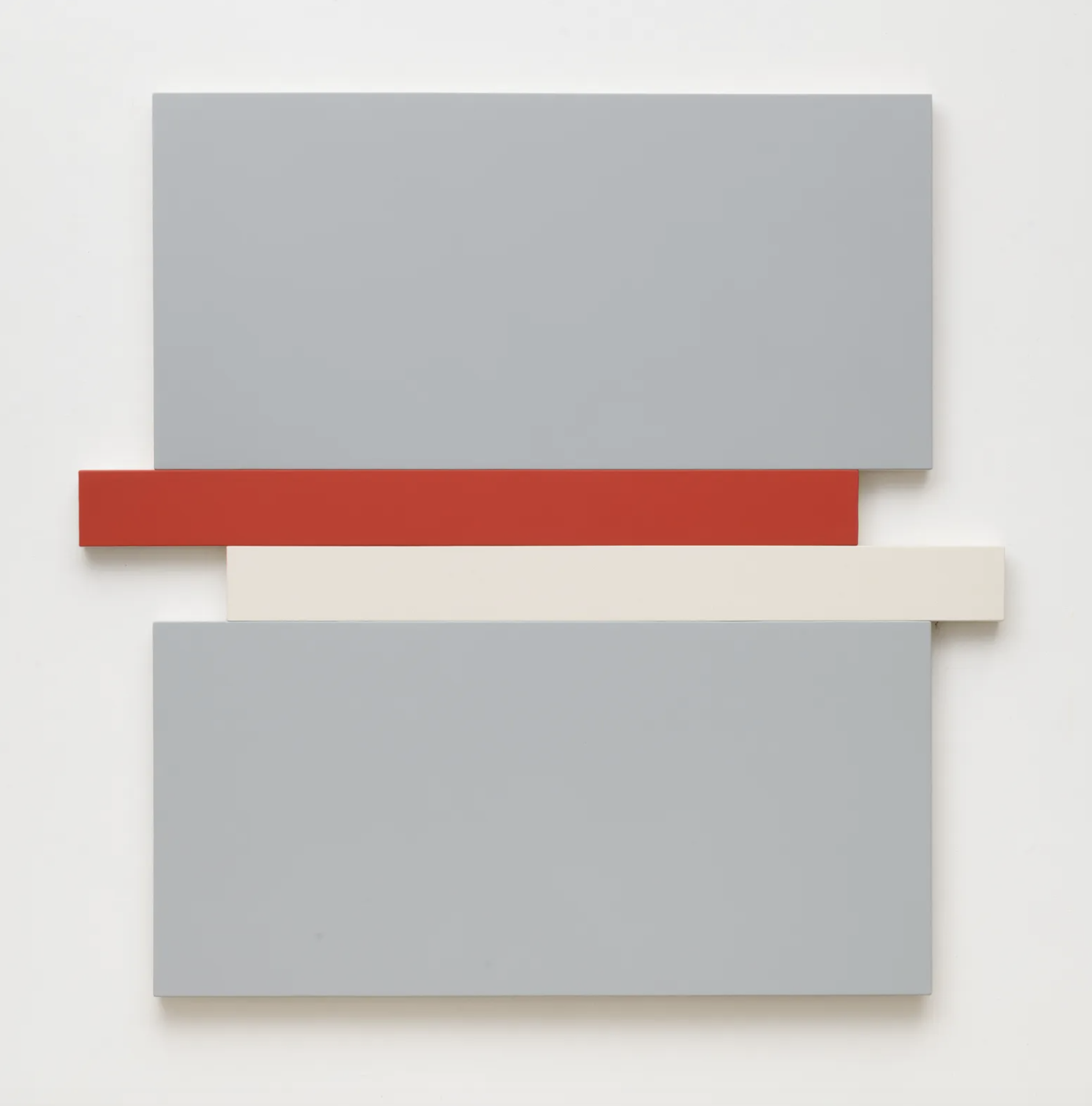
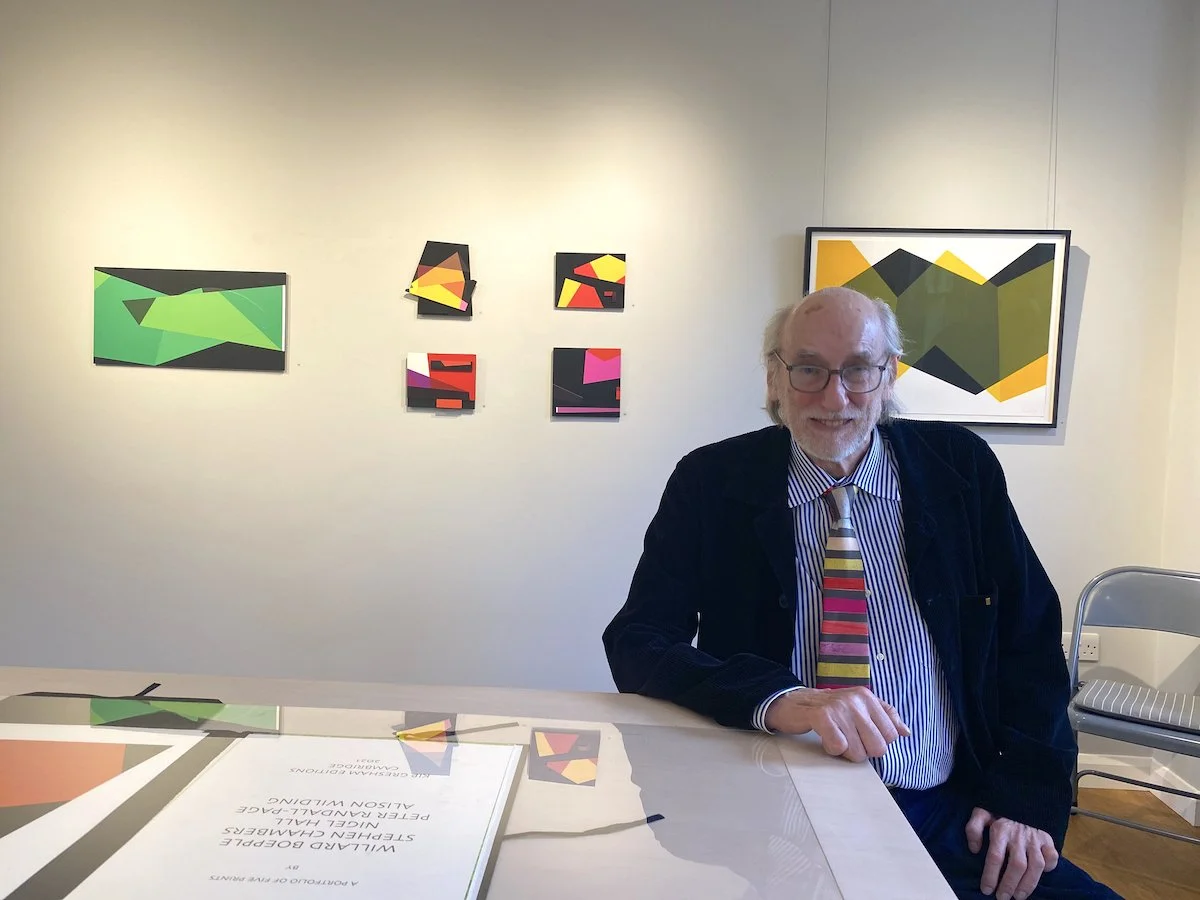
What makes Hard Edge painting so generative for collectors today is precisely its resistance to easy readings. These are works that reward sustained looking rather than quick interpretation. Scot Heywood and Willard Boepple, both represented here, demonstrate how the formal vocabulary of the movement continues to evolve in the hands of artists working now, finding new territory within constraints that might seem exhausted but are in fact inexhaustible. The geometry is a starting point, not a destination.
On The Collection, the breadth of artists working within and around this tradition offers a rare opportunity to trace the full arc of an argument that began at a clean painted edge and opened into a world of color, form, and perception that is still being mapped.