Small Scale
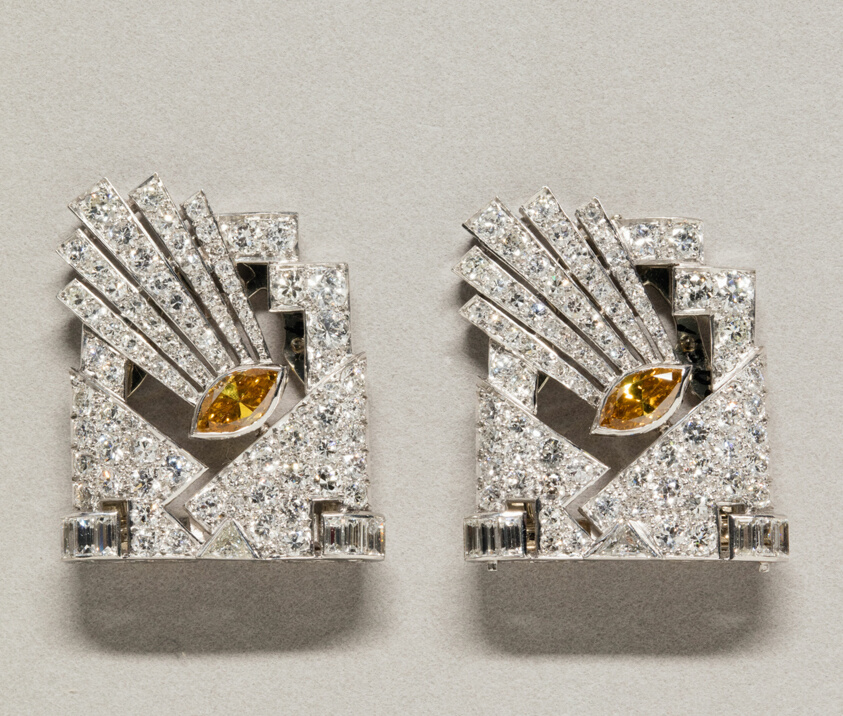
Artist unknown
Pair of Dress Clips, 1930

The Mighty Art of Thinking Small
There is a particular kind of attention demanded by a small work of art. You have to lean in. You have to slow down. The world narrows to the size of a palm, and something in that narrowing feels almost conspiratorial, as if the object is sharing a secret it would never dare speak at monumental scale.
For collectors who have ever stood before a cabinet painting, a miniature portrait, or a delicate etching and felt an intimacy that a vast canvas rarely delivers, that sensation has a long and serious history behind it. The impulse to make art at intimate scale is as old as human hands. Ancient Egyptian amulets and funerary objects, many no larger than a finger, were charged with cosmological significance precisely because their smallness made them portable, concealable, close to the body. The Nasca and Paracas cultures of pre Columbian Peru wove textiles and shaped ceramics at a scale calibrated for ceremony and personal use, objects that carried enormous symbolic weight in forms that could be held and carried.
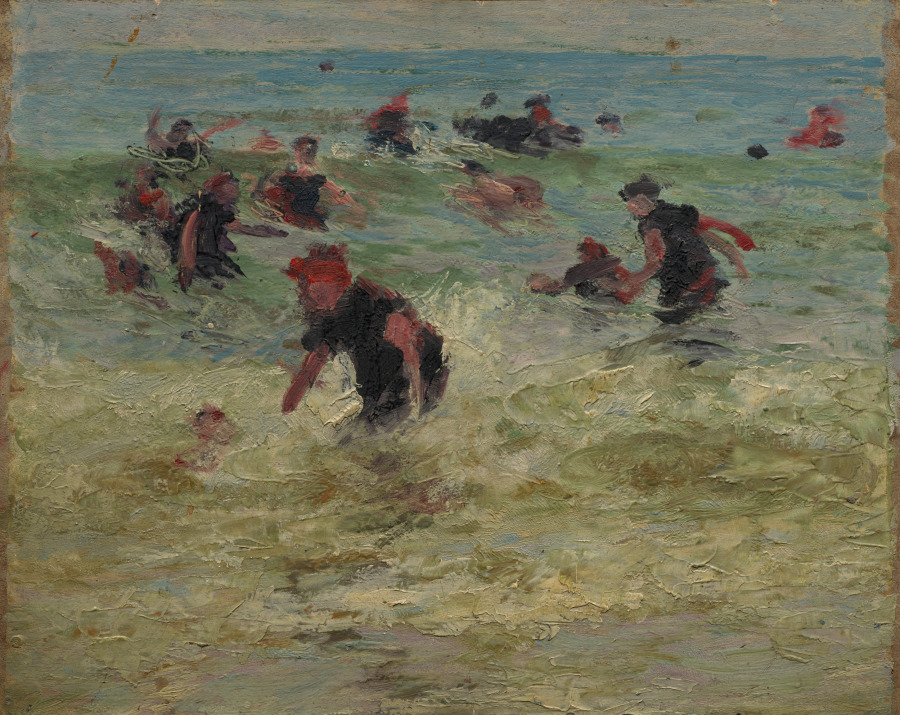
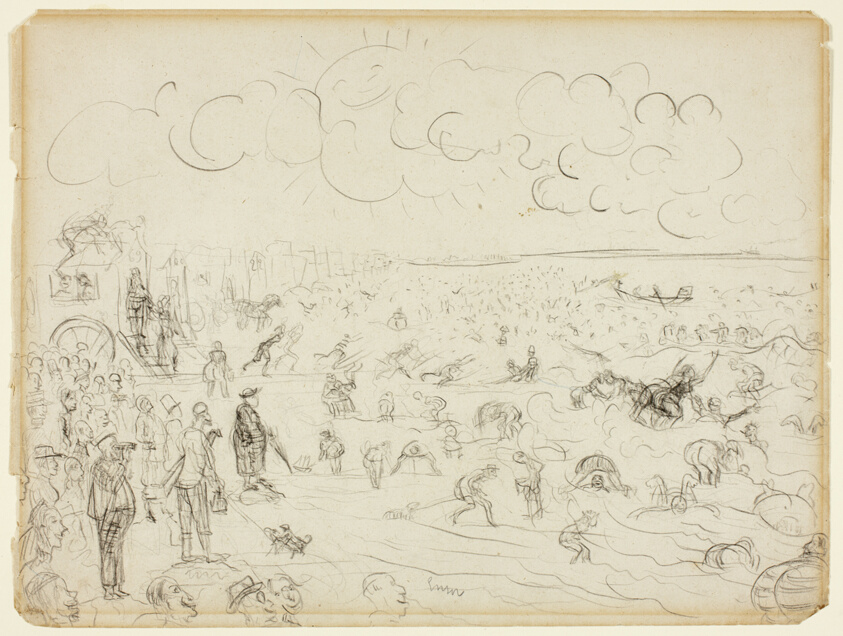
Edward H. Potthast
Beach Study (verso), 1905
These works remind us that scale and significance have never been the same thing, and that the assumption of grandeur as the natural language of serious art is a relatively recent and rather provincial idea. In Europe, the tradition of small scale work achieved extraordinary sophistication during the Northern Renaissance. Flemish painters in the fifteenth and sixteenth centuries created panel paintings of breathtaking intricacy, their surfaces packed with naturalistic detail that rewarded the close looking available only to someone holding the object near their face. The portrait miniature emerged as a formal genre in the sixteenth century, practiced by artists like Hans Holbein the Younger, who produced tiny likenesses in watercolor on vellum for the English court.
These were objects of power and sentiment simultaneously, gifts exchanged between monarchs, worn as lockets, kept close during periods of separation. The miniature was not a lesser painting. It was a different kind of painting entirely, governed by its own logic and its own demands. The etching and engraving traditions of the nineteenth century extended the culture of intimate scale into the hands of a wider collecting public.
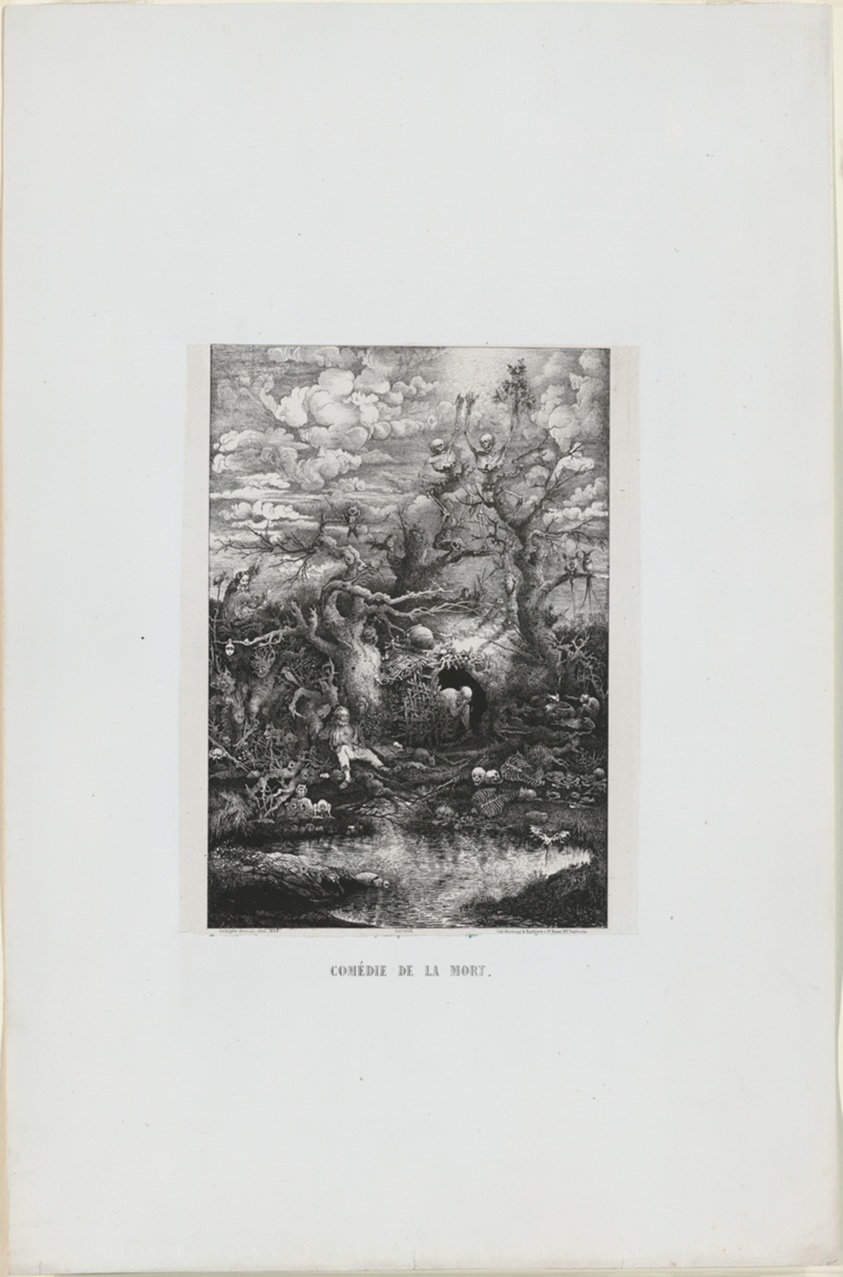
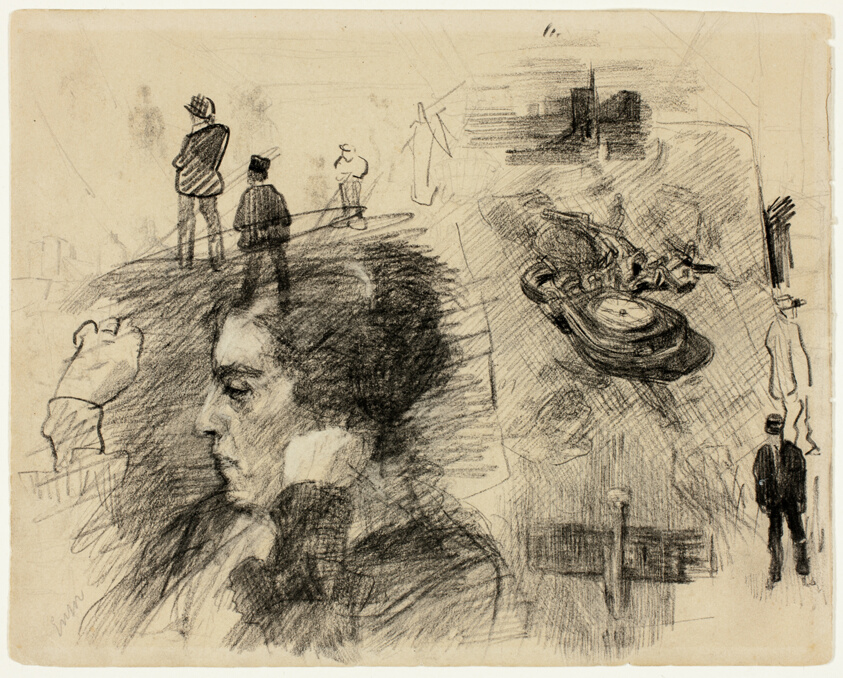
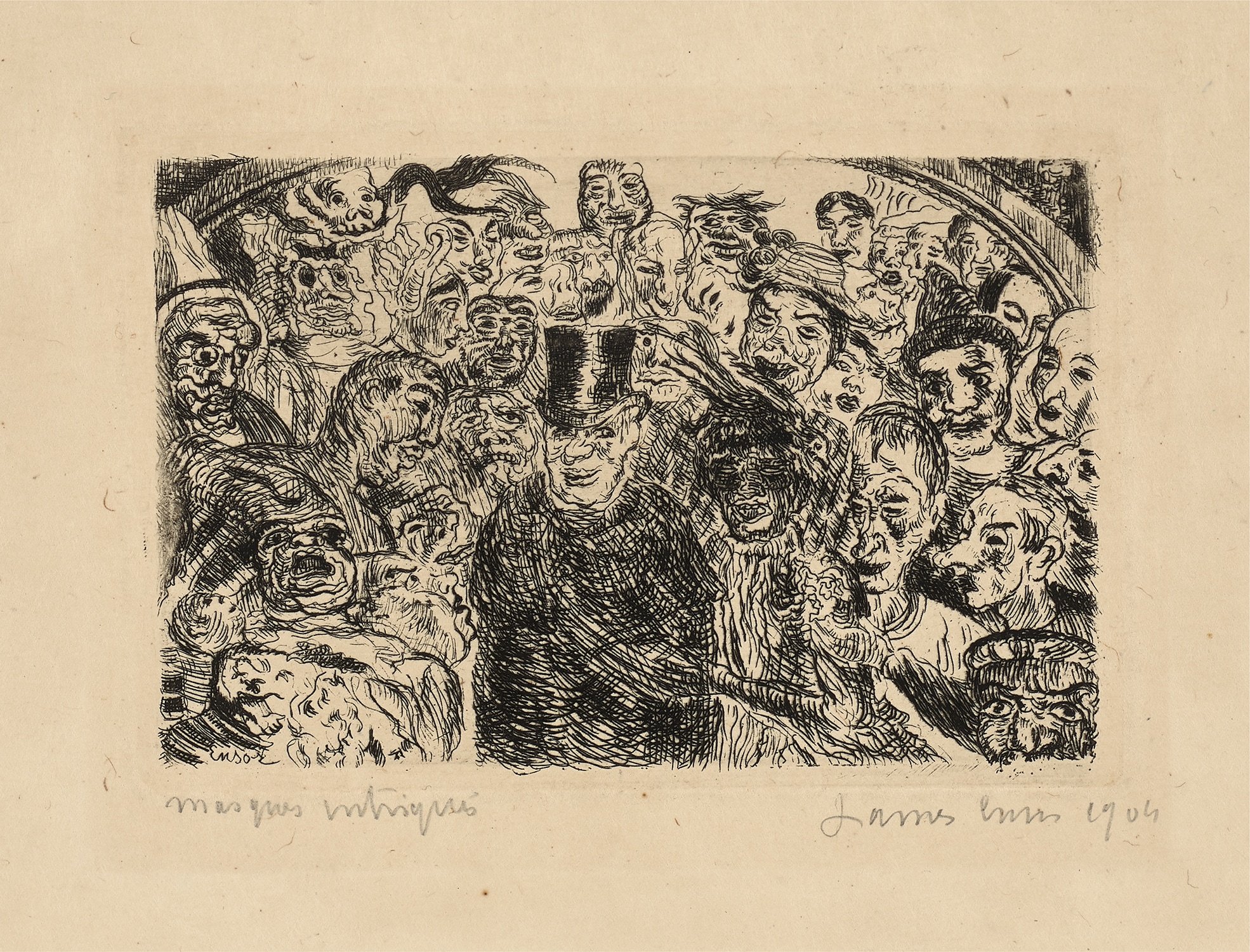
Rodolphe Bresdin
The Comedy of Death, 1854
James McNeill Whistler, whose work is represented across a significant body of prints on The Collection, understood better than almost anyone how much could happen in a small plate. His Venice etchings from the early 1880s compress entire atmospheres into compositions no larger than a postcard, using the white of the paper as active light and reducing architecture to the barest suggestion of line. Whistler argued passionately that the etching deserved to be considered on equal terms with painting, and his dealer relationships and careful management of print editions helped establish a serious commercial and critical market for works that a viewer could hold in two hands. His contemporary Theodore Roussel, also well represented on The Collection, pursued similar territory, bringing a painterly sensitivity to the printed surface.
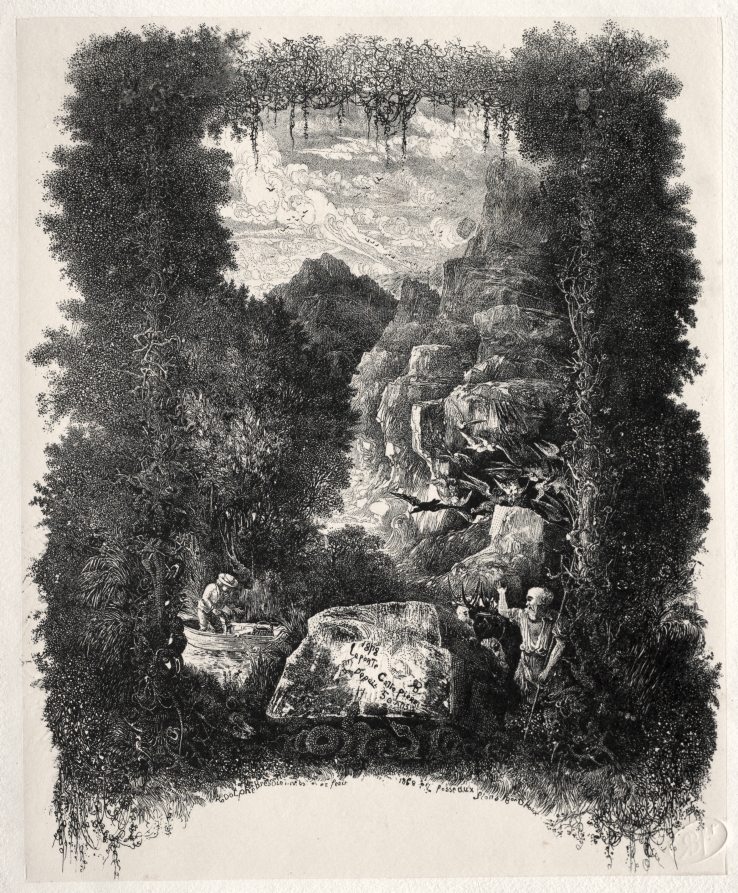
Rodolphe Bresdin, working in France across the middle decades of the nineteenth century, took small scale printmaking to something approaching the obsessive. His etchings and lithographs are extraordinarily dense environments, entire forests and biblical landscapes crammed into sheets that are often no larger than a page of a novel. Odilon Redon, who admired Bresdin and considered him a formative influence, carried a similar intensity into his own lithographic work, finding in the compressed format a freedom to pursue dream logic and personal mythology. Small scale, for both artists, was not a constraint but a permission, a space where the imagination could operate without the social obligations that large public paintings inevitably carry.
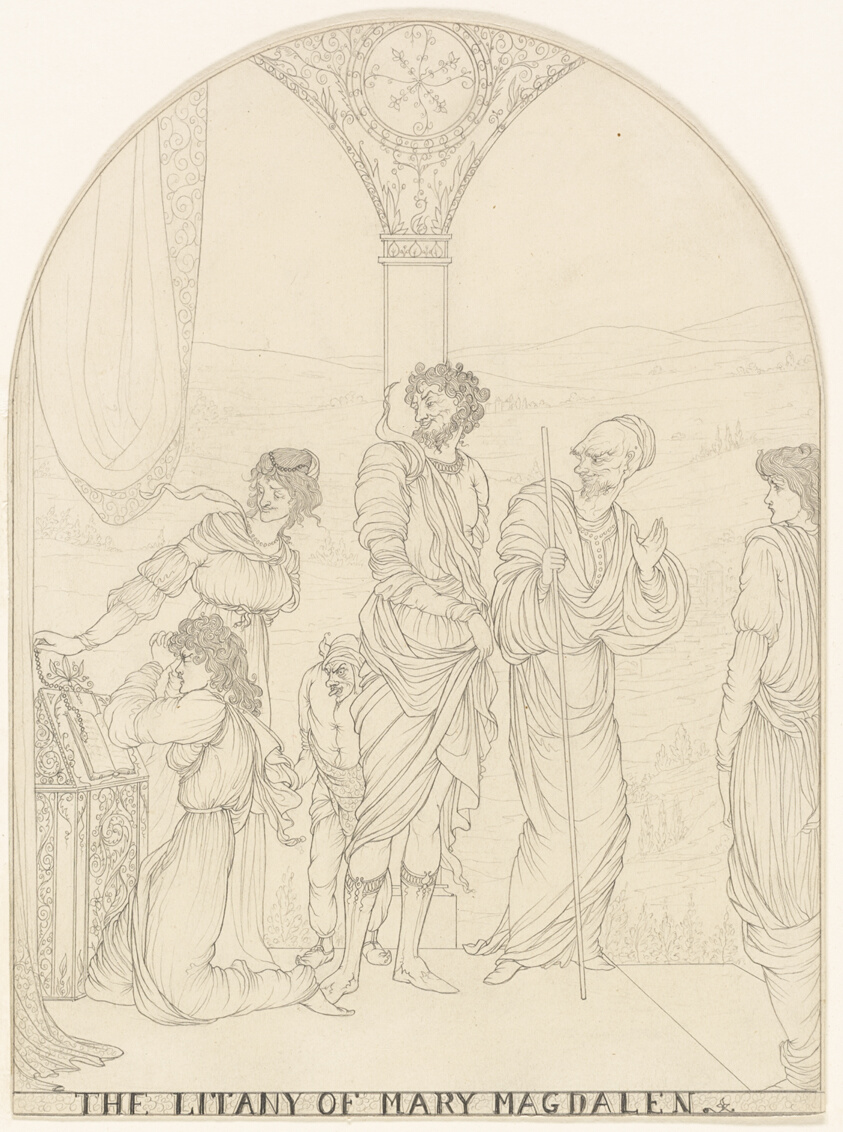
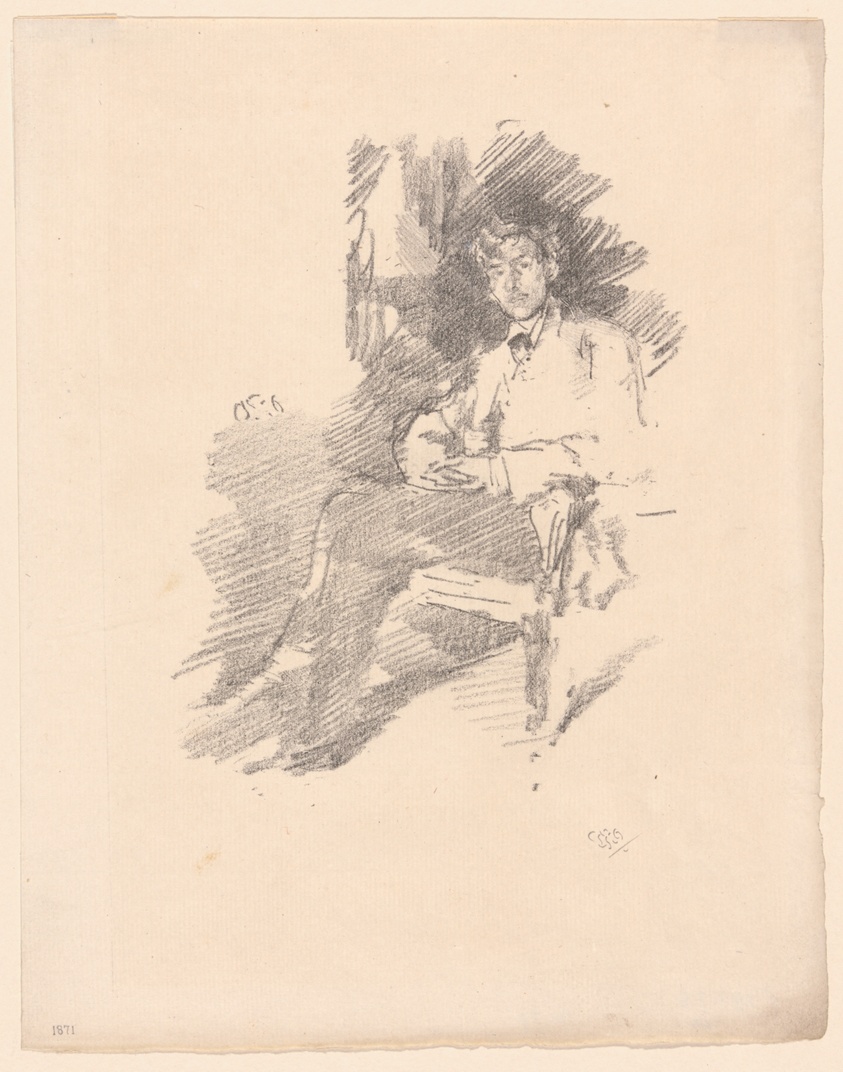
Aubrey Vincent Beardsley
The Litany of Mary Magdalen, 1891
The Meissen Porcelain Manufactory, founded in 1710 in Saxony and among the makers represented on The Collection, made small scale the very condition of luxury. Porcelain figures and vessels operate at a scale that belongs to the cabinet and the table, to rooms furnished for intimate gathering rather than public ceremony. The craftsmanship required to model a Meissen figure, the precision of the painting applied to a surface that would be fired and transformed, is no less demanding than the skills required to paint a mural. What differs is the relationship between the object and its viewer, which is always physical and always personal.
You turn a piece of Meissen in your hands. You do not walk around it the way you walk around a sculpture in a plaza. Joseph Cornell understood all of this. His boxes, which he constructed across a career stretching from the 1930s through the early 1970s, are among the most quietly radical objects in twentieth century American art.

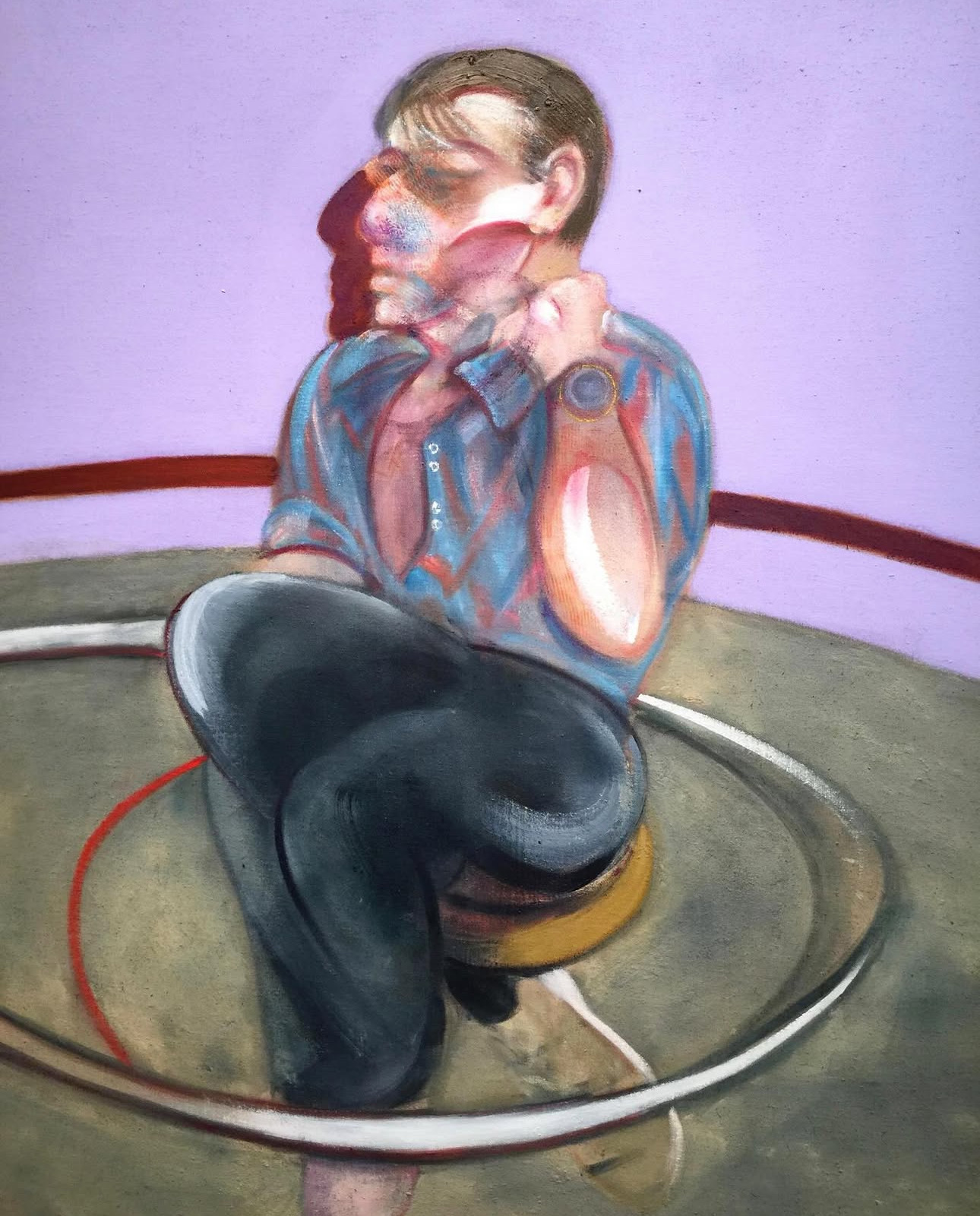
Ren Yu
Landscape, 1892
At first glance they look like toys or souvenirs, shadow boxes filled with fragments of paper, glass, and found objects. Spend time with them and something else emerges, a compressed cosmology, a private mythology built from the detritus of popular culture and Renaissance imagery. Cornell never worked large. He worked deep instead.
The scale of his boxes is the scale of memory and dream, which tend not to arrive in panoramic format. Today the culture around small scale work is flourishing in ways that feel connected to broader anxieties about attention and presence. At a moment when images circulate at a speed that makes sustained looking nearly impossible, there is something almost resistant about an object that requires proximity. Artists working in miniature, in print, in ceramic, in jewelry, and in works on paper are finding serious critical and commercial audiences, and the institutional world has responded.
Major museums have revisited their print and drawing collections with renewed seriousness, and the market for intimate works by canonical figures remains robust and competitive. For collectors, small scale work offers something that large paintings and sculptures cannot always provide, which is the possibility of a genuinely private relationship with a significant object. The etching you hold in your hands, the porcelain figure on a shelf at eye level, the small panel that hangs where you actually look rather than where guests are meant to be impressed, these are the works that tend to last in a collection, and in a life. There is a reason the portrait miniature was worn close to the heart.
Some art is simply made for that kind of keeping.