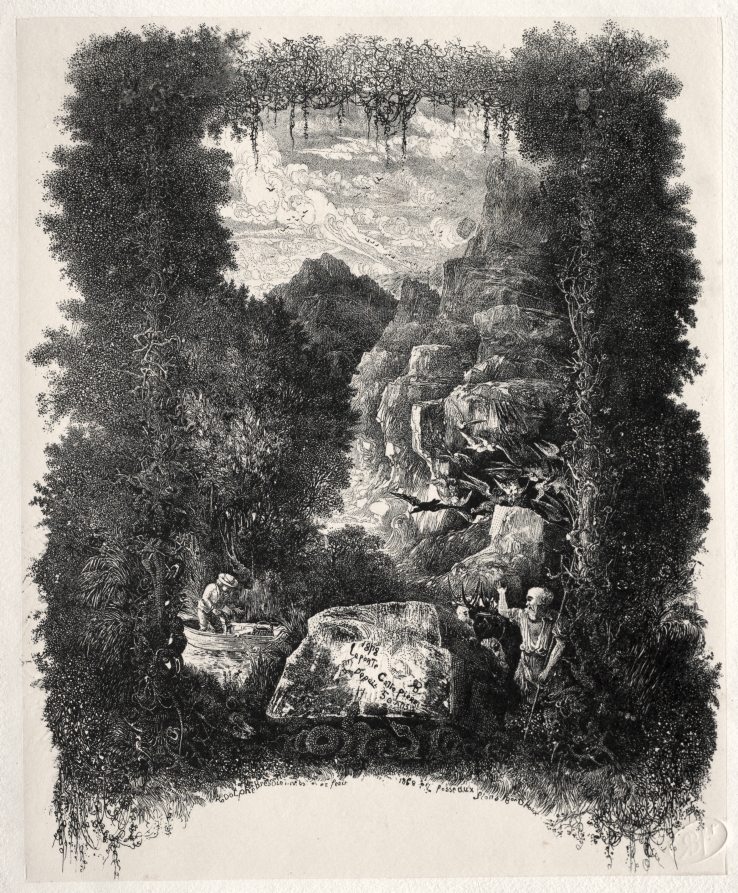
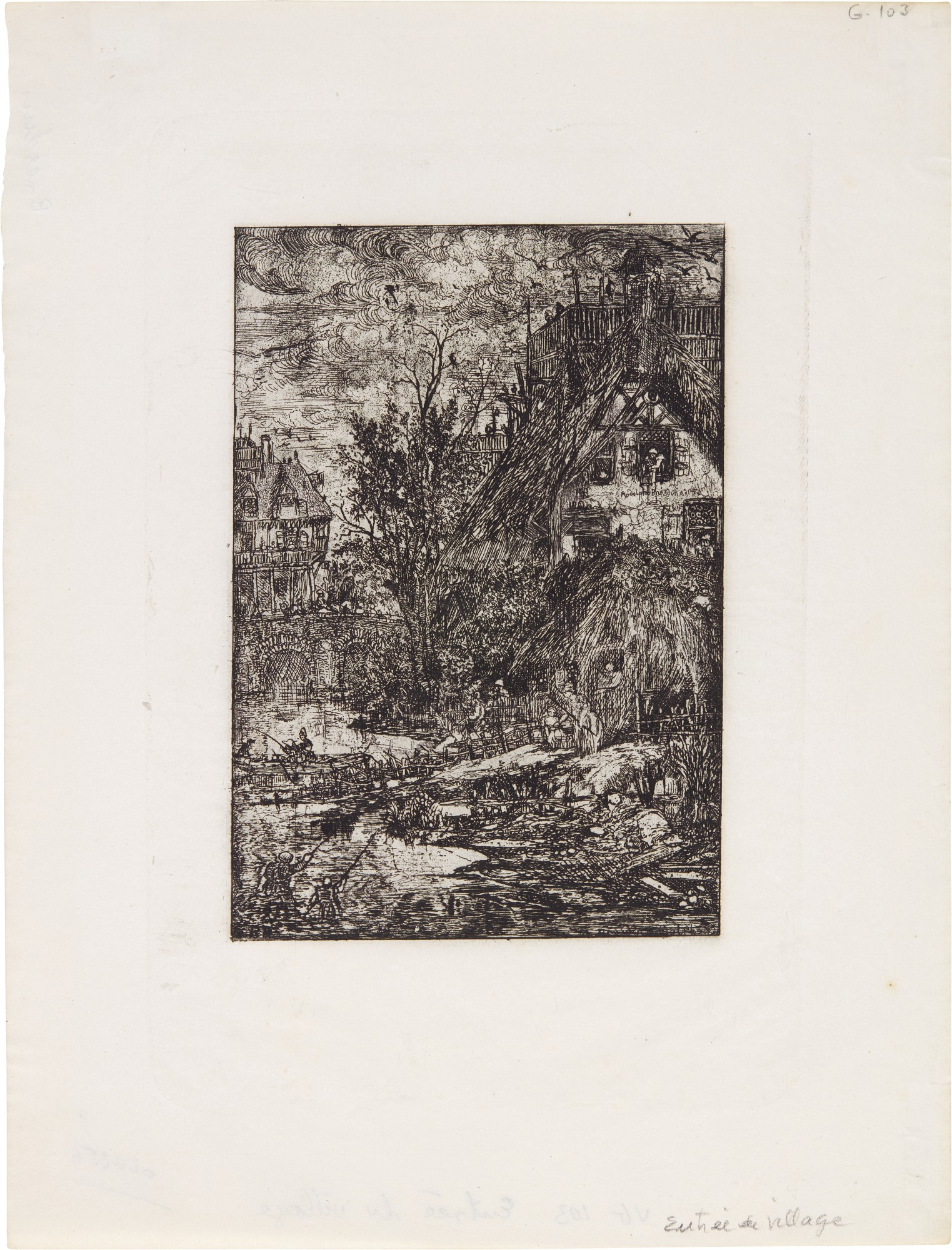
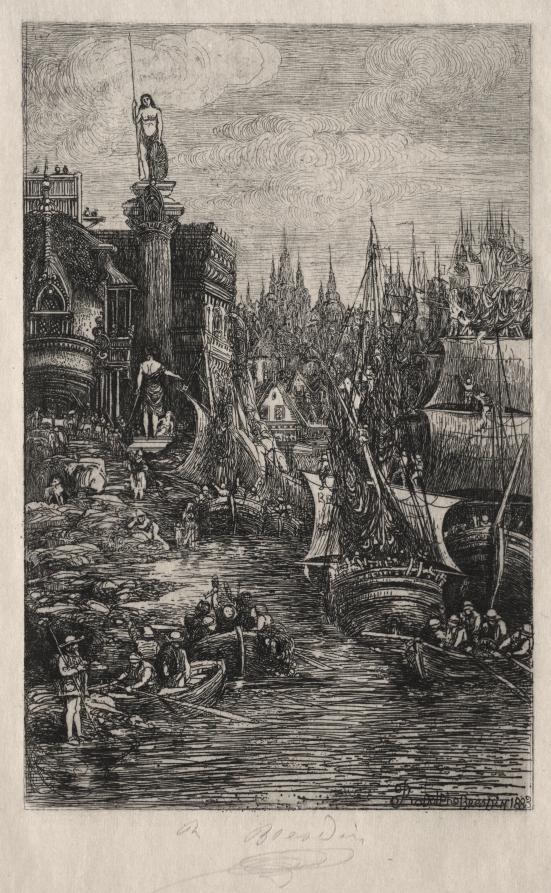
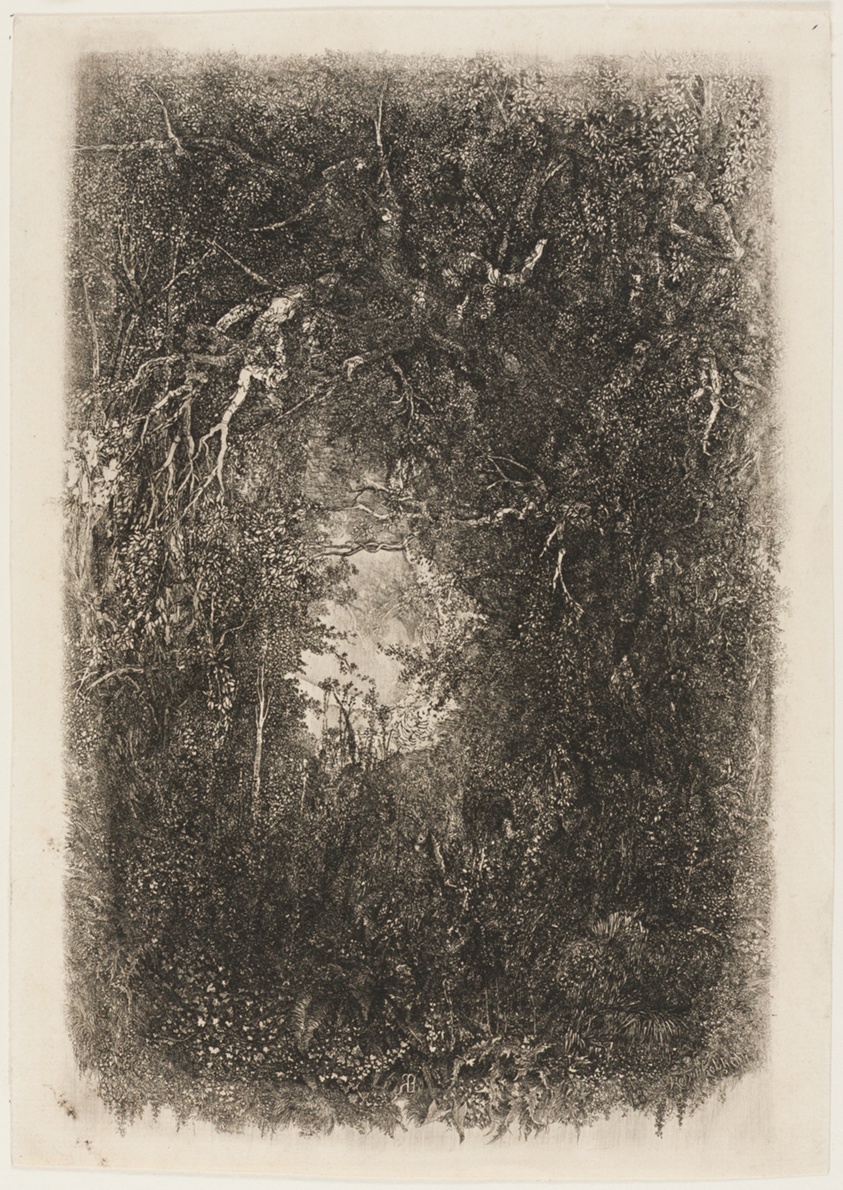
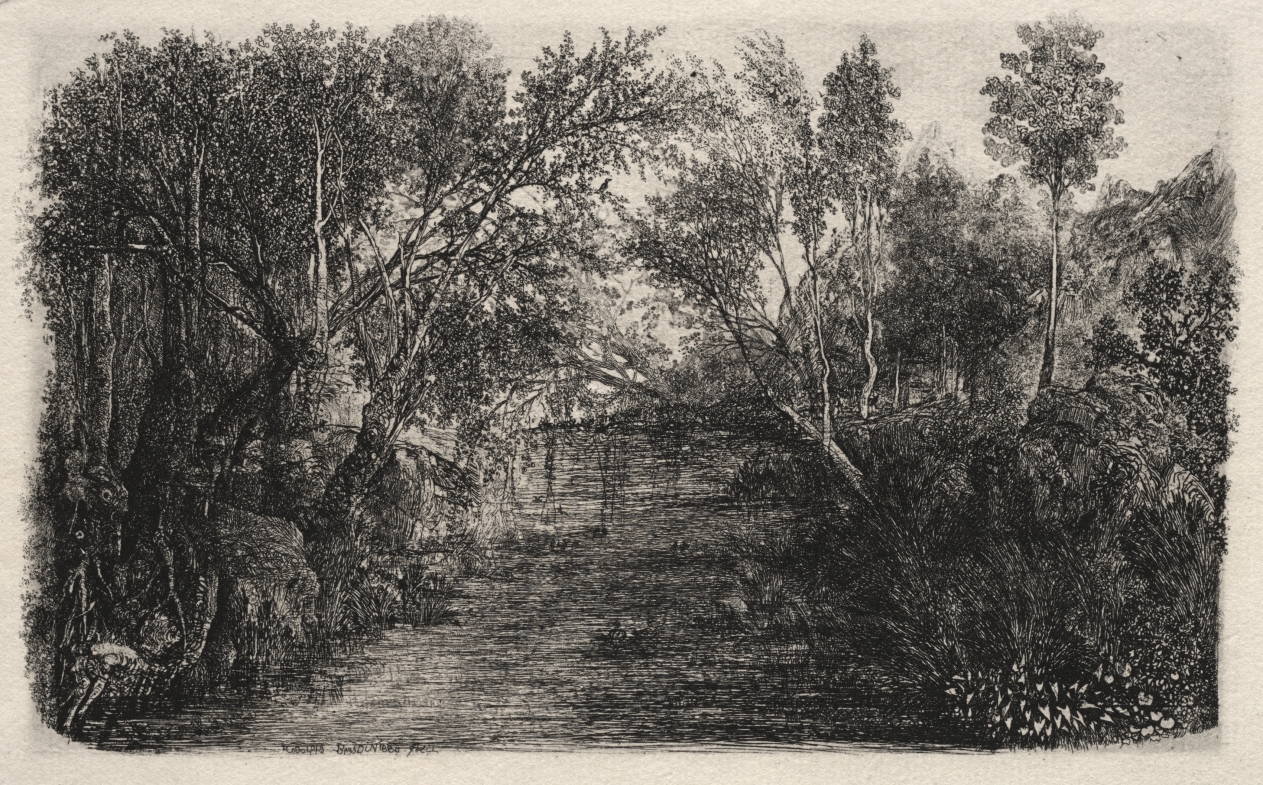
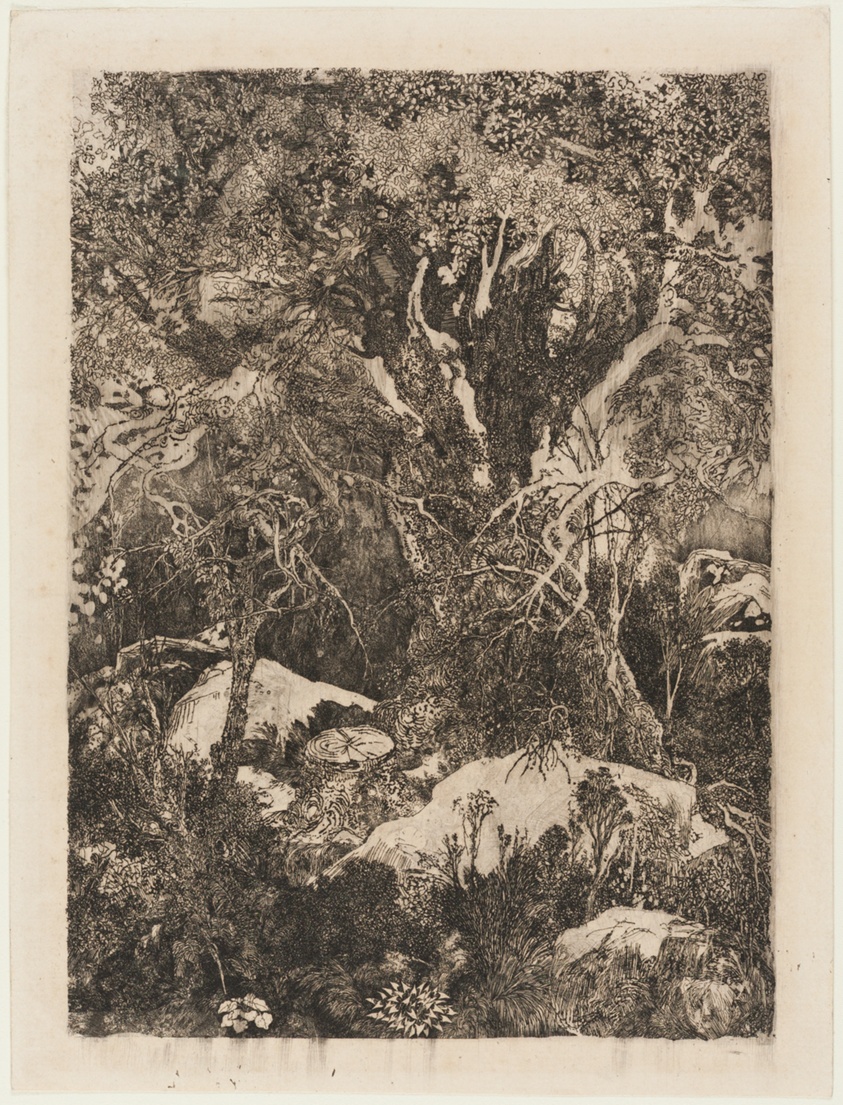
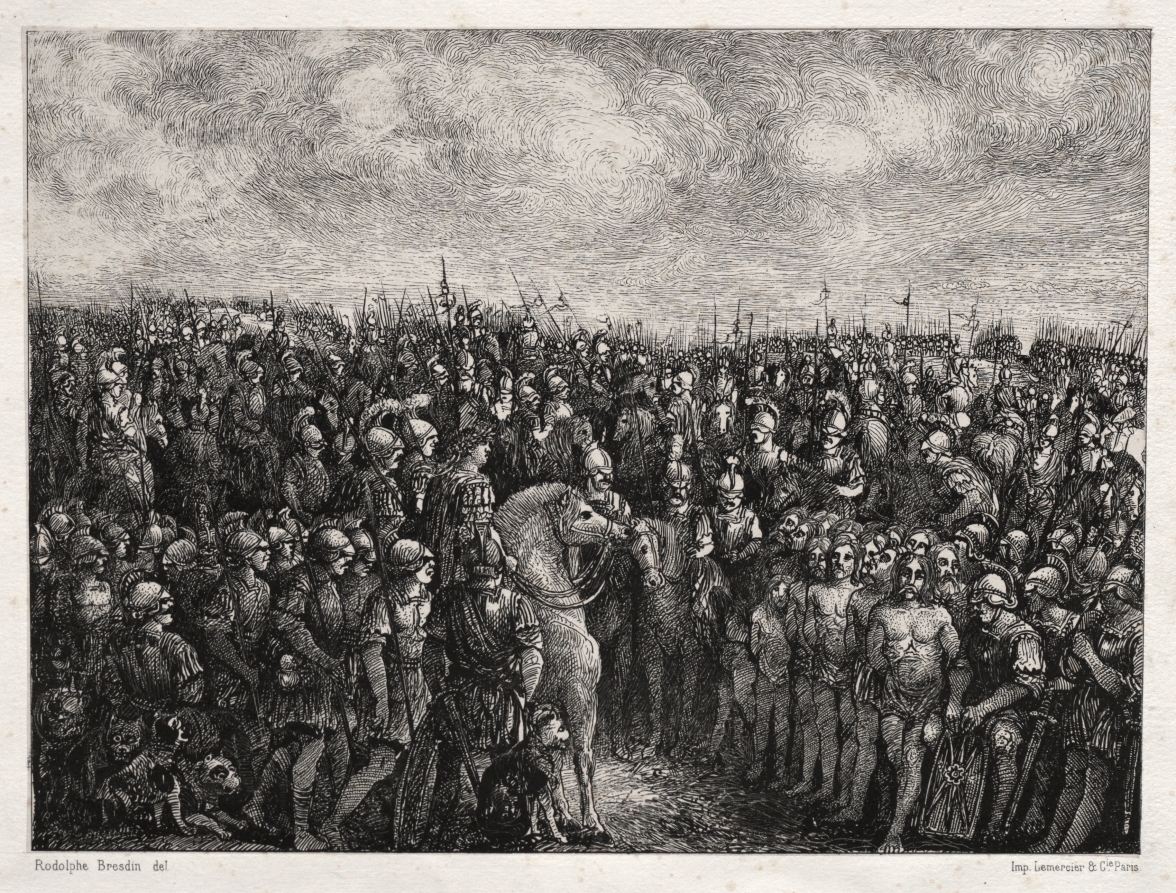
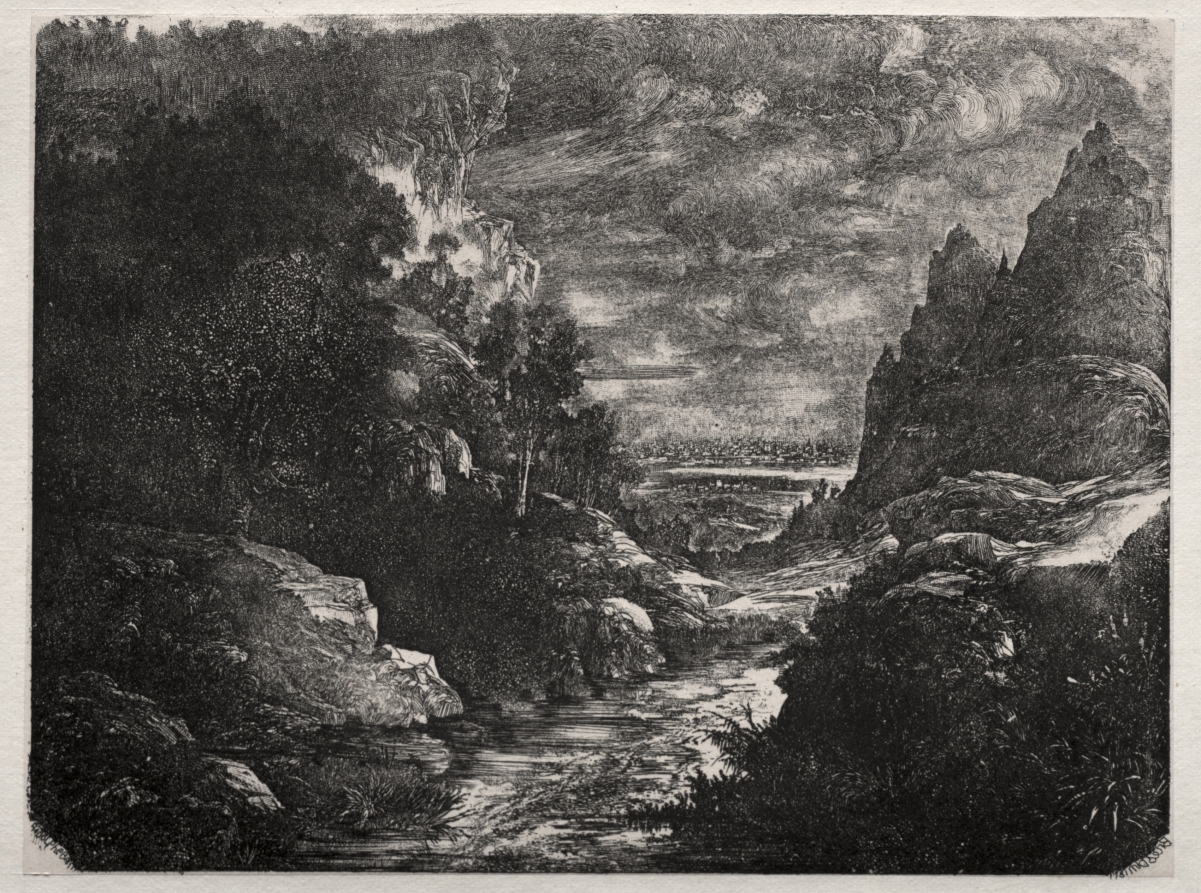
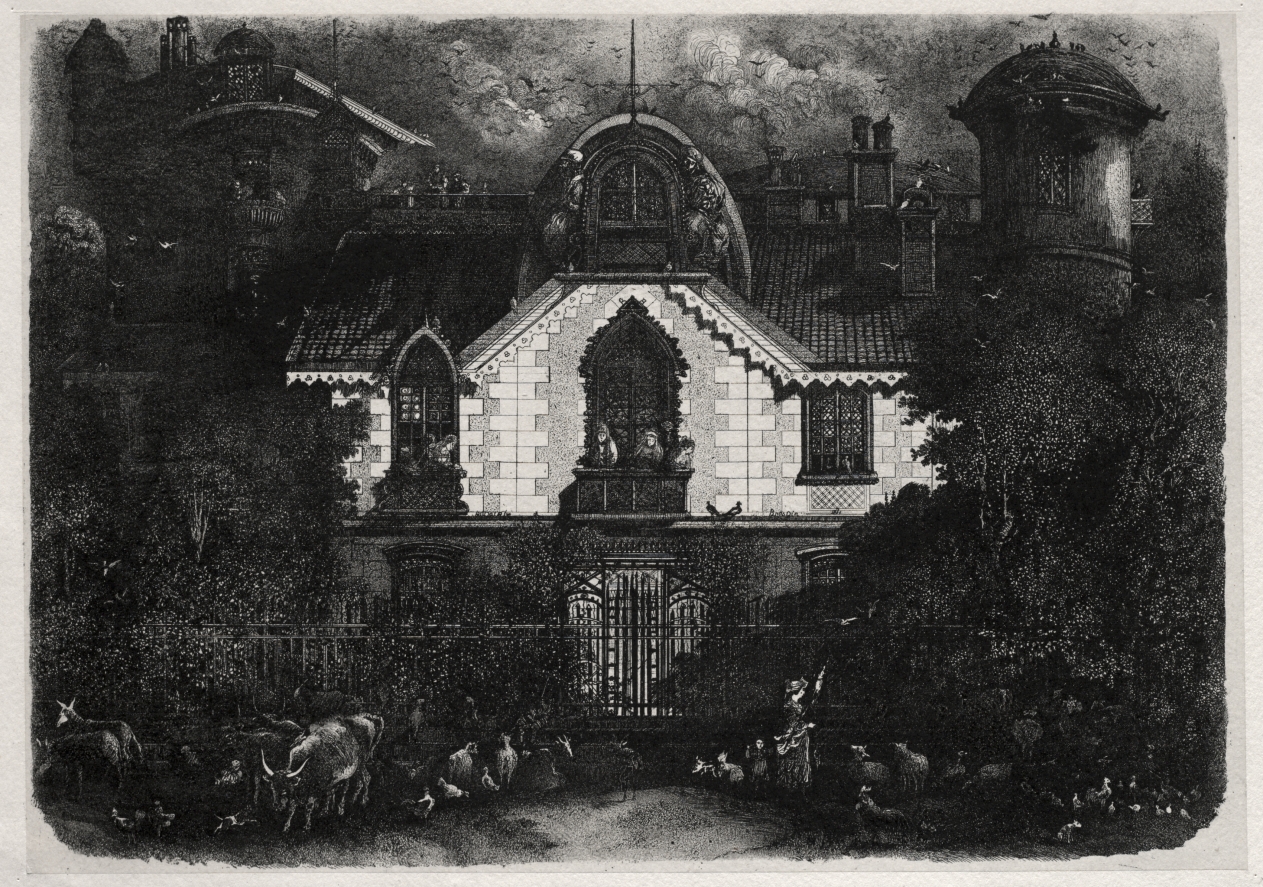
Picture a cramped Parisian garret, sometime in the middle of the nineteenth century, lit by a single lamp. At the table sits a man of modest means, bent over a copper plate no larger than a book, scratching with a needle at a surface that will eventually yield forests of impossible density, skies alive with ghostly birds, and interiors where every shadow tells a story. This is Rodolphe Bresdin at work, and the images he conjured from those long, solitary sessions remain among the most spellbinding achievements in the entire history of printmaking. His reputation has grown steadily in the decades since major institutions began reassessing the symbolist tradition, and today collectors and curators alike recognize him as a foundational figure whose influence touched Odilon Redon, reached toward the surrealists, and extended into our own era of fantastical visual storytelling. Rodolphe Bresdin was born in 1822, most likely in the Loire region of France, and his origins were humble enough that the biographical record remains somewhat sparse in its early chapters. What is clear is that he arrived in Paris as a young man and found himself drawn immediately to the world of printmaking, largely self taught and all the more singular for it. He never enjoyed the institutional support of the grandes écoles, never benefited from the prestigious Prix de Rome, and spent much of his life in genuine financial hardship. Yet that very distance from the academies gave his work its extraordinary strangeness. Without conventional training to smooth away his instincts, Bresdin developed a visual language entirely his own, dense and uncompromising and crackling with imaginative energy. His artistic development unfolded across several decades and a range of printmaking techniques, including etching, drypoint, lithography, and combinations thereof, each of which he approached with the same ferocious attention to detail. The 1850s saw him producing intimate interior scenes such as the Flemish Interior of 1856, an etching and roulette work of remarkable tonal complexity that established his ability to render the textures of domestic life with almost hallucinatory precision. By the early 1860s he was working on larger, more ambitious compositions, and in 1861 he produced The Good Samaritan, a lithograph that would become one of the most celebrated prints of the nineteenth century. That work alone secured his legacy: it depicts a biblical scene set within a landscape of such vertiginous detail that the eye can spend hours discovering figures, animals, and architectural fragments nestled within the foliage and rock. The 1860s and 1870s brought continued evolution and some of his most personally resonant work. The Moldavian Interior of 1865 demonstrates his fascination with domestic space as a theatre of mood and memory, while The Enchanted House of 1871 moves fully into the realm of the imaginary, a lithograph in which architecture and nature blur into one another in ways that feel genuinely dreamlike. During this period Bresdin spent time in Toulouse, where the landscape of the Haute Garonne left a visible mark on works such as the Peasant Interior in the Haute Garonne of 1858, and later made a difficult and ultimately unsuccessful attempt to establish himself in Canada, a journey that reflected both his restlessness and his perpetual financial precarity. He returned to France and continued working with undiminished intensity through the 1880s, producing the etching My Dream in 1883 and The Forest of Fontainebleau in 1880, that latter work executed in etching and drypoint on cream laid paper with a painterly softness that marked a late flowering of his abilities. For collectors, Bresdin presents a compelling combination of art historical importance and genuine rarity. His prints were produced in small editions throughout his lifetime, and fine impressions on period papers carry a particular authority that later pulls or modern reproductions simply cannot match. Works to seek out include impressions on Van Gelder laid paper, often found with partial watermarks that serve as useful points of authentication, as well as prints on the grey green laid papers he favored for certain etchings in the 1860s. Le Cours de l'Eau, catalogued by Van Gelder as number 144, is a luminous example of his late etching style, and impressions of the second edition with rounded corners represent an excellent point of entry for the serious collector. Similarly, Le Chevalier et la Mort from 1866 demonstrates his lifelong fascination with mortality and the spiritual, rendered here not in darkness but in the shimmering, intricate language that was uniquely his own. When examining Bresdin works on the market, condition and the quality of the impression matter enormously: the difference between a sharp early impression and a worn later one is the difference between a work that hums with life and one that merely documents. In the broader context of art history, Bresdin occupies a fascinating position as a bridge between the Romantic tradition of the early nineteenth century and the symbolist movements that would define its closing decades. His most celebrated admirer was Odilon Redon, who studied with Bresdin in Bordeaux in the 1860s and credited him with opening his imagination to the possibilities of the fantastic in black and white printmaking. That lineage connects Bresdin directly to the broader symbolist project, to the worlds of Gustave Moreau and Fernand Khnopff, and further to the surrealists who would later claim the symbolists as spiritual ancestors. Collectors who are drawn to the work of James Ensor, with his crowded and hallucinatory imagery, or to the intimate printmaking of Charles Meryon, will find in Bresdin a natural and deeply rewarding companion. The question of why Bresdin matters today is almost easier to answer than why it took so long for the broader art world to fully embrace him. We live in a moment of renewed hunger for images that resist easy consumption, for works that reward sustained attention and repay repeated looking. Bresdin's prints are exactly that kind of work. They do not yield their secrets quickly. They ask something of the viewer, and what they offer in return is a sense of entering a world complete unto itself, governed by its own logic of beauty and strangeness. The 1868 frontispiece for Fables and Fairy Tales by Thierry Faletans captures this quality perfectly: it is an image that feels simultaneously ancient and entirely alive, rooted in the illustrated traditions of European narrative art yet pointing unmistakably toward the surreal and the oneiric. To collect Bresdin is to hold in your hands a fragment of one of the nineteenth century's most original imaginations, and to take your place in a lineage of discerning admirers that stretches from Redon to the present day.