
James Ensor
“
68
Works
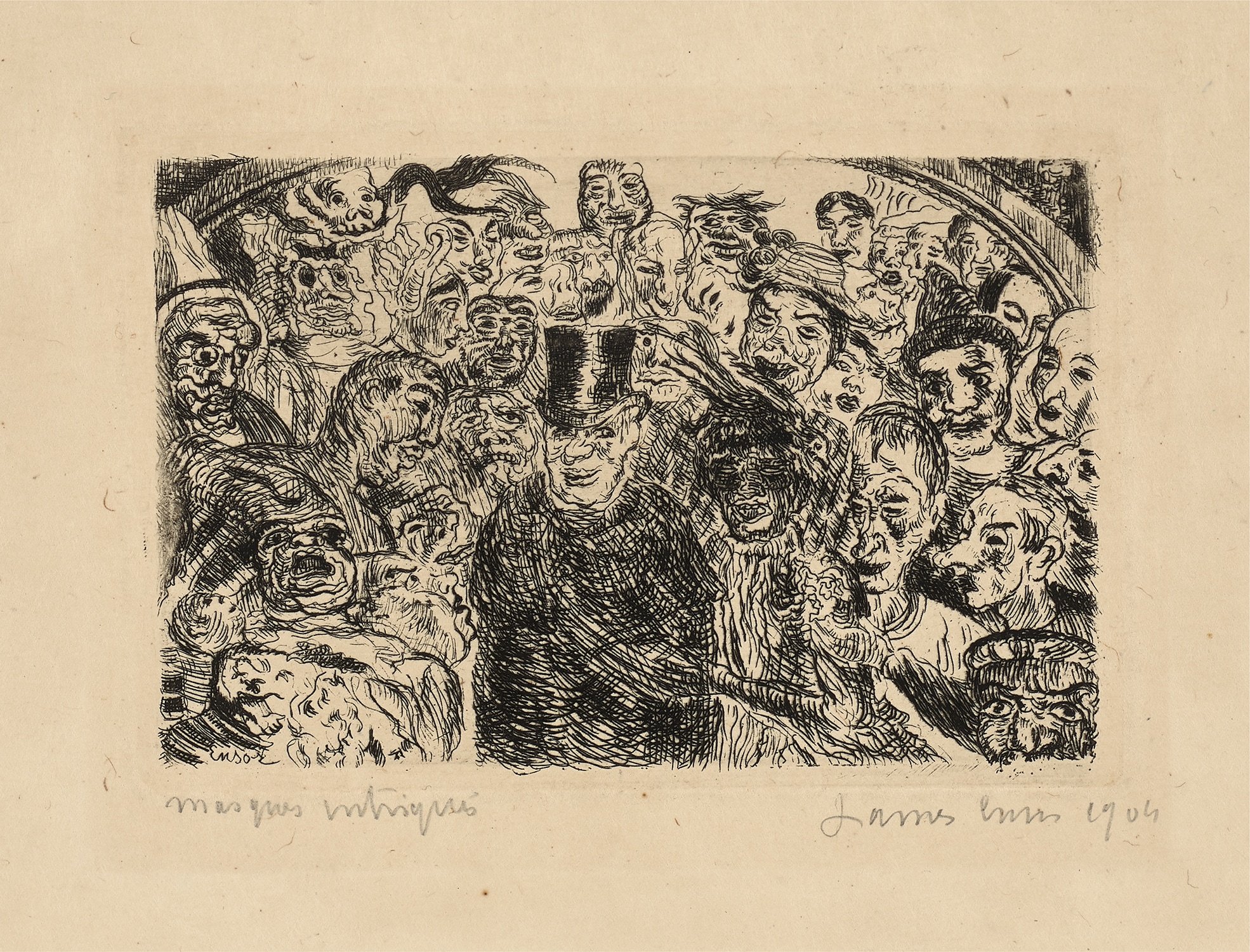
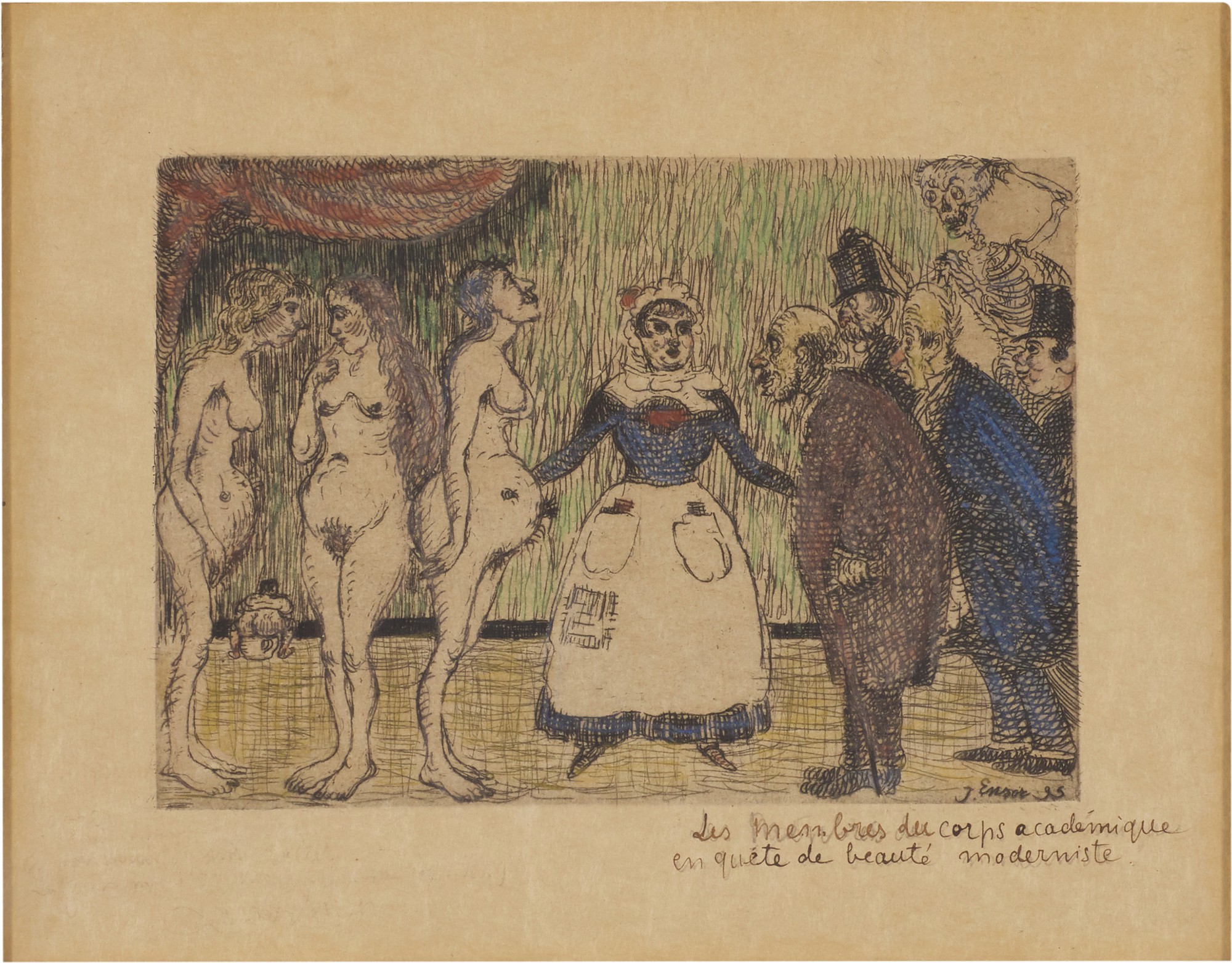
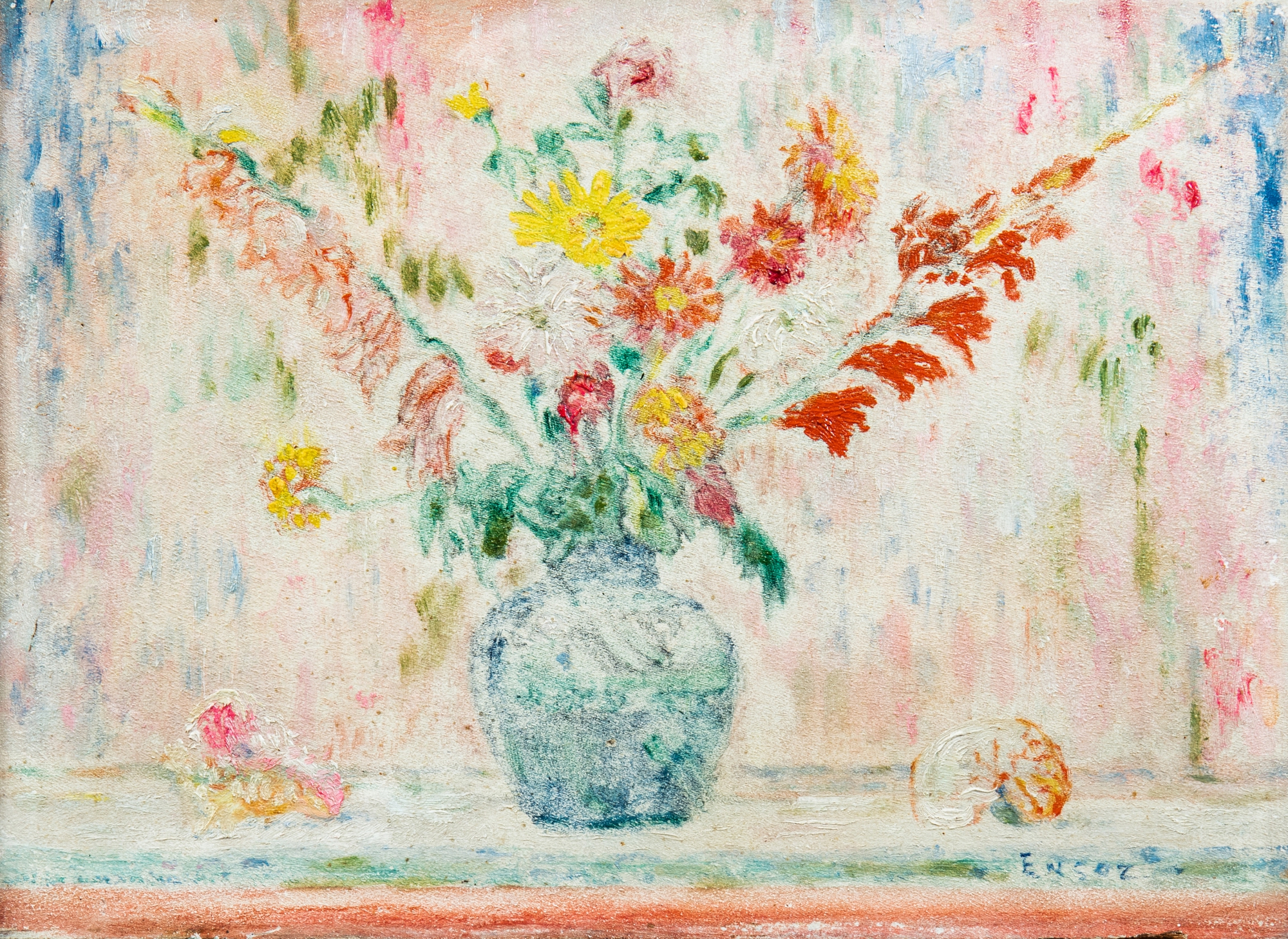
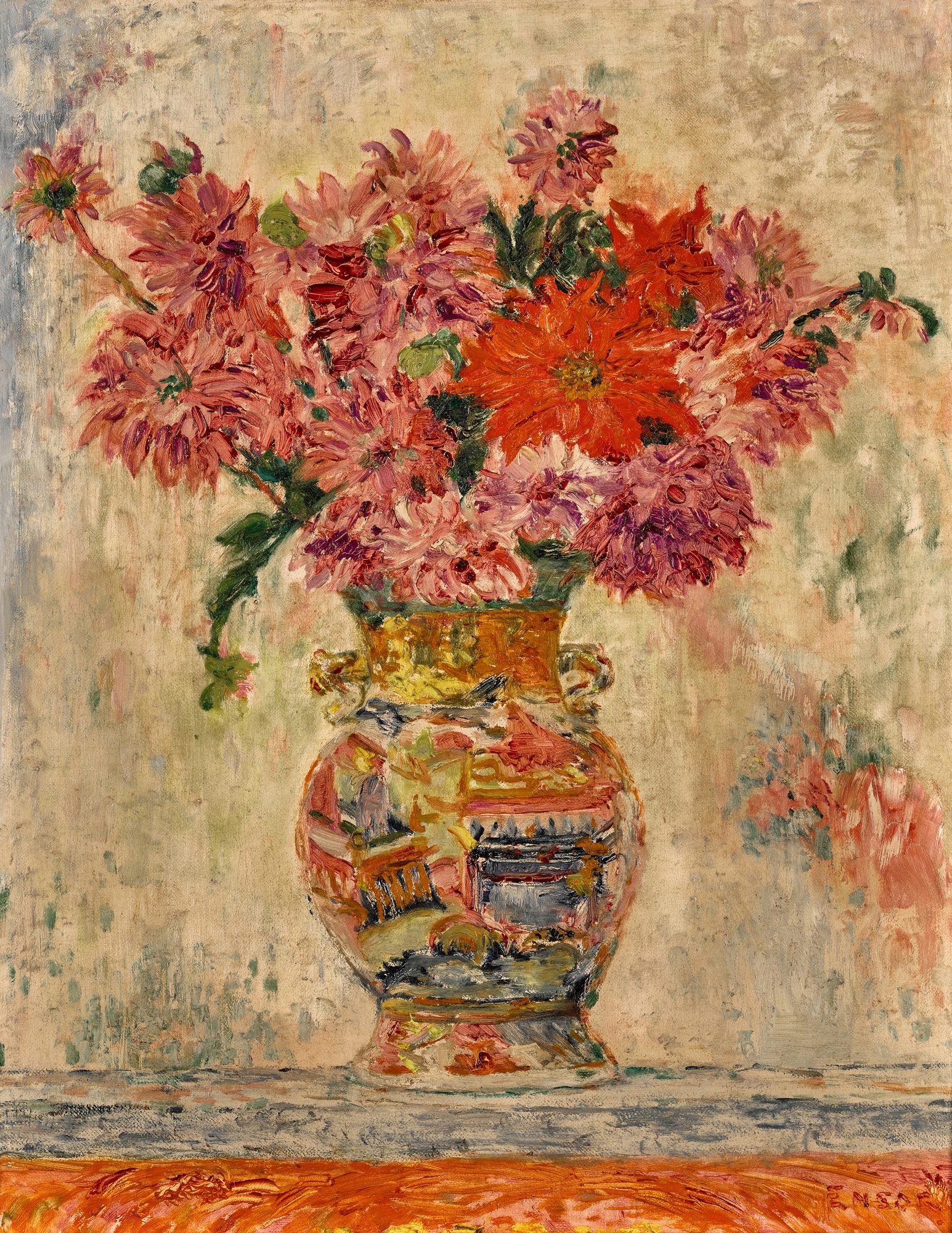
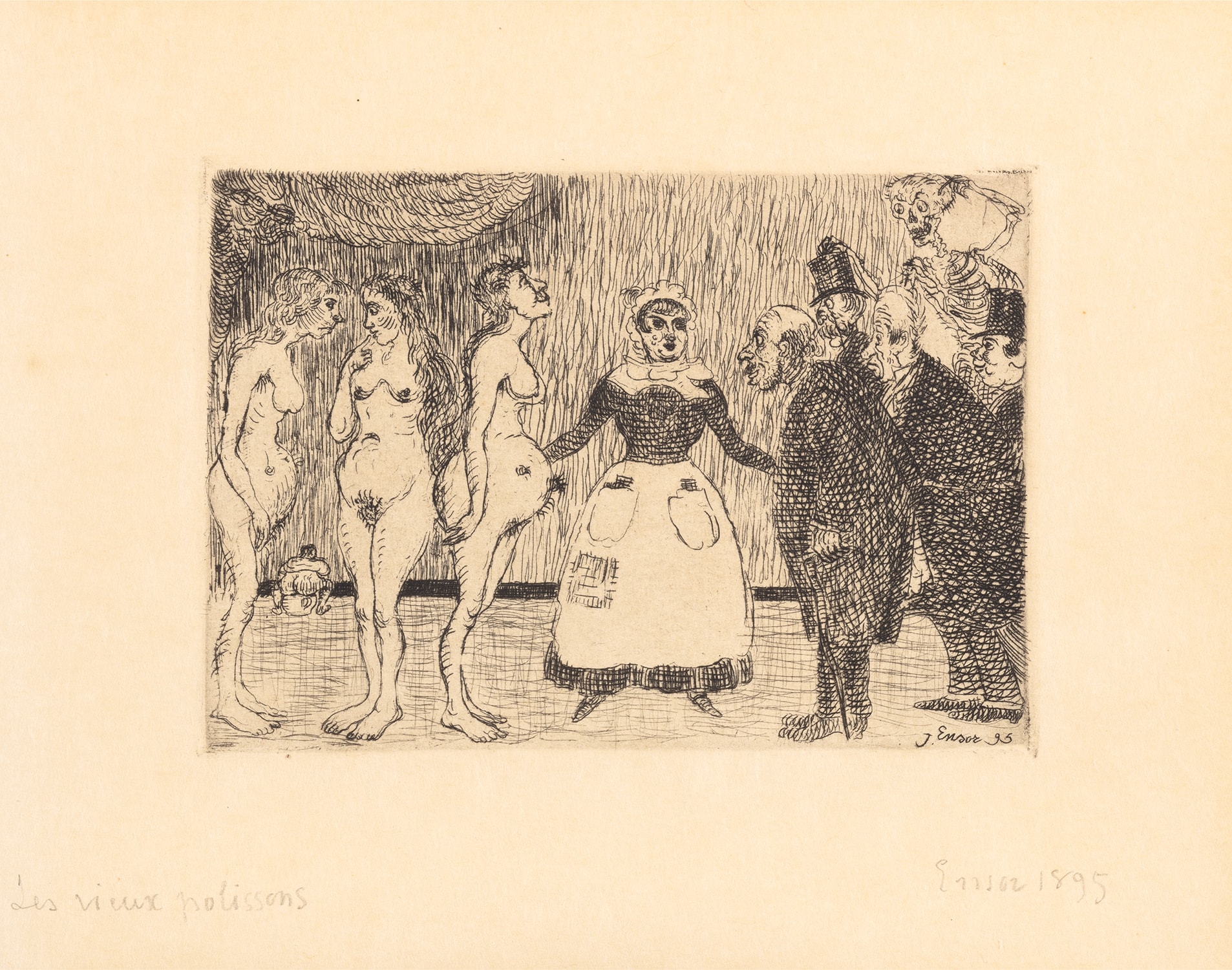
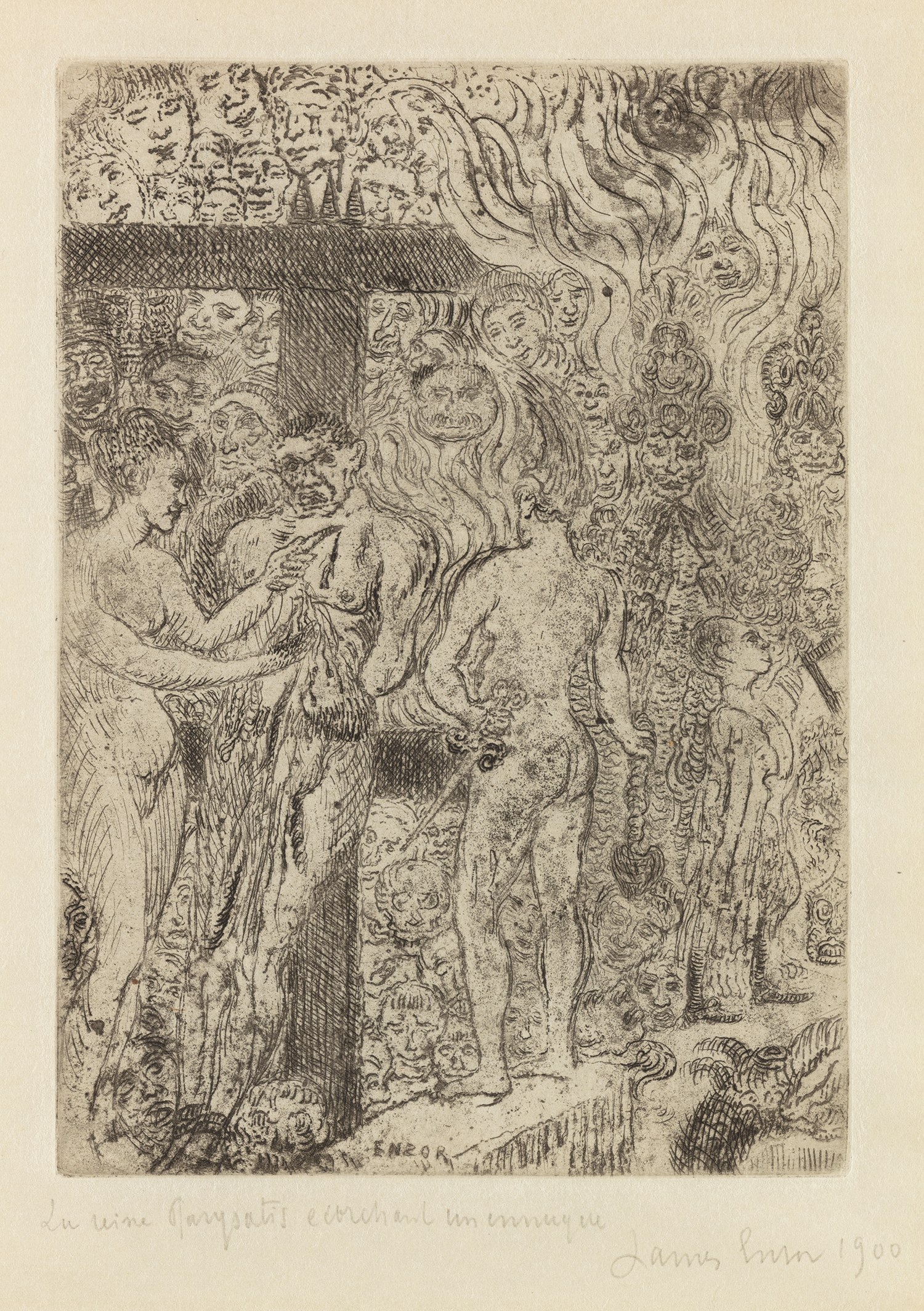
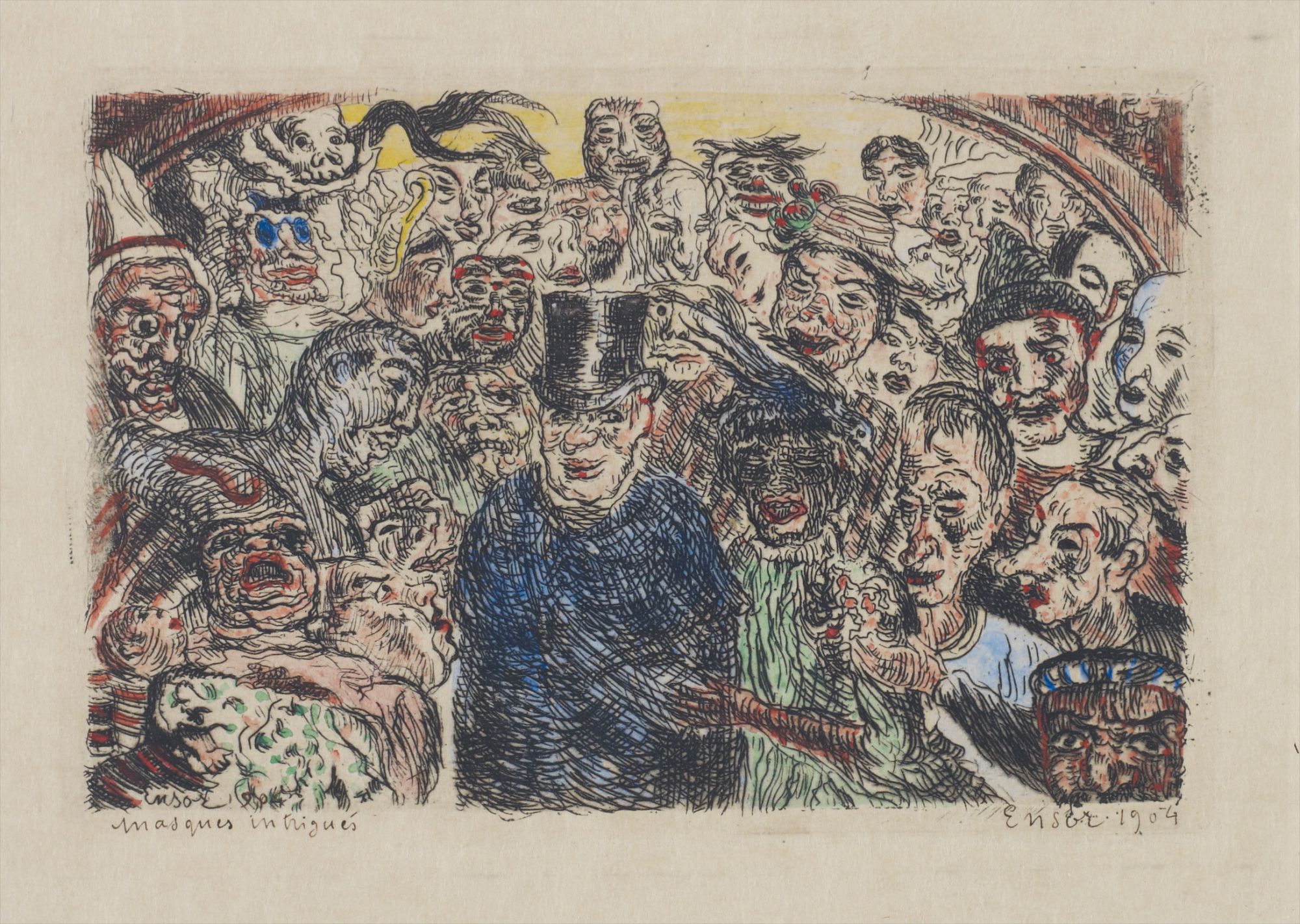
James Ensor was a pioneering Belgian painter and printmaker whose visionary, often unsettling work helped lay the groundwork for both Expressionism and Surrealism. Born in Ostend, Belgium, to a family that ran a shop selling carnival masks and marine curiosities, Ensor studied at the Académie Royale des Beaux-Arts in Brussels and returned to his hometown, where he would live and work for most of his life. His early paintings were relatively conventional interior scenes and still lifes, but by the 1880s he had developed a radical, hallucinatory style populated by grotesque masked figures, skeletons, and sardonic crowds drawn from the carnival traditions of his childhood environment. Ensor's most celebrated work, 'Christ's Entry into Brussels in 1889' (1888), is a monumental canvas depicting a chaotic, carnivalesque procession in which Christ is nearly swallowed by a mob of masked revelers and political banners — a biting commentary on religion, politics, and the hypocrisy of modern society. His obsession with masks became a defining motif, functioning simultaneously as symbols of deception, social identity, and the macabre absurdity of human existence. His use of vivid, clashing colors and loose, expressive brushwork was years ahead of its time, anticipating the work of the German Expressionists and the Belgian Surrealists who followed. Despite considerable rejection and controversy during his early career — his major works were frequently refused by conservative exhibition juries — Ensor eventually gained wide recognition and was elevated to the rank of Baron by the Belgian King in 1929. He became a central figure in the avant-garde group Les XX (Les Vingt), which championed progressive art in Belgium. His influence on artists such as Paul Klee, Emil Nolde, and later the CoBrA movement has been widely acknowledged, cementing his status as one of the most original and consequential figures in the history of modern art.

Artists in conversation