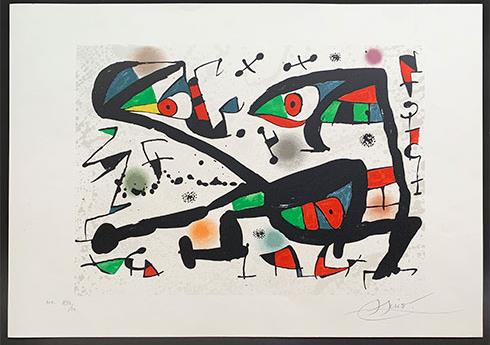
Oilstick On Paper
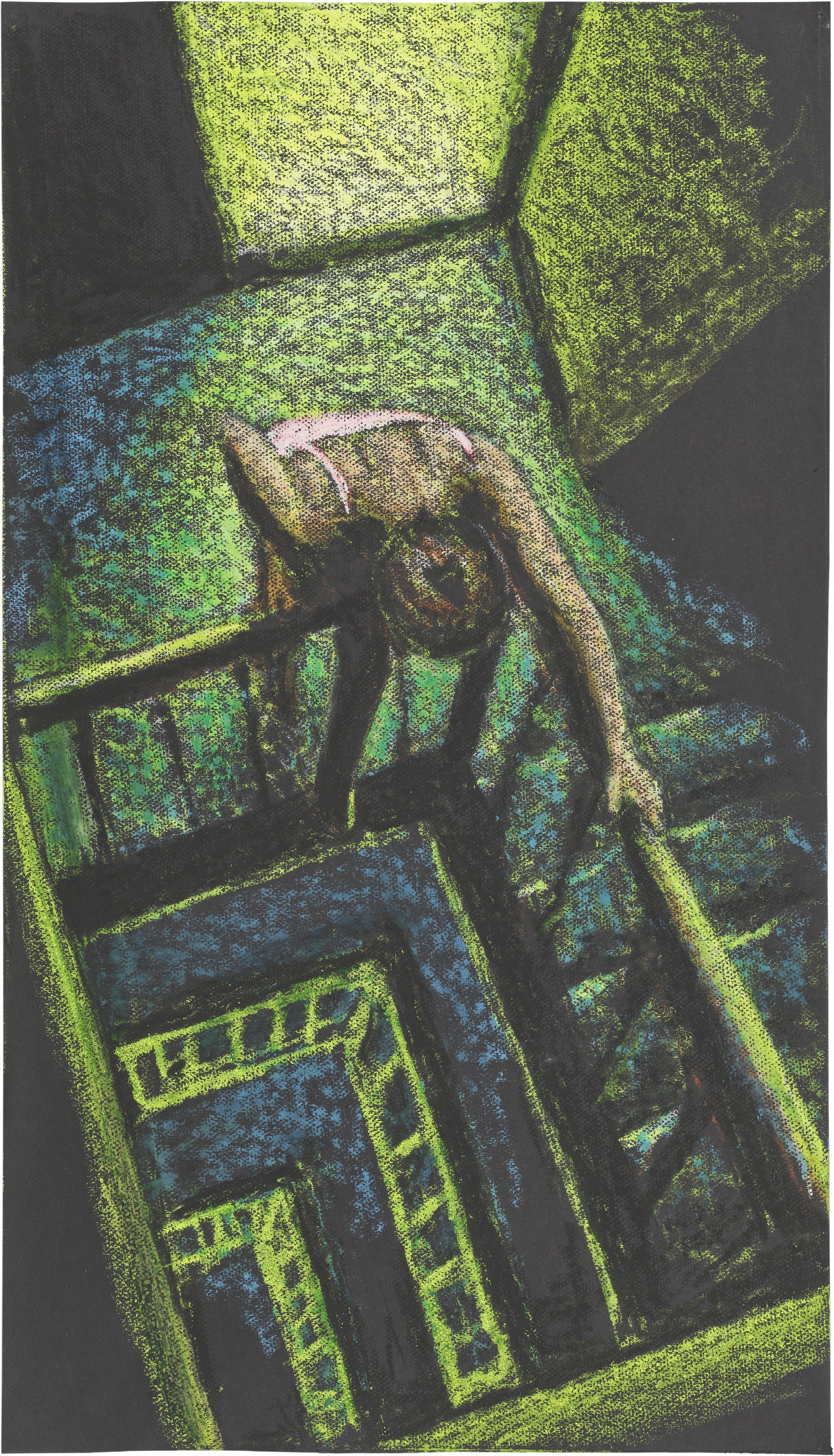
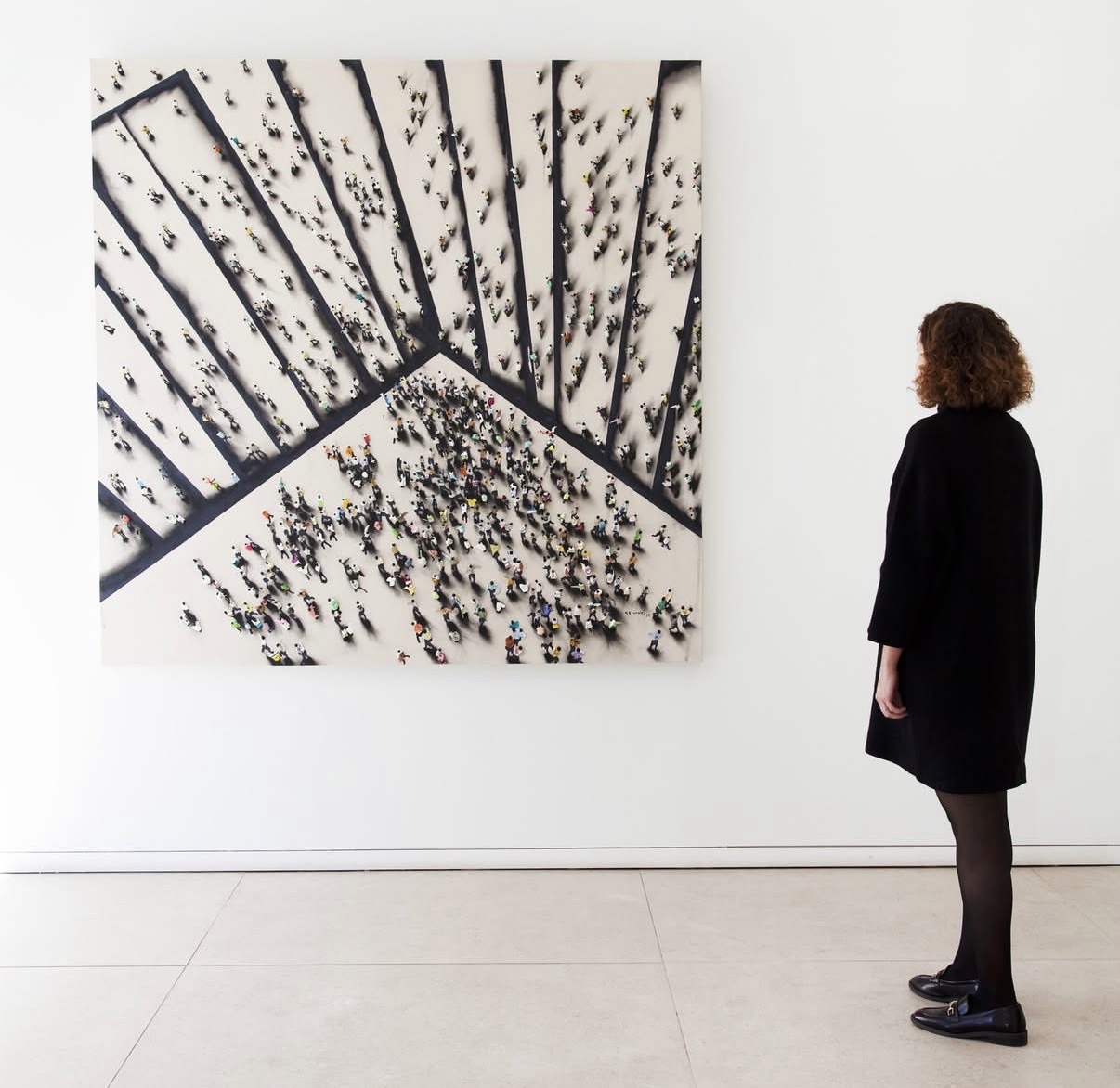
Jane Dickson
oilstick on black paper, 1984




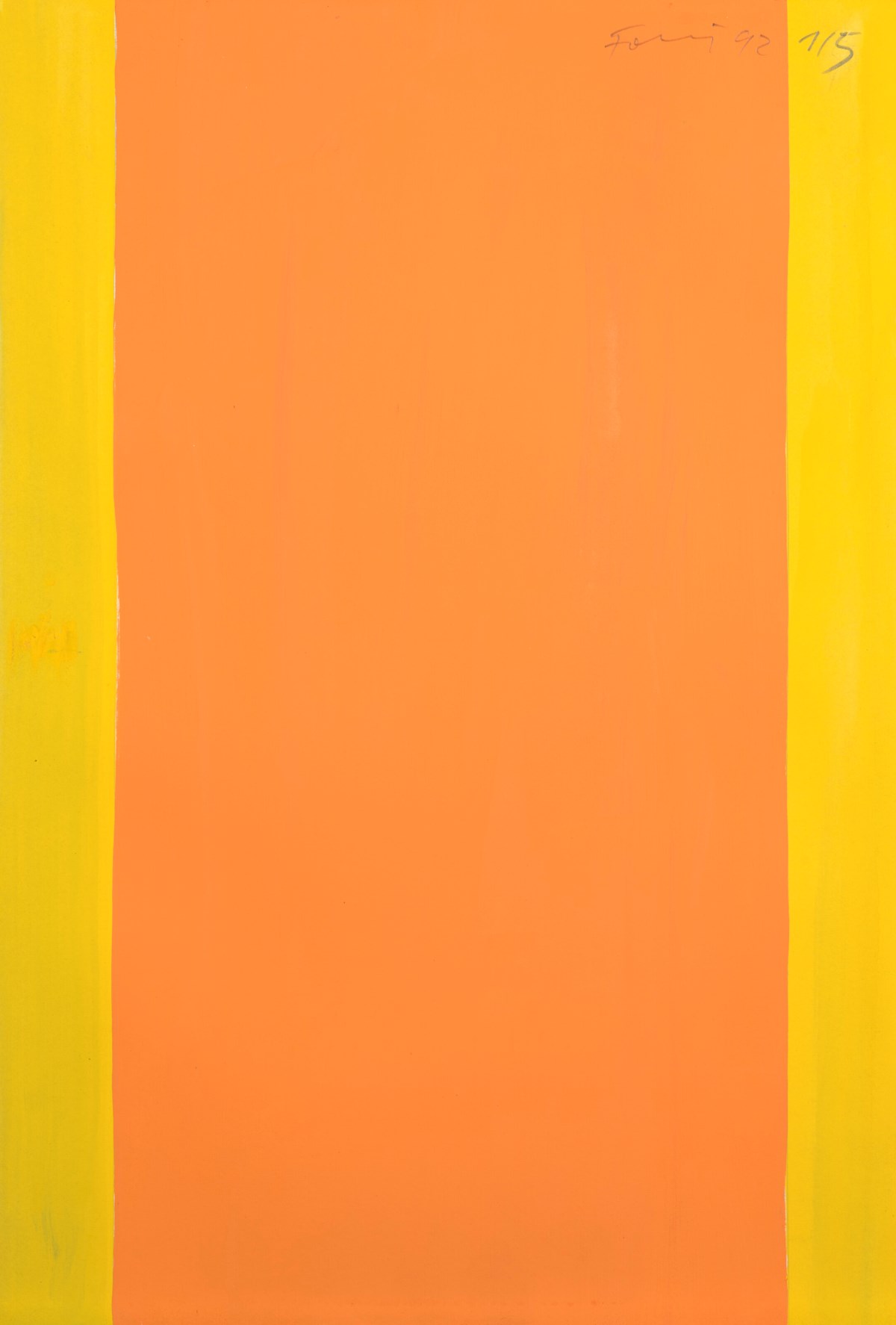
The Seductive Urgency of Oil Stick on Paper
There is something almost confessional about an oil stick mark on paper. The medium resists the kind of careful deliberation that canvas and brush can accommodate. It moves fast, leaves evidence of pressure and direction, and because paper offers so little resistance, the hand of the artist arrives at you almost unmediated. Collectors who live with works in this category often describe the same experience: you feel the energy in the room shift slightly when you walk past one.
That immediacy is not just aesthetic pleasure. It is the reason oil stick on paper has become one of the more quietly coveted areas of the contemporary and postwar collecting landscape. The appeal is also practical in the best possible sense. Works on paper occupy a different place in a home than paintings.
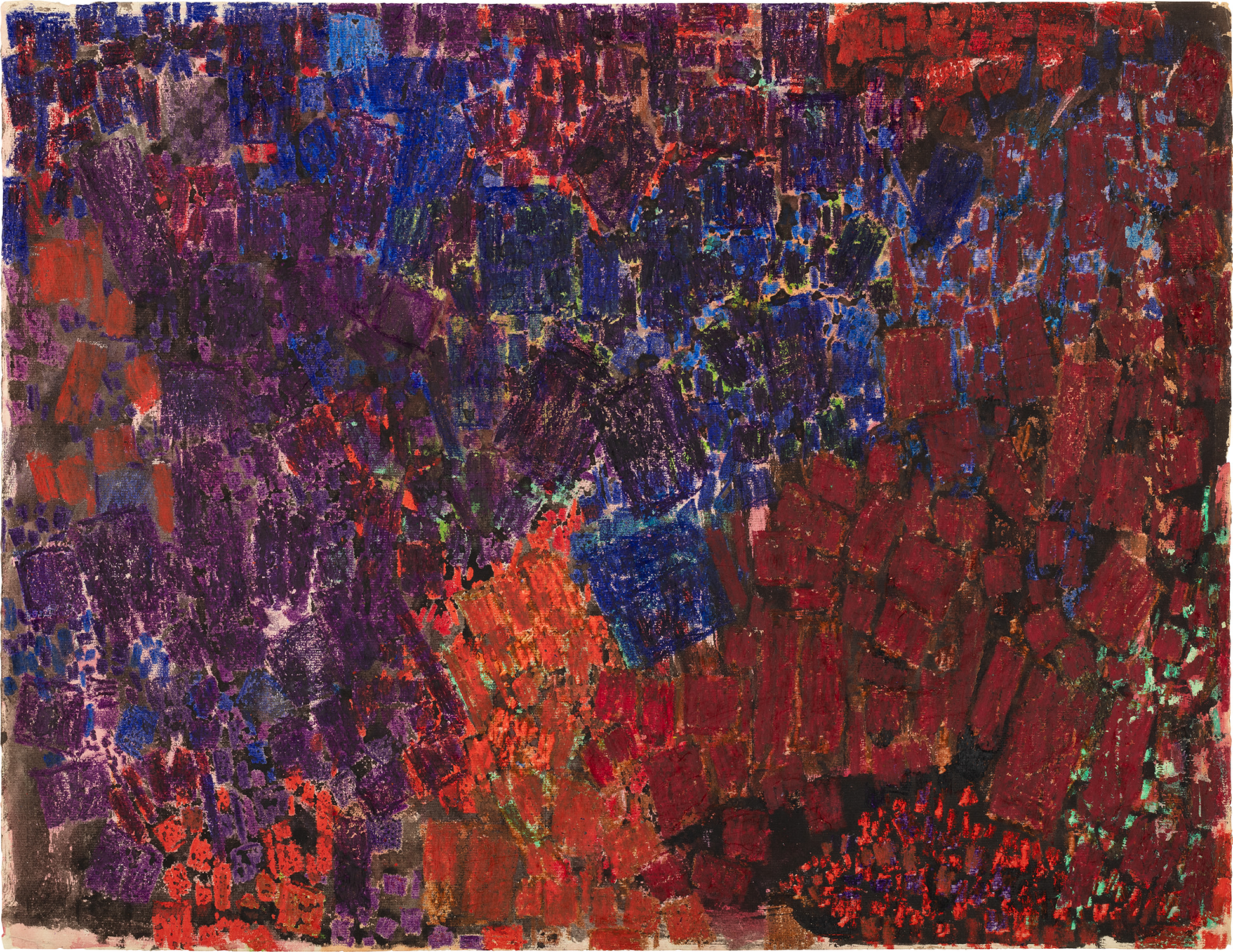
Lynne Drexler
oilstick on paper, 1962
They can be intimate without being minor. A strong oil stick drawing at a substantial scale can hold a wall with the same authority as a painted canvas, while something smaller can animate a desk, a reading nook, or the narrow hallway that larger institutions of the house always ignore. Living with works on paper tends to produce a more active relationship between collector and object. You study them differently.
You notice things over time that you missed at first. What separates a good work from a great one in this category comes down to a few things that experienced collectors learn to see quickly. First, commitment. The best oil stick works on paper show no hedging.
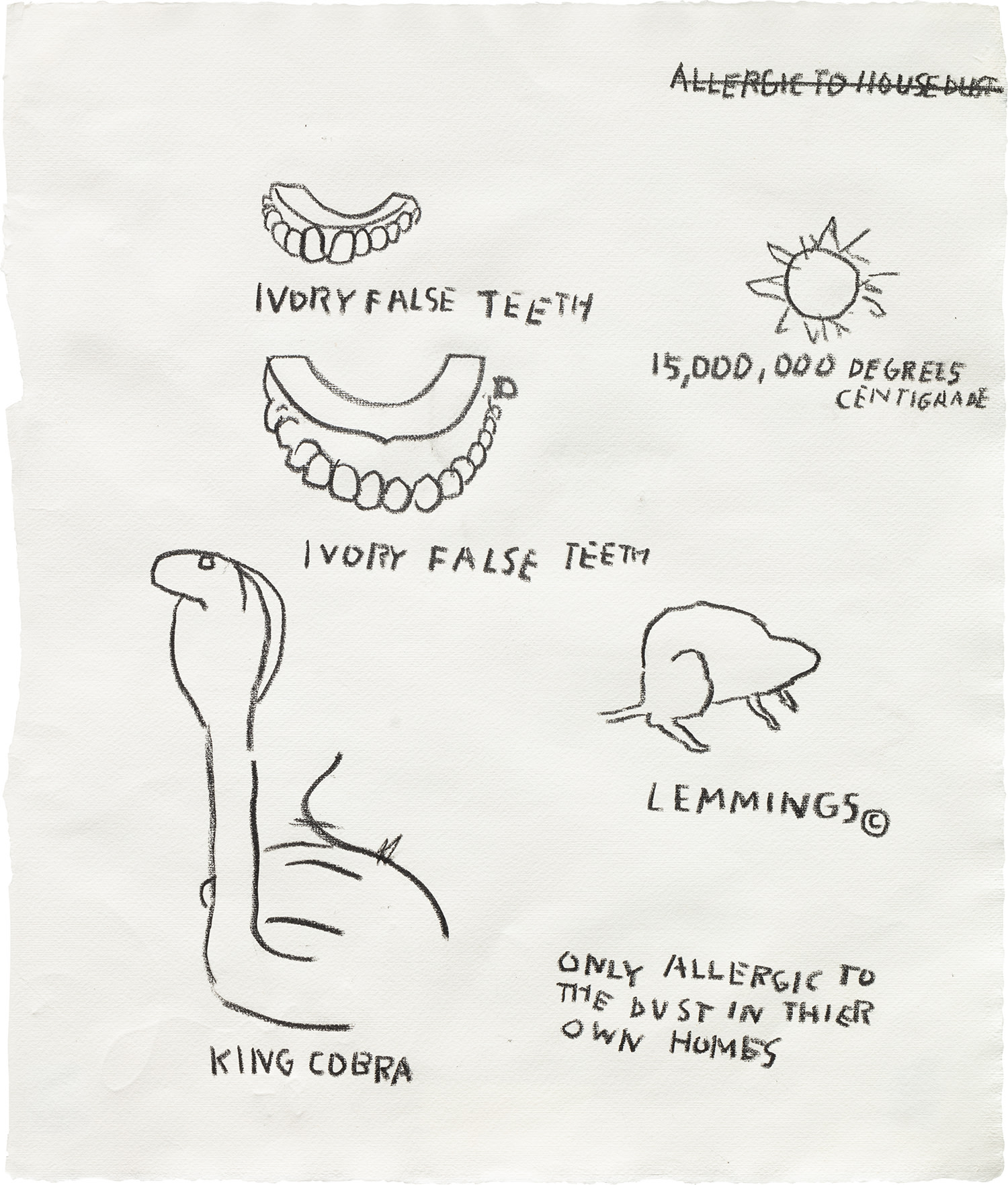
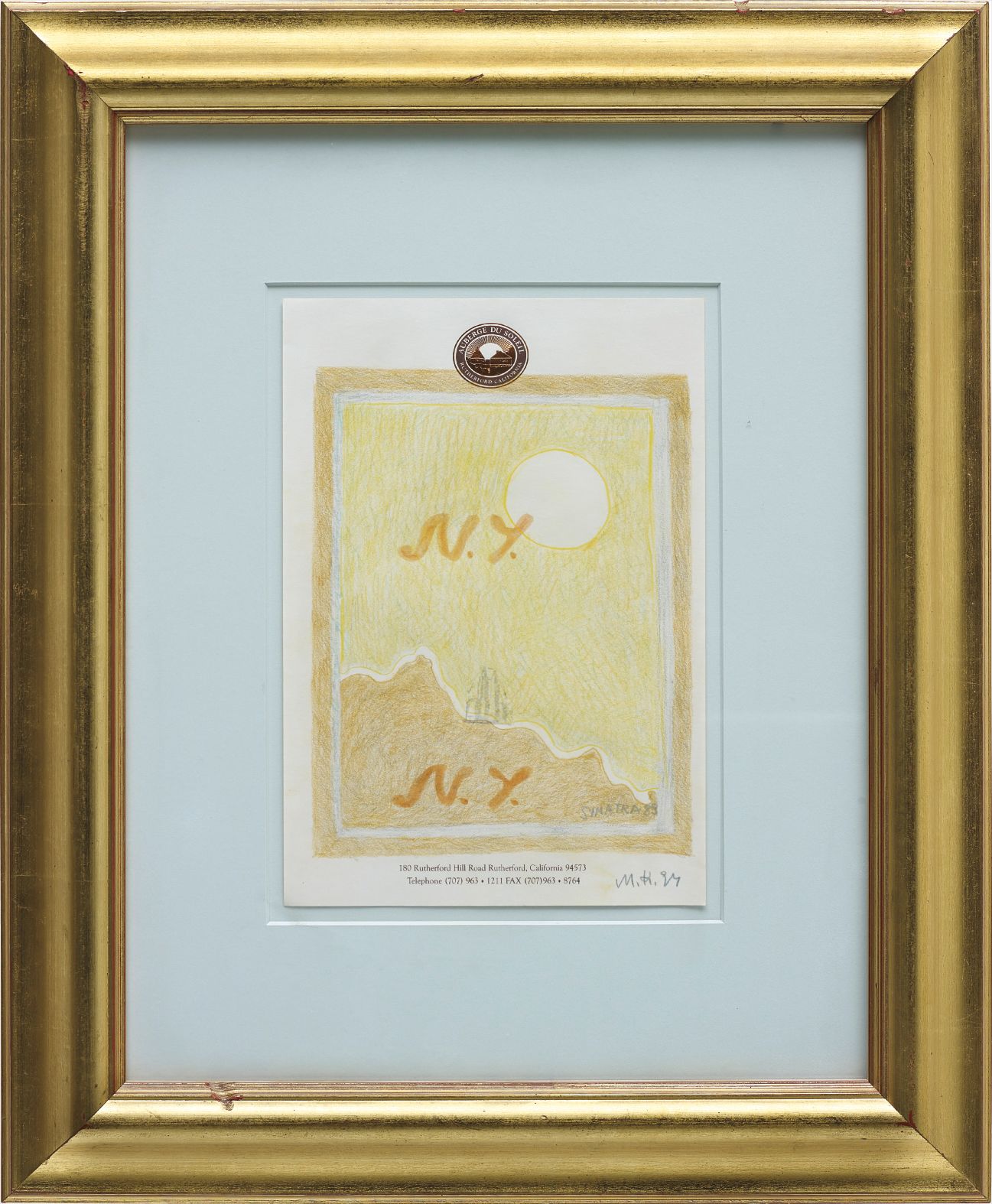
Jean-Michel Basquiat
oilstick on paper, 1987
The artist trusted the mark and let it stand. Second, the relationship between the medium and the surface matters enormously. Oil stick is waxy, pigment dense, and slightly raised from the surface. When an artist understands that physical reality and works with it rather than against it, the results have a sculptural presence that photographs almost never capture.
Third, and perhaps most importantly, a great work in this category feels complete in its own terms. It is not a study for something else. It arrives as a resolved idea. Jean Michel Basquiat's use of oil stick is arguably the most discussed in this medium's recent critical history.
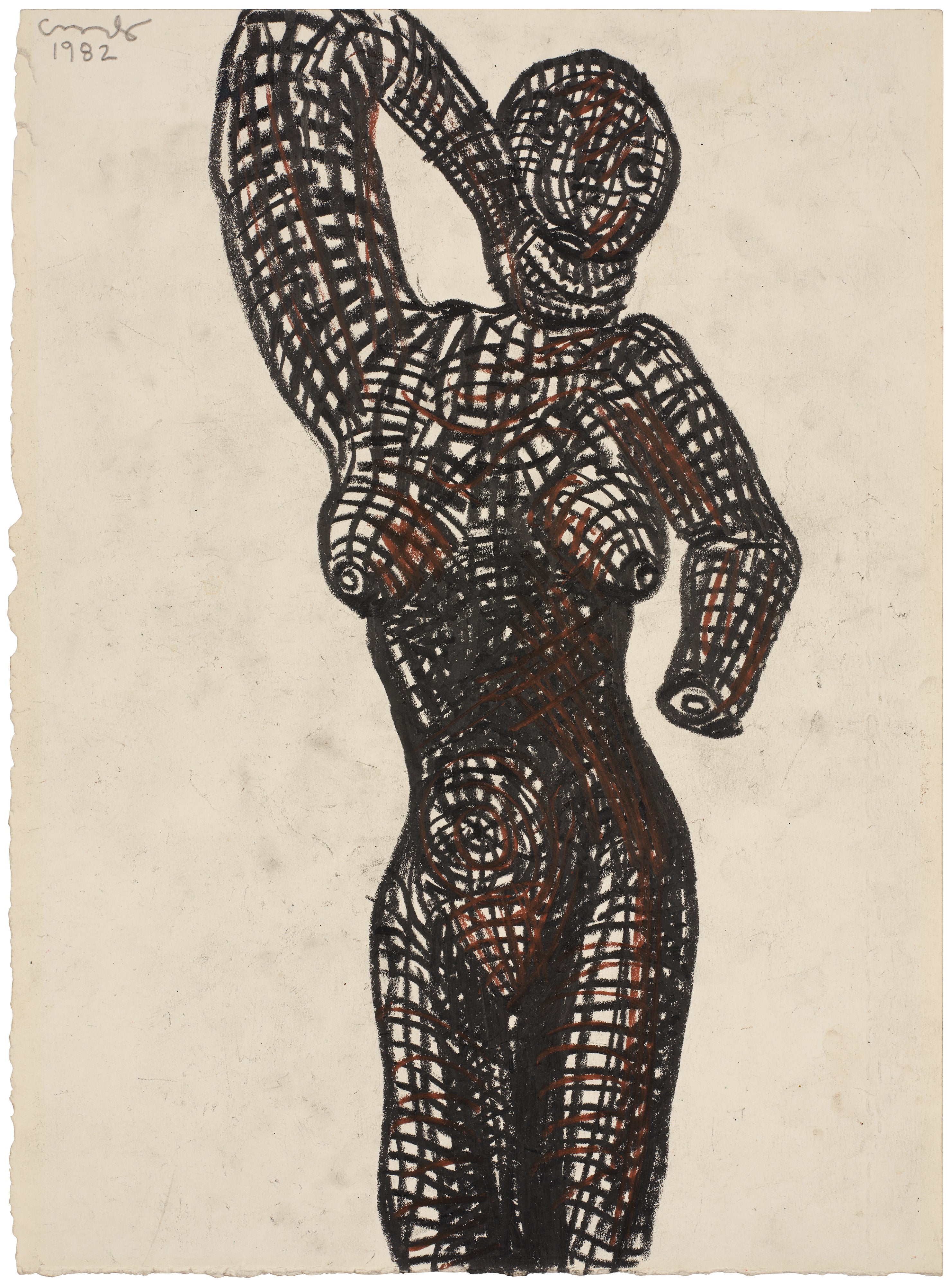
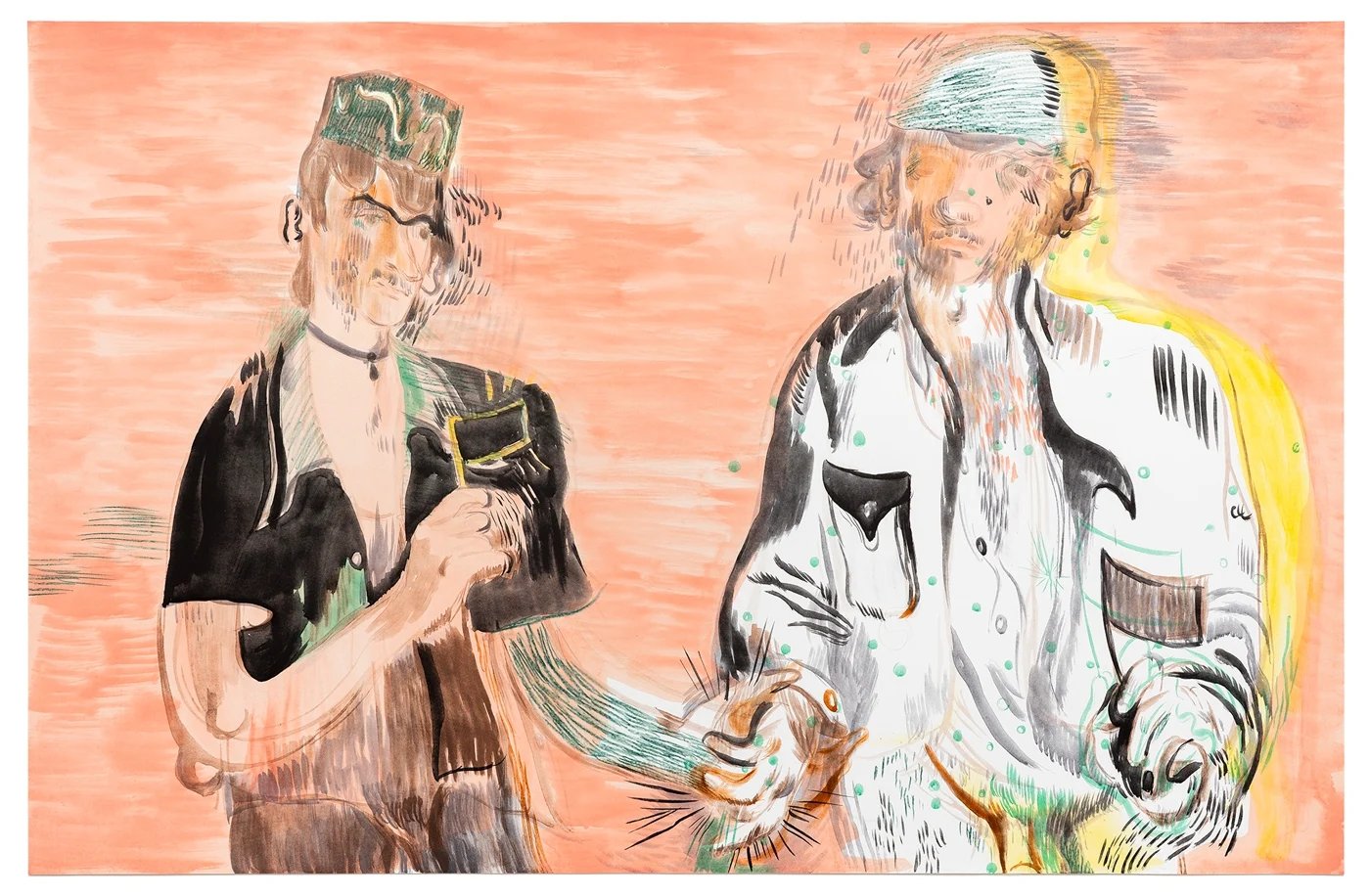
George Condo
oilstick on paper, 1982
His works on paper from the early and mid 1980s carry the same conceptual weight as his large canvases, and the market has increasingly recognized that the distinction between his paintings and his works on paper is more about format than importance. Collectors who acquired his paper works before the major retrospectives of the last decade understood something the broader market was slower to accept. George Condo operates in a different register entirely, his figurative vocabulary appearing in works on paper with a rawness that his larger studio productions sometimes refine away. The drawings reveal the thinking.
That access to process is part of what makes them so compelling to serious collectors. Lynne Drexler, whose reputation has expanded considerably in recent years following sustained institutional and market attention, worked with an intensity of mark making that translates powerfully to oil stick on paper. Her surfaces accumulate layers of color and gesture that reward close looking in ways that reproductions simply cannot communicate. Harold Ancart brings a more restrained sensibility, but his works on paper have a quiet authority that collectors who value precision and economy of means find deeply satisfying.
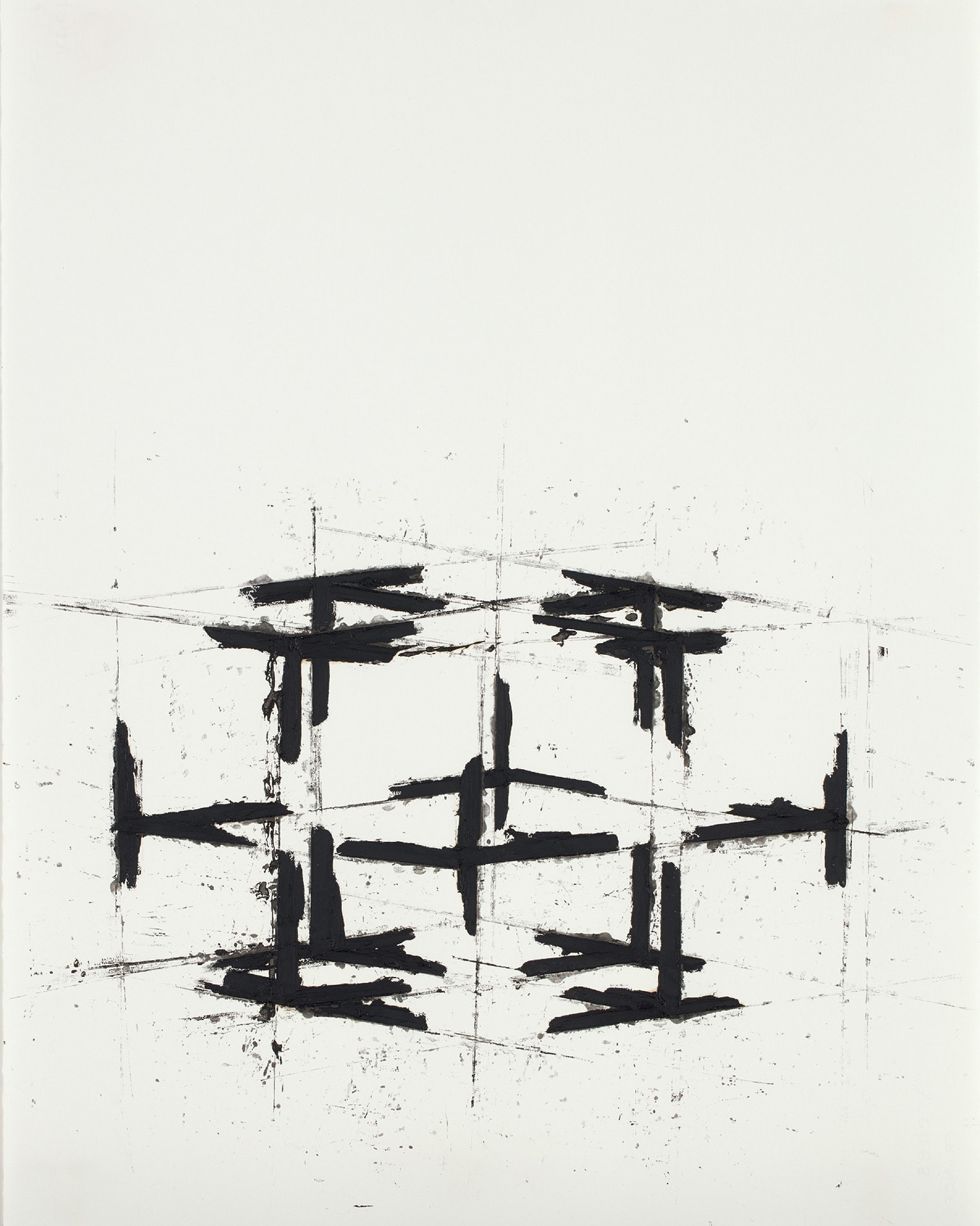
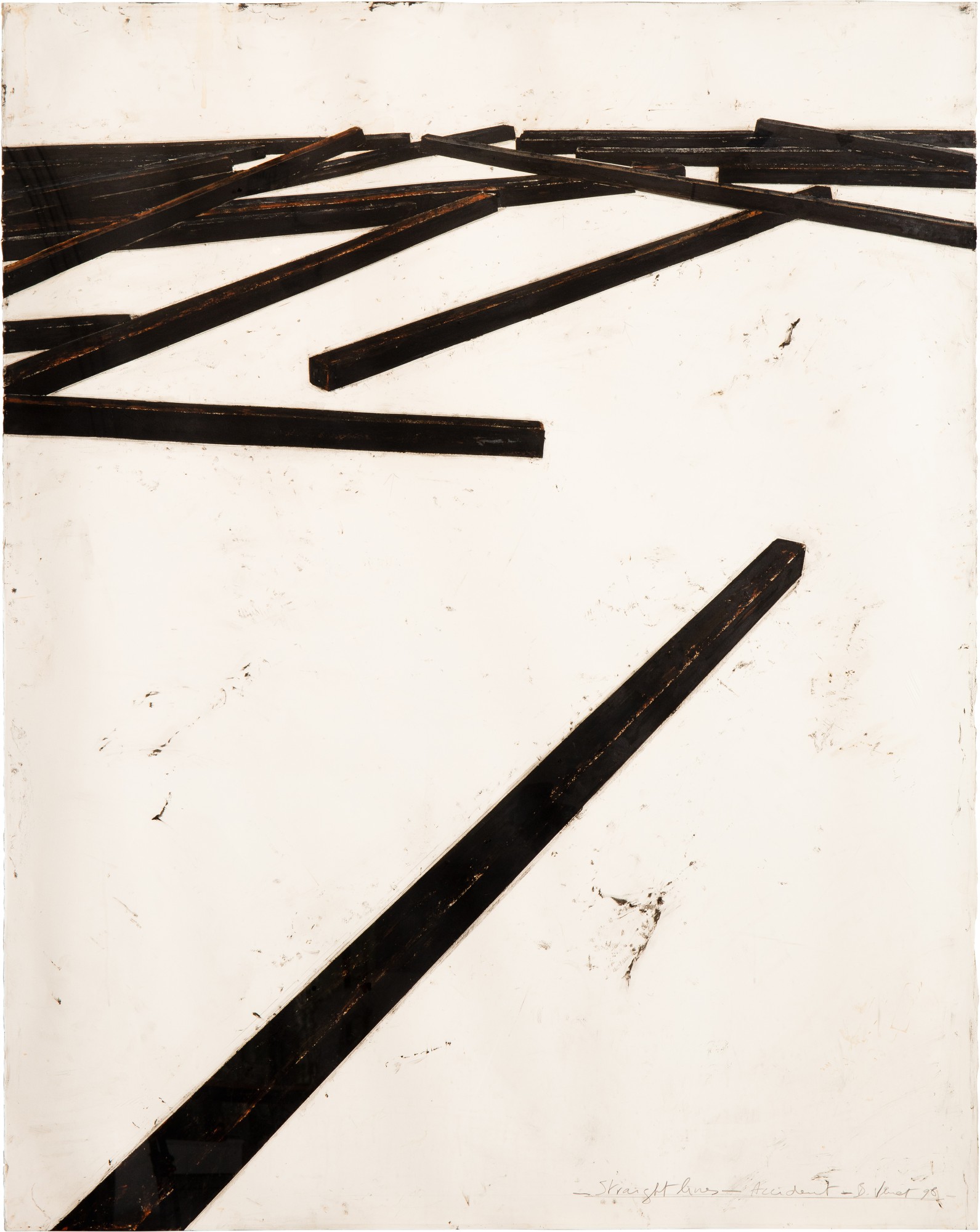
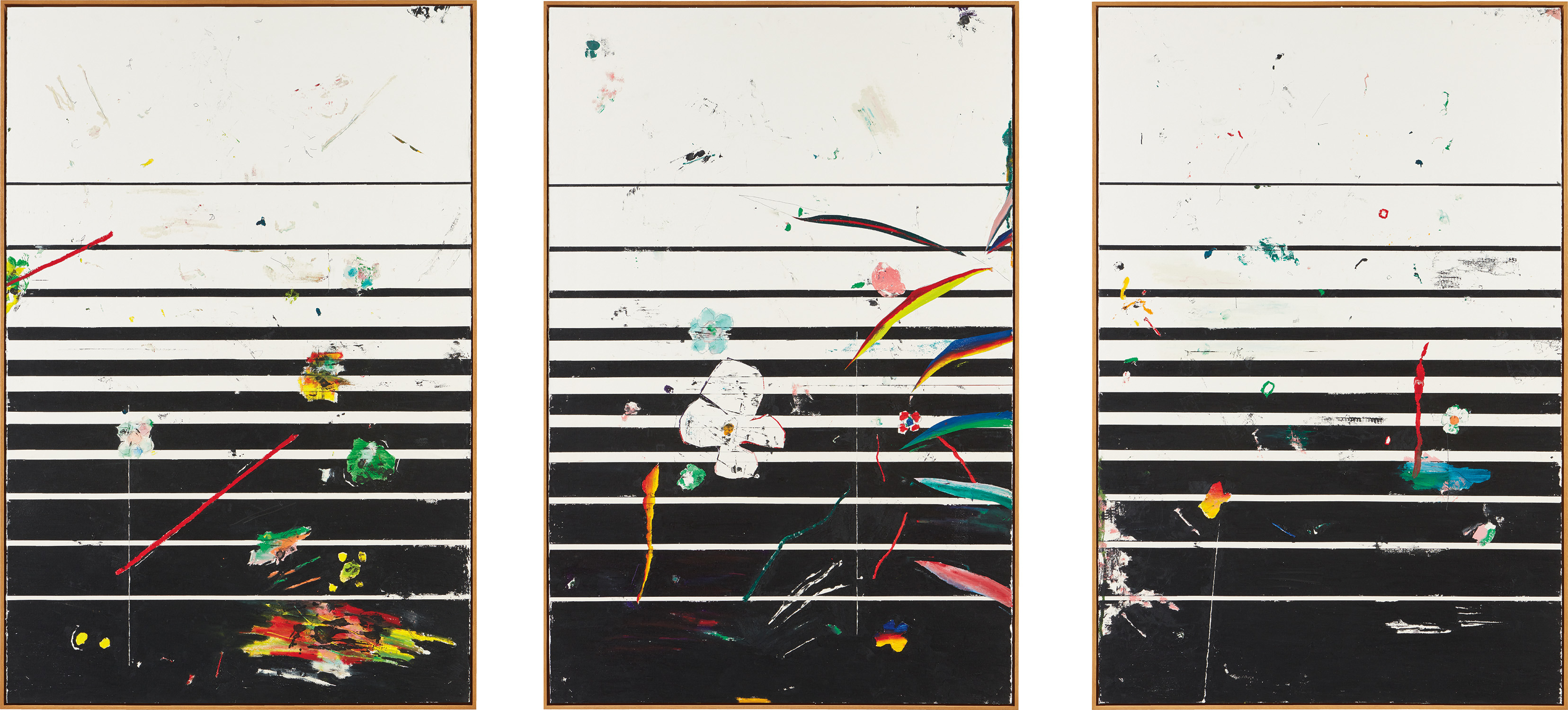
Harold Ancart
oilstick on paper, 2008
Both represent the kind of value proposition that the secondary market tends to correct upward over time as critical consensus solidifies around an artist's broader significance. For collectors thinking about emerging opportunities, the space around oil stick on paper has attracted a younger generation of artists who understand the medium as a serious choice rather than a preparatory one. The gallery circuit in New York and Los Angeles has seen sustained interest in artists working in this vein who have not yet had the auction visibility that would calibrate their pricing to their critical reception. That gap between critical regard and market price is exactly where patient collectors have historically found their most satisfying acquisitions.
Asking a gallery directly which artists in their program have a documented institutional exhibition history, even at a modest scale, is a reliable way to separate the promising from the merely fashionable. At auction, oil stick works on paper have shown considerable resilience across market cycles, though the category rewards specificity. Works that can be traced to a well documented period in an artist's development, that have exhibition histories, and that appear in scholarly literature tend to hold and appreciate more reliably than works of uncertain provenance or dating. The major houses have handled significant works in this category with increasing regularity, and specialist departments at Christie's, Sotheby's, and Phillips have developed genuine expertise.
That expertise is worth consulting before consignment, because placement and timing within a sale can affect results as meaningfully as the quality of the work itself. Practically speaking, oil stick on paper requires thoughtful care that is slightly different from works on canvas. The wax content of oil stick makes the surface sensitive to temperature fluctuation, and works should be framed behind UV filtering glass or acrylic and kept away from direct light sources and exterior walls that carry temperature variation. Unlike works on canvas, paper is inherently vulnerable to humidity, so a consistent environment matters more than it might with other media.
When acquiring from a gallery, ask specifically whether the work has been backed or mounted, how it has been stored, and whether a conservator has assessed it. These are not anxious questions. They are the questions a gallery with a serious program will welcome because they signal you are a collector who intends to care for what you acquire. The distinction between unique works and works produced in multiples also deserves attention in this medium.
Oil stick on paper is, by its nature, a medium of unique objects. When an artist produces what might be described as a related series, each work is still its own thing. That singularity is part of the category's enduring appeal, and it is worth confirming with any gallery that a work you are considering has no counterpart. The most satisfying collections tend to be built around works that feel as though they could not exist in duplicate, and oil stick on paper, at its best, delivers exactly that feeling.