Musical Instruments
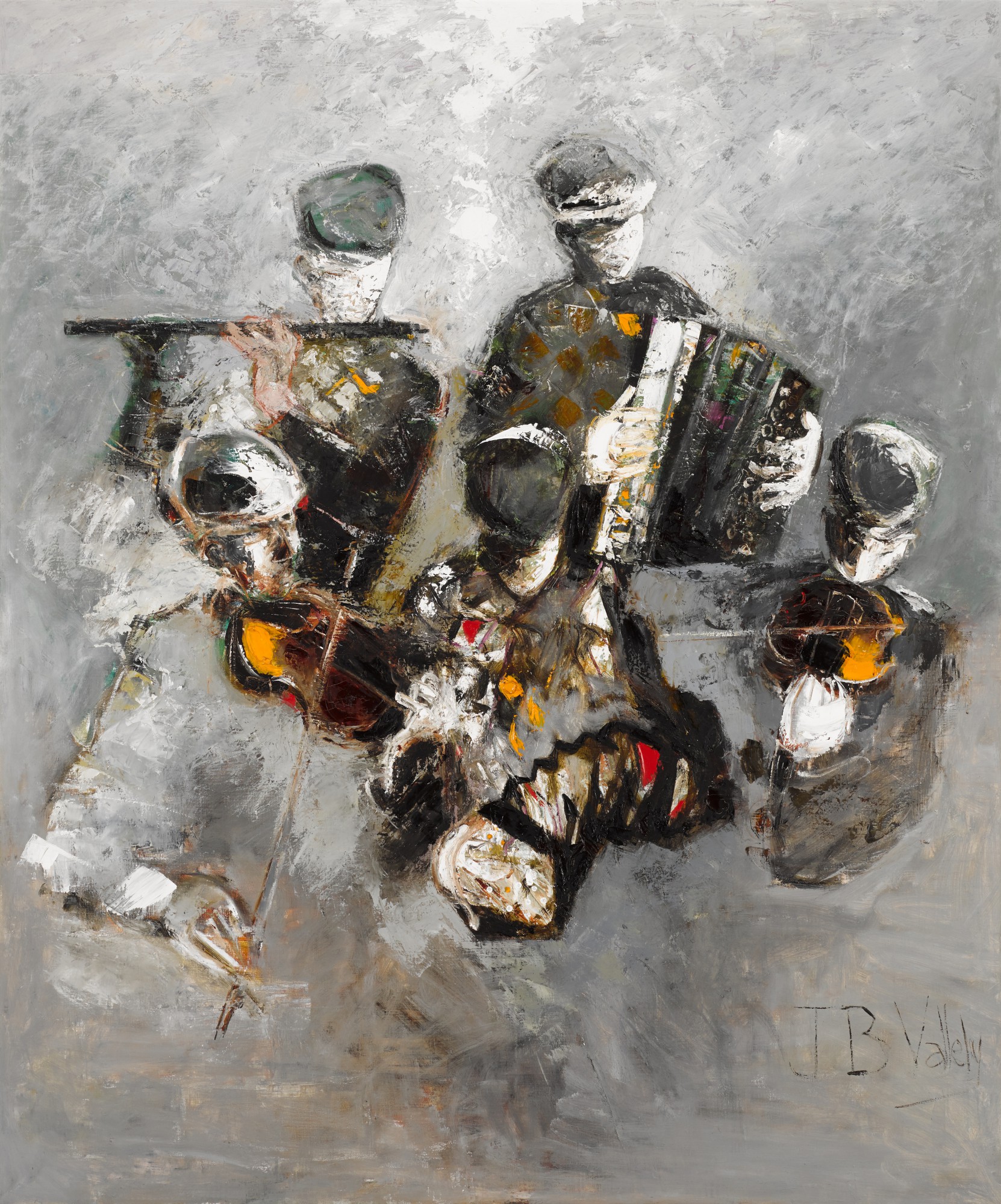
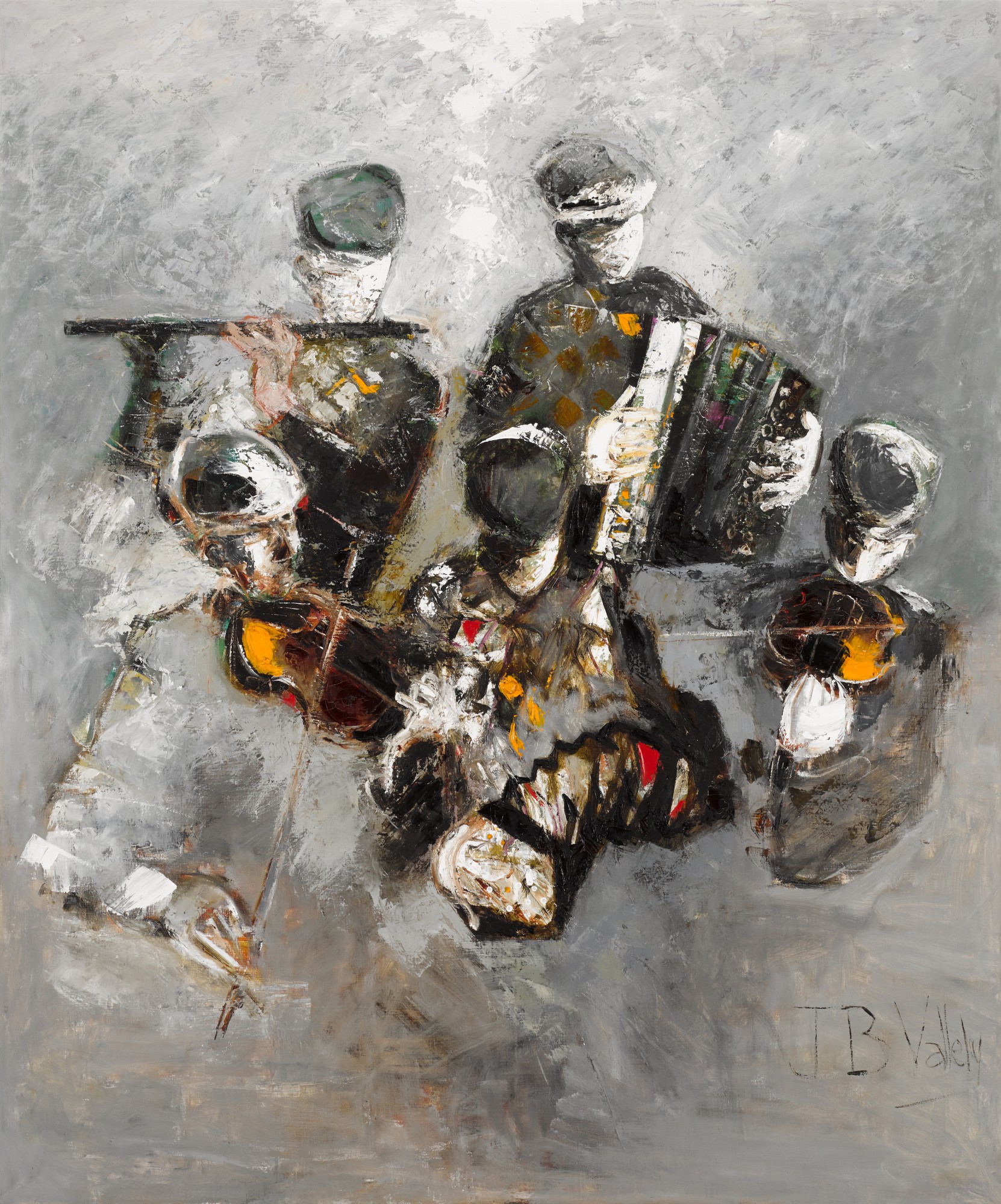
John Vallely
Five Musicians

The Instrument as Muse, Mirror, and Metaphor
There is something quietly radical about a musical instrument rendered in paint, bronze, or collage. It sits at the intersection of two art forms, neither fully one nor the other, carrying the ghost of sound within a silent medium. For centuries, artists have returned to the lute, the violin, the guitar, and the harpsichord not simply as objects to depict but as vessels for ideas about beauty, time, virtuosity, and the limits of representation itself. The musical instrument in art is never just a prop.
It is a philosophical proposition. The tradition reaches back at least to the Flemish and Dutch Golden Age, when still life painting elevated everyday objects to subjects of extraordinary pictorial ambition. Edwaert Collier, the Dutch painter working in the latter half of the seventeenth century, was among the most sophisticated practitioners of the vanitas still life, a genre in which musical instruments featured prominently alongside books, skulls, and guttering candles. The lute or the recorder in such compositions was never merely decorative.
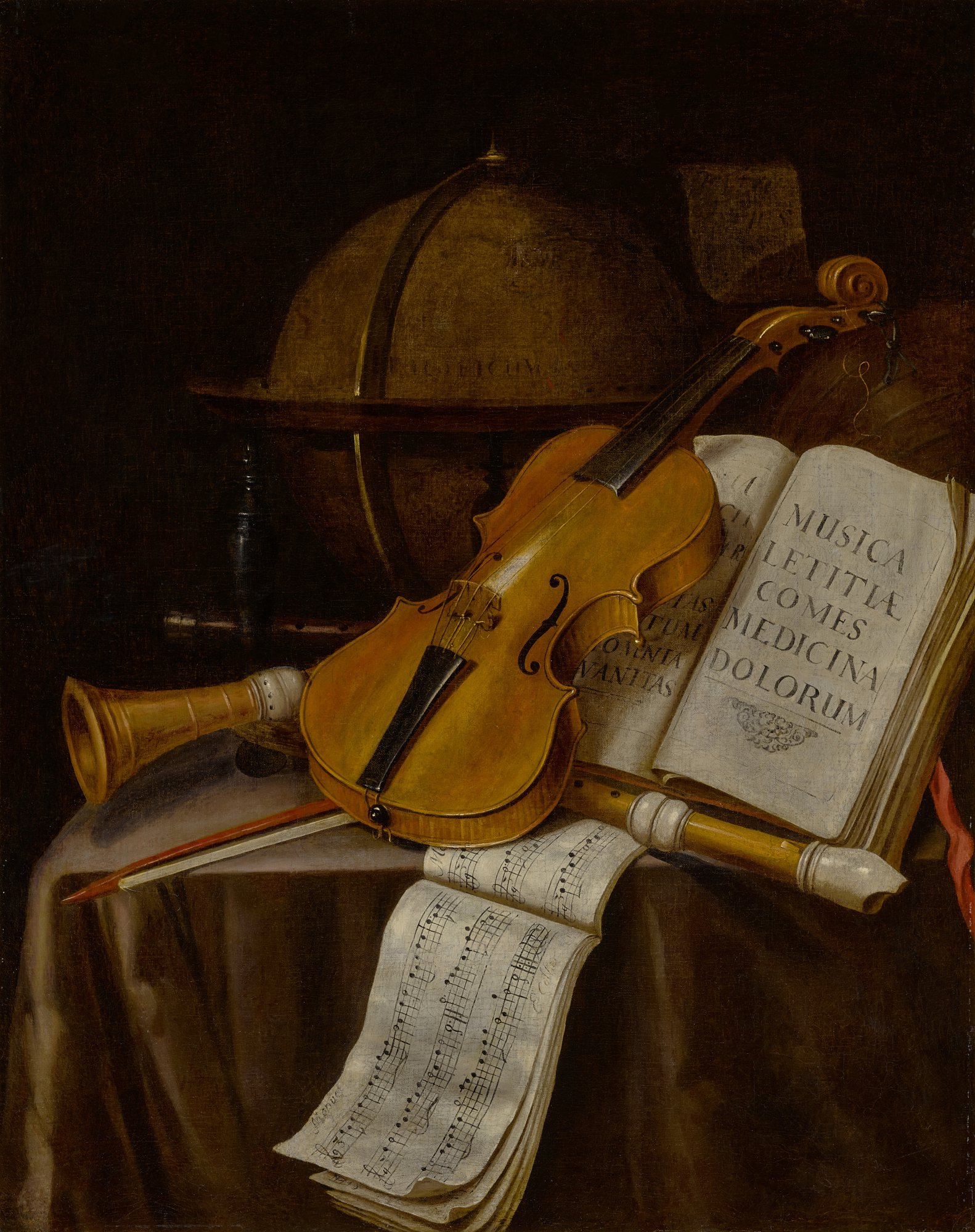
Edwaert Collier
Vanitas still life with a violin, recorders, music manuscripts, and a globe
It represented the ephemeral nature of pleasure, the fleeting duration of a melody, the swift passage of earthly life. Collier's command of trompe l'oeil surfaces gave his instruments an almost uncomfortable tangibility, as though you might reach through the canvas and pluck a string. The religious dimension of musical imagery runs equally deep. St Cecilia, the patron saint of music, became one of the most painted figures of the Renaissance and Baroque periods, almost always depicted at an organ or a stringed keyboard instrument.
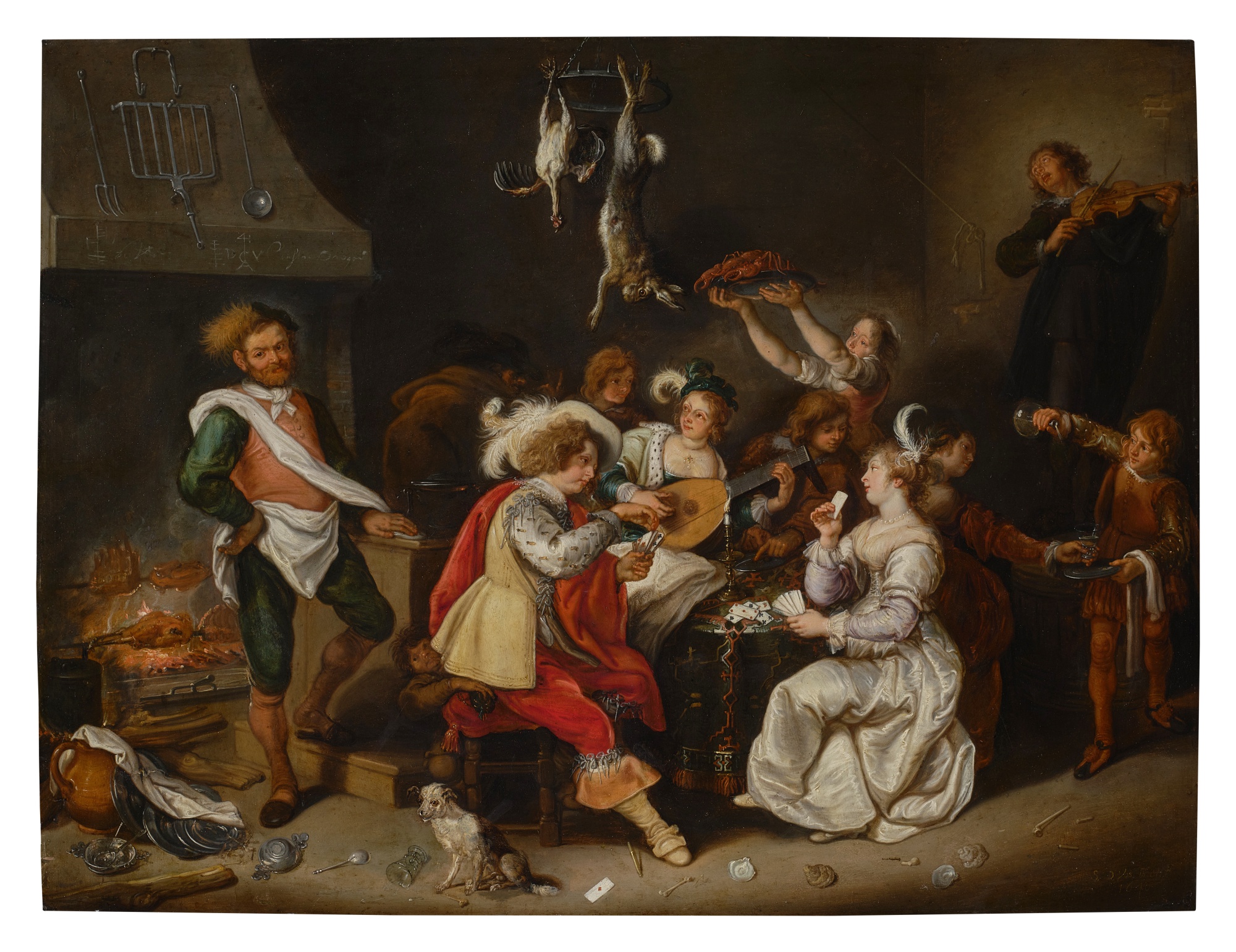
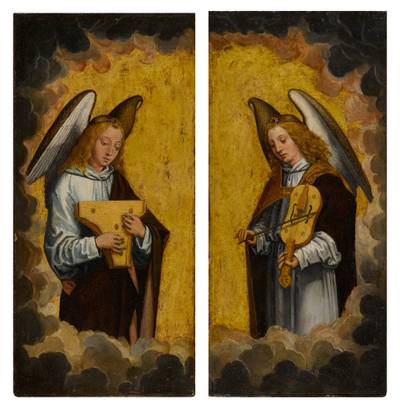
A remarkable work attributed to Antonio da Trenta, active during the 1520s through 1540s and working after Parmigianino, depicts St Cecilia at her harpsichord attended by an angel. The image channels the Raphaelesque grace of Parmigianino's Mannerist vision while grounding it in the tangible world of the instrument. Here music and the divine are made synonymous, the harpsichord functioning as the literal bridge between earthly and celestial realms. Simon de Vos, working in Antwerp in the seventeenth century, similarly populated his paintings with musical gatherings that blend allegory with warm observation of contemporary life.
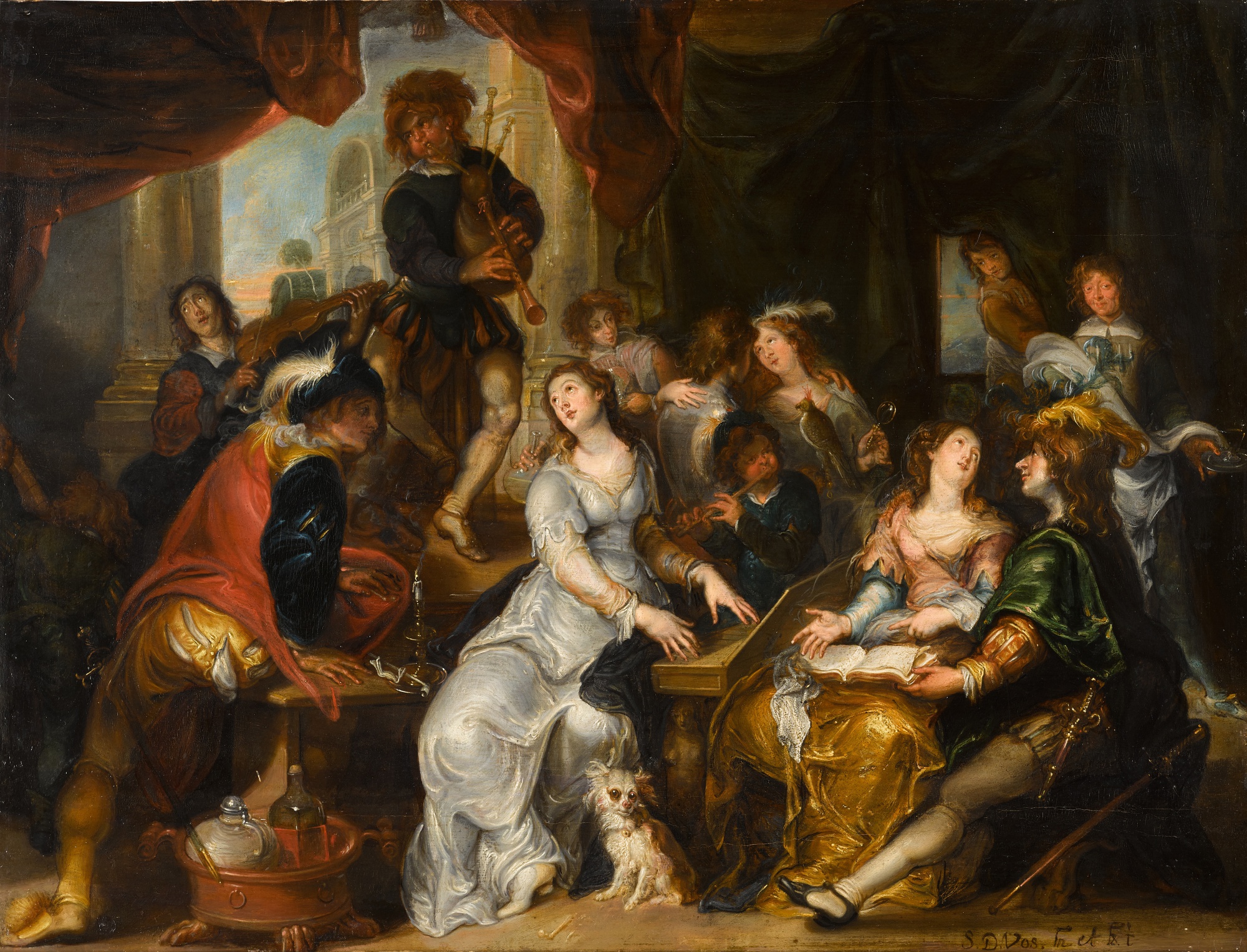
Simon de Vos
An interior scene with elegant figures playing musical instruments and merrymaking
By the time the twentieth century arrived, the musical instrument had shed its devotional and vanitas associations and become something altogether more disruptive. Cubism arguably found its greatest subject in the guitar. Pablo Picasso's obsessive return to the instrument across paintings, drawings, collages, and his landmark 1914 sheet metal and wire construction at MoMA transformed the guitar into the central emblem of a new way of seeing. The instrument's curved body, its sound hole, its strings and frets offered Cubism exactly the kind of structural complexity that rewarded fragmentation and reassembly.
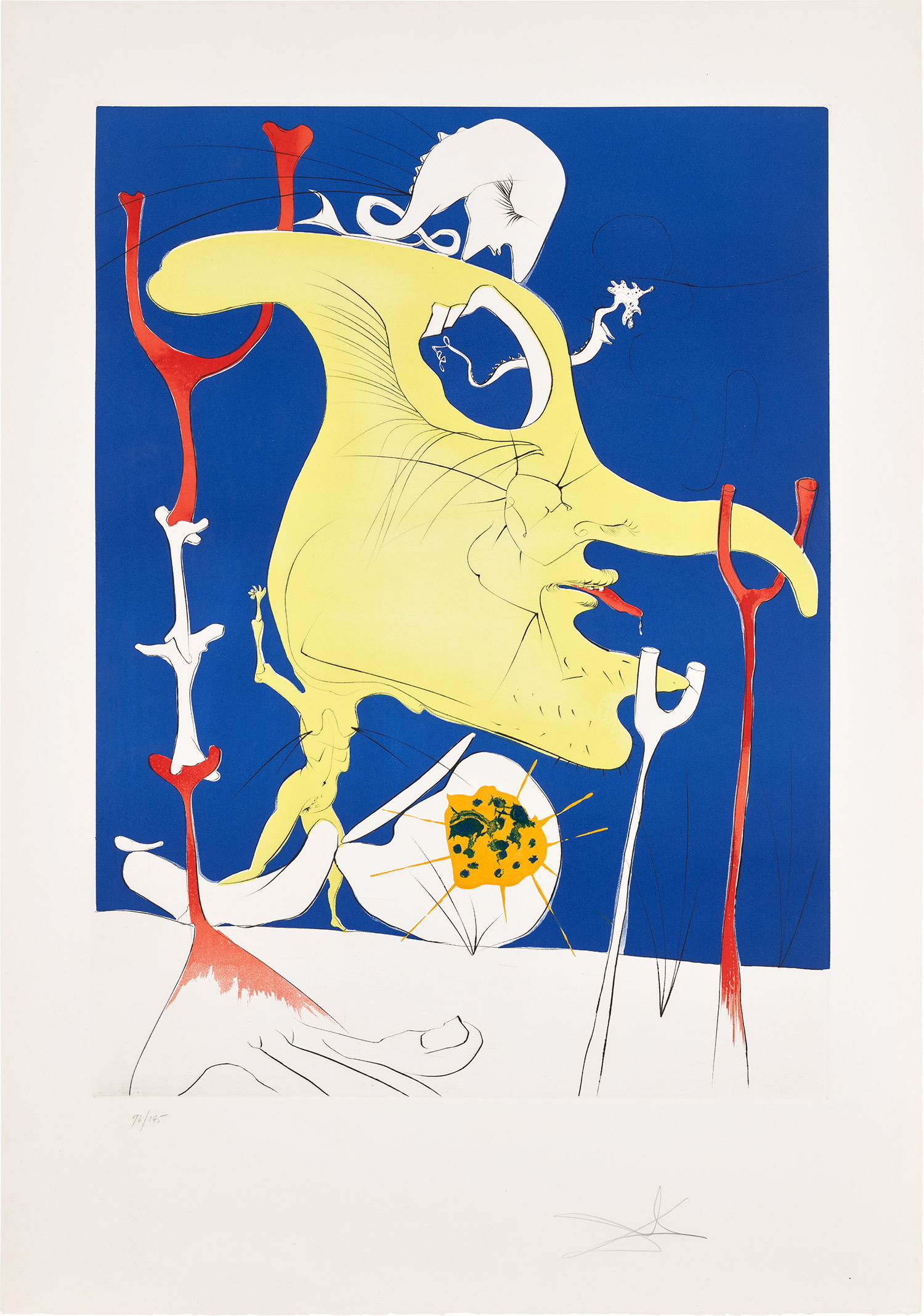
Georges Braque, working in close dialogue with Picasso during those extraordinary years between 1908 and 1914, brought his own particular lyricism to the motif, his paintings of musical instruments carrying a warmth and stillness that distinguishes his Cubist vision from Picasso's more aggressive analytical energy. Both artists are well represented on The Collection, and seeing their respective approaches to similar subject matter side by side remains one of the more instructive pleasures the platform affords. The Surrealists introduced a stranger, more unsettling relationship to the musical object. Salvador Dalí famously draped soft watches across landscapes, but his broader practice was saturated with distorted, dreamlike objects drawn from domestic and artistic life.
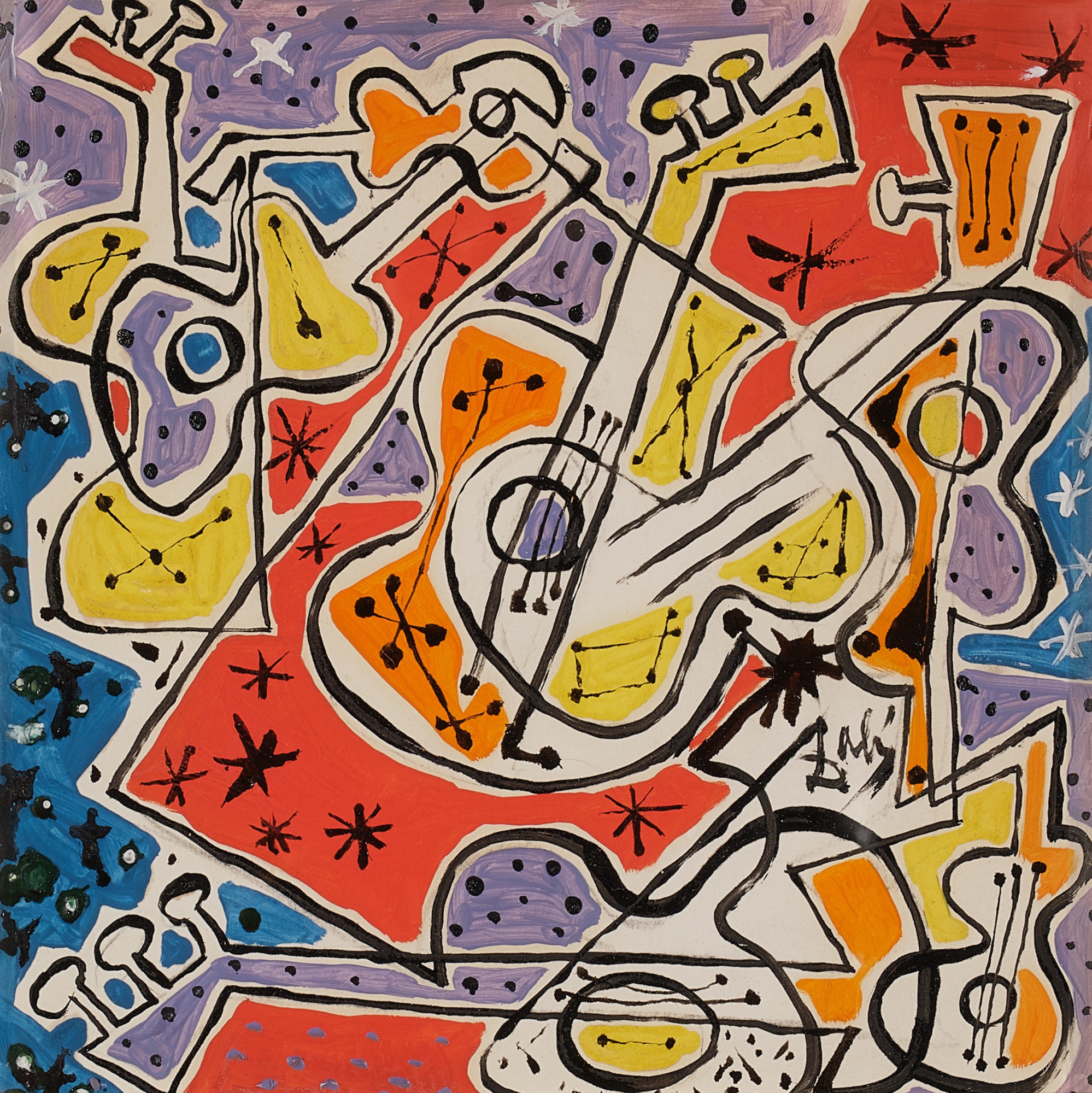
Salvador Dalí
Les Guitares, 1953
The instrument in Surrealist hands became an uncanny thing, its familiar curves suddenly alien, its function subverted or negated. This is the tradition within which Dalí's contributions to the musical instrument theme must be understood. Simultaneously, Ben Nicholson was pursuing a very different path in Britain, his still life works of the 1930s and 1940s reducing the guitar and related forms to spare geometric arrangements that hover between representation and pure abstraction. Nicholson's instruments are presences, barely there, defined more by line and quiet tone than by any descriptive urgency.
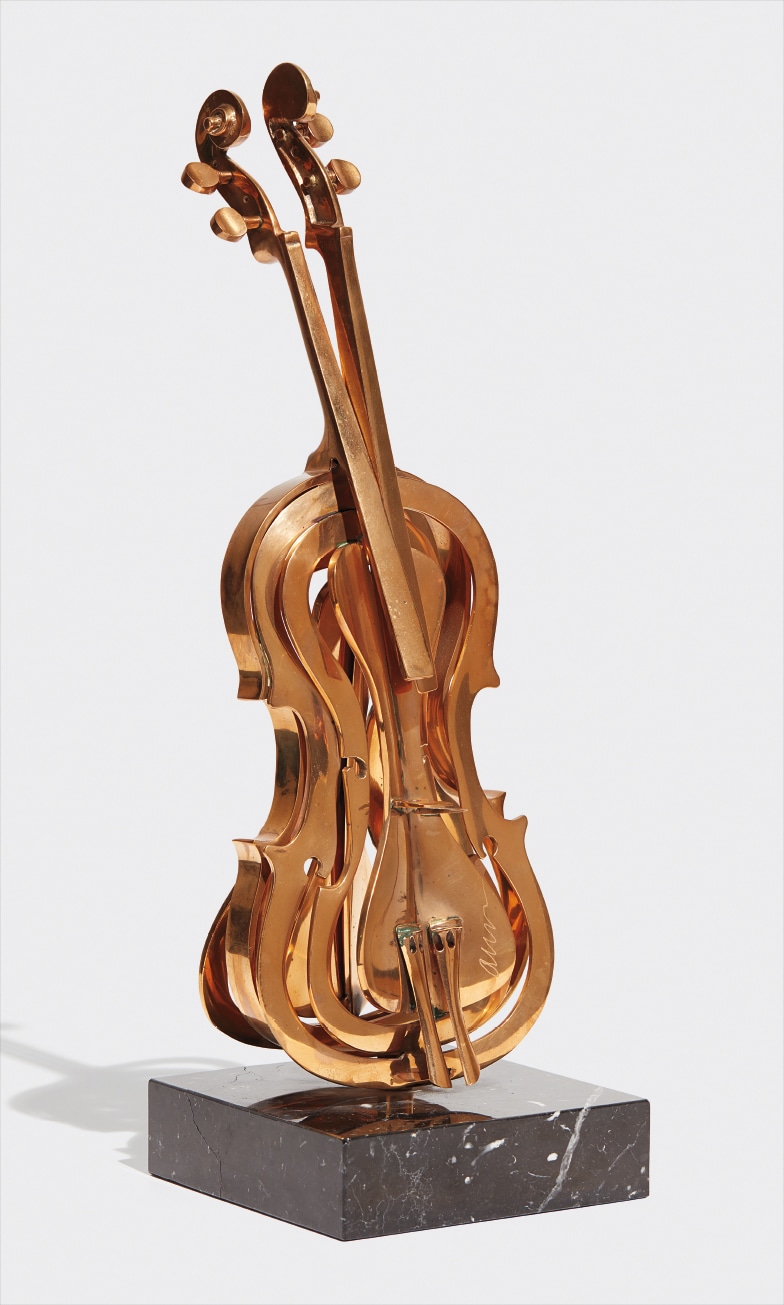
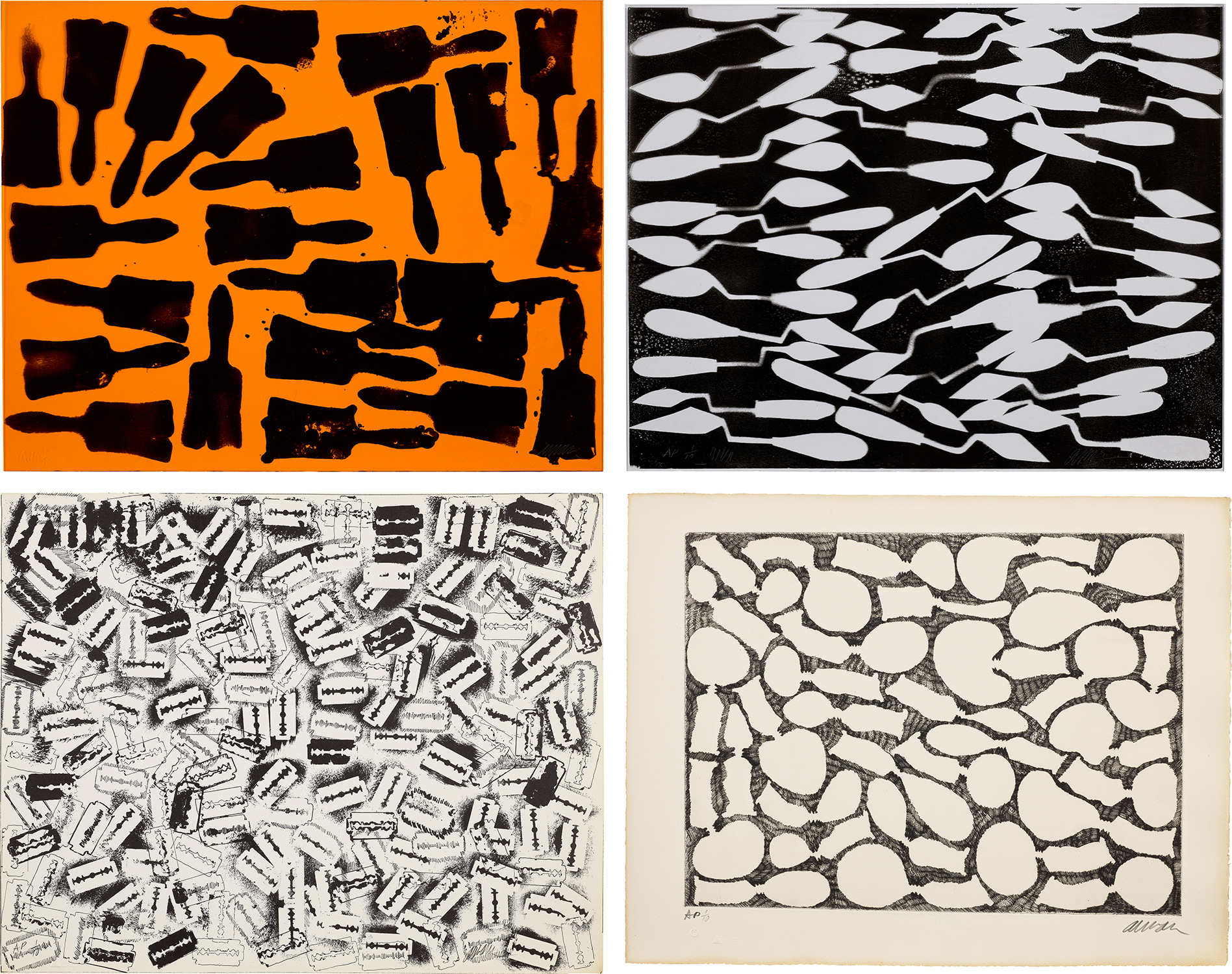
No artist interrogated the musical instrument more relentlessly or more conceptually than Arman. The French American sculptor, born Armand Fernandez in Nice in 1928, made instruments central to his practice across decades of work. His accumulations, in which he gathered and encased multiples of a single object, and his coupes, in which he sliced instruments into cross sections and mounted them on canvas or board, transformed the violin and the cello from objects of beauty into objects of inquiry. There is genuine violence in these works, and genuine tenderness too.
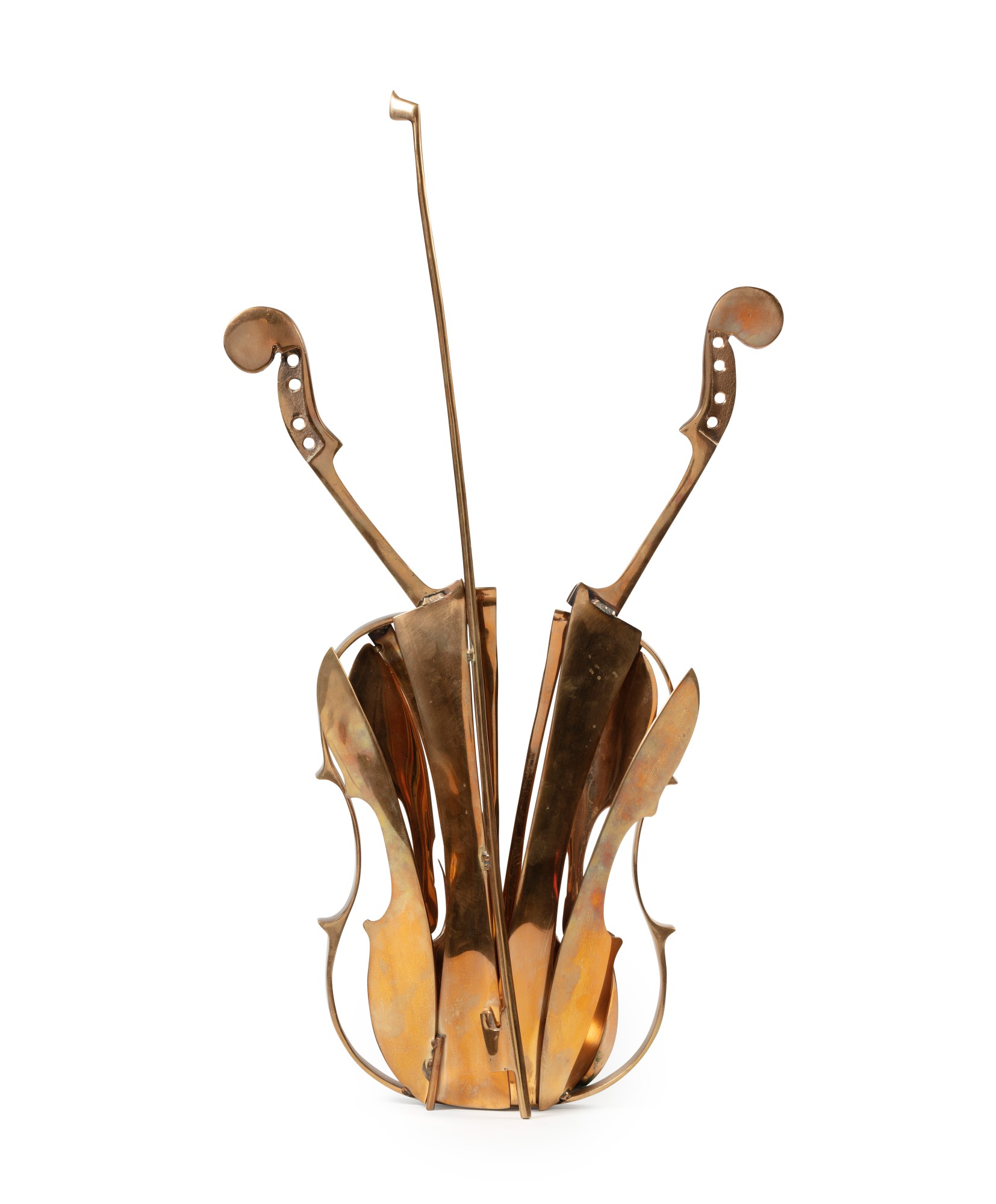
Arman
Violon de Venise, 2004
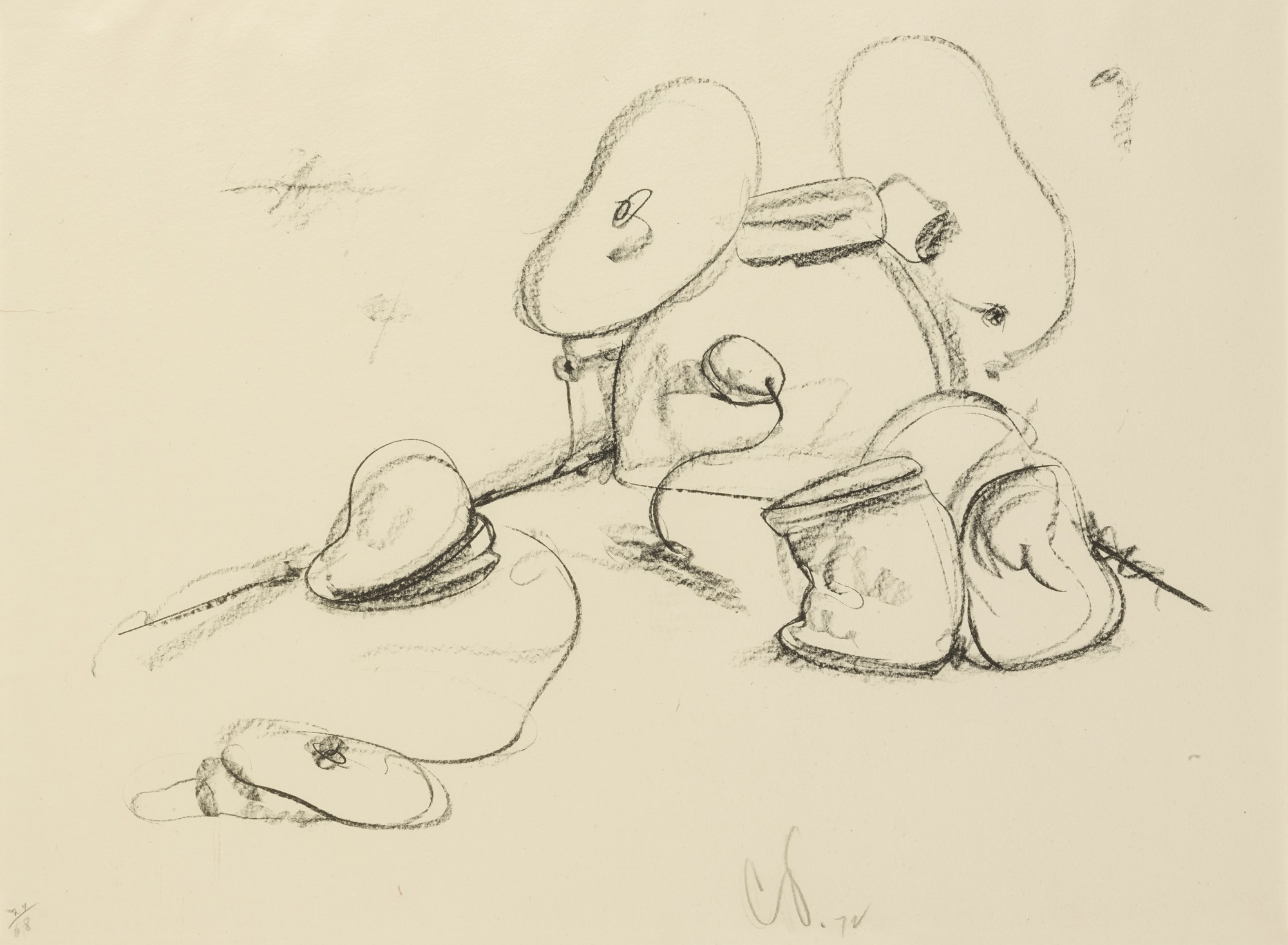
Arman understood that to destroy an instrument is also to reveal it, to expose the internal logic of its construction, the hidden geometry that makes music possible. His work is particularly well represented on The Collection, offering collectors an unusual opportunity to trace the evolution of a sustained and serious artistic investigation. Claes Oldenburg approached the question from yet another angle. His soft sculptures of the 1960s deflated hard objects into limp, yielding forms, and the musical instrument provided ideal material for this kind of comic and melancholic transformation.
A drum kit or a trumpet rendered in vinyl and kapok loses its authority, its sonic potential, its claim to mastery. Oldenburg was always interested in the gap between a thing's purpose and its presence, and few objects carry as much cultural weight as an instrument waiting to be played. What unites these wildly divergent approaches across five centuries is a shared recognition that the musical instrument occupies a uniquely charged position in our imaginative lives. It is an object that exists entirely in anticipation of a event, of sound, of performance, of human breath or touch.
In visual art, that event is permanently deferred. The painting or sculpture holds the instrument in a state of perpetual readiness, trembling on the edge of music that will never come. That tension, between silence and sound, between the visible and the audible, between the still and the animated, is what makes the musical instrument in art so inexhaustibly compelling. Collectors who respond to this theme are responding to something fundamental about what visual art does, and what it cannot do, and why that incompleteness is so beautiful.