Letterpress
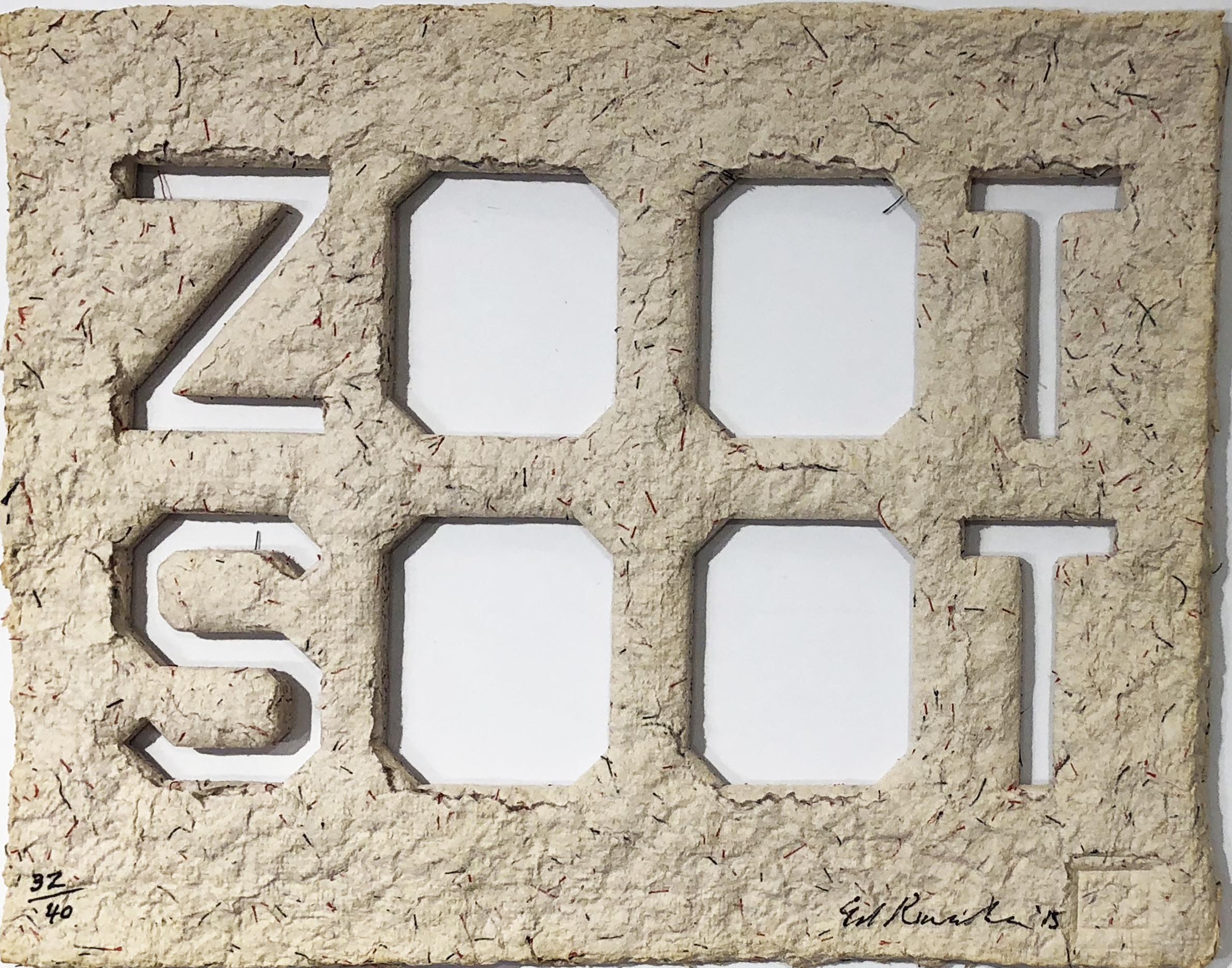
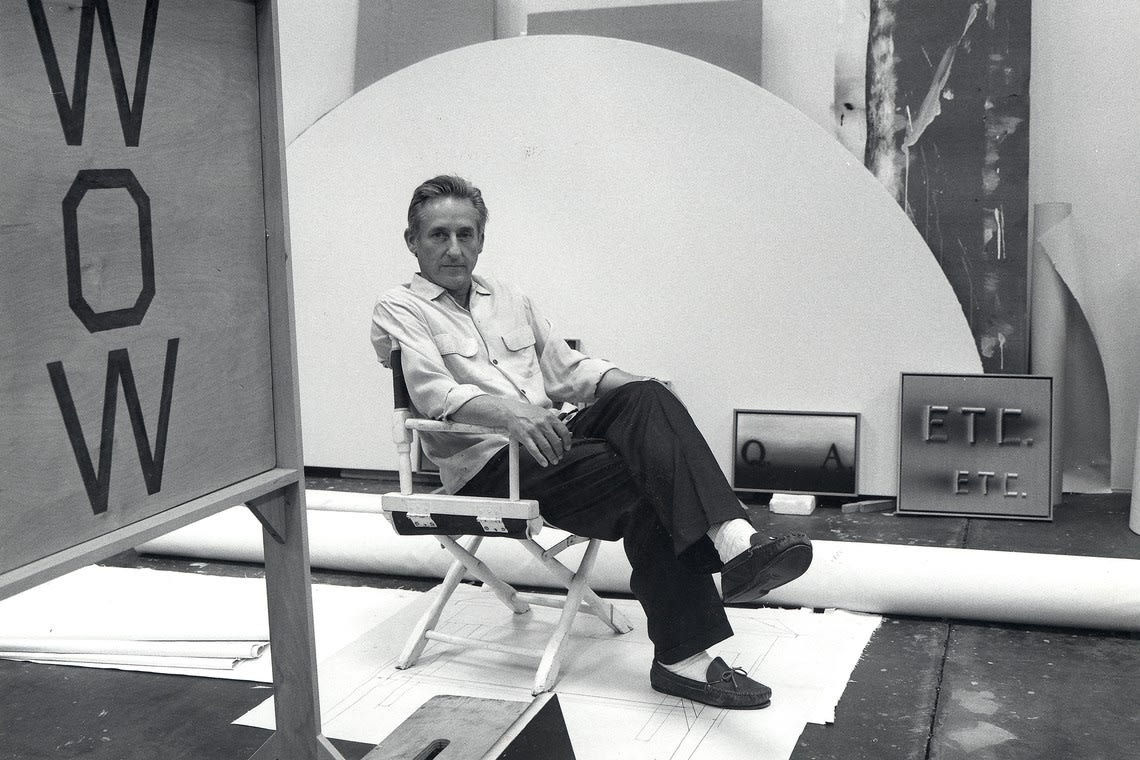
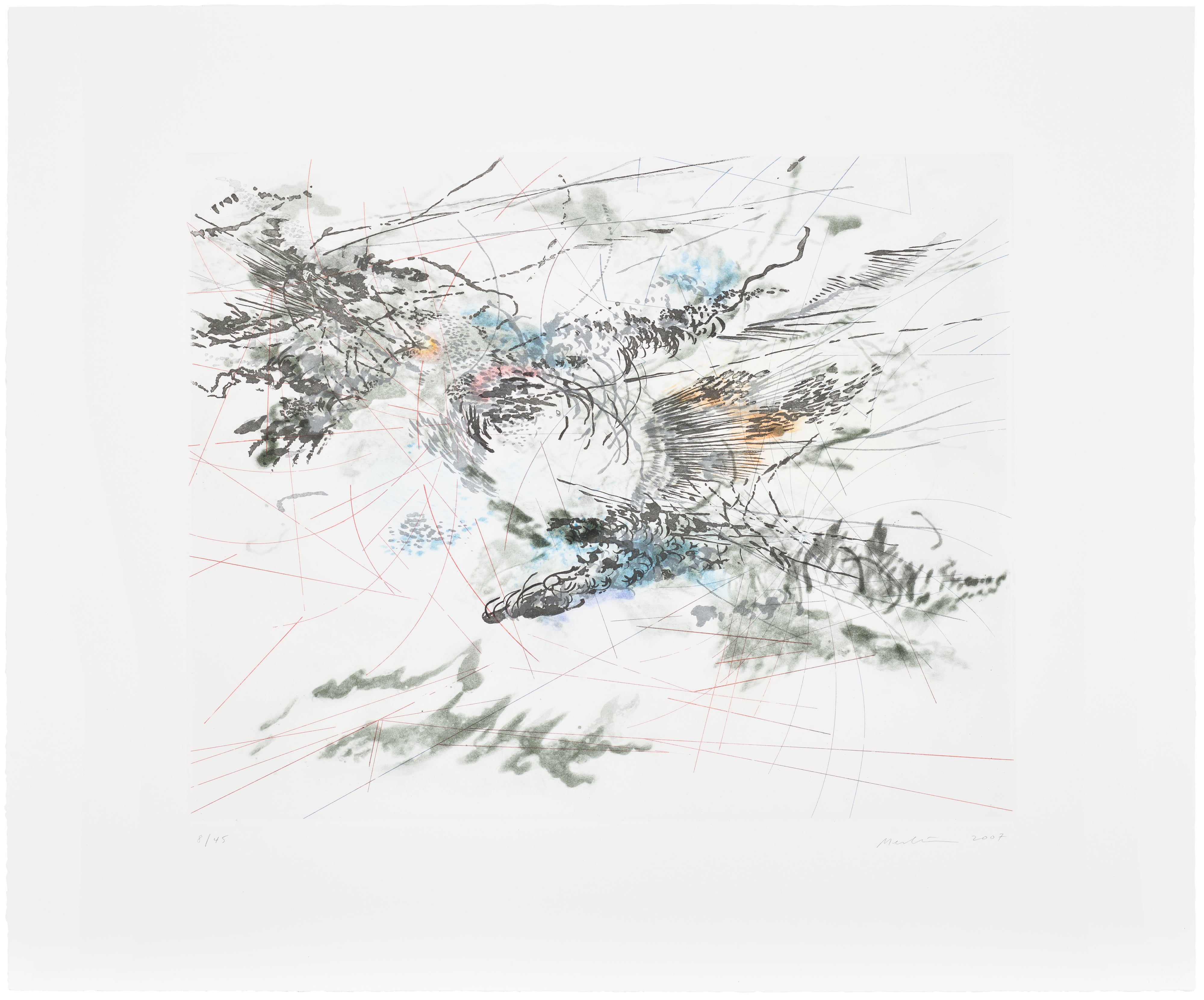
Ed Ruscha
Zoot Soot, 2015
The Press That Refused to Go Quiet
There is something almost alchemical about the moment a inked type block meets dampened paper under pressure, leaving behind not just an image but an impression, a physical memory pressed into the surface itself. Letterpress printing occupies a unique position in the story of art and communication, hovering between craft and fine art, between utility and expression, between the handmade and the mechanically reproduced. Its revival over the past three decades has attracted serious artists, passionate collectors, and a new generation of makers who understand that slowness and deliberateness can themselves be a form of meaning. The origins of letterpress stretch back to Johannes Gutenberg's development of movable type in the 1440s, a technology so transformative that historians routinely place it alongside the wheel and the steam engine as one of civilisation's pivotal inventions.
For nearly five centuries, letterpress was simply how the world communicated in print. Books, newspapers, broadsides, theatre bills, political pamphlets: all of it came off a press. The tactile quality we now find so seductive was simply the byproduct of functional necessity. Nobody was celebrating the impression; it was just what printing looked like.
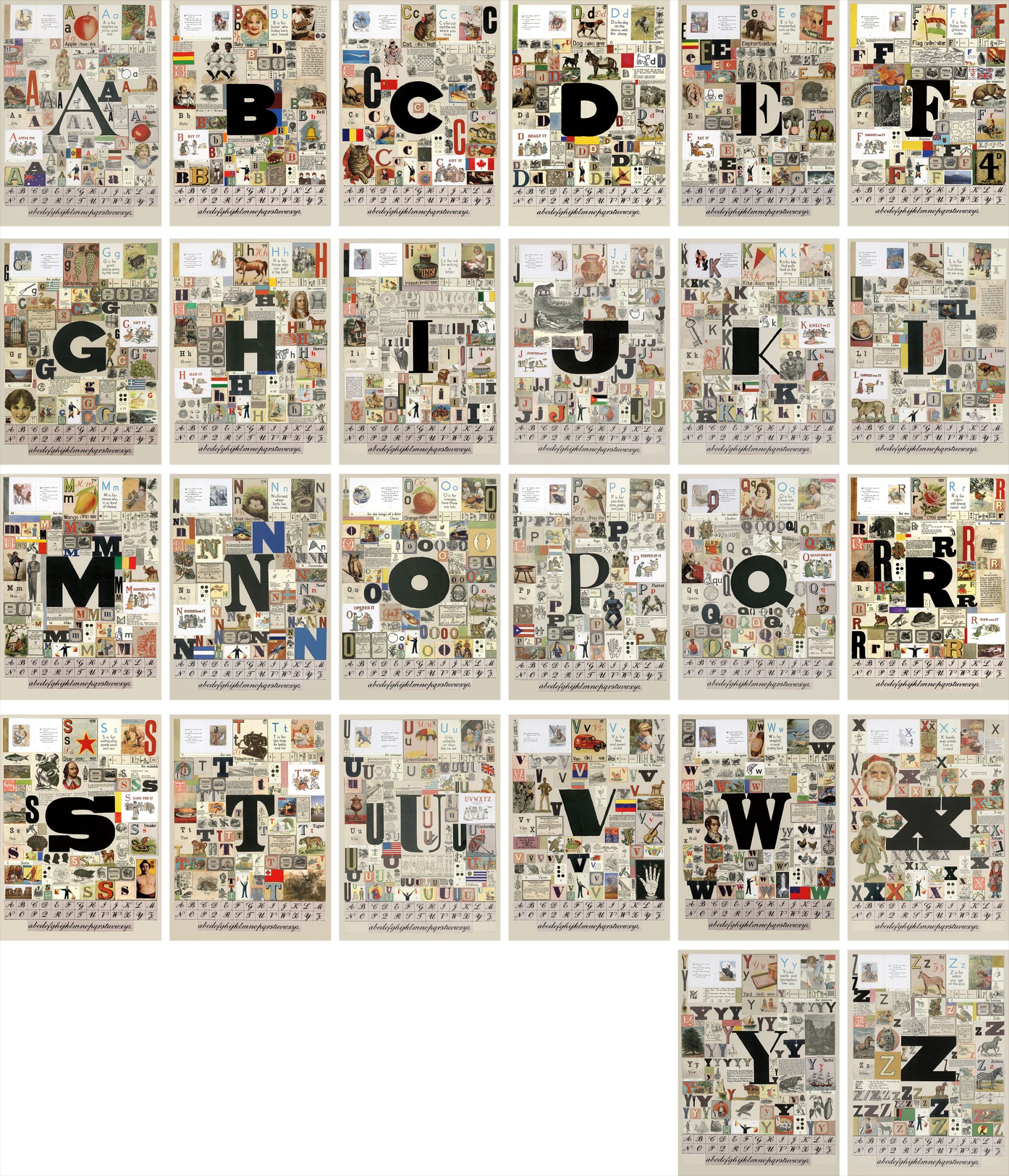
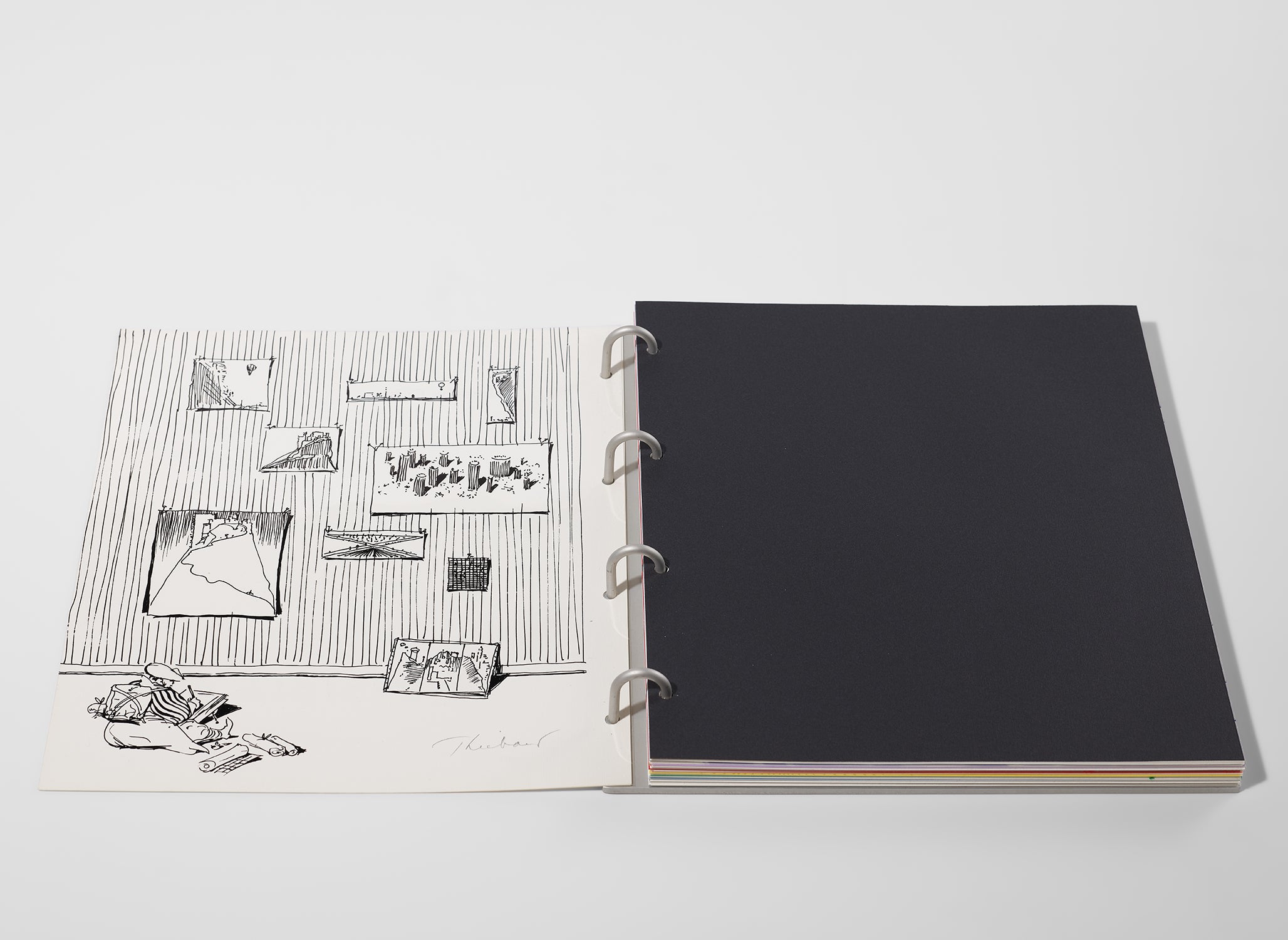
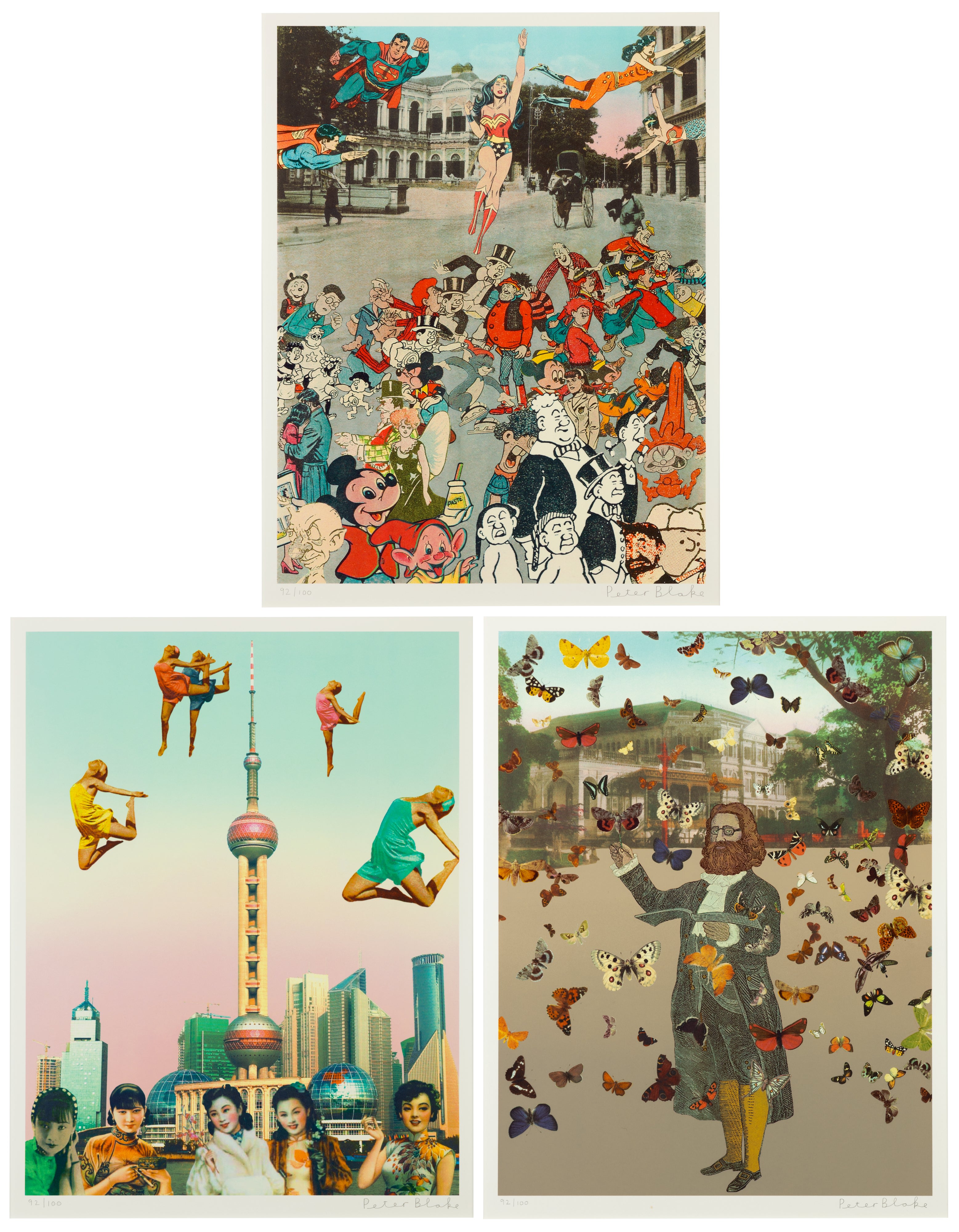
Peter Blake
An Alphabet
The shift began in earnest in the mid twentieth century, when offset lithography made letterpress commercially obsolete almost overnight. By the 1960s and 1970s, the great printing houses were selling off their equipment for pennies. What happened next is one of the more quietly remarkable stories in recent art history. Artists, poets, and small press enthusiasts began rescuing Vandercook proof presses and tabletop Kelsey platen presses from scrap yards and closing print shops, recognising in them a potential for expression that industrial efficiency had dismissed entirely.
The very slowness that made letterpress uncompetitive became the point. The fine press movement, which had been simmering since William Morris founded the Kelmscott Press in 1891, provided an intellectual framework for this rescue operation. Morris had argued that beautiful printing was a moral act, a resistance to the cheapening of visual culture under industrial capitalism. That argument found new audiences in the counterculture of the 1960s, and then again among the craft revivalists of the 1990s and the early 2000s.
Ed Ruscha
Zoot Soot, 2015
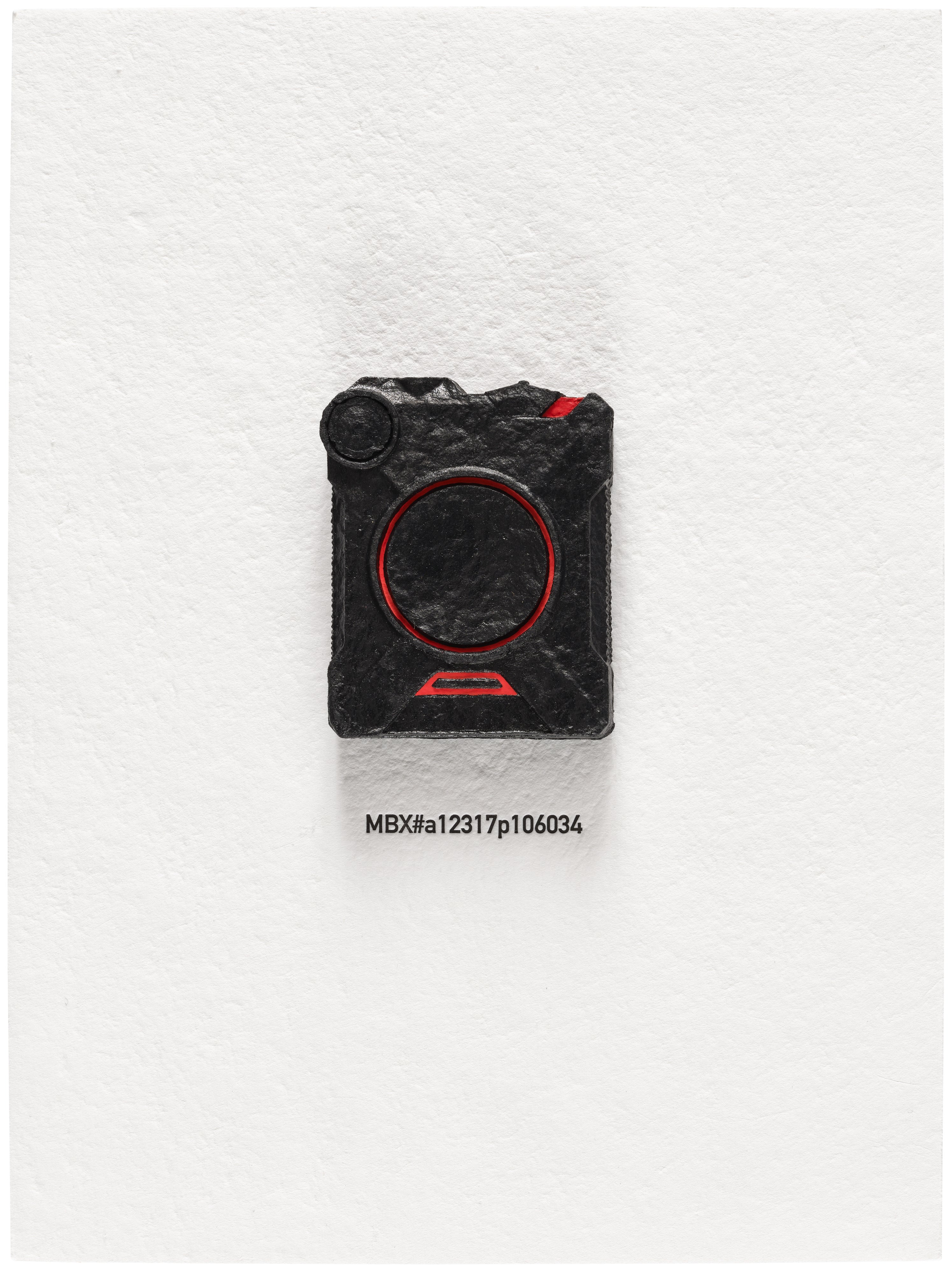
The establishment of university programs in book arts, particularly at institutions like the San Francisco Center for the Book and the Minnesota Center for Book Arts, gave letterpress a pedagogical home and a new cohort of serious practitioners. What makes letterpress genuinely interesting as an art form rather than simply a nostalgic hobby is the way it has attracted artists whose primary practices are rooted elsewhere. Ed Ruscha, whose work on The Collection reflects his lifelong preoccupation with language as both image and object, recognised early on that printing technologies were not neutral vehicles but carried their own freight of meaning and association. His artist books and prints from the 1960s onwards engaged seriously with the aesthetics of commercial reproduction even as they subverted it.
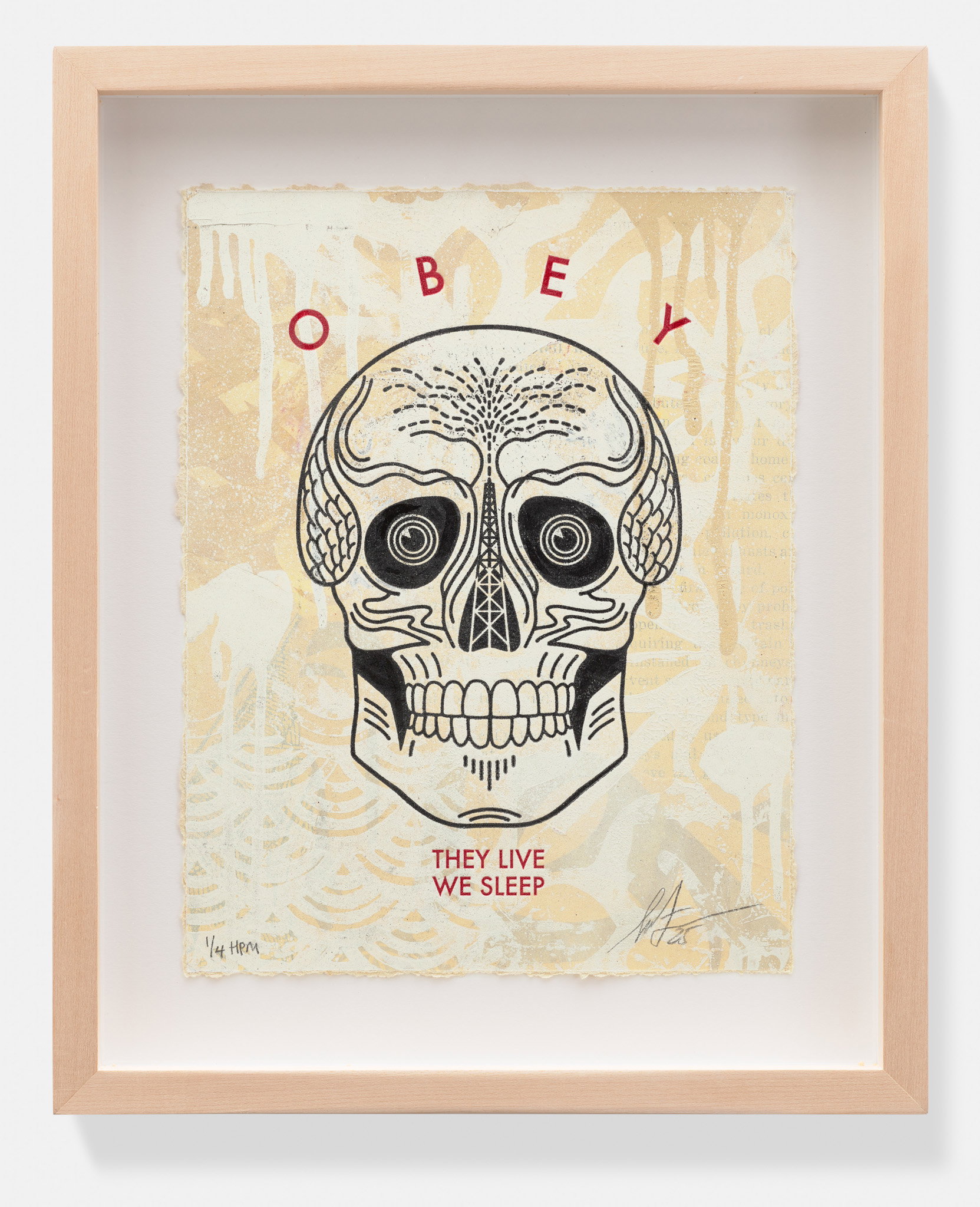
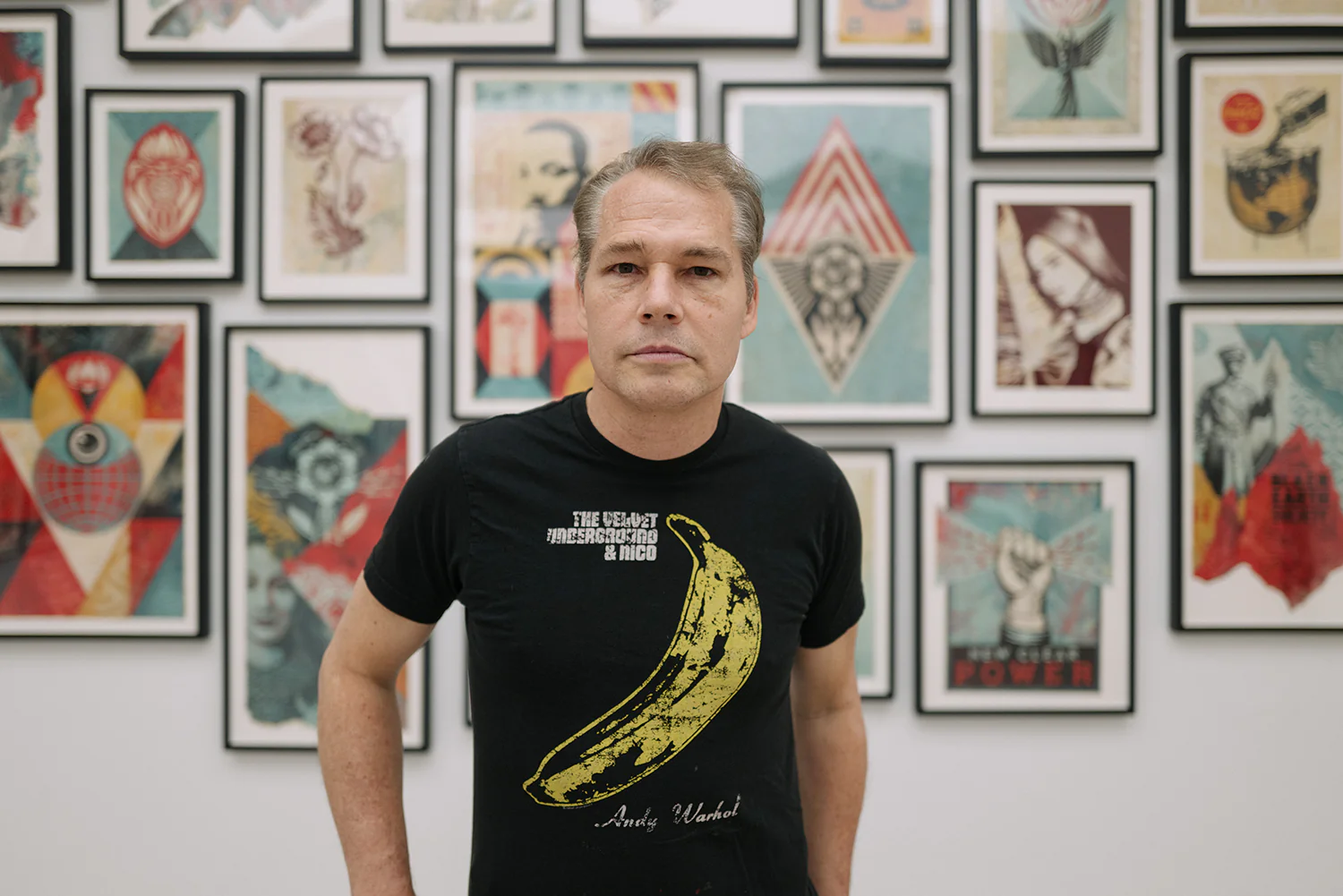
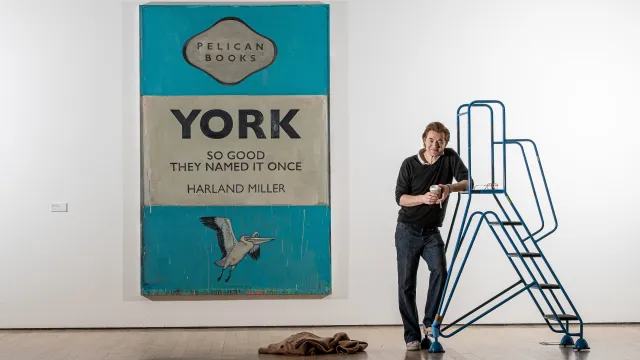
Harland Miller, also represented on The Collection, has made the relationship between text and visual culture central to his entire practice, and his work carries an unmistakable understanding of how typography shapes perception. The oversized, weather beaten paperback cover is his recurring motif, and its power depends entirely on our accumulated literacy in printed matter. Shepard Fairey, whose works on The Collection demonstrate his mastery of graphic agitation, comes from a tradition that owes a direct debt to the political broadside. Street poster culture, which Fairey helped transform into a recognised fine art practice, draws directly from the letterpress tradition of printing for distribution, for provocation, for reaching people who never set foot in galleries.
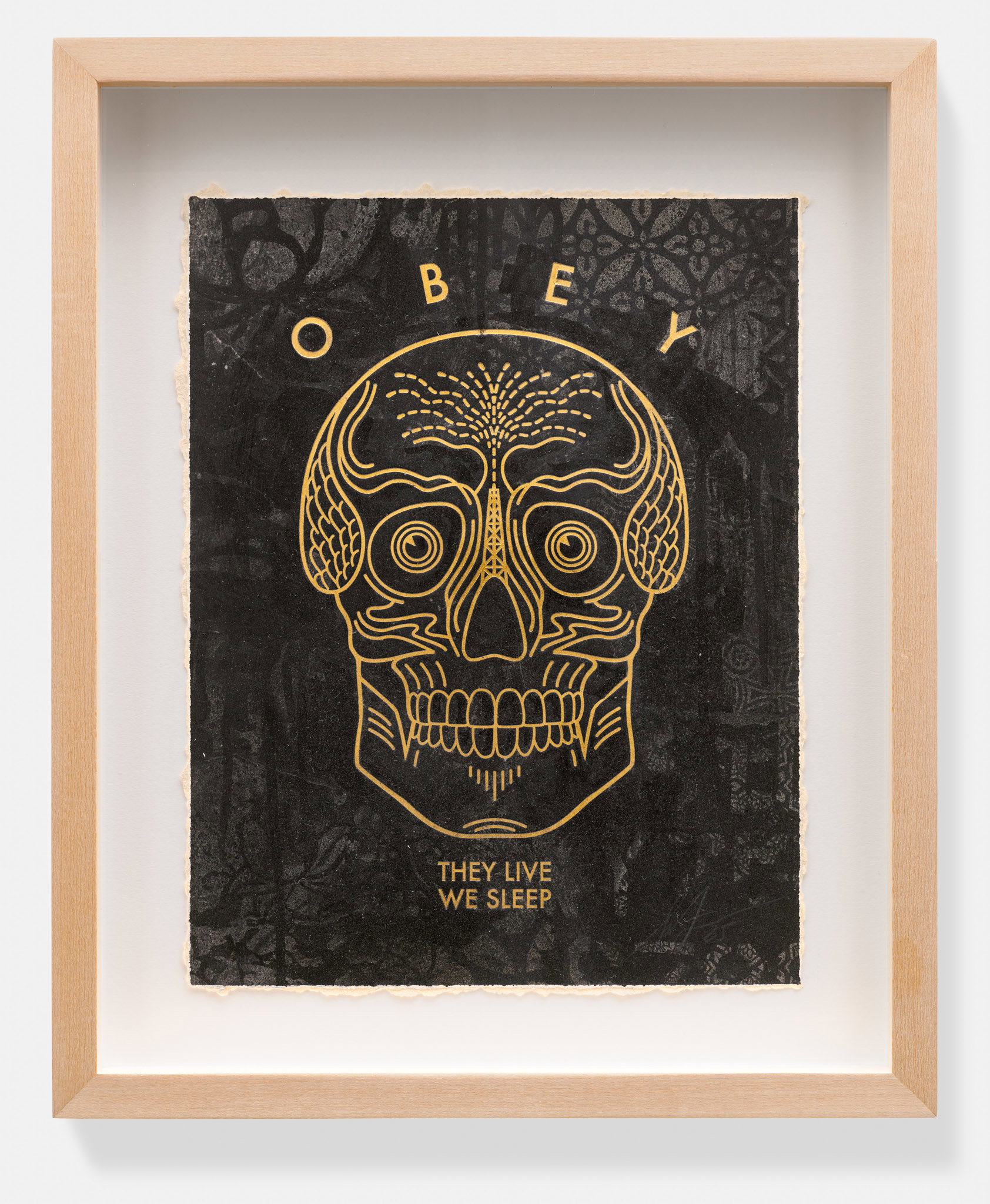
Shepard Fairey
They Live We Sleep (Black) 1/4, 2025
Sir Peter Blake, another artist well represented here, emerged from a Pop sensibility that was always attuned to the vernacular of print: circus posters, Victorian trade cards, the visual noise of popular culture that letterpress had generated for centuries before anyone thought to frame it. The techniques themselves reward careful attention. Traditional letterpress requires the artist or printer to think in reverse, setting type or carving blocks so that the mirror image will print correctly. The pressure applied, the viscosity of the ink, the dampness of the paper, the impression depth: all of these variables produce results that digital simulation cannot replicate.
The best letterpress work shows what printers call a kiss impression, where the type just grazes the paper without biting too deeply, or alternatively a deep deboss where the impression becomes almost sculptural. Contemporary practitioners argue fiercely about which approach is more authentic, which is itself a sign of a living tradition rather than a dead one. The cultural significance of letterpress extends well beyond aesthetics. The press has historically been a democratic instrument as much as an artistic one.
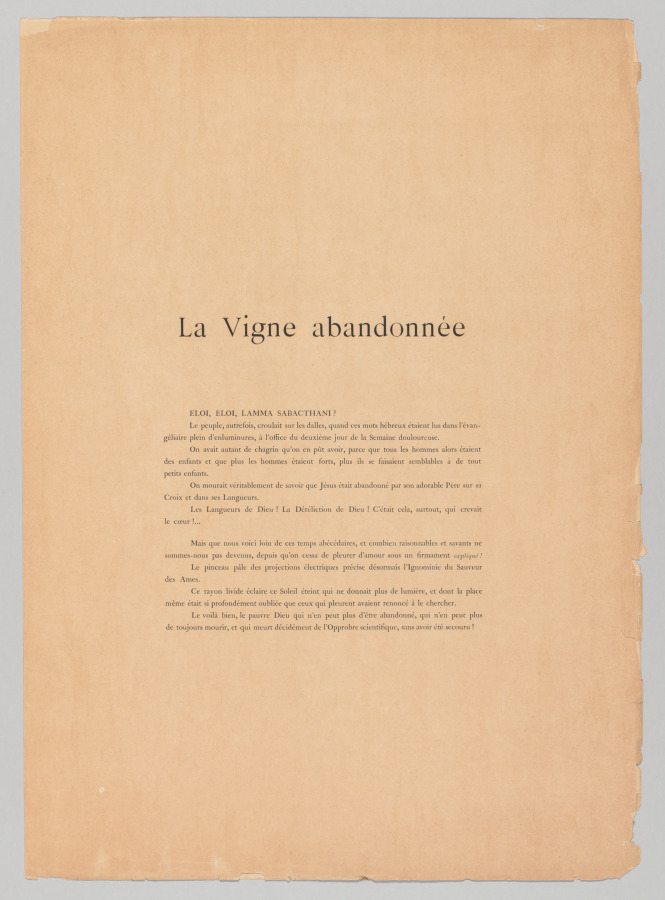
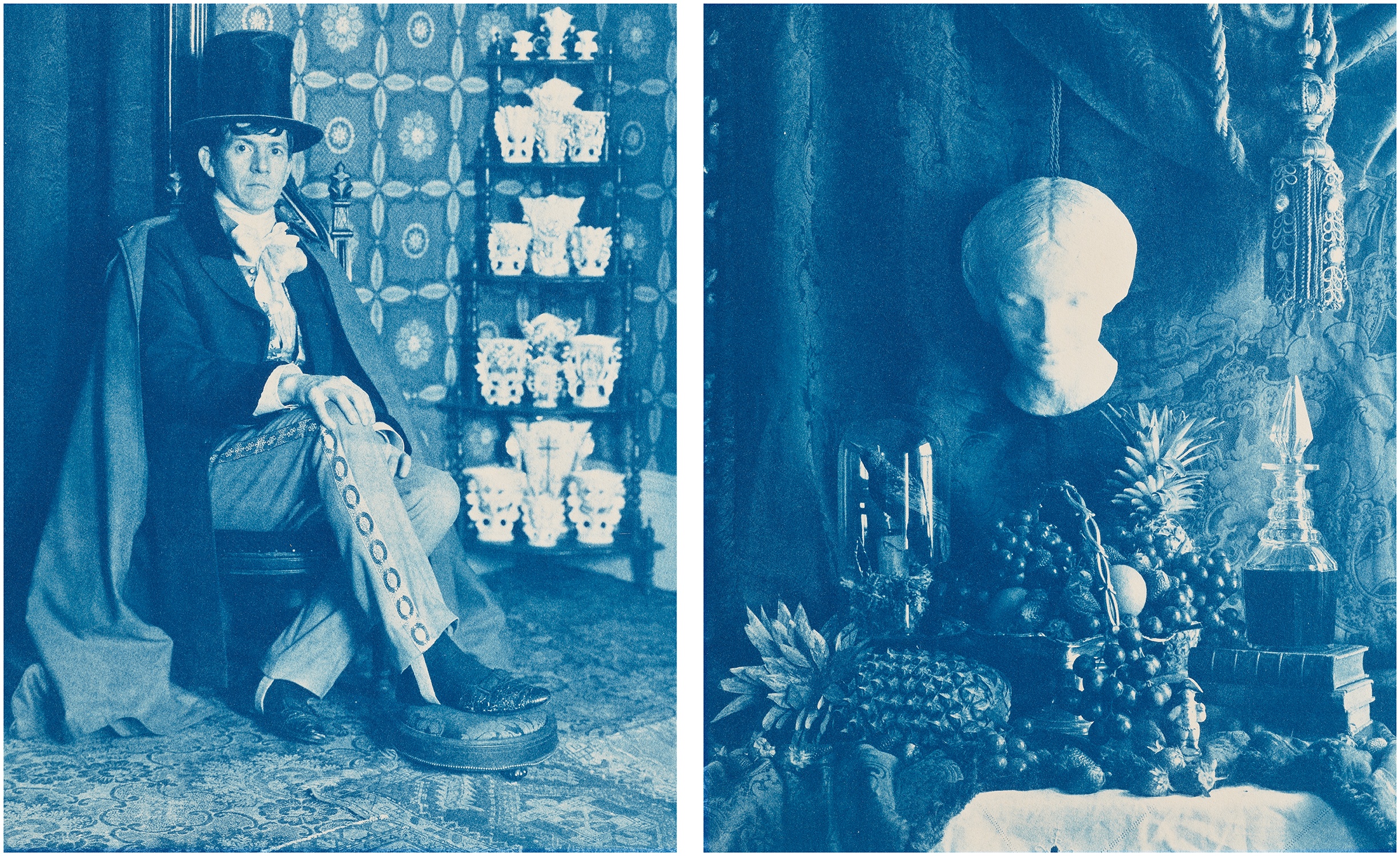
Henri de Groux
The Vintages: The Vintages!, 1894
The ability to print was the ability to speak at scale, and the history of letterpress is inseparable from the history of dissent. Abolitionists printed on letter presses. Suffragists printed on letter presses. The little magazines that carried modernism across the Atlantic were letterpress productions.
When artists return to this technology today, they are consciously or unconsciously aligning themselves with that history of urgent, committed making. In the broader art world of the present moment, letterpress occupies an interesting position alongside other print media. While screen printing and digital inkjet production have become standard in edition making, there is a growing collector appetite for work that carries evidence of its own making, where the hand and the machine are both visible in the result. The works on The Collection that engage with print traditions, whether directly through letterpress or through the broader lineage of graphic art, speak to a collecting sensibility that values materiality alongside concept.
A print that has been physically pressed into paper is asserting something about permanence and presence that a purely digital output simply cannot. What the revival of letterpress ultimately tells us is that technologies do not disappear so much as they find their true vocation. Freed from the demand to be efficient, the press became something more interesting: an instrument for making meaning slowly, carefully, and with full awareness of the centuries of communication that every piece of type carries with it. For collectors who understand that the best art is always in conversation with history, letterpress offers exactly that.