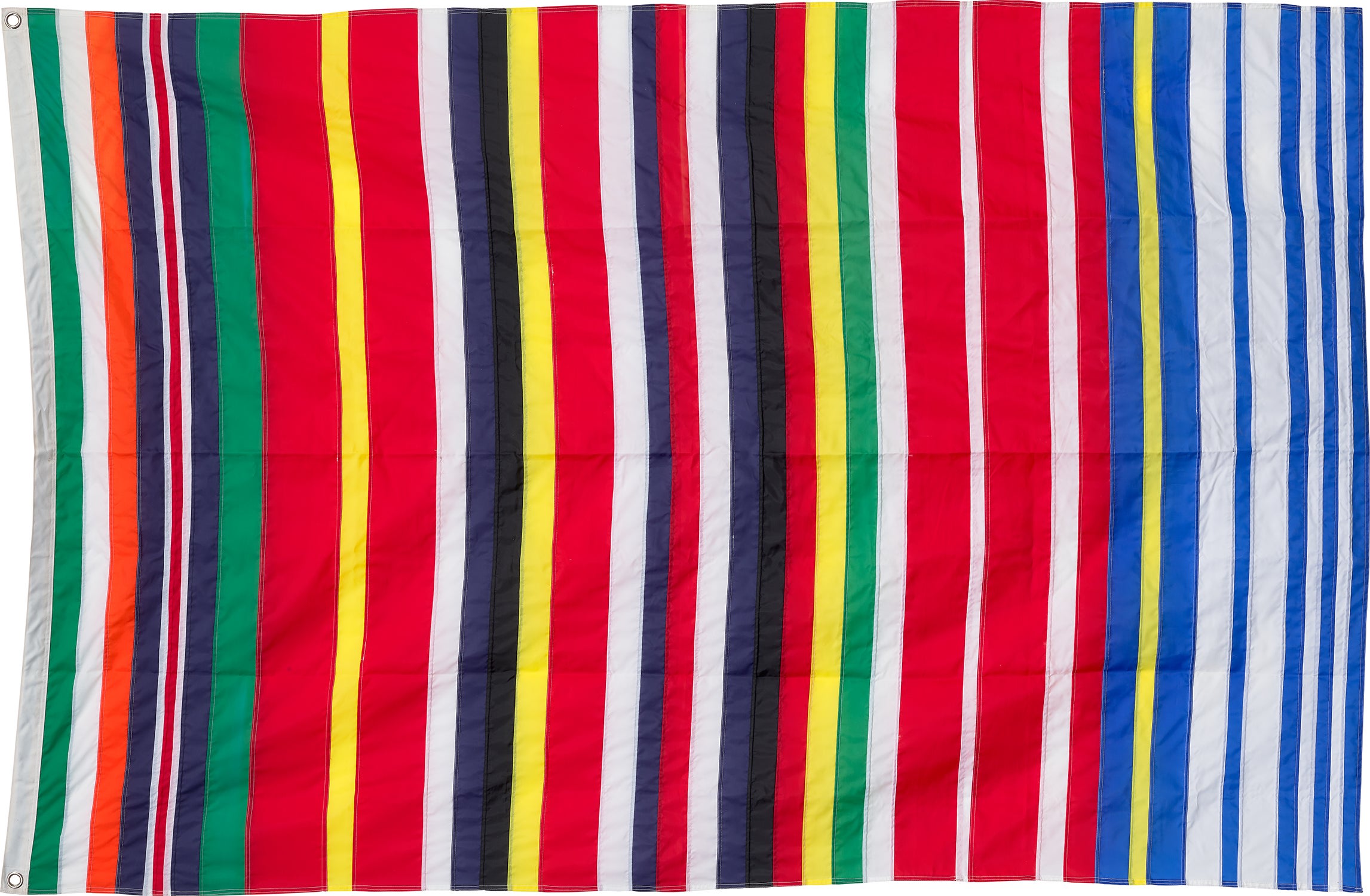
Flag
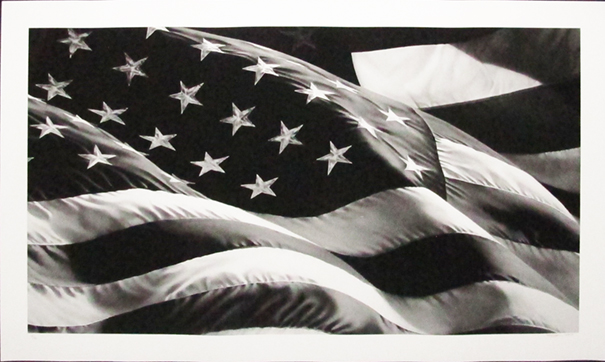
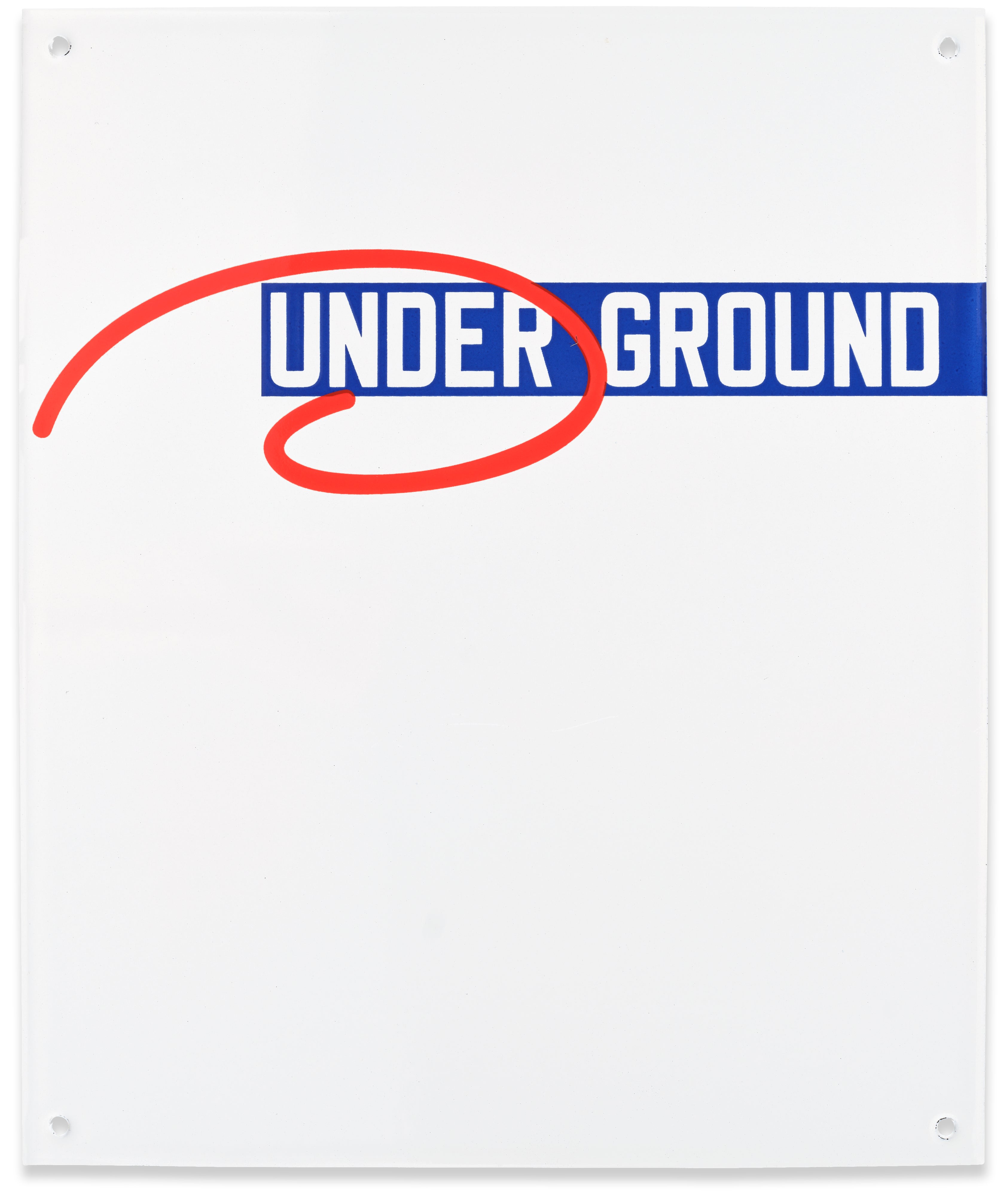
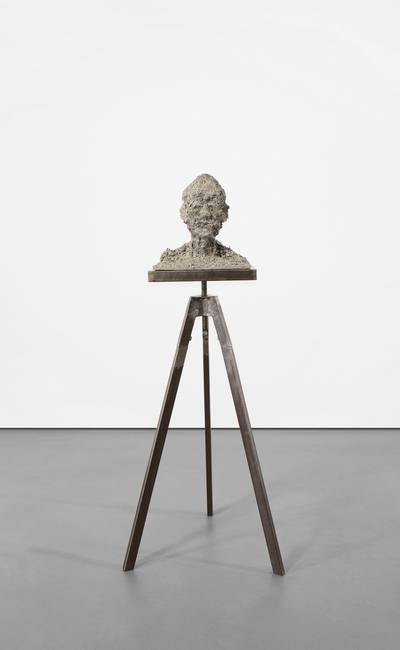
Robert Longo
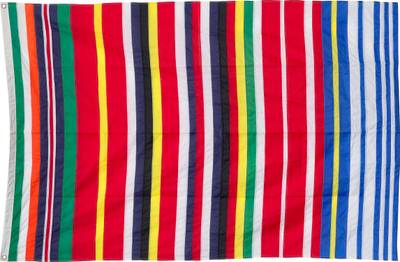
Untitled (Flag), 2013

The Flag Will Not Stop Meaning Things
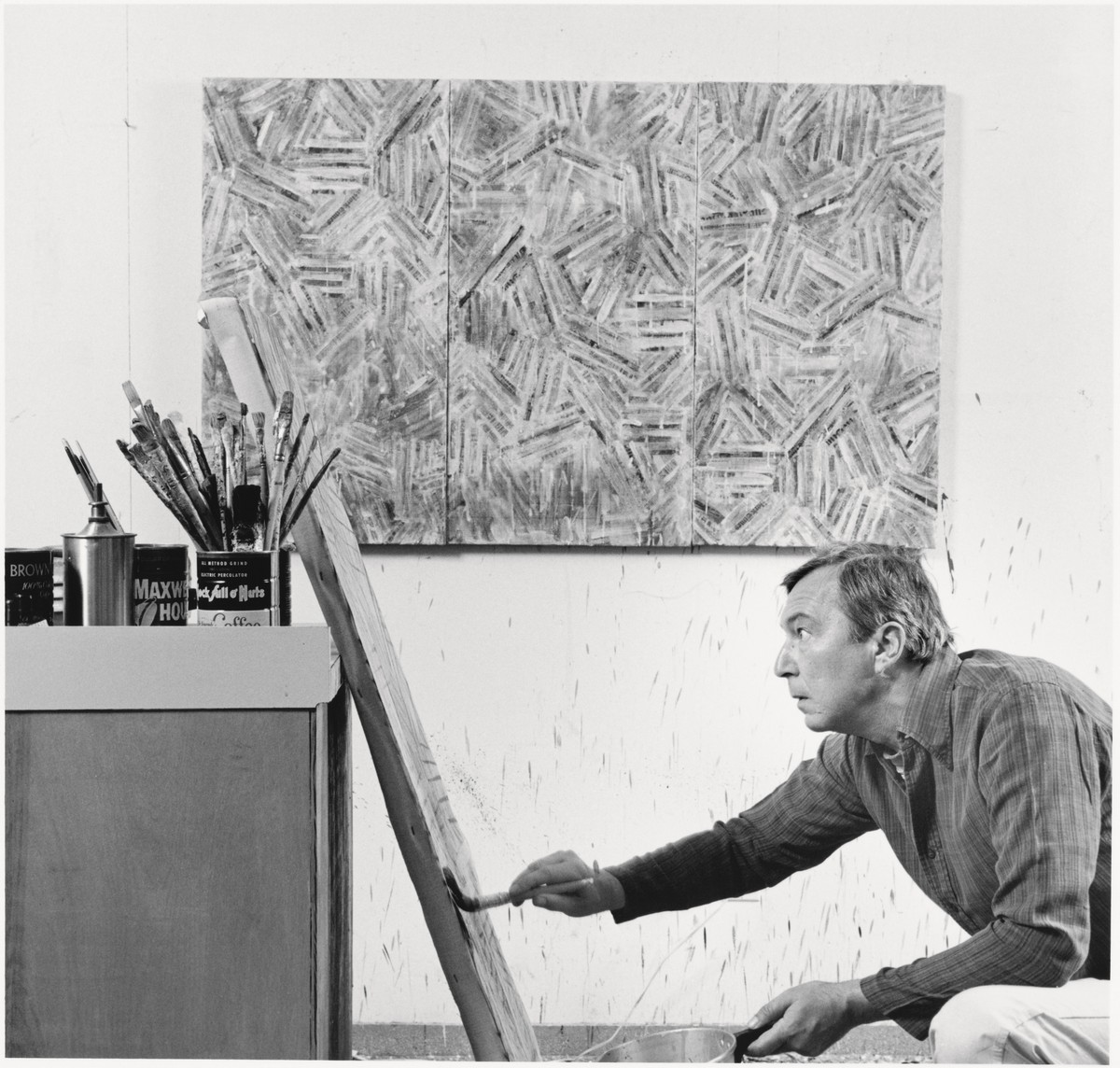
When Jasper Johns's 'Flag' from 1983 appeared at Christie's New York in November 2022, the room tightened in that particular way it does when everyone present understands they are watching something irreversible happen. The work sold well above estimate, a reminder that Johns's flags are not simply paintings of a national symbol but rather ongoing arguments about what painting itself can do. Fifty years after he first lifted that image from the world of signs and laid it flat against the picture plane, the market continues to treat each flag work as a philosophical event rather than a commodity. That kind of sustained urgency is rare, and collectors have noticed.
The flag as subject, as gesture, as provocation, has produced one of the most durably compelling conversations in postwar and contemporary art. Johns began the argument in 1954 when he dreamed of painting a large American flag and then did exactly that. But the conversation he opened has never been simply American and has never been simply about patriotism or its opposite. Artists across generations and continents have understood the flag as a compressed site where identity, power, grief, irony, and belonging collide in a single image.
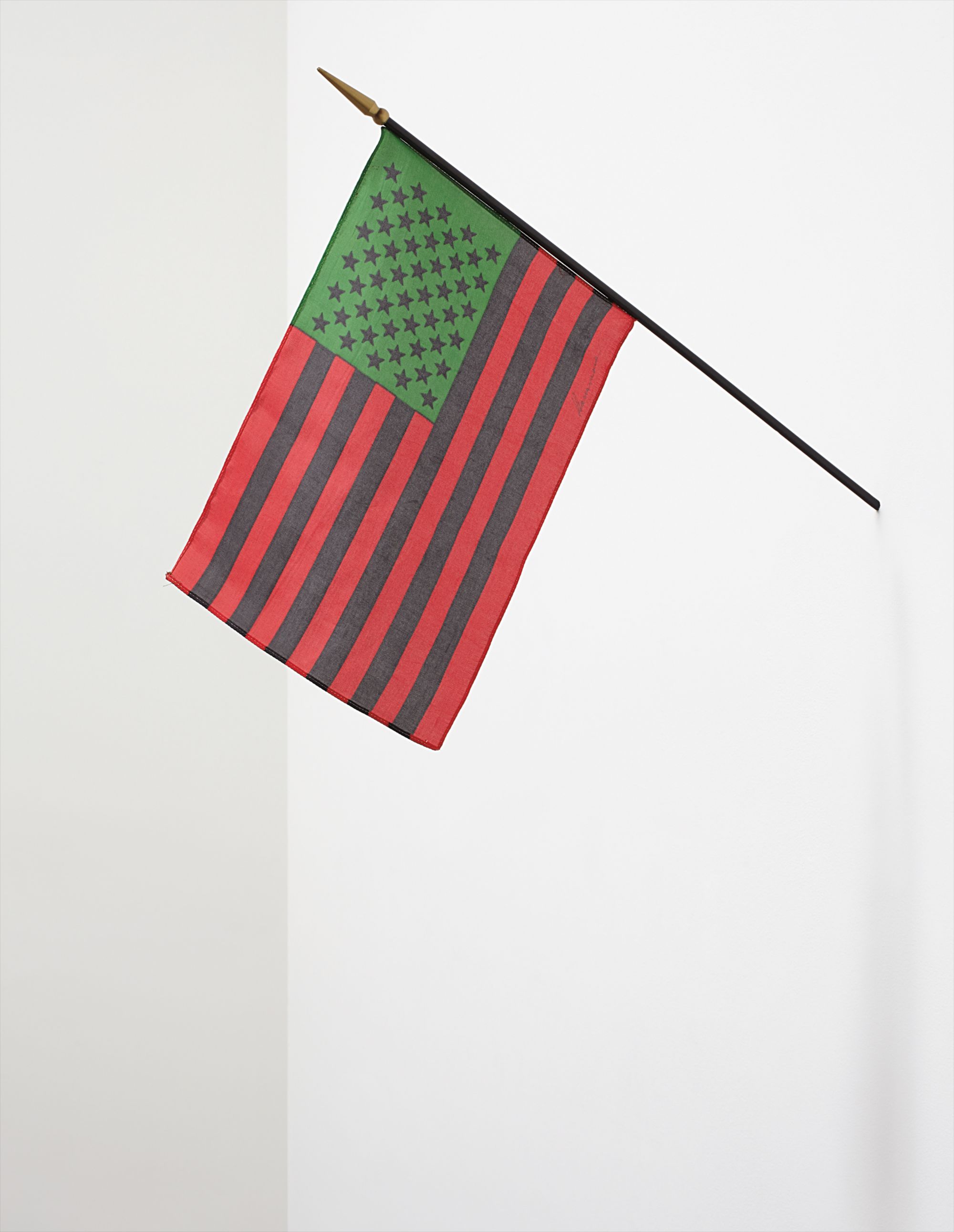
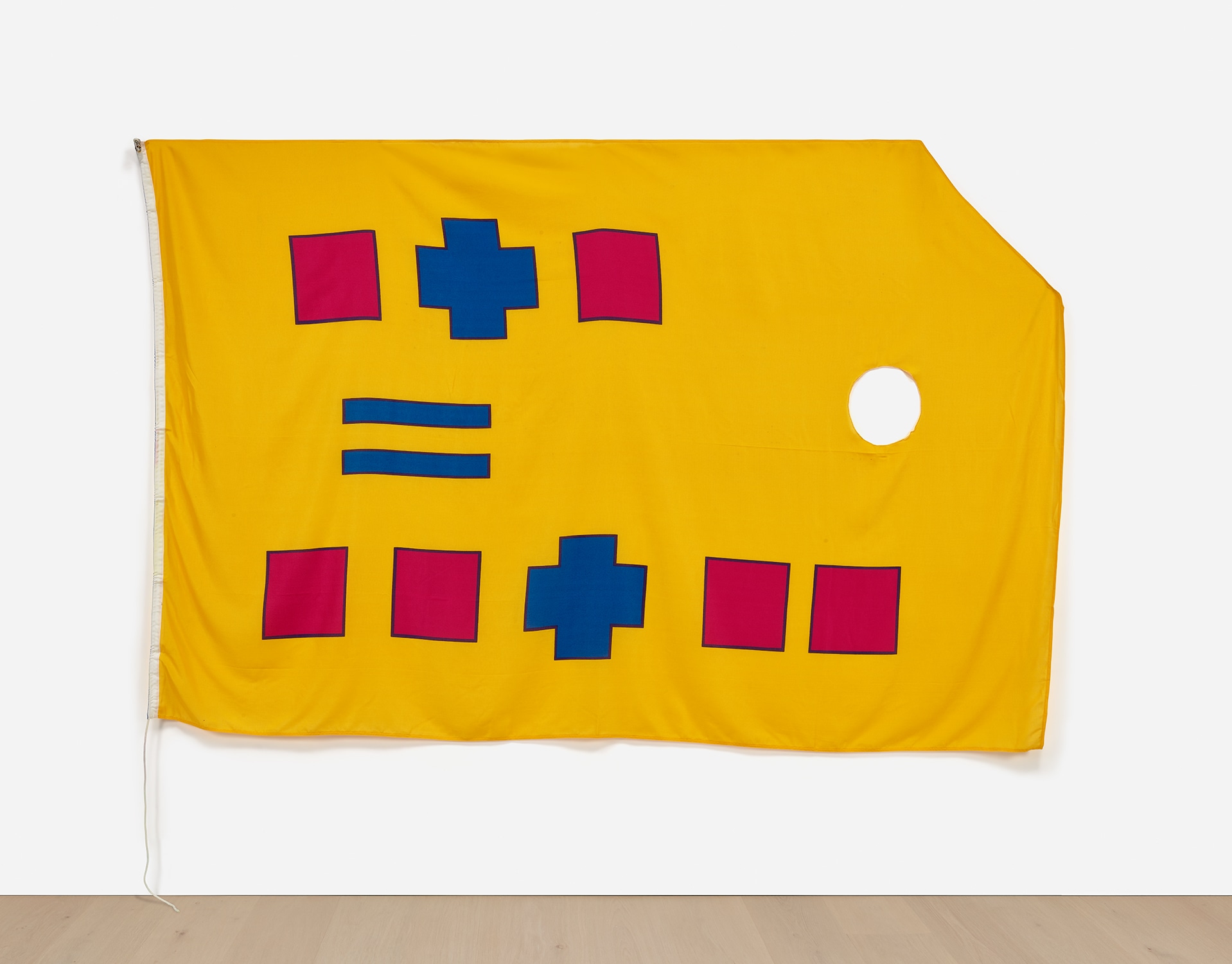
David Hammons
African American Flag
The works gathered on The Collection reflect exactly that breadth, bringing together voices as distinct as Danh Vô, Sara Rahbar, David Hammons, and Grayson Perry. Museum programming around flags has intensified over the past decade in ways that feel less like curatorial fashion and more like institutional necessity. The Whitney Museum's 2021 exhibition 'Grief and Grievance: Art and Mourning in America,' curated by Okwui Enwezor before his death and completed by Naomi Beckwith and others, placed the American flag at the center of a national reckoning. Hammons's work appeared in that context with devastating precision, his use of the flag not as decoration but as wound.
The show traveled and generated the kind of sustained critical writing that reshapes how collectors think about an entire category. At the auction level, the market signal is clear: works that engage the flag with genuine formal intelligence command serious prices. Johns leads the field by a considerable distance, with his encaustic flag paintings achieving results in the tens of millions when they appear. But the conversation around value has broadened meaningfully.
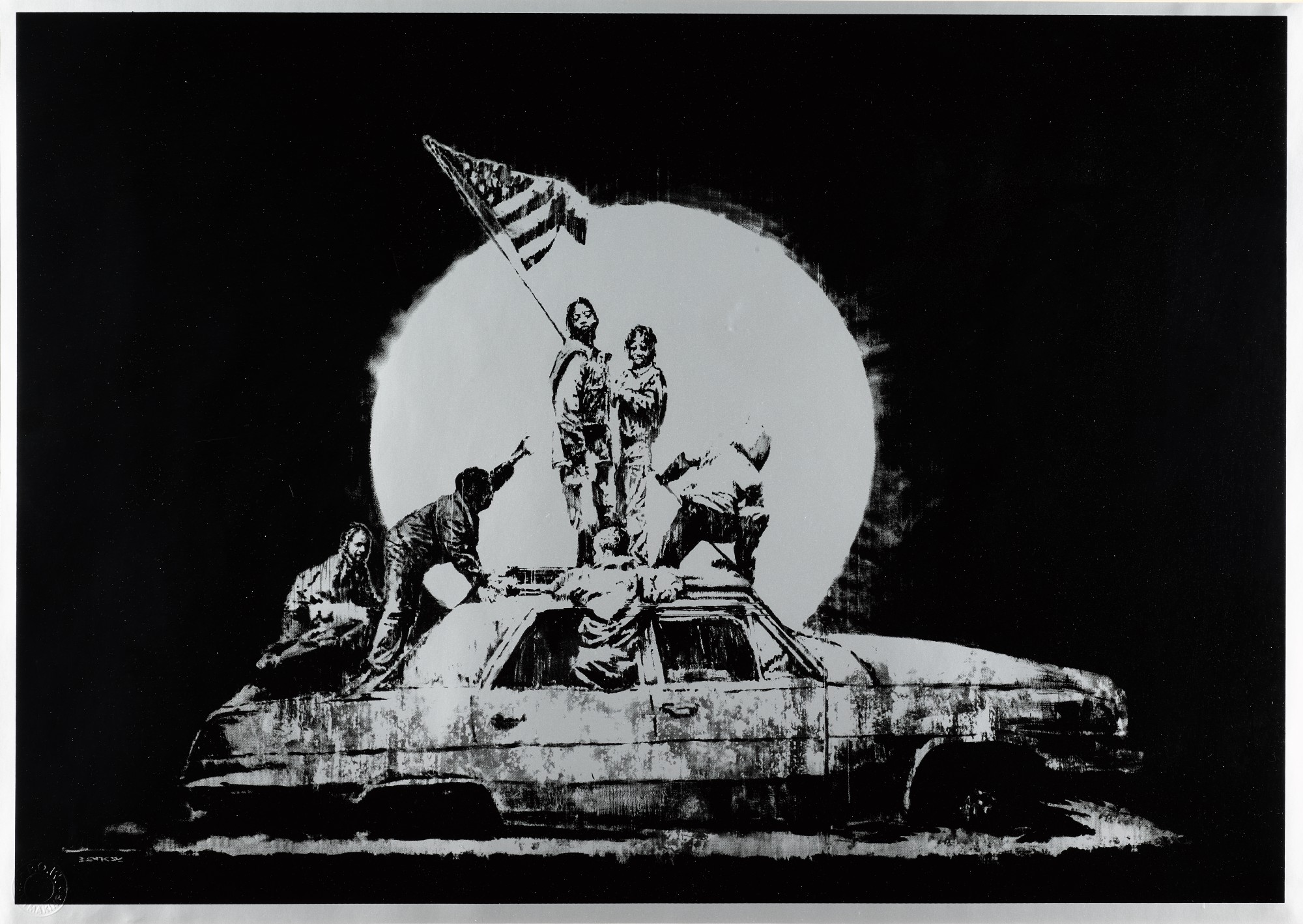
Banksy
Flag
Rahbar's flag works, which incorporate military surplus fabrics and hand embroidery into complex surfaces that speak of Iran and America simultaneously, have moved steadily through secondary market channels with increasing confidence. Danh Vô's engagement with flags, particularly his ongoing fragmentation of the Statue of Liberty's copper surface alongside works that address Vietnamese and American histories, has attracted sustained institutional attention that consistently precedes market appreciation. The institutions doing the most interesting collecting in this space are precisely those that understand flags as a lens onto larger questions rather than as a patriotic subcategory. The Museum of Modern Art holds the original 1954 Johns 'Flag' as one of its defining possessions, a work that seems to anchor the entire permanent collection conceptually.
The Smithsonian's American Art Museum has built thoughtfully around the flag as American vernacular and as site of critique, with works by Benny Andrews among others in the collection. The Tate in London has pursued artists like Grayson Perry whose flag works interrogate British identity with the same forensic tenderness he brings to everything else. Institutional collecting in this space signals that the flag conversation has achieved genuine art historical permanence rather than topical relevance alone. The critical writing shaping this conversation draws from multiple traditions and that pluralism feels like strength rather than incoherence.
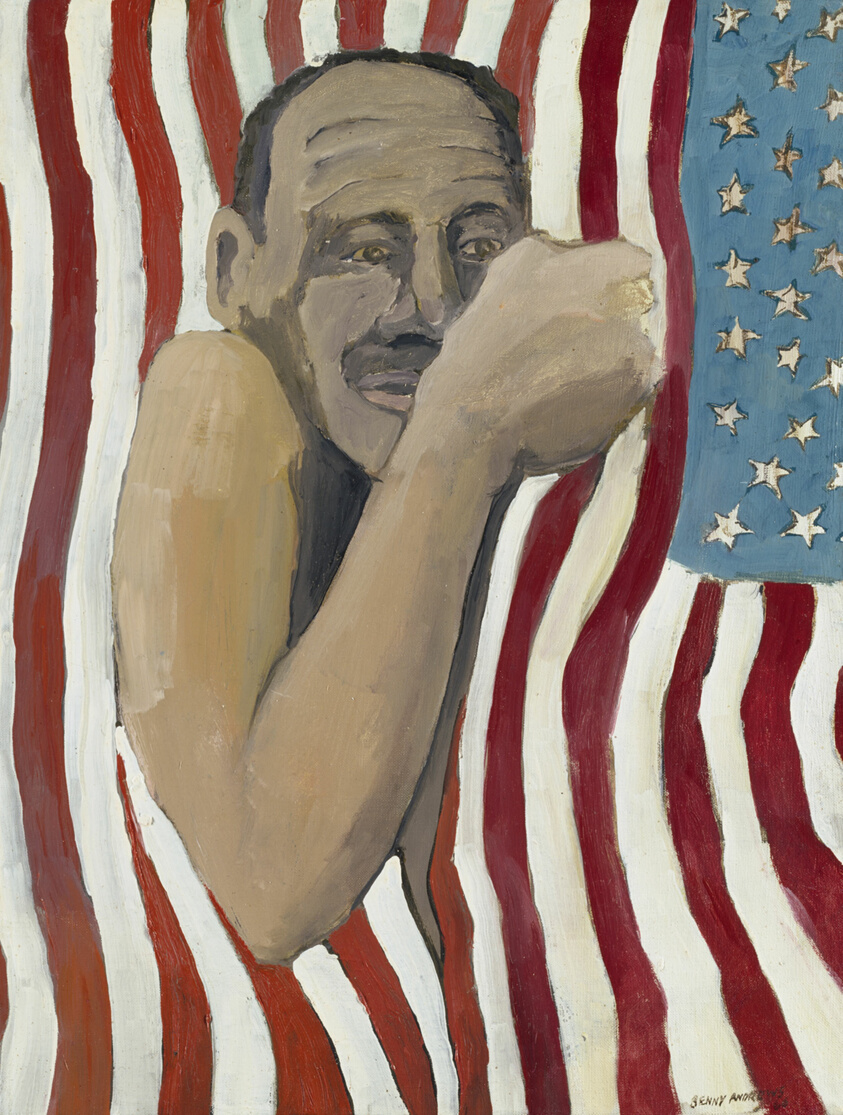
Benny Andrews
Flag Day, 1966
Hal Foster's essays on Johns continue to be foundational, particularly his attention to the way encaustic preserves the trace of making while simultaneously flattening representation. Toni Morrison's thinking about the American flag as a symbol that was never meant to include everyone has influenced a generation of curators working with artists like Hammons and Andrews. More recently, writers at publications including Artforum and frieze have brought sustained attention to Rahbar and Vô, treating their flag works not as political statements illustrated in paint or fabric but as genuinely complex formal propositions that earn their emotional power through material intelligence. William N.
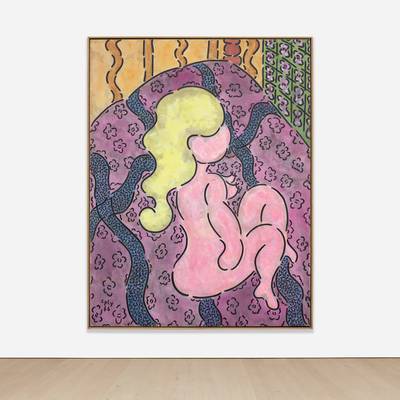
Copley's irreverent relationship to the American flag, rooted in his deep affection for Dada and Surrealism, offers a useful reminder that the flag has always attracted artists interested in comedy and subversion alongside those drawn to elegy. Banksy's flag imagery operates in a similar tradition of strategic mischief, reaching audiences that institutional art rarely touches while remaining formally sharp enough to hold critical attention. Ronnie Cutrone's work in this territory, emerging from his years in Warhol's Factory, carries a downtown New York energy that feels historically specific and presently resonant in the same breath. The energy right now feels concentrated around two tendencies that are moving in productive tension with each other.
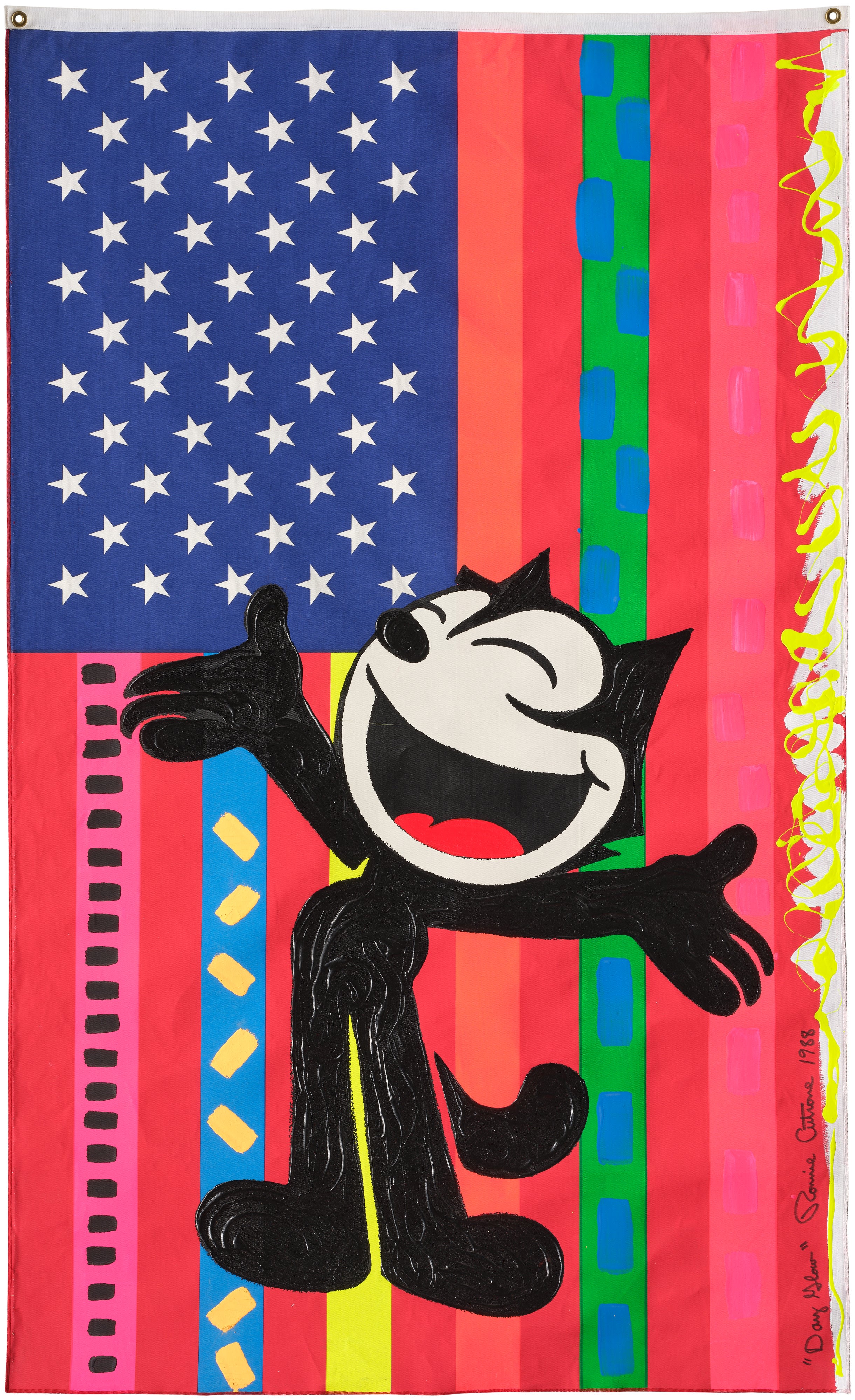
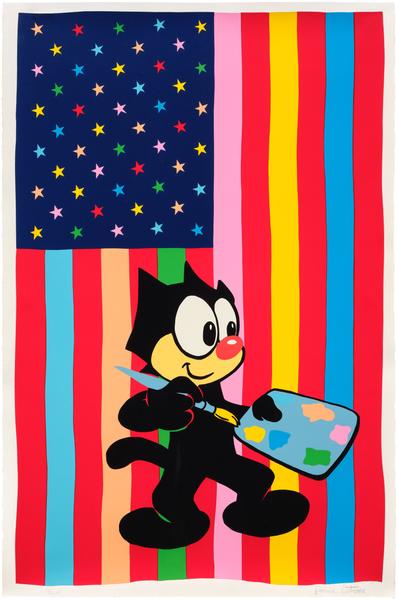
Ronnie Cutrone
Day Glow, 1988
The first is a deepening scholarly and market attention to artists whose flag works engage specific diasporic or postcolonial histories. Vô and Rahbar represent this tendency with particular eloquence, and there is real collecting momentum building around artists who treat the flag as a document of belonging and its refusal. The second tendency is a reassessment of the Johns legacy that goes beyond market reverence and looks again at the formal decisions he made, the encaustic surface, the newspaper layered underneath, the refusal of brushy expressionism, as a set of moves that younger painters are only now fully metabolizing. When those two tendencies meet, which they are beginning to do in group exhibitions and critical essays, something genuinely new becomes possible in how we understand what it means to paint a flag or sew one or burn one or fold it into a work that refuses easy resolution.
The collectors paying attention right now are the ones who will hold the most interesting works when that understanding crystallizes.
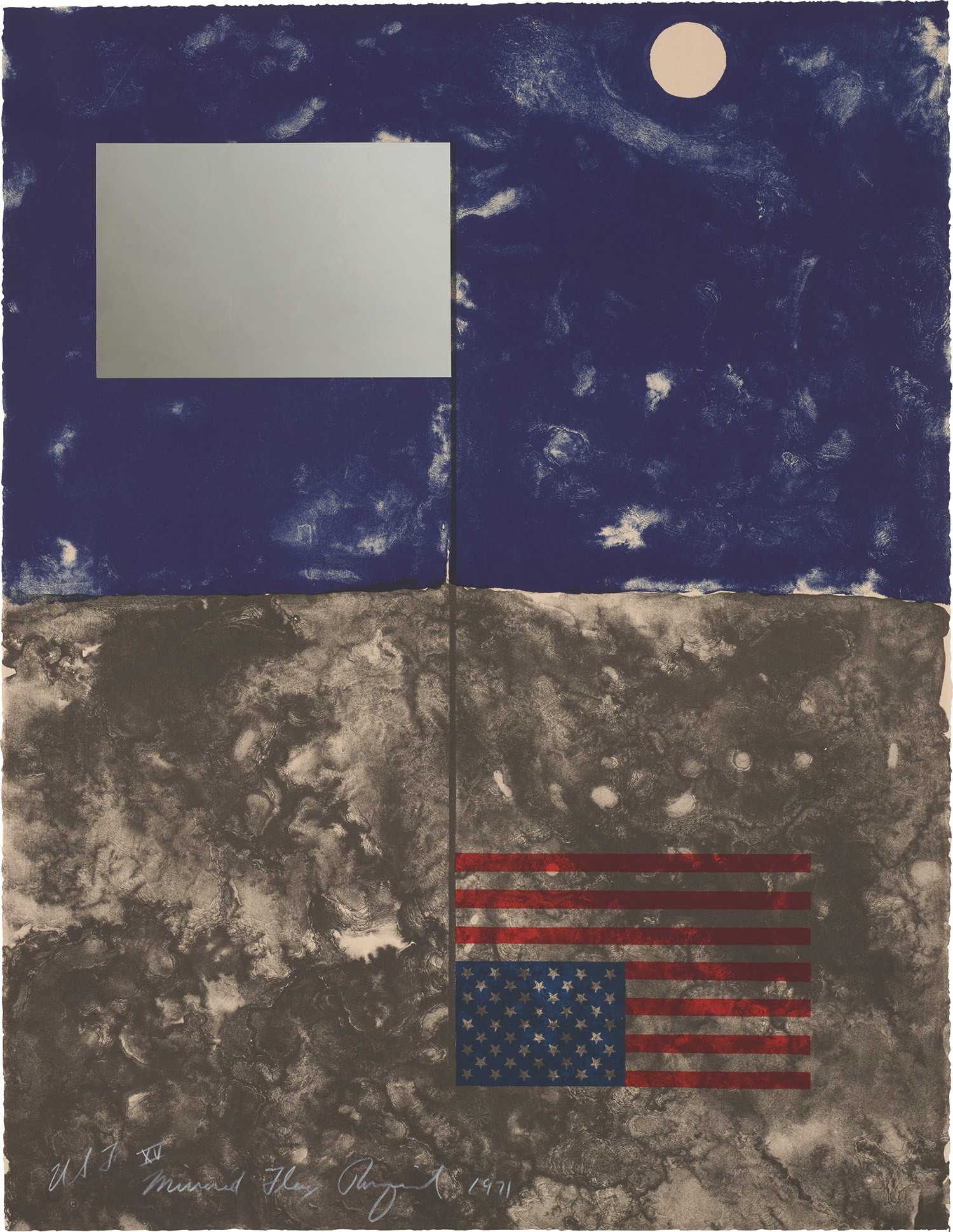
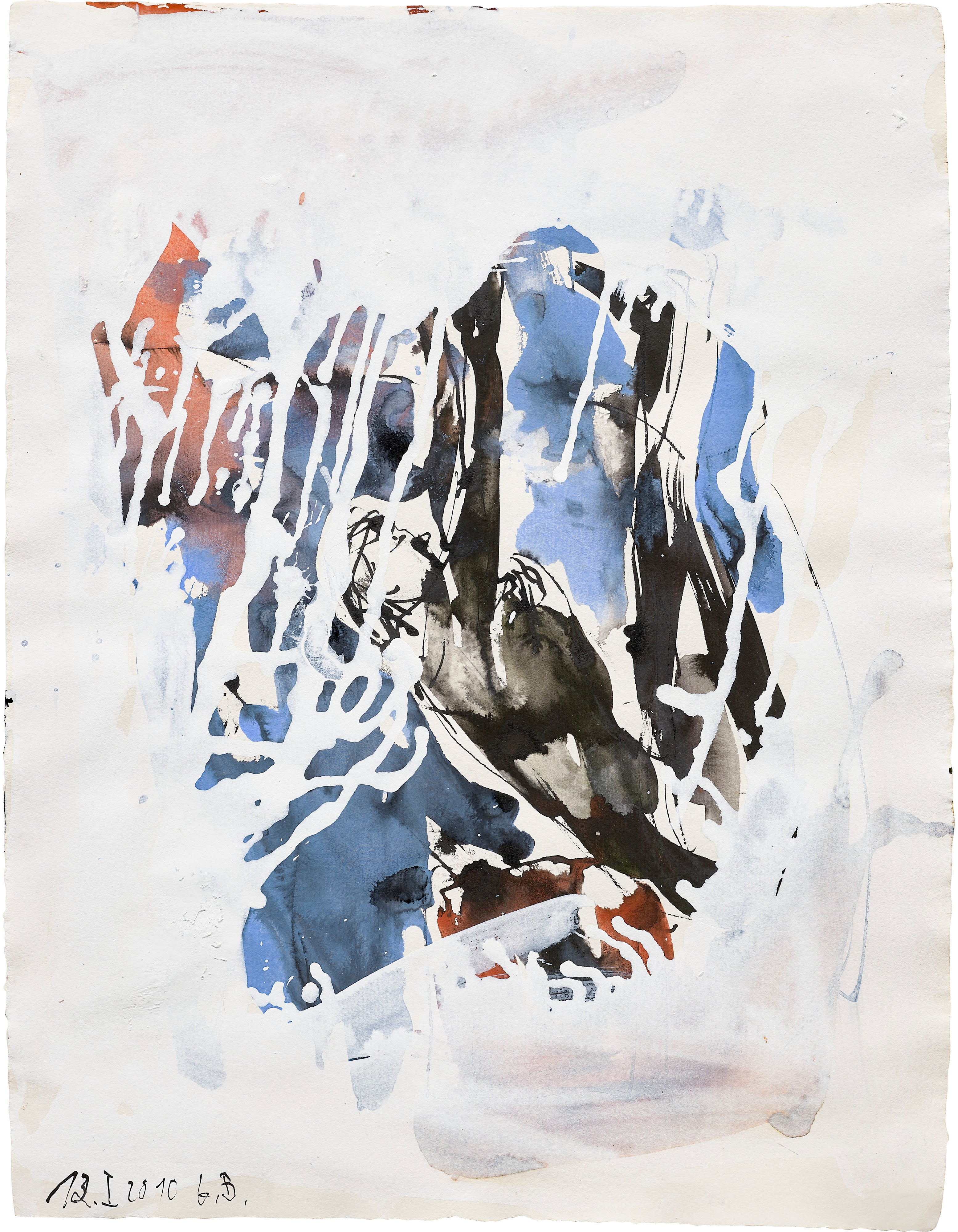
![Georg Baselitz — Ein neuer Typ (Held mit Fahne) [A new Type (Hero with Flag)]](https://rtwaymdozgnhgluydsys.supabase.co/storage/v1/object/public/artwork-images/auction-lots/N10951-20220519-lot112.jpg)