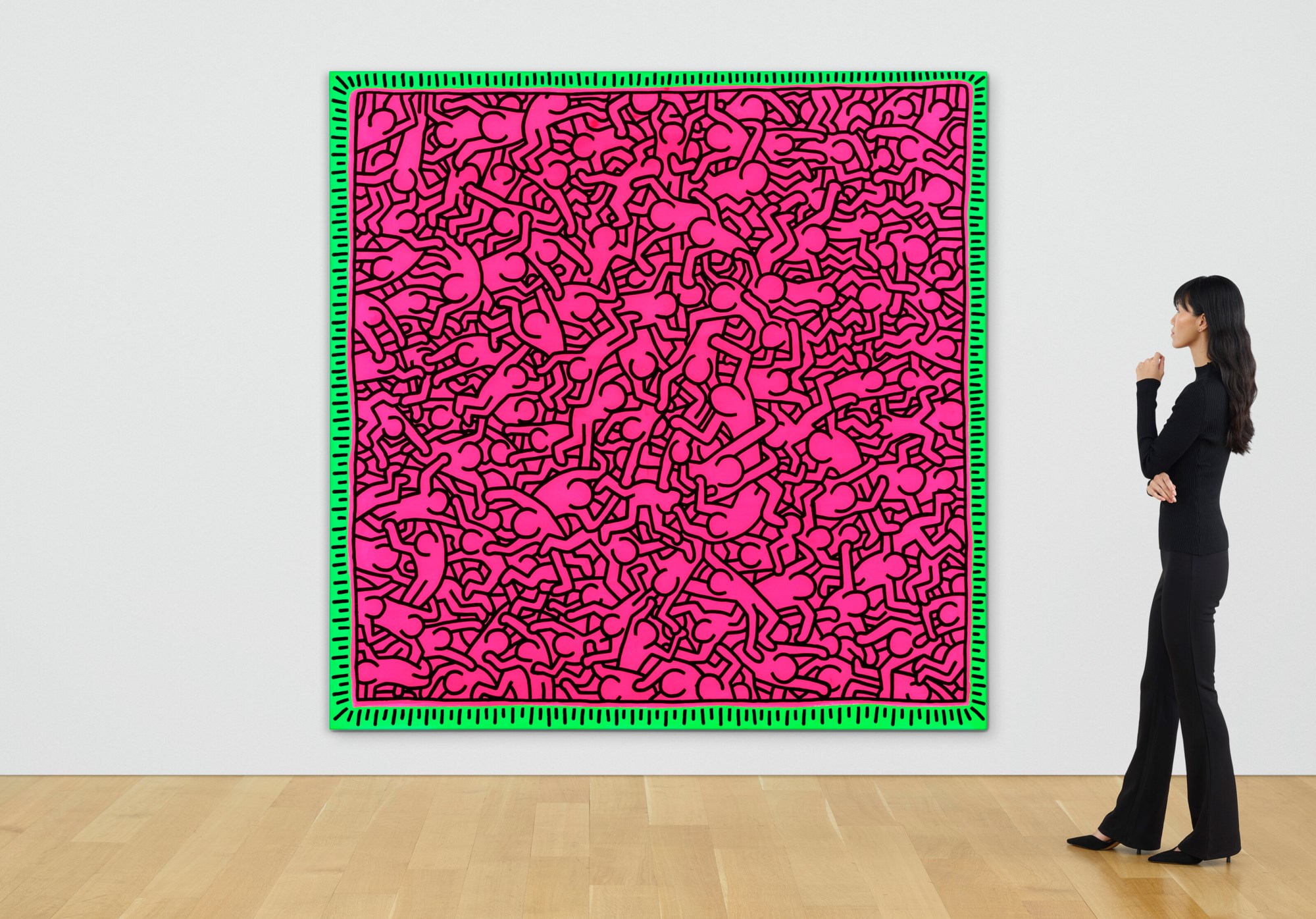
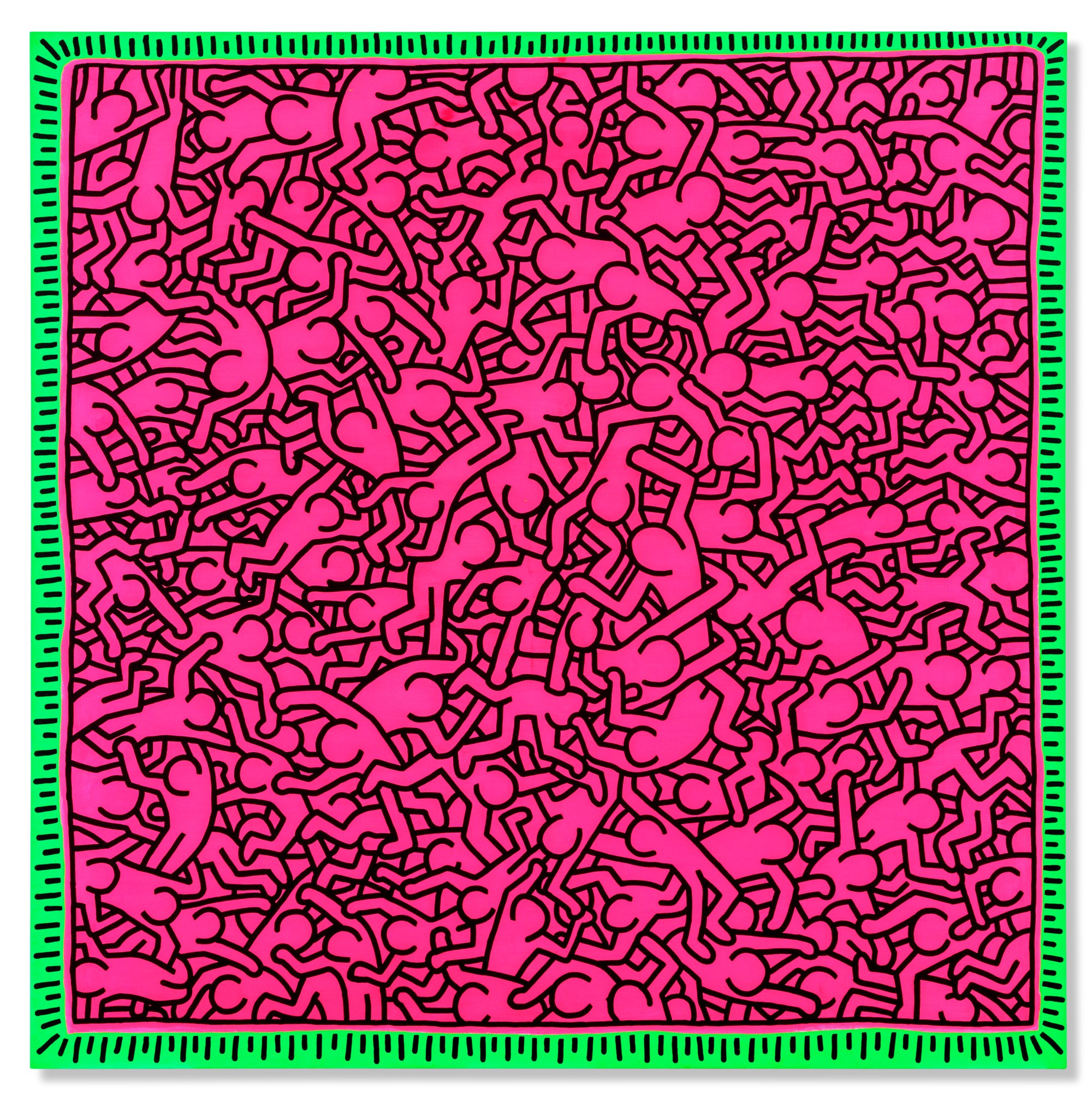
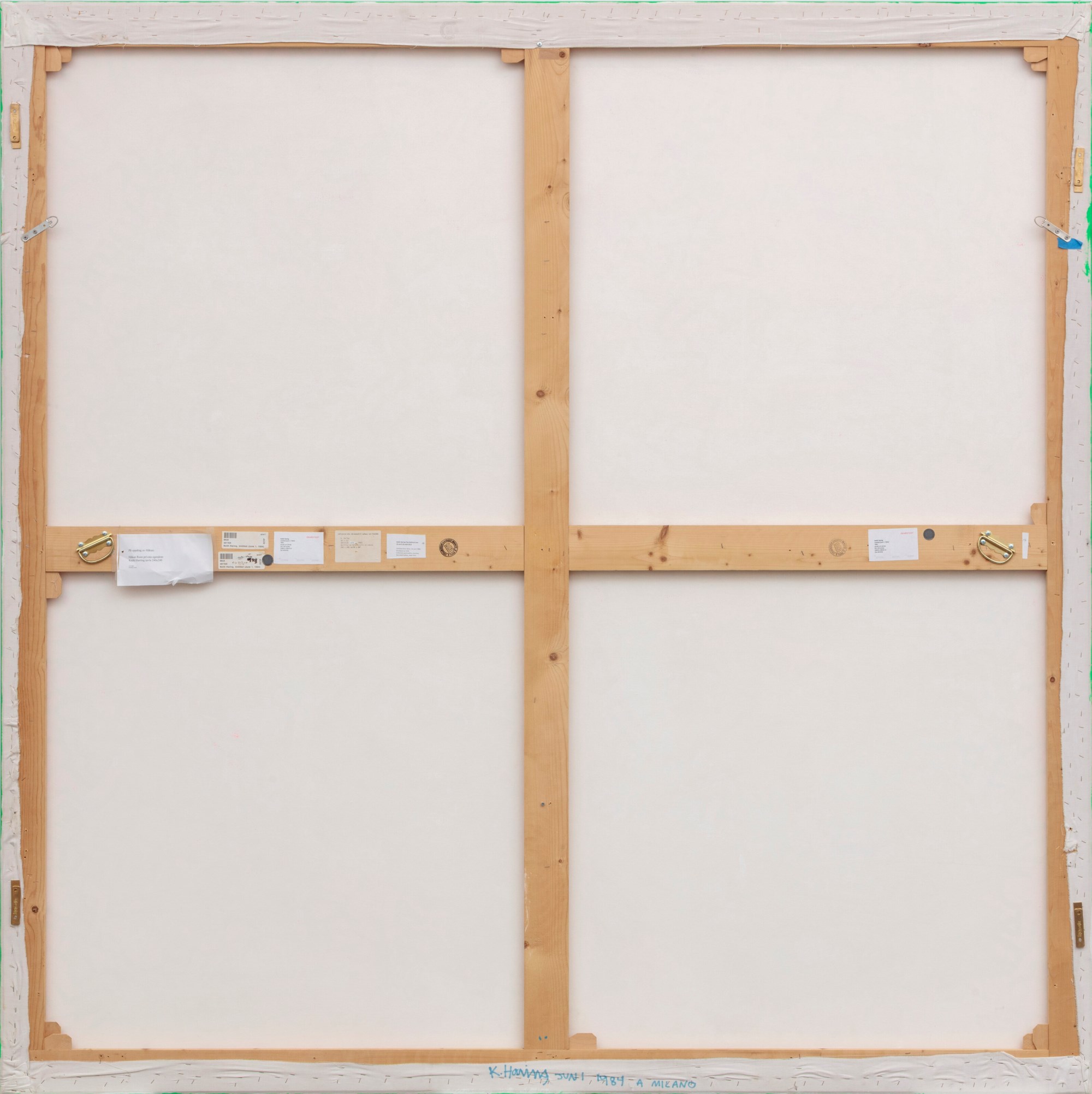
Untitled (June 1st a Milano)
1984
Painted across nearly eight feet of canvas in vibrant Day-Glo acrylic, Untitled (June 1st a Milano) presents an electrifying field of interlocking bodies whose limbs weave into a continuous, pulsating rhythm. Executed without preparatory sketches or corrections during an intensive three-week residency at a Milan gallery in 1984, the work achieves an extraordinary synthesis of spontaneous gesture and rigorous compositional control, with the eye carried ceaselessly across the surface in a visual equivalent of music and euphoria. The dense choreography of radiant figures recalls both Michelangelo's dynamic relief sculptures and Matisse's primal circles, yet rendered in the neon vocabulary of contemporary urban culture. Immersed in Milan's vibrant nightlife and artistic heritage, Haring translated the rhythms of music and dance directly onto canvas, creating a work that stands as a pivotal moment in his emergence as a major international artist. Each line remains a direct trace of the artist's movement, yet the overall composition possesses an almost instinctive coherence that sustains the immediacy of execution across an immense surface without diminution of force.
- Medium
- acrylic and fluorescent acrylic on canvas
- Dimensions
- Signed
- Yes
- Spotted At
- Auction House · Christie's
Notes
LITERATURE T. Trini, "Keith Haring", FlashArt, June 1984 (illustrated). A. Galasso, Keith Haring A Milano, Milan, 2009, pp. 38, 80 and 119 (illustrated on the front and back cover). EXHIBITED Milan, Galleria Salvatore Ala, Keith Haring: Milan, 1984. Milan, Fondazione Triennale di Milano, The Keith Haring Show, September 2005-January 2006, p. 234. Musée d'Art Moderne de la Ville de Paris, Keith Haring, The Political Line, April-August 2013. New York, Skarstedt Gallery, Heaven and Hell, March-April 2015. Isabella Lauria Senior Vice President, Senior Specialist, Head of 21st Century Evening Sale ILAURIA@CHRISTIES.COM +1 347 803 0224 LOT ESSAY Present lot illustrated (detail). An electrifying field of interlocking bodies, Untitled (June 1st a Milano) stands among the most ambitious and resolved paintings of Keith Haring’s career. Spanning nearly eight feet square and executed in his signature Day-Glo palette, the composition unfolds as a dense choreography of radiant figures, their limbs braided into a continuous, pulsating rhythm that seems to expand beyond the edges of the canvas. Unlike the pared immediacy of Haring’s subway drawings, the present work achieves an extraordinary level of compositional complexity: each figure is locked into a larger system, creating a unified, all-over structure that is at once spontaneous and rigorously controlled. The eye finds no resting point; instead, it is carried ceaselessly across the surface in a visual equivalent of music, euphoria, and relentlessness. Keith Haring with his radio cassette player painted by Kenny Scharf, Milan, 1984. Photo: Roberto Tomasin. Painted in situ at the Galleria Salvatore Ala during a three-week period of intense activity, the work became the centerpiece of Haring’s landmark 1984 Milan exhibition, marking his decisive emergence onto the international stage. The scale, ambition, and formal resolution of June 1st distinguish it within this pivotal body of work. Above all, the work demonstrates Haring’s ability to sustain compositional precision across an immense surface without a single corrective gesture, underscoring both the speed of execution and the extraordinary clarity of his visual thinking. If earlier works capture the immediacy of gesture, this painting sustains that immediacy across a vast surface without diminution of force, achieving a rare synthesis of speed and control that few artists have matched. Installation view, Keith Haring: The Political Line, April 19 - August 18, 2013, Musée d’Art Moderne de la Ville de Paris (present lot illustrated). Photograph by Pierre Antoine. Artwork: © The Keith Haring Foundation. This extraordinary formal control was achieved through a working method that bordered on the performative. Recalling Haring’s working method for the present work, Ala, the gallerist, describes: “Keith was like a human dynamo, he painted without making any corrections, his gestures were fluid, and he never did preparatory sketches, always preferring to work directly on his supports. I remember him using canvases composed of one or more panels measuring 2.40 x 2.40 m. [94 x 94 in.], which he fixed to the walls. Then he climbed the ladder and, starting from the top, began painting directly on the canvas, with music playing at full blast” (quoted in A. Galasso, “Keith, the Pied Piper,” op. cit., p. 19). The resulting surface retains the immediacy of execution, each line a direct trace of the artist’s movement, yet the overall composition possesses a coherence that suggests an almost instinctive sense of structure. In this respect, Haring’s practice recalls the automatism of Surrealism, while simultaneously aligning with the Venetian tradition of painting directly on canvas. Jean-Michel Basquiat, Six Crimee, 1982. Museum of Contemporary Art, Los Angeles. © Estate of Jean-Michel Basquiat. Licensed by Artestar, New York. The work is equally inseparable from the lived experience of Milan in 1984, a period that proved transformative for the twenty-six-year-old artist. Immersed in the city’s vibrant cultural and nightlife scenes, Haring absorbed the rhythms of music, dance, and social exchange that would find direct expression in the present painting. He spent his nights at the legendary club Plastic. “In Milano I discovered new ideas and images that went directly into my work,” Haring wrote in his journal. “I stayed in the gallery until late every night, painting until my hands hurt from holding the brush, and then I went to Plastic to unwind. Plastic is my favorite club in Europe. Nicola [Guiducci] plays music that makes me feel like I was in New York” (quoted in “Some Excerpts from Keith Haring’s Journals,” op. cit., pp. 13-14). I work surrounded by music. My companion in New York is a disc Jockey. Music in New York is part of daily life. It’s everywhere. And for me, it’s freedom: anyone can listen to it, you don’t have to pay for it, it makes you feel good, it inspires you, it uplifts you. For me, this is the artist’s role. Keith Haring At the same time, Haring’s engagement with Italy’s artistic heritage opened new dimensions within his work. While he famously reinterpreted canonical forms such as Michelangelo’s David in sculptural form during the exhibition, the present painting reflects a more subtle dialogue with the past. The densely interwoven bodies recall the compressed dynamism of Michelangelo’s Lapiths and Centaurs, an early relief sculpture, shows a similar scene of frantic movement, jumbled limbs, and chaotic action, which Haring recapitulates in the present work. “It was the idea of making movements I was doing into a kind of choreography—a kind of dance” Haring explained of his instantly recognizable style, “I was thinking that the very act of painting placed you in an exhilarated state” (quoted in J. Gruen, Keith Haring: The Authorized Biography, New York, 1991, p. 40). This same exhilaration recalls Matisse's Dance I (1909), where five figures lock hands in a ring, their bodies abandoned to collective rhythm — a compositional logic Haring understood instinctively, translating Matisse's primal circle into the interlocking, electrified bodies that surge across his own canvases, ancient ritual reborn in the neon vocabulary of the twentieth century. Left: Michelangelo, Battle of the Centaurs, 1492. Casa Buonarroti, Florence. Right: Henri Matisse, Dance I, 1909. The Museum of Modern Art, New York. © 2022 Succession H. Matisse / Artists Rights Society (ARS), New York. Photo: © The Museum of Modern Art / Licensed by SCALA / Art Resource, NY. The significance of Untitled (June 1st a Milano) is further underscored by its central role within the 1984 exhibition itself, an event that assumed near-mythic status in the artist’s career. . The opening of the show became a city-wide phenomenon, with over 3,000 people attending. “It was as if a rock star had arrived in Milan,” the gallerist, Salvatore Ala, recalled (quoted in A. Galasso, “Keith, the Pied Piper: Interview with Salvatore Ala,” in A. Galasso, ed., Keith Haring a Milano, Milan, 2005, p. 18). Haring wrote in his journal of the day: “lots of people came, lots of fun people, fashion people and art-lovers and even the mayor of Milano” (quoted in “Some Excerpts from Keith Haring’s Journals,” in ibid., p. 14). Critics and contemporaries alike recognized the magnitude of his achievement. Roy Lichtenstein, then a living legend as one of the inventors of the Pop movement, praised the works when he viewed them in Milan: “I stopped by the gallery a couple of days before the opening, and there was Keith creating his show right there, on the spot!... It was extraordinary! Keith, composing in an amazing way… what I like about Haring’s work is that when he’s finished a piece, there’s nothing you could think of that you’d want to change. Even if he did something all at once—without standing back and changing anything—there just isn’t a false move. It’s all so beautifully drawn—and there’s such a sense of relatedness. The stuff is beautiful! He’s really done some gorgeous things!” (quoted in A. Galasso, op. cit., pp. 29-30). there was Keith creating his show right there, on the spot!... It was extraordinary! Keith, composing in an amazing way… what I like about Haring’s work is that when he’s finished a piece, there’s nothing you could think of that you’d want to change. Roy Lichtenstein Roy Lichtenstein and Keith Haring, Milan, 1984. Photo: Roberto Tomasin. KHMILAN1984-5 Illustrated on both the front and back covers of the 2005 monograph dedicated to the Milan exhibition, the present work has long been recognized as its defining image. Its subsequent inclusion in major institutional exhibitions, including the 2005–2006 presentation at the Triennale di Milano and the 2013 retrospective The Political Line at the Musée d’Art Moderne de la Ville de Paris, has only reinforced its status as a cornerstone of Haring’s oeuvre. More than a document of a pivotal moment, it stands as the culmination of that moment: a painting in which context, energy, and invention coalesce into a single, unified statement. In Untitled (June 1st a Milano), Haring achieves what few artists accomplish. The translation of an entire cultural atmosphere into a singular visual form. At once immediate and monumental, spontaneous and fully resolved, the work represents the moment at which his visual language reaches its fullest and most authoritative expression. It is not simply among his finest works; it is one of the paintings that defines the very height of his achievement. Installation view, Keith Haring: Milan, the present work illustrated. Photo: Roberto Tomasin. Present lot illustrated.
🔨 Auction Lot
Marian's Richters & 21st Century Evening Sale
Lot 24
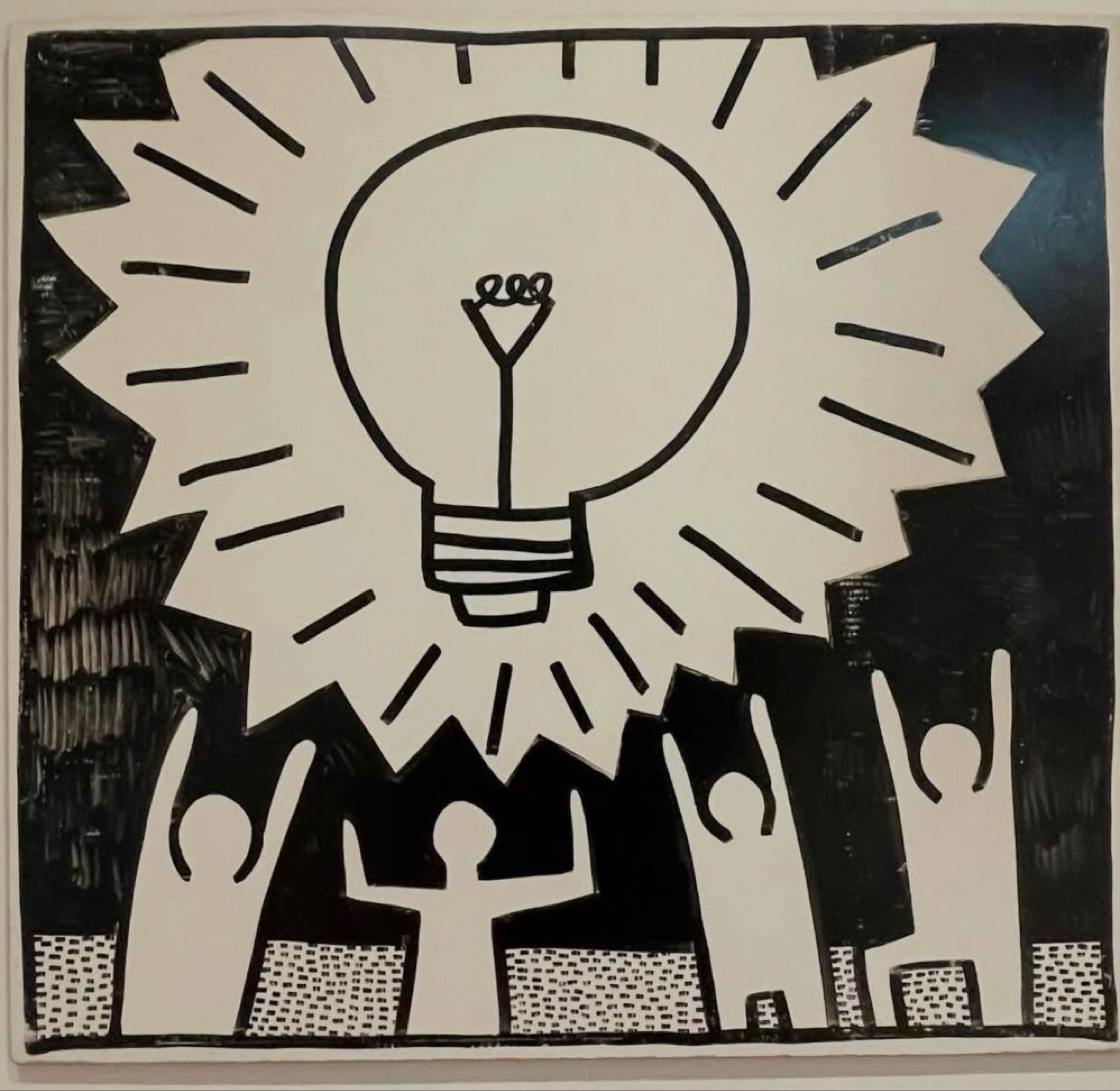
Collectors of Keith Haring




Artists in conversation
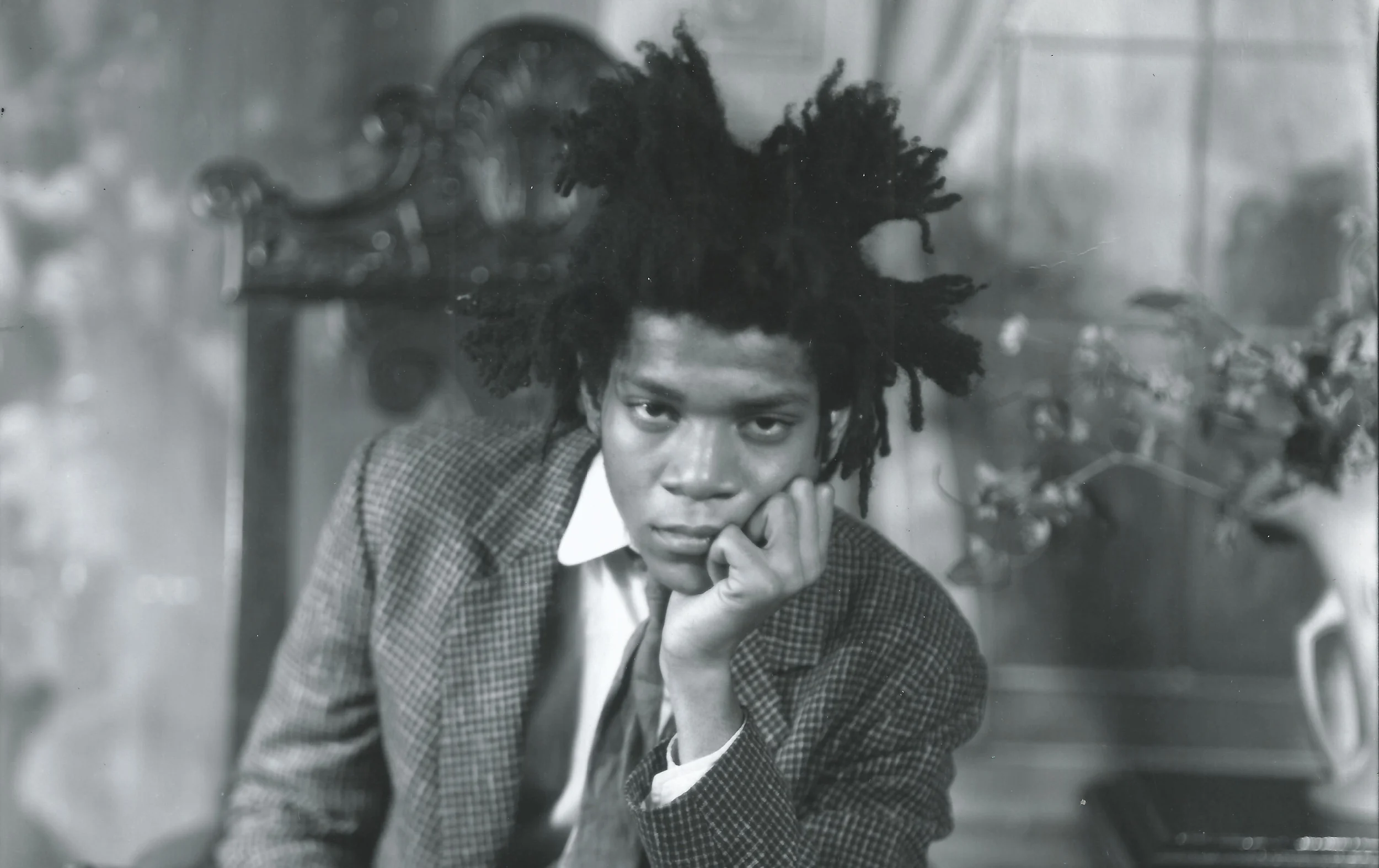
Jean-Michel Basquiat
American · b. 1960
Basquiat emerged from the same 1980s New York street art scene as Haring and shared a bold graphic language rooted in urban culture and social commentary. Both artists worked across public and gallery contexts with raw energetic mark making that blurred the line between fine art and graffiti.
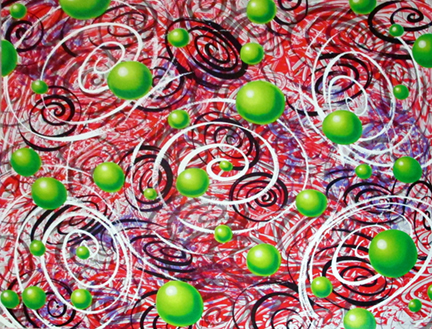
Kenny Scharf
American · b. 1958
Scharf was a close contemporary and friend of Haring within the same downtown New York pop graffiti scene, producing cartoon inflected imagery with bold outlines and playful figures. His vibrant Pop surrealism shares Haring's accessible visual vocabulary and joyful energy.
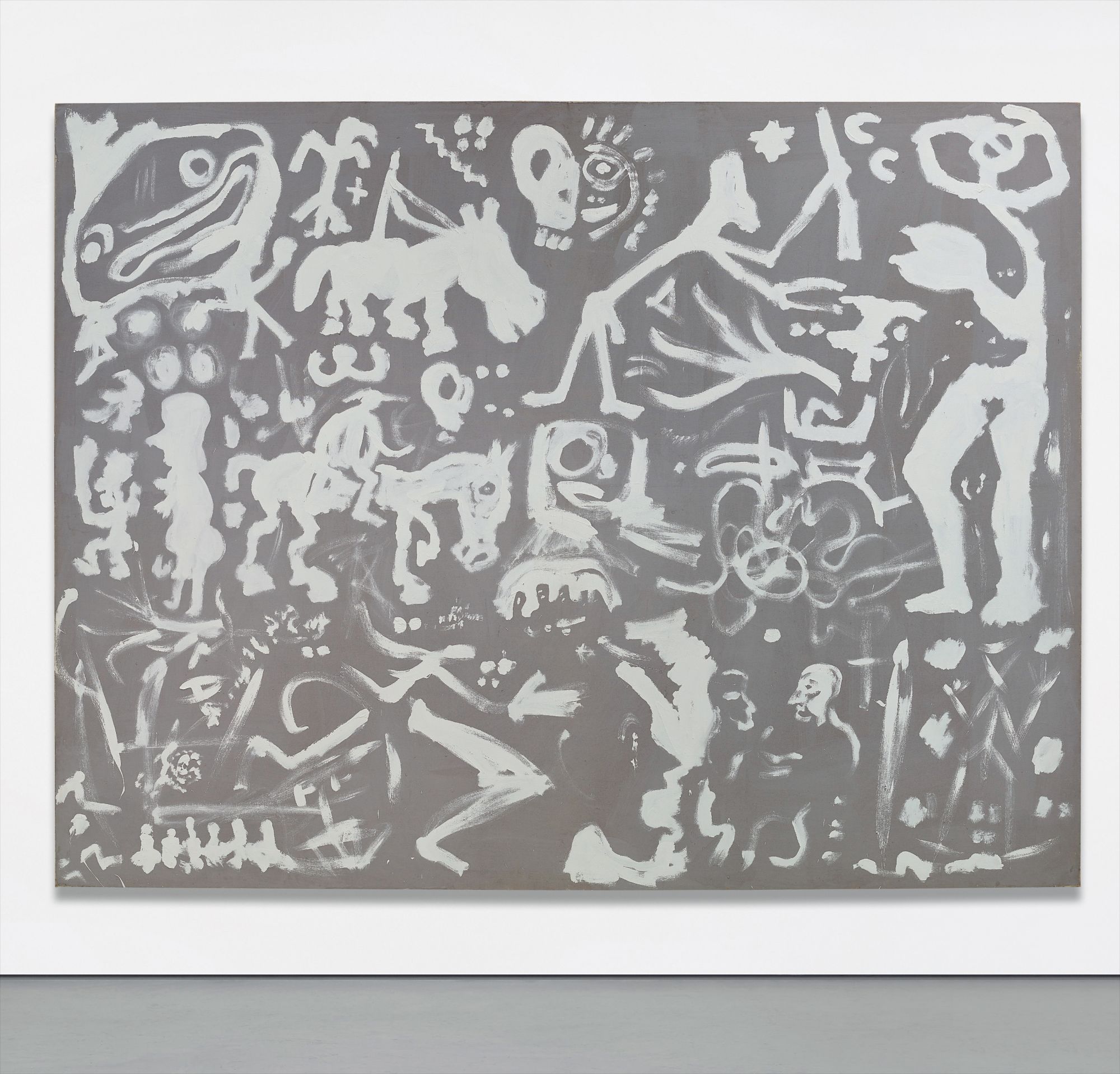
A.R. Penck
German · b. 1939
Penck developed a visual language of schematic stick like figures and primitive symbols that closely parallels Haring's iconic outlined figures. Both artists used simplified human forms as a universal graphic shorthand to convey dynamic movement and social meaning.
Start the Discussion
Request access to join the discussion