Join The Collection to save, track, and explore works like this.

Gerrit Rietveld — Red Blue Chair
Gerrit Rietveld

Red Blue Chair

1920

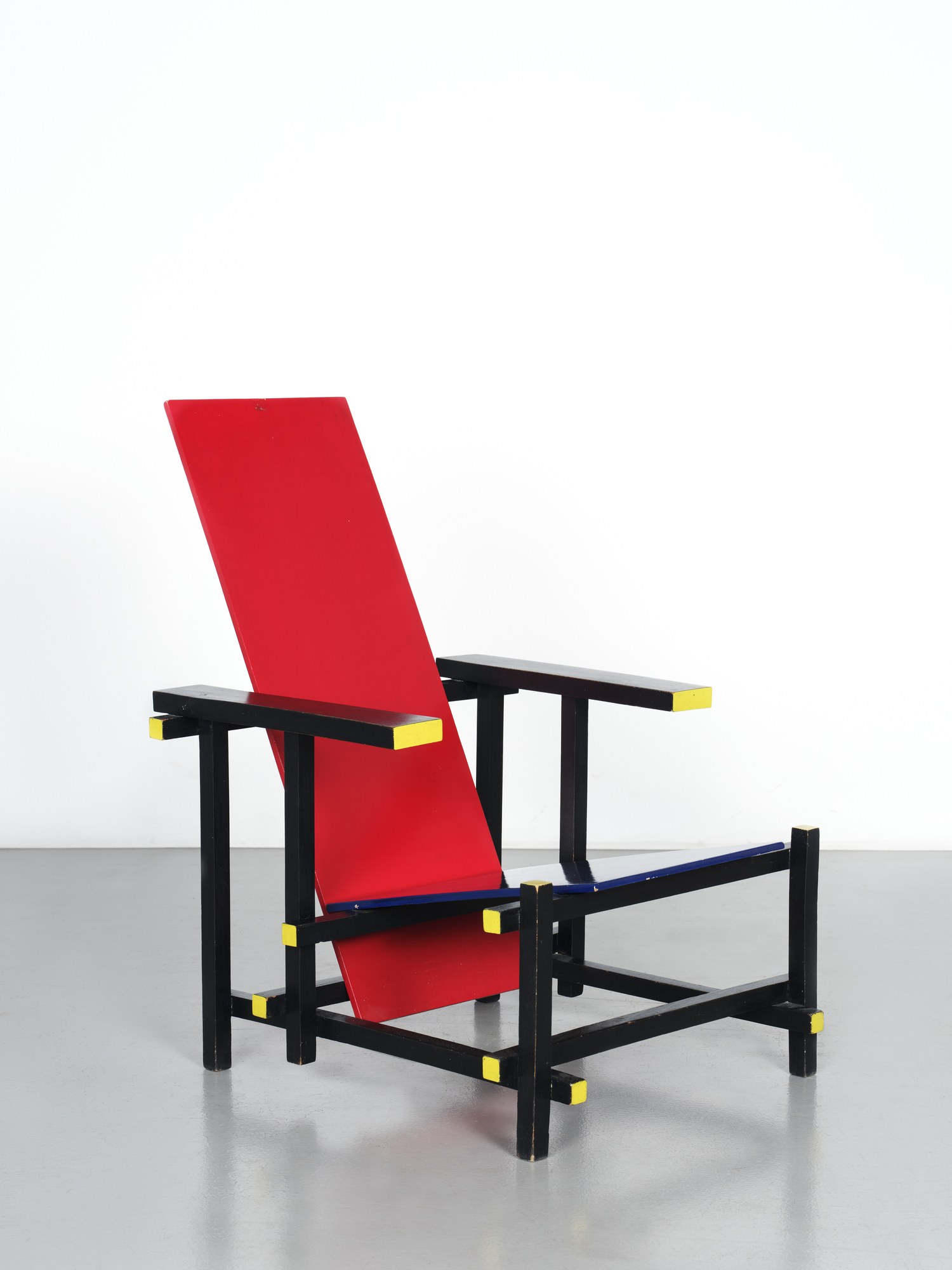
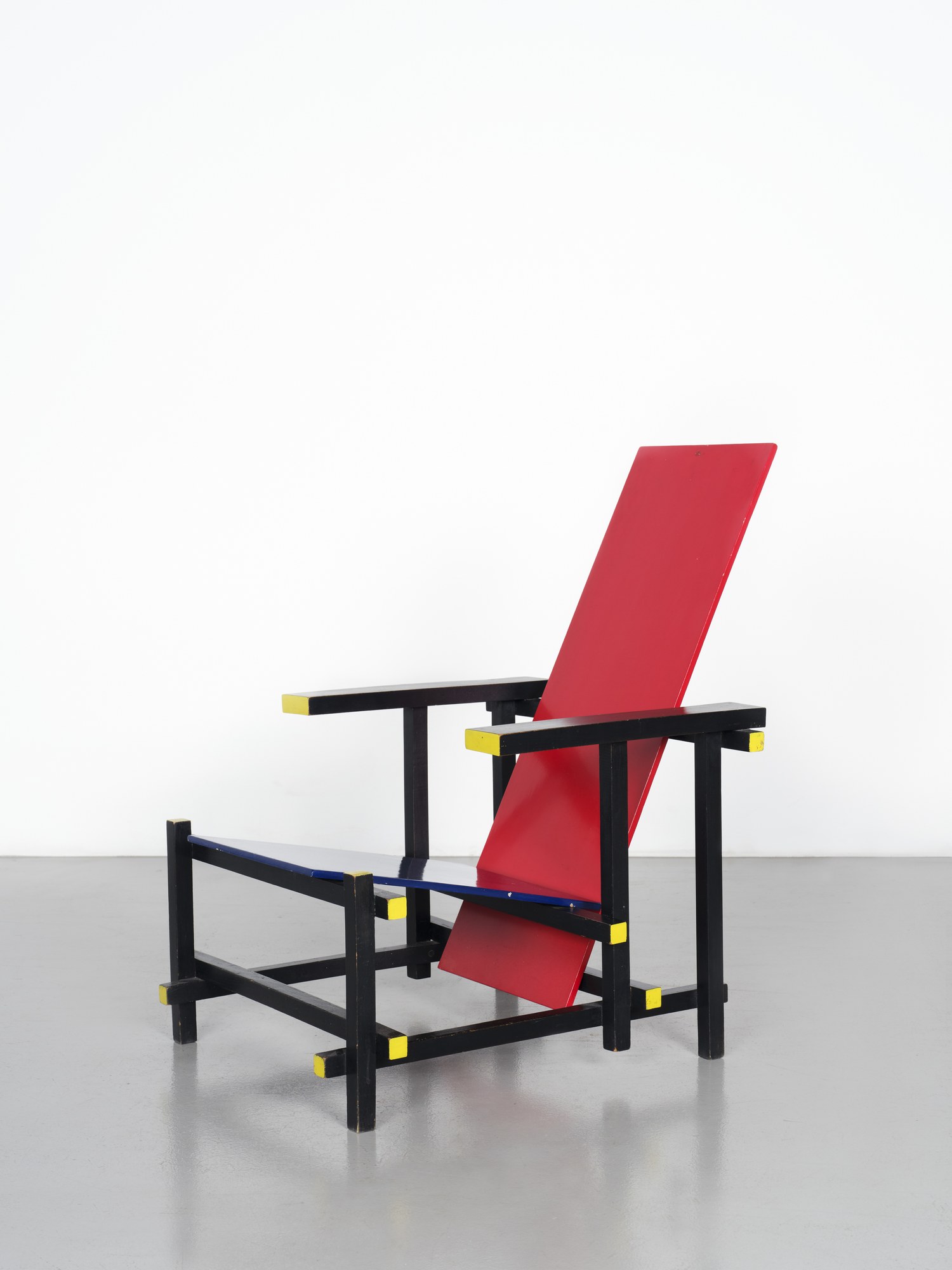
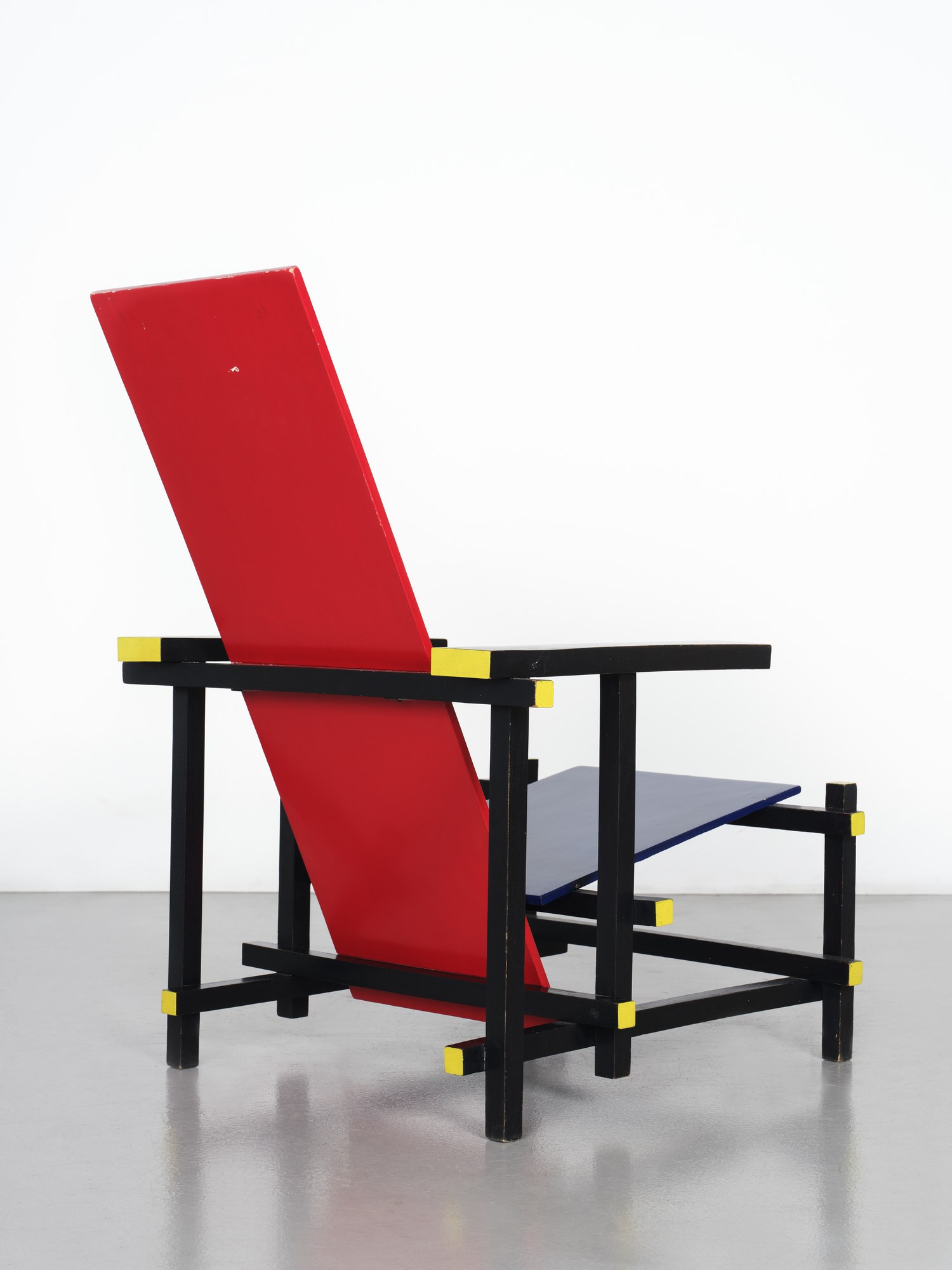
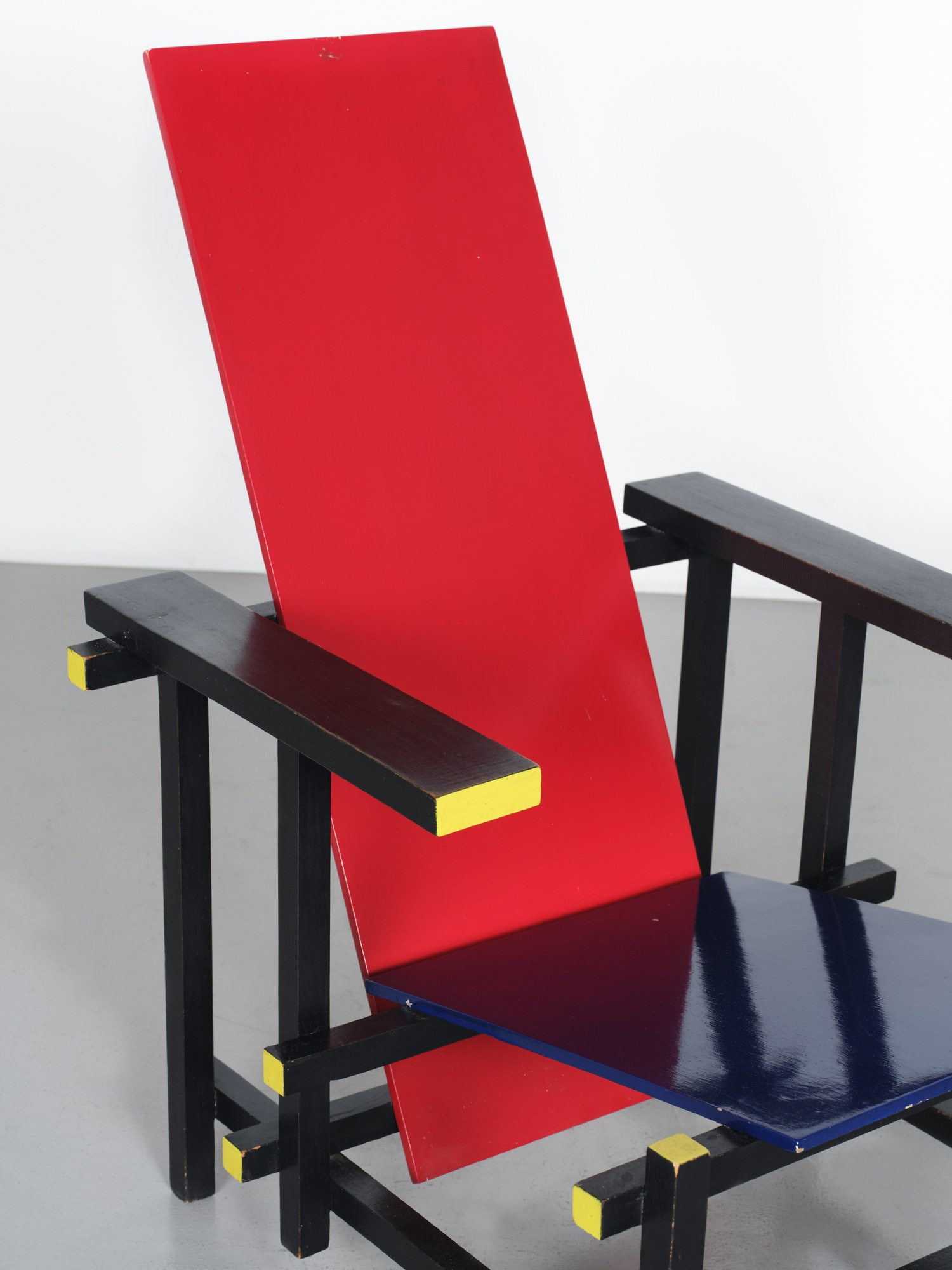
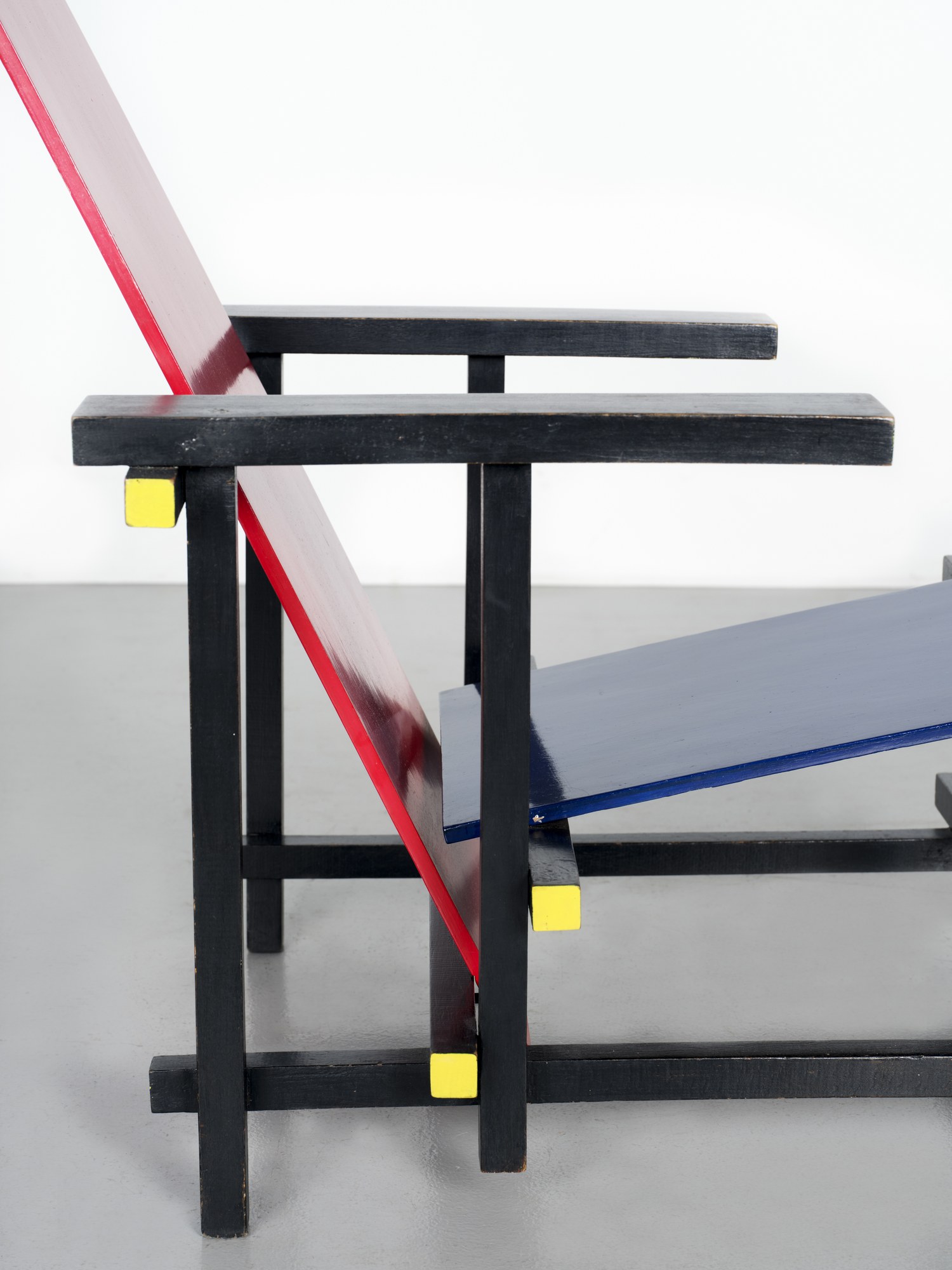
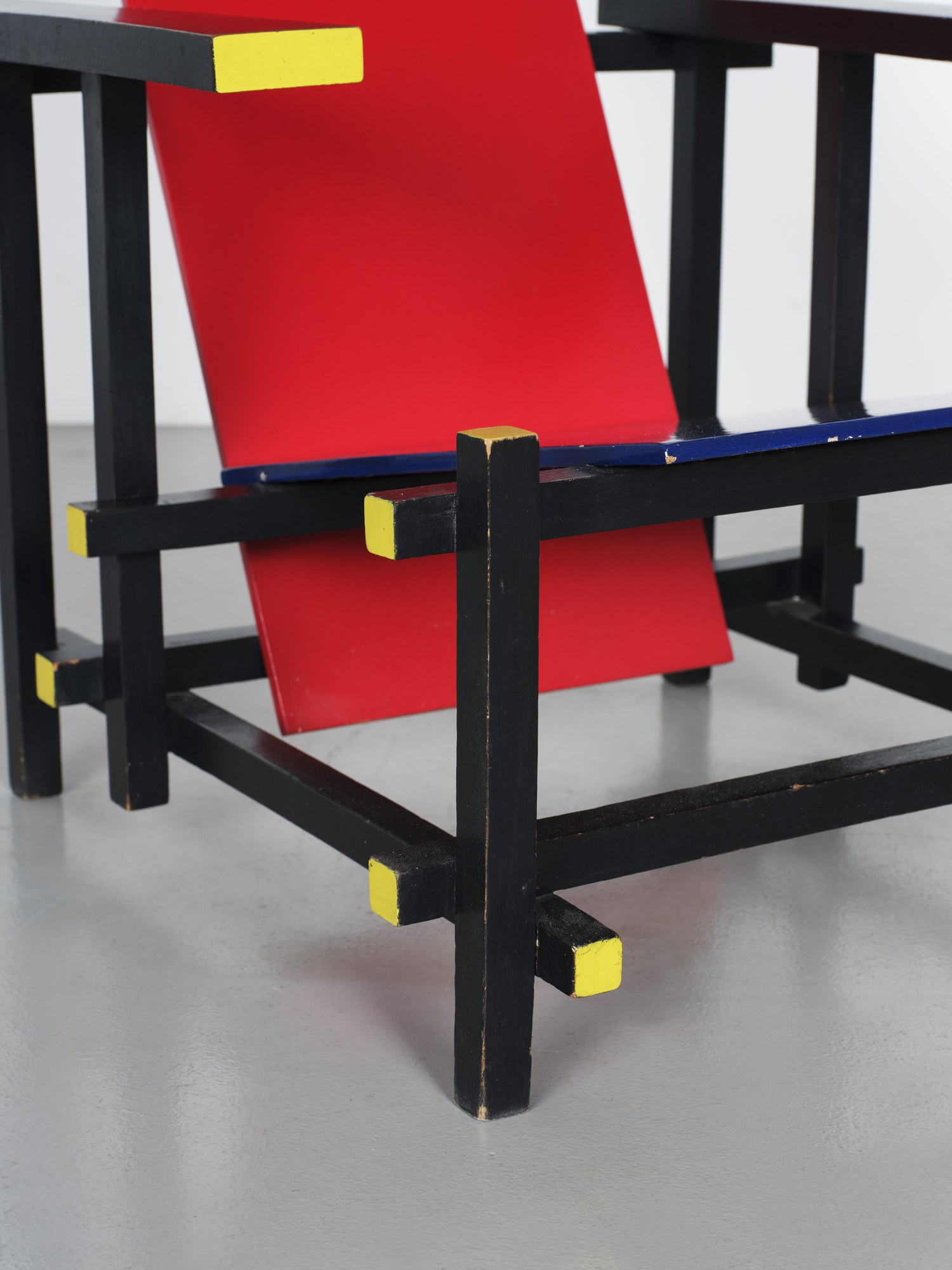
Clarity, structure, abstraction: these were the radical principles by which the modernists sought to reimagine design, and no single object represents them more forcefully than the Red/Blue Chair of the Dutch architect Gerrit Rietveld. He was a key member of De Stijl (simply meaning “The Style,” a title that already suggests its ambitions of definitiveness) the avant garde movement that also counted among its advocates Theo Van Doesburg and Piet Mondrian, Rietveld sought to develop a universal formal language, composed of the bare essentials: primary colors plus white and black, pure geometries. This was meant as nothing less than a final resolution of design history, like a solved equation. Yet Rietveld’s work also has an expansive and surprising quality; each of his objects and buildings still vibrates with a sense of discovery. This is certainly true of the Red/Blue Chair itself, which has come to be emblematic of his work and De Stijl as a whole. It is composed of four planes , seat, back, and two arms , all held in a lattice of square-sectioned dowels. These are colored yellow on their ends, as if marking imaginary cuts from an endless grid (a similar principle was present in Mondrian’s paintings of, which often featured lines that would stop just before the edge of the canvas). The oblique angles of the seat and back, however, play off this rigid orthogonal structure, literally making space for the human form. This particular realization of the design, which can be compared to examples at the High Museum of Art, the Museum of Fine Arts, Houston, and the V&A, among other institutions, is one of the few made close to the date of the design that is still in private hands.

Medium
Painted beech and laminated wood
Dimensions
Location
Park Avenue Armory, New York, NY

Notes

Exhibited by Friedman Benda at TEFAF New York 2026 (Park Avenue Armory, New York, May 15–19, 2026). TEFAF Vetted.

Start the Discussion

Request access to join the discussion

About this work

Gerrit Rietveld, Red Blue Chair, 1920

Clarity, structure, abstraction: these were the radical principles by which the modernists sought to reimagine design, and no single object represents them more forcefully than the Red/Blue Chair of the Dutch architect Gerrit Rietveld. He was a key member of De Stijl (simply meaning “The Style,” a title that already suggests its ambitions of definitiveness) the avant garde movement that also counted among its advocates Theo Van Doesburg and Piet Mondrian, Rietveld sought to develop a universal formal language, composed of the bare essentials: primary colors plus white and black, pure geometries. This was meant as nothing less than a final resolution of design history, like a solved equation. Yet Rietveld’s work also has an expansive and surprising quality; each of his objects and buildings still vibrates with a sense of discovery. This is certainly true of the Red/Blue Chair itself, which has come to be emblematic of his work and De Stijl as a whole. It is composed of four planes , seat, back, and two arms , all held in a lattice of square-sectioned dowels. These are colored yellow on their ends, as if marking imaginary cuts from an endless grid (a similar principle was present in Mondrian’s paintings of, which often featured lines that would stop just before the edge of the canvas). The oblique angles of the seat and back, however, play off this rigid orthogonal structure, literally making space for the human form. This particular realization of the design, which can be compared to examples at the High Museum of Art, the Museum of Fine Arts, Houston, and the V&A, among other institutions, is one of the few made close to the date of the design that is still in private hands.

Medium
Painted beech and laminated wood
Dimensions
85.1 x 68.6 x 61 cm
Year
1920
Seen at
TEFAF New York, New York, USA

Related themes

Experimental Form, Functional Art, Twentieth Century Design, Painted Wood, Contemporary Craft, Architectural Design, Primary Colors, Dutch Design, Modernist, De Stijl, Avant-Garde, Constructivism, Sculptural Furniture, Industrial Design, Geometric Abstraction, Iconic Design, Furniture Design, Wood Construction, Modern, Color Field Design