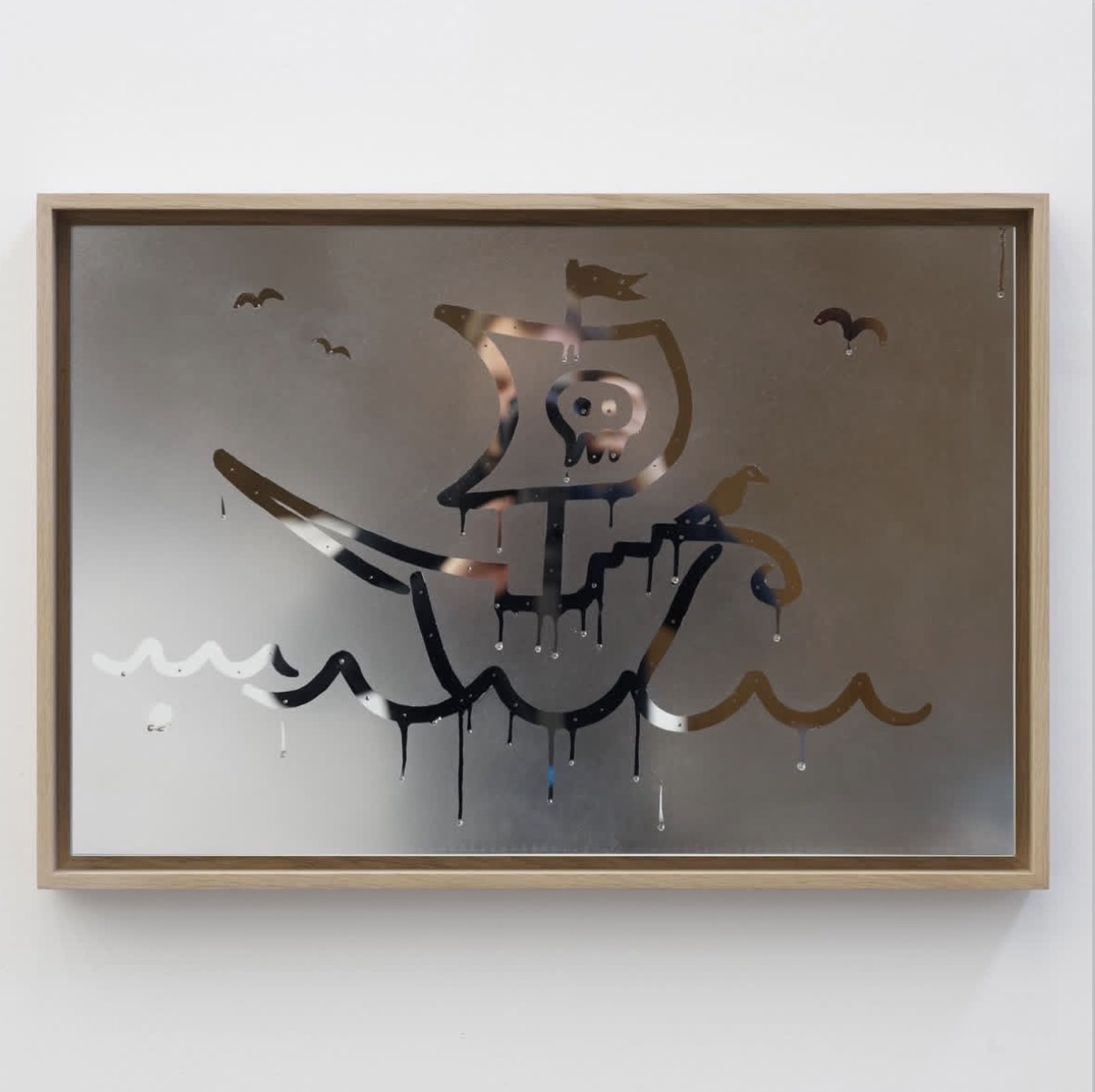
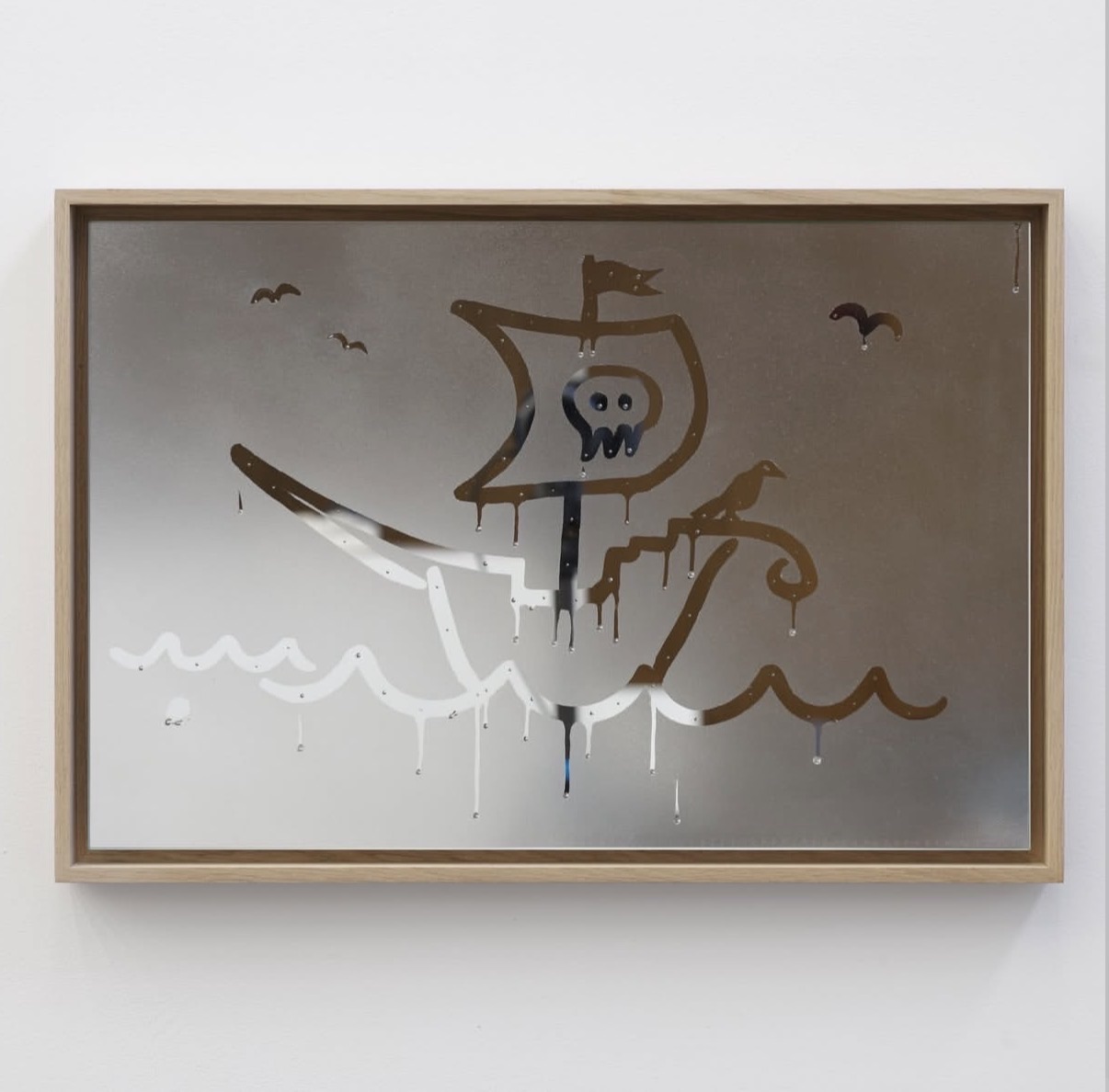
Pirate Ship
2022
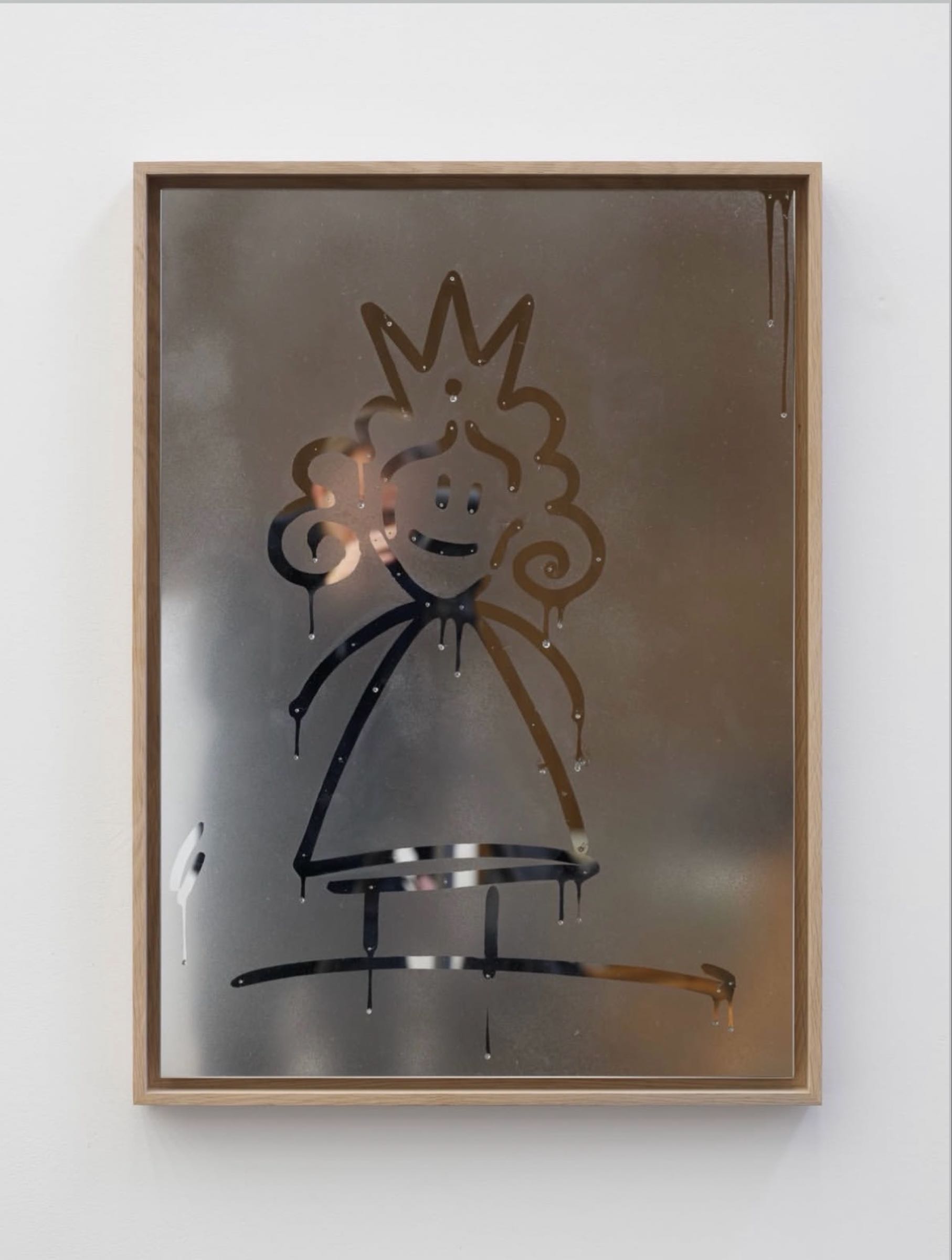
This work by Jochen Mühlenbrink employs his signature trompe l'oeil technique to depict a whimsical pirate ship rendered in loose, gestural strokes of black and gold directly on a mirrored surface. The image evokes the appearance of a child's drawing on a steamed bathroom mirror, complete with convincingly painted drips that heighten the illusion of wet paint on a reflective ground. Seagulls, waves, and a flag-topped mast animate the composition with a playful narrative energy while the mirror beneath simultaneously reflects the viewer and the surrounding space. The work is a compelling example of Mühlenbrink's ongoing investigation into perception, surface, and the uncanny relationship between image and viewer.
- Medium
- Oil on mirror
- Dimensions
- Spotted At
- Gallery · Gether Contemporary
Notes
Work is framed in a natural wood floater frame. Artist is based in Düsseldorf and Oldenburg, Germany. Graduated as master student of Markus Lüpertz from the Düsseldorf Art Academy (2001–2007). Works held in collections including Museum X Beijing, G2 Kunsthalle Leipzig, Stadtmuseum Oldenburg, Deutsche Bundesbank, and Collectie DE.GROEN Arnhem. Trompe l'oeil technique applied to mirrored surface; the mirror actively reflects the viewer, integrating them into the composition.
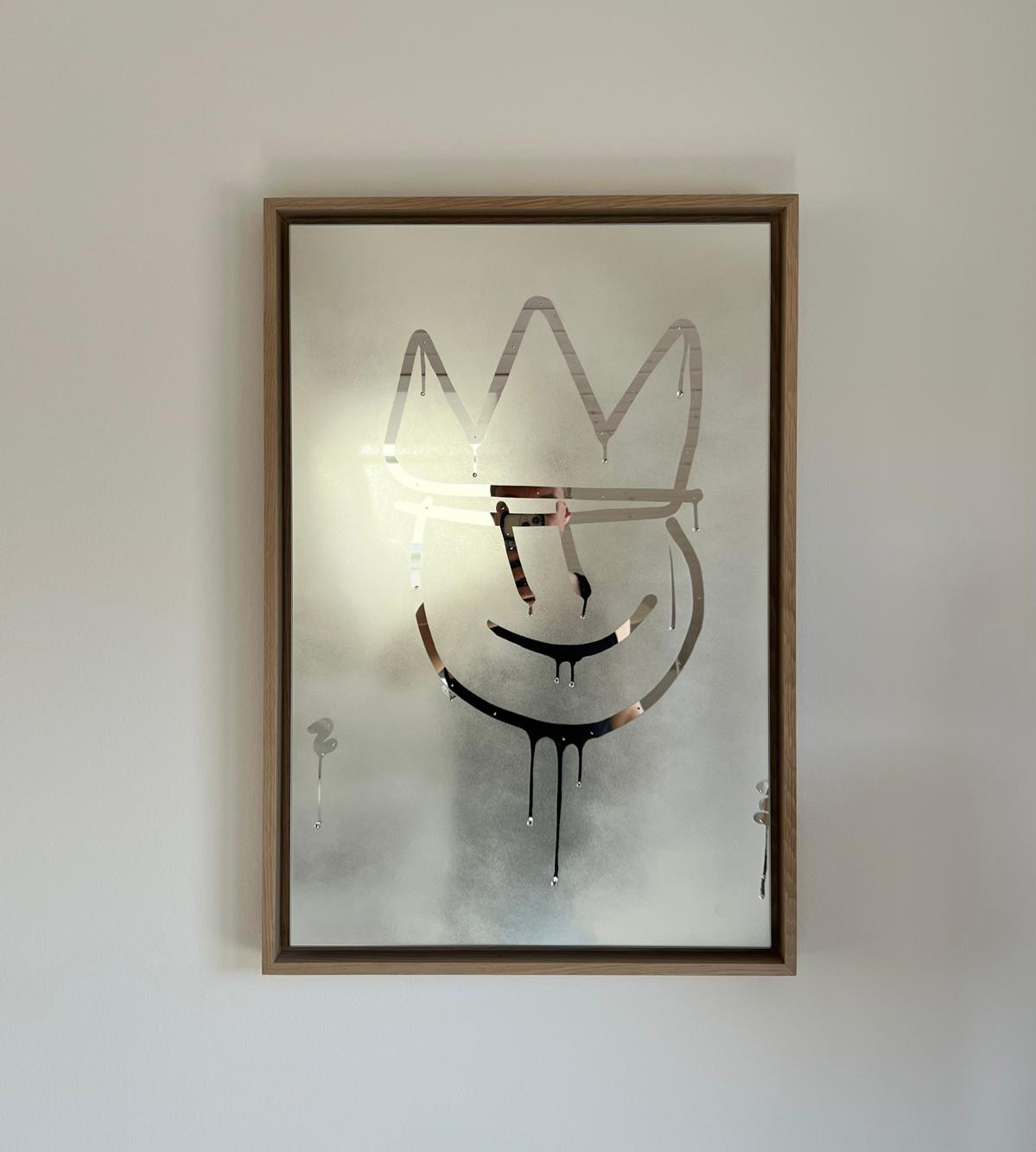
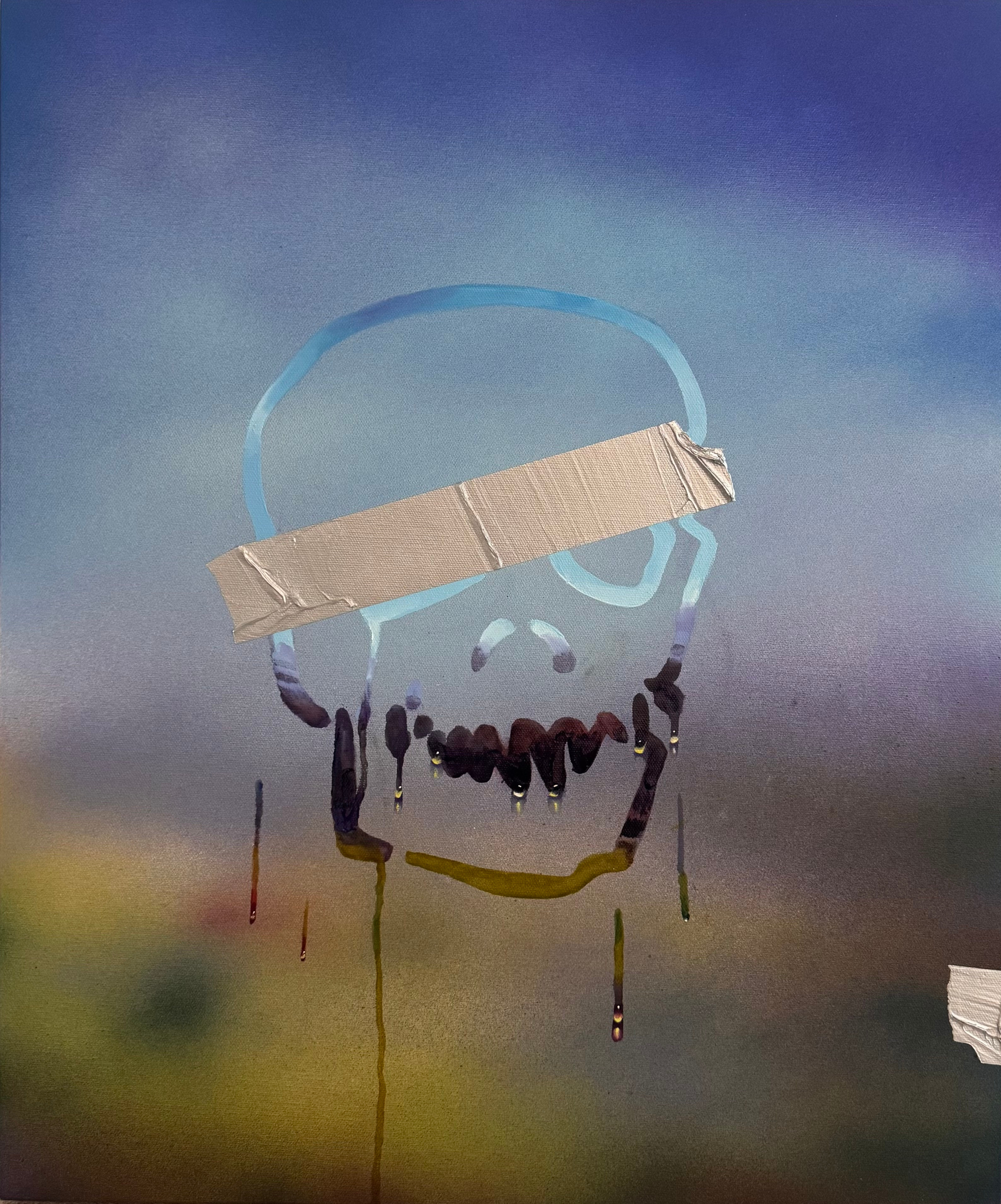
Spotted works by Jochen Mühlenbrink
Artists in conversation
Tjalf Sparnaay
Dutch · b. 1954
Sparnaay is a leading hyperrealist painter whose meticulous depictions of mundane everyday objects share Mühlenbrink's obsession with surface texture and the philosophical tension between painted illusion and physical reality.
Graham Durward
Scottish · b. 1963
Durward creates trompe l'oeil paintings of tape, torn paper and adhesive residues on canvas, directly paralleling Mühlenbrink's fascination with ephemeral studio materials rendered in hyperrealistic paint.

Audrey Flack
American · b. 1931
As a photorealist pioneer Flack explored reflective surfaces and the perceptual ambiguity between image and object, aligning closely with Mühlenbrink's conceptual interrogation of how painting deceives the eye.
Start the Discussion
Request access to join the discussion