Black And Gold
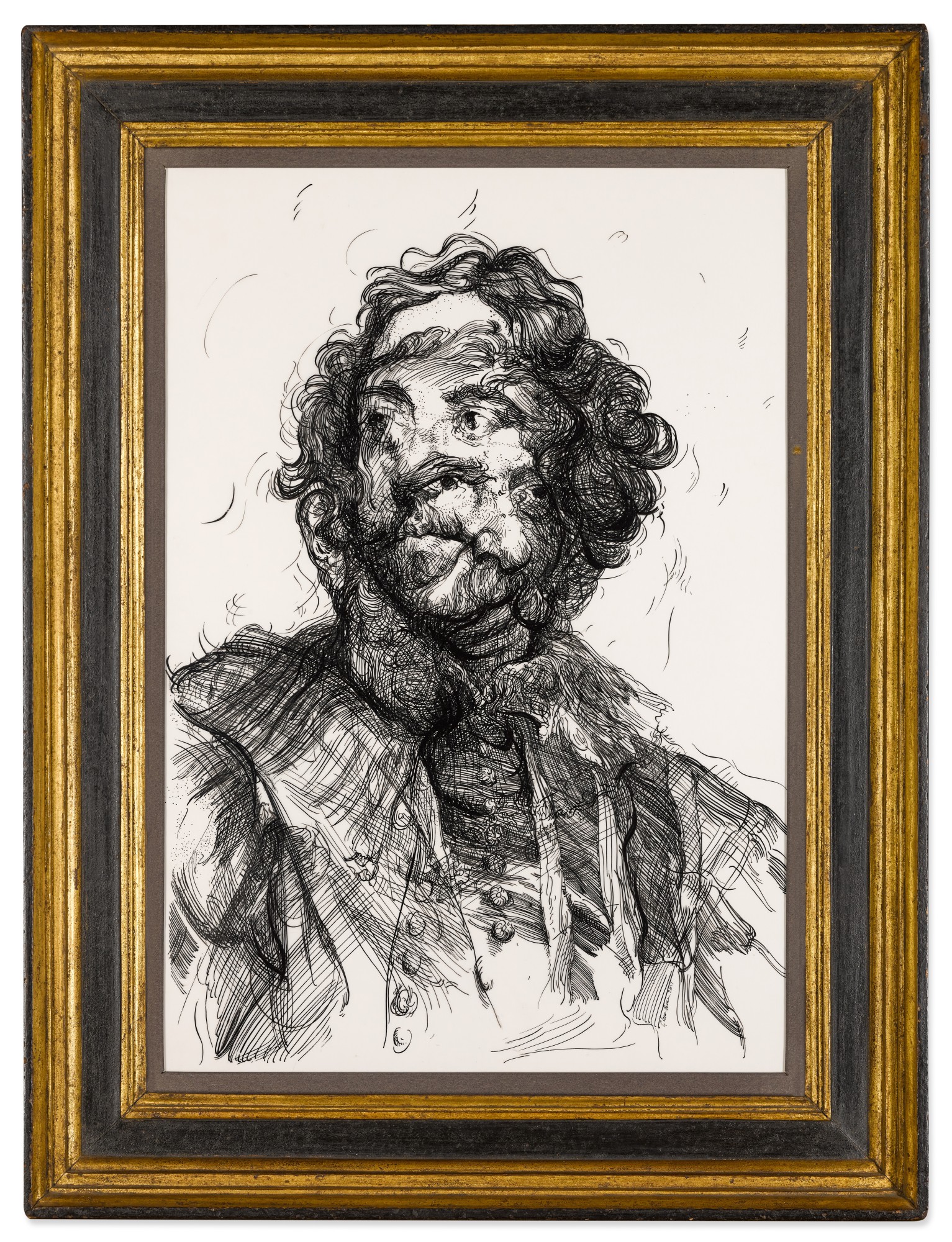
Glenn Brown
Drawing 16 (after Van Dyck/Van Dyck), 2017








The Seductive Logic of Black and Gold
There is something almost primal about the pull of black and gold in art. These are not simply colors but a kind of visual grammar, a shorthand for depth and radiance, for shadow that intensifies light rather than erasing it. Collectors who live with works in this register often describe the same experience: the piece changes throughout the day, the gold catching afternoon light differently than the cold blue glow of early morning, the black seeming to breathe. That quality of aliveness, of a work that never quite settles, is part of what makes this territory so compelling to collect and so difficult to walk away from once you have been drawn in.
The history of black and gold as an artistic pairing runs deep, from Byzantine icon painting and Japanese lacquerware to Gustav Klimt's gilded symbolism at the turn of the twentieth century. But contemporary collectors are not buying nostalgia. What draws serious collectors to work in this mode today is precisely the tension between that rich art historical weight and the way contemporary artists use it to say something urgent and new. The palette carries memory with it, and smart artists know how to activate that memory without being trapped by it.

Erin Lawlor
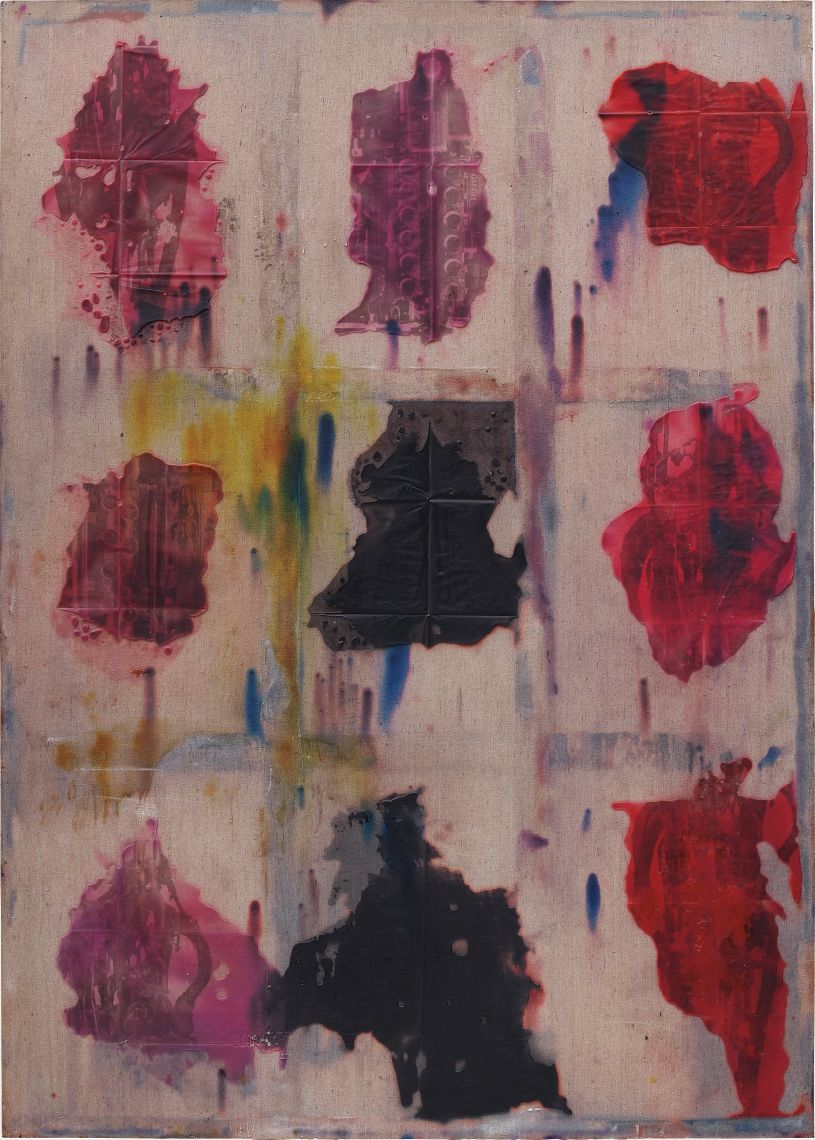
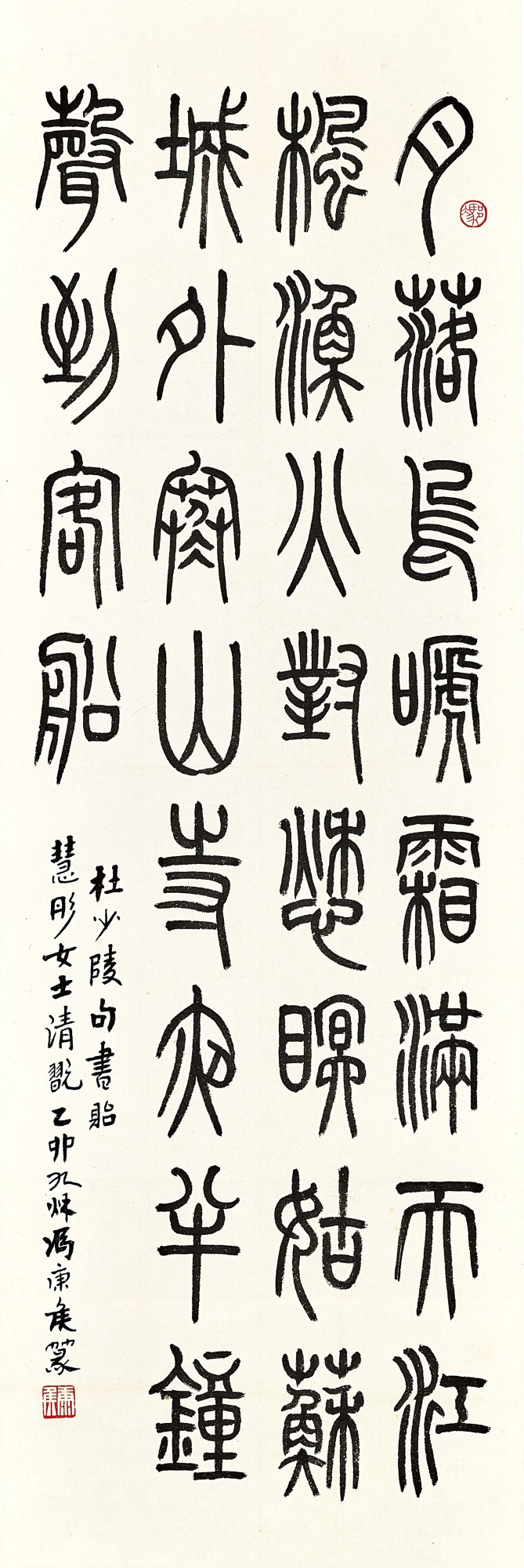
Tiger/Going for baroque 虎/走向巴洛克
When it comes to separating strong works from genuinely great ones in this category, the key question is whether the black and gold relationship is doing real pictorial work or simply serving as decoration. Gold in particular can be a trap. Applied carelessly, it flatters without depth, producing surfaces that feel glamorous in reproduction and hollow in person. The works that reward sustained looking are those where the contrast creates genuine spatial tension, where the eye is led into the picture rather than sliding across it.
Opacity and luminosity should seem to argue with each other. A great work in this register makes you feel that the balance could have tipped differently, that the artist made a considered and risky choice. Among the artists well represented on The Collection, several work with this chromatic territory in ways worth close attention. Keith Haring, whose graphic language was built on radical contrasts, understood the rhetorical power of dark ground and radiant mark.

Keith Haring
“He is one of those special artists who expand the definition of what an artist is, of what an artist can do – of what art is.” (Jeffrey Deitch,, 1984
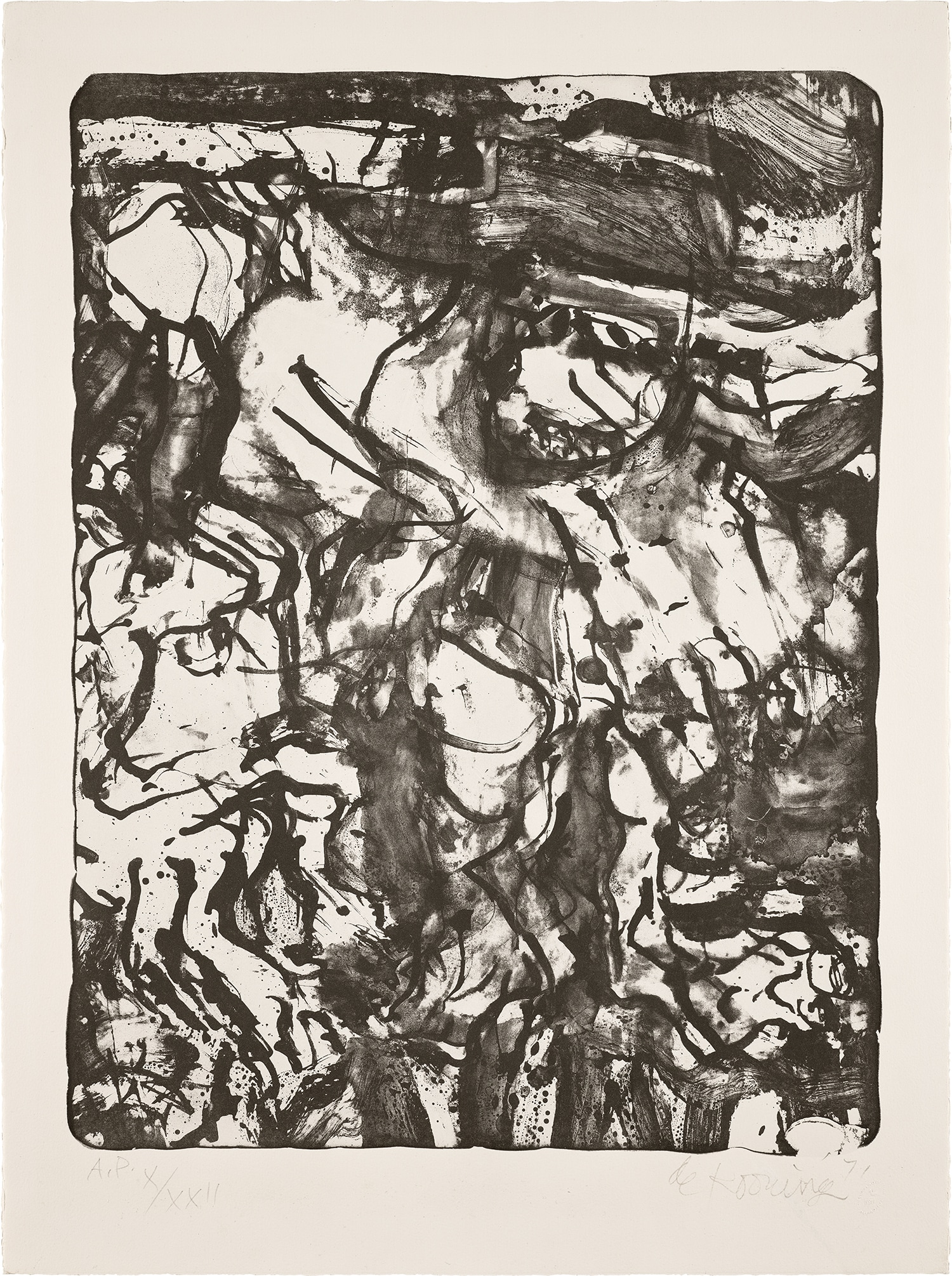
His use of black as both background and active element, rather than simply negative space, gave his work an urgency that still holds. Similarly, the legacy of Willem de Kooning reminds collectors that black and gold are not purely decorative registers but can carry enormous gestural force, the paint itself becoming evidence of decision and revision. Works by Rob Pruitt and Robert Pruitt, who are distinct artists despite the similarity in names, each explore how surface glamour and cultural critique can coexist in the same object, which is a genuinely difficult thing to pull off. For collectors with an eye on value, the conversation around AI generated work in this palette is evolving quickly.
The category labeled AI on platforms like The Collection represents a genuinely new frontier, and the collecting logic here is still being written. What is clear is that the works generating serious interest are those where the AI process is not a shortcut but a genuine artistic tool, where the artist has made meaningful choices about how the technology shapes the output. The analogy to photography in the late nineteenth century is imperfect but instructive: the question was never whether the machine made the image but whether a discerning intelligence shaped what the machine produced. In terms of auction performance, works that engage with black and gold in a rigorous and conceptually grounded way have shown real resilience.
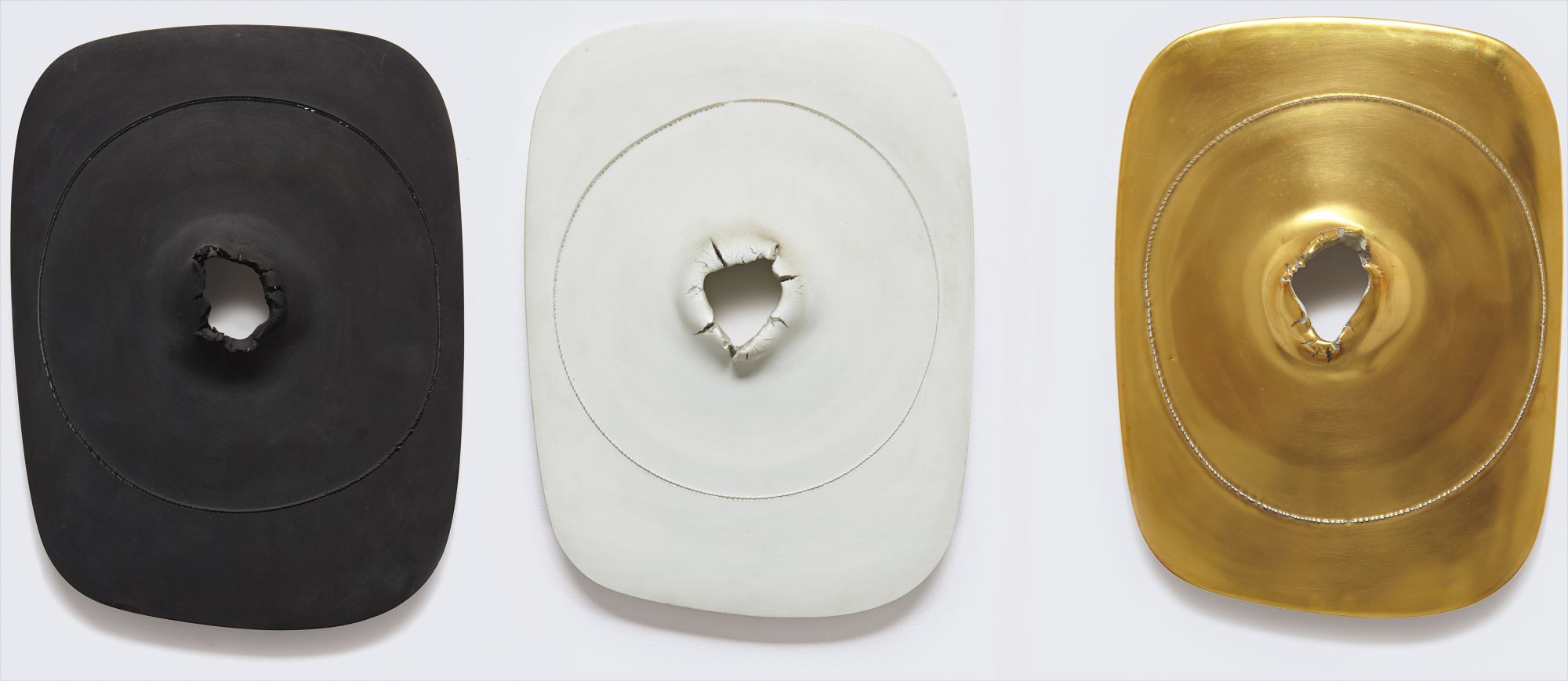
Lucio Fontana
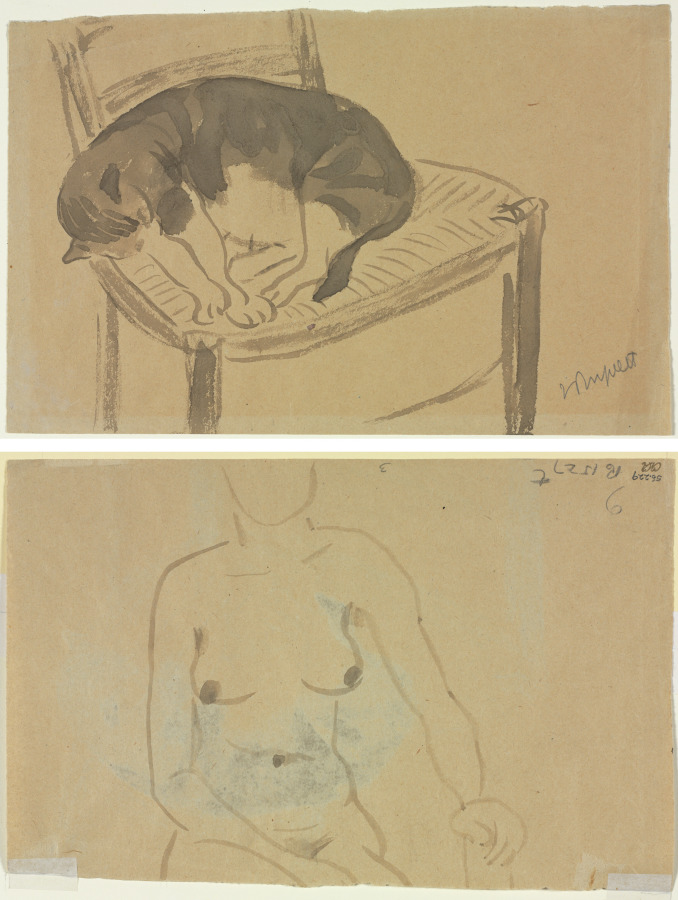
Concetto Spaziale Cratere: three works
Lucio Fontana, whose slashed and punctured canvases often played dark ground against the luminosity of paint and void, has seen consistent demand at auction for decades, with major works regularly appearing at Christie's and Sotheby's and commanding significant premiums when condition and provenance are strong. The lesson for collectors is that the palette alone does not sustain market value. What sustains value is the clarity and integrity of the artistic idea behind it. Emerging artists working in this space deserve serious attention from collectors who are willing to do the research.
The AI category in particular is producing work that will look prescient in ten years, and the prices today reflect uncertainty rather than low quality. Collectors who built early positions in video art or digital photography in the 1990s often did so when the critical establishment had not yet caught up. The parallel is worth sitting with. Looking at younger artists exploring the aesthetic and conceptual possibilities of generated imagery, particularly those who are asking hard questions about authorship, surface, and desire, is where some of the most interesting opportunities currently lie.
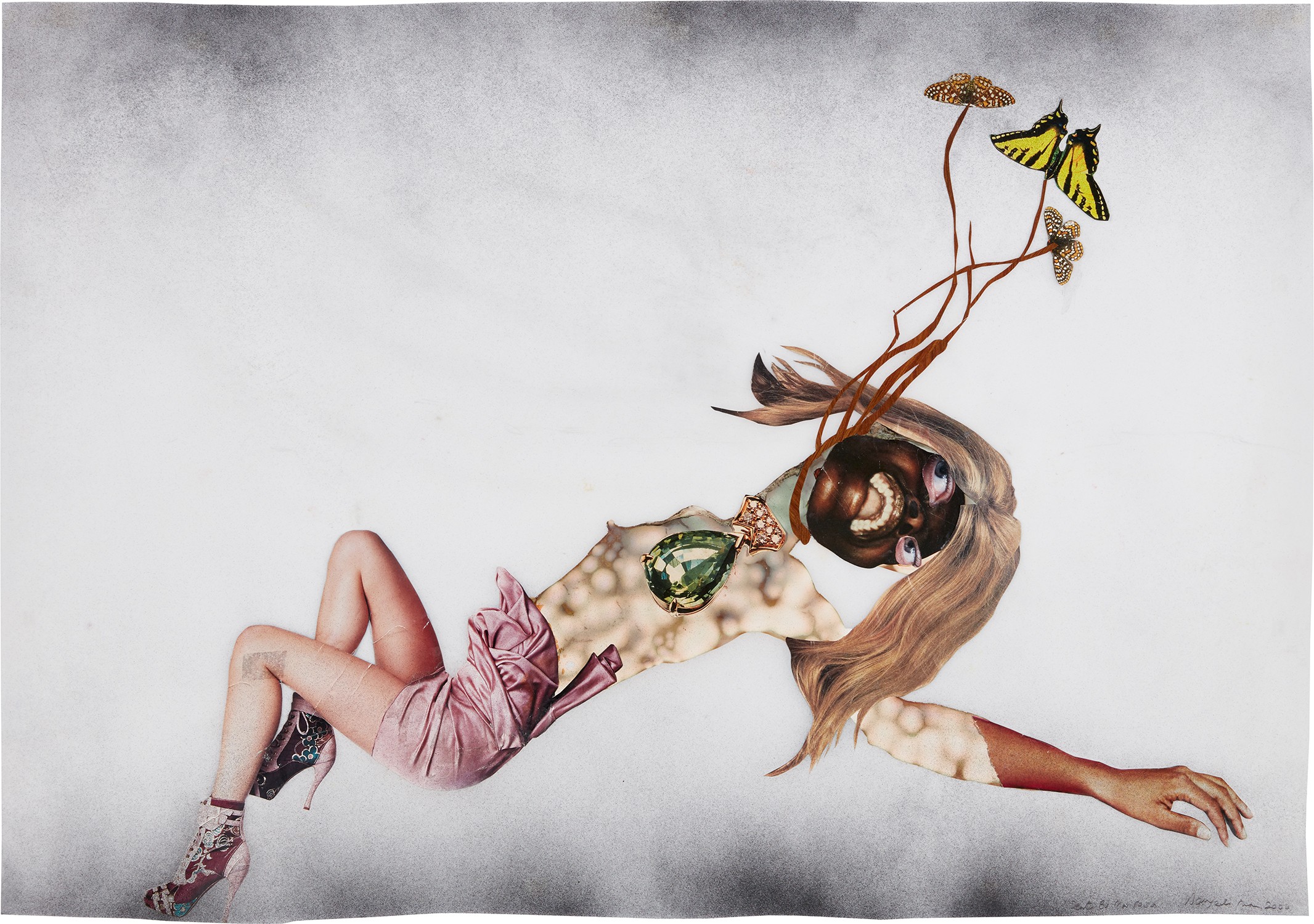
Wangechi Mutu
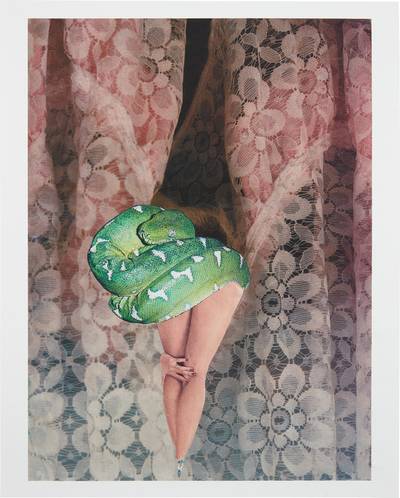
Death by Mariposa, 2006
On practical matters, condition is genuinely important in works that rely on the interaction of dark and light. Gold leaf and metallic surfaces are susceptible to environmental humidity and to the abrasion of careless handling, and collectors should ask directly about materials, framing history, and any previous restoration. For editions versus unique works, the question is less about one being superior and more about what the edition structure means for the specific work. A well conceived limited edition in this category can outperform a weak unique work at every stage of the market.
Ask the gallery what the edition size is, how many have been sold, and where the other works in the edition have gone. That last question tells you more than almost anything else about how seriously the work is being placed and by whom.