Mid-Career
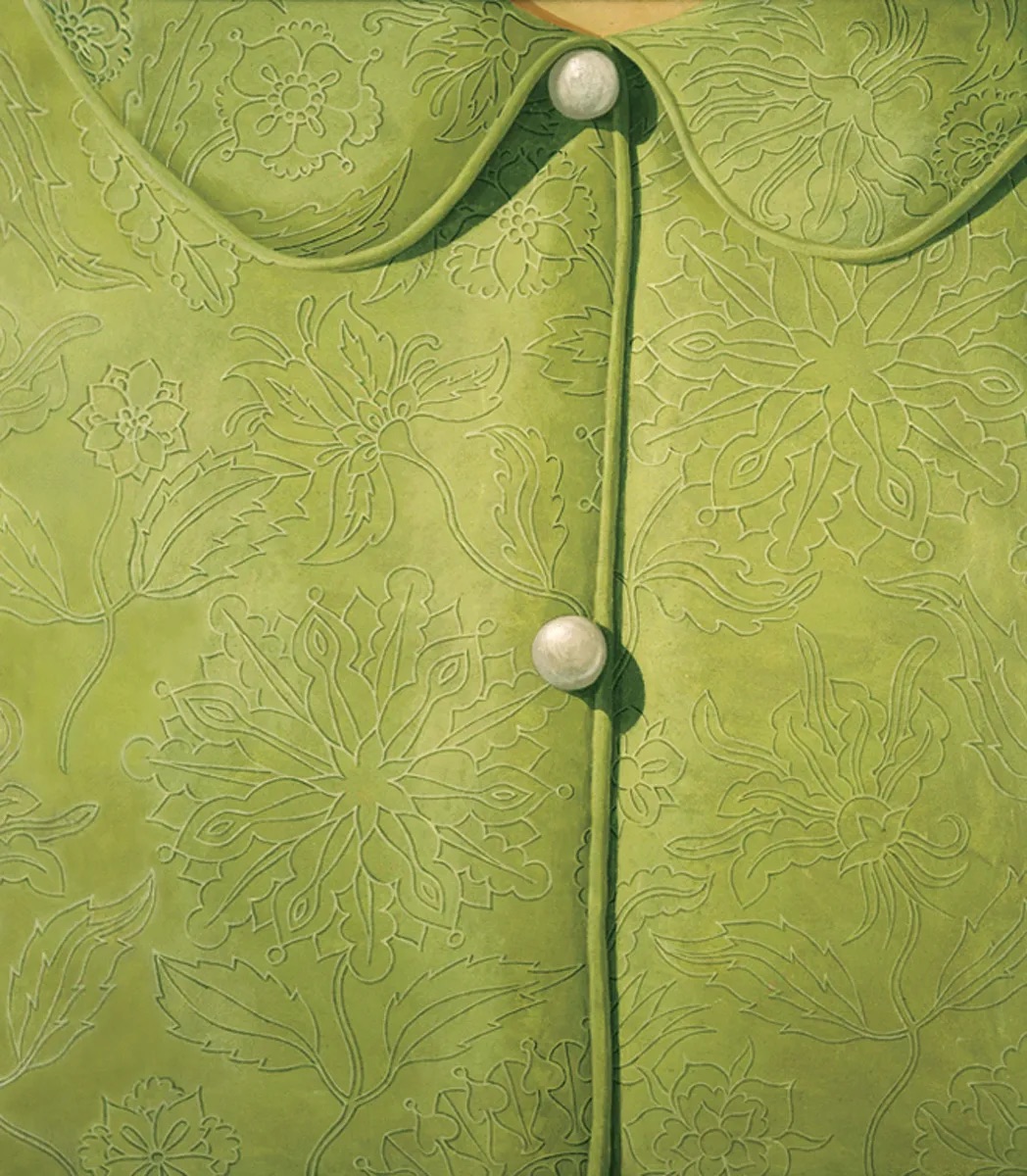
Domenico Gnoli
Chemisette Verte, 1967





The Sweet Spot Nobody Talks About
There is a particular confidence that comes with buying mid career. Not the nervous excitement of an early acquisition, when you are essentially betting on potential and personality, and not the calculated certainty of a blue chip purchase, where the institutional endorsement has already done most of the thinking for you. Mid career collecting sits in a productive tension between those two poles, and collectors who learn to navigate it well tend to build the most interesting rooms. The work is resolved enough to reveal genuine vision, yet the artist is still in conversation with their own ideas, still capable of surprise.
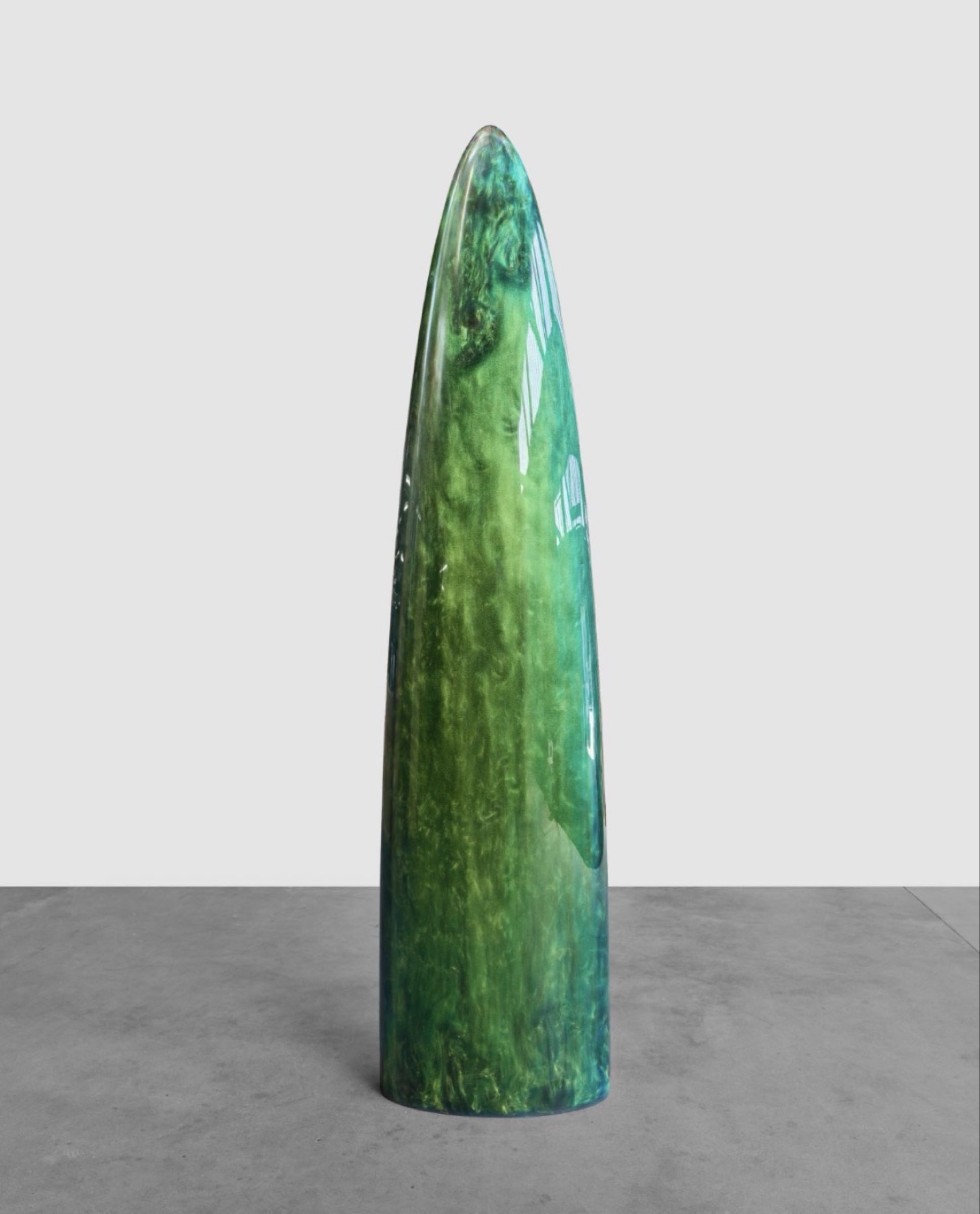
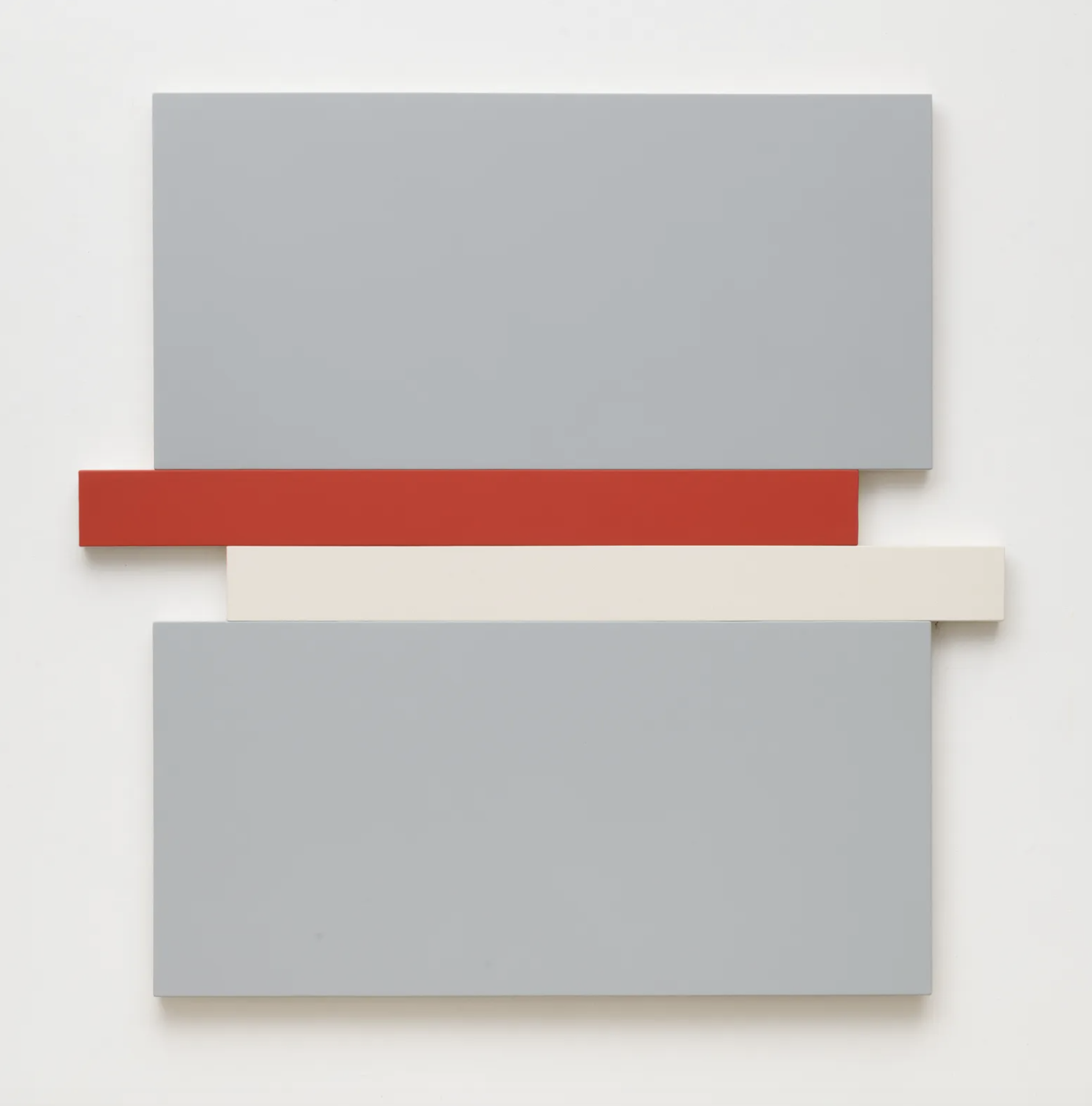
That combination, rarity meeting vitality, is almost impossible to replicate at any other stage of a career. What makes a work from a mid career artist worth serious attention is, above all, internal consistency. You want to see an artist who has clearly found a language and is now testing its limits rather than still searching for a grammar. When you look at the paintings of Gisela Colón, for instance, you immediately sense someone working from a position of hard won clarity.
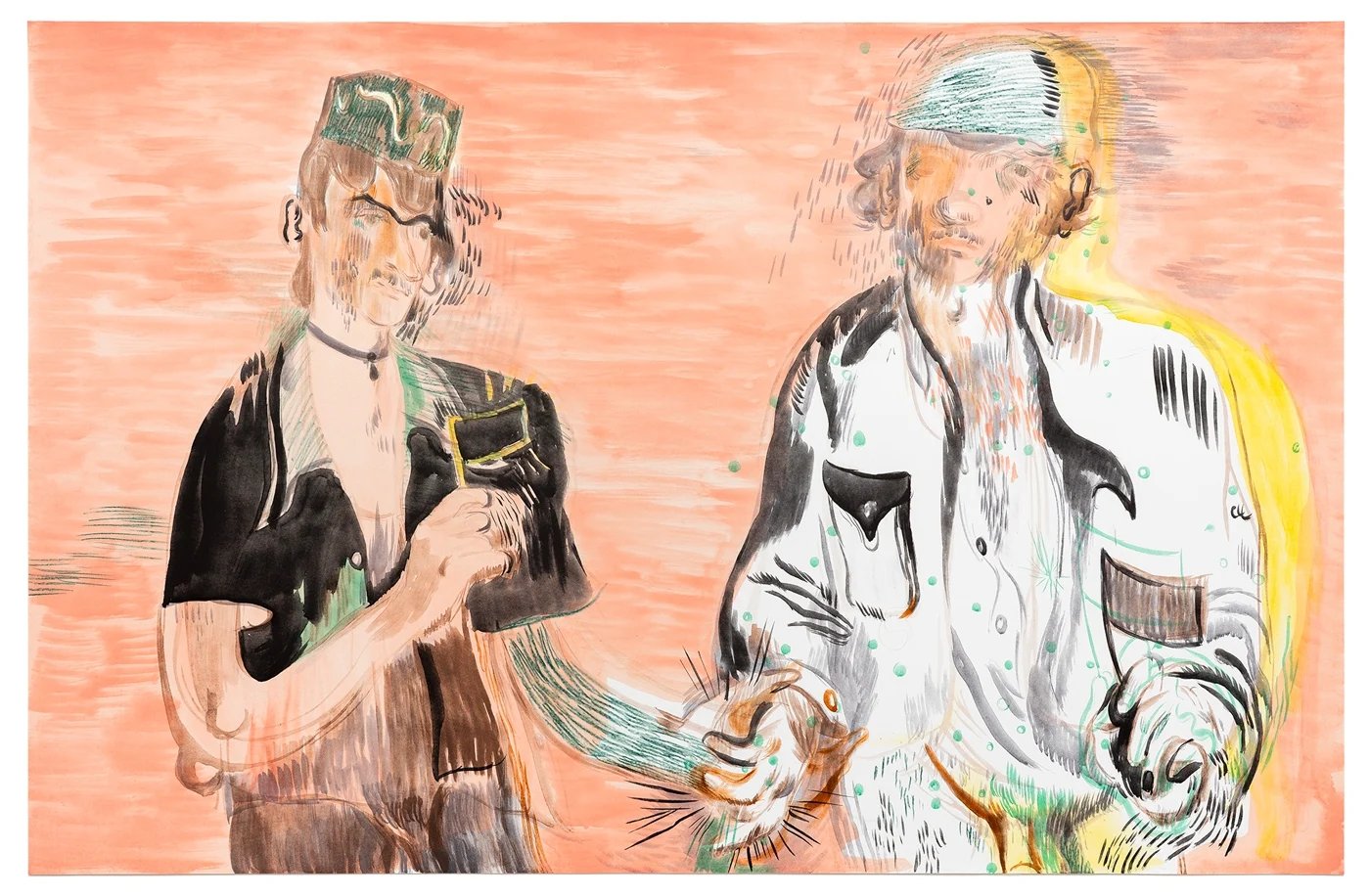
Salman Toor
Citizens with Flags, 2025
Her pod sculptures and paintings inhabit a very specific territory where minimalism meets phenomenology, and the confidence in that territory is palpable. Similarly, Salman Toor had already developed his signature intimacy and figurative vocabulary well before the Whitney Biennial recognition arrived. The lesson there is that institutional validation confirms what strong works had already declared. Collectors who arrived early, trusting the work itself rather than waiting for the press release, did so by learning to read that internal coherence.
The question of what separates a good work from a great one in this category comes down to something collectors often describe as inevitability. A great mid career piece feels like the artist could not have made it any other way. It is not experimental in a groping sense but exploratory in a directed one. Look for works where the medium and the idea are genuinely inseparable, where you cannot imagine the same thought expressed differently.
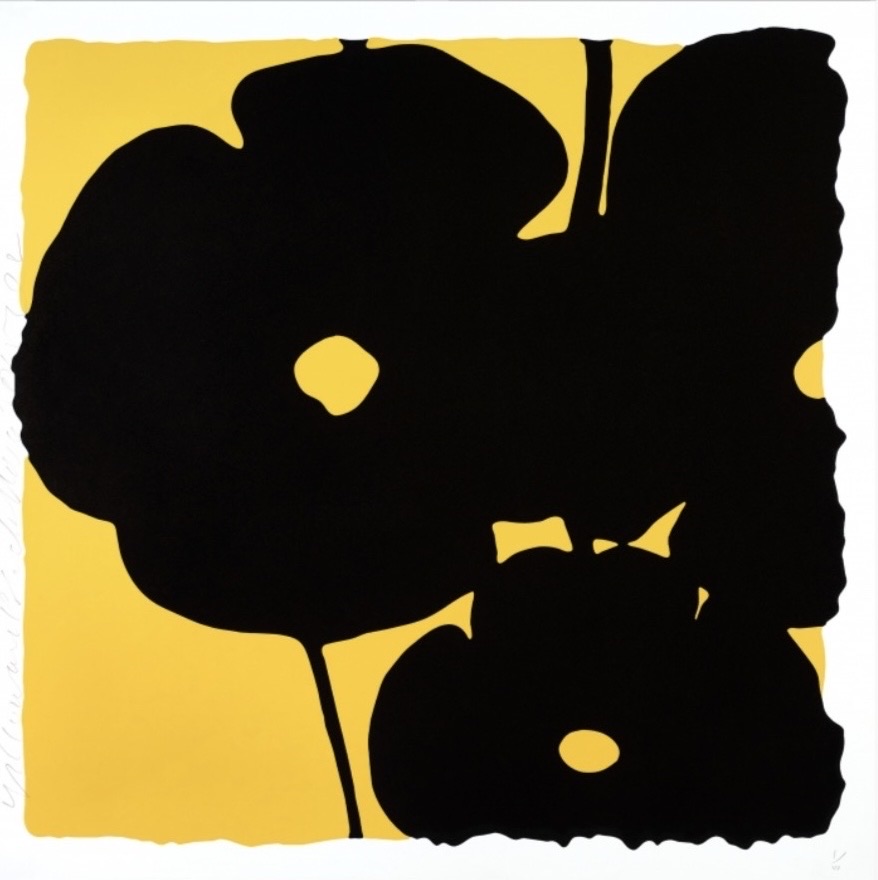
Donald Sultan
Reversal Poppies Yellow and Black, Nov 6, 2015, 2015
Donald Sultan, whose career stretches back to the late 1970s and whose large scale works in tar and tile became central to the Pictures Generation adjacent conversations of that era, offers a useful case study. His strongest pieces are the ones where the industrial material is not a conceptual footnote but the actual emotional substance of the work. When collecting mid career artists, ask yourself whether the material choices feel inevitable or merely clever. That distinction matters enormously over time.
On The Collection, several artists represent particularly compelling value propositions right now. Corita Kent, who as Sister Mary Corita produced her most iconic serigraphs in the 1960s, occupies a strange and instructive position. She is simultaneously canonical and undervalued, beloved by designers and social historians as much as by art world insiders, which has historically kept her prices below where her influence would suggest they should sit. That gap is closing.
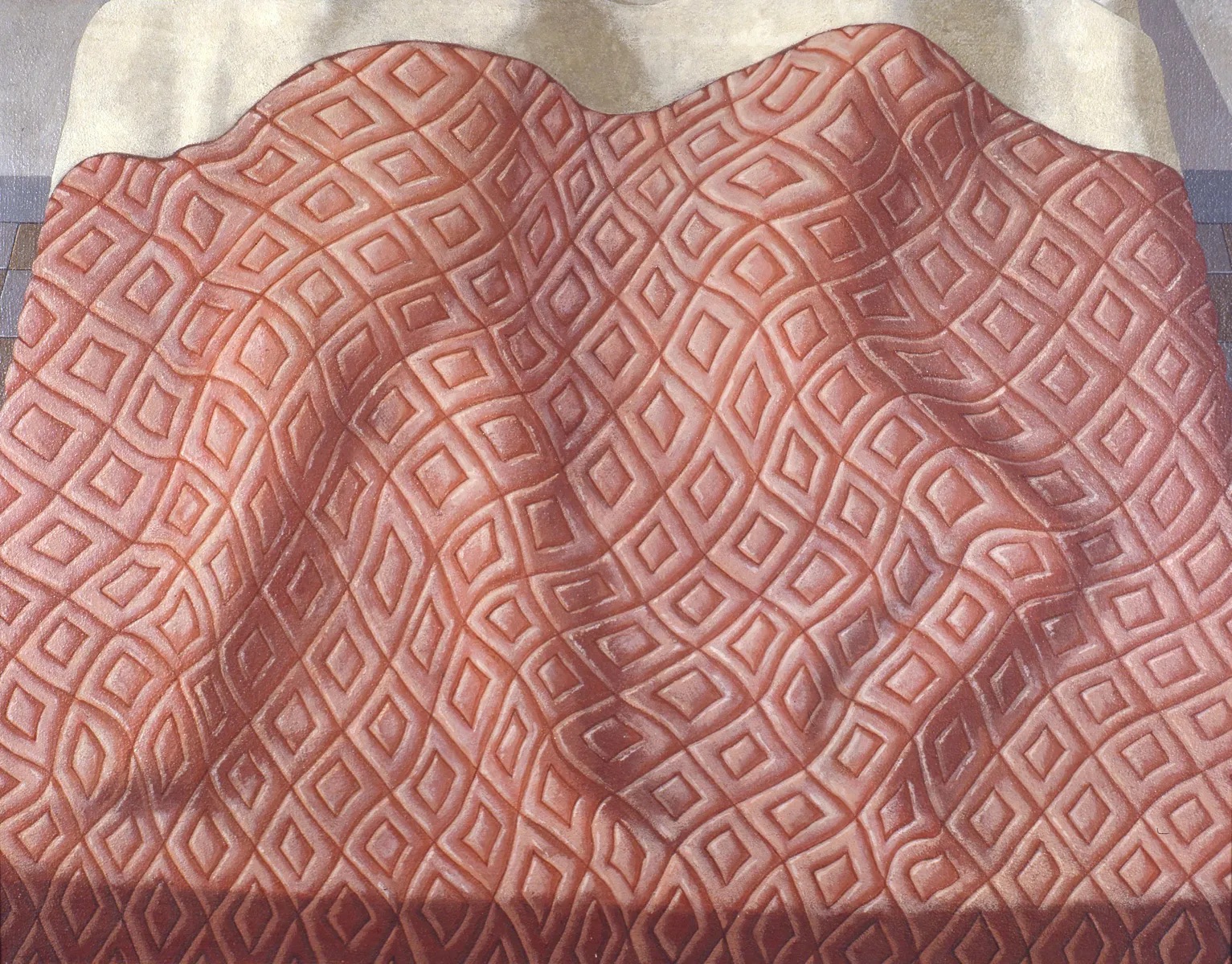
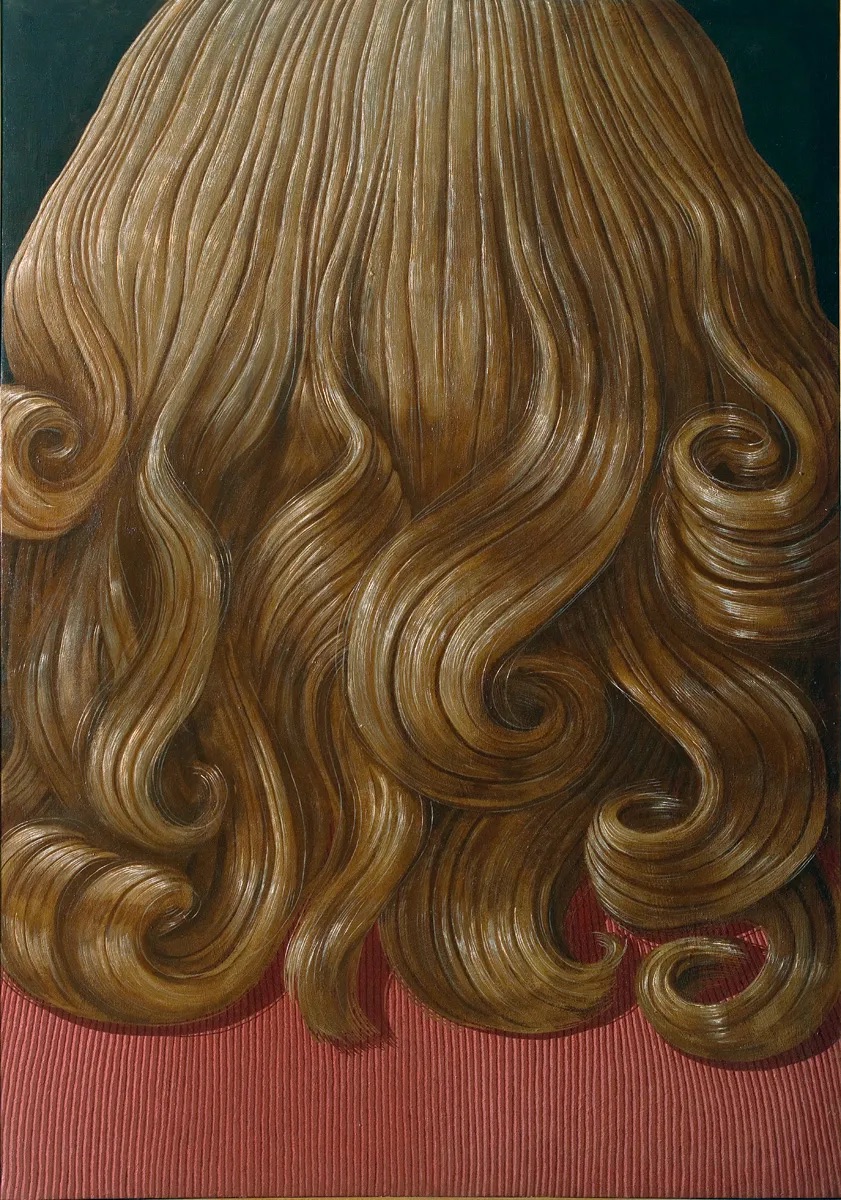
Domenico Gnoli
Chemisette Verte, 1967
Domenico Gnoli, the Italian painter whose deadpan close ups of fabric and furniture details anticipate so much of what later became super flatness, remains genuinely undersought outside of Europe, where his reputation is considerably stronger. Collectors in North America are still catching up. Scot Heywood's meditative abstractions in natural pigments reward long acquaintance in a way that photographs cannot convey, which makes them both harder to sell quickly and more deeply satisfying to live with over years. For collectors with an appetite for genuine discovery, some of the most interesting positions to take are on artists who are mid career by age and output but still pre institutional in terms of market recognition.
Hagar Vardimon works at an intersection of drawing and constructed image that is genuinely difficult to categorize, which tends to depress short term market interest and create long term opportunity. Carl Hopgood's work in pattern and repetition carries the influence of Pop without the irony tax, which makes it both immediately appealing and intellectually honest. Iván Argote, whose practice spans sculpture, video, and public intervention, has been building a serious exhibition record across Europe and the Americas. Collectors who engage with these artists now, through studio visits and direct conversation rather than purely through fairs, tend to establish relationships that shape how they eventually place significant works.
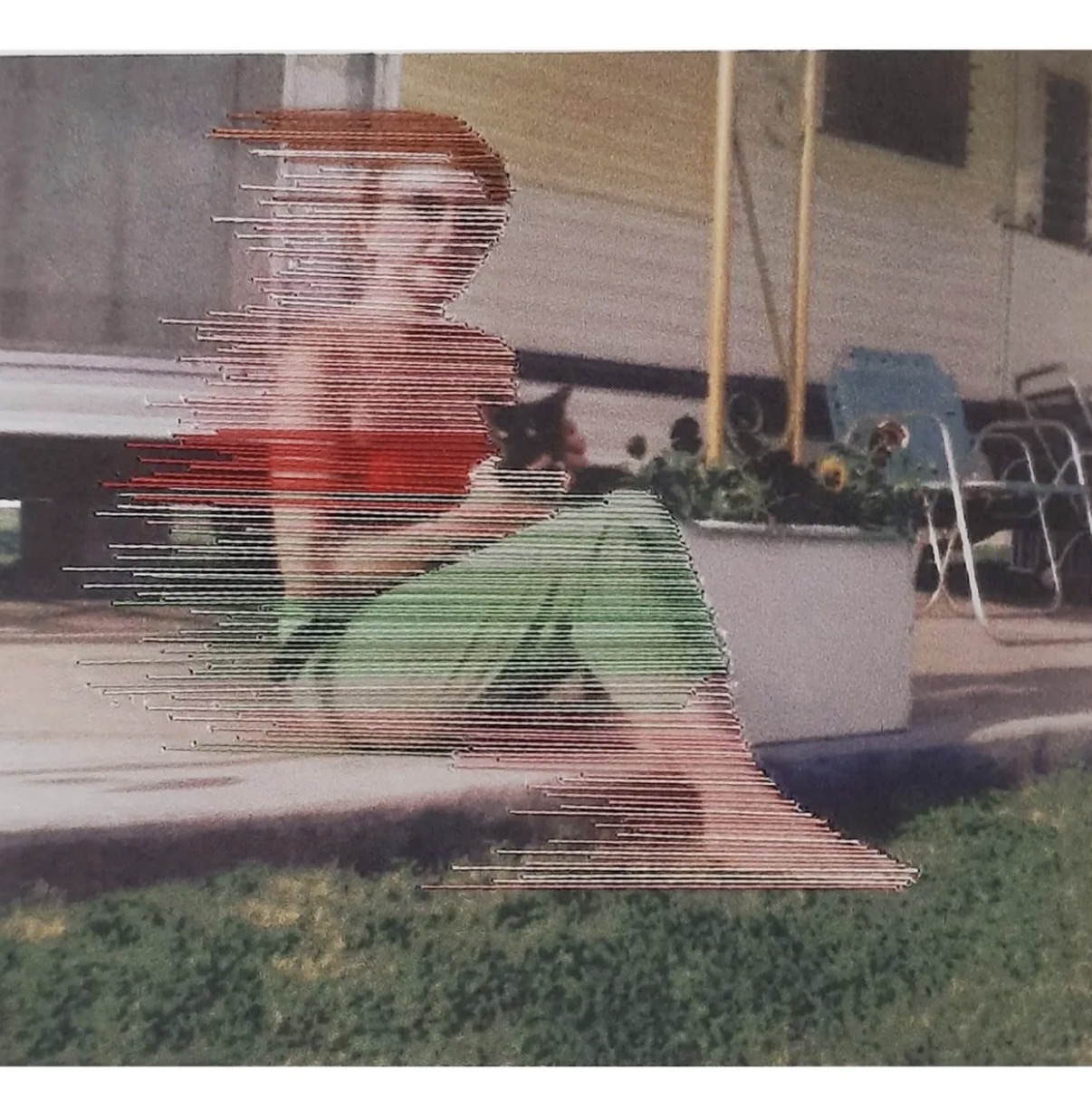
Hagar Vardimon
New Jersey XV, 2016
At auction, mid career works tend to perform best when they are clearly representative rather than peripheral. A central example from a defining series will almost always outperform an outlier from the same artist, even if the outlier is formally interesting. James Rosenquist's market demonstrated this repeatedly over decades: works that announced his Pop identity commanded premiums over equally accomplished pieces made in periods of experimentation. The secondary market for mid career artists also responds strongly to institutional momentum.
A solo show at a serious museum or kunsthalle, a catalogue essay by a respected critic, an acquisition by a notable public collection: these events create inflection points that collectors who track carefully can sometimes anticipate. That tracking is the actual skill, and it rewards sustained attention over opportunistic dipping. Practically speaking, condition is disproportionately important in this category because provenance is still relatively thin and condition problems cannot be absorbed by decades of historical significance the way they can with older work. Ask galleries directly about any conservation history, about how works have been stored, and about sensitivity to light, humidity, or handling.
With editions, which feature prominently in the output of artists like David Shrigley and Nick Smith, understand the difference between a numbered edition and a variable edition, and always establish where a specific impression sits within its run. Unique works carry obvious scarcity advantages but require more comfort with subjectivity. The most useful question you can ask a gallery is not what the artist's prices have done recently but what trajectory the gallery itself envisions and why. How they answer tells you almost as much as the work does.