Join The Collection to save, track, and explore works like this.

Otto Meyer (after Bernt Notke) — Saint George and the Dragon
Otto Meyer (after Bernt Notke)

Saint George and the Dragon

1912

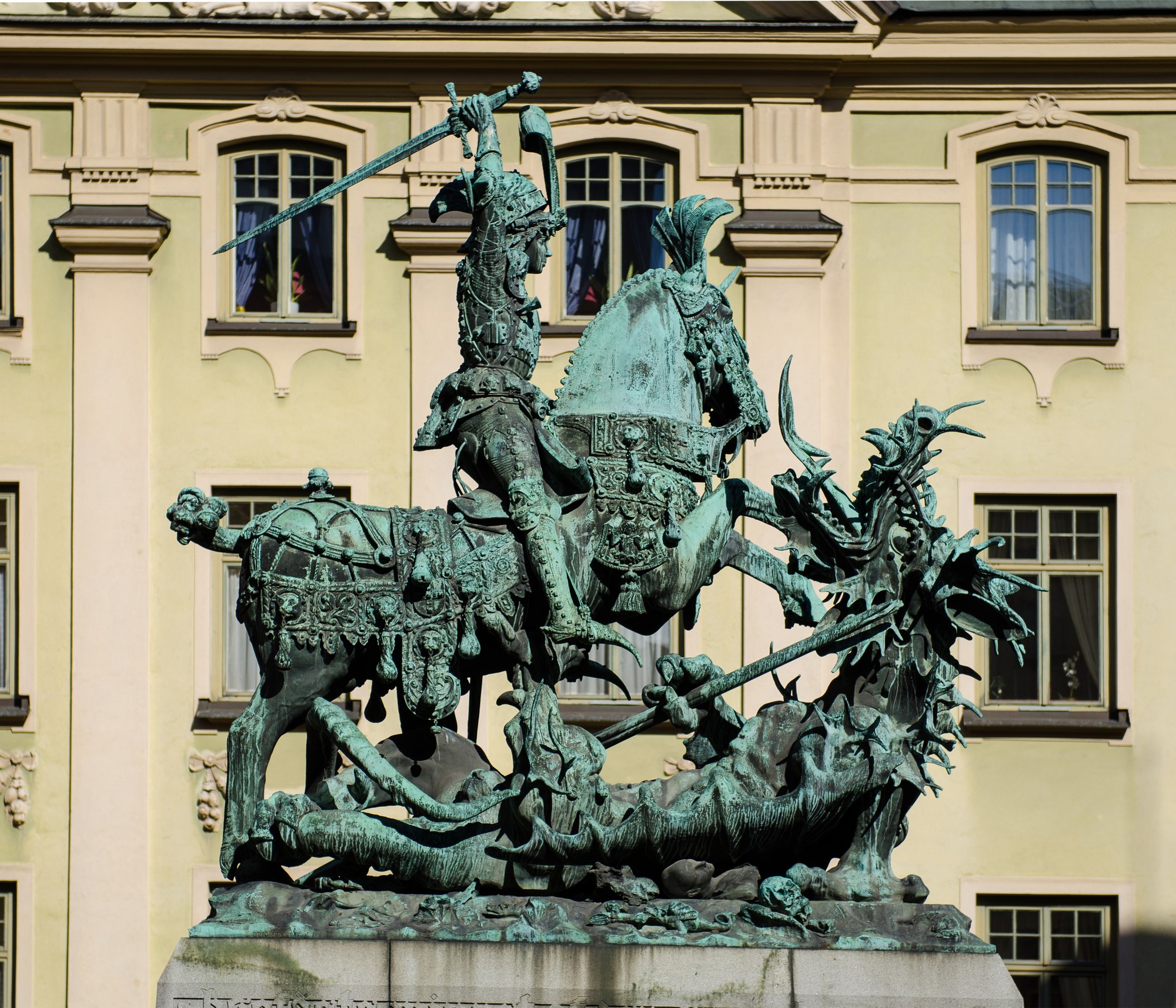
This monumental bronze sculpture depicts the legendary confrontation between Saint George and the Dragon, rendered with dynamic intensity and rich narrative detail. The equestrian warrior, wielding a sword aloft, dominates the composition while trampling the vanquished serpent beneath his steed; attendant figures and demonic creatures swirl around the base in ornate relief. Cast in oxidized bronze that has developed a distinctive green patina, the work exemplifies early twentieth-century public sculpture's grandeur and allegorical ambition. Otto Meyer's version builds upon the celebrated medieval prototype by Bernt Notke, translating the Gothic drama into Modernist sculptural language while maintaining baroque compositional complexity. Positioned prominently in Gamla stan's historic merchant square, the work serves simultaneously as civic monument, religious imagery, and triumphant symbol of good vanquishing evil. Wikimedia Commons (CC BY-SA)

Medium
Bronze sculpture

Start the Discussion

Request access to join the discussion

About this work

Otto Meyer (after Bernt Notke), Saint George and the Dragon, 1912

This monumental bronze sculpture depicts the legendary confrontation between Saint George and the Dragon, rendered with dynamic intensity and rich narrative detail. The equestrian warrior, wielding a sword aloft, dominates the composition while trampling the vanquished serpent beneath his steed; attendant figures and demonic creatures swirl around the base in ornate relief. Cast in oxidized bronze that has developed a distinctive green patina, the work exemplifies early twentieth-century public sculpture's grandeur and allegorical ambition. Otto Meyer's version builds upon the celebrated medieval prototype by Bernt Notke, translating the Gothic drama into Modernist sculptural language while maintaining baroque compositional complexity. Positioned prominently in Gamla stan's historic merchant square, the work serves simultaneously as civic monument, religious imagery, and triumphant symbol of good vanquishing evil. Wikimedia Commons (CC BY-SA)

Medium
Bronze sculpture
Year
1912
Seen at
Köpmantorget, Gamla stan

Related themes

Religious Art, Figurative Sculpture, Green Patina, Monumental, Dragon, Bronze Sculpture, Medieval Legend, Swedish Art, Civic Monument, Public Art, Equestrian, Modernist Sculpture, Classical Allegory, Early Twentieth Century, Good Versus Evil, Narrative Relief, Gamla Stan, Stockholm, Saint George, Outdoor Sculpture