Outdoor Sculpture
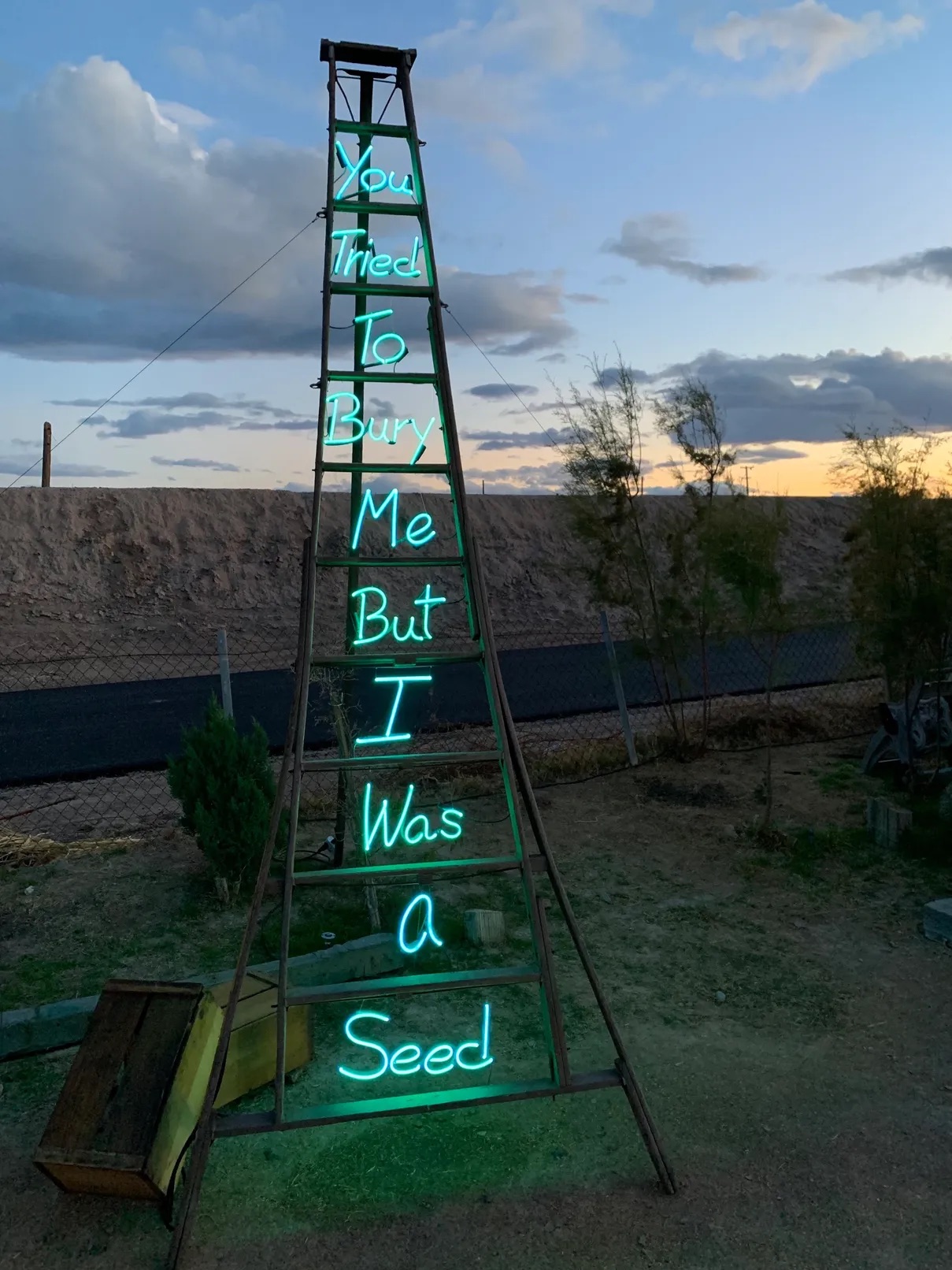
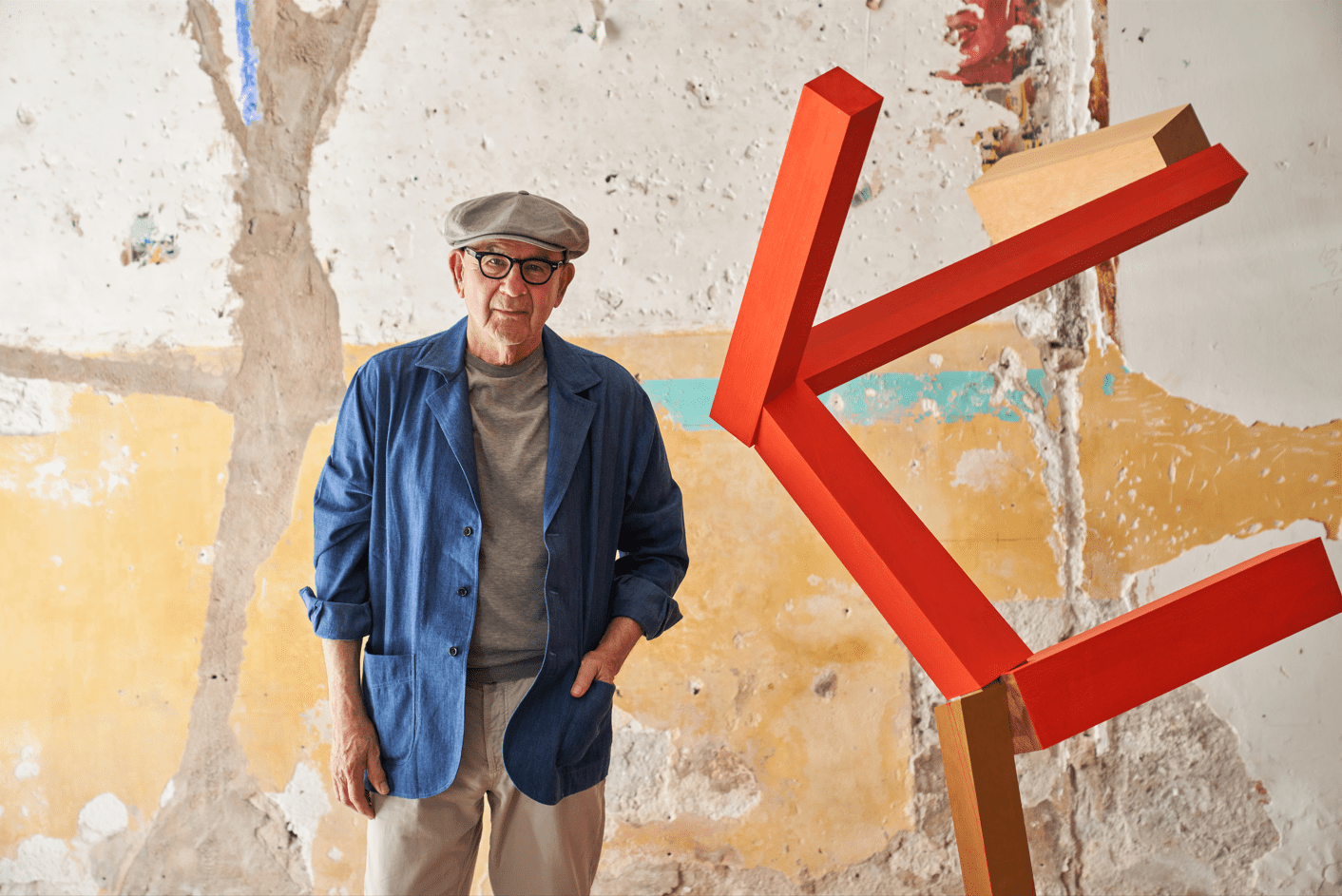
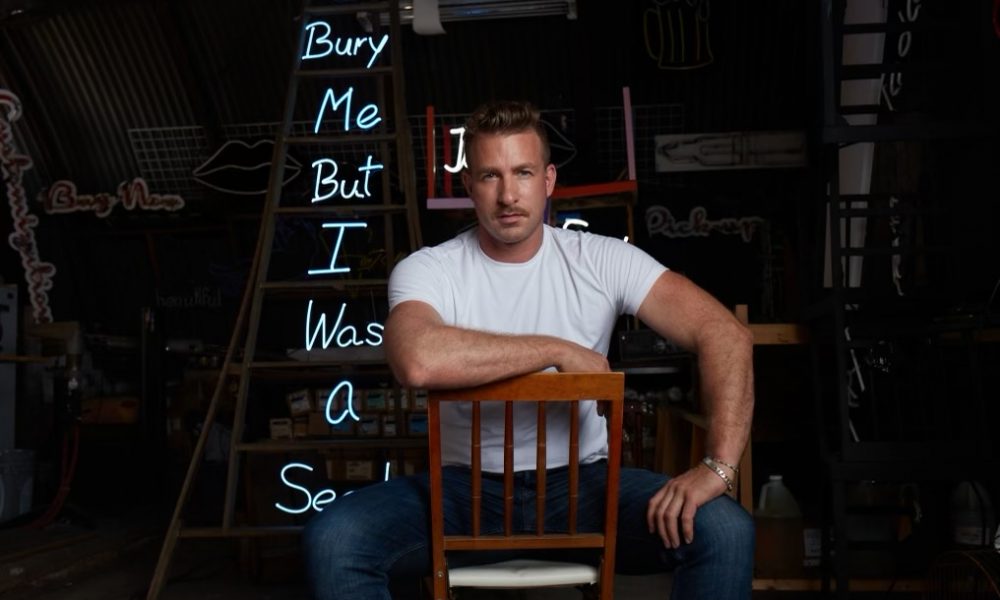
Carl Hopgood
You Tried To Bury Me But I Was A Seed, 2022

The Garden as Gallery: Collecting Sculpture Outdoors
There is something genuinely transformative about living with sculpture outside. Unlike a painting that holds its relationship to light constant, an outdoor work changes by the hour, by season, by weather. Collectors who have made the leap from interior to exterior collecting often describe it as a kind of awakening, a realization that art need not be something you approach reverently in a white room but something that meets you in daily life, something you see from a kitchen window at dawn or pass on the way to the car. That intimacy, earned through proximity and repetition, is unlike anything the interior can offer.
What draws serious collectors to this category is also what makes it demanding. Scale, material, and site are inseparable from meaning in outdoor sculpture. A work that commands a hillside will feel timid in a courtyard, and one conceived for an urban plaza may be overwhelmed by nature. The most compelling outdoor sculptures seem to understand their own gravity, the way they claim and reshape the space around them rather than simply occupying it.
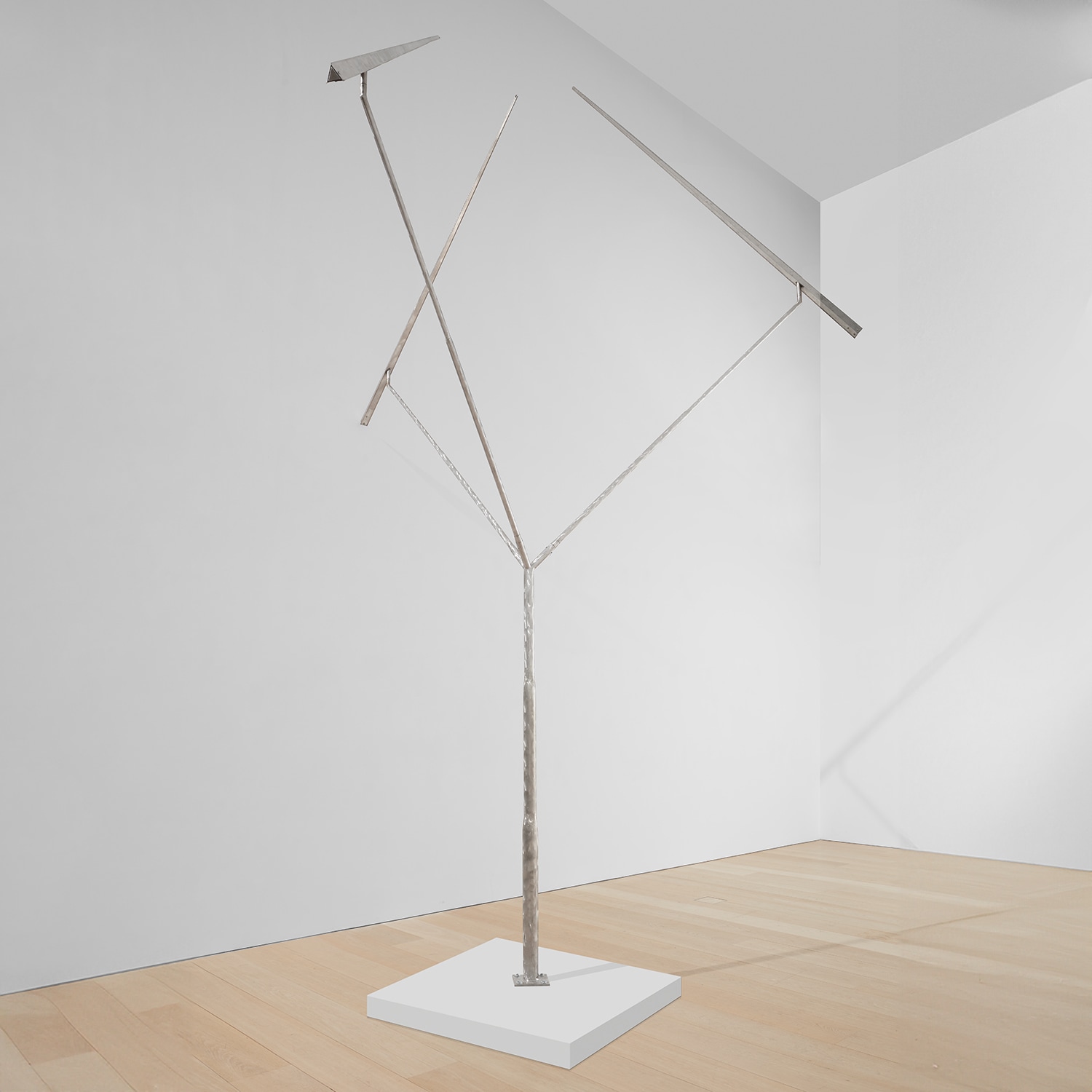
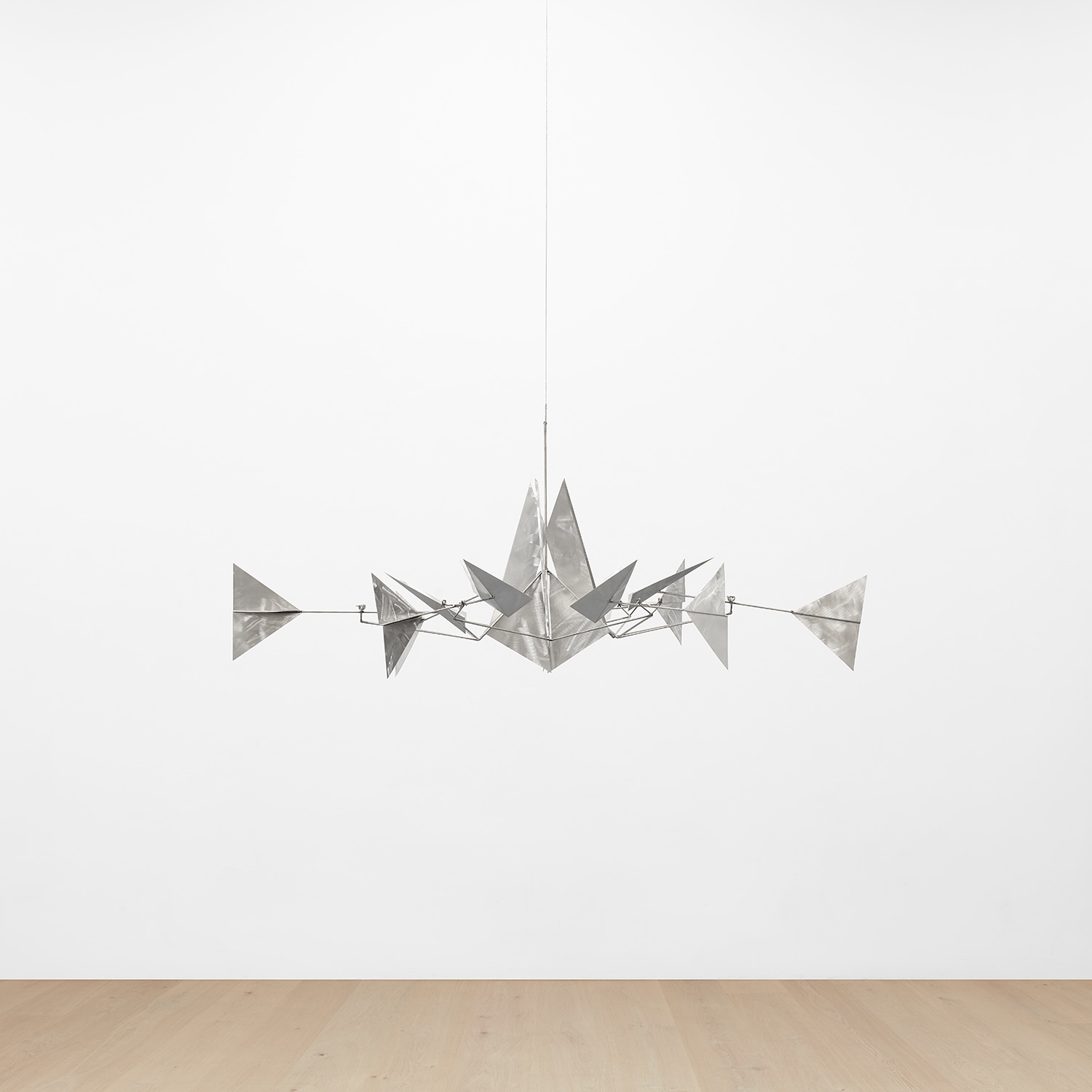
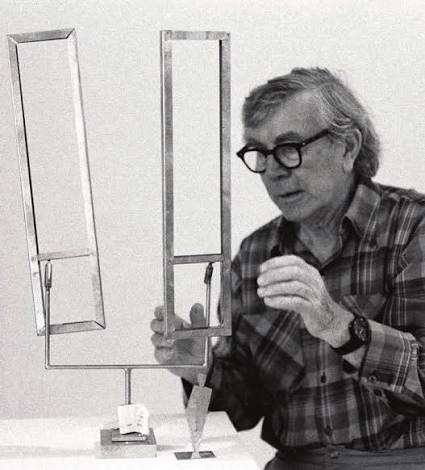
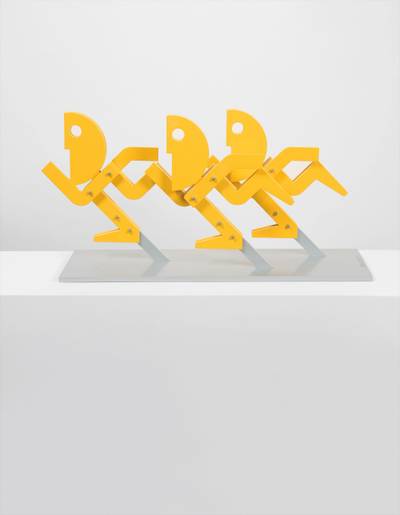
George Rickey
Three Oblique Lines Conical Path III, 1991
Collectors who approach this category with the same rigor they bring to painting quickly realize that the conversation between object and landscape is as much a curatorial act as an acquisitional one. So what separates a good outdoor work from a truly great one? The question of duration is central. Outdoor sculpture endures conditions that interior work never faces, and the best works are conceived with time as a material.
Patina, oxidation, the slow biography of weather, these are not problems to be managed but qualities to be anticipated. Works that engage kinetically with their environment rather than merely resisting it tend to reward collectors most deeply over time. George Rickey understood this perhaps better than anyone in the twentieth century. His stainless steel kinetic sculptures, which respond to the gentlest air movement with a precision that feels almost uncanny, do not merely tolerate the outdoors.
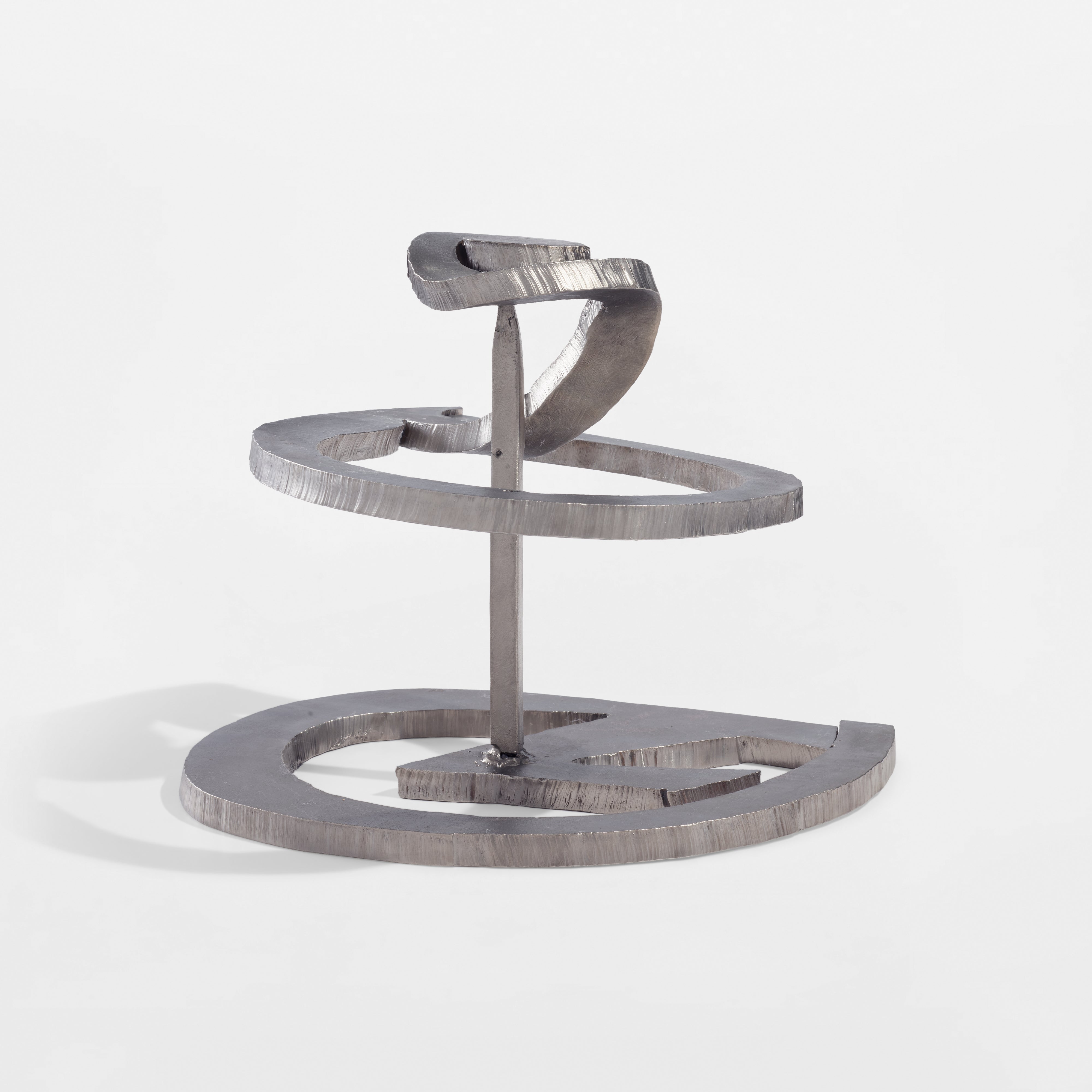
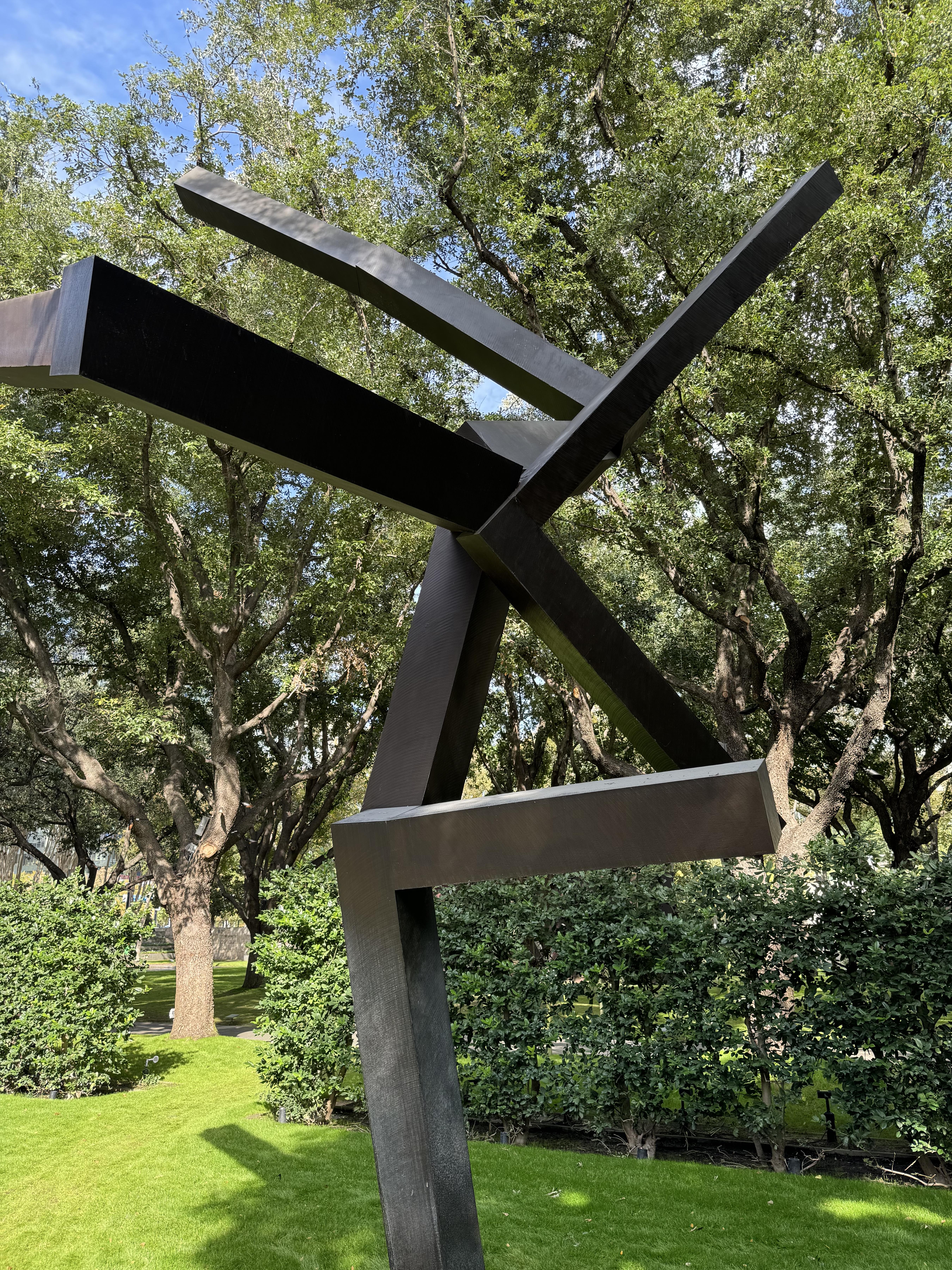
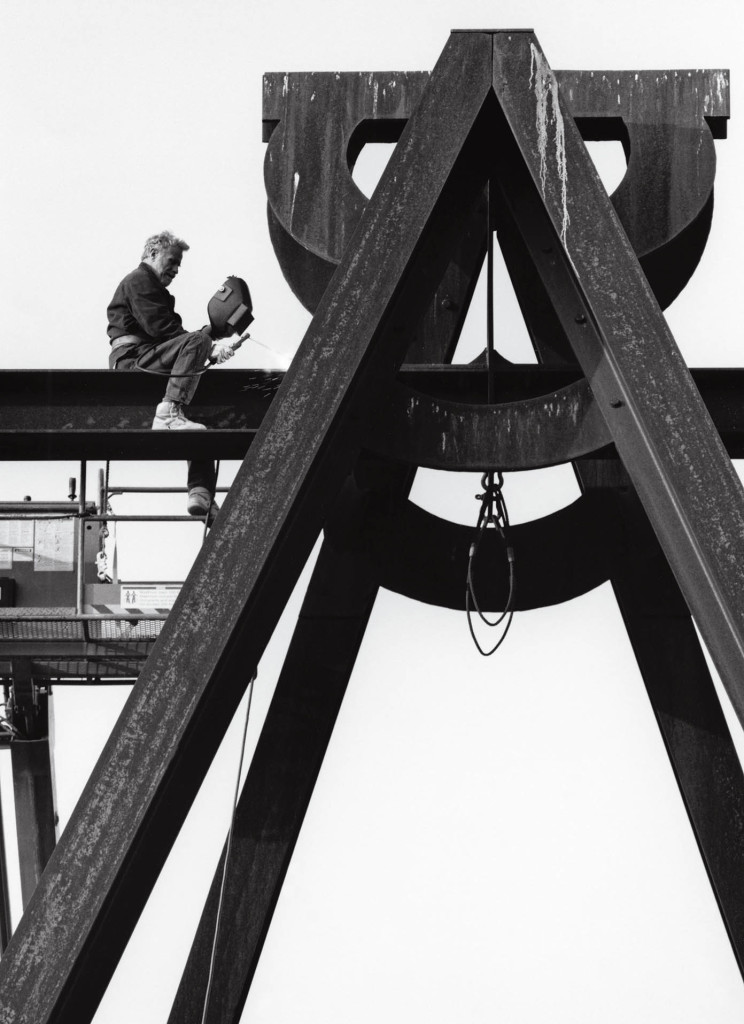
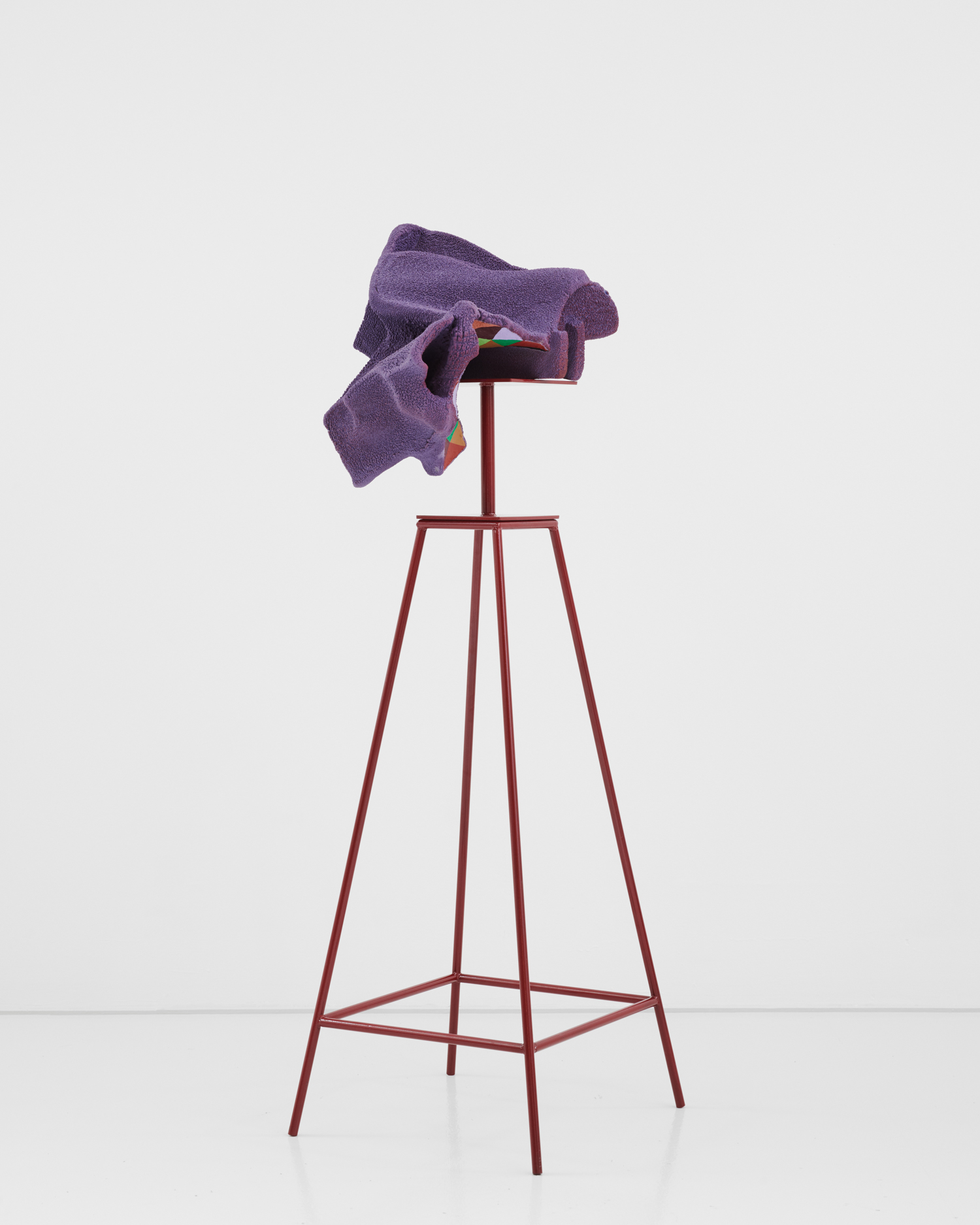
Mark di Suvero
Untitled, 1995
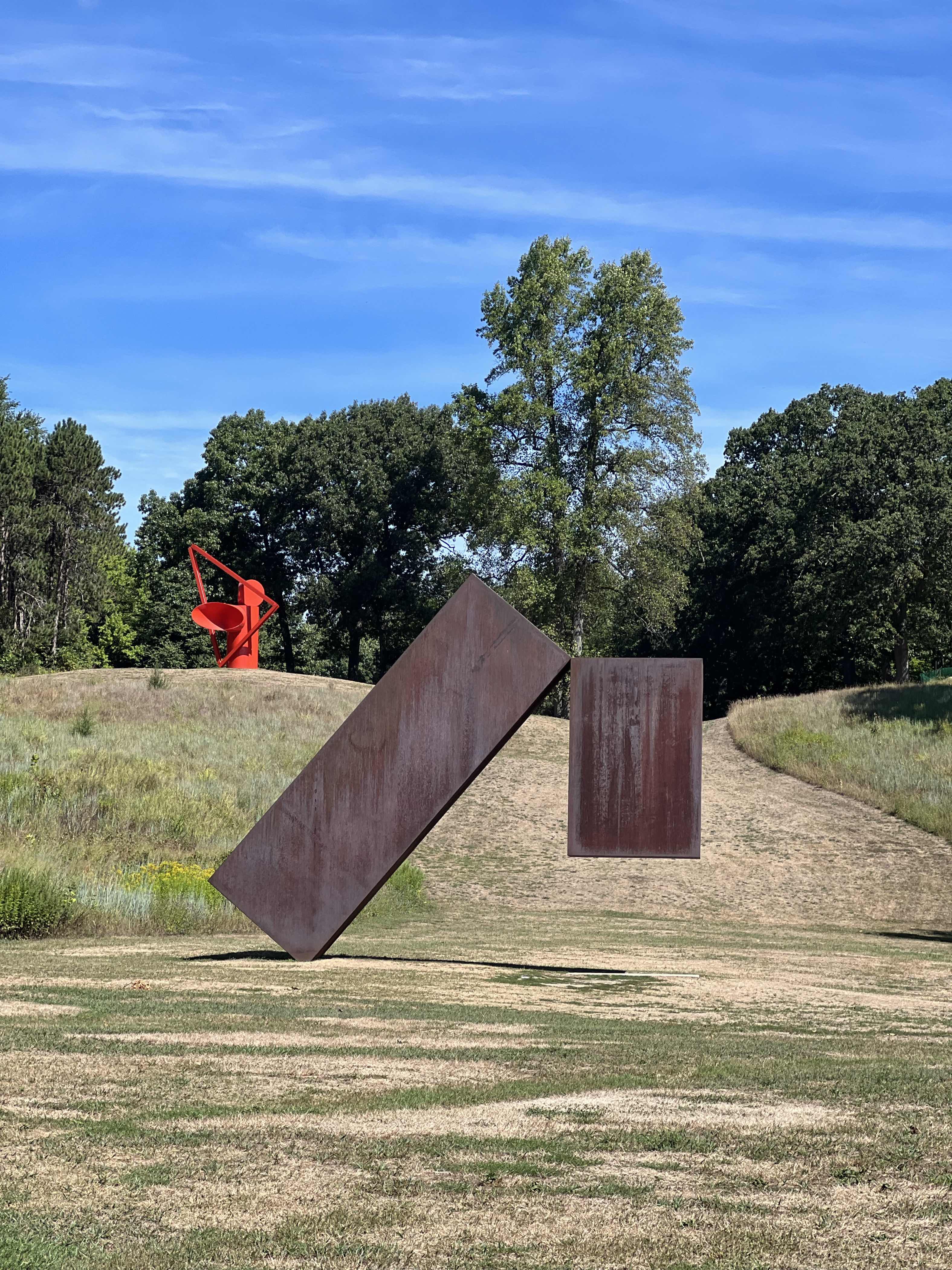
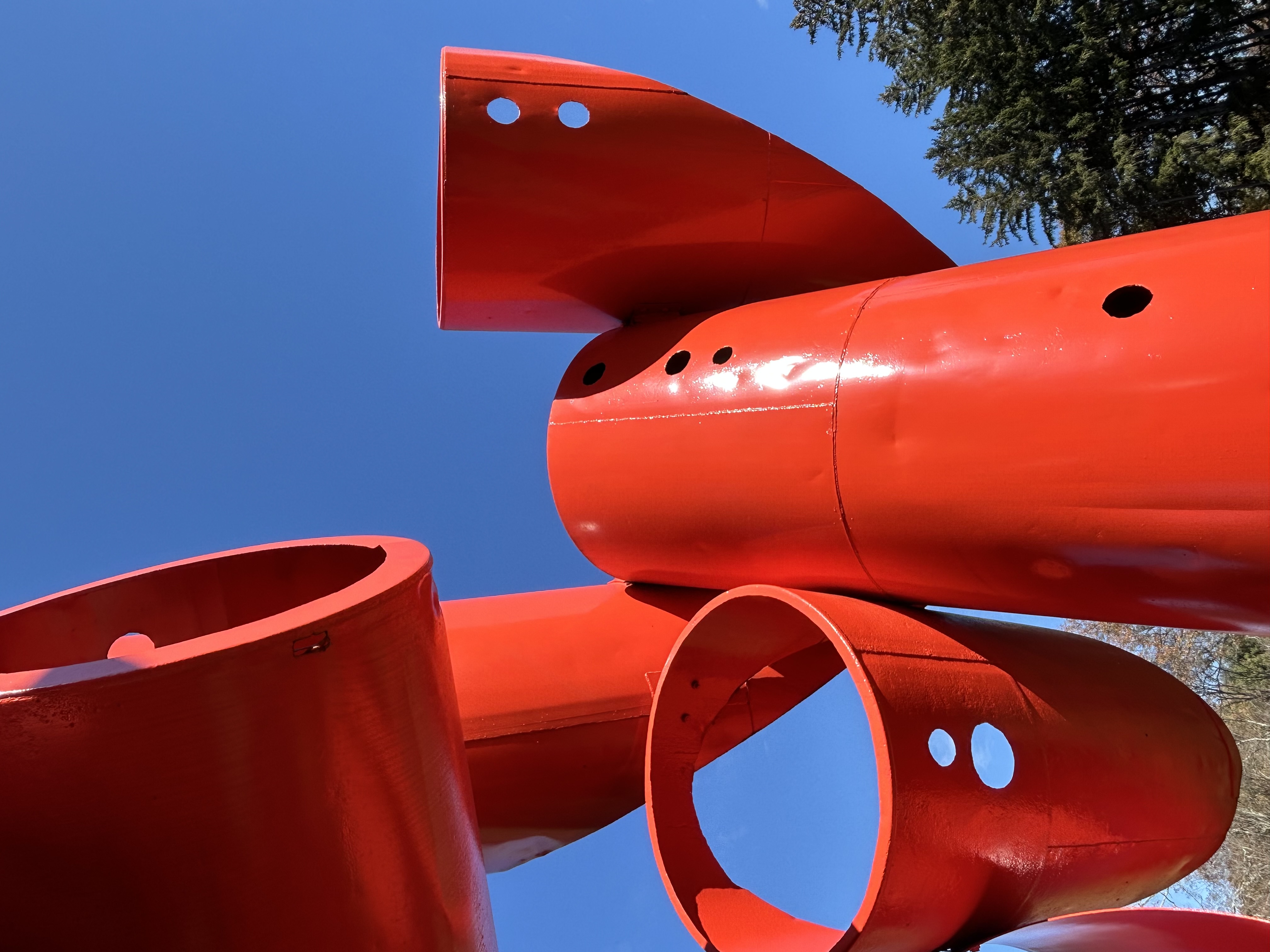
They require it. Several of his works are well represented on The Collection, and they remain among the most sophisticated arguments for why sculpture belongs outside. Mark di Suvero occupies a different but equally essential position in any serious consideration of the field. His large welded steel constructions, often incorporating found industrial materials, carry a kind of physical confidence that rewards grand settings.
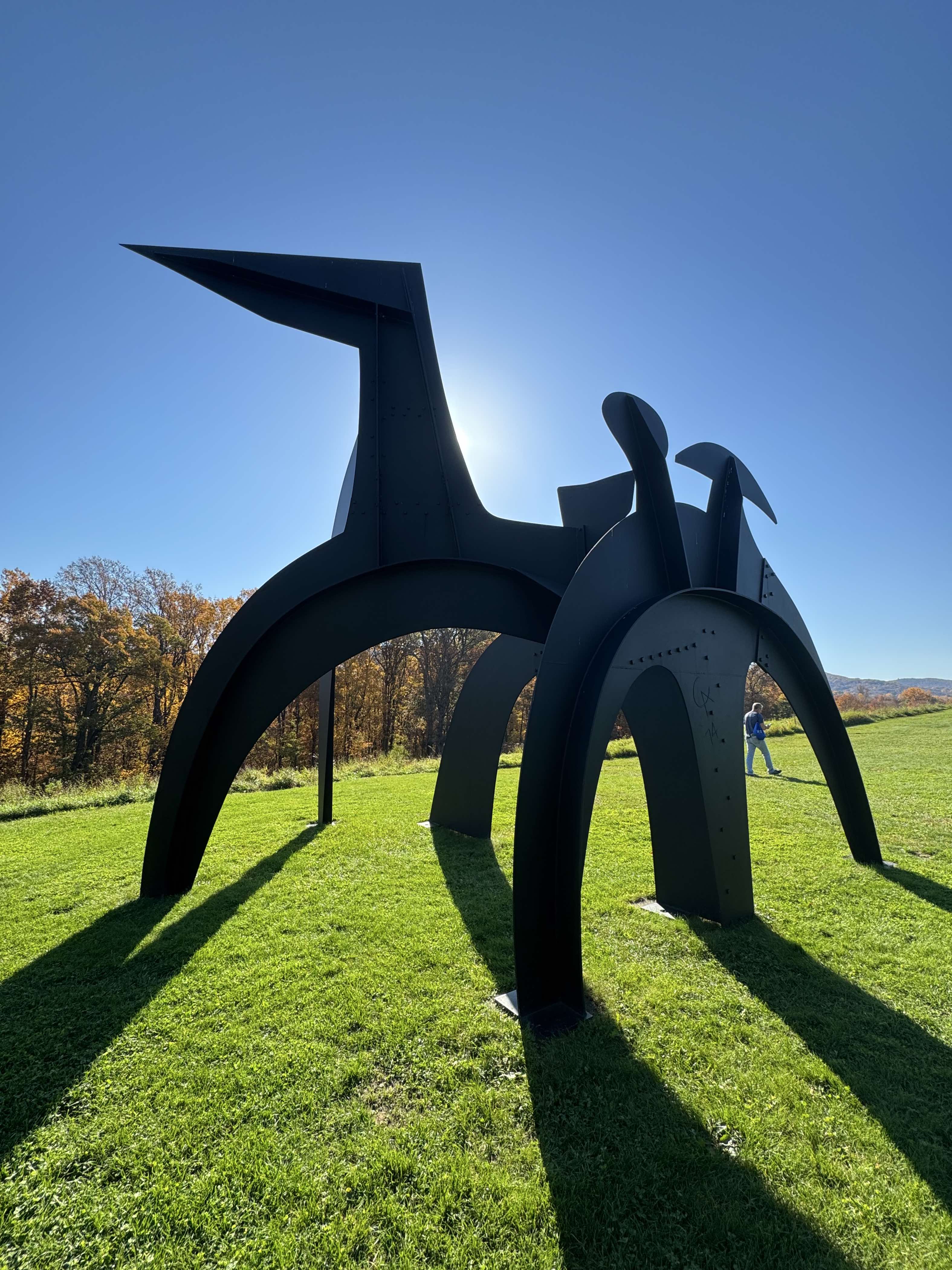
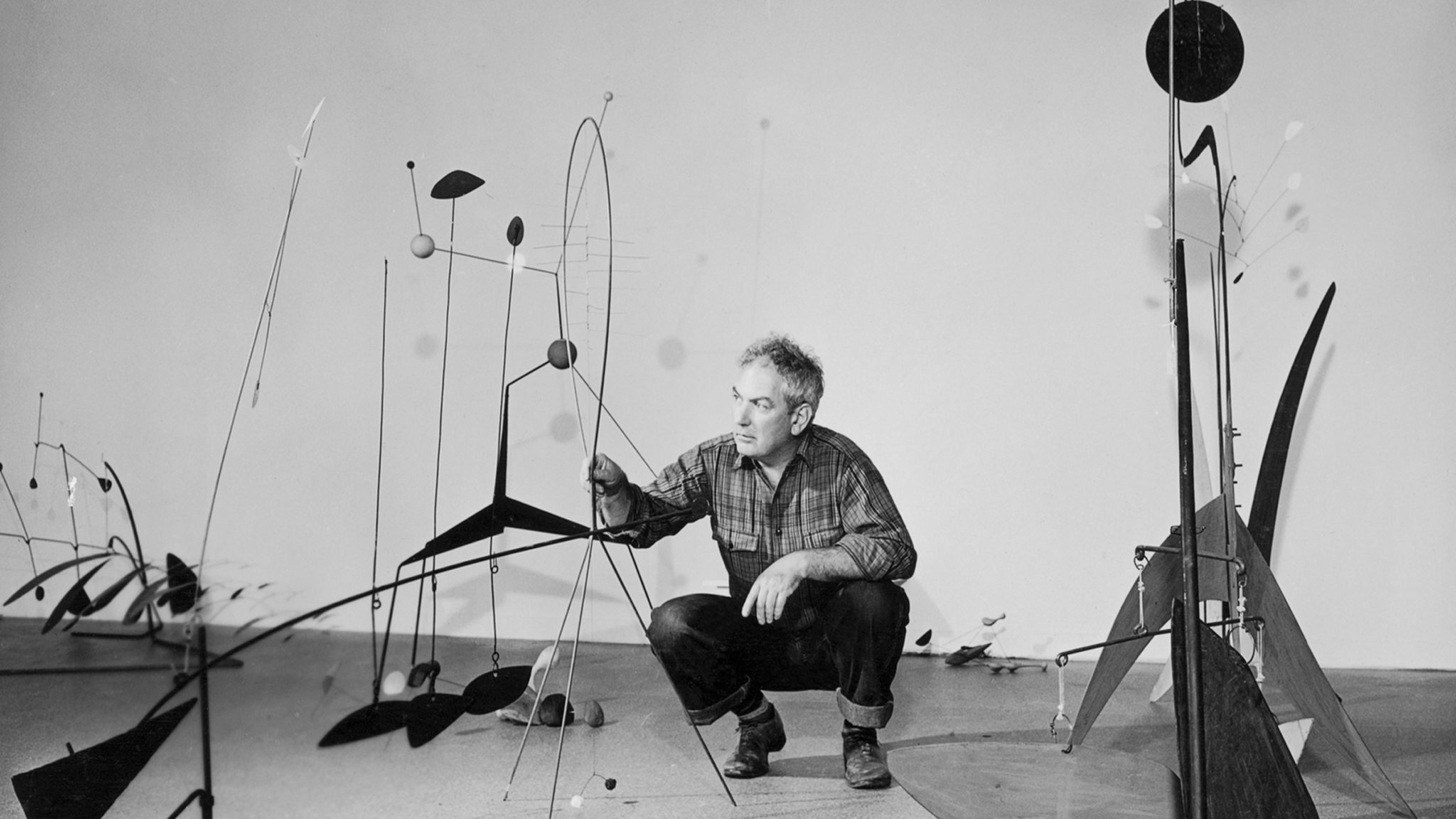
Di Suvero has been a central figure in American sculpture since the early 1960s, and his market has remained remarkably stable across decades precisely because his works are so unambiguously site transforming. Alexander Liberman, working in painted steel with a boldness that owed something to both Color Field painting and the language of industrial form, produced outdoor works that operate almost as architecture. His pieces on The Collection reflect that monumental sensibility. Alexander Calder, whose mobiles redefined the possibilities of sculpture in motion, needs little introduction, but it is worth noting that Calder's outdoor works remain among the most sought after objects in the entire sculpture market, with prices at major auction houses consistently achieving results that outperform broader market trends.
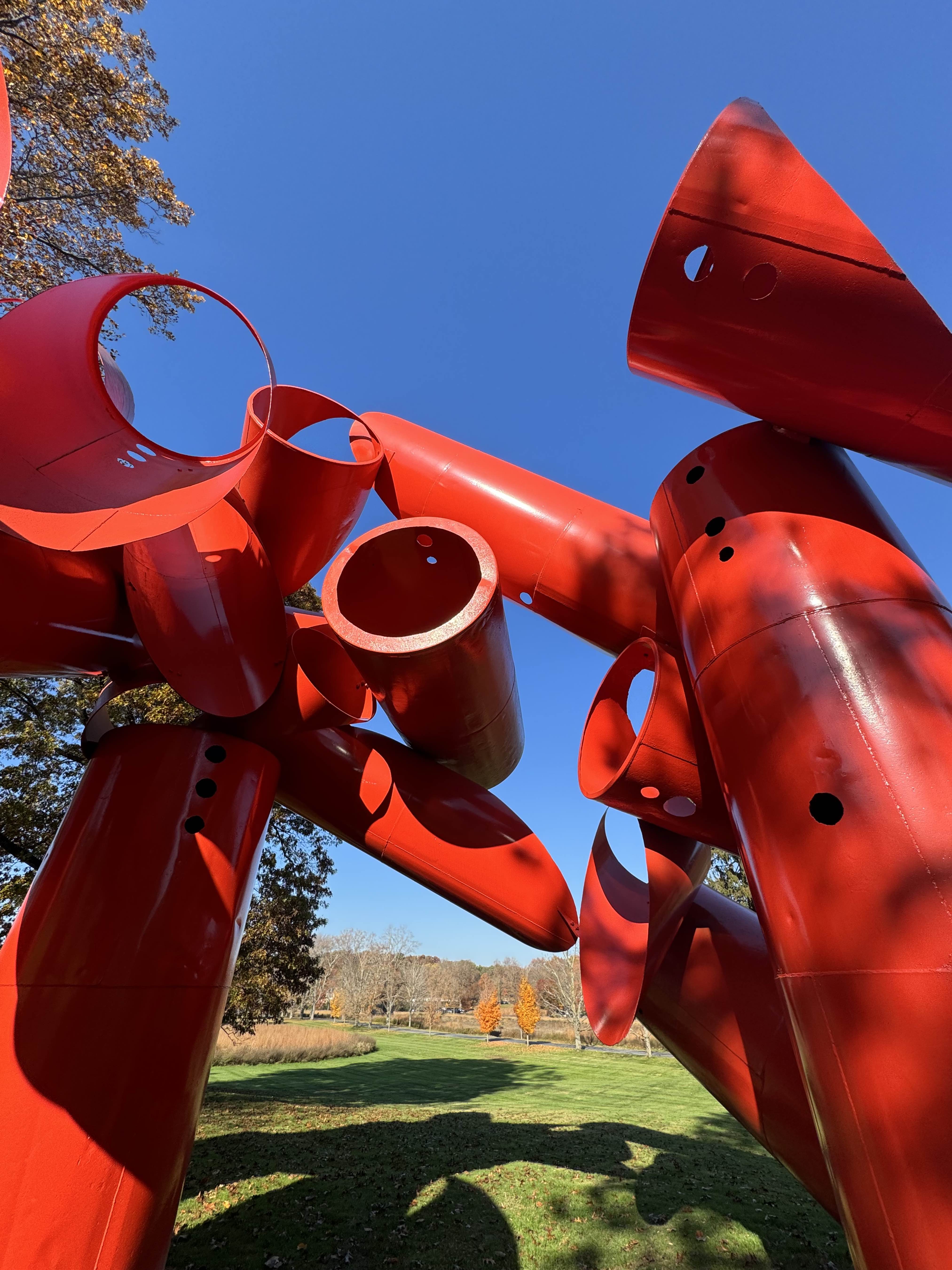
Alexander Liberman
Adam, 1970
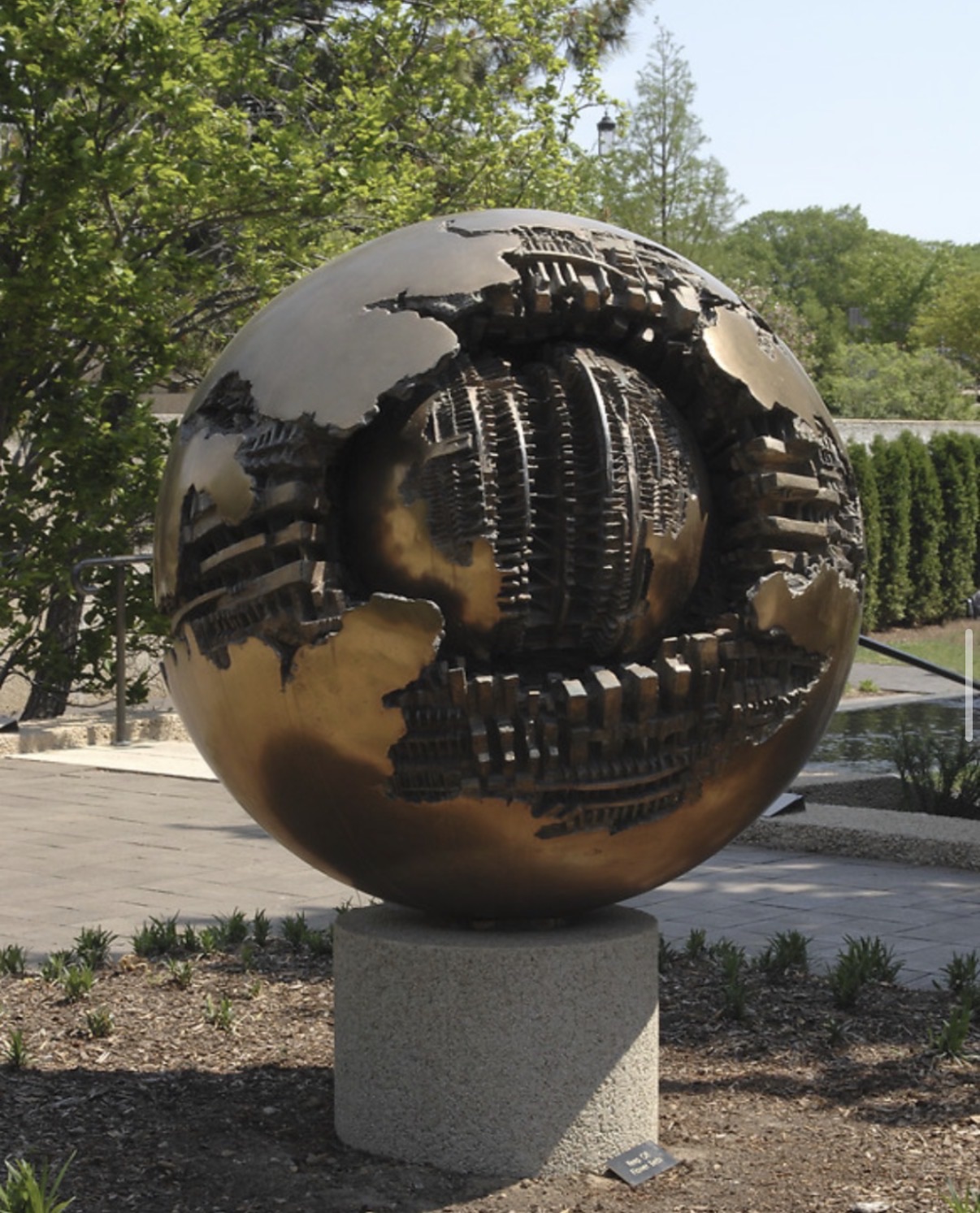
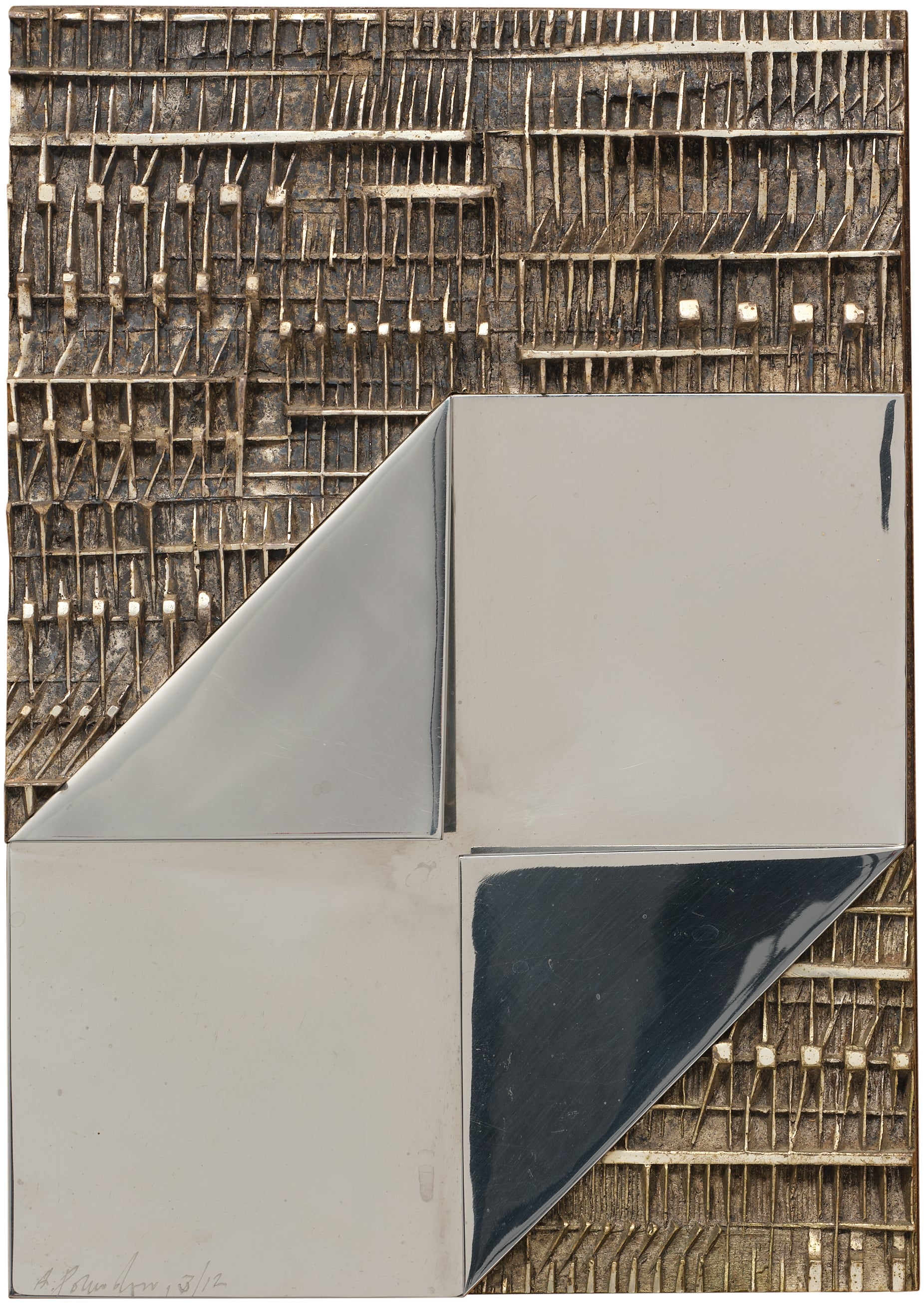
For collectors thinking carefully about value, the works of Arnaldo Pomodoro deserve particular attention. The Italian sculptor, now in his nineties, has achieved institutional recognition across Europe and the United States, yet his secondary market prices have not always reflected the depth of that reputation. His signature bronze spheres, split to reveal turbulent interior geometries, photograph beautifully and hold their surface quality exceptionally well outdoors when properly maintained. Joel Shapiro, whose abstracted figurative bronzes balance geometric restraint with genuine emotional presence, similarly represents a category of work where institutional standing and market performance feel slightly out of alignment in the collector's favor.
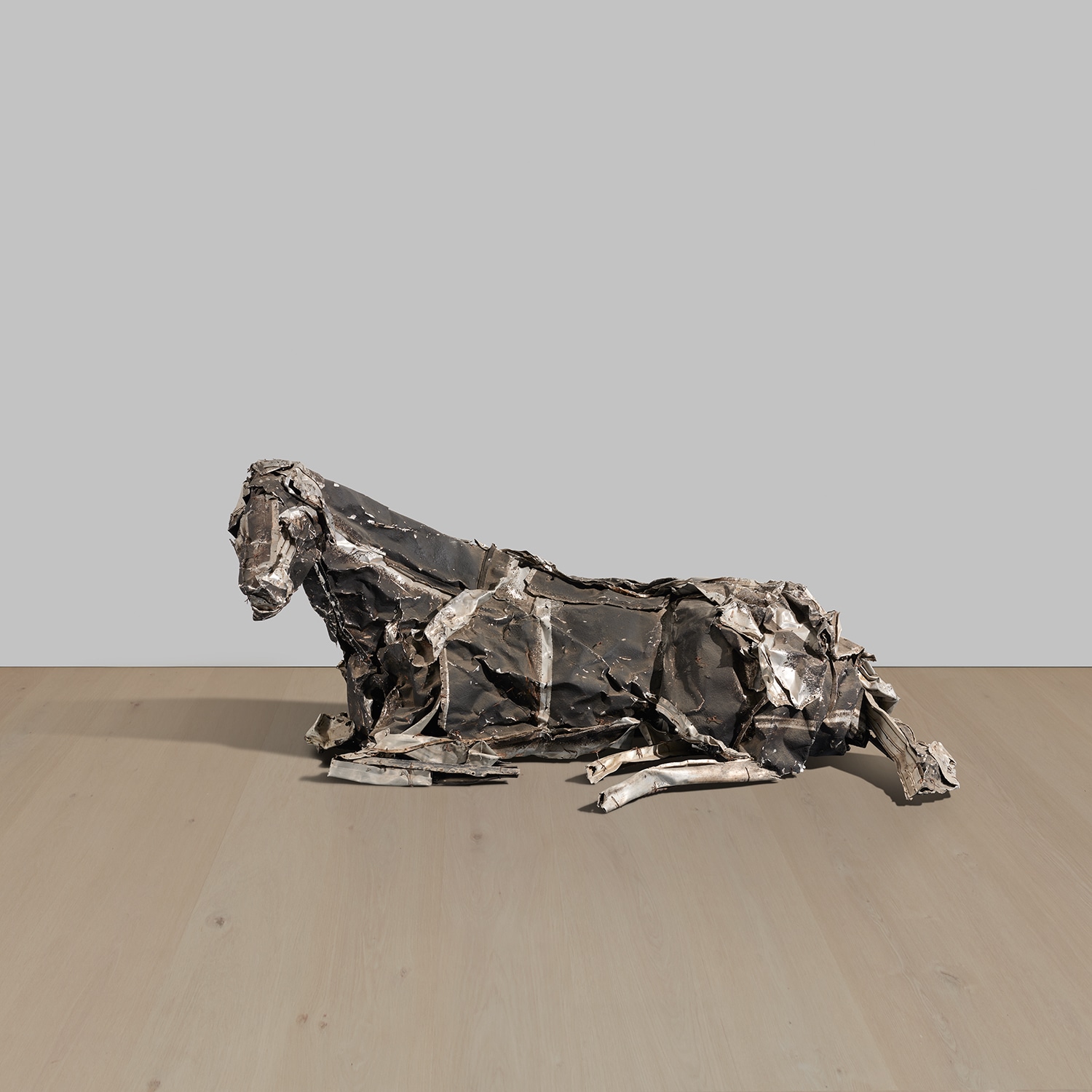
Deborah Butterfield's horses, constructed from found wood and bronze cast to preserve every weathered detail, are among the most quietly powerful outdoor works being made today, and demand for them has grown steadily as her retrospective presence has expanded. Emerging opportunities in this space require looking past the canonical names. Arlene Shechet, whose ceramic and mixed media sculptures have attracted sustained critical attention, is beginning to be considered in outdoor contexts in ways that feel genuinely fresh. Her willingness to push material expectations makes her a collector to watch as institutions increasingly explore her work in landscape settings.
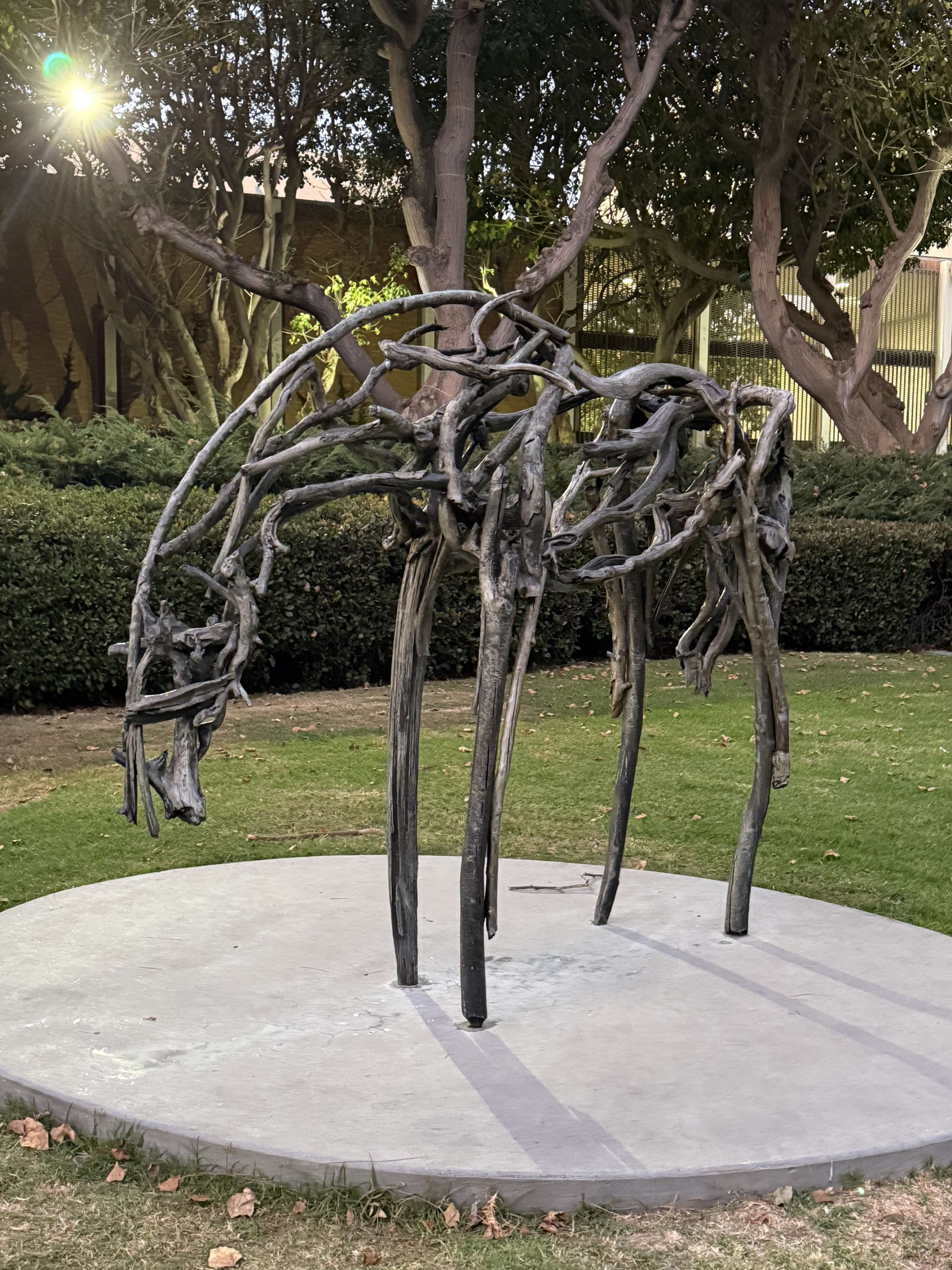
Deborah Butterfield
Argus, 1996
Jorge Blanco, whose painted steel figures carry a warmth and narrative accessibility unusual in this often austere category, has built a devoted collecting base, and his works feel particularly well suited to residential settings where the goal is not intimidation but genuine daily pleasure. At auction, the outdoor sculpture market rewards patience and specificity. Works by Calder, di Suvero, and Rickey at the major houses tend to attract competitive bidding, particularly when provenance is clean and condition is exceptional. The challenge is that condition in this category carries a weight it does not always carry for works on canvas or paper.
Before acquiring any outdoor work, a collector should ask very specific questions: Has the work been displayed outdoors previously, and for how long. What is the maintenance history. For bronzes, has patination been professionally treated. For painted steel, has there been any structural assessment.
Edition versus unique work matters enormously here too. A Calder mobile from a small edition carries different market dynamics than a unique Butterfield horse, and understanding that distinction is essential before committing. The practical wisdom is straightforward but often overlooked. Commission a condition report from a conservator who specializes in outdoor metals or stone before any significant purchase.
Understand what your site requires before you fall in love with a work, not after. Ask the gallery to walk you through the installation requirements and whether the artist or estate has preferences about base design, orientation, and drainage. These conversations reveal how much a gallery actually understands what they are selling. A work like a Rickey demands precision in its installation; the engineering of the balance is part of the art.
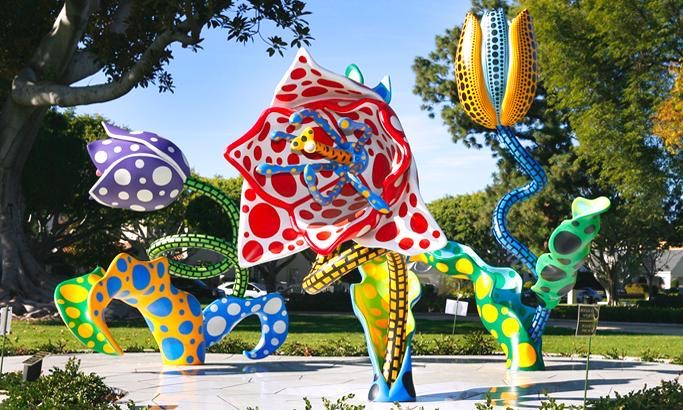
Yayoi Kusama's outdoor works, where her obsessive dot language translates into something surprisingly affecting at landscape scale, require an understanding of her estate's guidelines around outdoor display conditions. Menashe Kadishman's steel cutouts, rooted in Israeli landscape tradition, raise interesting questions about orientation and shadow that a good installation conversation will bring to the surface. The collectors who live best with outdoor sculpture are the ones who treat that conversation not as a formality but as the beginning of a long relationship with the work itself.