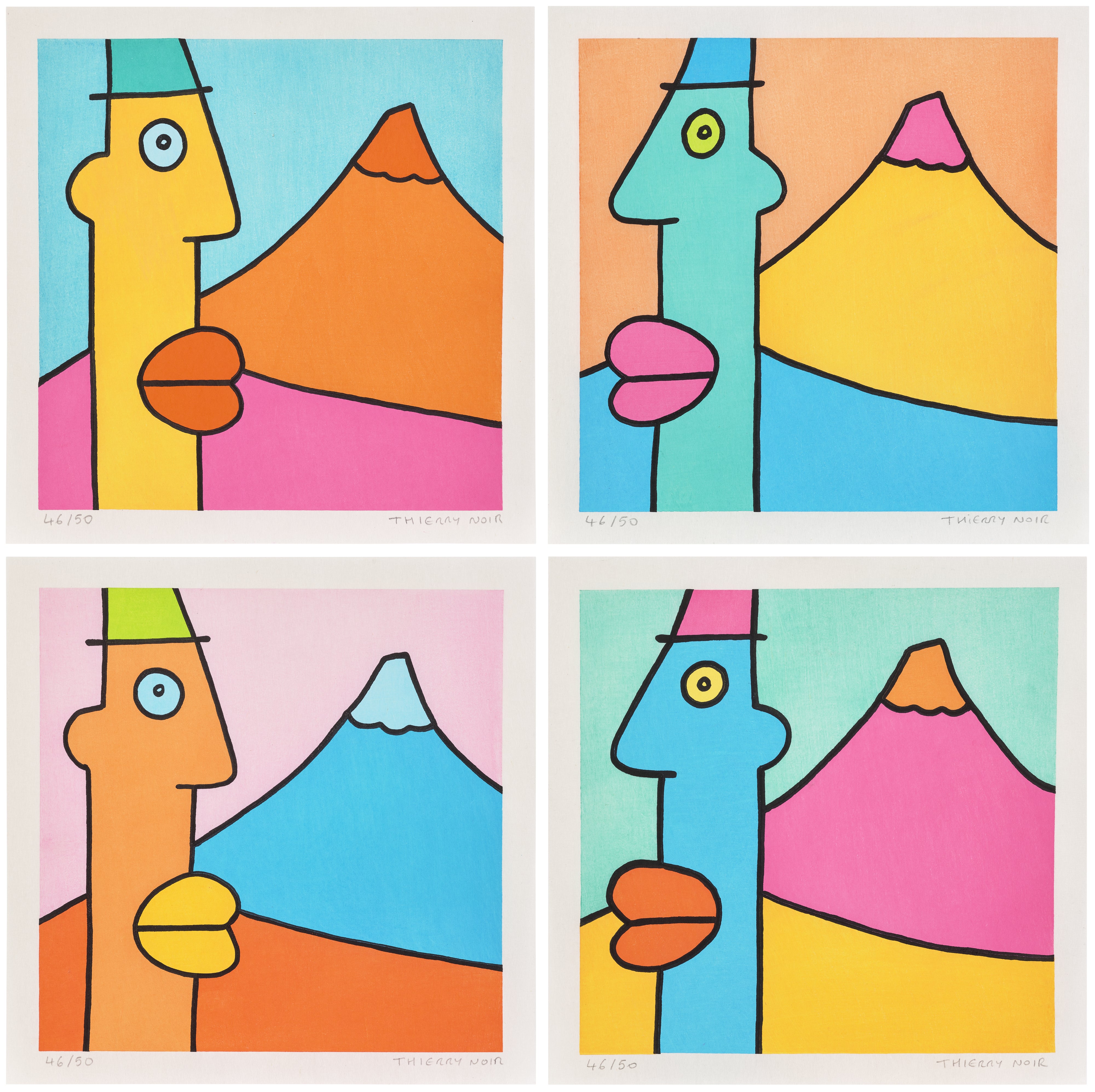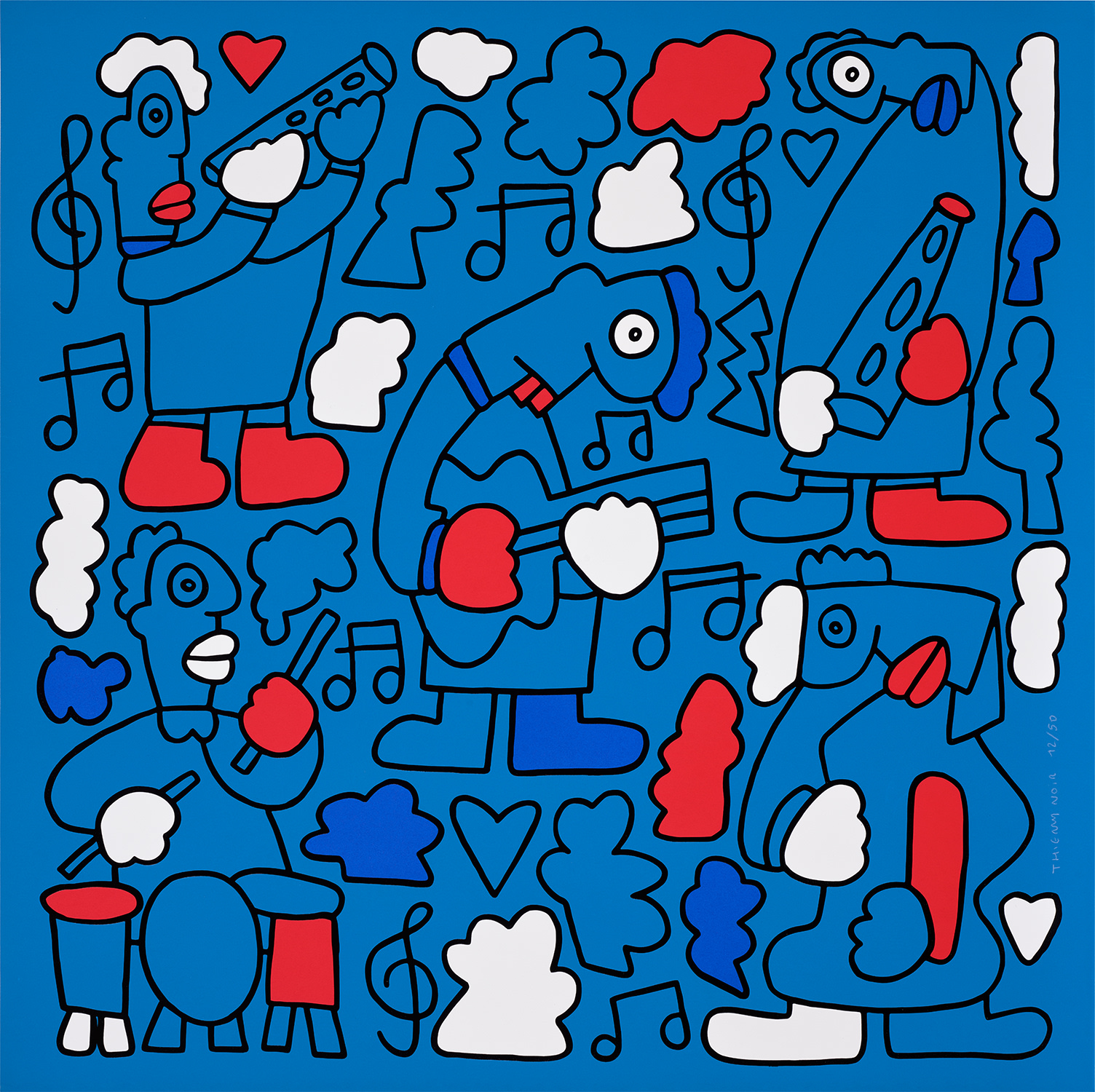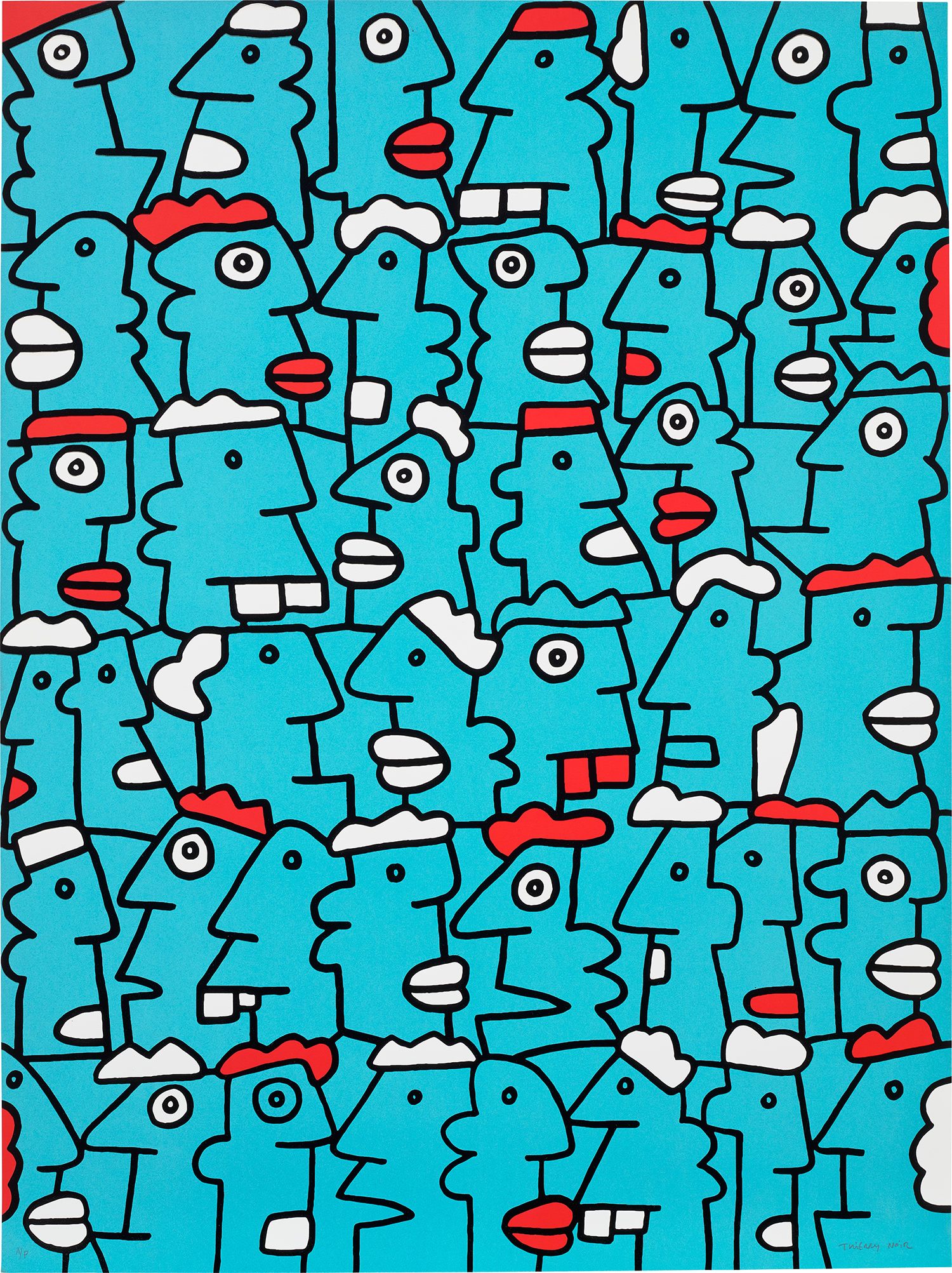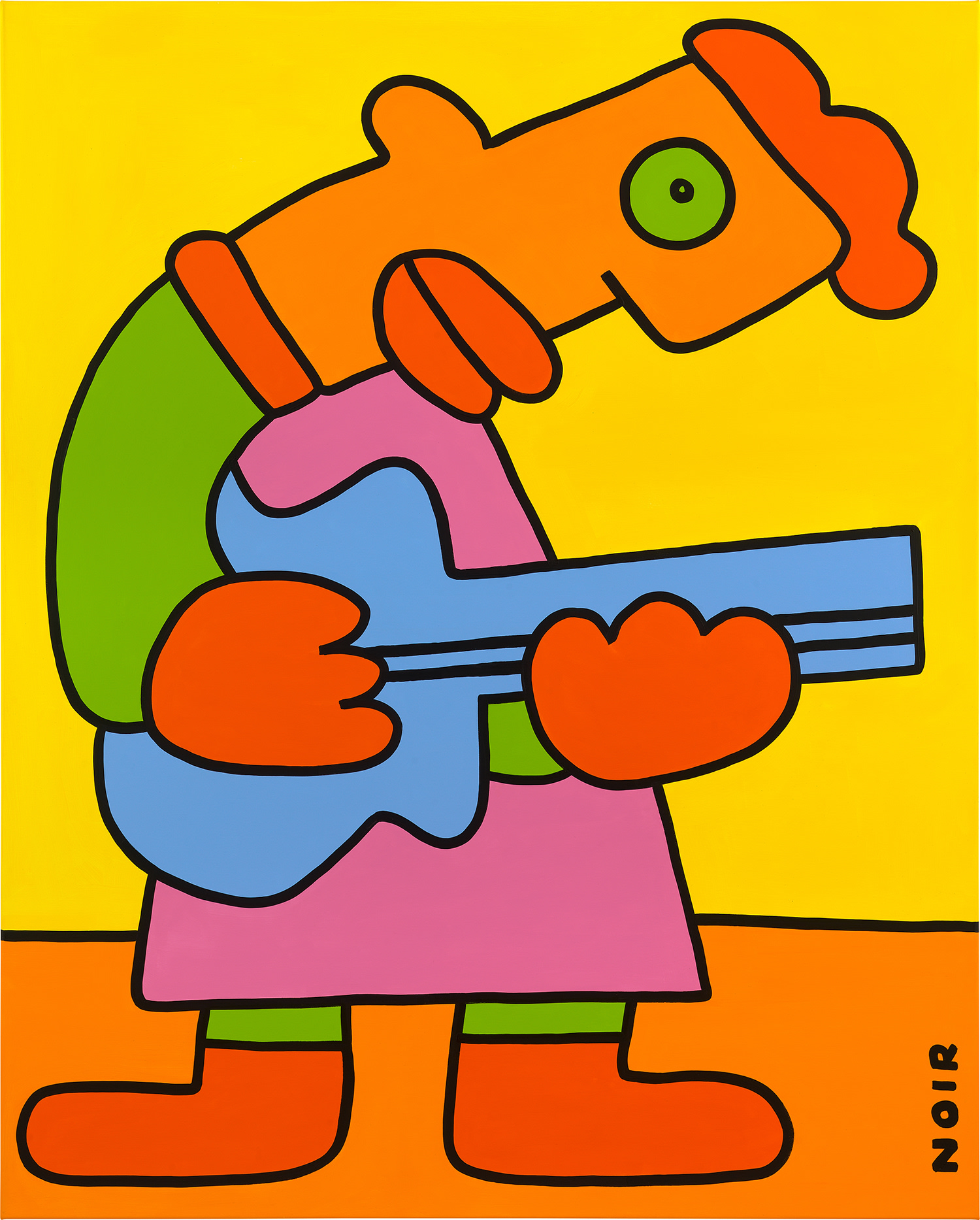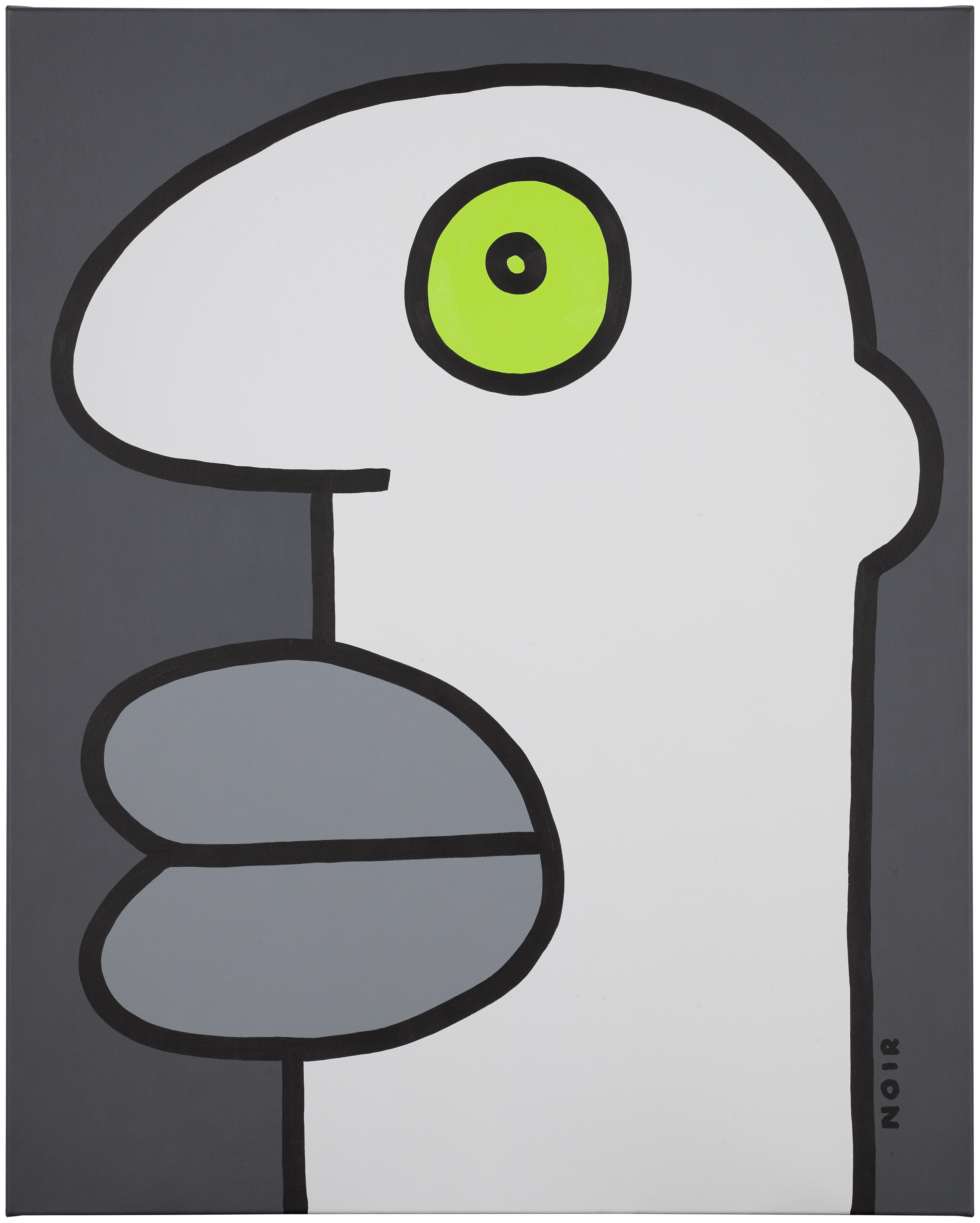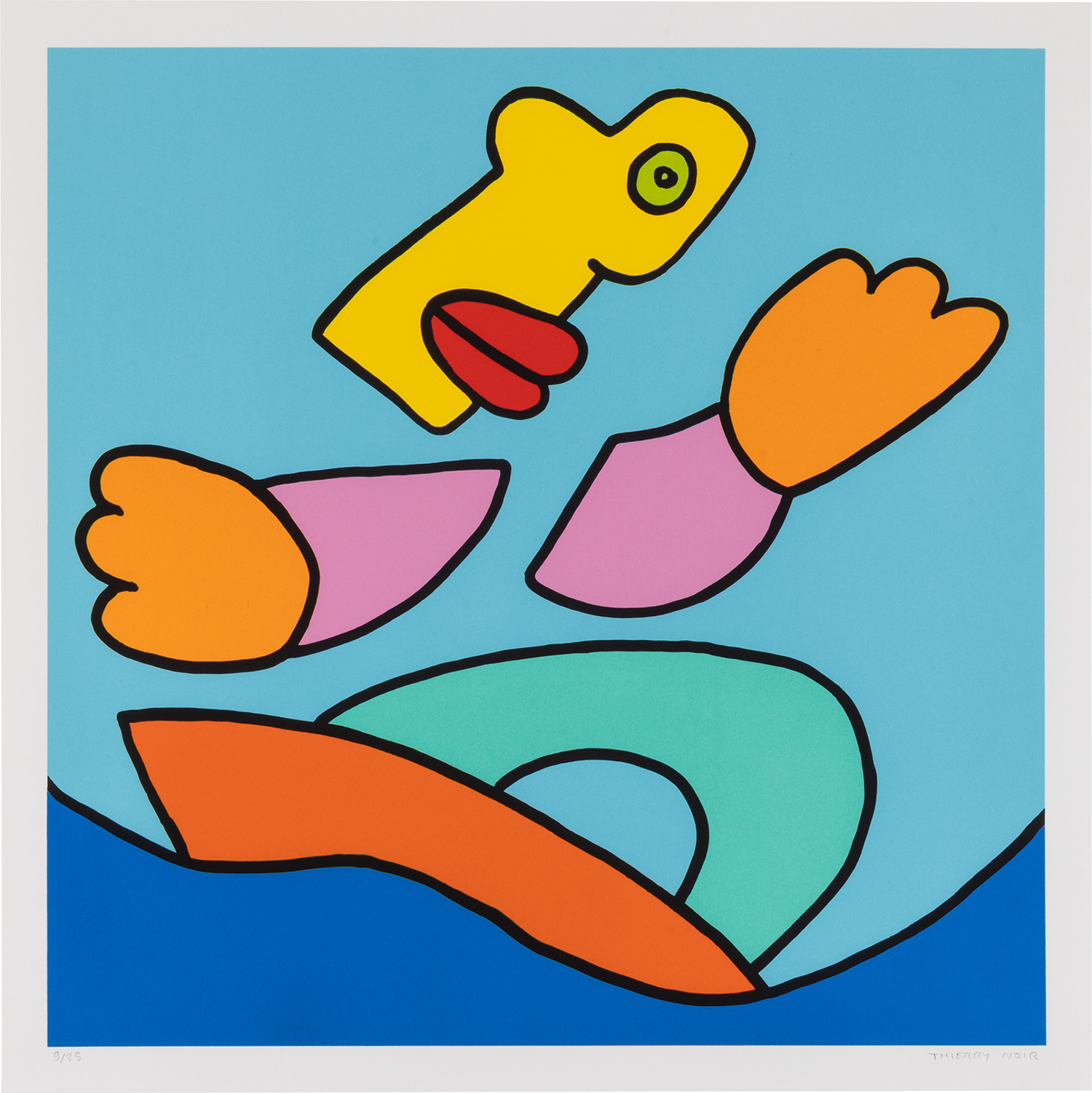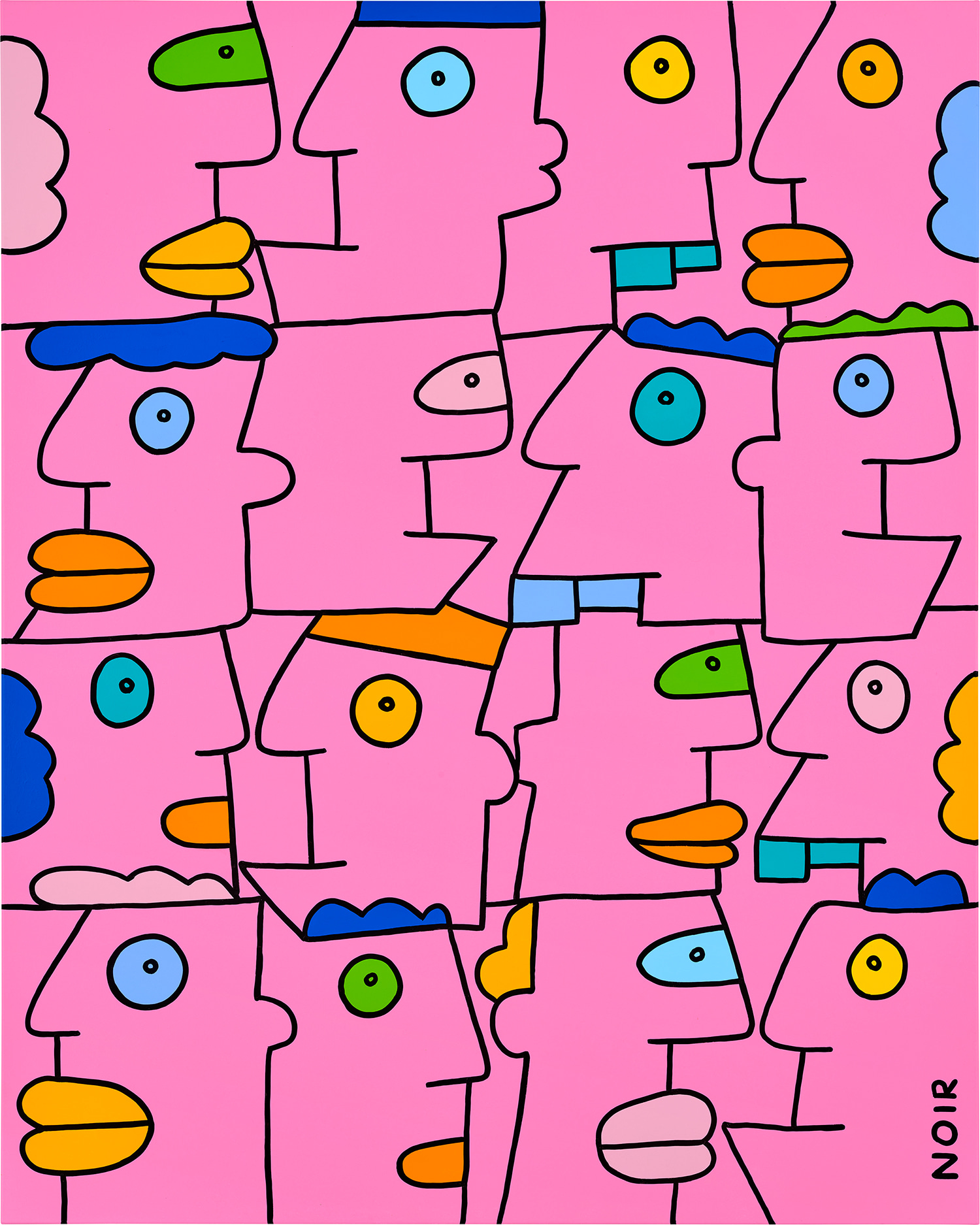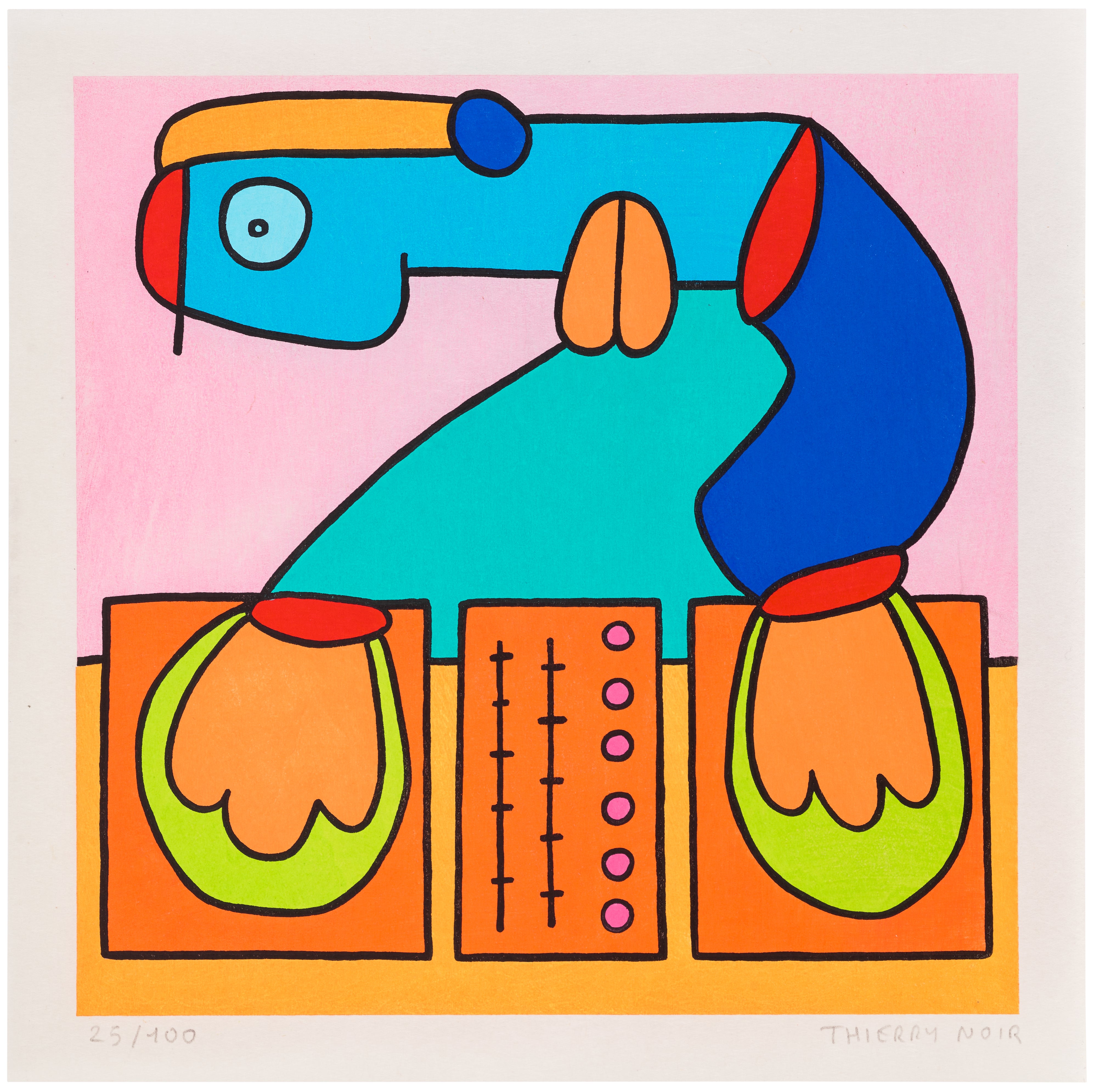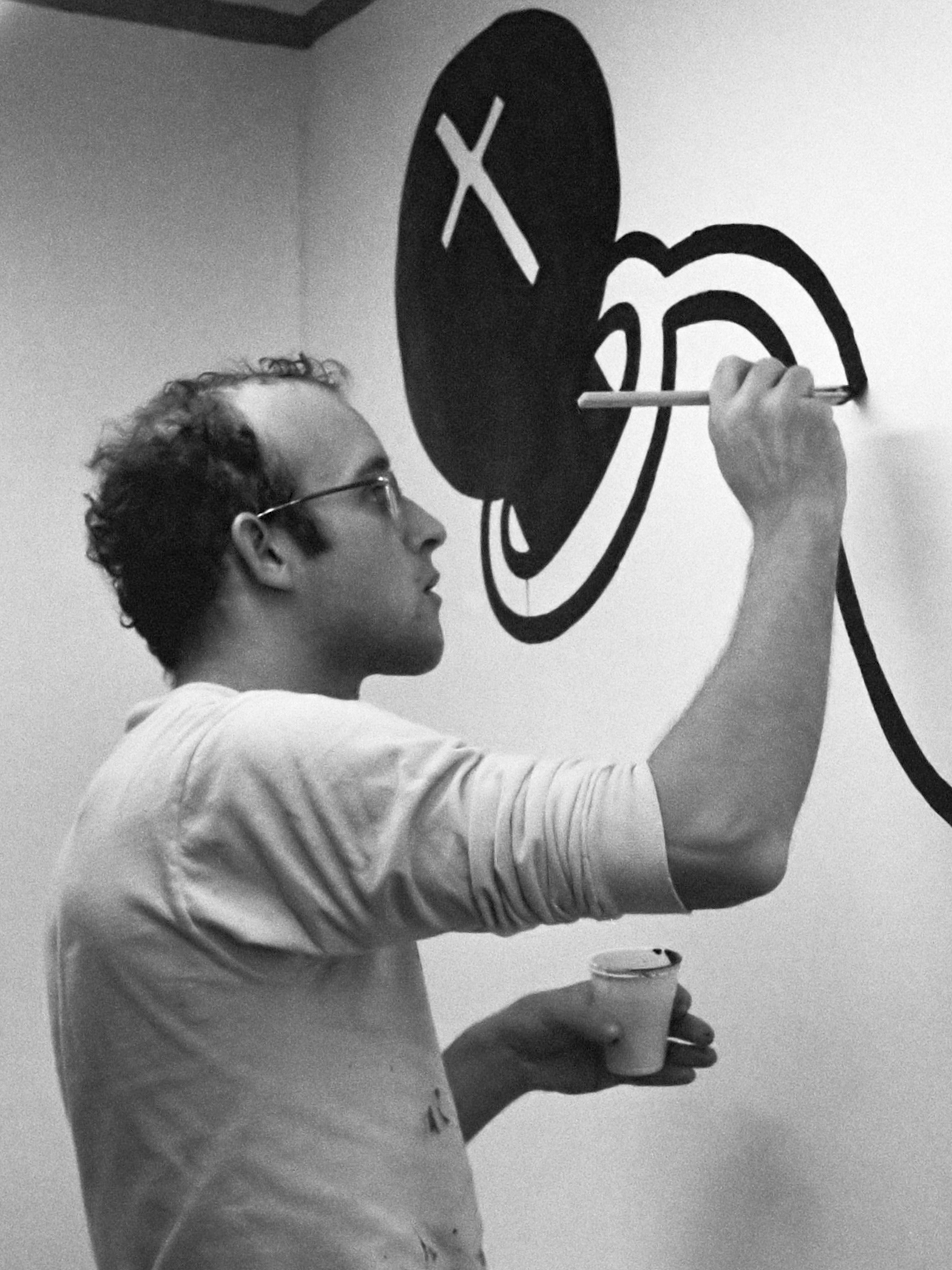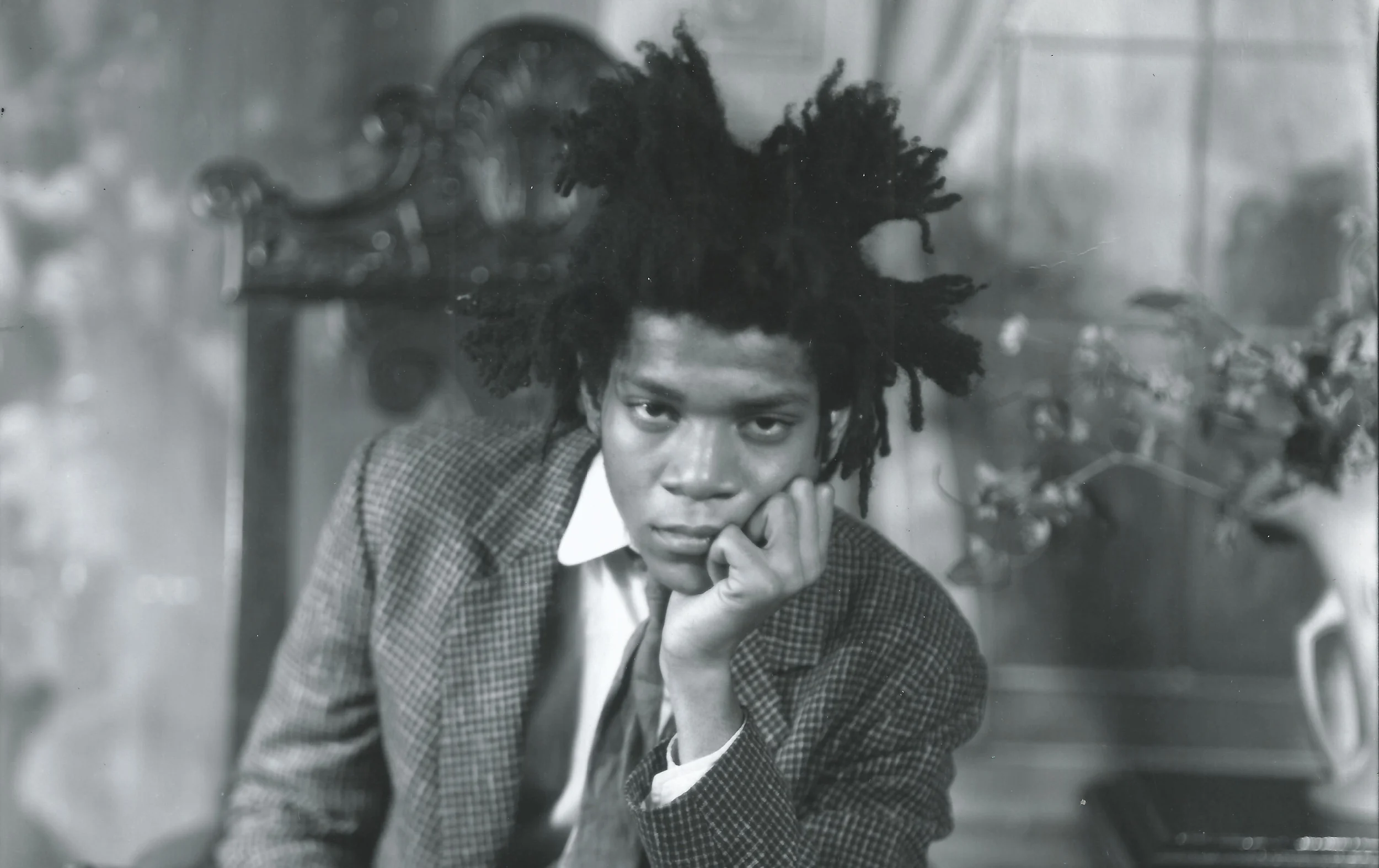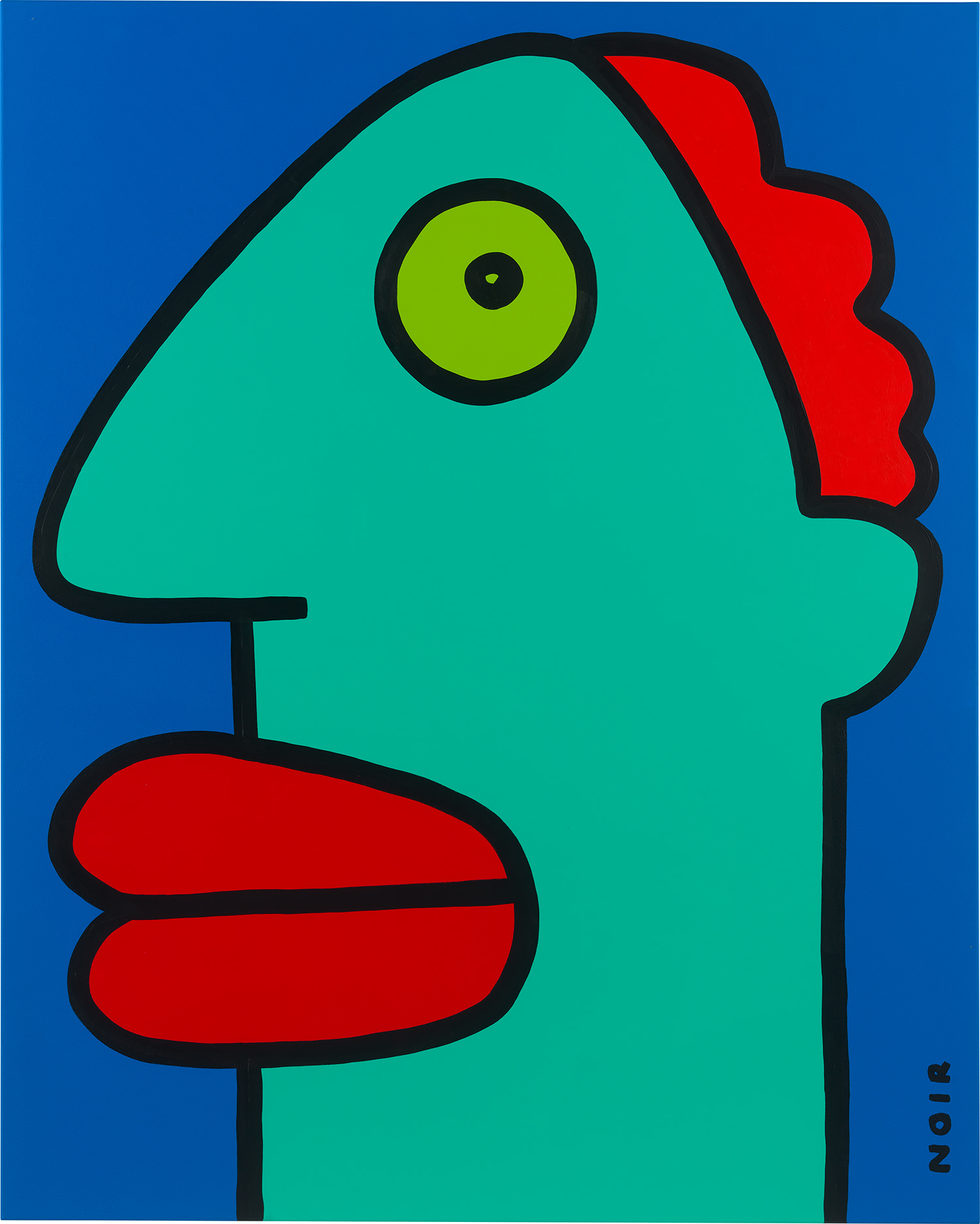
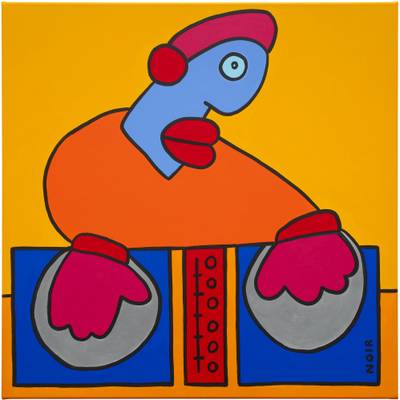
There is a particular kind of courage that belongs to the artist who works not in a studio but in the open air, under threat, with nothing but paint and conviction. In 1984, a young Frenchman named Thierry Noir picked up a brush and began painting the western face of the Berlin Wall, an act so audacious and so tender that it would come to define not just his career but an entire chapter of twentieth century history. Decades later, his bold, joyful faces still travel the world through galleries, museums, and auction houses, reminding us that art made in defiance of oppression carries an energy that never fully dissipates. The recent resurgence of institutional interest in Cold War culture and protest art has brought Noir back to the centre of critical conversation, with collectors and curators alike recognising that his contribution to street art is as foundational as any figure working in that tradition. Noir was born in Lyon, France, in 1958, and came of age during a period when the idea that art belonged exclusively inside gallery walls was beginning to fracture. He moved to West Berlin in 1982, drawn by the city's reputation as a refuge for artists, musicians, and those who existed at the edges of convention. West Berlin in the early 1980s was a strange and electric place, an island of relative freedom surrounded by the physical architecture of Cold War ideology. For a young artist arriving from France, the city offered both a creative community and an immediate, unavoidable confrontation with the consequences of political division. The Wall was not a backdrop. It was a presence, a daily reality that shaped every aspect of life in the city. It was in this atmosphere that Noir began what would become his most historically significant act. Starting in 1984, he painted directly onto the western face of the Berlin Wall, initially near Checkpoint Charlie and along stretches of Kreuzberg. The legal status of this activity was ambiguous at best. The Wall stood technically on East German territory, meaning that touching it from the western side carried real risk. Noir painted fast and he painted large, developing a visual language that was deliberately immediate: thick black outlines, vivid reds, yellows, and blues, and cartoonish faces with outsized features and an almost manic energy. The style was not accidental. Speed was a practical necessity, and the boldness of the forms ensured visibility from a distance. What emerged was a vocabulary of resistance that was also, unmistakably, a vocabulary of joy. His fellow artist Christophe Bouchet collaborated with him on portions of the Wall during this period, and the two became central figures in what would gradually be recognised as the earliest sustained artistic engagement with that structure. When the Wall fell in November 1989, Noir was present, and the images of his painted sections being torn down became part of the global visual record of that moment. Fragments of the Wall bearing his work entered museum collections and private hands almost immediately, and the broader art world began to understand that what had seemed like guerrilla decoration was in fact a sustained and historically important artistic project. His connection to that moment in history is not incidental to his practice. It is the foundation on which everything else rests. Beyond the Wall, Noir has continued to develop a studio practice that extends the visual logic he established on the streets of Berlin. Works such as Rainer am Strand from 1993 and more recent canvases including An incredible burst of energy spreads around the market square from 2022 and Manifest for always being attractively and superbly clothed from 2023 demonstrate how consistently he has evolved while remaining faithful to his essential concerns. The faces that populate his canvases are not portraits in any conventional sense. They are archetypes, vessels for emotion and energy, figures that feel simultaneously ancient and completely contemporary. His titles, long and declarative and often almost conversational, add another layer to the work, functioning less as labels than as extensions of the image itself, as if the painting is mid sentence when you encounter it. His screenprints, including I Am Looking In The Same Direction As You and the Rivington Street Crocodile on Somerset Textured paper, reveal a printmaker who understands how to translate his gestural energy into the more controlled demands of the medium. These works on paper are particularly compelling for collectors entering his practice, offering the full force of his visual language at a different scale and price point than the major canvases. The Fast Form Manifest series in orange demonstrates his facility with colour relationships, and the works produced on Somerset and smooth wove papers carry a tactile quality that rewards close attention. For collectors who respond to the intersection of art history and market opportunity, Noir's works on paper represent a genuinely compelling proposition. Collectors are drawn to Noir for reasons that go beyond historical significance alone, though that significance is considerable. His work carries genuine visual pleasure. The faces are immediately legible and yet endlessly variable, and the colour relationships he deploys have the confidence of someone who has spent decades working intuitively with paint. Major museums including the Museum of Modern Art in New York hold fragments and documentation related to the Berlin Wall paintings, and his work has appeared in significant survey exhibitions covering the history of street art and protest culture. In the secondary market, works by artists who share his position at the origin point of a movement tend to hold and grow in value over time, and Noir sits at precisely that origin point within the street art tradition. Artists who emerged in related contexts, among them Keith Haring, whose work on the Wall Noir knew directly, and Jean Michel Basquiat, whose raw energy and urban context rhyme with Noir's own practice, provide useful points of comparison for understanding where his work sits within the broader market. What makes Thierry Noir genuinely important, beyond the biography and the historical footnotes, is the quality of attention his work demands and rewards. He made paintings in a place where painting was an act of defiance, and he made them beautiful. He has continued making beautiful, strange, and energetically alive work for four decades since. The faces he paints carry the memory of the Wall without being imprisoned by it, which is perhaps the most fitting tribute an artist could pay to the idea of liberation itself. To collect his work is to own a piece of a story that still matters, rendered in colours that refuse to fade.