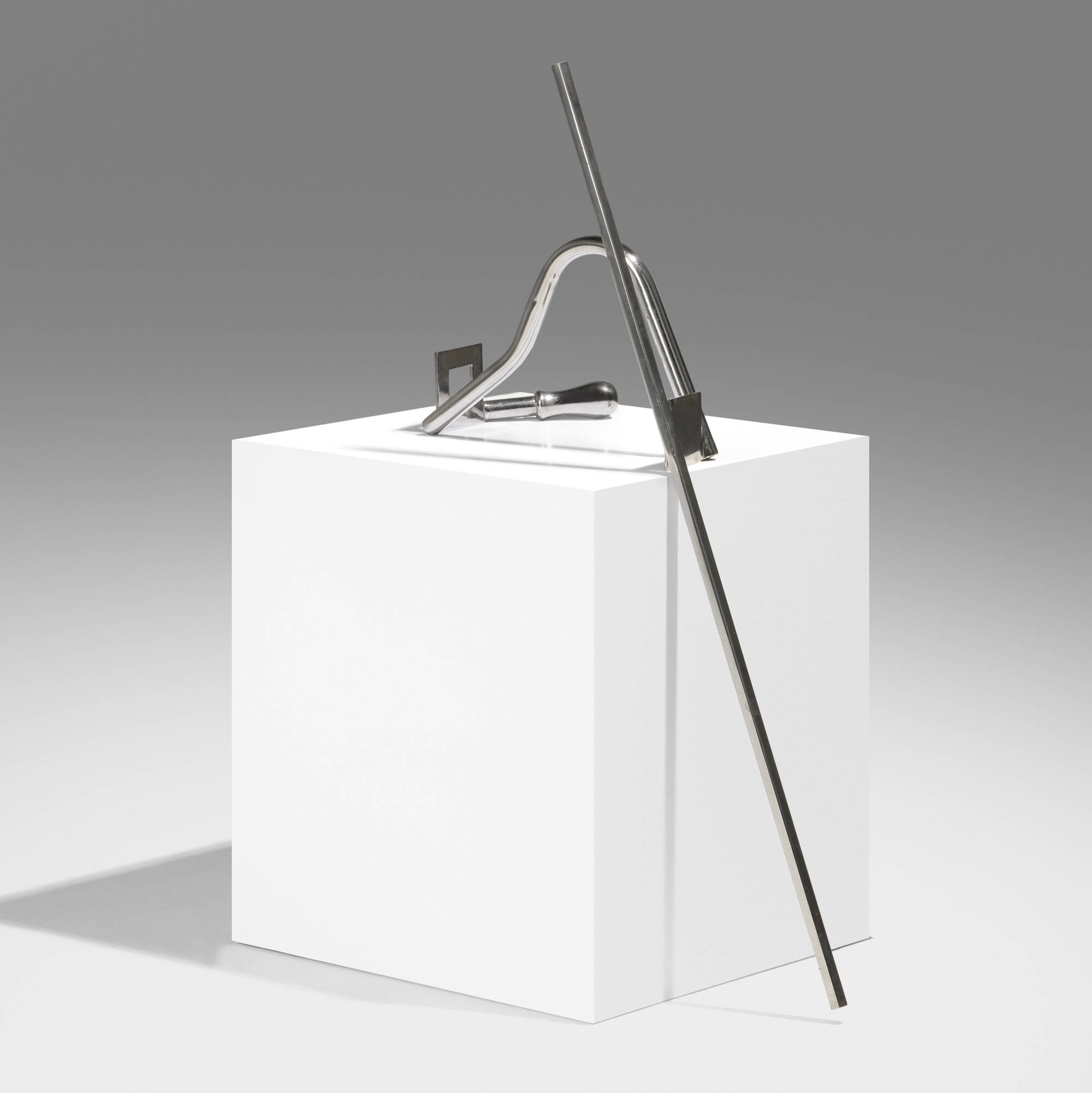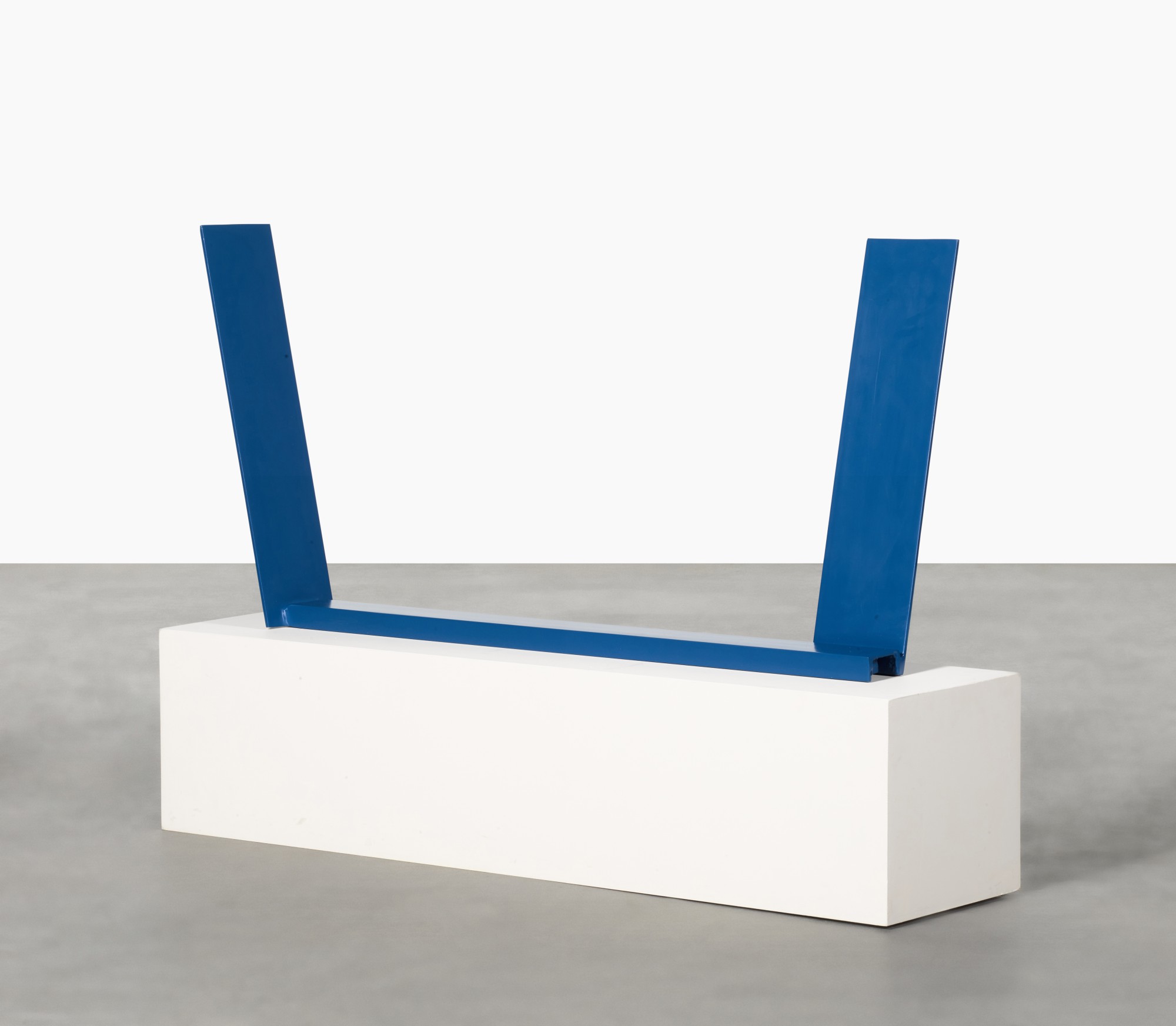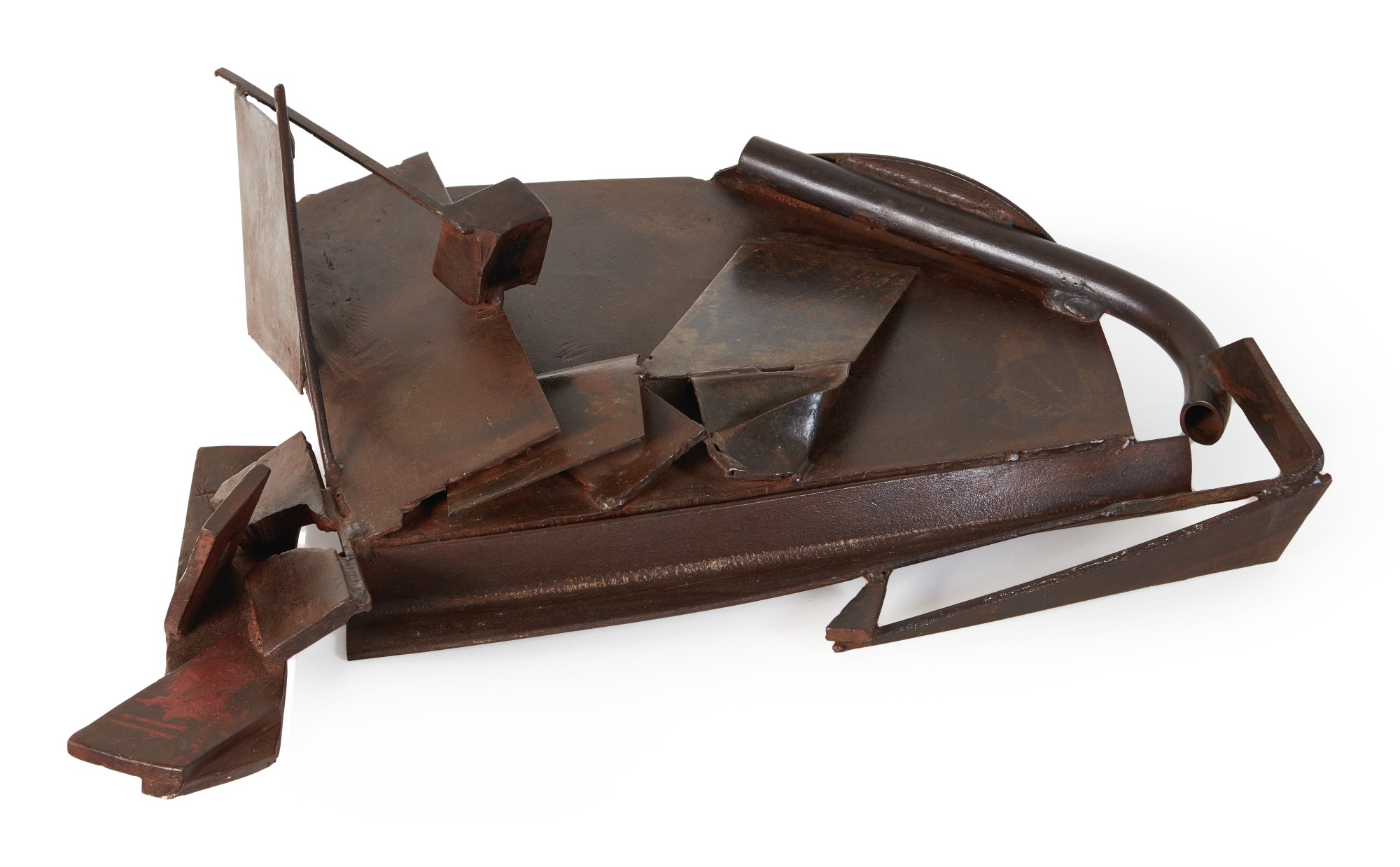
There is a particular moment that art historians return to again and again when accounting for the shape of modern sculpture: a visit Anthony Caro made to the United States in 1959, where he met the critic Clement Greenberg and sculptor David Smith at a pivotal point in his career. That encounter cracked something open. Caro returned to London and dismantled everything he had built, setting aside the figurative bronzes and the influence of his mentor Henry Moore, and began welding steel directly to the floor of his studio. The work that followed over the next decade would redefine what sculpture could be and who it could speak to. Sir Anthony Alfred Caro was born in New Malden, Surrey, in 1924, the son of a stockbroker family that encouraged intellectual ambition without prescribing its direction. He studied engineering at Christ's College, Cambridge, a background that would prove far from incidental to his later practice. The precision of engineering, its understanding of load and tension and the poetry of structural form, lived quietly inside everything he would eventually make. He went on to study sculpture at the Royal Academy Schools in London, developing a solid command of traditional technique before seeking something larger. The years Caro spent from 1951 to 1953 as an assistant to Henry Moore at Much Hadham were formative in ways both obvious and subtle. Moore was at the height of his international reputation, and working at close proximity to that kind of sustained creative seriousness left a permanent mark. Yet the lessons Caro ultimately took from Moore were lessons in discipline and ambition rather than form. His early bronzes from this period, including figurative works that show a clear debt to Moore's organic humanism, represent a genuine beginning rather than a false start. They show a sculptor learning to listen to material, preparing for a conversation that would eventually become something entirely his own. The steel works that began to emerge in the early 1960s were unlike anything being made in Britain at the time. Caro abandoned the pedestal entirely, placing his welded steel constructions directly on the ground so that they occupied the same physical space as the viewer, subject to the same light, the same floor, the same air. Works from this period such as Early One Morning, completed in 1962 and now held in the collection of Tate, used painted red steel to create an almost musical horizontal sweep across a room. Prairie from 1967 continued this investigation into horizontal extension and spatial openness. These were not objects to be looked at from a reverent distance. They were presences to be moved around, encountered from multiple angles, experienced as something closer to architecture or landscape than to conventional sculpture. The teaching he did at St Martins School of Art in London throughout the 1960s spread these ideas to an entire generation of younger artists, making Caro a genuinely generative figure in British art history. His practice never settled into repetition. Through the 1970s and beyond, Caro developed a series of more intimate table sculptures, smaller steel works conceived for domestic and gallery table surfaces rather than open floors. These pieces demonstrated a remarkable capacity for reinvention. The table sculptures brought a kind of wit and compression to the spatial concerns of the larger works, proving that the ideas he was exploring were not dependent on scale but on a fundamental attitude toward material and space. Works such as Table Piece Y 33, in rusted and varnished steel from 1983, exemplify this strand of his output with their balance of robust material presence and compositional refinement. Kenner from 1965, in painted steel, belongs to that electrifying early period of pure structural confidence, while Second Half from 1980 in bronze and brass shows Caro moving fluidly between materials without ever losing the essential qualities of directness and spatial engagement that defined him. For collectors, Caro's work occupies a category of rare art historical importance combined with genuine aesthetic pleasure. His pieces have been held by major institutions worldwide, from the Museum of Modern Art in New York to the Tate collection in London, which validates the significance of owning work at any scale from this body of practice. The table sculptures and smaller steel works offer a meaningful point of entry for private collectors, combining the rigorous conceptual foundation of his floor sculptures with a scale suited to private spaces. What to look for in a Caro is the quality of spatial invention: the way the composition moves the eye and implies movement in the viewer, the intelligence of the material choices, and the confidence of the weld. His use of color, whether the industrial greens and reds of early painted works or the natural oxidation of later rusted pieces, is always purposeful and never decorative for its own sake. Caro belongs to a broader conversation in postwar sculpture that includes the American sculptor David Smith, whose direct influence he acknowledged openly, as well as his British contemporaries and successors including Phillip King, William Tucker, and Tim Scott, several of whom were shaped by his teaching at St Martins. In the wider international context he can be placed alongside the ambitions of artists such as Richard Serra and Mark di Suvero, though Caro's work retains a distinctly lyrical quality, a sense of the poetic within the structural, that sets it apart from American Minimalism and its cooler commitments. He was knighted in 1987, a recognition of his contribution to British cultural life that felt both belated and entirely appropriate. Caro died in London in October 2013, leaving behind a body of work that continues to generate serious critical and scholarly attention. His influence on contemporary sculpture is so thoroughly absorbed into the culture of the form that it can be easy to forget how radical his early gestures were, how much he risked in pulling sculpture off its pedestal and into the shared space of ordinary life. That radicalism, however, is precisely what makes his work enduringly alive. Standing in front of a Caro, even decades after its making, one still feels the particular alertness it demands: a readiness to move, to look again, to understand that art and life can occupy the same ground.